There is a moment on every cabin trip that I wait for all week: dusk settling through the pines, the last of the daylight going blue, and the porch lights clicking on one by one until the whole cabin glows like a lantern in the trees. Getting that moment right is exactly what good cabin porch lighting ideas are about, and honestly, it takes less money than most people think. My rule is the same one I use at home, just dressed in flannel: layer the light. A soft base layer so nobody trips on the step up, a warm glow at sitting height for faces, coffee mugs, and card games, and a little sparkle overhead for pure woodland magic. Because cabins often mean limited outlets, long weekends away, and weather that does whatever it wants, I lean on solar, timers, and fixtures rated for real outdoor life. Below are the 19 setups that turned our plain wood porch into the room everyone drifts toward after dinner, whether the cabin is wired, solar-only, or somewhere in between.
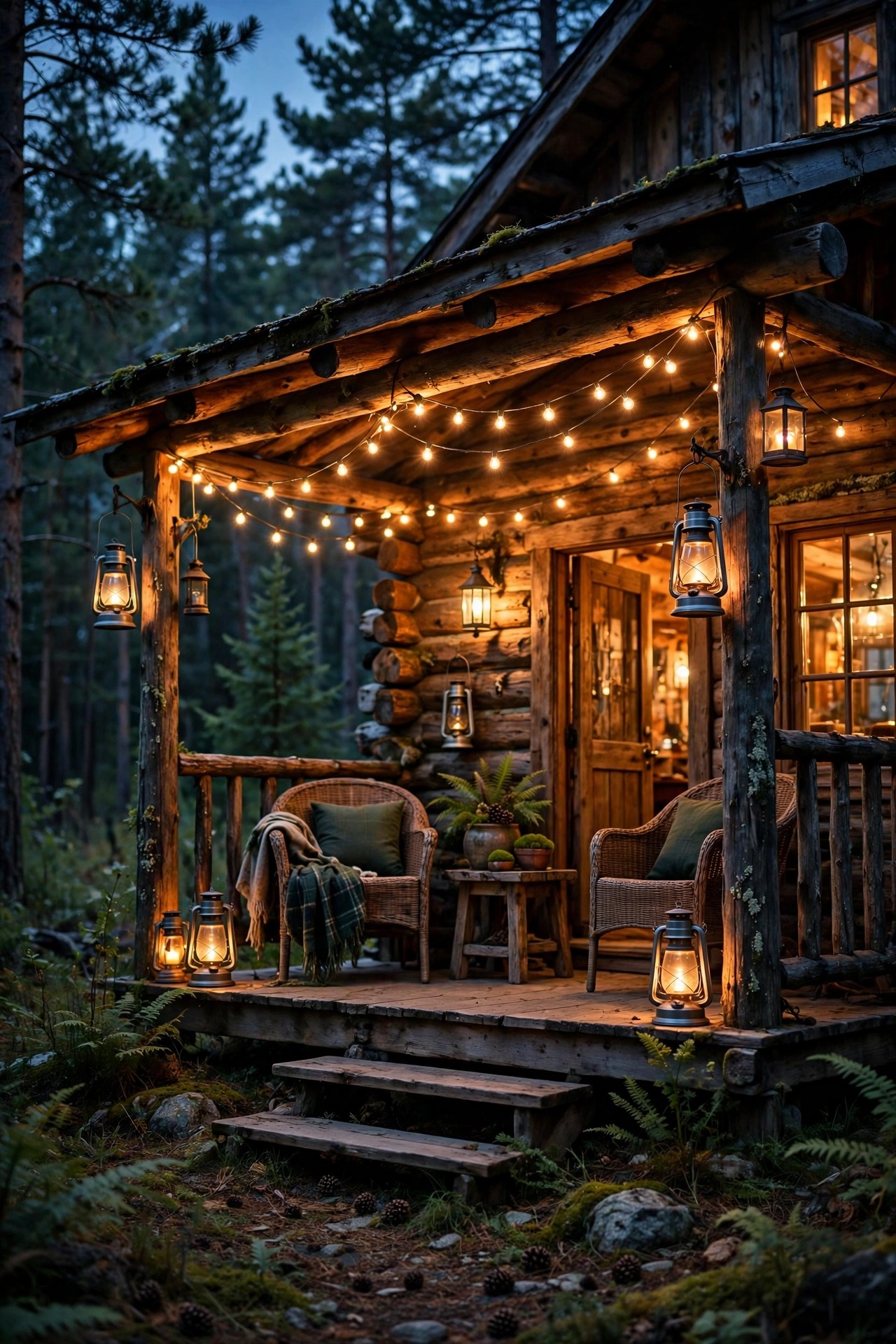
1. Start With Layers: The Secret Behind Great Cabin Porch Lighting Ideas
Before you hang a single lantern, decide what each light on the porch is actually for. I plan three layers every time. The base layer is pure safety: a gentle wash over the porch floor, the steps, and the path from the car, bright enough to carry a cooler in the dark without drama. The middle layer lives at sitting height, roughly 3 to 5 feet up, because that is where faces, books, and board games are, and it should be warm and flattering rather than bright. The top layer is the sparkle: string lights, fairy lights, anything that twinkles overhead and makes the porch feel like a clearing in a fairy tale. Sketch the porch, mark where your one or two outlets live, and note which corners get afternoon sun, because those corners are prime solar territory. In my experience, an hour of planning saves a whole weekend of extension cords snaking across the deck boards. Once the layers are clear, every idea below slots neatly into one of them.
Suggested budget range: $0 – $30.

2. Edison-Style Filament Bulbs in Matte Black Lanterns
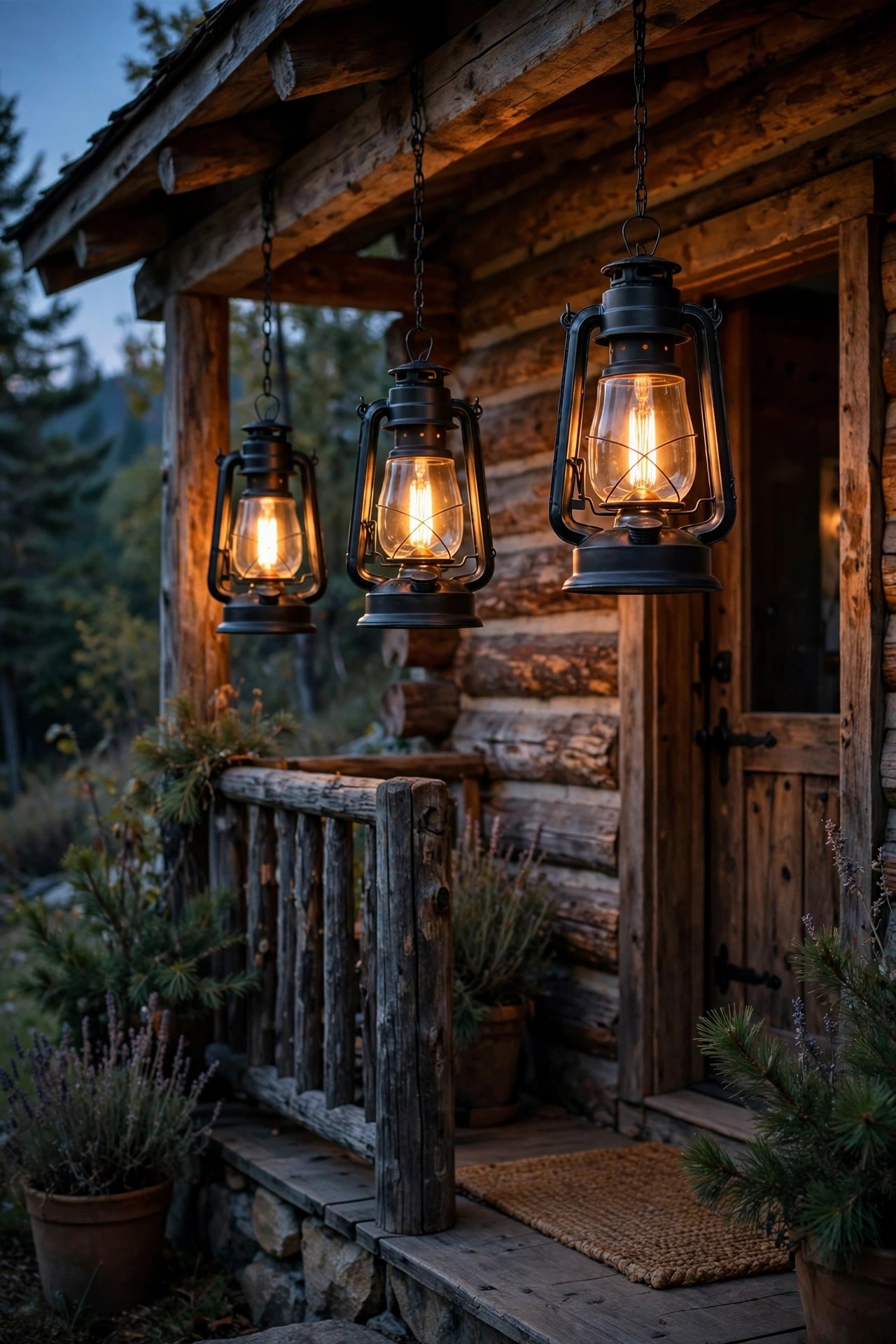
If a cabin porch had an official bulb, it would be the warm filament style. LED filament bulbs give you that golden, old-lodge glow at 2200K to 2700K while sipping electricity, which matters when the cabin runs on a modest panel or you simply hate big bills for a weekend place. I hang them inside matte black metal lanterns with seeded or clear glass, either as pendants from the porch beam or as a row of table lanterns along the railing. The black finish disappears against dark wood siding, so all you see at night is the glow. Choose bulbs rated for enclosed fixtures and damp locations, and keep a couple of spares in the cabin junk drawer, because the nearest hardware store is never close. One honest note: filament bulbs are about mood, not task light. Pair them with a brighter layer for the steps and the grill corner, and let the filaments do what they do best, which is make everyone look like they are sitting around a campfire in a storybook.
Suggested budget range: $30 – $90.
3. Solar String Lights Wound Along the Porch Rail
Cabins and outlets have a complicated relationship, so solar string lights earn a permanent spot in my kit. I wind a strand along the top rail of the porch, weaving it loosely around the balusters so the bulbs sit at hand height and light the whole seating area with a soft, even wash. The trick is panel placement: clip the little solar panel to the sunniest end of the railing, ideally a south or west facing corner that gets at least six hours of direct light, even if the porch itself sits in shade. In the woods, that sunny corner might be ten feet away, so choose a set with a long lead wire between the panel and the first bulb. My favorite solar string light ideas work the same way at home, with the panel doing the sunbathing somewhere bright while the bulbs glow somewhere cozy. Expect four to six hours of light after a decent day of sun, which covers dinner and cards; on cloudy weekends, treat them as sparkle and lean on your lanterns for the real work.
Suggested budget range: $25 – $60.

4. Rustic Wall Sconces Flanking the Cabin Door
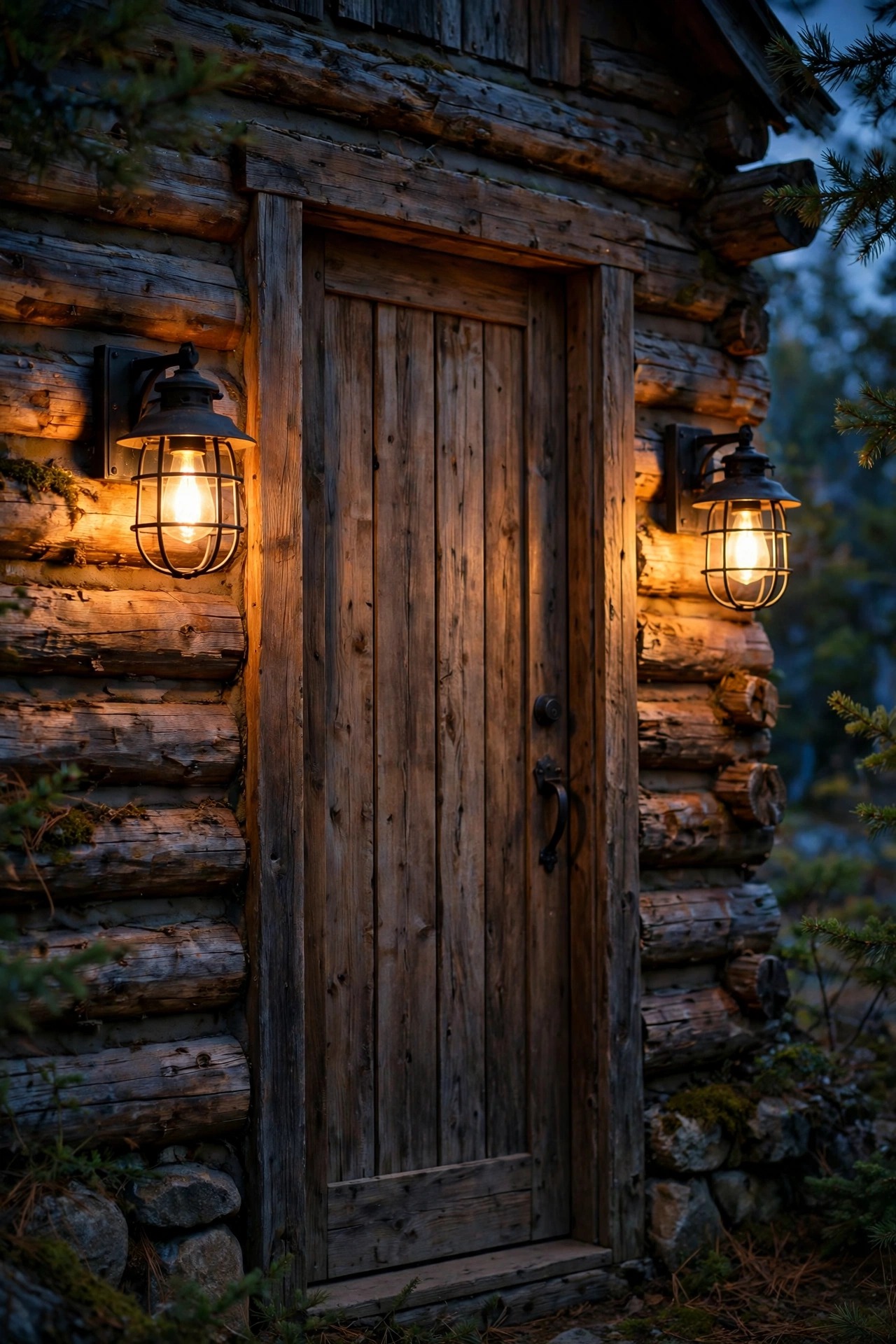
Nothing says "the cabin is open for the weekend" like a pair of sconces glowing on either side of the door. I look for barn-style or lantern-style fixtures in oil-rubbed bronze or matte black, with a seeded glass shade that hides bulb glare and shrugs off weather. Mount them about 66 inches from the porch floor to the center of the fixture, roughly eye level, so the light lands on faces and the lock you are fumbling with instead of blasting into your eyes. If your cabin has no junction box by the door, solar wall sconces with a separate panel solve it without an electrician, and many now include a motion mode for arrivals. Hardwired or solar, put them on their own switch or timer so the porch can greet you before you even park. I pulled most of my finish and shape inspiration from these rustic cabin lighting ideas, which nail that lodge look without tipping into theme-park territory. Two matched sconces also frame the door beautifully in photos, which is not the point, but it is a nice bonus.
Suggested budget range: $40 – $140.
5. Hurricane Lanterns Lining the Porch Steps
Steps are where cabin weekends go sideways, usually after dark, usually with someone carrying a tray. My fix is a row of hurricane lanterns, one on every other step, set close to the railing side so feet stay clear. The tall glass chimney shape protects the flame look from porch breezes, and inside I use flameless LED candles with a realistic flicker and a built-in timer, because real candles near dry pine needles and wooden steps are a hard no from me. Set the timer once and the lanterns switch themselves on at dusk all weekend, then off five hours later. Choose lanterns with drainage holes or raised bases if your steps catch rain, and give the glass a quick wipe each season so the glow stays clear. In my experience, step lighting works best when it is low and frequent rather than bright and rare: guests read the staircase from the pattern of pools, not from one harsh beam. It also looks like something out of a storybook, lanterns climbing the steps to a glowing porch.
Suggested budget range: $35 – $100.

6. A Flush-Mount Ceiling Light for Low Porch Roofs
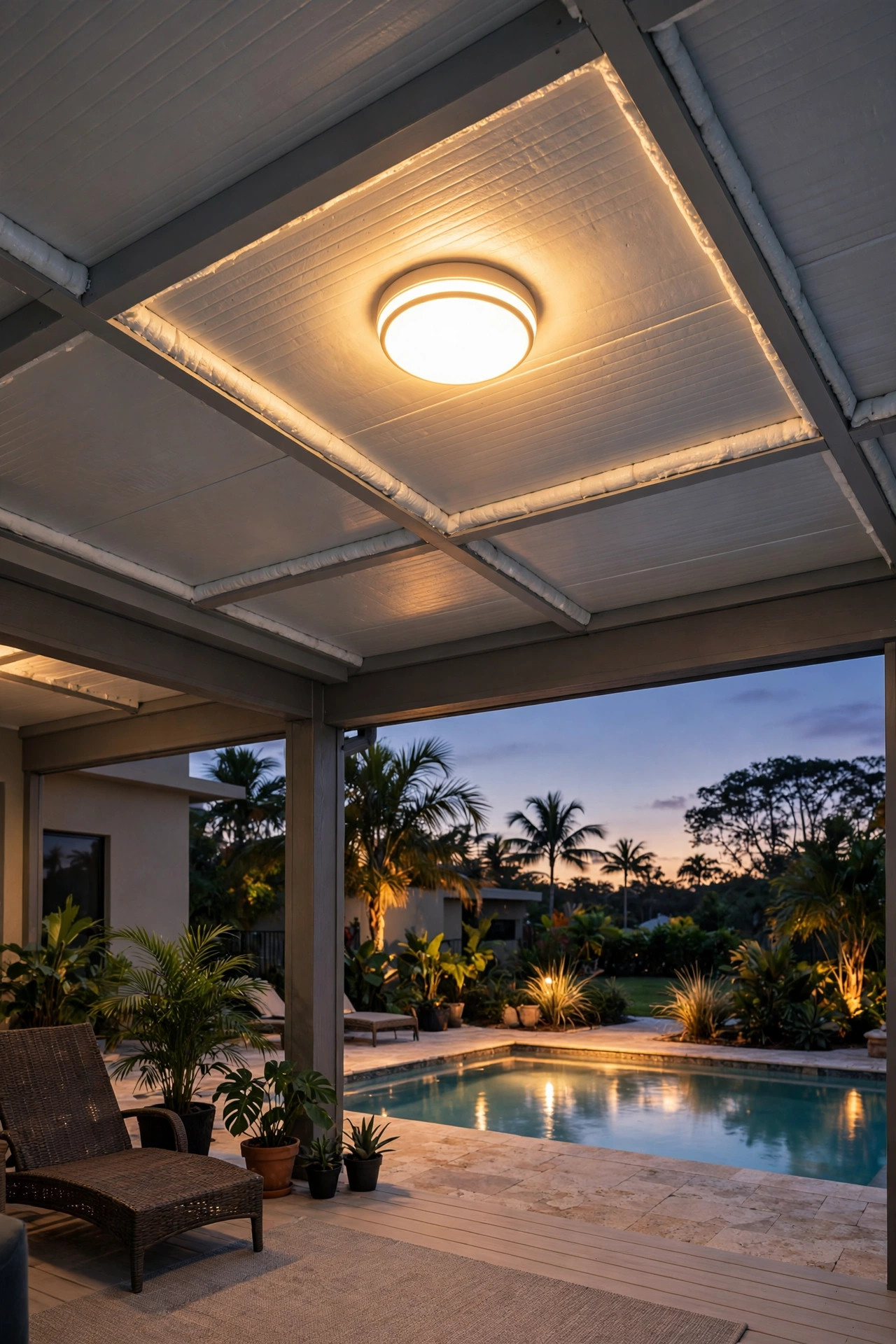
Plenty of cabin porches have low, sloped ceilings where a hanging fixture would bonk every tall uncle who visits. A flush-mount ceiling light solves it: a simple dome or drum style with a frosted lens, mounted dead center over the seating area, gives even ambient light for the whole porch without stealing headroom. Pick a fixture rated for damp or wet locations, since porch ceilings collect condensation and the occasional windblown rain. I pair it with a warm 2700K LED bulb around 800 to 1,100 lumens, bright enough for reading a map or mending a fishing line, and always on a dimmer if the wiring allows, because full brightness is rarely the mood after dinner. If there is no ceiling box at all, a plug-in swag kit run neatly along a beam gets you 90 percent of the effect. Honestly, this is the least glamorous idea on the list and the one that quietly makes every other light look better, because it fills in the shadows the pretty lights leave behind.
Suggested budget range: $45 – $130.
7. A Motion-Sensor Fixture for Late-Night Arrivals
Cabin arrivals happen in the dark more often than anyone plans: the Friday drive runs long, somebody steps out at midnight, a dog needs one last trip to the tree line. A motion-sensor fixture over the door or at the porch corner handles all of it, waking up only when there is movement and fading back to black so the stars stay visible. I set the sensitivity to medium and the range to about 20 to 30 feet, aimed along the path rather than into the woods, because a sensor pointed at the trees will spend all night reacting to deer, raccoons, and one very confident skunk. Choose a fixture with a dusk-to-dawn photocell too, so it never burns power in daylight. The placement and sensitivity advice in this motion sensor outdoor lights guide is the same I follow at home, and the cabin version matters even more because nobody is flipping switches out there. Set the on-time to one or two minutes, long enough to unlock a door and unload a bag, short enough to forget it exists.
Suggested budget range: $30 – $85.

8. Solar Path Lights Guiding Guests to the Porch
The walk from the car to a cabin porch crosses roots, rocks, and at least one step nobody remembers. A line of solar path lights turns that stumble into a stroll, and because they are independent little units, you can thread them along any winding route the woods demand. Space them 4 to 6 feet apart on curves and tighter, about 3 feet, on straight runs near steps, staggering them on alternating sides so the path reads clearly without looking like a runway. In heavy tree cover, be picky about spots: even an hour or two of dappled midday sun keeps a good solar light honest for the evening. Push the stakes into soft ground after rain if your soil is rocky, and keep the panels wiped clean of pollen and pine sap, which quietly dim them over a season. In my experience, a matched set of simple black stakes with warm white LEDs beats a mixed drawer of novelty shapes every time, because the eye reads the rhythm, and the rhythm is what guides the feet.
Suggested budget range: $25 – $70.
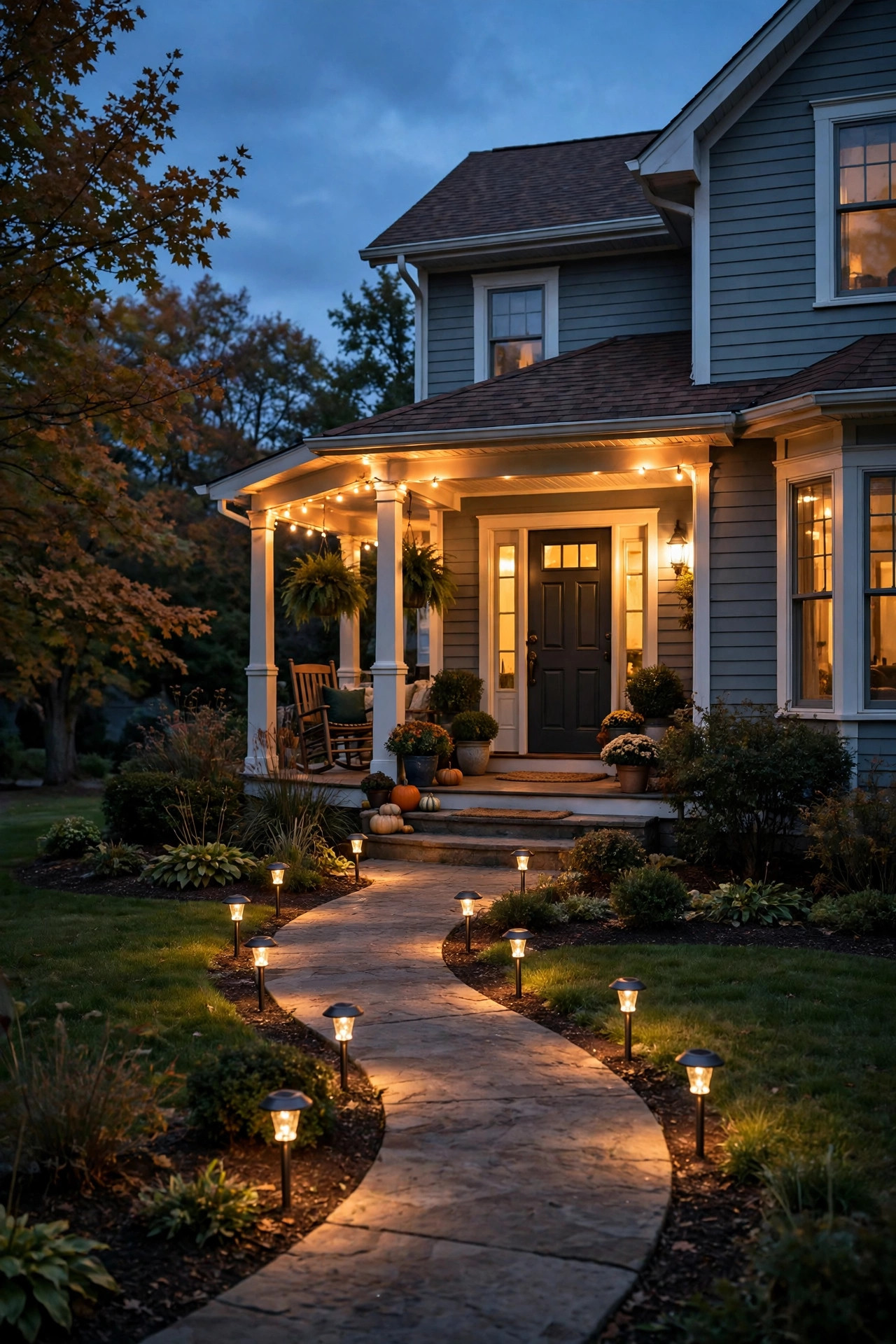
9. Cafe-Style String Lights From Beam to Beam
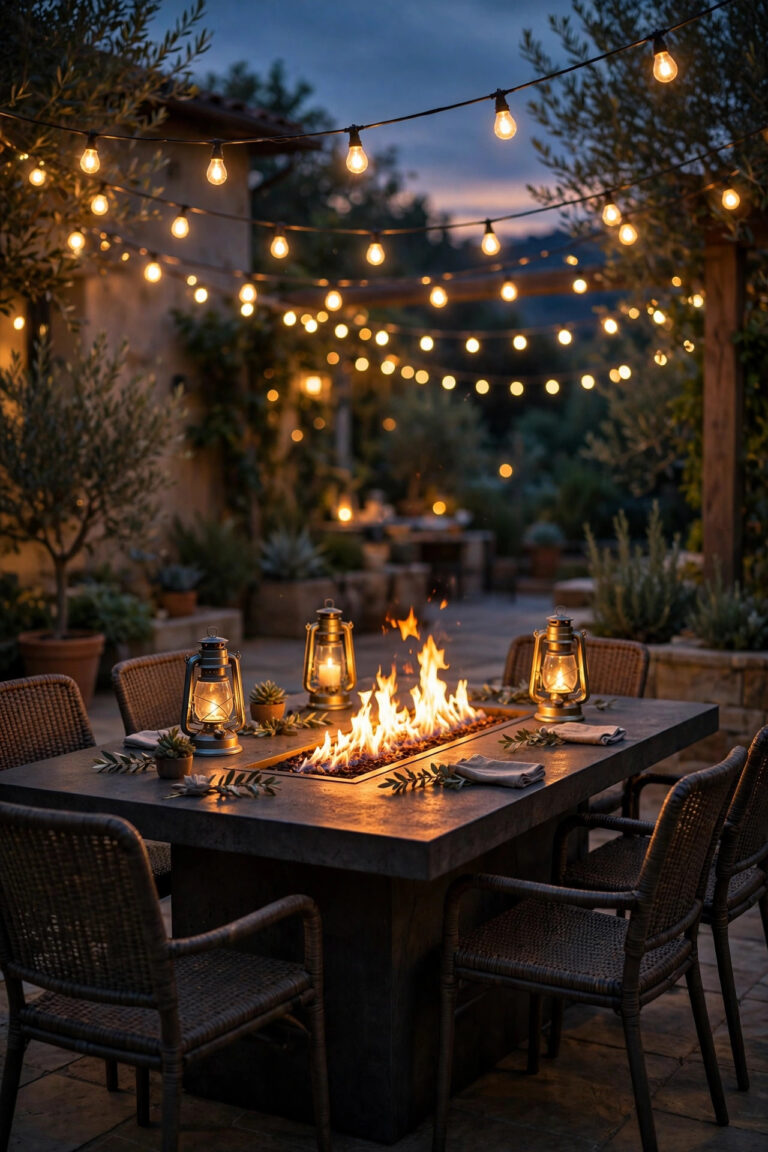
For pure porch atmosphere, nothing beats cafe string lights sagging gently from beam to beam overhead. Use commercial-grade outdoor strands with shatterproof LED bulbs and a proper guide wire if your span runs longer than about 15 feet, because a heavy strand hanging from its own cord will droop into a sad smile by August. Space the swags evenly, let each one dip 12 to 18 inches at the center, and always plug into a GFCI outlet, which is non-negotiable anywhere outdoors. Warm white bulbs at 2700K keep the wood tones rich; skip the multicolor strands unless it is a holiday weekend and the kids have voting rights. Up in the rafters the bulbs sit above sight lines, so the light feels like it comes from nowhere and everywhere, and string lights layered over the seating layer make faces glow in photos. Honestly, this is the single change guests comment on most. Take the strands down or at least unplug them for winter if your cabin sits empty under snow load, and they will last for seasons.
Suggested budget range: $35 – $110.

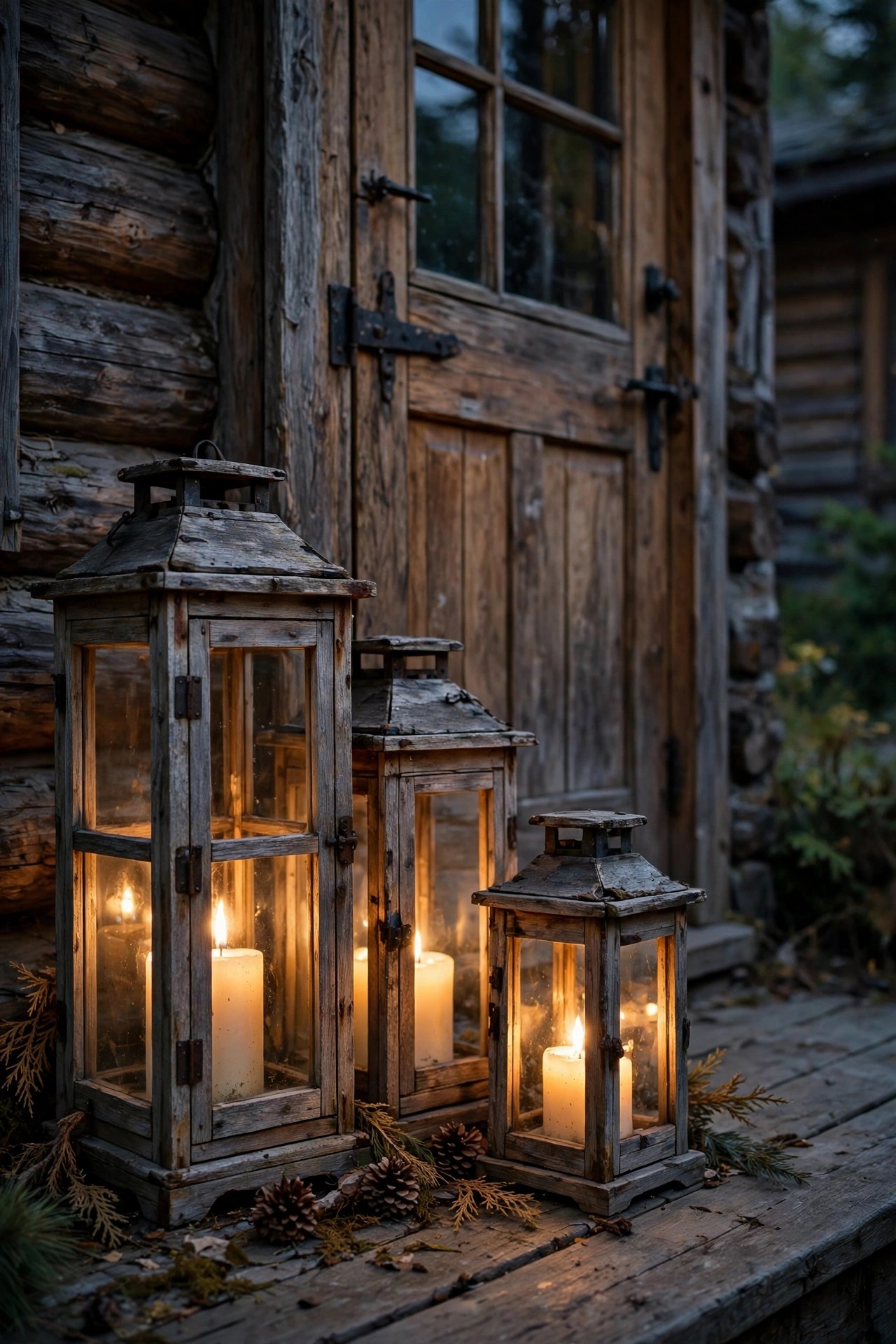
10. Flameless Candles Inside Weathered Wood Lanterns
Some cabin porches want candlelight without a single real flame, and I am firmly on that team anywhere near dry timber and fallen needles. Weathered wood lanterns with glass panels and a flameless LED candle inside give you the flicker, the warmth, and zero fire risk, and they look right at home next to a split-log bench. I cluster them in threes on the porch floor by the door and on side tables, mixing heights so the glow feels gathered rather than lined up. Look for candles with a daily timer function, set them once at dusk, and the porch lights itself every evening of your stay, then politely switches off at bedtime. Battery life on the good ones runs a whole season of weekends, and a set of rechargeable batteries keeps the junk drawer drama low. Because there is no flame, these are also the one light I happily move indoors during a thunderstorm for a power-outage glow in the great room. Rustic, safe, and nearly zero effort: that is a cabin trifecta.
Suggested budget range: $30 – $85.
11. Hanging Mason Jar Pendants You Can Make in an Afternoon
Every cabin has a shelf of mason jars holding nails, buttons, and good intentions. Turn three or five of them into pendants and the porch gets a handmade glow that suits the place better than anything shipped in a box. The simple version: drop a battery tea light or a short strand of copper-wire fairy lights into each jar, screw on a ring lid fitted with a hanging hook, and suspend them from the porch beam at staggered heights with jute twine or thin black chain. The solar version uses lids with a built-in solar panel and LED, charges all day on a sunny railing, then hangs for the evening. Keep the jars clean, because woodland dust and pollen dull the sparkle fast, and bring the battery versions under cover in hard rain even though the jars themselves shrug off weather. I always recommend grouping odd numbers and letting the heights ramble a little; perfect symmetry looks store-bought, and the whole charm here is that it does not. Total hands-on time is about an hour, mostly spent finding the good twine.
Suggested budget range: $15 – $45.

12. Dusk-to-Dawn Photocell Bulbs in the Fixtures You Already Own
Sometimes the smartest upgrade is a bulb swap. If your cabin porch already has decent fixtures, screwing in LED bulbs with a built-in photocell means the porch lights itself at dusk and rests at dawn, whether you are there or not. That last part matters: a cabin that glows on schedule looks lived-in from the road, which is gentle, free security during the long stretches between visits. Choose bulbs rated for outdoor and enclosed use as your fixture demands, in warm 2700K, and match the brightness to the job, around 800 lumens for a main porch fixture and 450 for a soft accent. There is no app, no hub, no Wi-Fi password hunt in the rain; the little sensor in the bulb neck does all the thinking. In my experience these are also the kindest bulbs for renters and family cabins with many co-owners, because nobody has to remember a switch and nobody argues about the power bill. One caveat: a photocell bulb in a fixture on a dimmer or motion control can confuse both devices, so give it plain, steady power.
Suggested budget range: $12 – $35.
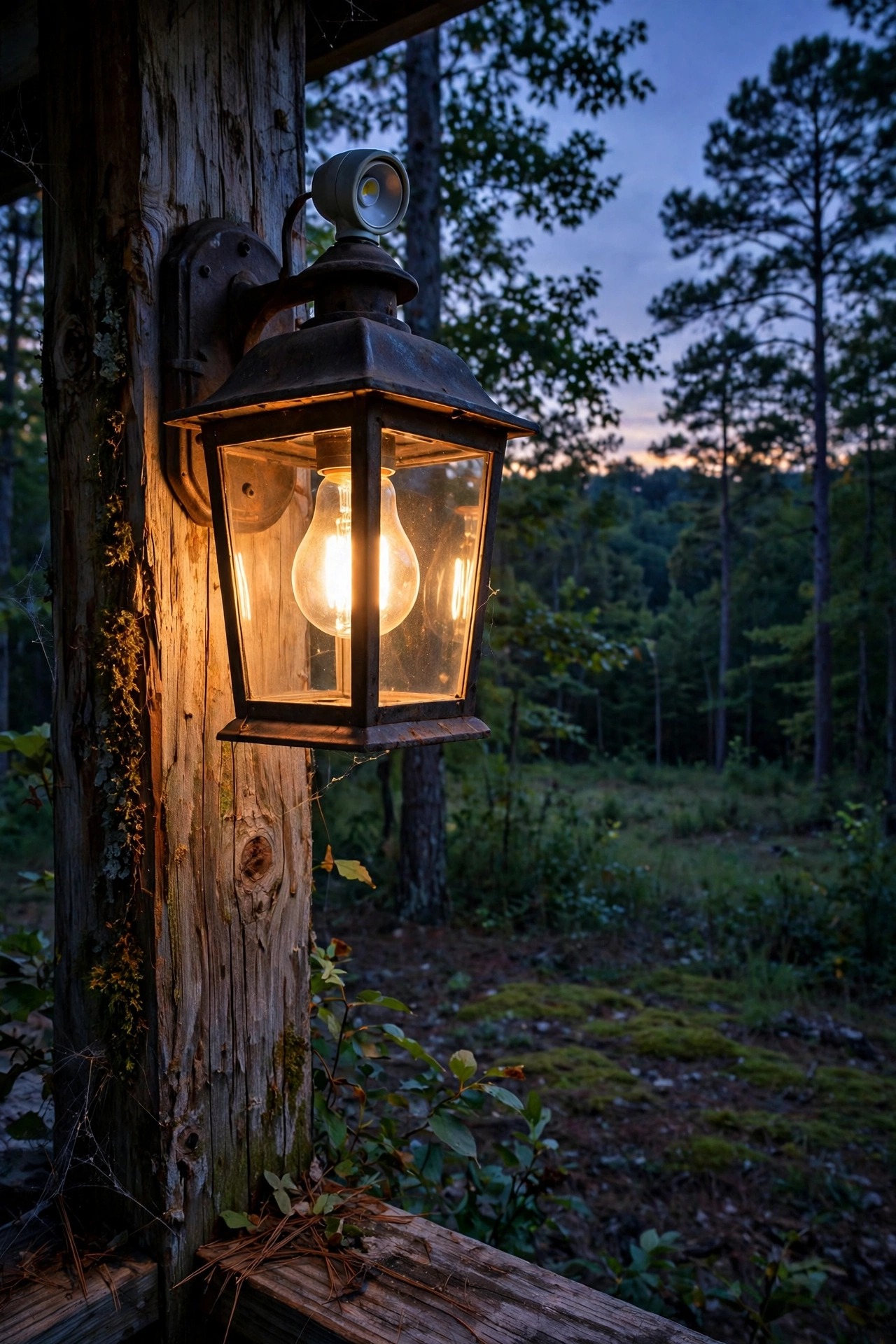
13. Copper-Wire Fairy Lights Wrapped Around the Porch Posts
Fairy lights are the garnish of the porch world: useless alone, magical in support. I wrap copper-wire strands around the porch posts in a loose spiral, about a hand-width between turns, so each post becomes a soft column of sparkle that frames the view out to the trees. Battery packs tuck behind the post at the base where a zip tie or a small hook keeps them dry and invisible. Because the wire is nearly invisible in daylight, the posts look plain all day and then quietly glitter after dark, which delights every kid and most adults I have ever hosted. Keep expectations honest: fairy lights will not help you find a dropped key, and that is fine, because your layered base lights are doing the work. They are the layer that makes people say the porch feels like a storybook. Solar fairy strands work too if your posts catch sun, but under a porch roof the battery versions are more reliable. Replace the batteries each spring and the strands will outlast several sets of porch furniture.
Suggested budget range: $12 – $40.

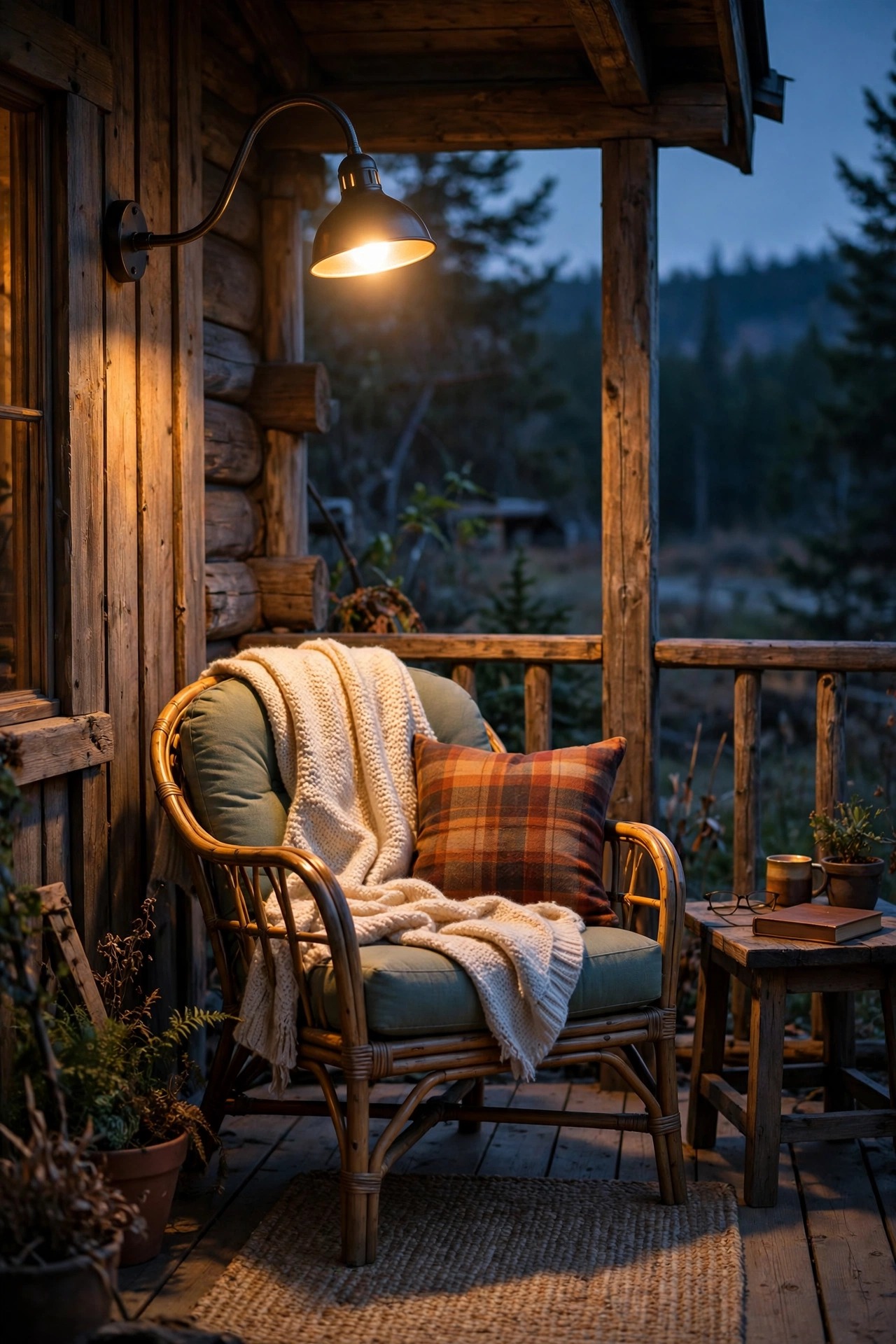
14. Gooseneck Barn Lights Over the Reading Corner
Every cabin porch deserves one serious light for the serious business of reading, whittling, knot-tying, and inspecting fishing lures. A gooseneck barn light is my pick: the curved arm throws a focused pool of light down onto a chair or a small table while the shade keeps glare out of your eyes and out of the yard. Mount it on the wall above your favorite seat, roughly 6 feet up, and angle the shade so the pool lands on the book, not the boards. The enamel shade styles in deep green or black with a white interior feel born for cabin siding, and the white underside bounces a surprising amount of useful light. Wire it to its own switch if you can, because this is a task light you will want without waking the whole porch scheme. Bulb choice matters here: a brighter 1,100 to 1,600 lumen warm LED gives true reading light, and on a dimmer it softens into ambiance later. It is the most farmhouse idea on the list and somehow the one that makes a wood porch feel finished.
Suggested budget range: $55 – $150.
15. LED Rope Light Hidden Under the Handrail
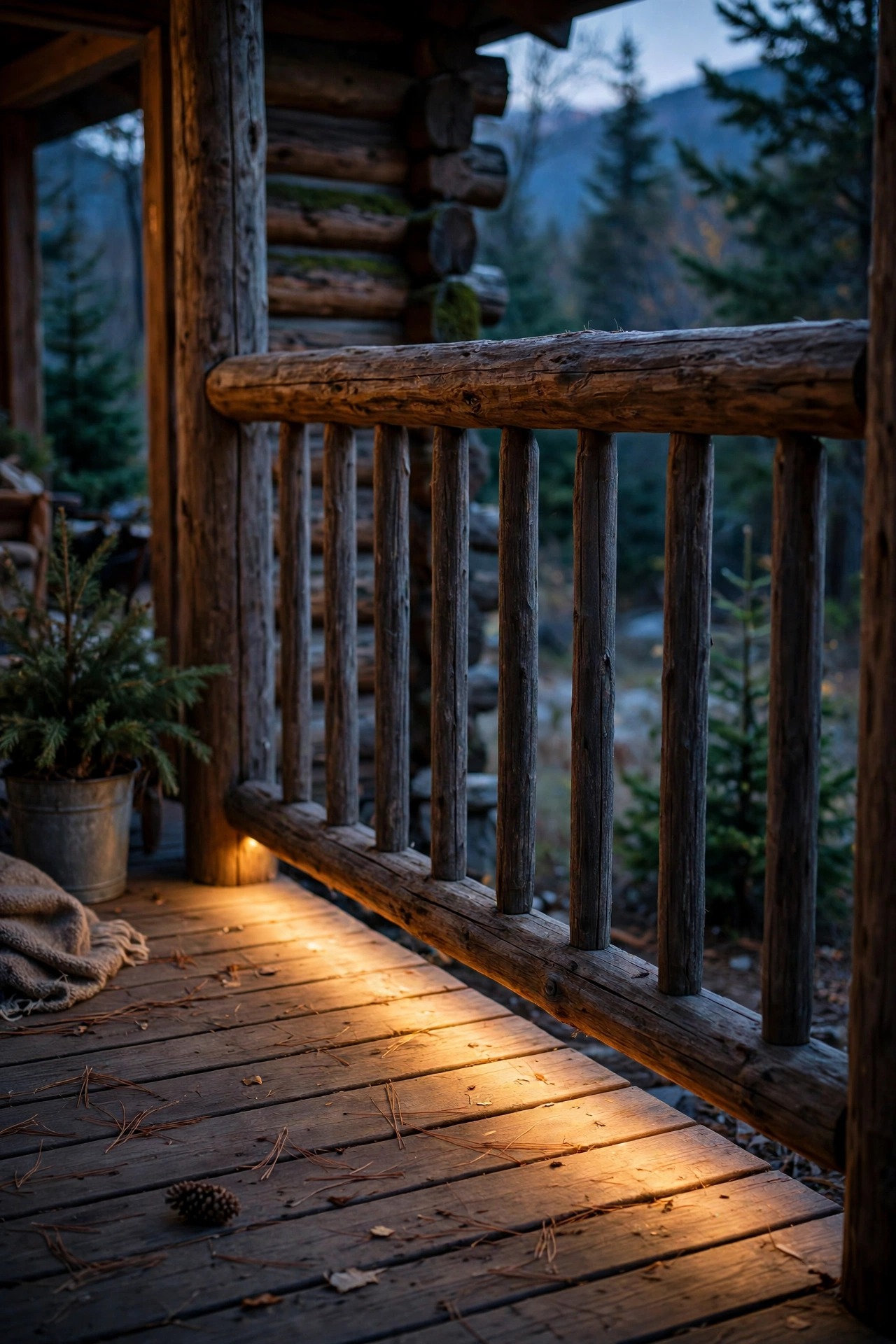
For a modern trick that hides inside a rustic porch, run a warm LED rope light under the handrail where nobody sees the source, only a ribbon of glow along the wood. It outlines the porch edge and the stair rail beautifully, which is exactly the route guests travel with mugs in hand after dark. Outdoor-rated rope light or tape in a weatherproof channel handles this well; mount it on the underside of the rail with clips every 12 inches so it never sags, and aim it down at the deck boards. The light bounces softly off the floor instead of shining into eyes, so it reads as ambiance while quietly doing safety work. Keep the power supply and connections under the porch roof in a weatherproof box, and use only connectors rated for outdoor use, since the rail is where rain runs. In my experience this is the idea visitors ask about most after the string lights, because it looks like the porch was designed that way from the start. Choose 2700K so the ribbon blends with your lanterns instead of fighting them.
Suggested budget range: $25 – $75.
16. Amber Bug-Light Bulbs for Moth-Free Evenings
Woodland evenings come with an enthusiastic moth population, and a bright porch light is their concert venue. Swapping your main porch bulbs for amber bug-light LEDs genuinely helps: insects see warm yellow-amber light poorly, so the swirling crowd thins out and dinner on the porch gets much more pleasant. I keep the amber bulb in the fixture nearest the seating and the door, since that is the light that stays on longest, and leave the white task lights for short jobs. The glow is deeper and more honeyed than standard warm white, which honestly suits a cabin even better, like lamplight from another century. A few honest limits: bug bulbs reduce the party, they do not cancel it, and they do nothing about mosquitoes, so keep the citronella and the screen door in the plan. Pair the amber swap with keeping lights off when the porch is empty, because the best moth magnet is still a light nobody is using. For about the price of a pizza, it is the highest comfort-per-dollar change on this whole list.
Suggested budget range: $10 – $30.

17. Smart Plugs and Timers So the Porch Greets You
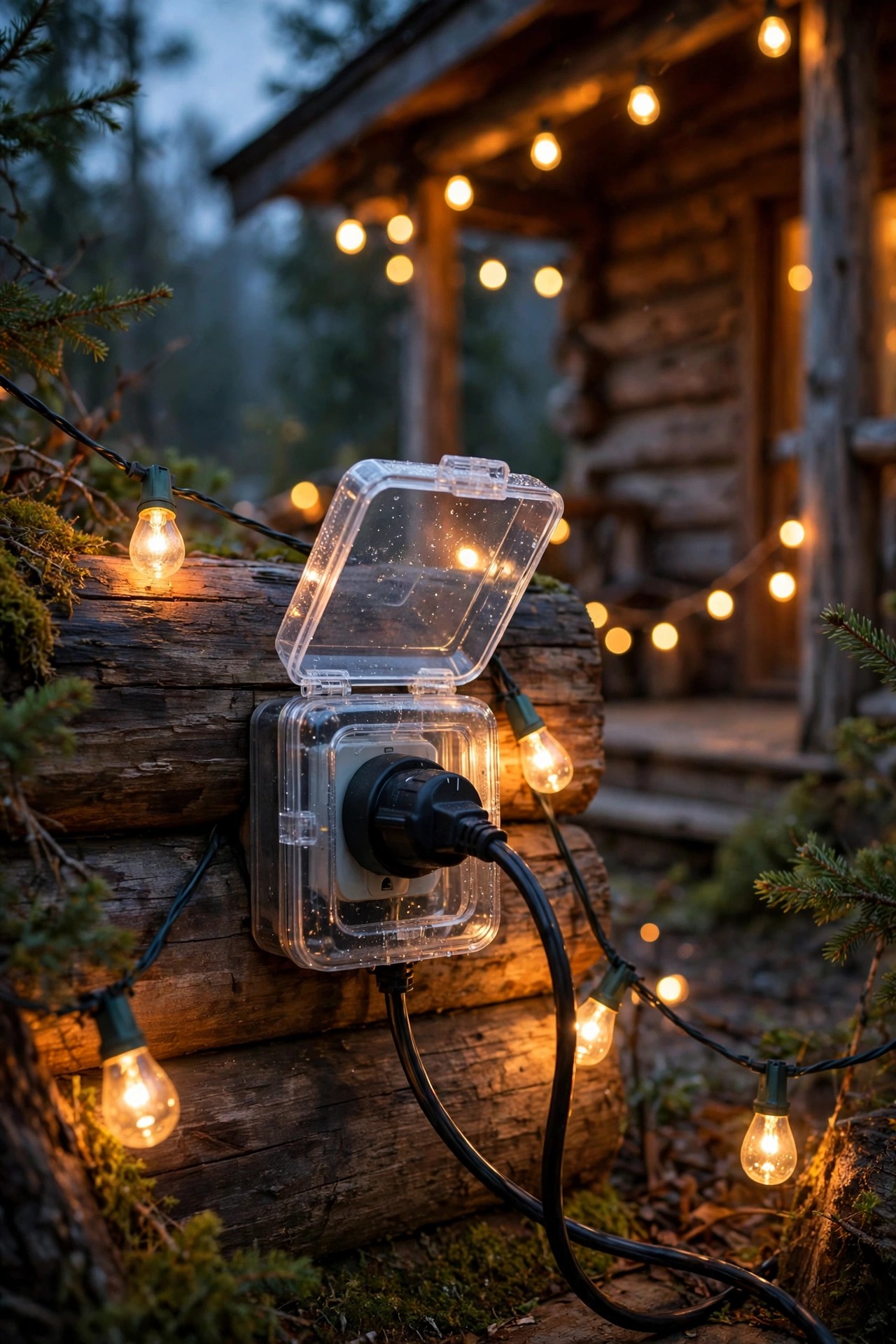
There is a special joy in rounding the last bend of the driveway and seeing the cabin porch already glowing, like the place has been expecting you. Outdoor smart plugs and simple mechanical timers make that happen: set the sconces and string lights to wake at dusk and sleep at 11, and the cabin runs its own evening routine whether you arrive Friday at six or Saturday at noon. For cabins with Wi-Fi, an outdoor-rated smart plug lets you warm up the porch from the road, which never stops feeling like a magic trick. For off-grid or no-signal cabins, an astronomical timer that tracks sunset through the seasons does the same job with zero network, and a photocell timer is simpler still. I always recommend plugging the pretty layers into the timer and leaving the motion light independent, so security lighting keeps its own schedule. Keep the plug itself under the porch roof or in a weatherproof cover, because the plug is always the weak point in an outdoor setup. Set it once in spring, check it at the fall closing, and forget about switches entirely.
Suggested budget range: $15 – $50.
18. A Rustic Pendant Over the Porch Table
If your porch has a table where meals, maps, and marathon card games happen, give that table its own pendant. A single rustic pendant, think a metal dome, a woven-look shade rated for outdoors, or a lantern-style fixture, hung so the bottom sits about 30 inches above the tabletop, pools warm light exactly where people gather and leaves the rest of the porch in a flattering half-glow. That contrast is what makes a porch feel like a room instead of a parking lot. On a dimmer, the same pendant goes from puzzle-bright to candlelight-soft in one slide. Mind the swing: in breezy mountain spots, choose a fixture with some heft or a short, stiff rod instead of a long cord, and keep real flame versions off the list entirely. LED filament bulbs look wonderful inside open shades here, tying back to the lanterns by the door. In my experience, people linger at a table with its own pool of light long after they would have drifted inside, which at a cabin is precisely the point of the whole building.
Suggested budget range: $50 – $160.

19. Cabin Porch Lighting Ideas That Work Off-Grid Too
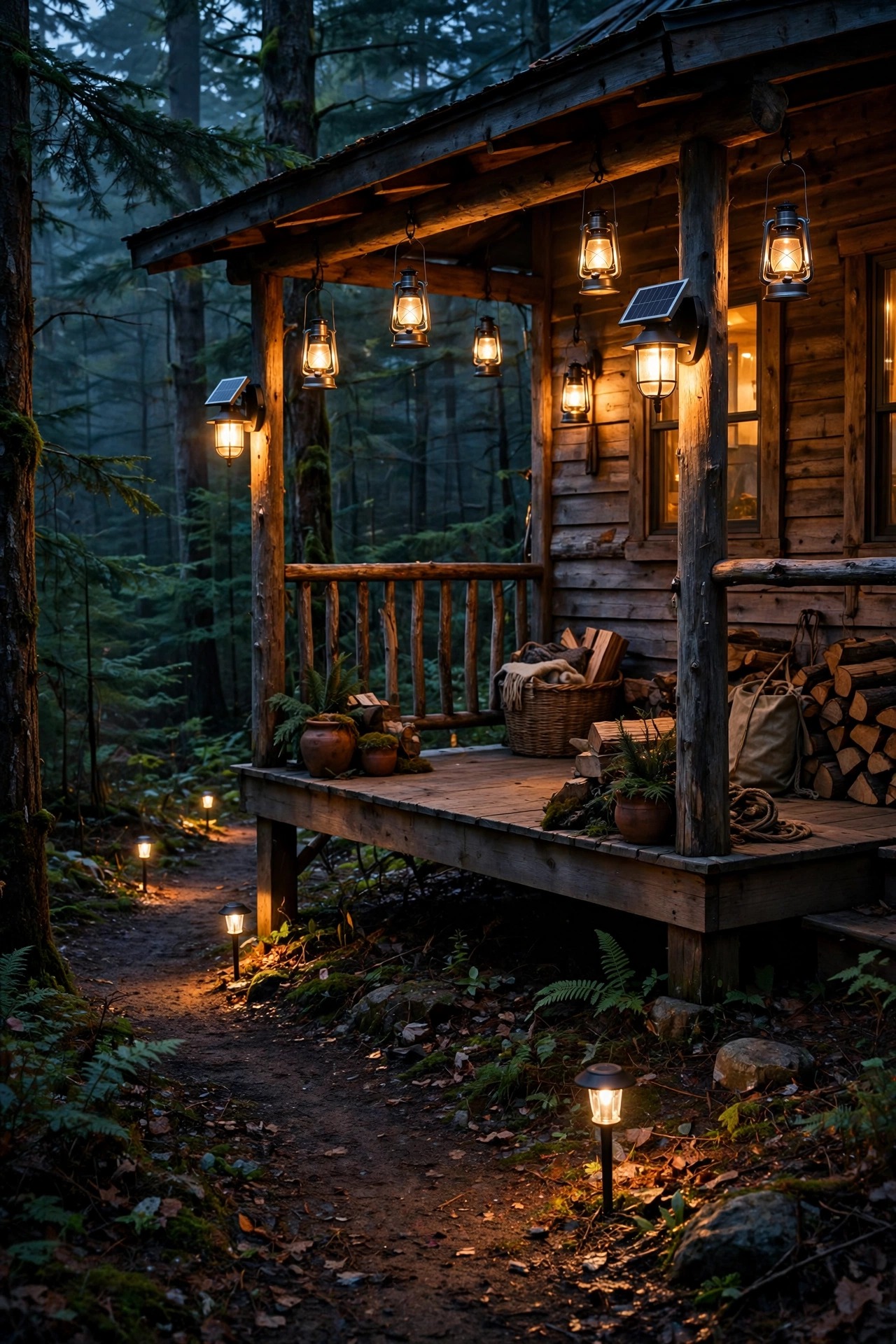
Plenty of beloved cabins have no grid power at all, and the porch still deserves its glow. The off-grid version of this list leans fully solar and battery, and it works better than skeptics expect. Anchor the plan with a solar sconce by the door and solar path lights, the two layers that matter most for safety, then add battery lanterns and fairy lights for the mood layers, since batteries do not care about tree cover. A small power station, the suitcase-sized kind many cabins already own for phones and a coffee maker, can run LED string lights for an entire evening on a fraction of its charge, because LEDs sip where incandescents gulped. The discipline that makes it all work is charging: panels and power banks spend weekdays on the sunniest railing so weekends start full. I label the lantern batteries with the spring, because off-grid lighting fails quietly in a drawer, not dramatically on the porch. No wires, no electrician, no trenching through tree roots, just a porch that glows in the middle of the woods like it has a secret. Honestly, it kind of does.
Suggested budget range: $60 – $220.
Frequently Asked Questions
What color temperature looks best on a cabin porch?
Warm, always. I recommend 2200K to 2700K for every bulb and fixture on a cabin porch. That range mimics firelight and lamplight, flatters wood siding and skin tones, and does not flatten the blue dusk around you the way cool white does. Cooler bulbs at 4000K and above read as parking-lot light in the woods and pull every moth in the county toward your door. Mix temperatures as little as possible, because one cool bulb in a warm scheme stands out like a wrong note.
Can solar lights really work under heavy tree cover?
Mostly, if you place them like a realist. Solar fixtures need roughly four to six hours of direct sun on the panel, and under a full canopy that sun lives in specific spots: the south end of the railing, the clearing by the driveway, the roof edge. Choose sets with a separate panel on a long lead wire so the light can live in the shade while the panel commutes to the sun. For spots with no sun at all, battery fixtures are the honest answer, and modern LEDs make them last for weeks of evenings.
How do I keep porch lights from drawing swarms of bugs?
Start with amber bug-light bulbs in the fixtures nearest seating and the door, since insects barely register that wavelength. Keep bright white light for short task moments only, aim fixtures downward so the glow pools on surfaces instead of broadcasting into the trees, and switch lights off when the porch is empty. A small fan over the seating area is the sleeper trick: moths and mosquitoes are weak fliers, and a gentle breeze keeps the air around your chairs mostly clear.
What outdoor rating do cabin porch fixtures need?
Look for fixtures listed for wet locations if they sit anywhere rain can reach, and damp locations at minimum for pieces tucked fully under the porch roof. Sealed LED fixtures with an IP44 rating or higher shrug off the driven rain, pine pollen, and freeze-thaw cycles a woodland cabin dishes out. Plug-in gear belongs on a GFCI outlet, full stop, and any bulb going into an enclosed fixture should say so on its box. Buying the right rating once is cheaper than replacing a corroded fixture every other spring.
Conclusion
The cabins I remember best all share the same porch: warm light in gentle layers, a safe path in from the dark, and a glow that feels like the woods are holding a lantern for you. None of it takes much money or a single trench of wiring. Pick the layer your porch is missing most, start there this weekend, and let these cabin porch lighting ideas build on each other trip by trip until the whole place hums at dusk. If you want more inspiration for the rest of your outdoor spaces, browse the lighting ideas across the site and steal shamelessly; that is what they are there for. See you on the porch.