A concrete patio is honest, durable, and — let's be real — a little cold. That big gray rectangle can swallow a backyard whole, especially after dark when it turns into a flat, shadowless pad that looks more like a parking spot than a place to linger. The good news? Concrete is the easiest surface in the world to light well, because light loves a pale, reflective canvas. These concrete patio lighting ideas are all built on the layering approach I use everywhere: something glowing overhead, something warm at eye level, and something low that traces the edges so the slab feels like a room instead of a runway. You don't need to drill a single hole or hire an electrician to pull off most of this list — solar, battery, and plug-in options do the heavy lifting. If you want the broader tour first, my roundup of patio lighting ideas covers every patio style. Here, we're solving one specific problem: making plain concrete feel soft, warm, and worth sitting on until the fireflies clock out.

1. Hang a Bistro String-Light Canopy Overhead
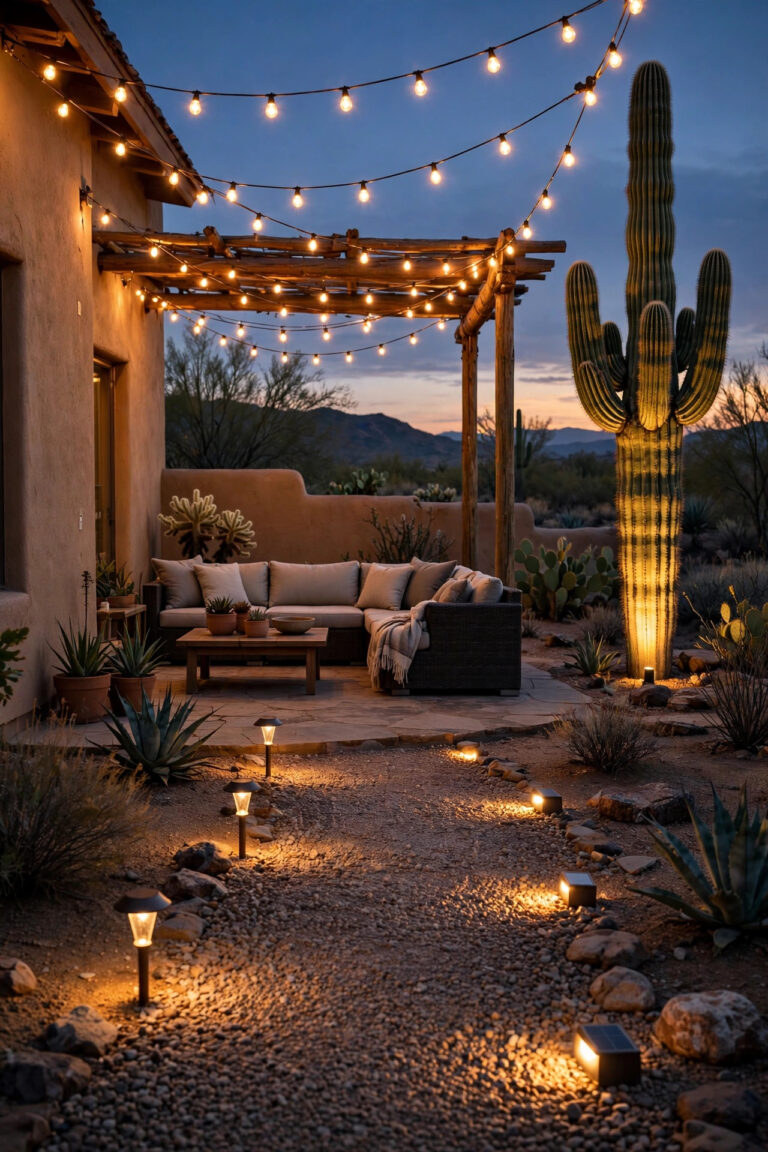
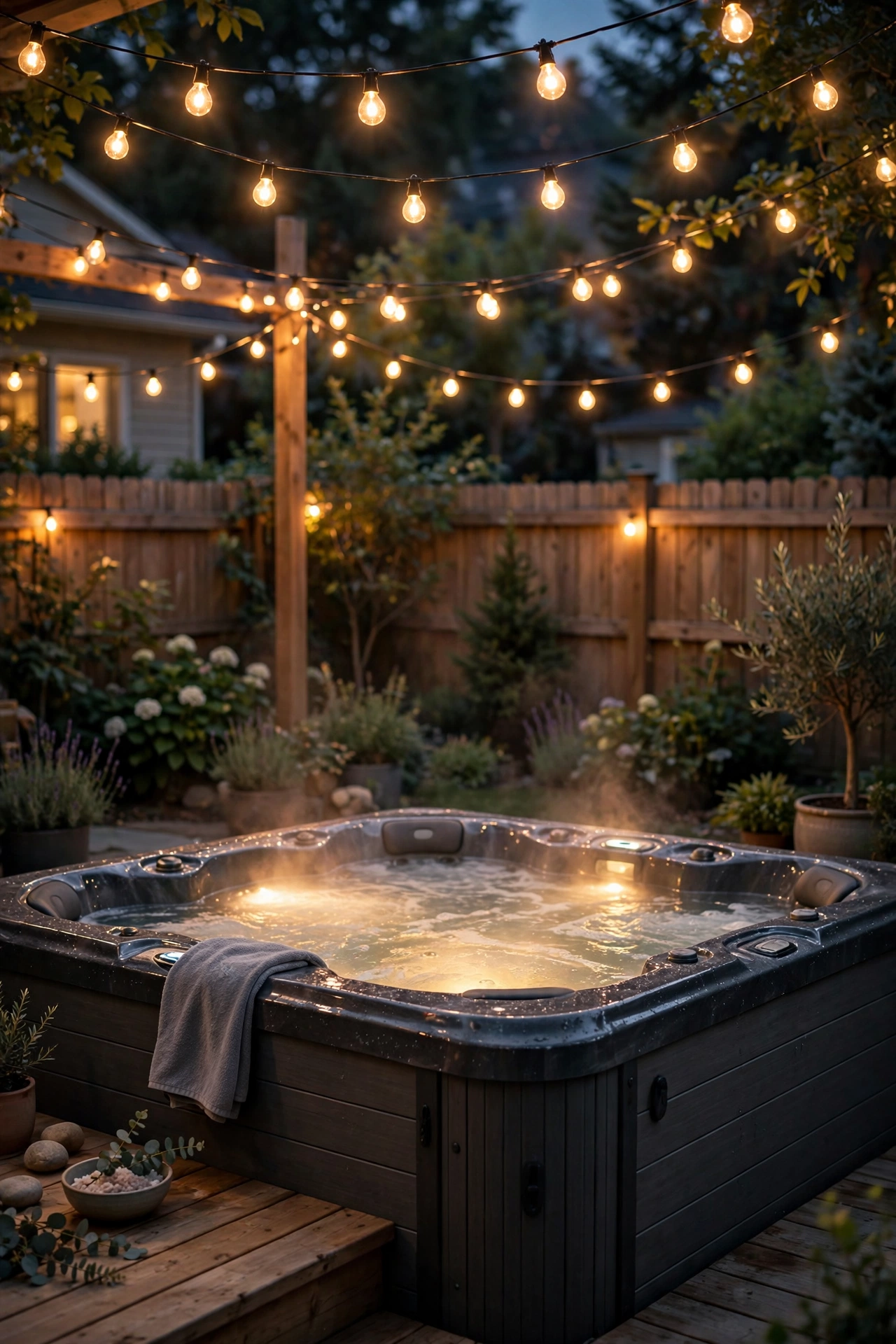
If you do only one thing on this list, do this. A canopy of bistro string lights instantly gives a slab a ceiling, and a ceiling is what turns open concrete into an outdoor room. I run two or three swags in a gentle catenary curve — never pulled tight and straight, which looks like a used-car lot. Aim for the lowest point of each swag to sit about 7½ to 8 feet above the slab so nobody brushes a bulb with their head. No pergola? No problem: set two or three 9- or 10-foot poles in heavy planters filled with gravel or quick-set concrete and hang from those. Choose shatterproof LED filament-style bulbs in the 2700K range; they read as candlelight, not interrogation. In my experience, warm bulbs against cool gray concrete create the exact contrast that makes the whole patio feel golden. For hanging patterns and hardware details, my guide to bistro string light ideas walks through swags, zigzags, and perimeter runs.
Suggested budget range: $35 – $90.
2. Stake the Perimeter — Solar Path Lights Are Beginner-Friendly Concrete Patio Lighting Ideas
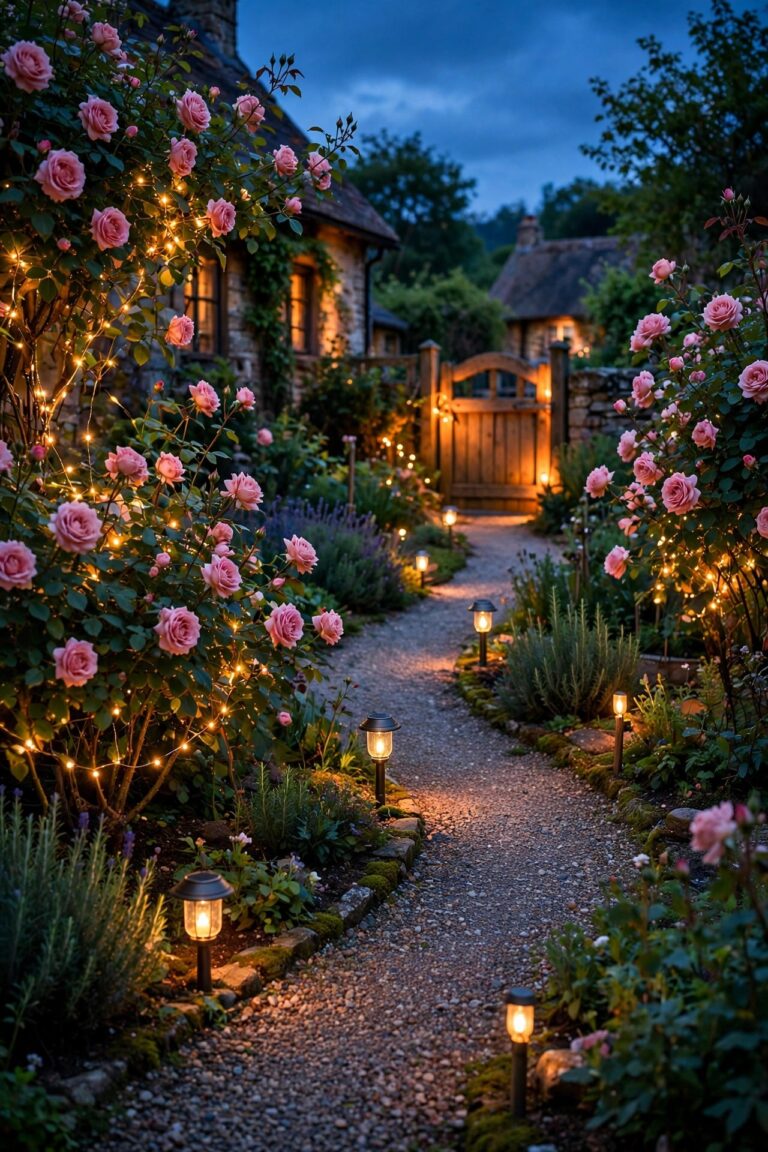
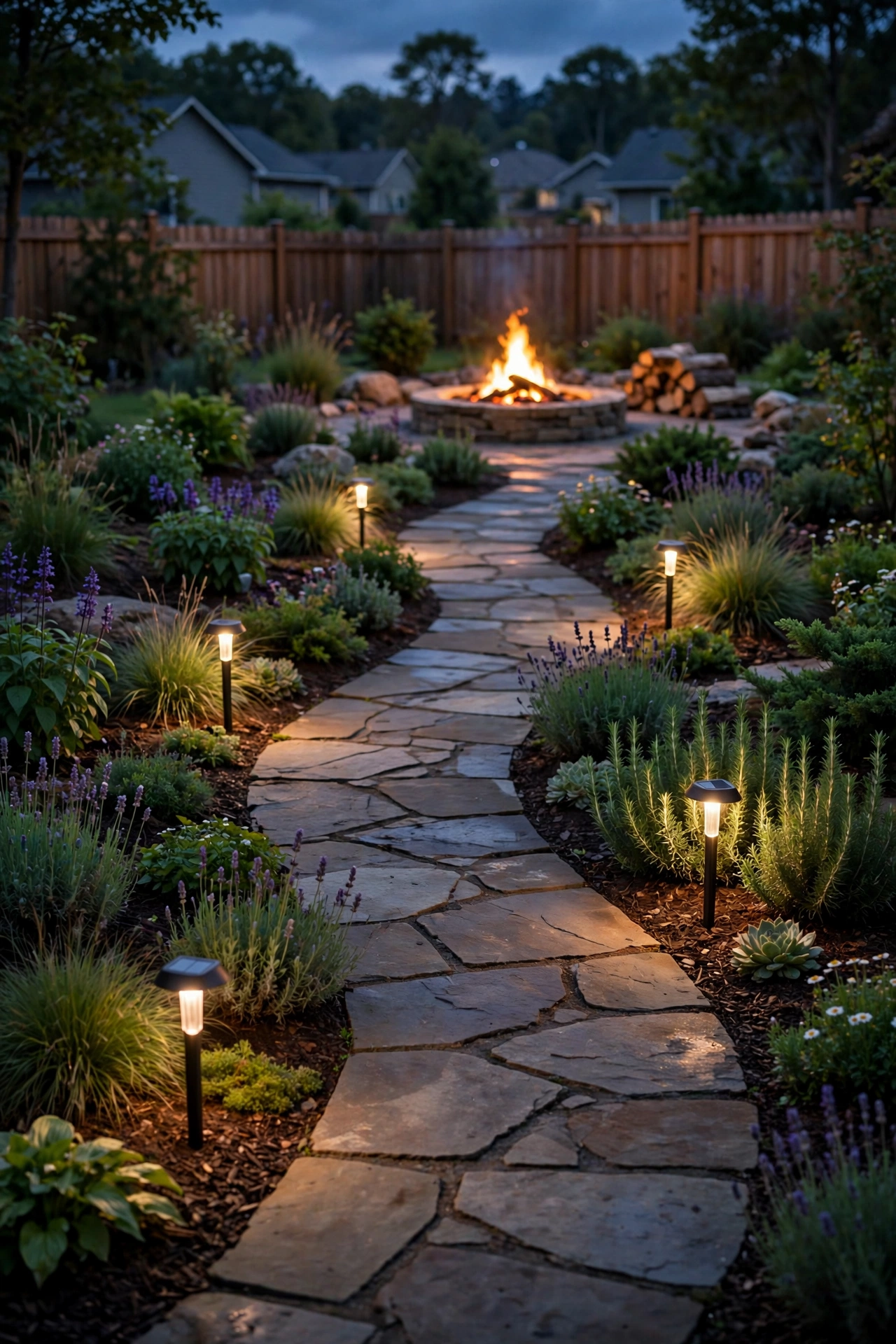
The edge of a slab is where the eye decides whether a patio looks finished or forgotten. A loose rhythm of solar path lights staked into the soil or mulch right along the perimeter softens that hard border and gives the concrete a glowing frame. Keep spacing irregular on purpose — every 4 to 6 feet, slightly varied, reads organic rather than airport runway. My one firm rule: buy stakes rated at least 100 lumens with a warm 2700–3000K color temperature, because the dim blue-white solar lights from the dollar bin are exactly what makes concrete look colder. Push them into the ground at a slight outward tilt so the light pools onto the slab edge instead of blasting into the lawn. Where the patio meets a garden bed, tuck a few behind plantings so the glow seems to come from the greenery itself. It's a twenty-minute project with zero wiring, and on a plain slab it's honestly the fastest transformation per dollar I know.
Suggested budget range: $25 – $60.
3. Cluster Lanterns in Odd Numbers
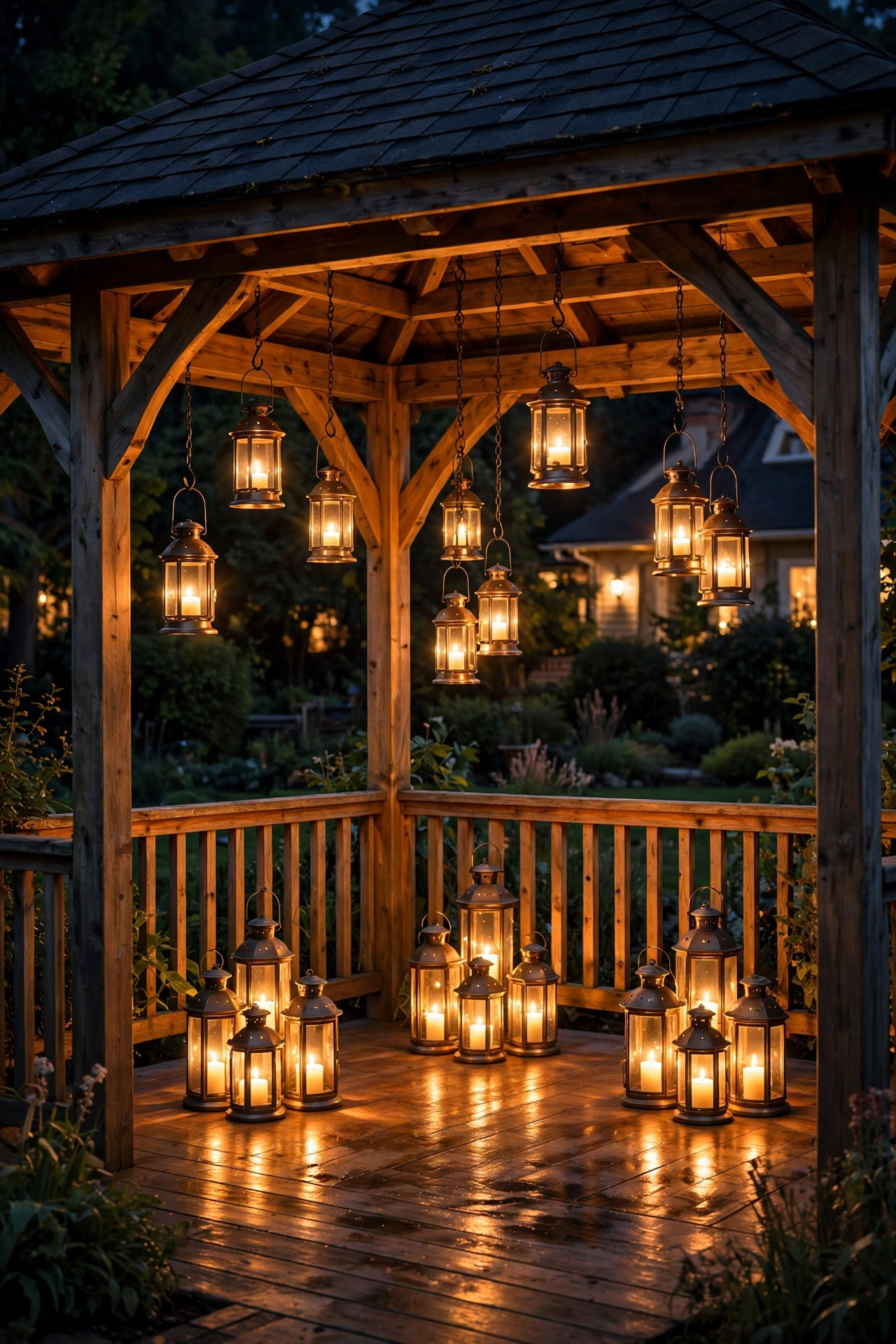
Lanterns are my favorite softener because they bring light down to sitting height, right where faces are. Group them in threes and fives — odd numbers just arrange themselves more naturally — and vary the heights: one tall floor lantern, one medium, one small votive, clustered at a corner or beside a chair. On concrete, I love mixing black metal frames with one warm wood or woven piece so the grouping doesn't feel matchy. Use flameless LED candles with a realistic flicker and a timer function; real flame near cushions and throws makes me nervous, and LED candles mean the cluster lights itself at dusk every night without you thinking about it. A cluster at the patio's far corner pulls the eye across the whole slab, which makes a small patio feel noticeably bigger. Tuck one single lantern beside the grill or the step up to the door as a quiet echo of the main group.
Suggested budget range: $30 – $85.
4. Press Solar Disk Lights Into the Corners
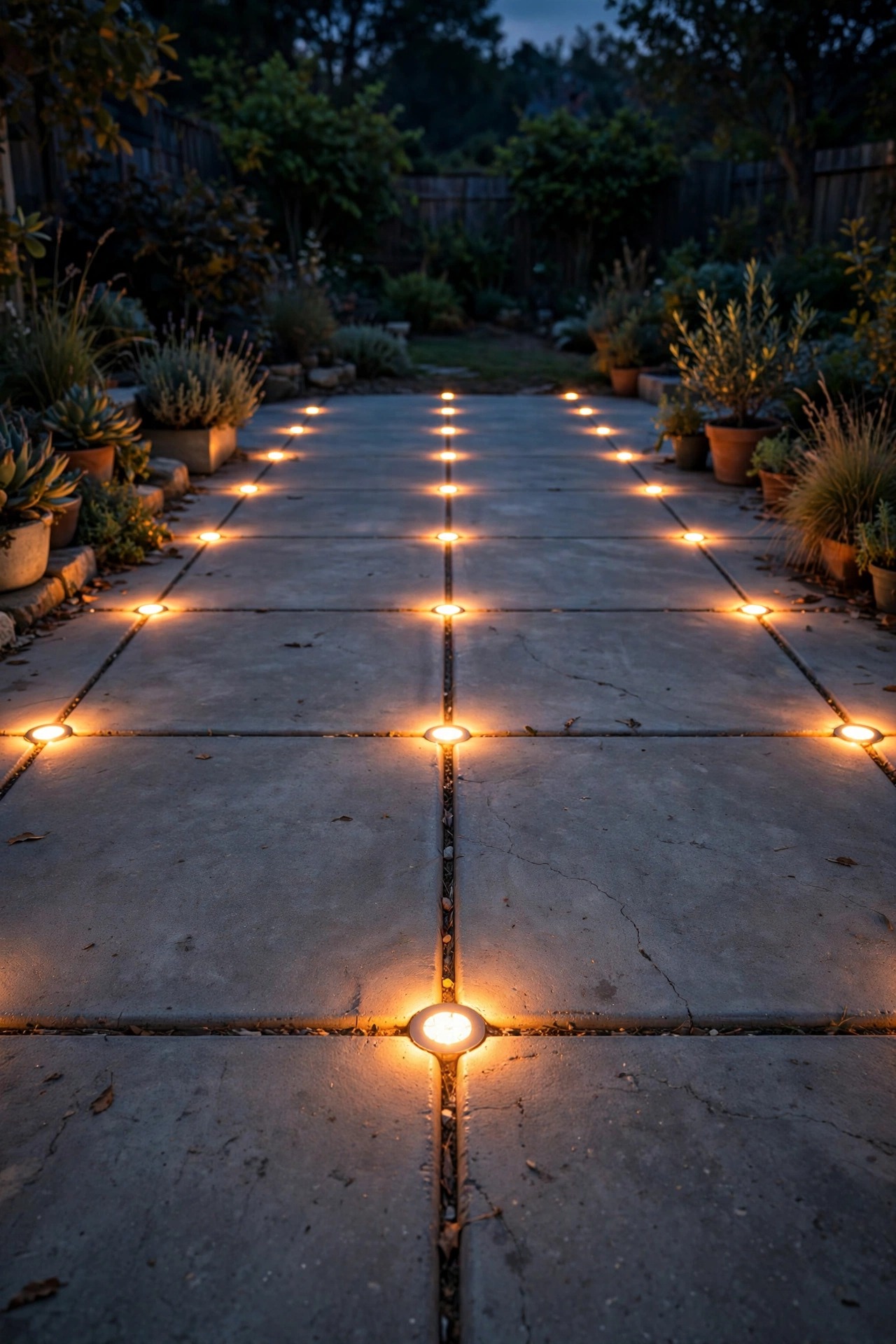
Solar disk lights — those flat, puck-shaped ground lights — were practically invented for concrete patios. They sit flush, so nobody trips, no mower catches them, and outdoor furniture slides right over the top. On a slab, I place them at the corners and along the expansion joints, where their low, wide wash grazes across the surface and shows off the subtle texture of the concrete instead of flattening it. That grazing angle is the trick: light skimming a surface feels warm and dimensional, while light pointed straight down just makes a bright dot. Choose the warm-white versions (some disks run icy blue, so check the listing twice) and give them a full sunny day to charge before judging them. They're not task lighting — think of them as the patio's nightlights, quietly marking the territory so guests never step off an edge in the dark. Eight disks is usually plenty for an average 12-by-16 slab.
Suggested budget range: $20 – $45.
5. Wash the House Wall With Uplights
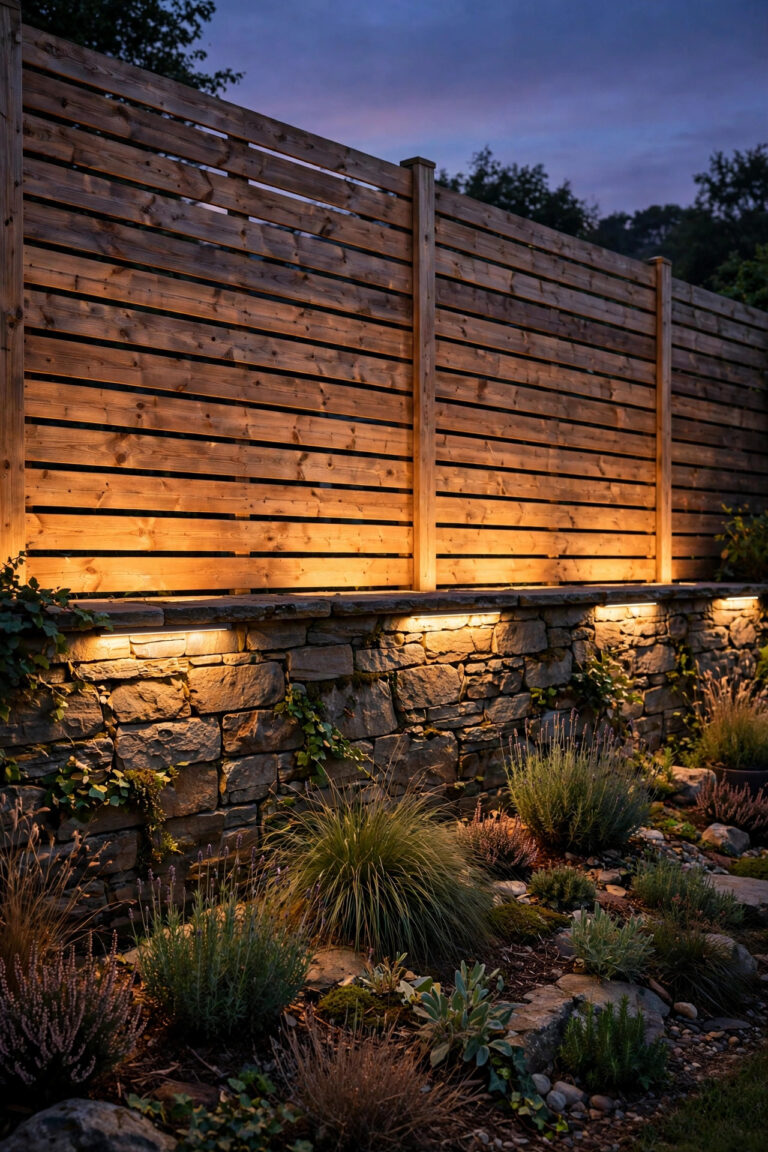
A plain slab looks plain partly because everything around it goes black at night. Two or three uplights aimed at the house wall, a fence, or a textured section of siding give the patio a backdrop, and a lit backdrop makes the whole space feel twice as deep. I use low-voltage or solar spotlights with a wide beam — 60 degrees or more — set about a foot out from the wall so the wash spreads evenly instead of hot-spotting at the base. Warm 2700K light on brick, stucco, or wood siding is pure coziness; it's the same reason restaurant patios feel so good. If your patio backs onto a fence, hang the wash there and let a climbing vine or a tall grass silhouette against it. The concrete in front will borrow that reflected warmth and stop reading as gray. Keep beams pointed at the wall, never angled out into the yard where they'd glare into seated eyes.
Suggested budget range: $30 – $75.

6. Make a Fire Bowl the Glowing Centerpiece
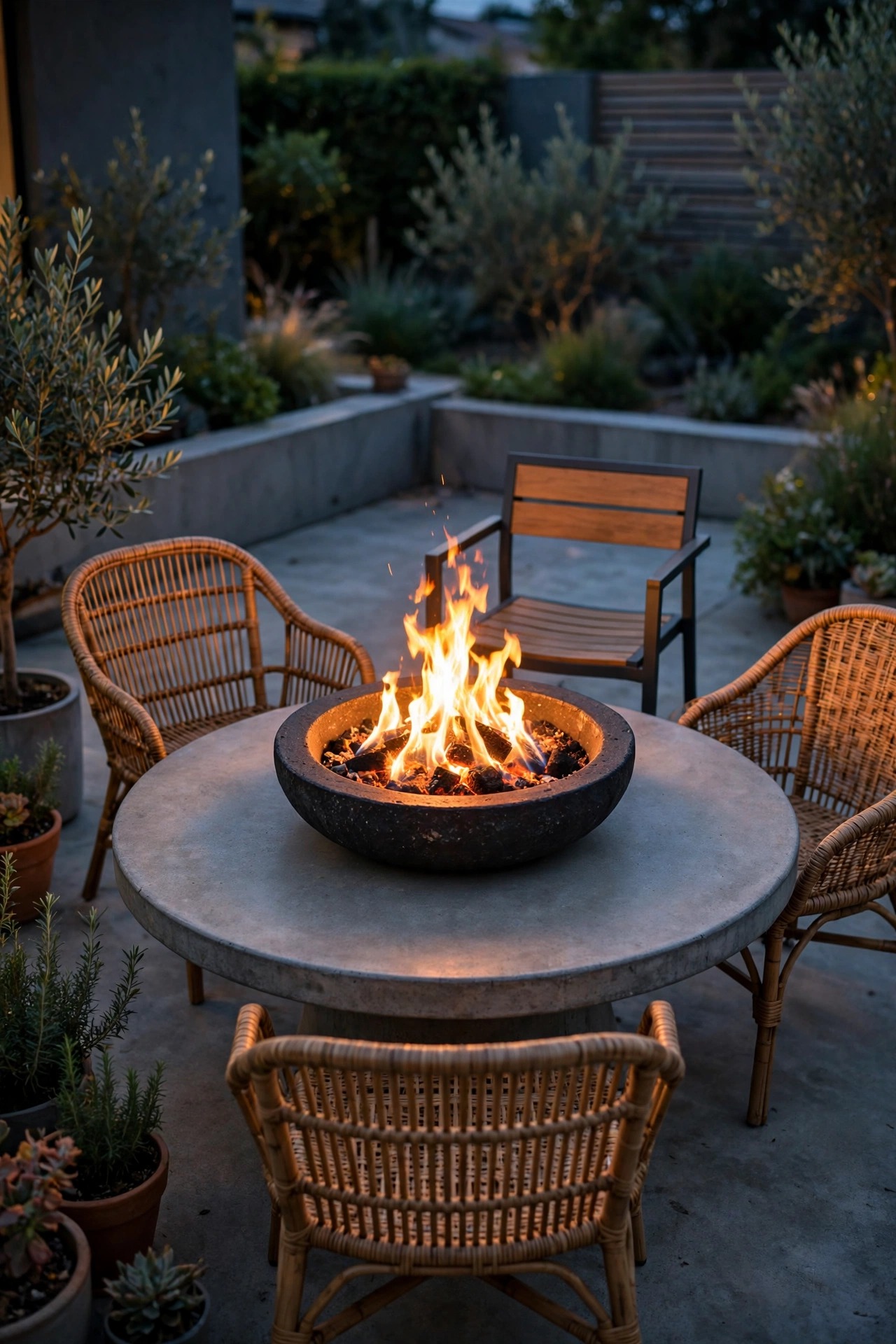
Every great patio has a focal point, and on a flat slab a tabletop fire bowl or a small fire pit earns that job while throwing the most flattering light humans have ever sat around. Firelight moves, and movement is what dead-flat concrete desperately needs. A tabletop bowl running on clean gel or propane canisters keeps the footprint small — perfect for a 10-by-12 slab — while a 22- to 28-inch wood or propane fire pit anchors a bigger space. Keep any open flame at least 3 feet from cushions, umbrellas, and the house, and only ever on the concrete itself, never on a rug that can trap heat underneath. Here's the part people skip: once the fire is lit, turn everything else down or off for a while. Fire as the only source, with the string lights dimmed low, is the single coziest lighting mood a concrete patio can produce. On no-burn nights, a cluster of flameless candles inside the empty bowl keeps the centerpiece working.
Suggested budget range: $45 – $160.
7. Weave Fairy Lights Through Big Planters
Planters do double duty on concrete — they break up the gray and they give you something to light. I fill oversized pots with small shrubs, ornamental grasses, or a little olive or fig tree, then wind copper-wire fairy lights loosely through the branches. The wire all but disappears, so at night you just see dozens of tiny warm pinpoints floating in the foliage. One 33-foot strand handles a large planter easily; the battery packs tuck behind the pot, and most have a built-in 6-hours-on, 18-off timer. Space two or three lit planters asymmetrically — one near the door, one at the far corner — and the slab suddenly has depth and a destination. Solar fairy strands work too, though in my experience the battery versions stay brighter and more consistent through cloudy stretches. Word of caution: keep strands LED-only and cool to the touch, and never wrap them tight around dry foliage.
Suggested budget range: $25 – $70.

8. Flank the Patio Door With Wall Sconces
The wall beside your patio door is prime real estate that most slabs leave dark. A pair of outdoor sconces flanking the door frames the whole patio like a picture — suddenly the concrete reads as the floor of a designed space. Mount them with the bulb center around 66 to 72 inches off the slab, roughly eye level when standing, and choose fixtures that throw light up and down or are fully shielded so you're not staring at a bare bulb from your chair. If running new wiring sounds miserable, solar wall sconces have gotten genuinely good: the better ones hold a charge through the evening and cast a respectable warm wash. Match the finish to your door hardware if you can — black on black, bronze on bronze — that tiny bit of coordination makes the patio look intentional. Bulbs in the 450–800 lumen range are plenty; you're lighting a doorway, not a stadium.
Suggested budget range: $40 – $120.

9. Hang Weatherproof Pendants From a Pergola or Beam
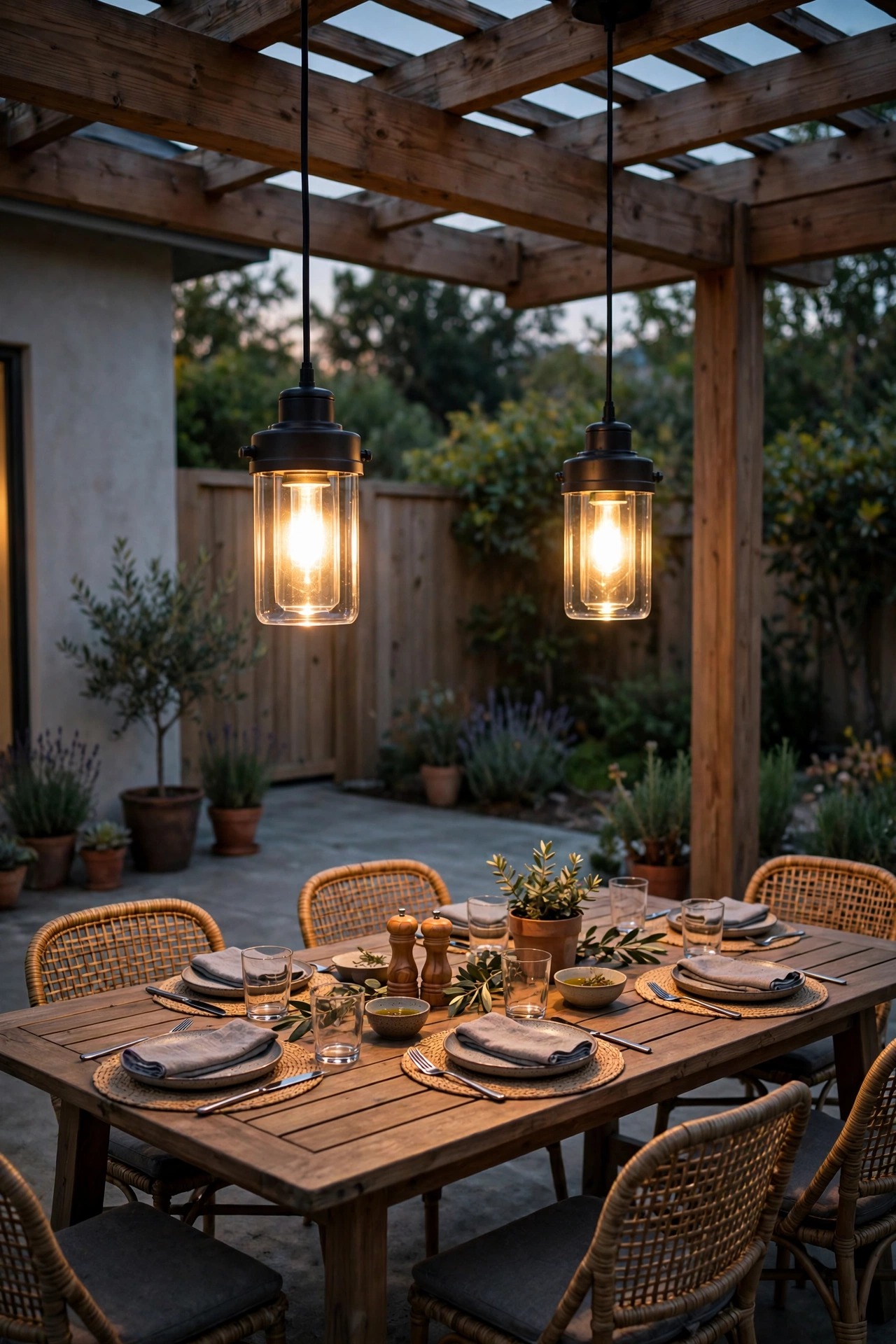
If your slab has a pergola, a covered section, or even a sturdy beam, pendants are the most "indoor room" move you can make outdoors. Two pendants over a dining table — or one generous pendant over a seating nook — put a pool of warm light exactly where people gather, and the fixtures themselves add architecture that concrete lacks. Hang them so the bottom of the shade sits about 30 to 36 inches above the table surface, low enough to feel intimate, high enough to see faces across the table. Choose wet-location-rated fixtures with enclosed or LED filament bulbs, and put them on a dimmer if they're hardwired; dinner wants 30% brightness, cleanup wants 100%. No structure overhead? A shepherd's-hook style arc stand or a cantilever umbrella with a hanging pendant adapter can fake the same effect surprisingly well. This is the layer that makes guests say the patio feels like a restaurant — in the good way.
Suggested budget range: $60 – $180.
10. Float Flameless Candles in Hurricane Lanterns
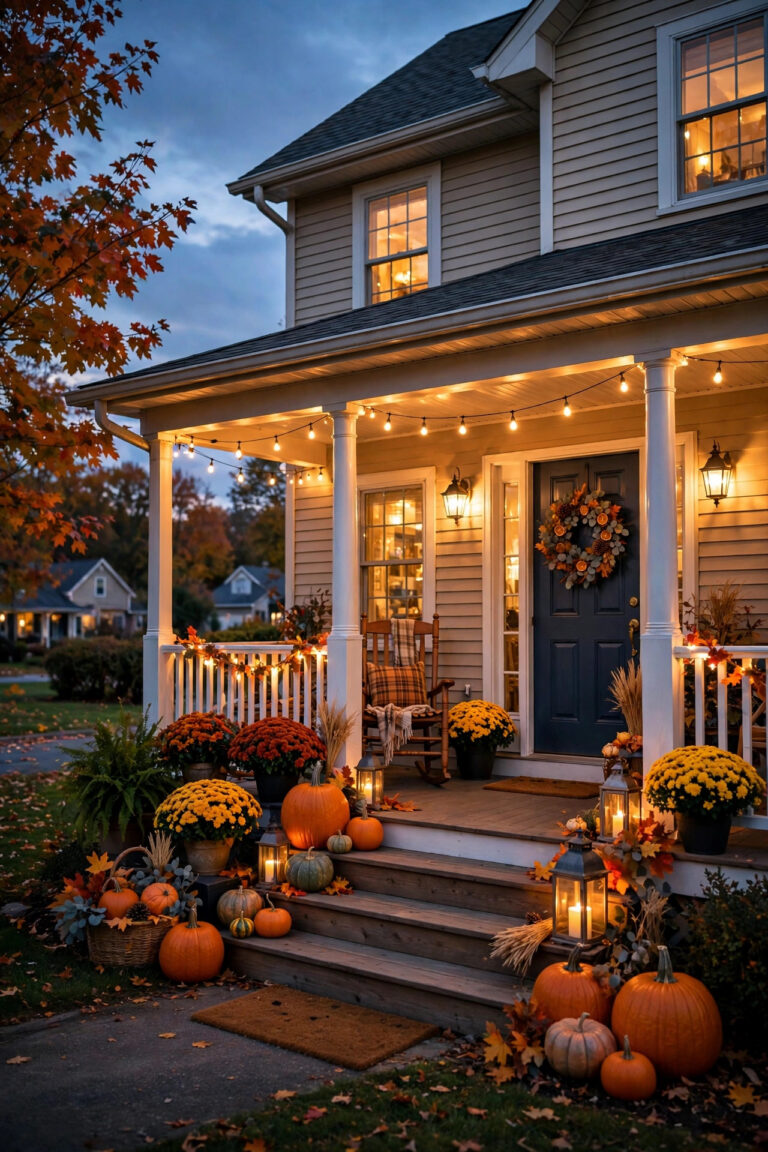
Here's my softest, cheapest trick: tall glass hurricane lanterns with flameless pillar candles, set directly on the slab in loose groupings. The glass amplifies the flicker and throws a warm halo onto the concrete around it, and concrete — being pale — bounces that glow right back up. It genuinely looks like the floor itself is glowing. I use candles with a wavy, melted-edge top and a true flicker mode, in ivory rather than stark white, and I mix heights from 4 to 9 inches. Line three along the step up to the door, park a pair beside the outdoor sofa, and one brave little candle on the side table. Because they're flameless and LED, they're safe near throws, cushions, and curious kids, and the timers mean the patio lights itself before you even get home. Real candles in hurricanes are fine for a supervised evening, but honestly? The good flameless ones fool everyone.
Suggested budget range: $20 – $55.

11. Outline the Slab With Bollards for Polished Concrete Patio Lighting Ideas
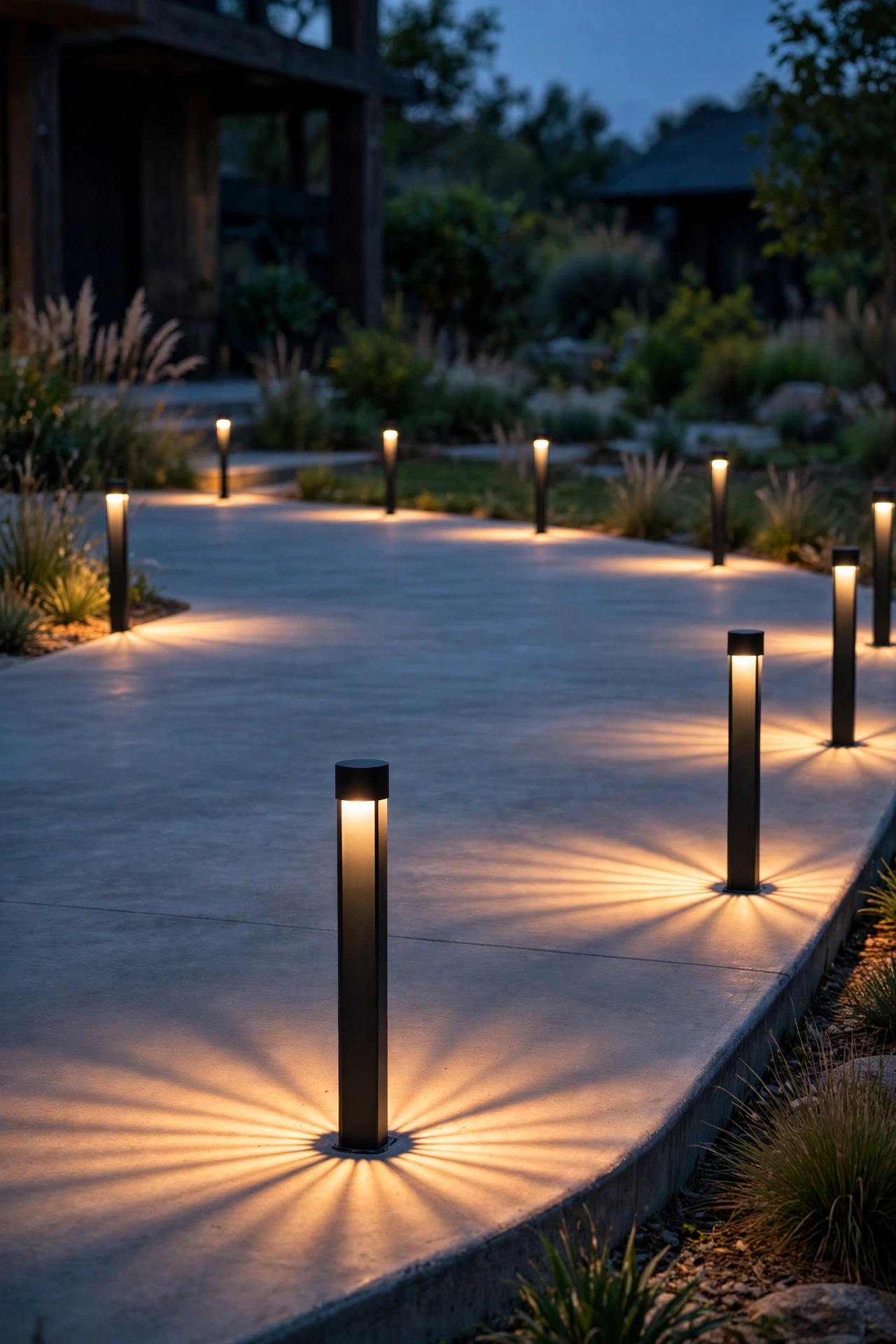
When I want a slab to look like it belongs at a boutique hotel, I outline it with short bollard lights. Bollards — those little post lights, usually 12 to 24 inches tall — stand in the planting beds or lawn just off the concrete's edge and throw their light sideways and down in a clean, architectural fan. Four to six of them, spaced evenly along the long sides of the patio, give you a crisp lit border that makes the gray slab look deliberate, like a stage. Low-voltage wired bollards are the polished choice: brighter, steadier, and they won't fade at 11 p.m. the way tired solar ones can. Pick a hooded or louvered design so the light lands on the ground, not in anyone's eyes, and keep the color temperature matched to your string lights — mismatched warm and cool light is the fastest way to make a patio look accidental. This is also the safest outline for guests walking the edge after dark.
Suggested budget range: $70 – $200.
12. Light Every Step and Level Change
Most concrete patios have at least one sneaky hazard: the step down from the house, the single step to the lawn, or the raised slab edge nobody sees at night. Lighting those level changes is safety work, but done warmly it doubles as some of the prettiest light on the patio. Small recessed or surface-mount step lights tucked into the riser throw a soft fan across each tread; if your steps are poured concrete and drilling feels like a commitment, solar step lights mount with screws or heavy-duty outdoor tape in minutes. My approach for alternatives and mounting tricks is in my roundup of solar step light ideas. Aim for one fixture per step, centered or offset in a gentle rhythm, and keep brightness modest — you're marking a change in height, not landing planes. Guests will never consciously notice this layer, which is exactly the point: they just feel like the patio is easy to move around in.
Suggested budget range: $25 – $80.

13. Add an Outdoor-Rated Floor Lamp
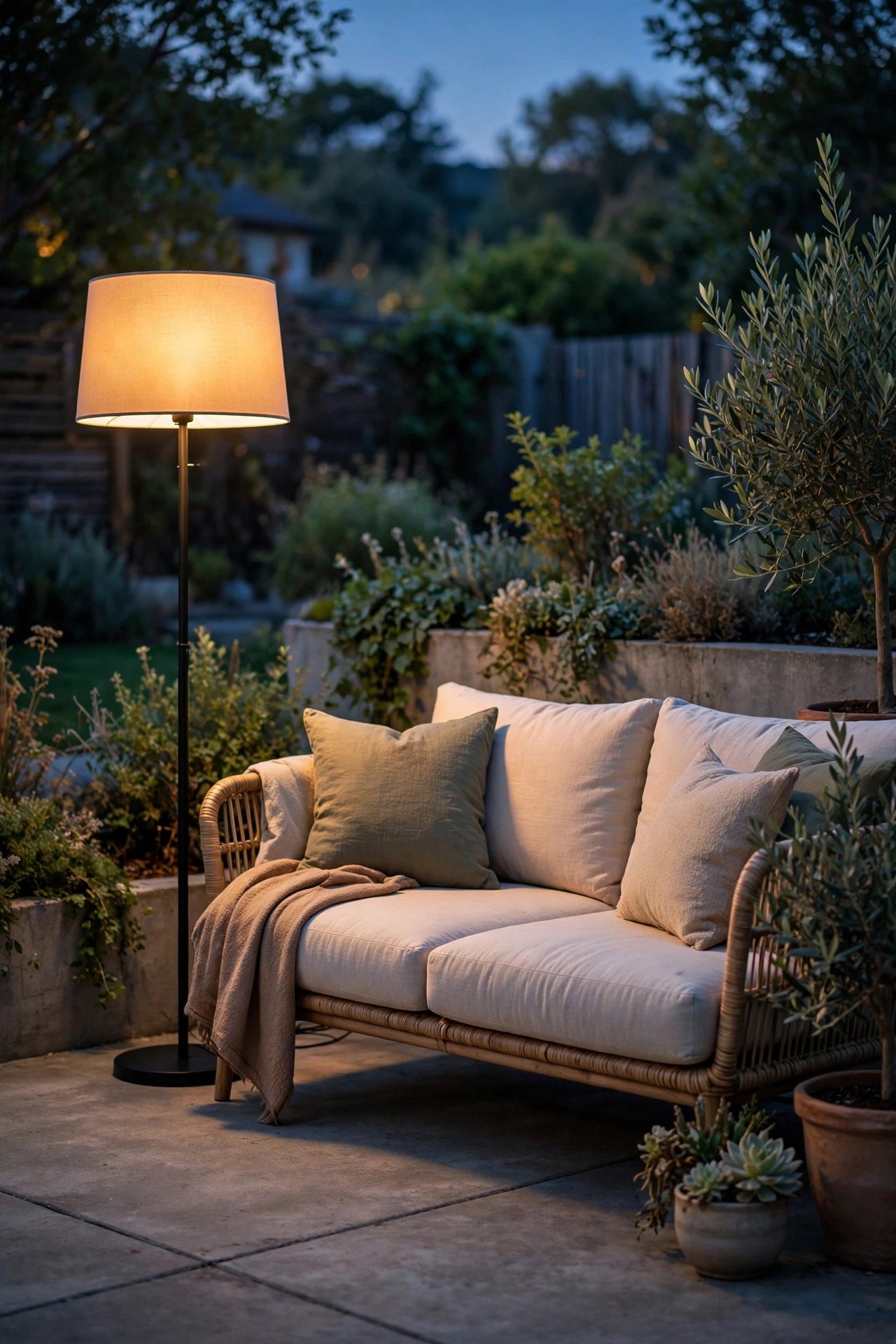
Nothing says "this is a room, not a slab" like a floor lamp standing beside the outdoor sofa. Outdoor-rated floor lamps have come a long way — weighted bases that shrug off breezes, rust-proof frames, and shades that diffuse LED light into a proper reading glow. Place one behind the corner of a sectional or beside your favorite chair at the height a living-room lamp would sit, roughly 58 to 66 inches tall, so the light falls over your shoulder. Plug it into a smart outdoor plug and it joins the rest of your dusk routine automatically. Battery and solar floor lamps exist now too, and while they're dimmer, they're perfect for a slab corner far from an outlet. I'll be honest: this is the layer that photographs like a magazine and makes the concrete completely disappear from your attention. If your patio has a reading chair, this one's non-negotiable.
Suggested budget range: $80 – $220.
14. Backlight Planters and Greenery for Silhouettes
This is the designer's trick that costs almost nothing: put a small spotlight or solar uplight behind a planter, a clump of ornamental grass, or a sculptural plant, and let the foliage become a glowing silhouette against the wall or fence. Backlit leaves throw lacy shadows upward, and on a plain slab those moving shadows are pure atmosphere. A single 100–200 lumen solar spot behind each of two large planters is usually enough; aim the beam up through the plant from 6 to 12 inches behind it. It works especially well in the corners a slab wastes — that dark far corner becomes the most interesting spot in the yard. In my experience this layer also makes inexpensive plants look expensive, which is a trade I'll take every time. Just keep the fixture itself hidden behind the pot so all anyone sees is the glow.
Suggested budget range: $20 – $50.

15. Swap In Color-Changing Smart Bulbs for Mood Nights
Warm white is my everyday setting, but two or three color-capable smart bulbs in the sconces or pendants give a concrete patio a second personality for game nights, holidays, and birthdays. A deep amber for autumn, a soft teal for a pool-party vibe, team colors for the big game — then right back to 2700K for normal evenings, which matters, because colored light every night gets old fast. Smart bulbs also dim without any wiring changes, so one bulb covers the candlelight-to-cleanup range. Set them on schedules in the app so the patio glows to life at sunset whether you're home or not. Keep the colors on the fixtures, not the slab: colored floods aimed at concrete can look like a parking garage, while a warm patio with a couple of colored accents reads as festive. Group them in the app so one tap changes the whole mood.
Suggested budget range: $30 – $90.

16. Tuck Rope Lights Along the Slab's Edge
Rope lights are the quiet workhorse of concrete patios. Run one along the front edge of the slab, tucked under a step lip, beneath a bench, or along the base of a raised planter bed, and you get a continuous ribbon of light that defines the patio's shape without a single visible fixture. That unbroken line is what high-end patios do with expensive recessed strips — this is the $30 version, and from a chair, honestly, it reads the same. Choose a warm-white rope rated for outdoor use, secure it with clips every 18 to 24 inches so it never sags, and hide the cord run behind a planter. Under-furniture is my favorite placement: a rope beneath the outdoor sofa or a bench makes the furniture look like it floats. Keep the rope on the same timer as your other accent lights so the whole edge treatment wakes up together at dusk.
Suggested budget range: $18 – $45.

17. Finish With Timers and Dimmers, Not More Fixtures
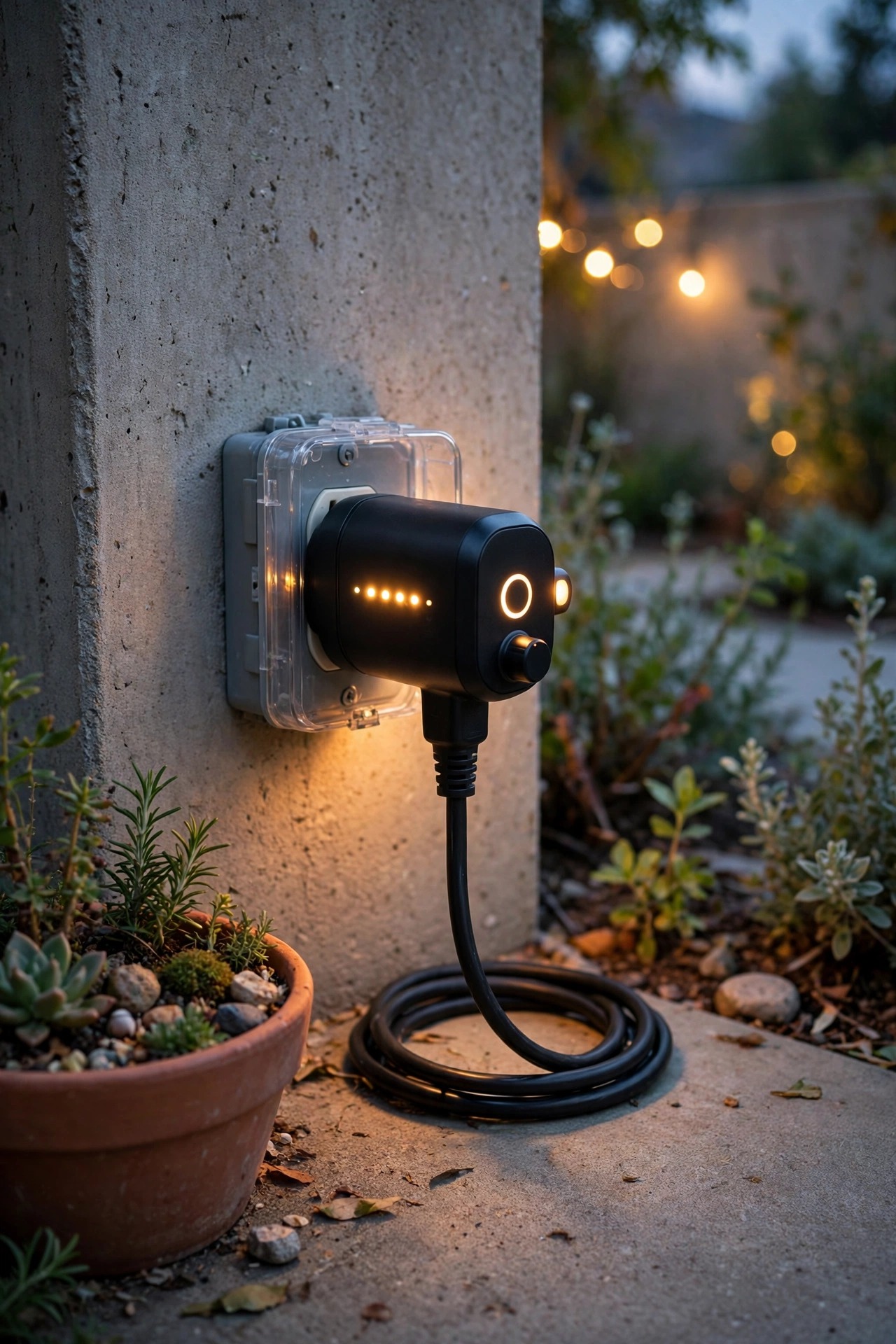
The last idea isn't a fixture at all — it's the habit that makes the other sixteen feel effortless. Put every plug-in layer on outdoor timers or smart plugs set to switch on at dusk, and put the pendants and sconces on dimmers. In my house the patio lights itself: string lights and bollards at sunset, everything down to a low ember-glow at 10 p.m., off at midnight unless we're still out there. That schedule also saves real money — a full patio of LEDs on a timer costs pennies a night versus lights forgotten until morning. Dimmers matter just as much: the same patio that needs bright light for a grill session wants 30% for conversation, and no single brightness does both. If you take nothing else from this list, take the layers-plus-timer formula. It's what separates a patio that happens to have lights from a patio that's lit.
Suggested budget range: $15 – $60.
Frequently Asked Questions
What color temperature makes concrete look warm instead of cold?
Stay in the 2700K to 3000K range for every layer. That warm-white glow counteracts concrete's natural blue-gray cast, the same way candlelight flatters a room. Anything labeled "daylight" (4000K and up) will make a slab look like a service station, and mixing temperatures between fixtures looks accidental — buy all your bulbs and solar lights in the same temperature family.
Can I light a concrete patio without drilling into the slab?
Absolutely — most ideas on this list need no drilling at all. Solar disks sit on the surface, string lights hang from poles in weighted planters, step lights mount with outdoor tape, and lanterns, floor lamps, and rope lights simply sit where you put them. The only ideas that sometimes want a fastener are wall sconces and hardwired bollards, and both have solar or plug-in alternatives.
How do I light a patio if there's no outdoor outlet nearby?
Build the whole scheme on solar and battery layers: solar stakes, disks, and sconces, battery fairy lights in the planters, and flameless candles everywhere. Modern solar fixtures with decent panels handle a full evening easily. If you have an indoor outlet near a window or door, a flat cord under the door sweep can power one smart plug for the string lights — just keep all connections weather-protected.
How many lights does an average concrete patio actually need?
For a typical 12-by-16-foot slab, think layers, not counts: one overhead source (a string-light canopy or pendants), four to eight low accents (disks, stakes, or bollards), and one eye-level glow (lanterns or a floor lamp). That's roughly ten to fifteen light points total. Start with the overhead and edge layers, live with it a week, then add warmth where it still feels flat.
Conclusion
A plain slab isn't a design flaw — it's a blank canvas that happens to reflect light beautifully. Layer something overhead, something at eye level, and something low along the edges, keep everything in that warm 2700–3000K family, and put it all on timers: that's the whole formula behind these concrete patio lighting ideas. Start with the canopy and the perimeter, and I'd bet the concrete disappears from your mind within one evening. For more ways to glow up every corner of your yard, browse the rest of the lighting ideas here on the site — your patio's next layer is probably already waiting.