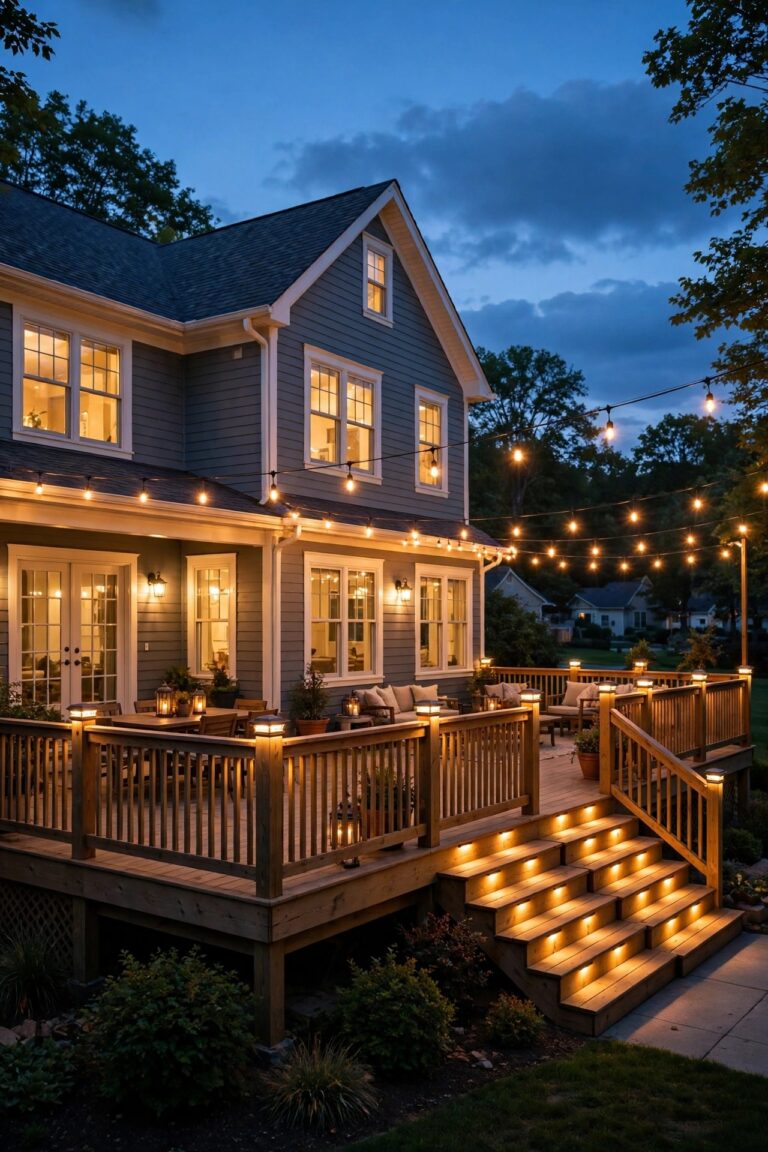
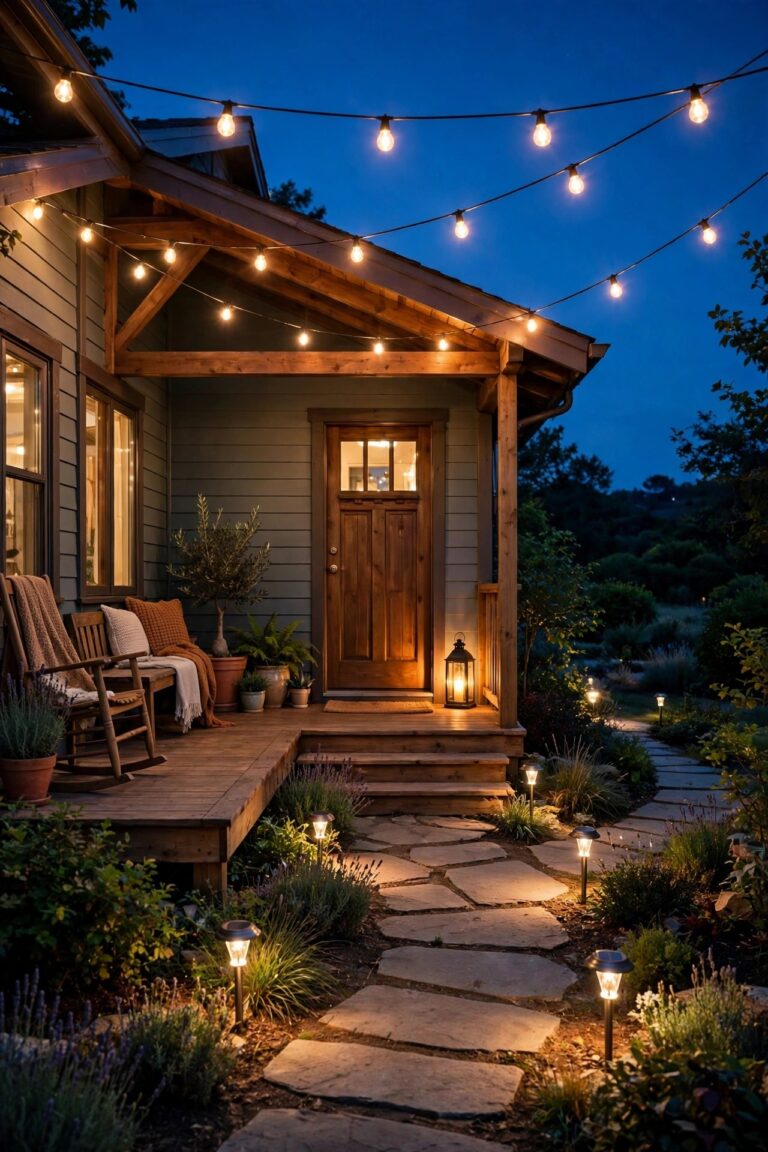
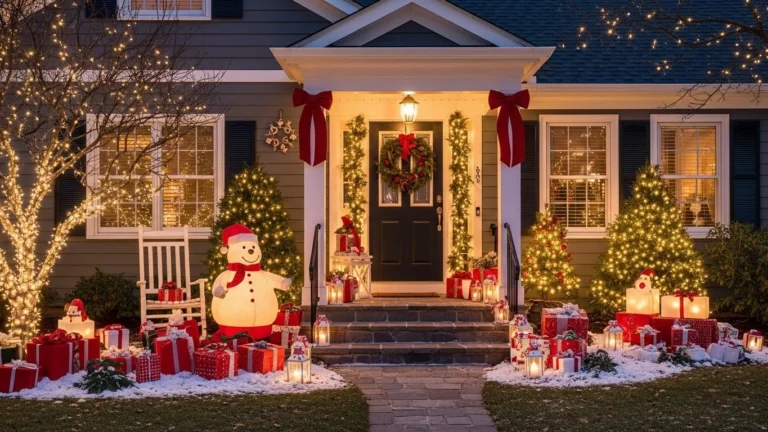
There's a moment every evening when our brick patio completely changes character. The sun drops, the reds and rust tones in the brick deepen, and the whole space turns into the warmest room of the house — it just happens to be outside. That transformation is exactly why I keep collecting brick patio lighting ideas: brick is basically a sponge for warm light. Aim a soft 2700K glow at it and the texture, the mortar lines, even the little color variations between pavers suddenly look rich and expensive.
The secret, honestly, is layering. One bright fixture flattens brick and leaves harsh shadows. Three or four gentle layers — something at the wall, something overhead, something low along the edges — make the same patio look like a boutique hotel courtyard. In this list I'll walk you through 19 ways to build those layers, with honest budgets attached to every single idea.

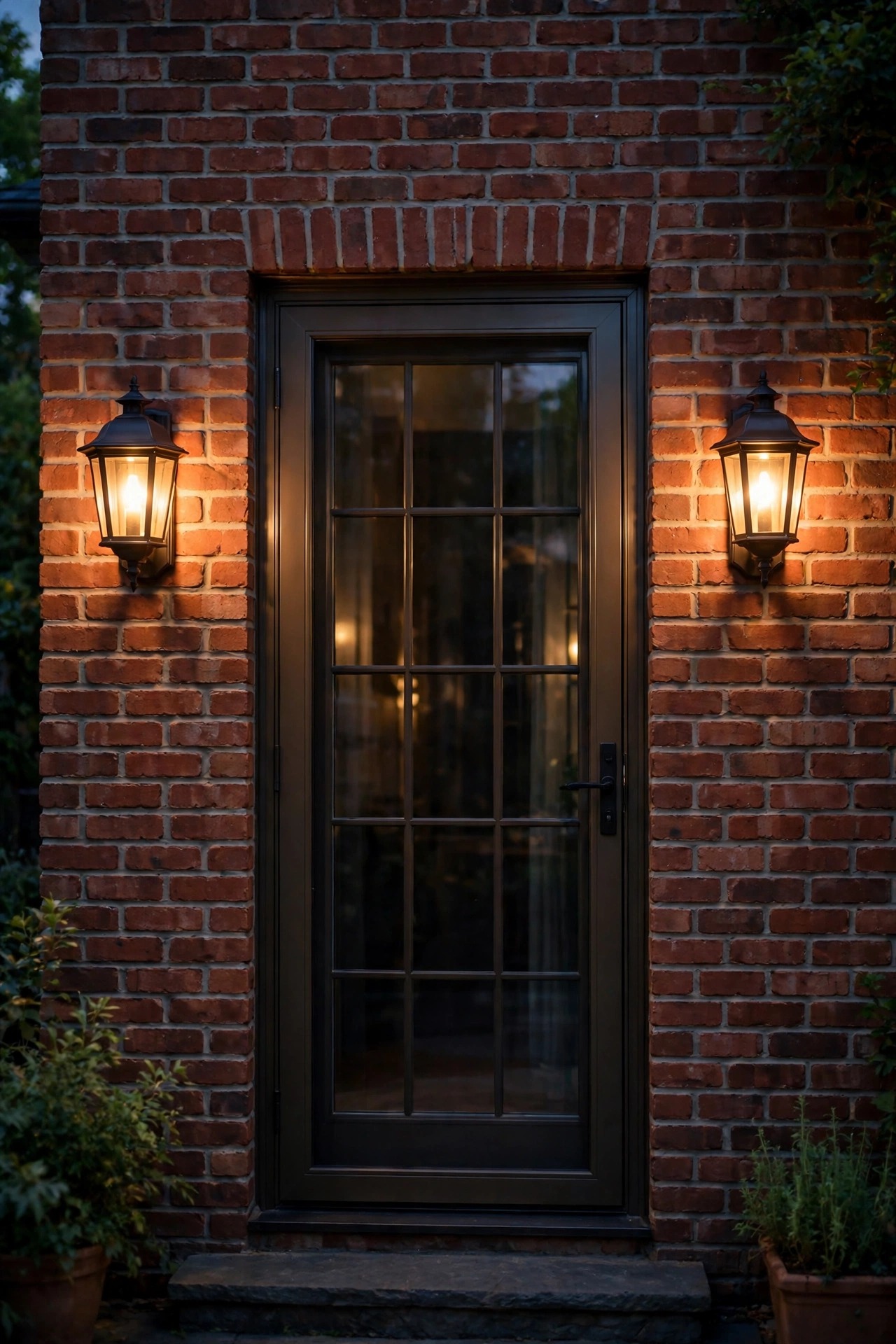
1. Masonry Sconces Flanking the Back Door
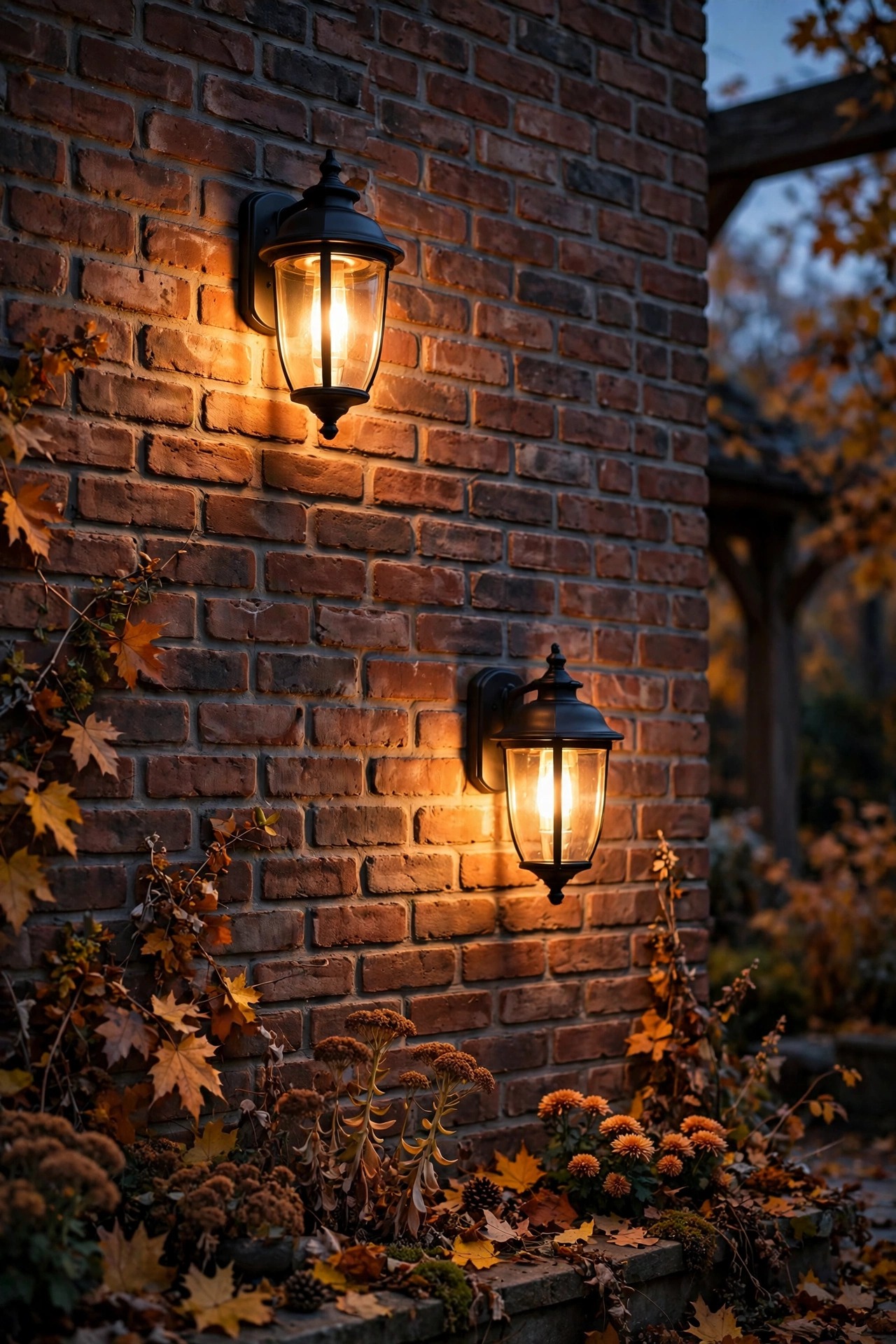
If your patio has one hardwired fixture by the back door, start there — a matched pair of sconces flanking the door is the single fastest upgrade I know. My rule: mount them so the center of the fixture sits about 66 inches above the patio floor, and always drill into the mortar joints, never the brick face. Mortar is replaceable; a cracked brick is forever. Use masonry anchors rated for exterior use, and pick fixtures with an open or seeded-glass design so a warm 2700K filament-style LED (around 800 lumens each) throws light up and down the brick instead of glaring into your eyes. Run a thin bead of exterior caulk along the top edge of the backplate to keep rain out of the box. Put them on a dimmer if you can — full brightness for grilling, low for lingering. It's the same trick I lean on with brick porch lighting ideas, and it works every single time.
Suggested budget range: $60 – $180.
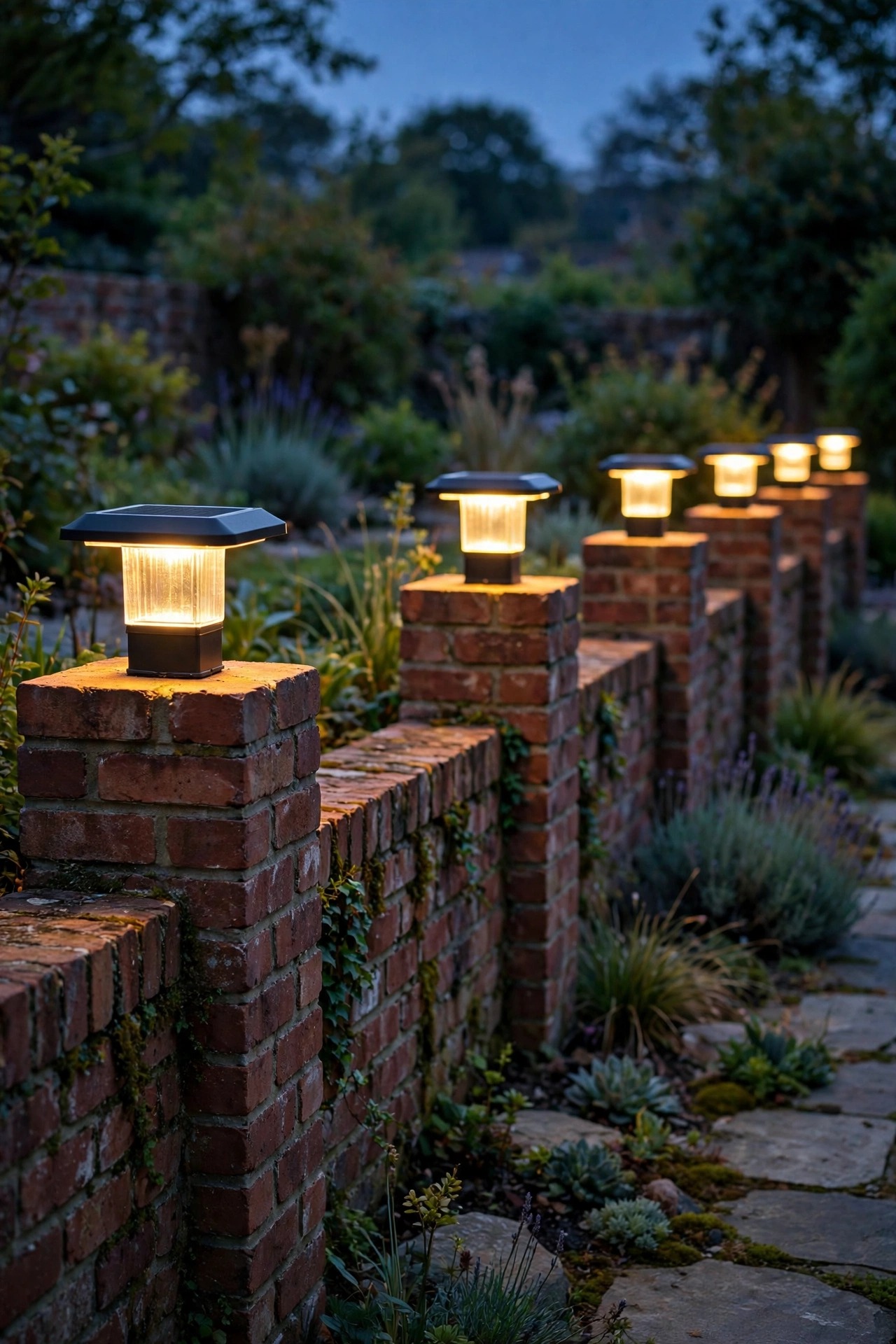
2. Solar Cap Lights on Brick Pillars and Low Walls
So many brick patios have those low seat walls or chunky pillars at the corners, and they are begging for cap lights. Solar post caps sit right on top, charge all day, and switch on at dusk with zero wiring — which matters, because running cable through a brick wall is nobody's idea of a fun Saturday. Measure your pillar before ordering; caps come in standard sizes and a sloppy fit looks cheap. Choose warm white, not the bluish "daylight" versions that fight with brick's natural warmth. In my experience you get two to three good seasons from a set before the batteries fade, and most take a replaceable rechargeable battery, so swap those before you replace the whole cap. Set them at every pillar and the patio instantly reads as "finished architecture" instead of an afterthought. Four caps across a typical patio is plenty.
Suggested budget range: $25 – $70.
3. Bistro String Lights Swagged Overhead
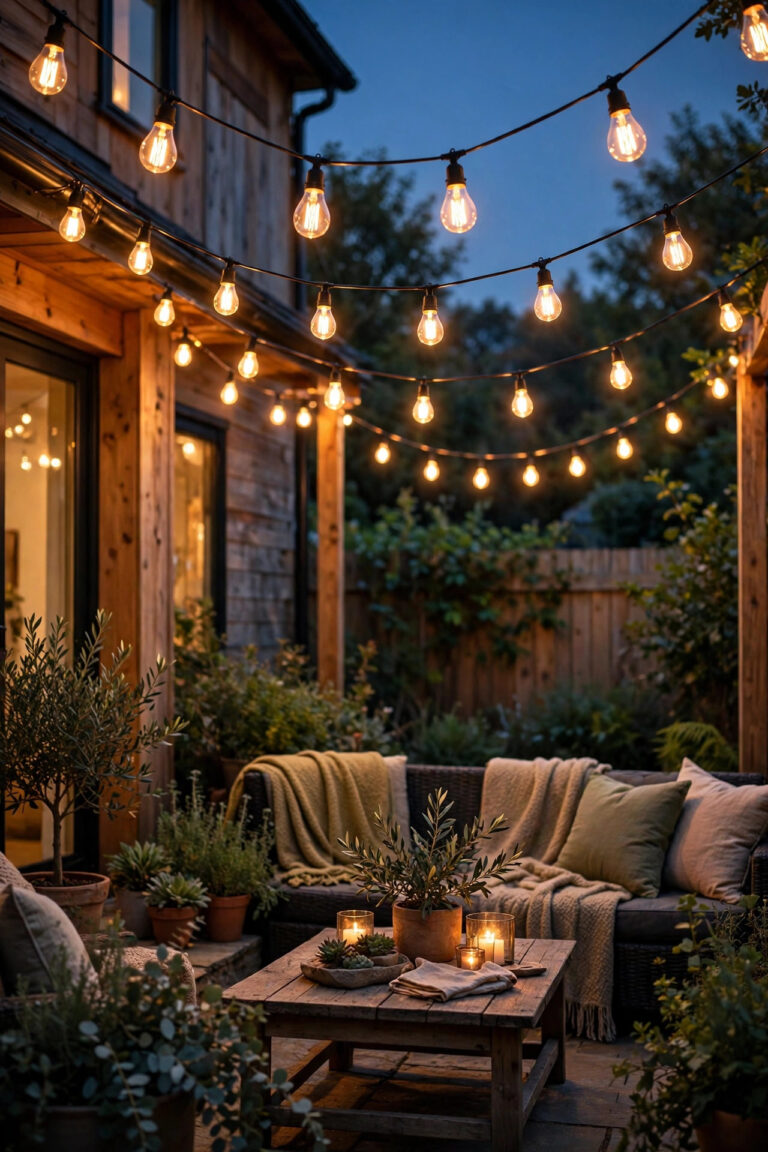
Nothing softens a hard brick rectangle like a canopy of string lights. I run commercial-grade strands on a guide wire so the swags stay even — aim for about 12 to 18 inches of gentle sag between anchor points, and anchor into mortar joints or nearby trees and posts, never into the brick face. Shatterproof LED bulbs in 2700K are non-negotiable for me; glass bulbs over a hard patio are a breakage (and barefoot) hazard. Space the runs about 8 to 10 feet apart for even coverage, and put the whole canopy on a plug-in dimmer so you can drop it to a candlelight level after dinner. If your patio is long, a zigzag pattern covers better than straight lines. These are the same bistro string light ideas I recommend for decks, but over brick the reflected warmth bouncing up from the pavers doubles the effect.
Suggested budget range: $40 – $120.

4. Recessed Step Lights in Brick Steps
Brick patios love to have two or three wide steps down to the yard, and those steps are a genuine trip hazard in the dark. Recessed step lights tucked into the vertical riser of each step fix that beautifully. The cleanest install happens when the steps are being built, but retrofits are doable: a mason can core-drill the riser, or you can mount slim surface fixtures if you'd rather not cut. I strongly prefer low-voltage (12V) here — safer around wet brick and easier to extend later. One fixture centered on each step, or one every 4 feet on wide steps, washing down and across the tread below. Keep them shielded so the light grazes the step instead of shining into eyes. Once they're in, the steps read as a glowing architectural detail, and nobody's guessing where the edge is at midnight. I also like a photocell or timer on the circuit so the steps light themselves every night without anyone remembering a switch.
Suggested budget range: $90 – $250.

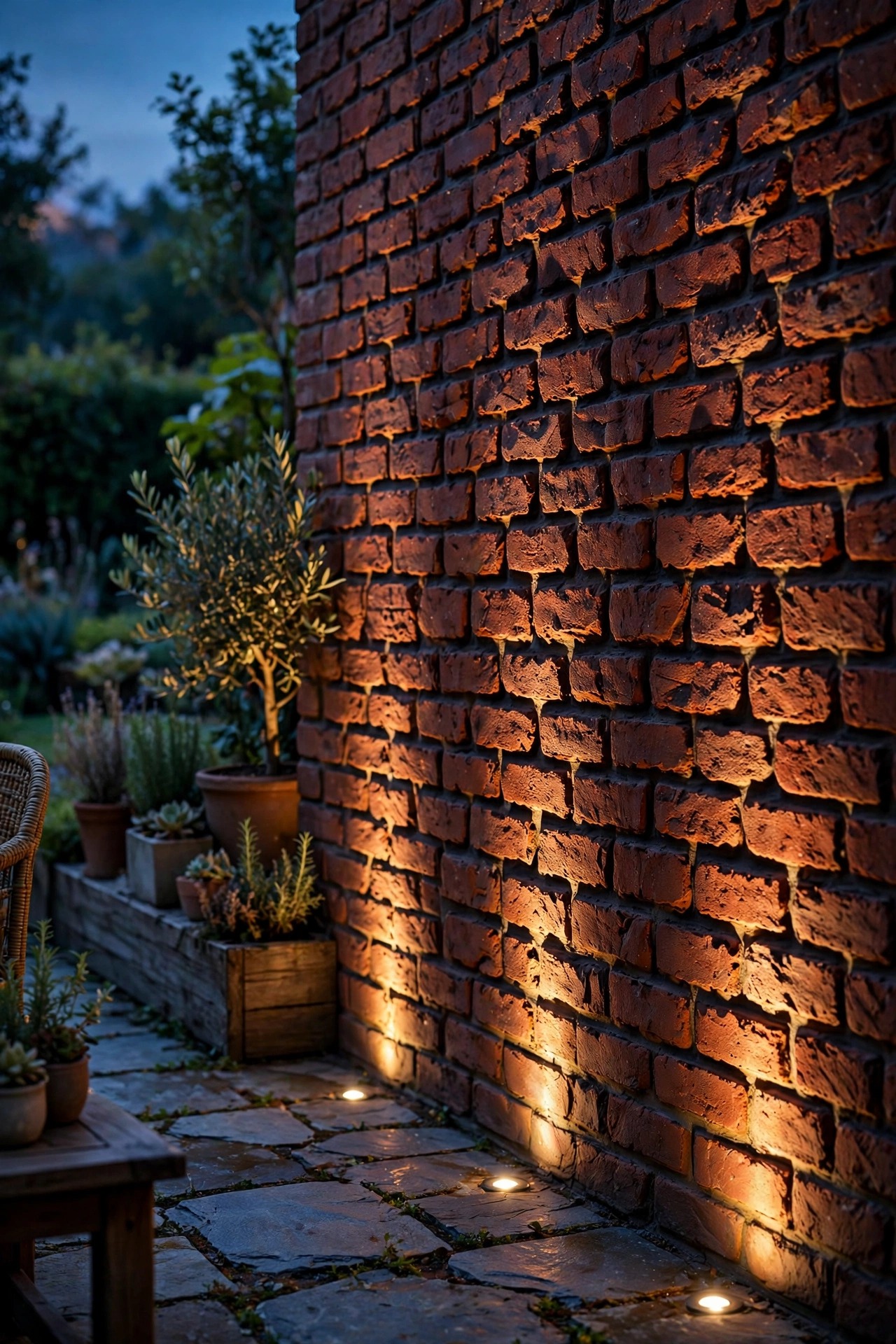
5. Brick Patio Lighting Ideas That Start With a Wall Wash
Brick has texture, and grazing light is how you show it off. Place small uplights in the planting bed or along the patio edge, about 12 inches out from the wall, and aim them almost straight up so the beam rakes across the brick face. Every mortar line casts a tiny shadow and the wall suddenly looks three-dimensional and expensive. Narrow-beam spotlights (15 to 25 degrees) work best; a wide flood just flattens everything you were trying to highlight. One fixture every 6 to 8 feet is a good rhythm for a house wall. This is honestly the idea I'd keep if I could only pick one — the whole patio borrows the glow. Just keep fixtures a few inches off the brick so heat and splash-back don't stain the surface, and wipe the lenses each spring. Warm light only here — cool bulbs bleach the mortar gray and undo the whole cozy effect you're paying for.
Suggested budget range: $45 – $130.
6. Oversized Floor Lanterns Clustered in Corners
Every brick patio has a dead corner — the spot too shady for plants and too visible to ignore. A cluster of oversized floor lanterns fixes it in five minutes with no wiring at all. Group three lanterns in graduated heights (roughly 12, 18, and 24 inches), and fill them with battery-operated flameless candles on a timer so they're glowing when you walk out at dusk. Black metal lanterns look sharp against red brick; aged copper warms it up even more. Because they're portable, you can pull them around the fire pit or flank the steps when guests come. My one caution: brick holds heat all day, so keep lantern groupings a few inches off the wall and out of the footpath where they'll get kicked. Cheap, flexible, and renters can take them along when they move. If a corner gets windy, weight the tallest lantern with a handful of sand in the base so it doesn't wander across the brick.
Suggested budget range: $35 – $110.

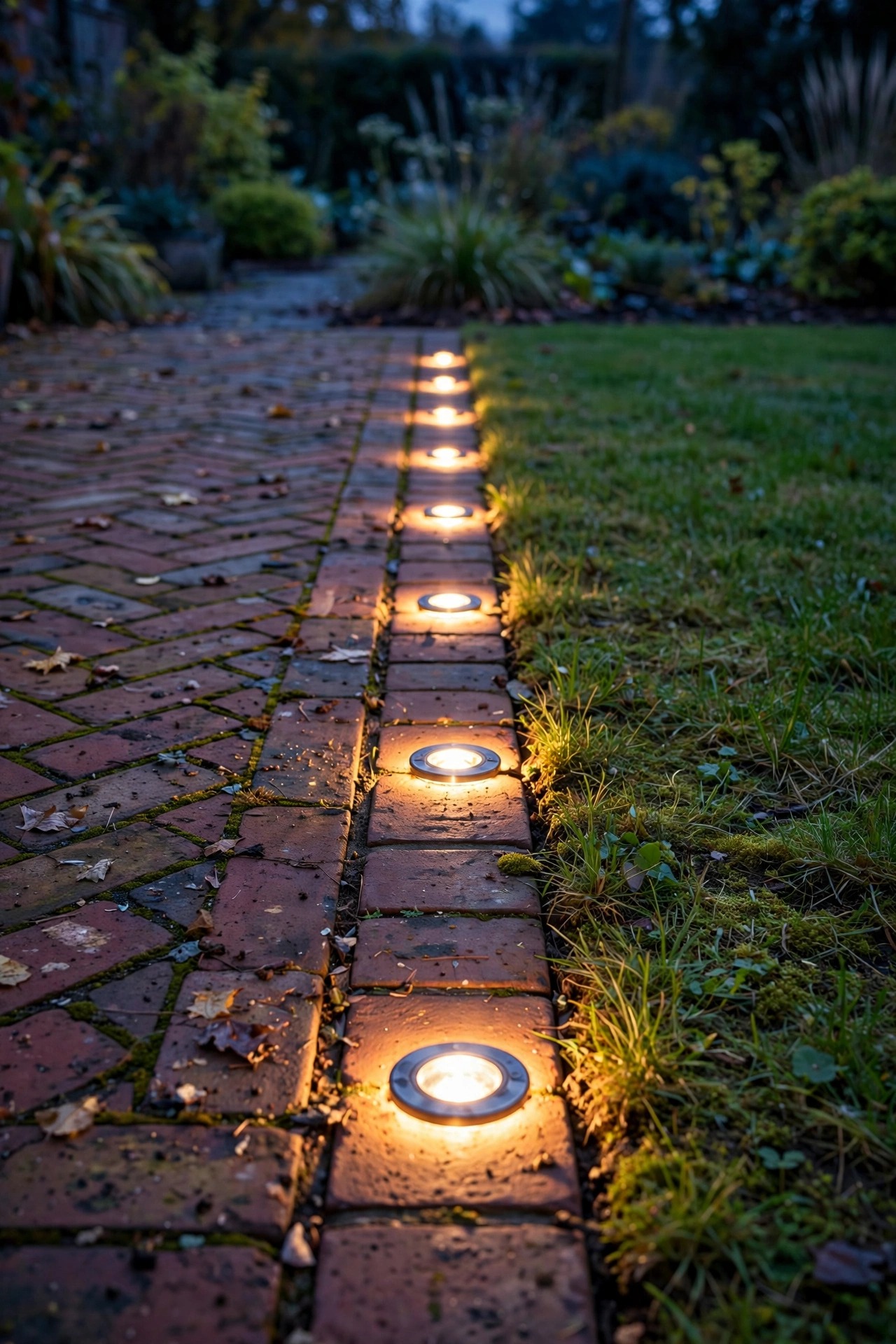
7. In-Ground Well Lights Along the Patio Edge
For a clean, modern line where the patio meets the lawn, in-ground well lights are my quiet favorite. They sit flush, so mowers pass over them and nobody trips, and they throw a soft pool of light that defines the edge of the brick beautifully. Buy fixtures with a proper drainage gravel bed underneath — well lights that sit in standing water fail fast, and brick patios shed a lot of runoff right at their edges. Space them 6 to 8 feet apart and choose a frosted or honeycomb lens to cut glare, since you're often looking straight down at them from a chair. Aim for around 100 to 200 lumens each; this is edge definition, not runway lighting. Low-voltage systems make the wiring simple to bury along the border. The effect at night is a floating rectangle of warm brick — subtle and seriously elegant.
Suggested budget range: $80 – $220.
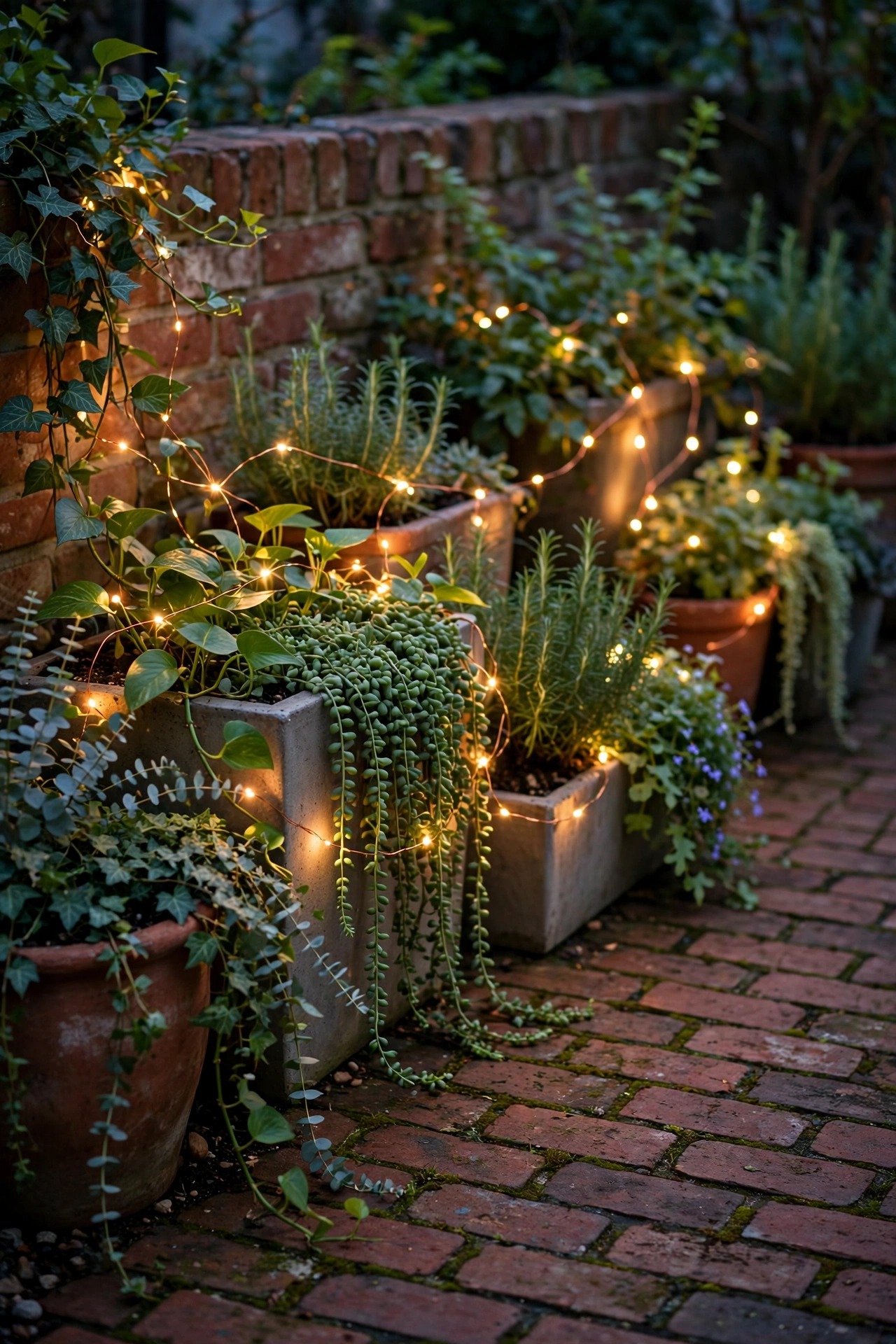
8. Copper-Wire Fairy Lights Woven Through Planters
Brick can read a little serious, and a whisper of fairy light fixes that. I weave copper-wire fairy lights through the planters and window boxes that border our patio — in and out of trailing plants, around a small topiary, along the rim of a big terracotta pot. The wire basically disappears, so all you see are tiny floating points of warm light. Solar versions with the panel tucked into the pot are the easiest, but battery packs give you a steadier glow and a timer; hide the pack under the pot's rim. Keep the color temperature warm — the cool white sets look like office lighting against brick. This is the cheapest idea on the whole list, and guests always ask about it. Replace strands when they dim; at this price, they're a seasonal refresh rather than a forever fixture. Weave the strand in before the plants fill out in spring and you'll never see the wire at all.
Suggested budget range: $12 – $35.
9. Flameless Candles in Glass Hurricanes Down the Table
When we eat outside, the overhead lights go low and the table gets hurricanes. A row of glass hurricane holders with flameless candles down the center of a patio table gives you that restaurant flicker without wax dripping onto warm brick (a cleanup I would not wish on anyone) or flames blowing out every two minutes. Flameless candles with a realistic flicker and a warm 2200K-ish tone look best; mix heights for rhythm. The glass also shields the "flame" visually, so it reads as real from two feet away. Scatter a few small votives on side tables and the brick steps for depth. Everything's on a remote or timer, so the whole scene comes on in seconds. Store the candles indoors over winter — the battery compartments don't love freeze-thaw cycles. Pick candles with a built-in timer and the table will already be glowing when you carry dinner out, no lighter, no fuss, every single evening.
Suggested budget range: $20 – $60.

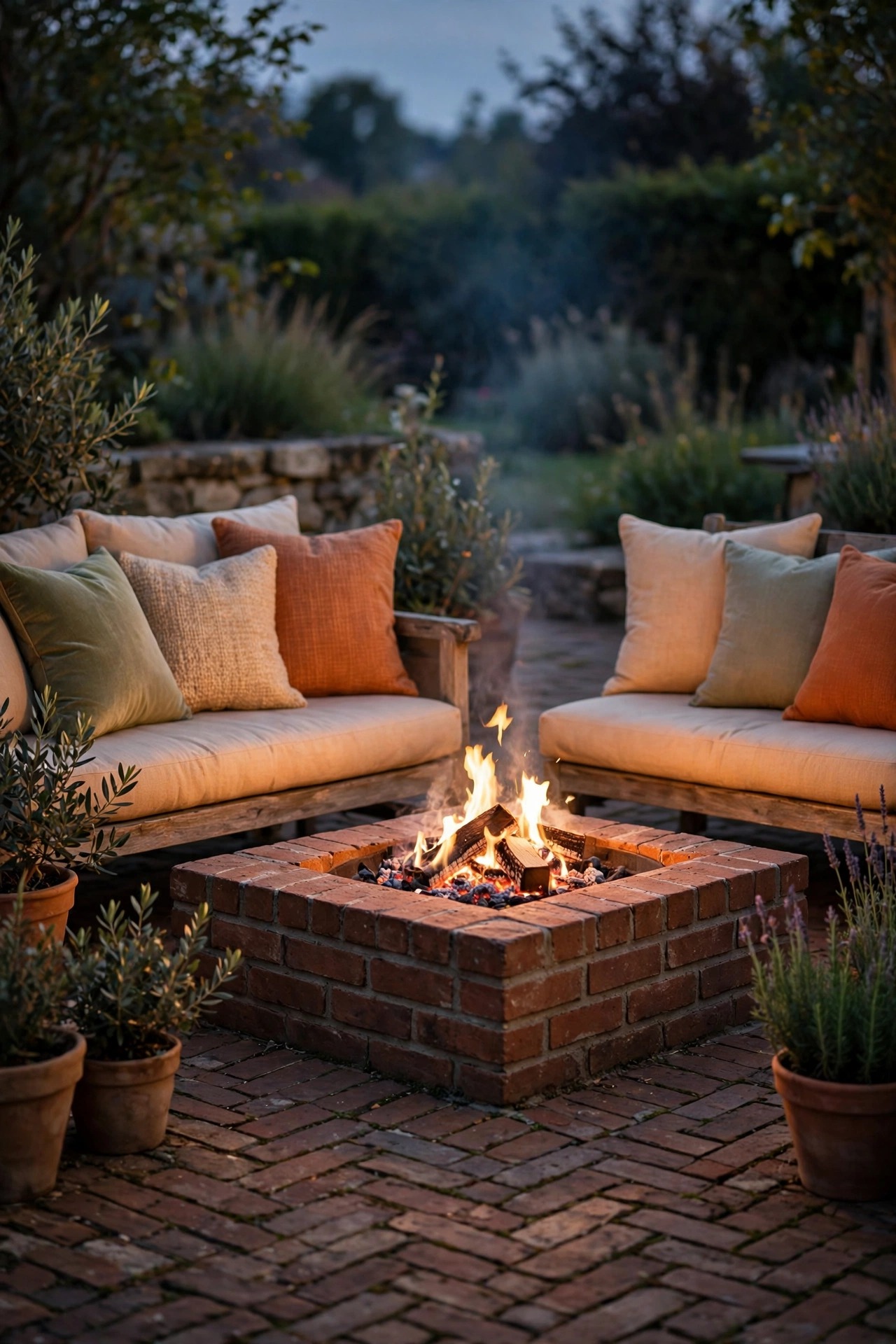
10. A Fire Pit as Your Centerpiece Light
A fire pit is the oldest patio light there is, and brick patios pair with it naturally — a brick or stone surround ties the whole space together. The firelight does the ambient work for the seating circle, so your other lighting can stay low and supportive. Keep safety front and center: follow the manufacturer's clearance (usually at least 10 feet from the house and anything overhead), never hang string lights directly above the fire, and keep a spark screen on breezy nights. I surround the seating area with the low layers from this list — step lights, lanterns — so people can move safely without ruining the fire's glow with bright fixtures. Wood smoke will film nearby lenses over a season, so give sconces and lanterns within a few feet a quick wipe now and then. Nothing else on this list gets people lingering like real flame.
Suggested budget range: $120 – $400.
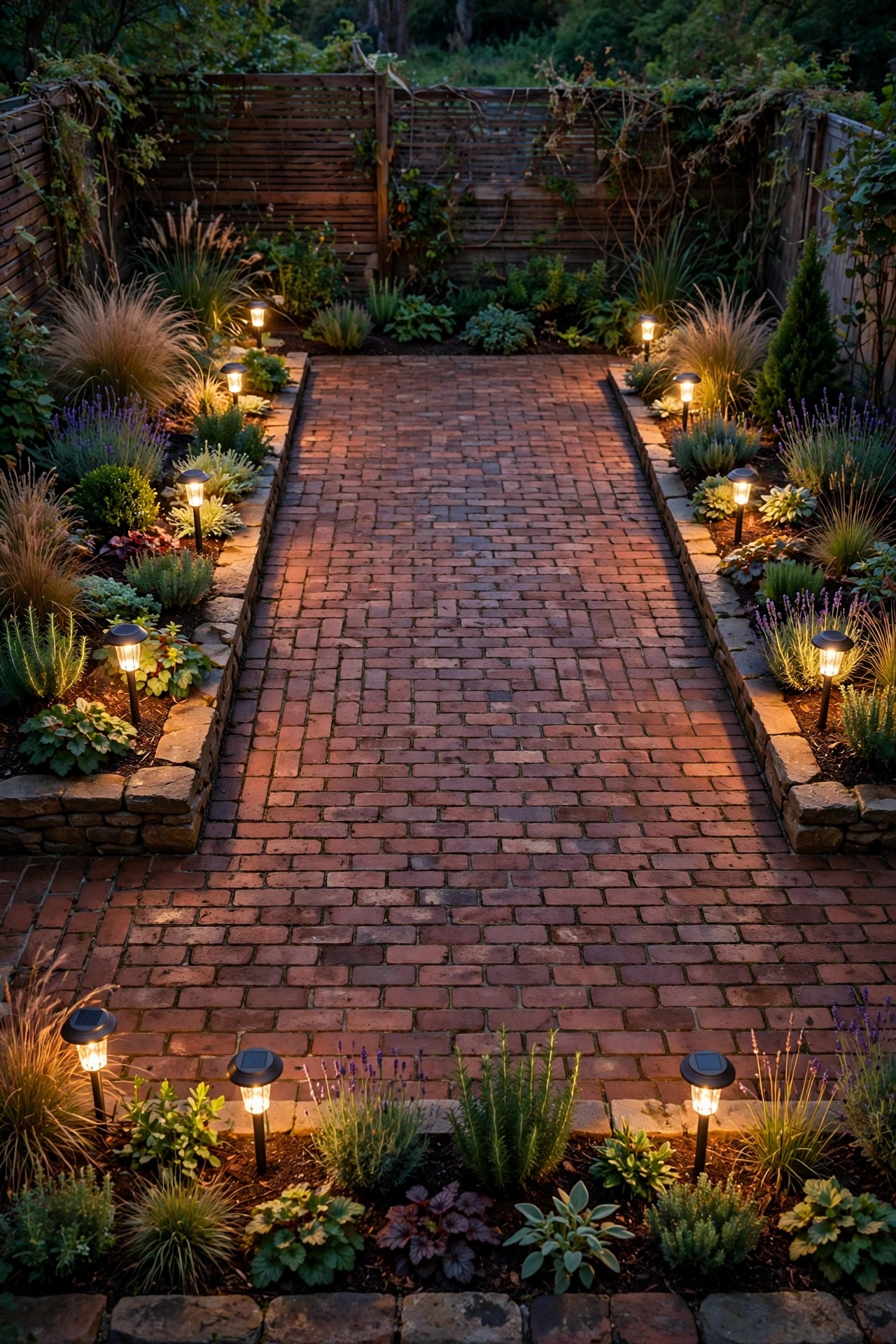
11. Low Path Lights Along the Brick Border
If guests regularly walk a dark line from the patio to a gate, grill, or garden, a row of low path lights along the brick border makes the route obvious and pretty. Keep them low — 12 to 18 inches — and shielded, so the light lands on the brick edge and the first foot of path rather than in anyone's eyes. Stagger them every 6 to 8 feet instead of lining both sides like an airport; staggered reads softer and uses half the fixtures. Bollard-style lights in a black or bronze finish disappear against brick by day. This is a perfect first low-voltage project because the cable run is short and straight. Put them on the same transformer and timer as your wall wash and the whole patio edge lights up as one scene at dusk. Aim for pools of light that just touch each other; dark gaps between fixtures are exactly where ankles get turned.
Suggested budget range: $50 – $150.

12. Brick Patio Lighting Ideas for Covered Spaces: Pergola Downlights
A pergola or covered section over brick needs its own plan — string lights alone leave the corners gloomy. I mount small downlights or short pendants on the beams, aimed straight down to pool light on the brick below. Keep beams and fixtures in proportion: one light every 4 to 5 feet of beam is plenty, and 2700K keeps the brick's warmth intact. If the structure is metal or vinyl rather than wood, use clamp or hook mounts rated for outdoor use instead of drilling. Wiring runs neatly along the top of the beam where nobody sees it. The pools of light create "rooms" within the patio — dining under one, reading chair under another — and the brick between them glows by reflection. Add a dimmer and this becomes the layer you'll adjust most. If the pergola is freestanding rather than attached, solar downlights with remote panels exist now and skip the trenching entirely on smaller setups.
Suggested budget range: $85 – $240.

13. Solar Stake Lights Tucked Into the Border Beds
The planting beds that usually frame a brick patio are free real estate for solar stakes. Push them into the soil a few inches back from the brick edge, angled slightly toward the patio, and the beds glow while the brick borrows the spill. This is my go-to for renters and anyone allergic to wiring. Buy stakes with replaceable batteries and a warm-white LED, and expect honest brightness — these are accents, not task lights, so cluster two or three per bed section rather than spacing lonely singles. After heavy rain, check that mulch hasn't buried the panels. In my experience the metal-stemmed versions survive seasons that snap the all-plastic ones. Pull them before winter in cold climates, wipe the panels, and store them in the garage; they'll come back strong in spring. Group a few taller stakes behind shrubs and the glow looks like it comes from the planting itself, not from a fixture.
Suggested budget range: $20 – $55.
14. A Hidden Wall-Wash Flood in the Planting Bed
Sometimes one wall of the house above the patio is tall and blank, and sconces alone can't fill it. A single wide floodlight hidden in the planting bed — tucked behind a shrub or ornamental grass — can wash the whole brick expanse in one soft sweep. This is the scenic-backdrop move: you're not meant to see the fixture, just the lit brick. Use a wide beam (60 degrees or more), keep it around 400 to 600 lumens so it glows rather than blasts, and angle it so the hot spot lands high on the wall. Shield it from the seating area's sightline with the planting itself, or add a glare shield. Neighbors will also thank you for keeping the beam tight to your own wall. One fixture, one big transformation. Test the angle after dark before you bury anything; small changes down at the fixture make a huge difference twenty feet up the wall.
Suggested budget range: $35 – $95.

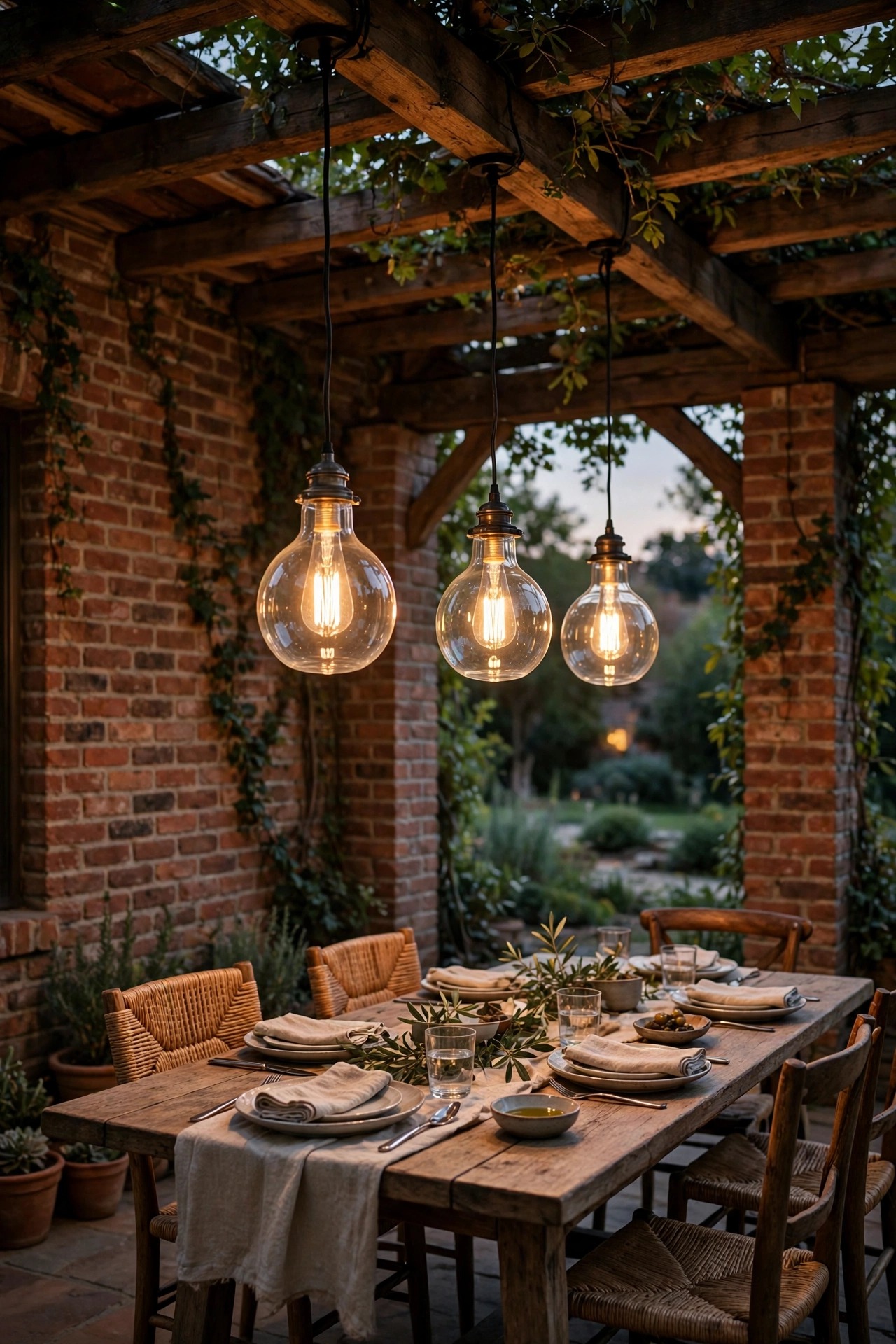
15. Edison Pendants Under a Roofed Patio Section
If part of your brick patio sits under a porch roof or solid cover, pendant lights give it instant dining-room polish. I like clear-glass pendants with filament-style LED bulbs — the brick reflects those little filaments beautifully — hung about 30 inches above the table surface. Two pendants over a six-foot table, three over anything longer. Make sure the fixtures are damp-location rated at minimum (wet-rated if the roof edge lets rain blow in), and hang them from proper outdoor boxes, not hooks screwed into trim. On a dimmer, they go from bright enough for a card game to soft enough for dessert. This is the one project on the list where I'd say hire an electrician if you're adding a new box — roofed-ceiling wiring is not the place to improvise. Match the pendant finish to your sconces so the covered section feels designed, not collected by accident over the years.
Suggested budget range: $70 – $200.
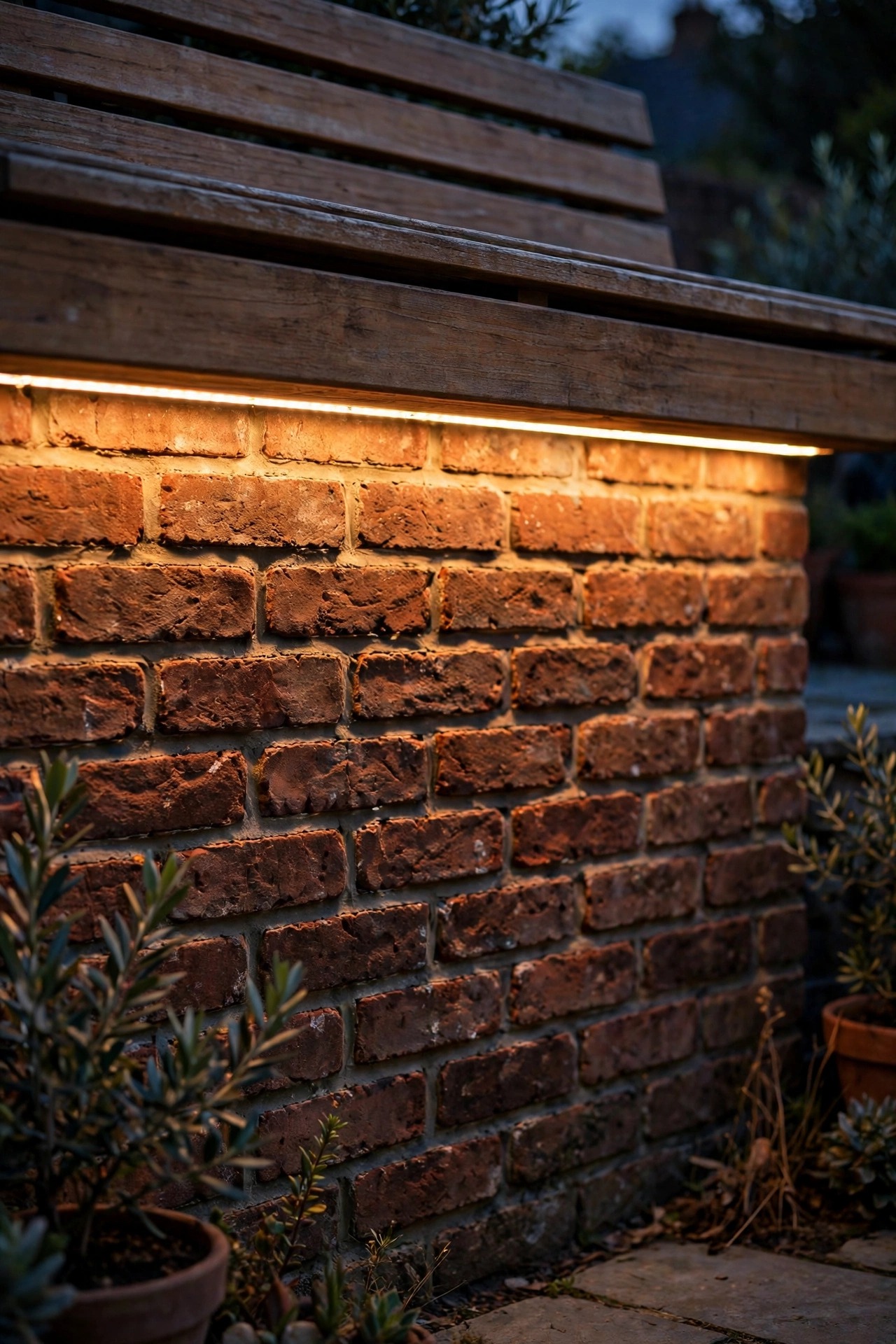
16. LED Strips Under Bench and Step Edges
Built-in brick benches and raised hearths are common on older patios, and a hidden LED strip under the edge makes them float. Use outdoor-rated (IP65 or better) strip, mounted in an aluminum channel with a diffuser so you see the glow, not the individual dots. The light washes down the brick face below — the same grazing trick as the wall wash, in miniature — and doubles as a safety light for the bench edge. Low-voltage strips are simple to run from the same transformer as your path lights. Corners need proper connectors, not folded strip, or you'll get dead sections by July. Keep the color temperature matched to everything else at 2700K. It's a small detail that makes built-ins look custom and expensive, and it photographs beautifully. Run a bead of outdoor silicone along the channel ends to keep moisture out, and this little detail will keep glowing for years.
Suggested budget range: $25 – $75.
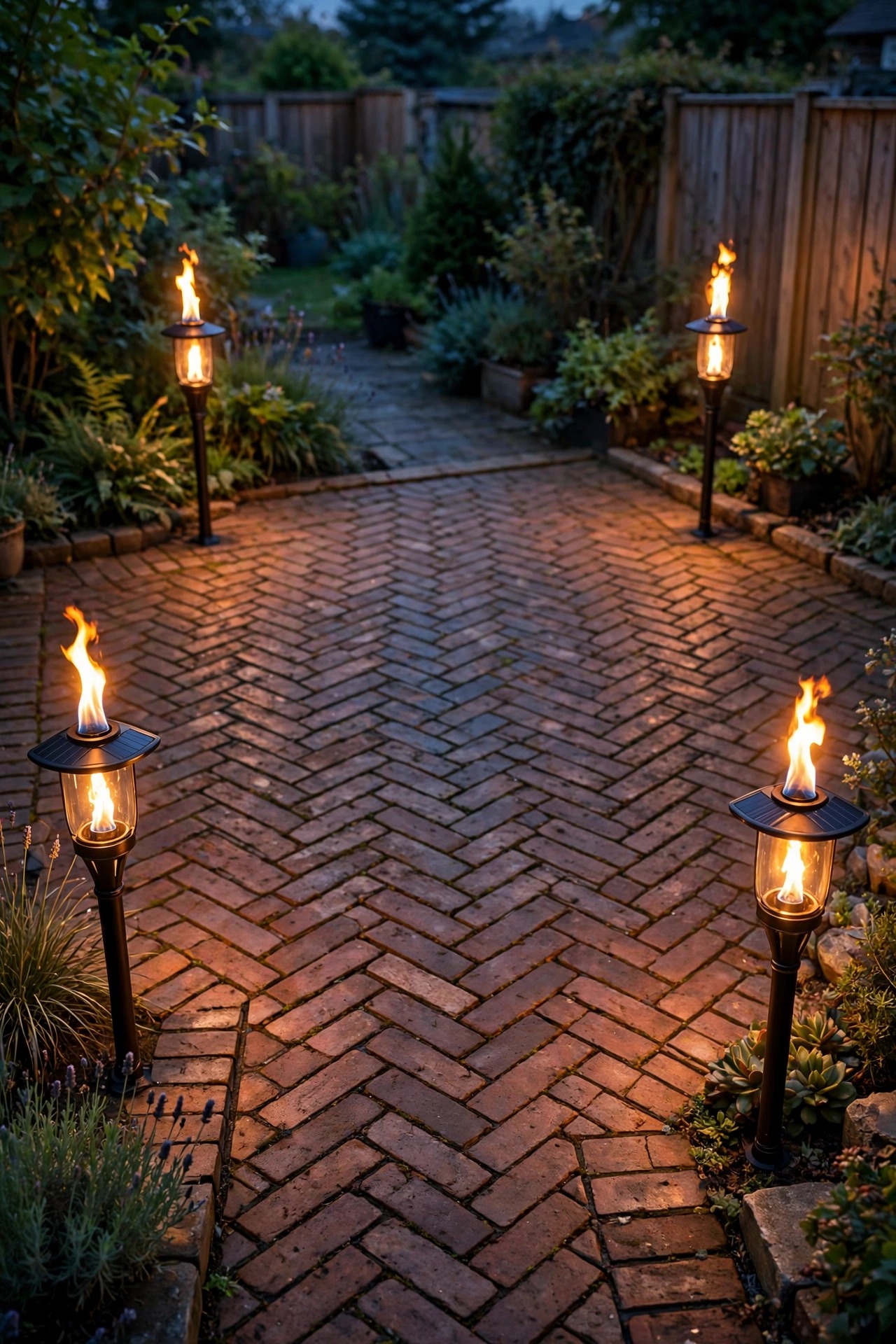
17. Solar Flame Torches at the Corners
For patios that lean a little tropical or boho, solar flame torches at the four corners add movement nothing else gives you. The flickering LED flames read surprisingly real from a few feet away, especially at mixed heights — stake two tall at the back corners and shorter ones flanking the steps. Because they're solar and self-contained, this is a ten-minute install: push them into the beds or into heavy planters filled with soil if your corners are all brick. Look for versions with a steady-on mode too, since constant flicker everywhere can feel busy. These won't light a book or a grill, and they don't pretend to — they're pure atmosphere, and against warm brick at dusk they're genuinely lovely. Expect two seasons from a set before the batteries tire. In fall, tuck two beside the steps with a couple of pumpkins and the entrance to the patio looks styled completely on purpose.
Suggested budget range: $30 – $80.
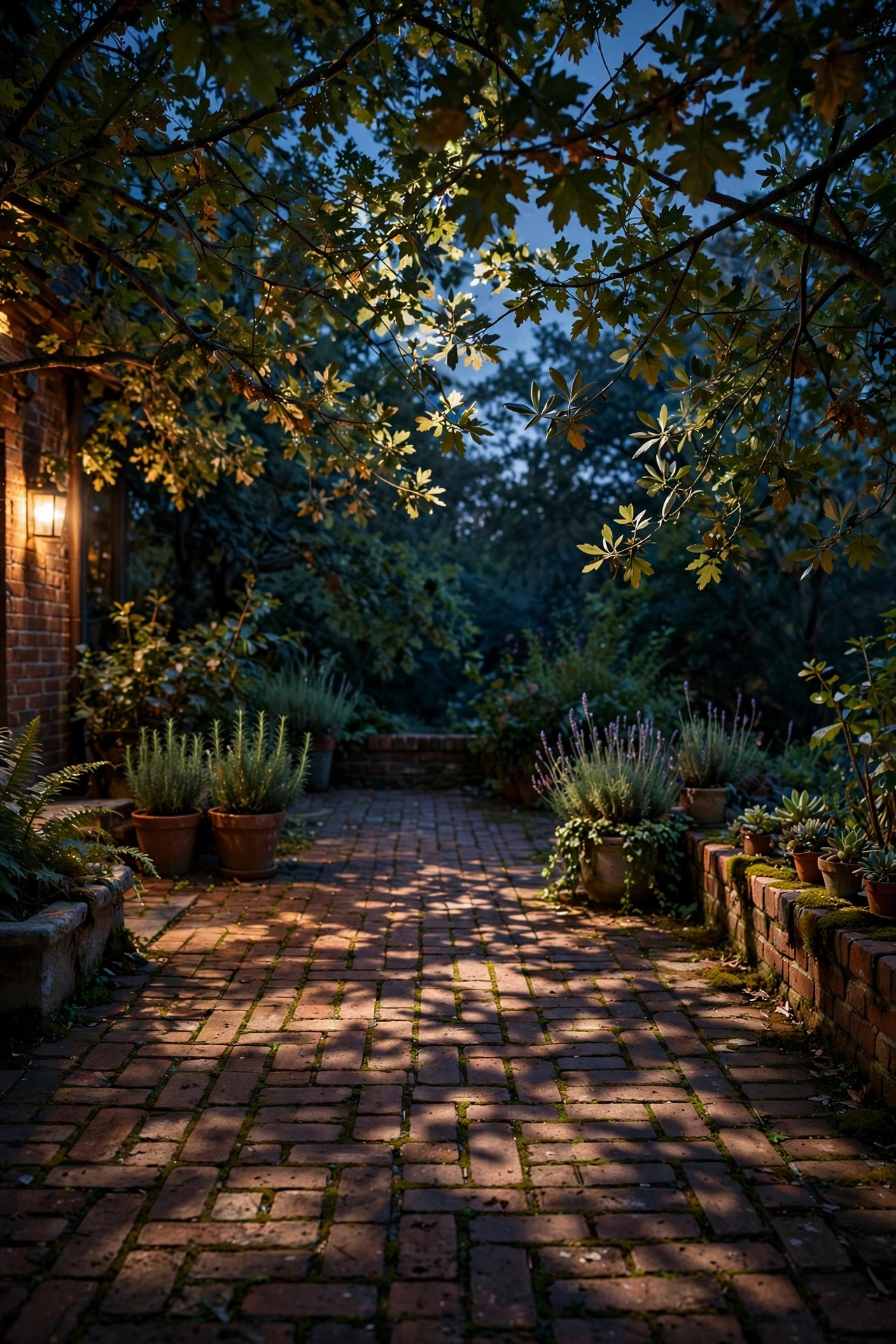
18. Moonlighting From a Nearby Tree
If a tree overhangs or stands near your patio, moonlighting is the most natural light of all: a fixture mounted 15 to 20 feet up in the canopy, shining down through the branches so the brick below gets a dappled, moon-like pattern. It covers a big area with one or two fixtures and throws almost no glare, since the source is above everyone's sightline. Hire this one out if heights aren't your thing — mounting and aiming in a canopy, plus running cable up the trunk discreetly, is pro work. Use a cool-neutral bulb here, around 3000 to 3500K, to mimic moonlight — it's the one place I break my warm-white rule. Keep the fixture's growth straps loose and checked yearly so the tree isn't girdled. The moving leaf shadows on warm brick on a breezy night are pure magic. A second, dimmer fixture from the opposite side fills in the darkest corner without doubling the overall brightness.
Suggested budget range: $100 – $300.
19. Smart Bulbs for Seasonal Color and Easy Timers
Your last layer can be the flexible one. Swapping smart bulbs into your sconces and pendants gives you scheduling, dimming, and — for holidays — a wash of color across the brick without buying a single new fixture. Brick takes color surprisingly well: amber for fall, a deep red-green split for December, soft gold for everyday. Day to day, I run them at plain warm white on an automatic dusk-to-11pm schedule, which also solves the "forgot to turn the patio off" problem. Check that your fixtures' bulbs have decent Wi-Fi reach to the patio, and choose enclosed-fixture-rated bulbs for lantern-style sconces so heat doesn't shorten their life. If the signal is weak, controlling the circuit with a smart switch instead gets you the same schedules and dimming with any bulb. Start with just the sconce pair as a test run; once the schedule feels second nature, you'll convert the rest of the patio in one sitting.
Suggested budget range: $30 – $90.
Frequently Asked Questions
What color temperature looks best on a brick patio?
Warm white, almost every time. Bulbs in the 2700K range deepen red brick's natural tones, while anything above 4000K turns it gray and chalky. The one exception is moonlighting from a tree, where 3000–3500K convincingly mimics real moonlight. Whatever you choose, match every layer to the same temperature so the patio reads as one scene.
Can I drill into brick to mount lights?
Yes, but drill the mortar joints, not the brick itself. Mortar is softer, holds masonry anchors well, and can be repointed later; a drilled or cracked brick face is a permanent scar. Use a hammer drill on the rotary setting with a masonry bit, vacuum the dust out of the hole, and seal the top of the fixture's backplate with exterior caulk.
Are solar lights bright enough for a brick patio?
As accents, absolutely — solar caps, stakes, and torches handle edges, corners, and atmosphere beautifully. As your only light source, not quite: most solar fixtures deliver accent-level brightness and fade on cloudy stretches. My honest recommendation is a hybrid — wired or plug-in fixtures for the main layers, solar for the flexible accents.
How do I light a brick patio with no outdoor outlet?
Start with solar and battery layers: cap lights, stake lights, flameless candles, fairy lights, and battery string lights with a timer. A low-voltage transformer needs an outlet, but even one outlet inside a garage with cable run through a doorway gap can power a starter kit. Heavy-duty rechargeable lanterns have gotten genuinely good and cover dining-table light easily.
Conclusion
Brick rewards gentle light more than almost any other material — give it layers instead of brightness and it will glow back at you all evening. Start with the wall, add something overhead, finish low along the edges, and the brick patio lighting ideas above will mix and match into a patio that feels like a little courtyard resort. When you're ready to keep going, browse my full roundup of patio lighting ideas for even more ways to layer light outdoors.