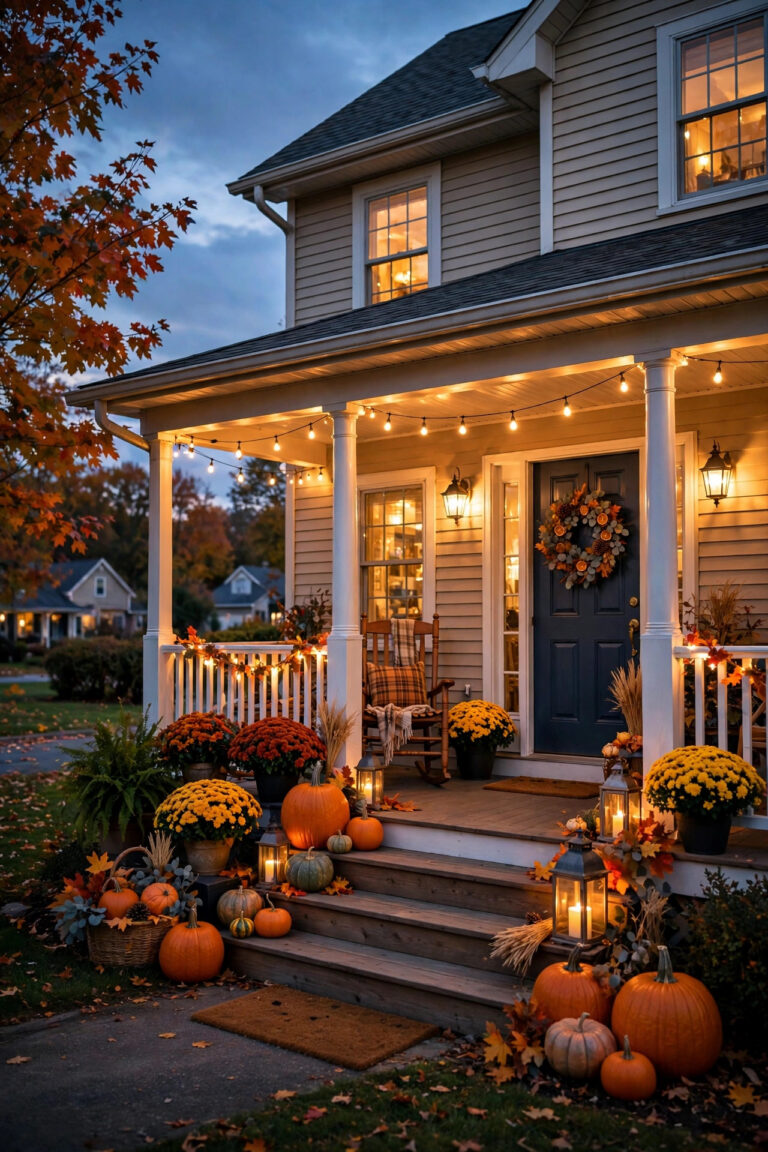
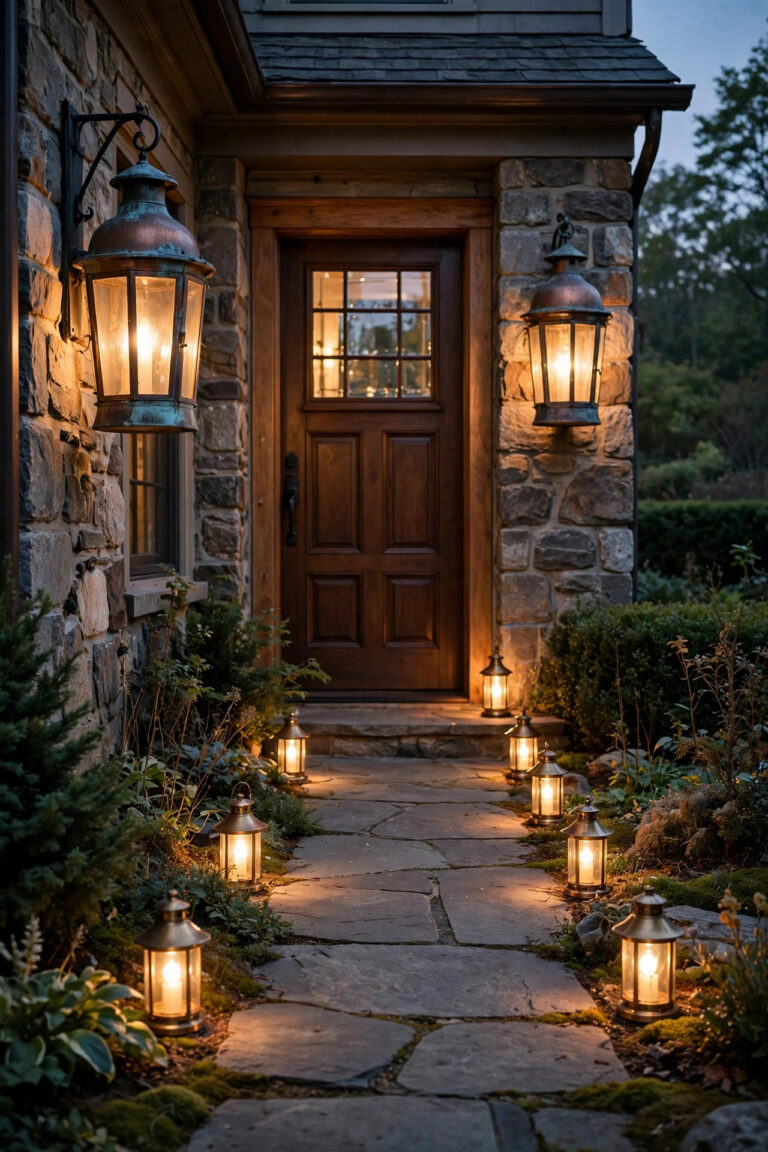
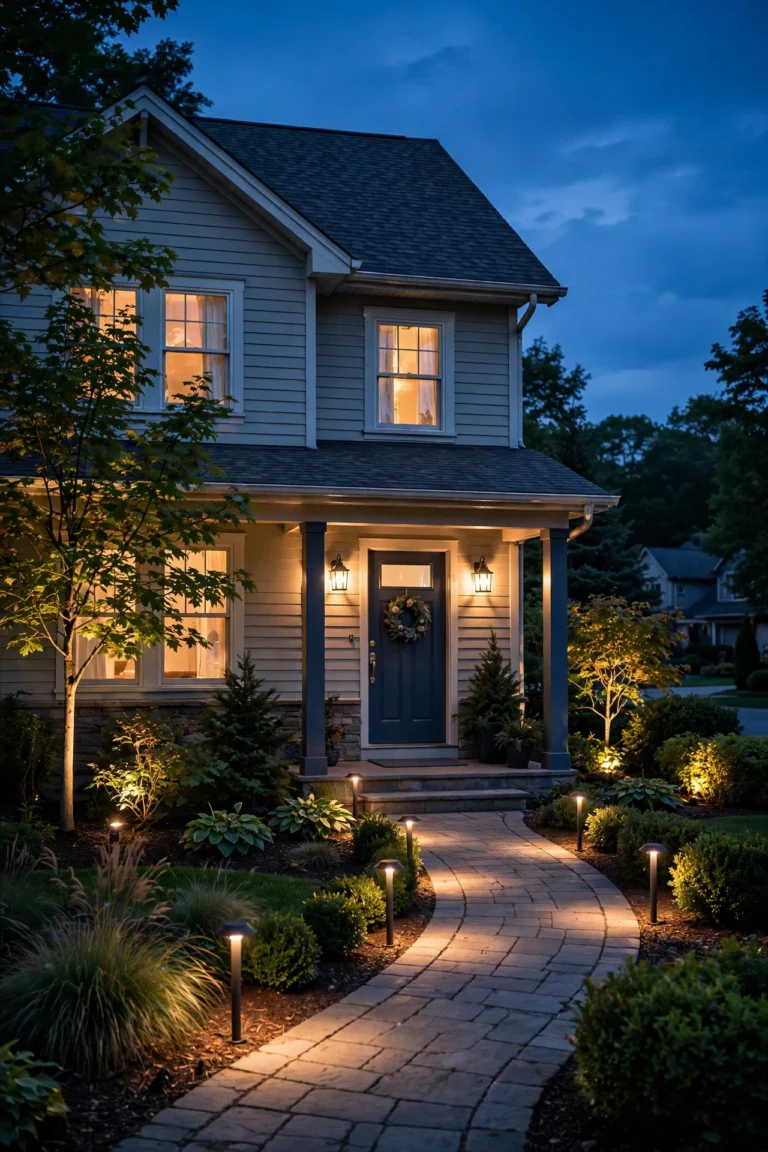
There is something about a brick porch at dusk that just stops me in my tracks. The brick itself does half the decorating for you — all that rich red, rust and clay color, the texture you can practically feel — but only if the light treats it kindly. The wrong bulb washes brick out to a flat pink, and a bare, glaring fixture makes even the prettiest stonework look harsh. The right brick porch lighting ideas do the opposite: they deepen the color, graze across the texture and make the whole entry feel warm and storied. In my experience, it always comes down to layering. A welcoming layer at the door, a soft layer that shows off the brick and stone, and a practical layer that lights the steps safely. Below are the 19 combinations I reach for again and again on brick and stone porches, with the bulb temperatures, mounting heights and real budgets that make each one work.
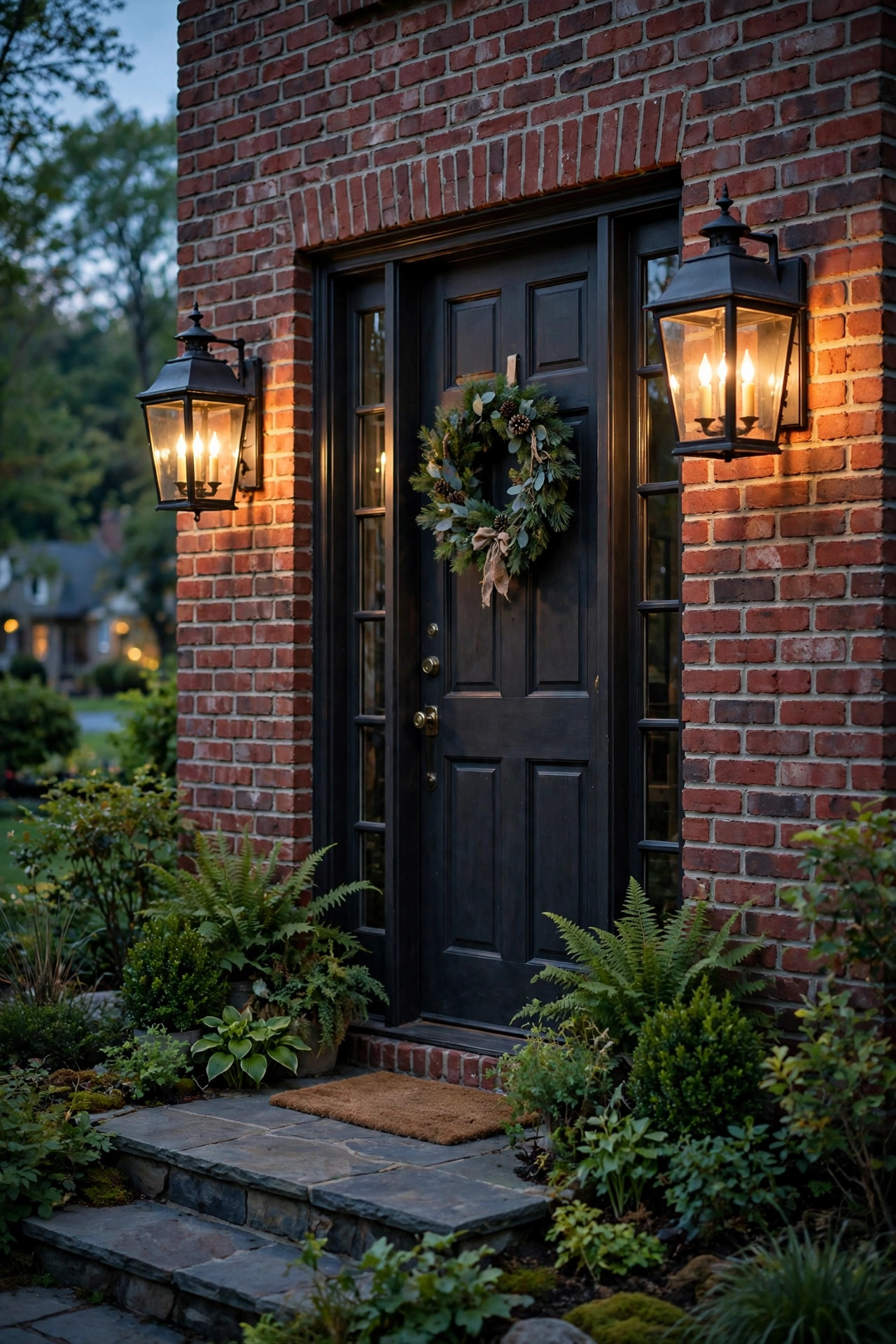
1. Matte Black Lantern Sconces Beside the Door
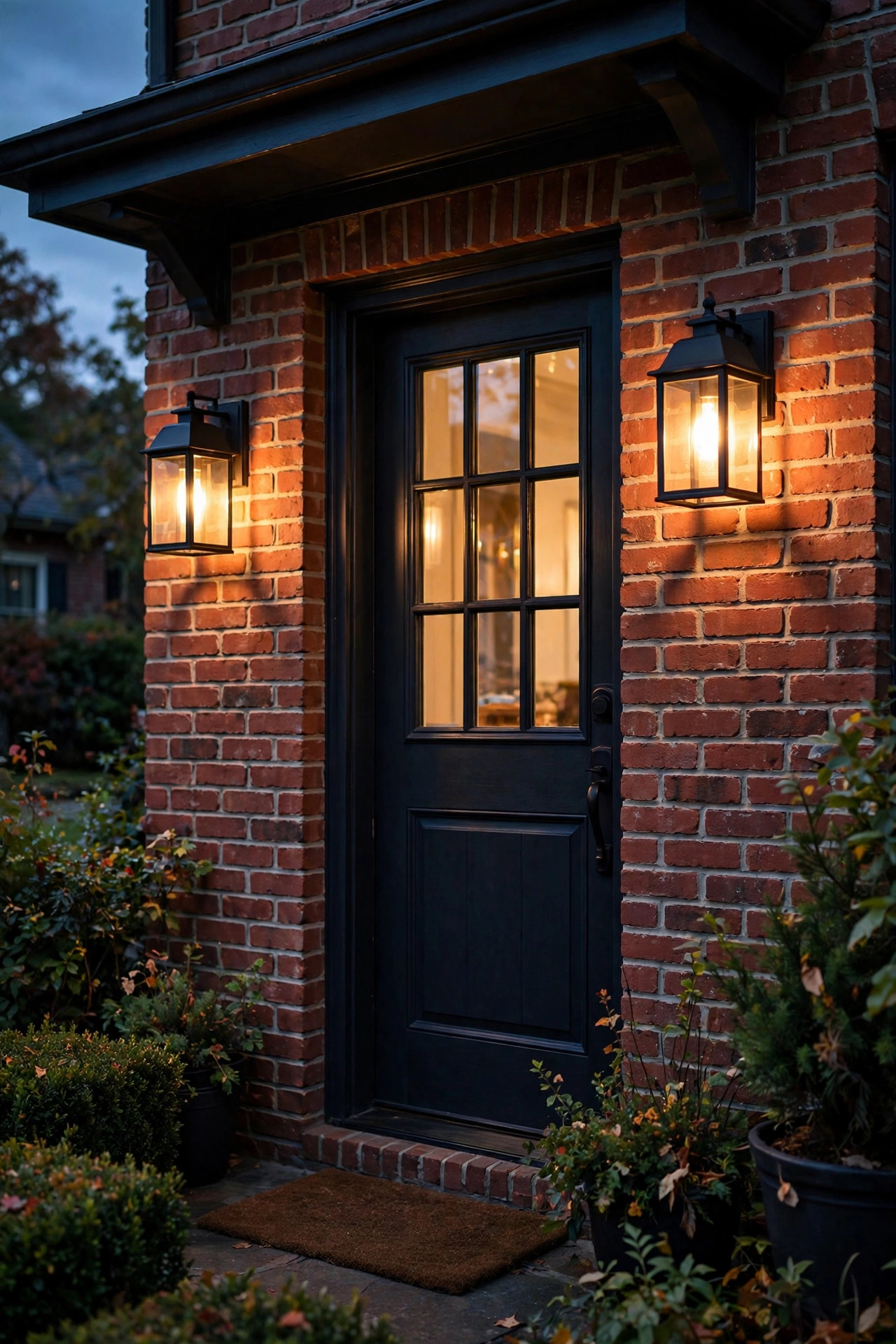
If I had to pick one can't-miss pairing for red brick, it would be matte black lantern-style sconces. The deep black finish pops against warm brick the way a picture frame sets off a painting, and the classic lantern shape suits brick's traditional character perfectly. I mount a pair flanking the door at about 66 inches from the porch floor to the center of the fixture — roughly eye level — so the glow greets you instead of blinding you. Choose clear glass rather than frosted if you want that pretty filament sparkle against the brick, and use warm 2700K LED filament bulbs around 800 lumens each. On a standard 6-foot-wide door surround, sconces 8 to 11 inches tall look proportionate; go bigger, 14 inches or more, if your porch has tall ceilings. One caution from experience: brick dust gets everywhere when you drill, so use a masonry bit, vacuum as you go, and set your anchors into the mortar joints where you can — mortar is far easier to patch later than a cracked brick face. These are hardwired fixtures, so switch the breaker off first or hire it out.
Suggested budget range: $90 – $260.
2. A Gooseneck Light Over the House Numbers
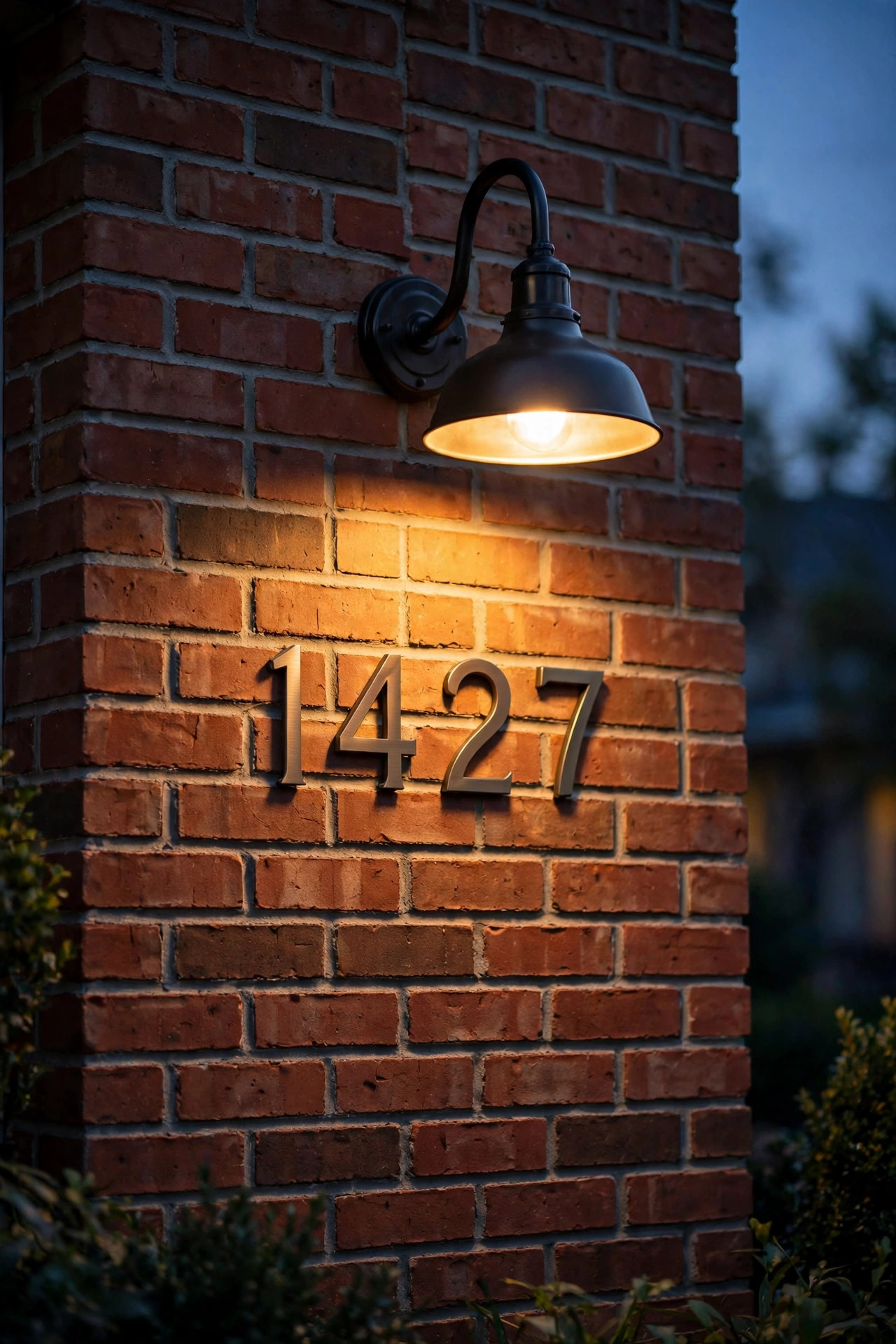
A small gooseneck fixture arched over the house numbers is one of those details guests notice without knowing why. The curved arm throws a soft pool of light straight down onto the numbers and the brick beneath, which makes the entry easier for visitors and delivery drivers to find after dark, and honestly? It photographs beautifully. I like a shade about 10 to 12 inches wide in black or oil-rubbed bronze, mounted 12 to 18 inches above the numbers, with a 2700K bulb in the 450 to 600 lumen range — bright enough to read brass or matte black numerals from the street, never so bright it glares. If your numbers sit on stone rather than brick, the same fixture works; the downlight rakes across the stone face and shows off every bit of texture. Keep the bulb shielded inside the shade so all you see is the glow, not the source. This is a quick Saturday project on an existing junction box, and if you are adding the box new, an electrician can usually tie it into the porch circuit in under an hour.
Suggested budget range: $60 – $180.
3. Copper Wall Lanterns That Patina With the Brick
Copper and red brick are cousins in color, and that is exactly why this pairing feels so rich. A polished copper lantern starts out bright and penny-shiny, then slowly deepens to a warm brown and eventually a soft verdigris patina that looks incredible against both brick and natural stone. In my experience, copper suits Craftsman, colonial and cottage-style brick homes best. Because copper is a softer metal, choose a sturdy gauge and a fixture rated for wet locations, and expect to pay more than for painted aluminum — it is worth it for a fixture that genuinely improves with age. Use 2700K bulbs; anything cooler fights the copper's warmth. If you love the shiny look, a clear lacquered finish slows the patina for a few seasons, while unlacquered copper changes fastest near the coast. I mount copper lanterns in pairs beside the door or in a single larger statement lantern centered over a stone bench or planter. Wipe them down once a year with a soft cloth — never abrasive pads — and let the weather do the artistry.
Suggested budget range: $140 – $420.

4. Ground Uplights That Graze the Brick Texture
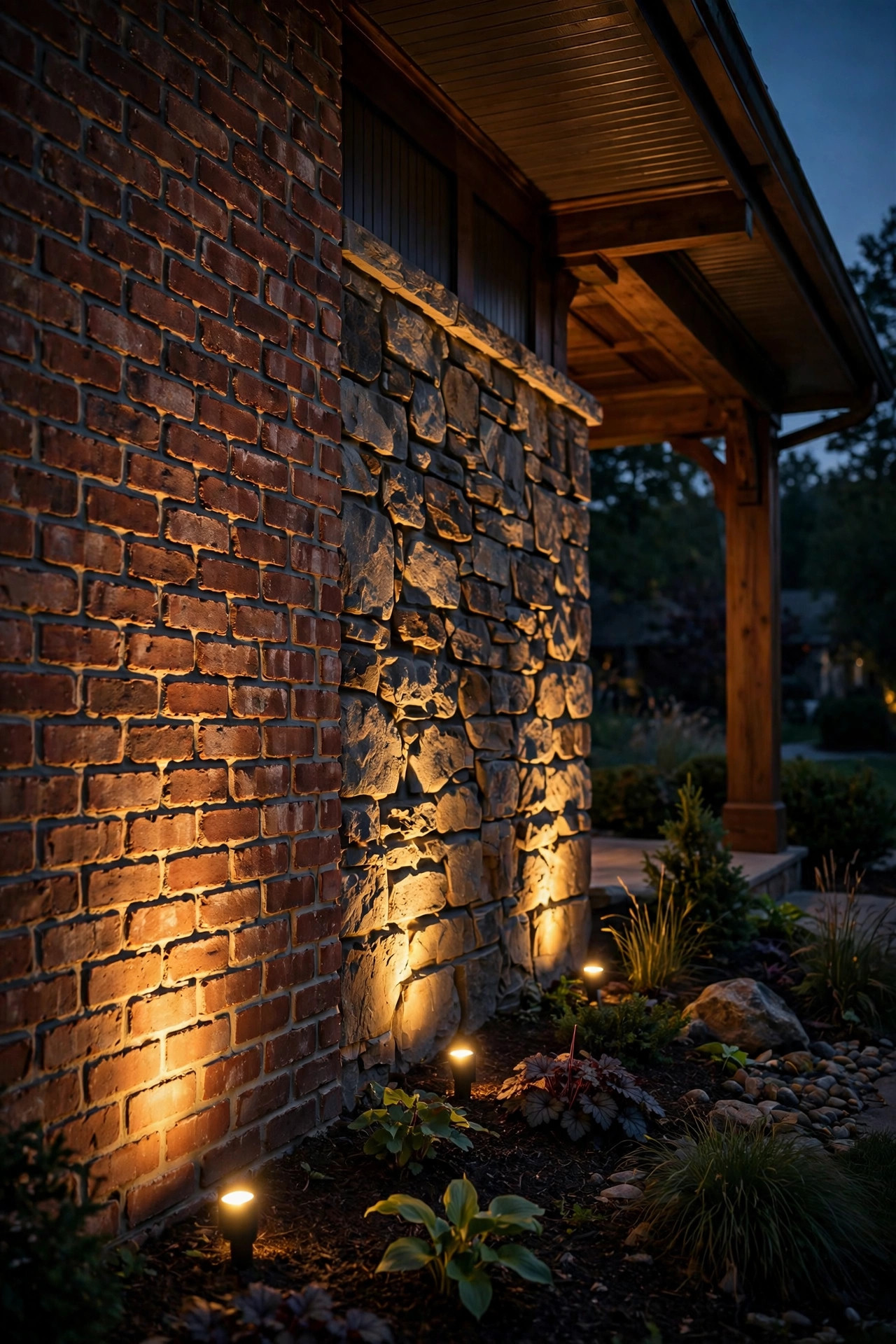
This is the trick designers use, and it is pure magic on brick and stone: place a low-voltage uplight at the base of the wall and let the beam skim upward. Because the light grazes across the surface at a sharp angle, every mortar line, every rough stone edge throws a tiny shadow, and the wall suddenly looks three-dimensional. Well lights or small adjustable spotlights on short stakes both work; I set them 6 to 12 inches out from the wall, tilted so the beam washes the brick rather than punching a hot spot. A narrow-to-medium beam, around 35 to 60 degrees, in 2700K keeps it warm and elegant. Space fixtures 4 to 6 feet apart along a porch foundation, tucked behind shrubs or planters so you see the effect, not the hardware. Run them on the same low-voltage transformer as your path lights, and put the whole run on a timer so the brick glows from dusk until you head to bed. If your porch columns are stone, aim one uplight at each column base — the columns will look twice as grand.
Suggested budget range: $120 – $350.
5. Recessed Ceiling Cans for a Clean Porch Ceiling
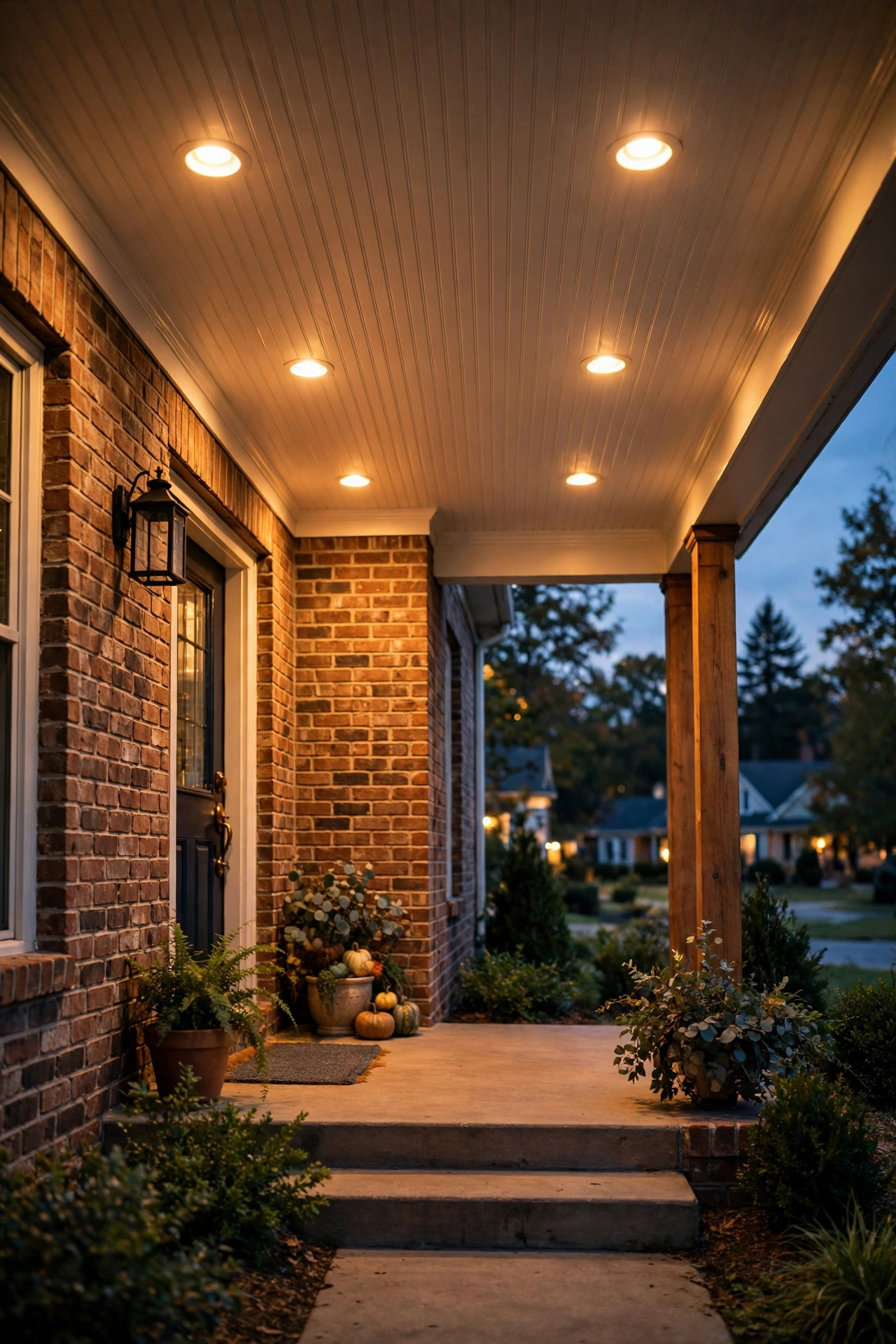
Some brick porches have beautiful beadboard or tongue-and-groove ceilings that deserve to stay the star, and that is where recessed cans earn their keep. Four-inch LED recessed fixtures disappear into the ceiling and wash the whole porch in even, shadow-free light — perfect for reading chairs, package drop-offs and general visibility. Space them about 4 feet apart and keep them at least 18 inches in from the brick wall so you do not get a scalloped hot stripe on the masonry. Choose wet-location-rated, gimbal or fixed LED modules at 2700K, and put them on a dimmer; full brightness for unloading groceries, low for a glass of tea at dusk. One thing I always tell people: recessed light alone can feel flat, so pair it with at least one decorative layer from this list — sconces or lanterns — to bring back the warmth and shadow that make brick interesting. If your porch ceiling is solid timber or you cannot cut into it, skip ahead to the flush-mount idea instead; it gives a similar clean feel with zero demolition.
Suggested budget range: $150 – $480.
6. A Hanging Pendant on a Chain Over the Seating Area
If your porch is deep enough to hold a couple of chairs, a hanging pendant turns it from a pass-through into a room. I hang a single generous pendant — 14 to 18 inches wide — centered over the seating arrangement or a small bistro table, on a black chain that echoes any black sconces at the door. The math matters: the bottom of the fixture should sit about 7 feet above the porch floor so nobody clocks their head, and at least 30 inches above a tabletop. On brick porches I love seeded glass or clear glass shades that let the filament bulb become part of the decor, always in that warm 2700K. Damp- or wet-location rating is a must, and the chain and canopy should be rated for outdoor use too, since porch humidity works on indoor fixtures fast. Add a dimmer and the pendant becomes your evening anchor light — bright for board games, low for conversation — while the sconces handle the door. It is the single change that made my own brick porch feel finished.
Suggested budget range: $110 – $340.

7. String Lights Swagged Across Brick
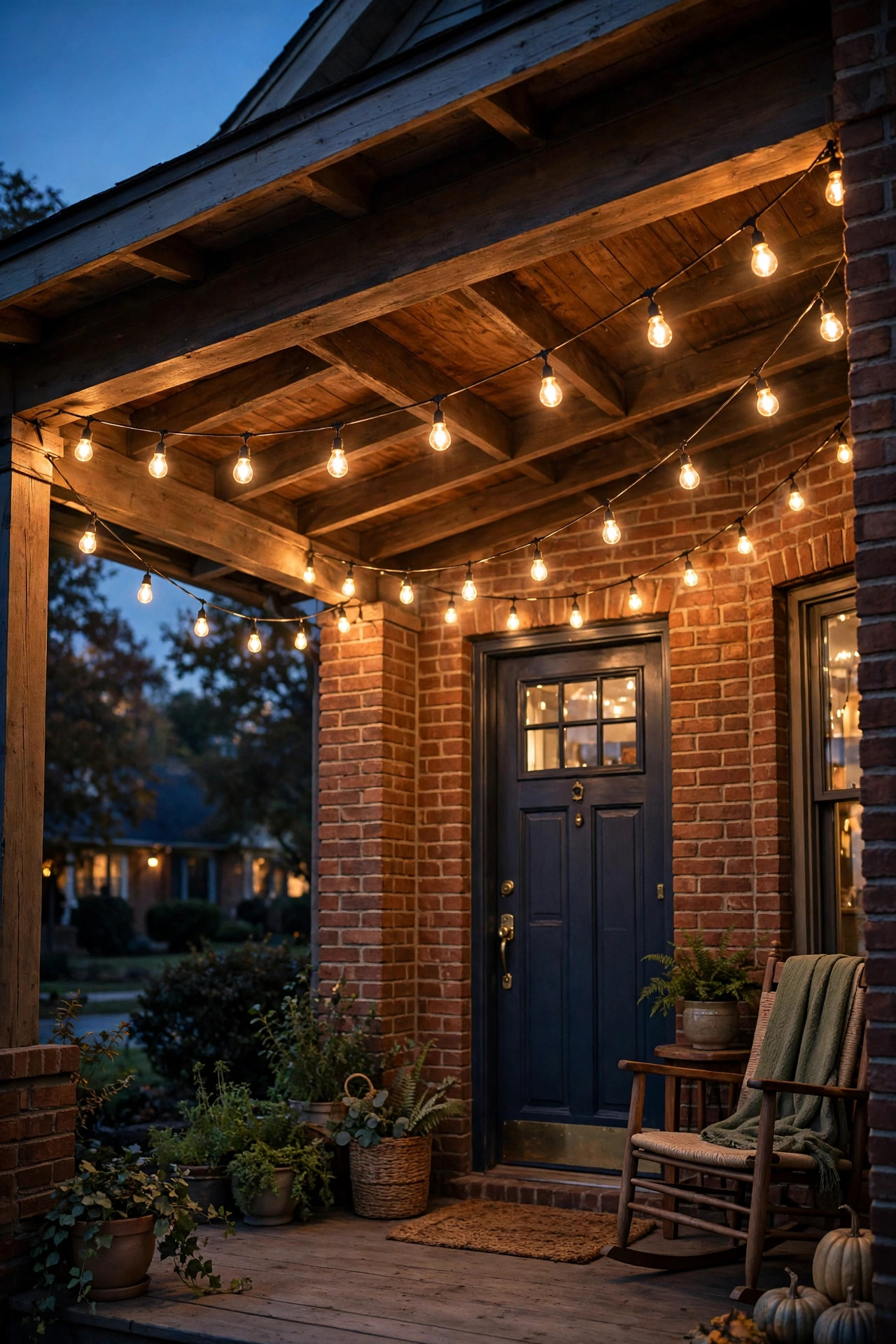
String lights on a brick porch feel like a little celebration every single night. That warm brick backdrop behind twinkling café strands? Pure charm. I swag two or three strands from the porch beam down to the brick wall, and here is the important part: anchor into the mortar joints, never the brick face, using masonry screw hooks or removable brick clips rated for the strand's weight. Mortar can be repointed in ten minutes years from now; a drilled brick is forever. Choose shatterproof LED café bulbs, spaced about 12 inches apart, in 2200K to 2700K for that candlelit warmth — cooler string lights look oddly blue against red brick. Keep strands at least 7 feet above the floor at their lowest sag, and plug into a GFCI outlet with an outdoor timer so they click on at dusk without you thinking about it. Between two brick columns, a gentle swag with about 6 inches of drape per 4 feet of span looks relaxed rather than droopy. And only ever use LED bulbs near wreaths, cushions or dried arrangements — they stay cool to the touch.
Suggested budget range: $45 – $130.
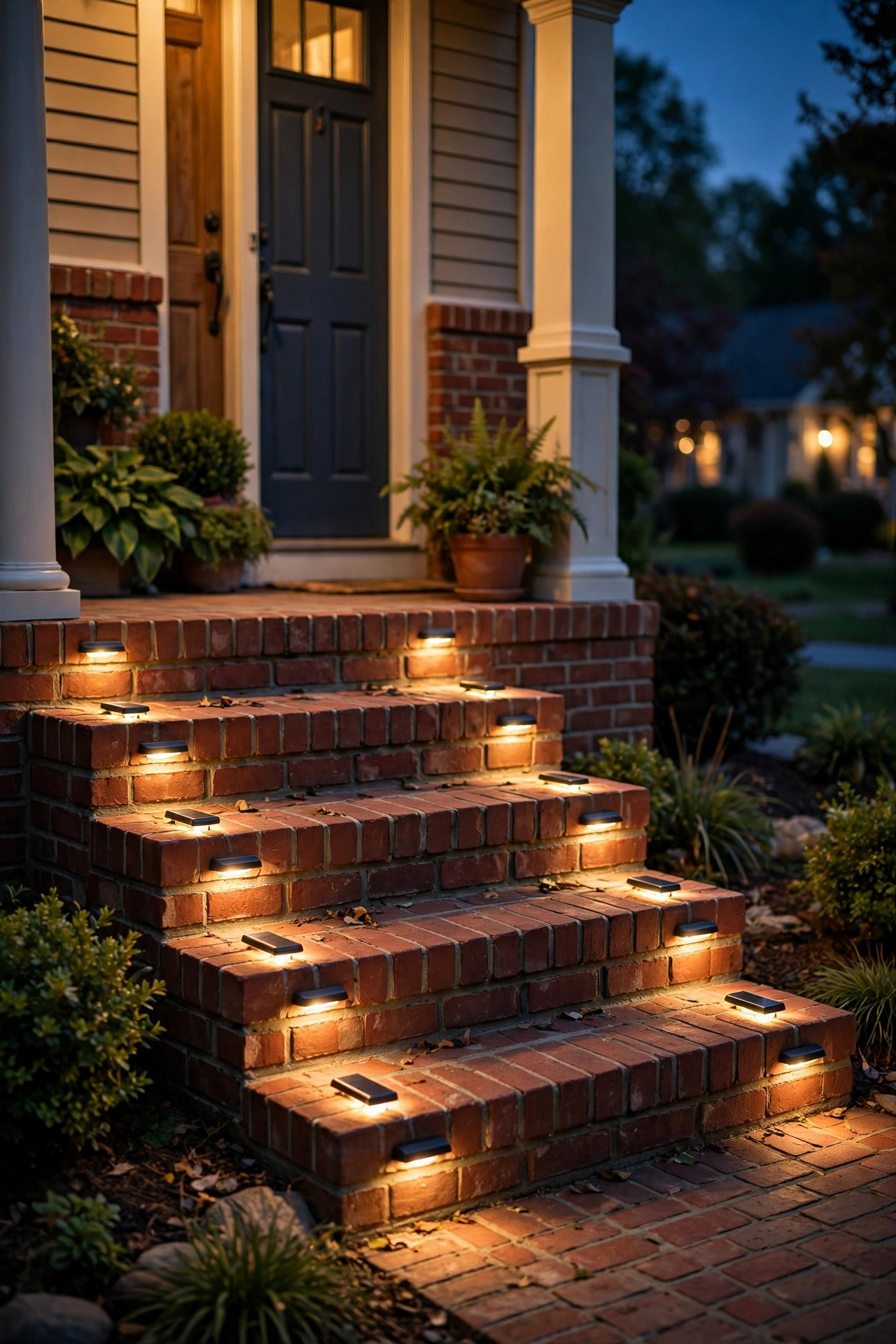
8. Solar Step Lights for Brick Stairs
Brick steps are gorgeous and, after dark, genuinely treacherous — the uniform red-brown color hides every edge. Small solar step lights fix that for almost no money and zero wiring. I use the slim rectangular kind that screws into the riser or sits on the tread's edge, two per wide step or one centered on narrower stairs, so each tread gets its own little pool of light. Modern solar step lights with warm 2700K to 3000K LEDs are a world better than the cold blue solar spikes of a decade ago; look for at least 8 hours of runtime and an IP65 rating. Mount them with screws into the mortar joints where possible — adhesive pads alone rarely survive a winter of freeze and thaw on brick. They need a few hours of sun on the panel, so on a deeply shaded north-facing porch, choose models with a remote panel you can stake in a sunny bed nearby. Wipe the panels monthly; a film of pollen can cut charging in half. For a coordinated look, match the housing color to your door hardware.
Suggested budget range: $25 – $80.
9. Carriage-Style Lanterns for Traditional Brick Homes
Some brick homes — colonials, Georgians, anything with white trim and a symmetrical front — are practically asking for carriage lanterns. The design echoes old carriage-house lamps, with a tapered frame, clear panes and a candle-style bulb cluster inside, and it flatters brick and stone equally. Scale is everything here: a carriage lantern should be roughly one-quarter to one-third the height of your door. For a standard 80-inch door, that means a fixture around 20 to 24 inches tall, which looks enormous in the store and exactly right once mounted. Three candle bulbs at 2700K, each around 300 to 400 lumens, give that multi-flame flicker without blowing out the entry. I keep the finish consistent with the home's other metals — black for a classic look, aged bronze if your brick leans brown rather than red. Mount the pair so the bulbs sit at eye level, and if your porch has stone veneer wainscoting, carriage lanterns mounted half on the stone line look especially handsome. This is the most formal option on my list, and on the right house nothing beats it.
Suggested budget range: $160 – $480.
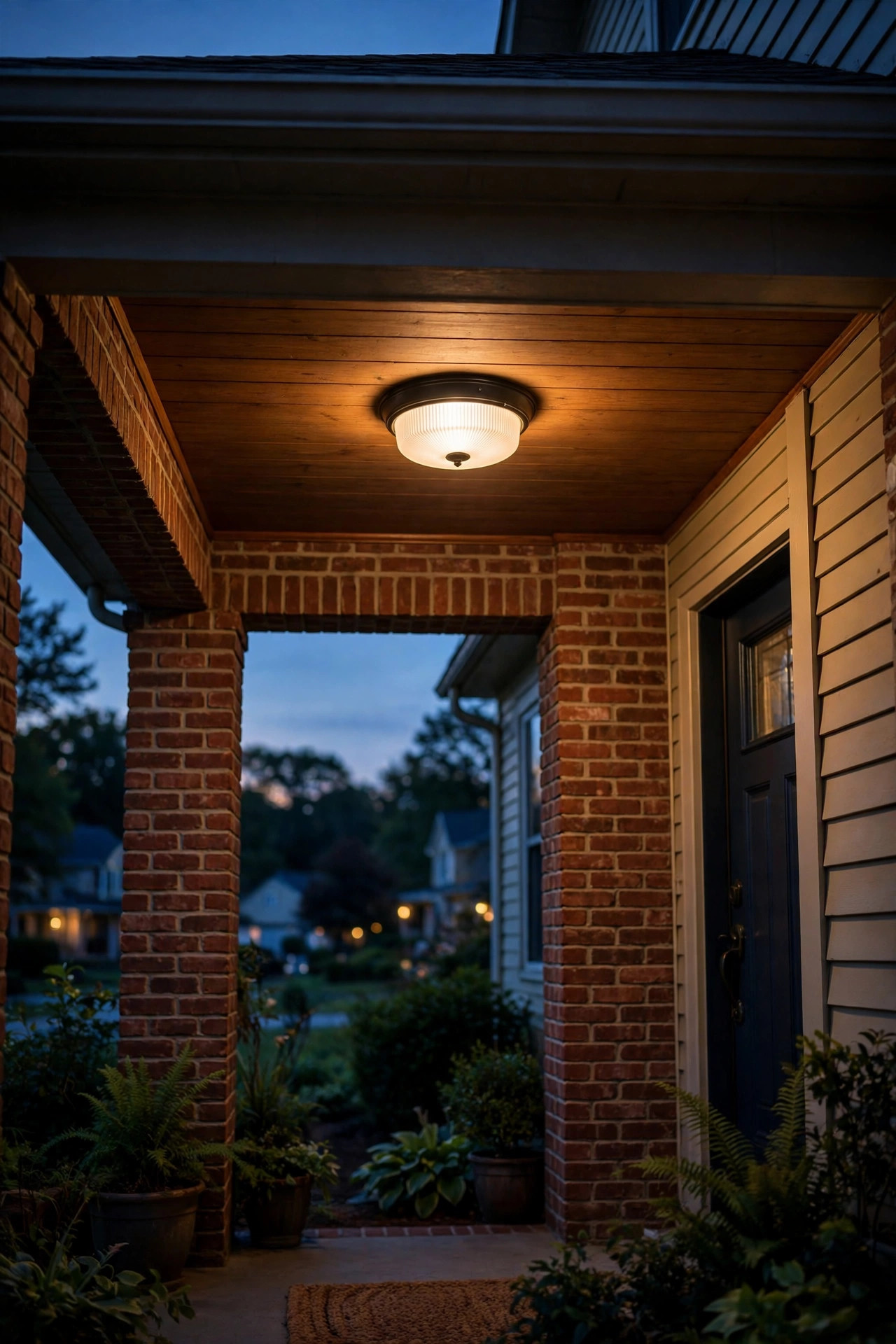
10. A Flush-Mount Ceiling Fixture for Low Porch Ceilings
Low porch ceilings — anything under 8 feet — rule out pendants, but you still deserve better than a bare bulb. A flush-mount ceiling fixture with a decorative frame gives you finished style in as little as 4 inches of depth. For brick porches I choose drum or lantern-style flush mounts in black or bronze with frosted or seeded glass, which hides the bulb and throws a soft, wide wash over the floor and the lower brick walls. One fixture handles a porch up to about 10 by 12 feet; go bigger or add a second for larger spaces. Pick an LED model at 2700K putting out 1,200 to 1,600 lumens, on a dimmer if you can. Because these sit tight to the ceiling, heat is trapped a little more than with open fixtures — another reason LED, which runs cool, is the only sane choice here. While you are up there, it is the perfect moment to check that your ceiling junction box is rated for outdoor damp locations. Paired with brick porch lighting ideas like low sconces at the steps, a flush mount keeps a small porch feeling cozy rather than cramped.
Suggested budget range: $70 – $220.
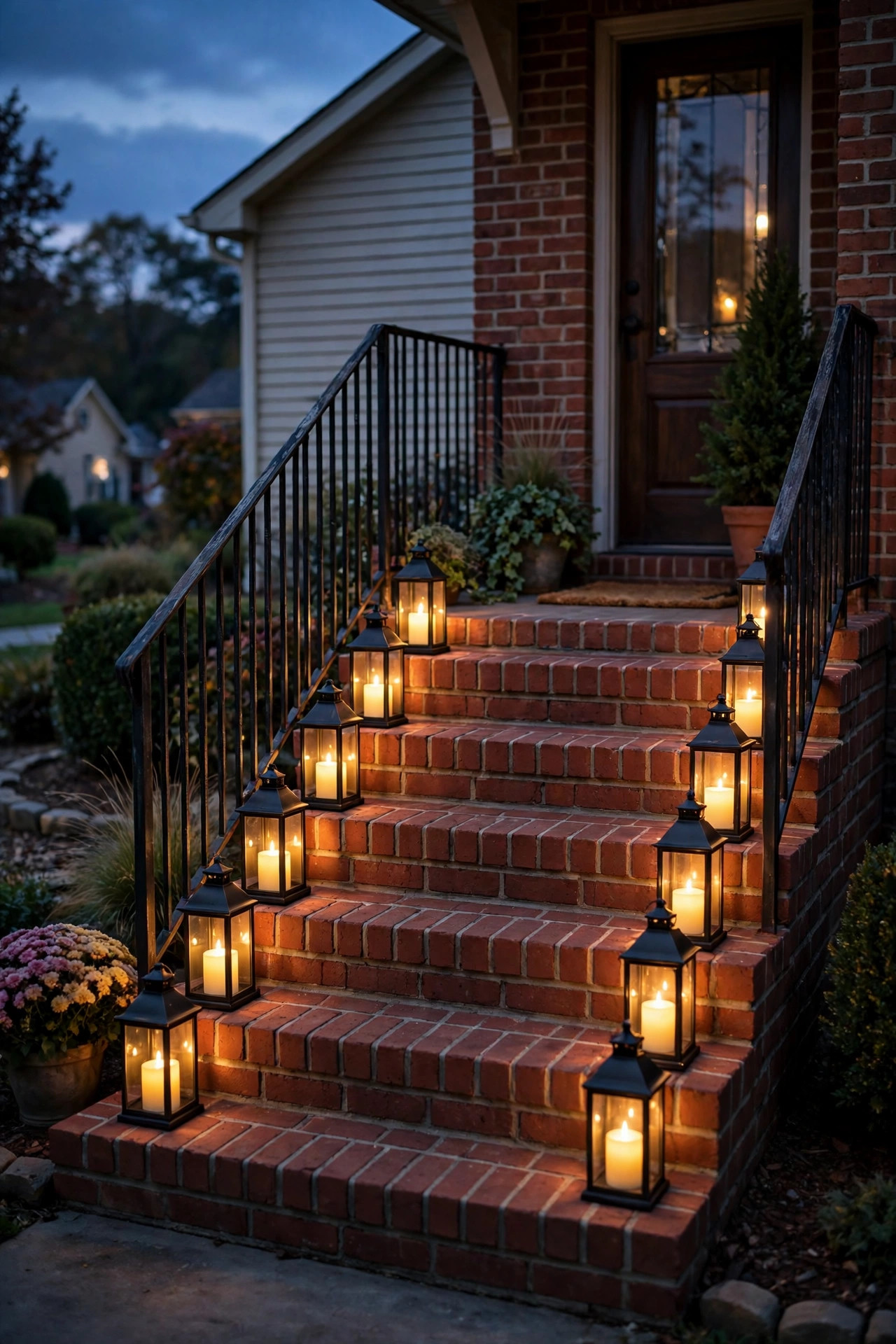
11. Candle-Style Lanterns Lining the Steps
For pure atmosphere, nothing on this list beats a row of candle lanterns climbing the porch steps. I group black metal or weathered wood lanterns in mixed heights — say 12, 16 and 20 inches — on alternating sides of brick steps, with LED pillar candles inside on a timer. The candles flicker, the brick glows amber, and the whole entry feels like the opening scene of a movie. Timers are non-negotiable for me: set them to come on at dusk for five hours and you never trudge out in slippers to blow anything out. Real flame near a porch is a risk I simply do not take, and modern LED candles with a warm 2200K flicker are convincing from three feet away. Weight the lantern bases with a little sand if your porch catches wind, and bring the candles (not the lanterns) in during driving rain unless they are rated weatherproof. This is also my favorite renter-friendly trick and my go-to for parties, holidays and house listings — instant warmth for almost nothing.
Suggested budget range: $35 – $110.
12. Wall-Wash Lighting That Shows Off Stone Veneer
If your porch mixes brick with a stone veneer accent wall or stone column bases, wall washing is the technique that makes people say "your house looks amazing at night" without knowing why. Unlike grazing light, which sits close and rakes, a wall wash stands back — fixtures placed 2 to 3 feet from the wall with a wide 60-degree beam — and bathes the whole surface evenly. On stone, that even wash softens harsh shadows and lets the color variation in each stone read clearly; on brick, it warms the entire wall like sunset. I use low-voltage flood-style fixtures in 2700K, one every 5 to 6 feet, hidden behind the garden bed edging. This is one of those brick porch lighting ideas that works best as part of a bigger layered plan — the wash is your backdrop, sconces are your jewelry. If you are still planning your overall scheme, my roundup of front porch lighting ideas walks through the layering order I follow. Keep the fixtures aimed straight at the wall, not tilted up, to avoid light spilling into windows.
Suggested budget range: $130 – $380.
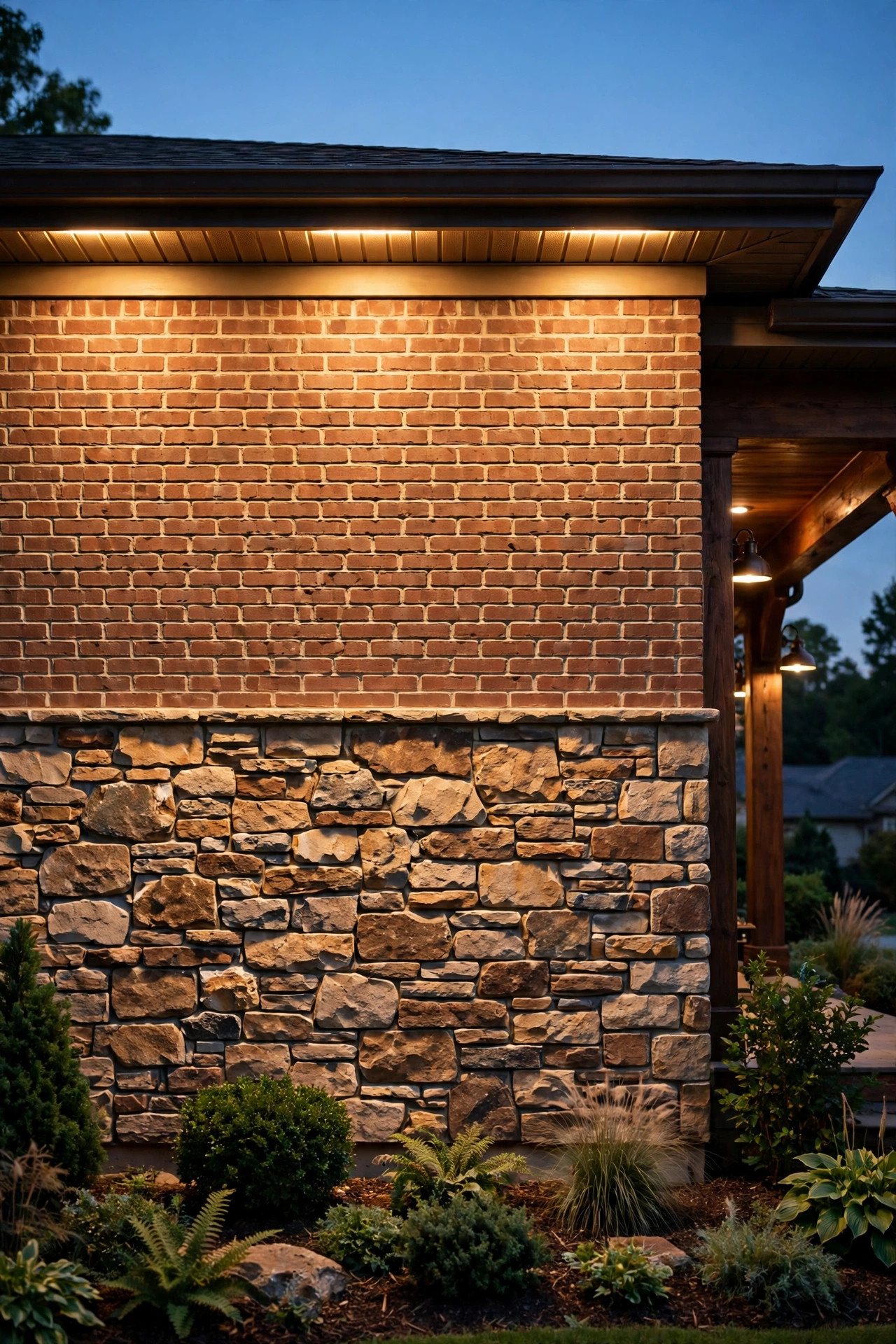
13. Motion-Sensor Sconces for the Side of the Porch
Every brick porch has that one dark side — the stretch of wall past the door where the pretty sconces do not reach and the trash bins live. A motion-sensor sconce that matches your main fixtures quietly solves it. I look for a lantern-style sensor fixture in the same black or bronze finish, with an adjustable sensitivity dial and a dusk-to-dawn low-glow mode: it idles at about 20 percent brightness so the wall never looks dead, then ramps to full when someone walks up. Set the sensor's range to 15 to 25 feet so it catches the steps but not every car on the street, and aim the head slightly down; brick walls bounce infrared oddly, so test it over two evenings and tweak. Around 800 to 1,000 lumens at 2700K to 3000K is plenty. This is equal parts security light and hospitality — guests find the door, packages stay visible, and you are never fumbling with keys in the dark. Just make sure the fixture is wet-location rated, since side walls take the weather head-on.
Suggested budget range: $65 – $190.
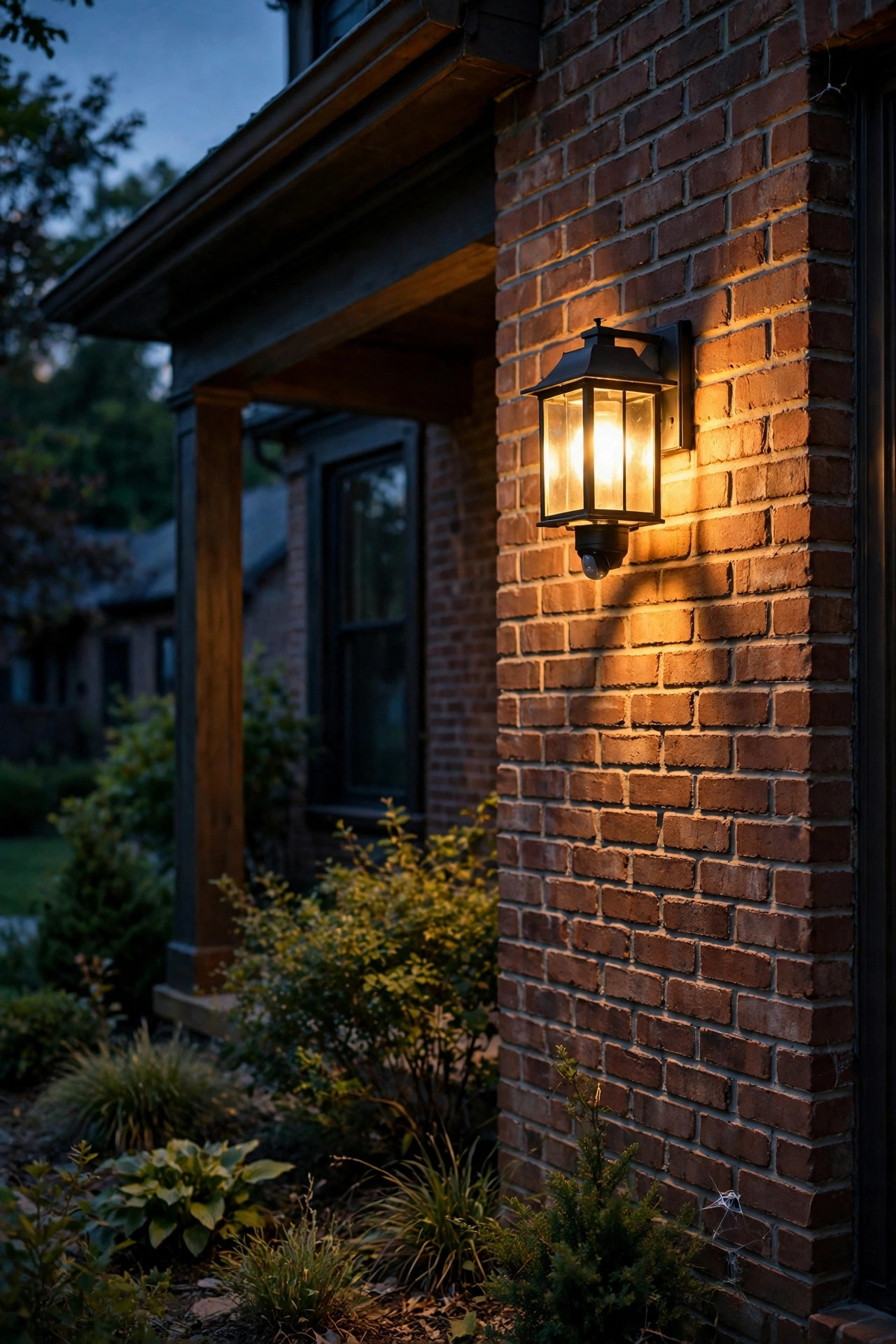
14. Hanging Hurricane Lanterns From Porch Beams
Exposed beams on a brick porch are a gift — hang hurricane lanterns from them and the whole space goes softly storybook. The tall glass chimney shape protects the "flame" (an LED candle or filament bulb) and throws light in every direction, so a pair of them can carry a mid-size porch on their own. I hang them at staggered heights over a seating area, hooks screwed into the beam — never into the brick above — with the lowest lantern bottom at least 6 feet 8 inches over the floor. Weathered zinc, black and aged copper finishes all sit beautifully against red brick. Battery LED versions with remote controls are the easy route and last a season on one set of batteries with timer use; hardwired versions suit new builds. Grouping rule I swear by: odd numbers, mixed heights, and keep the glass clean — a quick vinegar wipe monthly, because dusty glass can steal half the glow. On stone fireplace porches, hang one lantern near the hearth too and the brick-and-stone palette ties together end to end.
Suggested budget range: $55 – $170.
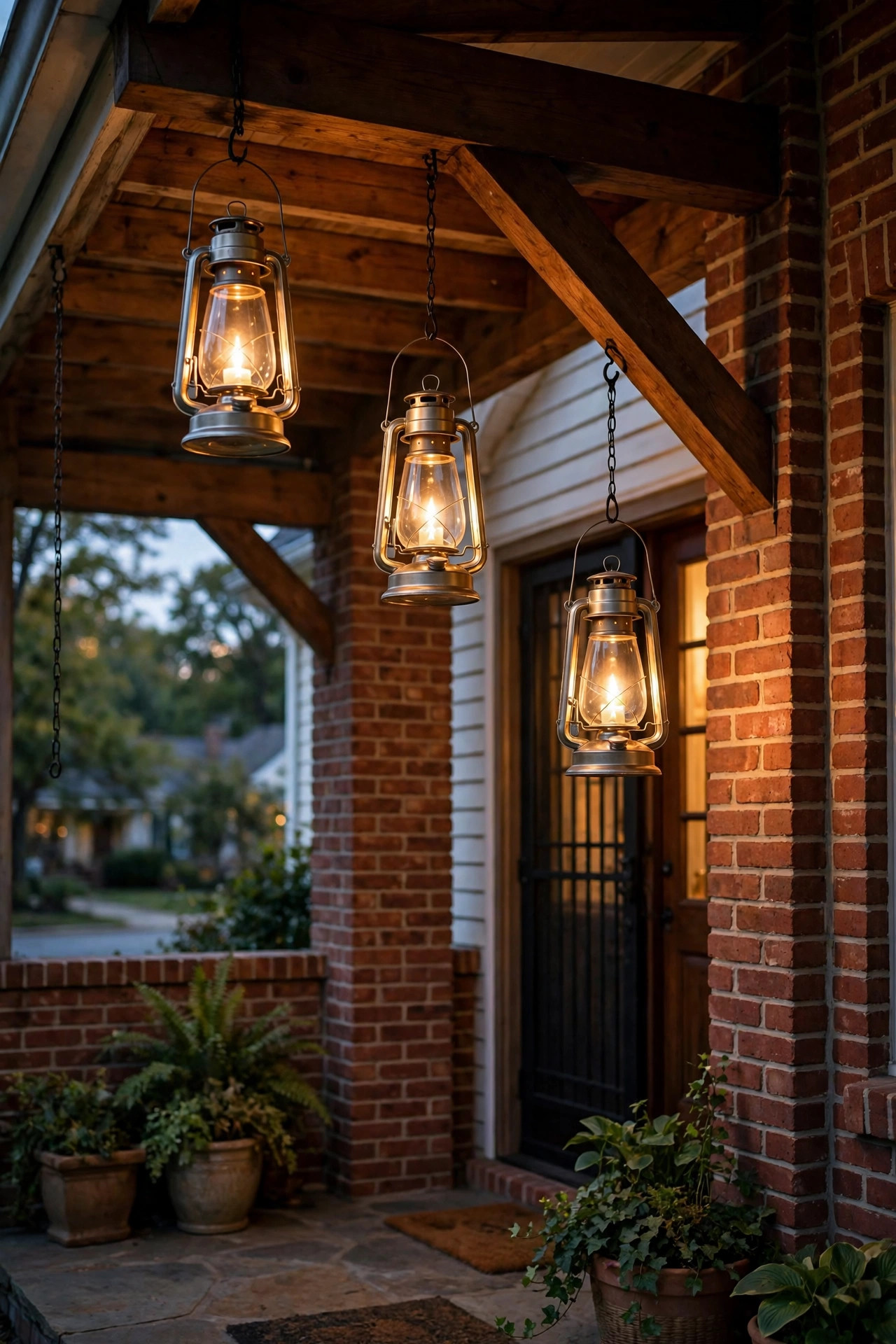
15. Lights Built Into Brick Columns and Piers
If you are building or rebuilding a brick porch, plan for column lights from day one — it is the most polished look on this list. Fixtures recessed into brick piers at the steps, or cap lights seated under the stone cap of each column, wash the column faces and mark the entry like a pair of glowing gateposts. The cap-light version is my favorite: a slim LED fixture hides under the cap's overhang and throws a soft skirt of light down the brick, so the column itself seems to glow from within. Because wiring runs inside the masonry, this is electrician-and-mason territory during construction; retrofitting means surface conduit, which honestly can still look tidy painted to match the mortar. Use 2700K, modest lumens — 200 to 400 per column is plenty — and put them on the same circuit as your other porch lights. Stone caps with brick piers are the classic combination here, and the downlight shows off the mortar work beautifully. Budget-wise this is a splurge, but it raises the whole house's presence after dark more than any single fixture I know.
Suggested budget range: $280 – $750.

16. The Warm Bulb Swap: 2700K Filament Bulbs Everywhere
Here is the cheapest transformation on the list, and I do it before anything else: audit every bulb on the porch and swap anything cool or mismatched for 2700K LED filament bulbs. Brick is a warm material — reds, oranges, russets — and a 4000K or 5000K bulb drags it toward a dreary gray-pink that no fixture can fix. At 2700K, brick deepens to its true sunset color and stone warms up like it is lit by firelight. If you want to understand the why behind this, the site's outdoor light color temperature guide is the clearest walkthrough I have found. Filament-style LEDs give you that vintage Edison sparkle inside clear-glass lanterns while using about 6 watts for a 60-watt-equivalent glow. Match every bulb on the porch — sconces, pendant, ceiling fixture — to the same temperature, because a single cool bulb in the mix reads as a mistake even if guests cannot name it. Keep two spares in the hall closet, all labeled 2700K, so a midnight replacement never breaks the spell.
Suggested budget range: $15 – $45.

17. A Lighted Wreath and Door Swag Glow
The front door itself deserves a moment. A battery-operated lighted wreath — or a simple swag of greenery wound with copper-wire fairy lights — makes the door the warm focal point of the whole porch, framed by brick. Copper-wire strands are nearly invisible by day and float like fireflies by night; a 33-foot strand with 100 warm micro-LEDs wraps a 24-inch wreath generously with enough left to trail the door frame. Choose a set with a built-in 6-hours-on timer and you will set it once in October and enjoy it through the holidays and beyond — I keep a plain green version up all winter, honestly. The copper wire tone echoes brick's warmth far better than silver wire. Keep the battery pack tucked behind the wreath, and remember the standing rule: LED only, never real candles or hot bulbs, near greenery — even fresh greenery dries out indoors-adjacent over a season. Flanked by your sconces, a glowing wreath turns a plain brick entry into the house everyone slows down for on evening walks.
Suggested budget range: $30 – $95.

18. Soffit Downlights That Frame the Porch Edge
Look up at the edge of your porch roof and you will find the most underused lighting real estate on the house: the soffit. A row of small 3- or 4-inch LED downlights tucked into the soffit, spaced 3 to 4 feet apart, creates a bright, welcoming frame that outlines the porch against the night and throws gentle light down the brick facade. It is the same trick hotels use on their porte-cochères, scaled down. Aim for fixtures in a finish that matches your trim, wet-location rated, 2700K, around 600 lumens each — you want a frame, not a runway. Because soffit lights sit high, they also wash the tops of brick columns and catch the texture of any stone lintels beautifully. They do need attic or soffit access for wiring, so this one often rides along with other electrical work. One design note: soffit downlights plus wall sconces can double up at the door, so if you add them, you can often choose smaller, simpler sconces. The layered result looks intentional and expensive — in the best way.
Suggested budget range: $200 – $560.
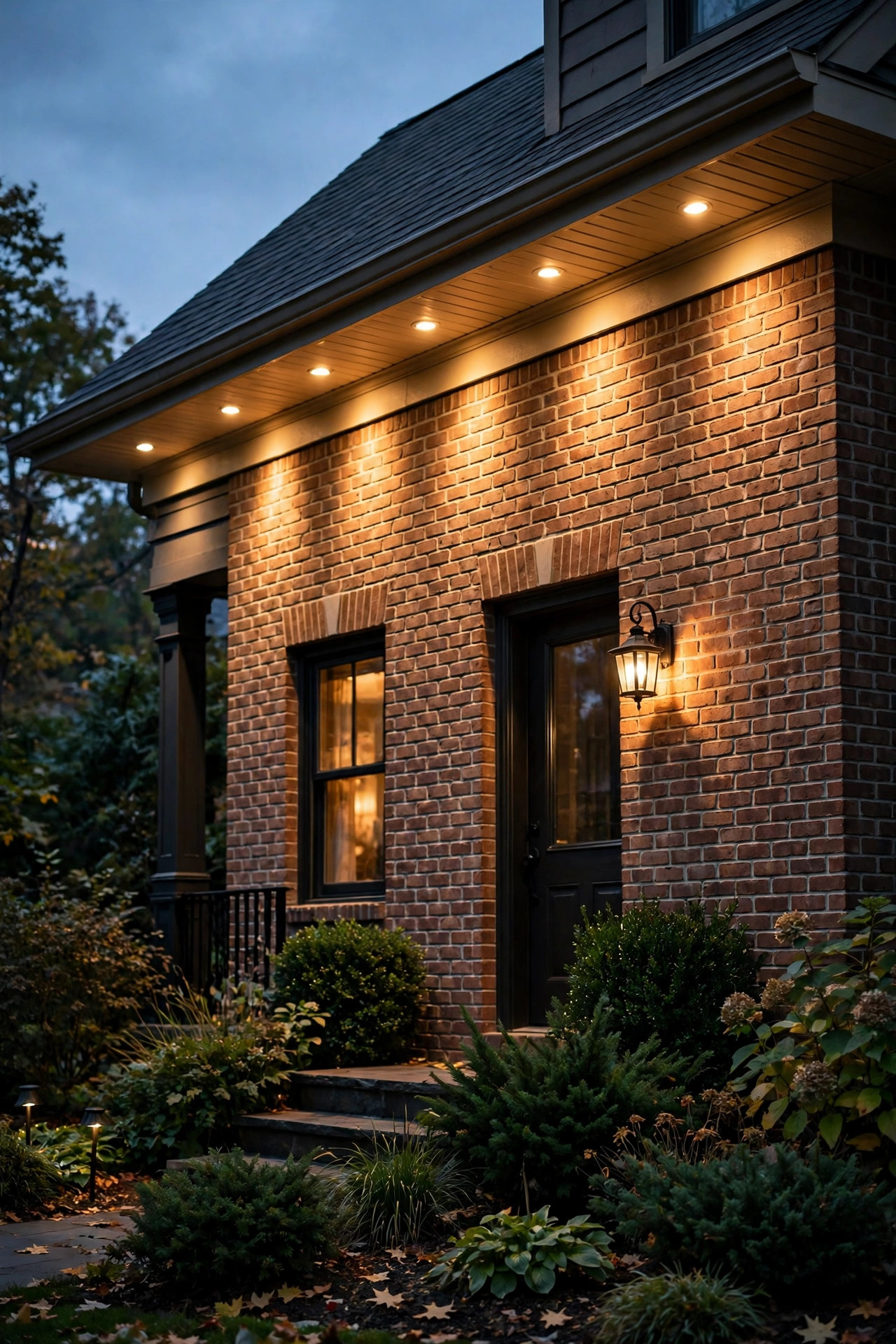
19. The Full Layered Look: Brick Porch Lighting Ideas Combined
After nineteen ideas, here is the honest truth I have learned porch by porch: no single fixture flatters brick and stone — the combination does. My go-to recipe for a standard brick porch is four layers. First, the welcome layer: lantern sconces at the door (idea 1) on a dimmer. Second, the architecture layer: ground uplights grazing the brick (idea 4) so the material itself becomes the decor. Third, the safety layer: step lights (idea 8) and perhaps a motion sconce on the dark side (idea 13). Fourth, the sparkle layer: string lights (idea 7) or candle lanterns (idea 11) that you can change with the seasons. Keep every source at 2700K so the layers blend into one warm story, and run them on two circuits or smart plugs so you can light the welcome layer alone on quiet nights. If you are piecing your plan together fixture by fixture, the front door sconce pair guide will help you nail the sizing and spacing of the layer guests see first. Start with layers one and two — that is 80 percent of the effect — and add the rest as budget allows.
Suggested budget range: $450 – $1,400.

Frequently Asked Questions
What color light looks best on red brick?
Warm white, every time. Bulbs in the 2200K to 2700K range deepen red brick's natural color and make stone look firelit, while 4000K and above drag brick toward a flat, grayish pink. If you remember one number from this whole post, make it 2700K, and use it consistently in every fixture on the porch so the layers blend.
Can I drill into brick to mount porch lights?
Yes, but drill into the mortar joints whenever you possibly can. Mortar is softer, holds anchors well for fixture weights, and can be repointed invisibly later. If you must drill the brick face, use a masonry bit, low speed and no hammer setting at first to avoid cracking. For light items like string-light hooks, removable brick clips avoid drilling altogether.
How bright should brick porch lighting be?
Think in layers rather than one big number. A pair of door sconces at about 800 lumens each, plus low-level accent and step lighting, suits most porches. The porch should feel like a candlelit room, not a parking lot — if neighbors across the street can read by your porch light, it is too bright, and bare bulbs should always be shielded or dimmed.
Is solar or wired lighting better for a brick porch?
Wired and low-voltage lighting wins for the main layers — it is brighter, consistent and timer-friendly, and brick porches are often too shaded for solar panels to charge well. Solar shines in the supporting roles: step lights and accent stakes where running wire through masonry would be expensive. Many of the prettiest brick porches I know use both.
Conclusion
Brick and stone give you a head start most porches would kill for — texture, color and character built right into the walls. The secret to great brick porch lighting ideas is simply respecting what is already there: warm 2700K light, fixtures scaled to the door, beams aimed to graze the texture rather than blast it, and layers that separate welcome, architecture, safety and sparkle. Pick two ideas from this list to start — I would vote sconces and uplights — live with them for a week of evenings, and then add the next layer when you are ready. And when your brick is glowing and you catch yourself slowing down at the curb just to look at your own house? That is the whole point. Browse the rest of the lighting ideas here on the site for the walkway, garden and backyard layers that carry the glow all the way around your home.