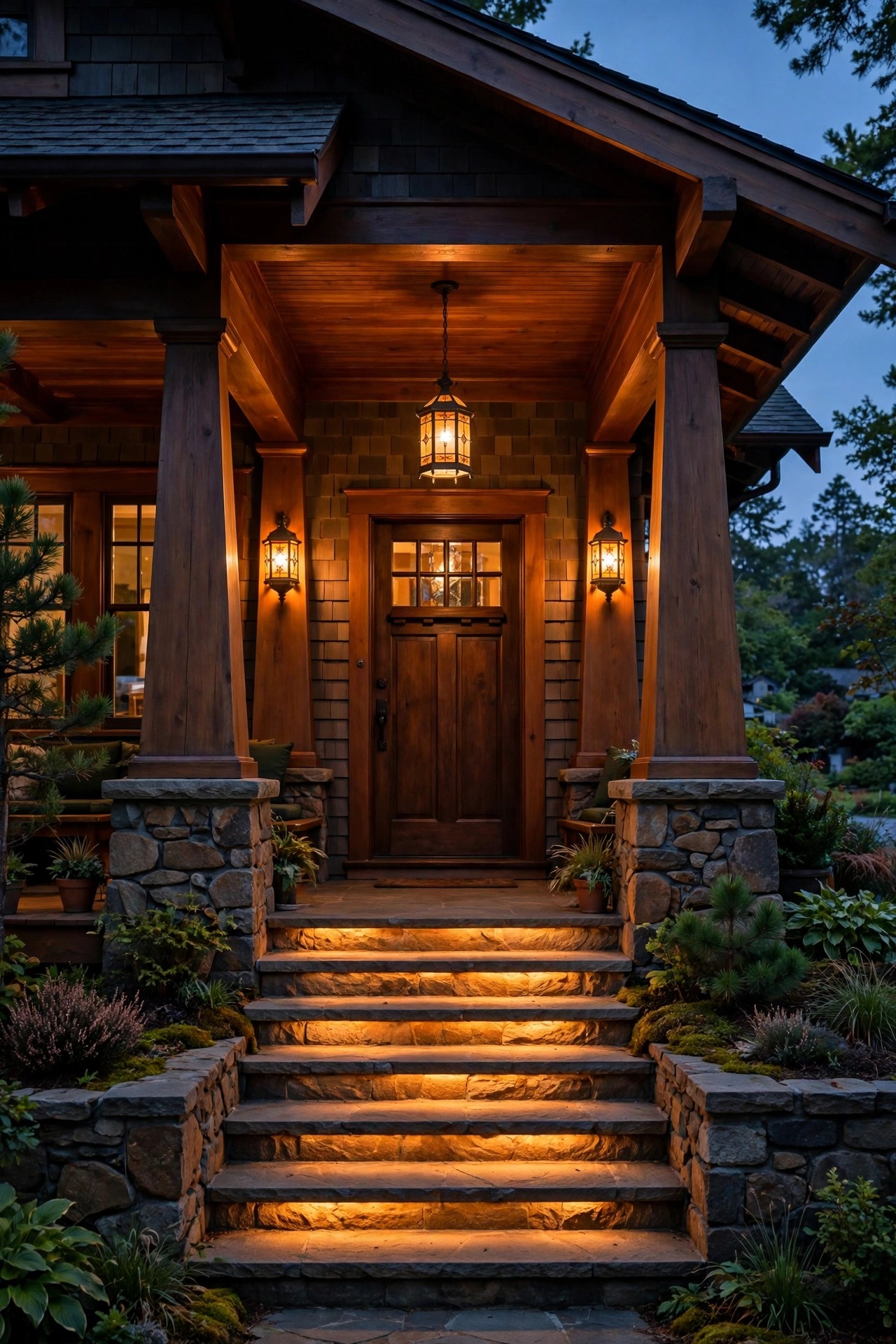
There is a reason the porch is the soul of a Craftsman home. Those tapered columns, exposed rafter tails, and deep, sheltering eaves were built for slow evenings and long conversations — and the right light makes every bit of that woodwork glow. When friends ask where to start with craftsman porch lighting ideas, I always give the same answer: think in layers. One bare bulb beside the door is not a lighting plan. A soft wash of ambient light, focused task light where you walk and unlock the door, and a few warm accents to show off the trim — that layering is what gives a bungalow porch its handcrafted character after dark, and it pairs beautifully with whole-home craftsman bungalow lighting when you are ready to go further. Below are the 21 ideas I return to again and again: mission sconces, stained-glass pendants, solar step lanterns, timers, and more. Every one is DIY-friendly, uses warm 2700K light, and includes the honest budget I would expect to spend.
1. Start With Layers: The Heart of Good Craftsman Porch Lighting Ideas
Every porch I love follows the same three-layer recipe, and a Craftsman porch takes to it beautifully. Ambient light is your base: a ceiling fixture or pendant that spreads a soft, general glow so the porch never feels like a cave. Task light is the focused layer — sconces flanking the door, a lantern over the steps — placed exactly where you unlock the door, read a package label, or climb the stairs. Accent light is the jewelry: a gentle uplight on a stone pier, a lantern glowing in a planter, light washing across exposed beams. In my experience, porches that feel "off" are almost always missing one layer, usually the accents. Keep every bulb at 2700K so the layers blend into one warm wash instead of a patchwork of colors, and put the ambient layer on a dimmer if you can. Start by sketching your porch and marking where each layer will live; the rest of this list is basically a menu for filling in that sketch.
Suggested budget range: $150 – $450.
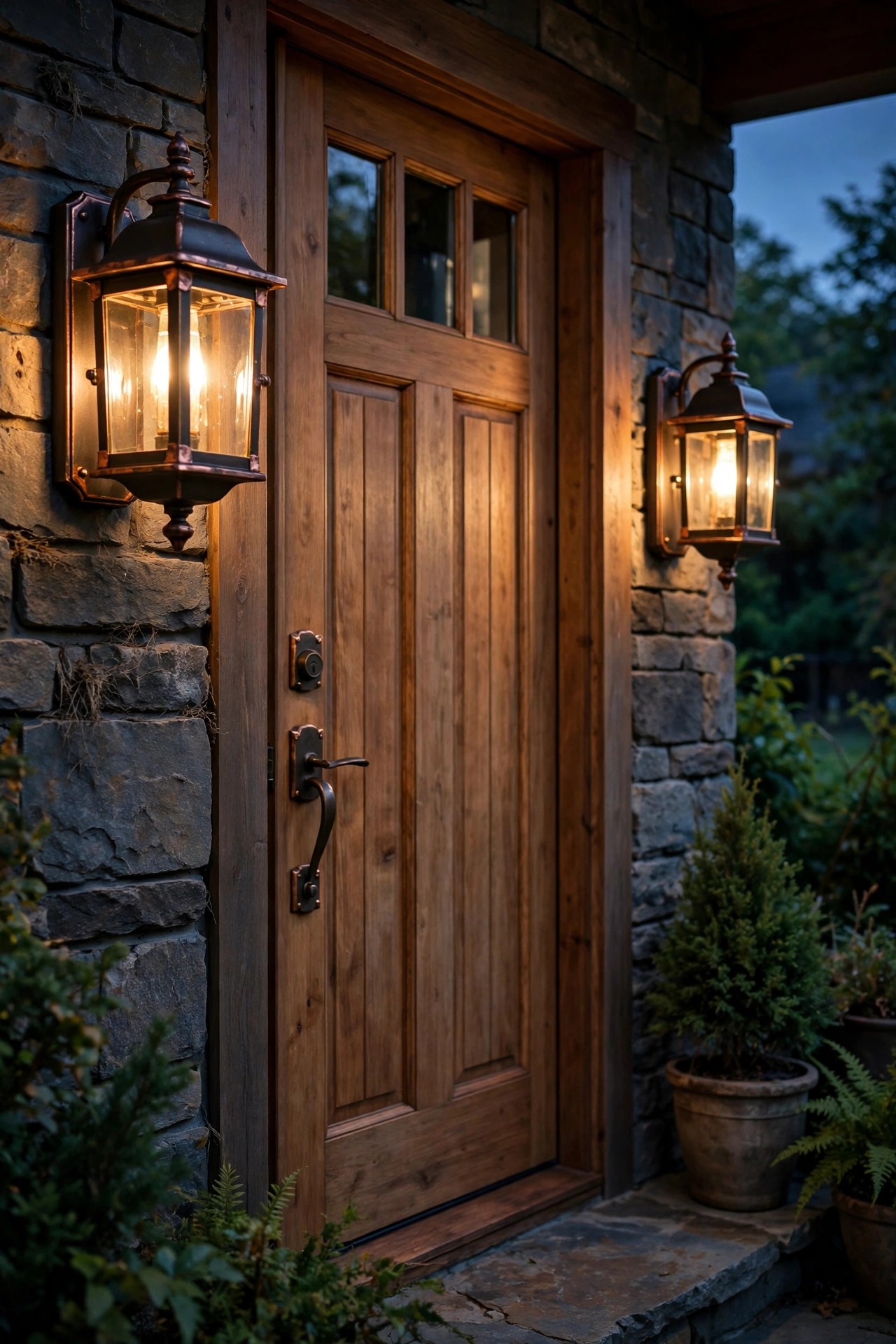
2. Flank the Front Door With Mission-Style Sconces
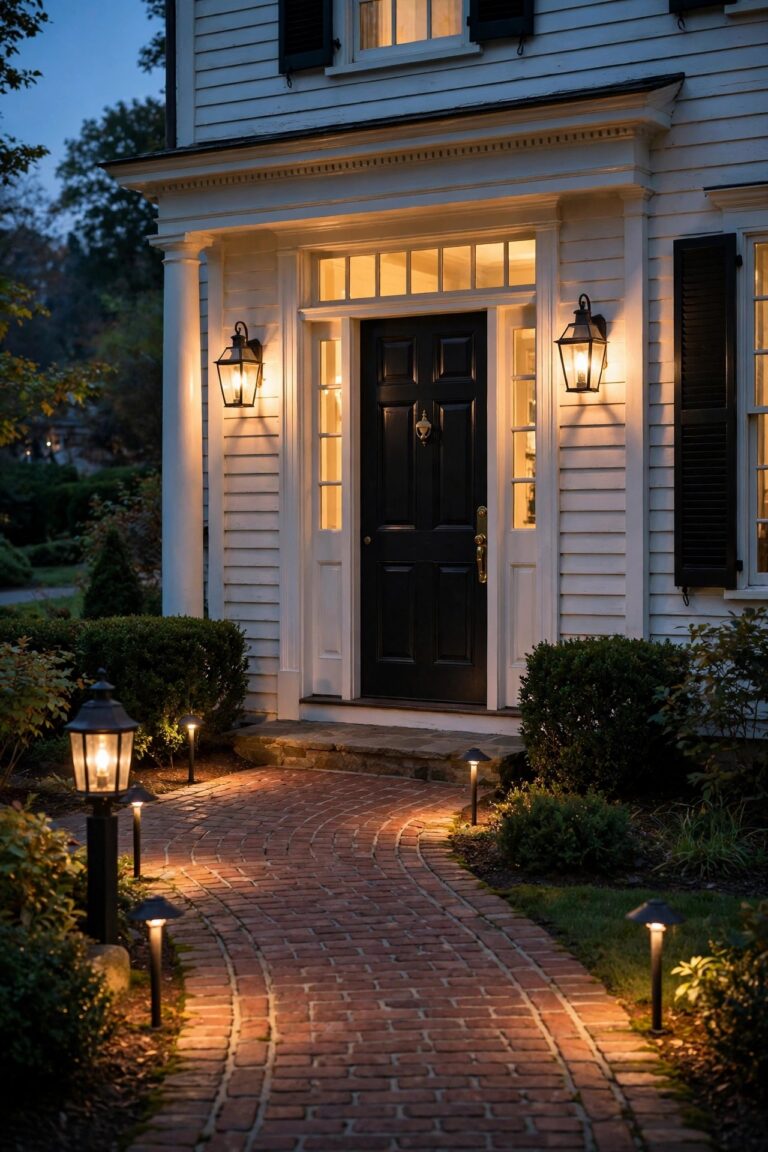
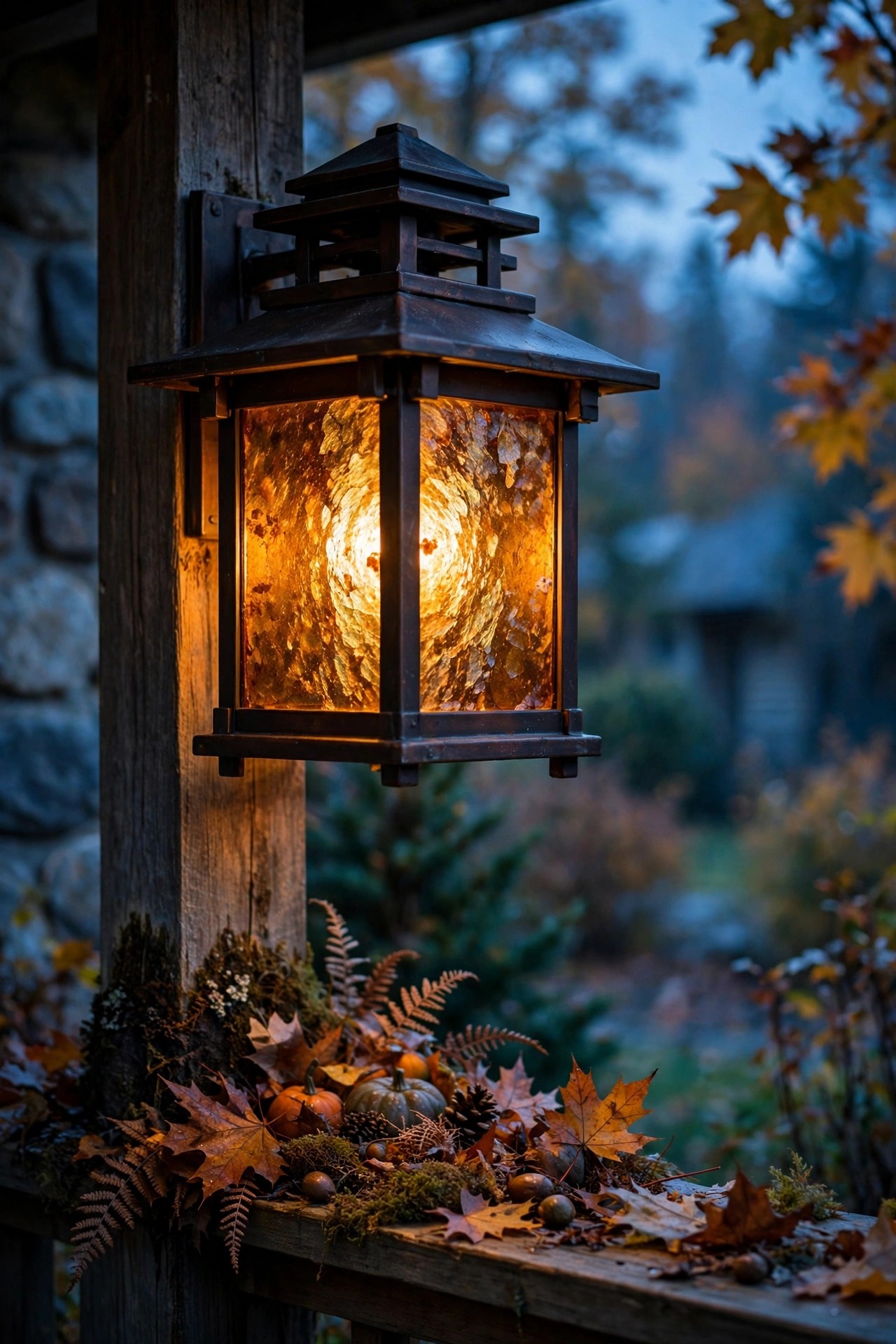
If you buy only one thing from this list, make it a matched pair of mission-style sconces flanking the front door. The clean geometry — straight lines, a peaked or flat cap, amber or seeded glass panels — was practically designed for Craftsman trim, and a symmetrical pair suits the style's love of balance. Size matters more than people think: each fixture should stand roughly one-quarter to one-third the height of your door, so a standard 80-inch door wants sconces in the 12- to 18-inch range. Mount them with the center of the fixture about 66 inches above the porch floor, roughly eye level, so the glow lights faces instead of blinding them. Wire them to the same switch so they always burn as a pair, and choose damp- or wet-location ratings depending on how exposed your porch corners are. I have a whole guide to craftsman outdoor sconce ideas if you want more shapes and finishes to compare before you commit.
Suggested budget range: $60 – $220.

3. Hang a Stained-Glass Style Pendant Over the Entry
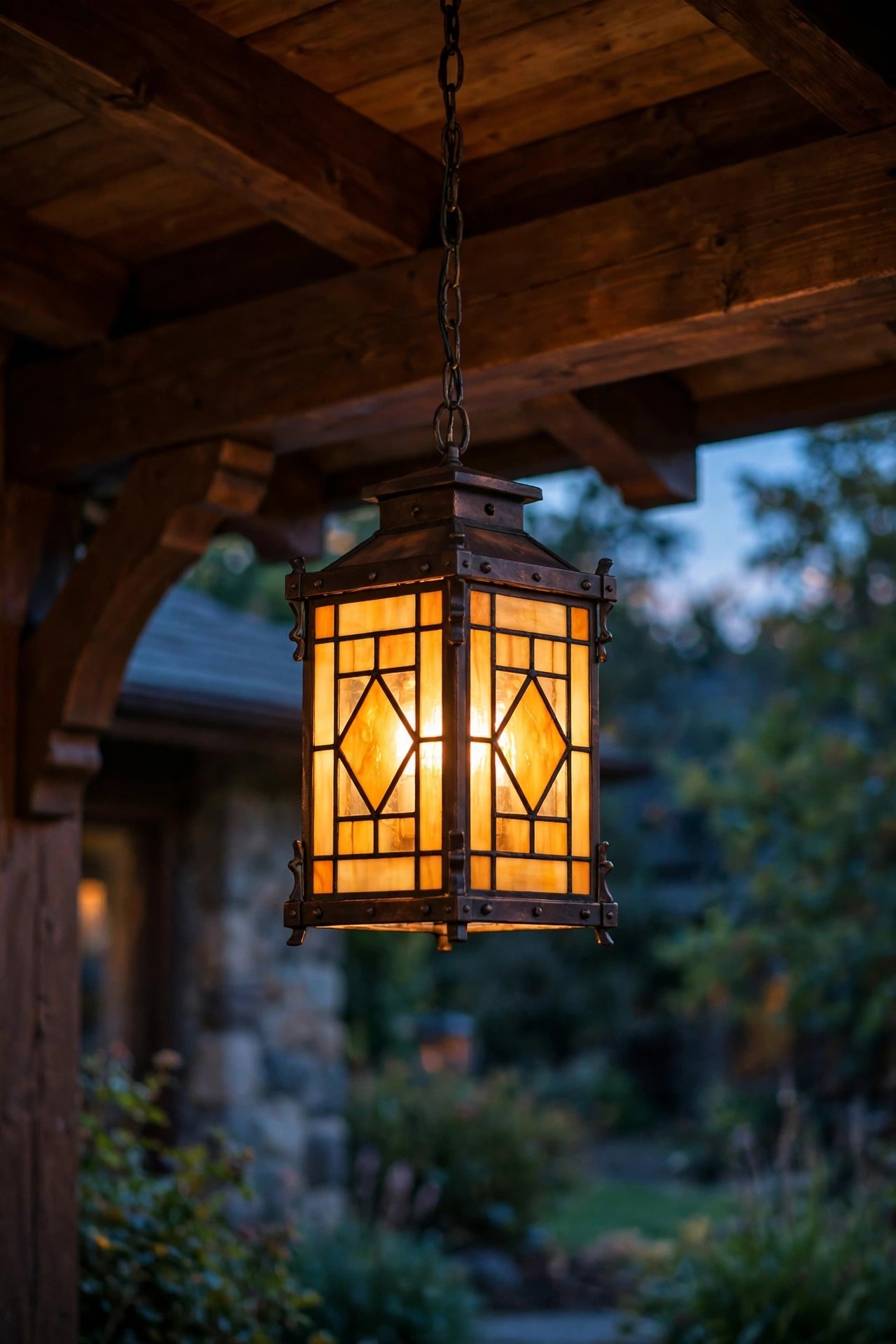
A hanging pendant is the centerpiece a wide Craftsman porch deserves. Look for geometric stained-glass style shades — amber, honey, and soft green panels in a simple grid or diamond pattern — that echo the divided-light windows so many bungalows still wear proudly. Hang it centered on the door or over the main seating area, on a chain or rod long enough to keep the bottom of the fixture at least 7 feet above the porch floor so tall guests never duck. On an open porch, pick a fixture rated for wet locations and a chain with some heft; a lightweight pendant will swing and clink in every breeze. Honestly, the magic moment is dusk, when the colored panels warm up and throw soft pools of amber across the ceiling boards. If your porch ceiling is low, skip ahead to the flush-mount idea below instead — same character, no head-bumping. Pair the pendant with dimmable bulbs so it can shift from greeting-bright to evening-soft.
Suggested budget range: $45 – $180.
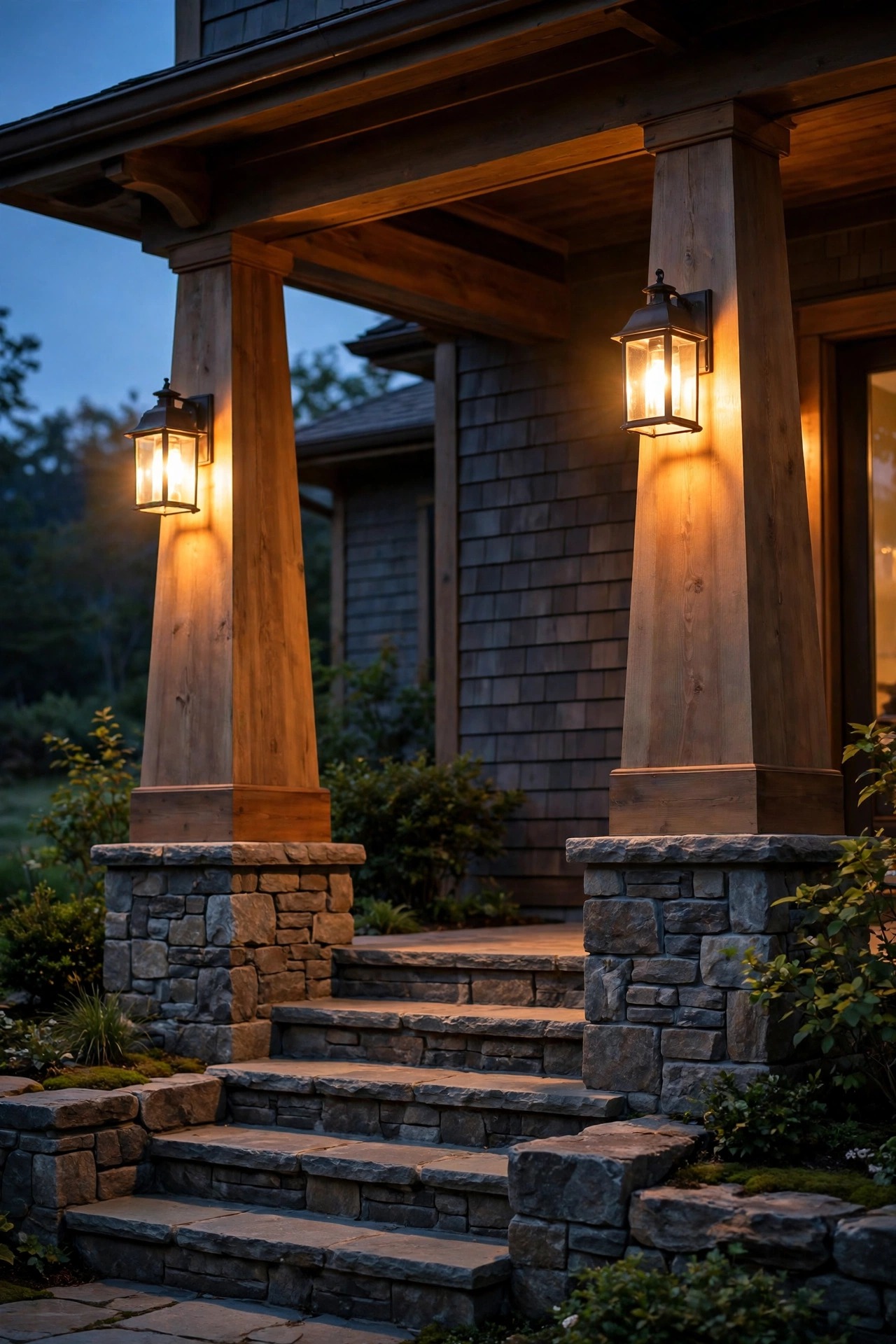
4. Mount Lanterns on the Tapered Columns
Those big tapered columns are the signature of the style, so light them like you mean it. Mounting a lantern directly on each column — at about 6 feet up, centered on the street-facing side — turns the architecture itself into the lighting design. On wood columns, a standard surface-mount lantern works beautifully. On stone or brick piers, your installer may need a masonry box, and honestly this is the one job on the list where hiring an electrician for an hour is money well spent. Low-voltage lanterns are the easier DIY route if your porch already has a landscape transformer nearby. Two columns lit evenly frame the whole porch like a picture, and the effect from the sidewalk is pure storybook. Keep the lantern style consistent with your door sconces — same finish family, same glass — so the porch reads as one designed scheme rather than a collection of one-off finds. Cap the bulb at a warm 40-watt equivalent so the columns glow instead of glare.
Suggested budget range: $50 – $200.
5. Choose Amber or Seeded Glass for a Period Glow
Clear glass is the enemy of atmosphere. A bare bulb behind clear panes throws harsh, modern-looking light that fights everything a Craftsman porch stands for. Amber glass, mica panels, and seeded glass — the kind with tiny bubbles suspended in it — all soften and warm the light the way gaslight and early electric fixtures once did. If your current fixtures have clear glass you otherwise love, do not replace them yet: swap in amber-tinted or frosted bulbs first and live with it for a week. That five-minute change fixes more porches than any other tip I give. Seeded glass is my personal favorite for sconces because it hides the bulb silhouette while still letting the fixture sparkle a little. Replacement glass panels for common lantern shapes are easy to find and genuinely cheap, which makes this the highest-impact, lowest-cost idea on the list. Just keep the same glass type across every fixture on the porch so the light color stays consistent from column to column.
Suggested budget range: $15 – $60.

6. Pick Oil-Rubbed Bronze and Aged Metal Finishes
Finish is where handcrafted character lives. Oil-rubbed bronze, aged copper, antique brass, and matte black all sit comfortably on a Craftsman porch; bright chrome and polished nickel do not — they read as kitchen hardware that wandered outside. My rule is simple: match the new fixtures to the metal already on your door. If your handle set is oil-rubbed bronze, your sconces should be too, and your column lanterns and pendant should at least live in the same warm family. Real copper and brass develop a soft patina outdoors, which only adds to the handmade feel over the years. Powder-coated finishes are the practical pick for harsh climates because they shrug off moisture without flaking. Avoid mixing more than two finishes on one porch, and carry the main one down the walkway lights later so the whole front yard feels intentional. A can of matte spray paint in a matching tone can also rescue mismatched secondhand fixtures for a few dollars.
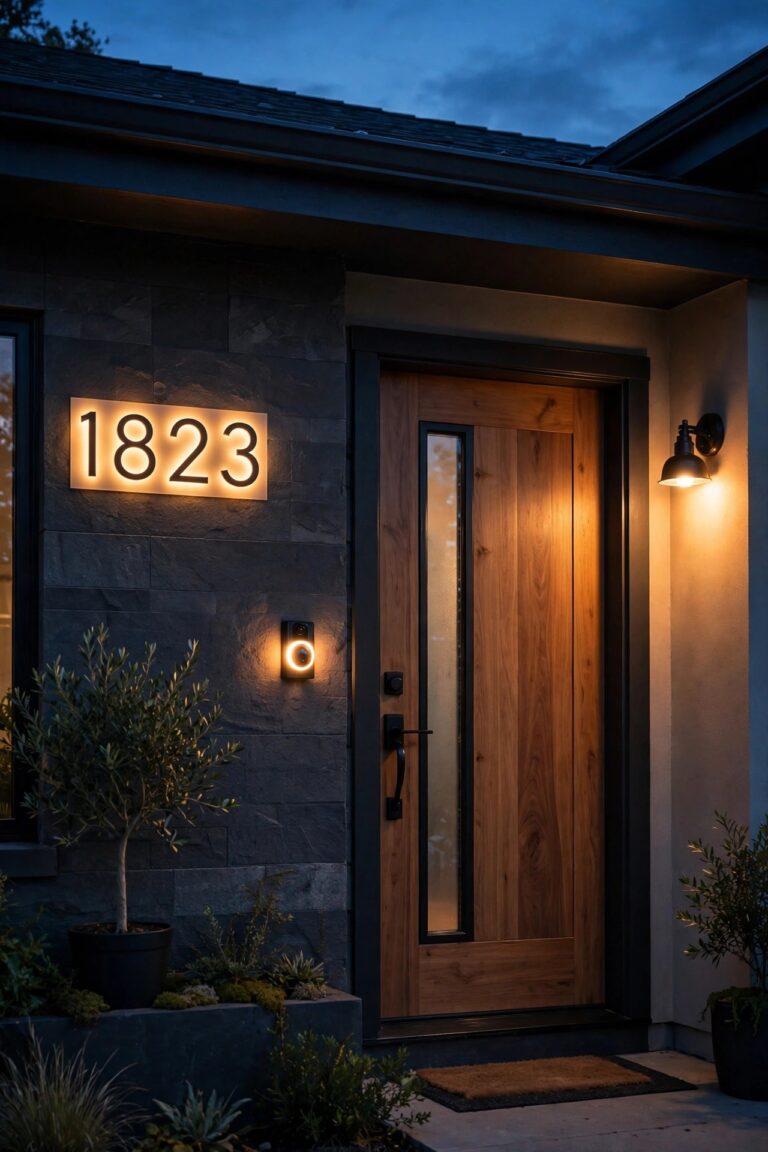
Suggested budget range: $40 – $160.
7. Use Filament-Style LED Bulbs for Vintage Warmth
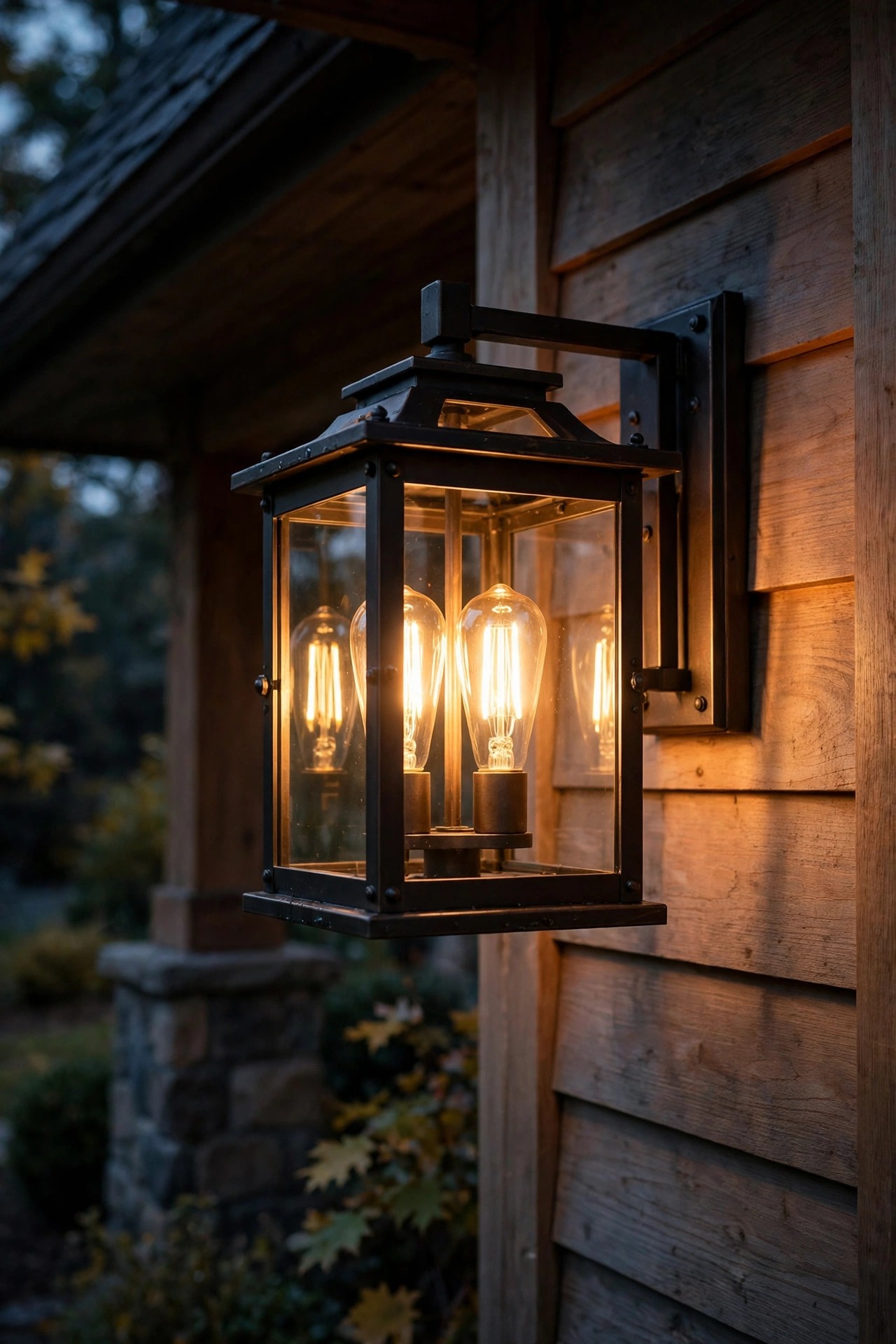
The bulb inside the fixture matters as much as the fixture itself. Filament-style LED bulbs — the ones with visible glowing strands arranged like old Edison filaments — give you that candle-warm vintage look with modern efficiency and a fraction of the heat. For a true period feel, drop to 2200K bulbs in pendants and lanterns where the bulb is visible; reserve standard 2700K for fixtures hidden behind glass. Most filament LEDs use only 4 to 8 watts while matching a 40- or 60-watt incandescent, and the dimmable versions play nicely with porch dimmers. Lifespans run 15,000 hours or more, which matters on a porch where bulbs burn every evening. One caution from experience: buy all your visible bulbs from the same product line at the same time. Filament color varies between production runs, and a mismatched pair flanking the door will bother you every single night once you notice it. Store one spare from the same batch for later replacements.
Suggested budget range: $12 – $40.
8. Add a Flush-Mount Ceiling Fixture Under the Porch Roof
Not every Craftsman porch can carry a hanging pendant — plenty of charming bungalows have ceiling heights barely over 7 feet. A flush-mount or semi-flush ceiling fixture in the mission style gives you the same ambient layer with zero headroom worries. Look for square or rectangular frames with amber or frosted panels that echo your sconce glass, and size the fixture to the porch: roughly one fixture for every 60 to 80 square feet of porch ceiling. This is also the layer to put on the main porch switch or dimmer, since it does the heavy lifting of general illumination. Check the rating carefully: a covered porch ceiling still gets wind-driven moisture, so damp-location rated is the minimum and wet-location rated is better insurance. Installation is a straightforward swap for most handy homeowners — kill the breaker, match the wires, and confirm the junction box is rated for the fixture weight. Under an hour, start to finish, and the porch instantly feels finished rather than forgotten.
Suggested budget range: $35 – $150.

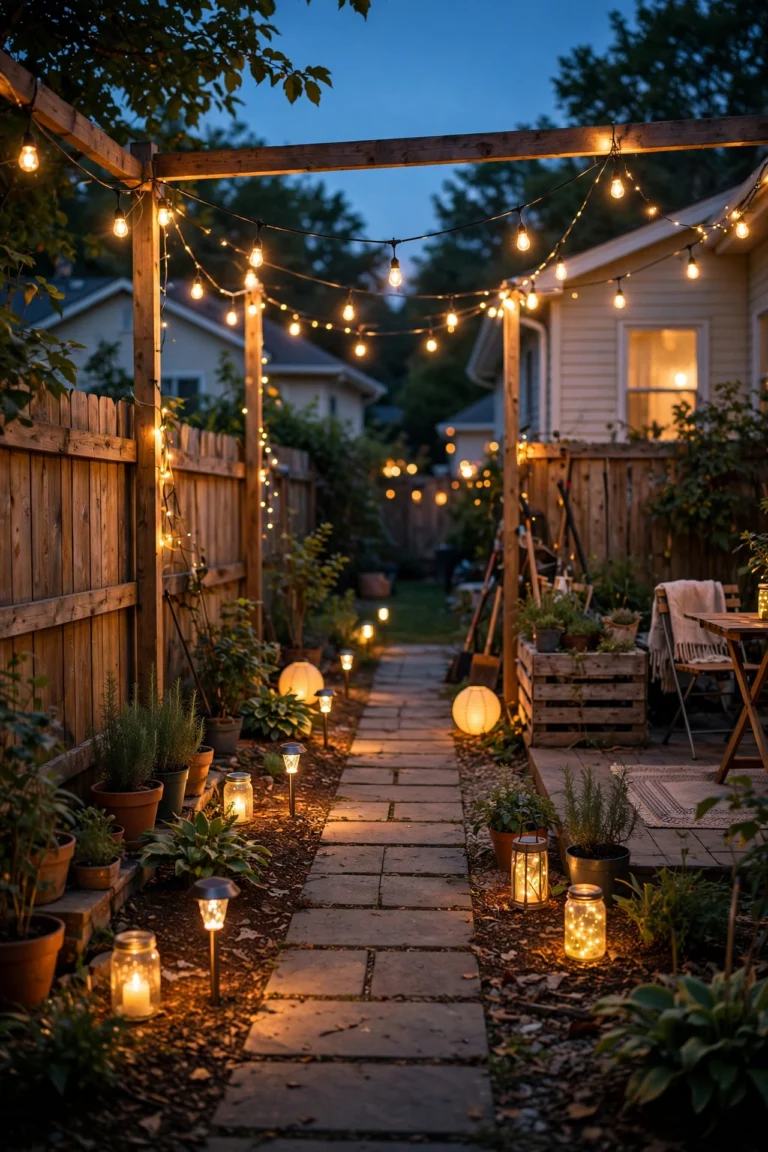
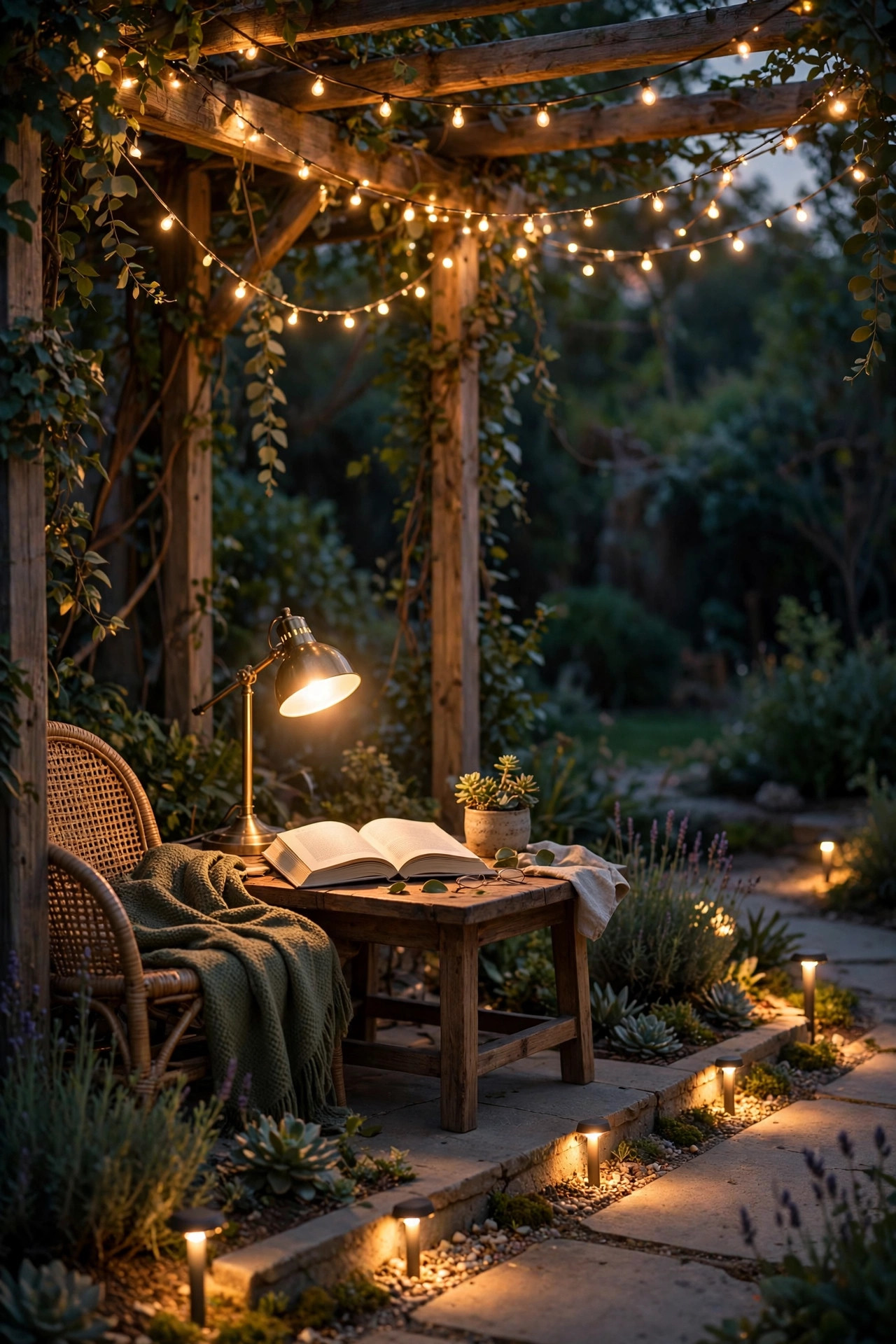
9. String Café Lights Along the Porch Beam
String lights on a Craftsman porch? Yes — if you keep them disciplined. A single run of warm-white café lights with small globe or filament bulbs, swagged neatly along the front beam, reads as festive without tipping into party-decor territory. The trick is restraint: one strand, gentle even swags, and bulbs at 2700K or warmer so they blend with your sconces instead of competing. Space the swags evenly — I measure and mark the beam first, because eyeballing it always drifts — and use screw-in hooks rated for outdoor use rather than adhesive clips that fail by July. Choose a commercial-grade strand with heavier wire if the lights will stay up year-round, and plug into a GFCI outlet only. Keep strands clear of anything flammable and use LED bulbs, which stay cool against wood beams and fabric cushions. On a deep porch, a second strand along the house wall, hung lower and dimmer, creates a lovely sense of depth after dark.
Suggested budget range: $25 – $80.

10. Line the Steps With Solar Lanterns
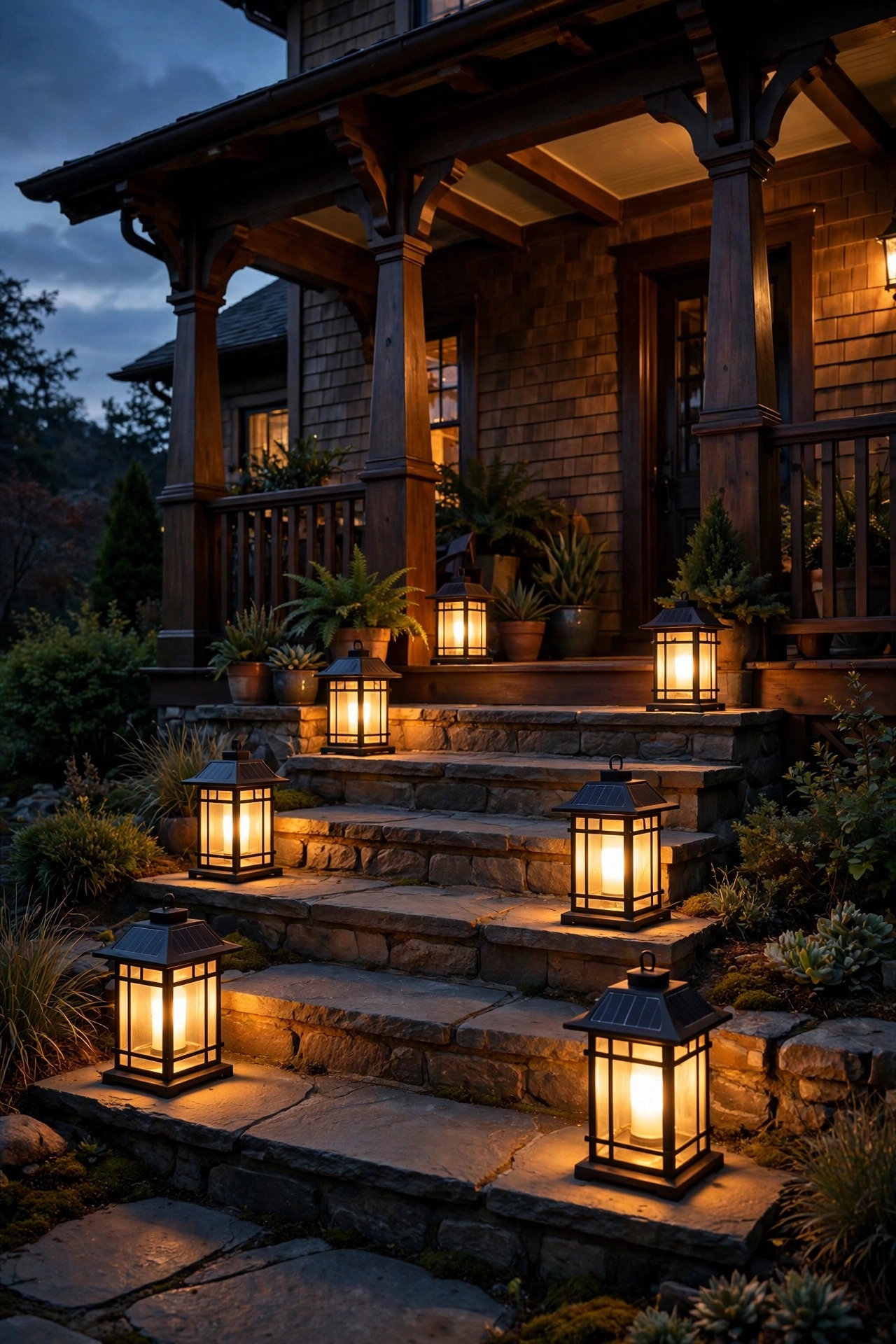
Porch steps are where guests trip, and they are also where a little light does the most good per dollar. Solar lanterns — small, mission-styled stakes or freestanding lanterns set at the base of each step — need no wiring, no transformer, and no electrician. Place one at every step edge or every other step on wide stairs, alternating sides so the light pools evenly. Be honest about brightness: a good solar lantern gives you a warm marker glow, not task lighting, so keep a wired fixture doing the real work at the door. For reliable charging, the little panels need a few hours of direct sun, which an open south- or west-facing porch usually provides; under a very deep roof, choose lanterns with detachable panels you can park in a sunny spot. Wipe the panels monthly — a film of pollen can cut charging noticeably. In winter, expect shorter runtimes and simply enjoy them as ambiance.
Suggested budget range: $20 – $70.
11. Give the Porch Swing Its Own Warm Glow
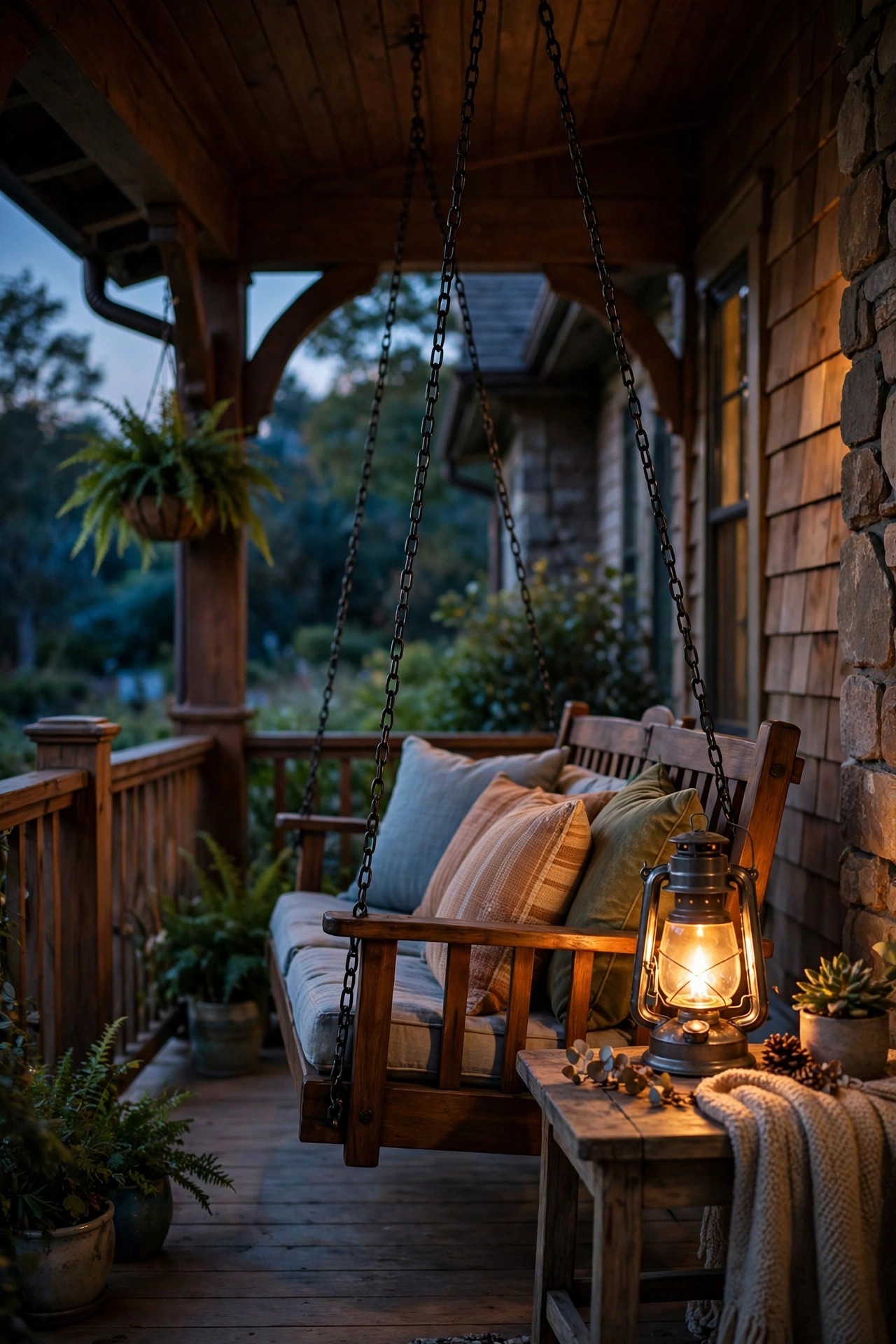
A porch swing in shadow is a porch swing nobody uses after dinner. The fix is not more overhead light — it is a low, warm light source at seating height in the corner the swing calls home. A small lantern on the side table, a sconce on the wall behind the swing at about shoulder height when seated, or a hurricane lantern hung from a nearby hook all do the job without shining in anyone's eyes. Aim for reading-comfortable, not interrogation-bright: a 25- to 40-watt equivalent warm bulb is plenty. If the swing hangs from chains near a ceiling fixture, make sure the swing's arc never passes within a few inches of the bulb — it sounds obvious until a tall grandkid gets swinging. Flameless candles in a metal lantern are the safest choice for a corner full of cushions and quilts, and honestly, their flicker suits a slow evening better than steady light ever could. This little nook becomes the seat everyone quietly competes for.
Suggested budget range: $30 – $120.
12. Welcome Guests With a Motion-Activated Lantern
Somebody is always arriving after dark with their arms full of grocery bags, and a motion-activated lantern beside the door is the hardest-working fixture on the porch. Dual-brightness models are my favorite: they idle at a soft 20 percent glow all evening — so the porch never looks dark or unwelcoming — then step up to full brightness when someone approaches. Set the sensor range to about 15 to 20 feet so it triggers from the walkway, not from every passing car, and angle the sensor slightly downward on narrow lots. Choose a warm 2700K bulb here too. A cold blue-white security blast ruins the whole handcrafted mood the second it fires, and your neighbors will not thank you for it either. Most motion lanterns install in the same junction box as a standard sconce, so this is an easy upgrade if you are already replacing the door pair from idea two. Test the sensitivity on a breezy night and dial it back if swaying branches keep setting it off.
Suggested budget range: $35 – $110.

13. Put Everything on Timers and Photocells
The best porch lighting is the kind you never think about. Photocell bulbs — the ones with a tiny dusk-to-dawn sensor built into the base — turn themselves on at sunset and off at sunrise, and they drop straight into most open lanterns and sconces. For fixtures with enclosed glass, where a photocell bulb cannot sense the light, use a timer switch instead: mechanical timers are dead reliable, and astronomic models adjust themselves for the changing sunset all year. I set my porch to come on about fifteen minutes before true dusk, because porches tucked under deep Craftsman eaves go dark earlier than the yard does. A vacation setting that varies the on-off times slightly is a nice security bonus while you travel. Whichever route you choose, automate the whole scheme at once — sconces, pendant, and column lanterns on the same schedule — so the layered look arrives complete every evening. Nobody maintains a beautiful porch by remembering three separate switches.
Suggested budget range: $15 – $60.

14. Wash Stone and Brick Piers With Ground Uplights
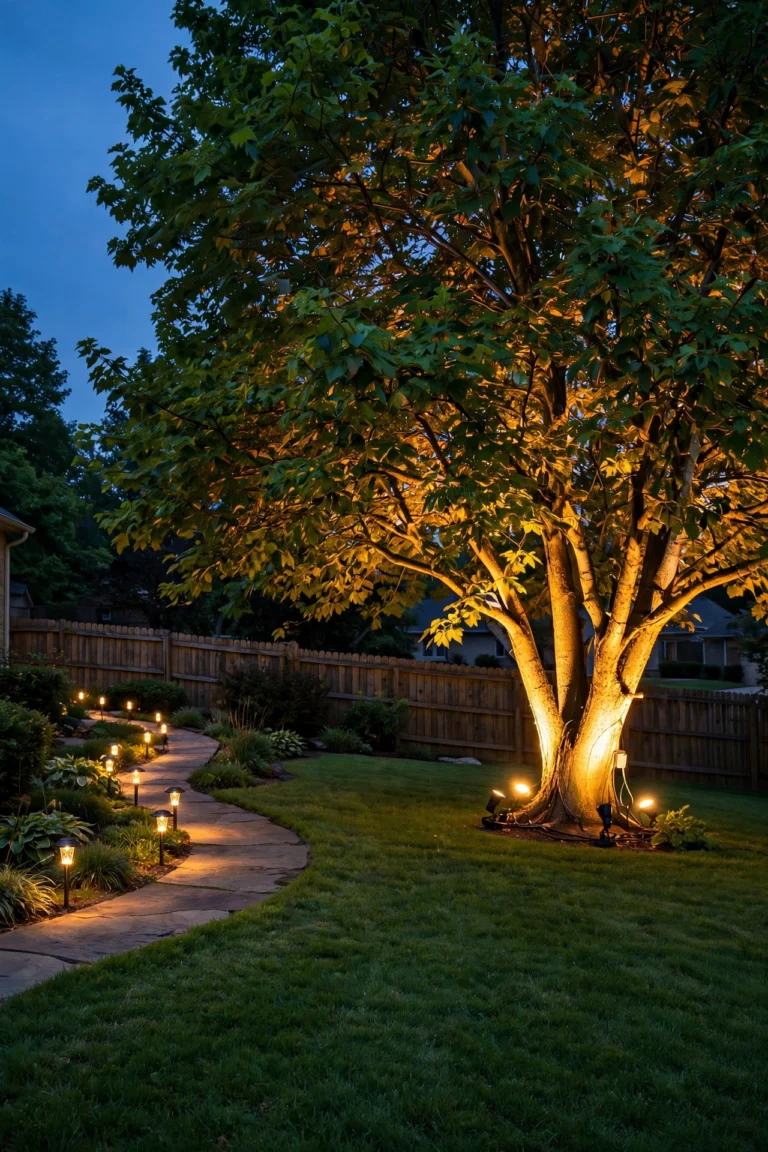
Many Craftsman porches sit on piers of river rock, brick, or rough stone that deserve to be seen at night. A small ground-level spotlight or well light placed a foot or two out from the base, aimed up at a shallow angle, grazes that texture and turns the foundation into part of the show. Grazing is the key word: light raking across a rough surface reveals every bump and shadow, while light aimed straight at it just flattens it. Low-voltage LED spots in the 3- to 5-watt range are plenty, and shielded fixtures keep the beam on the stone instead of in the eyes of anyone walking up. Stake them in the planting bed rather than the lawn so the mower never finds them. Two piers lit this way will anchor the whole composition and make the columns above them look taller. Keep these on the same timer as the rest of the scheme so the base and the porch light up together like one thought.
Suggested budget range: $25 – $90.

15. Tie the Walkway Into Your Craftsman Porch Lighting Ideas
A glowing porch at the end of a pitch-black walkway is only half a welcome. Carry the same design language down the path: low lantern-style path lights in the same finish and glass as your porch fixtures, spaced about 6 to 8 feet apart along one side of the walk, or staggered on both sides for a wide approach. Consistent spacing reads as calm and intentional; random spacing reads as an afterthought, because it usually is. Path lights should pool light on the walking surface, not spotlight the lawn — look for downward-facing or shielded designs. In my experience this single continuity trick, matching metals from street to doorstep, is what separates a porch that looks decorated from one that looks designed. These lights also do quiet safety work, marking edges and steps guests cannot see. Run them on the same photocell or timer schedule as the porch so the whole arrival sequence lights up as one. Your delivery drivers will appreciate it as much as your dinner guests do.
Suggested budget range: $40 – $140.

16. Tuck Small Lights Into Porch Planters
Planters flanking the steps or framing the door are hiding places for light that most people never think to use. A small solar stake light nestled into a fern, or a short strand of copper-wire fairy lights woven loosely through a boxwood, adds a soft sparkle exactly at the bottom of the composition, where porches tend to go dark. Keep it subtle: the planter should glow, not twinkle like a holiday display. Warm white only, and one light source per planter is usually enough. Solar is the practical choice here since planters rarely sit near an outlet, and the lights charge while the plants soak up the same sun. This is also a forgiving place to experiment — if a placement looks wrong, you just move the stake. Ferns, hostas, and small evergreens all catch light beautifully on their leaves. In winter, when the annuals are gone, a lit evergreen planter by the steps keeps the entry from feeling bare.
Suggested budget range: $15 – $55.

17. Add Dimmers So the Porch Can Change Moods
A porch that can only be fully bright is a porch you will stop using on soft summer nights. Adding a dimmer to the ambient layer — the ceiling fixture or pendant — lets the same porch host a bright, busy arrival at seven and a quiet, low-glow conversation at ten. An outdoor-rated dimmer switch swaps in like a regular switch for most hardwired fixtures, and every bulb on that circuit must be labeled dimmable, filament LEDs included. For plug-in lamps and string lights, an outdoor plug-in dimmer does the same trick without touching any wiring. Honestly, dimming is also how you rescue fixtures that turned out brighter than expected: rather than returning them, run them at 60 percent and enjoy the warmer color that dimmed LEDs naturally give. Teach everyone in the house the two settings you like — "arriving" and "lingering" — and mark them with a tiny pencil line beside the slider. Small thing, big difference in how often the porch gets used.
Suggested budget range: $20 – $75.

18. Light the House Numbers So Guests Can Find You
Charming is no good if the pizza driver cannot find the house. A small lantern mounted above or beside your house numbers — or numbers placed within the glow of an existing sconce — makes the address readable from the street without adding a single harsh fixture. If you are buying new numbers, the Craftsman-friendly choices are simple block or mission-style numerals in the same finish as your fixtures, sized at least 4 inches tall so they read from a passing car at night. Angle matters: the light should wash across the numbers, not shine straight out past them, or they silhouette into unreadable black shapes. This is a ten-minute consideration while you are hanging the sconces anyway, and it pays off every time a guest, a delivery, or — the serious case — an ambulance needs to find you fast. Some local codes even specify minimum number sizes, so check yours before you order. It is the least glamorous idea on this list and quite possibly the most useful.
Suggested budget range: $18 – $65.

19. Swap Glass and Shades With the Seasons
Here is a trick borrowed from the original Arts and Crafts era, when homeowners genuinely changed their lampshades with the calendar. If your lanterns accept replacement panels, keep two sets: deep amber or mica for fall and winter, when you want maximum coziness against the early dark, and lighter seeded or opal glass for spring and summer, when the porch competes with long bright evenings. The swap takes ten minutes per fixture with a screwdriver, stores flat in a labeled box, and makes the porch feel freshly decorated twice a year without buying a single new fixture. While the glass is out, wipe down the fixture interior and check for wasp nests and tired gaskets — a tiny bit of maintenance that keeps light output strong. This is also the natural moment to clean the glass properly, inside and out; you will be surprised how much glow a season of dust was stealing. Seasonal decorating lands better when the light itself changes, not just the wreath on the door.
Suggested budget range: $10 – $45.
20. Keep Rechargeable Lanterns Ready for Anywhere Light
Not every porch has an outlet where you need one, and renters cannot go cutting into junction boxes. A pair of sturdy rechargeable lanterns in a hurricane or mission style solves both problems: charge them indoors by USB, then set them wherever the evening needs light — the steps for a party, the side table for reading, the railing corner that is always in shadow. Look for warm 2700K settings, a dimmer dial rather than fixed brightness steps, and a metal body that can handle a knock off a table. Battery life of 20 hours or more on low means a weekend of evenings per charge. Because they are portable, they also become your power-outage heroes and your camping lanterns the rest of the year. I keep mine on the porch full-time in matching pairs so they read as part of the design, not as emergency gear. Choose LED models only — no real flame near porch cushions, curtains, or dry autumn leaves, ever.
Suggested budget range: $25 – $85.

21. Finish With a Dusk Walk-Through of Your Craftsman Porch Lighting Ideas
The last step is the one most people skip, and it is the step that makes everything else work. On the first evening after your fixtures are in, wait until full dusk, then walk out to the street and come home slowly, the way a guest would. Look for the four classic problems: glare, where a bare bulb hits your eyes; hot spots, where one pool of light is far brighter than its neighbors; dark gaps on the steps or at the door lock; and color mismatches between bulbs that claimed to be the same temperature. Adjust fixture angles, swap a bulb, nudge a path light six inches — these tiny corrections are the difference between installed and designed. Then sit on the porch for ten minutes and check the view looking out, because that is the one you will live with. I do this walk-through twice a year, in spring and fall, as part of cleaning the glass and checking the timers. Your craftsman porch lighting ideas deserve that final ten minutes of honesty.
Suggested budget range: $0 – $50.

Frequently Asked Questions
What color temperature is best for a Craftsman porch?
Warm white, 2700K, is the sweet spot for nearly every fixture on a Craftsman porch. It flatters wood tones, brick, and stone, and it matches the warm glow the style was built around. For visible filament bulbs in pendants and open lanterns, 2200K gives an even more candle-like vintage feel. Whatever you choose, use one temperature family across the whole porch — mixing 2700K and 4000K bulbs is the fastest way to make a thoughtful scheme look accidental.
How high should porch sconces be mounted?
Center the fixture about 66 inches above the porch floor, which puts the light source roughly at eye level for most adults and lights faces without glare. If your door is taller than standard, scale the fixture size up rather than the mounting height: sconces should measure about one-quarter to one-third of the door height. On narrow entries with a single sconce, the same 66-inch rule applies beside the handle side of the door.
Are solar lights bright enough for porch steps?
For marking step edges and adding a warm accent glow, yes — a quality solar lantern is plenty. For true task lighting, like clearly reading a lock or a package label, solar is not quite there yet, so pair solar step lights with a wired sconce or lantern doing the serious work at the door. Place solar fixtures where their panels get several hours of direct sun, and expect shorter runtimes on winter evenings.
How much does a full Craftsman porch lighting refresh cost?
A DIY layered refresh using the ideas here — a sconce pair, a ceiling fixture or pendant, path lights, and timers — typically lands between $300 and $900 in fixtures and bulbs, depending on finish quality. Solar and rechargeable pieces pull the total down; hiring an electrician for column lanterns or new wiring adds roughly $150 to $400 per visit. Phasing it over two seasons, sconces first and accents later, spreads the cost without breaking the design.
Conclusion
A Craftsman porch was never meant to be lit by one bulb and good intentions. That, honestly, is all good craftsman porch lighting ideas come down to: layer a soft ambient base, honest task light at the door and steps, and a few accents that show off the columns and stonework, and the whole house seems to settle into the evening. Keep the glass amber, the finishes aged, and every bulb warm, and even simple fixtures will read as handcrafted. Start with the sconce pair and the layering plan, then add the pieces that suit your porch one at a time — and if you want a bigger menu before you begin, browse my broader front porch lighting ideas for more ways to mix and match. I will see you out there at dusk, admiring the glow.