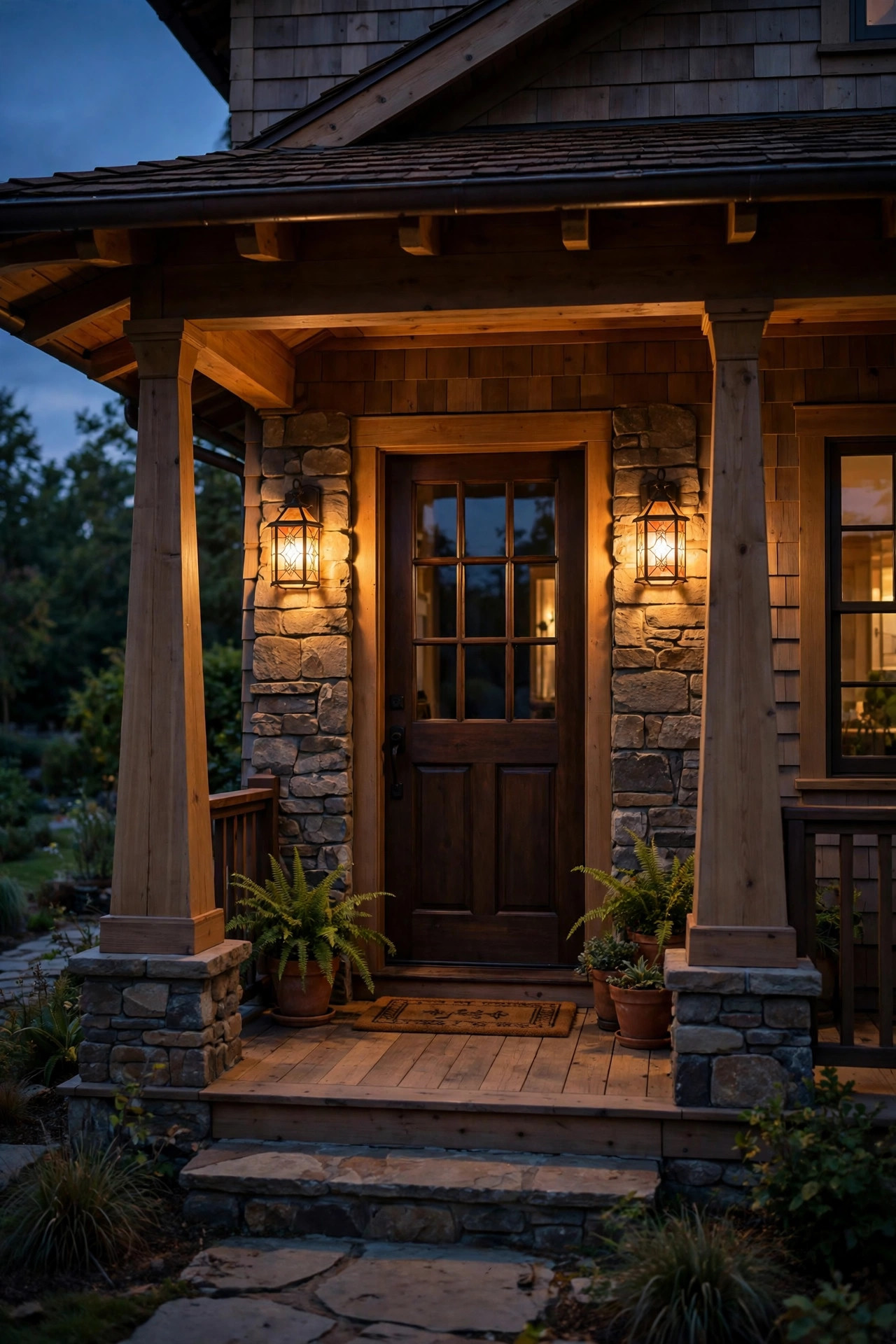
There is a reason craftsman outdoor sconces never really go out of style: they were designed a century ago to look honest. Straight lines, sturdy proportions, warm amber glass — a good mission or prairie sconce doesn't shout, it glows, and it makes a porch feel like the most welcoming spot on the street. In my experience, the secret to getting this look right is layering: a strong pair at the front door for welcome and symmetry, a supporting fixture or two at the garage or side entry, and bulbs that keep everything in the same warm family. Every idea below sticks to the timeless toolkit — tapered silhouettes, geometric grilles, seeded or mica-look glass, and finishes like oil-rubbed bronze and aged copper that only get better outdoors. Some are wired classics, a few are solar or sensor-equipped for real life, and all of them include sizing, mounting, and bulb notes plus an honest budget. If you're lighting a whole bungalow exterior, my craftsman bungalow lighting guide pulls the full porch-to-path plan together.
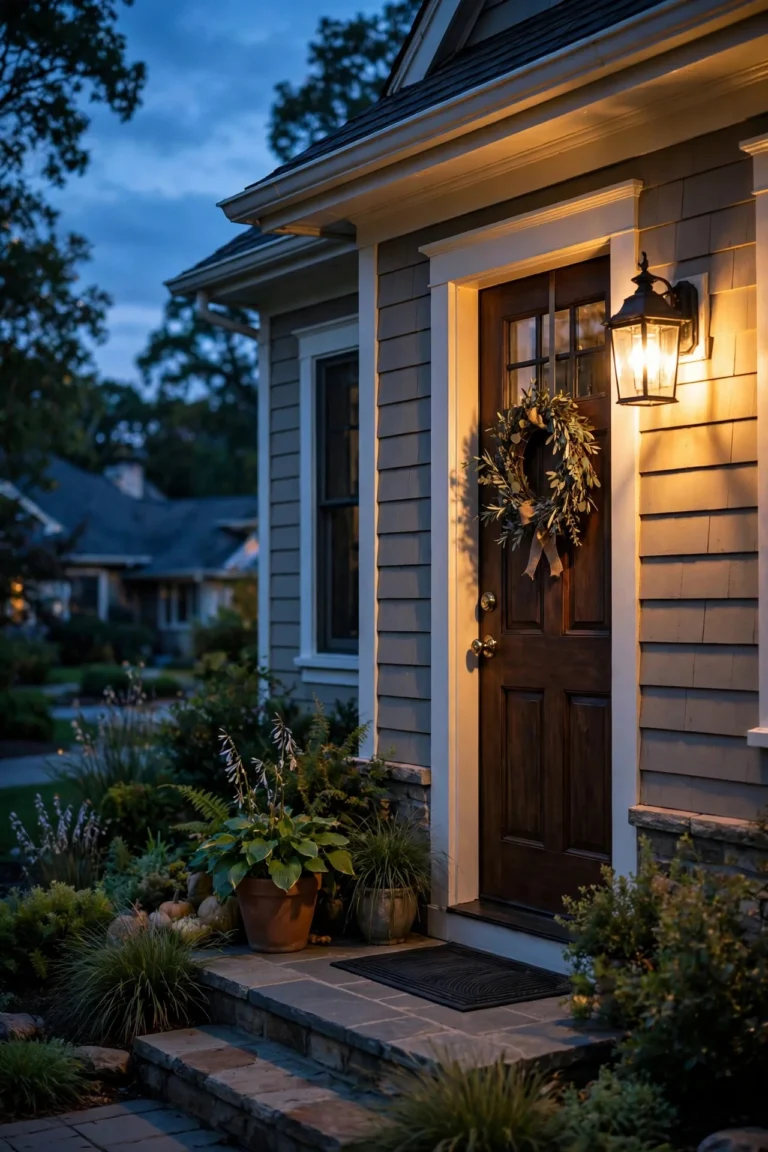
1. Classic Mission Lantern Sconces Flanking the Front Door
If your porch gets only one upgrade, make it a matched pair of mission lantern sconces beside the front door. The recipe is simple and it never misses: a rectangular lantern body, clean horizontal and vertical bars, clear or lightly seeded glass, and a flat or gently sloped top. Mount the pair 60 to 66 inches above the porch floor, centered on the door trim, and size each fixture at roughly one-quarter of your door's height — a standard 80-inch door looks right with 16 to 20-inch sconces. Inside, use LED filament-style bulbs at 2700K and 450 to 800 lumens each: enough to read a house number and find a key, soft enough to feel like lamplight. Keep the finish consistent with your door hardware — oil-rubbed bronze and matte black are the period-correct defaults. Honestly, this single change does more for a bungalow's curb appeal than any other fixture swap I know, because the eye reads symmetry as "cared for" before it registers anything else.
Suggested budget range: $90 – $260.
2. Prairie-Style Grid Sconces With Geometric Grilles
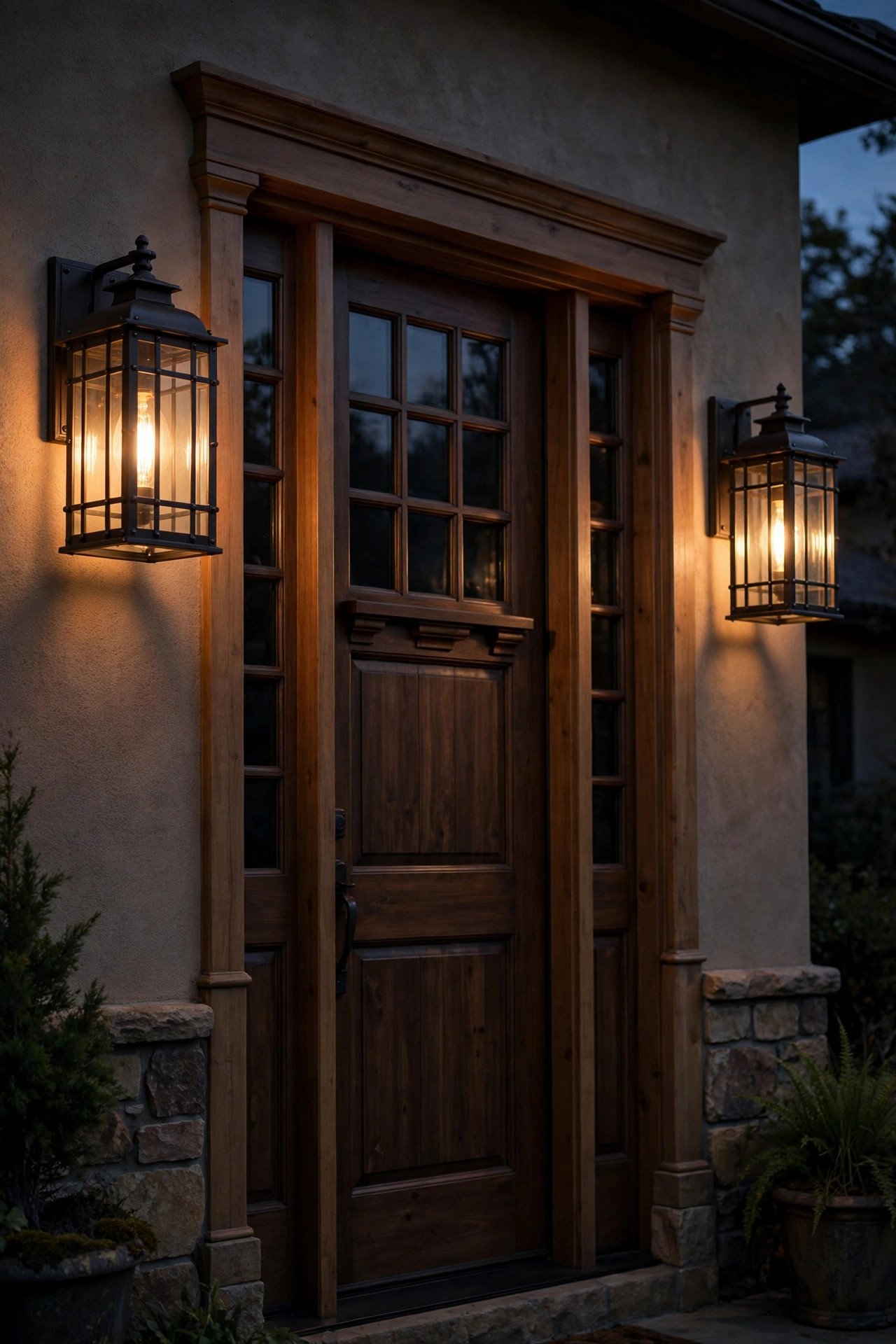
Prairie style is mission's more architectural cousin — lower, wider, and in love with horizontal lines and geometric patterns. A prairie sconce usually wears its pattern right on the glass: a grille of intersecting bars forming squares, diamonds, or a stylized tree-of-life motif. These look best on homes with wide eaves and strong horizontal siding, because the fixture echoes the house instead of competing with it. Choose a wider, shorter profile — 10 to 14 inches tall but 7 to 9 inches wide — and mount it so the pattern sits at eye level, where guests actually see it. Behind patterned glass, a frosted or opal panel hides the bulb and keeps the geometry crisp; a bare clear bulb blurs the design into glare. Stick with one pattern family across every exterior fixture so the porch, garage, and path lights read as a set. In my experience this is the sconce style visitors photograph — it has that stained-glass, arts-and-crafts soul without a custom stained-glass price.
Suggested budget range: $110 – $320.

3. Amber Mica-Look Panels for That Fireside Glow
Original arts-and-crafts lanterns used real mica — thin mineral sheets that turned lamplight into a deep amber glow, like embers in a fireplace. Modern outdoor sconces copy the effect with mica-look acrylic or resin panels, and honestly, from the porch swing you cannot tell the difference. That amber cast is the warmest light on this whole list, so use it where mood matters most: beside the front door, at a covered porch sitting area, or flanking a stone fireplace wall outside. Because the panels diffuse and dim the bulb, go one step brighter than usual — an 800-lumen LED behind mica reads like 500 in the open air — and stay at 2700K or warmer so the color stays honeyed, not orange. Pair mica sconces with clear-glass fixtures elsewhere rather than mixing them at the same doorway; two light colors side by side look like a mistake. Clean the panels twice a year with a damp cloth, since porch dust dulls that glow faster than anything.
Suggested budget range: $95 – $280.

4. Tapered Square Column Sconces for Porch Posts
Craftsman porches are built on those wonderful tapered columns — half stone or brick pier, half chunky wood post — and a tapered sconce is designed to sit on them. The fixture itself narrows from a wide top to a narrower base (or the reverse), mirroring the column's silhouette so the two look carved from the same idea. Mount one on the street-facing side of each front column, about two-thirds of the way up the wood portion, and you'll get light that spills across the porch steps exactly where guests need it. These are usually smaller fixtures, 9 to 12 inches tall, so use a bulb with real output — 600 to 800 lumens — since a single column light often replaces a door sconce on narrow porches. Run the wiring inside the hollow of the column if yours is built that way, or use paintable surface conduit along the back face where nobody sees it. The result looks original to the house, which is the highest compliment a fixture can earn.
Suggested budget range: $80 – $240.

5. Oil-Rubbed Bronze and Seeded Glass: The Timeless Pairing
If I had to pick one finish-and-glass combination that will still look right in twenty years, it's oil-rubbed bronze with seeded glass. The bronze reads nearly black in shade but warms up with brown and copper highlights where the sun hits it, and the seeded glass — full of tiny bubbles, like old hand-blown panes — softens the bulb into a gentle shimmer instead of a bare glare spot. This pairing forgives everything: dust, pollen, hard-water spots, and the little webs porch fixtures collect all disappear into the texture. It's also the easiest combination to match across brands and fixture types, so your door sconces, garage lights, and path lights can all coordinate without buying a matched set. Choose fixtures with real metal bodies rather than painted resin if your budget allows; the finish on cast aluminum or steel ages into a patina instead of peeling. Wipe them down each spring, tighten the glass retainers, and these will outlast two or three door colors without ever looking dated.
Suggested budget range: $75 – $230.
6. Sloped-Cap Sconces That Echo the Roofline
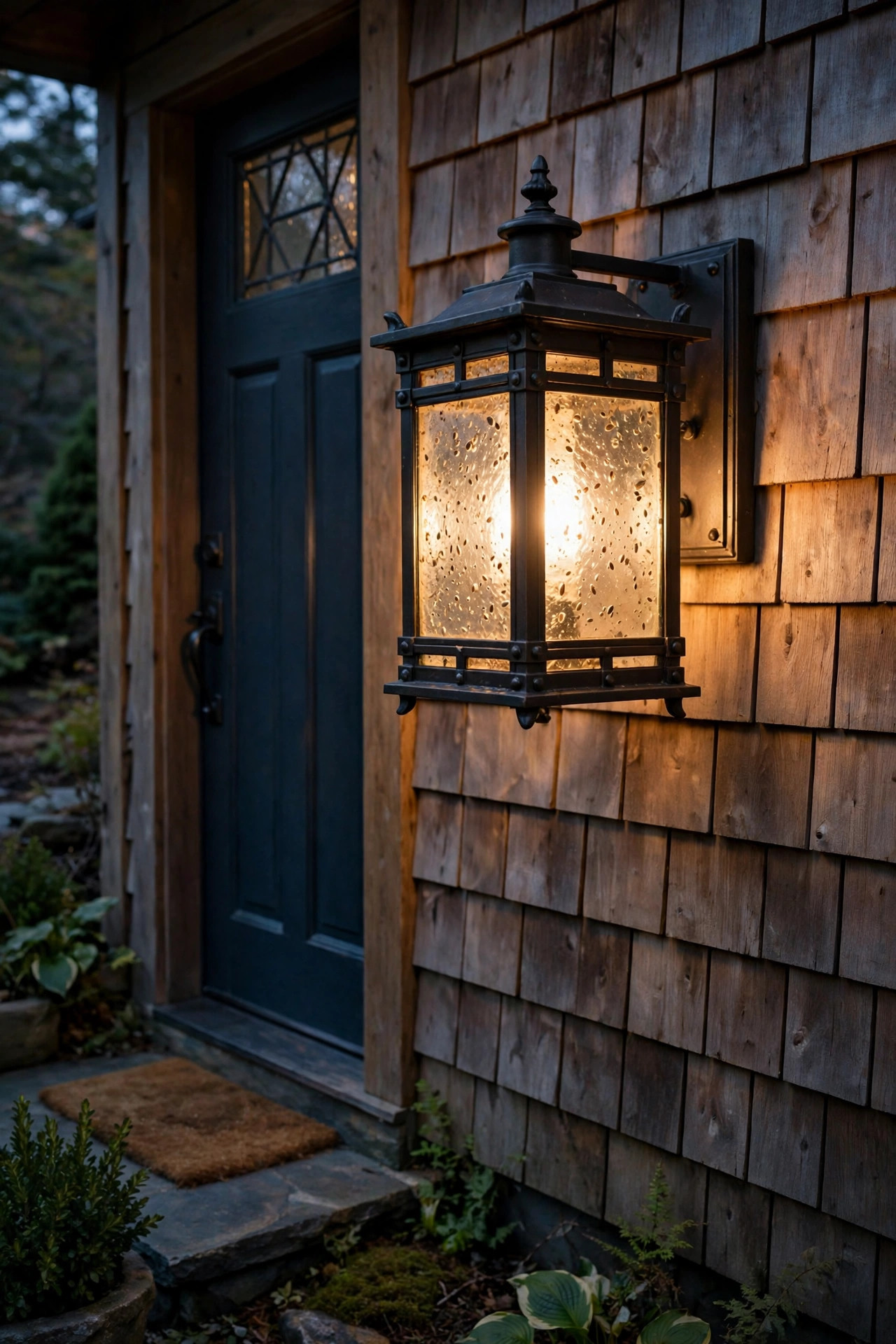
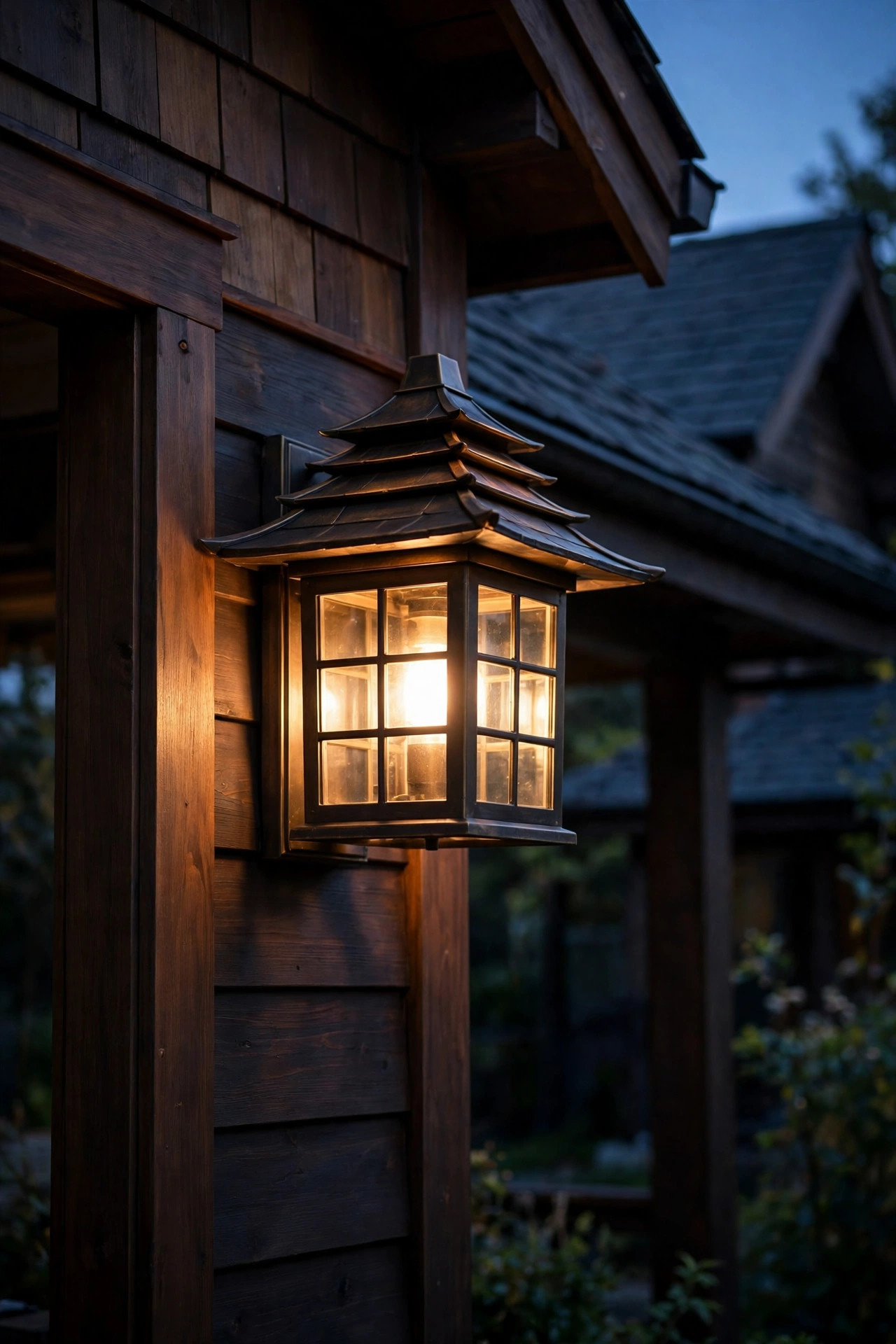
Look at a craftsman roof: low pitch, wide overhangs, exposed rafter tails. A sconce with a sloped, hipped, or pagoda-style cap borrows that exact silhouette in miniature, and it's a small detail that makes the whole facade feel designed. The cap does practical work too — it sheds rain away from the glass and shades the bulb from above, so you get less glare looking up at the fixture from the walkway. These sconces suit gabled porches and dormered entries especially well, placed so the little roof on the fixture rhymes with the big roof overhead. Keep proportions honest: the cap should overhang the glass body by an inch or so on each side, no more. Because the top is shaded, the light throws mostly downward and outward, which makes sloped-cap styles a smart pick beside bedroom windows or anywhere a neighbor's house sits close. Pair them with a matching pendant under the porch ceiling and the entry reads as one composed picture.
Suggested budget range: $85 – $250.
7. Oversized Craftsman Outdoor Sconces for Tall, Two-Story Entries
Standard sconces disappear on a tall entry. If your porch has a two-story gable, a vaulted ceiling, or a 9- to 10-foot door surround, scale up: look for craftsman outdoor sconces in the 20 to 26-inch range, with the width to match — 9 to 11 inches across. The old rule I use is one-quarter to one-third of the door height for the fixture, and on grand entries you lean toward the third. A single oversized sconce on the latch side can work, but a matched pair still looks best when the trim allows it. Bigger glass means bigger presence after dark, so temper the bulbs: two 600-lumen LEDs in large lanterns glow like a welcome sign, while 1,100-lumen bulbs will blast the porch like a loading dock. Check the mounting-box rating too — large fixtures are heavy, and older porch walls may need a reinforced box or a mounting block behind the siding. Done right, oversized craftsman sconces give a newer, taller home the grounded, handcrafted weight it usually lacks.
Suggested budget range: $160 – $450.

8. Compact Craftsman Sconces for Narrow Porches and Small Bungalows
Not every craftsman home is grand — plenty are sweet little 900-square-foot bungalows with porches barely 5 feet deep, and a full-size lantern can swallow a small entry whole. Compact sconces in the 8 to 11-inch range keep the mission lines and honest materials at a scale that suits the house. Mount smaller fixtures a touch lower than standard, around 56 to 60 inches, so they relate to the door handle and house numbers instead of floating up by the trim. On a truly narrow porch, one well-placed sconce on the latch side beats a cramped pair; you'll use the freed-up wall space for numbers or a mailbox that guests can actually find. Small fixtures often take candelabra-base bulbs, so choose LED filament candelabra bulbs at 2700K, 400 to 500 lumens each. My front door sconce pair guide walks through the sizing math for tight entries in detail. The charm of a small bungalow is its proportions — the lighting should protect them, not overpower them.
Suggested budget range: $55 – $160.
9. Dark-Sky Friendly Craftsman Outdoor Sconces That Aim the Light Down
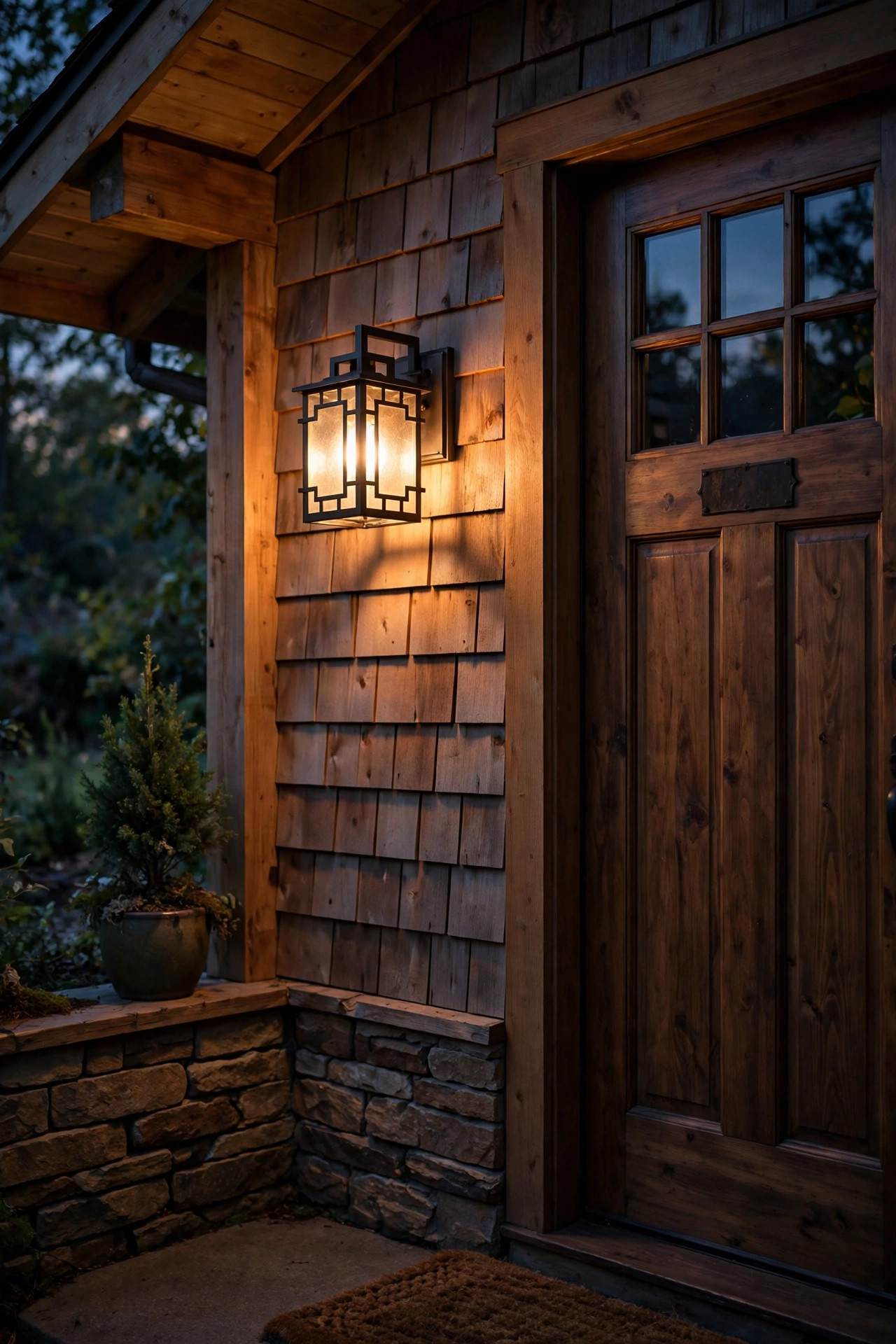
A lot of classic lantern sconces throw half their light straight up into the night sky, where it helps nobody. Dark-sky friendly craftsman designs keep the mission styling but cap the top and aim the light down, so the porch floor, steps, and welcome mat get the glow and the stars keep the sky. Look for fixtures where the bulb is fully shielded from any upward angle — solid caps, opal bottom lenses, or louvered faces. Downward light is also kinder to neighbors and to anyone walking up your path, since there's no bare bulb in their eyes. You'll typically want slightly higher output to compensate for the focused throw: 700 to 900 lumens covers a porch entry comfortably. More towns are adding outdoor-lighting ordinances every year, and a shielded fixture keeps you compliant without giving up the look. Pair two of these at the door with low path lights and your whole front yard sits in a warm pool of light that stops at your property line — which, honestly, is exactly how the original craftsman designers lit their own porches.
Suggested budget range: $95 – $270.

10. Motion-Sensor Craftsman Sconces for Side Doors and Alley Entries
The side door, the mudroom entry, the gate from the alley — these are the spots where you arrive with arms full of groceries and zero free hands for a switch. A motion-sensor sconce in craftsman styling solves it without breaking the house's look: same tapered lantern body and seeded glass, with a small sensor tucked under the cap. Set the range to 15 to 25 feet so it catches you at the gate but not every car on the street, and set the timer for 1 to 3 minutes — long enough to unlock, unload, and get inside. Most models include a dusk-to-dawn mode that holds a dim glow all evening and brightens on motion, which is my favorite setting for side entries: a soft landmark glow that wakes up when you need it. Stick with wet-location-rated fixtures here, because side entries rarely have a porch roof overhead. This is the hardest-working fixture on the house, so mid-range quality pays off in sensor reliability.
Suggested budget range: $85 – $210.
11. Dusk-to-Dawn Photocell Sconces: Set Them and Forget Them
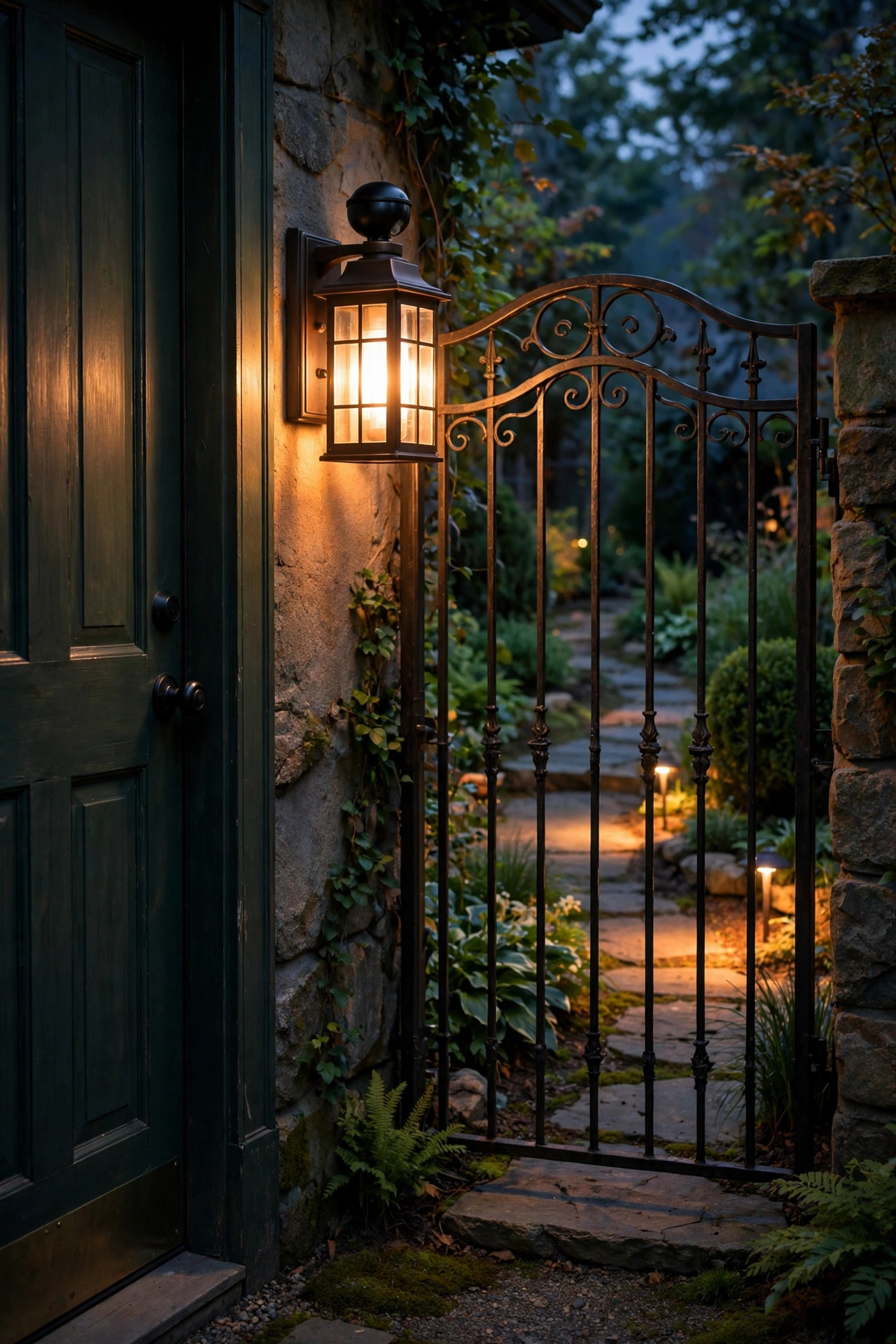
A dusk-to-dawn sconce has a small photocell eye that switches the light on at sunset and off at sunrise, every day, adjusting itself as the seasons change. No timers to reprogram after a power outage, no arriving home to a dark porch because you forgot. Craftsman versions hide the sensor in the backplate or under the cap, so the vintage face stays clean. These are ideal for the front door pair if your household keeps irregular hours, and for older homeowners who don't want to think about lighting controls at all. One honest caution: keep photocell sconces away from other bright light sources — a sensor that "sees" your floodlight or a streetlight may cycle off and on all night. Also give the pair matched sensors from the same fixture line so both sides switch within a minute of each other. Paired with LED bulbs rated for enclosed fixtures, a dusk-to-dawn setup will run for years with nothing but an occasional glass cleaning. It is the lowest-effort idea on this list, and for many porches, the smartest.
Suggested budget range: $80 – $220.

12. Solar Craftsman Sconces Where There's No Wiring
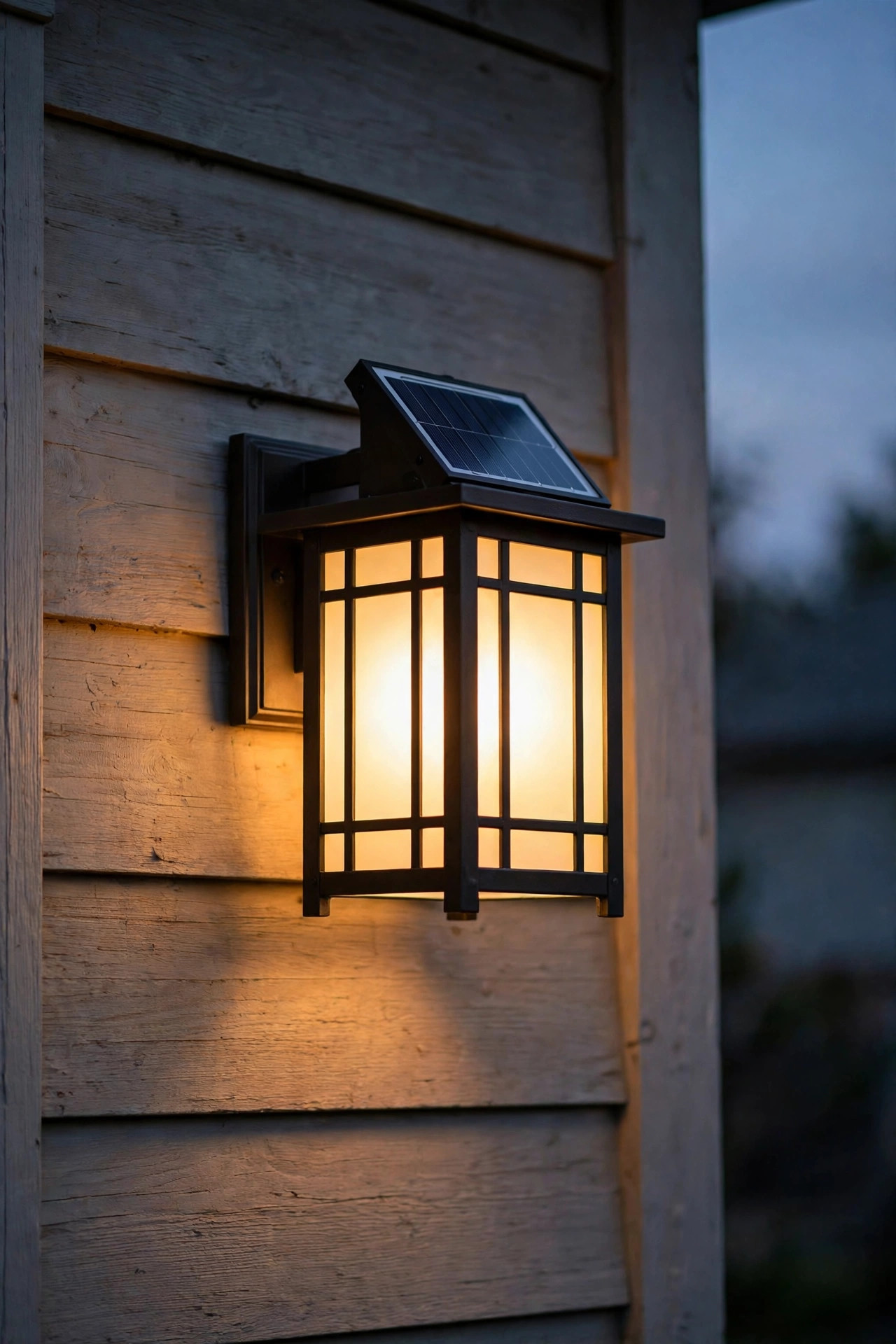
Plenty of older bungalows have exactly one porch outlet and no junction box where you actually want a light — by the garage, on a garden wall, at the back gate. Solar craftsman sconces have finally grown up: the better ones use a real metal mission-style body, a separate or oversized solar panel, and a warm 2700K LED that runs 8 to 10 hours on a full charge. Mount them where the panel gets at least 5 to 6 hours of direct sun — a south or west wall — and accept that output is gentler than wired light, around 100 to 300 lumens. That's accent light, not task light, so use solar sconces to mark a gate, flank a garage door for symmetry, or light a garden wall, and keep wired fixtures at the main entry. Avoid the flimsiest plastic sets; look for replaceable batteries so the fixture survives past its first winter. As solar accents go, these are the first ones I'd call genuinely handsome.
Suggested budget range: $45 – $140.
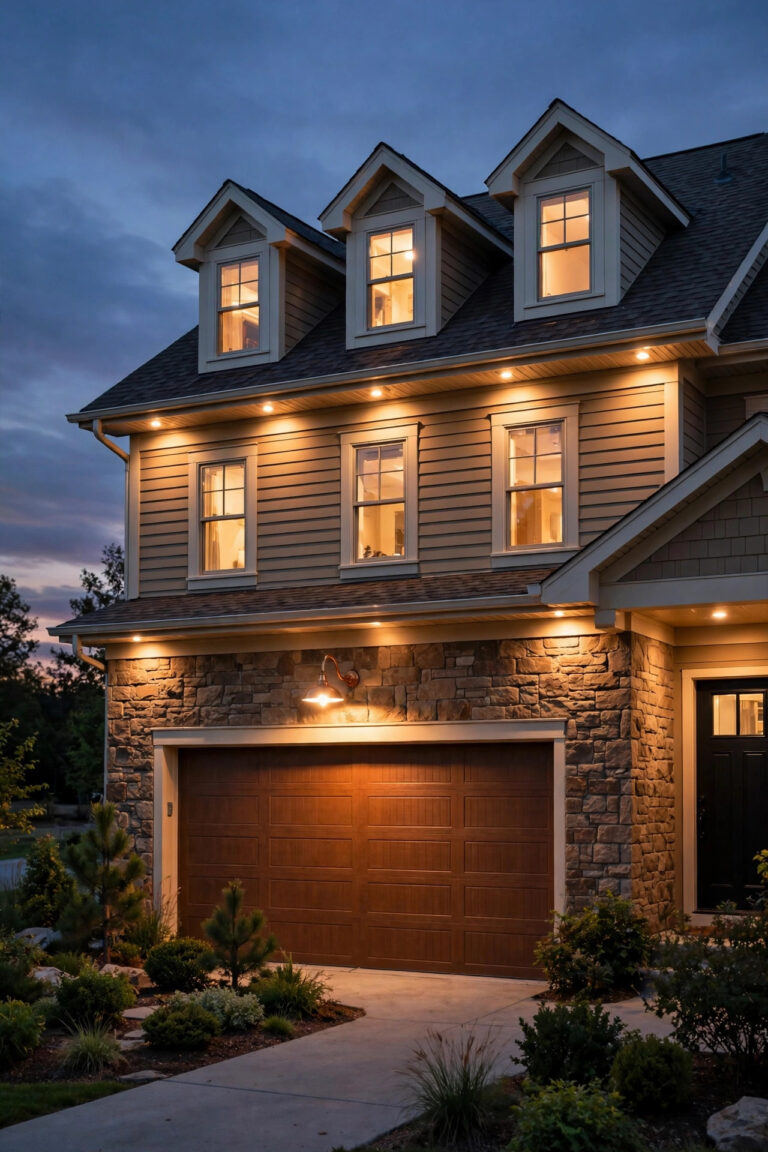
13. A Coordinated Pair for the Garage Door
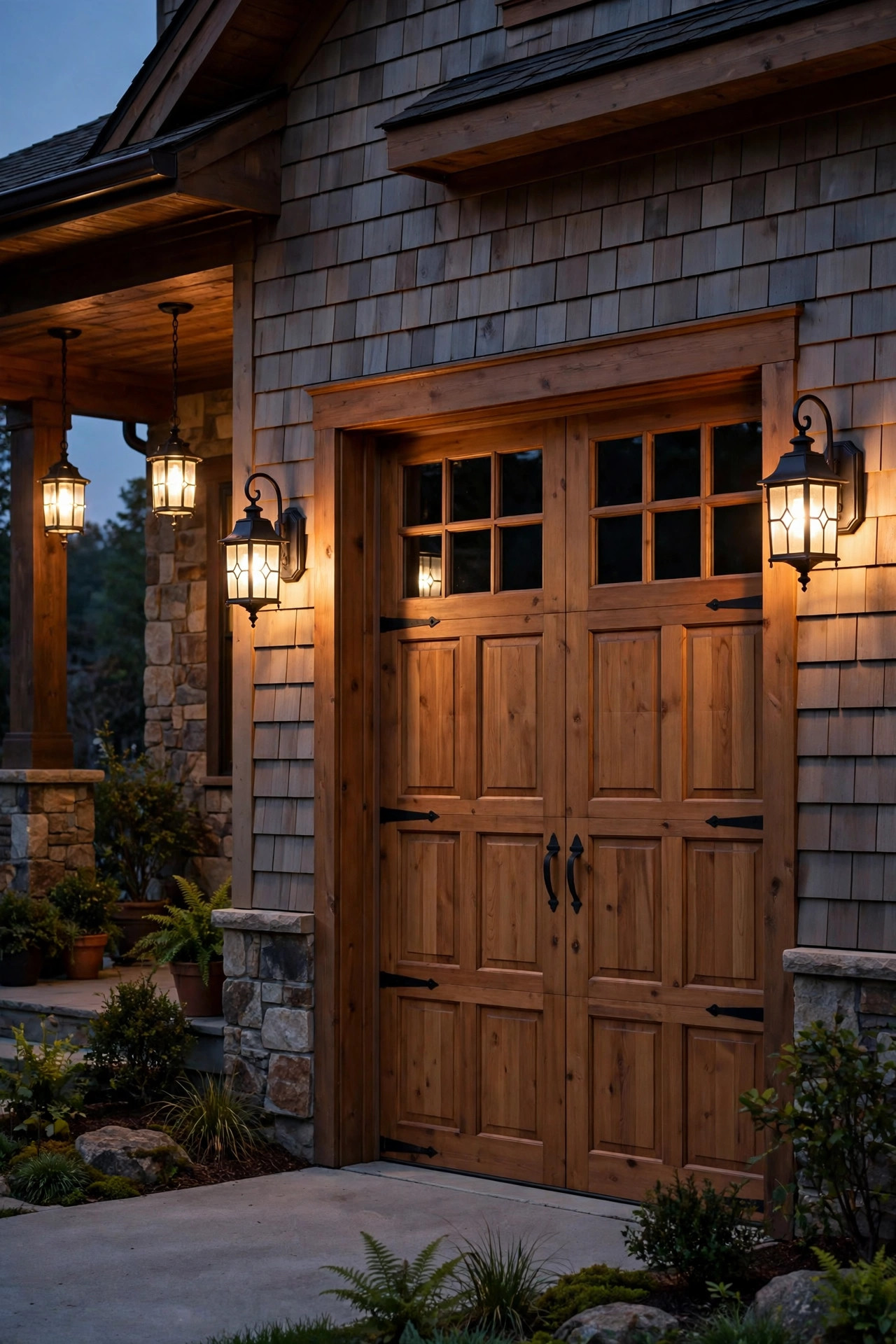
The garage is half the front of most houses, and it's where craftsman styling usually stops — bare builder bulbs over a wide white door. A pair of craftsman sconces flanking the garage door fixes the proportions instantly. Scale matters here: a double garage door is 16 feet wide, so fixtures in the 14 to 18-inch range look intentional, while porch-size sconces read as an afterthought. Mount them on the trim or pilasters at 66 to 72 inches, aligned with your front door sconces if the two can be seen together — matching heights and finishes across the whole facade is what makes it look planned. If there's a center column between two single doors, a third sconce there completes the rhythm. My roundup of outdoor wall lantern ideas has more shapes that carry this look across a wide facade. Wire garage sconces on the same switch or timer as the porch pair and the whole house lights up as one warm scene at dusk.
Suggested budget range: $120 – $340.
14. Aged Copper and Verdigris Finishes for Old-Soul Porches
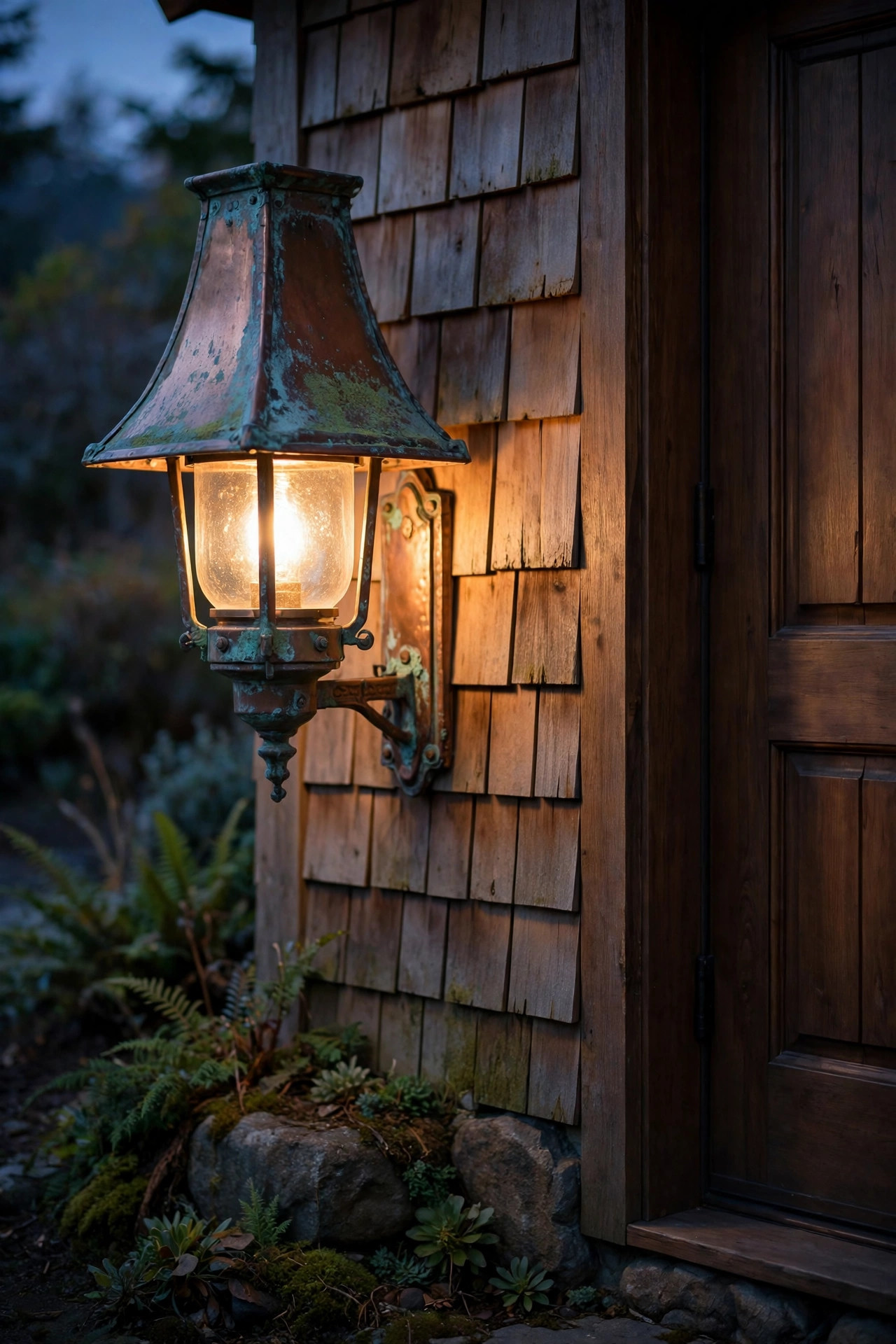
Bronze and black are the safe choices; aged copper is the soulful one. A copper craftsman sconce starts bright and penny-shiny, then mellows over a few seasons into rich brown tones, and on porches near the coast it can edge toward that soft green verdigris that looks like it's been on the house since 1925. If you love that destination but not the wait, pre-patinated and antique-copper finishes get you most of the way there on day one. Copper pairs beautifully with the materials craftsman homes already wear: cedar shingles, river rock piers, warm brick, and sage or cream siding. Keep the glass simple — clear seeded or opal — because the finish is the decoration here. One caution: copper-toned finishes on cheap fixtures are sometimes just paint over plastic, which chips instead of patinas; look for solid copper or copper-finished metal, and confirm it's rated for outdoor use. On the right house, these sconces don't look installed — they look inherited.
Suggested budget range: $130 – $380.
15. Timers and Smart Bulbs: Old Lines, Modern Manners
A timeless fixture doesn't have to live on a dumb switch. The easiest modernization keeps your craftsman outdoor sconces exactly as they are and puts the smarts in the bulb or the switch: a screw-in smart LED set to a warm 2700K, scheduled for sunset to 11 p.m., or an astronomical timer switch inside that tracks the seasons for you. This is my favorite approach for vintage and reproduction fixtures, because nothing about the face changes — no visible sensors, no app-shaped hardware — but the porch lights itself every single evening. Group the door pair, garage pair, and porch pendant into one scene so the whole entry warms up together, and set a gentle dim after 10 p.m. if your fixtures sit near a bedroom window. Choose bulbs rated for enclosed and outdoor fixtures, since many craftsman lanterns fully enclose the bulb. The combination I recommend to every bungalow owner is photocell or timer control plus plain, high-quality LED filament bulbs: invisible technology, century-old looks, and a porch that's lit before you even pull into the driveway.
Suggested budget range: $60 – $190.
Frequently Asked Questions
What size should craftsman outdoor sconces be for a front door?
Use the door as your ruler: each sconce should measure roughly one-quarter to one-third of the door's height. For a standard 80-inch door, that's a 16 to 20-inch fixture for a normal entry, up to 24 inches on tall two-story porches, and 9 to 12 inches on small bungalows. Mount the center of the fixture 60 to 66 inches above the porch floor, and if you're placing a pair, keep at least 6 inches between the fixture edge and the door trim so nothing looks crowded.
What color temperature looks best in craftsman sconces?
Warm, always. 2700K is the sweet spot — it mimics the gaslight and early electric glow these fixtures were designed around and flatters wood, brick, and stone. Behind amber mica-look panels, 2700K reads even warmer, like firelight. Avoid anything 4000K or cooler at the entry; that blue-white light fights the whole craftsman palette and makes a welcoming porch feel like a parking lot. Whatever you choose, use the same temperature in every exterior fixture so the facade reads as one scene.
Can craftsman sconces be used where rain hits them directly?
Yes, as long as they're rated for it. Fixtures under a porch roof only need a damp-location rating, but sconces on an exposed garage wall, gate post, or side entry need a full wet-location rating with sealed glass and gaskets. Check the rating before you buy — two sconces can look identical and differ only in their seals. Wet-rated models also keep insects and moisture out of the lantern body, which means less cleaning and no rust streaks down your siding.
Can I install craftsman sconces myself, or do I need an electrician?
Swapping an existing sconce for a new one in the same junction box is a comfortable DIY job for most homeowners: kill the power at the breaker, verify it's off, match the wires, and seal the backplate with exterior caulk along the top edge. Budget about 30 to 45 minutes per fixture. Call an electrician when there's no existing box where you want the light, when the wiring is old cloth-insulated cable, or when you want a new switch or timer circuit run — new locations typically run $150 to $300 per fixture for the electrical work alone.
Conclusion
The through-line in all fifteen of these ideas is the same one the original craftsman builders followed: honest materials, strong simple lines, and light that's warm enough to welcome people home. Start with a matched pair at the front door, carry the same finish and glass to the garage and side entries, and keep every bulb at 2700K. Do that, and your craftsman outdoor sconces will look as right in twenty years as they do tonight. Browse the rest of my porch and entry lighting ideas here on the site, pick the two or three fixtures your house is asking for, and enjoy the glow.