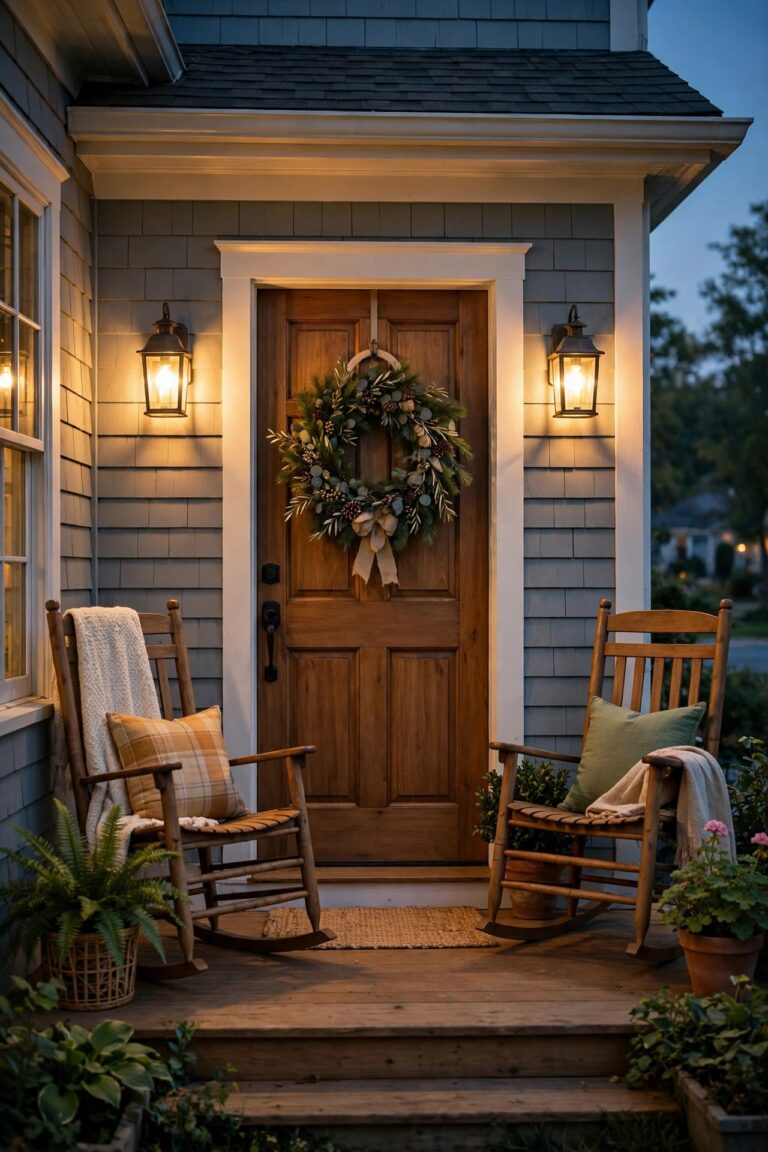
The worst outages at my house never happen at noon. They happen at 9 p.m. in sideways rain, when the whole street goes black at once and somebody still has to get down the porch steps, out to the car, and back in with a flashlight between their teeth. That is exactly why I plan my outdoor lighting for power outages before storm season, not during it. The good news? Most of the best backup lights never touch your home wiring at all. They charge in the sun by day and simply keep doing their job when the grid quits. I think about it in the same layers I use everywhere else: a guidance layer for steps and paths so nobody falls, a task layer for the generator and grill zones so chores stay safe, and a marker layer for the gate and driveway so help can find you. Egress first, ambience last. Here are the thirteen backup lights I keep ready, roughly in the order I would grab them.

1. Solar Floodlights: The Backbone of Outdoor Lighting for Power Outages
If you buy one thing on this list, make it a solar motion-sensor floodlight over the driveway or garage. Mine has a separate solar panel on a long cable, so the panel lives in full sun on the garage roof edge while the light itself tucks under the eave. It never used the grid in the first place, which means an outage changes nothing — it still wakes up at 1,000-plus lumens when a person, a deer, or a falling branch crosses the yard. Because it only fires on motion, the battery sips power and can hold up through many nights of a long outage. Mount it 8 to 10 feet up, angled down so the beam pools on the ground instead of blinding anyone walking toward it. I gathered more placement ideas in my roundup of solar flood light ideas if you want to compare styles before storm season.
Suggested budget range: $25 – $60.

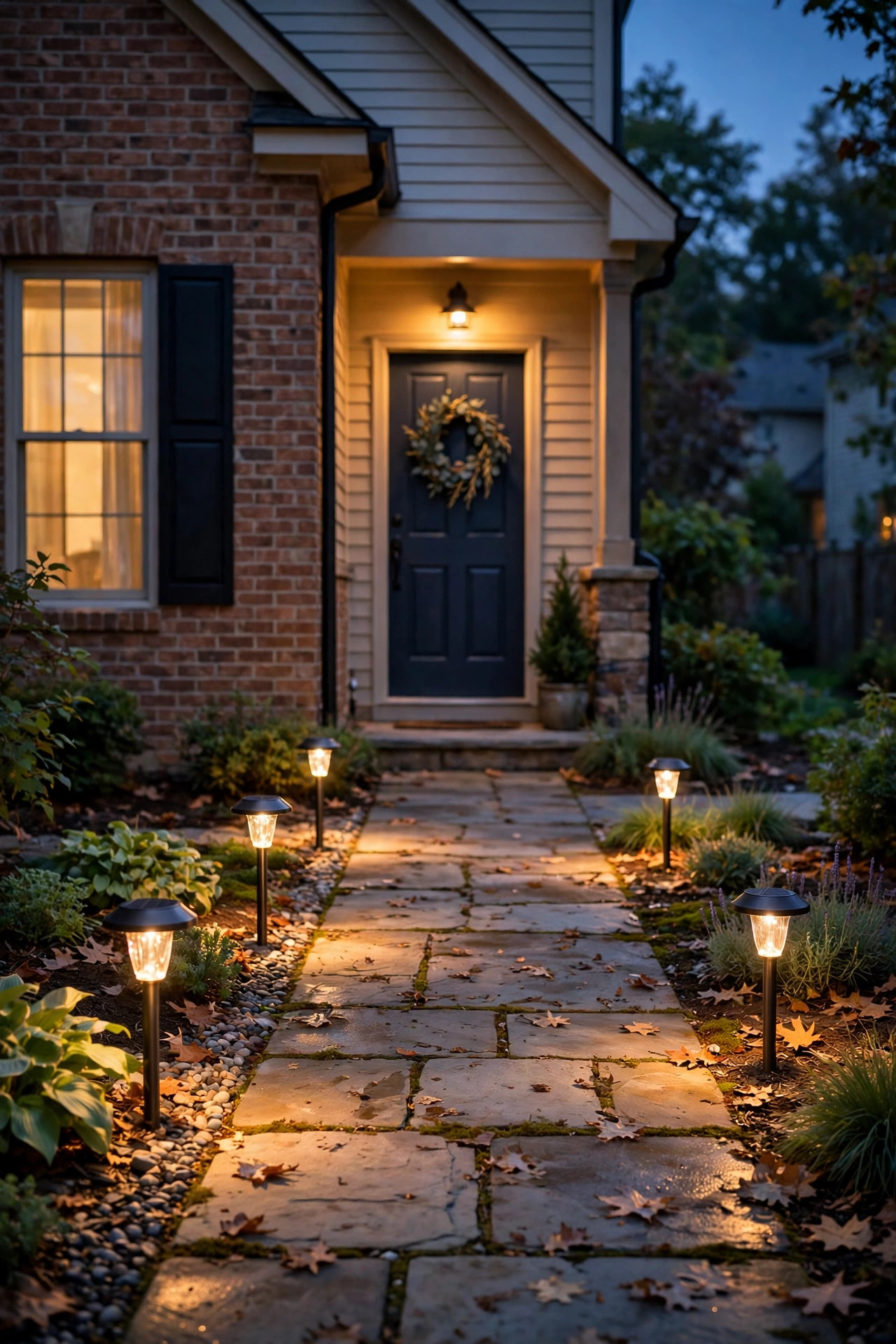
2. Solar Path Lights for a Safe Route From Street to Door
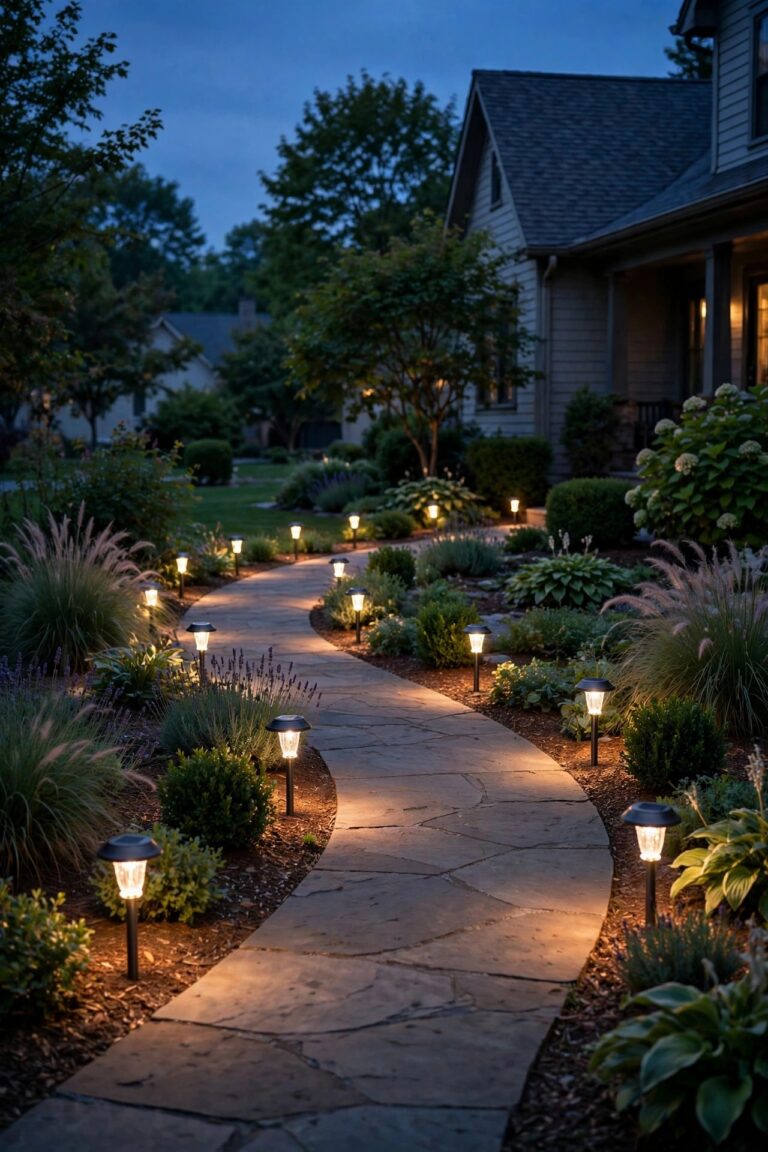
Your everyday solar path lights quietly become the most-used outage lights you own. They mark the walk from the street to the door with zero wiring, and since each one is self-contained, a single failure never darkens the whole route. Space them 6 to 8 feet apart and stagger them on alternating sides so the pools of light overlap. Here is my favorite trick, honestly: on outage nights I pull two or three out of the ground and carry them inside as gentle hallway and bathroom lights, then pop them back outside at dawn to recharge. Choose warm white over cold blue-white — it is far easier on dark-adjusted eyes — and keep the solar caps wiped clean so they charge fully even on short winter days. My solar path lights guide covers spacing and brightness in more detail if you are building a set from scratch.
Suggested budget range: $15 – $40.
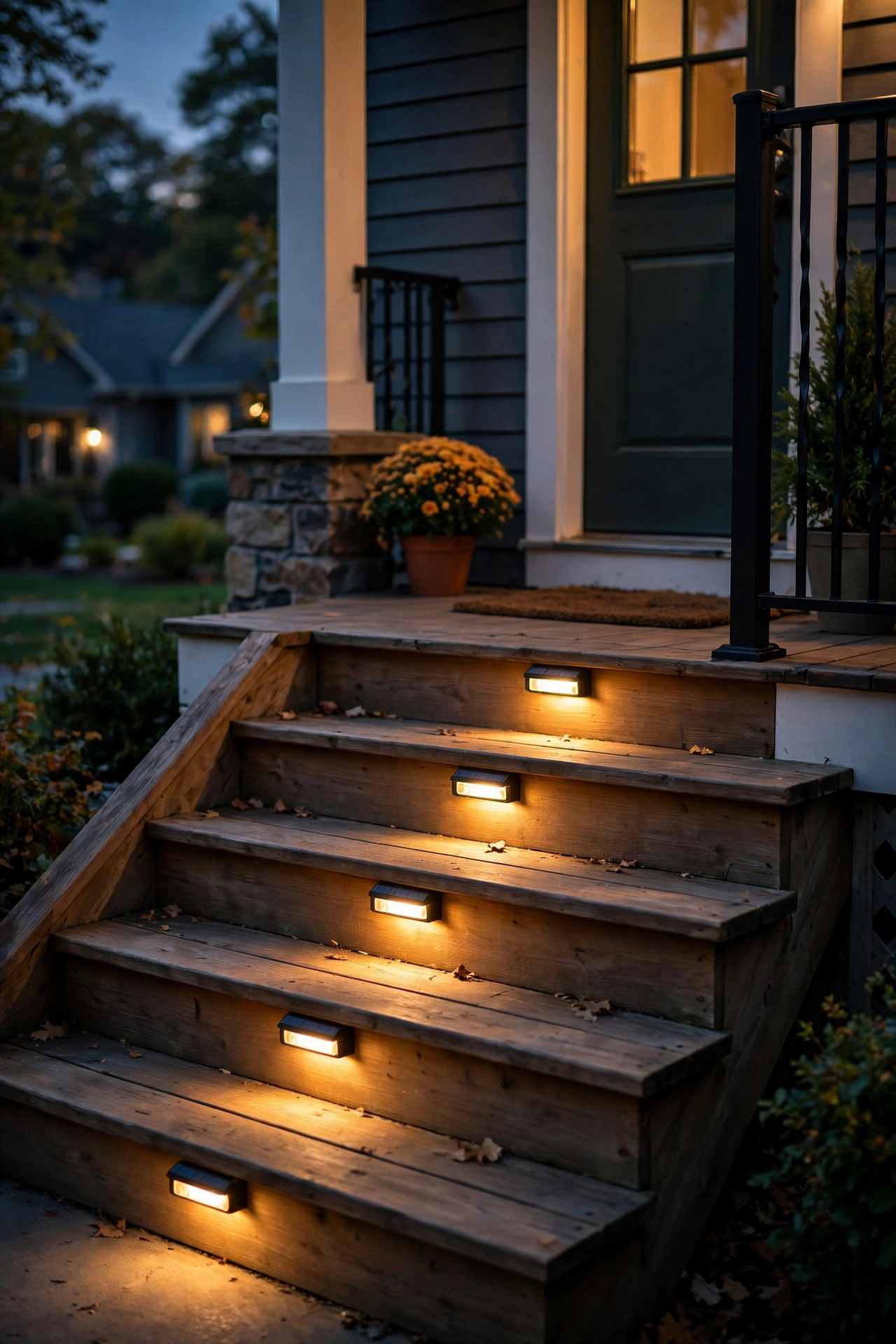
3. Solar Step Lights So Nobody Misses a Tread
Falls are the real danger on a blackout night, and steps are where they happen. Small solar step lights screw or stick onto stair risers and switch themselves on at dusk, outage or no outage. Put one on every step of the porch and deck stairs if you have kids, older parents, or anyone carrying a laundry basket of supplies in the dark; at minimum, light the top and bottom treads, where depth perception fails people most. Look for models where the light washes down across the tread instead of shining out into eyes. Before storm season, I do a full-charge test: leave them out on a sunny day, then check after dark that every single one still glows at bedtime. A weak battery shows itself early, while you still have time to swap the rechargeable cell inside. One more detail from my own steps: if your stairs turn a corner, put a light on the landing too — turns are exactly where people misjudge distance in the dark.
Suggested budget range: $12 – $35.
4. Dusk-to-Dawn Solar Wall Sconces at Every Door
A solar sconce beside each exterior door is the light I miss most when it is missing. Photocell models turn themselves on at dusk and hold a soft glow all night, then brighten when the motion sensor wakes — and the better ones can stretch that pattern through two or three cloudy days on a single charge. During an outage, that steady entry light does three jobs: it tells you which door you are aiming for from the yard, it gives guests and first responders an obvious front door, and it keeps the keyhole and step in view. Mount a matched one at the back door too, because outage chores — the grill, the generator, the dog — mostly happen out back. In my experience, a dim-idle-plus-motion-boost sconce outlasts a basic on-all-night model by a wide margin when the sun has been scarce. A warm 2700K glow also reads as welcoming rather than institutional, which matters on a night when the whole street is on edge.
Suggested budget range: $20 – $55.

5. Rechargeable LED Lanterns Staged by the Doors
This is the handoff light — the one that carries you from the yard to the kitchen and back again. I keep a rechargeable LED lantern on a hook inside the front door, another in the back hall, and a third in the garage. On low, a decent lantern runs 50 hours or more; on high, it throws enough light to unload a car or check a breaker panel outside. When you are carrying firewood, water, or a sleepy toddler, that 360-degree glow beats a flashlight beam every time. Charge them all on the first of the month, outage or not, so the habit holds. Pick models with a hanging hook and a low red or warm mode for preserving night vision on the porch. These do more outage work per dollar than anything else in my house. A strip of tape on the bottom of each one, with the last charge date written on it, keeps the whole rotation honest.
Suggested budget range: $15 – $45.

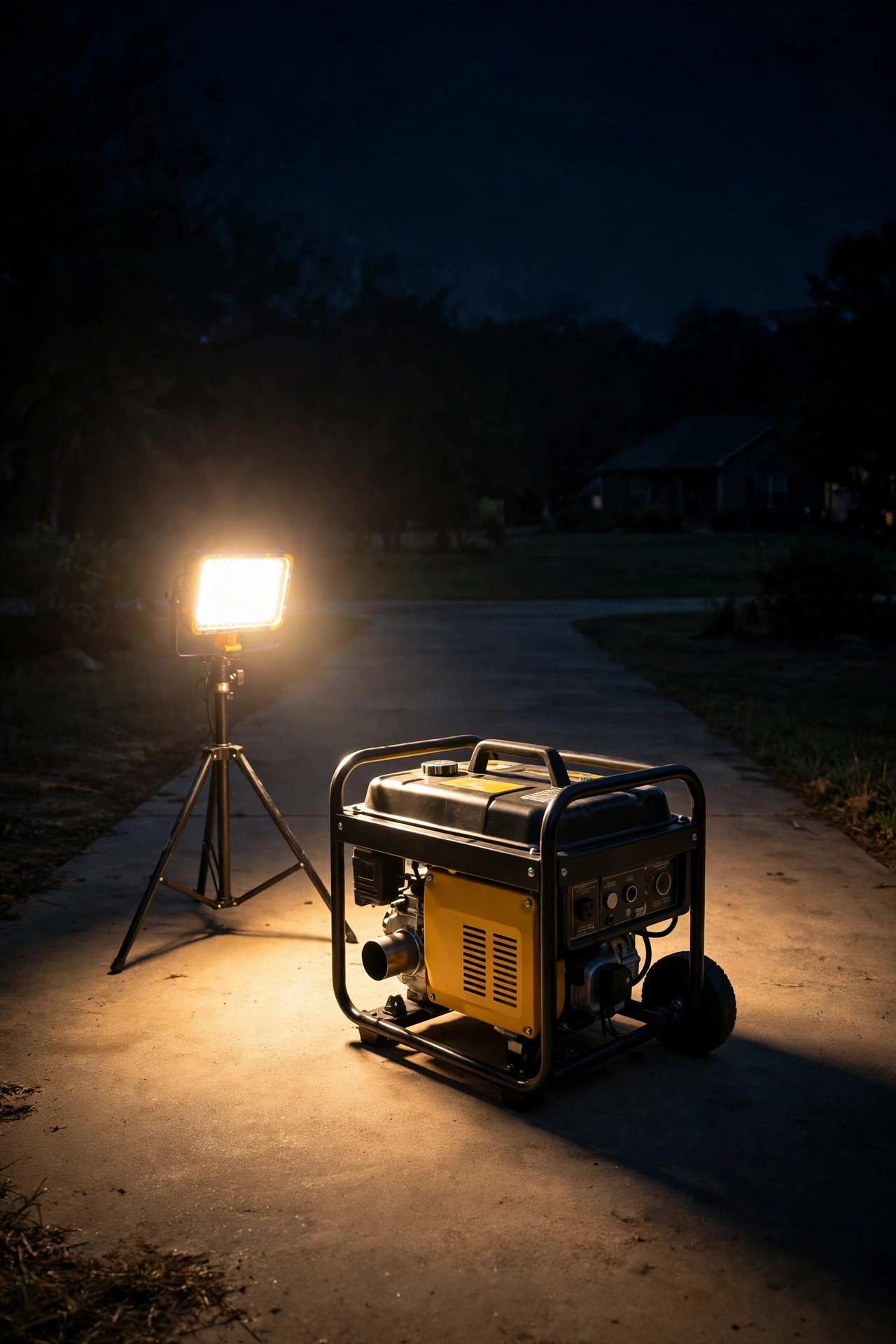
6. A Battery Work Light for the Generator and Grill Zone
Task light is where safety gets serious. A battery LED work light on a tripod or clamp throws 1,000-plus lumens of even light over the exact spot you are working, and it is the only light I trust around a generator. The rules here are not negotiable: a generator runs outdoors only, at least 20 feet from the house, with the exhaust pointed away from windows and doors — carbon monoxide is silent and deadly. Never refuel it while it is hot, never bring it into a garage to keep it dry, and keep fuel cans well away from any flame or heat source. The same light hangs on a hook by the grill when dinner has to happen outside during a long outage. Battery light, never a candle or oil lamp, anywhere near propane or gasoline. I keep a pair of work gloves with the light too, because generator handles and grill lids are no fun to grab blind in the cold.
Suggested budget range: $25 – $70.
7. Solar String Lights and Fairy Lights Along the Railings
Not every outage light needs to be practical — some of it just needs to mark edges and lift spirits. I wrap copper-wire fairy lights along the porch railing and run a strand of solar string lights over the patio, and on blackout nights those gentle lines tell everyone exactly where the porch ends, where the steps begin, and where the railing is to grab. Because the glow is soft, your eyes stay dark-adjusted, which honestly makes the whole yard feel safer than one harsh beam does. The solar puck or panel clips right to the railing in full sun. A strand over the grill area adds cheerful task light for cooking without a single open flame near the propane tank. In my experience, this is the layer kids remember fondly instead of being scared. Wind the fairy lights loosely rather than tight, so a storm gust flexes the wire against the rail instead of snapping it.
Suggested budget range: $10 – $30.

8. Headlamps and Flashlights Waiting at Every Exit
Hands-free light is the difference between coping and struggling. I keep a headlamp on a hook beside every exterior door and a simple flashlight in the drawer nearest each door, and everyone in the house — including guests and grandkids — knows exactly where they live. Outdoors, a headlamp is how you check the meter, walk the fence line, take the dog out, or carry in groceries from the car without juggling. Choose ones with a red-light mode for the yard; it preserves your night vision and bothers the neighbors less. Check the batteries or charge level whenever you swap your smoke alarm batteries, and keep spares in the same drawer. A light you have to hunt for in the dark is not a backup light at all. Clip one to the dog leash hook as well — that last late-night trip to the yard is the outing everybody forgets to plan for.
Suggested budget range: $8 – $25.
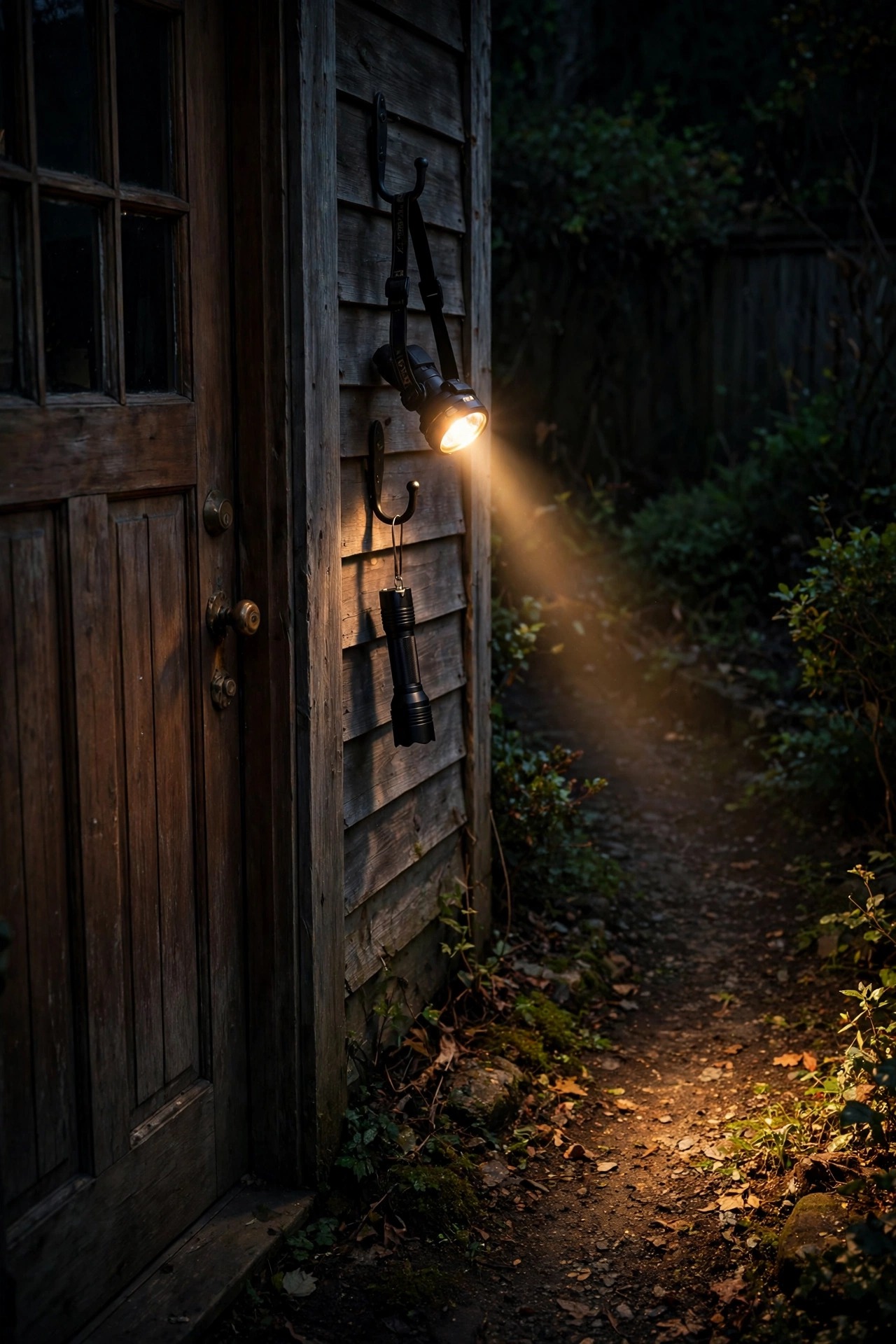
9. Flameless Candles in Hurricane Lanterns for Steps and Tables
Real candles and oil lamps have no business in an outage plan that also involves fuel cans, curtains, kids, and pets — so my hurricane lanterns hold flameless LED candles instead. The flicker is convincing, the glow is warm, and you can set them on the porch steps, the patio table, or a window ledge without a single worry about wind or wax. Most have a daily timer mode, roughly six hours on and eighteen off, which stretches a set of batteries through weeks of evening use. Be honest about what they are, though: they are ambience and edge-markers, not task lights. Nobody should be reading a generator manual by candle-glow. As a morale layer on the porch while the street sits dark, though, they earn their shelf space every single time. Set a pair on the top and bottom porch steps and they double as tread markers for anyone coming in from the yard.
Suggested budget range: $12 – $35.
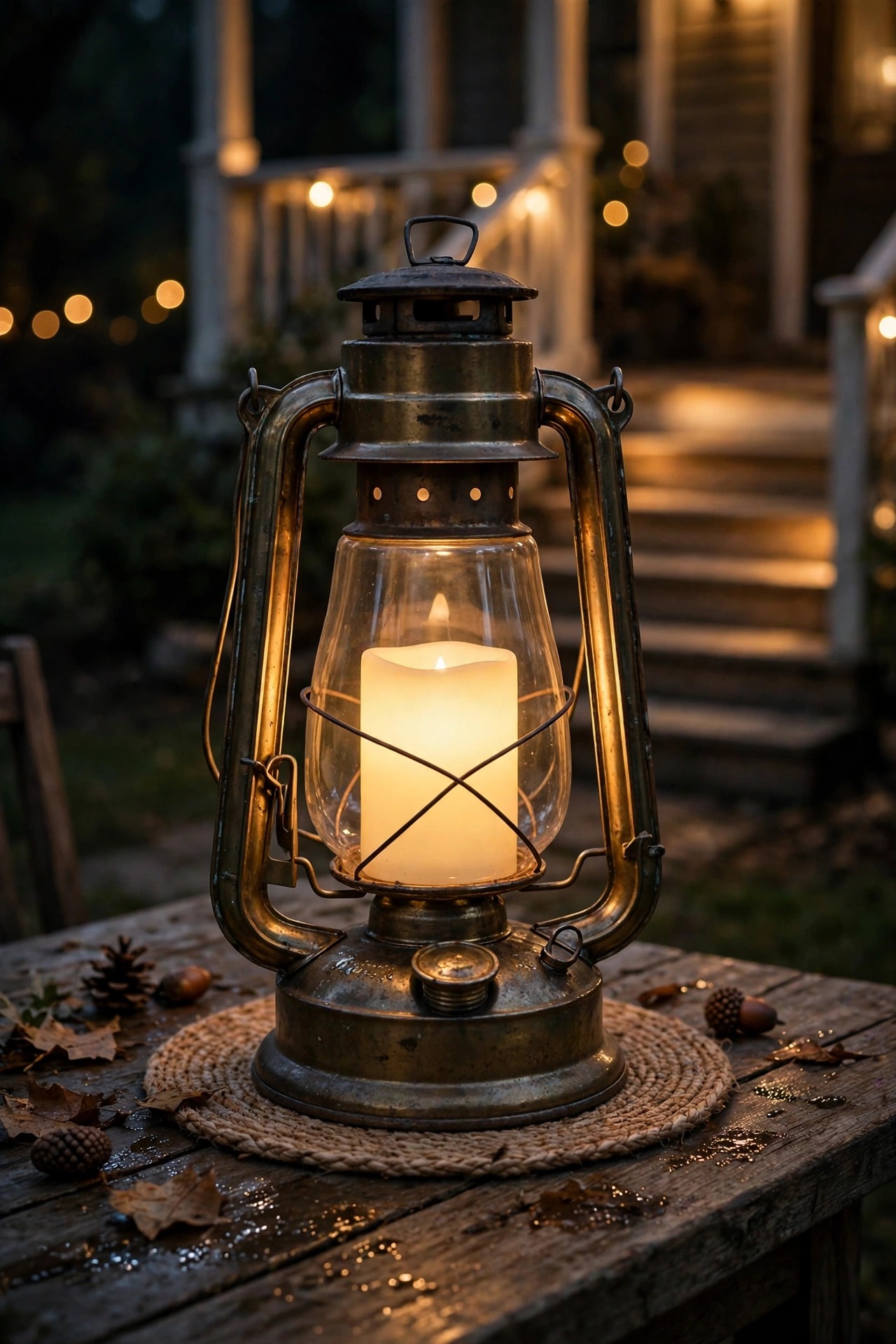
10. Solar Driveway Markers and Gate Lights
When the whole street is dark, finding your own driveway becomes genuinely hard — and for a visiting relative, a delivery driver, or an ambulance, it can cost real minutes. Solar marker stakes along the driveway edges and a small solar light on each gate post fix that quietly. They charge all day, glow all night, and ask nothing of the grid. Space them in pairs at the apron where the drive meets the street, then single markers along any curve or drop-off. I like the ones that glow steady rather than flash; a calm line of light reads as a boundary, not an alarm. Reflective-only stakes are a fine budget backup for the far end of a long drive, since headlights wake them up, but solar markers work for people on foot too. Push the stakes in deep after the first good rain, when the soil is soft, and they will stay upright through freeze and thaw.
Suggested budget range: $10 – $30.
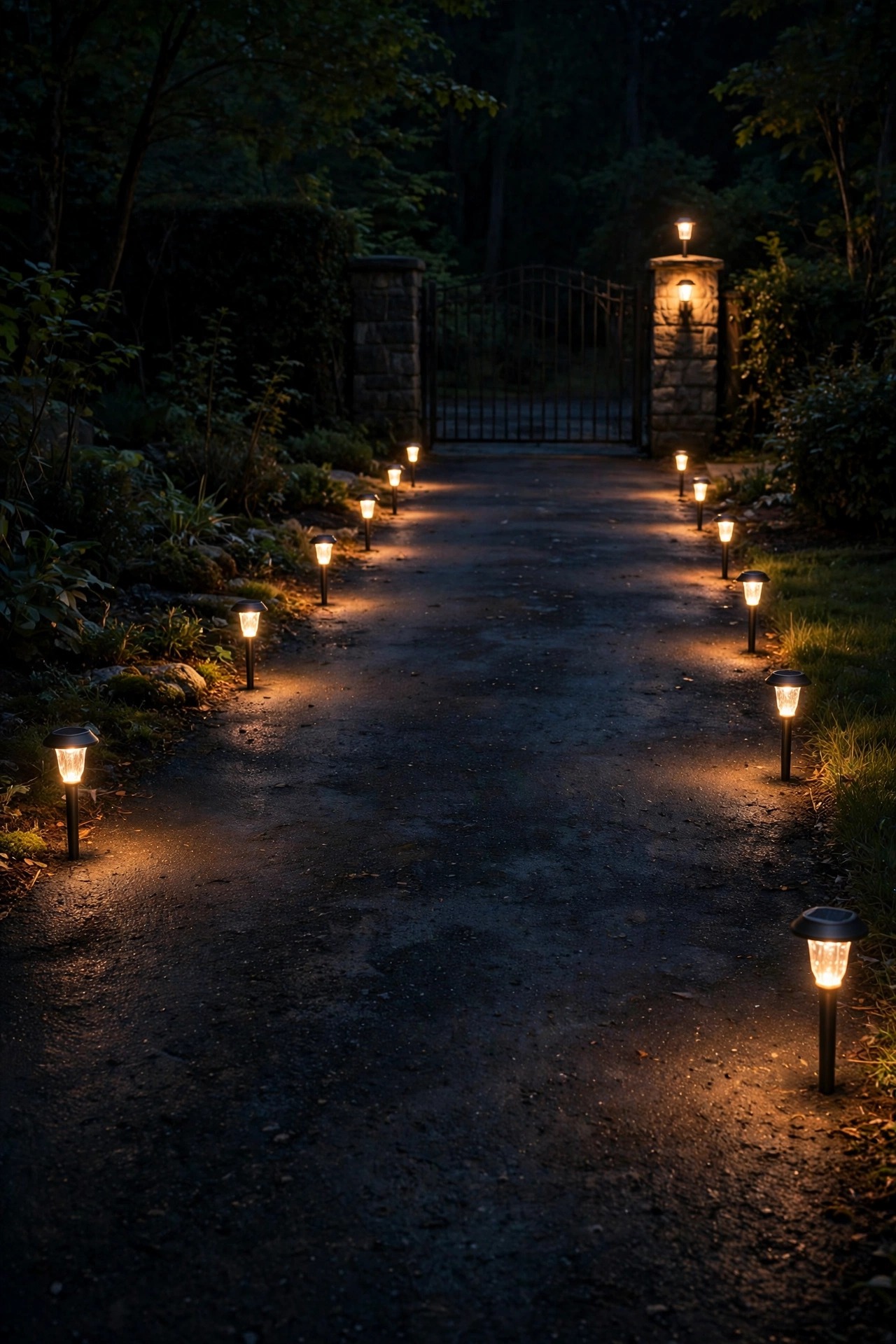
11. A Solar House Number Light So Help Can Find You
Every outage plan forgets the same thing: addresses disappear in the dark. A solar illuminated house number keeps yours readable from the street through the whole night, which matters most on the worst night — when you have called for help and someone is driving a blacked-out street counting mailboxes. Look for numbers at least 4 inches tall in a clear, bold font, and mount the sign where headlights actually sweep it, near the street or on the front wall by the door. The little panel needs a few hours of real sun, so resist the shady spot under the porch roof. Pair it with the entry sconce from earlier on this list and your house becomes the easiest one on the block to find, outage or not. If your number lives on a mailbox instead of the house, the same trick works there — several models are sized exactly for a mailbox post.
Suggested budget range: $18 – $45.
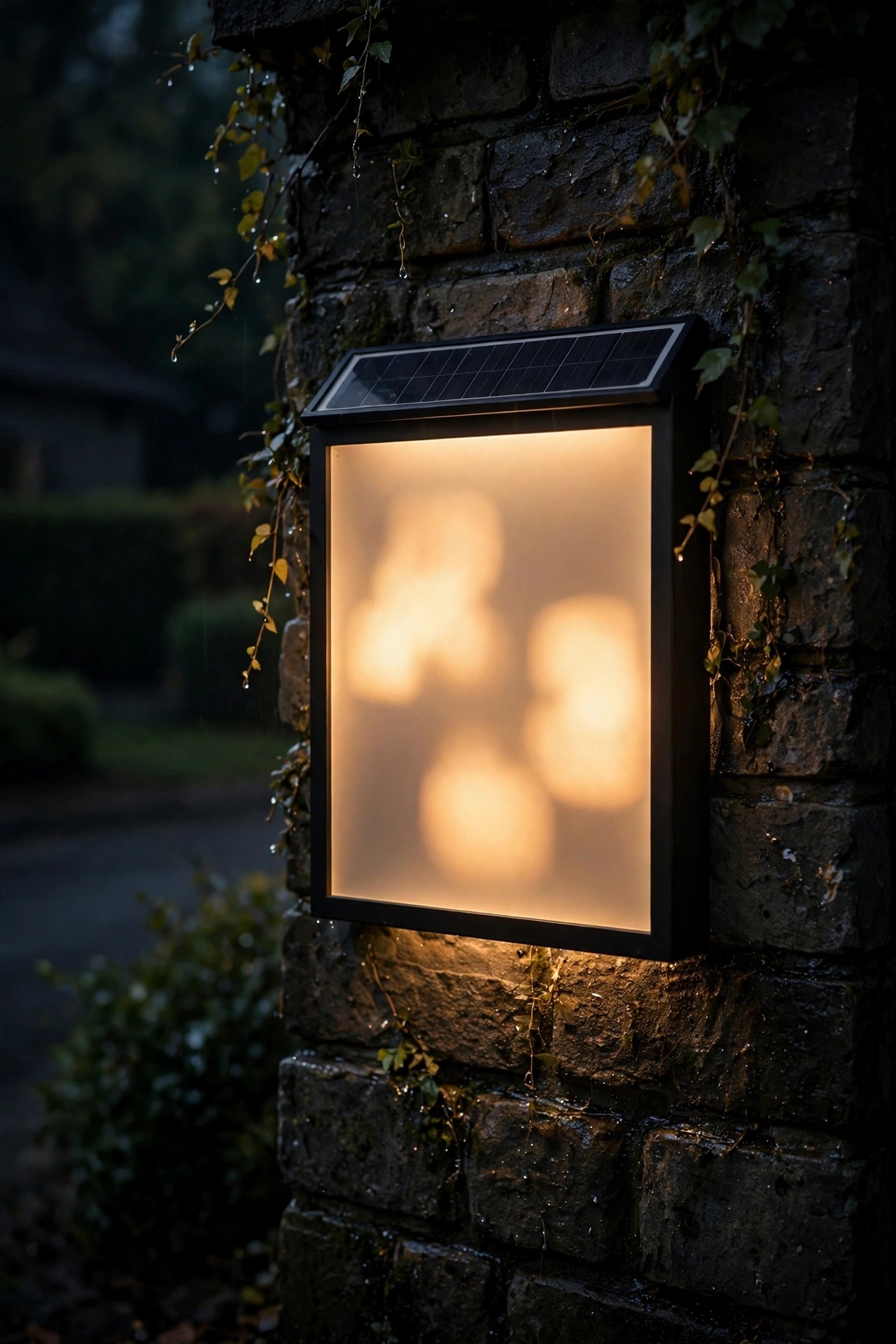
12. Collapsible Solar Lanterns Stashed in Every Room
These little pop-up lanterns are the bridge between your outdoor plan and the indoor one. They store flat in a drawer, charge on a sunny windowsill or the porch rail, and open into a soft globe of light that is perfect for a hallway, a bathroom, or a nervous kid's bedroom. Many models double as a small power bank with a USB port, enough to top up a phone for an emergency call. I keep one in every bedroom drawer and two in the kitchen. On day two of a long outage, the whole fleet goes out to the porch rail at breakfast to recharge — a habit the kids now run without being asked. They are not bright, and they are not trying to be; they are calm, safe, carry-anywhere light that never runs out of fuel. Their soft glow is also a reading light that will not keep a whole room awake, which parents appreciate by night three.
Suggested budget range: $10 – $25.

13. A Solar Power Bank Station: Outdoor Lighting for Power Outages That Lasts Past Night Two
Every light on this list eventually needs a refill, and this is the refill station. Mine is simple: a large power bank, 20,000 mAh or more, plus a small folding solar panel, living in a porch-side basket by day and coming in at night. On a sunny afternoon the panel tops up the bank, and the bank tops up lanterns, headlamps, and phones in rotation. This one habit is what separates a home that copes for a single dramatic night from a home that stays calmly lit through a three-day outage. Keep the charging cables corralled in the same basket so nobody is hunting for the right cord in the dark. Rotate deliberately — phones first for communication, then the door lanterns, then everything else. It is the least glamorous item here and, honestly, the one I would replace first. Label each cable with a bit of tape while the lights are still on, and future-you will be grateful.
Suggested budget range: $30 – $90.

Frequently Asked Questions
How long do solar lights actually stay on during a winter outage?
Expect less than the box promises. In summer, a decent solar path light runs 8 to 10 hours; in December, with short days and low sun, 4 to 6 hours is more realistic, and cloudy storm days can cut charging in half. That is exactly why this list layers motion-triggered floods, which sip power, over dusk-to-dawn accents. Wipe the panels clean, angle them toward the midday sun, and bring accent lights inside by day two of a long outage so the security layer keeps its charge.
Are solar lights bright enough to handle security during a blackout?
The right ones, yes. A solar motion floodlight at 1,000 lumens or more lights a driveway as well as a wired fixture for the seconds it matters, and motion activation means it is always ready. What solar cannot honestly do is flood a whole yard all night — the battery math does not work. Pair one strong motion flood with steady low markers at the doors and driveway, and you get real deterrence: a dark, calm yard that erupts into light the moment someone steps into it.
Can I leave backup lights outside charging all year?
Mostly, yes — that is the point of them. Solar fixtures with an IP65 rating or better handle rain and snow fine, and leaving them in place means they are charged and ready without any scrambling. Two habits help: swap rechargeable cells every two or three years before they fade, and bring lithium power banks and lantern batteries indoors during extreme heat or deep cold, since both shorten battery life. If a fixture turns patchy or dim, my solar lights not working fixes walk through the quick checks before you replace anything.
What is the safest light to use around a generator?
A battery LED work light or a headlamp — nothing with a flame, ever. Set the light on a tripod or hook several feet from the generator, run the generator at least 20 feet from the house with exhaust aimed away from windows, and let it cool fully before refueling by that same steady LED light. Keep fuel cans stored far from both the generator and any heat source. Add a battery-powered carbon monoxide alarm inside the house nearest the generator side; on outage nights it is the most important safety device you own.
Conclusion
Good outdoor lighting for power outages is not really about buying thirteen new things. It is about noticing that the lights you already love — the solar floods, path lights, and sconces — never needed the grid at all, then filling the gaps on purpose: safe steps, a lit door, a findable driveway, honest task light at the generator, and a way to recharge it all on day two. Egress first, task second, ambience last. Test your setup twice a year, once before storm season and once before the holidays, and replace tired batteries while the sun is shining and the stores are open. If this list has you rethinking your whole yard after dark, browse the site for more evening ideas — a home that glows through a blackout usually glows beautifully every other night too.