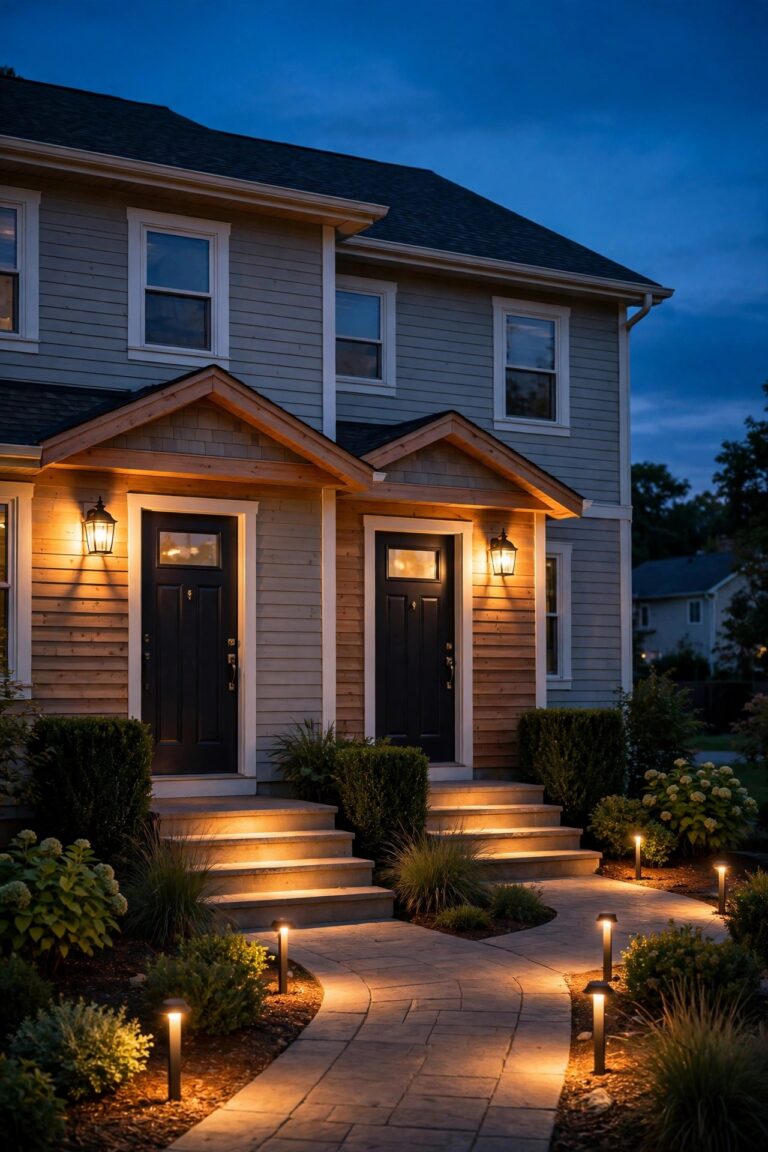
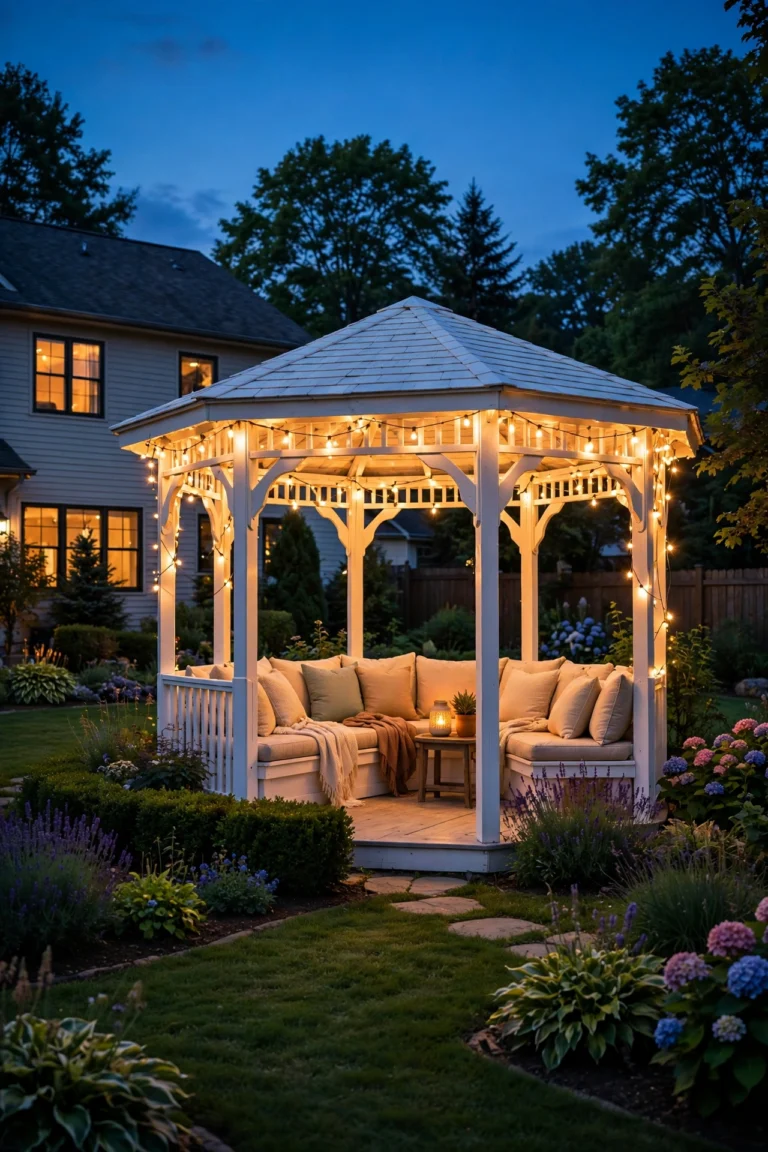
Stand in the lighting aisle long enough and you will watch someone hold up two nearly identical path lights, squint at both boxes, and ask the question this whole guide answers. When you compare battery vs solar outdoor lights, you are really choosing who refills the tank: you, with fresh cells from the kitchen drawer, or the sun, with whatever yesterday's weather happened to deliver. In my yard, wire-free lights are the gap fillers in a layered plan. The wired fixtures carry the porch and the main walk, and these two families handle everything the wiring could not reach: the side gate, the shed, the shady corner bed, the steps down to the patio. Honestly, neither one is better. They fail in opposite ways, and that is exactly what makes the choice easy once you see it clearly. Below, I compare them on the three things that decide real life with these lights — runtime you can count on, what they cost over the years, and plain day-to-day convenience — plus brightness, cold weather, and waste, so you can match every light in your yard to the power source that suits its job.

The Short Answer
Short version: battery lights give you full brightness anywhere, on demand, for as long as the cells last — weeks for dusk-to-dawn use, months for a motion light — and then they stop until you swap in fresh ones. Solar lights cost nothing to run and ask nothing of you, but their brightness and runtime rise and fall with the sun, and they fade in shade and in December. USB-rechargeable lights split the difference. Most yards I know end up hybrid: solar sparkle where the sun is free, battery certainty where the dark actually matters.
How Each One Stores Its Power
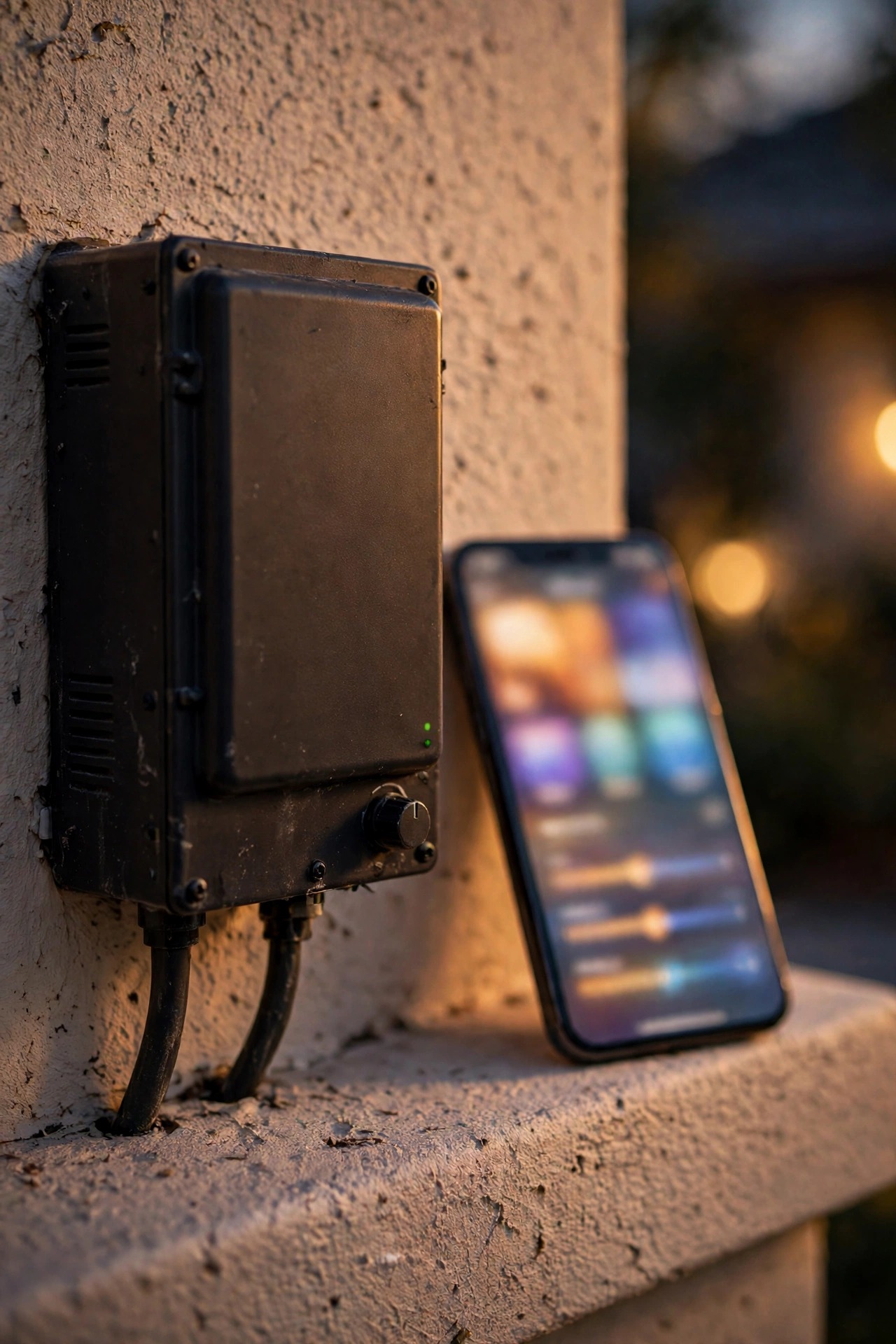
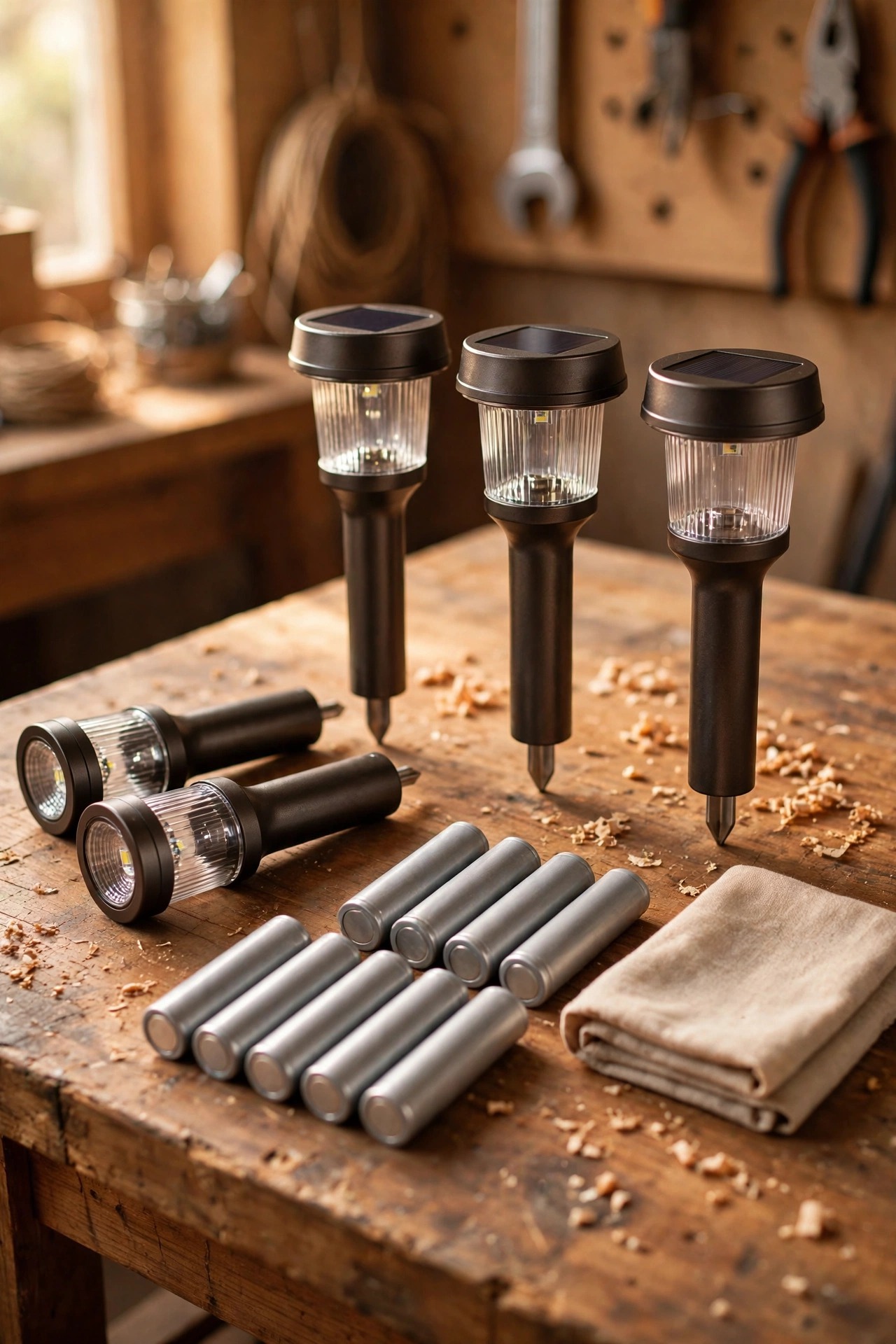
A battery light is a flashlight with better manners. It holds a fixed store of energy — disposable alkaline cells or rechargeable ones — and an LED sips from that store at a steady rate. The brightness is set by the fixture, and it stays the same on night one and night forty, right up until the store runs dry. The only real variables are cell size and how many hours a night the light runs. A lantern sipping from large cells and a tiny stake light nibbling at a single small one live in different runtime worlds, even at the same brightness.
A solar light is a tiny power plant. A small panel gathers a few watt-hours on a good day, parks them in a rechargeable cell about the size of your thumb, and a light sensor spends that charge after dark. The panel is the bottleneck in the whole system: its size, its angle, and the hours of direct sun it actually sees decide everything downstream. That is why two solar lights with identical bulbs can perform completely differently in two different yards.
Under the housing, both families are the same animal — low-voltage DC power feeding an LED. The difference is purely logistical: who refills the tank, on what schedule, and at whose convenience.

Runtime You Can Count On: Battery vs Solar Outdoor Lights
Runtime is where these two families behave most differently, and it is the first thing I ask about any wire-free light. A battery motion light at a gate might fire twenty times a night for ten seconds each — that is barely three minutes of work, and a set of cells can carry it for three to six months. Run that same fixture dusk to dawn instead and the math collapses: a full night, every night, drains a set in one to four weeks. The upside is honesty. The light is exactly as bright at 2 am as it was at 8 pm, until the very end, when it falls off a cliff.
Solar runtime is a weather report. After a clear June day, a decent stake light glows for eight to ten hours — but it spends its charge unevenly, brightest in the first hours and visibly dimmer by 3 am. One cloudy day can halve the night that follows, and a string of gray days compounds. USB-rechargeable lights are the middle path I recommend most: charge one in the kitchen for a couple of hours and you get three to ten full nights, depending on the mode, with brightness you chose rather than brightness the sky allowed.
So the runtime question is never "how long does it last?" It is "do you need this light at dusk, or do you need it at 2 am?" Answer that and the family picks itself.
Brightness Ceilings: Bursts vs Glow
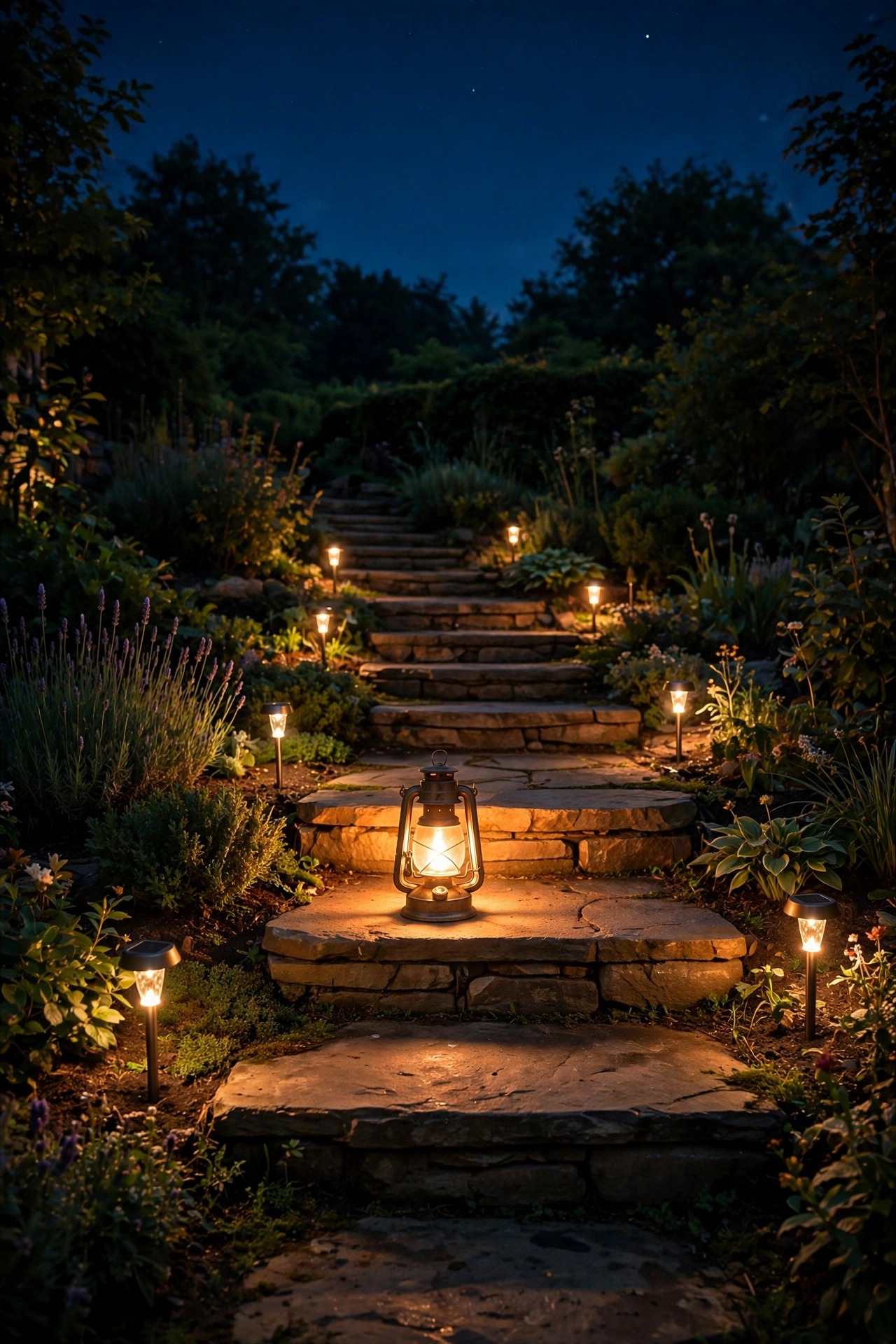
Battery lights can be genuinely bright, because the energy was stored in advance and can be spent fast. A battery motion flood running on larger cells or a lithium pack can throw 500 to 1,500 lumens — real, read-a-label, see-a-face brightness. Even a modest battery lantern holds a steady 100 to 300 lumens all evening without breaking a sweat.
Solar lights live under a stricter budget. A palm-sized panel gathers only a few watt-hours on the best day of the year, so the fixtures are designed around thrift: most solar accents produce 5 to 50 lumens, which is a glow, not illumination. The better solar spotlights reach 100 to 300 lumens for the first part of the night, and motion floods spend their reserve in bright bursts precisely because they cannot sustain it.
Neither ceiling is a flaw. A garden bed wants a whisper of light that shows the shape of a hosta; a set of deck steps wants a decisive pool you cannot misread with your arms full of grocery bags. Just know which job you are buying, because a solar accent asked to do a flood light's job will disappoint you every single night.

Convenience and Placement Freedom
Battery lights go anywhere, and I mean the places that defeat every other kind of light: the north wall that never sees the sun, the deep shade under the maple, inside the shed, under the deck stairs, beneath a porch roof so thick the noon sun gives up. If a spot is dark, a battery light can light it tonight, in five minutes, with no regard for yesterday's weather. That freedom is why renters and event hosts love them — full brightness on the one night that counts.
The price of that freedom is a recurring chore. Cells run out on their own schedule, usually announced by a dead light at the worst moment, and someone gets the ladder, the cold fingers, and the junk drawer archaeology. Spread ten battery lights around a yard and the swaps stop feeling occasional.
Solar flips the bargain. You stake it, angle the panel, and forget it for months — no drawer, no ladder, no schedule. But the placement is locked to five or six hours of direct sun, which rules out exactly the shady corners people most want lit. In my experience, convenience is not about which light is easier. It is about which inconvenience you would rather live with: feeding a light, or moving it to where the sun can.
Cold Weather: Where Both Struggle, Differently
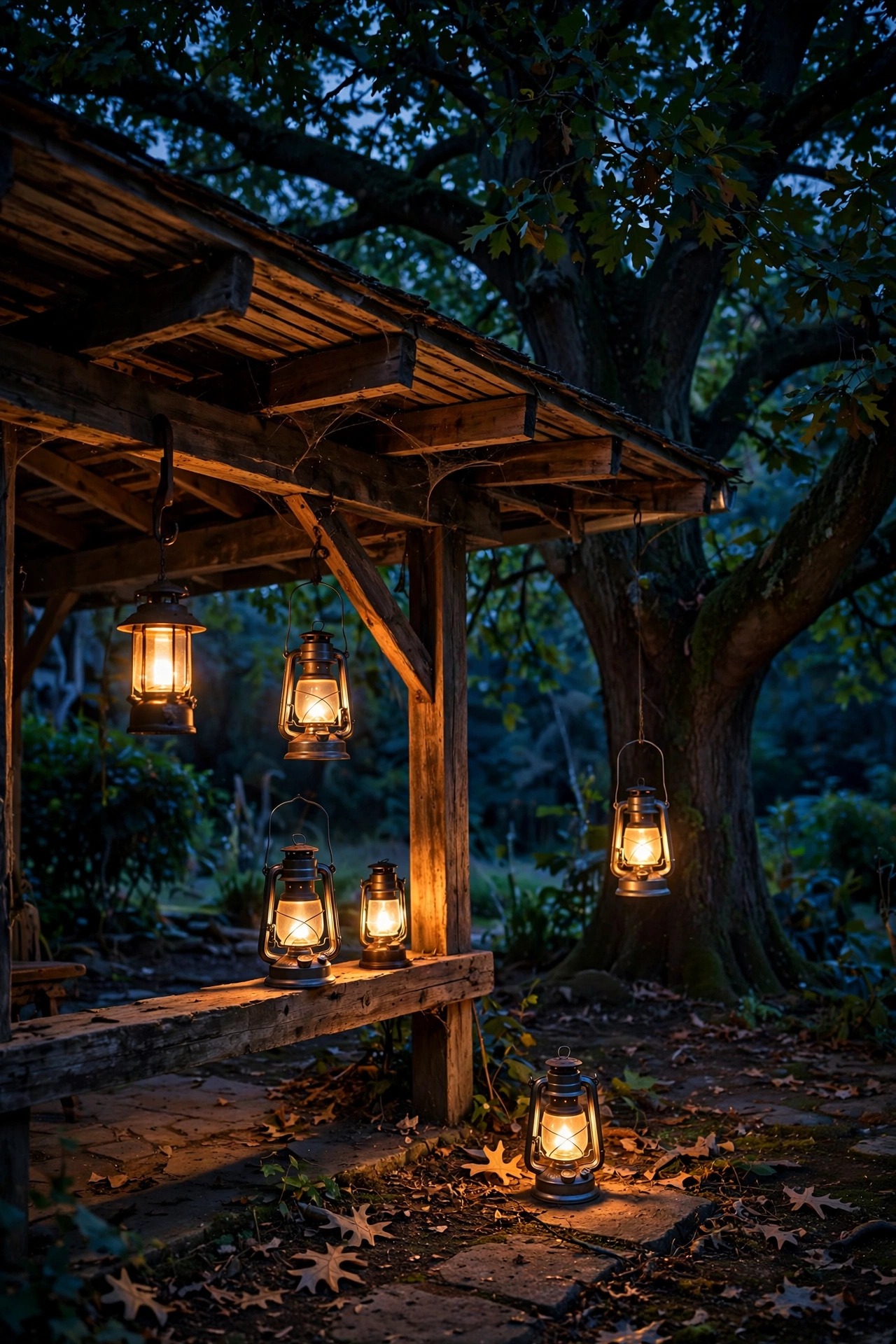
Winter humbles both families, just in different ways. Alkaline cells sag badly in the cold: at 20 degrees, an alkaline can deliver only about half its room-temperature capacity, the voltage droops, and a light that was crisp in October looks tired by January. Lithium cells are the winter upgrade for battery lights — they hold their voltage in deep cold and are rated far below freezing, which is why the motion light over my garage wears lithium cells from November on.
Solar has the opposite calendar problem. December brings the shortest days, a low and lazy sun angle, and panels dusted with snow or frost — in northern states you may get three or four usable charging hours, and the light spends them by midnight. The cells inside solar fixtures also charge more slowly when they are cold, so a gray winter week can flatten even a good light.
Practical winter habits: lithium cells in any battery light that has to perform in January, a quick brush of snow off solar panels after a storm, and honest expectations on both sides. If a light absolutely must work on the coldest night of the year — a step, a gate latch, a icy walk — battery power with fresh lithium cells is the setup I trust.

Waste and Replacement Cycles
The waste story depends more on your habits than on the category. A battery light fed disposable alkalines produces a slow, steady trickle of dead cells — a motion light might eat three or four sets a year. Those cells can be recycled in many communities, though in practice most land in the kitchen trash. Switch the same fixture to rechargeable cells and the picture changes: a good set cycles hundreds of times and serves for years, and the fixture itself, being simple, lasts nearly forever.
Solar fixtures look waste-free, and the fuel certainly is. The catch is construction. The rechargeable cell inside a typical solar light fades after two or three seasons, and on sealed models the cell cannot be reached — so a perfectly good housing, panel, and LED go to the curb over one tired battery. Models with a little hatch on the underside break that cycle; replacing the cells in a solar light takes five minutes and costs a fraction of a new fixture.
My rule when buying either family: if I cannot replace the part that wears out — the cell — I assume I am buying the whole light again in a few years, and I judge the price accordingly.

The Best Jobs for Battery Lights
Battery power wins wherever light is occasional but must be certain. The classic case is the motion light: brief, bright, and triggered a handful of times a night, which is why a battery motion light at a side gate or shed door can run for months on one set of cells. Our guide to motion sensor outdoor lights covers placement and aiming if you go that route — the battery versions follow the same rules, minus the wiring.
Steps are the second great battery job. A slip on a dark stair happens at a specific moment, and you want full brightness at that moment, not whatever a cloudy Tuesday left in reserve. Battery step lights and rail lights deliver that, and because they burn so few hours, the cells last.
Then there are the nowhere-else spots: inside the shed, under the deck, along the fence line behind the garage where the sun has not visited since the house was built. Add holiday and party lighting — one night, high stakes, no second chances — and the battery résumé writes itself. If the light's job description includes the words "must work," battery is usually the answer.

The Best Jobs for Solar Lights
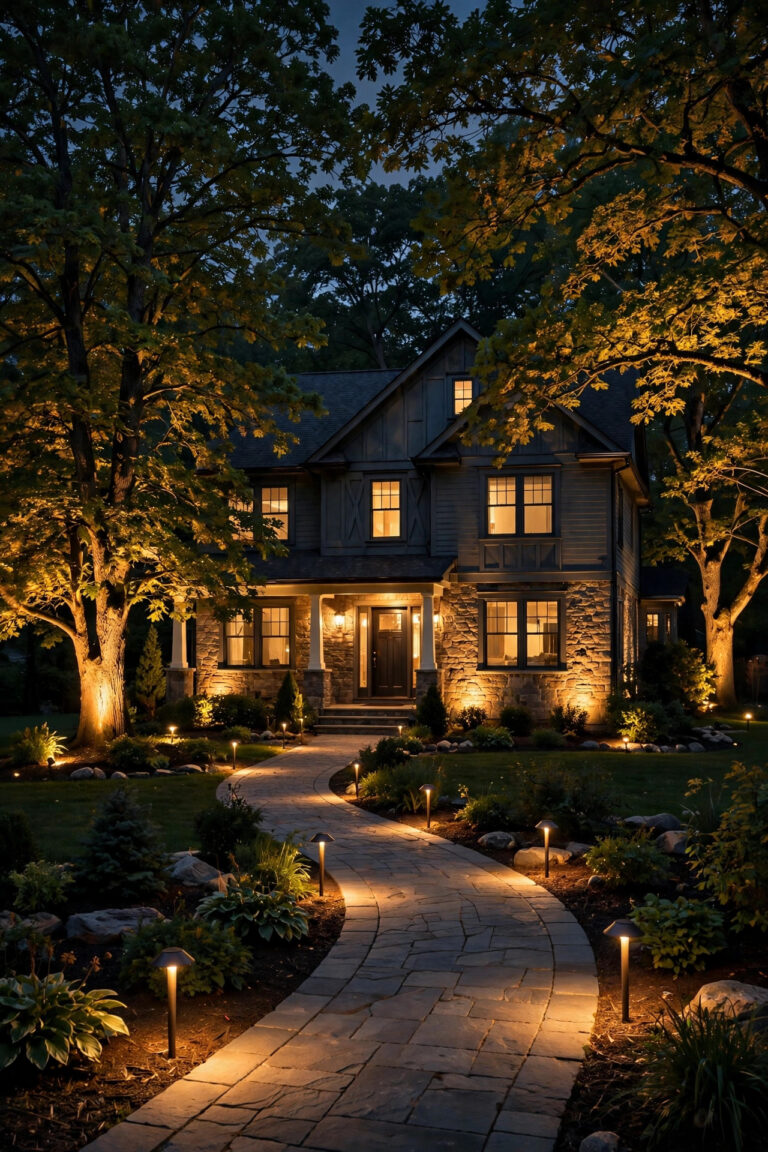
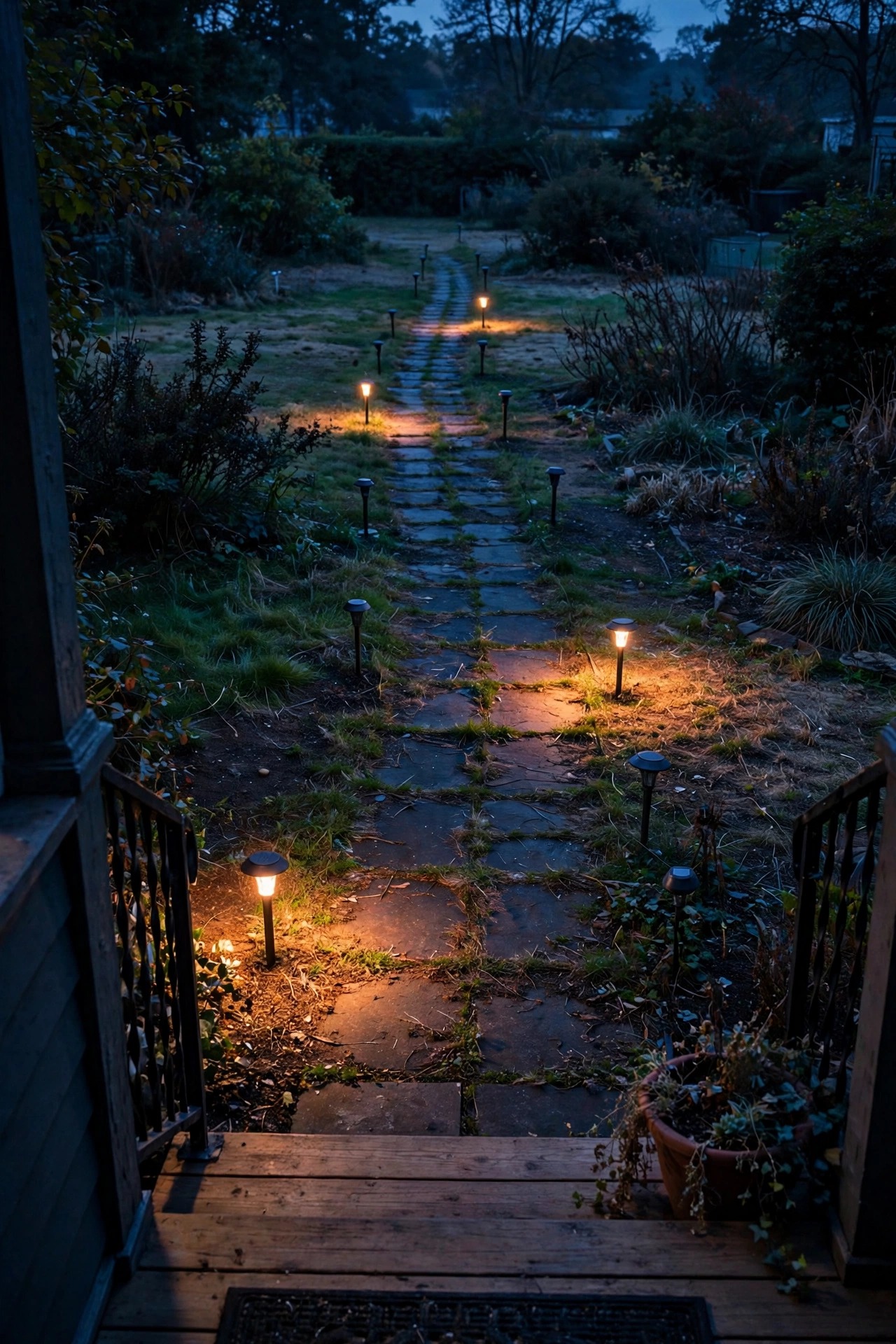
Solar power wins wherever the job is nightly, gentle, and sunlit. Path edges are the home turf: a line of solar stakes along a sunny front walk gives you that soft dotted rhythm that says "this way home," and asks for nothing all season. Our solar path lights guide walks through spacing and placement if you are planning a full run.
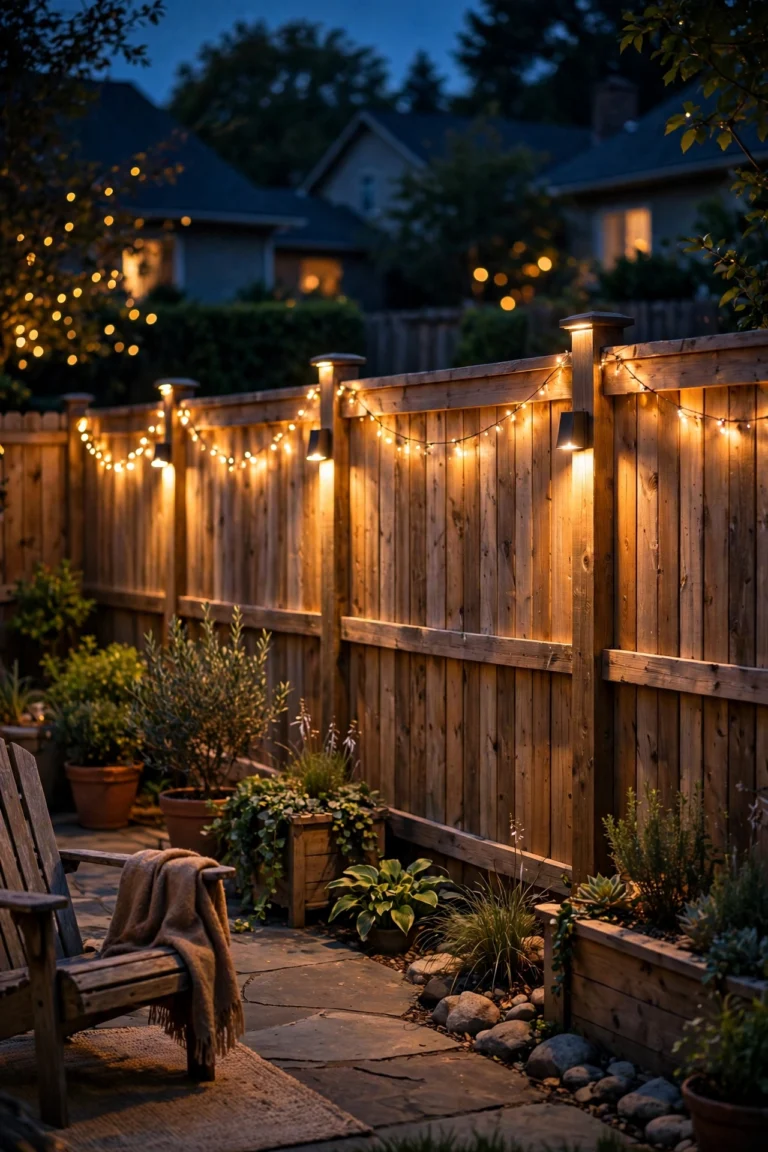
Garden accents are the second natural job. A low glow tucked into a flower bed, a fence cap washing the boards with light, a small spotlight lifting one ornamental grass — these reads are all about suggestion, and solar's modest output is a feature here, not a compromise. Too-bright bed lighting looks like a parking lot; solar keeps it hushed.
Long runs argue for solar too. Lighting a hundred feet of sunny fence or a winding garden path with battery stakes would mean a standing appointment with the battery drawer, while solar handles the whole line for free after the day you stake it. The condition is honesty about the sun: if the spot earns five or six hours of direct light, solar will quietly do its job for years. Give it that sun and it asks for nothing else, all season long.

What It Costs in 2026
Neither family touches your electric bill, so the honest ledger is fixtures, cells, and replacements. Battery fixtures run about $10 to $35 each — lanterns, motion lights, step lights — plus the cells that feed them. A motion light on four AA alkalines, swapped three times a year, costs roughly $8 to $12 a year to run; the same light on lithium AAs costs $14 to $18 a year in cells but lasts longer between swaps and shrugs off winter. The trap is the battery dusk-to-dawn stake: run one all night, every night, and disposables can reach $25 to $40 per light per year. USB-rechargeable fixtures cost $15 to $40 up front and then nearly nothing — a few cents of household electricity per charge.
Solar fixtures run $8 to $30 each, with multipacks bringing path stakes down to $3 to $5 a light. Where the cell is replaceable, budget $3 to $6 every two or three years; where it is sealed, budget a whole new $10 to $25 light on the same schedule.
Five-year totals per light tell the story: a solar accent lands around $12 to $35 all-in, a battery motion light around $35 to $70 with lithium cells, and a battery light used dusk to dawn can pass $150 in disposables alone. Your time counts too — price the swaps you will actually enjoy doing at zero, because you will not do the others.
5 Mistakes That Waste Money
1. Battery stakes along a long path. A dusk-to-dawn load is the hungriest job there is, and lining a twenty-light path with battery fixtures signs you up for hundreds of cell swaps a year. Solar owns sunny paths; wiring owns shady ones.
2. Solar where 2 am matters. Steps, locks, and security spots need certainty at the worst hour, and solar is at its dimmest exactly then. Buy solar for the evening show, battery for the night watch.
3. Mixing rechargeable chemistries. Nickel-metal-hydride and lithium rechargeable cells need different chargers and different charge profiles; swapping them into the wrong charger ruins cells and can be genuinely unsafe. Pick one chemistry per charger and label it.
4. Leaving alkalines in seasonal lights. A set left in a stored lantern over winter can leak and corrode the contacts, killing a good fixture for the price of a battery. Pull cells before anything goes in the garage.
5. Judging solar by June. Every solar light is a hero on the longest day of the year. Buy for December light levels — or accept the fade with your eyes open.
Every one of these mistakes is really the same mistake underneath: asking one family to do the other family's job, then blaming the light.
The Verdict: Battery vs Solar Outdoor Lights, Job by Job
Here is the split I actually use. Sunny accents, path sparkle, fence caps, garden glow: solar, every time — free fuel, no chores, and the softness suits the job. Shade, steps, gates, sheds, and anything with the words "must work" in its description: battery, ideally on lithium cells in winter, because certainty is the entire point. The growing middle — lanterns, deck lights, portable spots — increasingly belongs to USB-rechargeable fixtures, which give you battery-style placement freedom with a kitchen-counter refill. In practice that means one small drawer of charged cells by my back door — the entire maintenance program for half the yard.
The hybrid habit matters more than any single pick. Most yards I admire run solar where the sun is free and battery where the dark is serious, with every fixture matched to the same warm 2700 to 3000K color so the two families read as one plan instead of a yard sale. A small routine helps too: fresh cells in the security lights when the clocks change, a glance at the solar panels when you rake. Do that, and each technology quietly covers the other's weakness.
Frequently Asked Questions
How long do battery outdoor lights last on one set of batteries?
It depends entirely on the duty cycle. A motion light triggered a handful of times a night can run three to six months on one set. A lantern on a timer for four hours an evening might last a month. A dusk-to-dawn stake is the hungriest case at one to four weeks. Lithium cells stretch all of these numbers and hold up far better in cold weather.
Do solar lights work in winter and in the shade?
They work, but on a reduced budget. Short days and a low sun angle can cut runtime roughly in half, and snow on the panel stops charging until it is brushed off. True shade is the harder limit: a panel under a dense canopy or on a north wall may gather so little that the light glows for an hour and quits. For deep shade, choose battery or a solar model with a separate panel you can place in the sun.
Are rechargeable batteries worth it for outdoor lights?
For any light you use weekly, yes. A set of rechargeable cells costs more up front but cycles hundreds of times, so it pays for itself within the first year in a motion light or lantern and keeps paying for years. Keep one chemistry per charger, and for lights stored seasonally, rechargeables also avoid the leak-and-corrode problem that kills fixtures left with alkalines inside.
Which is better for security lighting?
Battery, and it is not close. A security light has one job — full brightness, instantly, at 2 am — and a battery motion light delivers that on its worst day. A solar motion light in a sunny spot makes a decent second layer, but its burst brightness depends on how the day went. Put the battery light on the gate, the garage, and the side door, and let solar handle the pretty parts.
Conclusion
The sun is a wonderful fuel source and an unreliable employee; a battery is certainty you keep in a drawer. Once you see battery vs solar outdoor lights as two different promises rather than two competing products, the shopping gets easy: solar for the glow you enjoy, battery for the light you depend on, and rechargeables wherever the two meet in the middle. Layer them the way you layer the rest of the yard — something for the work, something for the welcome, something just for the beauty of it — and browse the rest of our outdoor lighting ideas here when you are ready to plan the next corner.