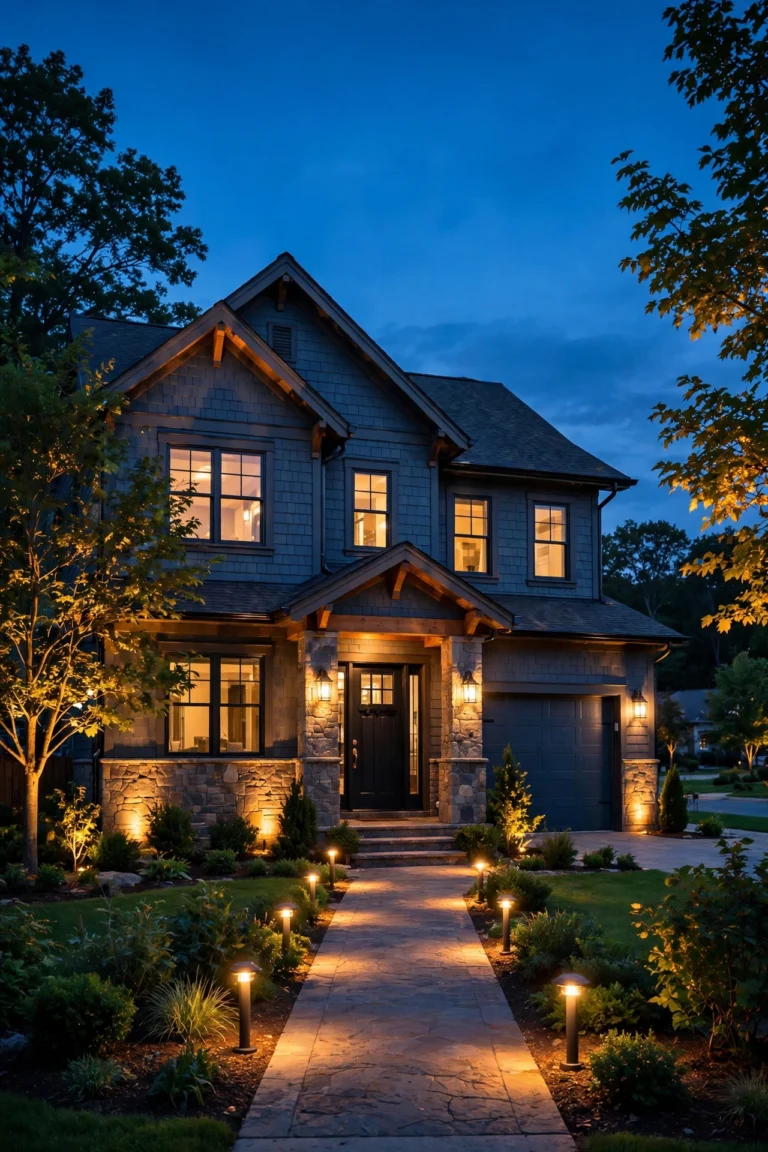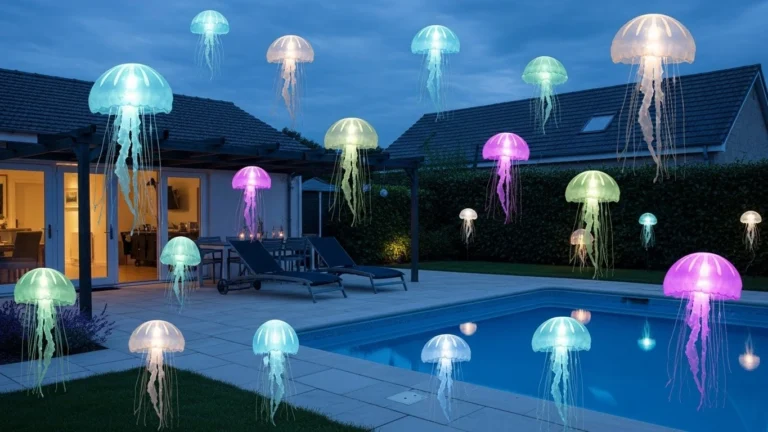
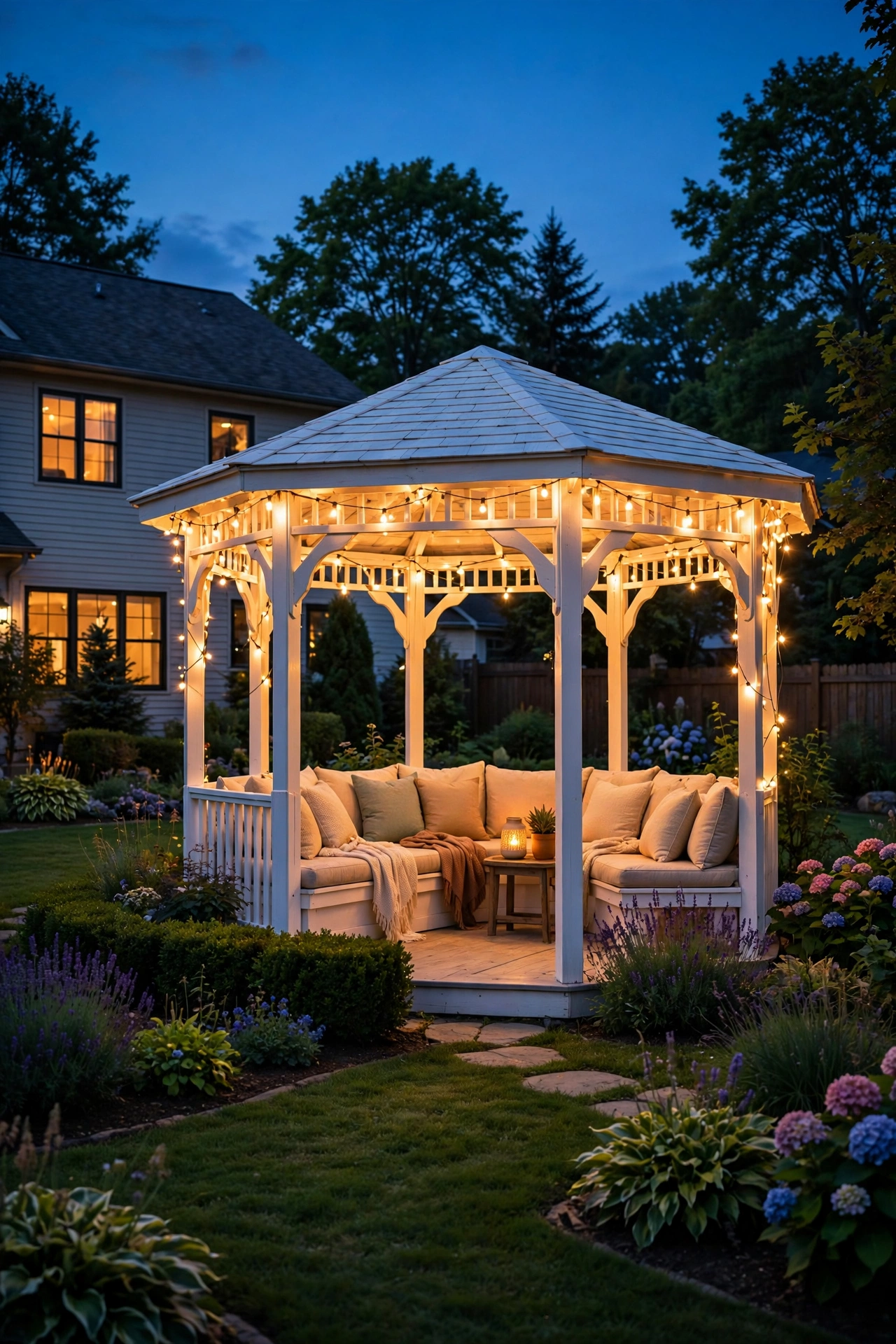
There's something almost magical about a gazebo once the sun goes down. During the day it's just a pretty structure in the yard — but add the right lighting and it becomes the room everyone wants to be in: glowing, cozy, a little bit romantic. If you're searching for gazebo lighting ideas that actually work in a real backyard (not just a styled photo shoot), I've got you covered. In my experience, the difference between a gazebo that sits empty after dark and one that hosts every summer dinner party comes down to three things: layers of light, warm color temperature, and fixtures rated for the outdoors. I've strung, screwed, clipped, and solar-powered my way through every option below, so you don't have to guess. Most of these ideas take an afternoon or less, work with a standard 10×10 or 12×12 gazebo, and scale up or down depending on your budget. Grab a cup of coffee and let's find the look that makes your backyard feel like a retreat.
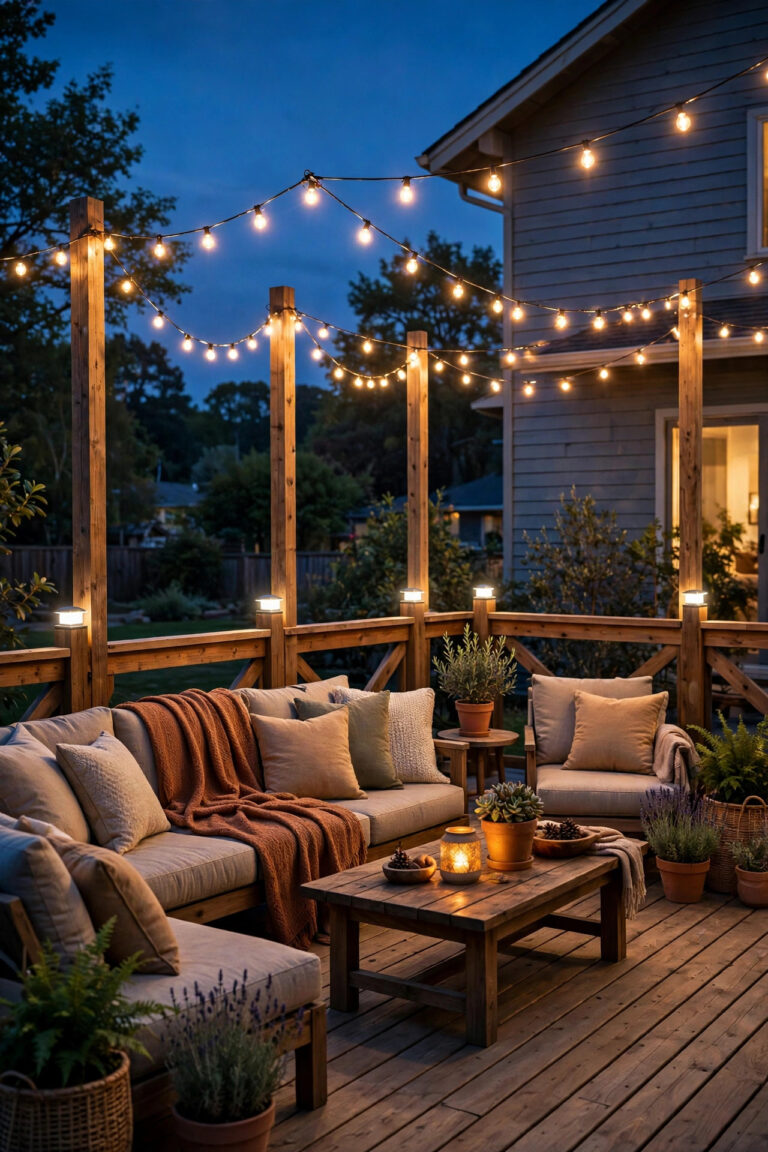
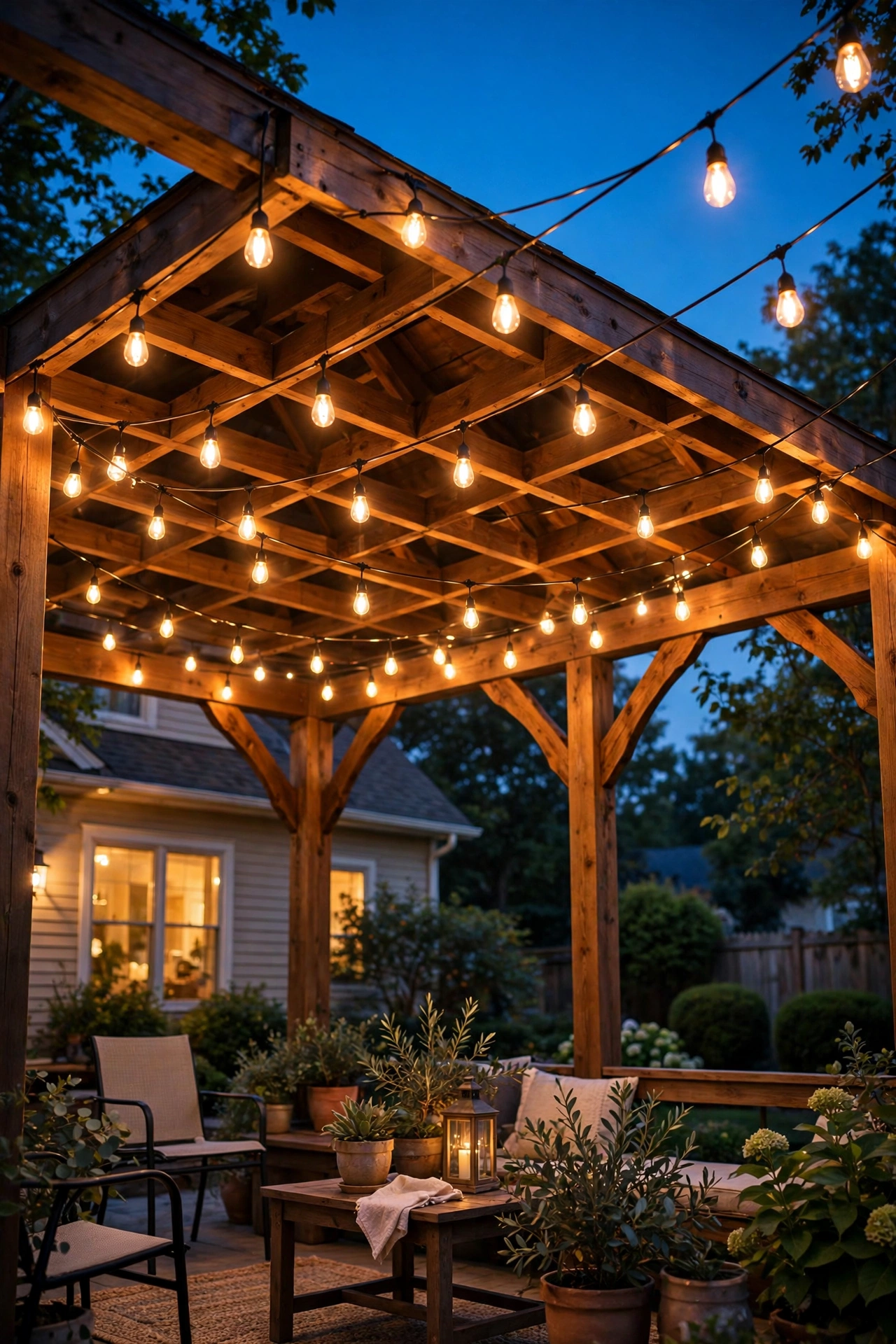
1. String Light Canopy Overhead
Nothing says "backyard retreat" faster than a canopy of string lights overhead. This is the classic for a reason: it fills the whole ceiling plane with warm, even light and makes the gazebo feel like a tent at an outdoor wedding. I always recommend commercial-grade LED string lights with shatterproof bulbs — they sip electricity and survive hail, wind, and the occasional ladder bump. For a 10×10 gazebo, plan on 2–3 strands of 48 feet each, draped in parallel rows or a zigzag from the center peak to each corner. Space your support points every 3–4 feet using cup hooks or cable ties on the rafters, and never staple or nail through a wire. Keep the sag gentle — about 6–8 inches between supports — so rain runs off instead of pooling. Use only lights rated for outdoor (wet-location) use, and plug into a GFCI-protected outlet. A simple plug-in timer means they glow on at dusk without you thinking about it.
Suggested budget range: $40 – $120.
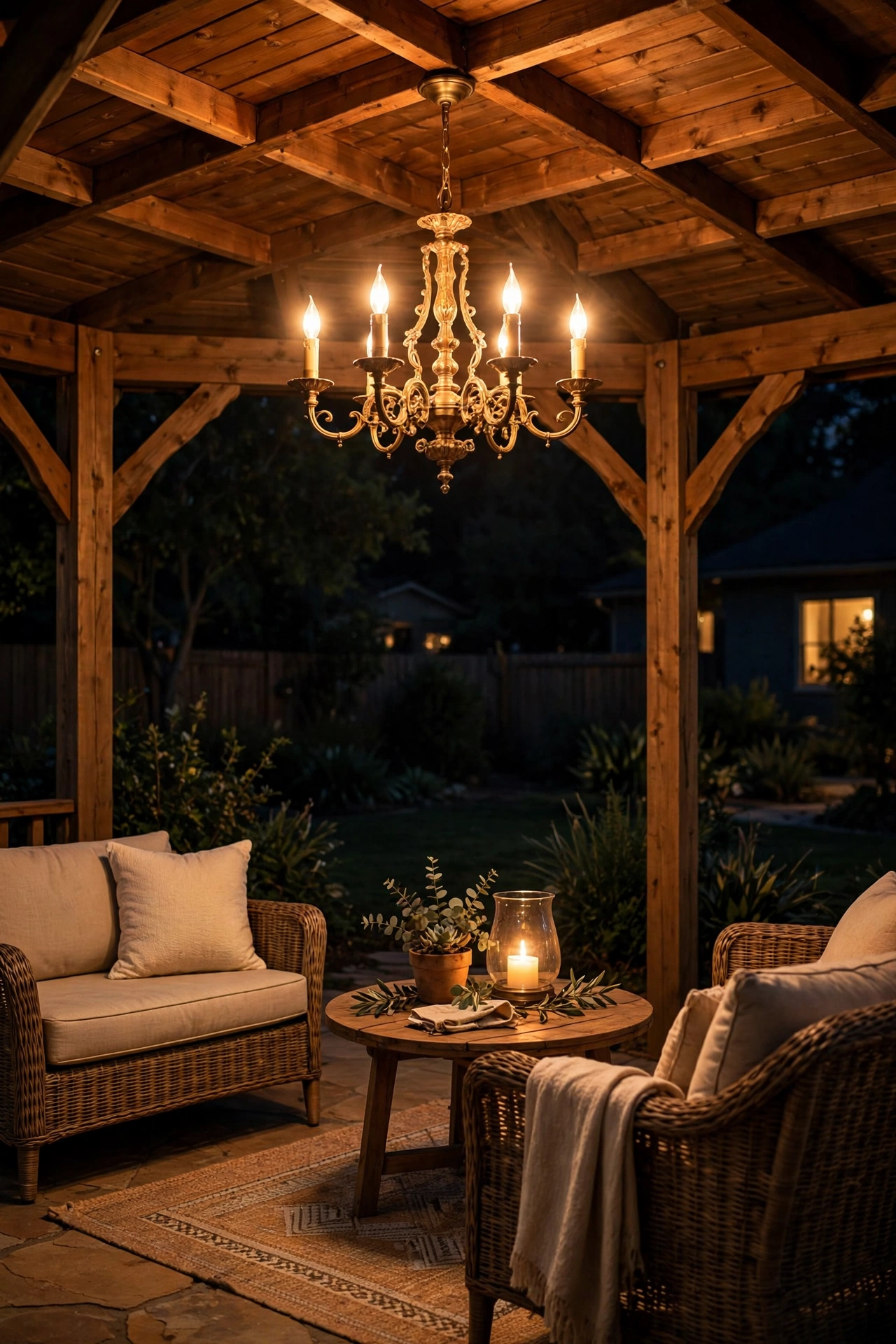
2. The Statement Chandelier — My Favorite Gazebo Lighting Idea
Of all the gazebo lighting ideas I've tried, hanging a chandelier is the one that makes guests gasp. It sounds fancy, but an outdoor-rated chandelier or a cluster of pendant shades on a single canopy turns a basic gazebo into an outdoor dining room. Look for fixtures labeled for damp or wet locations — a porch or gazebo ceiling counts as damp at minimum. LED filament bulbs keep it cool to the touch (important near fabric curtains) and give you that golden 2700K glow. Hang it so the bottom of the fixture sits about 7 feet off the floor — high enough to walk under, low enough to feel intimate. Most chandeliers weigh 10–20 pounds, so anchor into a solid rafter or install a rated ceiling hook, never just the thin roof panel. If your gazebo has a power source, hardwiring through a weatherproof junction box is cleanest; otherwise a plug-in swag cord run discreetly along a rafter works beautifully.
Suggested budget range: $80 – $300.
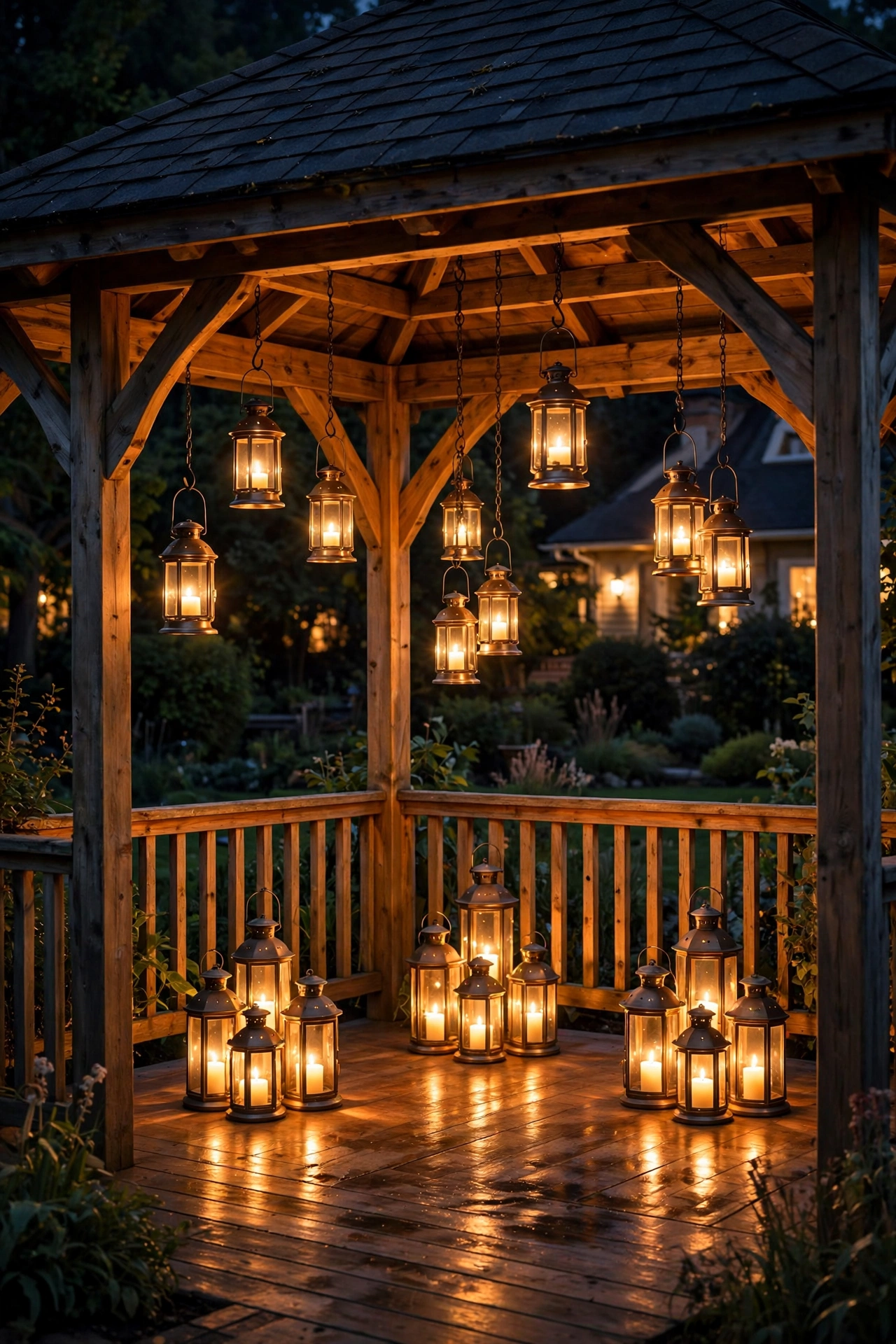
3. Lantern Clusters on the Posts
Lanterns are my go-to for instant charm with zero wiring. Hang a trio of metal or woven lanterns at staggered heights from shepherd's hooks, or set large hurricane lanterns on the gazebo's railing corners. I always recommend LED flameless candles inside rather than real flame — they flicker convincingly, run 300+ hours on a set of batteries, and can't blow over in a storm or singe a curtain. Cluster them in odd numbers (threes and fives look best) and vary the heights by 6–12 inches for that effortless, collected look. For hanging lanterns, use S-hooks on the gazebo's cross beams and keep them at least a foot away from any fabric or greenery. On windy nights, the enclosed glass styles stay lit and steady when open-top lanterns would be dancing around. This is also the easiest idea to refresh seasonally — swap candle colors or add a few pinecones in fall.
Suggested budget range: $30 – $90.
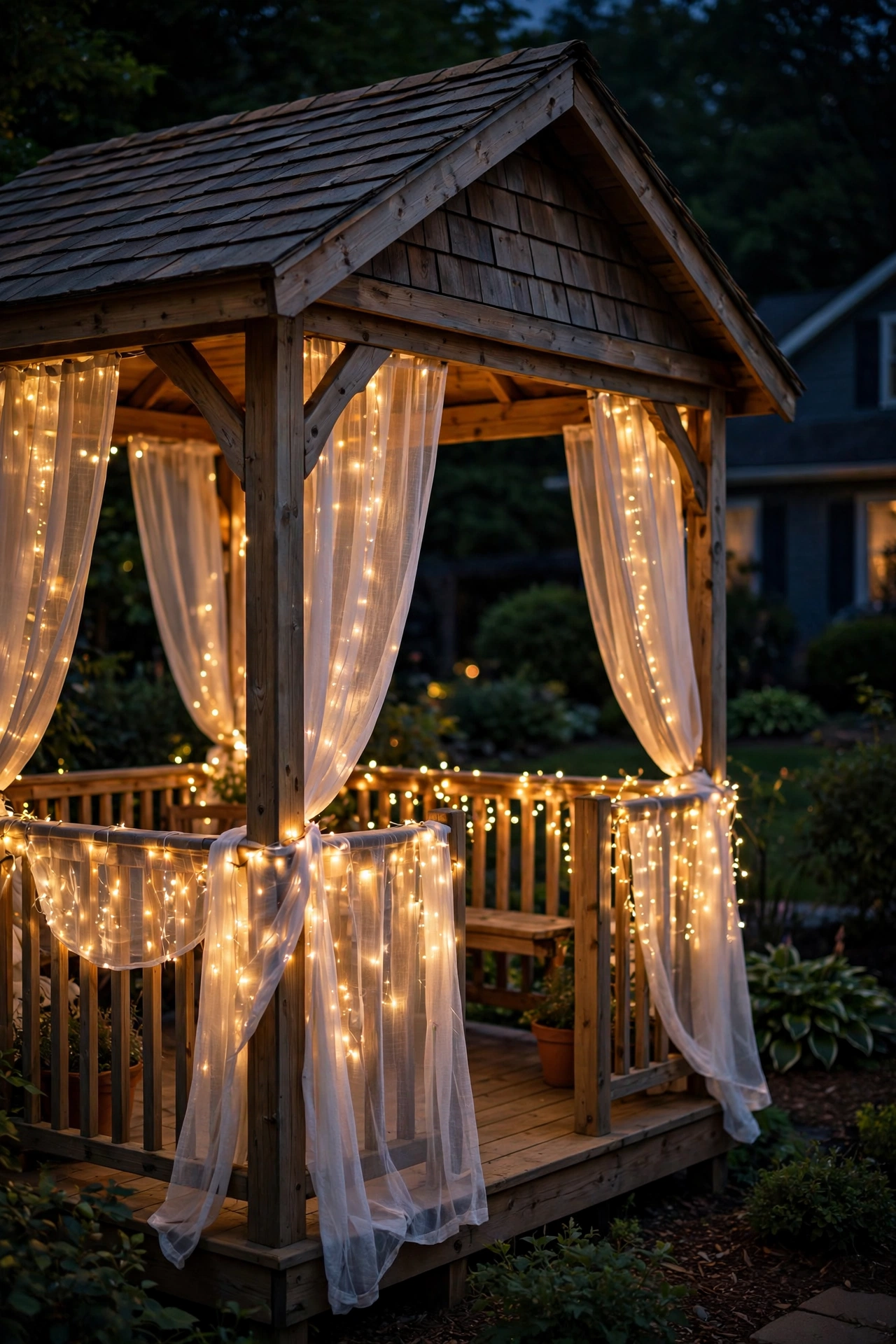
4. Draped Light Curtains on the Sides
Light curtains turn the open sides of your gazebo into glowing walls of sparkle. Hang 10-foot curtain light panels from the top rail on two or three sides, letting them fall straight or tying them back with ribbon for a draped effect. In my experience, this works best on gazebos that face the street or neighbors — the curtains give you privacy and glow at the same time. Choose outdoor-rated LED curtain lights on a clear or warm-white wire, and secure the top edge with curtain clips every 12 inches so wind can't tear them loose. Keep the bottom of the curtain 2–3 inches off the deck or ground so they don't sit in puddles. Pair them with sheer outdoor curtains for a double layer of magic, but remember the LED-only rule near fabric: LEDs stay cool, so they're the only safe choice when lights touch or hang near curtains. A plug-in timer with a dusk sensor handles the rest.
Suggested budget range: $35 – $100.
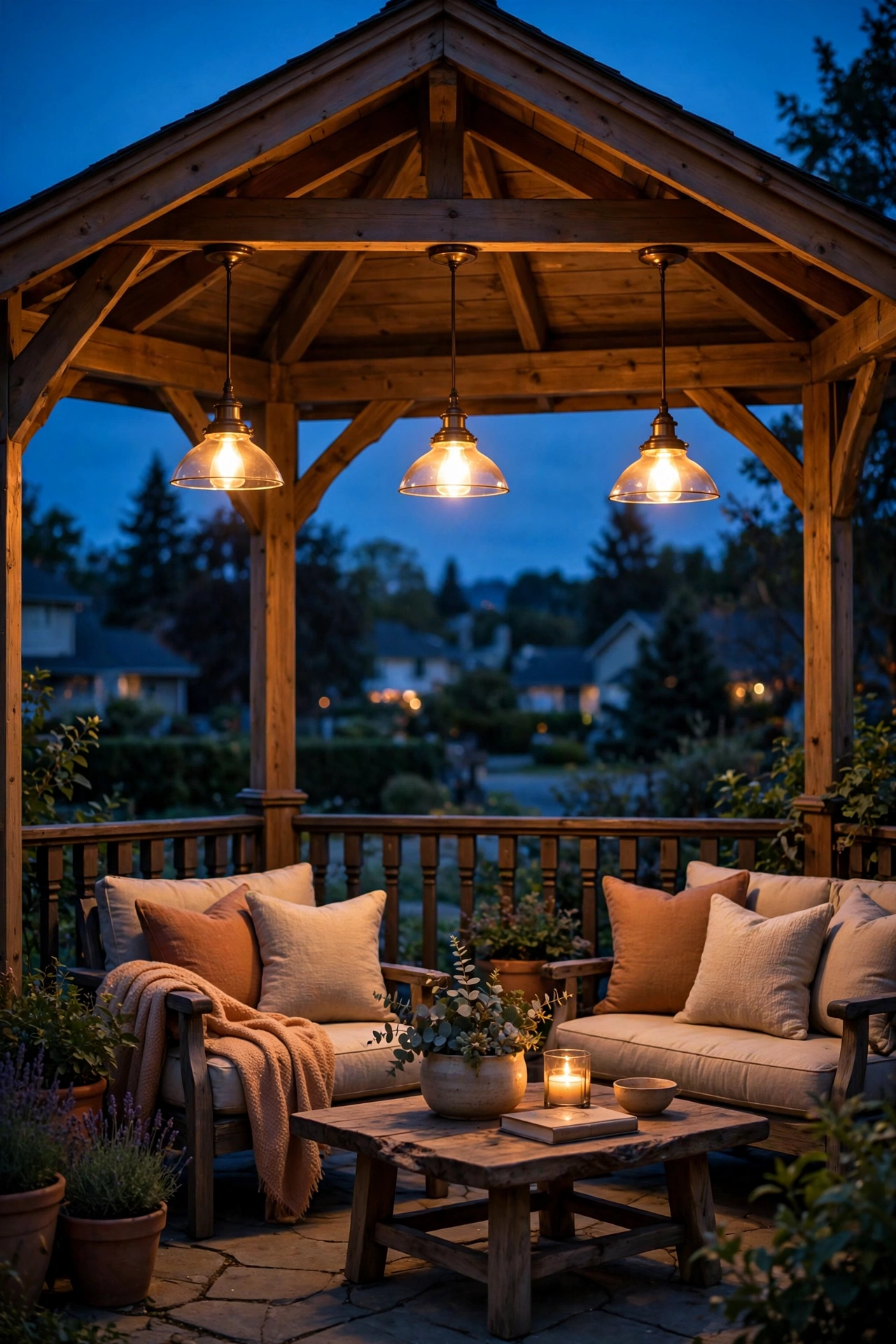
5. Statement Pendant Lights Over the Seating
If your gazebo centers on a dining table or a conversation set, hang one pendant — or a row of two — directly over it. This is the same trick interior designers use: a defined light source anchors the furniture arrangement and makes everything beneath it feel intentional. Outdoor-rated pendants with seeded glass or rattan shades are gorgeous and on-theme for a garden setting. Hang them 30–34 inches above a dining table surface, or about 7 feet off the floor over a lounge area. Use a plug-in pendant cord kit with an outdoor-rated cord if you don't have a ceiling box — just route it neatly along a rafter with cable clips. Warm-white LED bulbs (2700K–3000K) keep faces flattering and food looking delicious. In my experience, one pendant per 4–5 feet of table length gives even coverage without dark spots.
Suggested budget range: $50 – $160.
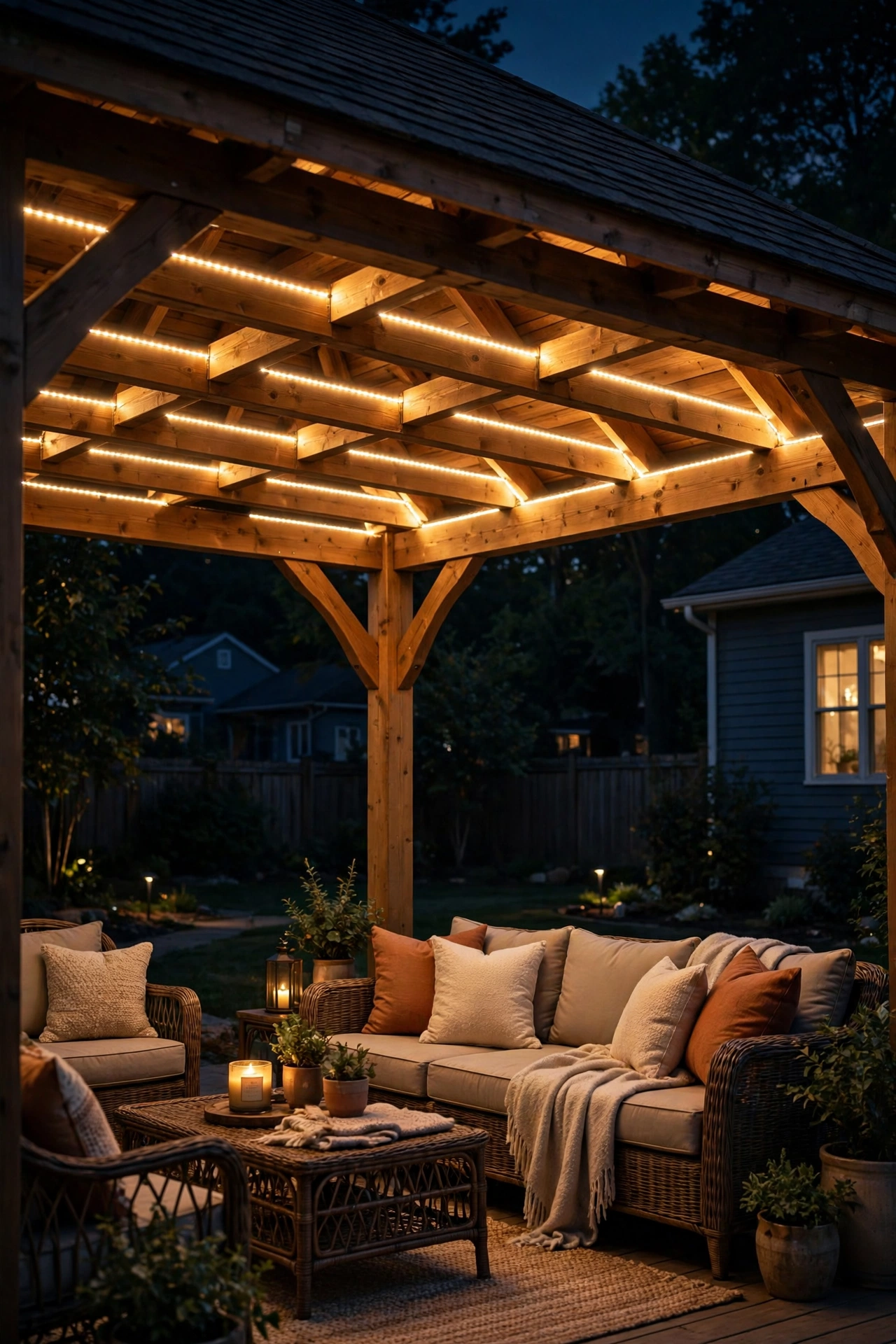
6. LED Strip Lights Along the Roof Beams
For a modern, architectural look, run LED strip lights along the underside of the roof beams. This gives you hidden, indirect light that washes the ceiling with a soft glow — no visible bulbs, no glare, just atmosphere. I always recommend outdoor-rated (IP65 or higher) strip lights with a silicone coating; the cheap indoor strips will die within one rainy season. Clean the beam surface first, then mount with the adhesive backing plus a few aluminum channel clips for insurance — adhesive alone gives up in summer heat. Warm white (2700K–3000K) is the sweet spot; RGB color-changing strips are fun for parties if you want flexibility. You'll need a weatherproof power supply mounted under the eaves, and keep all connections in waterproof junction boxes. Most 12-foot gazebo beams need about 16 feet of strip with a little extra to turn corners.
Suggested budget range: $45 – $140.
7. Wall Sconces on the Corner Posts
Sconces give your gazebo the finished look of a real outdoor room. Mount one outdoor-rated wall sconce on each corner post (or two flanking the entrance) at about 5.5–6 feet high. Downward-facing sconces are my preference — they wash the posts and floor with light without shining in anyone's eyes, and they keep bugs from swarming a bare bulb. Solar sconces work if running wire isn't an option, but hardwired low-voltage sconces are brighter and more reliable; a 12-volt low-voltage kit is DIY-friendly and safe to bury in shallow trenches. Space sconces evenly and keep them at least 3 feet from any door swing or curtain. Look for the wet-location rating and a sealed lens so driving rain can't get in. This is one of those details that makes the whole structure feel architecturally intentional, day or night.
Suggested budget range: $60 – $200.
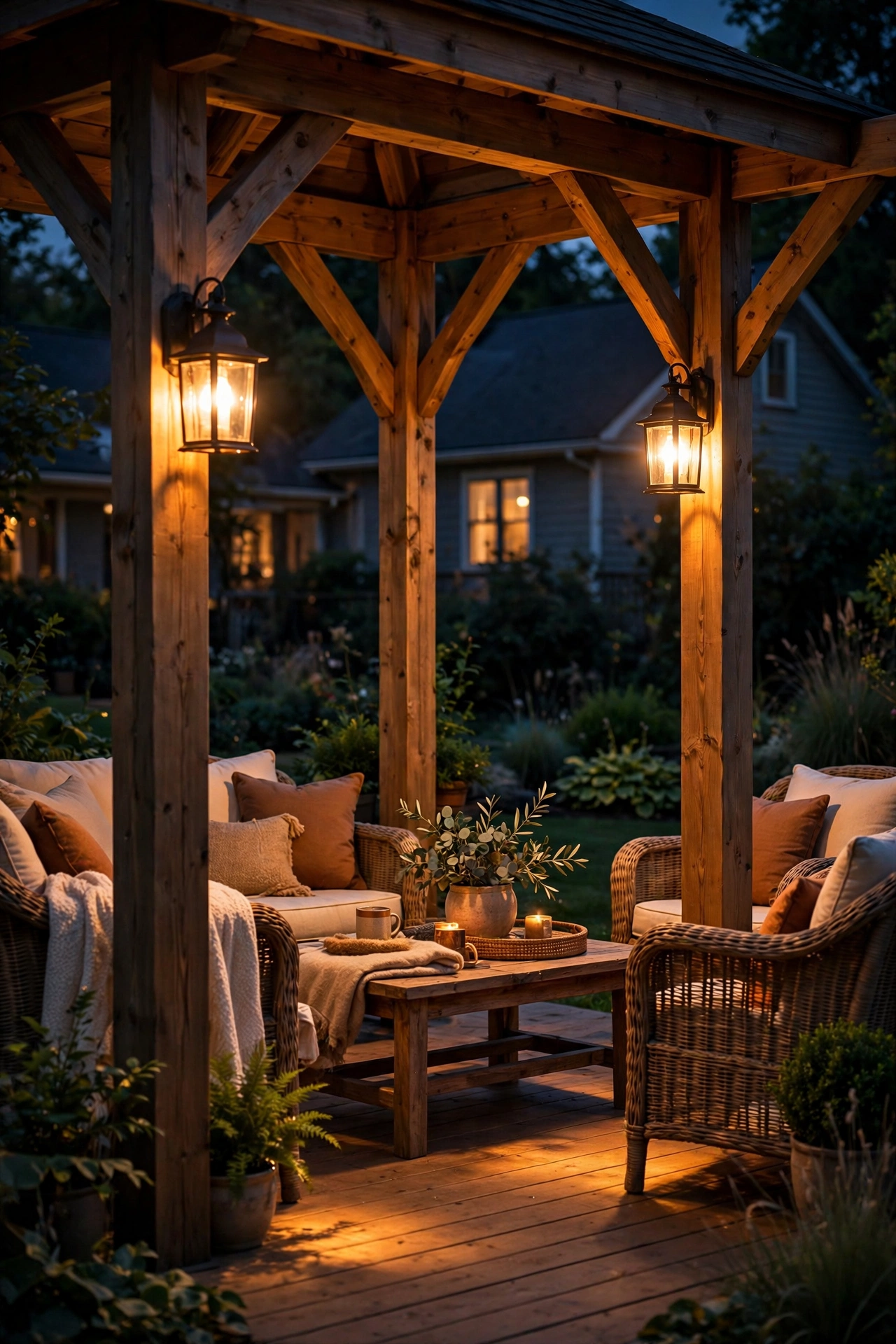
8. Uplighting the Gazebo From the Ground
Uplighting is the landscape-designer secret that makes a gazebo look stunning from across the yard. Place 2–4 low-voltage spotlights or well lights around the base, aimed up at the roofline and posts. In my experience, two fixtures per side on a 12-foot gazebo gives you even coverage without hot spots — set them 2–3 feet out from the base and tilt the beams to graze the posts. Warm white (2700K) keeps the wood looking rich instead of washed out. Low-voltage (12V) kits are the practical choice: the cable buries just 6 inches deep, and you can add fixtures later without an electrician. Aim the fixtures so the beams cross slightly at the peak for a dramatic silhouette effect. If you're already planning pathway lighting, uplighting the gazebo ties the whole yard together — my guide to backyard lighting covers how to layer these looks across the whole yard.
Suggested budget range: $70 – $250.
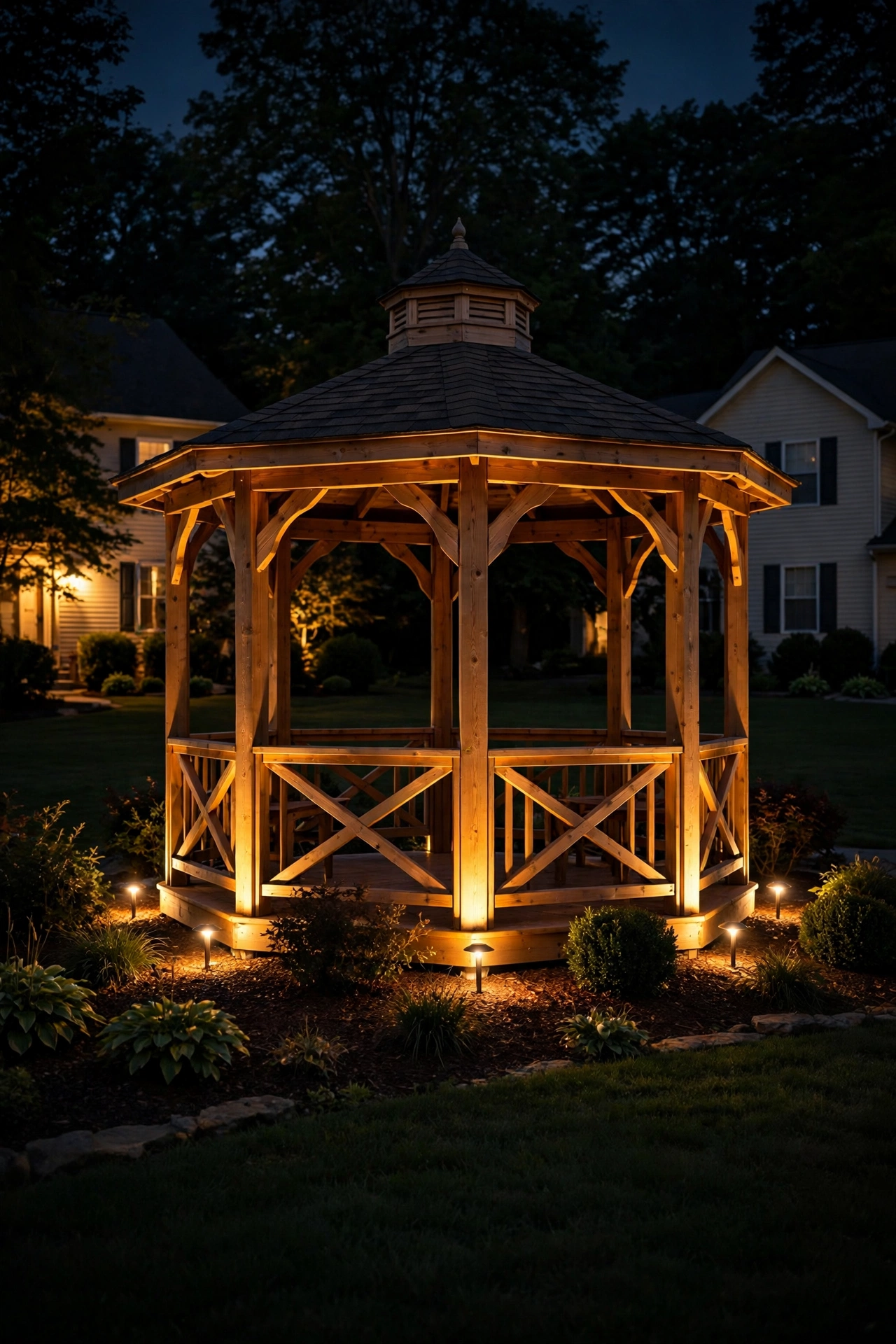
9. Solar Fairy Lights: The No-Wiring Gazebo Lighting Idea
No outlet near your gazebo? No problem. Solar fairy lights are the simplest of all gazebo lighting ideas — drape them, forget them, and let the sun do the work. The key is panel placement: mount the solar panel on the gazebo roof or a nearby post where it gets 6–8 hours of direct sun, facing south if you can. The micro-LED strings themselves are feather-light, so you can weave them through railings, wrap them around posts (one 33-foot strand per post is about right), or drape them along the valance. In my experience, they run 6–8 hours on a full charge in summer and 3–4 in winter, so they're best as accent light layered with something brighter. Bring the panels' batteries indoors if your winters drop below freezing for long stretches — it extends their life by years. Choose warm white for that classic firefly glow; cool white can look harsh against wood.
Suggested budget range: $20 – $60.
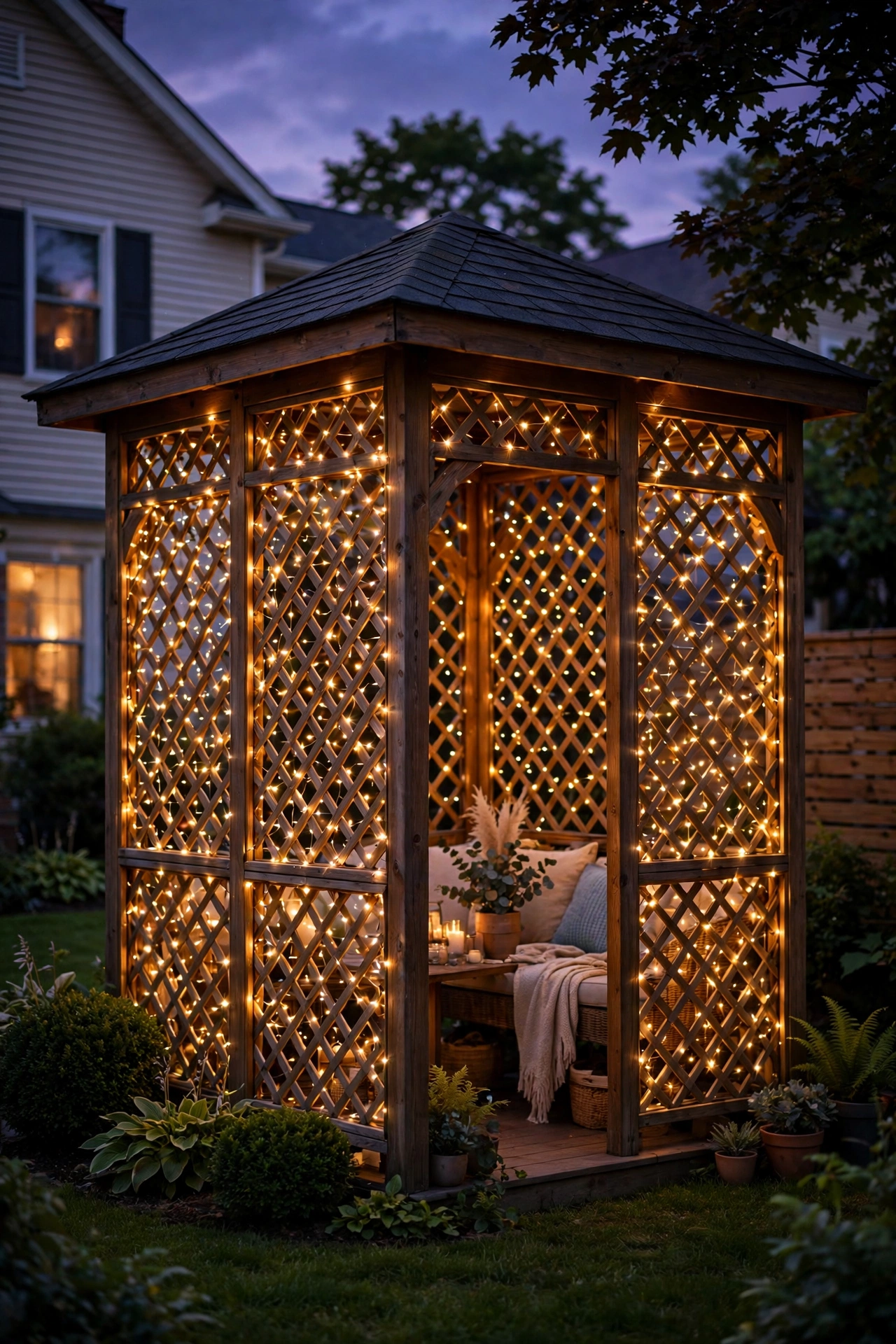
10. Pathway Lights Leading to the Gazebo
A glowing gazebo deserves a glowing invitation. Line the path from your patio or back door to the gazebo with low-voltage or solar path lights, spacing them 6–8 feet apart and alternating sides for a natural, meandering feel. I always recommend keeping them 12–18 inches back from the path edge so mowers and feet don't clobber them. Warm-white lights that match your gazebo's color temperature (2700K–3000K) make the walk feel like one continuous experience instead of two separate zones. Solar path lights are the easy win — no trenching, no transformer — but place them where they'll catch real sun, not under the gazebo's shadow. For a 30-foot path, plan on 5–7 lights. This is also a genuine safety upgrade: a lit path means no one's tripping over the garden hose on the way to the evening's second glass of wine.
Suggested budget range: $40 – $150.
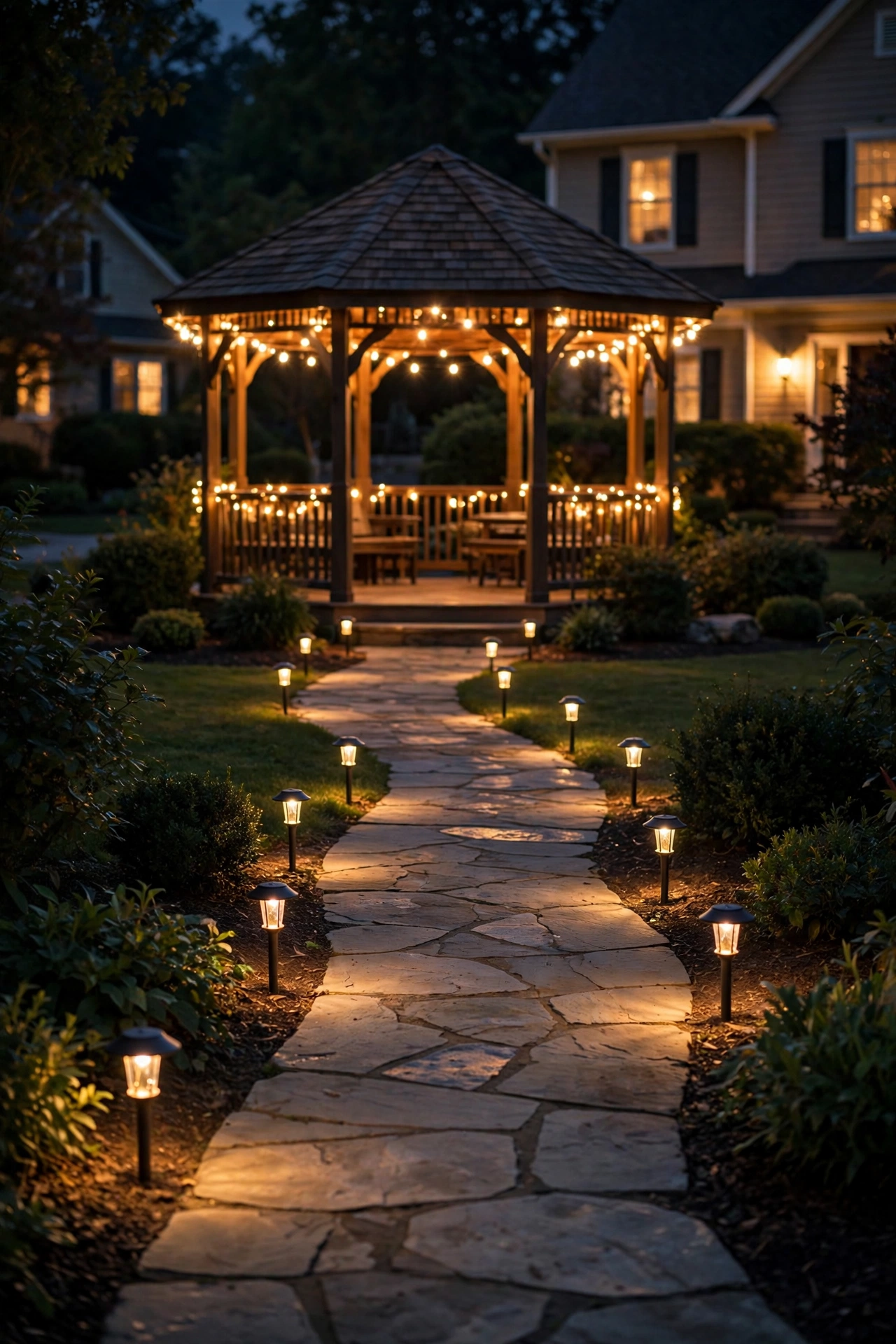
11. Flameless Candles in Hurricane Holders on Tables
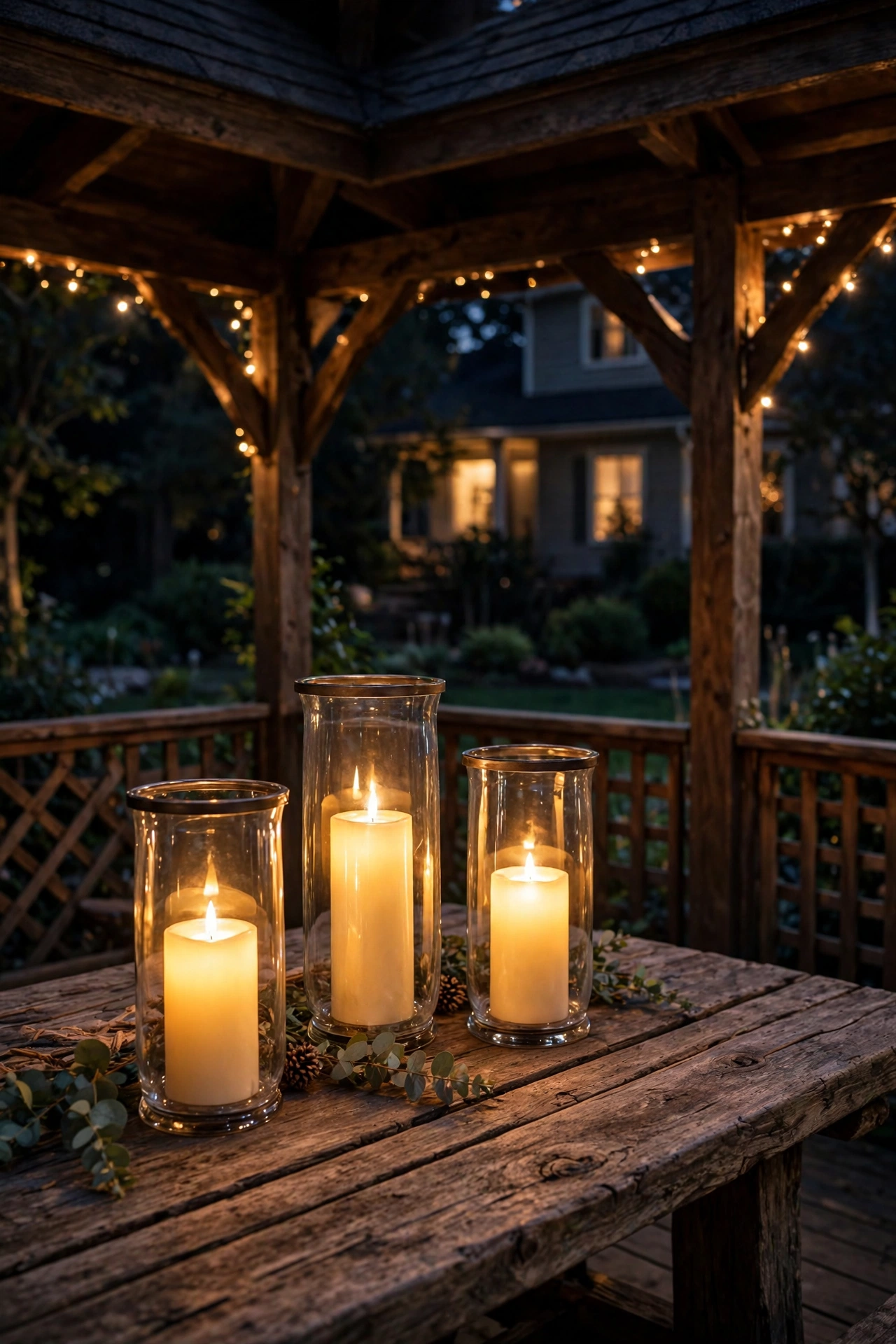
Sometimes the best lighting is the smallest. A cluster of flameless candles in glass hurricanes on the gazebo's table gives you that intimate, flickering glow at exactly eye level where conversation happens. In my experience, mixing heights — a tall 10-inch hurricane, a medium 7-inch, and a few tea lights — looks far better than a matched set. Battery candles with a built-in timer are worth the small premium: set them once and they glow every evening from 6 to 11 without you touching them. The LED-only rule matters most here — real flames in an enclosed gazebo with curtains, cushions, and a wood roof are a risk I never take. Nestle the hurricanes on a tray with a little greenery or stones so the whole arrangement reads as one centerpiece. At 2–3 inches of glow per candle, this is pure ambiance, so layer it over one of the brighter ideas above.
Suggested budget range: $25 – $70.
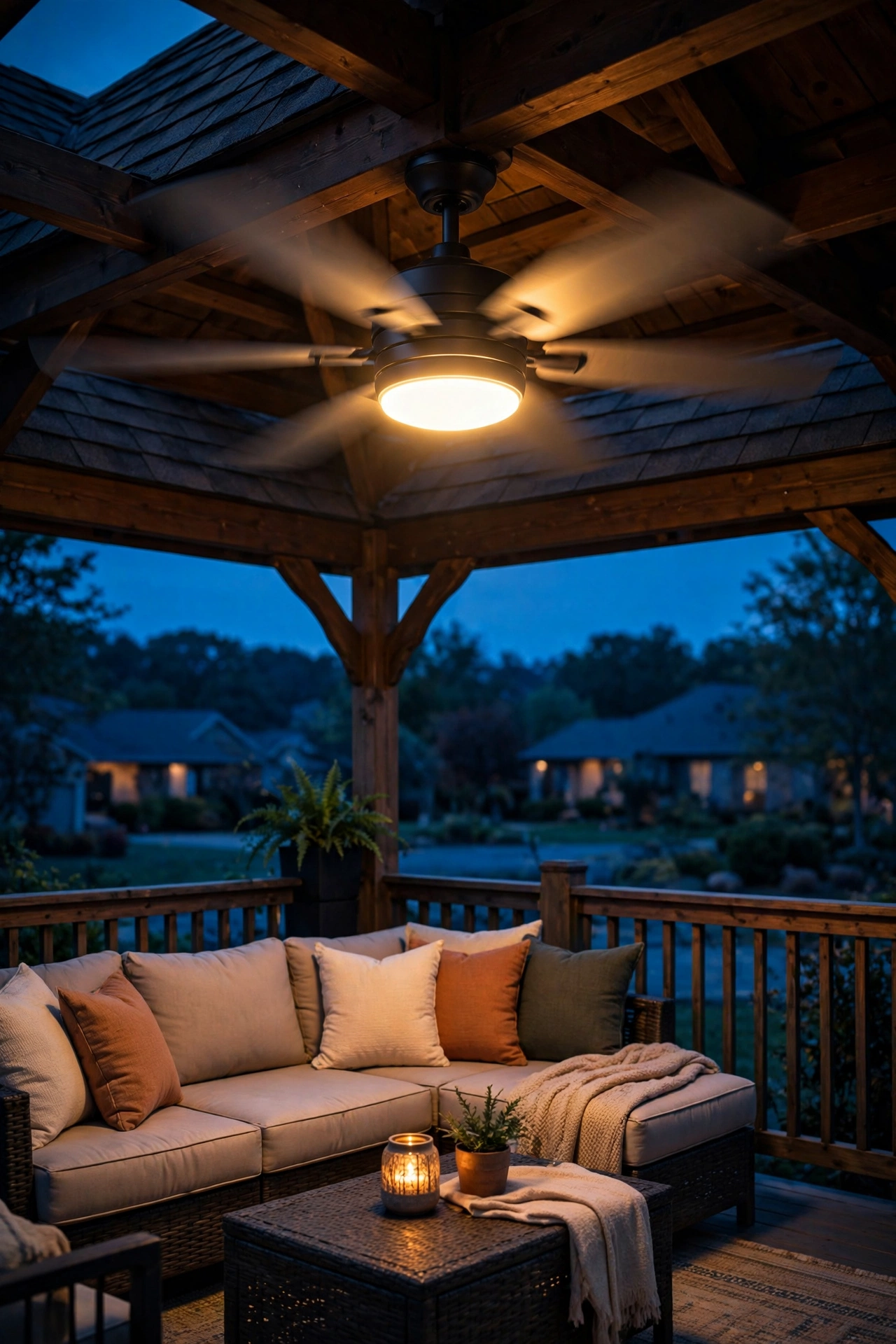
12. Ceiling Fan With Integrated Light Kit
If your summers are hot, a ceiling fan with a light kit solves two problems at once. An outdoor-rated (wet-location) ceiling fan keeps the air moving on still July evenings while its integrated LED kit lights the space below. Mount it to a fan-rated brace box on a solid rafter — a standard light box won't hold a spinning fan, and this is the one spot where I'd say call an electrician if you're unsure. Choose a fan with a 52-inch blade span for a 10–12 foot gazebo; anything smaller won't move enough air. Look for a reversible motor so you can flip the downdraft direction seasonally, and a dimmable LED kit in the 2700K–3000K range. If you're weighing the fan question more broadly, my breakdown of outdoor ceiling fan options covers sizing, mounting, and what to look for in wet-rated models.
Suggested budget range: $120 – $350.
13. Motion-Sensor Security Light by the Entrance
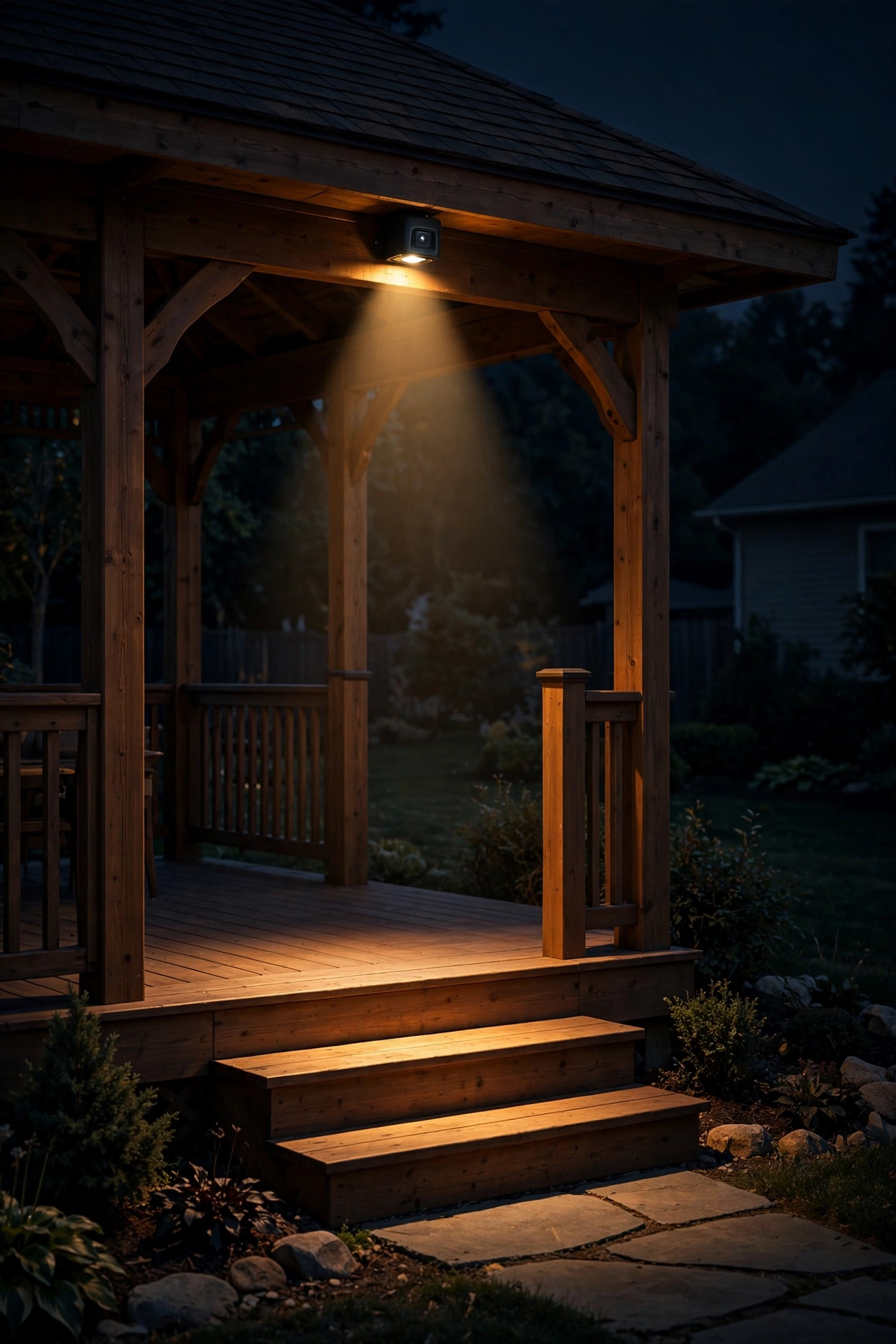
Pretty lighting is wonderful, but one practical fixture earns its keep: a motion-sensor light at the gazebo entrance. It snaps on when someone approaches, which is perfect for late arrivals, keeps the steps visible, and adds a layer of security to a structure that sits away from the house. I always recommend a warm-white (3000K) LED sensor light rather than the harsh cool-white floods — you want welcoming, not interrogation-room. Mount it 8–10 feet high on a post or the entrance beam, angled down at the steps, and set the sensitivity so passing cats don't trigger a light show. Solar motion lights are genuinely good now and need zero wiring; just give the panel sun. Keep the sensor aimed away from your pretty string lights so their glow doesn't confuse it. This is the unsung hero of gazebo lighting ideas — nobody compliments it, everybody uses it.
Suggested budget range: $25 – $80.
14. Timers and Smart Plugs: Gazebo Lighting Ideas That Run Themselves
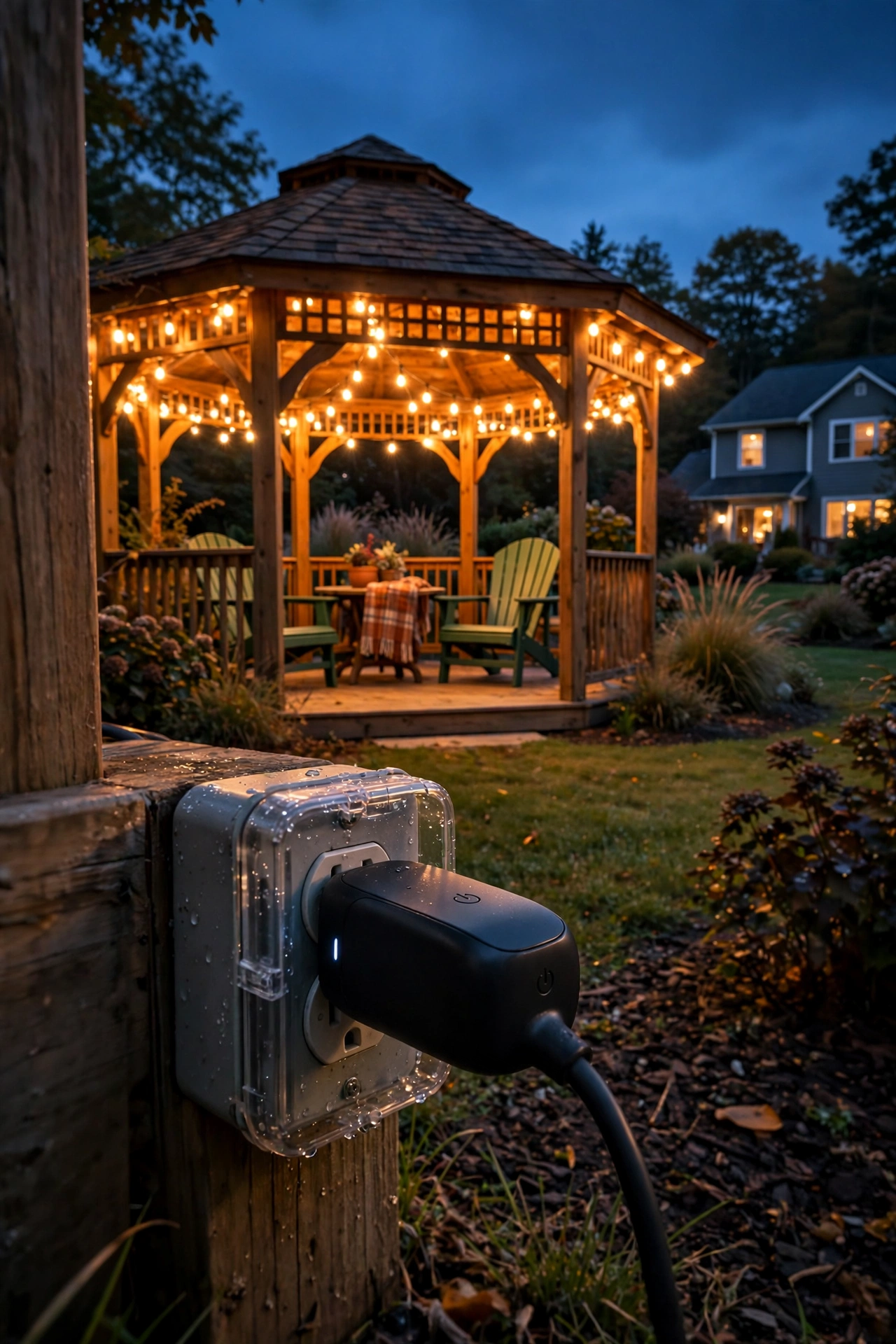
Here's the truth about all these gazebo lighting ideas: they're only magical if they're actually on. Timers and smart plugs are the invisible upgrade that makes every other idea work on autopilot. A simple mechanical plug-in timer costs under $15 and turns your string lights on at dusk and off at midnight — set it once per season. Smart plugs go further: app control, schedules that follow sunset times automatically, and voice control for when your hands are full of barbecue tongs. Outdoors, use only timers and plugs rated for wet locations with weatherproof covers; indoor smart plugs in a damp gazebo are a fire risk. I always recommend putting your lights on two circuits if you can — the canopy on one timer, the accent lights on another — so you can dim the mood late at night while keeping the path lit. Group everything on one outdoor-rated power strip with a cover, and you're done.
Suggested budget range: $15 – $60.
15. Firefly Solar Stakes Around the Base
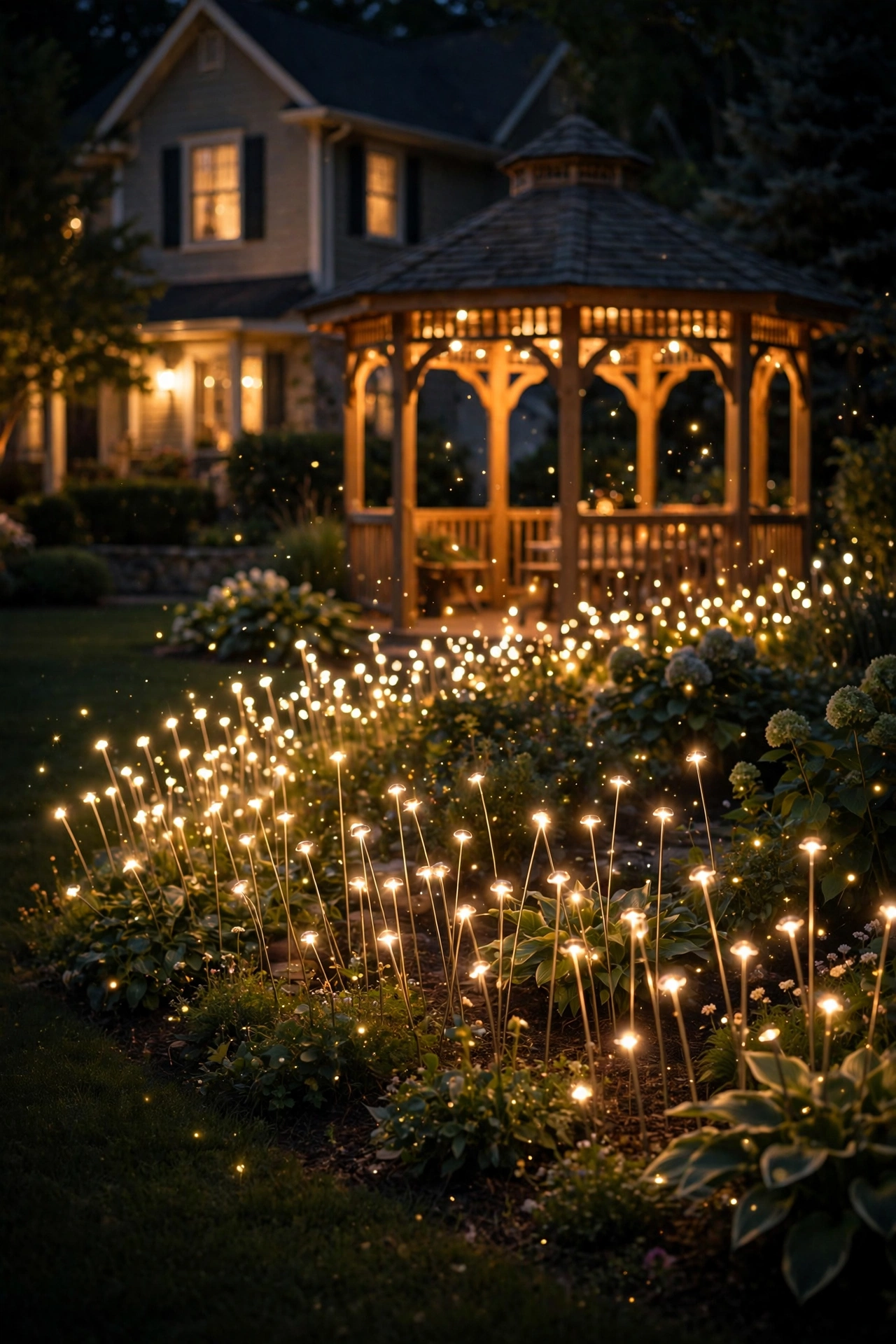
Firefly-style solar stakes — those thin, bendable stems topped with tiny warm LEDs — create the illusion that your garden is full of actual fireflies. Ring the base of your gazebo with 8–12 of them, pushing the stakes 6–8 inches into the soil and fanning the stems outward at different angles so the lights dance at varying heights. In my experience, they look best mixed into existing planting beds rather than standing alone on bare mulch — tuck them among hostas, ornamental grasses, or low shrubs. They're purely decorative (each one puts out just a whisper of light), so think of them as the jewelry, not the outfit. The best ones have a dusk-to-dawn sensor and run 8+ hours on a summer charge. Because they're solar and stake-mounted, there's zero wiring and you can rearrange them in five minutes whenever the mood strikes.
Suggested budget range: $30 – $80.
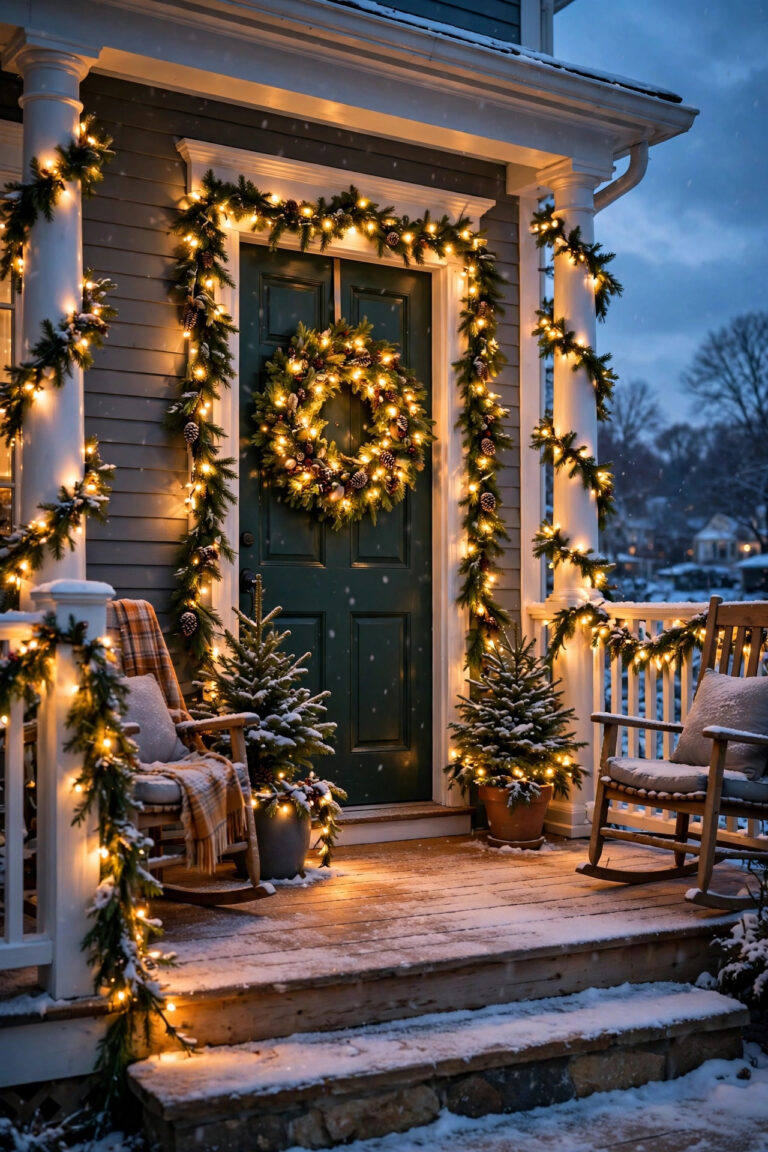
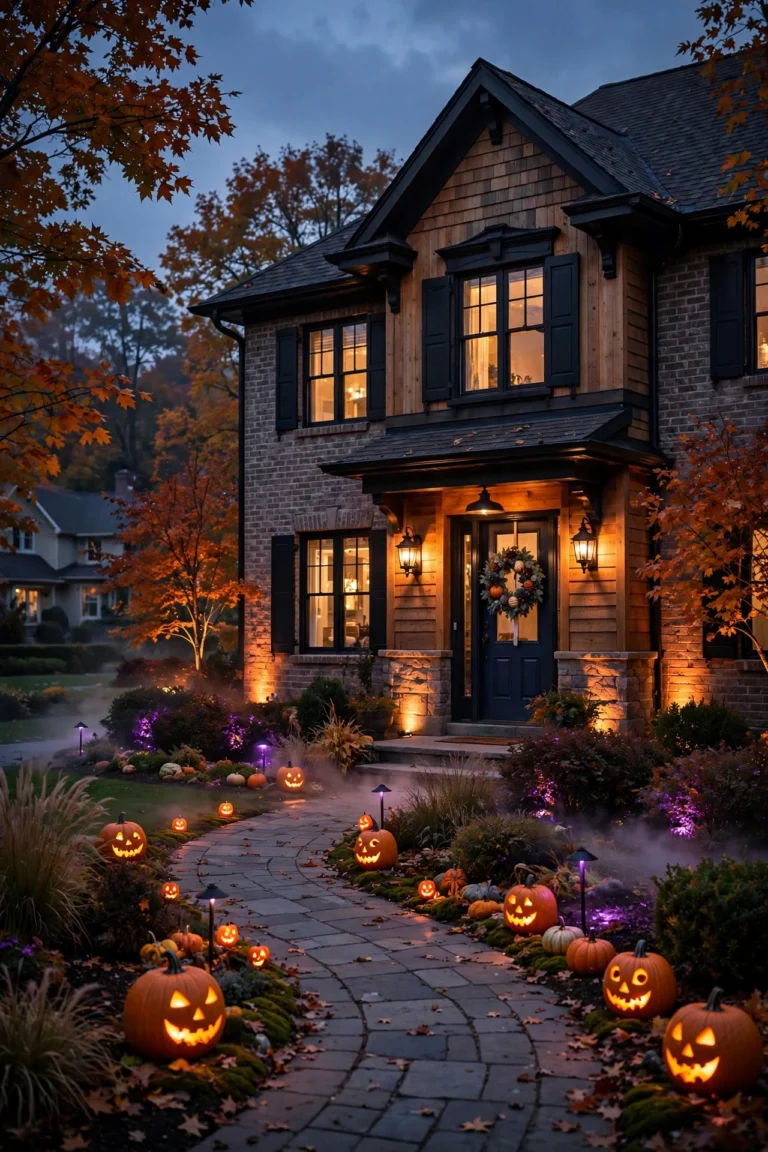
16. Seasonal Swaps: String Lights Meet Holiday Decor
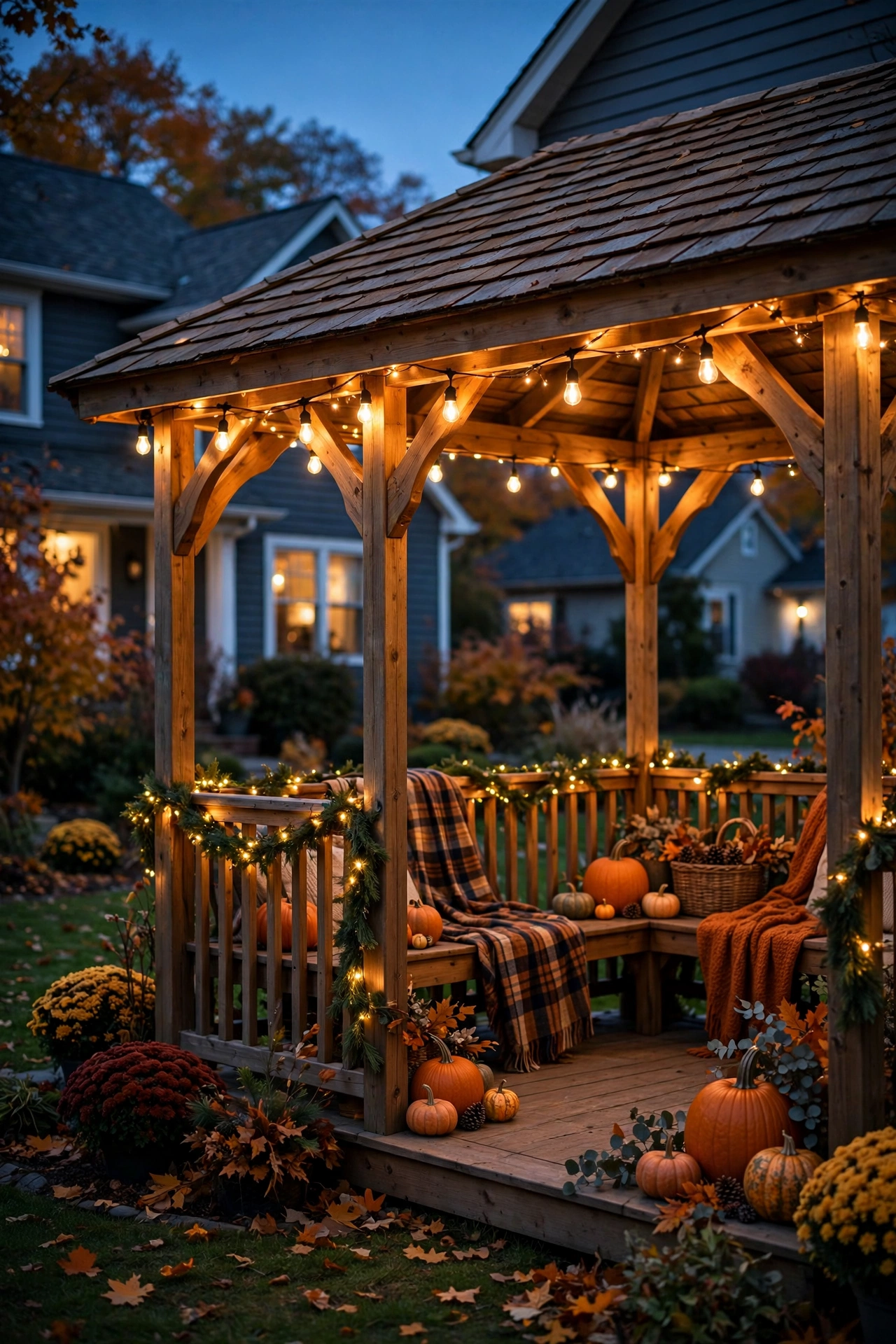
Your gazebo lighting can work double duty through the seasons. In fall, weave your existing string lights through garlands of faux autumn leaves along the railing — the warm bulbs make the oranges and reds absolutely glow. Come December, swap in a few evergreen swags and let the same lights read as holiday magic. In my experience, this is where a neutral warm-white light base pays off: it works with every season, while colored bulbs lock you into one holiday. Keep a small storage bin in the garage with seasonal clip-on decor — leaf garlands, pine swags, a few weather-safe ornaments — and the whole transformation takes under an hour. Just remember the safety basics when layering decor over lights: LED bulbs only near anything flammable, don't overload a single strand beyond its rated wattage, and check outdoor ratings on every new decoration. For more seasonal inspiration, my fall porch lighting ideas translate beautifully to a gazebo setting.
Suggested budget range: $30 – $90.
17. Color-Changing Smart Bulbs for Party Mode
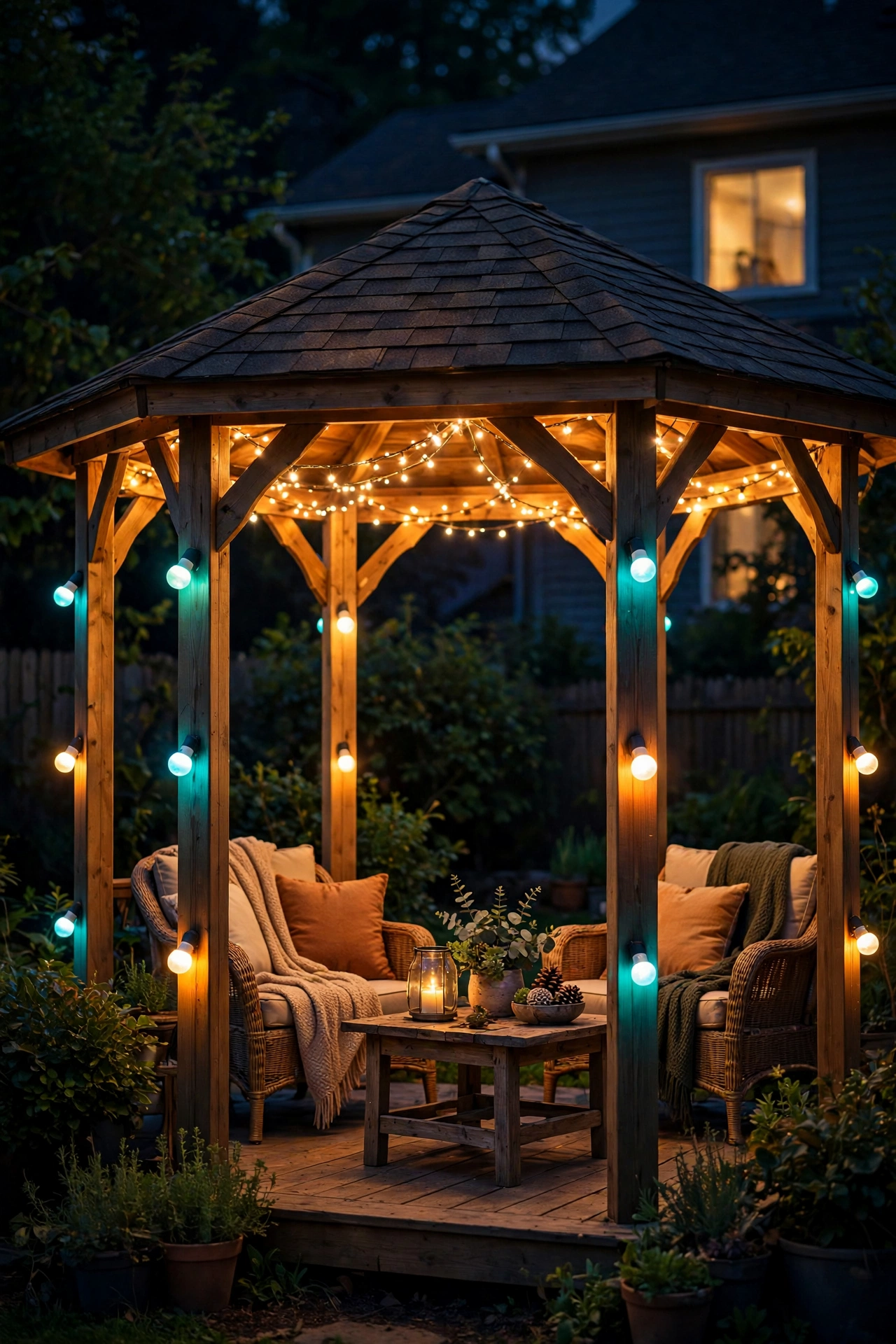
When it's time to celebrate, color-changing smart bulbs turn your everyday gazebo lighting into party mode. Swap the bulbs in your string lights or pendants for outdoor-rated smart bulbs, and suddenly you've got millions of colors, music-sync modes, and scenes for birthdays, game nights, and holidays — all from your phone. I always recommend keeping your default scene a warm white (2700K) so the gazebo still feels like a retreat on ordinary evenings, then switching to color only for occasions. Check that both the bulbs and any hub are rated for outdoor use, and keep the Wi-Fi signal in mind — a gazebo at the far end of the yard may need a range extender. Set a schedule so party mode never accidentally runs all night and annoys the neighbors. One caution: smart bulbs cost more and draw slightly more standby power, so use them where the flexibility matters most and keep simple LEDs everywhere else.
Suggested budget range: $60 – $180.
Frequently Asked Questions
How much does it cost to light a gazebo?
For most homeowners, a complete gazebo lighting setup runs $100–$400 depending on how many layers you add. A simple, beautiful starting point — two strands of LED string lights plus a plug-in timer — costs under $75 and takes an afternoon. Mid-range setups with lanterns, pathway lights, and a pendant or chandelier land around $200–$300. Going all-in with low-voltage uplighting, sconces, and smart controls can reach $400–$600. In my experience, starting with the overhead layer (string lights or a pendant) gives you the biggest visual payoff per dollar, then adding accents over time.
How can I power gazebo lights if there's no outlet nearby?
You have three good options. Solar lights are the simplest — no wiring at all, just make sure the panels get 6–8 hours of sun. Battery-operated LED candles and puck lights work for accents and last months on a set of batteries. For brighter, permanent light, run a low-voltage (12V) line from the house — the cable buries just 6 inches deep and the kits are DIY-friendly. As a last resort, a heavy-duty outdoor extension cord rated for the load works temporarily, but it should never be a permanent solution. Whatever you choose, use a GFCI-protected source and keep all connections in weatherproof boxes.
How do I weatherproof my gazebo lighting?
Start with fixtures and bulbs rated for outdoor use — "wet location" for anything exposed to rain, "damp location" minimum under a roof. Seal every connection: use waterproof wire connectors, keep plugs off the ground in weatherproof boxes, and aim cord drip-loops downward so water runs off instead of into outlets. Choose LED bulbs, which handle temperature swings better than old incandescents and stay cool near fabrics. In harsh winters, bring solar panels' batteries and delicate decor indoors. And once a year, walk the gazebo with fresh eyes: tighten sagging strands, replace cracked lenses, and check that timers still follow the season's sunset.
Should I choose warm white or cool white light for my gazebo?
Warm white, every time. Look for 2700K–3000K on the package — that's the golden, candlelight-like glow that makes wood look rich, faces look flattering, and a backyard feel like a retreat. Cool white (4000K–5000K) reads as harsh and commercial outdoors; it washes out wood tones and makes a cozy gazebo feel like a parking lot. The one exception is a motion-sensor security light, where a slightly cooler 3000K–4000K is fine because its job is visibility, not ambiance. When mixing fixtures, match the color temperature across all of them so the whole space feels cohesive.
Conclusion: Your Glowing Backyard Retreat Awaits
The best gazebo lighting ideas aren't about spending the most — they're about layering warm, outdoor-rated light until your gazebo feels like the coziest room of the house, minus the walls. Start with one overhead layer, add a few accents at eye level and along the path, put it all on a timer, and you'll wonder why you waited so long. Whether you go with a simple string-light canopy, a show-stopping chandelier, or a full smart-controlled setup, the result is the same: a backyard retreat that glows every single evening. Ready for more inspiration? Browse our outdoor lighting ideas for porches, patios, and gardens to keep the glow going all around your home.