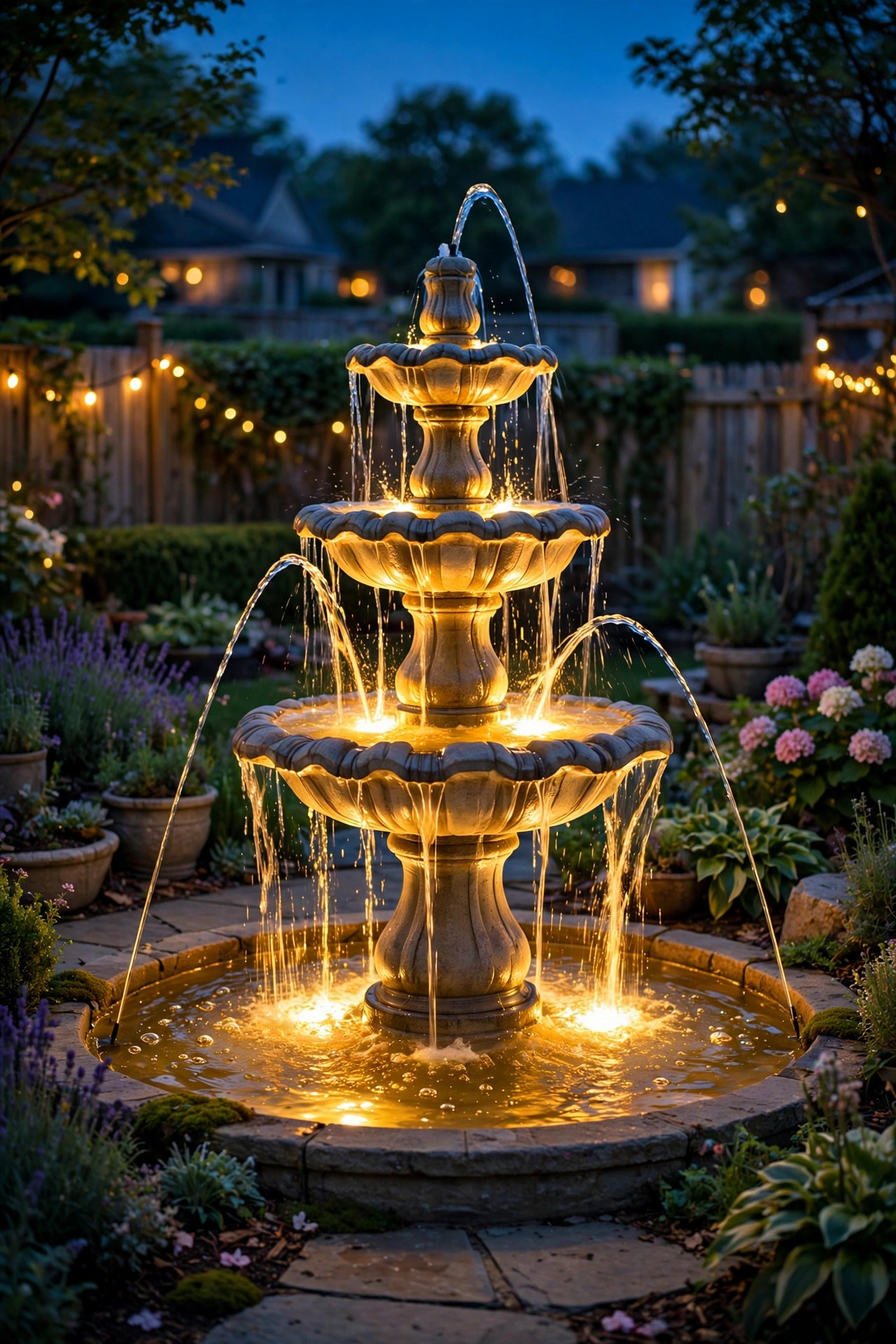
A fountain in daylight is lovely — sparkling water, the soft splash, birds stopping by for a drink. But a fountain at *night*? That's where the real magic lives. Honestly, when I added my first little submersible light to our tiered fountain a few summers ago, I sat on the patio until nearly midnight just watching the water glow. These fountain lighting ideas will get you there too, whether you've got a grand three-tier centerpiece or a tiny bubbling bowl by the front door.
The secret, in my experience, is layering light. One light under the water gives you glow. But a glow from below, a soft wash on the surrounding plants, and a hint of sparkle on the water's surface? That's a *scene*. Most of the ideas below work with simple low-voltage kits — no electrician required — though water and electricity demand respect, so I've tucked safety notes into every section. Let's make your fountain the thing everyone talks about after dark.
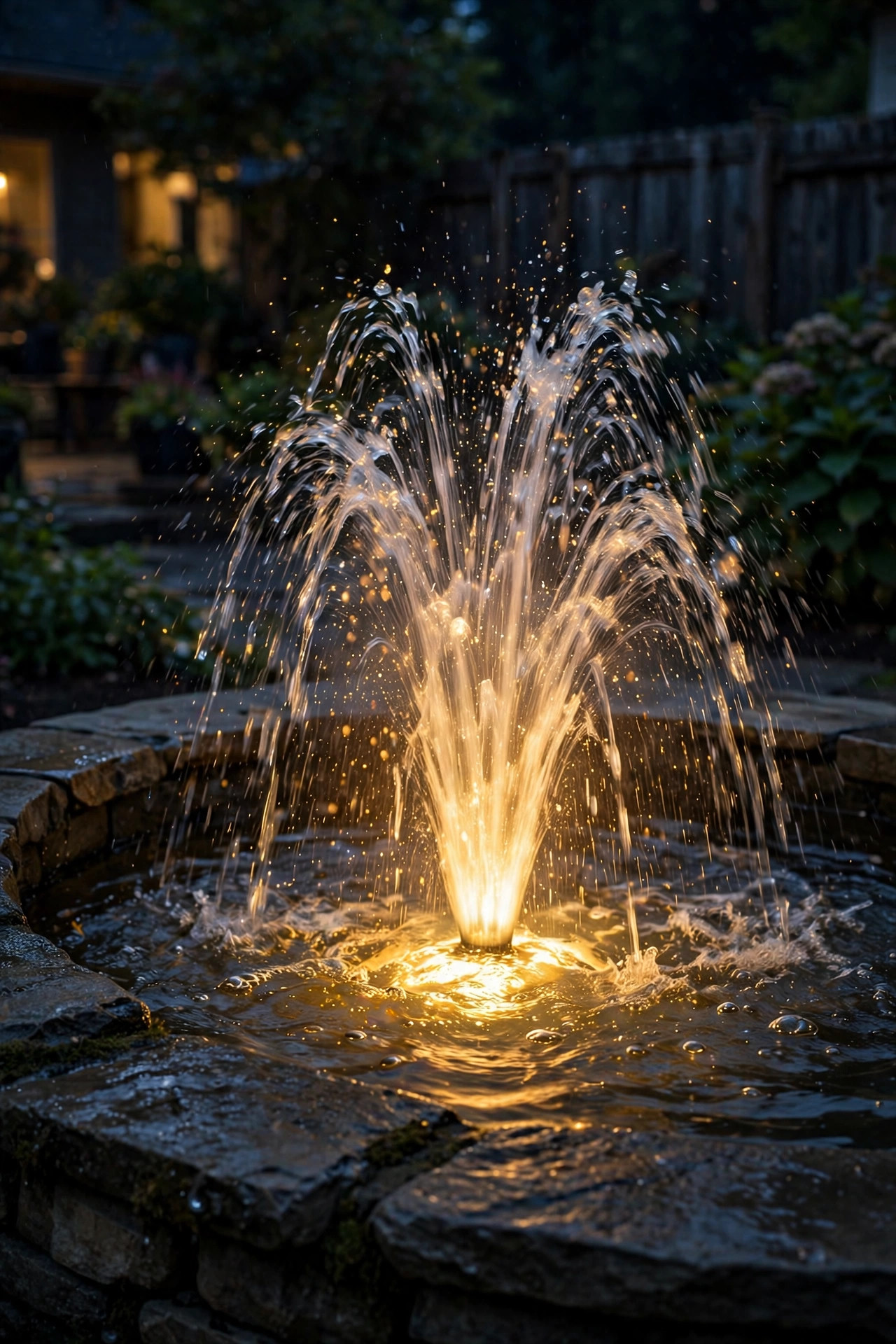
1. Submersible LED Spotlights from Below
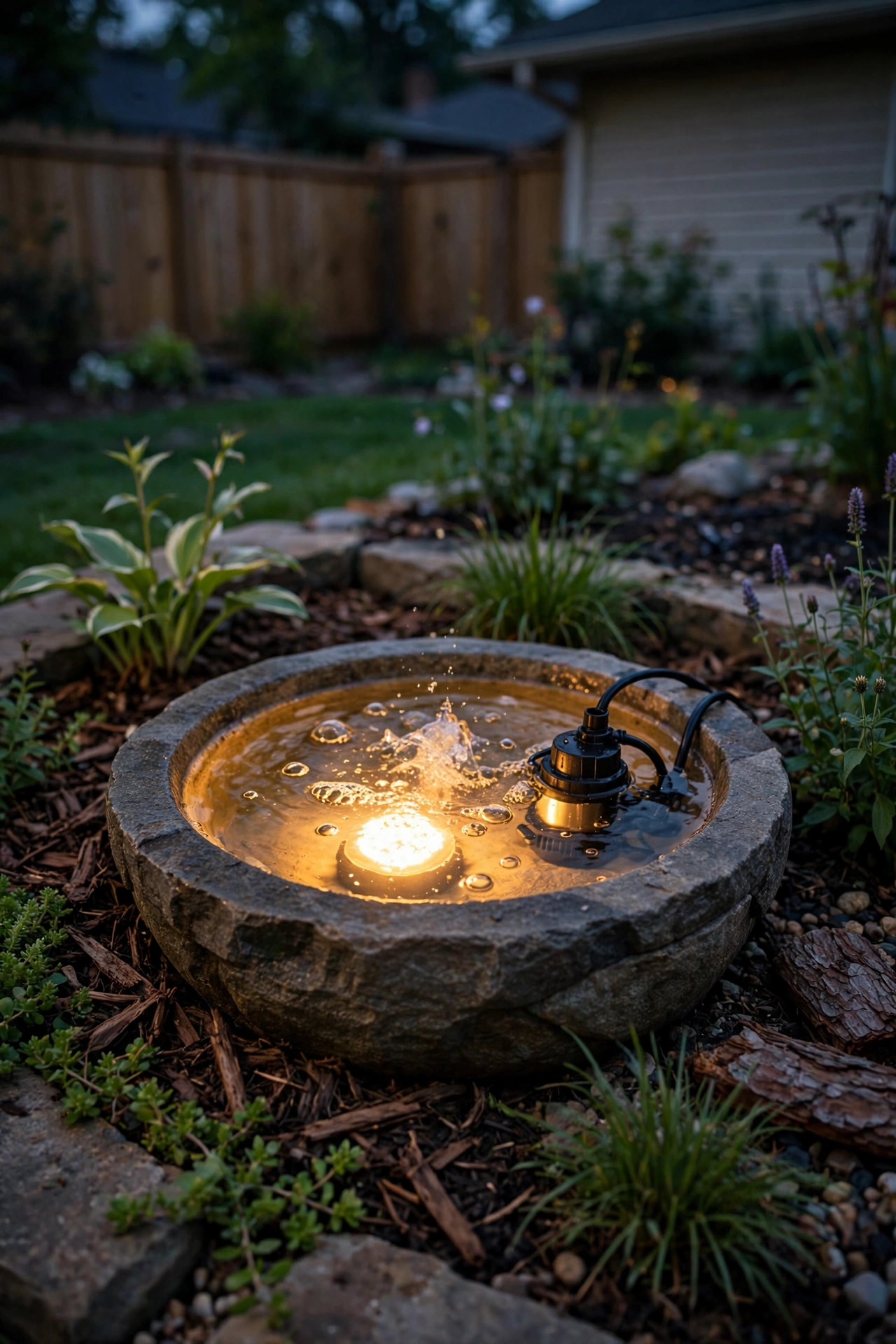
This is the single most transformative thing you can do for a fountain, and it should be your starting point. A submersible LED spotlight sits on the fountain floor (or on the basin bottom of a pond fountain) and shoots light straight up through the water column. The result is water that looks like it's lit from within — every ripple and arc of spray catches the beam and scatters it. I recommend one light per fountain tier or per 2 feet of basin width, angled slightly off-center so the plume of water glows unevenly and looks natural.
Look for fixtures rated IP68 — that rating means they're certified for continuous submersion, and it's non-negotiable for anything sitting underwater. Most kits run on 12 volts with a small outdoor transformer, which you plug into a GFCI-protected outlet. Place the light 4–8 inches from the nozzle base, weighted or suction-cupped so the pump's turbulence doesn't knock it over. Run it on a simple dusk-to-dawn timer so it clicks on automatically. One practical tip: warm white (2700K–3000K) flatters stone and makes water look like liquid gold; cool white makes it look icy blue, which suits modern fountains.
Suggested budget range: $25 – $60.
2. Floating Fountain Lights on the Water Surface
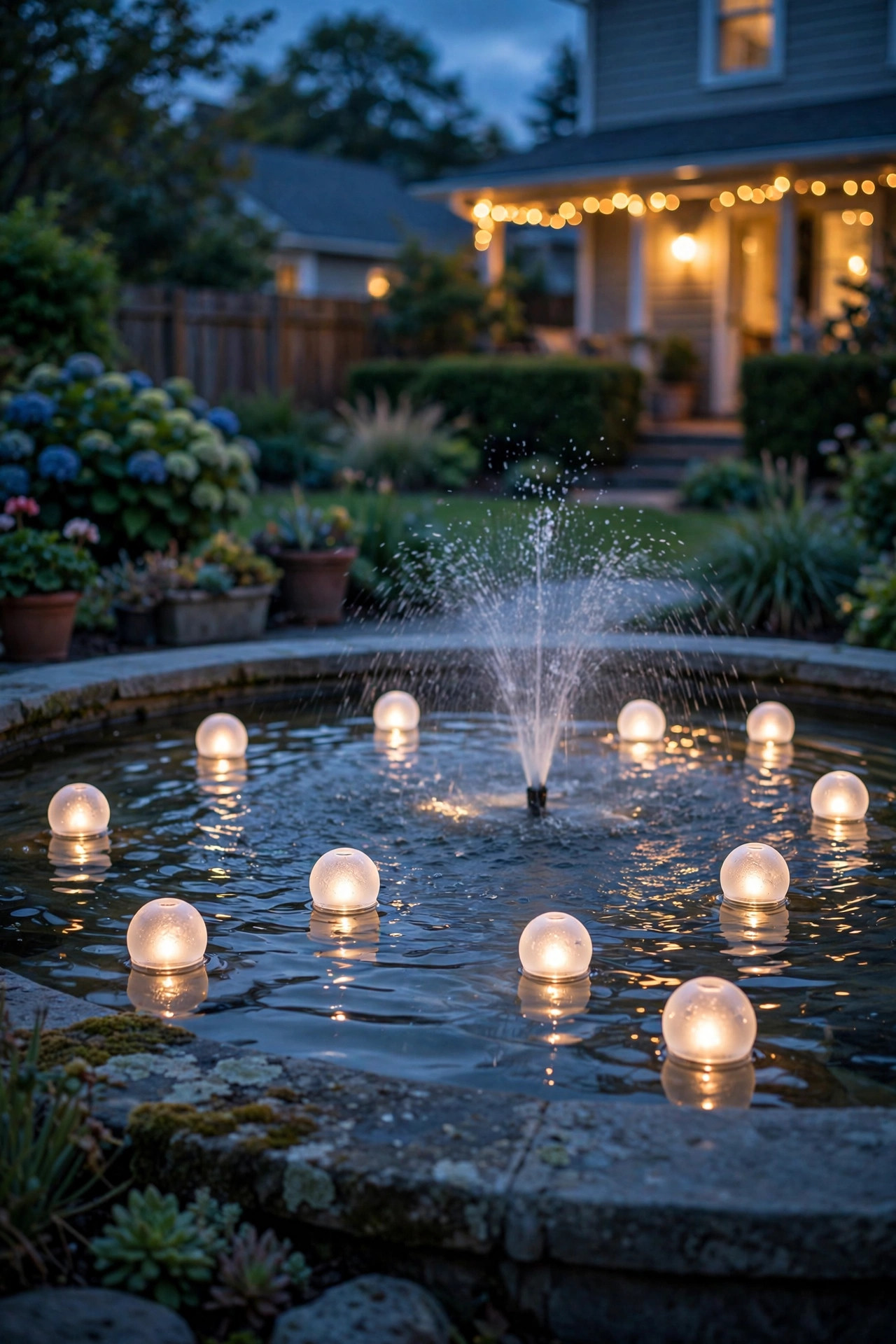
Floating lights do the opposite job of submersible spots: instead of lighting the water column from below, they dance on the surface and paint shifting patterns on everything around. Drop two or three small solar or battery-powered floating orbs into a wide basin and the whole thing becomes a constellation. In my experience, these work best in wider, calmer basins — at least 3 feet across — where there's room for them to drift without crowding the nozzle or getting sucked toward the pump intake.
Go for fully sealed, waterproof designs (IP67 or better) with a soft frosted finish so you don't get harsh glare. Most recharge by day via a tiny solar cell on top, so there's zero wiring — genuinely the easiest idea on this list. Anchor them loosely with fishing line to a small suction cup if your fountain has any current; otherwise they'll cluster in one corner. Mix colors sparingly: one color-changing orb plus two steady warm-white ones gives you movement without looking like a pool party. And they're removable in seconds for winter storage or deep cleaning days.
Suggested budget range: $15 – $40.
3. Color-Changing RGB Underwater Lights
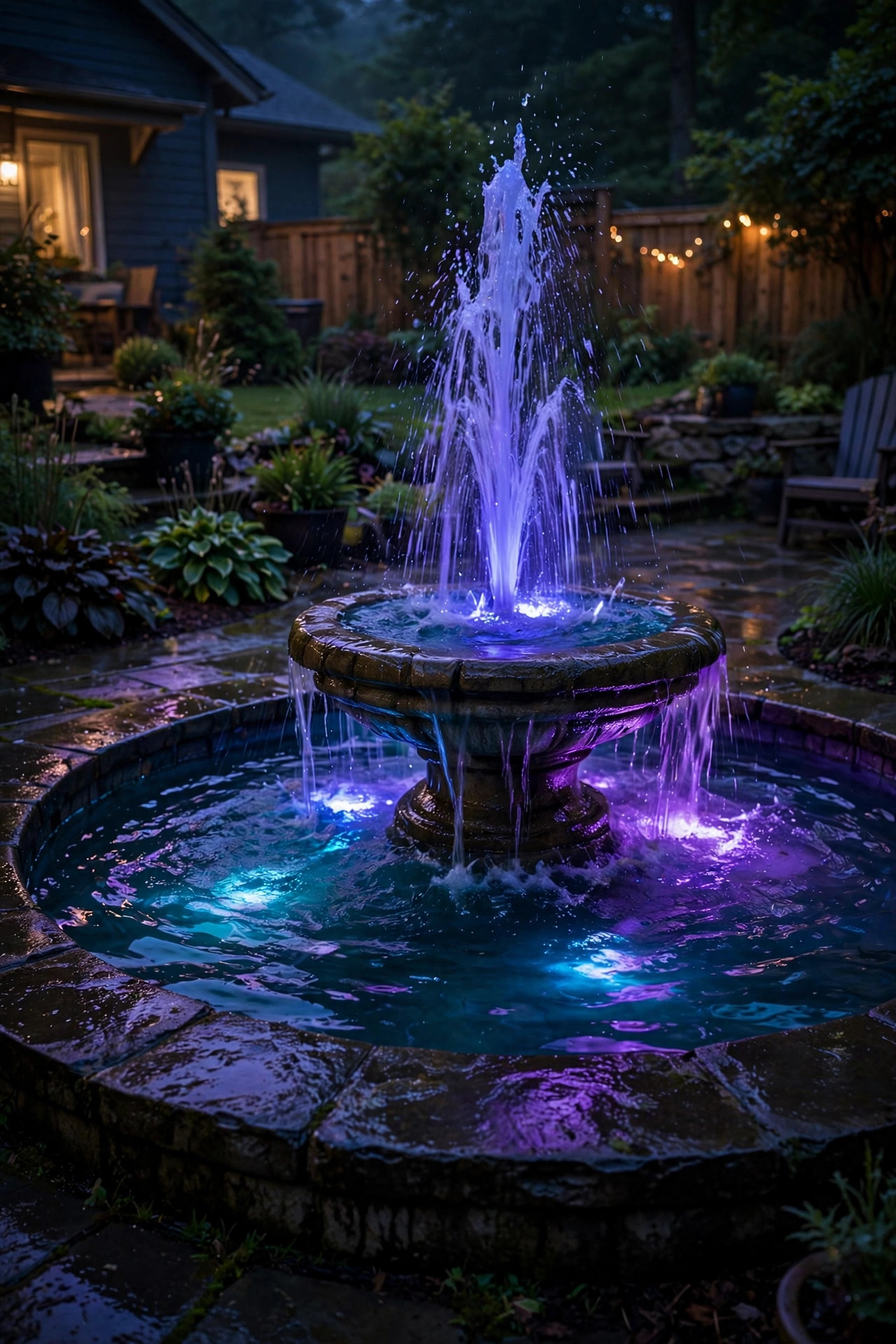
If you want drama — real, stop-in-your-tracks drama — an RGB submersible light lets your fountain cycle through colors or freeze on one mood. Slow-fading blues and teals turn a simple fountain into something that looks like a resort installation. I've found the trick is restraint: pick one slow-fade program rather than the frantic strobe modes most remotes include, and your fountain looks elegant instead of gimmicky.
Most RGB fountain lights are IP68 submersible pucks with a handheld remote or a small inline controller, powered by the same 12-volt transformer setup as white lights. Place them the same way — 4–8 inches from the nozzle, aimed up through the plume — and set the remote somewhere you can reach from your usual sitting spot, because you *will* want to change the color when guests come over. A soft CTA-friendly tip: try deep blue for summer evenings and warm amber for fall gatherings. One caveat: check that the remote uses RF rather than infrared, since infrared can't reach a controller hidden inside a weatherproof box.
Suggested budget range: $30 – $75.
4. Warm White Uplighting Around the Fountain Base
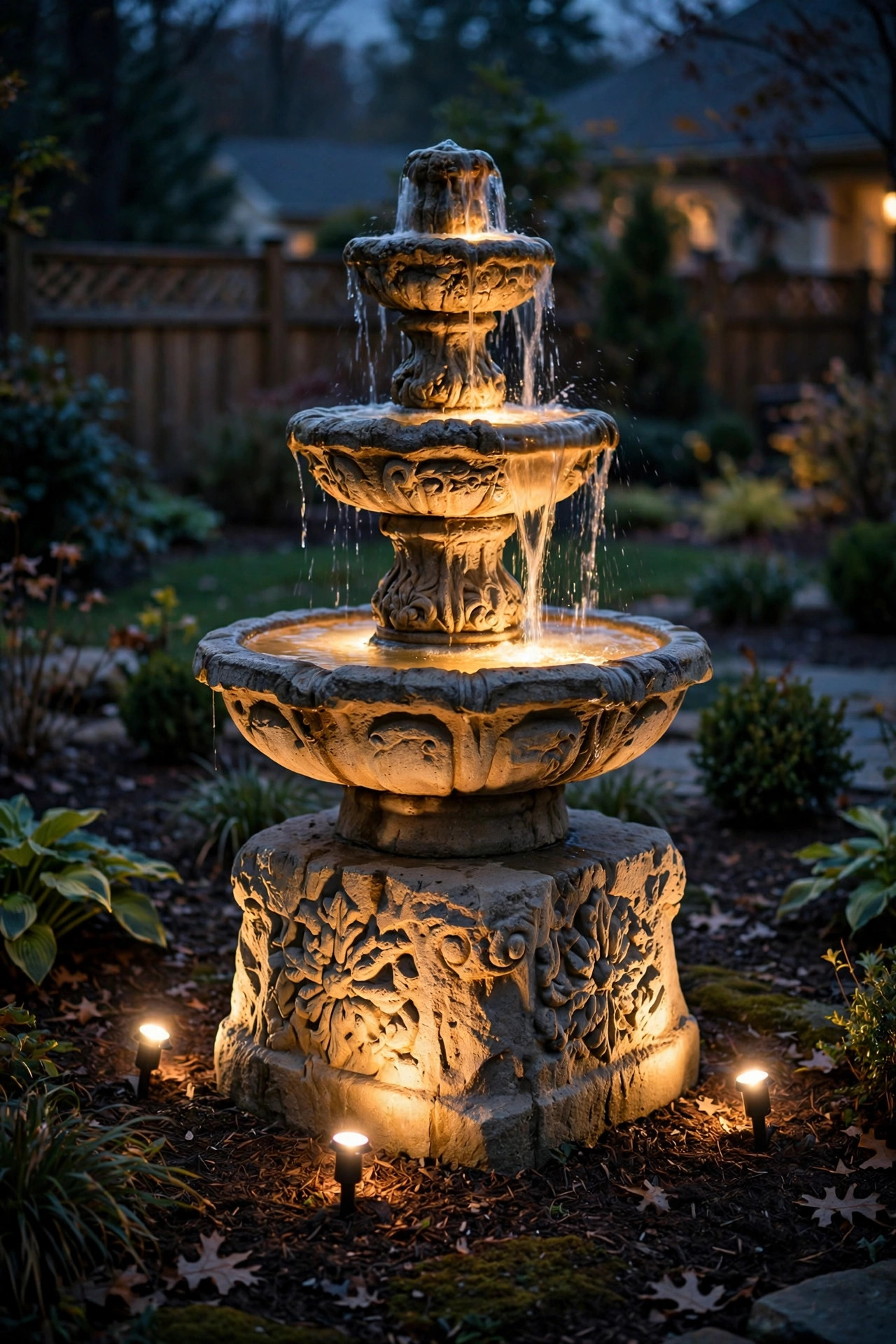
Sometimes the prettiest fountain lighting never touches the water at all. A ring of low-voltage uplights tucked into the mulch or gravel around the fountain's base washes the pedestal and lower tiers in warm light, giving the whole structure a grounded, sculptural presence. This is my favorite complement to idea #1: the submersible spot lights the water, and the uplights light the *fountain*.
Use small well lights or bullet uplights staked 18–24 inches from the base, angled up at about 30 degrees. Three fixtures evenly spaced around a round fountain is the classic formula; for a wall fountain, two flanking spots aimed inward do the job. Keep them 2700K warm white to match the stone, and choose fixtures with a glare shield so you're not staring into bare bulbs from your patio chair. Because these sit in soil, pick housings rated for burial or at least weather-sealed (IP65+), and connect them to the same low-voltage transformer as your in-water lights so everything runs on one timer.
Suggested budget range: $40 – $90.
5. Solar-Powered Submersible Lights
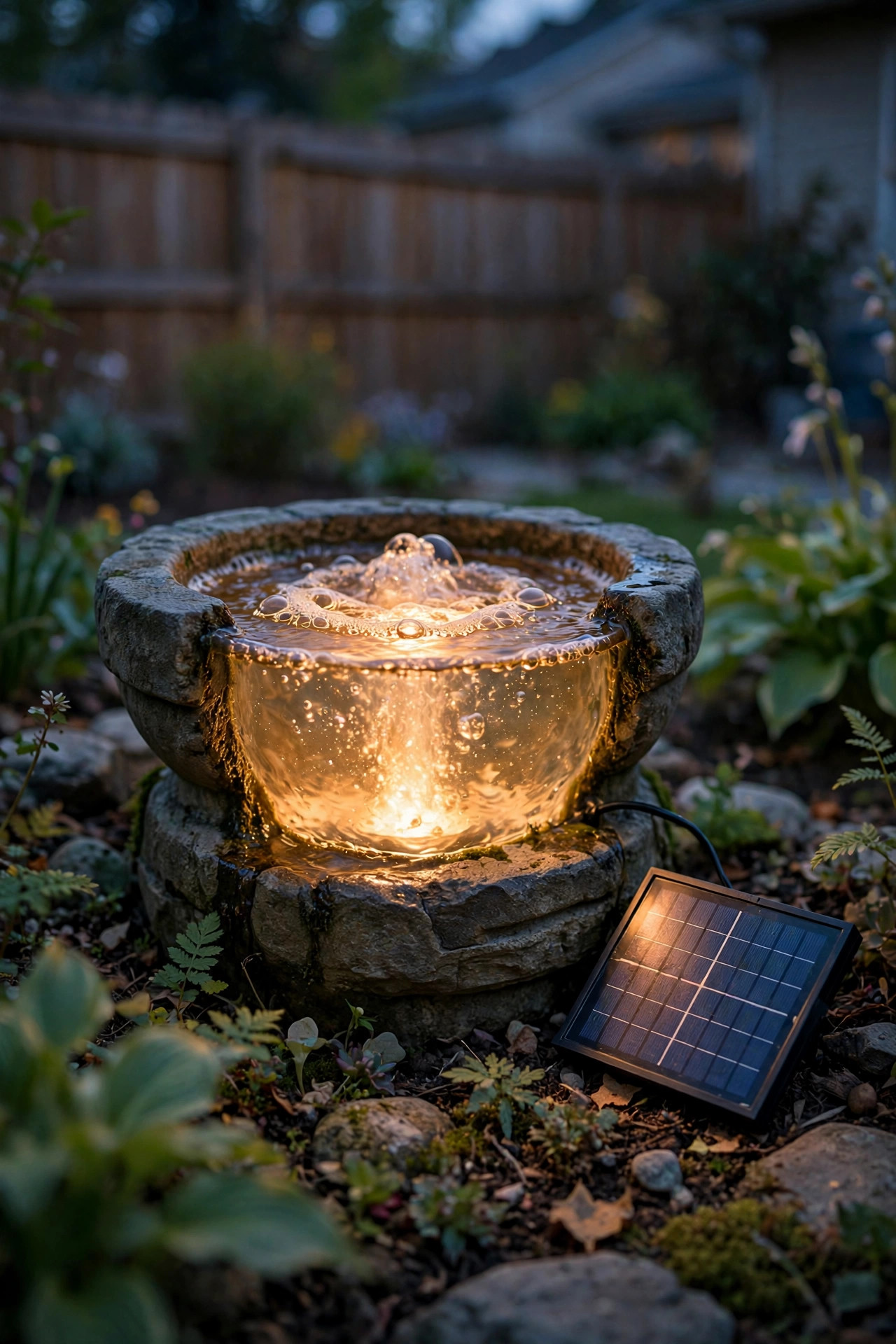
No outdoor outlet near your fountain? Solar submersible lights solve the wiring problem entirely. A small panel sits in the sun nearby (or floats on the surface on some models), charges a battery all day, and powers a compact underwater puck after dark. In my experience, these shine — literally — in small fountains and birdbaths where a transformer and cable run would be overkill.
The catch is runtime: most solar submersibles give you 6–8 hours of glow after a full sunny day, so in northern winters they'll fade before midnight. Maximize charge by placing the panel where it gets at least 6 hours of direct sun, tilted slightly toward the midday sun. In the water, the puck works like any submersible: IP68-rated, suction-cupped or weighted near the nozzle, warm or cool white options. These are also a lovely low-risk way to test whether you like lit fountains before committing to a wired setup. If you want to compare solar against wired options more broadly, my breakdown of LED vs solar exterior lights walks through the real trade-offs.
Suggested budget range: $20 – $50.
6. Moonlighting from an Overhanging Tree
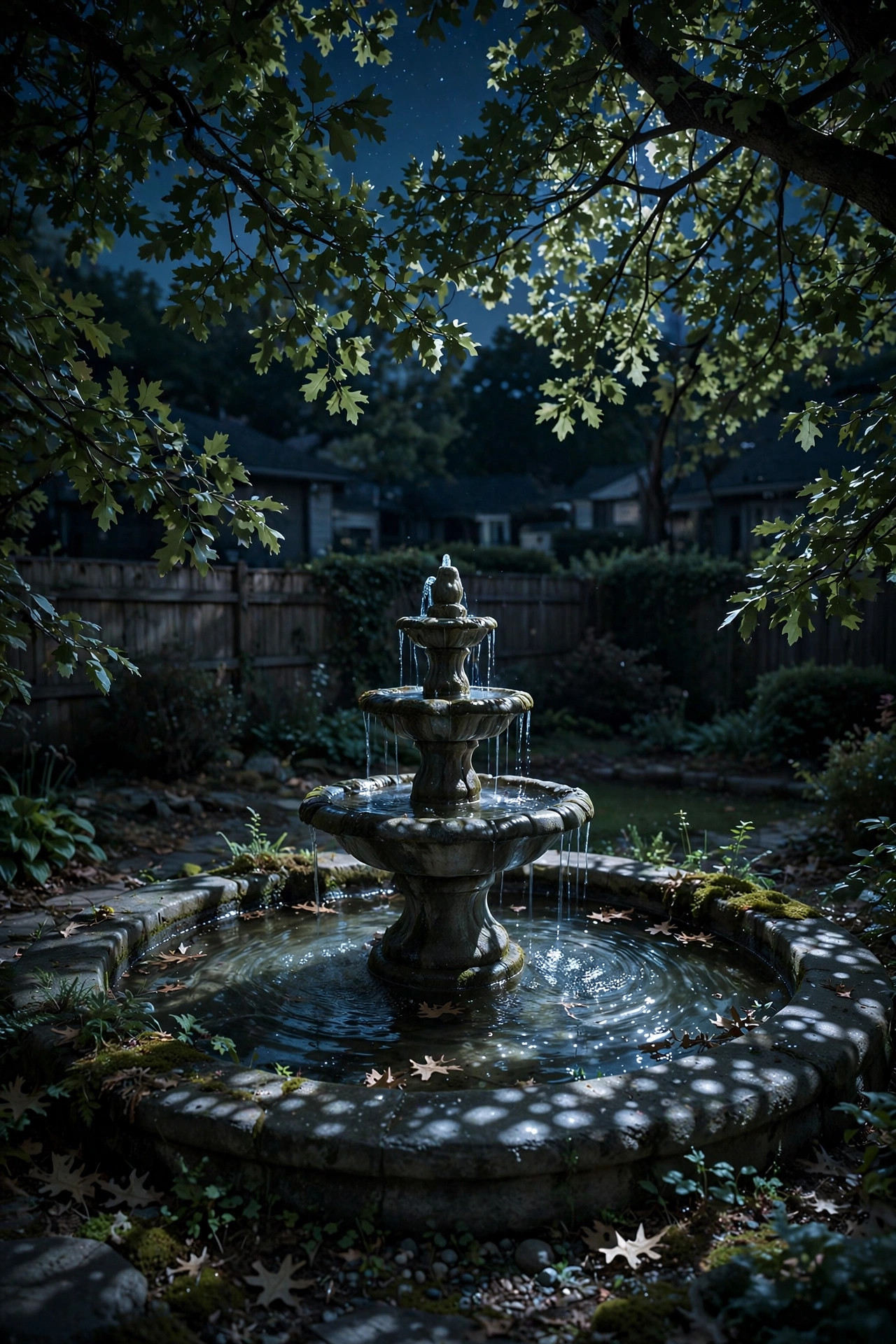
Moonlighting is the landscape designer's secret weapon, and fountains are its perfect subject. Instead of lighting the fountain directly, you mount a fixture 15–25 feet up in a tree (or on a tall pergola beam) and aim it down through the branches. The leaves break the beam into dappled, shifting patterns that land on the water like real moonlight — soft, romantic, and completely glare-free since the source stays out of sight.
Use a single wide-flood low-voltage fixture with a cool-white temperature around 4000K–5000K to mimic actual moonlight. Aim it so the beam center lands just off the fountain's edge; the spillover catches the spray and the basin rim. You'll need an arborist-style strap mount rather than screws if the tree matters to you — never drill into a living tree for a light. Run the cable down the back of the trunk in a dark cable sleeve so it disappears. Pair this with one small submersible spot and you've got the most sophisticated two-fixture fountain setup I know.
Suggested budget range: $60 – $150.
7. Ring Lights Around Fountain Nozzles
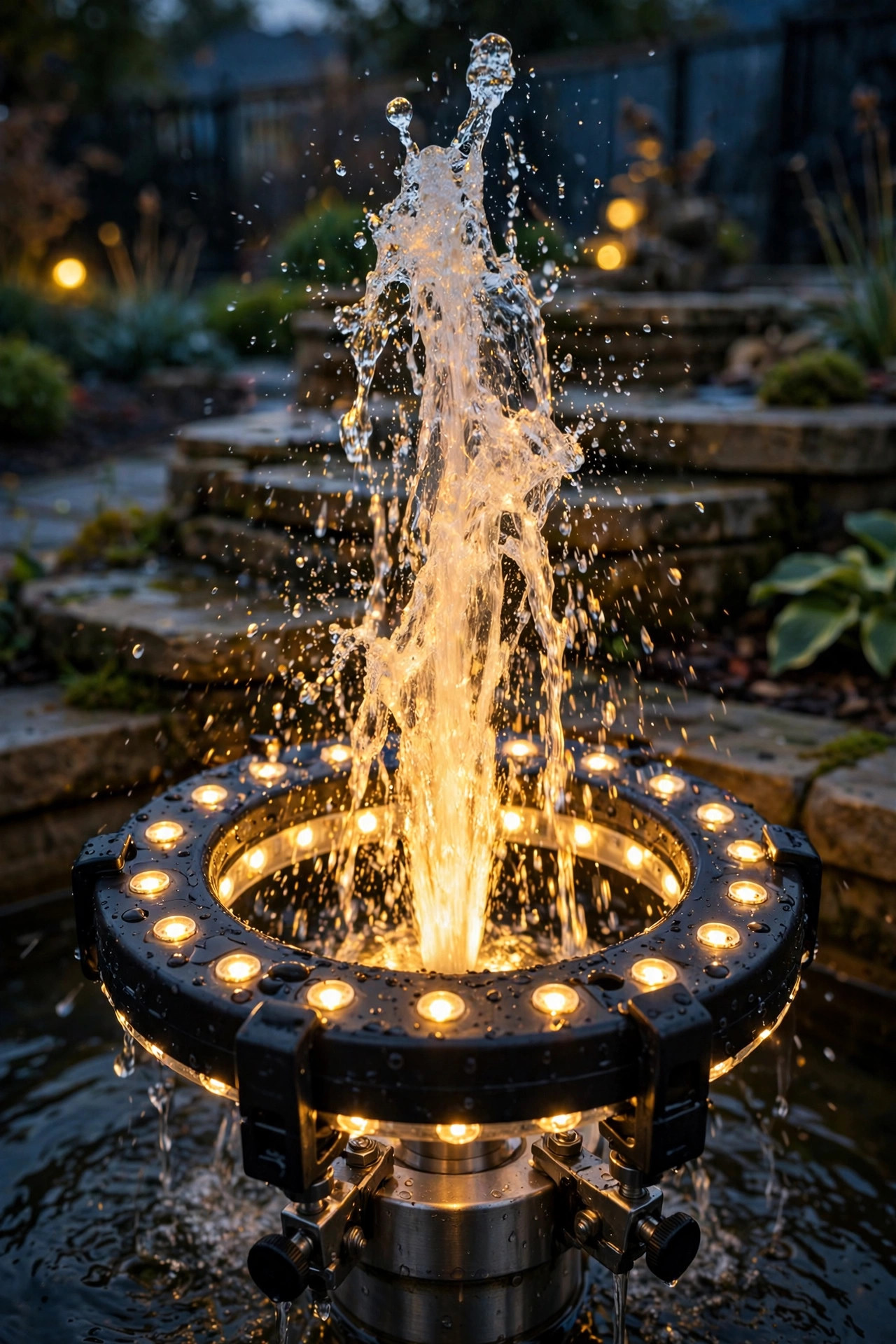
Ring lights are purpose-built for fountains: a circle of LEDs that clamps around the nozzle or pump outlet, so the light source sits exactly where the water erupts. The effect is concentrated and theatrical — the plume ignites right at its base and carries the glow upward. I love these on tiered fountains where each tier's nozzle gets its own ring, so the water looks like it's cascading between glowing pools.
Most rings come in 3-, 4-, and 6-inch diameters to match common nozzle sizes; measure your nozzle before ordering. They're IP68 submersible, 12-volt, and wire back to the same transformer as everything else. Installation takes ten minutes: slip the ring over the nozzle, tighten the clamp, tuck the cable along the pump line. A word on algae: because the ring sits right in the flow, it stays cleaner than lights on the basin floor, but give it a quick wipe when you clean the pump monthly. If your fountain has a wide, flat sheet of water instead of a nozzle, skip this idea and go with standard submersibles.
Suggested budget range: $25 – $55.
8. Underwater Lights in the Basin Walls
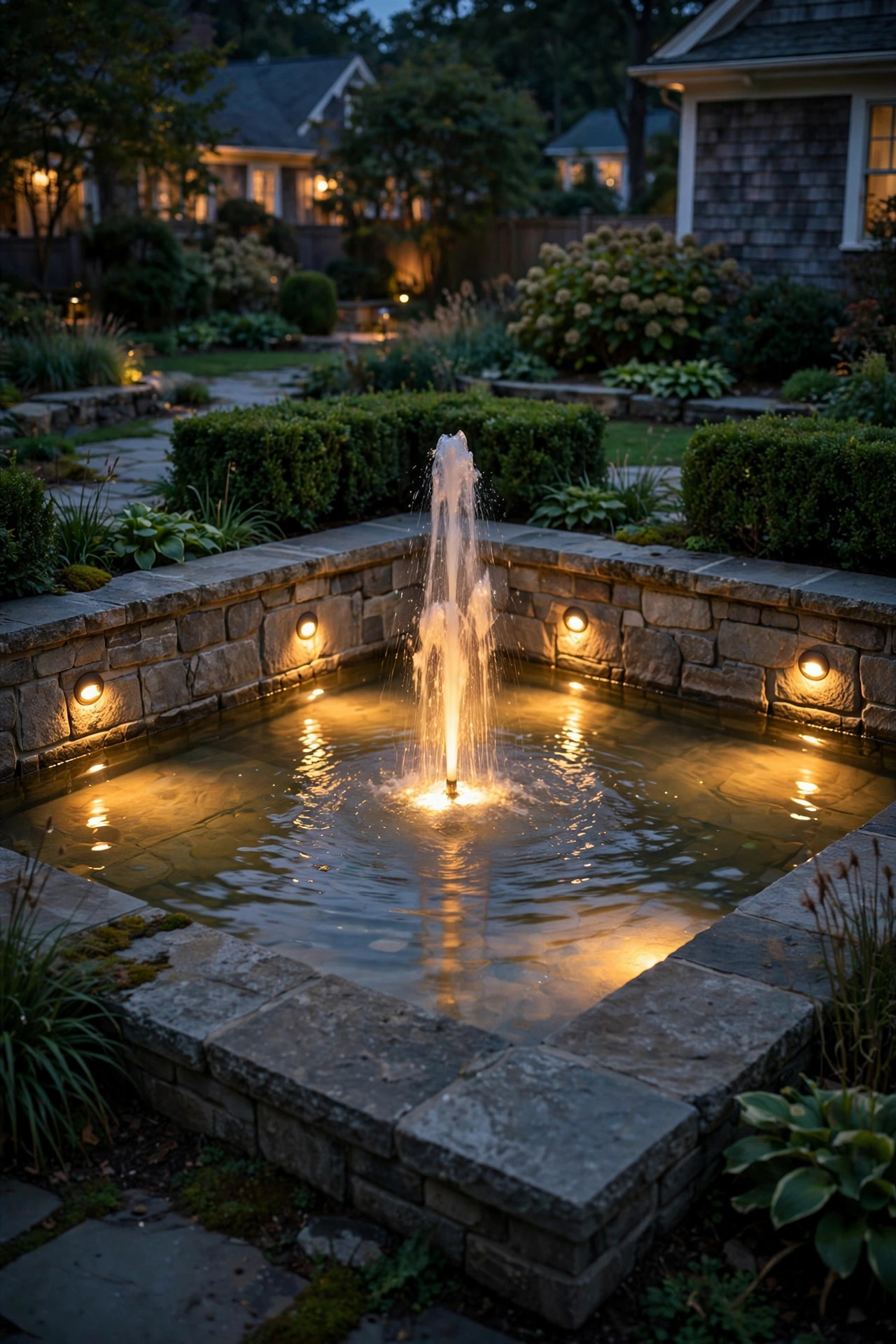
For built-in fountains — the kind set into a pond, a reflecting pool, or a masonry basin — wall-mounted underwater lights give you the most architectural look of all. Fixtures recess into the basin walls just below the waterline and wash the interior with even, shadow-free light. No visible fixtures, no cables in the water, just a basin that glows like it's carved from light.
These are typically installed during construction or a major renovation, since they need a niche or conduit in the wall. That said, surface-mount versions exist that bolt to the wall with a bracket and route cable over the rim — a solid retrofit option. Go IP68, 12-volt, and space them every 4–6 feet around the basin for even coverage. Match the color temperature to your other fountain lights so the whole composition reads as one design. And because these are permanent, spend the extra few dollars on marine-grade stainless or bronze housings; cheap plastic yellows and cracks within two seasons.
Suggested budget range: $50 – $140.
9. String Lights Draped Above the Fountain
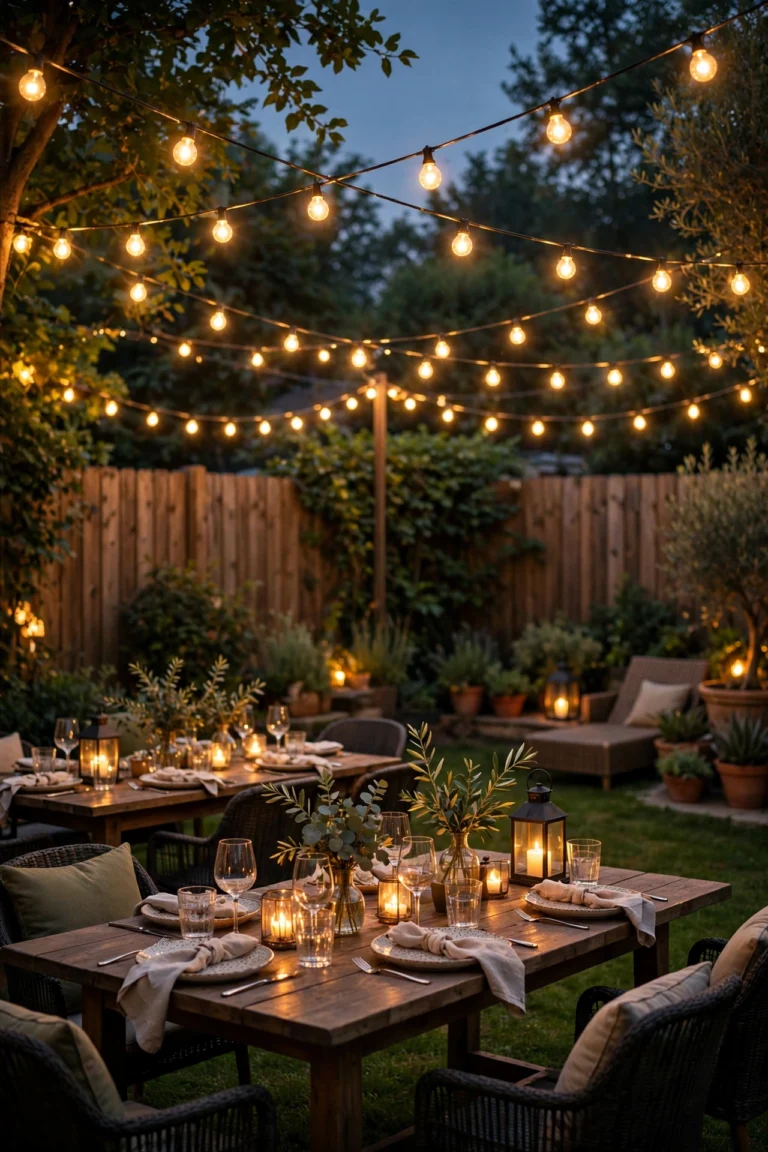
String lights over a fountain turn an ordinary water feature into a destination. Drape a swag of warm-white fairy lights from a pergola, between two shepherd's hooks, or across nearby branches so they hang 6–8 feet above the water. Their reflections double the effect — every bulb gets a shimmering twin in the basin — and the gentle movement of the water makes the reflections dance.
Use outdoor-rated strands (look for a wet-location listing) and keep the lowest bulbs at least 3 feet above the highest splash point; constant spray on connections shortens their life. Warm white at 2700K is the classic choice, though I've seen gorgeous results with soft amber. Plug them into the same dusk-to-dawn timer as your fountain pump so lights and water switch on together. For a grander version of this look, my guide to outdoor Christmas tree lighting uses the same draping techniques on a bigger scale — the principles transfer perfectly.
Suggested budget range: $20 – $60.

10. Fiber Optic Starfield in the Water
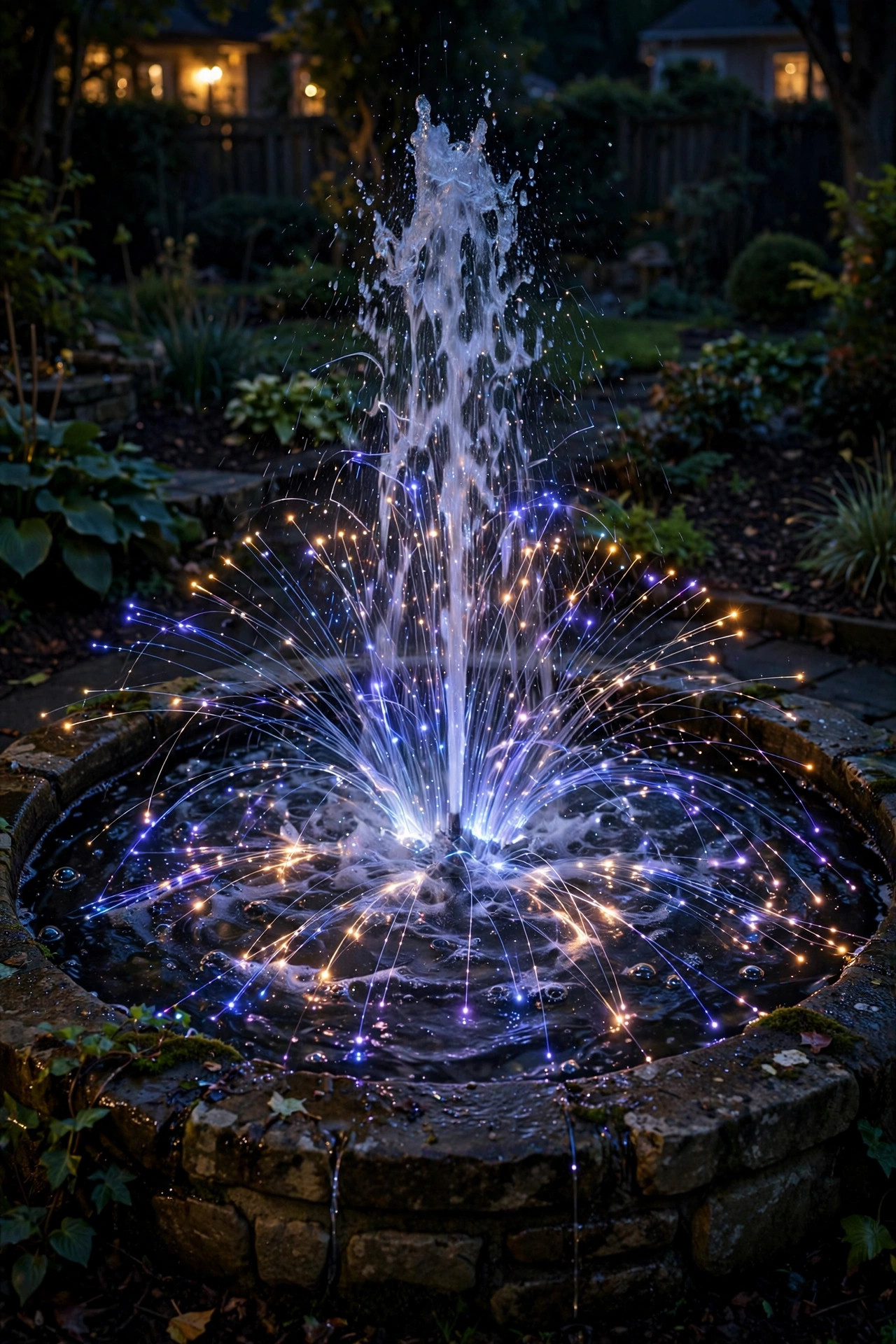
Here's the showstopper idea. A fiber optic kit threads dozens of hair-thin glowing strands through the water, and each strand tip twinkles like a star. The illuminator box sits safely on dry land — only the inert fiber strands enter the water, so there's zero electricity in the basin at all. The effect is genuinely magical: a fountain full of drifting constellations.
Installation is simpler than it sounds. Bundle 20–50 strands, weight the bundle near the nozzle with a small stone, and fan the strands through the water column. The illuminator (a small box with an LED or halogen source and usually a twinkle wheel) sits within 10–15 feet, connected by the fiber bundle through a conduit or discreet cable run. Many kits include a color wheel that slowly shifts the starfield through jewel tones. Maintenance is nearly zero — no algae on fiber tips, no bulbs to replace underwater. The one real cost is the kit itself, and you'll want to plan the fiber routing before the fountain is filled for the season.
Suggested budget range: $80 – $200.
11. Accent Lights on Surrounding Plants
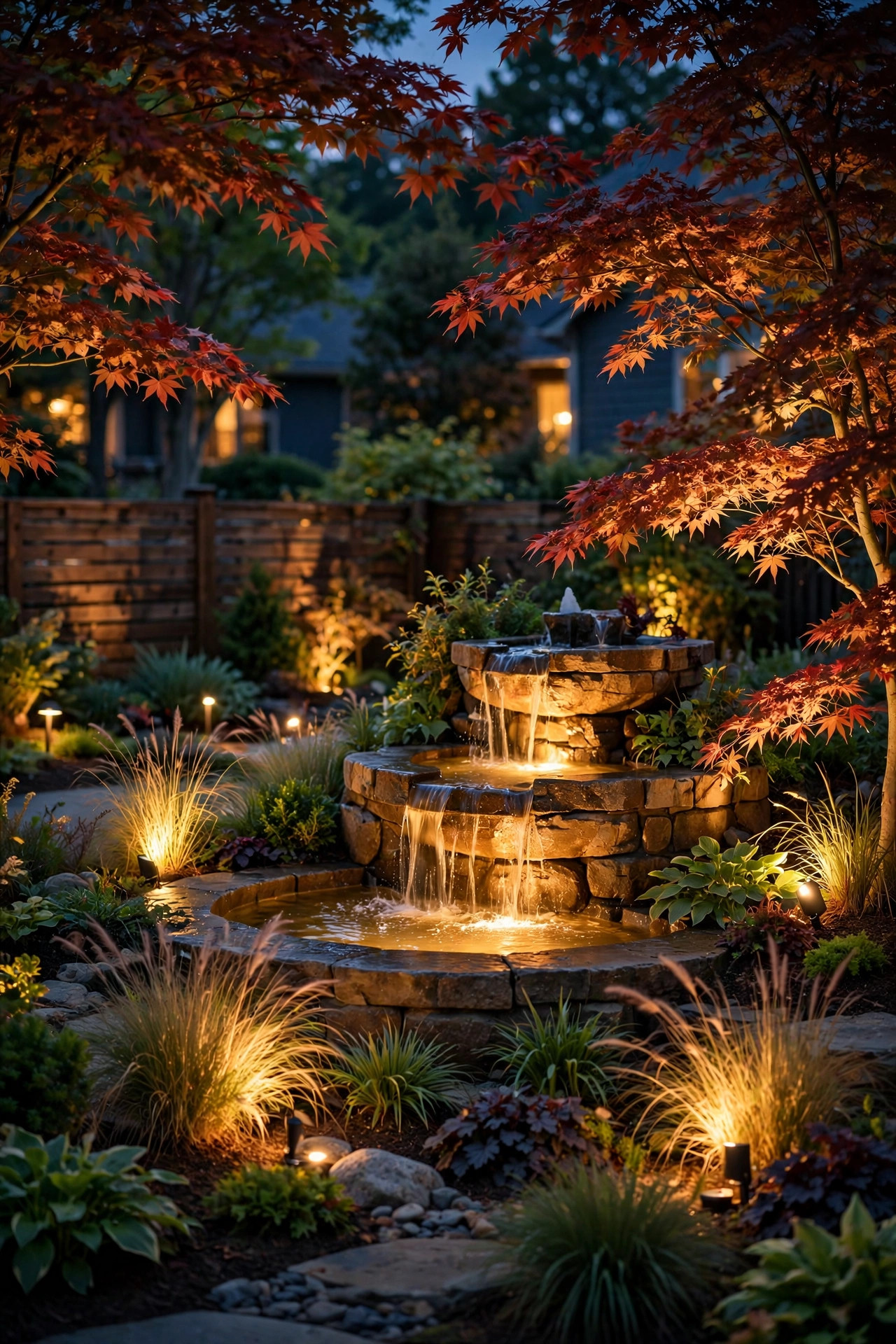
A fountain doesn't exist in isolation — the plants around it are half the composition. A few well-placed accent lights in the surrounding planting beds make the fountain feel nestled into a glowing garden rather than sitting alone in the dark. Aim small spotlights up through ornamental grasses, ferns, or a Japanese maple near the fountain; the backlit foliage creates a living frame around the water.
Place fixtures 12–18 inches from the plant base, angled to catch the foliage without blasting light into the water (you don't want hot spots competing with your submersibles). Warm white 2700K–3000K keeps the palette cohesive. These run on the same low-voltage transformer as everything else — one 100-watt transformer typically handles a fountain plus four to six accent lights with room to spare. In my experience, this is the idea that makes guests say "it feels like a resort back here," and it's often the cheapest per-fixture addition on this list.
Suggested budget range: $45 – $110.
12. Lanterns and Candlelight Around the Rim
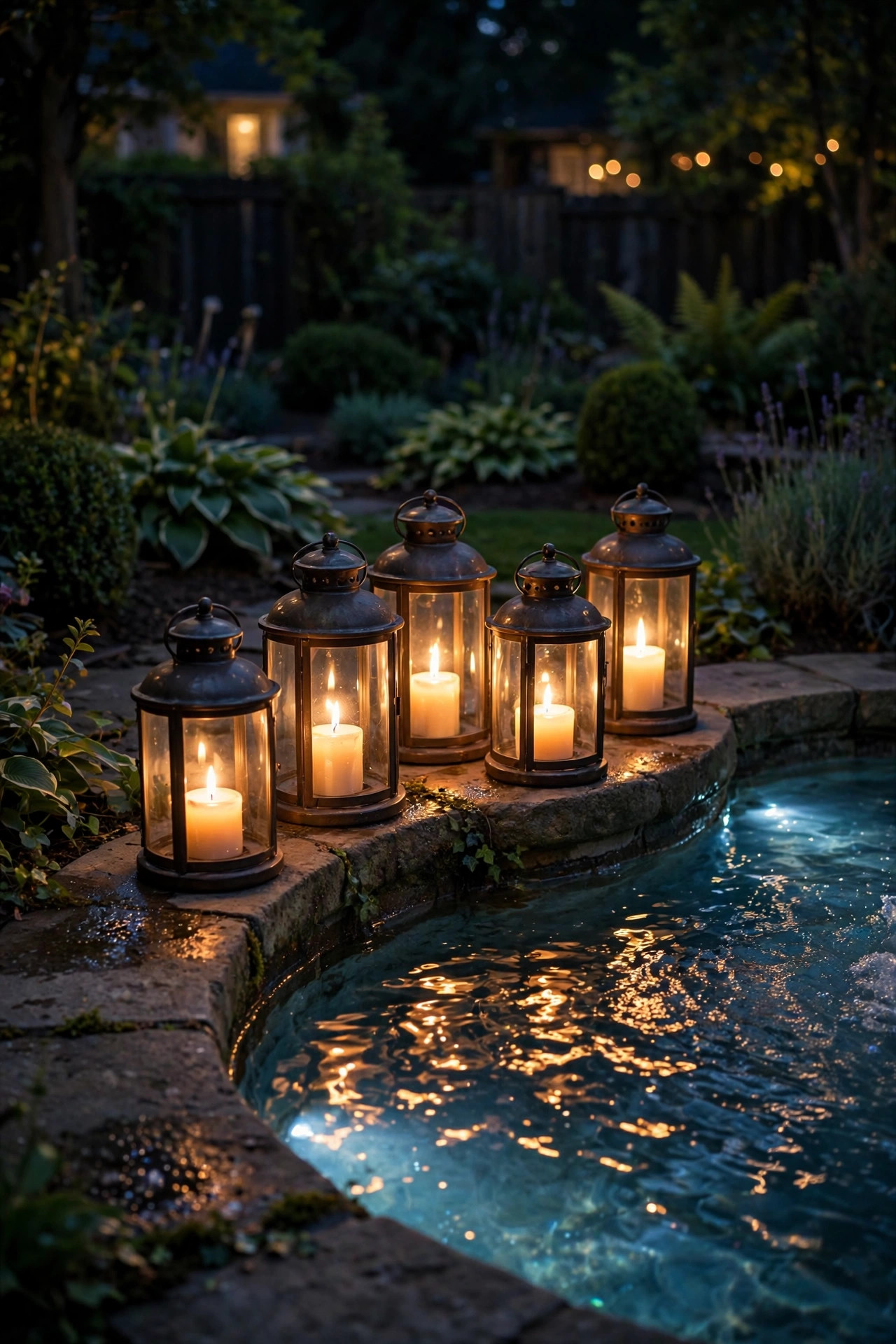
Not every fountain moment needs electricity in the water. A ring of real-flame lanterns or LED pillar candles set around the basin rim adds flickering, human-scale warmth that no LED can quite replicate. I do this for dinner parties: kill the bright submersibles, leave one soft uplight on the fountain, and let a dozen lanterns do the rest. The fountain becomes a glowing centerpiece for the table conversation around it.
Safety first, always. Keep open flames at least 2 feet from the basin edge and well clear of any splash zone — and never place candles where a gust could tip them into the water near electrical fixtures. Battery-operated flameless candles with a realistic flicker are the worry-free alternative, and modern ones genuinely fool people at a glance. Cluster lanterns in odd numbers (three or five) rather than spacing them evenly; it looks styled rather than staged. This is also your best option for fountains far from any power source, since the whole look runs on flame or batteries.
Suggested budget range: $30 – $80.
13. Smart Lights with App and Voice Control
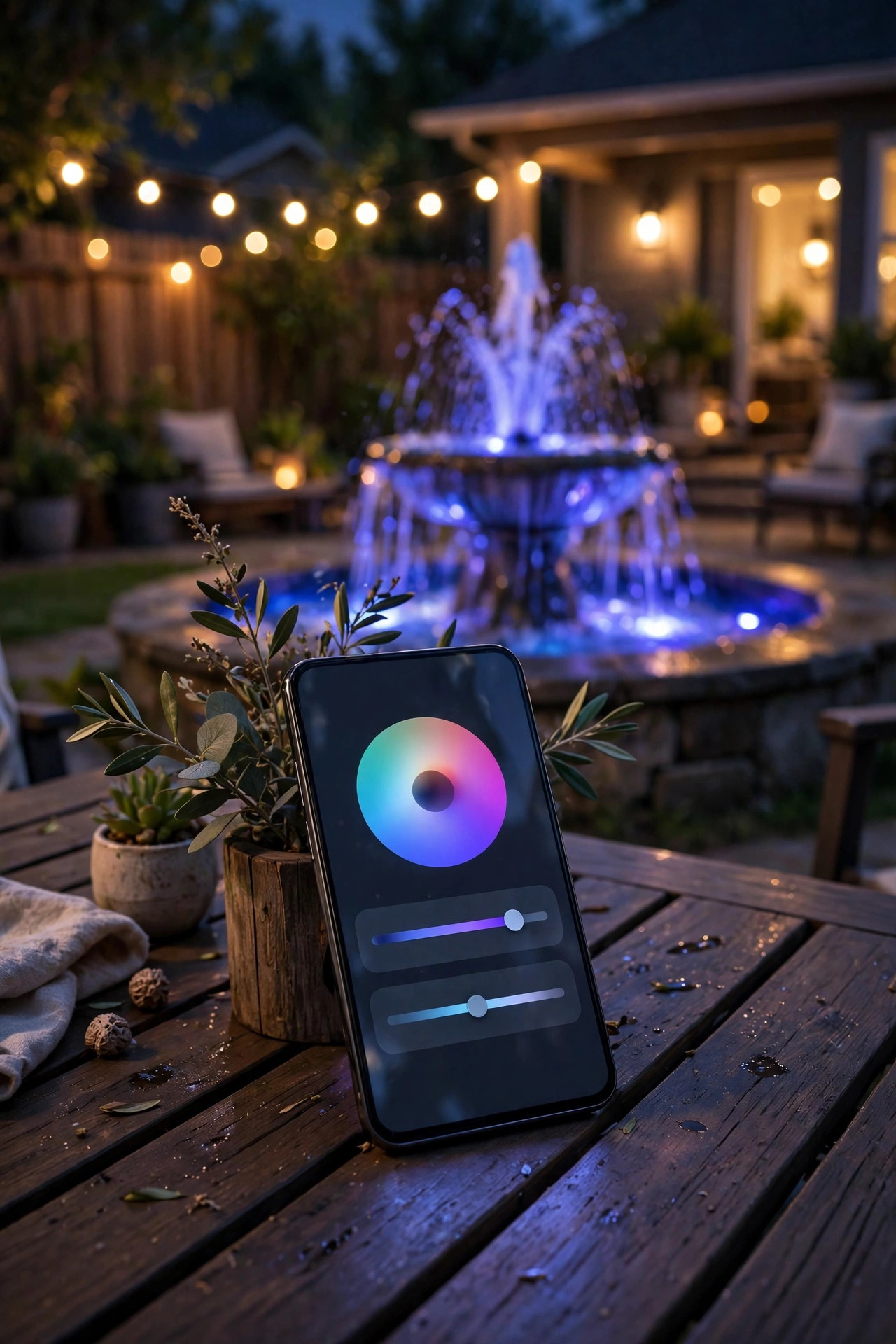
If you love tinkering, smart fountain lighting lets you dim, change colors, and schedule everything from your phone. Imagine saying "movie night" and watching the fountain fade to deep blue while the patio lights dim — that's the party trick these systems deliver. Most smart fountain setups use a Wi-Fi-enabled 12-volt controller inline between the transformer and the lights, so your existing submersibles become smart without replacing them.
Placement matters for reliability: the controller needs to sit in a weatherproof box within good Wi-Fi range of your house — I've seen too many setups where the controller at the far end of the yard drops offline nightly. Look for controllers with IP65-rated housings and a proper app (not just a Bluetooth remote with a sketchy name). Set schedules in the app rather than relying on the old plug-in timer, and use scenes: a bright "arriving home" scene, a dim "late night" scene.
Suggested budget range: $50 – $130.
14. Pump-and-Light Combo Kits
If you're buying a new fountain or replacing a dead pump, combo kits bundle a matched pump and submersible light set in one box — and they're the simplest path to a lit fountain. The pump and lights share one power cord and one timer, the light is already sized to the pump's flow, and you skip the whole puzzle of matching components. For first-timers, honestly, this is where I'd start.
These kits typically include one or two IP68 LED pucks with suction-cup mounts designed to sit right beside the pump, plus a splitter cable. Install them together: set the pump, position the lights 4–6 inches from the outlet, and route the single cable out of the basin to your GFCI outlet. Most include a small remote for brightness or color. The limitation is flexibility — you're locked into the kit's light count and placement — but for fountains under 3 feet wide, the kit's design is usually spot-on. Keep the receipt and the model number; when a puck eventually fails in three to five years, you'll want the exact replacement.
Suggested budget range: $40 – $100.
15. Seasonal Color Themes for Holidays
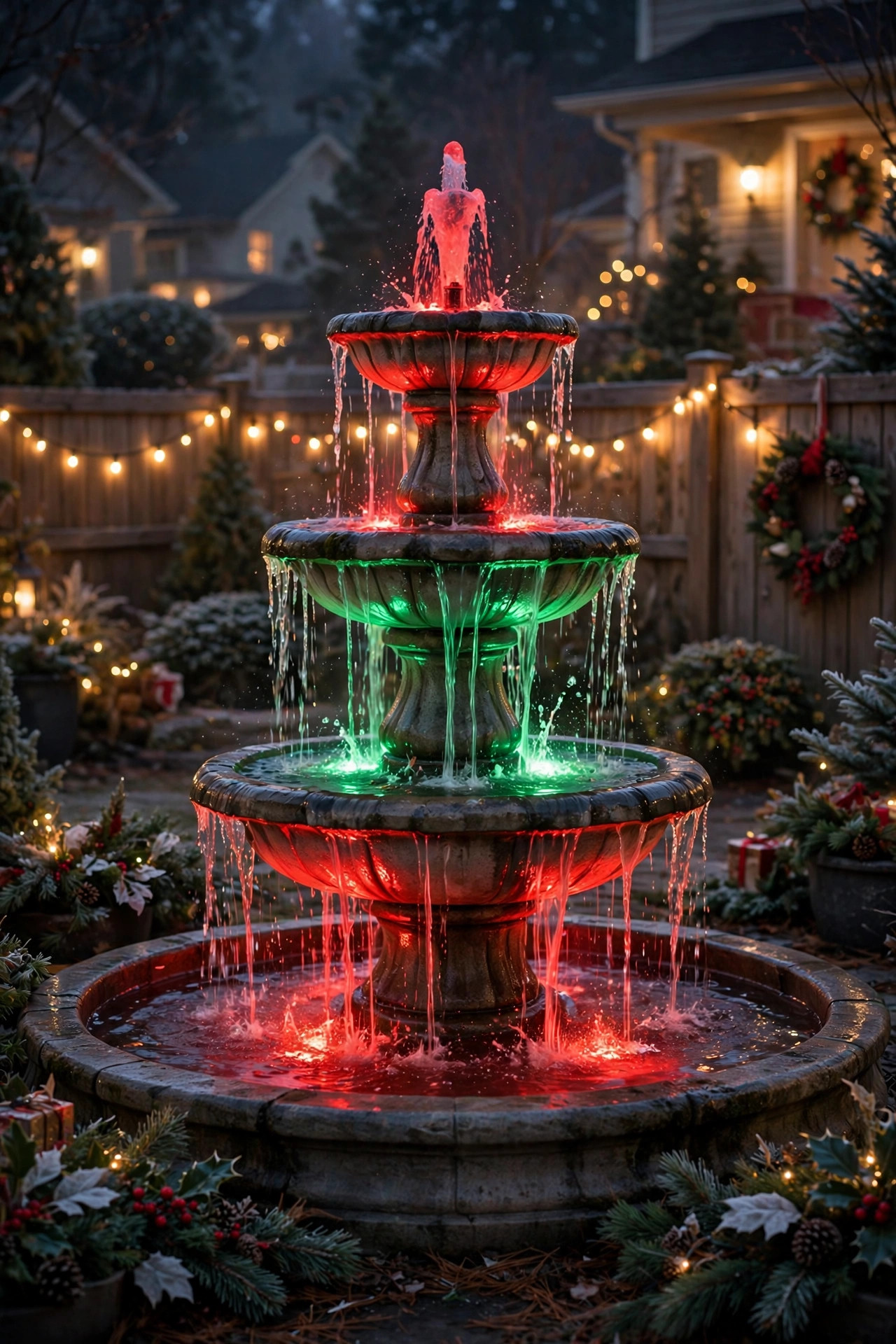
Your fountain can join the holiday decorating rotation. Swap your RGB lights to red and green for December, orange and purple for Halloween, red-white-and-blue for the Fourth of July — the water becomes a living decoration that changes with the calendar. This is the highest-fun-per-dollar idea on the list if you already own color-changing lights; it costs nothing extra.
The technique is simple: most RGB controllers have preset holiday programs, or you can dial in custom colors. For Halloween, deep orange from below with a purple uplight on the surrounding plants is genuinely spooky. For winter holidays, alternate red and green tiers on a multi-tier fountain. One practical note: if your climate freezes, you'll winterize the fountain anyway — plan your holiday lighting around the shutdown date, and consider moving one RGB puck to a nearby planter or birdbath so the show continues after the water's drained. Time it with your other seasonal decorating; the fountain becomes the anchor of the whole display.
Suggested budget range: $0 – $30.
Frequently Asked Questions
What IP rating do fountain lights need to be safe underwater?
Any fixture that sits below the waterline should be rated IP68, which certifies it for continuous submersion. IP67 (protected against temporary immersion) is fine for floating lights that bob on the surface, and IP65 is enough for fixtures around the basin that might get splashed but never sit underwater. In my experience, the rating stamped on the fixture matters more than any marketing claim — if it doesn't say IP68 on the housing or the spec sheet, don't submerge it.
Should I use submersible lights or spotlights aimed at the fountain?
Use both — they do different jobs. Submersible lights make the water itself glow from within, which is the signature fountain look. Spotlights aimed at the fountain from outside light the stonework, the tiers, and the surrounding plants. A fountain with only exterior spotlights looks lit but flat; a fountain with only submersibles can look like it's floating in darkness. The layered combination is what makes professional installations look professional.
How do I keep fountain lighting safe around water and electricity?
Three rules, no exceptions. First, every outlet powering fountain equipment must be GFCI-protected — that's the outlet with the test and reset buttons, and it's required by electrical code near water. Second, use low-voltage (12-volt) lighting with an outdoor-rated transformer rather than running line voltage to the fountain. Third, keep all connections, transformers, and controllers in weatherproof boxes above the waterline and away from splash zones. When in doubt, my electrical safety tips guide covers outdoor wiring rules in more detail, and anything involving a new circuit or hardwiring deserves a licensed electrician.
How much does it cost to run fountain lights each month?
Less than you'd think. A typical setup — two or three LED submersible pucks plus a couple of accent lights — draws about 15–25 watts total on a 12-volt system. Run 6 hours a night at average US electricity rates and you're looking at roughly $1–$3 per month. Solar and battery options cost nothing to run at all. The pump itself usually costs more to operate than the lights, so lighting is rarely the line item that moves your electric bill.
Conclusion
Fifteen ideas, one glowing water feature — and honestly, you don't need all fifteen. Start with a single submersible spotlight, layer in an uplight or two around the base, and you'll wonder why you waited so long. The best fountain lighting ideas aren't about the fanciest fixtures; they're about light that flatters the water, respects the darkness around it, and turns an ordinary evening into something worth lingering over. Pick the two or three ideas that fit your fountain and your budget, install them this weekend, and then pour yourself something cold and go watch. If you're hungry for more after that, browse our other outdoor lighting ideas — your patio, garden beds, and walkways are all waiting for their own after-dark transformation.