There is a special kind of tired that comes from being the household light switch — flipping the porch light on at dusk, remembering it again at bedtime, finding it still burning at noon the next day. I gave up that job years ago, and photocell outdoor lights are the reason why. A photocell is just a tiny light sensor with excellent judgment: it watches the sky, turns your lights on when real darkness falls, and switches them off at dawn, every single day, without being asked. In this post I am sharing the 17 ways I use that one clever sensor across a porch and a path — built-in lanterns, screw-in adapters, swivel sensors for shady corners, solar stakes, even a photocell-and-timer pairing that gives me a midnight curfew. My whole lighting philosophy is layering: a welcoming layer at the door, a guiding layer along the walk, small accents where the eye lands. Photocells make every one of those layers self-running, and they forgive the seasons in a way no clock timer can. Here is how to put your porch and path on autopilot, beautifully.
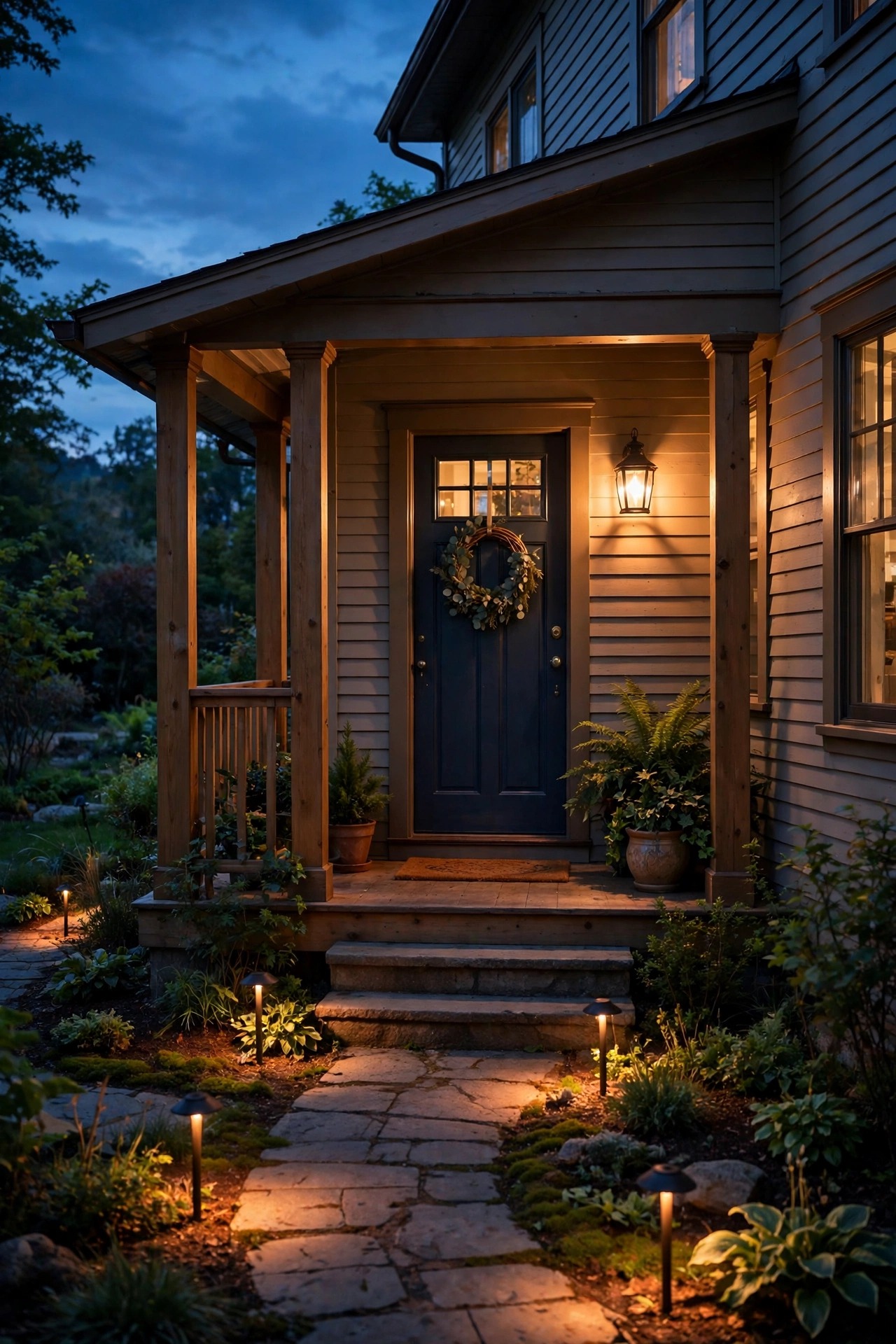
1. The Built-In Porch Lantern — Photocell Outdoor Lights at Their Simplest
If you make only one change from this whole list, make it this one: swap your porch lantern for a fixture with the photocell built right in. The little sensor eye sits on top of the fixture or tucked beneath the canopy, watching the sky instead of a clock, so the light wakes at true dusk — early on a December evening, later on a June one — and that seasonal forgiveness is the entire point. Installation is the same three-wire job as any lantern swap: kill the breaker, match the wires, hang it, done. From that night on, the light simply handles itself. Choose a warm 2700K LED behind seeded or frosted glass so the glow feels like candlelight rather than a parking lot, and size the fixture to your door — a good rule is roughly a quarter of the door height. I leave the wall switch on around the clock and never think about it again; the lantern sips a trickle of power to keep its eye open and just a few watts to burn all night, which works out to pennies a week. It is the friendliest possible introduction to a self-running entry, and honestly the one I recommend to every neighbor who asks.
Suggested budget range: $35 – $90.

2. Screw In a Photocell Adapter and Keep the Lantern You Love
Maybe your porch lantern is perfect already and only the remembering part is broken. A screw-in photocell adapter fixes exactly that: it threads into the socket, your bulb threads into it, and the little eye on its side takes over the thinking. The whole upgrade takes two minutes and zero wiring, which makes it my favorite recommendation for renters and for anyone not ready to replace a fixture. A few honest cautions from my own trial and error. The adapter adds about an inch of length, so check the bulb still fits under the glass. The sensor eye has to face outward toward daylight — give the adapter a slow turn until the eye looks at open sky, not at the wall. And buy an adapter rated for LED bulbs and for enclosed fixtures if yours is closed in, because trapped heat shortens everybody's lifespan. The one real weakness is a deeply shaded porch: if the socket lives in permanent twilight behind a column or under a low roof, the adapter may keep the light on half the day. That is fixable too — it is exactly what the next idea is for.
Suggested budget range: $8 – $18.

3. Put the Sensor on a Stem and Swivel It Toward Open Sky
Some porches are caves. Deep eaves, a wraparound roof, a north-facing entry that never sees direct sun — in all of these, a built-in sensor sits in shadow all day and honestly believes it is midnight at noon. The answer is a remote photocell on a short stem with a swivel joint, wired at the junction box so the fixture stays where it belongs while the eye moves to where the sky actually is. You mount the little sensor pod at the edge of the porch roof, on a fascia board, even around the corner of the house, then aim it at the brightest patch of open sky you can find. The swivel matters more than people expect: a few degrees of tilt can be the difference between a sensor reading real dusk and one reading the shadow of your own gutter. This is the one job on the list where I will say hire an electrician if box wiring makes you nervous — it is a short visit and worth every penny. Once it is aimed, a shaded porch behaves exactly like a sunny one, on at dusk and off at dawn, no babysitting.
Suggested budget range: $12 – $30.

4. Mount the Eye Where It Cannot See Its Own Light
Now for the complaint I hear most: the light comes on at dusk, shines happily for a moment, clicks off, sits in darkness, clicks on again — all night long, like it is haunted. It is not haunted. The sensor is watching its own light. The fixture turns on, the eye sees that brightness and decides dawn has arrived, the light goes off, darkness returns, and the whole loop starts over. This flicker loop is almost always a placement problem, and placement is free to fix. Give the sensor a view of sky and only sky: mount it above the fixture's beam or off to the side, never facing a pale wall the light washes, and never where a streetlight or a neighbor's floodlight can pour straight into it. A tiny shield or visor over the eye works wonders on stubborn porches. Then do the dusk test: stand outside as darkness falls and watch one full cycle. Still cycling? My notes on photocell light troubleshooting walk through the deeper causes, including worn sensors. And keep the eye clean — a summer of dust and one spider web can dim its whole world.
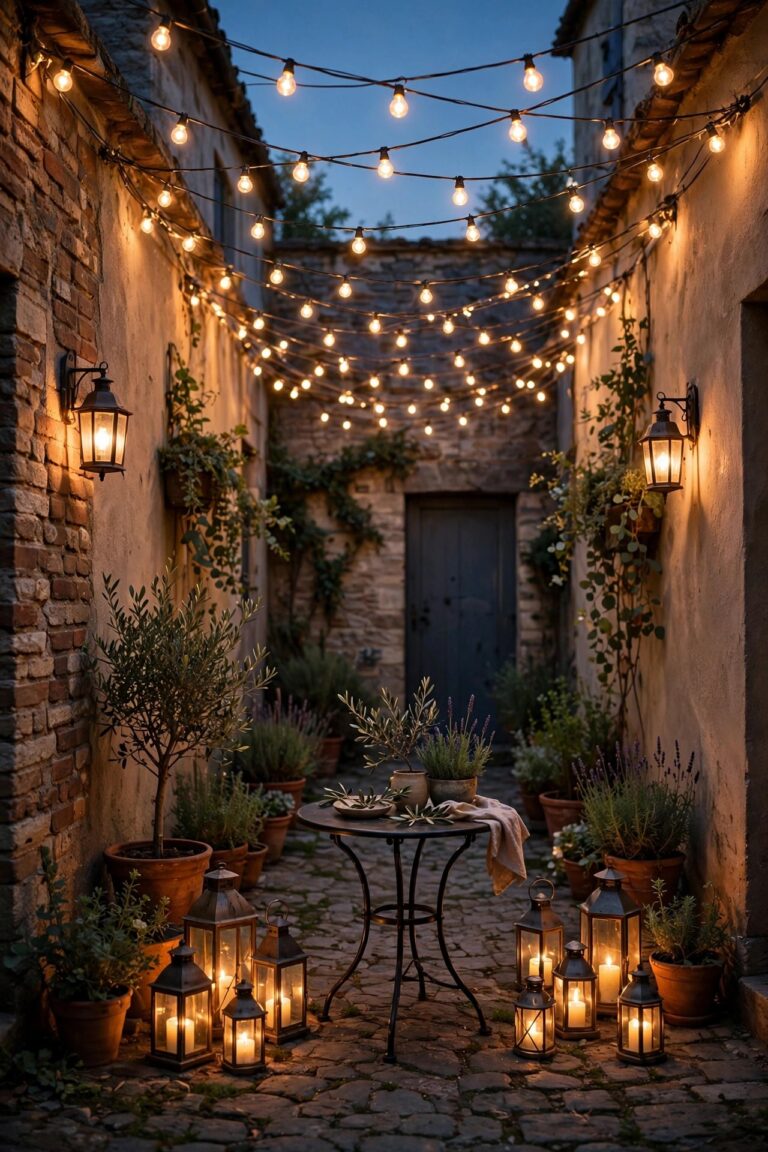
Suggested budget range: $0 – $20.

5. Pair a Photocell With a Timer and Get a Midnight Curfew
Here is the one thing a photocell cannot do on its own: it has no idea what time it is, so dusk-to-dawn means exactly that, all night long. Some of us love that. Some of us have bedroom windows, light-sensitive neighbors, or a simple wish to stop feeding the moths at 2 a.m. The fix is to let each control do the job it is good at. The photocell decides when the lights start, following real dusk through every season. A timer wired after it decides when they stop — 11 p.m. at my house, later on weekends if I am feeling social. No more lights burning to an empty street at 4 a.m., and no more reprogramming a clock timer every month as sunset drifts. Plenty of low-voltage transformers now build both controls into one box, which makes this the easiest upgrade on the whole list. If you are adding the pairing to an existing porch light, my step-by-step on how to add a photocell and timer to a porch light covers the wiring order that matters. It is the combination I recommend when someone says they want set-and-forget with a bedtime.
Suggested budget range: $15 – $45.

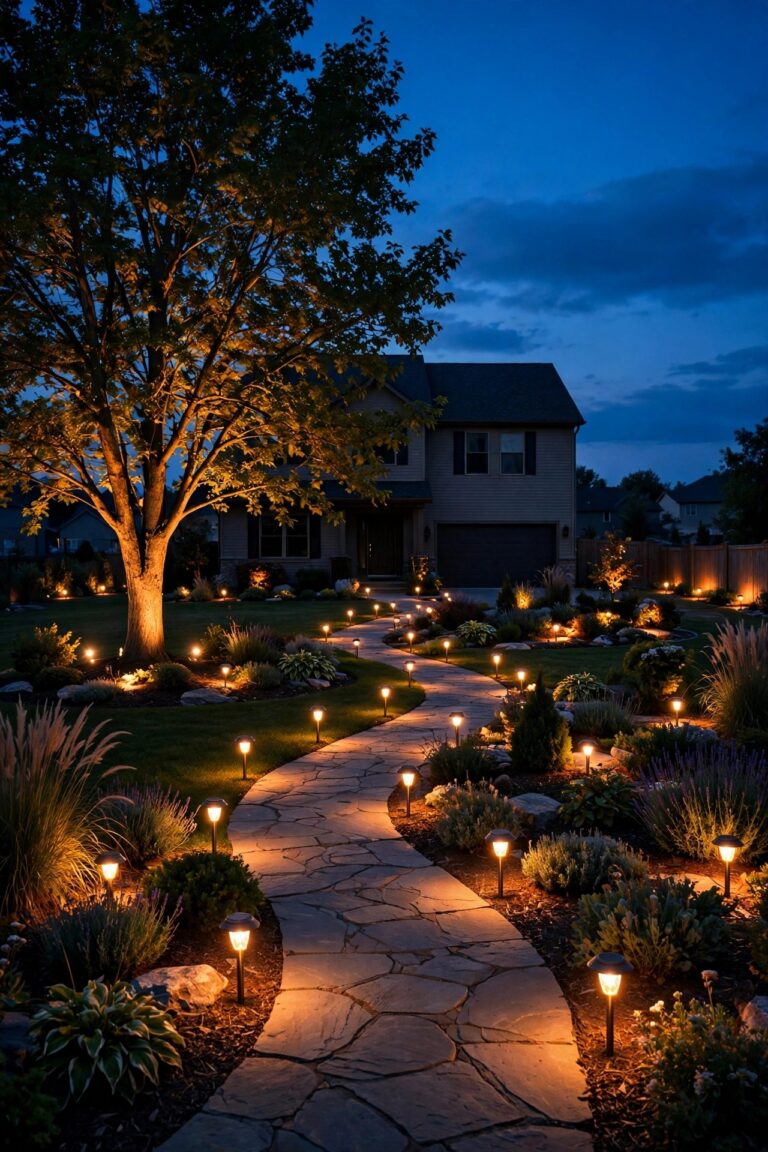
6. Run the Whole Path From One Photocell Transformer
A path lit by six separate fixtures should not need six separate decisions. A low-voltage transformer with a built-in photocell gives the whole run one brain: when its eye says dusk, every path light wakes together, and a mode dial lets you choose off at dawn or off after four, six, or eight hours. The wiring is the friendly kind — a cable run along the bed, fixtures that pierce or clamp on where you want them, everything at a safe 12 volts you can rearrange on a Saturday whim. Space the lights about six to eight feet apart and stagger them slightly rather than lining up a runway; overlapping pools of light are what read as expensive. One practical warning from my own yard: the transformer's eye needs honest sky. Mine lives on the side of the house, and the first month it sat under a wide eave in day-long shadow, running the path lights until mid-morning. Moving it two feet into real daylight fixed everything. Many transformers include a remote eye on a short lead for exactly this situation — use it, and keep that one sensor clean instead of maintaining ten.
Suggested budget range: $120 – $300.
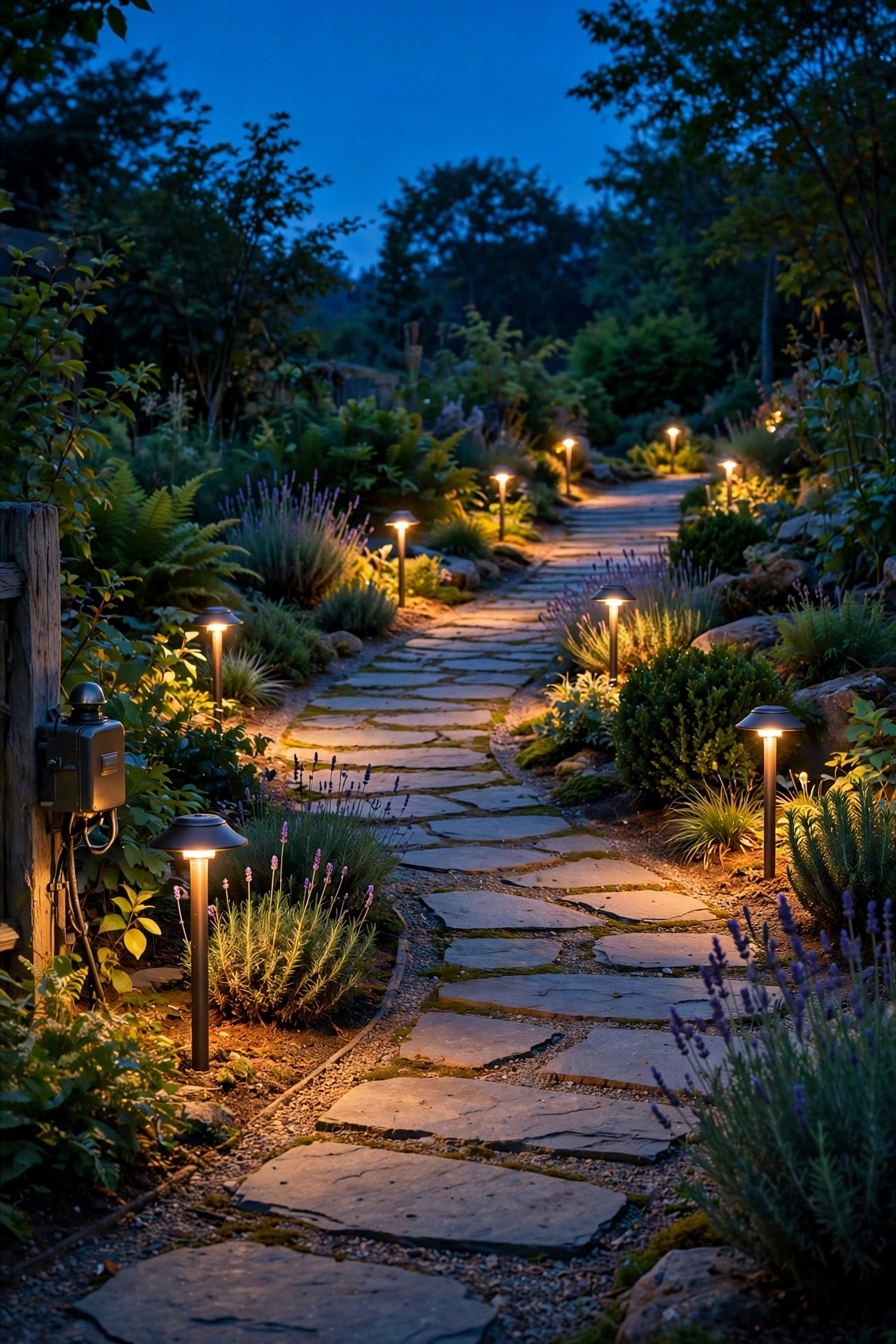
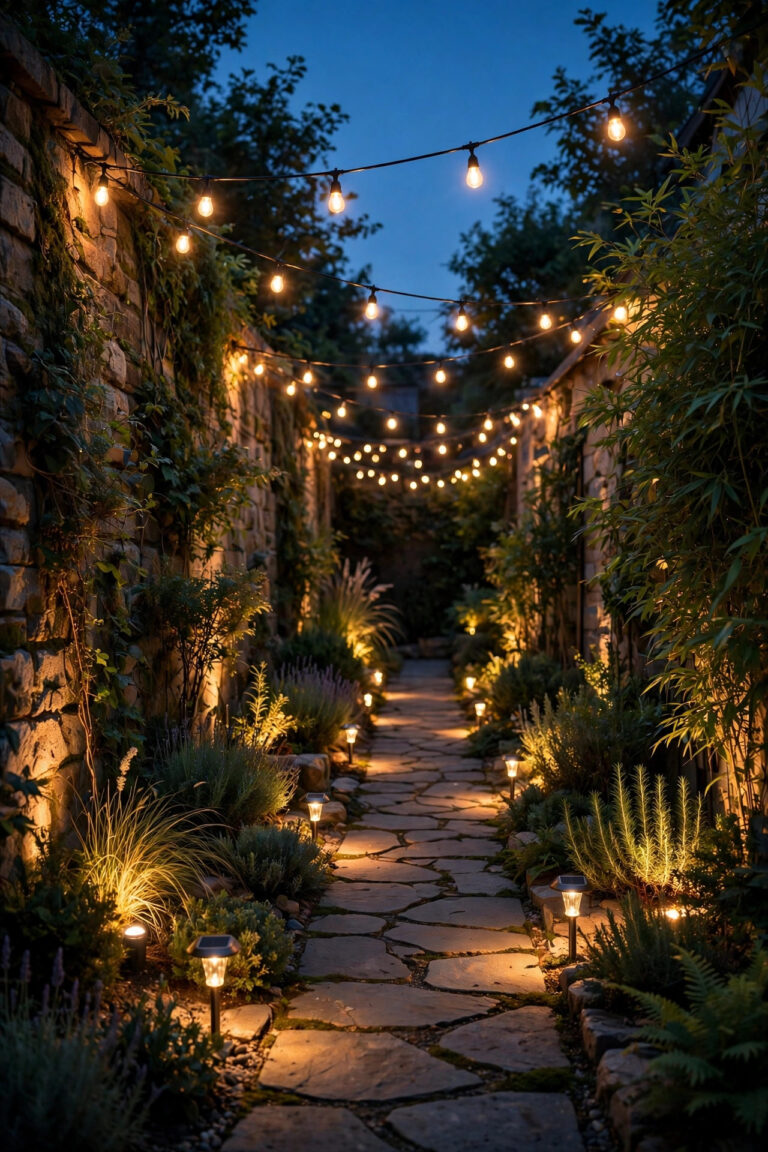
7. Let Solar Path Stakes Each Think for Themselves
Every solar path stake already carries its own tiny photocell — that little dark panel on top is both its charger and its brain, and when daylight fades past a certain point, the light switches itself on. No transformer, no cable, no outlet: just push the stake into the soil and let it think. The charm is real, and so is the one behavior nobody warns you about. Each stake judges dusk by its own patch of garden, so the one tucked under the hydrangea will wake an hour before the one in open lawn and quit earlier too, having spent its smaller day of charging. Honestly, I have come to like the staggered wake-up — it looks natural, like the garden settling in layers. To keep the set happy, place every panel where it honestly gets six or more hours of direct sun, wipe the tops when you deadhead, and give a new set a full sunny day of charging before its first night. Set expectations kindly for winter: shorter days mean shorter evenings of light. For a no-wiring walkway that still thinks for itself, nothing on this list is simpler.
Suggested budget range: $30 – $70.

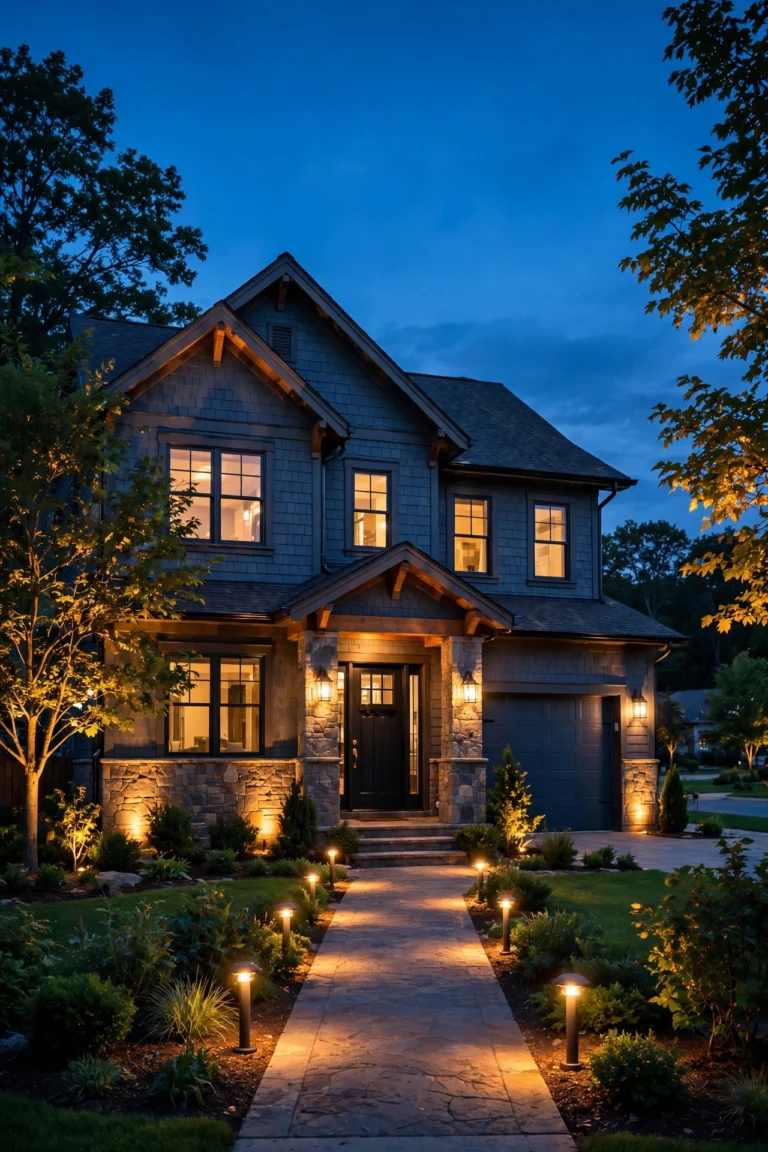
8. Line the Walk With Photocell Bollards for a Hotel-Calm Glow
Bollards are the quiet luxury of path lighting — short posts that throw their light downward in a calm, even pool, with no glare in your eyes and no runway stripes up the walk. Wired versions tie beautifully into the transformer from idea six, but plenty of modern bollards carry their own built-in photocell, which means each post handles its own dusk and dawn even if the rest of the system changes. That independence is lovely along a long walk or a driveway edge where running new cable would be a project. Choose louvered or fully shielded tops so all the light lands on the ground where feet go, and keep the color warm — 2700K keeps stone and mulch looking rich instead of clinical. Spacing is closer than people guess: five to seven feet apart lets the pools just kiss, and the effect reads like a boutique hotel path. Set them plumb, because a leaning bollard announces itself every single night. I run three along our side walk where the transformer circuit never reached, and visitors consistently assume they were the expensive professional part of the yard. They were the easiest.
Suggested budget range: $90 – $260.

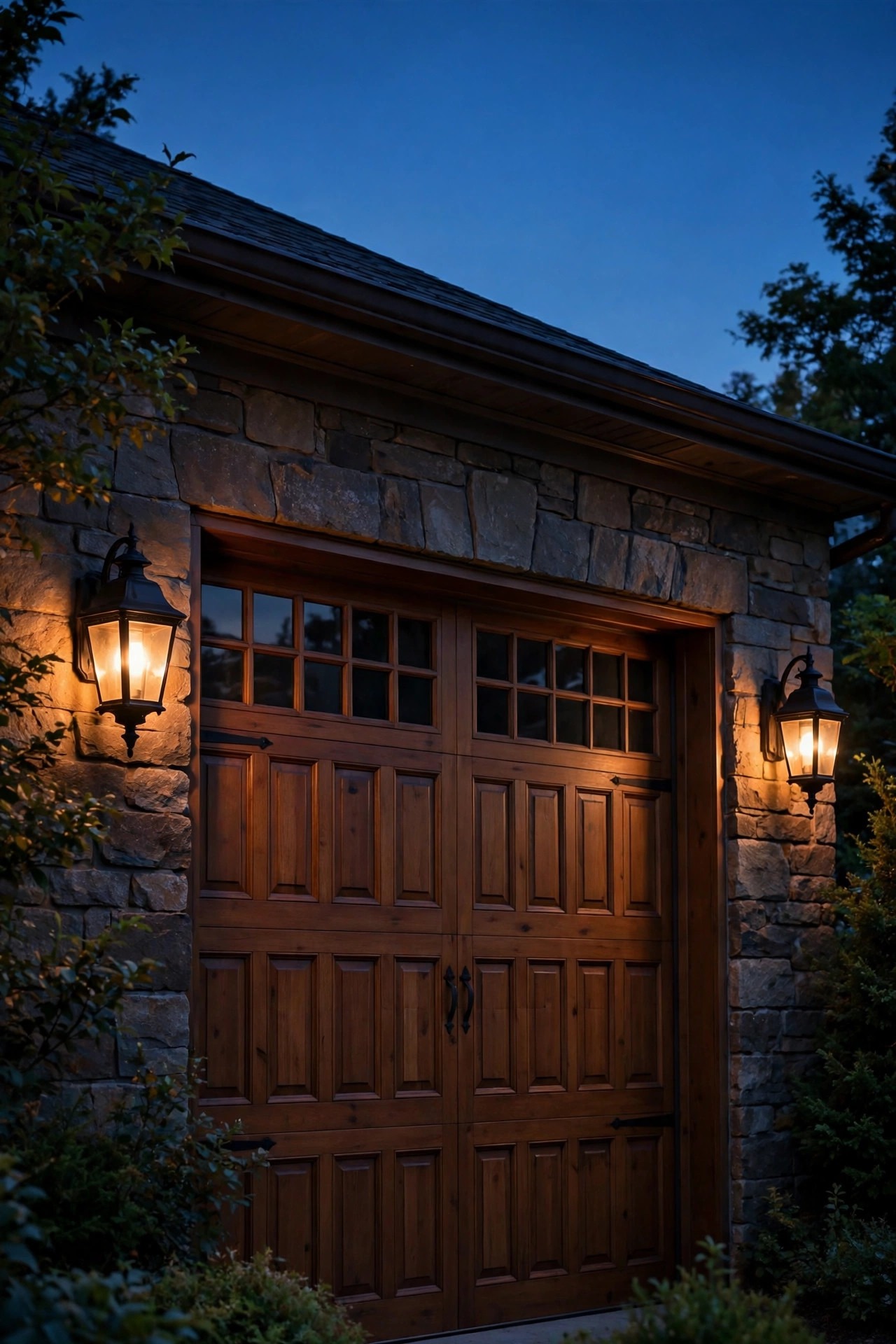
9. Flank the Garage With Dusk-to-Dawn Coach Lights
The garage door is the biggest blank wall most of us own, and a pair of coach lights with built-in photocells is the hardest-working upgrade it can get. They welcome you home down the driveway, they keep the apron of concrete readable for guests backing out, and they do it every night without a single thought from you. Match the finish and silhouette to your porch lantern so the front of the house reads as one family, and hang them at about eye level on either side of the door — roughly 66 inches to the center of the fixture works for most homes. One placement detail worth knowing: most coach-light sensors sit on top of the fixture, which is exactly where passing headlights cannot reach them, so the driveway stays lit when a car sweeps past rather than blinking off in confusion. If you want the broader tour of fixtures that run themselves all night, my guide to dusk-to-dawn outdoor lights goes room by room around the whole exterior. This pair plus the porch lantern is the combination that made our house look occupied and cared for even on nights we were three states away.
Suggested budget range: $60 – $160.
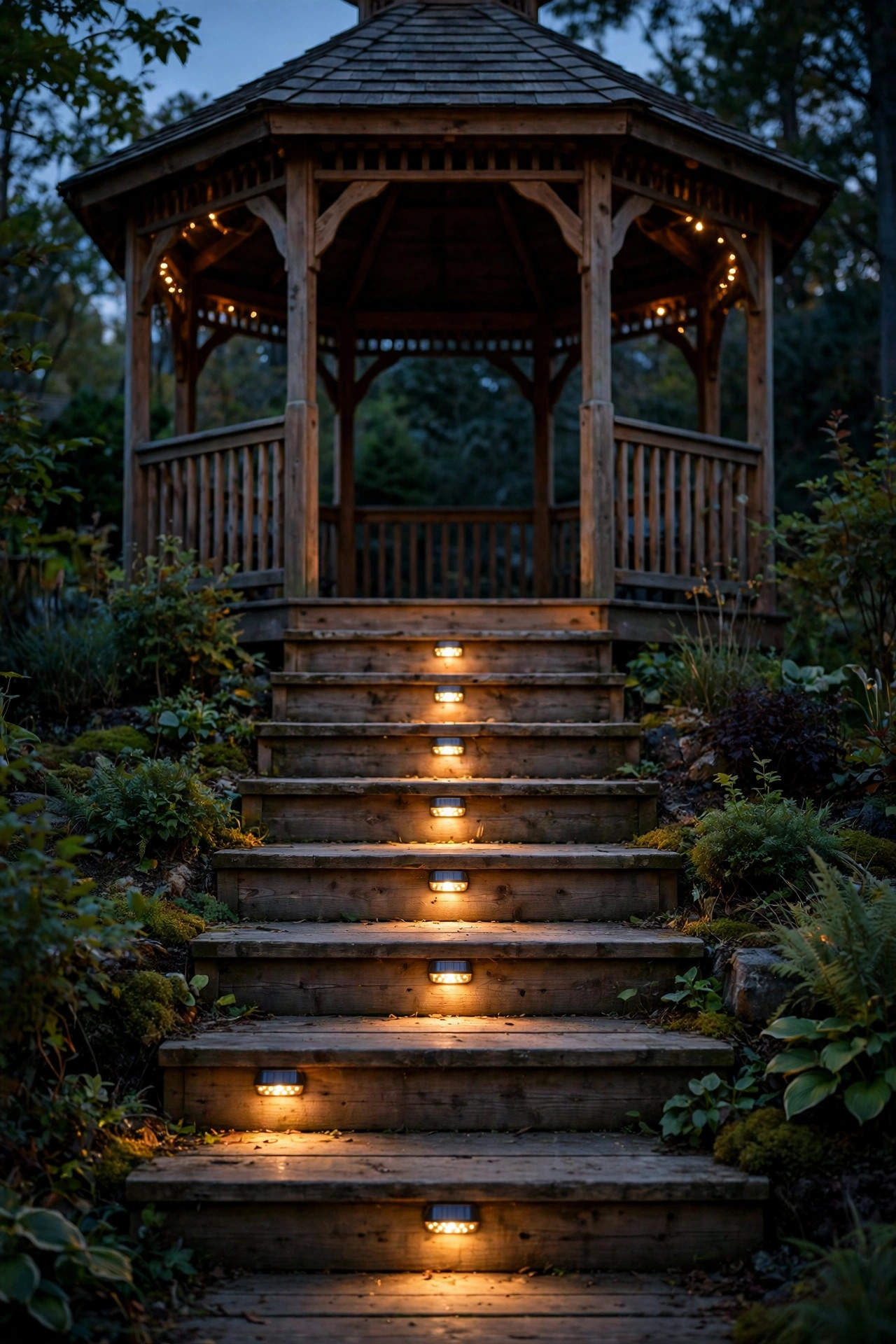
10. Add Photocell Step Lights So the Stairs Light Themselves
Steps are where good lighting stops being decoration and starts being kindness. A guest carrying a casserole, a kid racing the dog, your own arms full of grocery bags — everybody deserves treads they can actually see. Small recessed or surface-mounted step lights, tied into your low-voltage run so the transformer's photocell wakes them with everything else, wash each tread in a soft even sheet of light with no hot spots and no shadows at the edges where feet land wrong. One light per step is the deluxe version; one every other step still reads beautifully if the wash overlaps. Solar step lights with their own little sensors work too, with the usual solar warning: a step tucked under a deep porch roof may not charge enough to last the night, so test one before you buy eight. My honest preference is wired steps on the shared transformer — one brain, one schedule, no surprises. Aim the light across the tread, never up into eyes, and keep the color warm so the staircase feels like part of the welcome rather than a strip of airport.
Suggested budget range: $25 – $80.
11. Guard the Side Yard With a Shielded Photocell Flood
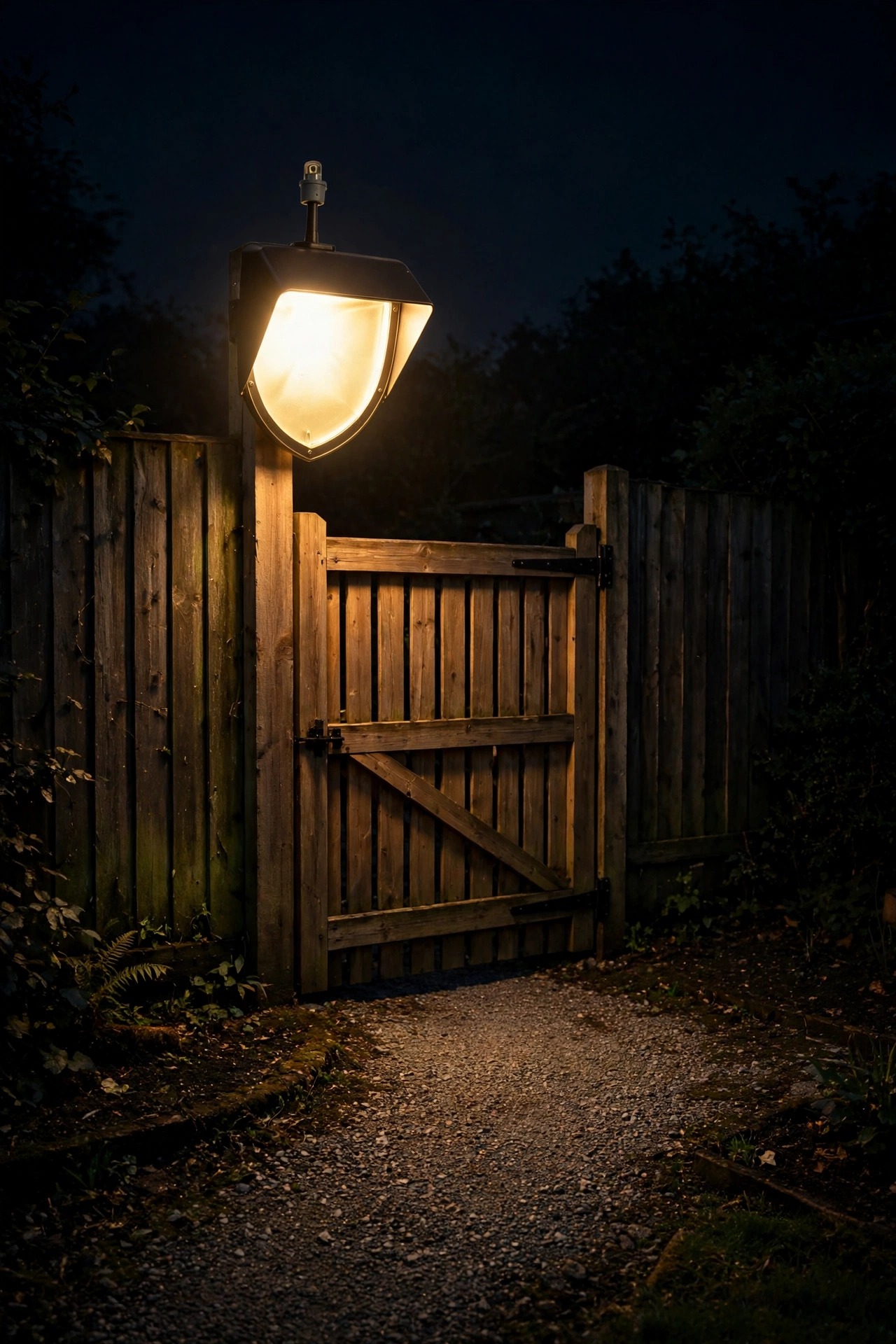
Every house has that one honest workhorse zone — the side yard with the gate, the trash bins, the path to the breaker panel — that nobody photographs and everybody trips through. A shielded floodlight on a photocell is the right kind of thinking for it: on at dusk so the latch and the footing are always findable, off at dawn so it never burns through a forgotten Tuesday. Floods are where the flicker loop from idea four bites hardest, because a big bright fixture gives its own sensor plenty to stare at, so mount the eye off to the side or choose a fixture with the sensor on a short stalk, aimed at sky. Keep the beam aimed down and inside your own fence line; a photocell light runs all night, which means its manners matter all night too. Moderate brightness wins — you need to see the gate latch, not interrogate it. In my yard this is the light that earns its keep during every storm outage check and midnight dog emergency, quietly awake because the sky told it to be.
Suggested budget range: $30 – $85.
12. Put String Lights and Seasonal Displays on a Photocell Plug
Festive lights deserve a brain too. An outdoor photocell outlet adapter plugs into your exterior receptacle, your string lights or porch pendant plug into it, and from then on the bistro glow over the patio arrives with dusk every single evening — no crouching behind the planter with a timer dial, no lights blazing at noon because someone bumped the schedule. The versions I like best add a countdown: on at dusk, off after two, four, six, or eight hours, which quietly builds in the curfew from idea five for purely decorative lights. Two setup notes from experience. The adapter's eye needs a glimpse of real sky, so do not bury it behind a pot or inside a closed outlet cover that shades it all day. And check the wattage rating before you hang three long strands of anything on one adapter. This little plug is also my holiday secret — the porch garland lights and the small lit wreath run themselves from Thanksgiving to New Year, and I touch the setup exactly twice: hanging it up, and taking it down.
Suggested budget range: $35 – $90.

13. Light the House Numbers on Their Own Little Photocell
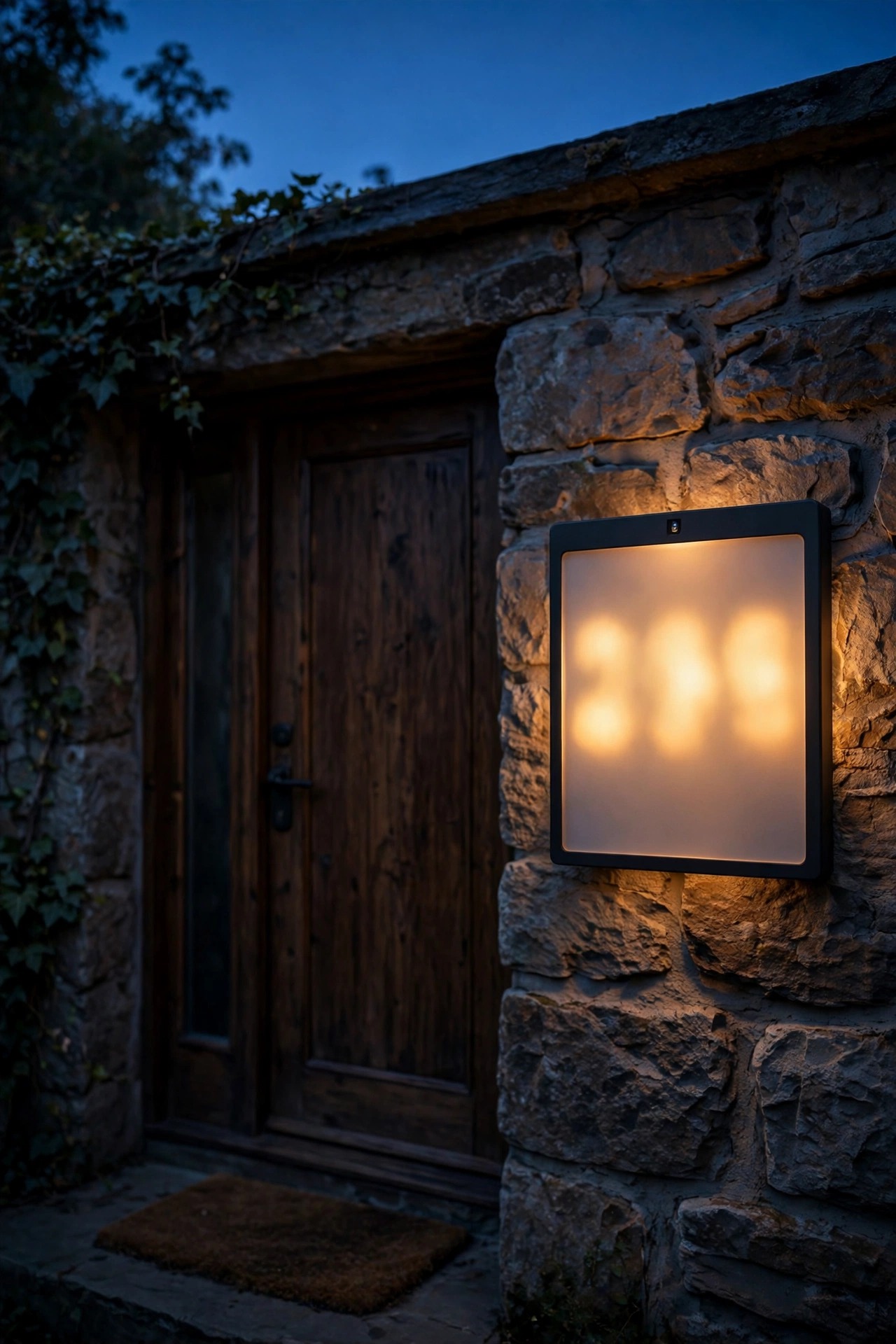
A lit address is the smallest kindness a house can offer: delivery drivers find you on the first pass, guests stop circling the block, and if you ever need help fast at night, your numbers are doing quiet, important work. A backlit plaque or a small hooded downlight over plain numbers, running on its own photocell, means that light is simply always on duty after dark — including the evenings you forget everything else. Solar plaques with a small remote panel suit entries where wiring is awkward; the panel goes where the sun is, the plaque where the street can read it. One cross-talk warning from my own porch: keep the address light from shining straight into your porch lantern's sensor, or the lantern may decide the evening is brighter than it is. A few feet of separation or a little shielding solves it. Choose numbers at least four inches tall in a finish that contrasts with the wall behind them, warm backlighting rather than cool, and stand at the street on the first night to read them the way a stranger would. That five-second check is the whole installation review.
Suggested budget range: $20 – $55.
14. Choose Dual-Mode Fixtures: Glow at Dusk, Brighten on Motion
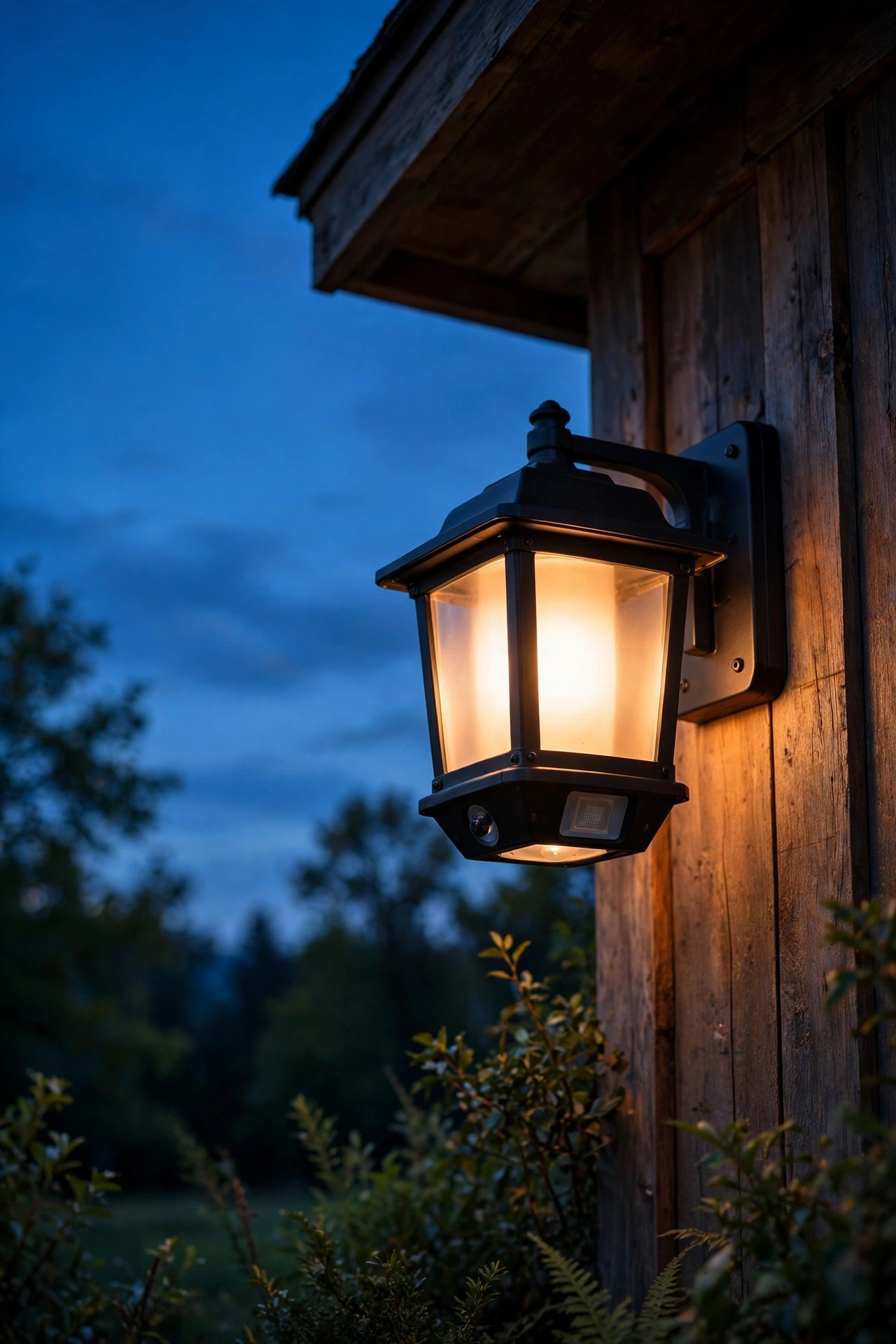
My current favorite porch upgrade pairs the photocell with its clever cousin, the motion sensor, in one fixture with two brightness levels. The photocell brings the light on at dusk at a low, welcoming glow — think twenty or thirty percent — just enough to say someone lives here and to light the steps for the cat. The moment a person approaches, it rises to full brightness, lights the lock, the faces, the packages, then settles back down a minute or two after the coast is clear. You get the all-night presence of dusk-to-dawn lighting for a fraction of the energy and a fraction of the light spilling into the neighbors' windows, plus real working light exactly when hands and keys need it. The setup asks a little more of you at installation: two small dials to set, one for how long the boost lasts and one for how sensitive the motion eye should be. Walk-test it at dusk and tune until the boost arrives as you step onto the walk, not after you have already found the door by memory. Porch, garage, side gate — this is the fixture I now buy first.
Suggested budget range: $40 – $110.
15. Give Shady Corners Their Own Sensor Instead of One for All
Here is the quiet failure mode of an otherwise great system: one photocell making decisions for lights that live in completely different light. Your south-facing path is still in full afternoon sun while your north entry, tucked under the porch roof, has been in blue shadow for two hours. Whichever sensor you trust, half the yard gets the wrong hours — the porch light burning since 3 p.m., or the path dark when the first guest arrives. The fix is to stop asking one eye to speak for the whole property. Split the system into honest zones: the entry fixtures on their own photocell or fixture sensors, the sunny path on the transformer, the back garden on a third if it lives behind the house in different shade again. Each zone then keeps its own true hours, waking when its own darkness actually falls. It costs a little more hardware and about ten minutes of thought, and it ends the daily weirdness that makes people give up on automation entirely. Walk your yard at dusk once and watch which corners go dark first — they will draw the zone map for you.
Suggested budget range: $20 – $50.

16. Let It Follow Real Weather, Not Just the Calendar
A clock timer knows the date. A photocell knows the sky, and some evenings the sky has opinions the calendar never saw coming. When a summer thunderstorm rolls in at four in the afternoon and turns the street the color of slate, photocell lights simply come on — the porch welcoming you through the downpour, the path readable under the rain — and honestly, arriving home to that is one of my favorite small luxuries. The forgiveness runs all year: the first warm spring evening you carry dinner outside, the lights keep garden-party hours on their own; the week the clocks spring forward, nothing needs reprogramming, because dusk is dusk. Two behaviors worth knowing so they do not worry you. A snow-bright night can bounce enough light around that a sensitive photocell delays its morning off-switch by a little while — that is honesty, not a malfunction. And spring pollen films every outdoor surface, sensors included, so add a ten-second wipe of the eye to your seasonal cleanup. The light is reading the world through that little window; keep the window clean and its judgment stays sharp.
Suggested budget range: $0 – $35.

17. Photocell Outdoor Lights, Layered: The Whole-Entry Plan
Let me pull the whole philosophy together the way I would build it for a friend starting from a bare porch. First the door layer: a built-in photocell lantern, or a dual-mode fixture if the budget stretches, so the entry itself is always awake after dark. Then the guide layer: path lights on one photocell transformer, bollards or solar stakes filling any stretch the cable does not reach, each pool of light overlapping the next from street to step. Then the safety layer: step lights on the same brain as the path, and the side gate covered by its own shielded flood. Finally the identity layer: lit numbers by the door, quietly on duty. Now do the one review that matters — stand at the street on a clear evening and watch your house wake up as the light fails, layer by layer, in the order a guest experiences it. Adjust the one fussy sensor, rotate the one adapter eye, and after that, do nothing, forever. Photocell outdoor lights layered this way are not really a lighting system anymore. They are a house that notices the evening before you do, and handles it.
Suggested budget range: $150 – $400.

Frequently Asked Questions
Why does my photocell porch light flicker on and off all night?
Almost always, the sensor is seeing its own light. The fixture turns on, the eye registers that brightness as morning, the light switches off, darkness returns, and the cycle repeats. Move the sensor or shield it so its view is sky only, keep it clear of streetlights and pale walls the fixture washes, and wipe the eye clean. If the cycling continues with a perfectly placed sensor, the photocell itself is likely worn out — they are inexpensive and usually replaceable.
Can I use a photocell adapter with LED bulbs and a dimmer switch?
With LED bulbs, yes, as long as the adapter is rated for LED loads — check the packaging, because older adapters were designed for incandescent bulbs and can make LEDs flicker. With a dimmer, honestly no: a photocell wants full, clean power, and a dimmed circuit can confuse it or damage it. If a fixture already has a smart bulb doing its own scheduling, pick one brain or the other rather than stacking two.
Do photocell lights waste electricity while they sit waiting all day?
Barely any. The sensor itself sips a fraction of a watt to keep watch — well under a dollar a year. The real cost is the light it runs: a 9-watt LED burning eleven hours a night uses about a tenth of a kilowatt-hour, which at typical US rates is a penny or two a night, roughly five dollars a year for a porch that is lit every single night. If that still feels like too much, the photocell-and-timer curfew from idea five cuts it further.
Photocell or timer — which is better for a porch light?
For a single porch light, the photocell wins on pure set-and-forget: it follows real dusk, so it is right in June and right in December with no reprogramming ever. A timer wins on one thing only — choosing the off time. If you want lights out by 11 p.m. for sleep, wildlife, or the neighbors, the honest answer is both controls together, which is why idea five is the setup I recommend most.
Conclusion
The best lighting is the kind you stop thinking about, and that is precisely what a photocell offers: judgment about darkness, exercised faithfully every single day. Start with one fixture — the porch lantern you pass a dozen times a night — and let it prove itself through a season of early dusks and late ones. Add the path, the steps, the numbers, zone by zone, and pretty soon the whole entry runs itself while you get on with your evening. If these photocell outdoor lights have you reimagining your own front walk, browse the rest of the lighting ideas here on the site — your future self, coming home on a dark and rainy Tuesday, thanks you.