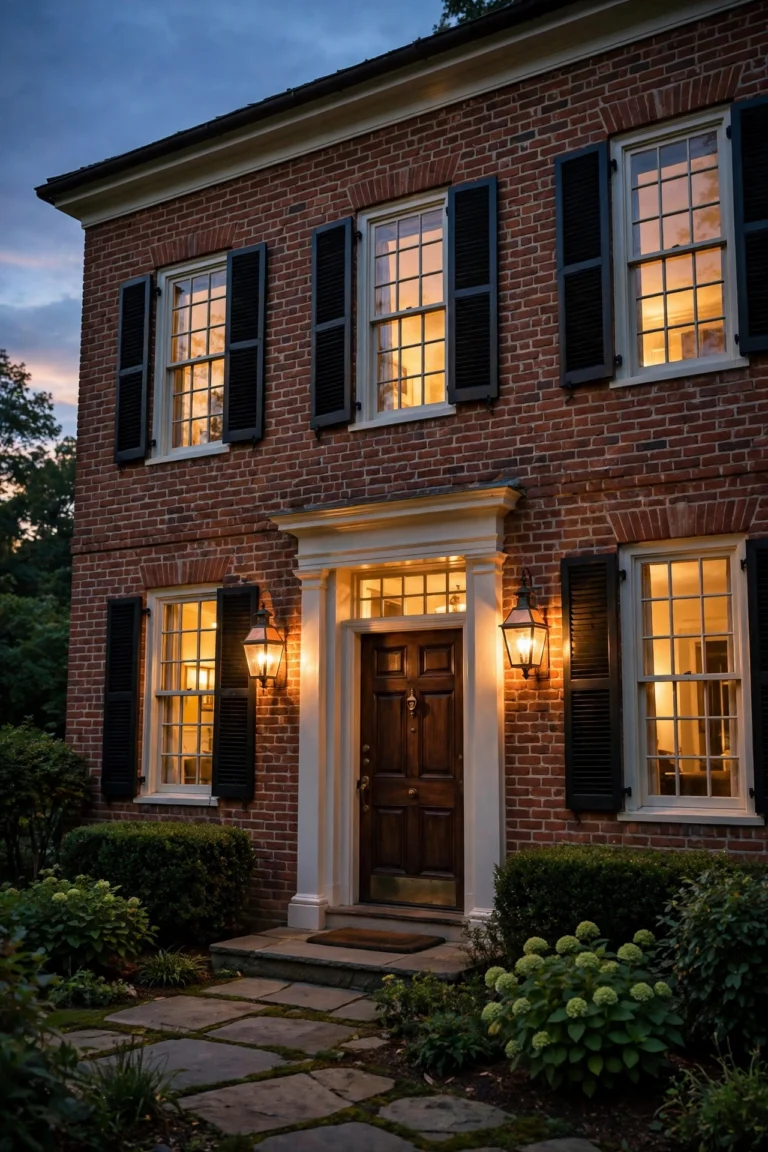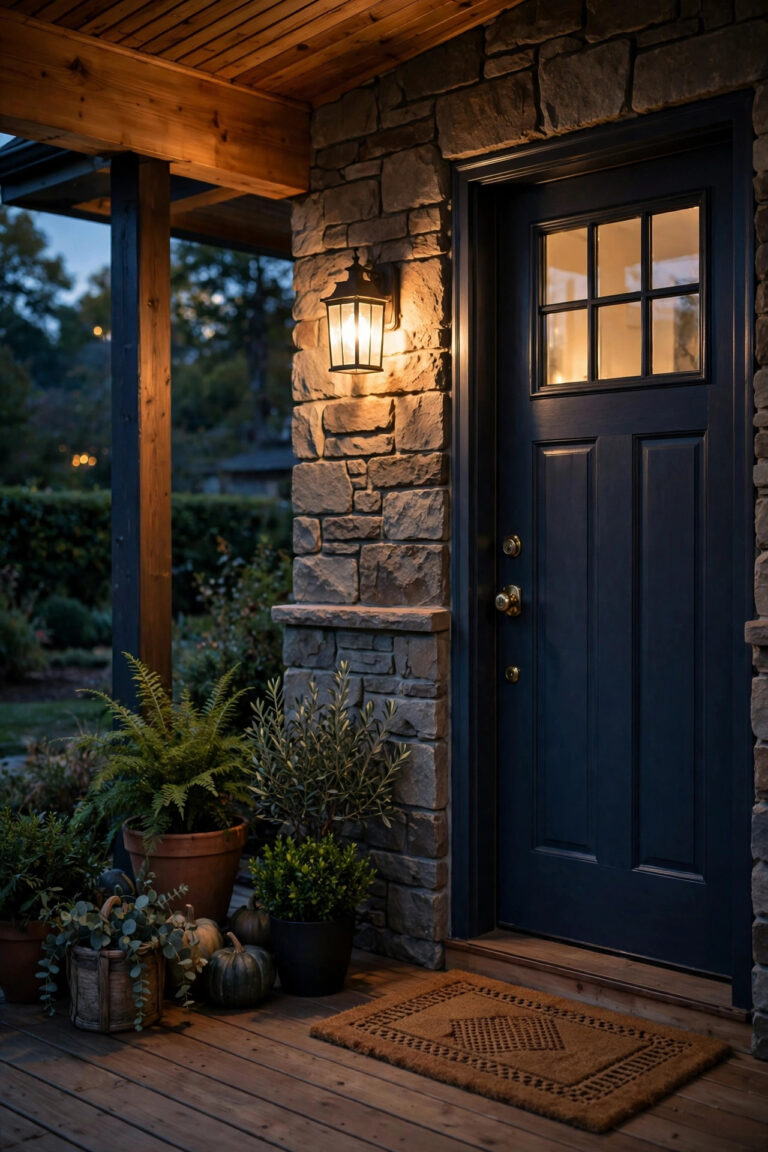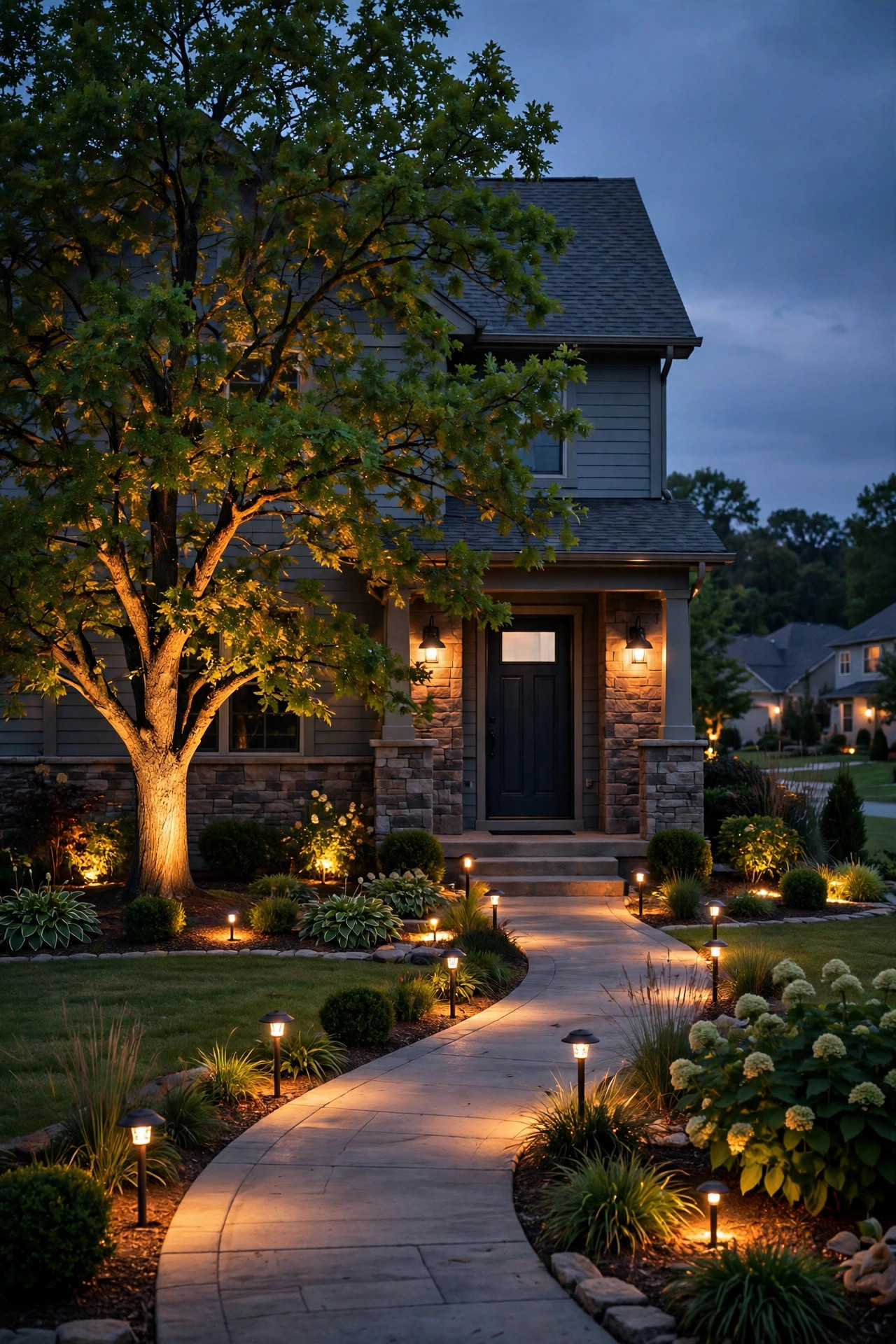
Last fall, my neighbor stood in my driveway at dusk, looked at my glowing walkway and the oak tree lit from below, and asked the question I hear more than any other: "Okay, honestly — what did all of this cost?" If you are researching front yard lighting cost before committing to anything, I completely get it. The numbers online are all over the place. One site swears you can light a whole yard for the price of a pizza night, and another quotes figures that rival a kitchen remodel. The truth, as usual, lives in the middle — and it depends far less on the fixtures themselves than most people expect. A simple path-and-porch setup and a full architectural lighting design are both "front yard lighting," but they live in completely different budget worlds. In this guide, I will walk you through what actually drives the price, what small, medium and large projects include, the real 2026 numbers for fixtures, installation and electricity, and exactly where I would splurge or save if I were starting from scratch on a normal suburban lot.
The Short Answer
For most homes in 2026, front yard lighting cost lands between about $300 and $3,500 for a do-it-yourself low-voltage LED system, or $2,500 to $8,000 and up professionally installed. A small project — a porch fixture refresh, a short run of path lights and a couple of accent spots — can come in under $500 if you install it yourself. A medium, whole-front-yard design typically runs $900 to $2,500 DIY. Large projects with tree uplighting, wall washing and hardwired fixtures climb from there. Solar is the cheapest way in but gives the softest light. The three biggest price drivers are how many fixtures you buy, how good they are, and whether you are paying for labor.
What Drives Front Yard Lighting Cost More Than Anything Else
After helping several friends plan their yards (and making my own expensive mistakes early on), I can tell you the sticker shock rarely comes from one big item. It comes from five quieter factors adding up. First is fixture count: every additional light is not just the fixture, it is also cable, connectors and transformer capacity to feed it. Second is fixture quality, which has an enormous spread — a basic stake light and a solid brass fixture doing the same job can differ in price by a factor of five, and that gap multiplies across fifteen or twenty fixtures. Third is distance. Long cable runs from the transformer to the far corners of the yard need heavier-gauge cable, and heavier cable costs more per foot. Fourth is whatever is already in the ground: crossing under a driveway or sidewalk, working around mature tree roots, or lighting a steep slope all add time, and time is money whether it is yours or a contractor's. Fifth, and biggest of all, is labor. A low-voltage system is genuinely DIY-friendly, so the single largest swing in any quote is whether a crew is doing the digging, wiring and aiming, or you are spending a Saturday on it yourself.
The Three System Types, Compared Honestly
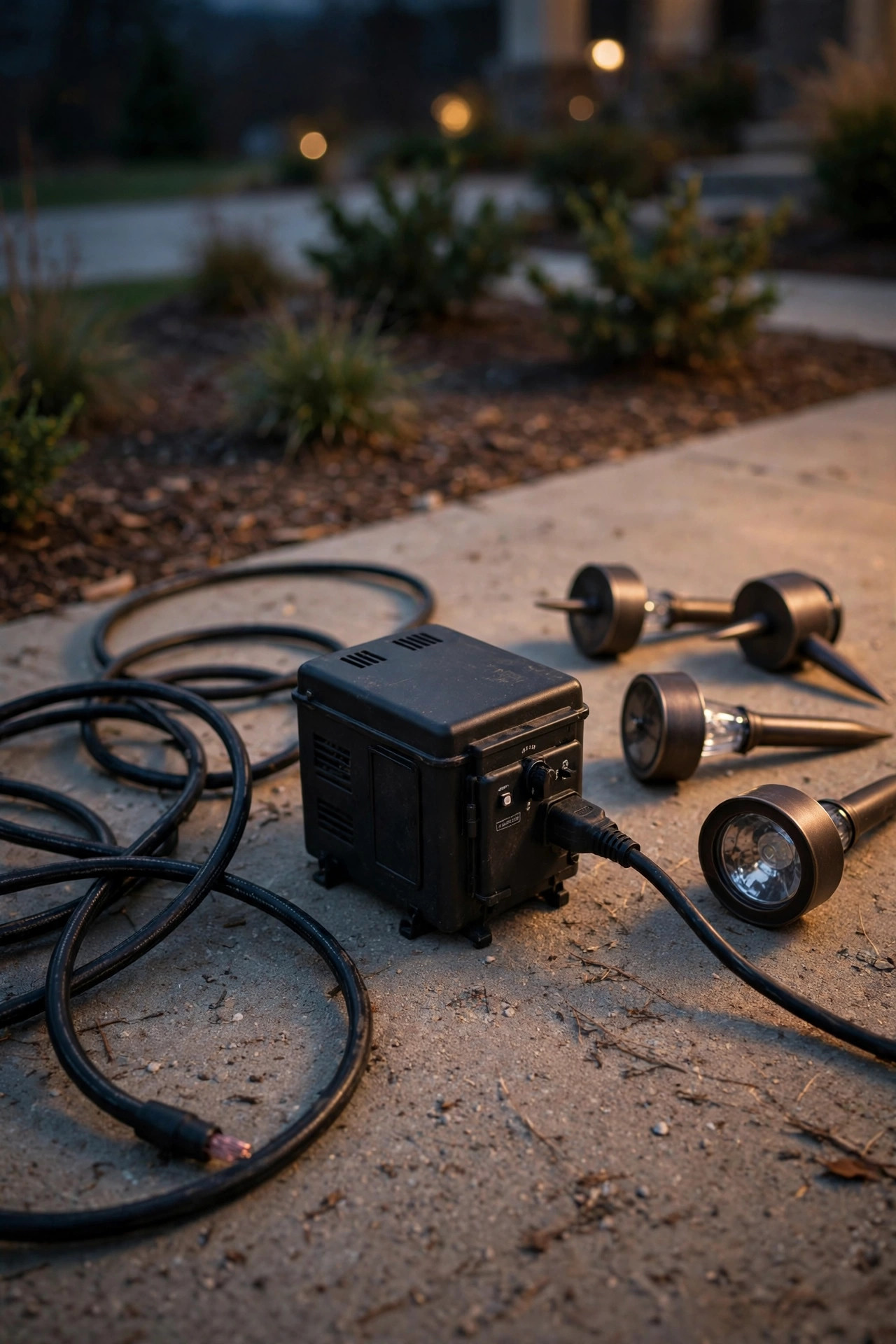
Almost every front yard falls into one of three camps, and choosing yours is the biggest budget decision you will make. Solar lights are stake-and-done: no wiring, no transformer, no electric bill. They are wonderful for a soft glow along a bed edge, but most give a dim, blue-ish light that fades by midnight, and they struggle in shade. Low-voltage LED is the sweet spot for most homes — a plug-in transformer steps power down to a safe 12 volts, the cable sits in a shallow slit trench you can cut with a flat spade, and modern LED fixtures are bright, warm and sip electricity. Line voltage (120V) is the traditional hardwired route for porch sconces, lamp posts and big floodlights; it delivers the strongest light but means buried conduit, junction boxes and, in most towns, a licensed electrician. Here is how they stack up:
| System | Upfront cost | Light quality | Running cost | Best for |
|---|---|---|---|---|
| Solar | $ | Soft, inconsistent | None (batteries wear out) | Renters, tiny accents, no-outlet yards |
| Low-voltage LED | $$ | Warm, bright, consistent | Very low | Most front yards, DIY installs |
| Line voltage (120V) | $$$ | Strongest, most permanent | Low with LED bulbs | Porch fixtures, lamp posts, security floods |
My honest take: if you want the magazine look — layered, warm, reliable — plan on low-voltage LED for the landscape and keep your existing hardwired fixtures at the door. Solar is a garnish, not the main course.
Small Projects: Porch, Path and a Handful of Accents
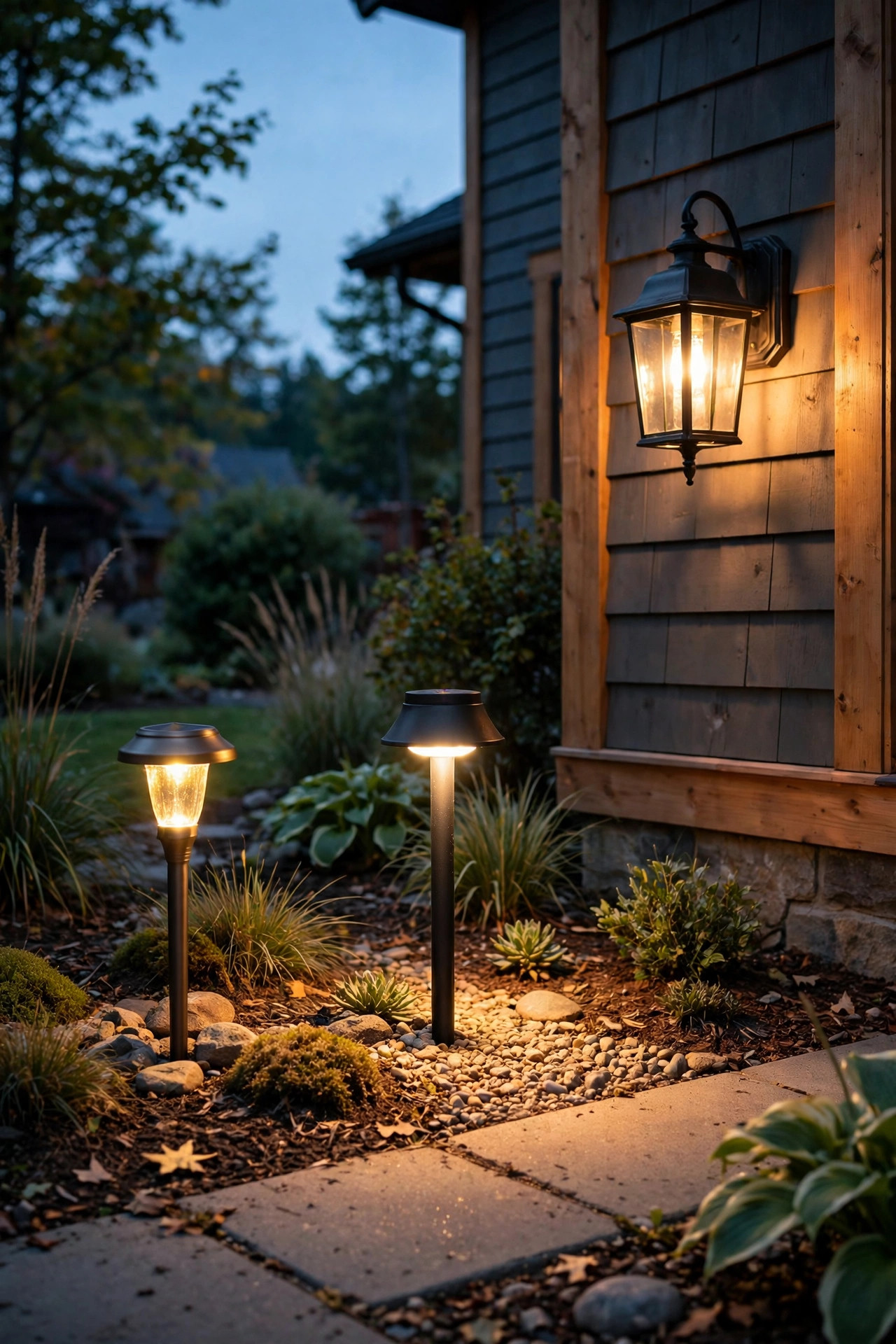
The small project is where I tell every beginner to start, because it delivers the biggest visible change for the least commitment. The scope looks like this: swap or refresh the porch fixture so the entry actually glows, add four to six path lights along the front walk, and place one or two spotlights on whatever deserves attention — a small ornamental tree, a pretty gable, the house numbers. Power comes from either a modest plug-in transformer near an outdoor outlet or, for the path lights only, better-quality solar stakes. There is no trenching crew and no permit involved; the cable run is short, hides under mulch, and the whole thing is a comfortable one-weekend job even if you have never touched landscape lighting. This size of project suits townhomes, ranches with shallow front yards, and anyone who wants the house to look cared-for at night without committing to a full design. It is also completely expandable — choose a transformer with spare capacity and your small project becomes phase one of a medium one later, instead of a dead end you have to rip out. One more honest note: this is also the tier where solar makes the most sense, because a handful of good stakes along a short walk can look genuinely pretty with no wiring at all.

Medium Projects: The Classic Whole-Yard Look
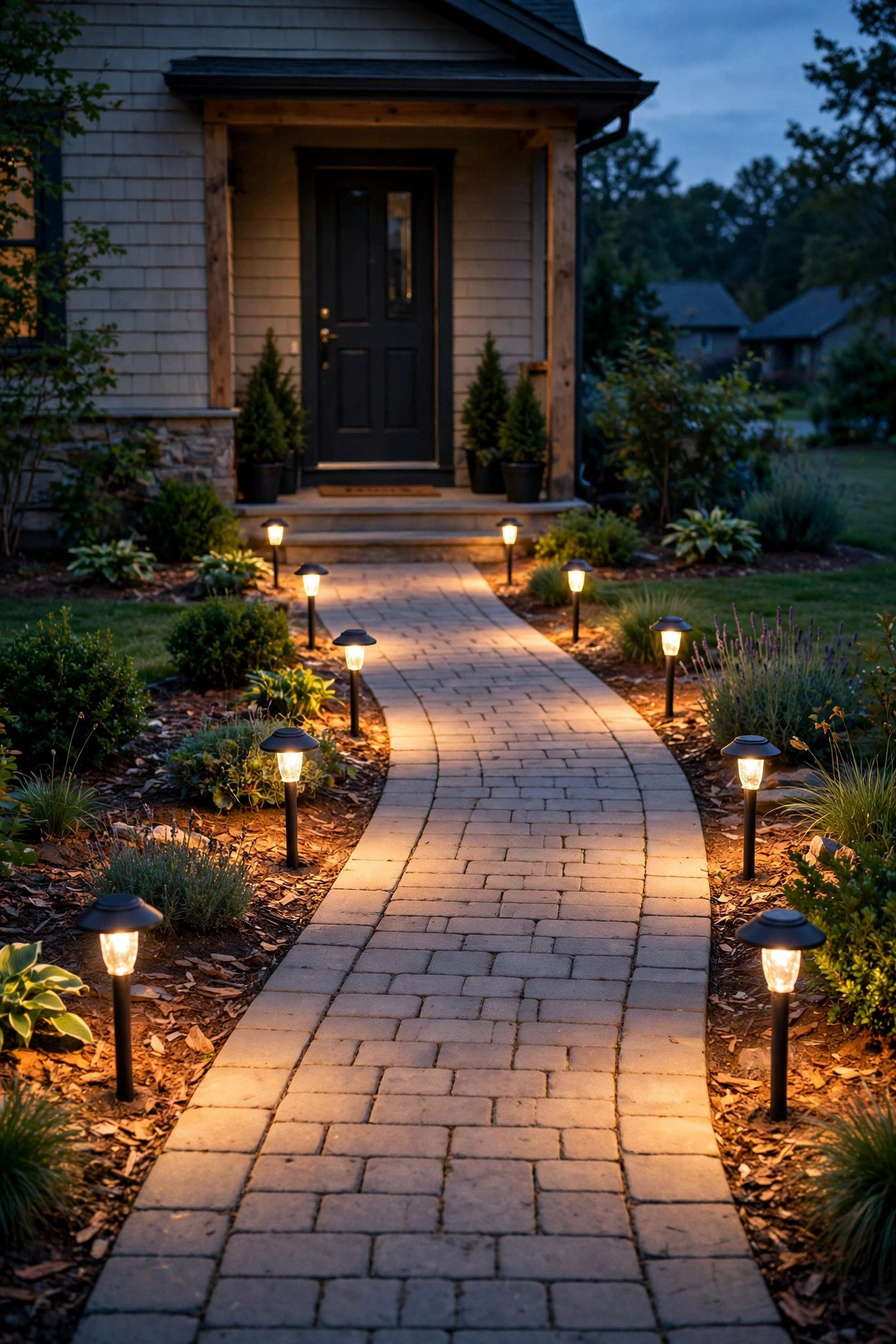
This is the tier most of my readers actually want, even if they do not know it yet. A medium project lights the whole front in layers: path lights along the walk and driveway edge, uplights washing two or three trees or the front facade, a couple of spotlights for shrubs and flower beds, and the porch and garage fixtures refreshed so everything matches. You are looking at roughly twelve to twenty fixtures on one properly sized transformer, controlled by a timer or photocell so it all just happens at dusk. The cable layout takes a little planning — usually a main run with branches — and you will spend a second evening walking the yard after dark, adjusting angles and swapping a beam spread here and there. That fine-tuning evening is honestly my favorite part; it is when the yard goes from "lights installed" to "oh, that looks expensive." Medium suits the average two-story suburban home with a real lawn, a driveway worth edging and at least one tree worth showing off. For a deeper look at how these totals are built line by line, my landscape lighting cost guide for 2026 breaks the numbers down fixture by fixture.

Large Projects: Trees, Architecture and the Whole Lot
A large project treats the front yard like a stage set, and the scope grows accordingly. Expect twenty-five or more fixtures: moonlighting from high in mature trees, grazing light across stone or brick texture, wash lights for wide facades, bollards or markers along a long driveway, a hardwired lamp post at the street, and smart controls that run zones on different schedules. Big lots, corner properties and homes with serious architecture — tall gables, columns, stonework — are the natural candidates, because those features genuinely need more fixtures and more throw distance to light well. At this size, most people use two transformers or a zoned system, cable runs get long enough that voltage-drop planning really matters, and some pieces, like the lamp post and any new hardwired sconces, move into electrician territory. Plenty of homeowners still DIY the low-voltage portions and hire out only the 120V work, which is a smart split. What you are buying at this tier is not more brightness — it is depth, drama and the kind of curb appeal that makes people slow down on evening walks. If your home has that kind of presence, honestly, this tier is less of a splurge than it is finishing the picture the architecture already started during the day.

What It Costs in 2026
Here are the numbers I see consistently this year, gathered from my own receipts and the quotes friends have shared with me. Individual low-voltage LED path lights run about $15 to $45 at big-box stores and $40 to $90 for solid brass or copper fixtures that will not corrode in three seasons. Spotlights and uplights are $25 to $80 each depending on build quality. A quality transformer runs $80 to $300 depending on wattage and whether it has a built-in timer or smart controls, and 12-gauge cable is roughly $40 to $90 per 100-foot roll — always budget for more cable than your tape measure says. Complete kits with a transformer, cable and six to ten fixtures run $120 to $350 and are a fair starting value. Put together, realistic installed totals look like this: a small project is $250 to $600 in materials DIY, or $1,500 to $3,000 with a pro; a medium project is $900 to $2,200 DIY, or $3,500 to $6,500 professionally installed; a large project is $2,500 to $5,000 DIY, or $7,000 to $15,000 and up with a design-build firm. Pros typically price around $150 to $300 per fixture installed, which is why labor dominates their quotes. Running costs are almost an afterthought with LED: fifteen fixtures averaging 4 watts each, on five hours a night, use about $15 to $20 of electricity per year at average US rates — the same setup in old halogen would run closer to $90. If you want to see that math for your own fixture count, my notes on how much LED outdoor lighting saves walk through it watt by watt.

DIY vs Hiring a Pro: Where the Extra Money Goes
Since labor is the biggest line in any professional quote, it is fair to ask what it actually buys. A good lighting contractor brings design experience — they know the beam angles and spacing that make a facade look rich instead of spotty — plus commercial-grade fixtures you cannot buy at retail, plus a crew that finishes in a day what takes a homeowner two weekends. They also handle the trenching, the driveway crossings and the warranty. What they cannot do is care about your yard more than you do, and low-voltage lighting is one of the few electrical projects where a careful beginner genuinely gets professional-looking results, because 12 volts is forgiving and every mistake is reversible. My honest split: if your project is small or medium, your lot is flat, and you enjoy this kind of work, DIY and pocket the difference. If you have a large lot, major trees to climb, new hardwired fixtures, or a home you are preparing to sell where polish matters, get two or three quotes. I wrote a fuller comparison of DIY versus professional landscape lighting that walks through who should do which parts — it is worth a read before you sign anything.
How to Lower Your Front Yard Lighting Cost Without It Looking Cheap
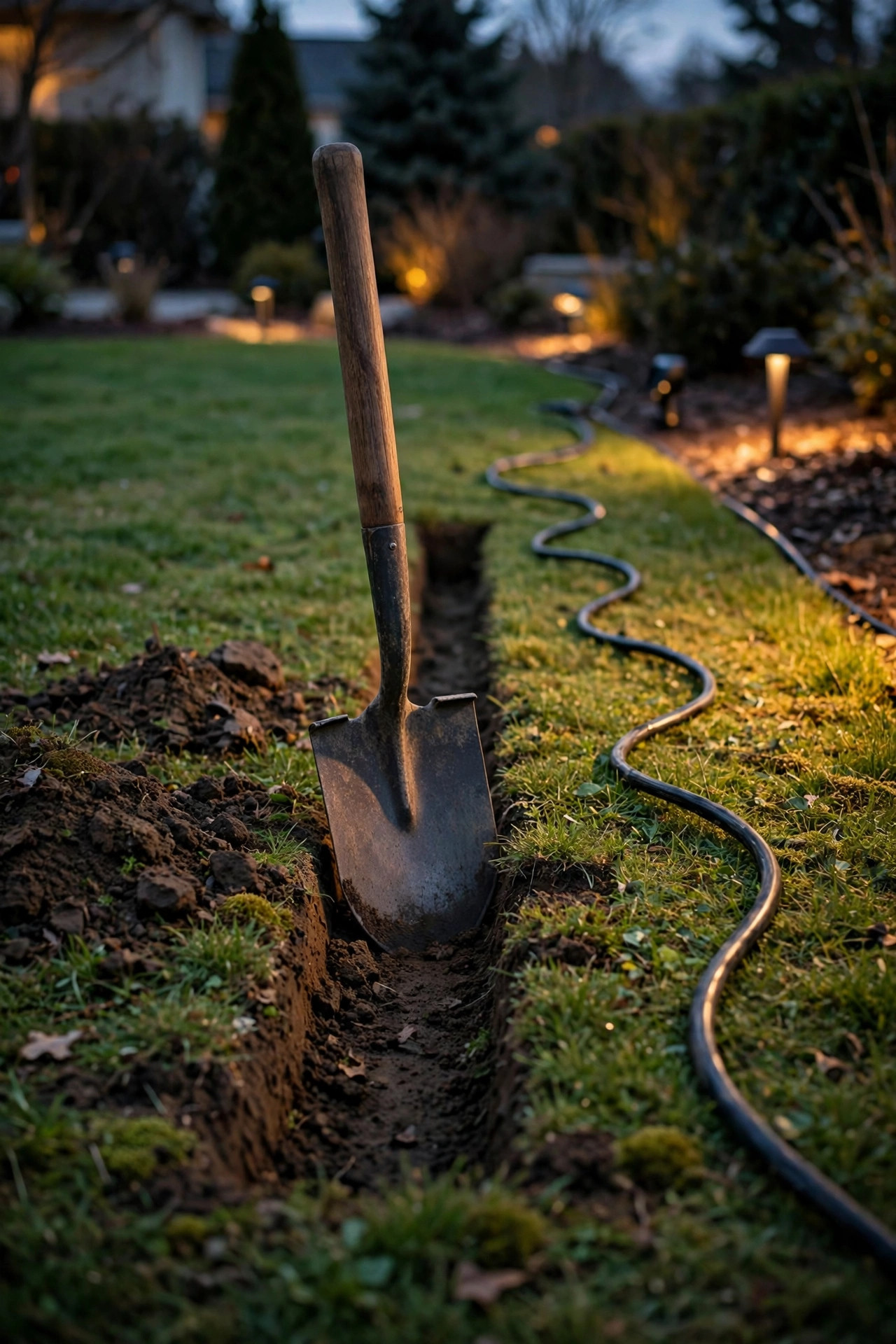
The secret to a smaller bill is phasing, not cheaping out. Install the transformer, the main cable run and your highest-impact fixtures first — porch, walk, one tree — and leave capped cable ends where future fixtures will go. Adding lights next season then takes minutes instead of a new project. I phased my own yard over three springs, and I never once felt like I was living with a half-finished project in between. Beyond that: buy the best transformer you can, because everything depends on it and replacing an undersized one means rewiring your plans. Spend on the fixtures people see up close, like the ones flanking the door, and economize on path lights deeper in the beds where nobody inspects the housing. Keep every fixture at the same warm color temperature, around 2700K, since a matched set reads as "designed" even when it was not expensive. Do your own trenching even if you hire out the wiring — digging is the part crews charge real money for and a flat spade makes it easy. And shop the calendar: landscape lighting goes on clearance in late fall when stores reset for the holidays, which is also, conveniently, when you can actually see your yard dark at 6 p.m. and judge the results the same evening.
5 Mistakes That Quietly Blow the Budget
I have made or watched every one of these. First, undersizing the transformer to save a little money, then discovering a year later that adding four more lights means buying a second transformer anyway. Second, buying the cheapest fixtures available — thin painted aluminum that corrodes, fades and fills with water within two or three seasons, so you pay for the same job twice. Third, shopping without a plan and coming home with a trunk of mismatched clearance lights in three different color temperatures; the yard ends up looking like a yard sale after dark. Fourth, forgetting the unglamorous twenty percent: cable, waterproof connectors, spare bulbs, a timer — the extras nobody budgets for that stall the project mid-weekend. Fifth, paying professional rates for the plug-and-play parts of the job. Swapping a porch fixture or staking path lights is squarely homeowner territory; save the pro budget for design help, climbing work and anything involving your home's 120-volt wiring. Most of these mistakes share one root cause: deciding at the store instead of at the kitchen table, with a rough sketch of the yard and a fixture count in hand. Avoid these five and the number you planned is the number you will actually land on.
Keeping It Running: Maintenance and the Small Ongoing Jobs
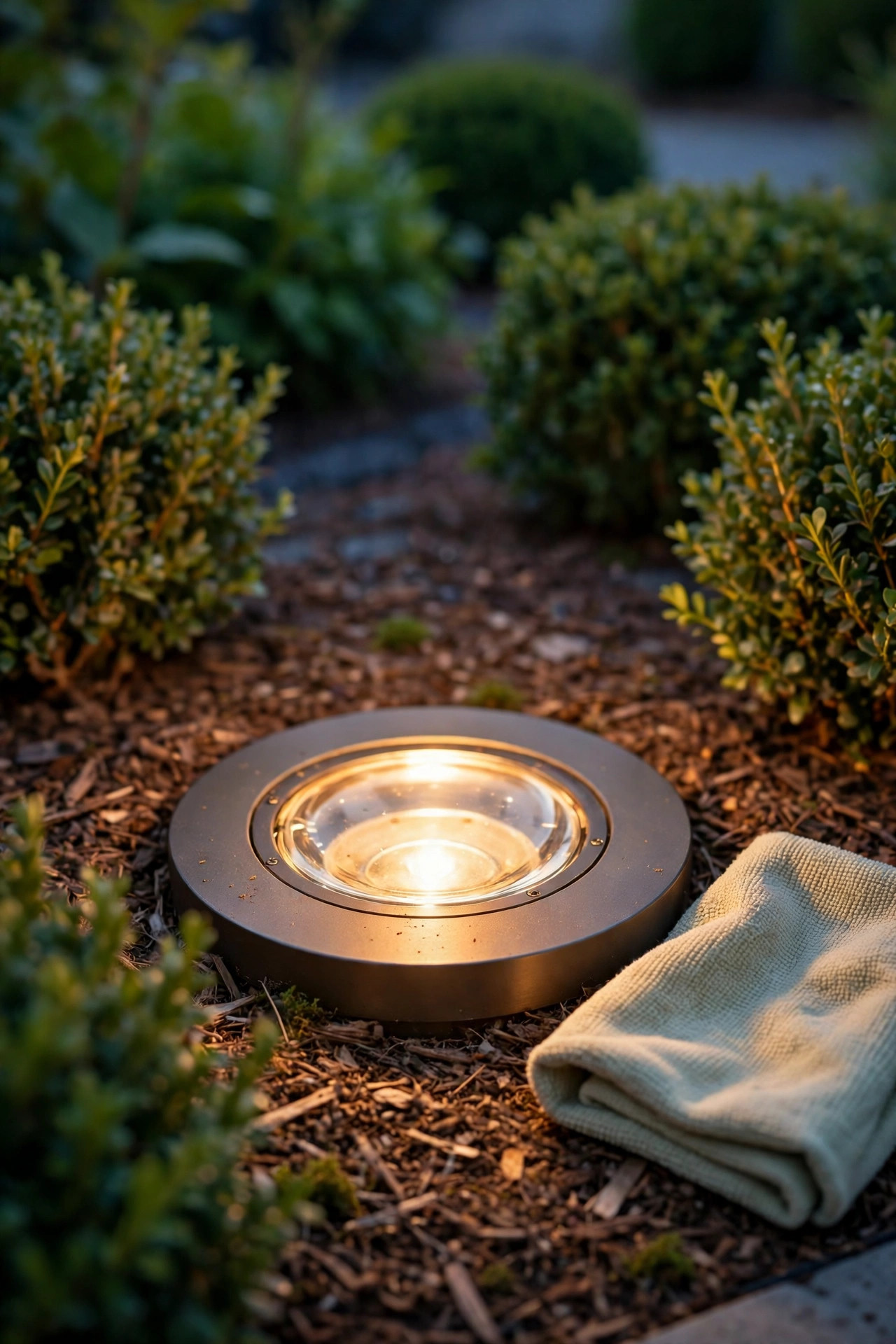
A front yard system is not a fit-and-forget appliance, but the upkeep is closer to gardening than to home repair. Twice a year I walk the yard with a soft cloth and clean the lenses — a film of pollen and hard-water spots quietly steals brightness you already paid for. After fresh mulch goes down, a few fixtures always need re-aiming or raising, because beds rise and lights sink. Shrubs grow in front of spotlights with surprising speed, so a five-minute trim keeps the beams doing their job. Expect small ongoing expenses rather than big ones: solar lights need fresh rechargeable batteries every year or two, an occasional LED fixture will eventually fail and get replaced, and hardwired porch bulbs burn out like any bulb. None of this is costly, but it is worth knowing before you buy, especially with solar, where the bargain fixture sometimes costs more over five years of batteries than one wired light would have. Budget a relaxed hour each spring and fall and the system you install this year will still look intentional a decade from now. I also keep a small bin in the garage with two spare fixtures, extra connectors and a handful of batteries, and it has saved me a second trip to the store more times than I can count.
Frequently Asked Questions
How much does front yard lighting add to the electric bill?
Very little with LED. A typical medium system of fifteen low-voltage LED fixtures adds roughly a dollar or two per month, because the whole array often draws less power than a single old porch bulb. Solar adds nothing at all. It is the one part of this project where the ongoing number is genuinely almost zero, and it is why I always steer people toward LED even when the fixtures cost a little more upfront.
Is front yard lighting worth it for resale value?
In my experience, yes — with a caveat. Real estate agents consistently rank outdoor lighting among the highest-return curb appeal upgrades, because buyers often see a home for the first time at dusk and a lit entry reads as safe, cared-for and a little bit premium. The caveat is quality: a tasteful, warm, well-aimed system helps, while a jumble of dim solar stakes does not. A medium DIY project is usually the sweet spot if resale is part of your motivation.
Can I install front yard lighting myself, or do I need an electrician?
For low-voltage systems, you can absolutely do it yourself — no permit in most areas, no dangerous voltage, and the cable buries just a few inches deep. You only need an electrician when the project touches 120-volt wiring: adding a new hardwired fixture where none exists, moving an outlet, or installing a lamp post. Even then, many homeowners hire the electrician for that one piece and DIY the rest.
What is the cheapest way to light a front yard that still looks good?
Start with the entry. One warm, properly sized porch fixture, four to six decent path lights in a single matched style, and one spotlight on your best tree or shrub will transform how the house reads from the street for less than most people expect. Skip the temptation to scatter ten bargain solar lights everywhere — fewer, better-placed lights always look more expensive than many weak ones.

Conclusion
However you size it, the front yard lighting cost that matters is not the cheapest number you can hit — it is the one that gets you a warm, layered yard you still love in five years. Decide your tier honestly: small for a welcoming entry, medium for the full classic look, large for real drama. Put your money into a good transformer, decent fixtures and a layout you have actually walked at night, and let the labor line be optional rather than automatic. Start with phase one this weekend, stand at the curb after dark, and I promise the next phase will plan itself. If you are ready to browse fixture styles and layouts for your own yard, there are plenty more ideas waiting for you here on the site.