Intro
Every fall, I get the same message from a friend or neighbor: "Sarah, your yard looks incredible at night — but tell me honestly, how much does landscape lighting cost?" And every time, I wish I could give them a single number. The truth is, landscape lighting in 2026 can cost anywhere from a few hundred dollars for a weekend DIY project to well over ten thousand for a professionally designed estate system. But here's the good news: most real-world projects land in a much narrower, very manageable band — and once you understand what actually drives the price, you can design a plan that fits your budget without sacrificing that gorgeous glow.
I've priced out, installed, and lived with outdoor lighting systems in my own yard and helped enough friends plan theirs that I've learned exactly where the money goes: the fixtures themselves, the transformer that powers them, the wire running underground, and the labor to put it all together. In this guide, I'm breaking all of that down with honest 2026 numbers — no vague "it depends" answers. You'll see what DIY really costs versus hiring a pro, what different yard sizes typically run, how much the system adds to your electric bill (spoiler: far less than you'd think), the five mistakes that quietly inflate the budget, and what it costs to keep everything glowing year after year.
By the end, you'll be able to look at your own yard, count your fixtures, and know — with confidence — what you should expect to spend.
The Short Answer: How Much Does Landscape Lighting Cost?
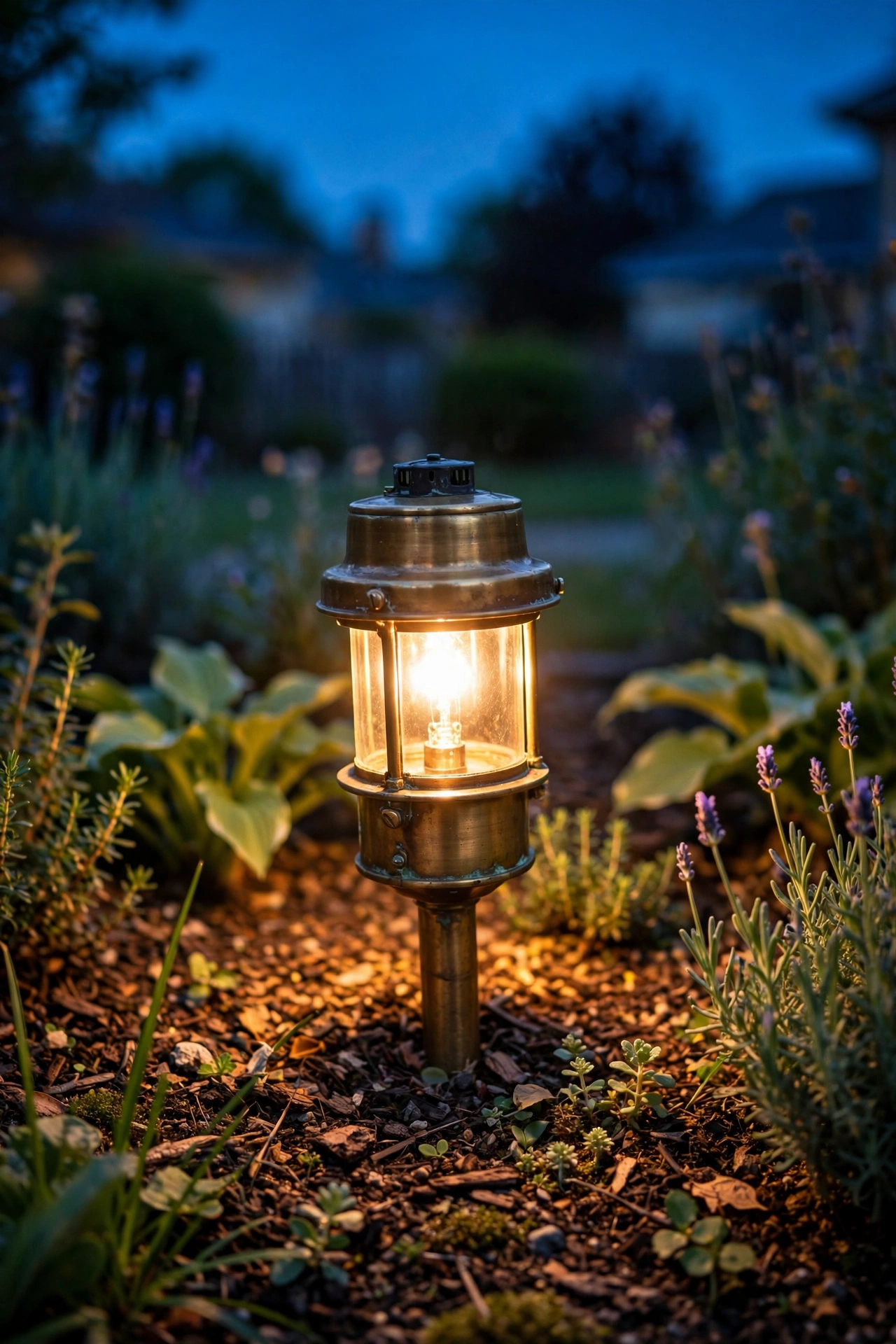
A professionally installed low-voltage landscape lighting system in 2026 costs $2,500 to $7,500 for an average suburban yard with 10 to 20 fixtures — roughly $150 to $350 per installed fixture. A DIY installation of the same scope usually runs $600 to $2,000 in materials — fixtures, transformer, wire, and connectors. Small front-yard projects (6 to 8 fixtures) start around $400 DIY or $1,500 professionally installed, while large properties with 25-plus fixtures can reach $4,000-plus DIY or $8,000 to $15,000 with a pro. Running costs are almost negligible: a typical LED system adds just $3 to $8 a month to your electric bill. Keep reading for the full breakdown behind these numbers and how to get the most glow for your dollar.
What Landscape Lighting Actually Costs: The Full Breakdown
If you want an accurate budget — not just a guess — you need to understand the four cost buckets every low-voltage system is built from: fixtures, the transformer, wire and connectors, and labor. Prices have crept up a bit since 2023 as metal costs rose, but LEDs have gotten so efficient that the running costs are lower than ever. Here's what each piece really costs in 2026.
Fixtures: $25 to $120 each
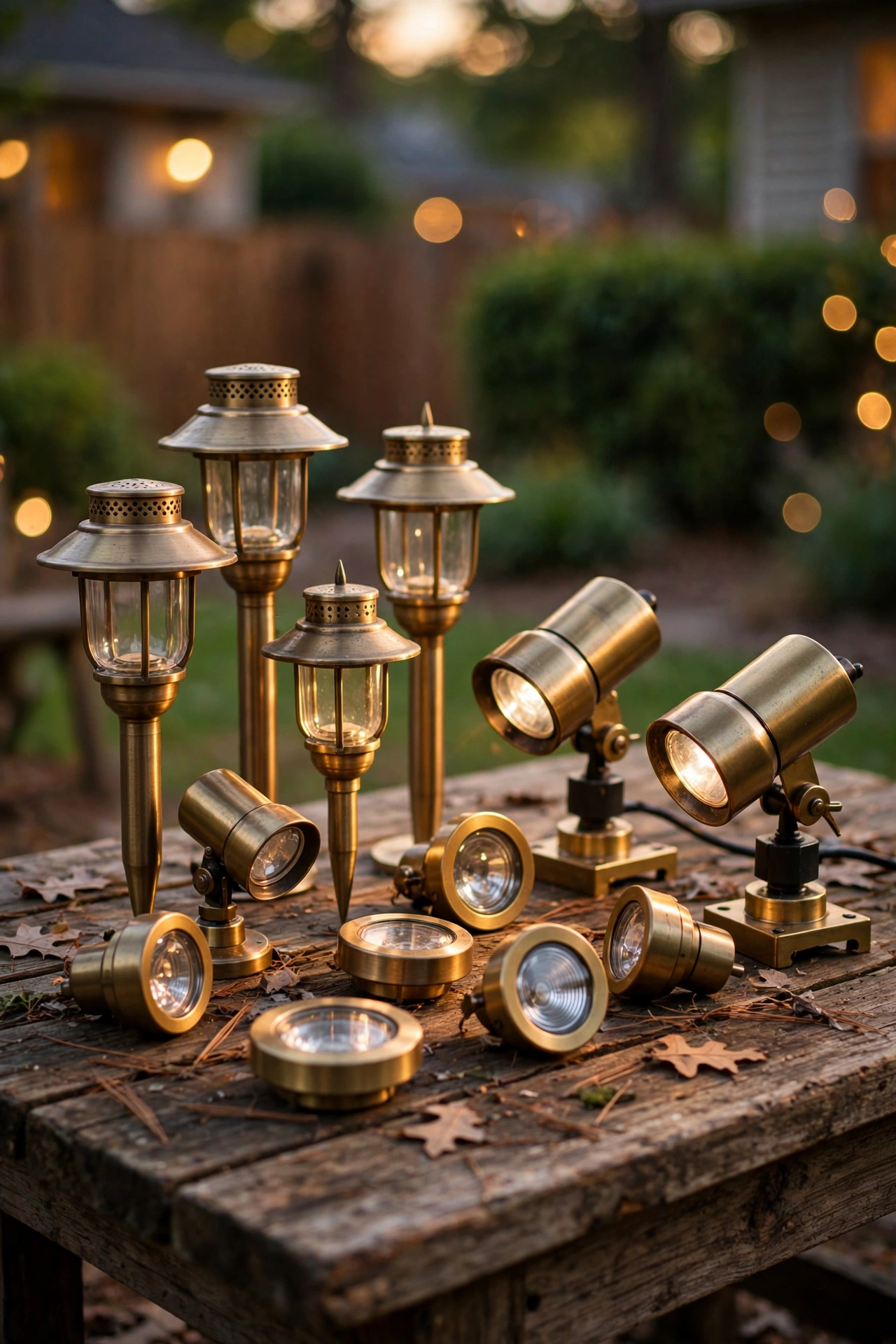
Fixtures are where most of your money goes, and where quality matters most. A basic die-cast aluminum path light runs about $25 to $60. In my experience, this is the category where spending an extra $20 per fixture pays off enormously — cheap plastic or thinly painted metal fixtures corrode, crack, and fade within two or three seasons, and then you're buying them all over again. Solid brass or copper fixtures cost $60 to $120 each but honestly? They patina beautifully and can last 15 to 20 years outdoors. I always recommend stepping up to at least mid-range low-voltage path lights for the areas you see every day, and saving the budget fixtures for spots tucked in back beds.
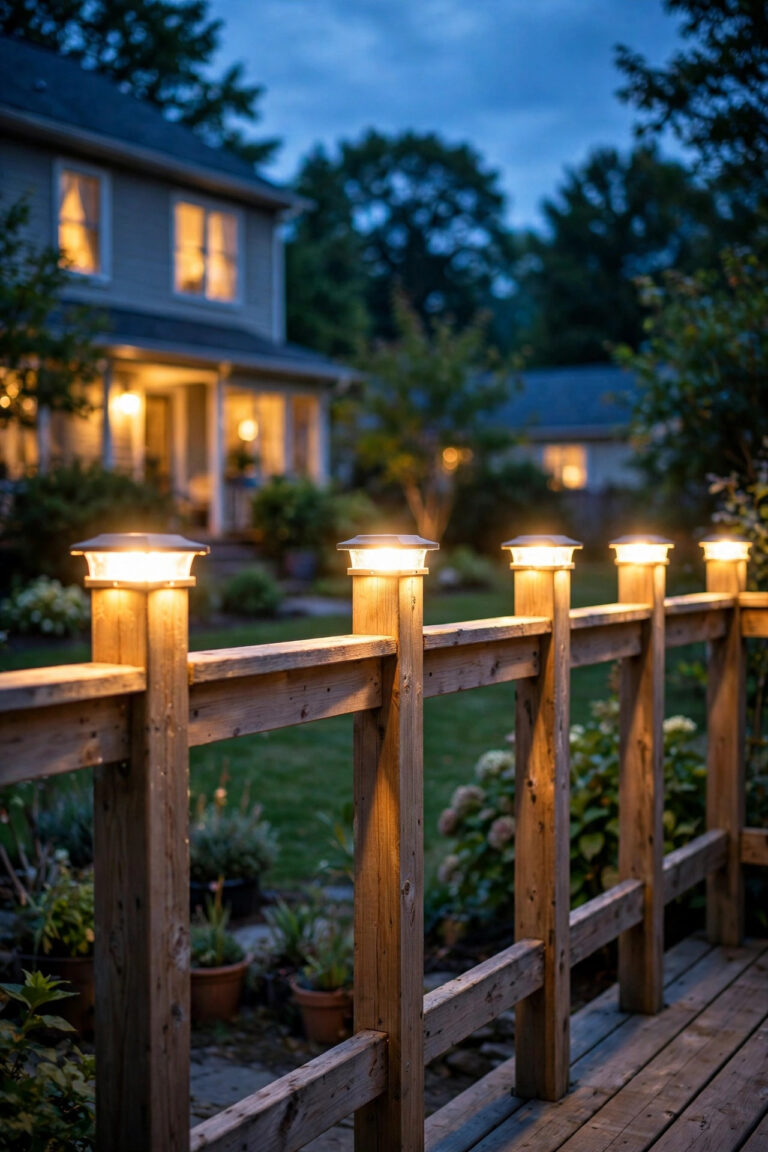
Spotlights and accent uplights — the fixtures that wash your trees, columns, and house facade with light — typically run $35 to $90 each. In-ground well lights (the ones that sit flush with the lawn) cost $40 to $120 depending on size and finish. Deck, step, and hardscape lights are smaller and simpler, usually $20 to $50 each. A word of advice from someone who's mixed and matched: whatever you choose, buy all your fixtures in the same finish family. Mismatched metals are one of the fastest ways a lighting project starts looking bargain-bin instead of bespoke.
Transformers: $60 to $600
The transformer is the heart of the system — it steps your household 120-volt power down to a safe 12 volts. Pricing scales with wattage, and you always want headroom. A 60-watt plug-in transformer (enough for 8 to 10 small LED path lights) costs $60 to $120. A 150- to 300-watt unit with a photocell and timer — the sweet spot for most suburban yards — runs $120 to $300. Large systems need 600-watt transformers at $300 to $600, sometimes two of them.
Here's the rule I give everyone: add up the wattage of every fixture you plan to install, then buy a transformer rated for at least 25 to 30 percent more. A 15-fixture system with 5-watt LEDs draws 75 watts, so a 150-watt transformer is perfect — plenty of capacity for the three or four fixtures you'll inevitably want to add next spring. Buying too small means voltage drop, dimming at the end of long runs, and eventually replacing the transformer entirely. That false economy costs more than just buying the bigger unit up front.
Wire and connectors: $50 to $200 per project
Low-voltage landscape cable (12-gauge two-conductor is the standard) costs about $40 to $80 per 100-foot spool in 2026. A typical front-yard project uses 100 to 200 feet; a full perimeter design might need 300 to 500 feet. If your runs are long — say, fixtures at the far end of a deep backyard — step up to 10-gauge cable for the home runs (the segments connecting the transformer to the first fixture in each run). It's pricier per foot but prevents the voltage drop that makes distant lights glow dimmer than the rest. Connectors are the unsung heroes: waterproof direct-burial connectors run $3 to $8 each, and you'll need one per fixture plus spares. Honestly, never skimp on connectors — a failed splice buried under a flower bed is a miserable thing to dig up and fix.
Labor: $0 to $3,500-plus
Labor is what separates the DIY number from the pro number, and it's the biggest variable of all. If you install the system yourself on a free weekend, labor costs you nothing but time and a sore back — trenching shallow cable runs is genuinely the hardest part, and it's very doable. Professional installation typically adds $1,000 to $3,500 or more depending on your region, the number of fixtures, how much trenching and concrete-cutting is involved, and whether the design includes fussy details like core-drilled step lights or fixtures mounted in trees. In my experience, labor quotes in 2026 have been running about 10 to 15 percent higher than a few years ago — skilled outdoor-lighting installers are in demand, and the good ones book out weeks ahead.
DIY vs Pro: Where Your Money Goes
This is the decision that swings your budget more than any other, so let's put real numbers side by side. Both paths can produce a gorgeous result — I've seen stunning DIY systems and mediocre pro ones, and vice versa. The difference is what you're paying for: a pro sells you design expertise, warranty coverage, and a weekend of your life back. Here's the honest comparison for a typical 15-fixture front-and-side-yard system in 2026.
| Cost item | DIY | Professional |
|---|---|---|
| Fixtures (15 mid-range LEDs) | $450 – $900 | $600 – $1,200 (contractor-grade) |
| Transformer (150–300W) | $120 – $300 | Included in project price |
| Wire, connectors, accessories | $75 – $200 | Included in project price |
| Design consultation | $0 (your research) | $150 – $500 (often credited toward install) |
| Labor / installation | $0 | $1,000 – $3,500 |
| Typical total, 15 fixtures | $650 – $1,400 | $2,800 – $5,700 |
| Cost per fixture | $40 – $95 | $150 – $350 |
A few honest caveats. DIY numbers assume you already own basic tools — a shovel, a wire stripper, a screwdriver. If you're starting from zero, add $50 to $100 for tools you'll use again anyway. Pro numbers vary hugely by region; labor in the Northeast and West Coast tends to run 20 to 30 percent higher than the Southeast or Midwest.
When does DIY make sense? When your layout is straightforward — path lights along a walkway, uplights on a couple of trees, accent lights on the house — and you're comfortable digging shallow trenches and following wiring diagrams. When is a pro worth it? When the design is complex (multiple zones, hardscape integration, tall trees needing fixtures mounted 15-plus feet up), when you want a warranty that covers both parts and labor, or when you'd simply rather spend your Saturdays doing literally anything else. There's also a middle path I love: buy your own quality fixtures and transformer, then hire an electrician or landscaper for a day's labor to do the wiring. You keep material control, they handle the trenching and connections.
One more consideration: if you're weighing solar path lights as the ultra-budget DIY alternative, know that the math is real but so are the tradeoffs. Solar costs almost nothing to install and zero to run, but the light is dimmer, runtimes fade by winter, and you'll replace them every couple of years. A low-voltage wired system costs more up front and then glows reliably for a decade or longer. Honestly? For a front yard you'll see every night, wired wins.
How Much Landscape Lighting Costs by Yard Size and Fixture Count
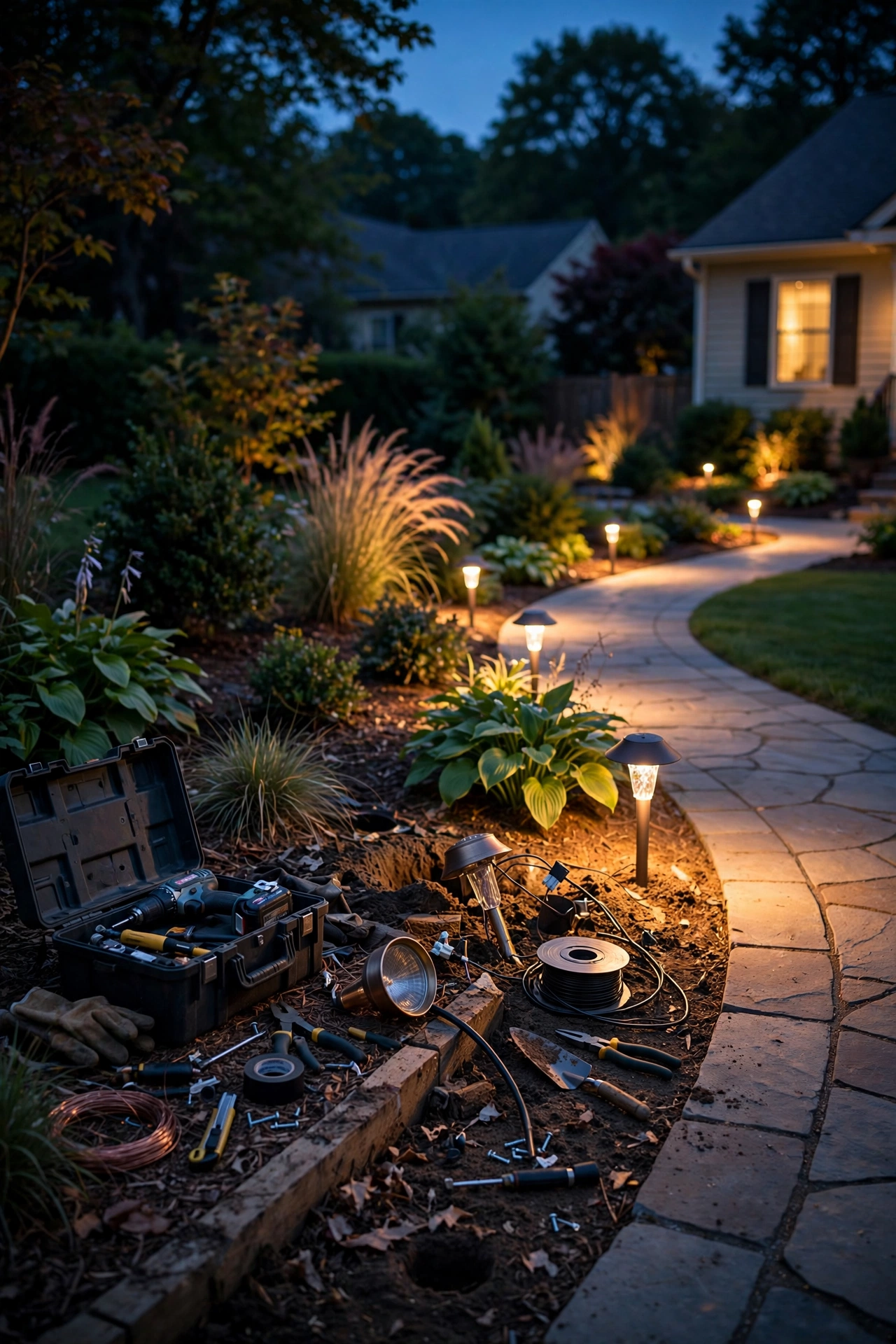
The number of fixtures is the single best predictor of your total cost — more so than yard size, honestly, because it's the fixtures that define the project. A sprawling lawn with five uplights costs less than a tiny courtyard packed with 20 accent lights. Here's how typical 2026 projects shake out across the most common scenarios I see.
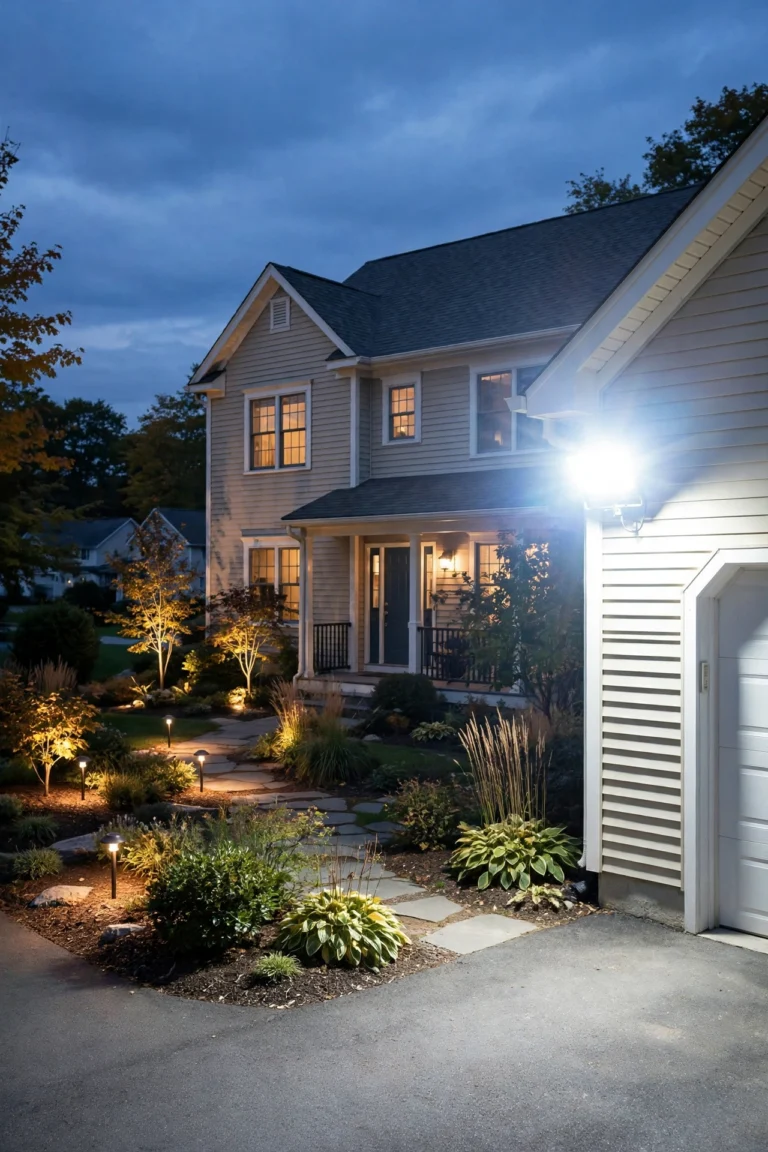
Small front yard — 6 to 8 fixtures. Think path lights lining a short walkway, one or two uplights on a feature tree or the house facade. DIY: $400 to $900 in materials. Pro installed: $1,500 to $3,000. This is the sweet spot for a first project — you get that warm, welcoming glow at the entry without committing to a whole-yard overhaul, and it's a perfect weekend DIY if you want to try.
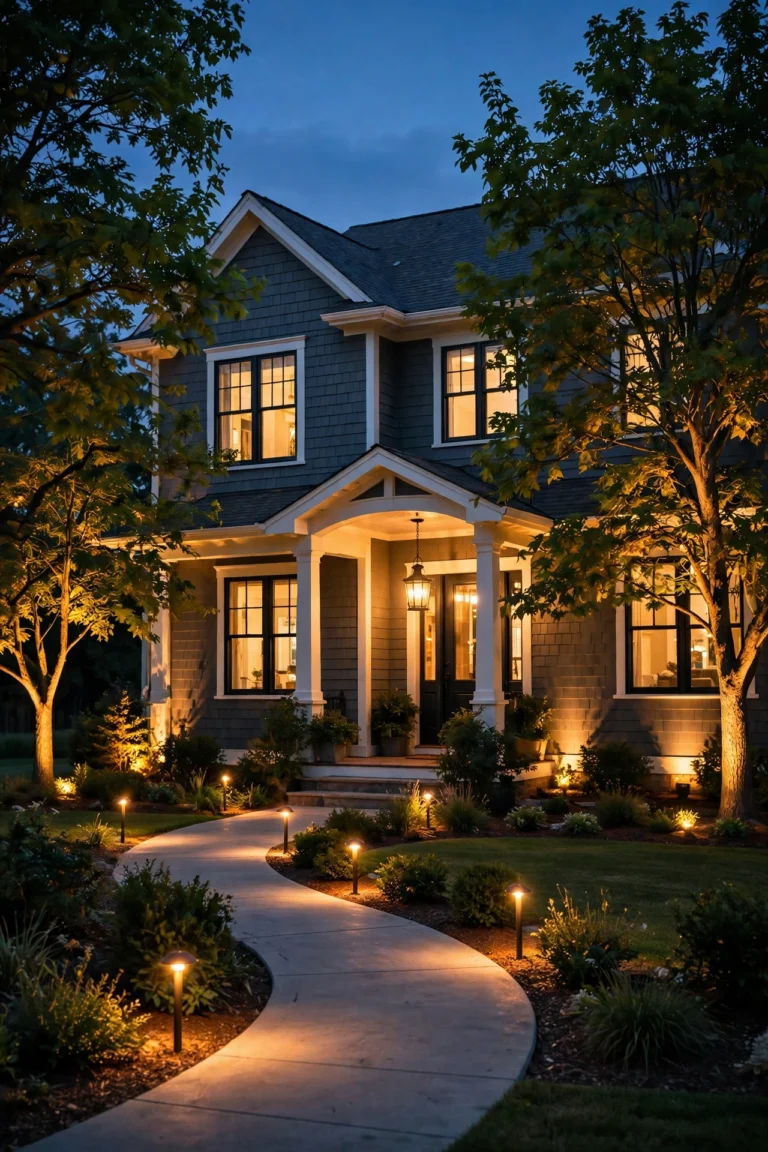
Typical suburban yard — 12 to 18 fixtures. This is the most common project size: path lights along the walkway and driveway, uplights on two or three trees, accent lighting on the house, maybe a few well lights in planting beds. DIY: $800 to $1,800. Pro installed: $3,000 to $6,500. Most of my neighbors who've had systems installed land right around $4,000 to $5,000 — that's the number I quote when someone asks for a ballpark at a barbecue.
Large or corner lot — 20 to 30 fixtures. Multiple zones: front facade, side beds, backyard seating area, perhaps a fence line or water feature. DIY: $1,500 to $3,000 (and plan for two weekends). Pro installed: $6,000 to $10,000. At this scale, design starts to matter a lot — a pro's eye for layering and avoiding hot spots pays real dividends, and you may need two transformers to keep voltage drop in check.
Estate or complex property — 30-plus fixtures. Extensive architectural lighting, mature-tree uplighting (including uplighting a tree from fixtures mounted up in the canopy), water features, multiple transformers, possibly smart controls and zoning. Pro installed: $10,000 to $15,000-plus, with truly custom designs going higher. DIY at this scale is possible but rare — the design work alone is a real skill.
Here's a rule of thumb I wish someone had given me before my first project: budget about $75 to $100 per fixture for DIY materials and $200 to $300 per fixture for pro installation, then multiply by your fixture count. It gets you within shouting distance of the final number every time.
What It Costs to Run Every Month (Watts × Hours × Rate)
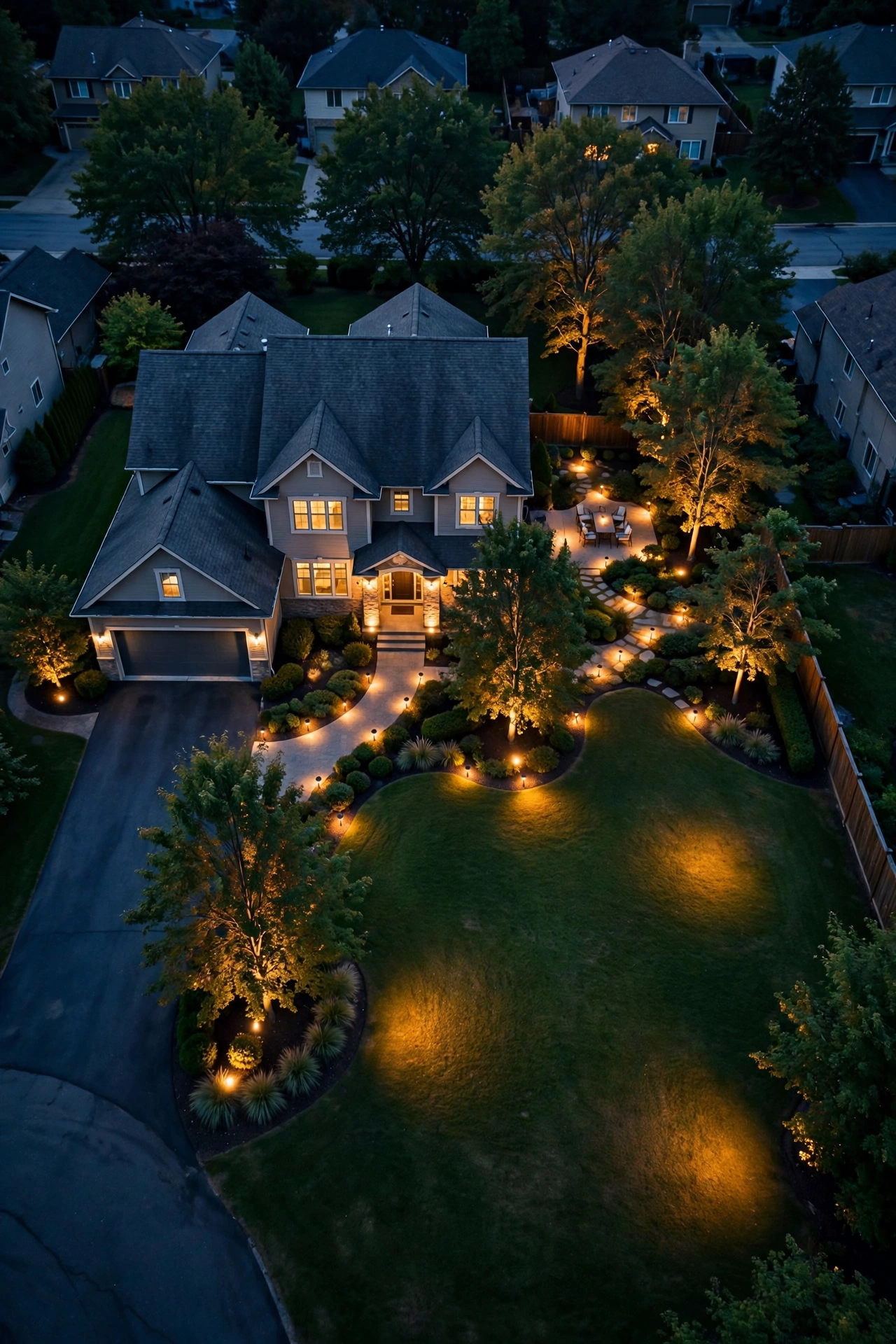
This is my favorite part of the cost conversation, because it's where landscape lighting stops feeling like a luxury and starts feeling like a no-brainer. LED landscape fixtures sip electricity. A typical LED path light draws just 4 to 5 watts; a brighter LED spotlight draws 7 to 12 watts. Compare that to the old halogen systems of the 2000s, which ran 20 to 50 watts per fixture — the technology switch alone has cut running costs by 80 percent or more.
The math is simple: total watts × hours per night × 30 days ÷ 1,000 × your electricity rate = monthly cost.
Let me walk through a realistic example. Say you have a 15-fixture system averaging 5 watts per fixture. That's 75 watts total. Run it 8 hours a night (dusk to around midnight, controlled by a timer or photocell): 75 watts × 8 hours = 600 watt-hours, or 0.6 kilowatt-hours per night. Over 30 days, that's 18 kWh. At the 2026 US average residential rate of roughly $0.17 per kWh, your monthly cost is about $3.06. Three dollars a month — less than a fancy coffee — for a yard that glows every single night.
Bigger system? A 25-fixture system at 7 watts each runs about $8 to $9 a month. Even a generous estate system rarely tops $15 to $20 a month. In my experience, most homeowners are shocked by how small this number is — it's the one line item in the whole project that never causes sticker shock. Add a smart timer or photocell (most decent transformers include one) so the lights aren't burning from dusk to dawn, and you trim that already-tiny bill even further.
If you're coming from an old halogen system, upgrading to LED fixtures is one of the highest-return swaps you can make: the same 15-fixture system at 35 watts per halogen fixture would cost you over $20 a month to run — and you'd be replacing burned-out bulbs constantly. The LED upgrade usually pays for itself in under two years on energy savings alone.
5 Mistakes That Inflate Your Landscape Lighting Cost
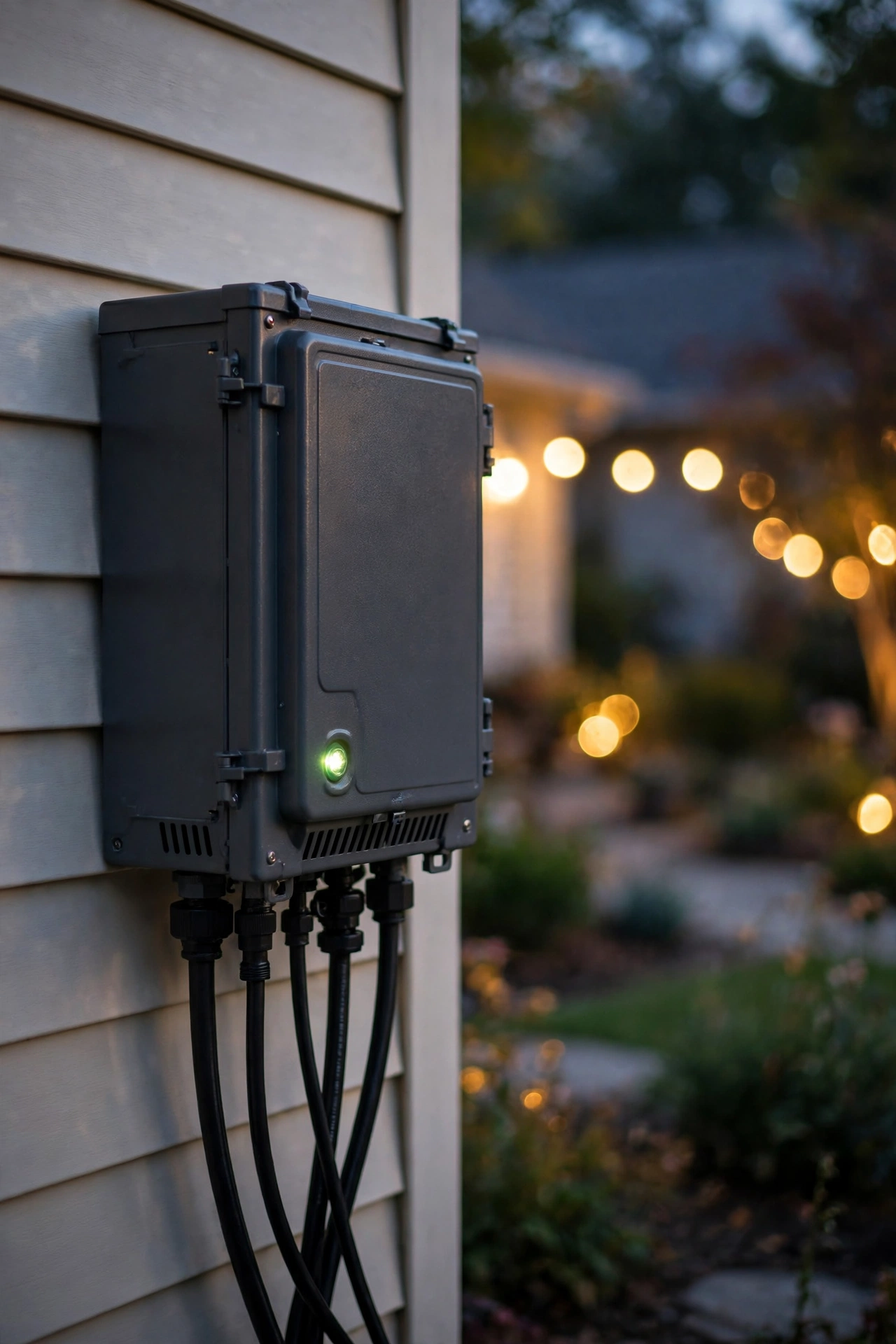
I've watched friends — and, if I'm being honest, myself — burn money on landscape lighting in ways that were completely avoidable. Here are the five budget-killers I see most often, so you can dodge all of them.
1. Buying the cheapest fixtures you can find. A $12 plastic path light seems like a bargain until it yellows, cracks, and corrodes within two seasons — and then you're buying its replacement anyway, plus the time to dig it out and rewire. In my experience, fixtures in the $40 to $70 range last three to five times longer than the bargain-bin options. The "cheap" set ends up costing more per year of service than the good one. This is the single most common way people spend twice.
2. Undersizing the transformer. This one's sneaky. You buy a 60-watt transformer for your 55-watt system, everything looks fine — until you add three more fixtures next spring and the whole system dims, or the transformer runs hot and dies years early. Replacing an undersized transformer means rewiring the hub connections and sometimes upgrading cable. Always buy 25 to 30 percent more capacity than your current plan needs. The upgrade from a 150-watt to a 300-watt unit costs maybe $50 more at purchase; replacing a dead one costs triple that in parts plus a weekend.
3. Over-lighting the yard. More fixtures don't mean more beauty — they mean more money, higher energy use, and a yard that looks like a parking lot. Every unnecessary fixture is $40 to $100 in materials (or $200-plus installed) that could have gone toward a nicer transformer or better fixtures elsewhere. Before you buy, do a night walk with a flashlight: aim it at each spot you're considering lighting and ask whether that spot actually needs it. I always recommend starting with fewer fixtures than you think — you can always add later, but removing is a pain.
4. Mixing color temperatures. A 2700K warm-white path light next to a 5000K daylight-blue spotlight looks like two different yards fighting each other — and fixing it means replacing bulbs or entire fixtures. Stick with one color temperature across the whole system (2700K to 3000K is the cozy sweet spot for residential). This mistake doesn't just cost money; it costs the whole effect.
5. Skipping the plan and winging the layout. The most expensive project is the one you redo. Buying fixtures before mapping the design leads to wrong fixture types, cable that's too short, a transformer that's too small, and connectors that fail because they weren't the right kind. Spend an hour with a sketch of your yard, mark every fixture location, and total the wattage before you spend a dollar. Honestly? That hour of planning saves more money than any coupon or sale ever will.
Maintenance and Long-Term Costs
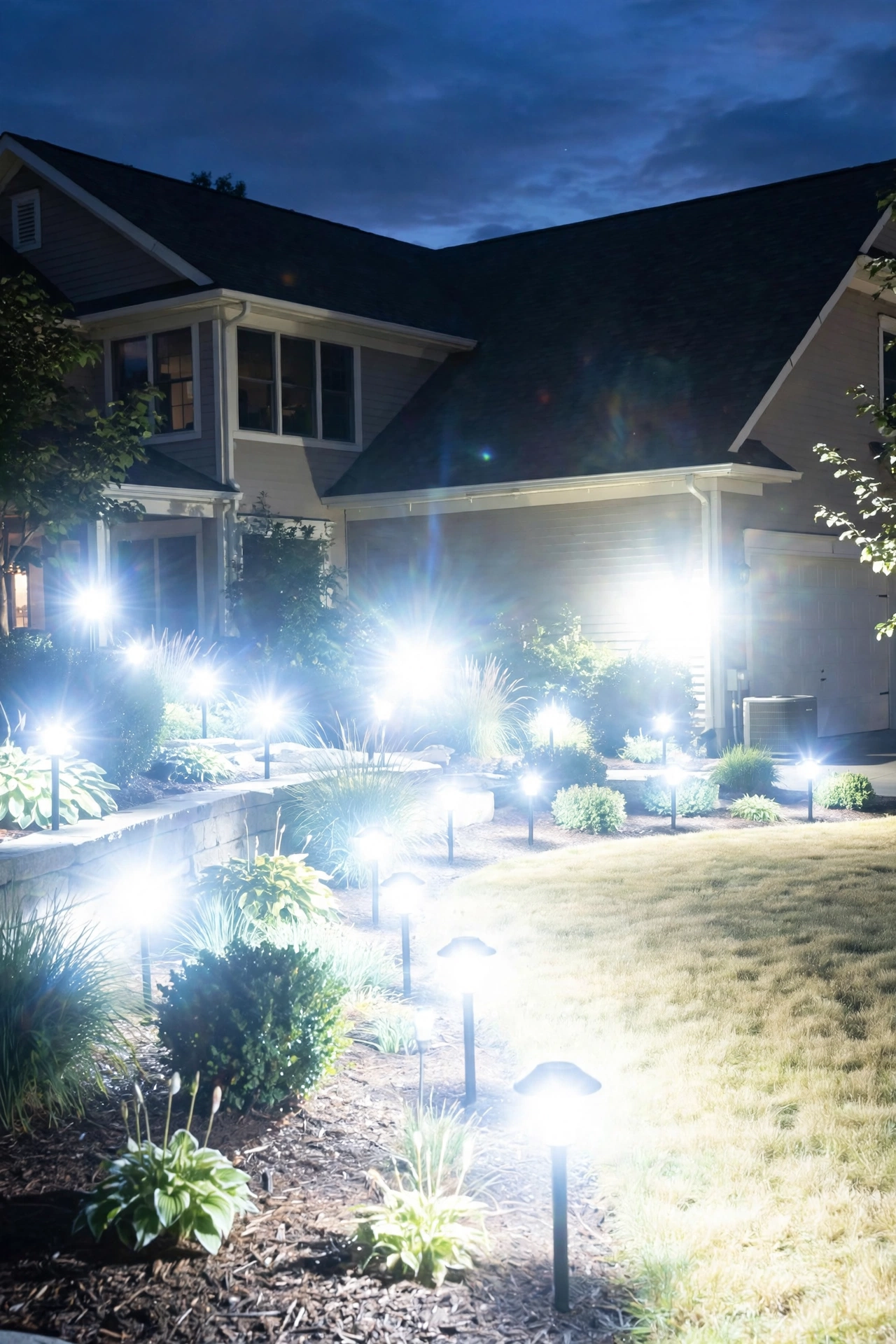
Here's the part nobody talks about at the design stage: what the system costs you after it's installed. The good news is that landscape lighting is genuinely low-maintenance — especially low-voltage LED — but it's not zero-maintenance. Budget a little each year and your system will look brand new for a decade or more.
LED bulbs and fixtures: Quality LED fixtures last 25,000 to 50,000 hours — that's 8 to 15 years of nightly use. If your fixtures use replaceable LED bulbs, budget $8 to $15 per bulb when one eventually fails. If they're integrated-LED fixtures (increasingly common), a dead LED means replacing the whole fixture — one more reason to buy fixtures from manufacturers with solid warranties. Expect to replace maybe one or two fixtures a year on an aging system, so $50 to $150 annually after year five or so.
Transformer replacement: Transformers last 10 to 15 years. When one dies, a replacement runs $150 to $400 depending on wattage, plus an hour or two of rewiring the connections. It's not a crisis — it's a known, planned expense, like replacing a water heater, just much cheaper.
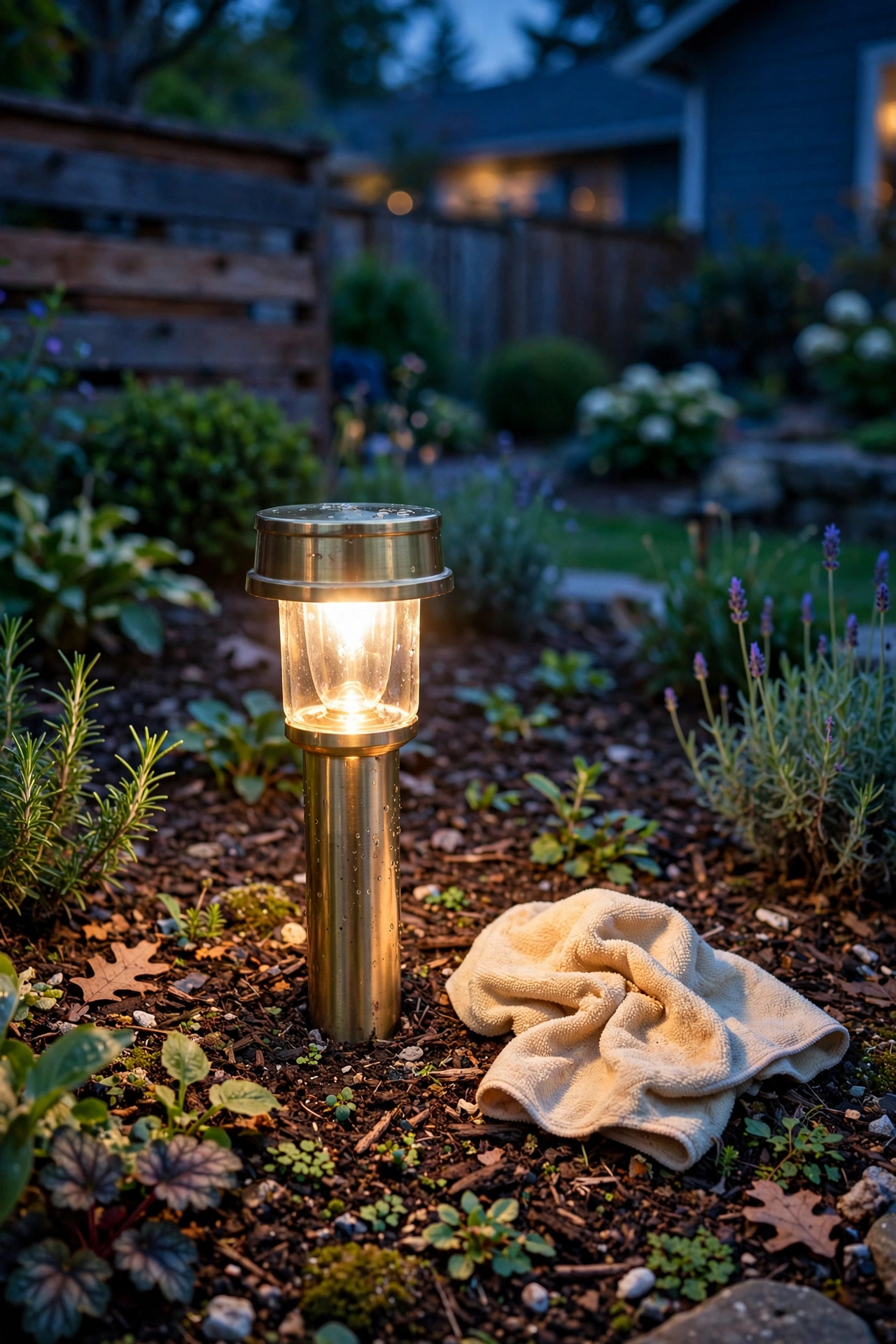
Cleaning and aiming: Twice a year — spring and fall — walk the system with a soft cloth and wipe down lenses. Dirt, pollen, and hard-water deposits from sprinklers can cut light output in half, and a free cleaning restores it instantly. Re-aim any fixtures that have shifted from mowing, frost heave, or curious kids. This costs you nothing but 30 minutes, and honestly, it's the highest-value maintenance task there is.
Wire and connector repairs: Buried cable occasionally gets nicked by a shovel, an aerator, or a new fence post. A single repair is a $10 connector and 20 minutes with a shovel — annoying, not expensive. Marking your cable runs with small flags or a sketch in a drawer pays for itself the first time someone digs near a bed.
Pro maintenance plans: Many installers offer annual service visits for $200 to $500 a year — cleaning, re-aiming, checking voltage at each fixture, replacing worn connectors. For a professionally installed system under warranty, this is often worth it; it keeps the warranty valid and catches small issues before they cascade.
All in, a DIY system costs most owners $50 to $150 a year to maintain after the first few years, and even a pro system with a service plan rarely exceeds $500 a year. Compared to the cost of a lawn service or a pool, landscape lighting is one of the cheapest outdoor upgrades to own.
Frequently Asked Questions
How much does landscape lighting cost per fixture installed?
Professionally installed, expect $150 to $350 per fixture all-in — that covers the fixture itself, its share of the transformer and wire, design, trenching, and labor. DIY, the same fixture costs you $40 to $100 in materials. The per-fixture number drops as the system grows, because the transformer and design cost get spread across more lights — a 20-fixture project usually prices lower per fixture than an 8-fixture one.
Is DIY landscape lighting worth it, or should I hire a pro?
It depends on what you value most. DIY saves 50 to 70 percent and is very achievable for straightforward layouts — path lights, tree uplights, and facade accents on a low-voltage system. A pro is worth the premium for complex designs, hardscape integration, tall-tree work, or if you want a parts-and-labor warranty and a guaranteed result. My take: if your layout is simple and you own a shovel, DIY the install and spend the savings on better fixtures. If the design keeps you up at night, hire the pro.
How much does it cost to run landscape lighting per month?
Very little. A typical 15-fixture LED system costs about $3 to $5 a month to run 8 hours a night at average US electricity rates. Even a large 25-fixture system usually stays under $10 a month. If you're still running old halogen fixtures, expect $15 to $30-plus a month — and switching to LED typically pays for itself within two years on energy savings alone.
How long does landscape lighting last?
Quality brass or copper fixtures last 15 to 20 years or more; good aluminum fixtures last 10 to 15. LED light sources are rated 25,000 to 50,000 hours — roughly 8 to 15 years of nightly use. Transformers typically last 10 to 15 years. Buried cable can last decades if it's quality 12-gauge direct-burial wire that nobody digs through. The weak link in most systems isn't the hardware — it's cheap connectors and fixtures that weren't built for real weather.
Can I install landscape lighting in phases to spread out the cost?
Absolutely — and it's one of the smartest ways to manage the budget. Start with the highest-impact zone (usually the front facade and walkway), install a transformer with 30 percent extra capacity, and add zones in later phases. Because low-voltage systems are modular, each phase just taps into the existing transformer as long as you planned the capacity up front. I always recommend this approach for big yards: phase one this fall, phase two next spring, and your wallet never feels the full hit at once.
Conclusion
So, how much does landscape lighting cost in 2026? For most homeowners, the honest answer is $650 to $1,400 for a DIY system or $2,800 to $5,700 professionally installed on a typical 15-fixture yard — with pennies a day in running costs and minimal maintenance for years to come. The number that matters isn't the national average, though; it's your fixture count multiplied by about $75 to $100 per fixture DIY or $200 to $300 per fixture pro. Count your lights, pick your path, and you can budget with confidence.
My verdict after years of living with my own system: landscape lighting is one of the rare home upgrades that's both genuinely affordable and disproportionately transformative. Nothing else makes a house feel this welcoming for this little money — and unlike most outdoor projects, it rewards you every single evening, not just on weekends. Start with the entry and the facade, buy quality fixtures once instead of cheap ones twice, size your transformer for the yard you'll have in two years, and enjoy the glow. If you're ready to plan your layout, browse more of our outdoor lighting guides and start sketching — your after-dark yard is closer than you think.