The first summer we added a little pool house, I thought the lighting would take care of itself — one porch bulb by the door and done. Then came the first evening swim party: kids dripping through a dim changing room, me squinting at the snack counter, and a guest showering in near darkness. That night taught me that good pool house lighting ideas are never about one bright fixture; they are about layers. A pool house works hard in a small footprint — a changing nook, a snack counter, a shower, towel storage, and a shady lounge spot, all within a few hundred square feet — and every corner wants a different kind of light. Bright and honest where you change, focused where you slice the limes, soft and golden where you sit with a cold drink afterward. In this list I will walk you through 19 ideas I have tested across three summers of swim parties, from wet-rated shower fixtures to the string lights that make the whole building glow like a little resort cabana after dark.
1. Layer Your Pool House Lighting Ideas From Day One
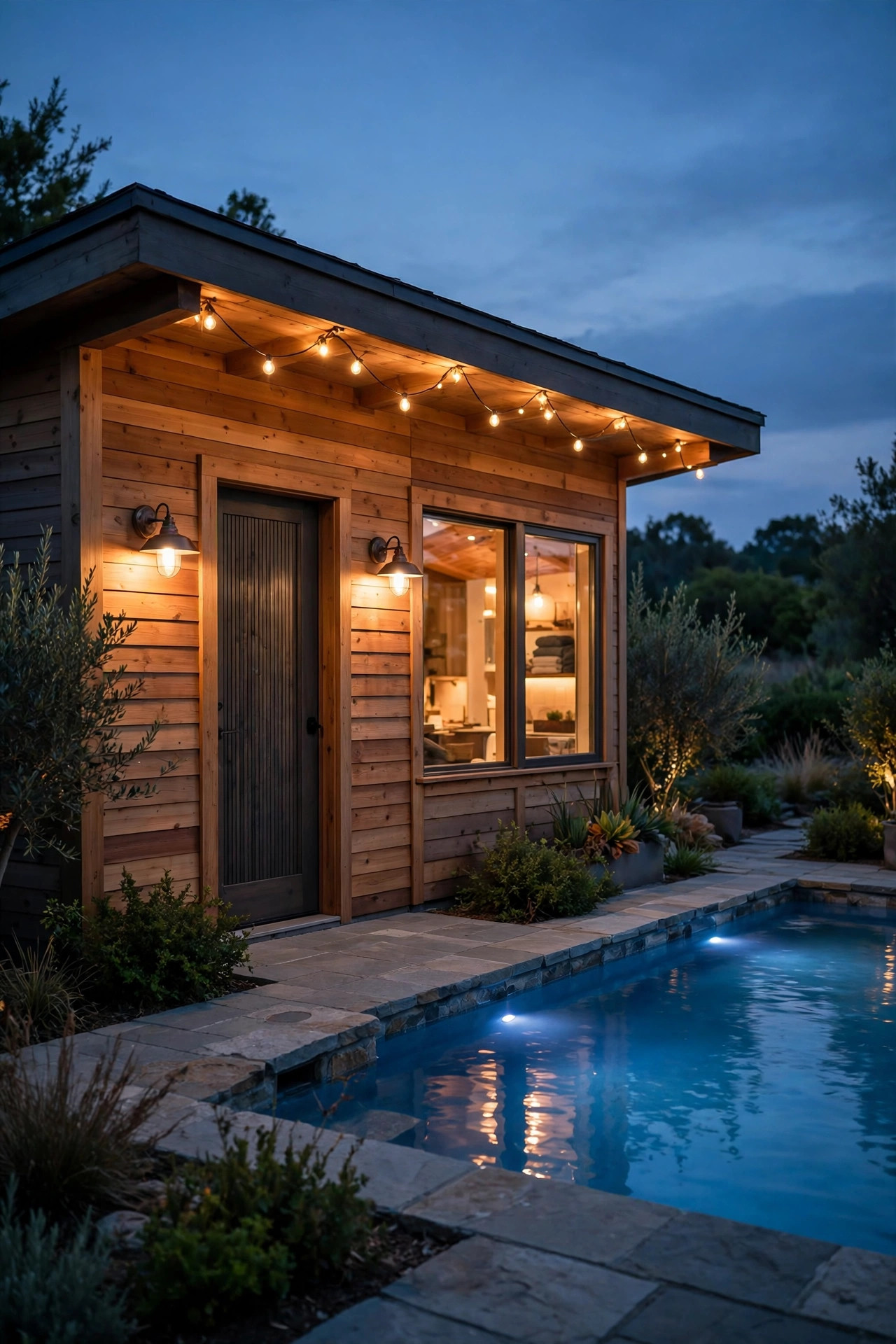
Every pool house I have ever lit well started with the same three layers, and skipping any one of them is where the trouble begins. Ambient light is your base — a ceiling fixture or two that fills the room evenly so nobody is changing in a cave. Task light goes exactly where hands work: over the snack counter, in front of the mirror, inside the shower. Accent light is the pretty layer — sconces by the door, a wash of light on the stone wall, string lights under the eave. In a building this small, one dimmer per zone makes the layers usable; wire the changing area, counter, and lounge corner on separate switches if you can. Keep every bulb in the same warm family, 2700 to 3000K, so the zones blend instead of clashing. Sketch the layers on paper before you buy a single fixture, marking each bulb, its job, and its switch. That ten-minute plan is the difference between a pool house that feels like a boutique cabana and one that feels like a brightly lit storage shed with a toilet.
Suggested budget range: $40 – $150.

2. Give the Changing Room Bright, Honest Ceiling Light
People change in a pool house at the worst possible moments — dripping wet, in a hurry, trying to check whether a swimsuit is twisted. This is the one room where flattering dim light is your enemy. I use a flush-mount LED ceiling fixture in the 3000K range putting out 1,600 to 2,200 lumens for a typical 6-by-8-foot changing nook, which reads bright without feeling like a clinic. Choose a fixture with a frosted diffuser so the light spreads evenly and nobody stands in their own shadow while they dress. A ceiling-mount sensor switch is a gift here: wet hands should never grope for a toggle, and the light shuts itself off after the kids forget for the tenth time. If your changing area shares space with storage, aim one adjustable track head at the cubbies so towels and goggles are easy to spot. Everything in this splash-adjacent zone should be at least damp-rated, and the circuit belongs on GFCI protection, no exceptions. Bright, even, automatic — that is the whole recipe, and it costs less than one fancy sconce.
Suggested budget range: $35 – $120.

3. Flank the Mirror With Sconces, Not a Single Overhead Bulb
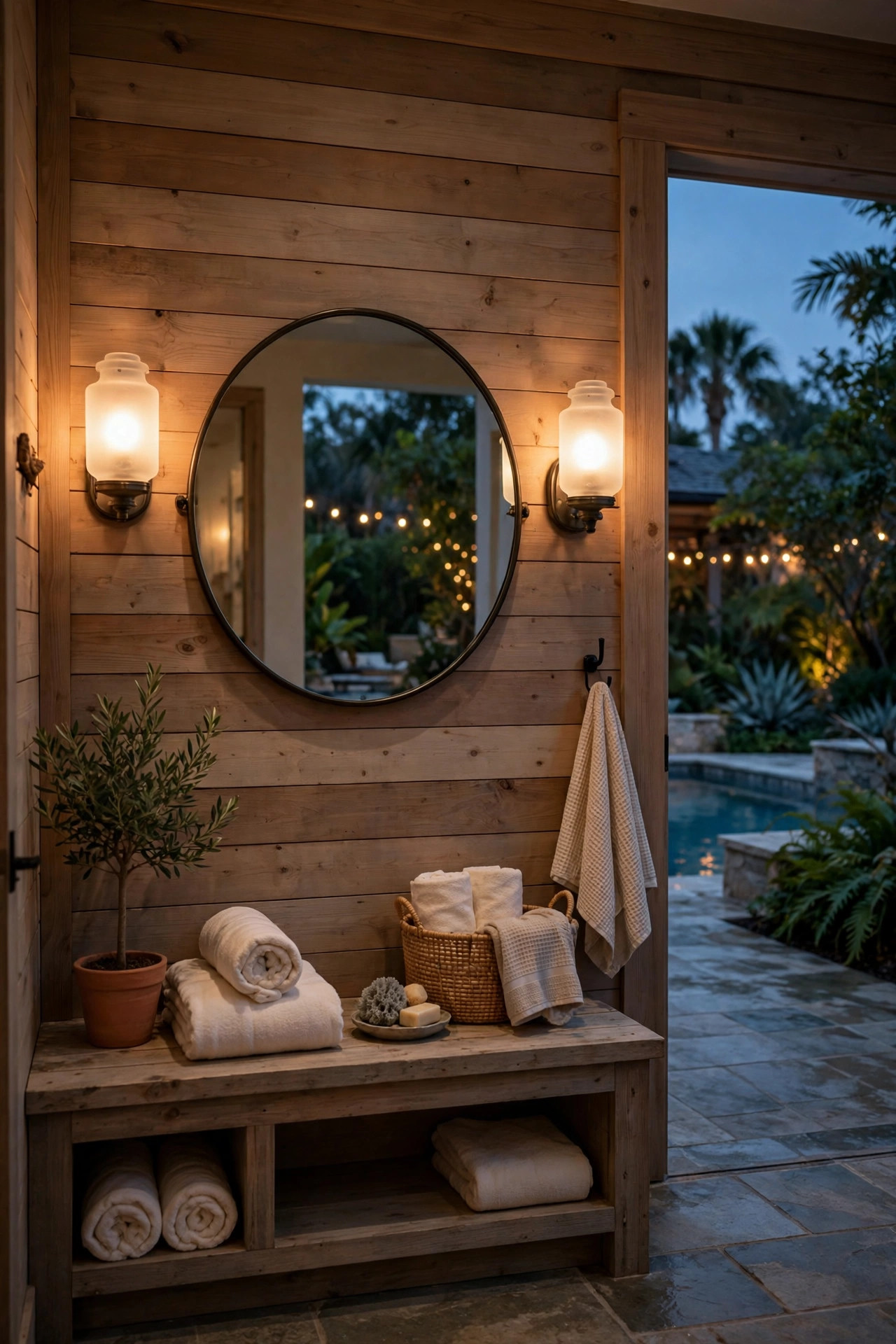
A lone ceiling light in front of a mirror casts shadows straight down your face — the classic gas-station-bathroom look. The fix is the same one makeup artists use: light from both sides. Mount a pair of slim sconces on either side of the changing-room mirror, centered about 60 inches off the floor and 28 to 36 inches apart, so the light crosses your face evenly and swimsuit checks and sunscreen touch-ups take seconds. Frosted glass or fabric-style shades soften the output; exposed bulbs at eye level will glare off wet skin and mirror glass. Bulbs in the 2700 to 3000K range at 400 to 600 lumens each are plenty. If wall space is tight, a backlit mirror does the same job in one piece and looks wonderfully hotel-like. Keep the fixtures damp-rated at minimum, since this mirror usually sits a few feet from the shower spray. Add a small magnifying mirror on an articulated arm if your household is serious about post-swim hair. It is a five-minute upgrade that makes the whole room feel considered rather than improvised.
Suggested budget range: $45 – $160.
4. Run LED Strips Under the Snack Counter Cabinets
The snack counter is where pool house lighting earns its keep, because this is where you are slicing watermelon and opening bottles with wet hands at dusk. Under-cabinet LED strip light is my first recommendation in every pool house I help with: mount a 2700 to 3000K strip under the wall cabinets or a floating shelf, set an inch or two back from the front edge so the diodes hide and the counter gets an even wash with no scalloped hot spots. Aim for roughly 250 to 400 lumens per foot of counter — bright enough to see a knife clearly, gentle enough to keep the mood. Use a strip rated IP65 or better here; this counter lives in splash range of both the sink and the pool door. A plug-in strip with an inline dimmer keeps the install to twenty minutes and zero electrician. It borrows everything I love about good outdoor kitchen lighting and shrinks it to cabana scale. Run the cord in a paintable raceway and it disappears completely.
Suggested budget range: $20 – $75.

5. Hang Damp-Rated Pendants Over the Snack Bar
If your pool house has a little breakfast-bar ledge where swimmers park themselves for snacks, pendants make it feel like a tiki bar instead of a countertop. Two or three small pendants — woven rattan, seeded glass, or matte metal shades all suit the setting — hung so the bottom of each shade sits 30 to 36 inches above the counter give you focused pools of light exactly where plates land. Use LED filament-style bulbs around 2700K for that golden café glow, and keep the total wattage low; you want sparkle, not a suntan. Damp rating is the floor here, and if the bar sits within reach of pool spray or an open side, step up to wet-rated fixtures. A dimmer turns the same pendants from bright snack-assembly light at six o'clock into a soft backdrop for evening drinks at nine. Black cord kits hide beautifully against a dark ceiling, while a white ceiling wants white or brushed-nickel hardware. Group odd numbers — three pendants read intentional, two can look like a mistake if the bar is wide.
Suggested budget range: $60 – $220.

6. Use True Wet-Location Fixtures Inside the Shower
The shower is the one spot in a pool house where guessing about ratings can genuinely hurt someone, so I will be blunt: only fixtures listed for wet locations belong inside the shower stall or within the spray zone. Look for sealed, gasketed designs — vapor-tight jelly-jar styles and recessed shower trims with tempered glass lenses are the workhorses — and put the entire circuit on GFCI protection. One recessed can centered over a 3-by-3-foot stall at 800 to 1,100 lumens is plenty; two smaller trims feel more luxurious in a bigger shower. Stay at 3000K so skin tones look natural, and avoid color-changing novelty bulbs in a space where people need to see a cut foot or a bee sting clearly. If the shower is outdoors-adjacent, as many pool house showers are, a fixture with a marine-grade or powder-coated finish shrugs off the humidity that eats cheap chrome in one season. Have an electrician make the final connections if you are not fully confident — this is the one line item in the whole building where I never DIY the wiring myself.
Suggested budget range: $40 – $140.

7. Add a Motion-Sensor Light for Midnight Trips
Somebody always needs the pool house after dark — a towel, a bathroom run, a forgotten phone — and fumbling for a switch with sleepy eyes is how toes meet door frames. A small motion-sensor light just inside the door, or a sensor sconce on the exterior wall, solves it completely. Set the sensor to a short one-to-three-minute timeout and aim it so the pool deck traffic does not trigger it all evening; you want it answering the door, not the diving board. Battery-powered sensor bars are the ten-minute version and work beautifully inside a changing nook, while a hardwired sensor fixture by the entry is the set-and-forget option. Keep the output modest, 300 to 600 lumens in warm white, so a midnight visit does not blast anyone awake like a stadium. If your pool house doubles as guest quarters even once a summer, this little light becomes the feature people mention. Pair it with a glow-in-the-dark switch plate inside and guests can navigate the whole building half asleep without a single stubbed toe or whispered complaint.
Suggested budget range: $15 – $60.

8. Light the Path From the Pool Deck to the Door
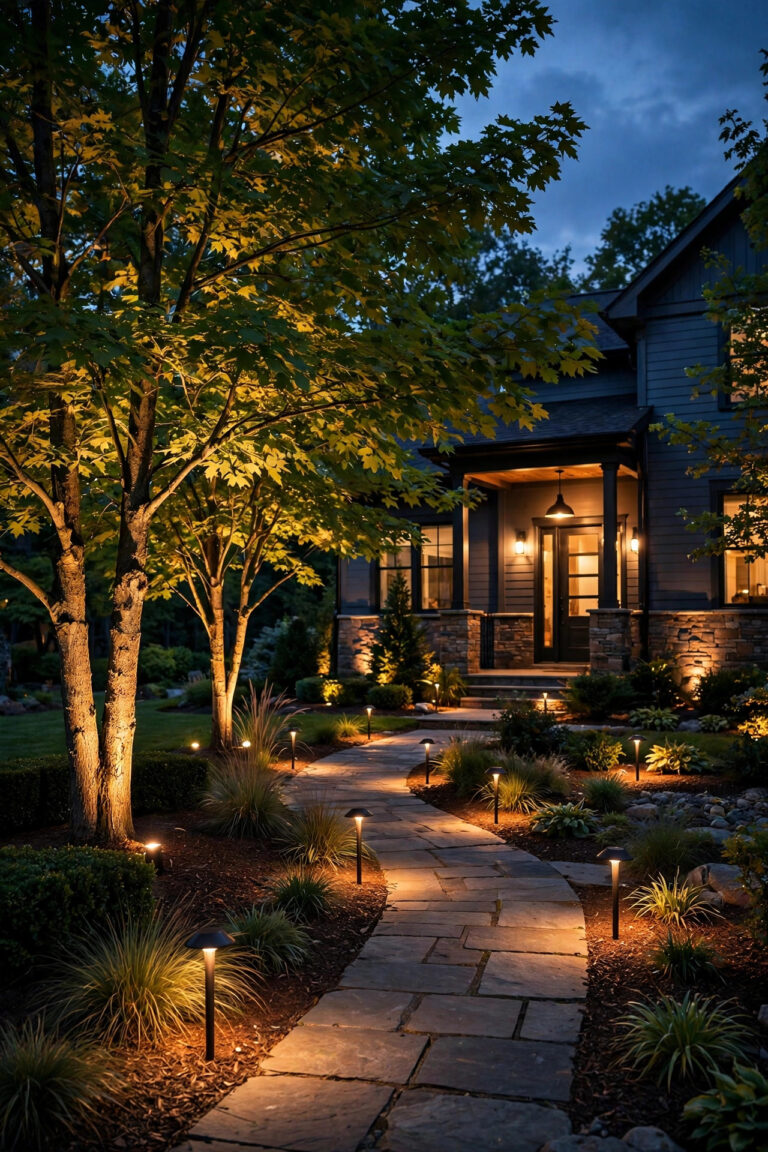
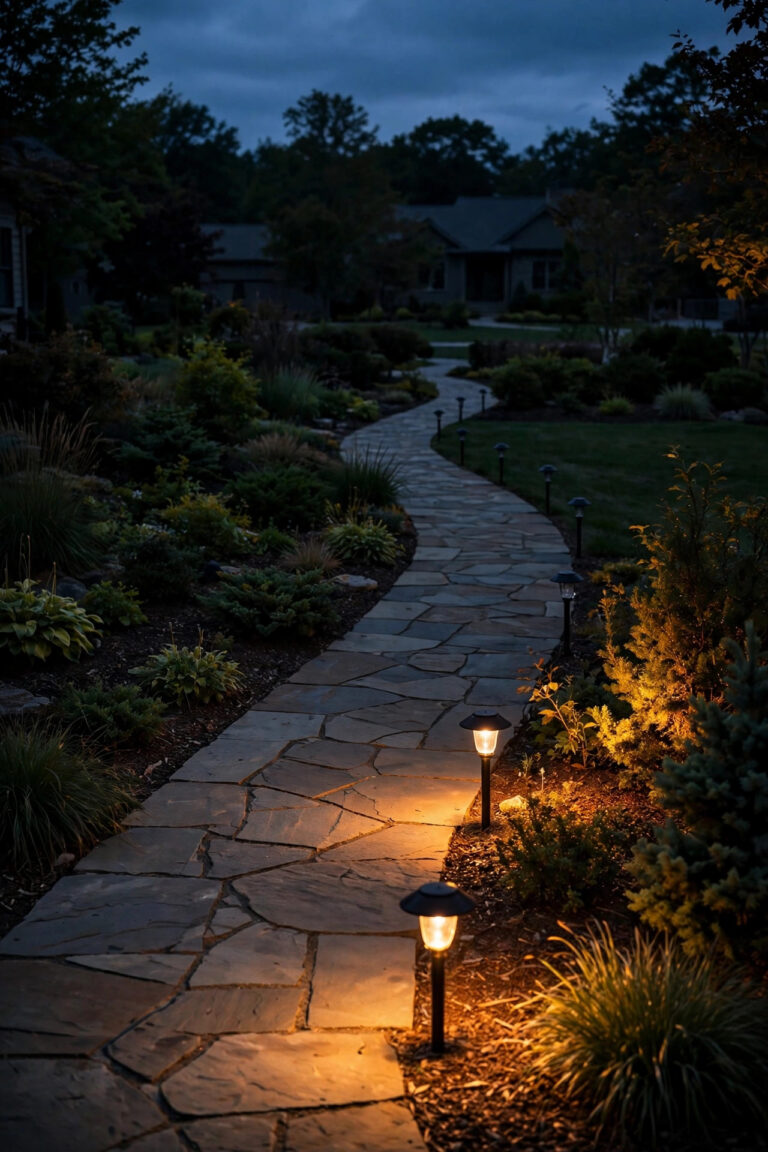
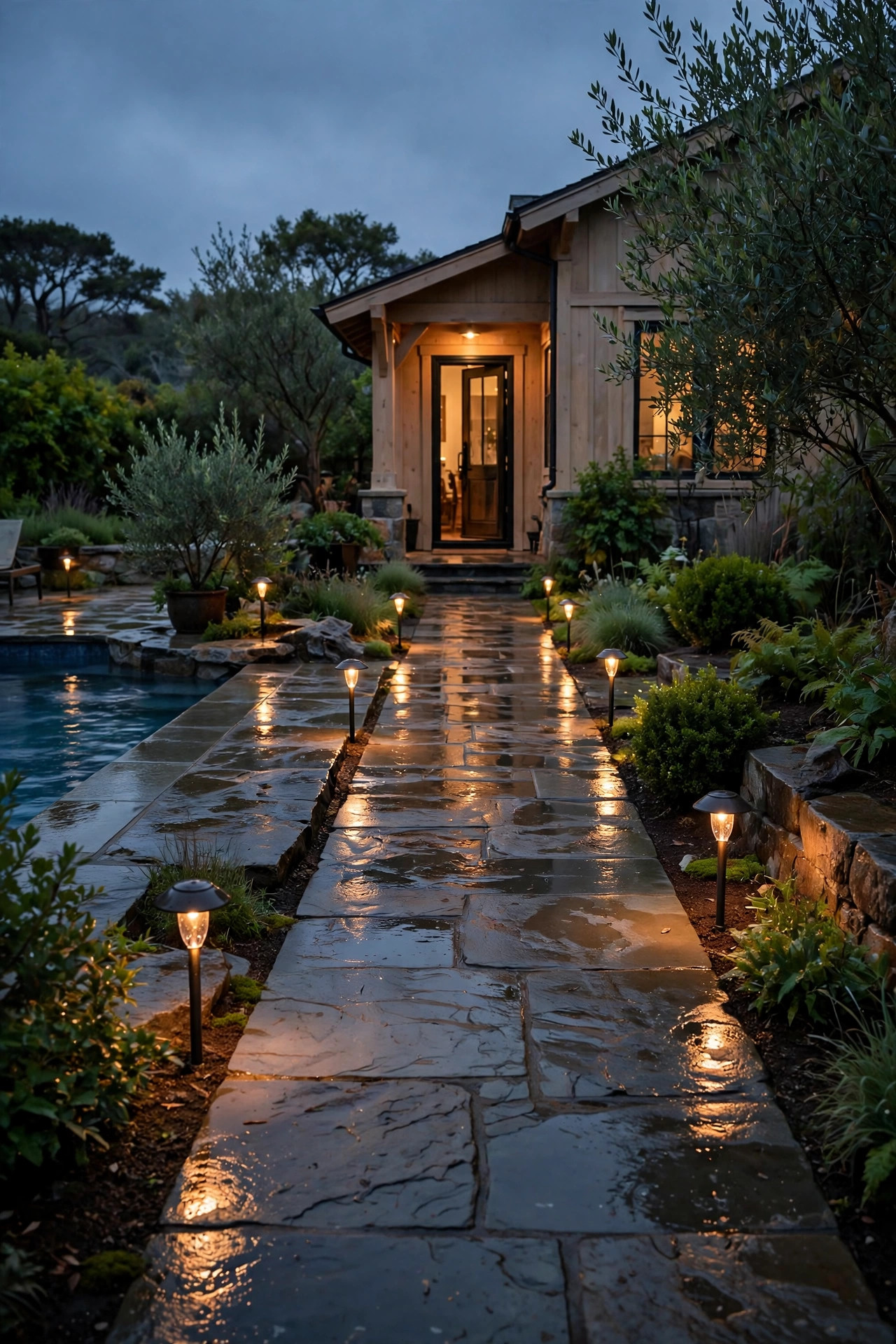
The ten feet between the pool edge and the pool house door are the most-traveled wet feet in your yard, and they deserve better than darkness. A short run of low-voltage path lights — three to five fixtures spaced 6 to 8 feet apart, staggered rather than in a runway line — guides everyone safely while keeping light out of swimmers' eyes. Mushroom and bollard styles that throw light downward are ideal; anything that glares upward will annoy the person floating on their back nearby. This is also where your inside and outside lighting shake hands: the warm path glow should match the color temperature of the pool underwater lighting ideas shimmering behind you, so the whole yard reads as one designed space. Keep fixtures at least a few feet back from the coping so they are never a trip hazard or in cannonball range. A transformer with a photocell turns the whole run on at dusk automatically, and the per-fixture cost of low-voltage heads has dropped so far that this entire safety layer often costs less than the towels stored inside the building it leads to.
Suggested budget range: $50 – $180.
9. Put Recessed Step Lights at the Threshold
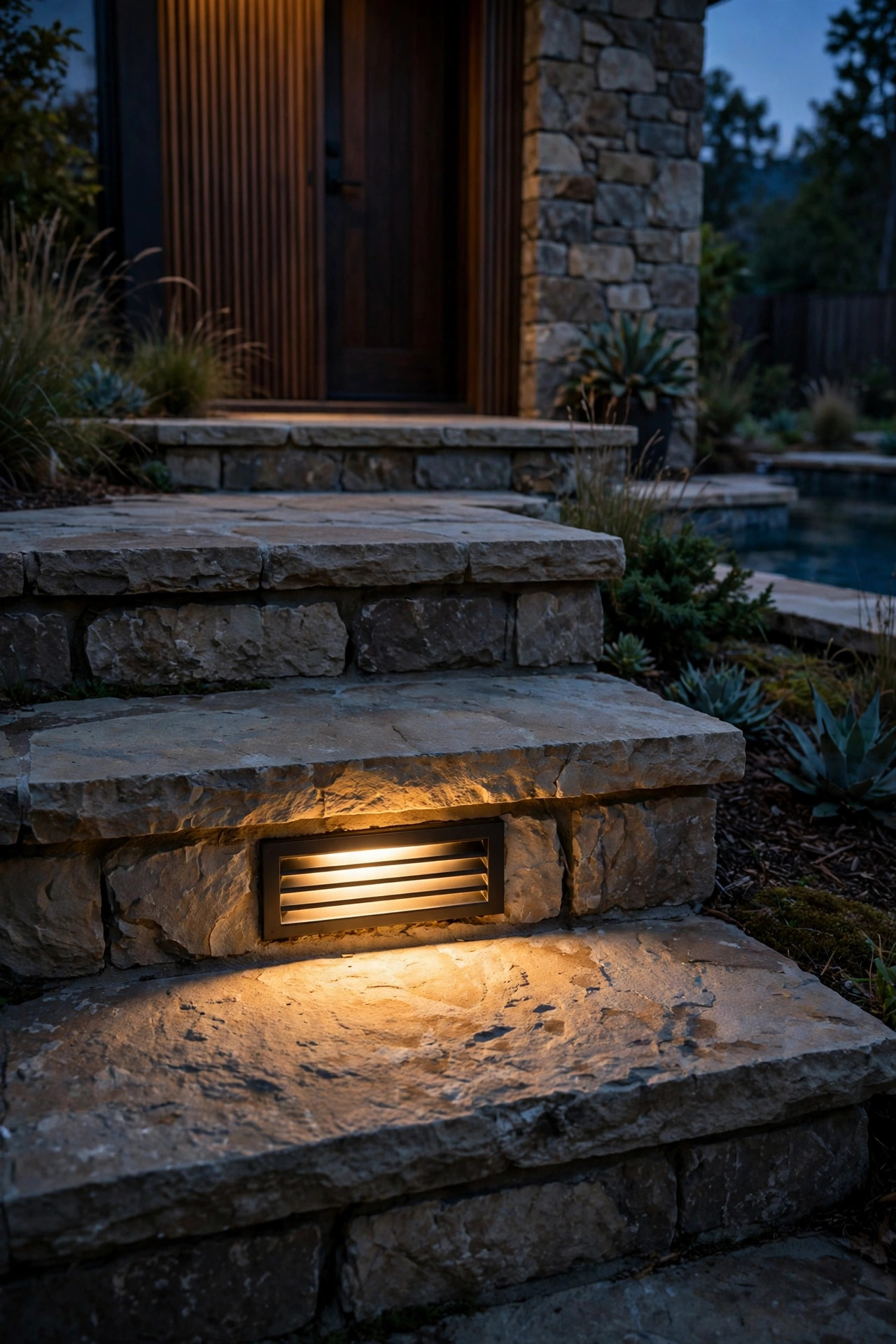
If your pool house sits even one step up from the deck — and most do, for drainage — that little rise becomes invisible at night when it is wet. Recessed step lights are the elegant fix: small louvered fixtures set into the riser or the wall beside the step that wash the tread with a soft ribbon of light. One fixture per step, or one every other step on a short run, is plenty; you are marking edges, not lighting a runway. Louvered faces matter here because swimmers approach barefoot and low to the light, and a bare diode at ankle height is genuinely painful to look at. Choose wet-rated, low-voltage models and 2700K output so the step reads warm against the stone. While you are at it, add a slim strip or a second step light at any interior level change, like a raised shower curb — wet feet plus a hidden two-inch lip is the exact recipe for the only injury I have ever seen at a pool party. Cheap insurance, beautiful result, and guests will never consciously notice either one.
Suggested budget range: $25 – $90.
10. Swag String Lights Under the Eave for Cabana Glow
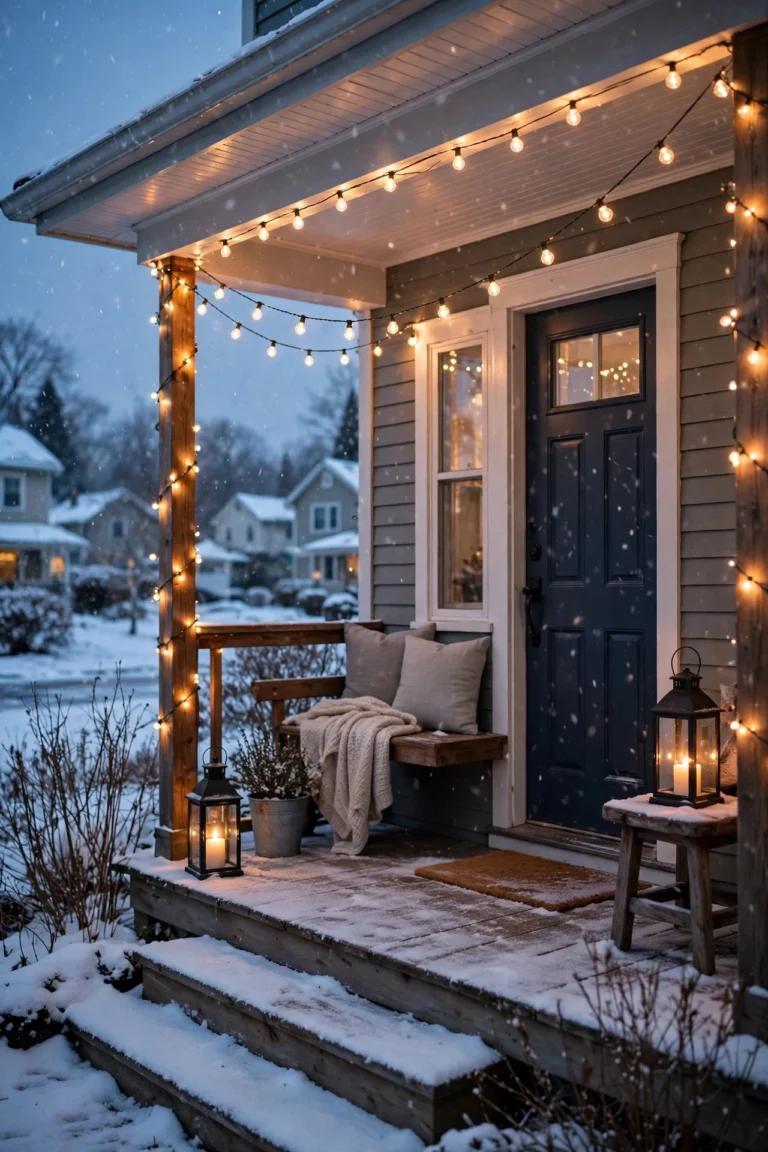
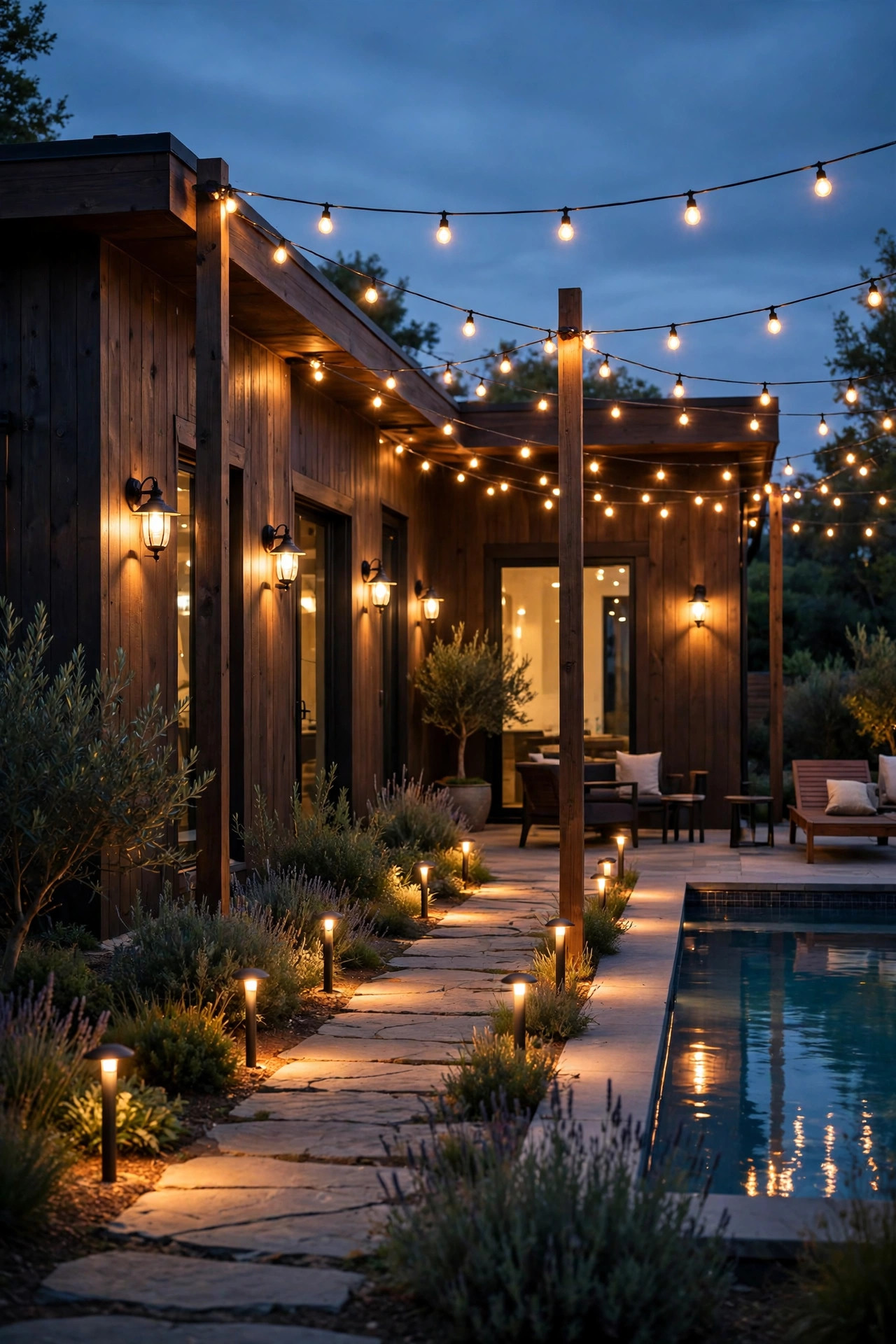
Every pool house has a little overhang, and that eave is begging for string lights. A single swagged strand of shatterproof LED café bulbs under the roof edge turns the wall outside the door into the most photographed corner of the yard — this is where people drift with drinks while they drip-dry. Keep the swag gentle, dropping 6 to 12 inches at the center of each span, and anchor into the fascia or joists, never the siding. Shatterproof plastic bulbs are non-negotiable anywhere near a pool; glass and bare feet are enemies. Commercial-grade strands with suspended sockets handle weather and wind better than the lightweight patio sets, and one 24-to-48-foot strand usually covers a small building's front with a strand to spare. Plug into a GFCI outlet through a simple plug-in dimmer and the whole mood is on one control. Honestly, of everything on this list, this is the layer guests ask about — it is the difference between a utility building and a cabana, and it takes one ladder and twenty minutes to hang.
Suggested budget range: $30 – $110.

11. Flank the Door With Lantern Sconces
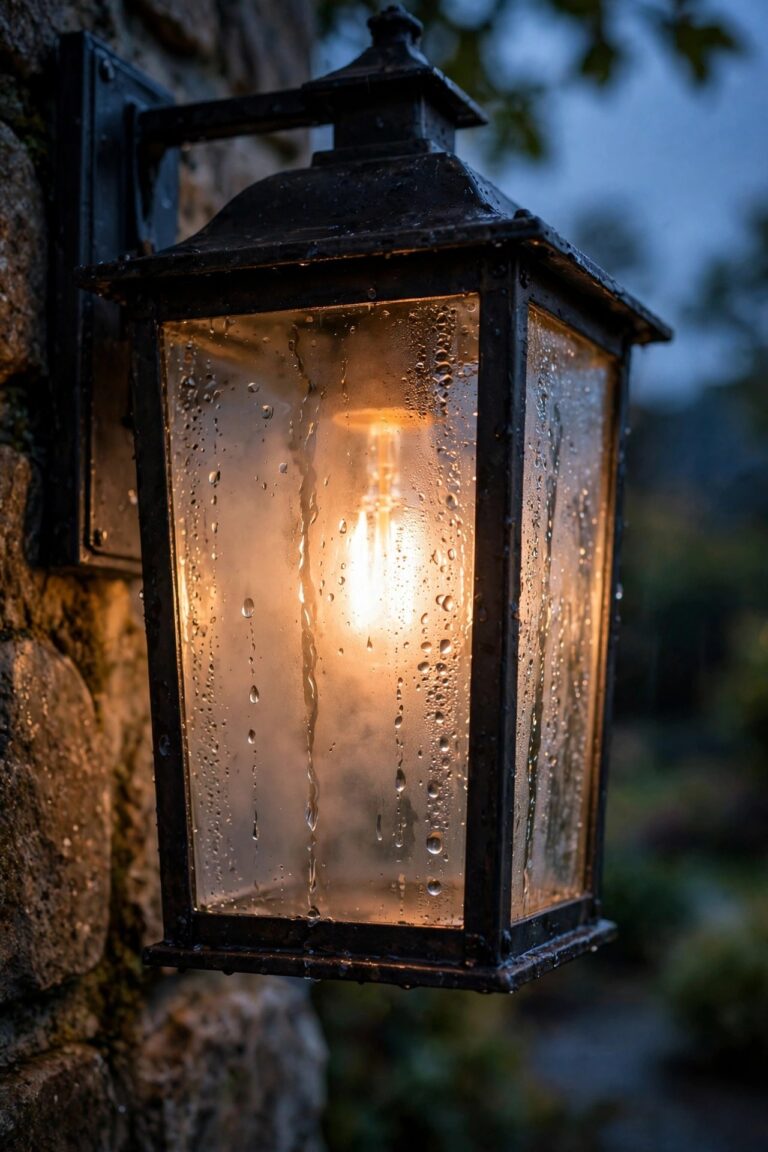
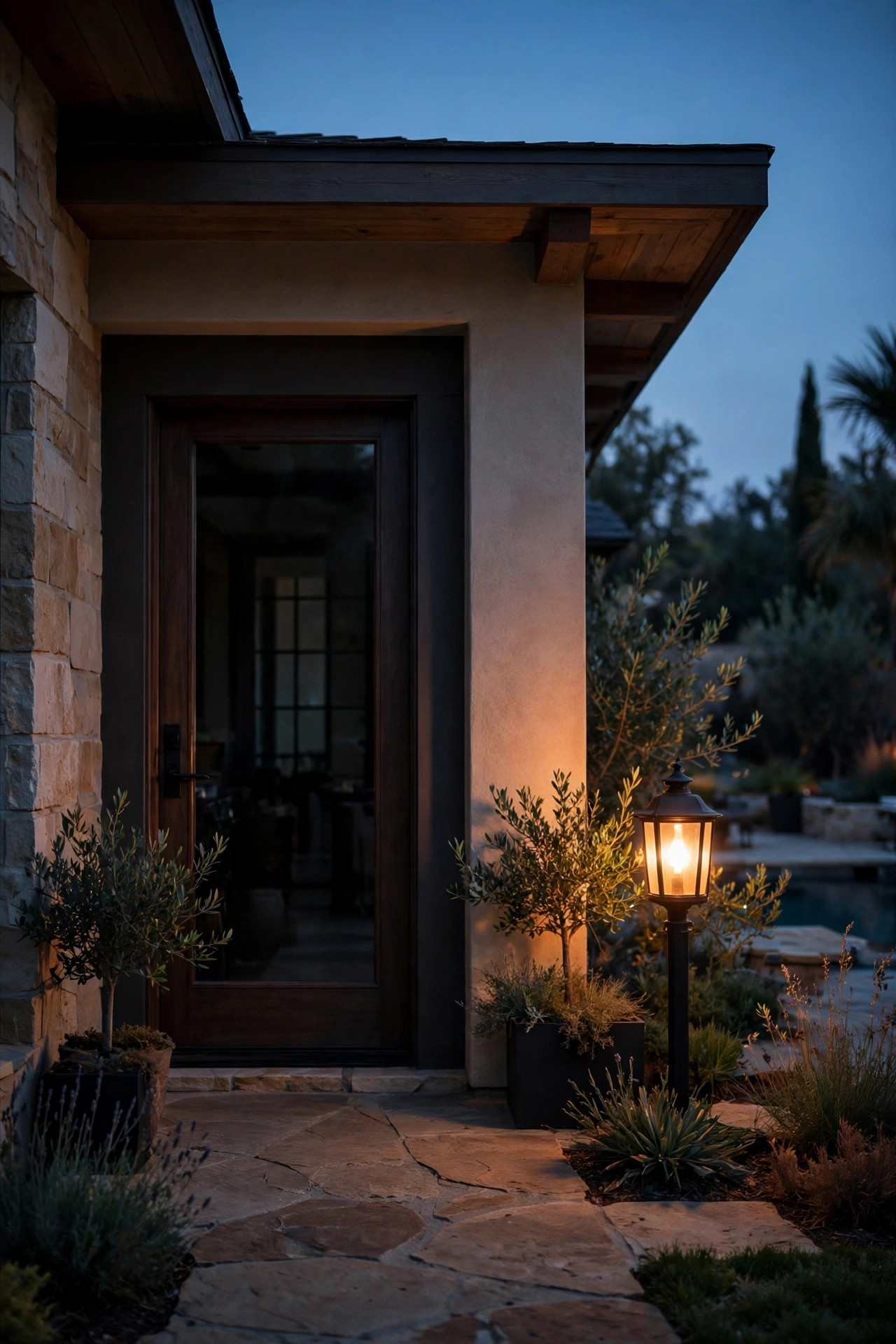
A pair of lantern-style sconces flanking the pool house door does three jobs at once: it welcomes swimmers in, it lights the lock and handle so nobody fumbles with a key dripping wet, and it gives the little building a face. Match the style to your house — black carriage lanterns for traditional yards, clean cylinder up-down sconces for modern ones — and mount them with the bulb center around 66 inches off the deck. Wet-location rating is essential on this exposed wall, and seeded or frosted glass hides the bulb while surviving the occasional splashed cannonball aftermath. LED filament bulbs at 2700K, 500 to 800 lumens each, give you that gaslight flicker feel without the maintenance; some even have a flame-effect mode my grandkids insist on all summer. Put the pair on a photocell or a smart switch so they greet you at dusk without a thought. If the door sits under a deep porch roof, one sconce plus a bright overhead can work, but symmetric pairs almost always look more deliberate on a small facade.
Suggested budget range: $55 – $190.

12. Try Solar Stakes and a Solar Sconce Where Wiring Is Painful
Not every pool house sits near a convenient outlet, and trenching wire across a finished pool deck is nobody's idea of fun. Solar fills the gaps gracefully if you buy honestly: look for stakes and wall sconces with a separate or generously sized panel, real replaceable batteries, and lumen ratings printed on the box — anything shy about its numbers is dim by design. Give the panels six-plus hours of direct sun; a pool house roofline or a south fence usually obliges even when the building itself sits in shade. I use solar for the soft jobs — a sconce washing the side wall, stakes edging the planting bed by the door — and keep wired light on the safety-critical path and steps. Modern solar fixtures in warm 2700 to 3000K have finally lost that cold blue cast, and the better ones hold a charge through a cloudy day. Clean the panels with a hose spray once a month; a film of pollen and sunscreen dust quietly steals a third of your brightness by midsummer if you let it.
Suggested budget range: $25 – $85.

13. Use Dimmable Smart Bulbs for Movie and Swim Scenes
A pool house that hosts both cannonball contests and quiet evening swims needs light that can change its mind. Dimmable smart bulbs in the sconces and pendants let you build scenes: full bright for cleanup, half warm for dinner on the ledge, low amber for a projector night on the pool house wall. Use bulbs rated for enclosed or damp use in any fixture with a shade or cover, and pick a system that still works from the wall switch — guests should never need an app to find the bathroom. I keep the automation dead simple: one schedule that brings the door sconces up at sunset, and voice or switch control for the rest. Warm-dim bulbs that slide toward 2200K as they lower mimic candlelight beautifully for the grown-up hours. One warning from experience: put the hub-dependent bulbs on the house Wi-Fi only if your signal honestly reaches the pool; a weak connection turns scene night into flicker night, and simple RF-remote dimmable bulbs are the reliable budget answer when the router says no.
Suggested budget range: $30 – $130.

14. Slip Puck Lights Under Shelves and Into Towel Cubbies
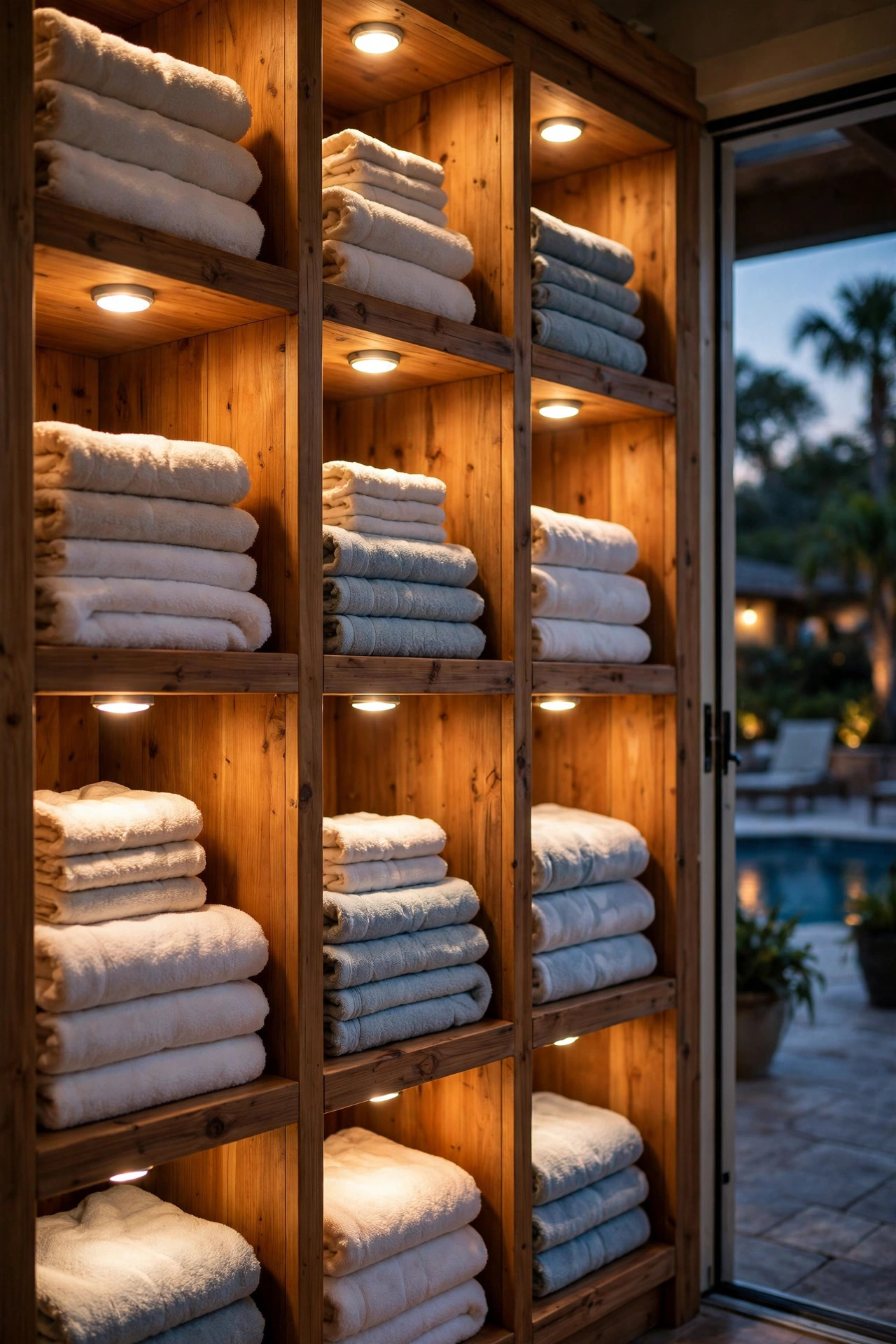
Towel cubbies and open shelves go dark exactly where hands need to reach, and a $4 puck light fixes what a ceiling fixture never will. Battery-powered LED pucks with a tap or remote switch tuck under each shelf lip and throw a clean pool of light onto folded towels, goggles, and the sunscreen bottle that always migrates to the back. Rechargeable models with magnetic mounts are my current favorites: pop them off, charge them indoors overnight once a month, snap them back. Choose warm white, around 3000K, so the cubbies blend with the rest of the room instead of glowing blue-white like a refrigerator. In the changing nook, one puck under the bench shelf lights the shoe-and-bag zone where wet floors hide. Because they are battery powered and low voltage, pucks are the one light you can add inside splash range without an electrician or a second thought — though I still keep them out of the shower itself, where only sealed wet-rated fixtures belong. Add a spare set in a drawer; when one fades during a party, the swap takes ten seconds.
Suggested budget range: $12 – $40.
15. Set Flameless Candle Lanterns on the Snack Table
Some light is purely for the soul, and the snack table is where it belongs. A cluster of flameless candle lanterns — two or three heights, grouped off-center with a bowl of lemons or a small plant — gives the counter that flickering, living glow that makes people linger. Real candles near paper napkins, towels, and excited kids are a hard no in my yard, and the modern flameless versions with warm 2200K-style flicker are convincing enough that guests reach to shield them from the breeze. Timer models that wake at the same hour daily are the set-and-forget heroes of the whole pool house; five hours on, nineteen off, all season long. Keep lantern housings in resin, metal, or plastic rated for outdoor use — indoor decorative lanterns rust at the hinges by August. On the dinner ledge, one lantern per three feet of table keeps the light intimate without turning place settings into a séance. This is the cheapest layer on the entire list and, photograph for photograph, the one that makes a pool house look like a magazine.
Suggested budget range: $15 – $55.

16. Choose a Damp-Rated Ceiling Fan With a Light Kit
A pool house that bakes all afternoon needs moving air as much as it needs light, and a damp-rated ceiling fan with an integrated light kit delivers both from the one junction box you already have. Size honestly: a 42-to-52-inch fan covers most pool house interiors and covered porches, and anything over a seating area should mount so blades clear heads by at least seven feet. The light kit should take a standard LED bulb or carry an integrated module in the 2700 to 3000K range at 800-plus lumens, on its own dimmer or remote separate from the fan speed — you will constantly want air without glare and light without a breeze scattering the napkins. Damp rating is the minimum; a fan under an open-sided porch roof that catches real weather wants wet rating and ABS blades that will not sag in humidity. In my experience this single fixture quietly becomes the hardest-working thing in the building: it dries swimsuits on hooks below it, keeps the snack counter bearable in July, and glows over every card game after the swimming ends.
Suggested budget range: $120 – $320.

17. Keep One Color Temperature Across the Whole Building
Nothing makes a small building look cheaper faster than a patchwork of bulb colors — one bluish LED in the shower, one yellow bulb by the door, one daylight bulb over the counter. Pick a lane and hold it: 2700K for a lantern-warm, resort feel, or 3000K if you prefer things a touch crisper in the changing room and shower. Write the number on a strip of painter's tape inside the supply drawer, because the person buying the replacement bulb in two years will be you, squinting at a wall of near-identical boxes. Check every package for the Kelvin rating rather than trusting words like "soft white," which mean different things to different makers. The same discipline applies outdoors: path lights, sconces, and string lights all in the same warm family make the pool house and pool read as one designed space after dark. If you love a cooler light for the shower's task clarity, 3000K against a 2700K base is as far as I would stretch it — beyond that, the eye starts reading mistake instead of intention.
Suggested budget range: $10 – $45.

18. Place Lights to Keep Bugs Away From the Door
A bright bulb directly over a pool house door is a dinner bell for every moth in the county, and they all pour inside each time a swimmer enters. The kinder arrangement is to move the strong light a few feet away: a warm sconce or a small flood on the corner of the building, or string lights along the eave's far end, drawing insects to the glow while the doorway itself stays comparatively dim. Amber and warm-yellow bulbs in the 2200 to 2700K range attract noticeably fewer bugs than cool white, which is one more reason the whole building lives in that family. A simple bug-zapper or fan near the seating corner — never over the snack counter — handles the determined few. Inside, the motion light by the door should be modest, so an opening door at night does not flash a beacon that pulls the swarm indoors. And keep the interior changing light on its sensor switch so the door stands open for seconds, not minutes. Small placements, huge difference: we cut our evening bug traffic by half the first summer I moved one fixture six feet sideways.
Suggested budget range: $15 – $70.
19. The Finishing Pool House Lighting Ideas: Timers and Photocells on Every Circuit
The best pool house lighting ideas are the ones you never have to think about, so the final layer is automation. A photocell or astronomical timer on the exterior circuit brings the sconces, path lights, and step lights up at dusk and drops them at dawn or a set hour — no forgotten switches, no dark building greeting your evening swim. Indoors, the sensor switch in the changing room and timer candles handle themselves. If you run smart bulbs, one sunset schedule covers them; if not, a simple plug-in timer on the string lights does the same job for the price of a pizza. Match the schedule to your real life: my exterior lights run dusk to 11 p.m. in swim season, then dusk to 9 in the shoulder months, which keeps the electric bill honest. Do a five-minute walk-through on the first warm night of the year — stand at the pool, at the door, at the counter, in the shower — and adjust aim, brightness, and timing while the season is young. After that, the building simply glows when it should, and hosting feels effortless.
Suggested budget range: $20 – $80.
Frequently Asked Questions
What color temperature is best for a pool house?
Warm white, in the 2700 to 3000K range, suits nearly every pool house job. It flatters skin in the changing room, keeps snacks looking appetizing, and matches the golden glow most people want around a pool at night. Pick one number for the whole building and buy every bulb to it; mixing temperatures is the fastest way to make a small space look accidental. Save anything cooler for inside the shower if you like extra clarity there, and even then, 3000K is plenty.
Do pool house lights need to be wet-rated or just damp-rated?
It depends on the spot. Inside the shower or anywhere spray can reach, use fixtures listed for wet locations, sealed and gasketed, on a GFCI-protected circuit. Covered areas that only see humidity — the changing room ceiling, under-eave pendants — can use damp-rated fixtures. Exposed exterior walls, sconces by the door, and path lights should be wet-rated even if they look sheltered, because wind drives pool-season rain sideways. When in doubt, step up one rating; the price difference is small.
How bright should the changing room and shower be?
Brighter than the rest of the building. A small changing nook does well with a ceiling fixture around 1,600 to 2,200 lumens plus mirror sconces at 400 to 600 lumens each, so faces and outfits are easy to check. A 3-by-3-foot shower needs roughly 800 to 1,100 lumens from its wet-rated fixture. The lounge and snack areas can live much lower — a few hundred lumens per fixture, dimmable — because their job is mood, not inspection.
Can I light a pool house without running new wiring?
Yes, most of it. Battery puck lights handle shelves and cubbies, solar sconces and stakes cover the soft exterior glow, flameless candles run on timers, and plug-in LED strips light the snack counter from any existing outlet. The two jobs I would not fake are the shower fixture and hardwired step lights — those want real circuits and GFCI protection. A single new circuit run by an electrician during the off-season usually covers both and costs less than most people fear.
Conclusion
A pool house is a tiny building with four jobs — changing, snacking, showering, and lounging — and the secret to lighting it well is simply giving each job its own layer. Start with honest ceiling light where people dress, focused task light at the counter and mirror, a properly wet-rated fixture in the shower, and then let the pretty layers — sconces, string lights, lanterns, and a warm path from the pool — do the charming. Keep every bulb in one warm family, put the exterior on a timer, and these pool house lighting ideas will quietly run themselves from the first swim of May to the last one in September. If this little building has you in a lighting mood, browse the rest of my patio lighting ideas for the spaces your swimmers cross on their way to the water — the glow should never have to stop at the pool house door.