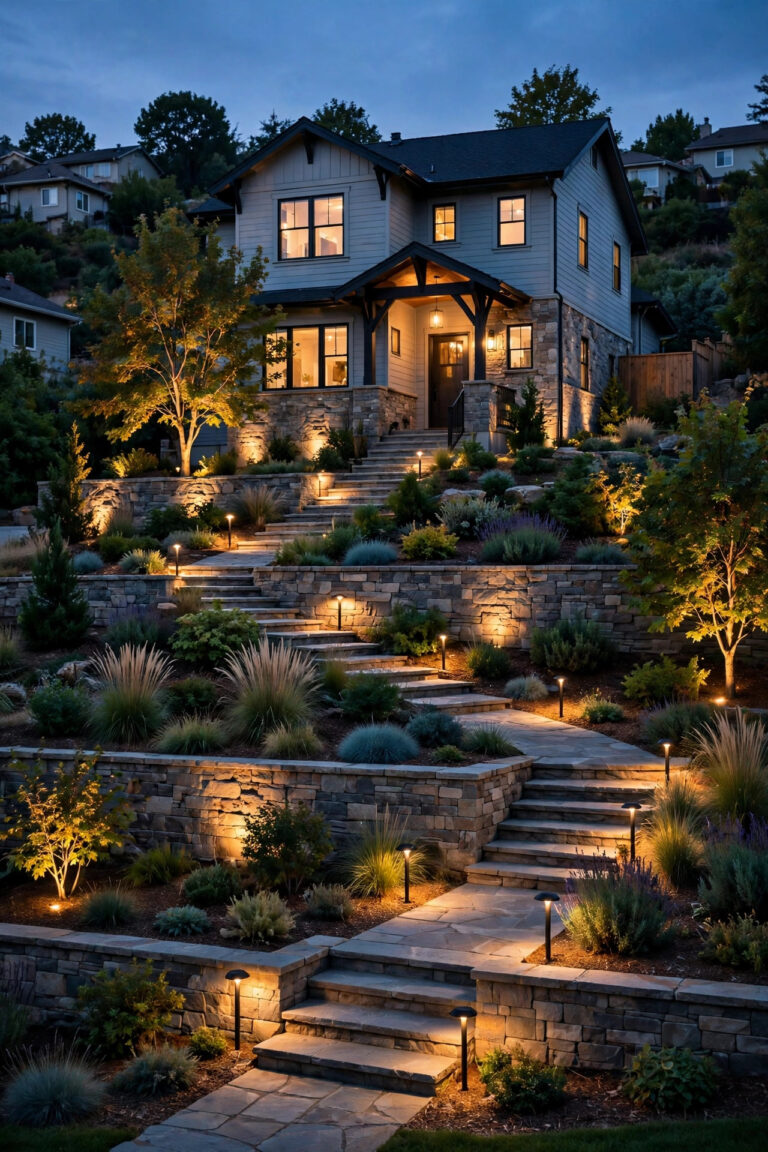
There's nothing like real firelight — and nothing like the low-level worry that comes with it near dry mulch, wooden decking, and a breeze rolling off the yard. That's exactly why I've fallen hard for flame effect lights: LED bulbs and solar torches that flicker, dance, and glow in warm amber tones so convincingly that guests lean in close to check for a real flame. I've run them in my porch lanterns, along the front walk, and all around the patio, and honestly? You get ninety percent of the magic with none of the hazard. In this post I'm sharing 19 ways to use them — flickering bulbs that screw into fixtures you already own, solar torch stakes that charge all day and perform all evening, and the layering tricks that make the whole yard feel like a fireside gathering. Every idea comes with placement measurements, brightness and color notes, safety guidance, and a realistic budget, so you can pick the two or three that fit your home tonight and build from there whenever you're ready.

1. Flame Effect Lights in Your Porch Lanterns: Just Swap the Bulbs
The fastest win on this whole list is also the cheapest: take the bulbs out of your porch wall lanterns and screw in flame-effect LED bulbs instead. These bulbs run a column of tiny LEDs behind a frosted diffuser to imitate a dancing flame, and inside a seeded-glass or clear lantern the effect is startlingly real from the sidewalk. Most use a standard E26 base, draw only 3 to 5 watts, and come in flicker-only or three-mode versions — flicker, steady glow, and a slow breathing fade. One detail matters: many flame bulbs have a gravity sensor that keeps the flame pointing up, so they behave in both base-up and base-down fixtures; check for that feature if your lanterns hang bulb-down. The color is deep amber, roughly 1300–1600K, far warmer than a standard warm-white bulb, so treat these as your accent layer rather than your only porch light. I keep a brighter downlight on a separate switch for deliveries and lock-fumbling. For nightly use, put the lanterns on a timer or a dusk-to-dawn socket adapter and the firelight lights itself every evening without you touching a thing.
Suggested budget range: $12 – $30.

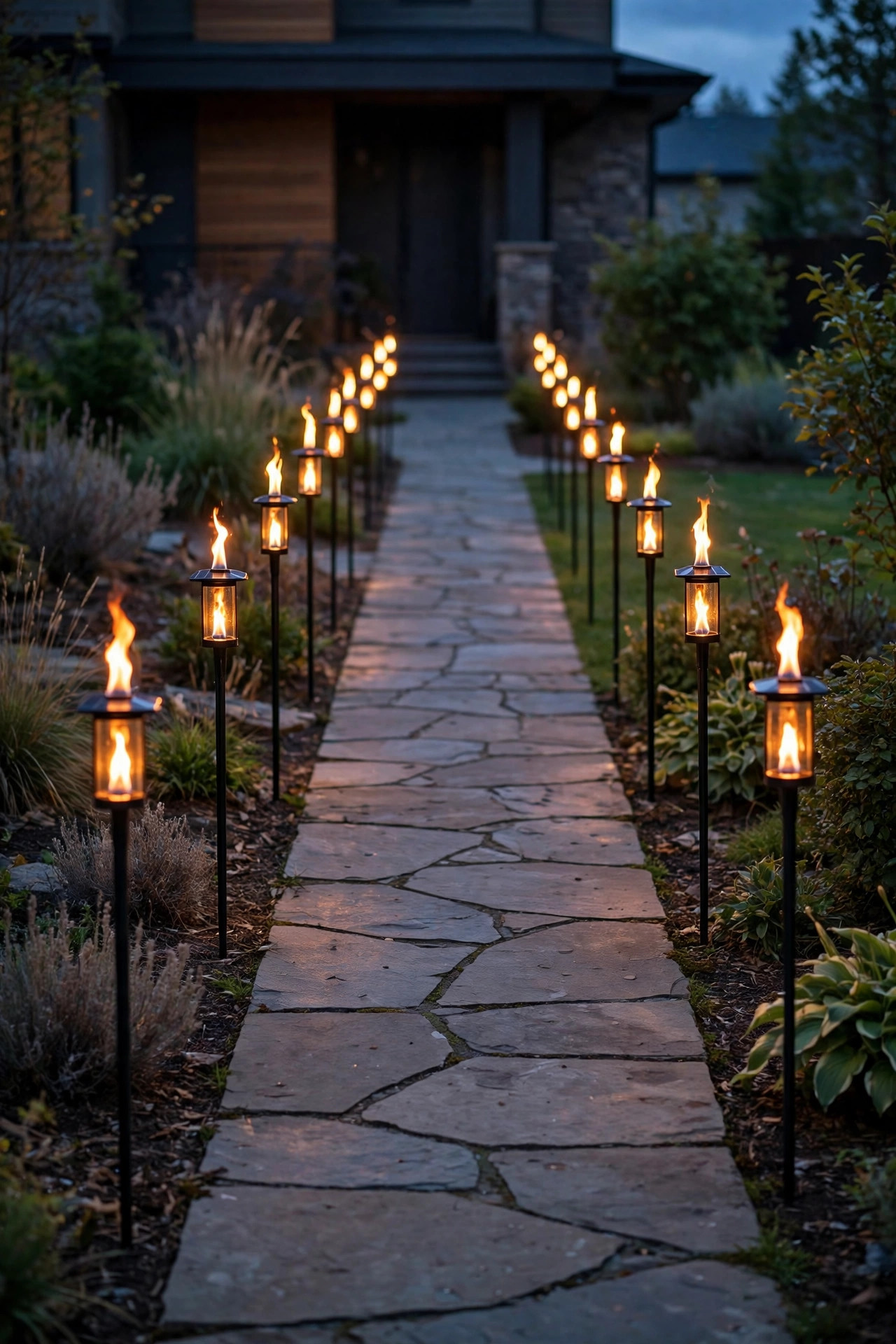
2. Solar Torch Stakes Lining the Front Walkway
Solar torch stakes are the idea that sells everyone else on flame lighting. Each stake hides a small solar panel on top and a ring of amber LEDs below it that ripple like a real tiki flame — and because they're solar, installation is literally push-them-into-the-ground. My favorite spacing is every 4 to 6 feet, alternating sides of the walk so the eye zigzags down the path, or in straight pairs for a formal entry. Most stakes stand 12 to 22 inches above ground once installed, and staggering heights slightly keeps the line from looking mechanical. Be honest with yourself about brightness: a solar torch puts out a gentle glow, not a pool of light, so it marks the path's edge rather than illuminating the surface. If your walkway runs dark, pair the torches with a real path light every other position — my solar path lights guide walks through the brightness math I use. Give the panels a full day of sun before judging them, wipe dust off monthly, and expect 6 to 10 hours of flicker after a good charge. In winter they'll fade earlier, which I actually like — the yard winds down when we do.
Suggested budget range: $25 – $60.
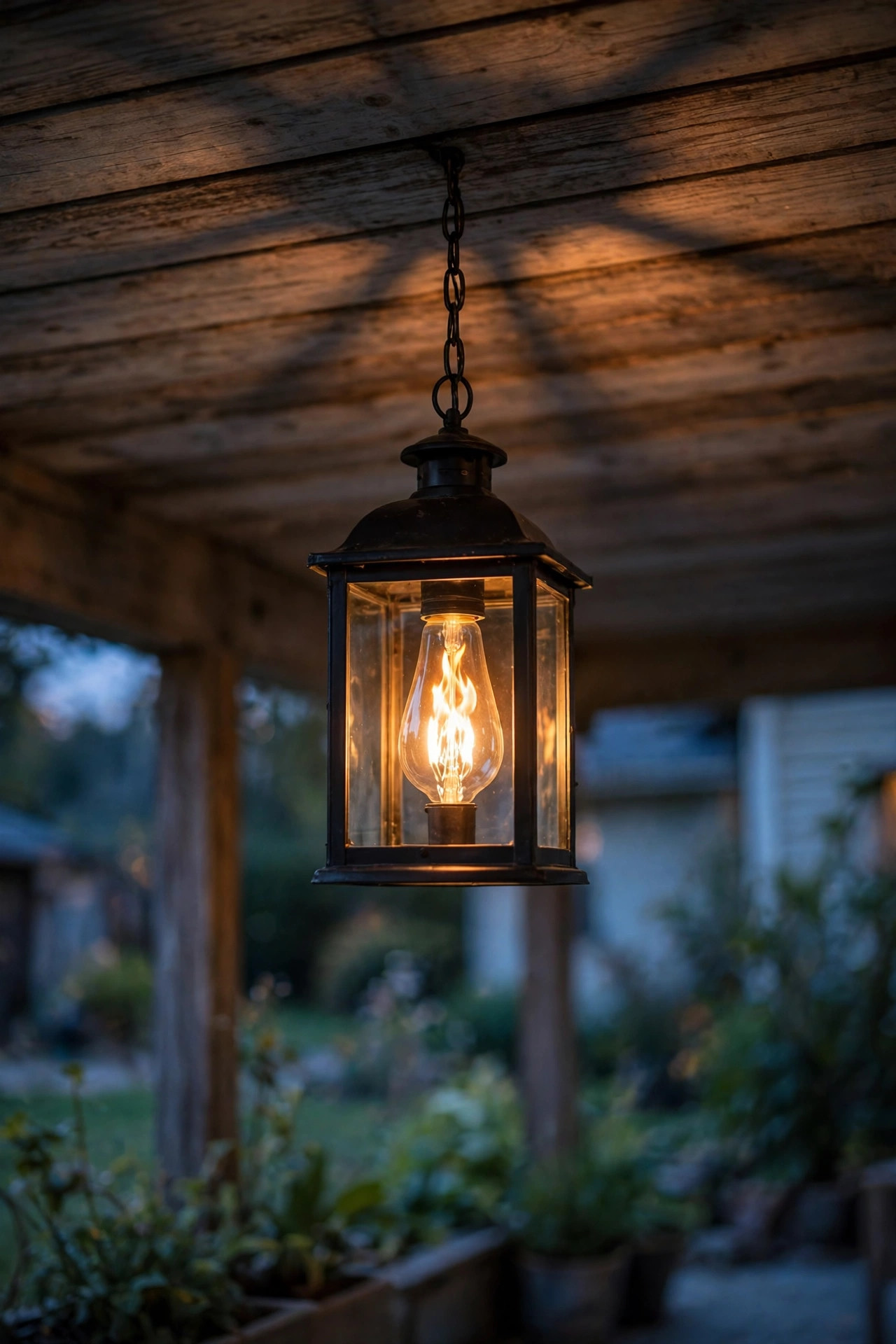
3. A Flickering Flame in the Porch Ceiling Fixture
Don't stop at the wall lanterns — the porch ceiling fixture is prime flame territory. A flame-effect bulb inside a hanging lantern or semi-flush ceiling mount casts moving shadows across the porch ceiling and floorboards, the way light from a real hanging oil lamp would, and it turns an ordinary porch into the coziest seat in the house. Choose clear or lightly frosted glass: heavy frosting blurs the flame pattern into a plain orange glow. If your fixture takes two bulbs, fit one flame bulb and leave the second socket empty or use a very low-wattage warm bulb — two flames side by side can look oddly busy. Skip the dimmer if the bulb flickers strangely on one; flame bulbs and older dimmers often argue, and the bulb usually loses. A simple timer switch solves it cleanly. Heat is a non-issue since these LEDs stay cool to the touch, but do confirm the bulb is rated for enclosed fixtures if your mount has a closed shade, because trapped warmth shortens LED life even when there's no fire risk at all. From the street, that moving glow reads as "someone's home and happy about it" — exactly the welcome I want.
Suggested budget range: $10 – $40.
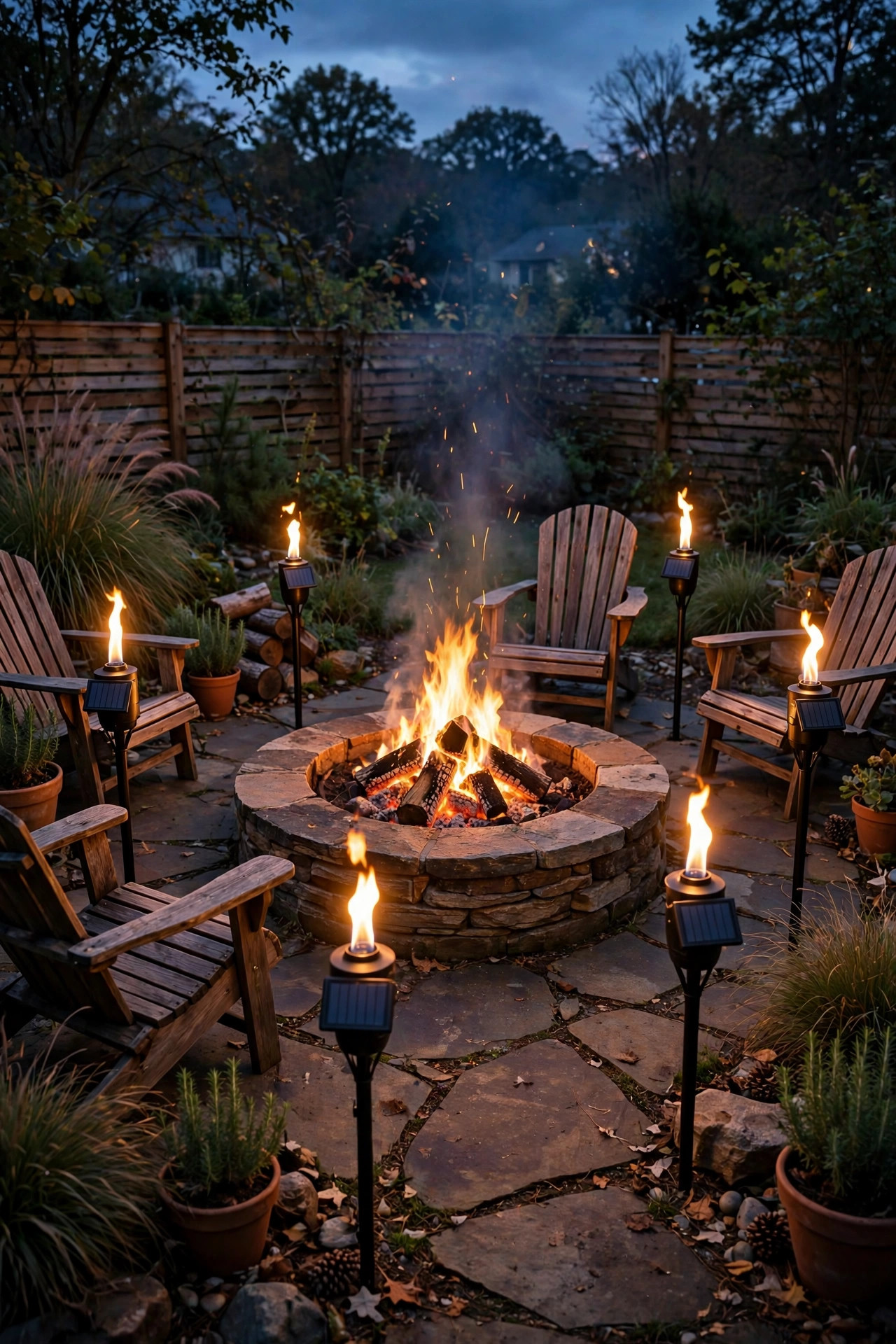
4. Solar Tiki Torches Ringing the Fire Pit
Real tiki torches around a real fire pit is a lot of open flame in one place, so around my fire pit I mix the two: an actual fire in the pit, and solar flame torches ringing the seating area at a comfortable distance. Set the torches just behind the chairs or along the path into the circle, roughly 5 to 7 feet from the fire's edge, where they frame the gathering instead of competing with it. The layered flicker — fire low in the middle, torch flames dancing around the perimeter — is the single most complimented setup in my yard. It also solves a real problem: when the fire dies down to embers, the torches keep enough warm light for safe footing and drink refills without anyone reaching for a phone flashlight. Because there's no fuel, no wick, and no hot oil, I never think twice about kids orbiting the chairs or the dog weaving through. If you're still designing your fire area, our fire pit area lighting ideas cover the permanent fixtures that complete the scene. Pull the stakes before the ground freezes hard, or leave them — mine have survived three winters of both choices.
Suggested budget range: $30 – $70.
5. Flame Bulbs in Carriage-Style Garage Lights
Carriage lights and flame bulbs were made for each other — the fixture style is literally modeled on old coach lanterns, so a flickering amber flame inside looks historically right, not gimmicky. Swap the bulbs in the pair flanking your garage door and the whole front of the house gains that gaslight-era warmth. Two things to check first: bulb length, since some flame bulbs run longer than a standard A19 and need measuring against your lantern's interior, and whether the glass is clear enough to show the effect. With a matched pair, buy bulbs from the same pack so flicker speed and color agree; mismatched amber tones on either side of a door look like a mistake. This is another spot where I layer honestly: flame bulbs are mood lighting, so if your driveway is genuinely dark, keep motion-sensor floods on the garage corners for security and let the carriage flames handle the beauty shift. On a photocell or smart schedule they light at dusk, and the driveway feels attended all evening. Of every idea here, this is the one neighbors ask about most — which I take as the highest compliment.
Suggested budget range: $15 – $35.

6. Solar Torch Stakes Tucked Into the Flower Beds
Here's my favorite styling trick: push solar torch stakes into the flower beds themselves, nestled among the plantings instead of lined up like soldiers. A flickering flame rising out of dark foliage at knee height looks like something from a storybook — the light catches the undersides of leaves, throws moving shadows through the bed, and makes even plain shrubs look theatrical. Place the torches just behind the front-edge plants, spaced 3 to 5 feet apart, with the flame sitting a few inches above the foliage line so midsummer growth doesn't swallow it. This is also where solar flames beat real torches on pure safety: no open flame anywhere near dry mulch, bark, or last autumn's leaves tucked behind the boxwoods. And because each stake is independent, you can rearrange as the beds change — I move mine twice a season as different plants peak. Solar panels need sun, so in a shady bed either choose torches with a separated panel on a short lead, or accept a shorter evening run in exchange for the look. Water as usual; the stakes are weatherproof, though I angle sprinklers away from blasting the panels every single day.
Suggested budget range: $25 – $55.
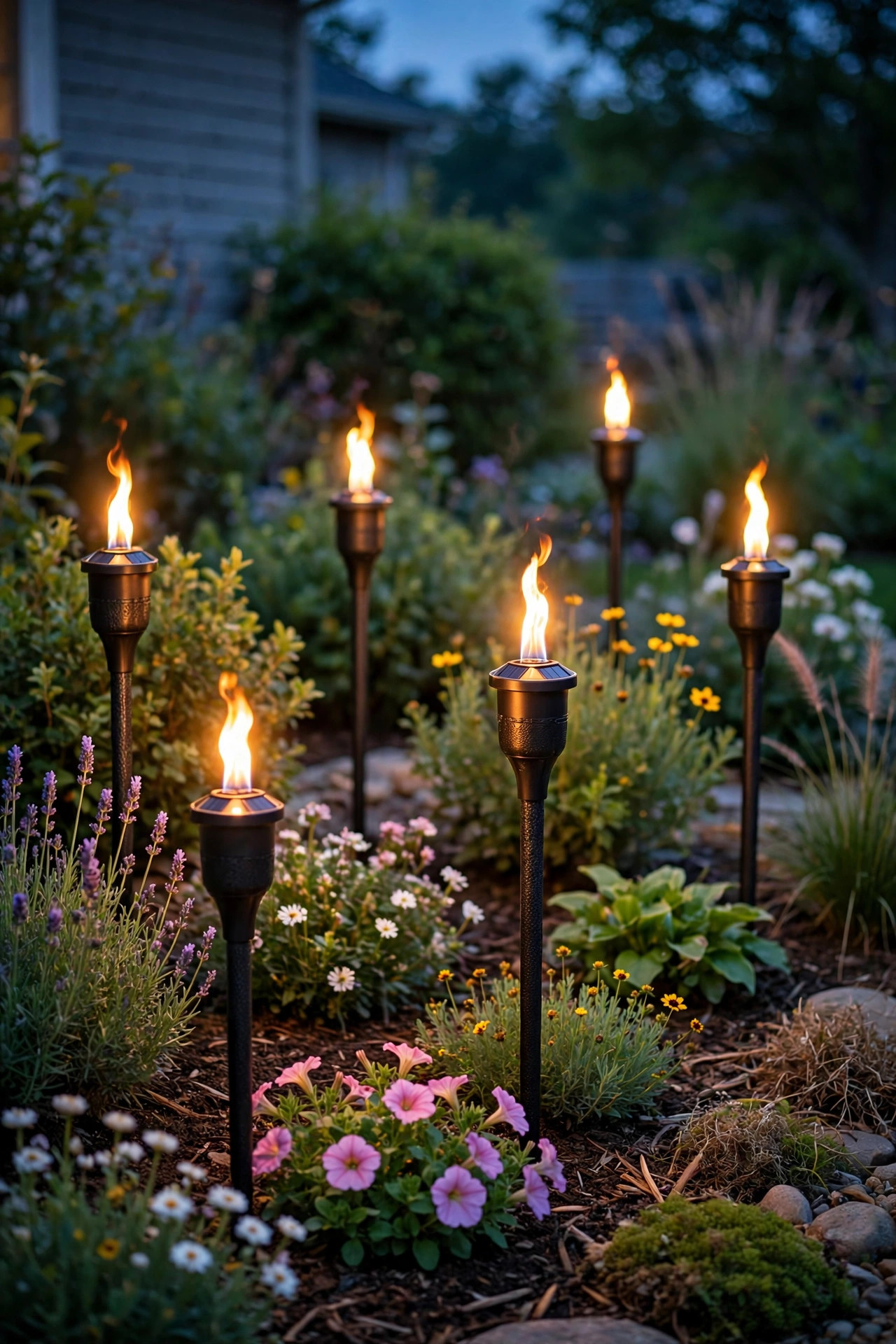
7. Flame Bulbs in an Outdoor Chandelier Over the Dining Table
If your patio has an outdoor chandelier or a hanging fixture over the dining table, flame bulbs turn dinner into an event. Three or five flickering bulbs above the table reproduce the one thing candles do perfectly — warm, moving light at face height — without a single flame guttering in the breeze or wax dripping onto the tablecloth. Keep that amber color in mind when you set the table: white linens go golden, place settings gleam, and food honestly looks more appetizing under the glow. What flame bulbs won't do is light the grill or let you read a recipe card, so keep a brighter task source nearby — mine is a dimmable downlight on a separate switch that comes on for cooking and goes off for eating. Make sure any chandelier hung outdoors is rated for damp or wet locations, and choose flame bulbs rated for semi-enclosed shades if the fixture has glass covers. On a smart plug with a sunset schedule, the "candles" light themselves as you carry the first plates out. Guests always ask where the real candles are. There are none. That is the entire review.
Suggested budget range: $20 – $60.

8. Tall Solar Torches Flanking the Driveway Entrance
For the driveway entrance, go taller. While most solar torches are knee-high, taller models on extension stakes stand 40 inches or more, and a matched pair flanking the driveway apron reads like the flame-topped pillars of a much grander house. Position them just outside your cars' turning radius — I set mine about 18 inches back from the apron's edge, aligned with the mailbox post or the first fence post so they look architectural rather than random. From the street at night, two dancing flames marking your entrance are unmistakable, which delivery drivers and first-time guests silently thank you for. The extra height also lifts the solar panel above low plantings and light snow dustings, so these often outperform their shorter cousins in winter. Anchor them well: taller stakes catch wind, so push the spike fully home and, in loose soil, work a handful of gravel around the base for grip. If your driveway is long, repeat the trick at the house end with a second pair near the garage, and let the stretch between stay dark and calm — darkness between pools of light is what makes each flame feel like an event.
Suggested budget range: $35 – $80.

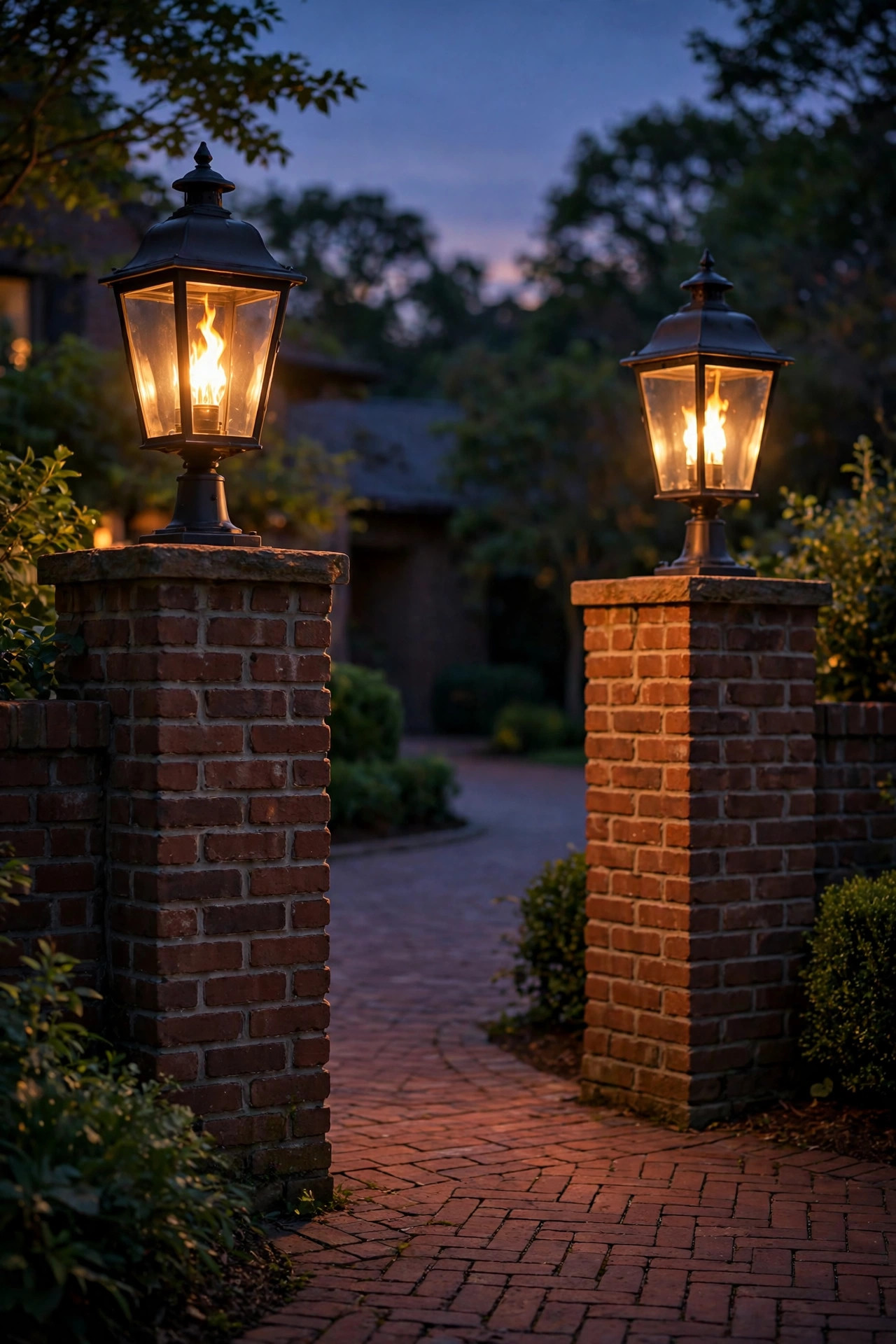
9. Flame Bulbs in Pier-Mount Post Lanterns
Those lantern-topped posts on your gate piers, fence corners, and driveway columns are begging for flame bulbs. Pier-mount lanterns sit at eye height with glass on four sides, so the flickering column of light shows from every angle — the closest thing to a real gas lantern this side of an actual gas line. Because the fixture is the focal point, splurge on the better bulbs here: pricier flame bulbs have more LED segments and a gentler, more natural flicker rhythm, and at eye level the difference is obvious. Match the pair, or the quartet, from one purchase so the colors agree. Wire them to the same circuit and timer as your other entry lighting, and the whole front of the house lights as one scene at dusk. One maintenance note from experience: post lanterns collect bugs and dust inside the glass faster than any other fixture, and a dirty pane dulls the flame effect badly. I wipe mine inside and out every couple of months — a five-minute job that makes the flames look newly installed. If a pier has no power, a tall solar torch planted right beside it gets you most of the look for none of the wiring.
Suggested budget range: $20 – $50.
10. Solar Torches Around the Pool Deck
Open flames and pool decks don't mix under my house rules — you've got towels, inflatable toys, sunscreen-slick hands, and kids moving fast in low light. Solar flame torches give the pool area its tiki-bar soul with none of that risk. Line the deck's far edge and the planting pockets between pavers with torches spaced 4 to 6 feet apart, keeping them back from the waterline so splashing is incidental rather than constant, and look for an IP65 rating or better so a cannonball ambush doesn't end a stake's season early. The flicker doubling itself in the water's ripple is genuinely beautiful. Be clear-eyed about the division of labor, though: torchlight is ambience, not safety lighting, so your underwater lights and the fixture over the pool steps still need to do the real visibility work. Think of the torches as the layer that makes people linger after the swimming is done — and as quiet edge markers for guests carrying drinks in the dark. When the season ends, the stakes pull up in minutes and store in a single bin; I wipe the panels clean before they go away so they wake up strong in spring.
Suggested budget range: $40 – $90.

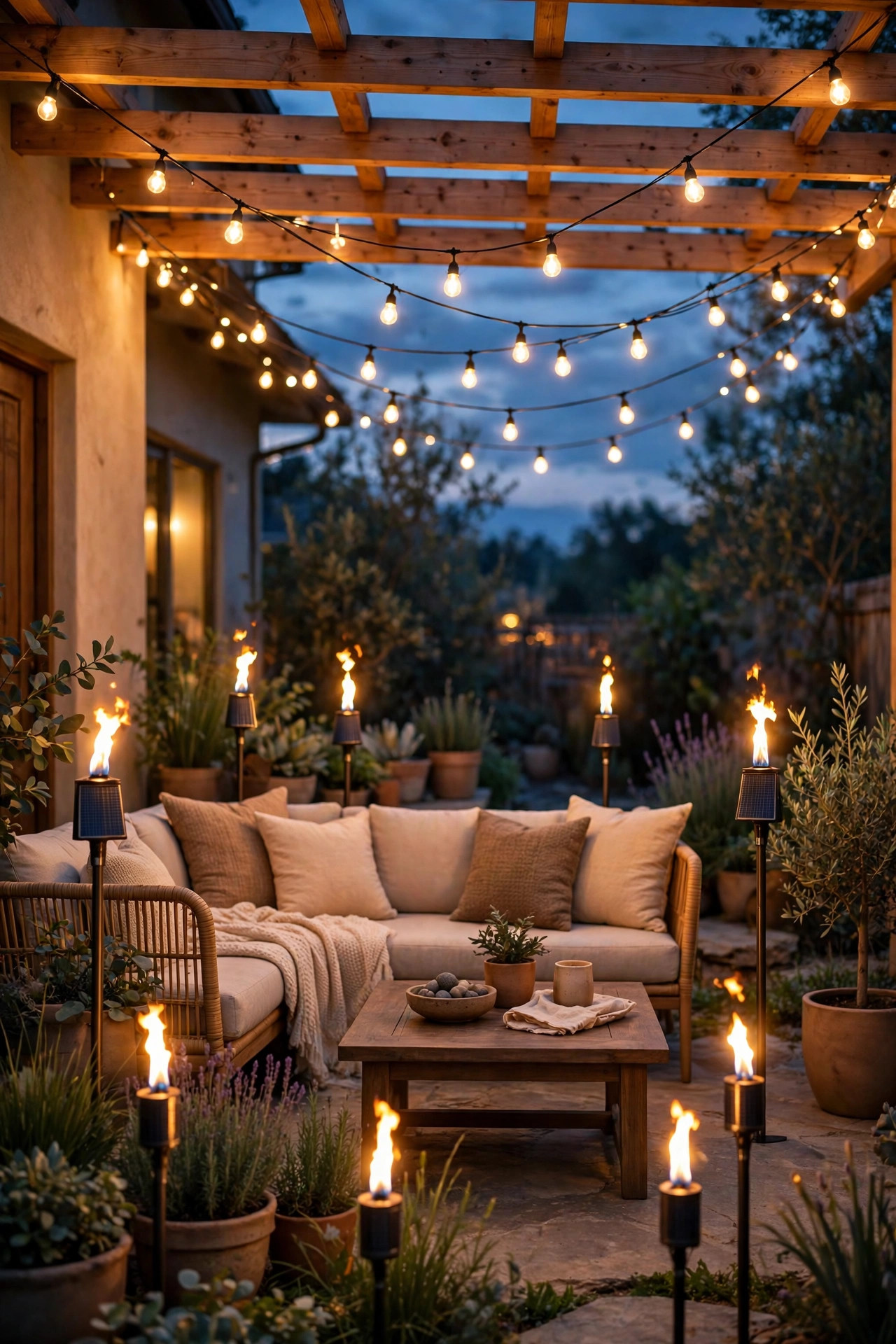
11. Layering Flame Torches With String Lights on the Patio
One light source is a bulb; two or three kinds layered together are a scene. On my patio, the winning combination is warm-white string lights overhead and flame torches at the perimeter — the strings give an even, cheerful canopy at 2700K, while the torches down low add movement and depth that no static bulb ever will. The trick is separation: keep the layers at clearly different heights, strings at 8 to 9 feet and torch flames around 2 feet, and let a band of relative darkness sit between them, or the two compete and flatten each other. Set the torches just outside the seating footprint, behind chairs and planters, so the flames live in your peripheral vision the way a fireplace does indoors. Because the colors differ slightly — neutral warm overhead, deep amber below — the space feels bigger and more dimensional than any single color temperature manages. If you splurge on one pairing from this list, make it this one, run off a single timer or smart scene: one tap at sunset and the patio goes from daytime-functional to fireside in about four seconds. Light the fire pit too, and honestly, nobody goes inside before ten.
Suggested budget range: $45 – $100.
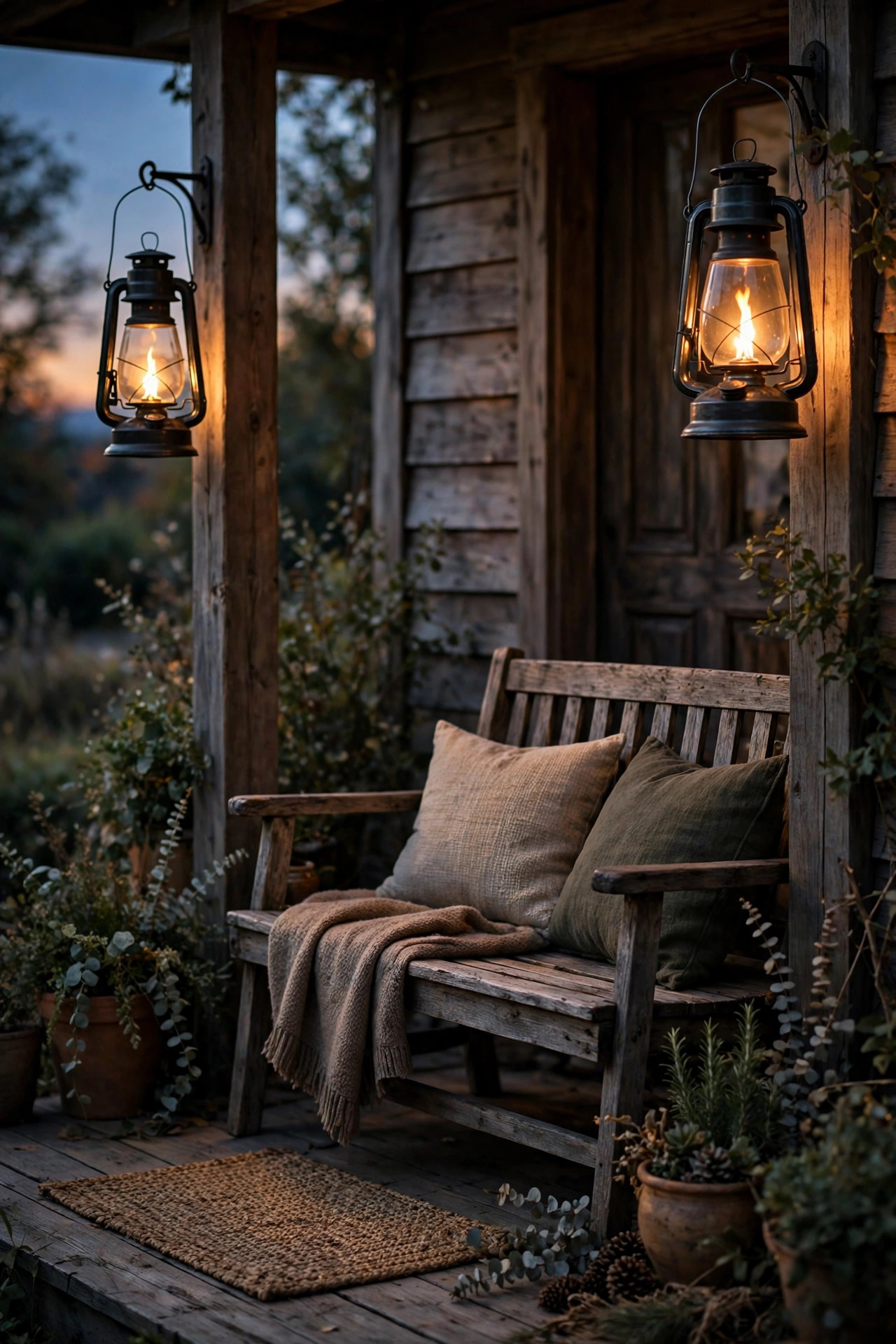
12. Flame Bulbs in Vintage Lanterns for a Rustic Porch
Some porches are styled for exactly this bulb. If your entry leans rustic, farmhouse, or vintage — black metal lanterns, a wooden bench, maybe a galvanized bucket of mums — flame-effect bulbs complete the oil-lamp illusion better than any other upgrade I know. The amber flicker flatters weathered wood and brick, hides a multitude of paint sins after dark, and makes a small porch feel like the set of a period film, in the best way. Look for lanterns with clear panes — seeded glass is my favorite, since it softens the LED pattern just enough — and enough interior room for the bulb's full length. Pair the look with restraint: one or two flame lanterns against a quiet, dark background beat five flickering fixtures shouting over each other. If you're shopping for the lanterns themselves, our roundup of outdoor wall lantern ideas is where I'd start, because several of those shapes are perfect flame hosts. Add a coir doormat and a wreath, and the porch sells the story before the door even opens. In fall, with pumpkins on the steps, it's almost unfair to the neighbors.
Suggested budget range: $30 – $85.
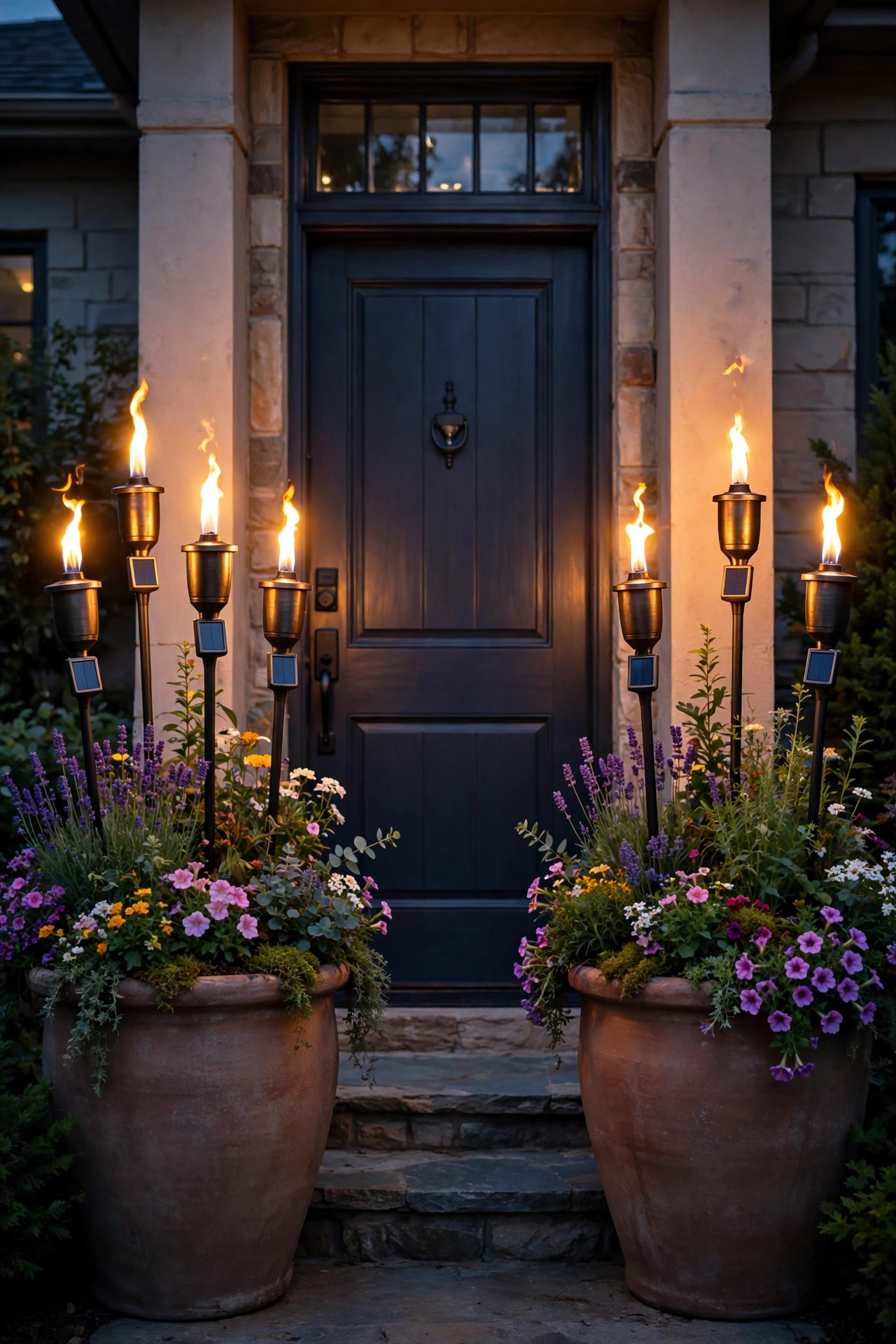
13. Solar Torches in Oversized Planters Flanking the Front Door
No planting beds by your front door? No problem — plant the torches in pots instead. Two oversized planters flanking the entry, each with a solar torch stake pushed into the soil among the flowers, give you symmetrical firelight framing the door, and they work on concrete, pavers, or a rental porch where digging isn't an option. Choose planters at least 14 inches across so the stake stands steady and the solar panel clears the foliage; trailing plants around the base hide the stake completely by midsummer. Placement has one catch: the panel has to actually see the sun, and a deep covered porch may starve it. In that case, charge the torches in a sunny spot during the day and move them into the planters for the evenings you're entertaining — the portability is genuinely the point. I've carried the same pair to the back patio for a party and returned them to the doorway before midnight more times than I can count. Water the planters as normal, just aim the watering can at the soil rather than the panel. When guests arrive after dark, the twin flames at the door say "this way in" more warmly than any porch light I've ever owned.
Suggested budget range: $30 – $75.
14. Flameless LED Candles Inside Table Lanterns
Not every flame needs a fixture. Flameless LED candles — the kind with a moving wick tip or a soft flickering glow — dropped inside table lanterns bring firelight to the exact center of the party: the outdoor dining table, the coffee table between patio chairs, the flat cap of the porch railing. A glass lantern shields the "flame" from wind, a real candle's worst enemy outdoors, and amplifies the glow through its panes. Group them in odd numbers — three lanterns of mixed heights down a table runner is my formula — and tuck real greenery around the bases for texture. Because they're battery or rechargeable, installation is zero; the only homework is choosing a timer function, because the best ones run a five-hours-on, nineteen-hours-off daily cycle that lights your table every evening for weeks on one set of batteries. Melted wax, soot on the glass, fire risk next to paper napkins: all gone. One caution — the cheapest versions glow a flat orange that reads "seasonal decoration," so look for warm ivory tones and a genuine, uneven flicker rather than a strobe. Done well, guests cup a hand around the glass out of pure habit.
Suggested budget range: $20 – $50.

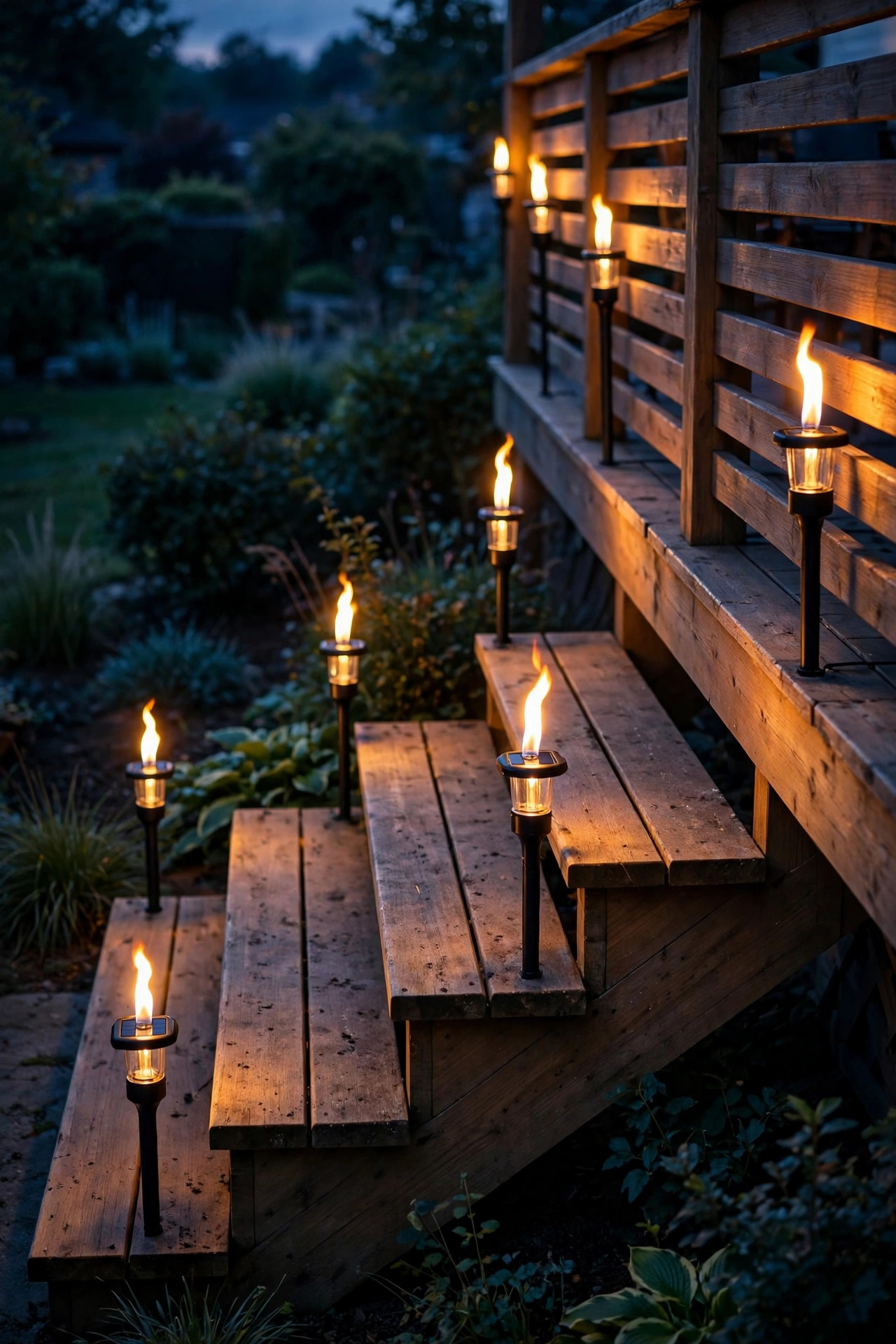
15. Short Solar Torches Along Deck Steps and Railings
Deck stairs are where ambience and safety shake hands. Short solar torches set into the landscaping beside the steps mark each level change with a flicker your eye catches peripherally — which is exactly how we navigate stairs at night. I place one torch at the top landing, one at the bottom, and one beside any mid-landing, each set back 6 to 8 inches from the tread edge so nobody brushes past carrying a tray. Along a railing, torches in the planting bed below the rail echo the deck's line without attaching a single thing to the structure, which renters will appreciate. Be straight with yourself about the division of labor, though: flames show you where the deck is, but they don't light each tread well enough for a grandparent carrying dessert, so pair them with proper step lights if the stairs are steep or busy. What the torches add is the invitation — the deck reads as occupied and welcoming from down in the yard, and the way up feels intentional. One placement note: stakes beside a deck often sit in the deck's own shadow, so favor the south and west sides where the panels can drink in the afternoon sun.
Suggested budget range: $25 – $60.
16. Flame Effect Lights That Light Themselves: Timers and Photocells
The best flame display is the one you never have to remember to switch on. Every wired flame bulb on this list gets better with automation: a dusk-to-dawn socket adapter — a little screw-in photocell collar — makes a porch lantern self-lighting for a few dollars, and a plug-in or in-wall timer covers fixtures that share a switched circuit. Smart plugs and smart switches add real schedules — flames on at sunset, off at midnight — plus vacation randomization, which I set whenever we travel; a house whose "gas lamps" light faithfully every night never looks empty. Two compatibility lessons I've learned the expensive way. First, most flame bulbs are not dimmable, and running one on a dimmer at partial power produces a sad, buzzy strobe — use full power only, or a smart switch in relay mode. Second, photocell adapters add roughly an inch of length, so re-measure tight lanterns before ordering a box of them. With automation sorted, flame lighting becomes architecture instead of a chore: it performs every single evening, in every season, whether you're home to admire it or away telling friends about it. That's when the compliments from the dog-walkers start arriving with real regularity.
Suggested budget range: $15 – $45.
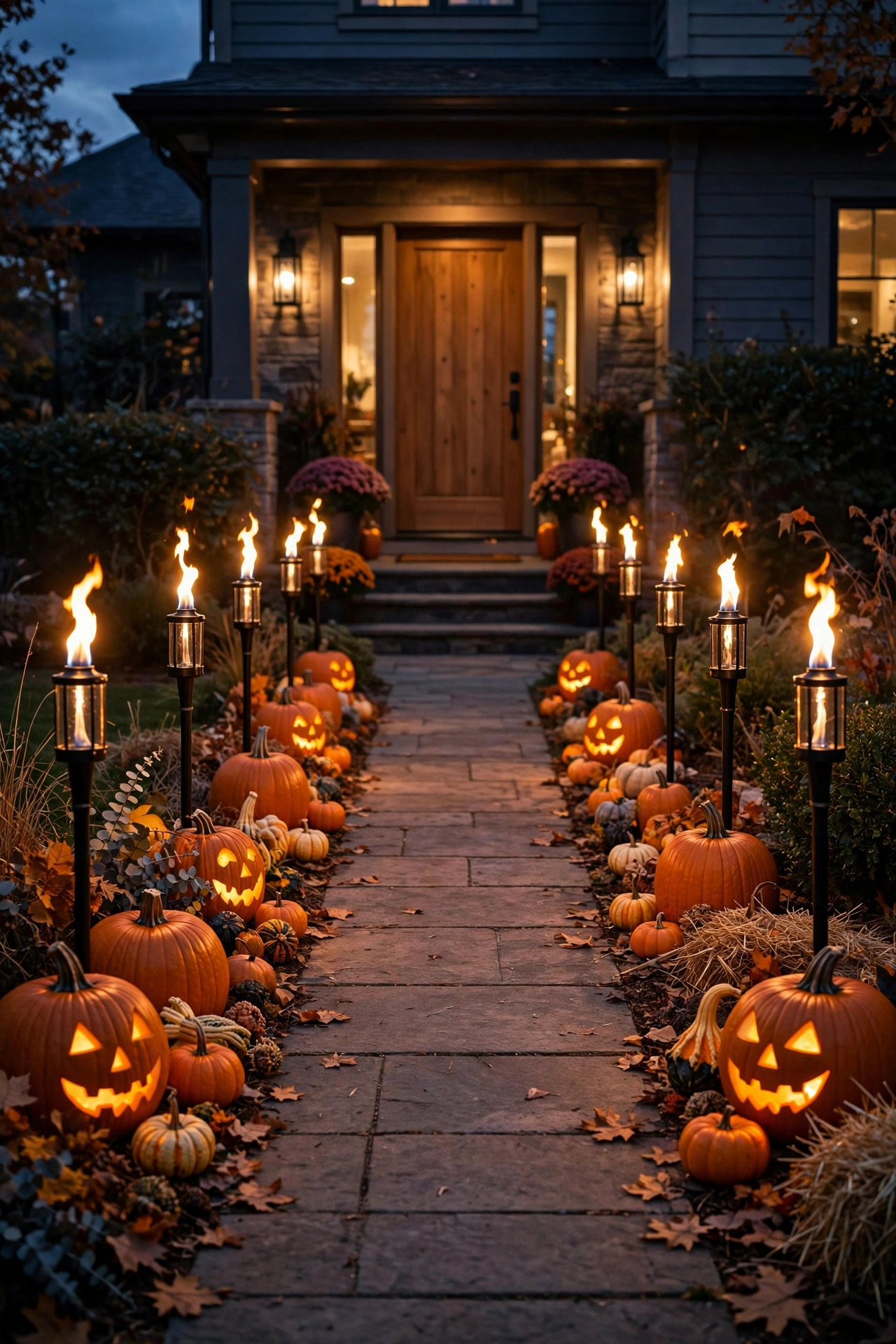
17. A Halloween-Ready Flickering Path, No New Purchases Required
Come October, flame lighting stops being cozy and starts being deliciously spooky — lean in. The same solar torches that lined the walk all summer become a haunted path with zero new purchases: cluster them tighter, every 3 feet, slip a few small pumpkins between the stakes, and the amber flicker does the rest. Flame bulbs in the porch lanterns flip the entry from welcoming to "enter if you dare," especially if you remove the porch's normal bulb so the flame is the only light source glowing behind the glass. It's the highest-impact Halloween lighting I know — no extension cords crossing the walk for trick-or-treaters to trip on, no real candles burning inside paper luminaries, and everything solar recharges itself for the next night's crowd. After the holiday, the torches drift back to their everyday spacing and the house reads fall-cozy instead of haunted. Honestly, this seasonal flexibility is why I steer beginners toward solar stakes first: one modest set works as an everyday path marker, party decor, and holiday lighting across the whole year. Add an orange sleeve over a few stakes in October and you've fully committed — I respect it.
Suggested budget range: $25 – $55.
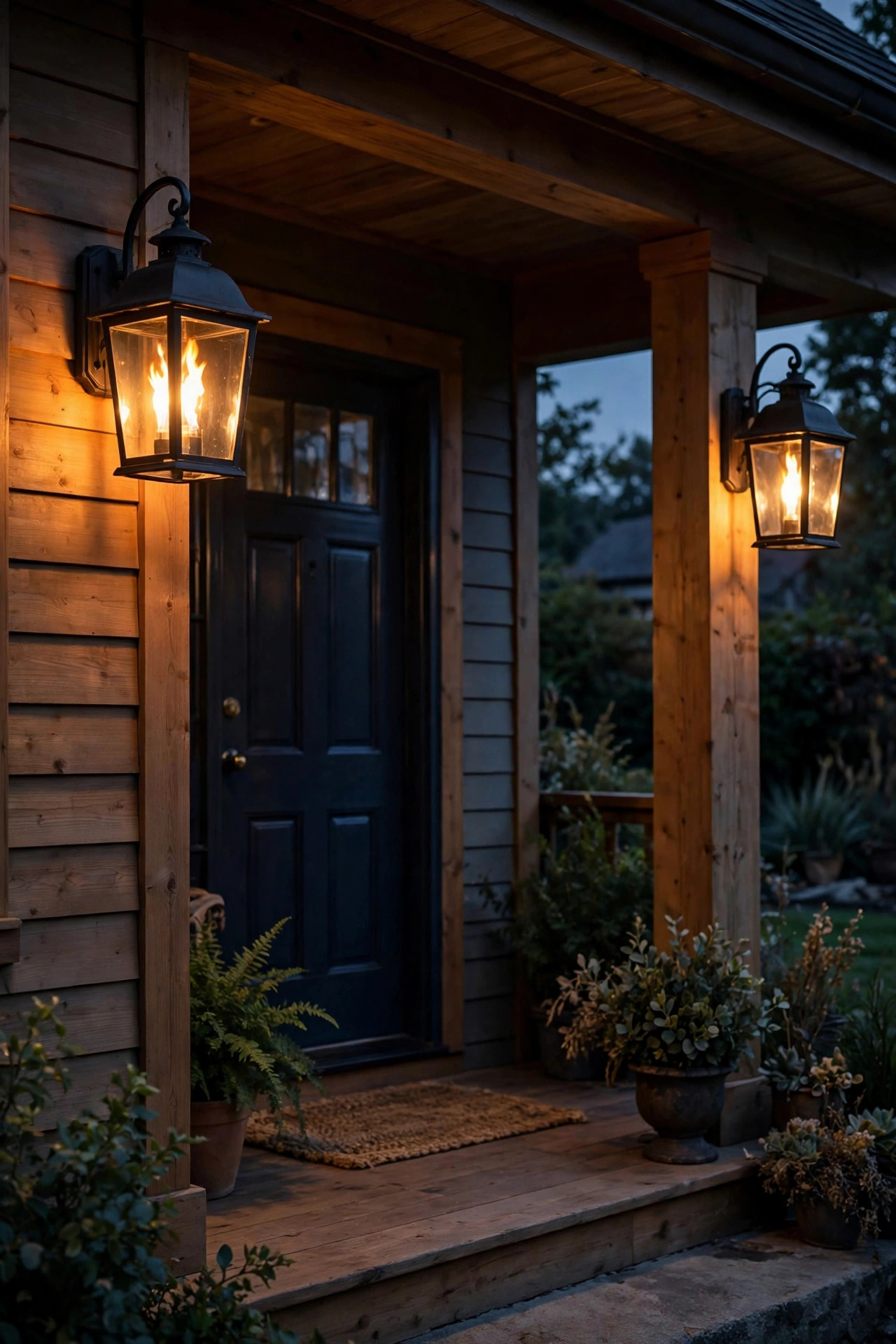
18. Flame Bulbs in Front-Door Sconces: Use the Modes for Balance
Many flame bulbs offer three modes — flicker, steady glow, and a slow fade — cycled by flipping the switch off and on. At the front door, where the light also has a job to do, that flexibility is gold. My setup: both door sconces wear flame bulbs, set to flicker on weekend evenings and party nights, then flipped to steady mode on weeknights when we're expecting deliveries and need faces and house numbers clearly visible. The steady mode still glows that deep amber, so the look stays cohesive; it just stops dancing. If your sconces aim the bulb downward — most door sconces do — confirm the bulb has a gravity sensor so the flame rises correctly instead of hanging upside down like a dripping candle. Also check the base size: many door fixtures take candelabra E12 sockets, and flame bulbs come in that size too, usually a touch dimmer than their E26 siblings, which is perfectly fine at a doorway. This mode-switching trick is the answer I give every friend who loves the flame look but worries it's "too much" for everyday. It's only as theatrical as you set it, night by night.
Suggested budget range: $14 – $32.

19. A Whole-Yard Flame Effect Lights Plan, Front to Back
Ready to go all in? Here's the layout I'd build from scratch, because flame effect lights reward a plan more than any single fixture does. Start at the street: tall torches at the driveway entrance, for that unmistakable arrived-home moment. Walkway next — alternating solar torch stakes every 4 to 6 feet, backed by a real path light in every third position for honest visibility. At the door, flame bulbs in the sconces plus torches in planters flanking the steps: the handshake of the house. Garage: carriage lights with matched flame bulbs, while motion floods quietly do the security work. Then the backyard — string lights overhead on the patio, torches ringing the fire pit and the pool, flameless candles glowing on the table. Notice the pattern: in every zone, flame is the personality layer laid over a practical layer, never asked to do both jobs at once. Budget-wise, build it over a season: start with the door and walkway, the highest-traffic glow, then add zones as sales and weekends allow. Fully built, the yard after dark tells one continuous story — a home lit the old way, by firelight — with not one real flame in it. It's the version of my house I love most.
Suggested budget range: $150 – $400.

Frequently Asked Questions
Are flame effect lights safe around kids, pets, and dry mulch?
Yes — that's the whole appeal. Flame-effect bulbs and solar torches are LEDs: the "flame" is light only, the surfaces stay cool to the touch, and there's no fuel, wick, or open flame anywhere near dry mulch, wooden decks, or curious little hands. It's why they're the only flame look I use near planting beds and pool decks. Just handle the electrical side normally — outdoor-rated fixtures, GFCI-protected circuits outdoors, and solar stakes pulled up before you aerate the lawn.
Do flame effect bulbs work in any light fixture?
Almost. Most use a standard E26 screw base, and candelabra E12 versions exist for smaller sconces. Run three checks before you buy: the bulb's length against your fixture's interior, since flame bulbs often run long; whether the fixture points the bulb downward, in which case choose a model with a gravity sensor so the flame still rises; and whether the shade is enclosed, which calls for an enclosed-fixture rating. And skip dimmers — most flame bulbs need full power and strobe unhappily at partial dimming.
Are solar flame torches bright enough to light a walkway?
Honestly? They mark a walkway beautifully but light it gently. A typical solar torch produces a soft accent glow — enough to see the path's edge and your footing on a familiar walk, not enough to read by or to safely light steep steps on its own. I treat them as the beauty layer and pair them with true path lights wherever visibility really matters. Placement matters just as much: a torch charged in full sun will flicker for 8 to 10 hours, while a shaded one may fade by ten o'clock.
What color temperature are flame effect lights, and will they match my other lighting?
Flame products glow deep amber — roughly 1300–1800K, far warmer than the 2700–3000K of typical warm-white outdoor bulbs. They will not match, and that's fine: the contrast is the point. Think of flame light the way you think of candlelight indoors — a separate, warmer accent layered against your general lighting. It looks most natural alongside warm-white 2700K schemes and can clash with cool-toned fixtures, so if the rest of your yard runs 4000K or cooler, expect the flames to look extra orange by comparison.
Conclusion
Flame effect lights deliver the oldest, most flattering light there is — firelight — with none of the fuel, risk, or fuss that kept it off our porches for the past century. Whether you swap two bulbs at the front door tonight or build the whole layered plan over a season, start where you spend your evenings and let the flicker spread from there. And if this list sparked ideas, browse the rest of the outdoor lighting ideas here on the site — the porches, paths, and patios you'll want to light next are all waiting for you.