I will be honest with you: for the first two summers, our above-ground pool looked like exactly what it was — a big blue circle parked in the middle of the lawn. The water was wonderful, but after dark it just sat there, glowing faintly under one harsh porch light. The turning point was not a single fancy fixture. It was layering. These above ground pool lighting ideas borrow the same trick the expensive in-ground pools use: hide the light source, keep the glow low and warm, and light the deck, the rim and the water in separate soft layers. Suddenly the pool stops looking temporary and starts looking planned. Every idea below is renter-friendly, works on steel or resin walls, and most can be done in an afternoon with no electrician. Let us make your pool the prettiest thing in the yard after sunset.
1. Start With the Rim Trick Behind the Best Above Ground Pool Lighting Ideas
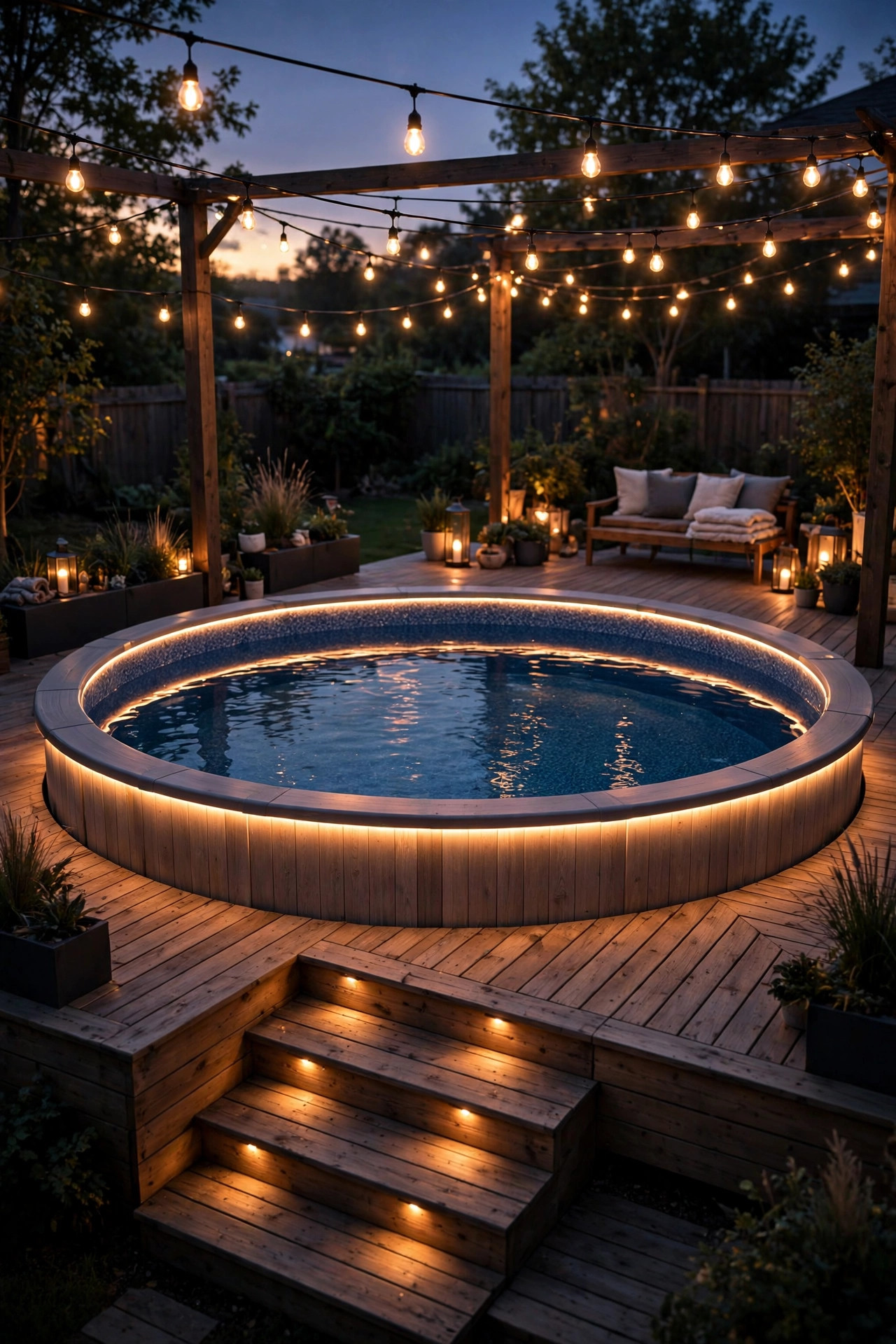
This is the single most convincing built-in trick I know. Run a waterproof LED strip light along the underside of the top rail, facing down at the water. Because the strip itself is hidden, all you see is an unbroken ring of warm light washing over the surface — exactly the effect the high-end pools charge thousands for. Choose an IP65 or IP67 rated strip in 2700K warm white, and power it from a low-voltage transformer plugged into a GFCI outlet at least 5 feet from the water. Secure it with the adhesive backing plus clear mounting clips every 12 inches, since pool splashes loosen tape over time. Keep the driver box and all connections up under the rail where they stay dry. If your pool has a wide resin top seat, the strip tucks neatly into the shadow line beneath it. In my experience this one layer does 70 percent of the "built-in" illusion on its own.
Suggested budget range: $25 – $60.

2. Clip Solar Lights Along the Rim
If wiring feels intimidating, start here. Small solar lights with spring clips attach right onto the pool rim or top rail, no cords at all. Space them every 3 to 4 feet around the curve for an even dotted glow, and angle each head slightly inward so the light falls on the water instead of the lawn. Look for models with warm white LEDs rather than the bluish white that makes pool water look cold and clinical. The better ones charge through the day even in partial sun and run 6 to 8 hours after dark. Honestly, solar output will never match wired light, so treat these as your sparkle layer, not your only source. One caution: buy clips sized for your rail width — resin rails are wider than steel ones, and a loose clip ends up floating by morning. I lost two lights that way before I learned to measure.
Suggested budget range: $20 – $45.

3. Add Magnetic Underwater Lights Inside the Pool
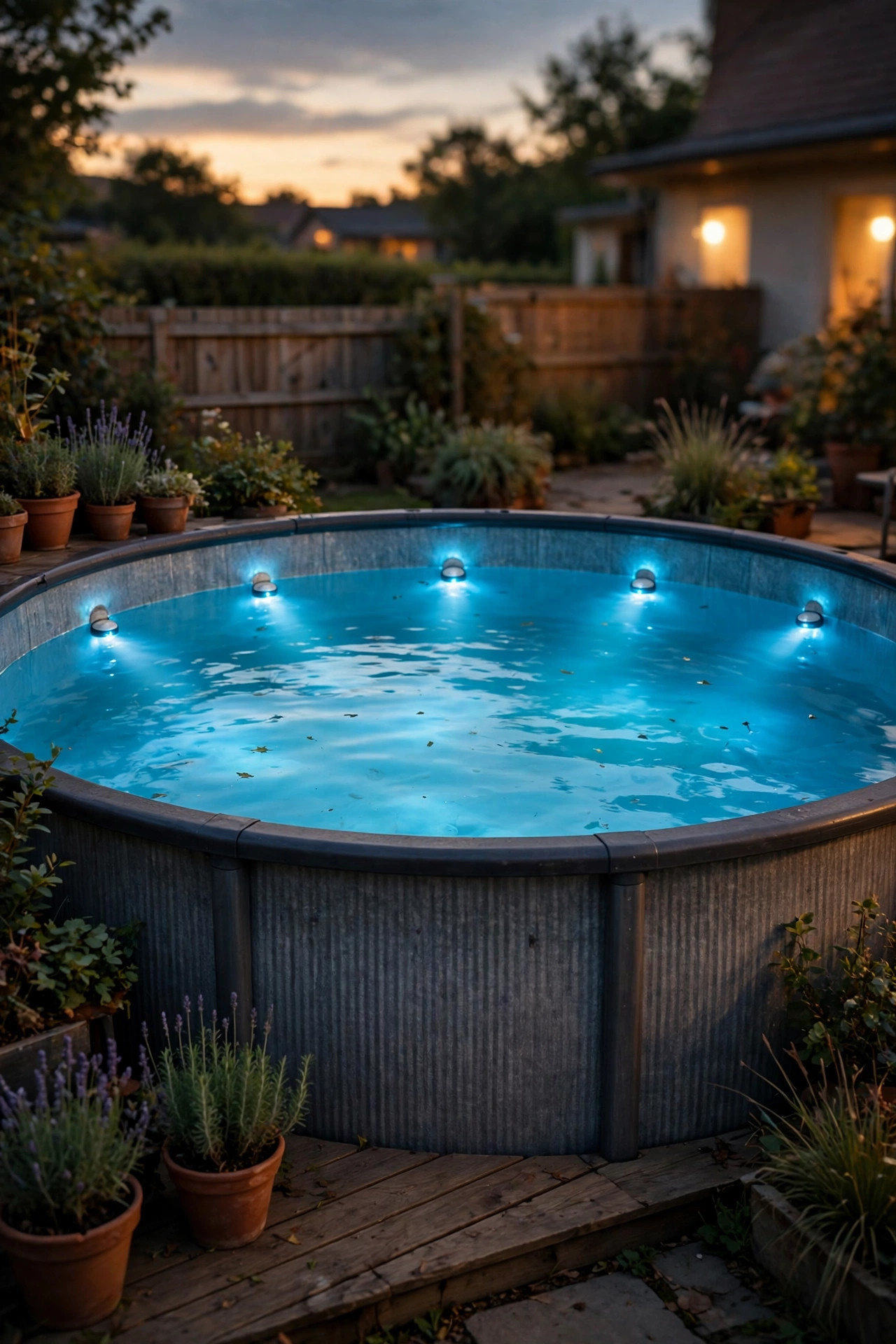
Nothing sells a built-in look like light that comes from the water itself. Battery-powered underwater LED lights with magnetic backs stick right through the vinyl liner to a metal plate outside the wall, so there is zero drilling and nothing wired near the water. Two lights on opposite sides of an 18 to 24 foot pool give surprisingly even coverage. Most come with a remote, a timer, and color options — I keep mine on warm white for everyday evenings and let the kids pick teal for swim parties. Run time is usually 20 to 30 hours per charge, and a quick twist removes them for recharging. For deeper guidance on placement and brightness, my notes on underwater pool lighting walk through the lumen math. One safety note: only use lights designed and sealed for full submersion, and never bring a plug-in fixture anywhere near the water.
Suggested budget range: $30 – $80.
4. Ring the Pool With String Lights on Poles
Overhead light changes everything, and poles make it possible where no tree or roofline exists. Set sturdy poles or 4×4 posts in heavy planters or concrete-filled buckets just outside the pool wall, about 8 to 9 feet tall, and swag warm globe string lights from pole to pole around the perimeter. That canopy of light reflects on the water and reads instantly as "designed" rather than "assembled." Use commercial-grade, shatterproof LED string lights rated for outdoor use, and keep every socket and connection out of splash range — strings should pass over the deck edge, never hang low over the water itself. A plug-in timer set for dusk keeps it effortless. If you want the full how-to on spans and bulb spacing, my favorite solar string light ideas include a pole setup that survived two storm seasons in our yard. Bury the pole bases at least a foot deep or use weighted stands, because a sagging string line ruins the geometry fast.
Suggested budget range: $60 – $150.

5. Build a Small Deck and Add Recessed Deck Lights
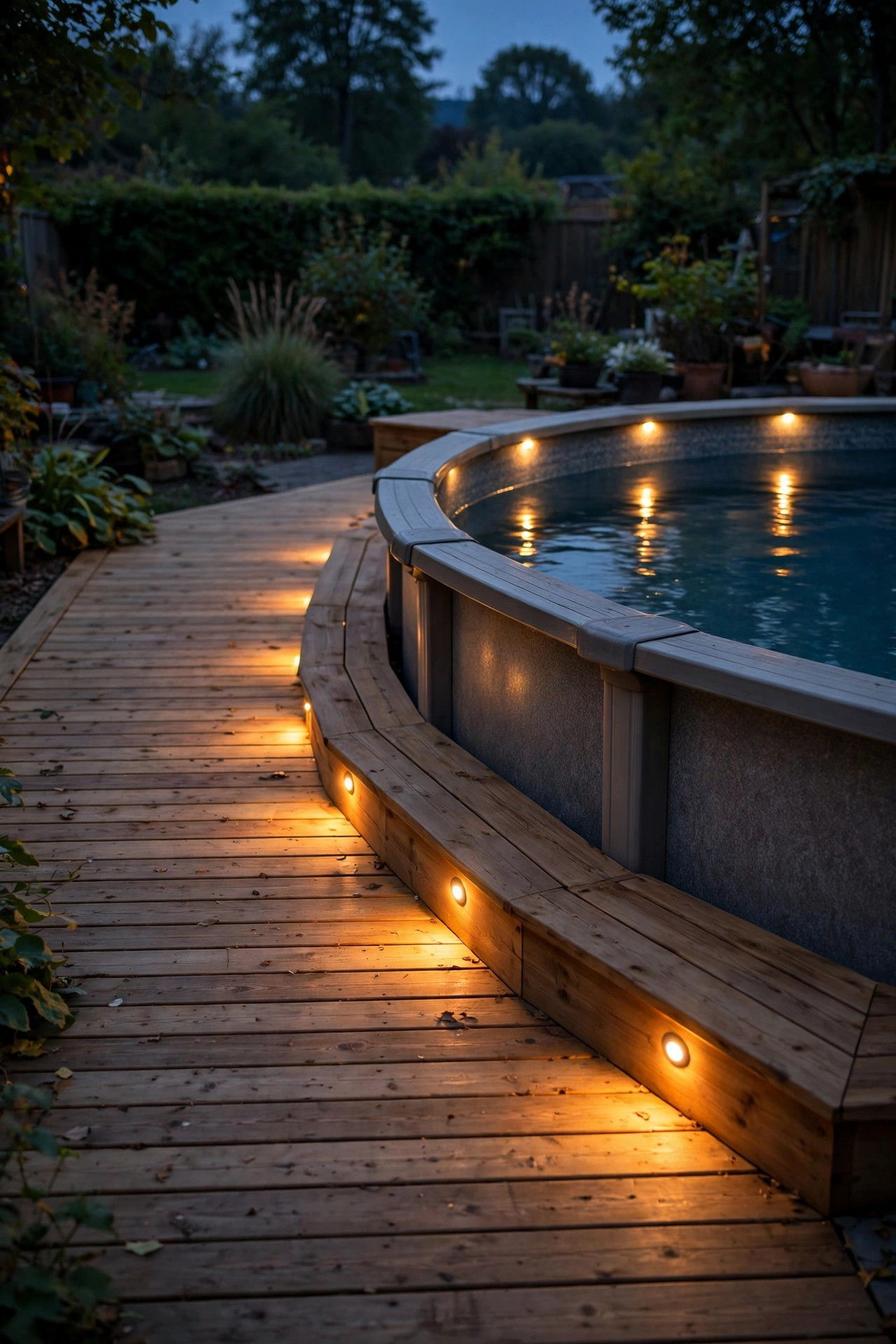
If any single project erases the "temporary pool" look, it is a deck section — even a simple platform on one side for entry. Recessed deck lights set flush into the boards give it that finished, custom feel. Space them 4 to 6 feet apart along the edge and on any steps, choosing low-voltage pucks in warm white with a frosted lens so they glow rather than glare. Wire everything to a transformer with a photocell so the deck lights itself at dusk. Keep fixtures at least a few inches back from the pool edge so swimmers are not stepping on them, and choose marine-grade or IP67 fittings near the splash zone. We added a modest half deck two summers ago and neighbors genuinely assumed we had hired a pool builder. For layout inspiration across the whole deck, these deck lighting ideas cover stairs, rails and posts too.
Suggested budget range: $80 – $200.
6. Cap the Deck and Ladder Posts With Solar Lights
Post cap lights are small, but they do outsized work. A neat row of glowing caps along your deck posts and ladder uprights outlines the whole pool zone, which is exactly how built-in pools use their coping and pillar lights. Solar caps in a warm 2700K to 3000K tone charge all day and switch on automatically, so there is nothing to wire and nothing to remember. Measure your posts carefully — 4×4 and 6×6 caps are not interchangeable, and vinyl post sleeves need their own size. I prefer caps with a real glass or thick acrylic lens; the cheapest thin plastic ones yellow within one season. If your ladder is the basic A-frame style, two matching caps on the top posts give the entry a finished, intentional look. Keep a spare pair on hand, because one cap in a row always seems to fade a season earlier than its sisters.
Suggested budget range: $25 – $70.

7. Uplight the Pool Wall From the Landscaping
Landscape uplighting is the quiet professional secret behind most magazine pool photos. Place two or three low-voltage spotlights in the beds or lawn in front of the pool wall, aimed up at a soft angle. The wall becomes a glowing backdrop instead of a dark metal band, and the whole structure reads as architecture. Use warm white fixtures with a wide beam, around 40 to 60 degrees, and keep them 2 to 3 feet out from the wall so the wash stays even with no hot spots. Stake-mounted lights are easiest to adjust as plants grow. A small transformer on a timer handles the whole set. One warning from my own mistake: aim carefully so beams do not shine into swimmers' eyes at water level — a slightly upward angle and a glare shield fix it. This trick also hides a multitude of sins, including a slightly faded liner pattern.
Suggested budget range: $45 – $120.

8. Float a Few Solar Lights on the Water
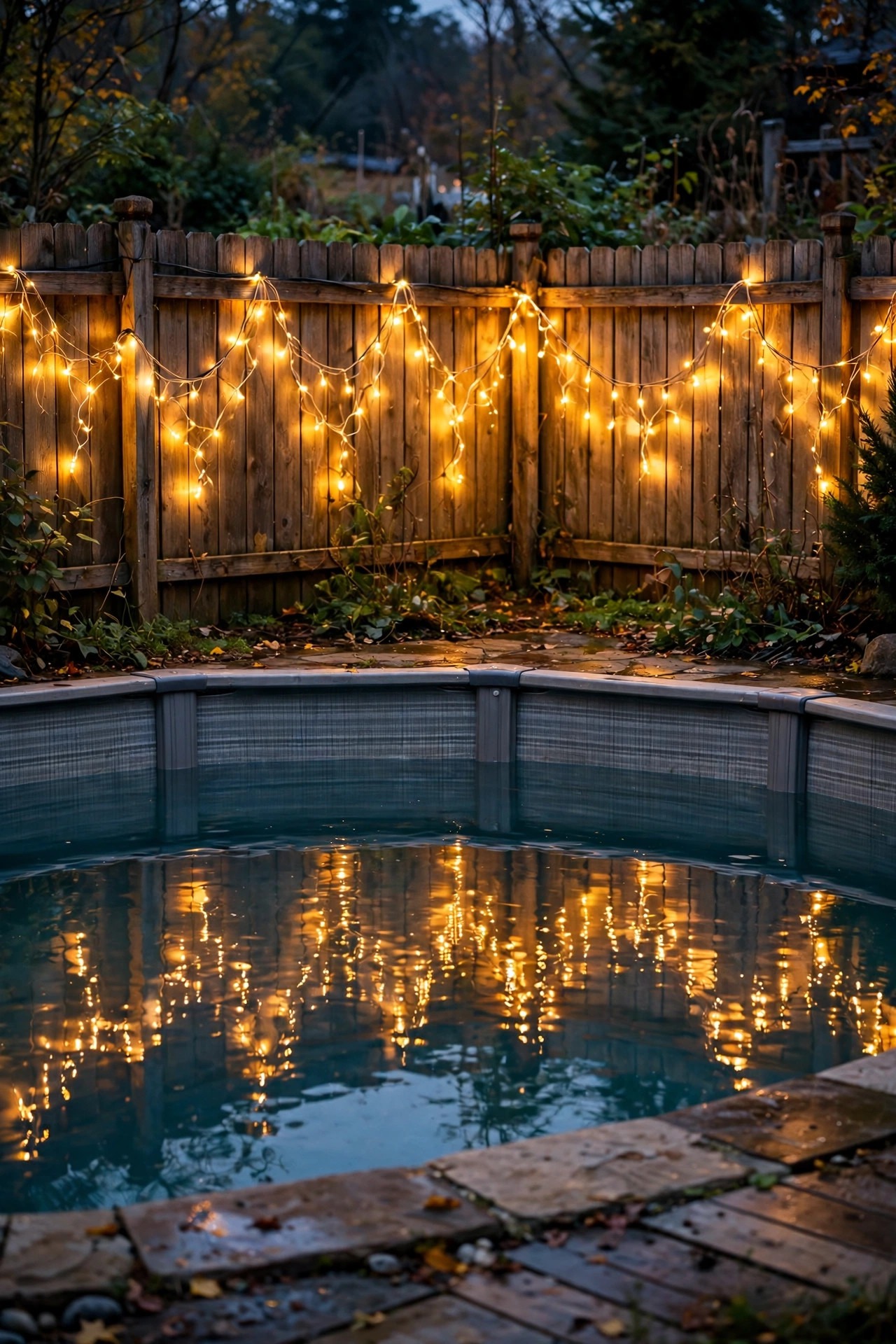
Floating lights are pure atmosphere, and used sparingly they look genuinely luxurious. Two or three solar orbs or lotus-style floats drifting on the surface mimic the spa look from resort photos. Because they move, keep the count low — a crowd of them reads as clutter and ends up bunched against the skimmer anyway. Choose sealed, fully waterproof models and bring rechargeable ones inside to charge if your pool gets limited direct sun. Warm white suits most yards; a soft color-changing float or two is fun for parties. Practical note: take floats out before running the pump hard or letting kids cannonball, and never leave any electrical device tethered by a cord in the water. I think of these as the jewelry layer — not structure, not main lighting, just a little magic on top of the layers that do the real work. A single float placed near the ladder also quietly marks the entry point for guests finding their way in after dark.
Suggested budget range: $15 – $40.
9. Weave Fairy Lights Into the Fence Behind the Pool
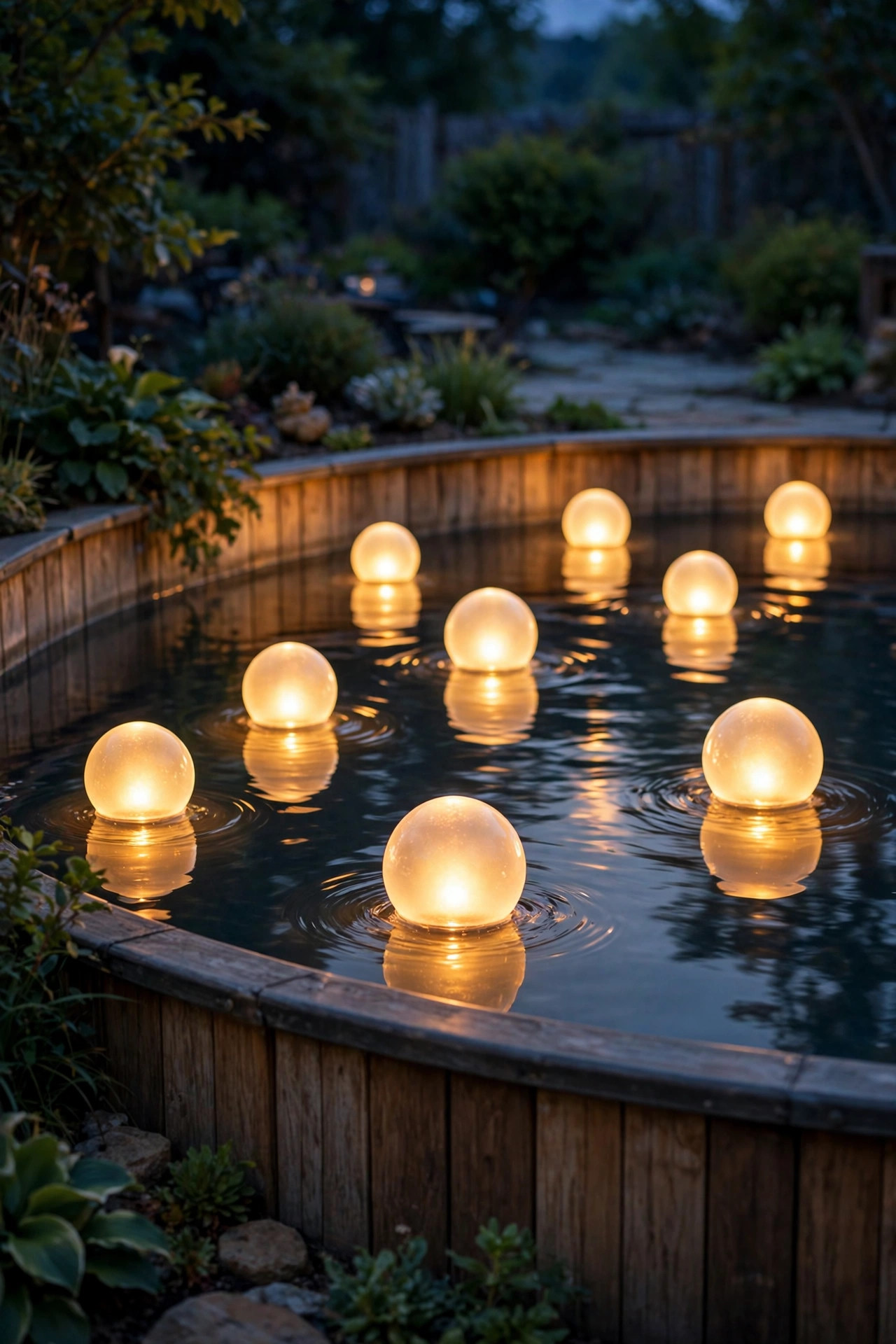
Most above-ground pools sit near a fence, and that fence is free scenery. Weave copper-wire fairy lights along the fence line behind the pool in loose swags, or wrap a section of lattice for a sparkling backdrop. The tiny points of light reflect in the water and make the whole corner feel like a boutique hotel courtyard. Solar fairy strands are the easiest option — the thin wire disappears in daylight, and there is no outlet math to do. Keep the battery pack or solar panel up on the fence where it catches sun and stays out of the splash zone. I run three 33-foot strands across our back fence and the effect costs almost nothing to run. Stick with warm white; mixing color temperatures along one fence line looks accidental. If your fence is chain-link, the wire threads through the diamonds beautifully and holds itself in place.
Suggested budget range: $15 – $35.
10. Light the Ladder and Steps for Safe Night Swims
Built-in pools light their entries, and yours should too — this one is about safety as much as looks. Small waterproof step lights or a pair of solar lights mounted beside the ladder make the climb in and out visible after dark, when wet feet and poor light are a genuinely bad mix. If your ladder has a platform, a low strip of light under its edge outlines the top step beautifully. Battery and solar options avoid any wiring near the water, which I strongly prefer here. Check that every tread or rung is lit evenly; a bright top step with a dark bottom step is worse than gentle light throughout. In my experience, guests comment on this layer more than any other, because it signals that the pool was thought through. It also keeps the inevitable midnight dip drama-free for the grown-ups supervising from the deck chairs.
Suggested budget range: $20 – $55.

11. Run Rope Light Along the Pool Base
The bottom edge of an above-ground pool is where the temporary look hides — that bare band of wall meeting the grass. A rope light or outdoor LED strip run neatly along the base trims that edge with a clean line of light and makes the pool look set into the landscape. Mount it on small clips or a low edging board a few inches out from the wall, facing outward or downward so you see glow, not bulbs. Choose a fully sealed, outdoor-rated rope with warm white LEDs, and route the plug to a GFCI outlet with a weatherproof cover. This also doubles as subtle wayfinding light for walking around the yard at night. If you keep a mulch or gravel ring around the pool, the light picks up the texture and looks surprisingly elegant. Just keep connections elevated off the ground so they never sit in puddles after a storm.
Suggested budget range: $25 – $60.

12. Set Lanterns Along the Deck Rail
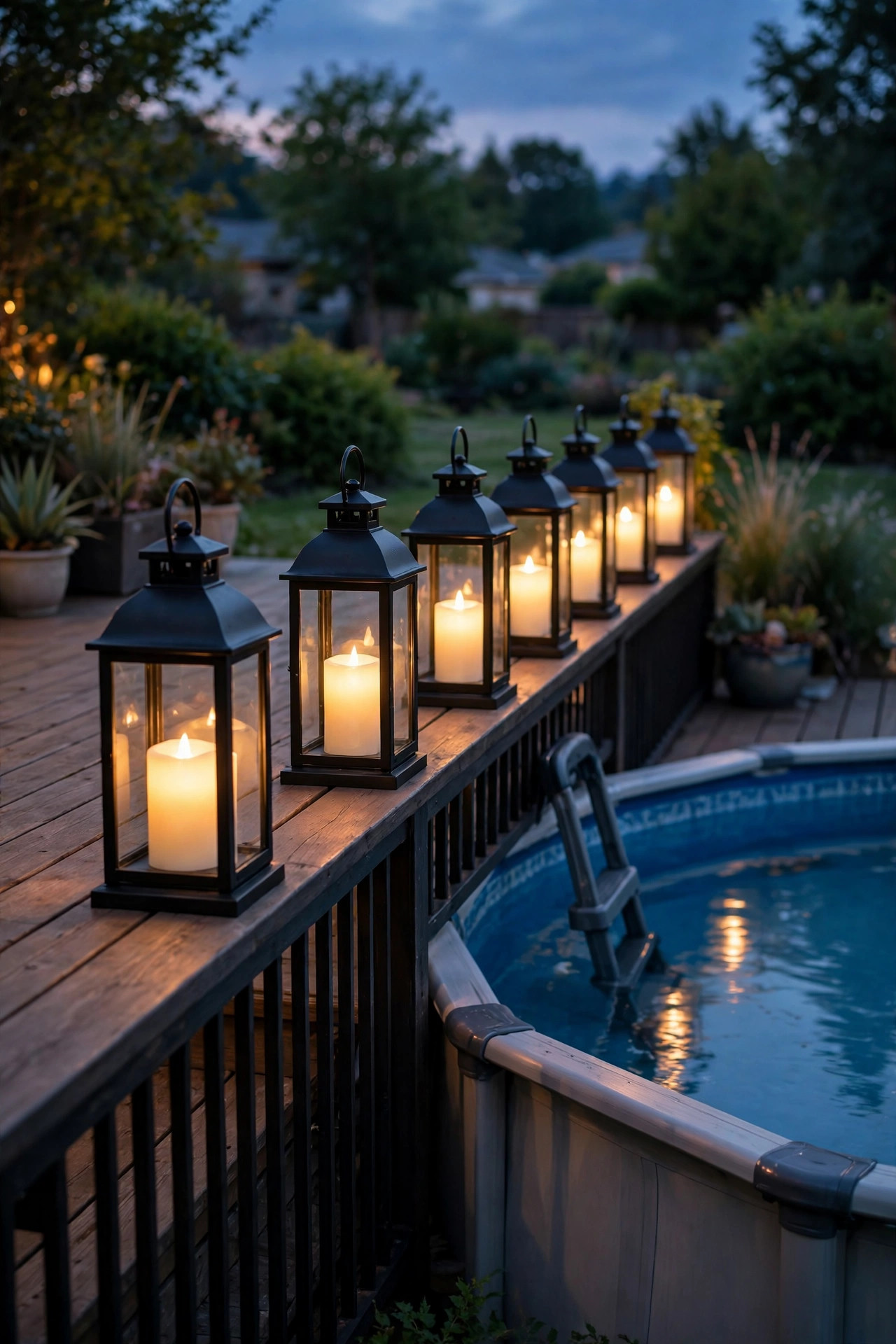
Lanterns are my favorite flexible layer because they need no installation at all. A series of matching outdoor lanterns along the deck rail or on the pool's entry platform gives you a candlelit rhythm that photographs beautifully. flameless LED candles inside are the smart choice near water and kids — no flames near towels, no wax in the deck boards, and timers mean they light themselves every evening. Choose lanterns at least 12 inches tall so they read from across the yard, and keep the style consistent: one finish, one shape, repeated. Mixed lanterns look collected over years in a garden, but around a pool the repetition is what creates the built-in feel. Solar lanterns save battery costs, though the candle-style ones with a 6-hour timer setting are hard to beat for reliability. Move them to the table when you entertain and the whole pool area becomes the dining room.
Suggested budget range: $30 – $90.
13. Choose Color-Changing Smart Lights for Party Mode
Every built-in pool brochure shows that deep turquoise water glow, and smart color-changing lights get you there for very little money. Swap the bulbs in your nearest deck or porch fixtures for Wi-Fi or remote-controlled color bulbs, or add color-capable underwater lights from idea three, and you can shift from warm white weeknights to aqua, violet or full party cycling in seconds. My honest advice: treat color as an accent, not the default. Warm white looks classy every night; saturated colors are for birthdays and the Fourth of July. Keep pathways and steps on plain warm light even in party mode so nobody trips while the water is glowing blue. Group the lights in the app so one tap changes the whole pool zone, and set a schedule so everything still shuts off by midnight for the neighbors' sake. A remote-control set works just as well if you would rather skip the app and keep things simple.
Suggested budget range: $25 – $75.
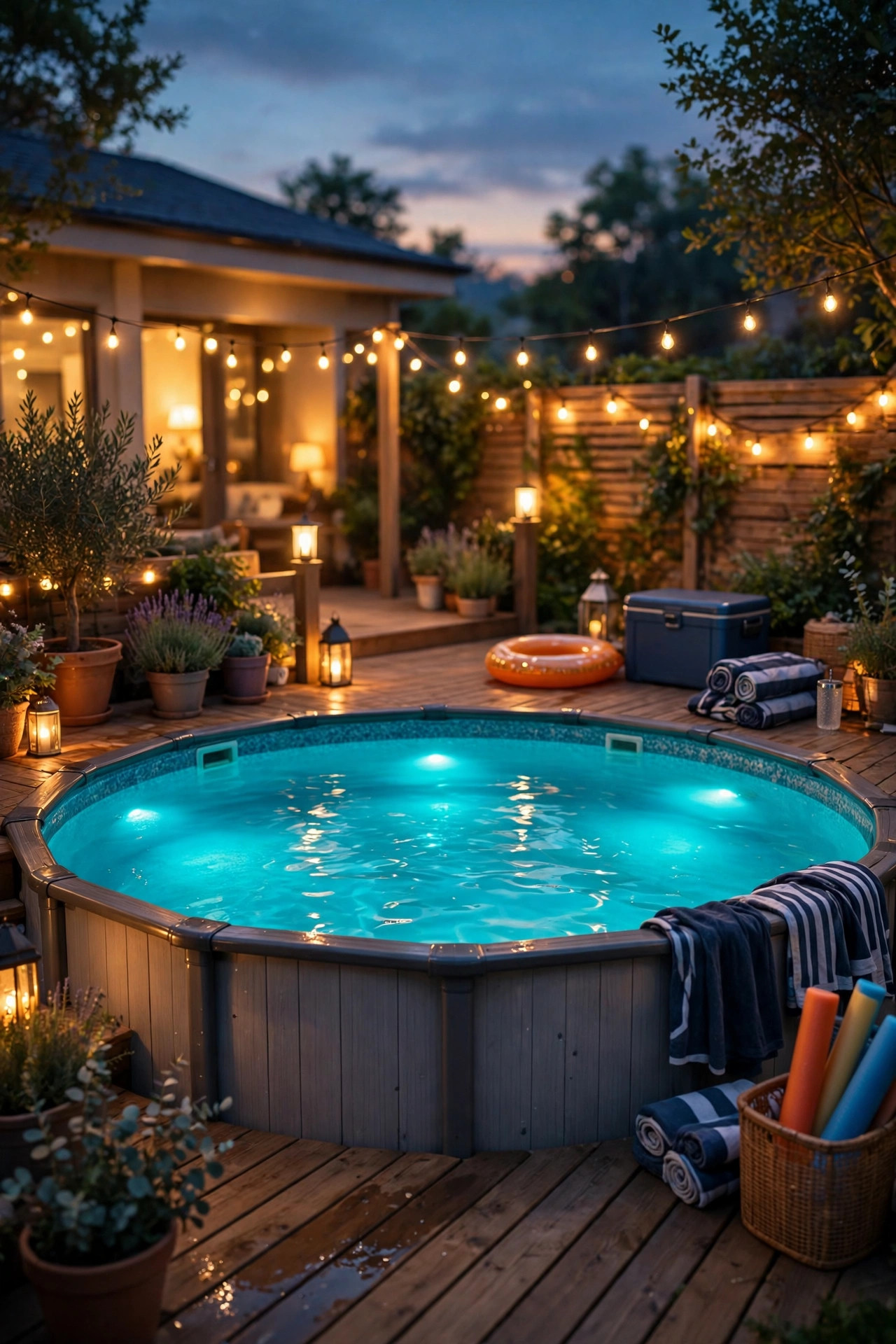
14. Surround the Perimeter With LED Flame Torches
A ring of flickering flame lights around the pool instantly reads as resort landscaping. The LED solar tiki torches available now are convincing at a distance, weatherproof, and involve no actual fire near pool chemicals, towels or wooden decks — a combination I care about. Plant them in the beds around the pool every 5 to 6 feet, or mount shorter versions on the deck posts. The warm flicker pairs beautifully with steady warm layers like rim strips and deck pucks, and the movement keeps the scene from feeling static. Solar versions charge best with the panel tilted toward afternoon sun, so adjust the angle when you first place them. Expect a softer glow than real flame; that is the trade for zero maintenance and zero worry. During the off season I pull ours into the shed, wipe the panels, and they come back strong each spring.
Suggested budget range: $35 – $85.

15. Moonlight the Pool From a Nearby Tree
If you are lucky enough to have a tree within 15 to 20 feet of the pool, moonlighting gives you the most natural built-in effect of all. Mount a shielded downlight 15 to 20 feet up in the branches, aimed down through the leaves. It casts soft, dappled light over the deck and water that mimics a full moon and flatters absolutely everything. Use a warm white fixture with a glare shield and a narrow-to-medium beam, and hire an arborist or use a proper tree strap — never screw into a tree you plan to keep. The wiring runs down the trunk in conduit to a low-voltage transformer. Honestly, this is the one idea on the list where I suggest professional installation if heights make you nervous. The payoff is a pool area with no visible light source at all, which is the very definition of the built-in look.
Suggested budget range: $90 – $220.
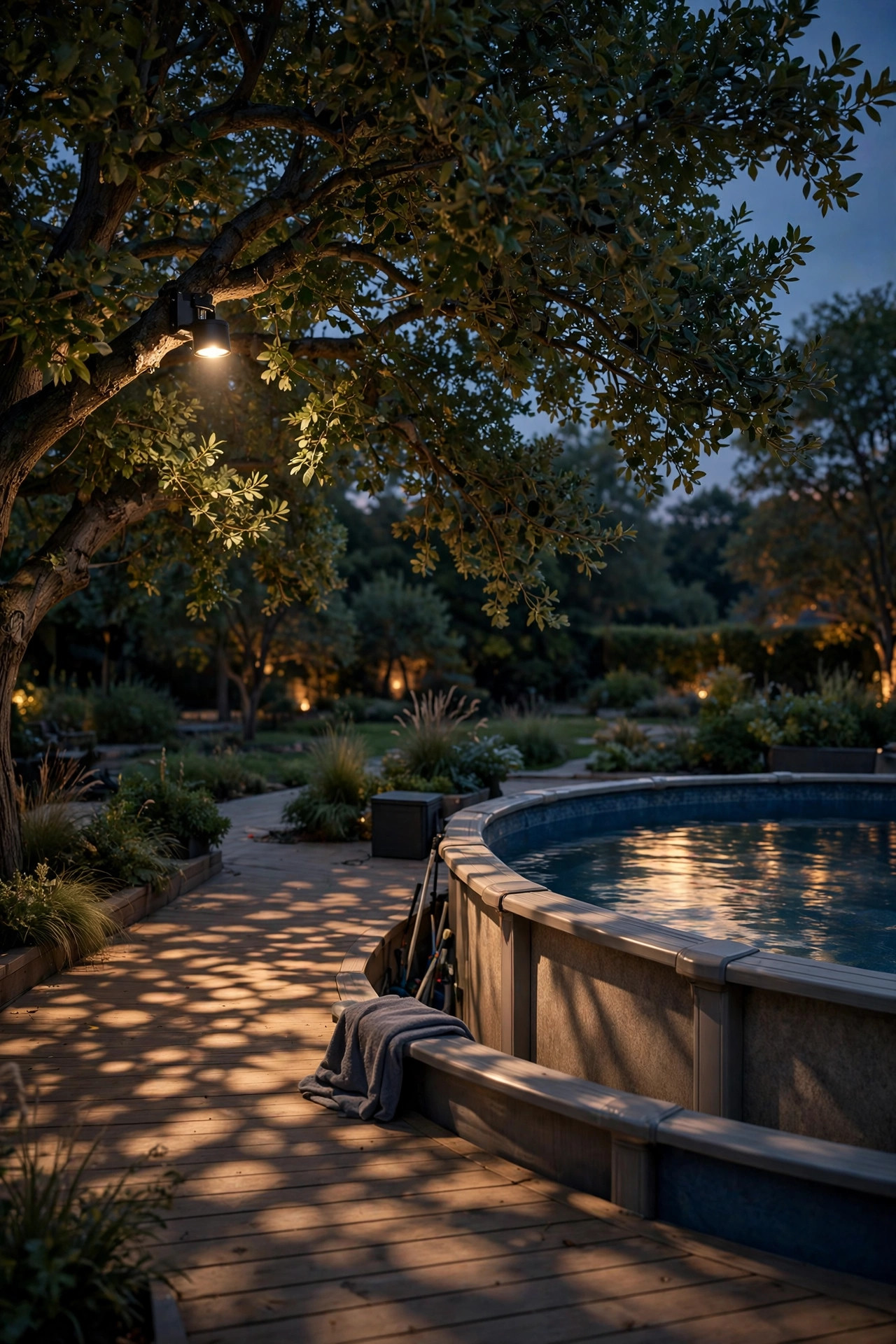
16. Skirt the Pool With Panels and Glow From Behind
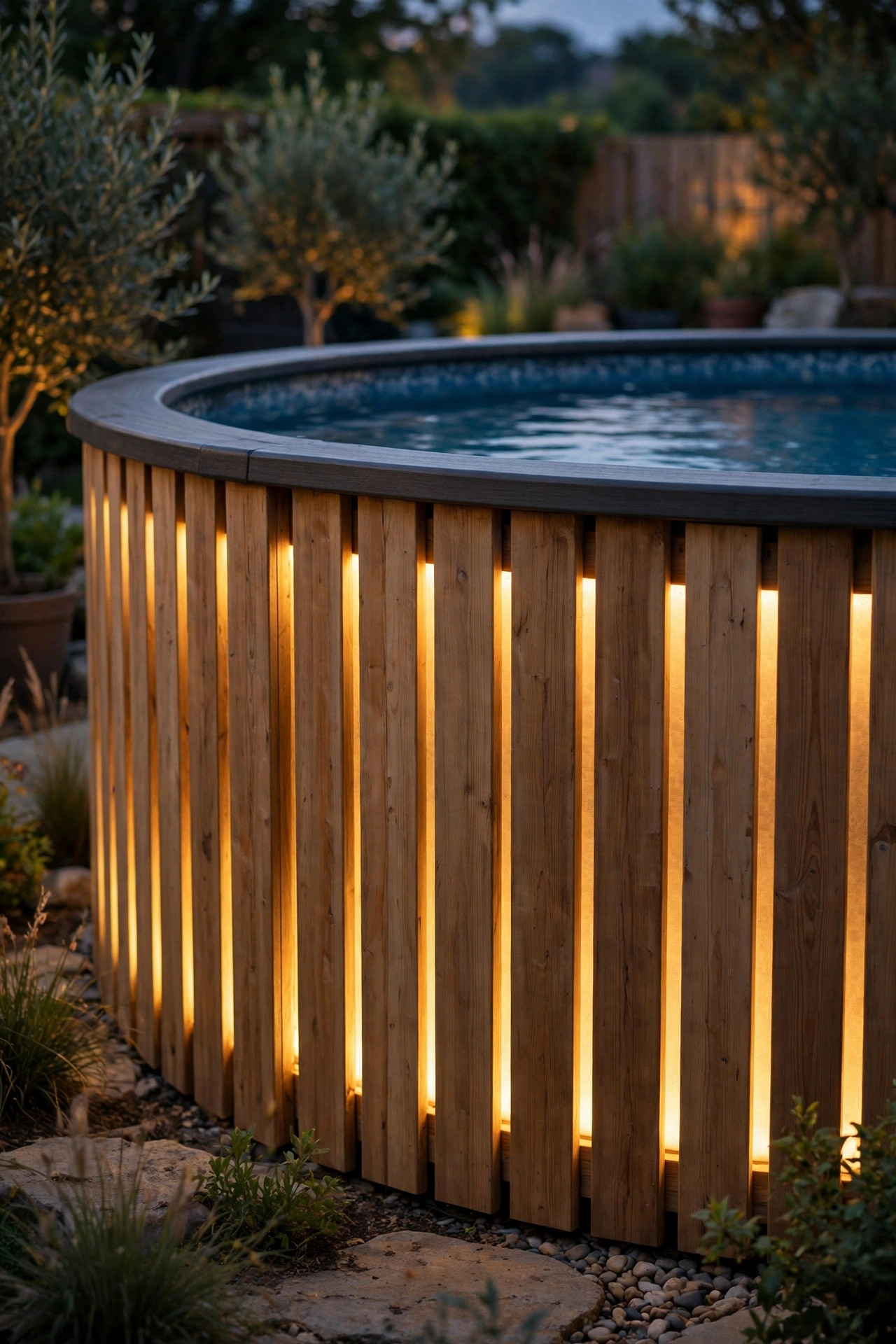
Here is a designer move: hide the pool base entirely. Low lattice panels, horizontal wood slats, or even simple landscape edging set a few inches out from the wall creates a skirt, and a warm light source tucked behind it makes the pool appear to float on a cushion of glow. Solar strips and rope lights work perfectly in that hidden gap, and nobody ever sees a fixture or a cord. The skirt also hides pumps, hoses and the filter clutter that instantly betrays an above-ground setup. Leave one panel removable for filter access — learn from my mistake and plan that before you build, not after. Keep anything electrical in that space low-voltage or solar, with connections up off the ground. The finished effect is the closest an above-ground pool gets to the clean lines of a fiberglass shell, for a tiny fraction of the cost.
Suggested budget range: $70 – $180.
17. Put Every Layer on Timers: How Above Ground Pool Lighting Ideas Come Together
The final idea is the one that ties all of these above ground pool lighting ideas together: automation. Built-in pools never require you to wander around flipping switches, so yours should not either. Put plug-in layers on a smart plug or a simple outdoor timer set to dusk, choose solar layers with photocells that wake themselves, and let underwater lights run on their built-in timers. Aim to stagger things slightly — deck and rim lights at sunset, accent layers fifteen minutes later — so the yard eases into evening the way a designed landscape does. Everything should also shut itself down at a set hour; ours go dark at 11 p.m. sharp. This is honestly the layer our guests never see and always feel, because the pool is simply always glowing when it should be. Start with whichever three ideas fit your budget this season, automate them, and add a layer each summer.
Suggested budget range: $15 – $50.

Frequently Asked Questions
How many lights does an above-ground pool actually need?
For most pools, three layers are enough: one for the water, one for the deck or entry, and one accent layer like string lights or uplights. A 15 to 24 foot pool usually looks complete with an underwater light or two, rim or deck lighting around the entry, and one overhead or perimeter layer. Add more only if a corner still falls dark.
Are solar lights bright enough for a pool area?
Solar lights are excellent for accents, rim sparkle and pathway marking, and the better models run 6 to 8 hours on a full charge. They are not strong enough to be your only safety lighting on steps and ladders, so pair them with at least one wired low-voltage or battery layer where people climb in and out.
What color temperature looks best around a pool?
Warm white, around 2700K to 3000K, is the most flattering choice for skin, wood decks and landscaping, and it is what gives pools that resort feel. Cool blue-white light above 4000K tends to make water and faces look harsh and clinical. Save saturated colors for parties through smart or underwater lights.
How do I keep lighting safe around pool water?
Keep all plug-in equipment on GFCI-protected outlets at least 5 feet from the water, use only fixtures rated for outdoor or full submersion use as appropriate, and favor low-voltage, solar or battery power anywhere near the pool itself. Never run extension cords across wet deck areas, and inspect seals and cables at the start of every season.
Conclusion
The real secret is not any single fixture — it is the layering. Hide your light sources, keep the glow warm and low, light the water, the entry and the perimeter as separate layers, and let timers do the work. Do that, and these above ground pool lighting ideas will have neighbors asking who built your pool in. Start with the under-rail strip and one deck layer this weekend, then browse the rest of the lighting ideas here whenever you are ready to add the next layer.