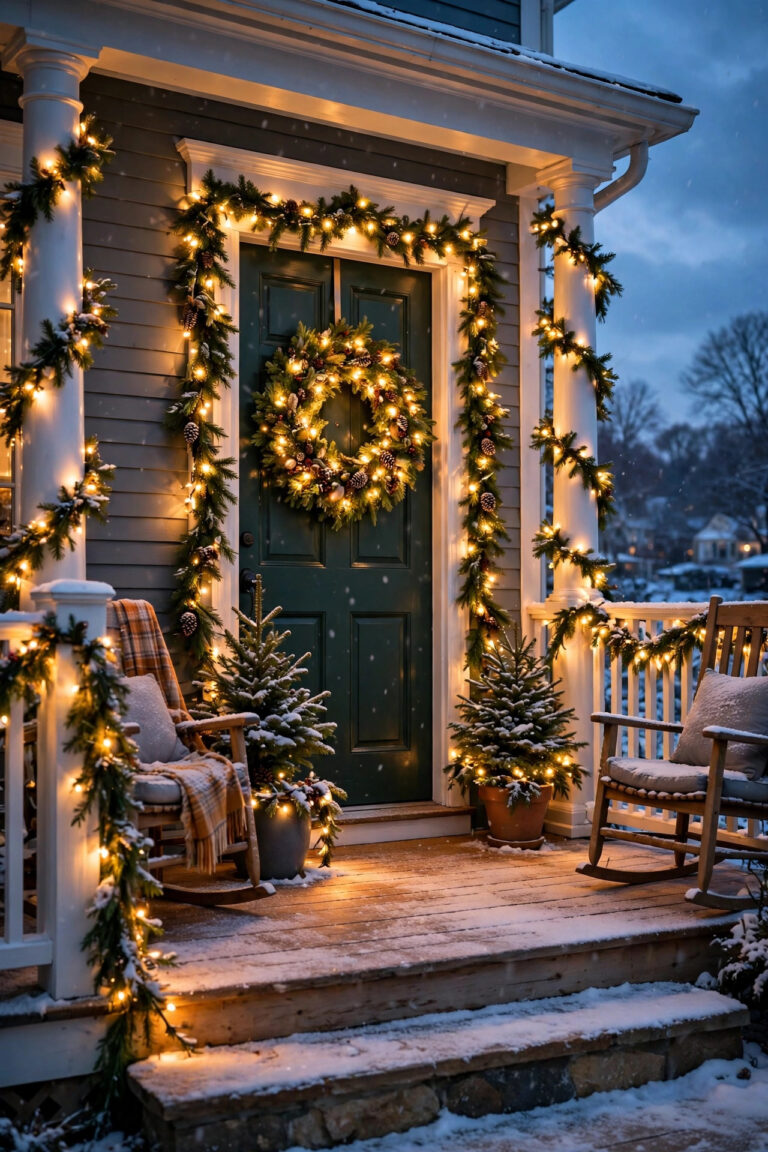
There's a moment every evening, right as the sun drops, when my yard either falls flat or starts to glow — and the difference, more often than I'd like to admit, comes down to the humble post light. Solar post light ideas have quietly become my favorite no-wiring upgrade, because every fence post, deck post, and mailbox post you already own is a lamp just waiting to happen. No trenching, no electrician, no extension cord snaking across the lawn: you set a cap or lantern on top, let the little panel drink in the daylight, and by dinner the whole perimeter is outlined in warm light. It's the layering philosophy I use everywhere — low, gentle points of light along the edges of a space make the middle feel bigger, safer, and honestly prettier. Below I've gathered 17 of my favorite setups for fences, decks, and mailboxes, from classic 4×4 cap lights to flame-effect lanterns and motion-sensing gate posts. Each one notes the post size it fits, where it shines brightest, and a realistic budget, so you can outfit an entire fence line this weekend without touching a single wire.

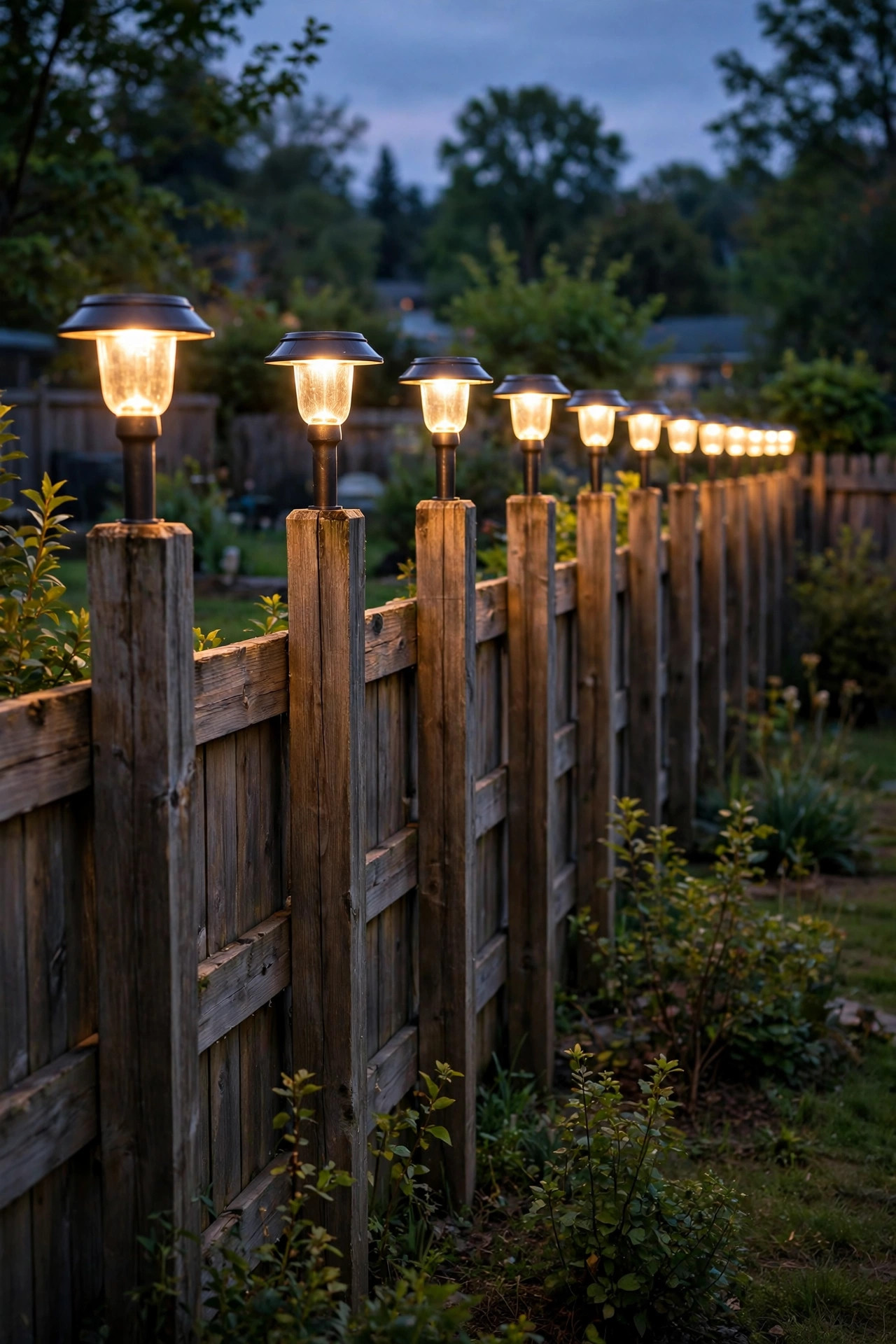
1. Solar Post Light Ideas Start Simple: Classic Caps on a Wood Fence
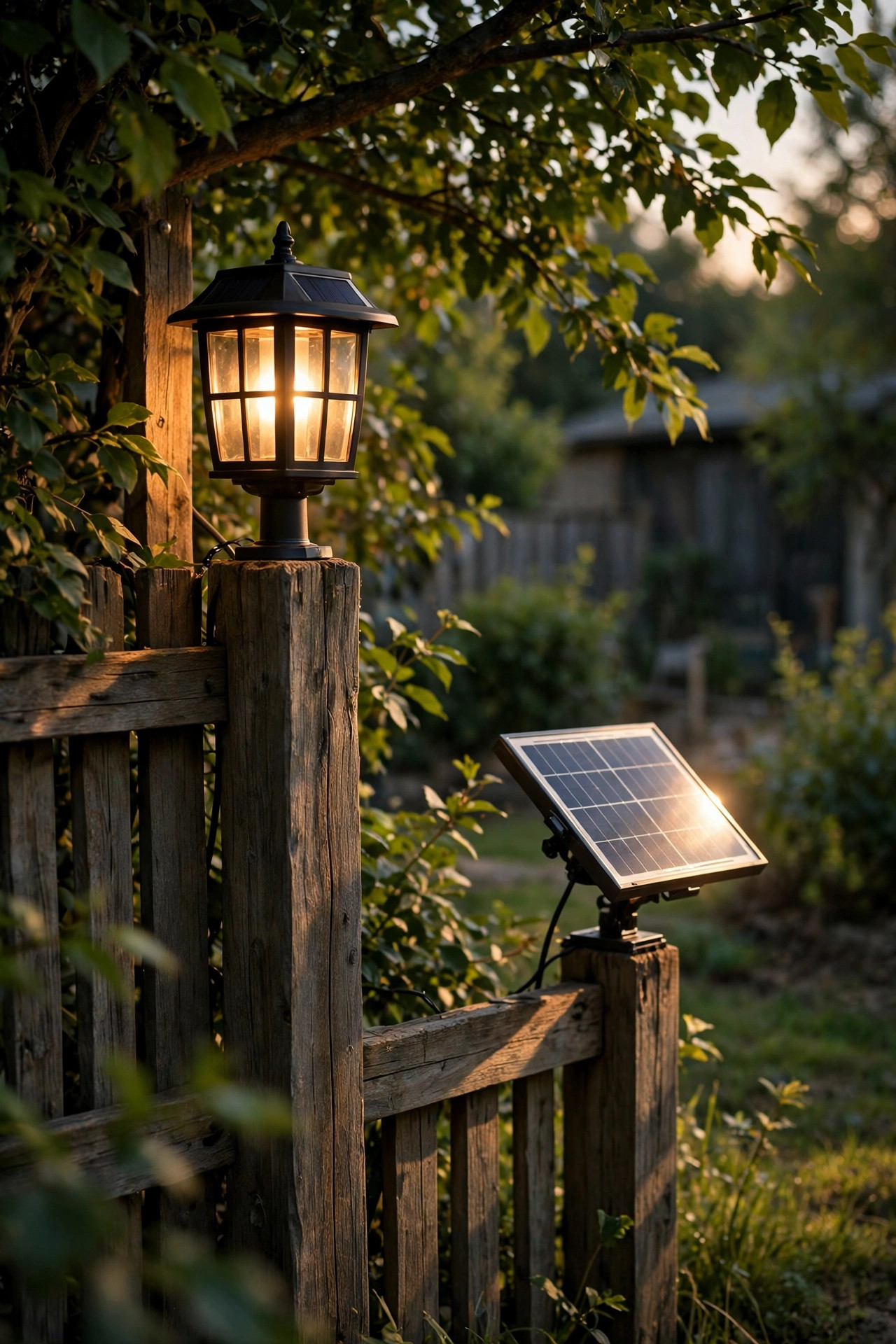
If you do nothing else on this list, do this one. A standard 4×4 wood fence post (actually 3.5 inches square — measure before you order) takes a solar cap light with two screws and about ninety seconds of work. Run them along every post, or every other post, and the fence line turns into a dotted ribbon of warm light that defines your whole yard after dark. I always recommend warm white, around 2700K to 3000K, so the glow reads like candlelight instead of a parking lot. Buy caps rated IP44 or better, and look for replaceable rechargeable batteries — that's what separates a three-season light from a five-year one. Spacing matters more than brightness here: a consistent rhythm of modest 10 to 20 lumen caps looks far more expensive than a few blazing ones scattered at random. For corner posts, step up one size in brightness so the turns in the fence read clearly. If your fence is due for a bigger refresh, our fence lighting ideas roundup shows how post caps layer with string lights and wall washers for the full effect.
Suggested budget range: $30 – $70.
2. Deck Post Cap Lights in Warm White
A deck without lit posts feels unfinished after sunset, and solar caps are the fastest fix I know. Most deck posts are 4×4 or 6×6, and many caps ship with adapter bases that fit both, plus sleeves for vinyl and composite railings — check your post material before ordering, because composite posts often need the wider base. On my own deck I run them on the corner posts and stair posts only, not every single post, which keeps the look calm instead of runway-bright. Choose downward-shining designs if you sit out there in the evening; caps that throw light sideways will glare right at eye level when you're seated. A matched set in the same finish as your railing hardware — matte black, bronze, or white — makes them look built-in rather than bolted on. Expect six to eight hours of light from a full sunny charge, which covers dinner through the last glass of wine. Our deck post cap lights guide goes deeper on sizing and finishes if you want the full comparison before you buy.
Suggested budget range: $35 – $90.

3. A Mailbox Post Light That Helps Everyone Find You
The mailbox post is the hardest-working post in the front yard, and lighting it pays off daily — for you grabbing mail after work, for guests hunting your house number, and for delivery drivers on dark winter evenings. A solar cap on the mailbox post throws a soft pool of light exactly where hands and headlights need it. If your post has a cross arm for the paper box, a small lantern-style solar light hung or mounted beneath it looks charming and lights the box opening. Pair it with reflective or backlit house numbers on the post itself and the combination is genuinely useful, not just decorative. One caution: keep the fixture clear of the mail door swing, and mount it high enough that the carrier isn't staring into an LED at face level. Gooseneck-style solar mailbox lights exist too, curving over the box like a tiny street lamp — they're my favorite splurge in this whole category. For more ways to make the curb work harder, browse our mailbox lighting ideas for address plaques and post-mounted lanterns.
Suggested budget range: $25 – $65.

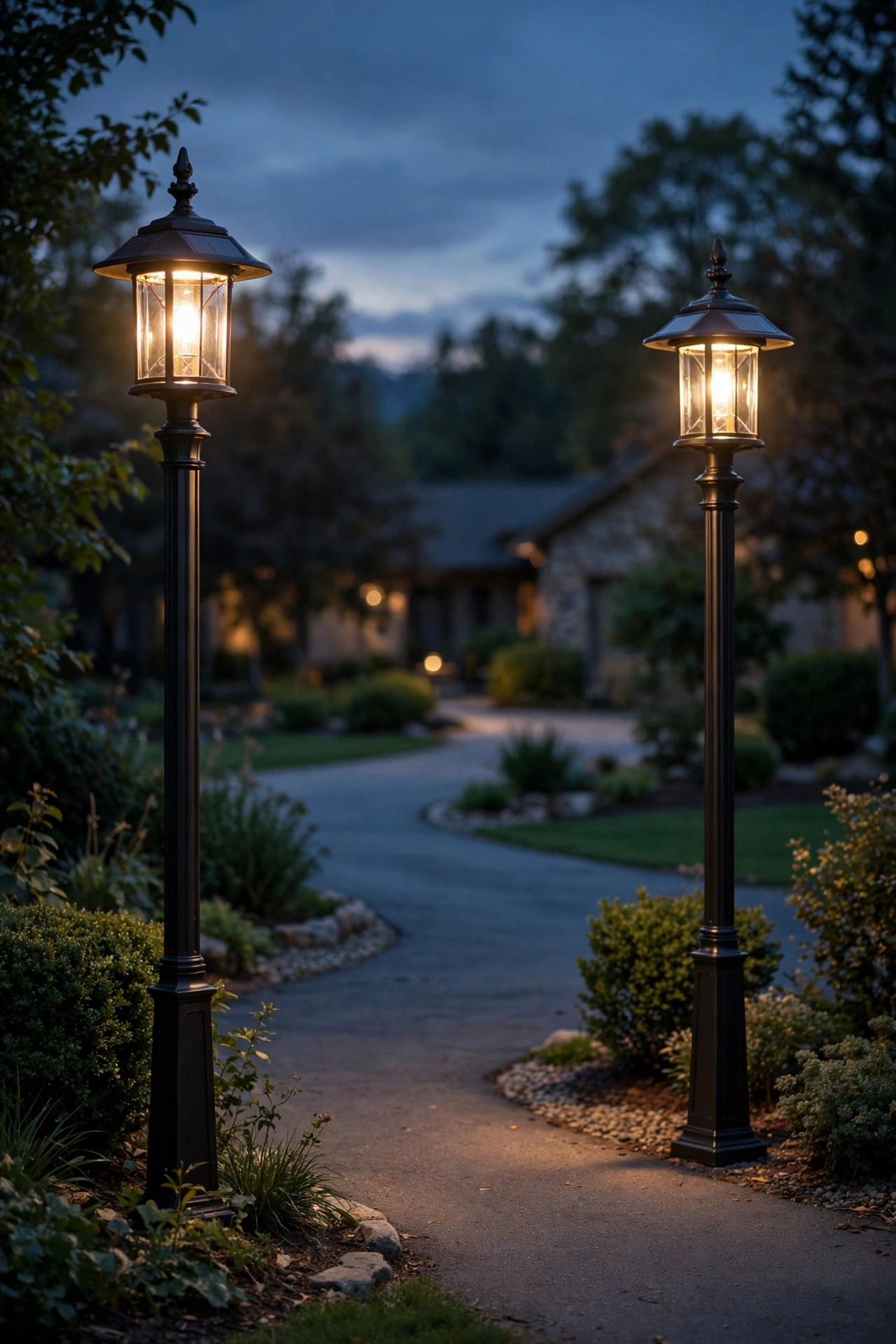
4. A Matched Pair of Lantern Posts at the Driveway Entrance
Two taller solar lantern posts flanking the driveway entrance give you that estate-gate feeling without the estate-gate wiring bill. These are the statement pieces of the solar post world: 12 to 24 inches of lantern on a sturdy post, with larger panels and batteries than little cap lights carry, so they burn brighter and longer. Plant them just outside the tire path — at least a foot back from the driveway edge — and if your household includes a new driver, set them in a shallow bed of mulch or stone so an accidental bump meets landscaping, not concrete. Matching matters here more than anywhere: buy the pair together, because solar models get discontinued and a mismatched replacement will bother you every single night. Aim for 50 to 100 lumens per lantern so the entrance reads clearly from the street. I like to echo the same lantern style, smaller, at the mailbox and front walk so the whole approach feels designed. Honestly? This is the idea neighbors ask about most.
Suggested budget range: $70 – $180.
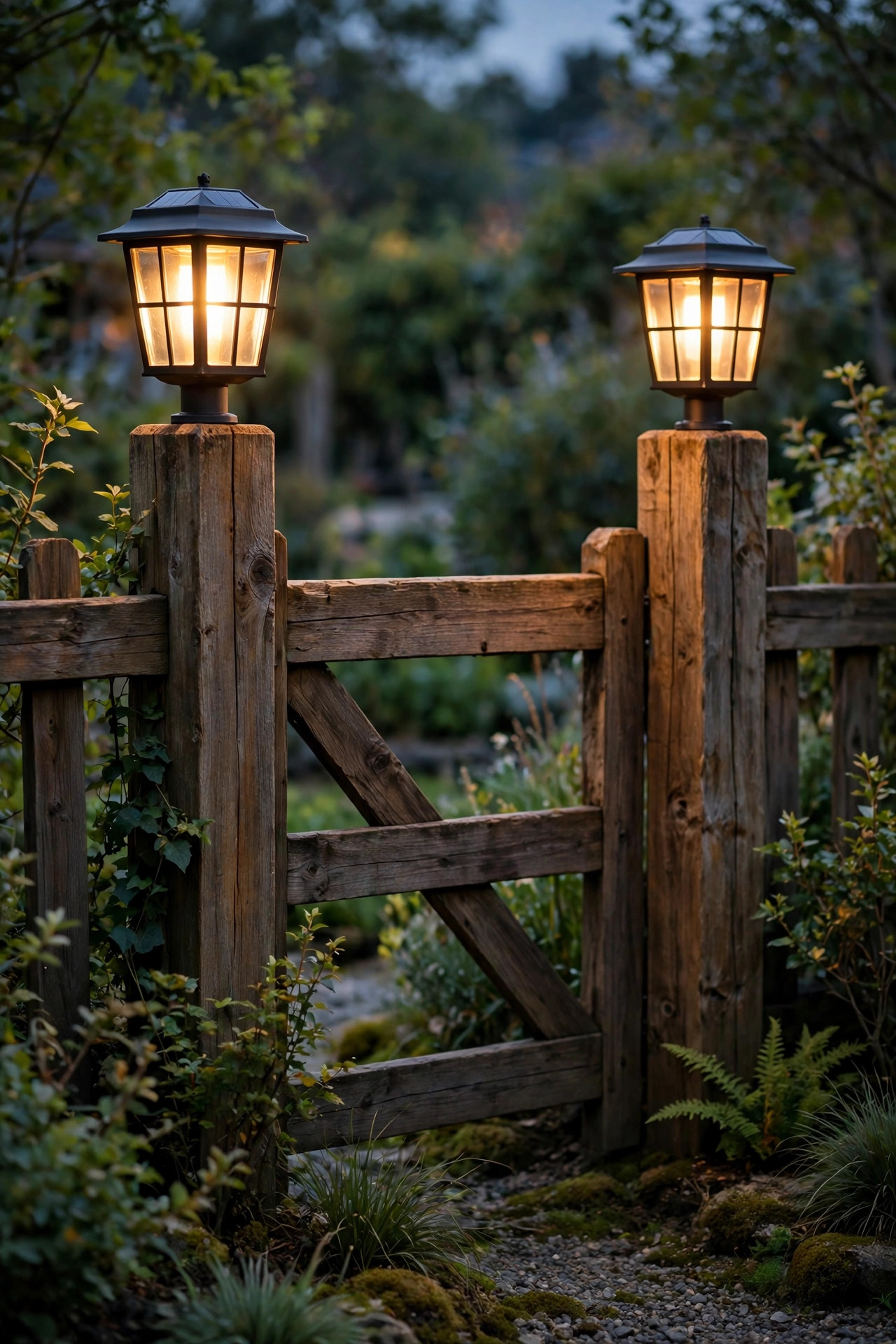
5. Lantern-Style Solar Post Lights on Garden Gates
A gate you can't see is a gate you fumble with, keys in one hand and groceries in the other. Lantern-style solar lights on both gate posts fix the fumble and frame the entrance to the backyard like a little ceremony. Because gate posts take constant vibration from swinging and latching, choose lights with metal housings and screw-down bases rather than friction-fit caps — the cheap plastic ones rattle loose by midsummer. A warm flicker-free glow at about waist-to-shoulder height lights the latch without blinding you as you approach. If the gate sits in a shrubby corner, look for models with the solar panel on a short stalk or a detached panel you can angle toward the sky; a panel shaded by hydrangeas will quit by 9 p.m. I also suggest lighting the inside of the gate, not just the front, so the welcome works both directions. Match the lantern silhouette to your fence style — carriage-house lanterns for traditional fences, clean squares for modern horizontal boards — and the whole entry reads intentional.
Suggested budget range: $40 – $95.
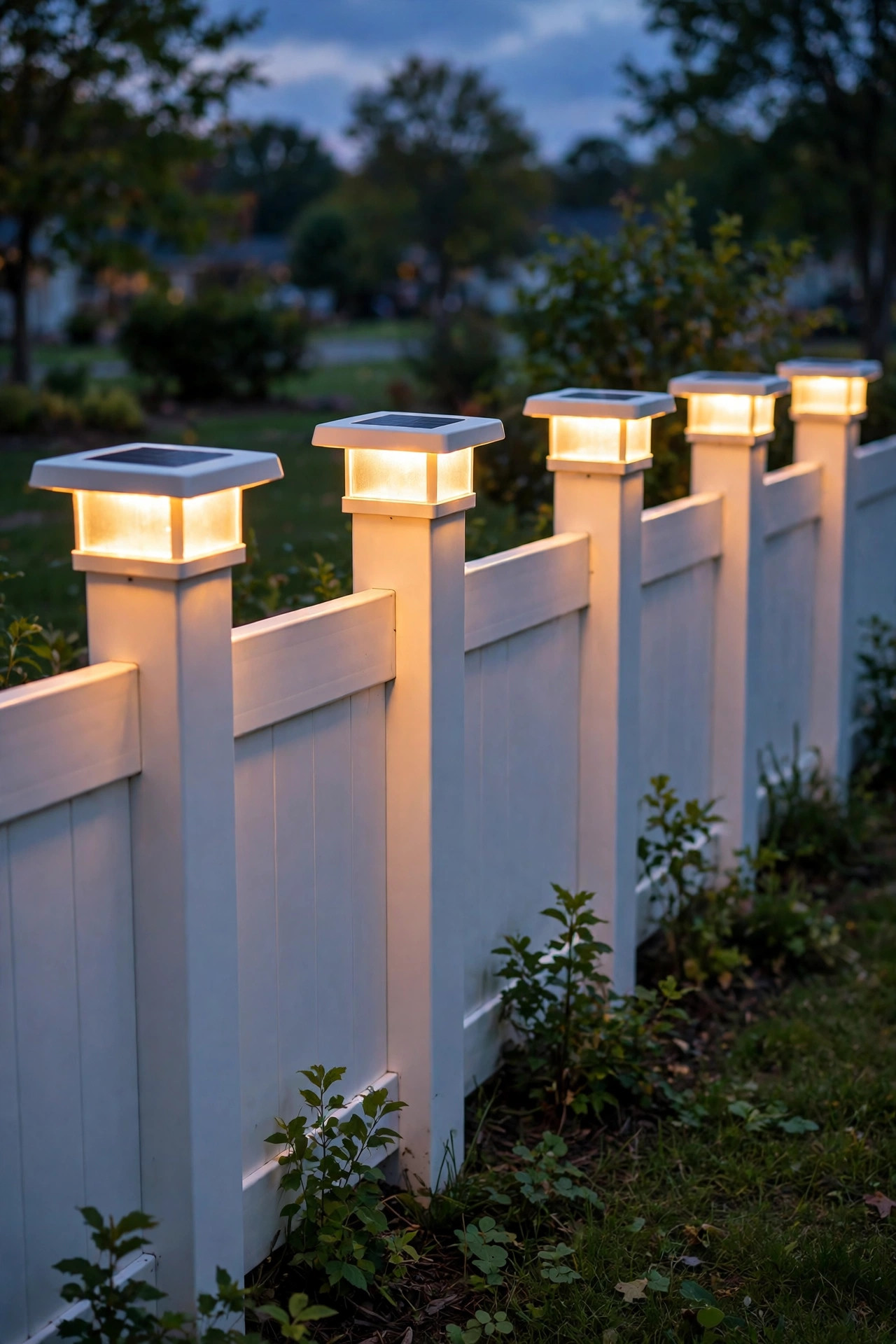
6. Clean-Lined Solar Caps for Vinyl Fences
Vinyl fences want a different look than wood: crisp, square, and usually white or tan to match the rails. The good news is that solar caps made for vinyl posts often come in exact-fit 4×4 and 5×5 sizes with bases that slip neatly over the post top, no adapters wobbling around. Brightness runs modest — these are outline lights, not area lights — but a full run of them down a white fence at dusk is genuinely beautiful, each post wearing a little halo. Here's my practical tip: vinyl shows dirt, and solar panels haze over with pollen, so put these on a twice-a-year cleaning rhythm with a soft cloth and soapy water; a hazy panel can cut your runtime in half. Stick with one color temperature across the whole fence, and check the listing's Kelvin number rather than trusting the words "warm white," which some sellers stretch to cover 4000K. If your posts are 5×5, double-check the inner dimensions, since vinyl post wall thickness varies by manufacturer more than wood ever does.
Suggested budget range: $45 – $100.
7. Color-Changing Solar Post Lights for Parties and Seasons
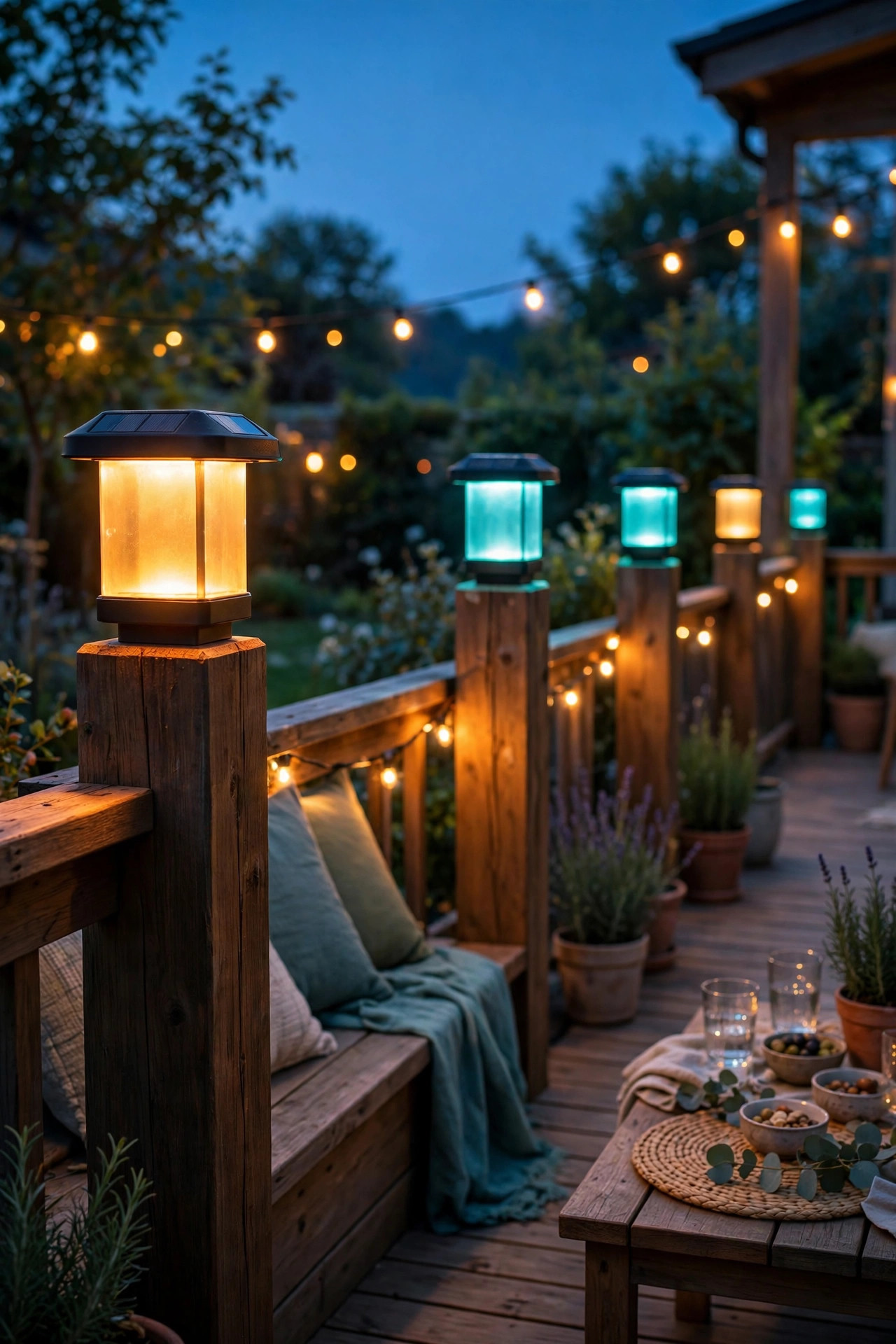
Not every night wants warm white. Color-changing solar post caps — the kind with a remote or a simple mode button — let the same fence line glow amber for a fall dinner party, red and green at Christmas, and orange for Halloween, then go back to classic warm white on Tuesday. Kids, in my experience, treat the remote like a magic wand. Use color the way you'd use a tablecloth: for occasions. Nightly rainbow cycling reads more carnival than cozy, and it can genuinely annoy neighbors whose windows face your fence. The better models remember your last setting, so you're not re-programming caps every evening. Battery life drops a bit in color modes, so expect the shorter end of the runtime range. I run two color-changing caps on the deck posts nearest the grill — the party zone — and keep the rest of the yard warm white, which gives us the fun without the full funfair. Buy one brand and stick with it so a single remote runs them all.
Suggested budget range: $35 – $80.
8. Short Bollard-Style Solar Posts for Garden Beds
Sometimes the right "post" isn't part of a fence at all — it's a short solar bollard you place yourself. At 12 to 20 inches tall, these stubby posts tuck into garden beds along a path or driveway edge and throw a low, wide pool of light that shows off plantings instead of just marking a boundary. They're my recommendation when a fence line is too far from the walkway to light it usefully. Stake-mount versions push into mulch in seconds; for beds you water often, choose sealed units rated IP65 so sprinkler overspray doesn't fog the lens. Space them 4 to 6 feet apart for continuous pools of light, wider if you just want punctuation marks. Because they sit low, the panels shade easily under spreading perennials — plant them on the sunny edge of the bed, or commit to a midsummer trim. A row of bollards curving with a bed's edge looks professionally landscaped, and since they're solar, you can audition positions for a week before the layout feels final. Renters, this one's yours: everything lifts out clean at move-out.
Suggested budget range: $30 – $85.

9. Flickering Flame-Effect Solar Post Lights
Flame-effect solar lights have no business looking as good as they do. A little array of LEDs dances behind a frosted lens and, from ten feet away, reads as a real tiki-style flame sitting on your fence or deck post — all the romance, none of the citronella puddles or scorched post tops. They shine at deck corners, around a fire pit seating area, and on the posts of a pergola entry, anywhere you'd light a candle if candles survived breezes. Two honest notes: the light they give off is dimmer than a standard cap, so treat them as atmosphere, not task lighting; and up close the effect is more "clever LED" than "open flame," so mount them where people see them from a few steps back. In my experience the warmer amber versions convince best — anything drifting orange-red looks like a warning beacon. Mix two flame posts at a seating area's corners with regular warm caps elsewhere and the layering sells the illusion completely. No fuel, no matches, no melted plastic planters: just a nightly little fire that minds its manners.
Suggested budget range: $30 – $75.

10. Solar Post Lights With Motion Sensors for Gates and Side Yards
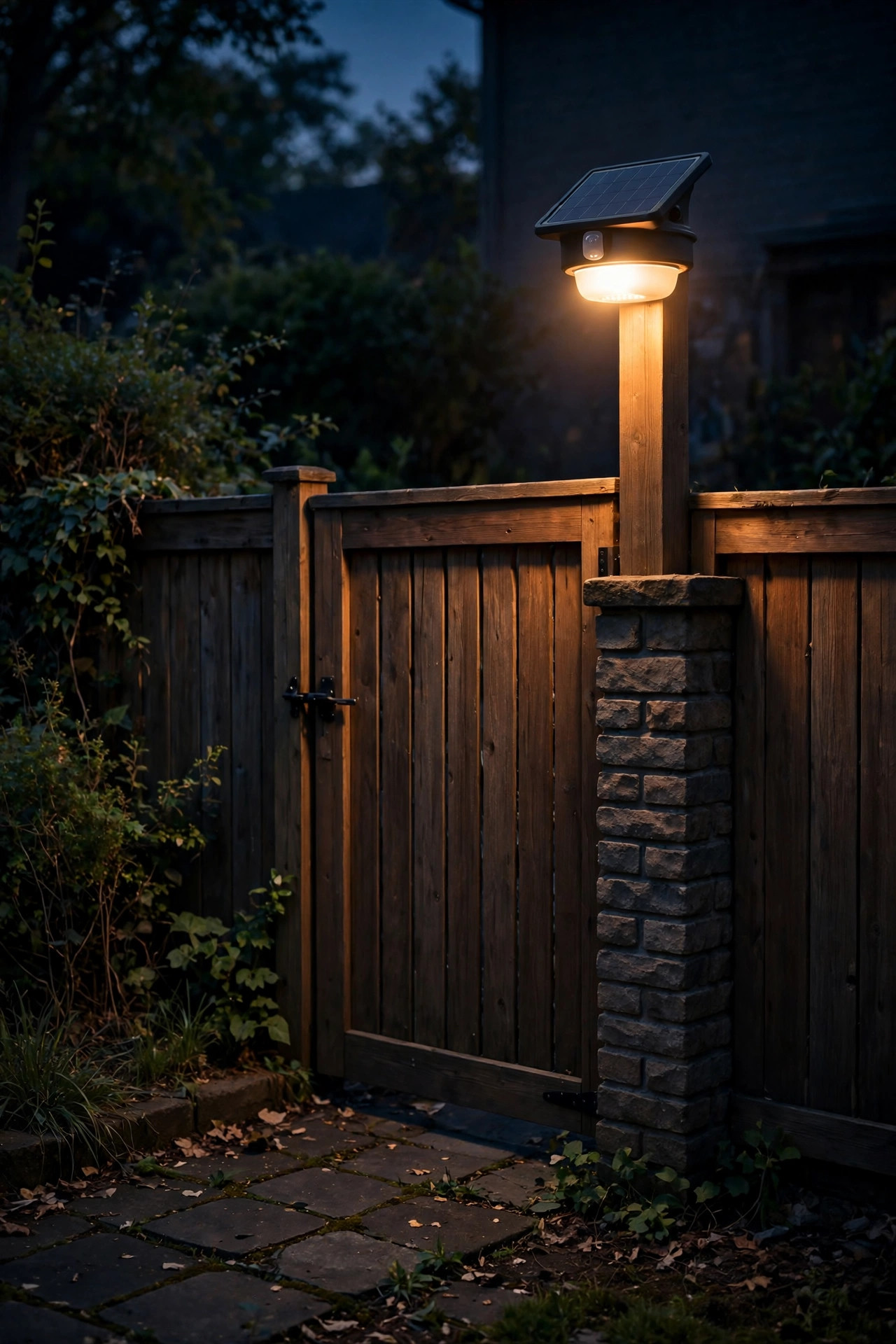
Steady-on caps mark territory; motion-sensing post lights guard it. A solar cap or lantern with a built-in sensor idles at a dim glow — just enough to outline the gate — then jumps to full brightness when someone approaches. That two-stage behavior is perfect for side gates, trash-bin alleys, and the path to the garage, where you want awareness without a floodlight burning all night. Look for a detection range of about 10 to 16 feet and an on-time of 20 to 30 seconds, and mount the light where the sensor's view isn't blocked by the post itself or a climbing vine. These work hardest in winter, when nights are long, so favor models with bigger batteries and panels even if they cost a little more. One placement lesson I learned the hard way: don't aim a motion post light directly at a busy sidewalk unless you enjoy a light show every time a dog walks past. Angle it into your yard instead. Paired with a lit mailbox out front, motion posts make the whole property feel attentively, quietly awake.
Suggested budget range: $35 – $85.
11. Solar Lights on Deck Stair and Newel Posts
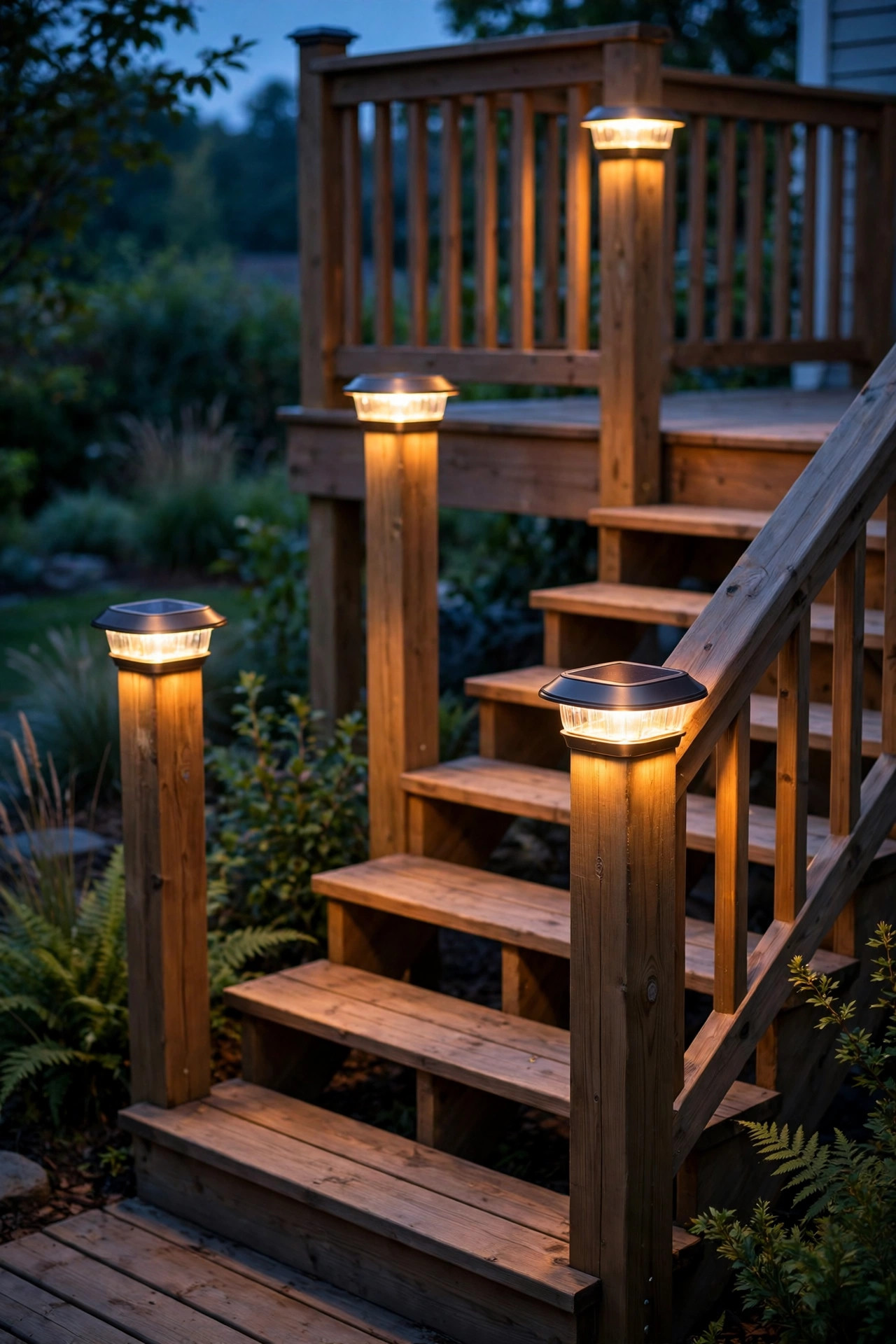
Deck stairs are where ankles get twisted, and the newel post at the top and bottom of the run is begging for a light. A solar cap on each newel post throws light across the first and last treads — exactly where depth perception fails at night — and signals the stair location to anyone crossing the deck with a drink in each hand. For the middle of a long run, smaller rail-mounted solar lights exist, but honestly, two well-placed newel caps plus your deck post caps usually do the job. Choose caps with a downward light spread rather than a 360-degree glow, so the beam lands on the steps instead of in your eyes as you descend. Keep finishes matched to your other deck caps; a stair post in a different style looks like a replacement part, because it is. If your stairs land on a path, echo the idea with one bollard at the bottom so the route continues into the yard. Safety lighting that also looks like decor is my favorite kind — nobody has ever complimented a bare bulb, but they compliment these.
Suggested budget range: $30 – $70.
12. Remote-Panel Solar Post Lights for Shady Spots
Shade is the heartbreak of solar lighting: the perfect post for a light — under the maple, along the north fence — is exactly where a top-mounted panel starves. Remote-panel solar post lights solve it by splitting the fixture in two. The lantern sits on your shady post while its panel, on a 6 to 10 foot cord, mounts on a nearby sunny fence section, stump, or small stake in a flower bed. That one change opens up the whole yard. When you shop, confirm the cord length reaches real sun, not just "less shade," and that both pieces carry outdoor ratings. Route the cord along the fence rail with small clips so it disappears, and coil any excess behind the panel mount. In my experience these are also the best-behaved solar lights in winter, because you can aim the panel low toward the southern sky when the sun rides low. They're slightly more work to install — call it twenty minutes a post — but they're the difference between a light that performs in July only and one that performs all year.
Suggested budget range: $40 – $95.
13. Layering Solar Post Light Ideas at Mixed Heights
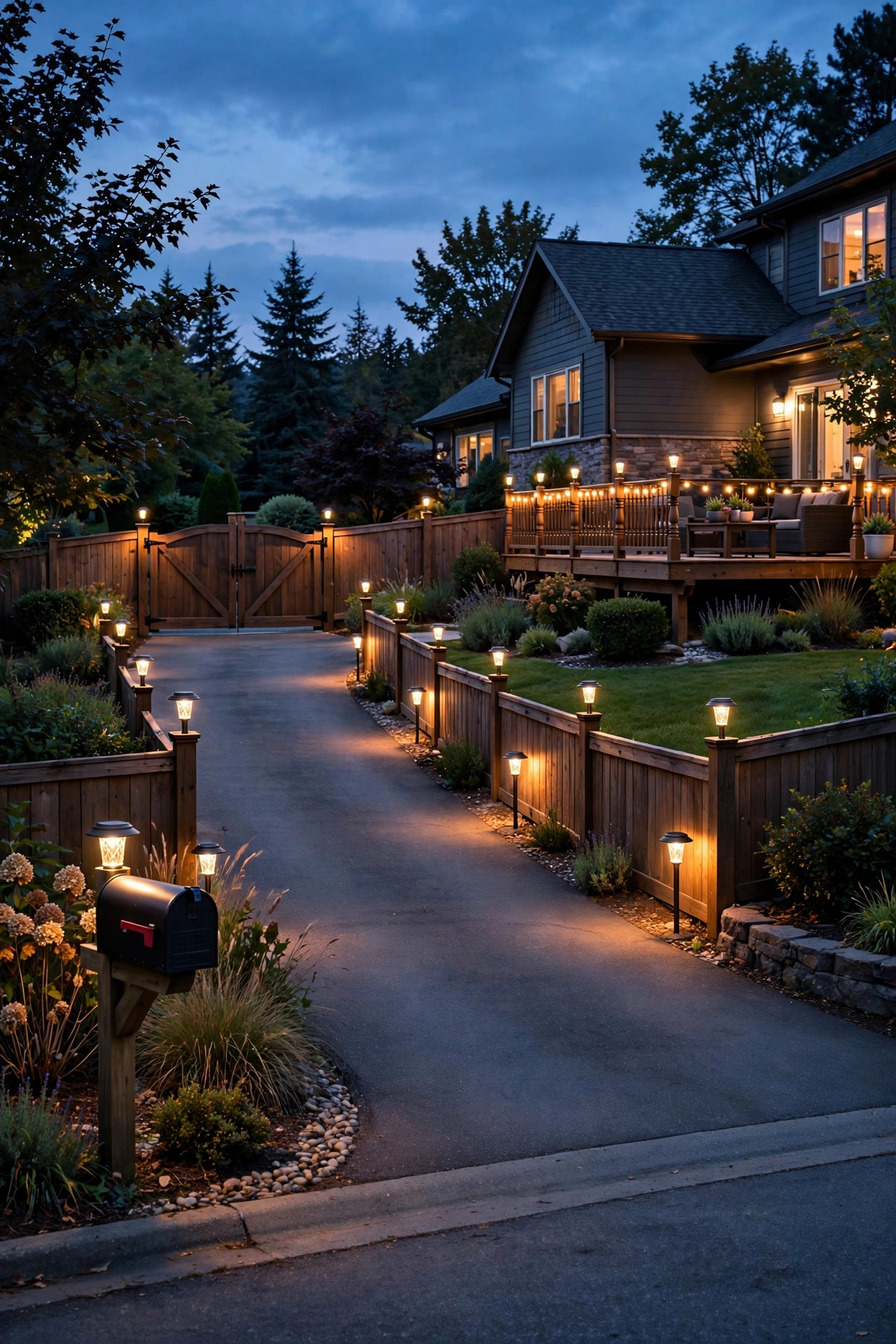
Here's where a fence line stops looking like a kit and starts looking designed: vary the heights. A tall lantern post at the gate, standard caps along the fence, short bollards in the beds, and one statement pair at the driveway create layers that the eye reads as depth — the same trick landscapers charge for. The rules I follow are simple. Keep one finish family across everything, black or bronze or white, so the variety reads as composition rather than clutter. Keep one color temperature, 2700K to 3000K, everywhere; mismatched whites are the fastest way to make solar lighting look cheap. Put your brightest lights at decision points — gates, stairs, corners, the mailbox — and let the runs between them stay gentle. Odd numbers group best: threes and fives of bollards settle into a bed more naturally than pairs. And step back to the street at dusk before you call it done; the view from the curb is the one that sells the house someday. This layering pass costs the least of anything here, because mostly you're rearranging lights you already bought.
Suggested budget range: $50 – $150.

14. Aged Copper and Rustic Solar Caps for Craftsman Charm
Finish changes everything. An aged-copper or oil-rubbed bronze solar cap on a chunky wood post gives you that craftsman, lodge, and farmhouse warmth that black plastic never will — and real metal housings shrug off hail and ladder bumps that crack plastic in a season or two. Copper finishes keep developing character outdoors; the bright penny shine mellows into a brown patina within a year, and a soft green verdigris follows in humid climates. If that journey isn't for you, choose powder-coated metal in a bronze tone instead, which holds its color steady. These heavier caps deserve posts in good repair — a rotted post top will let any cap wobble, metal worst of all — so trim and reseat before you mount. I love them on cedar fences, stone-column gates, and anywhere a cabin or craftsman house sets the tone. Yes, they cost more per light. But on the six posts people actually see from the street and the patio, the upgrade is worth every penny, and you can keep budget caps on the back fence where only the raccoons judge you.
Suggested budget range: $55 – $130.

15. Solar Post Lights Around the Pool Fence
Pool codes in most towns require a fence; nothing says that fence can't be beautiful. Solar caps on pool fence posts outline the enclosure after dark, which is both a safety feature — the pool boundary stays visible to guests and kids — and a surprisingly elegant one, since the reflections double every light on the water. Choose fixtures rated IP65 or better here, because pool areas are wet by definition, and sealed units resist the chlorine splash that corrodes cheap housings. Aluminum or resin posts are common around pools, so confirm the cap base fits your post profile; many pool fences use 2×2 or 2.5-inch posts, smaller than yard fences. Keep brightness low and warm: the goal is a gentle perimeter, not interrogation lighting over the shallow end, and bright white light over water attracts every moth in the county. One firm rule from my own yard: solar lights supplement, never replace, the self-closing, self-latching gate hardware your local code requires. Safety first, glow second — but you can absolutely have both.
Suggested budget range: $45 – $110.

16. Solar Finial Lights for Driveway Gate Posts
If your driveway has a gate — or just two proud posts where a gate could live — finial-style solar lights were made for them. These are the decorative cousins of cap lights: a ball, acorn, or pagoda-shaped lantern that sits on the post like a crown, often on brick or stone pillars where a flat cap would look lost. On masonry columns, look for pier-mount bases that anchor with screws into the cap stone; adhesive alone won't survive freeze-thaw cycles. Because pillar posts are usually wider — 6×6 wood or 12-inch-plus masonry — measure twice, since finial lights come in distinct size classes and a too-small lantern on a fat pillar looks like a hat on a hippo. Symmetry is the whole game: identical lights, identical heights, both panels cleaned on the same schedule so one doesn't dim before the other. When the driveway gate opens at dusk and both finials are glowing, the effect is pure manor house. It's the most formal look on this list, and on the right house — brick, colonial, traditional — nothing beats it.
Suggested budget range: $65 – $160.

17. The Whole-Yard Plan: Zone Your Posts by Job
Let me pull it all together the way I plan my own yard: every post gets a job. Front posts — mailbox, driveway pair, walkway corners — are the greeters, so they get the prettiest fixtures and the most consistent warm white. The fence line is the frame, handled by rhythm: same cap, same spacing, no drama. Gates and stairs are the safety crew, with motion sensing and downward light where feet actually land. The deck is the living room, where caps stay dim and warm so conversation wins over illumination. When you shop, buy the greeters first and the frame in a bulk multi-pack — that's where the savings hide — then add specialty lights one zone at a time as budget allows. Photograph your plan from the street and the back door before you buy anything; posts that look evenly spaced from inside can bunch oddly from the curb. Done this way, solar post light ideas stop being seventeen separate purchases and become one calm, connected system that turns on by itself every night and asks almost nothing of you.
Suggested budget range: $120 – $300.
Frequently Asked Questions
How long do solar post lights stay on at night?
Most stay lit for 6 to 10 hours after a full day of sun, with the brightest hours coming right after dusk. Runtime shortens in winter and after cloudy days, and models that idle dim and brighten with motion stretch their charge the longest. A hazy solar panel is the most common runtime thief — a quick wipe often restores an hour or two.
What size solar post light do I need for my posts?
Measure the outside of your post, not the lumber name. A "4×4" post is actually 3.5 inches square, a 6×6 is 5.5 inches, and vinyl posts commonly run 4, 5, or 6 inches with varying wall thickness. Good solar caps list the true inner dimensions of the base and many include adapter inserts, so compare your tape measurement to those numbers before ordering.
Do solar post lights work through winter?
Yes, with lower expectations and a little help. Shorter days and a low sun mean shorter runtimes, so choose models with larger panels and batteries, mount panels where they catch southern light, and keep snow brushed off the caps. In my experience a quality cap still gives four to six useful hours on a clear winter night, which covers the evening completely.
Are solar post lights bright enough to be useful, or just decorative?
Both, if you match the light to the job. Caps and bollards run about 5 to 100 lumens — plenty for marking edges, lighting latches, and guiding feet — but they won't replace a wired floodlight over a driveway. Use solar posts for guidance, safety at steps and gates, and curb appeal, and layer in one brighter fixture only where you truly need area light.
Conclusion
If I had to boil all seventeen down to one principle, it's this: you already own the lamp posts — solar just gives you permission to use them. Start with the posts that work hardest, the mailbox, the gate, the deck stairs, and let the fence line's rhythm pull the whole yard together at dusk. Keep the finishes in one family, the color temperature warm and consistent, and the panels clean, and solar post light ideas will quietly deliver that layered, welcoming glow every single night without a dollar on your electric bill. Browse the rest of our outdoor lighting ideas here on the site for the string lights, path lights, and porch fixtures that layer over this foundation — and I'll see you out in the yard at golden hour.