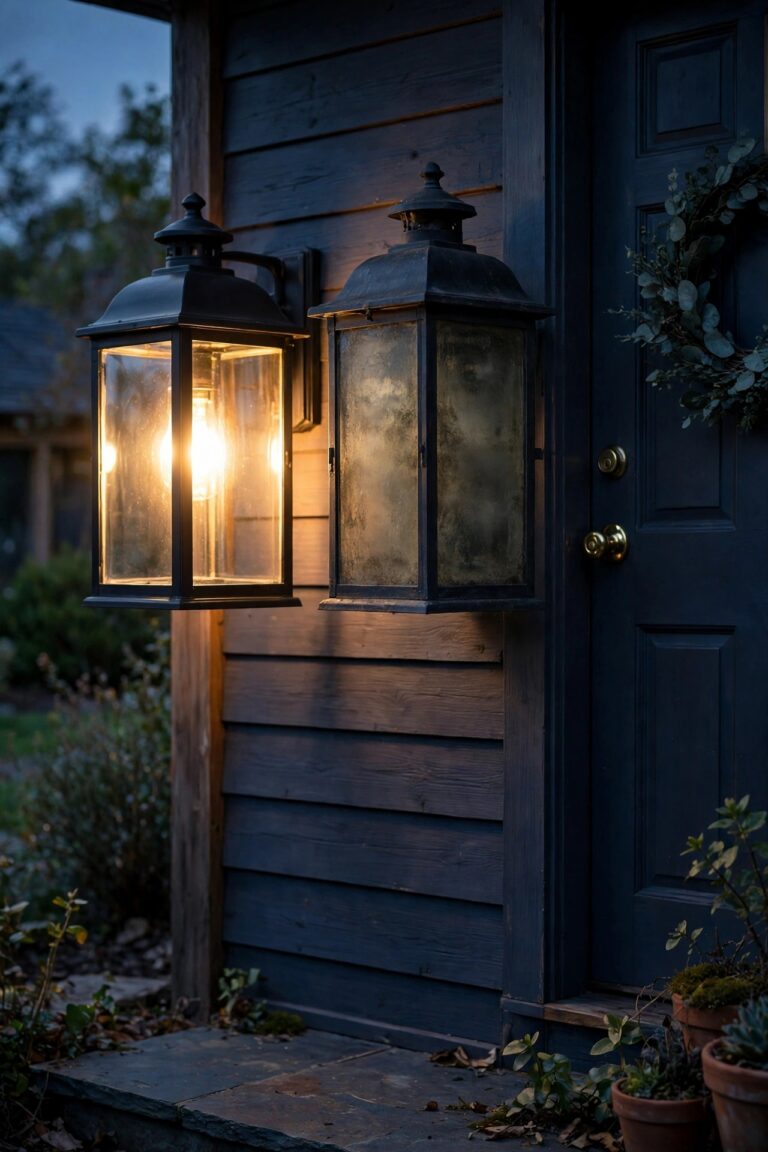
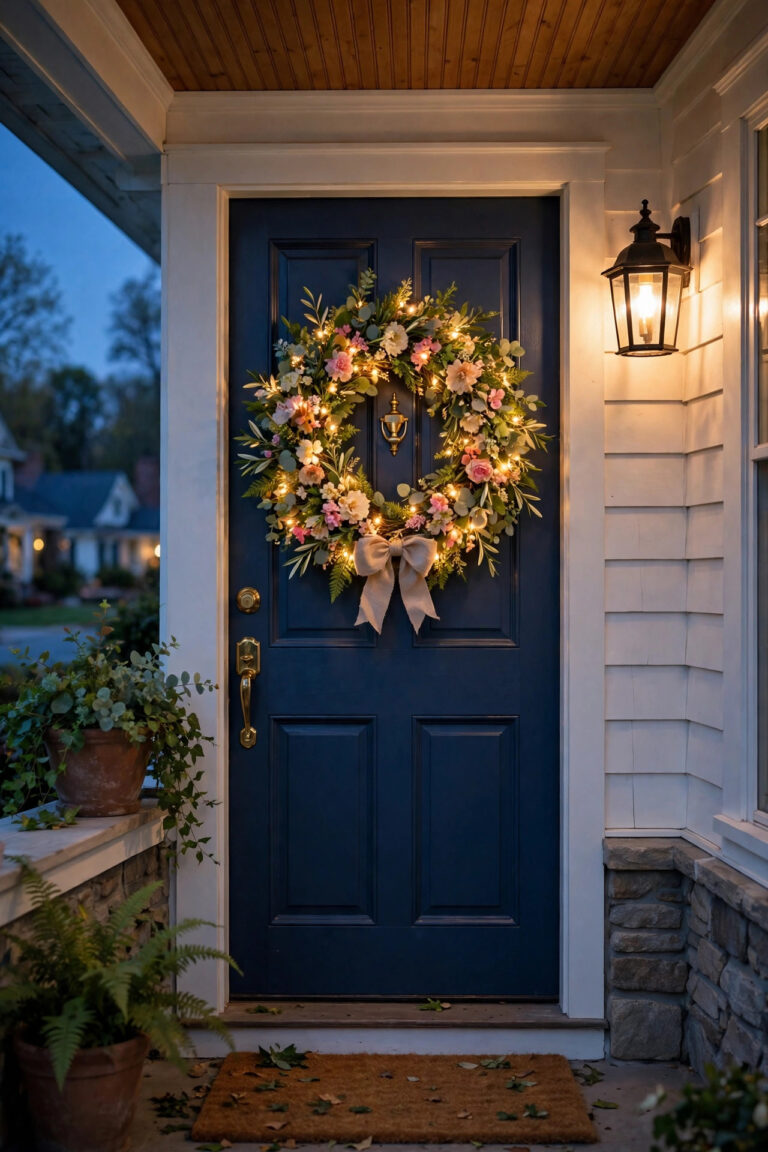
Can I tell you a secret? The backyard glow people compliment most at my house cost me less than a family pizza night. When I first started hunting for cheap backyard lighting ideas, I assumed "budget" meant dim little stakes that died by July — and honestly, some of it does. But I have learned that lush-looking light is not about spending more; it is about layering. A low layer washing the path, a warm mid layer over the seating area, and a sparkle layer up in the trees will beat one expensive fixture every single time. Every idea on this list keeps its own price tag small, and most need no wiring, no electrician, and no tools beyond a step stool and ten spare minutes. I will share the spacing, brightness, and placement tricks I use so inexpensive lights read as intentional design instead of bargain-bin afterthoughts. Whether your yard is a petite patio or a wide-open lawn, there is a combination here that fits under a $100 ceiling — and still looks like you hired someone to design it.

1. Solar Stake Path Lights in Warm White
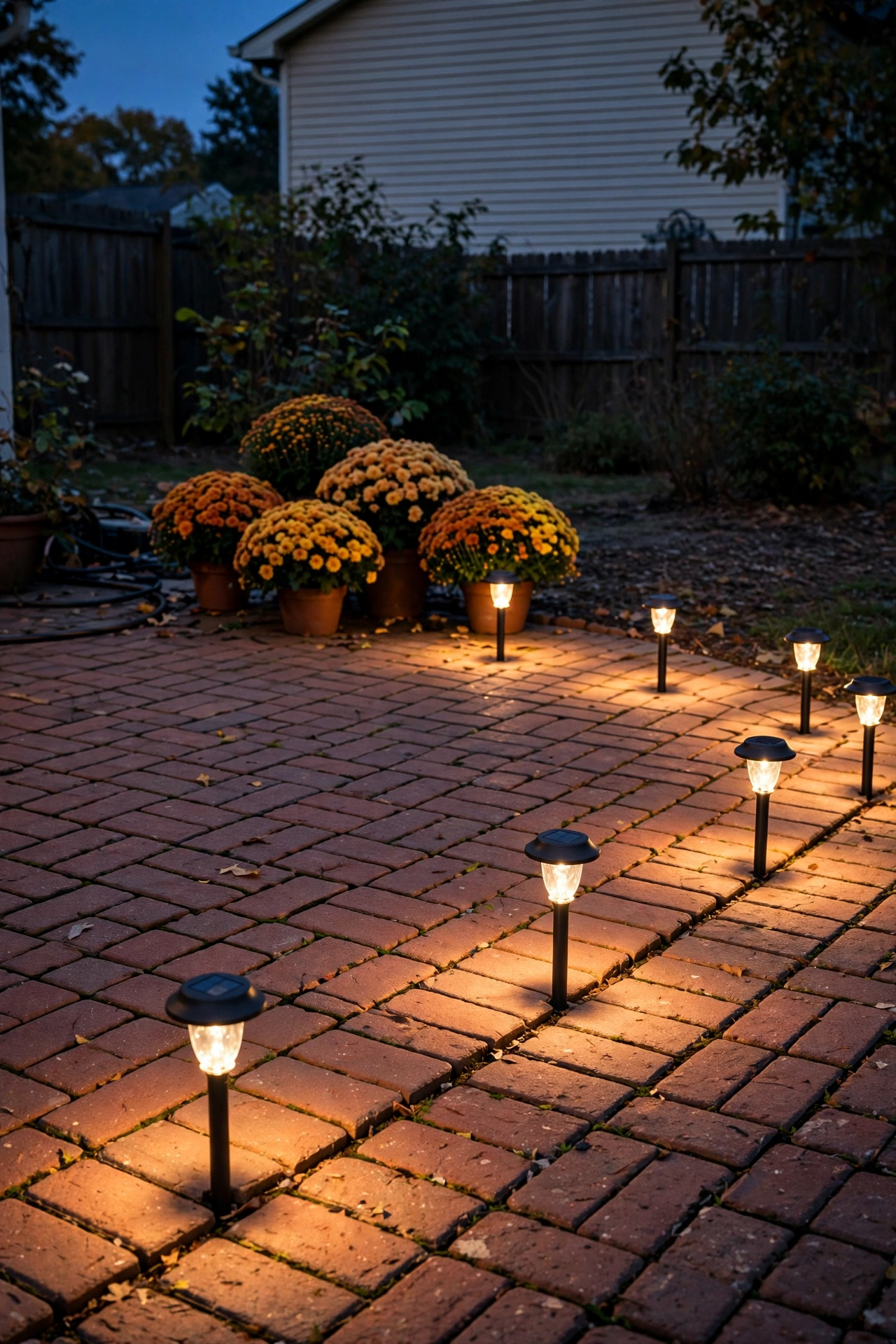
If you only buy one thing, make it a set of warm white solar path stakes. They are the backbone of almost every budget yard I have lit, because they define the edges of a space, and defined edges are what make a yard feel designed rather than accidental. Skip the cool blue-white sets; look for 2700K to 3000K on the box, which mimics candlelight and flatters brick, wood, and skin tones. Space them 5 to 6 feet apart along a path or garden bed, and stagger them slightly instead of marching them in a stiff, perfectly straight runway line. Push the stakes in after a rain when the soil is soft, and wipe the little solar panels with a damp cloth every few weeks — a dusty panel is the number one reason cheap solar lights go dim. In my experience, a ten-pack handles a typical patio edge and walkway with a couple left over for the mailbox bed. Expect a soft 6 to 8 hours of glow after a full sunny day, which covers every evening gathering I host.
Suggested budget range: $15 – $30.
2. Bistro String Lights Swagged Over the Patio
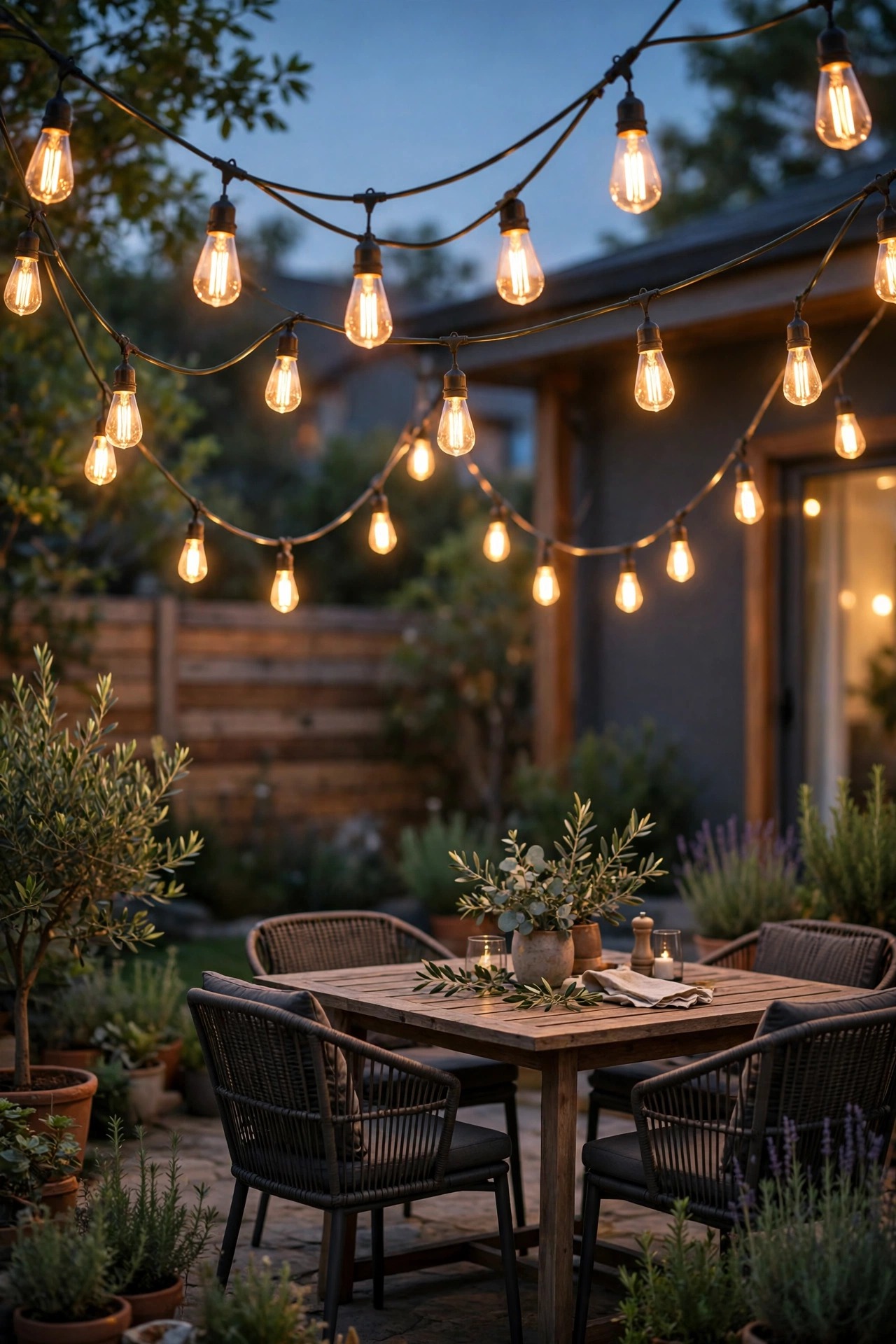
Nothing transforms a plain patio faster than two or three swags of bistro string lights overhead. That café glow is the mid layer in my layering philosophy, and it makes even plastic patio furniture look intentional. For a 12-by-12-foot patio, one 48-foot strand is usually plenty; anchor it to the house with a screw hook and to a fence post or a simple planter-pole at the other end, letting each swag dip about a foot in the middle. Choose shatterproof LED filament-style bulbs — they sip power, shrug off bumps, and never get hot, which matters near fabric umbrellas and curious kids. If your strand is not on a dimmer, plug it into a basic outdoor timer so it clicks on at dusk without you thinking about it. I have a whole post devoted to bistro string light ideas if you want hanging patterns, but the simple rule is this: keep bulbs about 7 to 8 feet above heads so the light feels like a ceiling, not a necklace.
Suggested budget range: $25 – $45.
3. Solar Spotlights Uplighting Your Trees
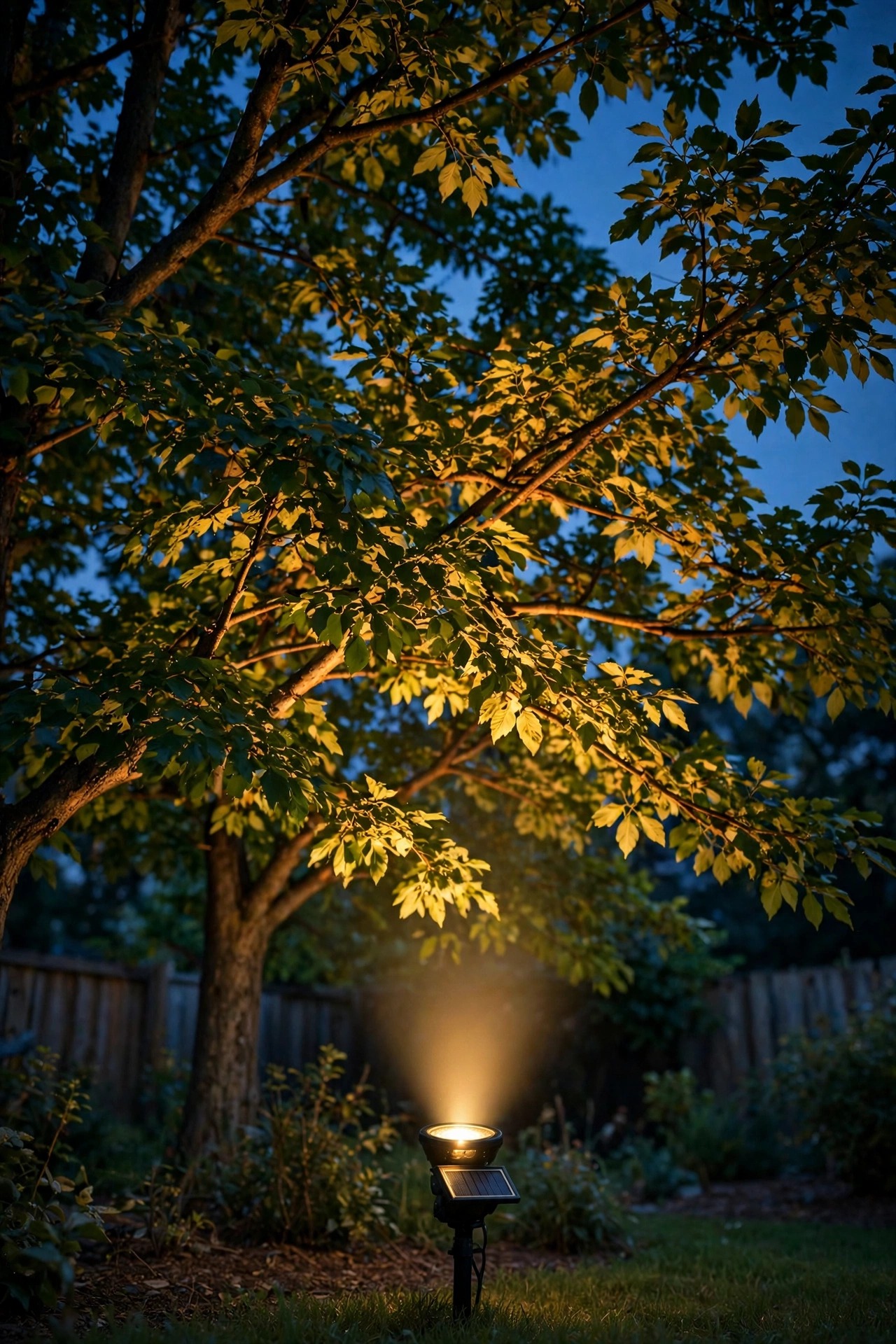
Uplighting is the trick designers use to make a yard feel twice its size, and solar spotlights let you steal it for the price of a sandwich tray. Place one spotlight at the base of your best tree, angled up into the canopy about 12 to 18 inches from the trunk, and the branches become a glowing ceiling after dark. A second light on a large shrub or an ornamental grass clump gives you that layered depth photographers love. Look for adjustable heads and at least 200 lumens; the panel should sit where it catches real sun, even if that means a model with a separate panel on a short cord. In my yard, a pair of these aimed at a crepe myrtle does more for the evening mood than fixtures that cost five times as much. Keep the beam off neighbors' windows — a quick nighttime check from the sidewalk keeps everyone friendly. These lights also flatter a pretty fence or a stone wall if your yard is short on mature trees.
Suggested budget range: $20 – $35.
4. Copper-Wire Fairy Lights: The Prettiest of All Cheap Backyard Lighting Ideas
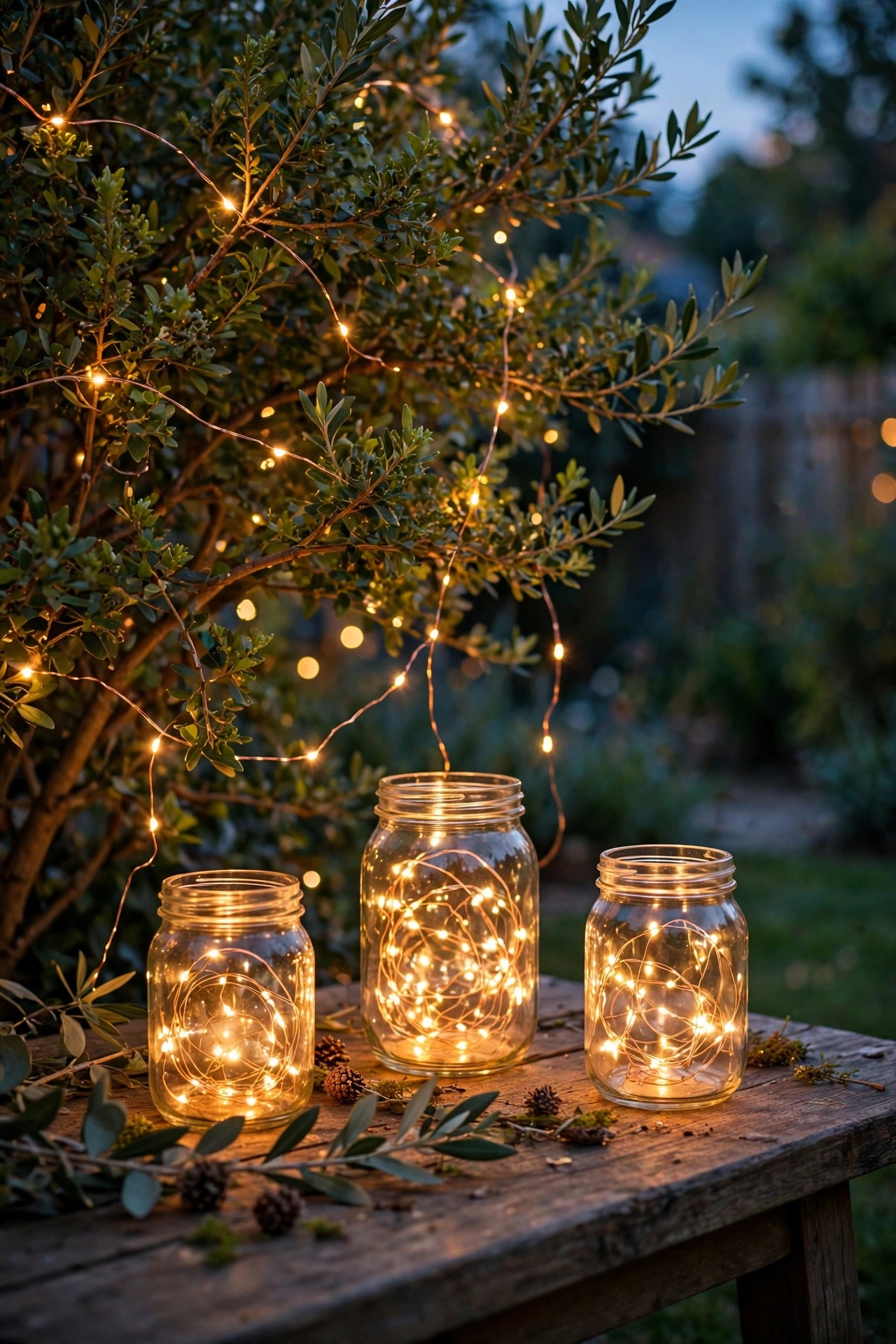
If I had to name the highest drama-per-dollar winner, it is a humble strand of copper-wire fairy lights. The wire nearly disappears, so all you see are dozens of tiny warm pinpricks floating in a shrub, wound around a deck railing, or coiled inside a glass hurricane on the table. Solar versions with a small remote panel are my favorite for bushes far from an outlet, and battery versions on a timer are perfect for a covered porch where sun is scarce. Weave them loosely — a tight, tidy wrap reads "holiday," while a relaxed, organic tumble reads "enchanted garden." Because they are LED, they stay cool tucked against foliage and fabric, though I still keep them out of standing water and choose outdoor-rated strands for unsheltered spots. One 33-foot strand typically dresses two medium shrubs. Honestly, this is the layer guests ask about most, and it is consistently the cheapest thing in the whole yard. Replace tired strands every couple of seasons and the cost per evening stays pennies.
Suggested budget range: $10 – $20.
5. Flameless LED Candles in Lanterns You Already Own
Here is a styling trick straight from my own porch: gather every lantern, hurricane, and chunky glass vase you already own, drop a flameless LED candle in each, and cluster them in odd-numbered groups on steps, side tables, and the outdoor coffee table. The flicker setting on modern versions is convincing enough that guests lean in to check. Because there is no real flame, you can use them on wooden decks, near cushions, and on windy nights when real candles would gutter out in minutes. Remote-control sets let you light the whole scene from the kitchen, and timer modes give you five hours of glow nightly with zero thought. Mix heights — one tall lantern flanked by two shorter ones — for that collected, designer look. In my experience, warm white candles around 2700K blend seamlessly with string lights overhead, while stark white ones clash. It is instant atmosphere for the cost of batteries you probably already have in a drawer somewhere.
Suggested budget range: $12 – $25.

6. Solar Fence-Post Cap Lights
A fence is the largest blank canvas in most backyards, and solar post-cap lights turn it into architecture. They pop onto standard 4-by-4 or 6-by-6 posts with two screws, charge all day, and outline your yard's perimeter with a tidy row of warm squares after dark. You do not need one on every post — every other post, or just the corners and gate posts, looks deliberate and stretches a budget set across a big fence. Measure your posts before ordering, because cap sizes are not universal, and choose warm white to match the rest of your layers. The light itself is gentle, more glow than beam, which is exactly right: it says "here is the edge of our world" without spotlighting the lawn like a parking lot. I always recommend a dab of exterior caulk under the cap in windy regions so a storm does not relocate them to the neighbor's yard. Expect the rechargeable batteries to want replacing every 18 to 24 months for a few dollars.
Suggested budget range: $20 – $40.

7. LED Rope Lights Tucked Under the Deck Rail
Rope lights are the quiet workhorse of budget yards: a flexible tube of LEDs that disappears under a deck handrail, along stair treads, or beneath a bench, washing everything below in a soft, continuous ribbon of light. Mounted under the rail with inexpensive clips every 12 inches, they give you safe footing and a high-end "floating deck" effect for shockingly little money. Choose outdoor-rated, warm white rope, and plan your run to an outlet or a solar model for short stair sections. Keep connections off the ground in a drip loop so water cannot creep into the plug, and never staple through the tube — clips only. In my experience, this is the single best fix for a deck that feels dark and vaguely unsafe at night, and it photographs beautifully. One 16- to 24-foot rope usually outlines a standard deck's main edge. Because the source is hidden, the effect looks custom-built, and more than one visitor has assumed we hired an electrician for it.
Suggested budget range: $15 – $30.

8. Solar Flame-Effect Torches
Some nights call for a little theater, and solar flame-effect torches deliver it without a drop of fuel or a single open flame. The LED flame flickers and dances convincingly enough that from ten feet away, everyone assumes they are real tiki torches. Stake them along a path, flank a gate, or cluster three at different heights in a large planter for a fire-pit-adjacent moment. Most stand about 2.5 feet tall on their stakes and run 8 to 10 hours on a good charge. I prefer the models with a warm amber flame over the orange Halloween-looking ones — the difference in sophistication is enormous. Space path torches 4 to 5 feet apart so the flames read as a rhythm, not a runway. Because there is no oil, there is nothing to spill, refill, or keep away from the dog, and they shrug off a breeze that would kill a real flame in seconds. They store flat in a bin all winter, too.
Suggested budget range: $25 – $45.

9. Mason Jar Lanterns: Cheap Backyard Lighting Ideas With Serious Charm
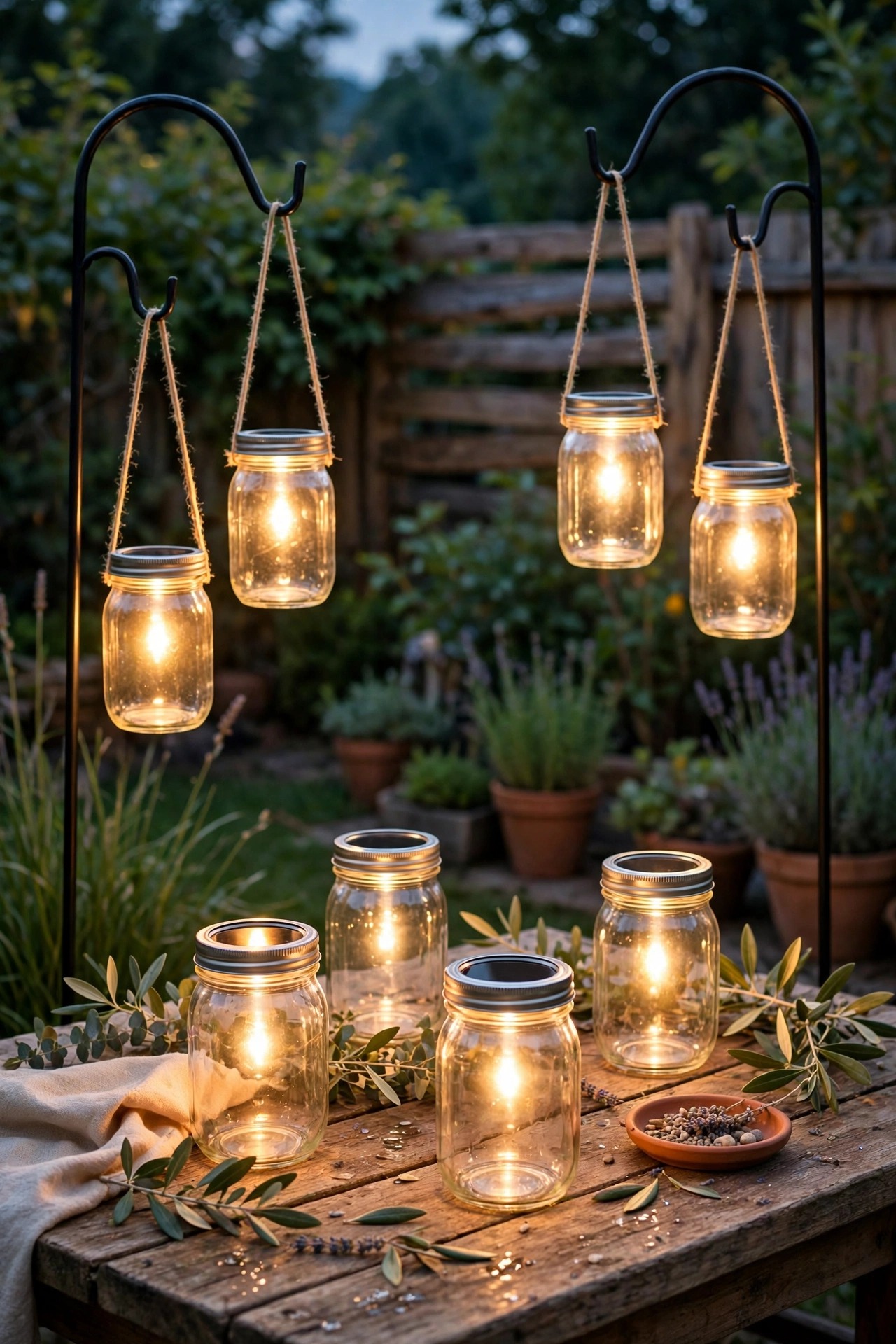
Mason jar lanterns are the craft-store classic for a reason: a solar lid turns an ordinary jar into a glowing lantern in about thirty seconds, and the result genuinely looks boutique. Screw solar lids onto jars you already own, or buy a hanging set with wire handles and drape them from shepherd's hooks, low branches, and the fence. Frosted jars glow softest; clear jars show the fairy strand inside, which is its own pretty look. I line three down the center of our outdoor dining table on nights when the string lights alone feel too plain, and the table instantly looks styled for a magazine. Keep the solar lids where they catch a few hours of direct sun during the day — a sunny windowsill works if your table sits in shade. These are strictly mood lighting, not task lighting, and that is fine; mood is what makes a yard feel lush. A set of six covers a table plus a couple of hooks, and the whole project takes one episode of your favorite show to assemble.
Suggested budget range: $15 – $28.
10. Battery Puck Lights Under the Umbrella or Pergola
The space under a patio umbrella or pergola roof is the darkest real estate in the yard, precisely where everyone is sitting. Battery puck lights fix it for pocket change: peel-and-stick or screw-mount discs that press on and off, or better, respond to a little remote. Three pucks spread across umbrella ribs turn dinner into a softly lit bistro moment, and under a pergola they wash the beams with gentle downlight. Choose warm white — cool pucks make food look unappetizing, a lesson I learned exactly once. Rechargeable versions save the battery shuffle, and a set with a timer keeps you from climbing up nightly. Because they are battery-powered, there is no cord snaking down the umbrella pole to trip anyone. In my experience they last a full season of weekend dinners on one charge cycle routine. Stick a spare set in the outdoor storage bench and you can light a card table, a buffet, or a kids' fort on demand.
Suggested budget range: $10 – $22.

11. Solar String Lights Draped Along the Fence
When the fence is too far from an outlet for plug-in strands, solar string lights are the answer — the panel stakes into a sunny spot and the bulbs do their evening magic anywhere. Drape them in gentle swags along the fence line, using cup hooks every 4 to 6 feet so the catenary curve stays graceful instead of sagging to the ground by August. Globe and Edison-style solar strands have gotten genuinely good; the warm glow is softer than plug-in versions, which I actually prefer for a perimeter — it should whisper, not shout. Expect 6 to 8 hours after a bright day, and a little less in December, which is fine because nobody is lingering outside in December anyway. Mixing one solar strand on the fence with your plug-in bistro lights over the patio gives the whole yard depth — near layer bright, far layer soft. Anchor the first bulb run near the gate so the entry moment feels considered, too.
Suggested budget range: $18 – $35.

12. In-Ground Solar Disk Lights for Flower Beds
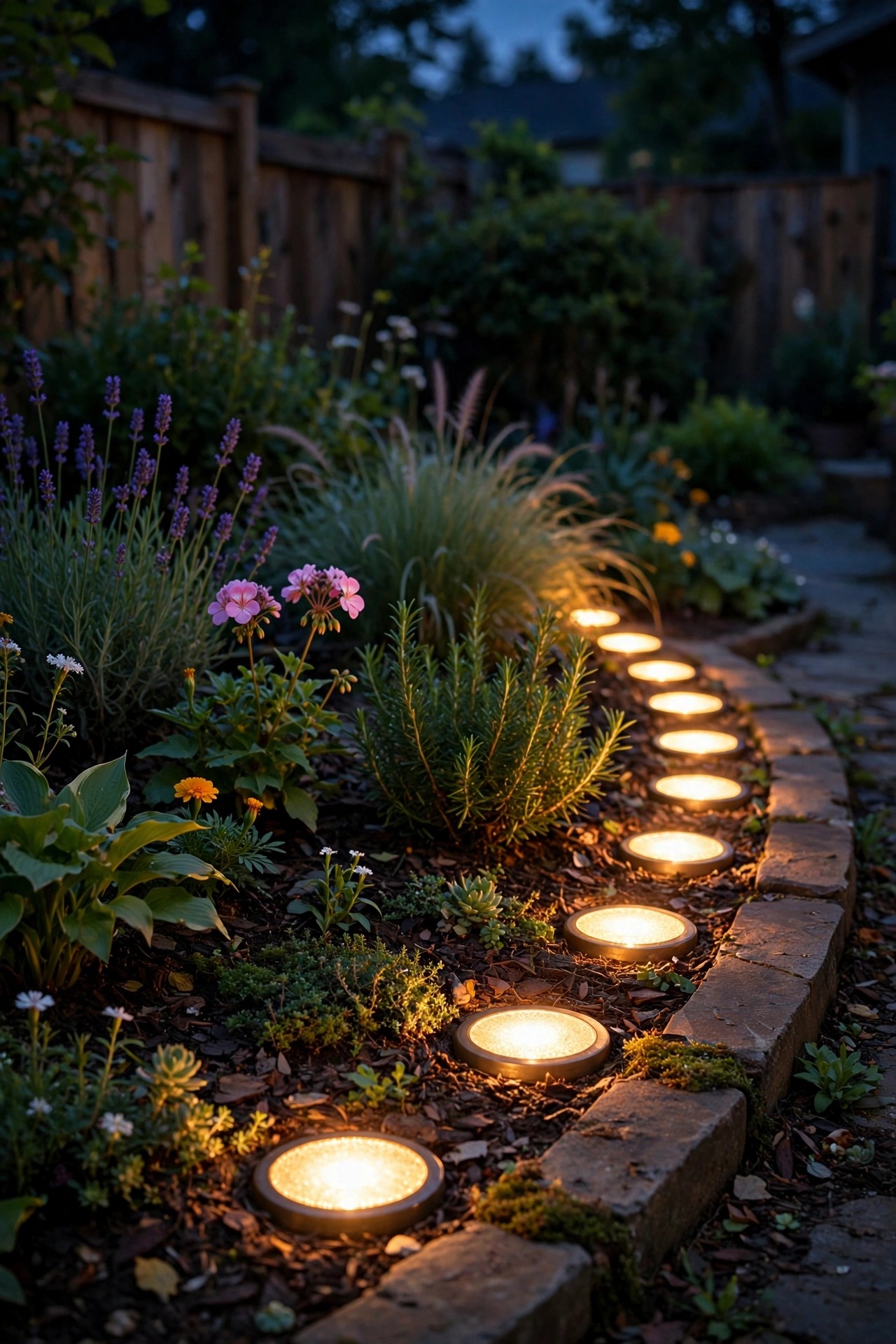
Disk lights sit flush with the soil or lawn, so by day they are invisible and by night your flower beds simply glow from within. I push them along the front edge of beds, spaced about 4 feet apart, angled ever so slightly toward the plants so the light grazes leaves and blooms instead of blasting straight up. They are wonderful around a mailbox bed, along a stepping-stone path, or ringing a small tree where stakes would clutter the mulch. Stainless-look finishes read more expensive than black plastic, and the price difference is usually only a few dollars. Because they sit at ground level, keep the panels clear of mulch creep and give them a rinse when you water. One caution from my own yard: in deep shade beds, disks underperform — they need real sun to charge, so save them for beds that see at least six hours of daylight. Used in the right spot, eight disks make an entire planting bed look professionally lit for less than a pizza.
Suggested budget range: $16 – $30.
13. A Timer and Dusk-to-Dawn Bulbs for Lights You Already Own
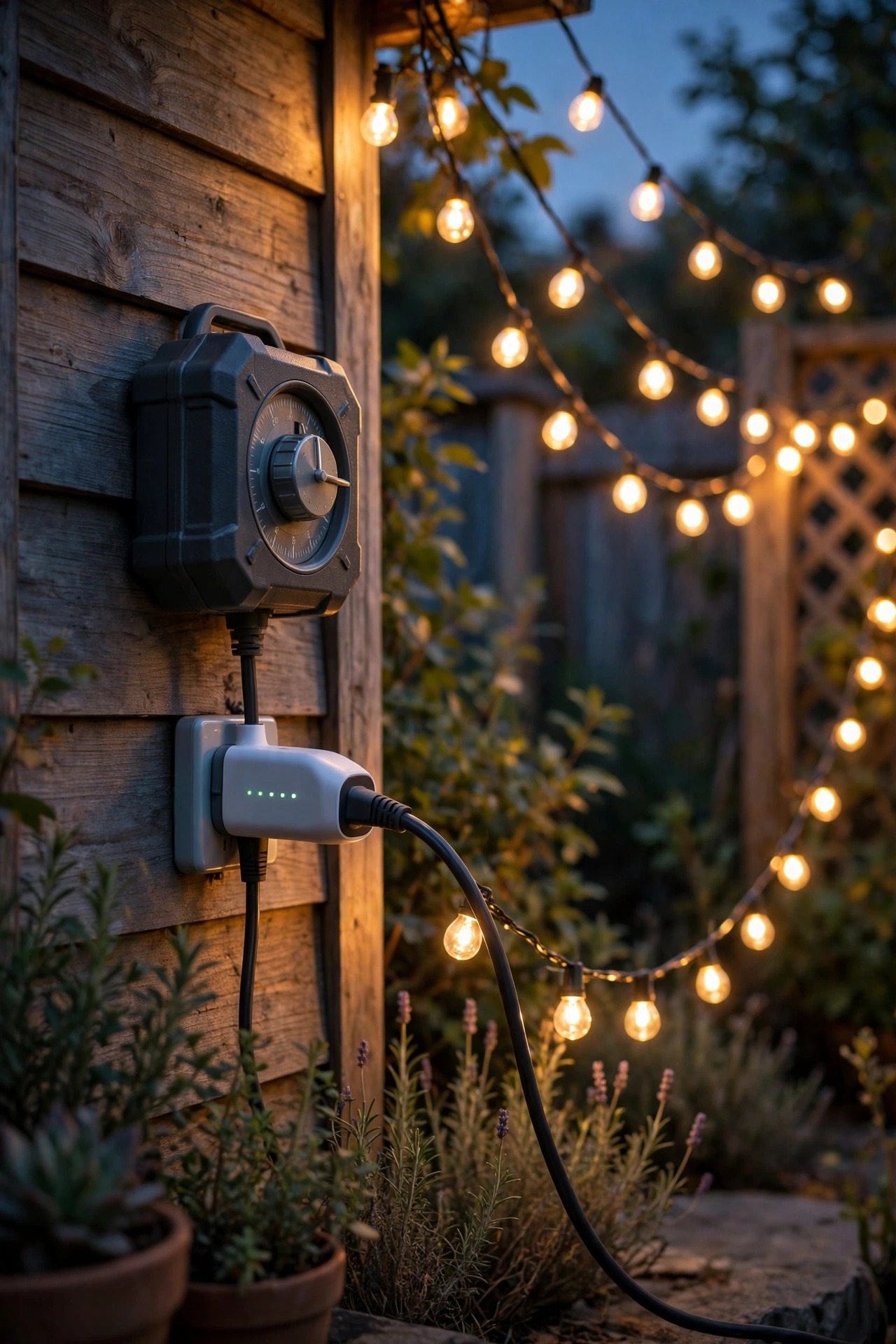
The cheapest light is the one already screwed into a fixture, so my final idea upgrades what you have: swap the bulbs in your existing porch and garage fixtures for dusk-to-dawn LED bulbs, and put any plug-in string or rope lights on a simple outdoor timer. Suddenly the whole scene runs itself — on at sunset, off at bedtime — and automation is the real secret behind "effortless" expensive yards. A basic mechanical timer costs less than lunch out, and a smart outdoor plug for a few dollars more lets you dim the string lights from your phone when the party winds down. This is also where I send friends who want the full picture on stretching dollars: my guide to budget outdoor lighting ideas covers prioritizing one zone at a time. Start with the zone you see from the kitchen window, because that is the view you enjoy nightly. In my experience, automation plus one or two ideas from this list beats a yard full of unlit potential every time.
Suggested budget range: $12 – $25.
Frequently Asked Questions
Can you really light a whole backyard for under $100?
Yes, if you think in layers instead of fixtures. Pick three ideas from this list — say, solar path stakes, one string-light strand, and fairy lights in the shrubs — and you cover the low, mid, and sparkle layers for a typical yard. Add zones one season at a time rather than trying to do everything at once.
How long do cheap solar lights actually last?
The fixtures themselves usually last 2 to 4 seasons outdoors. The rechargeable battery inside is the wear item; swapping in fresh batteries after 18 to 24 months restores most lights to like-new brightness for a few dollars. Keeping panels clean and storing stakes indoors over harsh winters extends their life noticeably.
What color temperature makes budget lighting look expensive?
Warm white, every time — 2700K to 3000K. That golden range mimics candlelight and sunset, flatters faces and food, and makes inexpensive fixtures read as intentional. Mixing temperatures is the bigger sin: a yard where every layer matches looks designed, even when each piece cost very little.
Are solar and battery lights bright enough for safety on steps and paths?
For marking edges and lighting your footing, yes — a row of solar stakes or a rope light under the rail gives plenty of guidance light. For genuinely dark staircases or security concerns, pair them with one wired or dusk-to-dawn fixture at the main entry so you have a reliable anchor of brightness.
Conclusion
A lush backyard after dark is not a budget problem — it is a layering problem. Start with one low layer, add warmth overhead, tuck in a little sparkle, and let cheap backyard lighting ideas do the rest, one small zone at a time. When you are ready to extend the glow beyond the back fence, come browse more of my favorite setups for backyard lighting for evening entertaining — your yard, and your wallet, will both be pleasantly surprised.