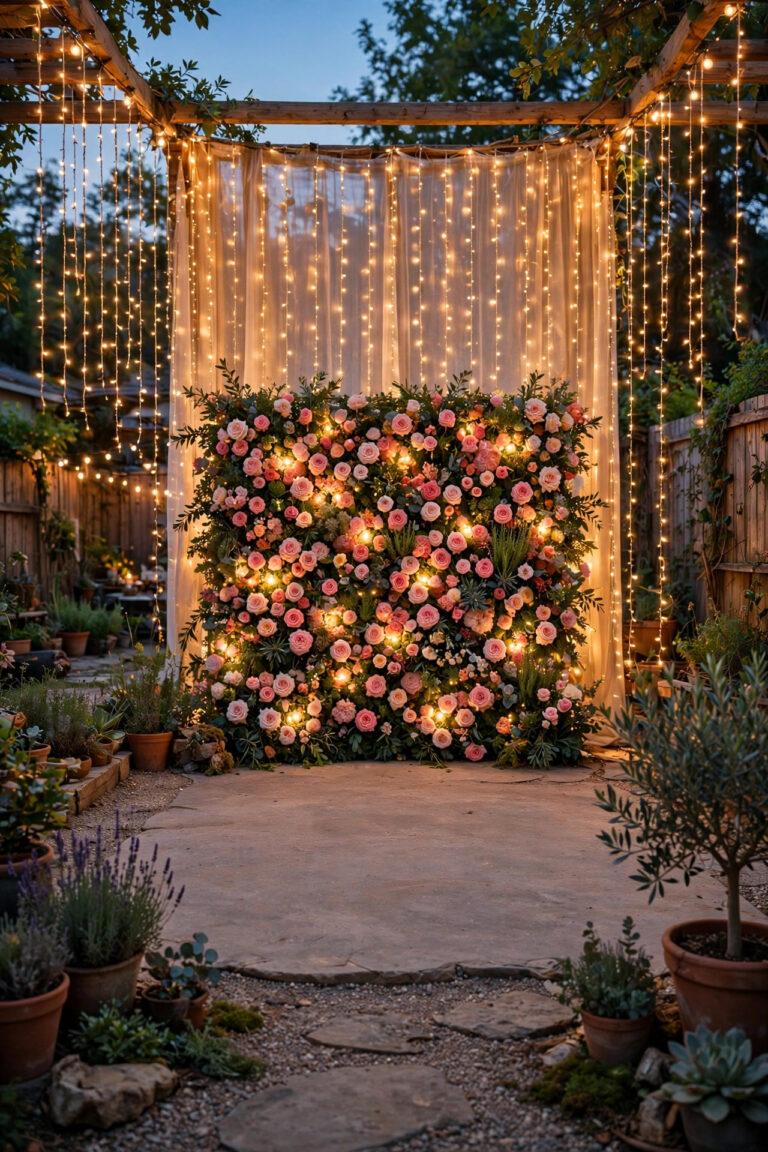
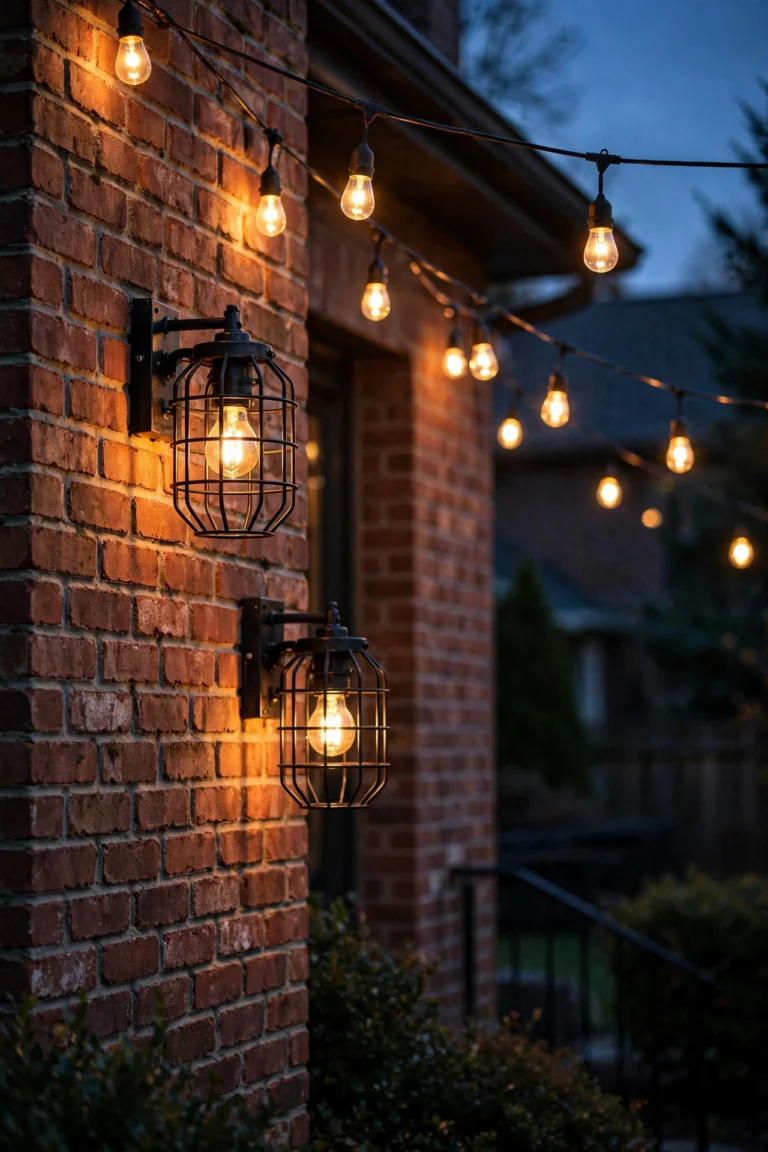
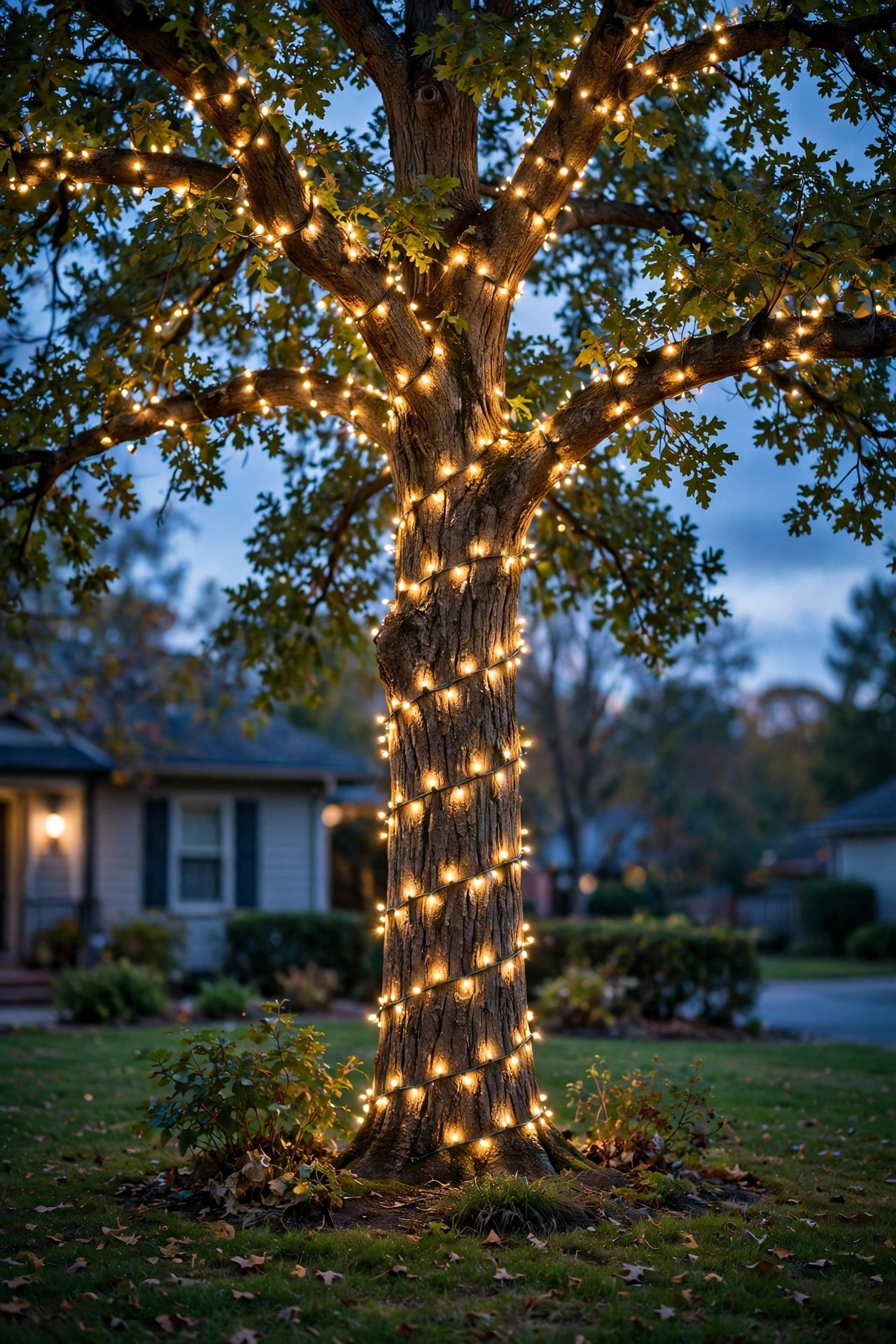
There's a street in my neighborhood where one oak tree does all the heavy lifting. No fancy landscape lighting, no spotlights — just a trunk wrapped in tiny warm lights that turns the whole yard into the place everyone slows down to look at. That's the quiet magic of a good fairy light tree wrap: it costs less than almost any other outdoor lighting project, it goes up in an afternoon, and it makes a tree look like it grew its own stars. The secret is layering — a trunk wrap for structure, branch wraps for shape, and a canopy layer for that soft overhead sparkle. Below are the 21 wraps I come back to season after season, from the classic spiral to solar wraps for trees nowhere near an outlet, with the strand math, spacing rules, and honest budgets for each one. Most of these go up in an hour or less, several need no wiring at all, and every one comes down just as easily in spring.
1. The Classic Spiral — Your First Fairy Light Tree Wrap
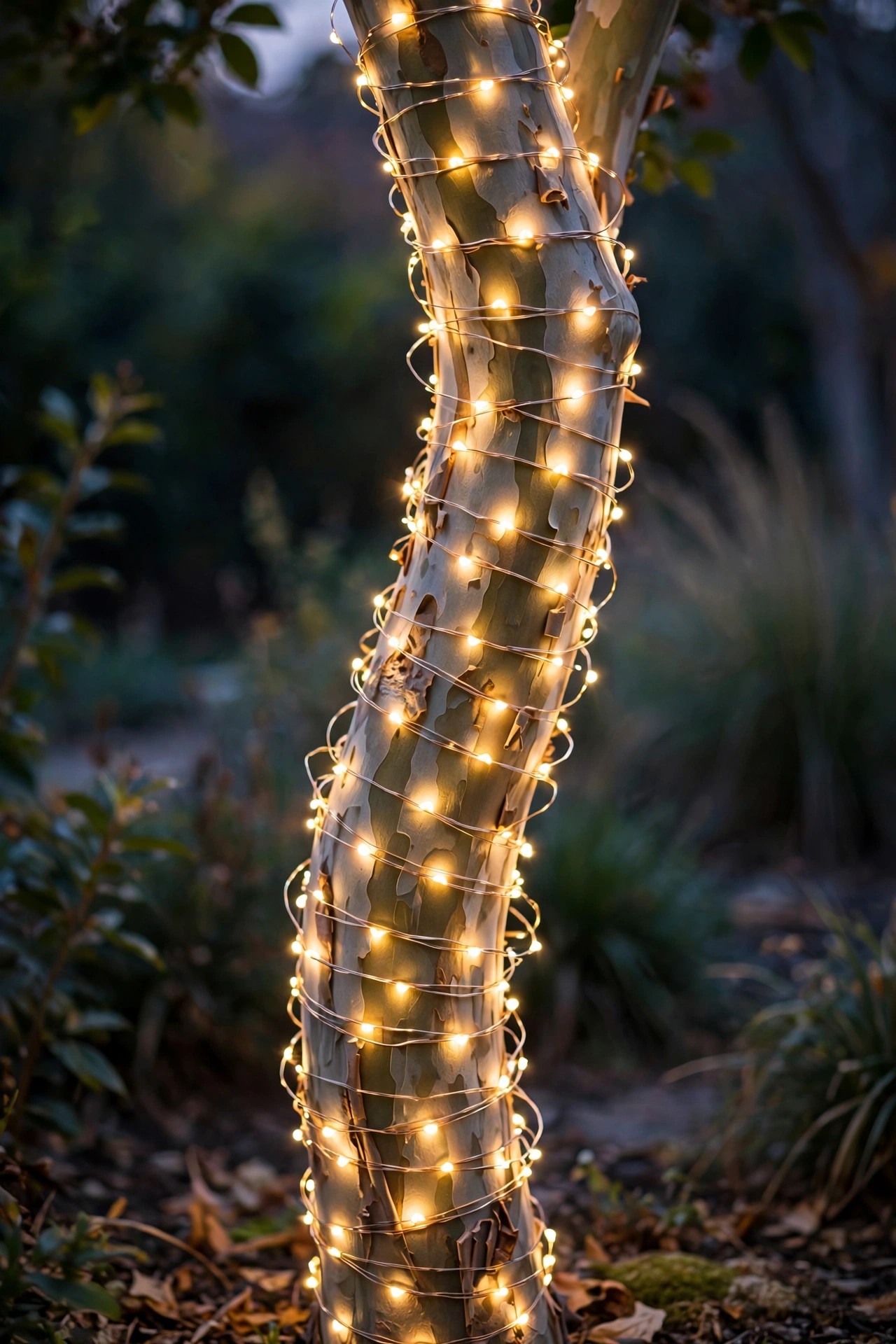
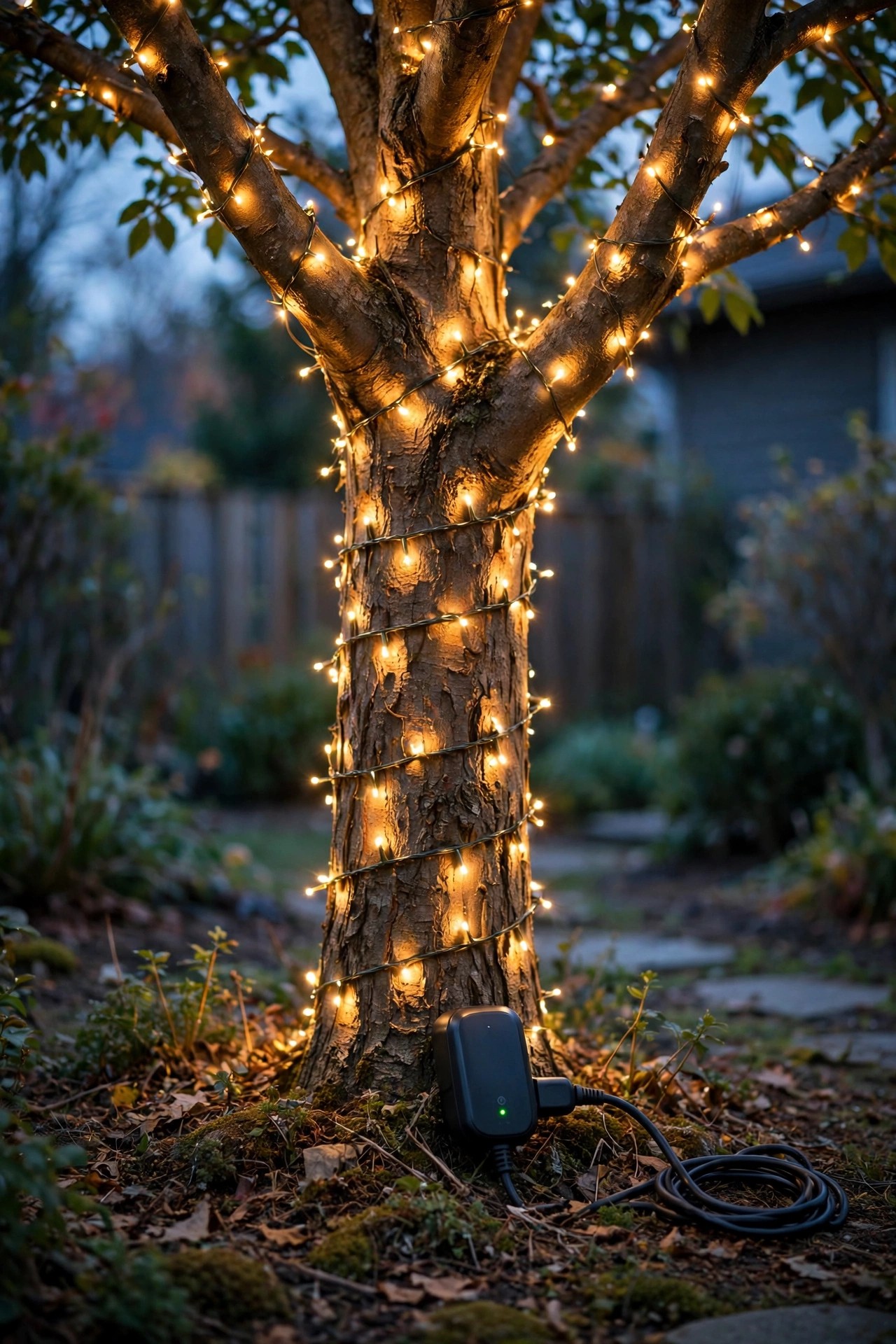
Every tree-lighting obsession starts here: one long strand of copper-wire fairy lights spiraled up the trunk from base to first branches. Copper wire is the right tool because it bends, holds its shape, and nearly disappears against bark in daylight. Start at the base with the battery pack or plug end tucked behind the trunk, then wind upward keeping about 4 inches between turns — mark the spacing with your hand span so it stays even. The math is simpler than it sounds: turns times trunk circumference equals strand length. An 8-foot trunk at 4-inch spacing needs about 24 turns, and a trunk 12 inches across has a circumference near 38 inches, so plan on roughly 75 feet of lights. Buy a longer strand than your math says; running short two feet from the top is a special kind of heartbreak. Finish by tucking the end under the last turn so nothing dangles. Put the whole thing on a timer and this one simple wrap will honestly carry your entire front yard from October through spring. If you want more ways to use these versatile strands around the yard, our outdoor fairy light ideas cover jars, fences, and pergolas too.
Suggested budget range: $15 – $40.

2. The Tight Micro-LED Wrap for a Sculptural Glow
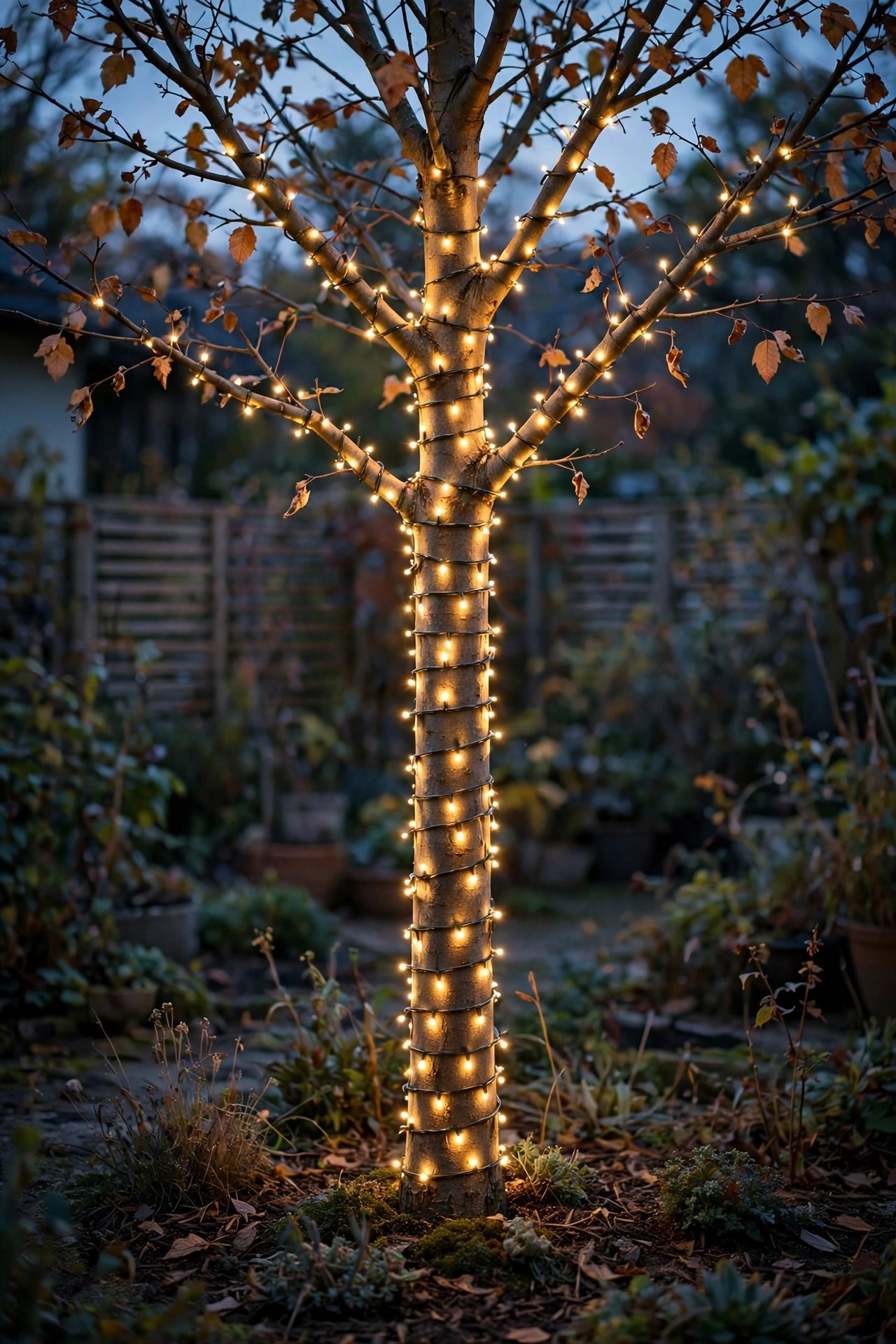
When you want the tree to look carved out of light rather than decorated with it, go tight. Micro-LED fairy lights — the tiny dewdrop bulbs on hair-thin wire — wrapped at 2-inch spacing read as a continuous glowing column instead of individual dots. This is the wrap for smooth-barked trees like beech, crepe myrtle, and young maples, where the silhouette is the whole point. Tight wrapping takes roughly double the strand length of the classic spiral, so budget 150 feet or more for a mature trunk, and connect two strands end-to-end rather than forcing one to stretch. Work slowly and keep gentle, even tension — micro wire kinks if you yank it, and a kinked section bunches the lights unevenly. Because the bulbs sit so close together, choose warm white at 2700K; anything cooler reads icy and blue at this density. Honestly? This is the wrap that gets my neighbors knocking on the door asking which "installation company" did it. Nobody believes it's a Saturday afternoon and a step stool. It photographs beautifully too, which matters if your front yard is your holiday-card backdrop.
Suggested budget range: $25 – $60.
3. The Loose Rustic Spiral for Big Old Oaks
Mature oaks laugh at tight wraps — a 3-foot-diameter trunk with rugged, furrowed bark swallows delicate strands whole. For the big trees, go loose and bold: 6- to 8-inch spacing between turns, and strands with slightly larger bulbs spaced every 4 to 6 inches along the wire so each light holds its own against the bark's texture. The looser rhythm suits the scale; it reads as fireflies settling on the tree rather than a uniform tube of light. You'll need serious length here — a 10-foot climb on a big oak at 6-inch spacing is about 20 turns at nearly 10 feet of circumference each, so plan on 200 feet, or wrap two strands in parallel starting from opposite sides and meeting at the back. Anchor the starting end with a loose loop around a bark ridge, never a nail or screw. In my experience, big-tree wraps look best slightly imperfect — let the spiral breathe and vary a touch as it climbs, the way ivy would. Perfection on an ancient oak looks pasted on; a relaxed hand looks grown.
Suggested budget range: $30 – $75.
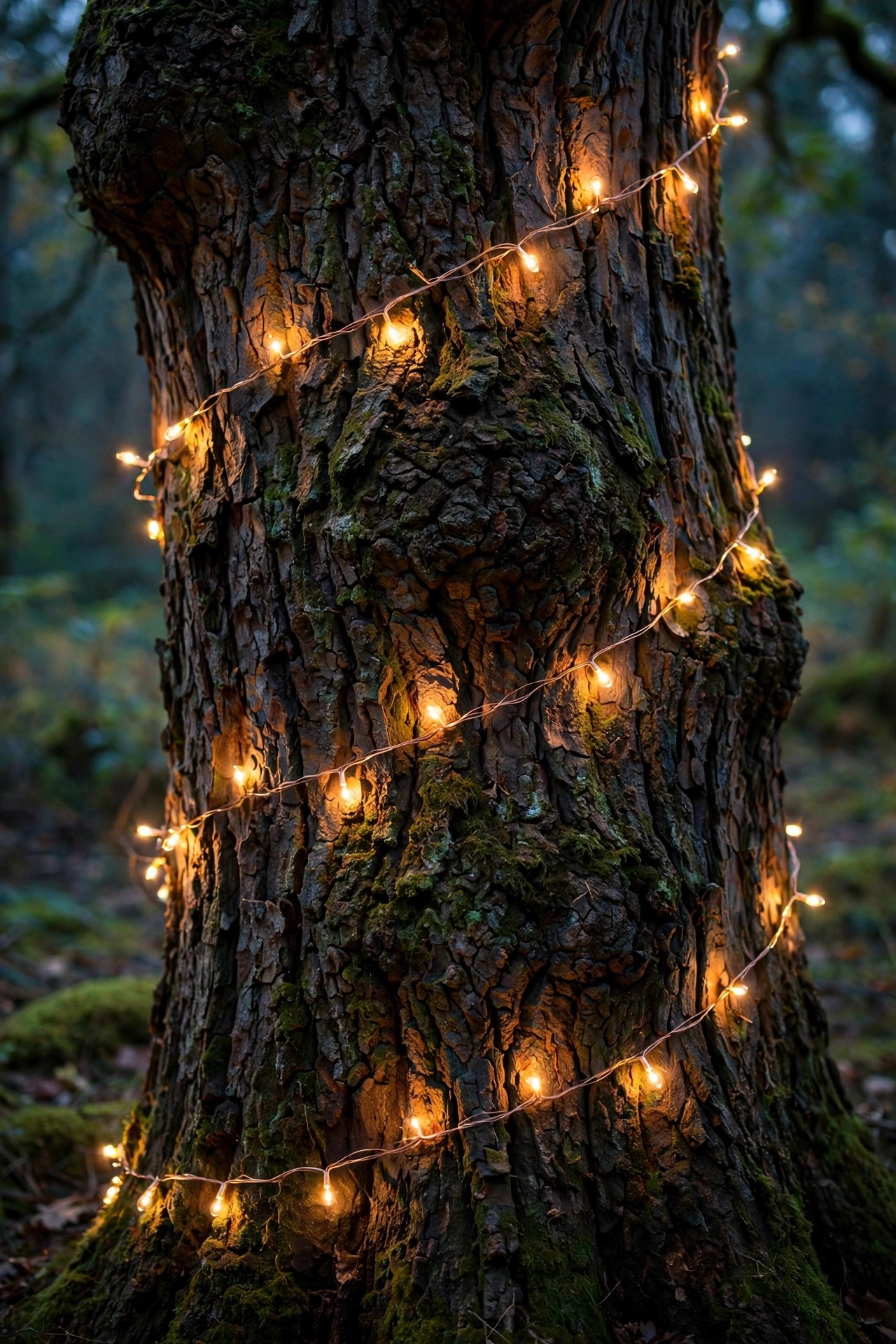
4. Branch-by-Branch Wraps Out to the Twig Tips
A wrapped trunk with bare branches above it looks unfinished, like a sentence that trails off. The fix is to carry the wrap up the main limbs — choose the three to five branches that define the tree's shape and wind each one from trunk junction outward, easing off before the wood gets thinner than your thumb. Branch wrapping uses the same spiral technique but with lighter tension, because limbs flex in wind and grow faster than trunks; leave a whisper of slack at every crotch. Strands with bulbs every 3 inches look best here — dense enough to trace the branch's line, sparse enough to stay airy. This is where copper wire earns its keep a second time: it grips angled limbs without clips or ties. Work from a stable ladder with the strand loosely coiled over your shoulder so it feeds out cleanly, and never lean your weight against a wrapped limb. When every major branch carries its own line of light, the whole canopy skeleton shows at night, and the tree looks twice its size. It's more ladder time than the trunk wrap, but the payoff is the difference between decorating a post and lighting a tree.
Suggested budget range: $35 – $85.
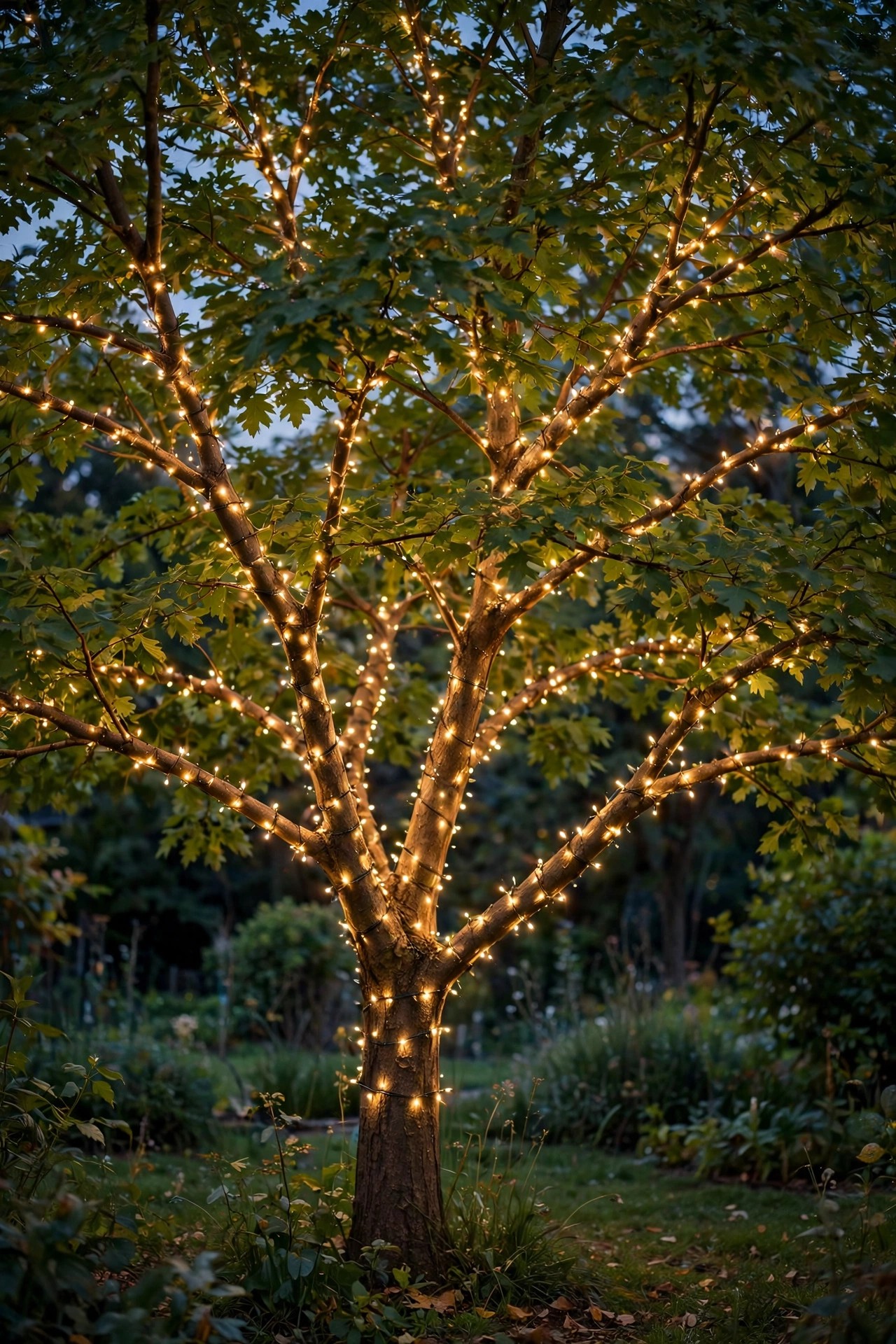
5. The Canopy Drape — Swags Between Branches
Once trunks and branches are wrapped, the canopy itself is the third layer, and draping is how you light it without wrapping every twig. Take a long strand and swag it in gentle catenary curves between branch tips, letting each dip hang 12 to 18 inches. Three or four crossing swags turn the underside of a canopy into a chandelier, especially over a patio table or a pair of Adirondack chairs. Use lightweight copper-wire strands only — heavy PVC string lights sag, stretch, and stress the branch tips they're hung from. Secure each anchor point with a loose loop of the wire itself around the branch, and position anchors on wood at least an inch thick so wind doesn't worry them loose. The drape layer should be the sparsest of the three: you're sketching the canopy's volume, not filling it. Honestly, this is the layer guests actually sit under and photograph, because the lights hang at that magical just-above-eye-level height when you're seated. If you only ever add one layer beyond the trunk wrap, make it this one — it changes the feeling of the whole yard more per dollar than anything else on this list.
Suggested budget range: $20 – $55.
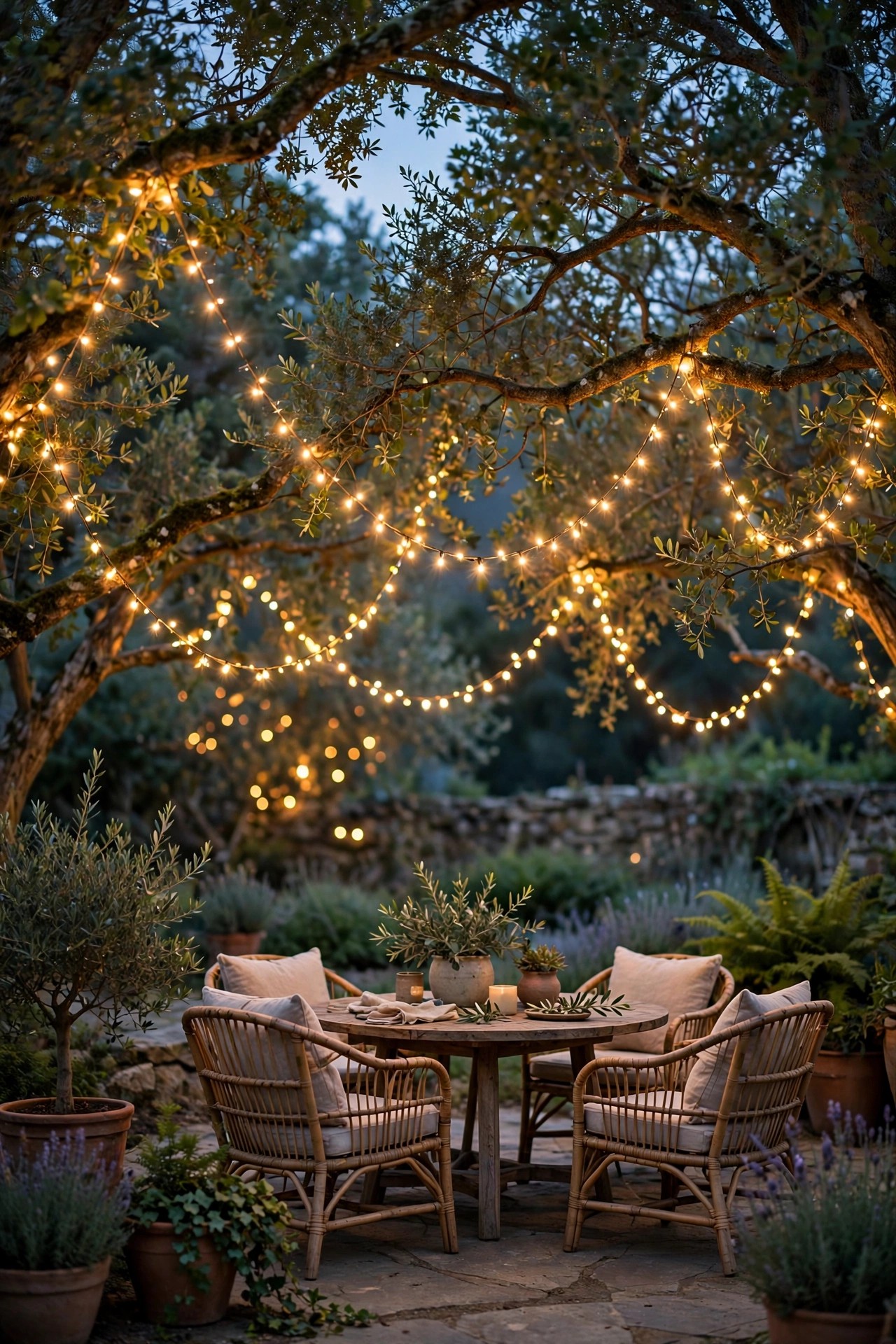
6. The Moonlight Canopy Umbrella
This is the canopy wrap I save for the tree over our back patio, and it's pure theater. Pick the highest sturdy branch junction you can safely reach, and from that single crown point, run strands outward and downward along the main limbs like the ribs of an umbrella, letting the ends drift a foot or two past each branch tip. From below, the lights appear to rain gently down from one bright heart — the closest thing to moonlight you can buy in a box. The trick is symmetry: use strands of identical length, count your turns on each rib branch so the density matches, and step back to street level twice during the install to check the balance. It pairs beautifully with an actual moonlighting fixture mounted high in the same tree; our moonlighting trees guide explains that downlighting technique in detail. Keep the umbrella to one tree — two competing canopies in one yard fight each other. Under it, keep every other light source low and warm: a couple of lanterns on the table, nothing overhead. Dinner guests will sit under this canopy until the timer clicks off, every single time.
Suggested budget range: $40 – $95.

7. The Solar Fairy Light Tree Wrap for Trees Far From an Outlet
The best tree in the yard is always the one 60 feet from the nearest outlet — that's just how yards work. Solar fairy light strands solve it: a small panel on a ground stake, a battery in the stake housing, and 70 to 100 feet of copper-wire lights that charge all day and glow for 6 to 8 hours after dusk. Placement of the panel matters more than anything: angle it toward midday sun, keep it clear of mulch splash, and accept that a tree shading its own panel will dim early — in deep shade, run the panel out on its lead to the nearest sunny patch of lawn. Set expectations honestly: solar wraps glow softer than plug-in strands and fade a little on cloudy December weeks. But for a back-fence maple or a mailbox-side crabapple, soft and automatic beats bright and never-installed. Choose a model with a replaceable battery and a steady-on mode rather than only twinkle settings, and bring the panel stake in for a wipe-down each month — a dusty panel is the number-one reason solar strands "die" early. Zero trenching, zero extension cords, zero electric bill.
Suggested budget range: $18 – $45.
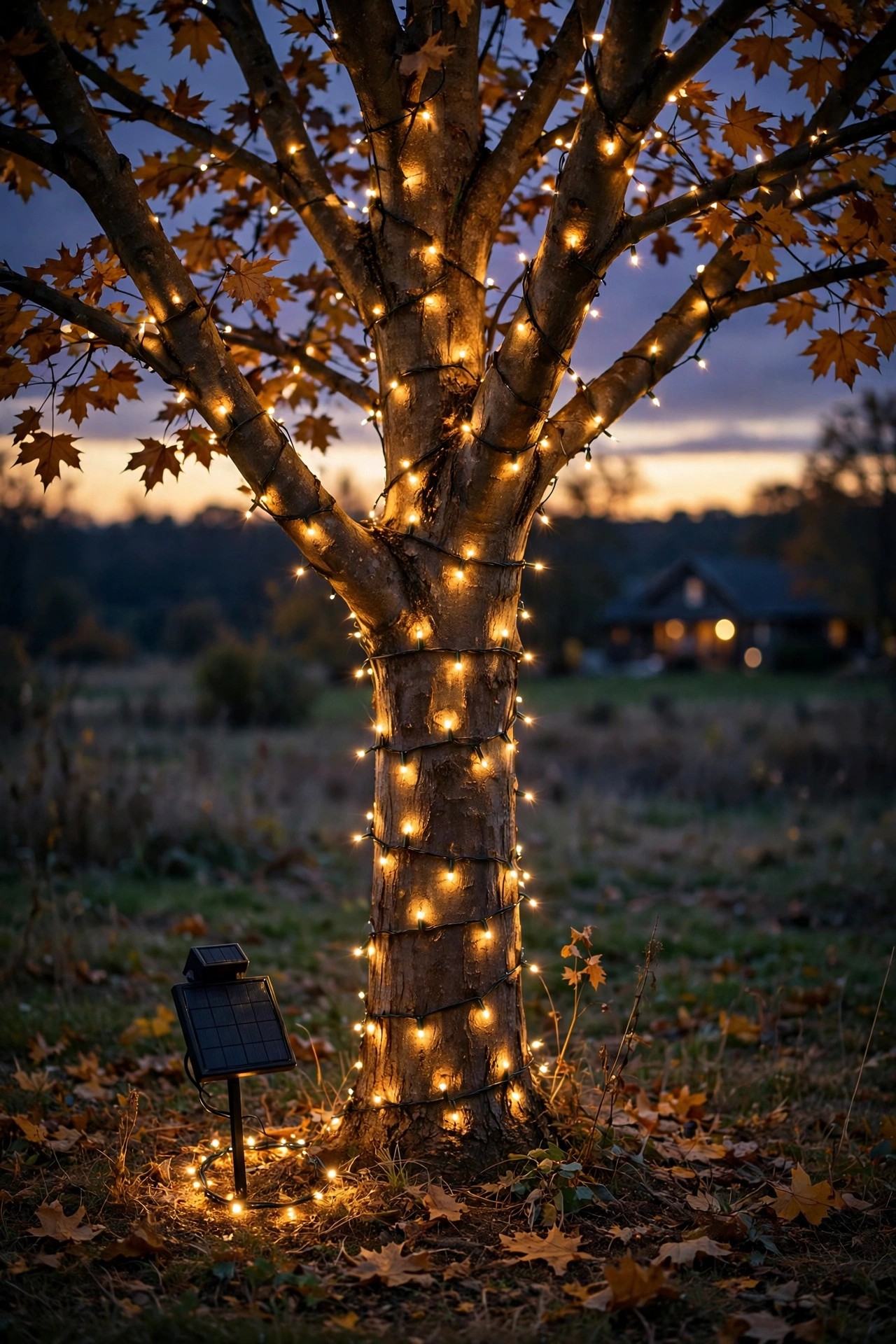
8. Battery-Powered Wraps for Renters and One-Night Wonders
Renters, wedding hosts, and anyone whose tree overhangs a neighbor's fence line: battery-pack fairy lights are your loophole. A strand running on three AA batteries needs no outlet, no solar exposure, and no permission from anyone — and modern LED sets run 30-plus hours per set of batteries on a timer mode that does six hours on, eighteen off automatically. The battery box is the weak point, so tuck it into a small waterproof pouch or an inverted zip bag at the back of the trunk, cable-tied loosely at waist height where you can reach it without a ladder. Battery wraps are shorter — typically 30 to 50 feet — so they suit one trunk spiral on a small tree or a single statement branch on a big one. For a one-night event like a garden party or proposal (yes, I've done the fairy-light proposal tree), two battery strands and forty minutes is all it takes, and everything comes down the next morning without a trace. Keep spare batteries with the strand in storage; nothing deflates a party like a tree that blinks out during dessert.
Suggested budget range: $10 – $30.

9. The Palm Trunk Spiral With a Crown Burst
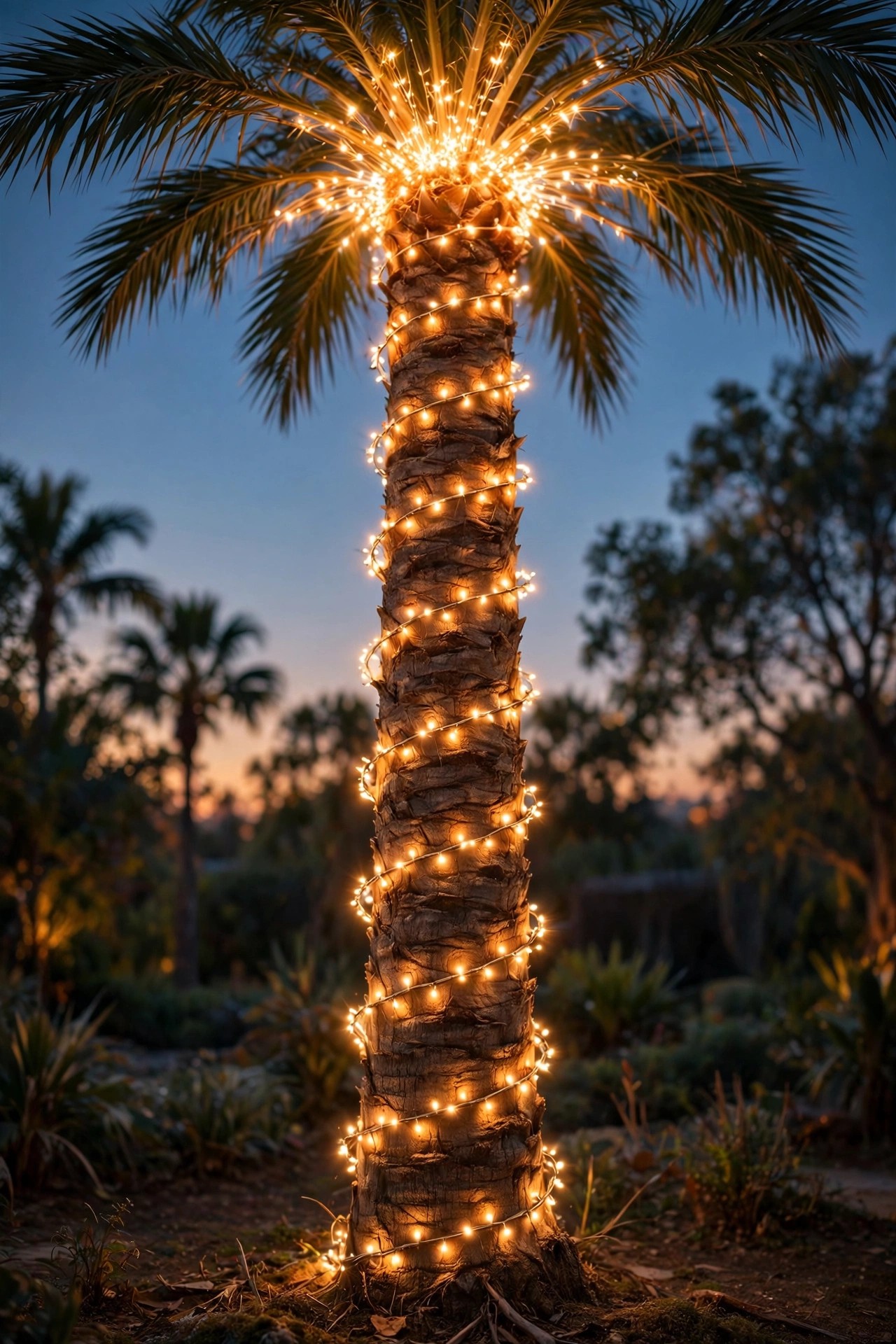
Palms are the easiest wrap on this list and maybe the most satisfying. That smooth, ringed trunk takes a spiral beautifully — the wire nestles into the natural ridges, so spacing stays even almost by itself, and you can climb 12 to 15 feet of trunk with a single 100-foot strand at 4-inch spacing. Work upward from the base and resist wrapping over old bootjacks and loose fiber, which can shift and take your spacing with them; a quick brush-down first keeps the line clean. Then, instead of stopping at the crown, give the palm a finale: run the last few feet up through the heart and let short strands spill a few feet down the bases of the lowest fronds, so the crown bursts like a firework frozen mid-pop. Warm white is the classic choice, though a soft amber looks stunning on palms near a pool. One safety note I never skip: palms flex and sway more than hardwood trees in a storm, so leave a little slack in every third or fourth turn — a wrap strung drum-tight will saw against the trunk all winter.
Suggested budget range: $20 – $50.
10. Evergreen Wraps That Work All Winter
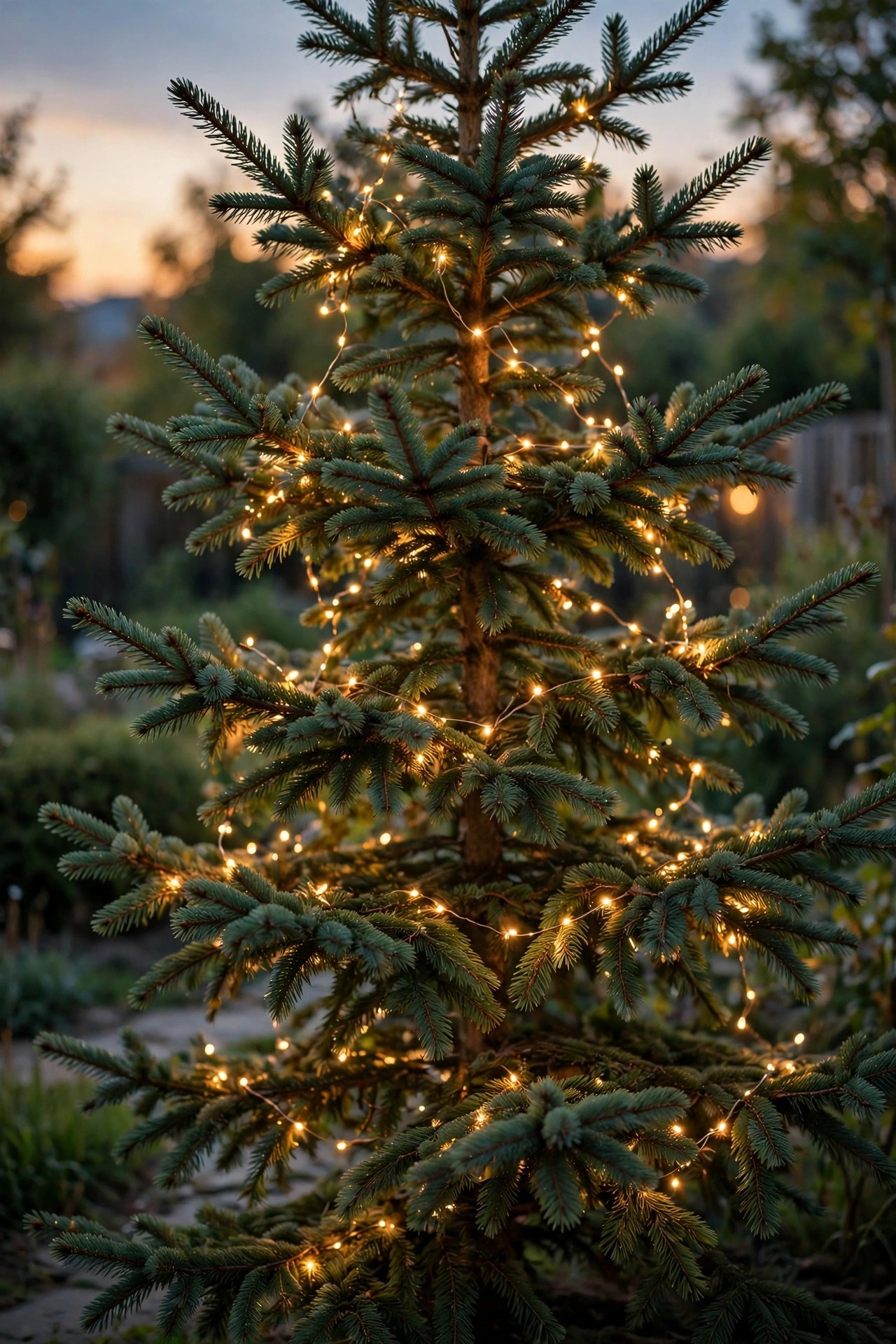
Deciduous trees lose their canopy layer in November, but a wrapped evergreen is a twelve-month lighting fixture. Pines, spruces, and arborvitae take a different technique: instead of winding the trunk (which you'd never see), weave the strand in and out of the outer branch layer in a loose spiral from bottom to top, following the tree's natural cone. Push each bulb just inside the needle line so the light seems to come from within the tree rather than sitting on it like tinsel. Spacing can be generous — 8 to 10 inches between passes — because the foliage diffuses every point of light into a soft halo. Use green-wire strands here, not copper; the wire disappears against needles in daylight. Evergreens also forgive cheap strands, since the foliage hides a multitude of sins, but do choose outdoor-rated IP65 sets, because a tree that stays lit through rain and snow will punish indoor-rated lights by January. In my experience a single wrapped spruce beside the front walk does more for winter curb appeal than every other decoration in the yard combined — it reads as intentional, not seasonal.
Suggested budget range: $25 – $65.
11. The Weeping Willow Light Curtain
If you have a weeping willow, you have the most romantic canvas in the plant kingdom, and this wrap is the one that makes people stop their cars. A willow's hanging branches are already a curtain — your job is just to thread light through it. Take two or three strands and weave them horizontally through the hanging branchlets at chest height and again at head height, circling the tree so the strands spiral gently downward as they go. The lights end up suspended inside the curtain of foliage, swaying almost imperceptibly, and the whole tree shimmers like water when there's any breeze at all. Don't wrap individual hanging branches — they're too thin, too fast-growing, and the effect muddies. A horizontal weave holds with friction alone and comes out in spring without a fight. Keep the trunk bare or give it the loosest single spiral; the curtain is the star. This is a summer-evening wrap, best enjoyed June through September while the foliage is full, and it turns a simple bench under the willow into the most requested seat in the garden.
Suggested budget range: $30 – $70.

12. Flowering Tree Wraps for Blossom Season
A crabapple, cherry, or redbud in bloom is already the prettiest thing in the spring yard — wrapping it multiplies the effect into the evening, when most people actually see it from the street. The approach is light-touch: a gentle 5-inch-spacing spiral on the trunk and main scaffold branches only, no canopy work, because the blossoms themselves are the canopy show. Warm white at low density is essential; heavy-handed lighting turns white blossoms yellow-ish and pink ones muddy. Time the install for just before bloom — wrapping a tree in full flower knocks half the petals off, ask me how I know — and plan to remove the strands within a week or two after petals fall, since flowering branches put on growth fast and resent anything snug. Because the display is brief, this is a perfect job for battery or solar strands you can move to the next tree as the season's show travels around the yard. Three weeks of a lit, blooming crabapple at the curb will do more for your home's spring presence than a month of any other upgrade I can name.
Suggested budget range: $15 – $45.

13. Multi-Trunk Wraps for Crepe Myrtles and River Birches
Multi-trunk trees are where wrapping becomes sculpture. A crepe myrtle or river birch with three to seven slender trunks gives you a bundle of glowing columns if you wrap each trunk individually with its own tight spiral, all at the same spacing and the same height. The discipline is in the matching: measure each trunk's circumference (they'll differ), count turns rather than eyeballing spacing, and stop every wrap at exactly the same point — either where the trunks diverge or at a consistent 6 feet. Where the trunks cross or touch, let the strands bridge naturally rather than fighting to separate them. Run one power lead up the back of the central trunk and split from there so no cords show from the street side. Because these trunks are thin and smooth, micro-LED wire is ideal, and the whole bundle rarely needs more than 100 total feet. Peeled, mottled bark like a river birch's practically glows from inside when it's backlit by its own wrap at night. In my experience this is the single most complimented wrap style on my list — people assume a landscaper charged you thousands.
Suggested budget range: $30 – $70.

14. Twinkle and Color Wraps for Parties and Holidays
Steady warm white is the everyday uniform; twinkle strands are the party clothes. Twinkle fairy lights — where every fourth or fifth bulb gently pulses — wrapped on a trunk add motion that a steady strand can't, and one twinkle wrap on the patio tree is enough animation for the whole yard. For holidays and parties, color is the other lever: deep red and warm white spiraled together in a double helix on one trunk reads unmistakably festive without a single inflatable. The double-helix technique is just two strands started at opposite sides of the base and wound in parallel, keeping them an inch apart so the stripes stay clean. A few ground rules from hard experience: one colored tree per sightline, always mixed with plenty of warm white elsewhere, and swap back to the calm wrap after the event — colored wraps left up for months start to read as neglect rather than celebration. Remote-controlled color-changing strands are the lazy genius option here, switching from party colors to warm white from the porch, though they cost a bit more per foot.
Suggested budget range: $20 – $60.
15. The Two-Tone Layered Wrap
Here's a wrap that looks like a professional designed it, built from one simple idea: two color temperatures, two jobs. Wrap the trunk and main branches in 2700K warm white — that's your golden structure — then drape the canopy in a slightly brighter, cleaner 3000K strand, or thread a second, cooler strand loosely through just the outer branch tips. The subtle contrast gives the tree depth: a warm glowing core with a faintly moonlit edge, instead of one flat wash of the same light. The rule is restraint — the two tones should be close enough that a casual viewer feels the richness without being able to say why. If the contrast is obvious at arm's length, the colors are too far apart; swap one strand. This layering works especially well on trees with interesting bark, where the warm trunk layer shows the texture and the canopy layer keeps the top from going black against the night sky. Buy both strands from decent sets with honest color ratings — bargain strands labeled "warm white" can drift green, and two mismatched cheap strands will sabotage the whole effect.
Suggested budget range: $35 – $80.

16. Wrapping Young Trees Without Hurting Them
Young trees forgive a lot, but a forgotten fairy light wrap is not one of the things they forgive. A trunk adds girth every season, and wire that was loose in April can bite into bark by October, girdling the very tree you were showing off. The fix is simple discipline: wrap young trees looser than you think you should — 5- to 6-inch spacing with visible slack — use the stretchy, thicker-gauge wire strands rather than hair-thin micro wire, and calendar a removal or re-wrap every single season. I take mine off in early spring before bud break, check the bark, and re-wrap fresh; it takes twenty minutes and doubles as my annual close look at the tree's health. Never use zip ties, twist ties, or tape to anchor strands on a growing trunk — friction and the wire's own coil are enough for fairy lights, which weigh almost nothing. And keep battery packs and solar stakes from sitting against the root flare, where moisture collects. Do this and your young maple can wear its wrap proudly for the decade it takes to become the neighborhood's big tree.
Suggested budget range: $12 – $35.

17. The Dining Tree — A Wrap Built Around a Table
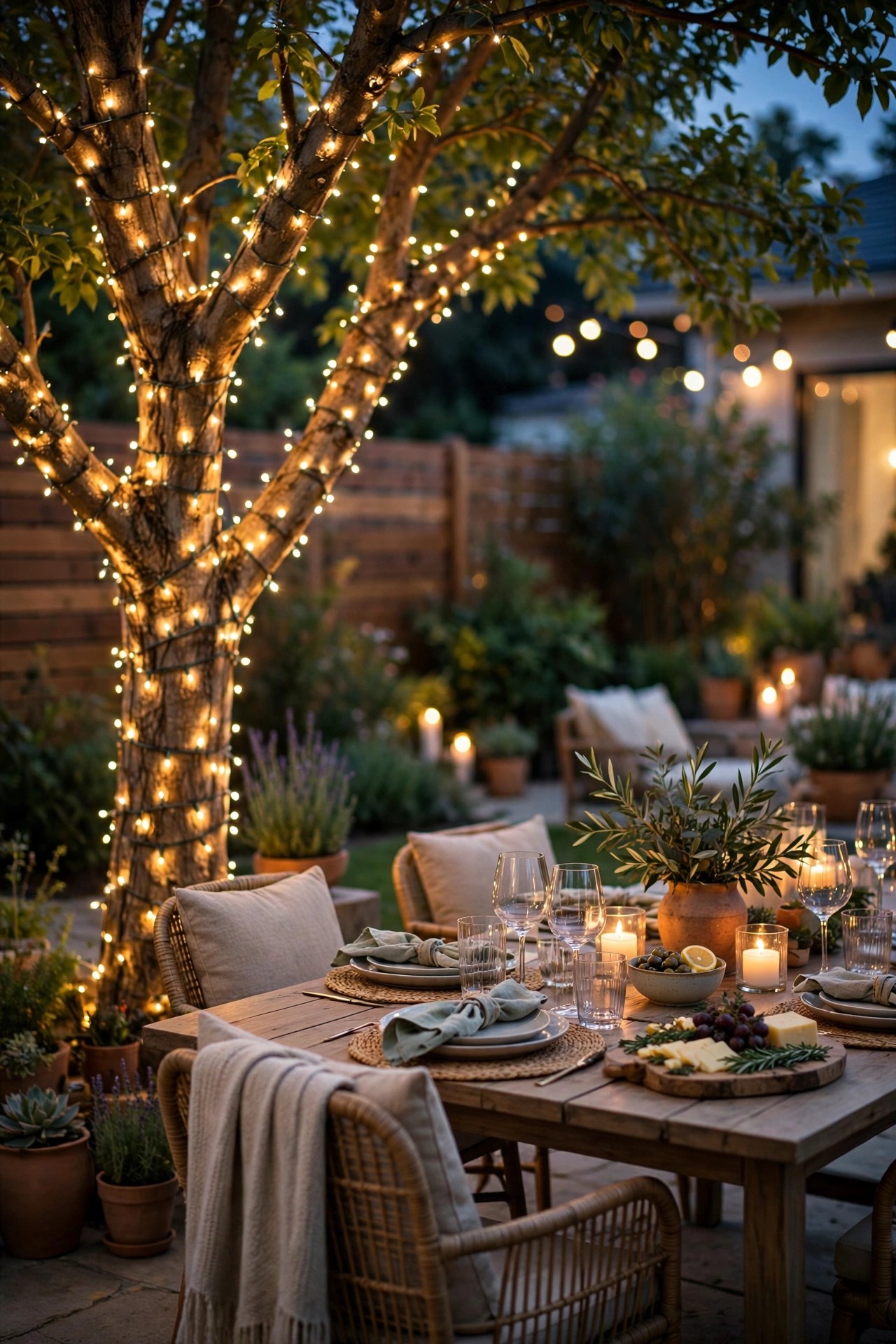
Some wraps are scenery; this one is furniture. If a tree stands within a few feet of your outdoor dining spot, wrap it as the room's chandelier: a tidy trunk spiral up to the first branch, then run three or four strands outward along the limbs that overhang the table, letting each strand's end dangle just slightly at different lengths over the seating area. The diners get soft light from directly above — flattering, shadowless, and completely glare-free because no bulb sits at eye level. Keep the wrap warm (2700K is candlelight's twin) and put it on a dimmer-compatible plug or a strand with brightness settings if you can; light you can lower to 50 percent after dinner is light people linger in. Extension planning matters here: the outlet run should travel up the back of the trunk so no cord crosses the walking path to the kitchen door. I add one loose swag between two limbs purely because it catches the eye from inside the house, which is where I enjoy this wrap half the time — through the window, doing dishes, watching my tree glow over the empty table.
Suggested budget range: $30 – $70.

18. Trunk Wrap Plus Uplight — The Layered Pro Combo
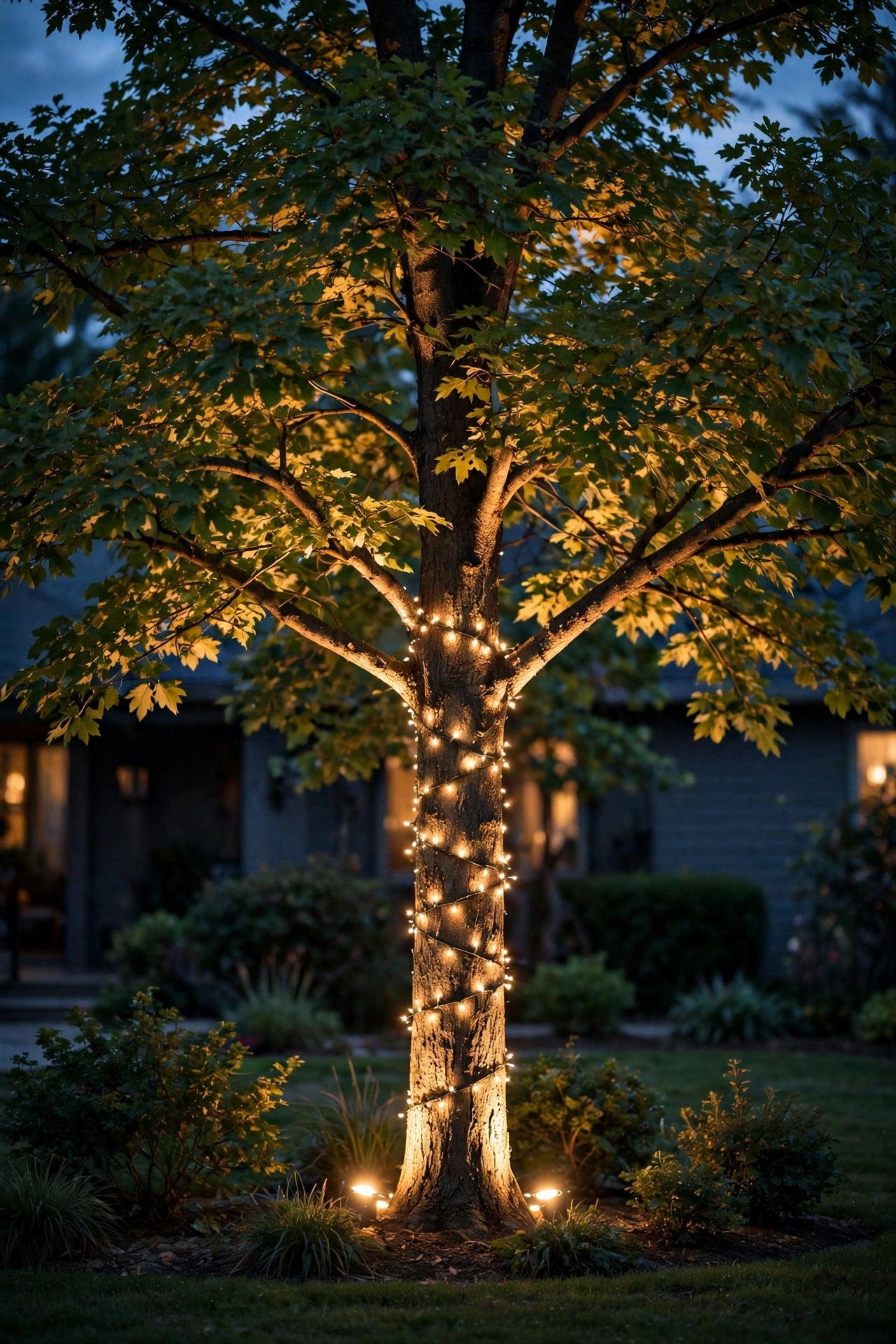
A fairy light wrap lights the tree's outline; an uplight lights its substance — and together they're the closest a DIYer gets to a magazine cover. Set one low-voltage bullet uplight at the base of the tree, aimed up the trunk at a slight angle, then wrap the trunk and main branches in fairy lights above it. The uplight washes bark texture and throws the canopy's shadow play onto itself, while the wrap sprinkles points of light through the structure so the tree sparkles instead of just looming. Match color temperatures exactly — both at 2700K — or the combo looks like two projects stapled together. Our tree uplighting guide covers fixture placement and beam angles if you want to get the wash just right. Keep the uplight modest (300 to 500 lumens); the wrap is the star and the uplight is the stage lighting. This is the combination I recommend for the one hero tree in a front yard, the tree your house is known by. It doubles the cost of a wrap alone, and it looks like it cost ten times that.
Suggested budget range: $60 – $140.
19. The Allée — Wrapping a Row of Trees Into One Gesture
One wrapped tree is a feature; a wrapped row is a landscape. If your driveway or front walk is lined with three or more trees, wrap them identically — same technique, same spacing, same stopping height — and the eye stops reading individual trees and starts reading rhythm. Identical is the hard part: use the tallest, thickest trunk to set the pattern, then match turns by count on every other tree, not by height reached, so the spacing stays uniform even where trunk sizes differ. Power is the logistical puzzle — one long low-voltage run or a discreet weatherproof extension along the back side of the row beats a visible cord zigzagging between trunks. Stand at the street and fine-tune from there; an allée lives or dies on what it looks like from fifty feet away. This is the wrap that makes a plain suburban driveway feel like the approach to an estate, and it's mostly repetition, not money — five modest trees at a trunk wrap each cost less than one hero tree fully layered. Start with three if five feels daunting; odd numbers read best.
Suggested budget range: $60 – $160.

20. Timers and Smart Control — The Wrap That Runs Itself
A wrap you have to remember to plug in is a wrap that's dark half the month. Every fairy light wrap in this list deserves a control plan, and the options are pleasantly cheap: a basic outdoor mechanical timer set to dusk-plus-six-hours, a photocell timer that finds dusk itself and counts down, or a smart outdoor plug that runs an astronomic schedule and answers to your voice assistant. My pick for most people is the photocell countdown timer — set it once in October and the wrap tracks the sunset through the whole dark season with zero attention. Put the timer where you can reach it without wading into the flower bed, and if several wraps share one tree zone, run them from a single outdoor-rated splitter so everything keeps the same hours. For battery and solar strands, lean on their built-in timers (usually a 6-on/18-off cycle) and set them at the same clock time so the whole yard switches on together — that synchronized moment at dusk, when every tree lights at once, is genuinely one of my favorite small daily pleasures.
Suggested budget range: $12 – $40.
21. The Seasonal Reset — Re-Wrapping for a Fresh Look Every Year
The last idea isn't a wrap, it's the habit that keeps every wrap on this list looking intentional: take them down once a year, and put them back up like you mean it. I do mine on the first mild weekend of spring. Removal is your inspection — carry each strand down, check for nicked insulation, green corrosion at the connections, and bulbs that have gone dim, and toss anything damaged rather than nursing it along; fairy light strands are cheap, and a corroded connector is how good wraps become unreliable ones. Wind the survivors loosely around a piece of cardboard or a garden hose reel, never in a tight ball, and they'll unspool tangle-free next season. Then re-wrap with one deliberate change — a new spacing, a different layer, a swap from trunk-only to trunk-plus-canopy — so the tree gets a fresh look and you get the small pleasure of redesigning it. Trees grow, branches get pruned, strands age out; an annual reset absorbs all of that quietly. The yards that look effortlessly magical every December are never the ones with ten-year-old lights. They're the ones somebody re-wraps, on purpose, every year.
Suggested budget range: $5 – $25.
Frequently Asked Questions
How many feet of fairy lights do I need to wrap a tree?
Multiply the number of turns by the trunk's circumference. Turns equal the height you're wrapping (in inches) divided by your spacing — so an 8-foot trunk at 4-inch spacing is 24 turns, and a 12-inch-diameter trunk has about a 38-inch circumference, which works out to roughly 75 feet. Always buy 20 to 30 percent more than the math says, and add separate length for branches and canopy work. When in doubt, a 100-foot strand handles most single trunks comfortably.
Can I leave a fairy light tree wrap up all year?
You can, but I recommend a once-a-year take-down. Trunks grow — a snug wrap left for several seasons can bite into bark and girdle a young tree. Outdoor-rated IP65 strands survive weather fine, but annual removal lets you inspect for corrosion and damage, re-loosen for growth, and refresh the design. If you do leave a wrap up, check it every spring and loosen or re-wrap any section that no longer has slack.
Are fairy lights safe for trees and bark?
Yes, with two conditions. Use LED fairy lights only — they run essentially cool, unlike old incandescent strings that could scorch bark and dry foliage. And anchor with the wire's own coil or soft, loose ties — never nails, screws, staples, or tight zip ties, which wound the bark and invite disease. Kept loose and LED, a wrap does a tree no harm at all.
What's better for a tree wrap, solar, battery, or plug-in?
Plug-in strands are brightest and most consistent, and cheapest per foot — use them anywhere an outlet is within reach. Solar strands are the pick for distant trees with decent sun, accepting a softer glow and shorter winter runtime. Battery strands suit renters, events, and small single-trunk wraps where neither sun nor an outlet cooperates. Plenty of yards, mine included, run all three types on different trees.
Conclusion
A fairy light tree wrap is the friendliest project in outdoor lighting: one strand, one afternoon, and a tree that turns into the landmark of the street. Start with the classic spiral to learn the strand math, then layer — branches for shape, canopy drapes for magic, an uplight when you're ready for the full treatment — always keeping the wrap loose, the color warm, and the controls automatic. Your tree has been standing there in the dark every night for years. Wrap it once, and browse more of our outdoor lighting ideas here on the site to decide what gets the glow next.