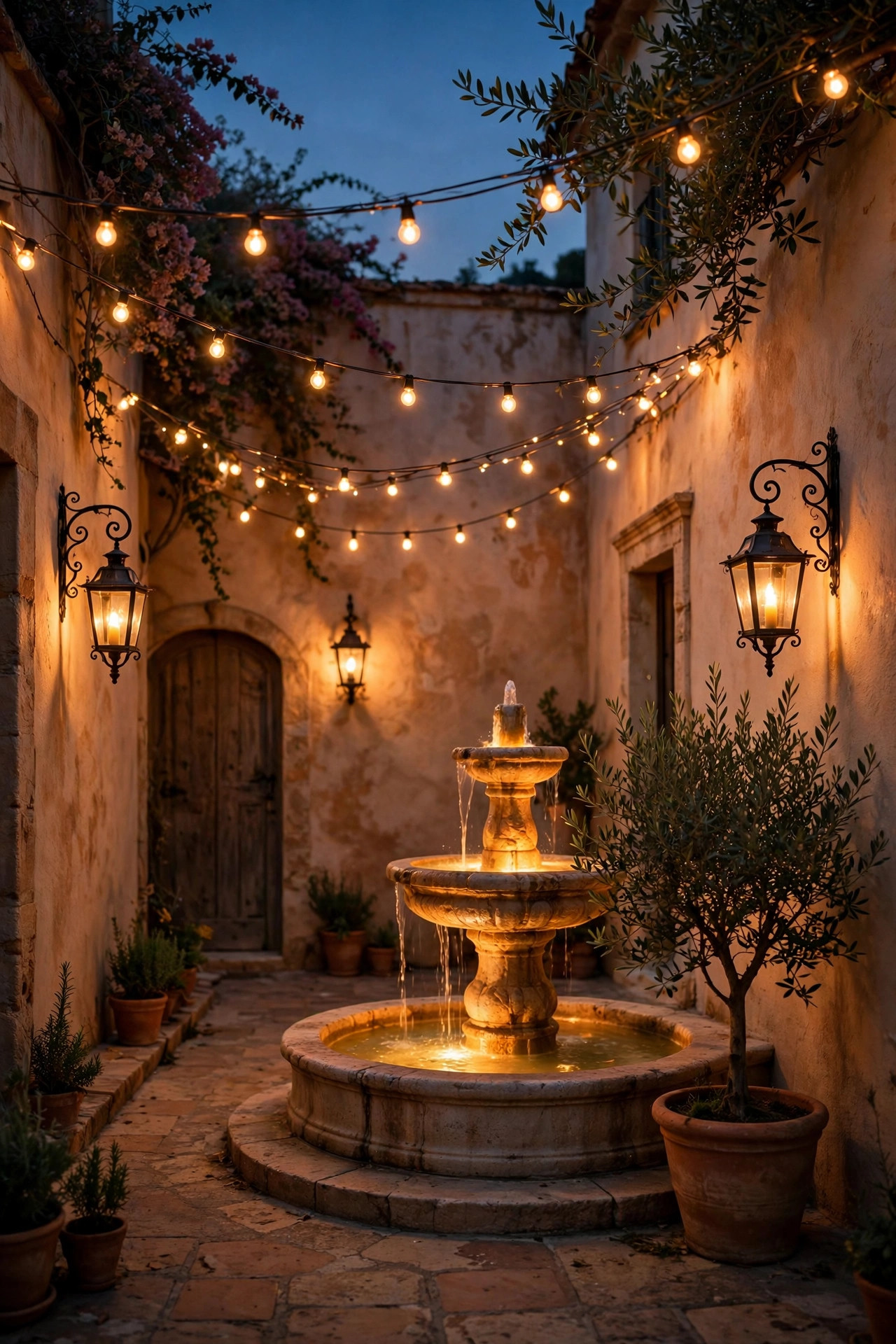
There is a moment, just after sunset in a walled courtyard, when the stone is still warm from the day and the whole space seems to exhale. That moment is exactly what the best mediterranean courtyard lighting ideas are designed to protect. In my own courtyard, the transformation did not come from one dramatic fixture. It came from layering: lanterns at the walls for welcome, string lights overhead for celebration, and low uplights that make the olive tree and the fountain glow like they have been there for a century. A Mediterranean courtyard is already an outdoor room, with stucco or stone walls, terracotta pots, and maybe a trickling fountain doing half the decorating for free. Your lighting just has to honor that architecture instead of fighting it. In this post I will walk you through 19 ideas, from the layered plan I always start with to the dusk walk-through I finish with, with honest budget ranges on every single one. Whether your courtyard is a tiny tiled patio or a full villa-style enclosure, these layers scale up and down beautifully.
1. Layer Your Mediterranean Courtyard Lighting Ideas in Three Levels
Every courtyard I have ever lit well started on paper, not at the hardware store. Mediterranean courtyards are enclosed rooms, so light behaves differently here than in an open yard: it bounces off stucco, pools on stone, and doubles itself in a fountain. I plan in three layers. The guide layer is low and practical, path and step lights that keep feet safe on uneven pavers. The welcome layer lives at eye level, lanterns by the door and gate that tell guests they have arrived somewhere special. The accent layer is pure theater, uplights on the olive tree, a glow inside the fountain, a wash across that beautiful textured wall. Sketch your courtyard, mark which walls get lanterns, decide where the eye should land first, and choose which corners can stay in shadow, because shadow is half of the old-world mood. Buy in that order too, guide lights first, and you will never end up with a courtyard that is bright but somehow charmless.
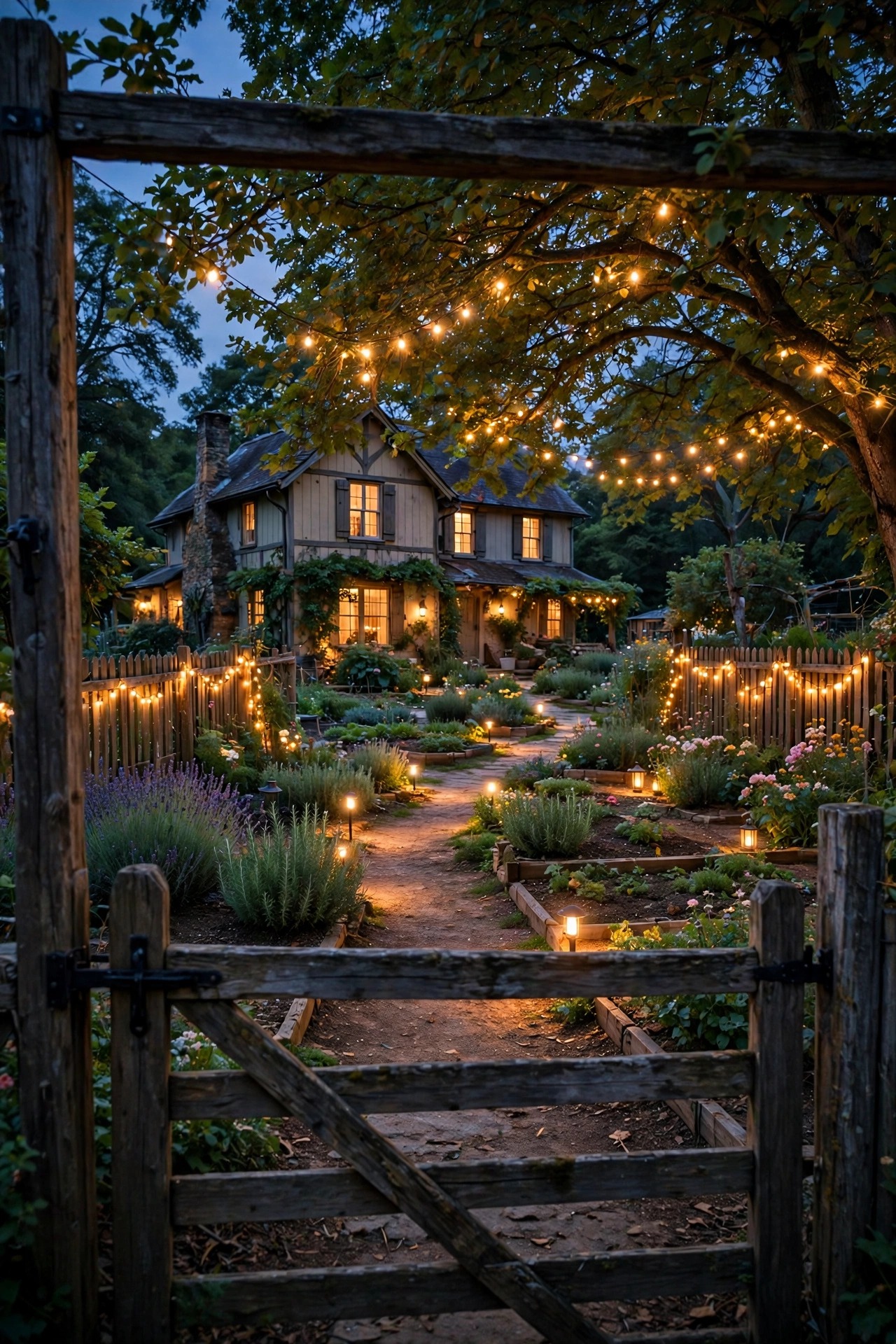
Suggested budget range: $150 – $600.
2. Flank the Door With Wrought Iron Lanterns
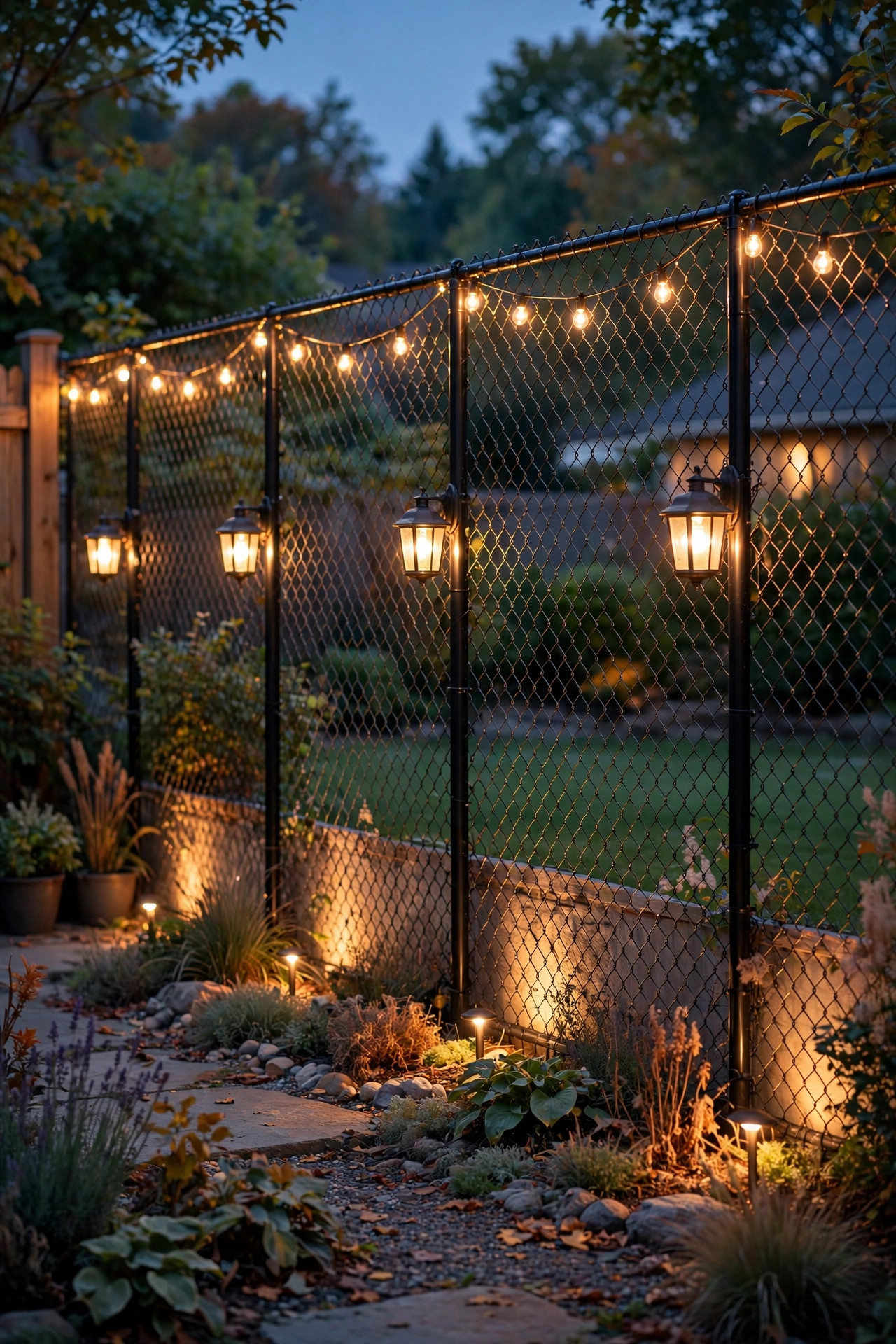
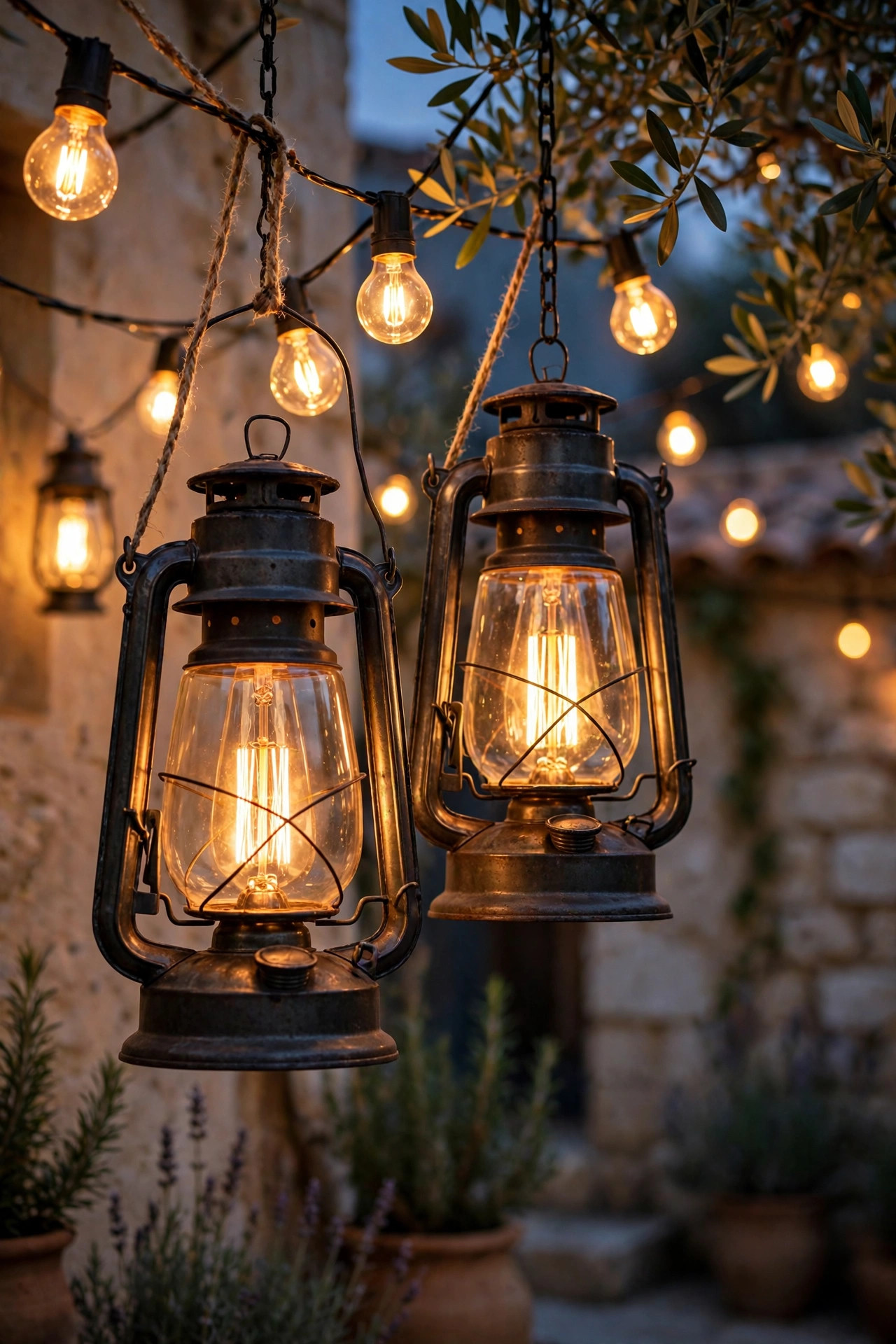
Nothing says Mediterranean like black wrought iron against warm stucco, and the courtyard door or gate is where that pairing matters most. I flank the main entry with two matching lantern sconces, mounted about 66 inches from the floor to the center of the fixture, close enough to frame the door without crowding it. Choose seeded or amber-tinted glass if you can find it, because it softens the bulb and reads centuries older than clear glass. Inside, a 2700K LED filament bulb gives you the candle-like glow of old gas lanterns with none of the maintenance. Match the finish across every visible iron piece in the courtyard, lanterns, gate hardware, even the table base, so the space feels collected rather than decorated. My full Mediterranean villa lighting tour shows how far that one-finish rule can carry an entire property. Go one size bigger than you think you need, because undersized lanterns disappear against tall stucco walls.
Suggested budget range: $80 – $240.

3. Give the Courtyard a Ceiling of Cafe String Lights
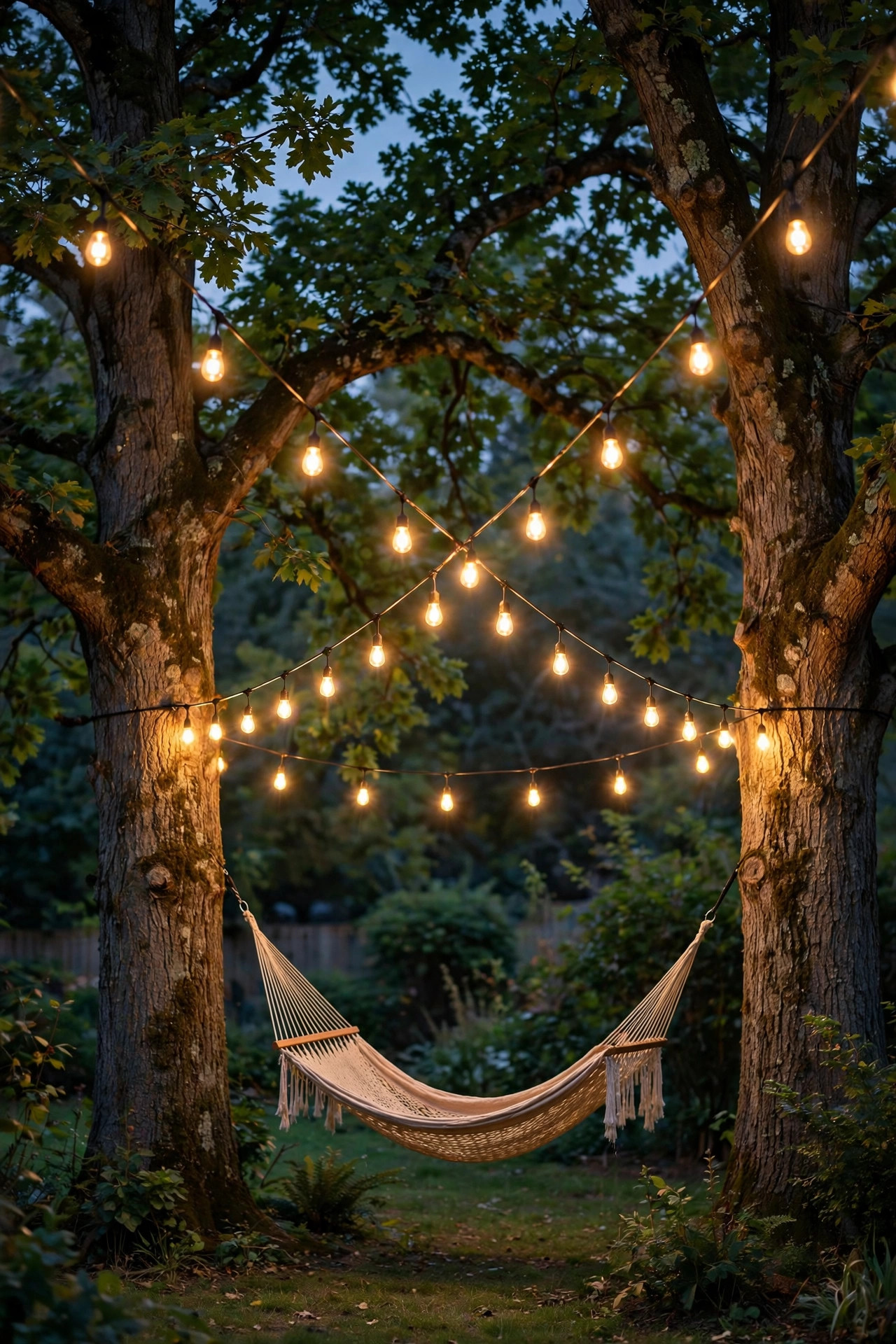
Overhead string lights are the fastest way I know to give a courtyard a ceiling, and a ceiling is what turns paving stones into a room. I run commercial-grade cafe strands in a gentle zigzag from wall to wall, anchoring into the masonry or a pergola beam with screw hooks and thin guide wire so the strands hang in soft swags instead of drooping lines. Keep the lowest swag at least 7 feet above the floor so tall guests and raised glasses clear it easily. Warm white 2700K bulbs only here, please, because cool white string lights will fight every terracotta tone in the space. My detailed notes on layouts and hardware live in my courtyard string light ideas post, including how to handle a courtyard with only three usable walls. Leave a little slack at each anchor, use outdoor-rated strands with sealed sockets, and put the whole run on a timer so the courtyard lights itself at dusk.
Suggested budget range: $40 – $150.
4. Wake Up the Fountain With One Submersible Light
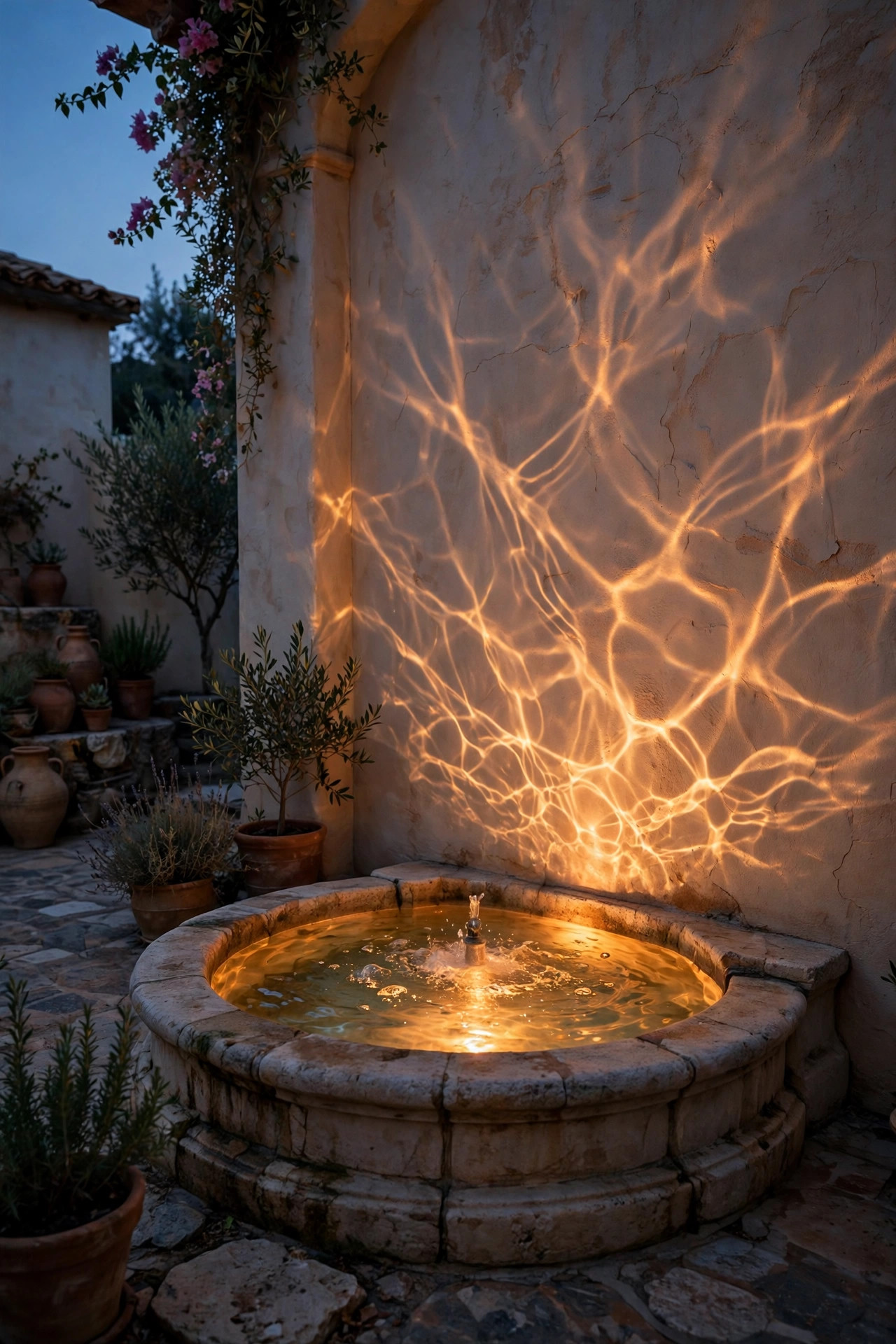
If your courtyard has a fountain, you own the single most magical light source in Mediterranean design, and it only needs one small fixture to wake up. A single submersible LED puck, rated IP68 and tucked at the base of the basin facing up through the falling water, turns the whole fountain into a lantern. The moving water breaks the light into dancing patterns that play across the surrounding walls all evening, and honestly, it is the effect guests ask me about most. Warm white is the classic choice, while a very soft amber reads even older. Keep the cord hidden under the basin rim and power it from a GFCI outlet, which is non-negotiable anywhere near water. For tiered fountains, add one tiny light per tier rather than one bright light at the bottom. I covered fixture choices and placement angles in depth in my courtyard fountain lighting ideas guide if your fountain is an unusual shape.
Suggested budget range: $25 – $90.
5. Uplight the Olive Tree Like a Living Sculpture
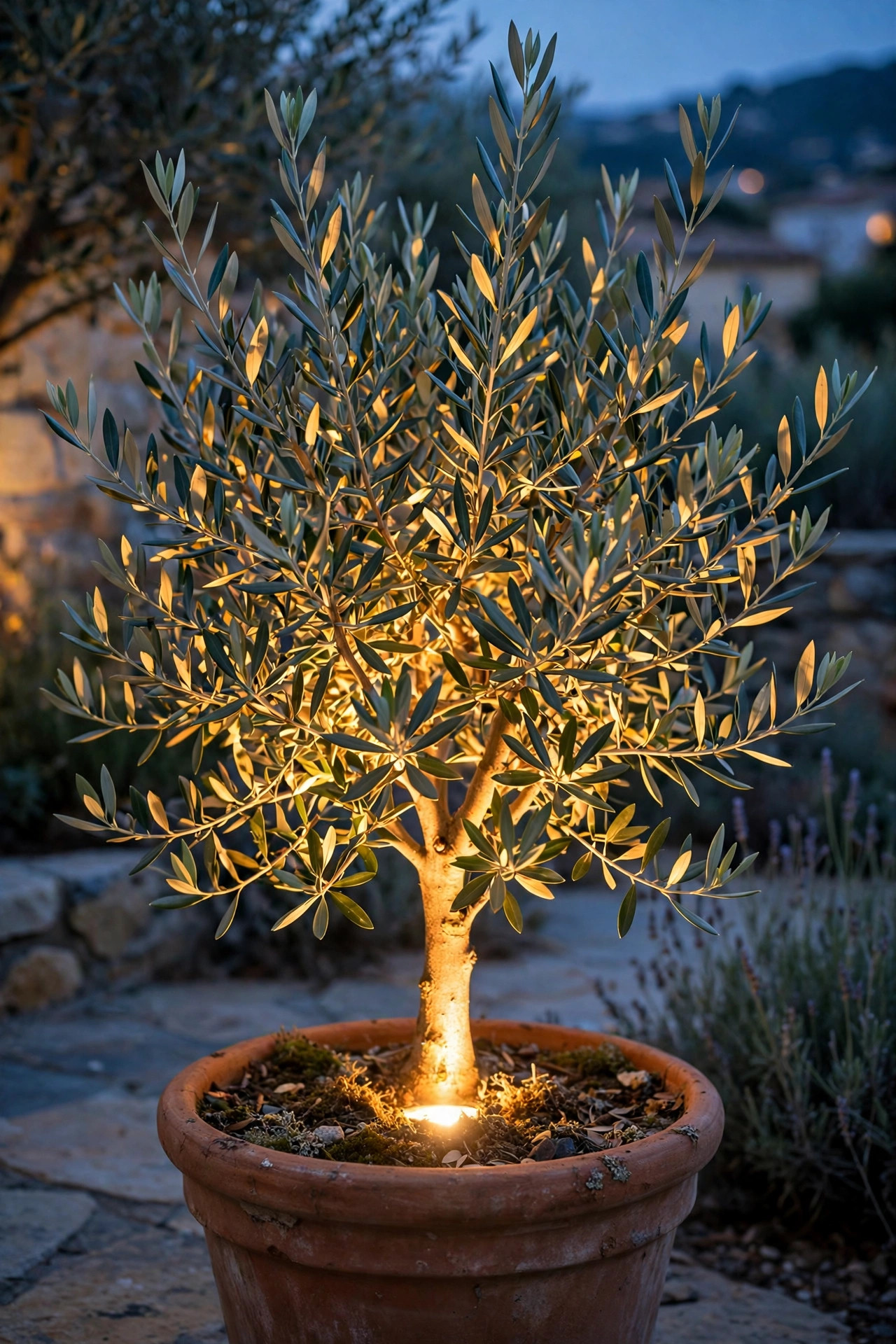
Every Mediterranean courtyard deserves one living sculpture, and in mine it is a potted olive tree that works hard all day and then steals the show at night. One well light or narrow-beam spotlight placed at the base, aimed up through the silvery foliage at about a 30-degree angle, turns the canopy into a glowing cloud. Set the fixture 12 to 18 inches from the trunk so the beam catches the branch structure instead of blowing straight past it. Silvery-green leaves reflect warm light beautifully, so a 2700K or even 2400K lamp looks richer here than anywhere else in the courtyard. If your tree sits in a terracotta pot, a second tiny light washing the pot itself grounds the composition and keeps the base from going black. Stake-mount fixtures make repositioning easy as the tree grows, and that growth is exactly why I check the aim every spring and nudge the angle a little wider.
Suggested budget range: $20 – $75.
6. Cluster Hurricane Lanterns Down the Dining Table
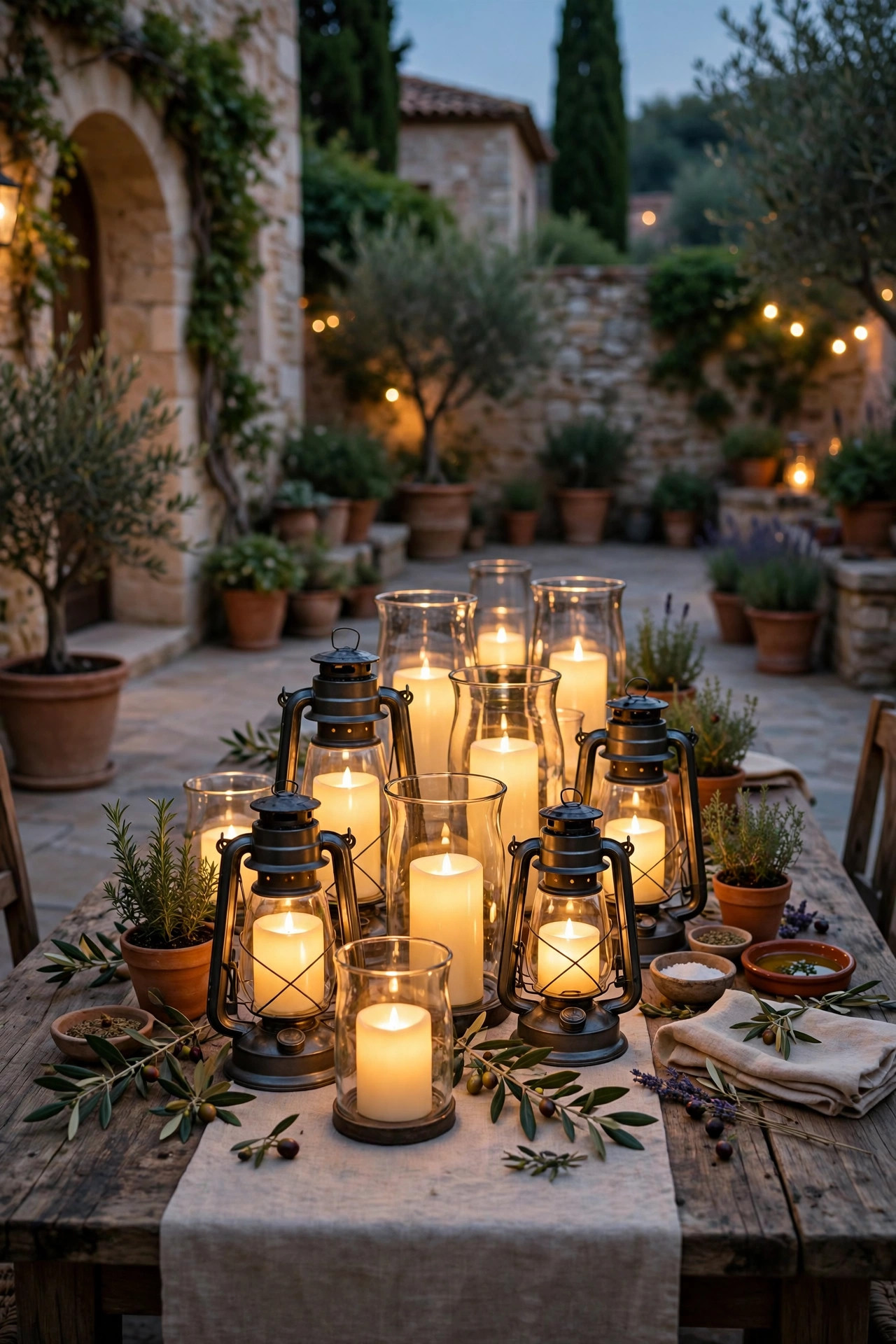
Tabletop light is the layer most people skip, and it is the one that makes dinner guests linger until midnight. I cluster hurricane lanterns down the center of the courtyard table, tall glass chimneys around flameless candles, because real flames plus a Mediterranean breeze plus linen napkins is a story I only needed to live once. The glass chimney shape is not just pretty; it keeps the flameless flicker looking warm and sheltered instead of exposed. Mix heights in odd numbers, three or five lanterns, and tuck small terracotta pots of herbs between them so the centerpiece works in daylight too. Flameless candles with a built-in timer are the honest workhorse here: set them once and they glow from seven to midnight every night without a single match. Keep the candle color warm white, and let the lanterns carry the table while the overhead strings stay dimmed low.
Suggested budget range: $30 – $110.
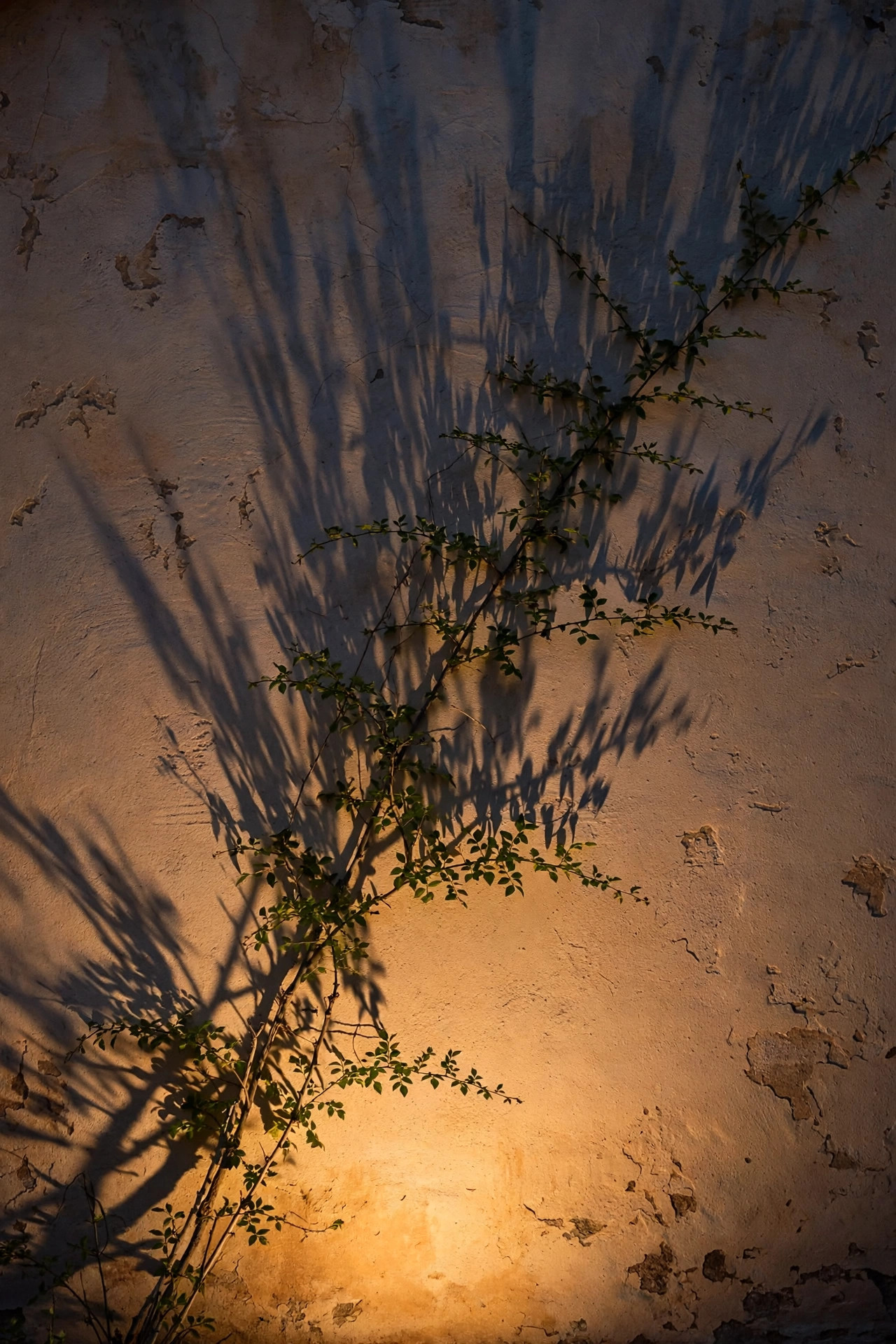
7. Graze Light Across the Stucco Walls
Bare stucco and stone walls are not a problem in a Mediterranean courtyard; they are the canvas. I graze light across them with fixtures mounted close to the wall base, aimed steeply upward, so every trowel mark, stone joint, and vine shadow throws long, dramatic texture. This technique is called wall grazing, and it makes even flat, plain stucco look hand-plastered by candlelight. Space small well lights or bullet spots about 4 to 6 feet apart along the wall and keep the beams narrow, around 15 to 30 degrees, because wide floods flatten the very texture you are trying to reveal. Warm light flatters warm walls, so stay at 2700K. If one wall is genuinely prettier than the others, the fountain wall or the one behind the olive tree, graze that one and let the rest fall dimmer. Contrast is what makes a courtyard feel ancient instead of renovated.
Suggested budget range: $45 – $160.
8. Line the Stone Path With Low Solar Stakes
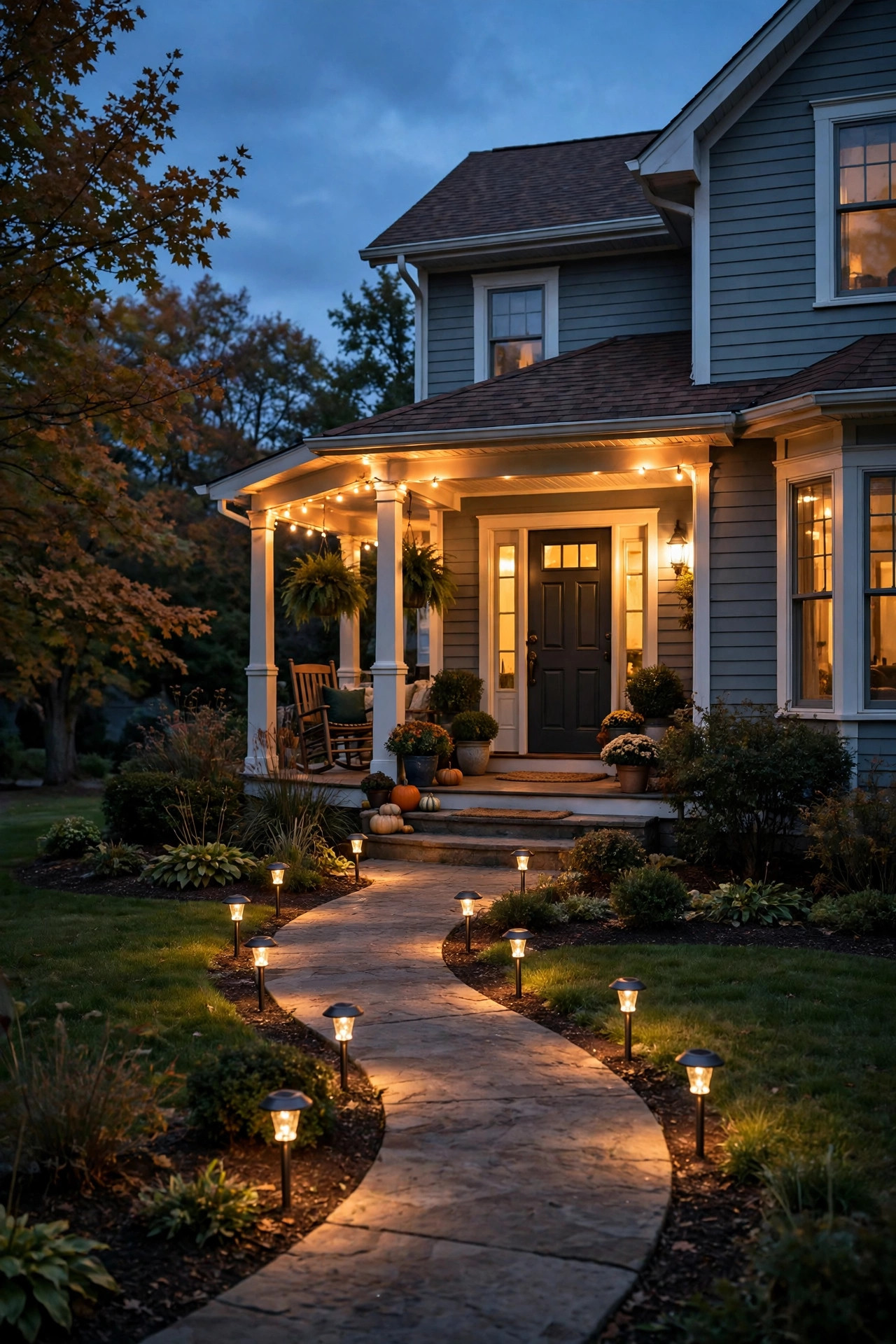
The walk from gate to door usually crosses the courtyard diagonally, and at night that route needs definition without glare in anyone's eyes. I use low solar path lights with a Mediterranean profile, dark bronze or black metal hoods over warm LED cores, staked along the edges of the stone path every 5 to 6 feet and alternating sides, so the route reads as a gentle rhythm instead of an airport runway. Solar works well here because courtyards trap sun on their paving all day, but the panels still need a few hours of direct light, so keep them out from under the pergola shadow. Look for replaceable batteries and at least 25 lumens per light, since the cheapest solar stakes are the false economy of outdoor lighting. Press each stake into the soil bed beside the pavers rather than into gravel, where they wobble and tilt within a month.
Suggested budget range: $35 – $120.
9. Hang Lantern Pendants Under the Loggia
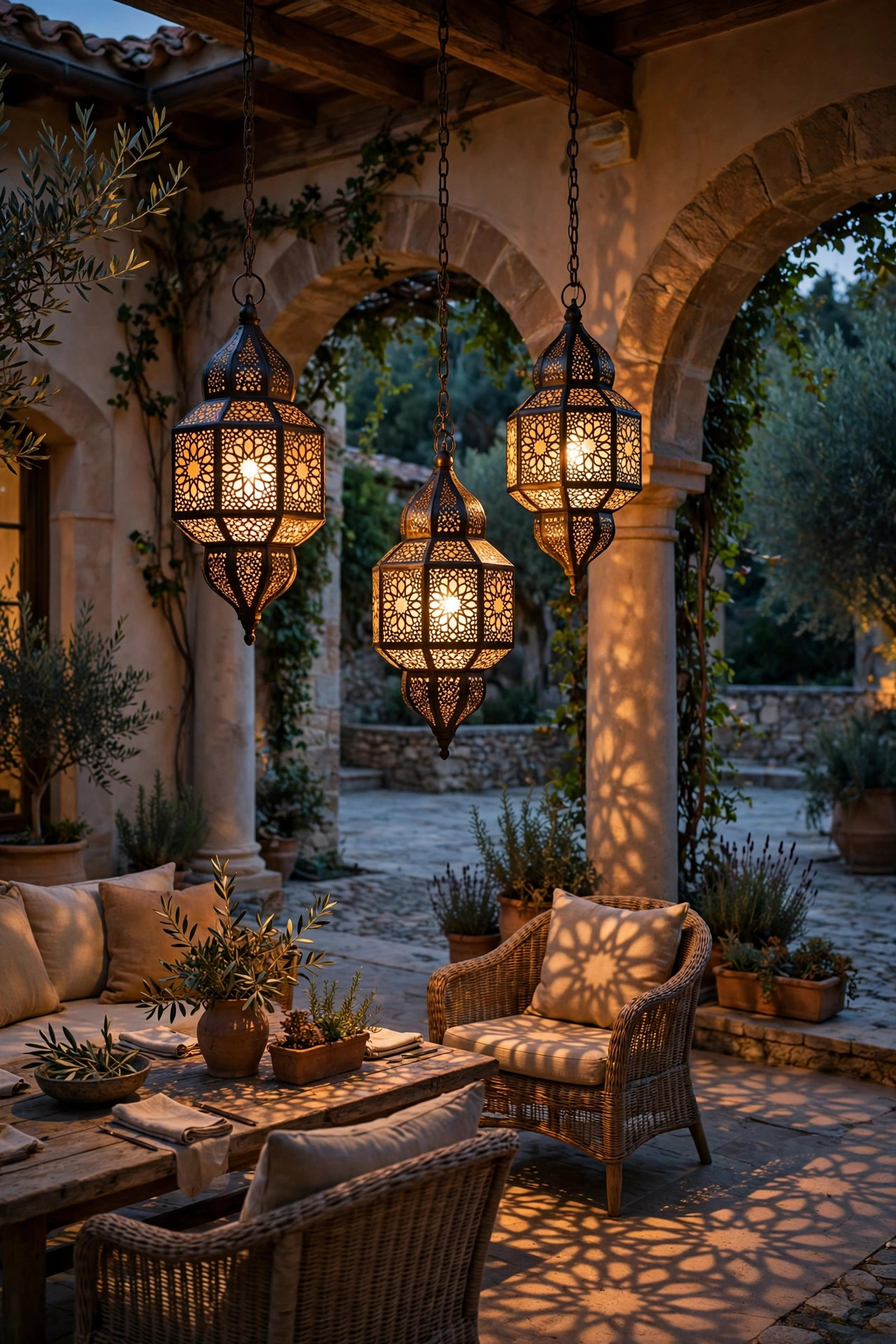
If your courtyard has a covered loggia or a deep porch along one side, that ceiling is prime lighting real estate. I hang two or three lantern pendants over the seating or dining zone beneath it, spaced evenly along the beam line, with the bottom of each lantern about 30 to 36 inches above the table surface. Pierced-metal lanterns, star-shaped pendants, and seeded-glass designs all throw gorgeous patterned light across a stucco ceiling. Hardwired is best for a permanent loggia, while plug-in pendants with a weatherproof cord work for renters if the outlet is covered and GFCI protected. Put them on a dimmer, too. At full brightness they happily handle a game of cards, and dimmed down to an ember they let the string lights and the fountain do the talking. Matching the pendant finish to your wall lanterns ties the covered and open halves of the courtyard into one room.
Suggested budget range: $70 – $260.
10. Recess Louvered Lights Into the Stone Steps
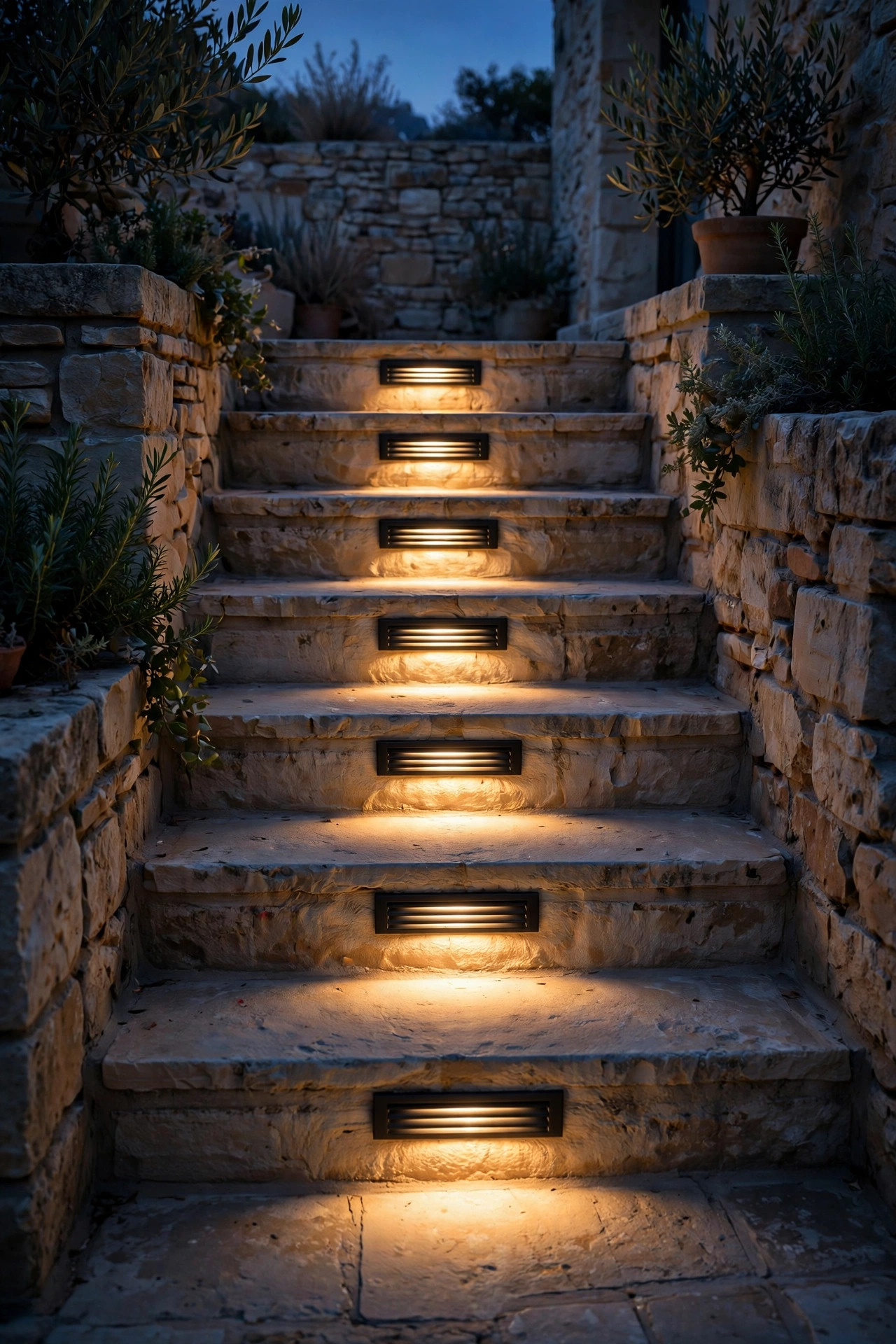
Courtyards love a level change: two steps up to the loggia, one down to the fountain terrace, a raised planting bed edge. Every one of those edges needs a light, because the most beautiful courtyard in the world is one stubbed toe away from a ruined evening. I recess small louvered step lights into the riser of each step, or mount low-profile fixtures on the wall beside the stair, aimed down so the tread glows and the fixture itself stays invisible. One light per step is plenty on narrow stairs, while wide stone stairs take one every 3 to 4 feet. Louvered and hooded designs matter here, since a bare bulb at ankle height blinds everyone walking down. Low-voltage wired fixtures are my pick for reliability, run off the same transformer as the path lights, with solar step lights as the budget-friendly starter option.
Suggested budget range: $25 – $100.
11. Let the Fireplace Be the Star of One Wall
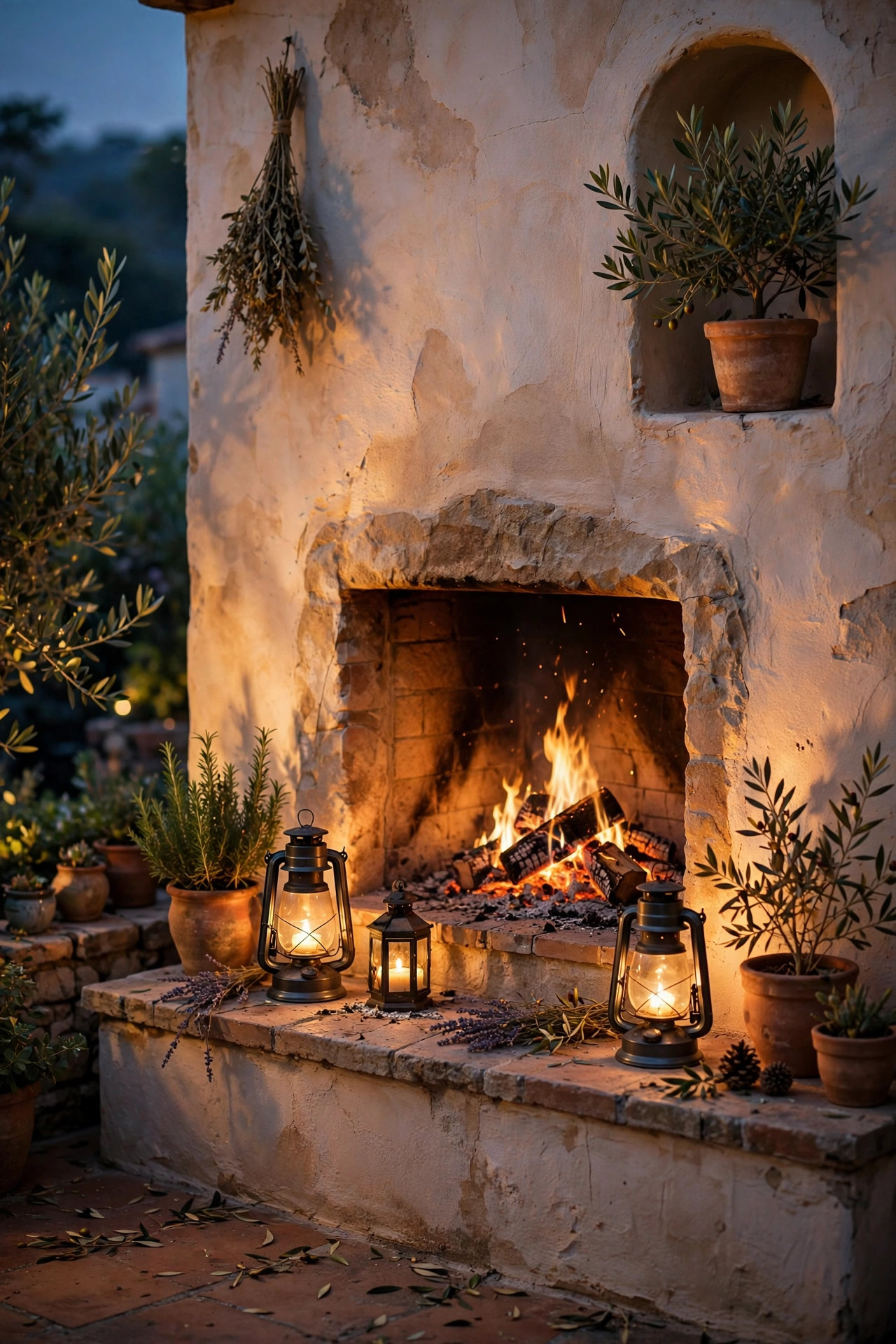
An outdoor fireplace or fire bowl along one courtyard wall gives you the oldest light source there is, and I build the lighting plan for that whole zone around supporting it, not competing with it. Keep the electric light near the hearth low and warm: two small lanterns on the mantel or hearth edge, gentle uplights washing the stone surround, and everything else in the zone dimmed to half. The fire itself becomes the accent light, and the fixtures just keep the seating area readable. Safety notes, always: LEDs and flameless candles only anywhere within reach of sparks or heat, real candles in glass hurricanes placed well back from the firebox, and no string lights swagged anywhere above open flame. If your fire feature runs on gas, a simple remote makes it part of the dusk routine. Firelight flickering against stucco is the entire Mediterranean fantasy in one wall.
Suggested budget range: $40 – $130.
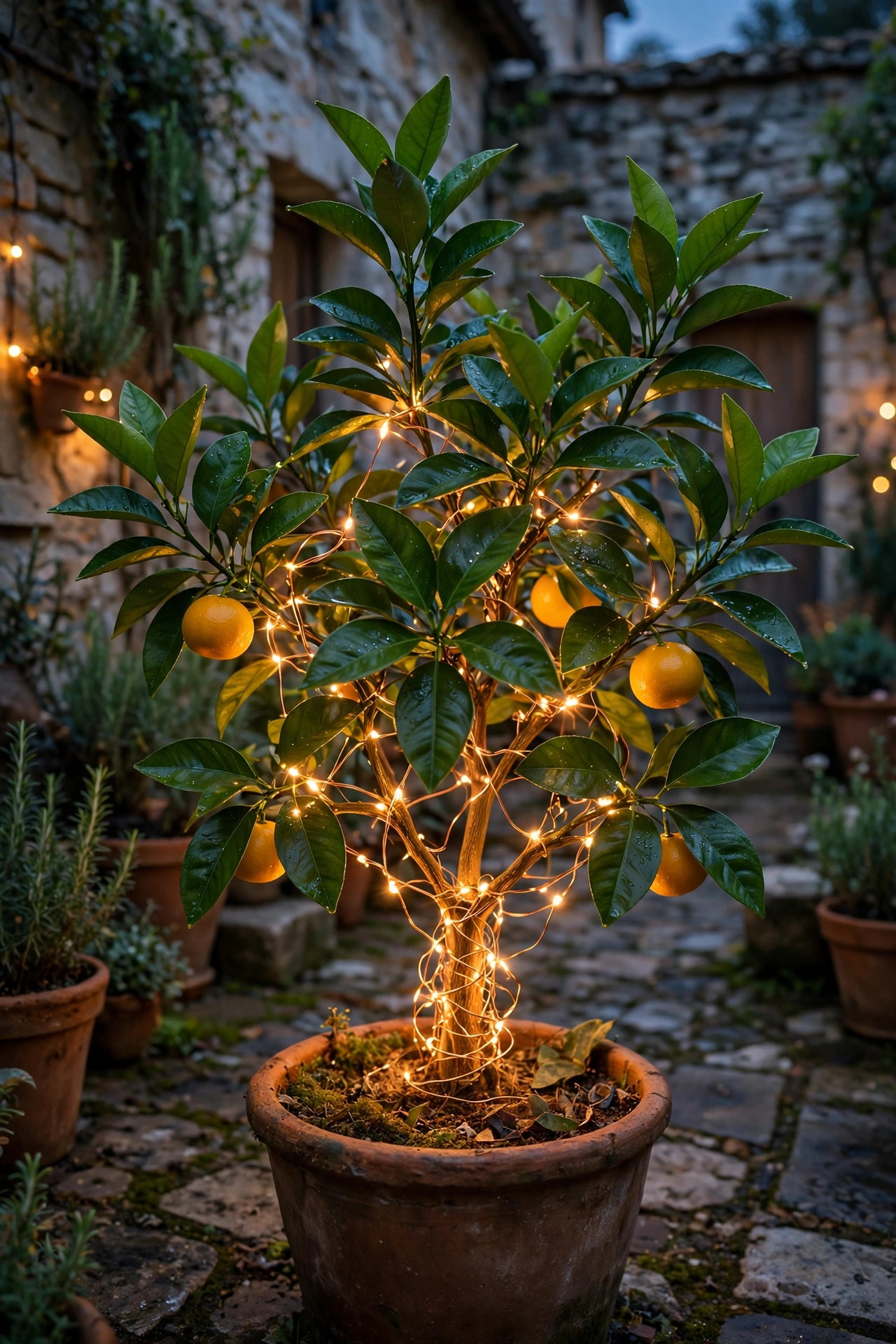
12. Weave Fairy Lights Through the Potted Citrus
Potted citrus trees are the jewelry of a Mediterranean courtyard, and a single strand of copper-wire fairy lights woven through each one turns them into glowing topiary after dark. I thread the strand loosely along the main branches, keeping bulbs away from dense clusters of fruit, and let the tiny warm points of light nestle into the glossy leaves. Battery or solar-powered strands keep cords off the paving, and the thin copper wire all but disappears in daylight. One 33-foot strand handles a medium potted tree. Resist the urge to wrap tightly, because a light touch reads as fireflies while a heavy hand reads as a holiday decoration in July. LED fairy lights stay cool to the touch, which matters around leaves and ripening fruit. When the tree comes indoors for winter in colder climates, the lights simply travel with it. Mine have survived three full summers of courtyard sun without a single strand going dim or brittle.
Suggested budget range: $10 – $35.
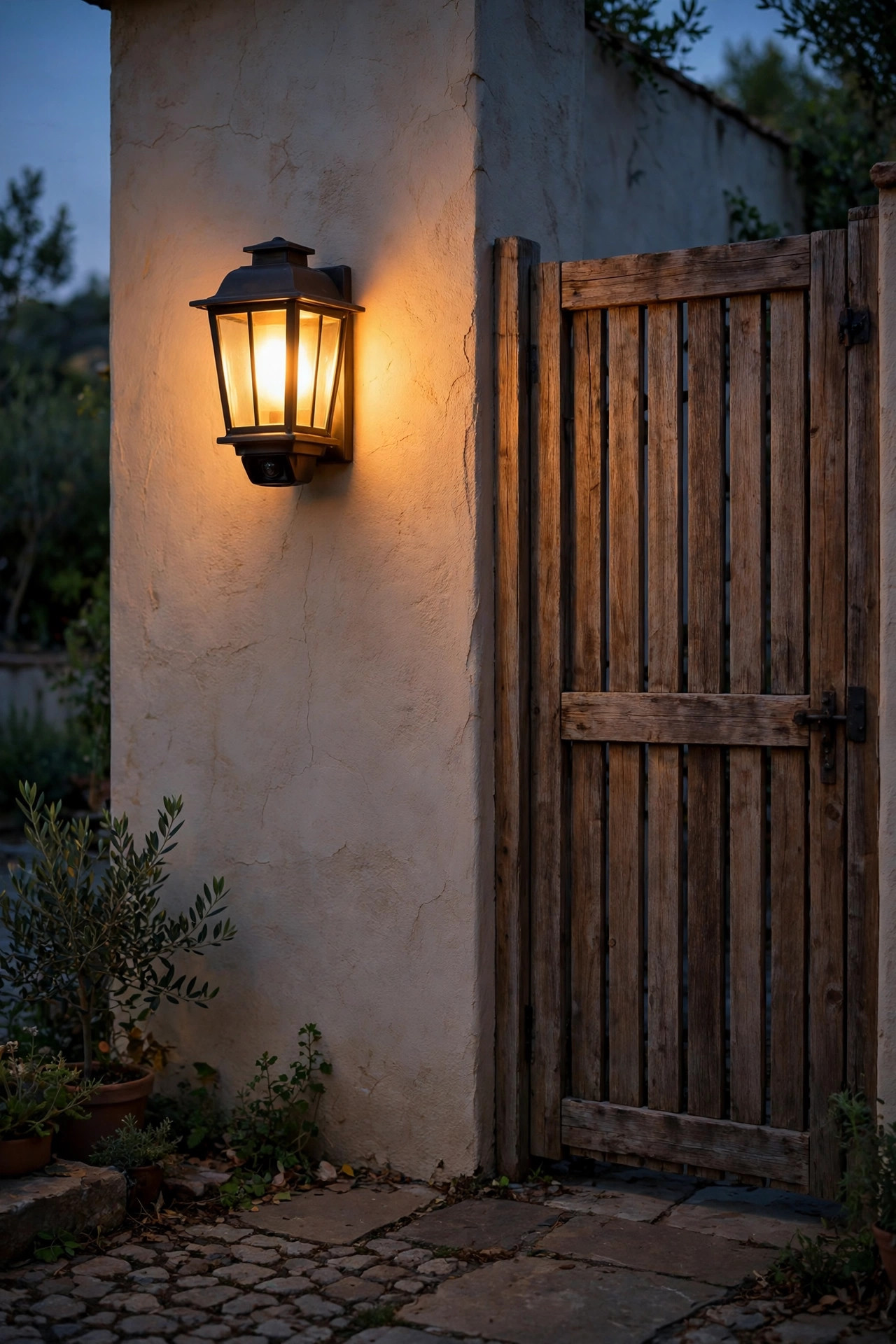
13. Put a Motion-Sensor Lantern at the Gate
Your courtyard gate or side entry deserves one smart, hardworking light that thinks for itself. I mount a lantern-style motion-sensor fixture beside the gate, styled to match the front-door pair, so the welcome looks intentional while the function stays invisible. Use a warm 2700K bulb, set the range to about 15 to 20 feet, and keep the run time at one to two minutes: long enough to cross the courtyard carrying groceries, short enough to ignore the neighbor's cat. Aim the sensor head slightly downward and away from the fountain and the fire feature, since moving water and heat shimmer can false-trigger cheaper sensors. This is also the one fixture I recommend wiring rather than running on solar where winters are gray, because the light you truly depend on should never depend on yesterday's weather. A small solar marker at the gate post makes a good partner, guiding the eye inward while the lantern does the real work.
Suggested budget range: $35 – $95.
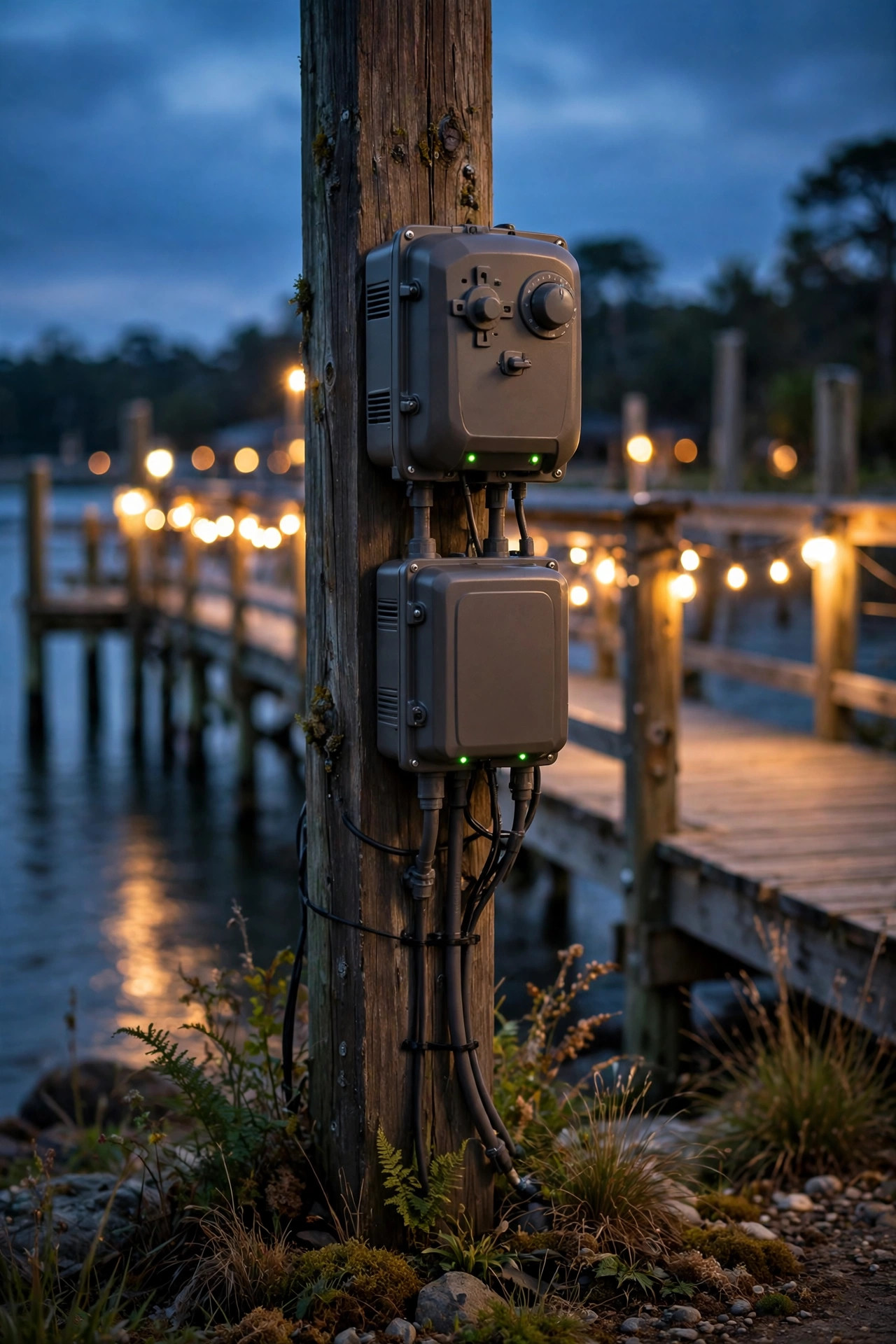
14. Automate Everything With Photocells and Timers
Automation is what separates a courtyard that photographs well from a courtyard that feels enchanted every single night. I run the whole low-voltage system on a transformer with a built-in photocell and timer: on at dusk, off at midnight, no apps, no thinking. The string lights and flameless table lanterns join in with their own simple plug-in timers or built-in schedules. Photocells beat clock timers across the seasons because sunset in June and sunset in November are different planets, and the photocell simply watches the sky for you. If you have two transformers, group by mood: the guide and welcome layers run all evening, while the brightest accent lights can bow out earlier in the night. Set it once in spring, check it after any power outage, and your courtyard will greet you at dusk for years like it was expecting you. It is the cheapest upgrade in this entire post, and honestly the one that changes daily life the most.
Suggested budget range: $20 – $85.
15. Hold the Line at One Warm 2700K
One rule protects every other idea in this post: pick one color temperature and hold the line. For Mediterranean courtyards that temperature is 2700K, the warm white of candlelight and low sun, and every bulb, solar stake, and string strand in the space should match it. Mixed temperatures are the fastest way to make terracotta look muddy and stucco look dingy, because a single 4000K bulb will glare blue-white against ten warm ones and your eye goes straight to the mistake. Check the Kelvin number on every box before you buy, including replacement bulbs and the flameless candles, which are sneaked onto shelves in a cool white more often than you would believe. Daylight-balanced bulbs have their place in a workshop. In a courtyard built for long evenings, warmth is not a preference; it is the architecture of the mood. When in doubt, hold a new bulb beside a lit lantern at dusk; if the two colors argue, the new one goes back to the store.
Suggested budget range: $15 – $60.
16. Cluster Freestanding Lanterns on the Wide Steps
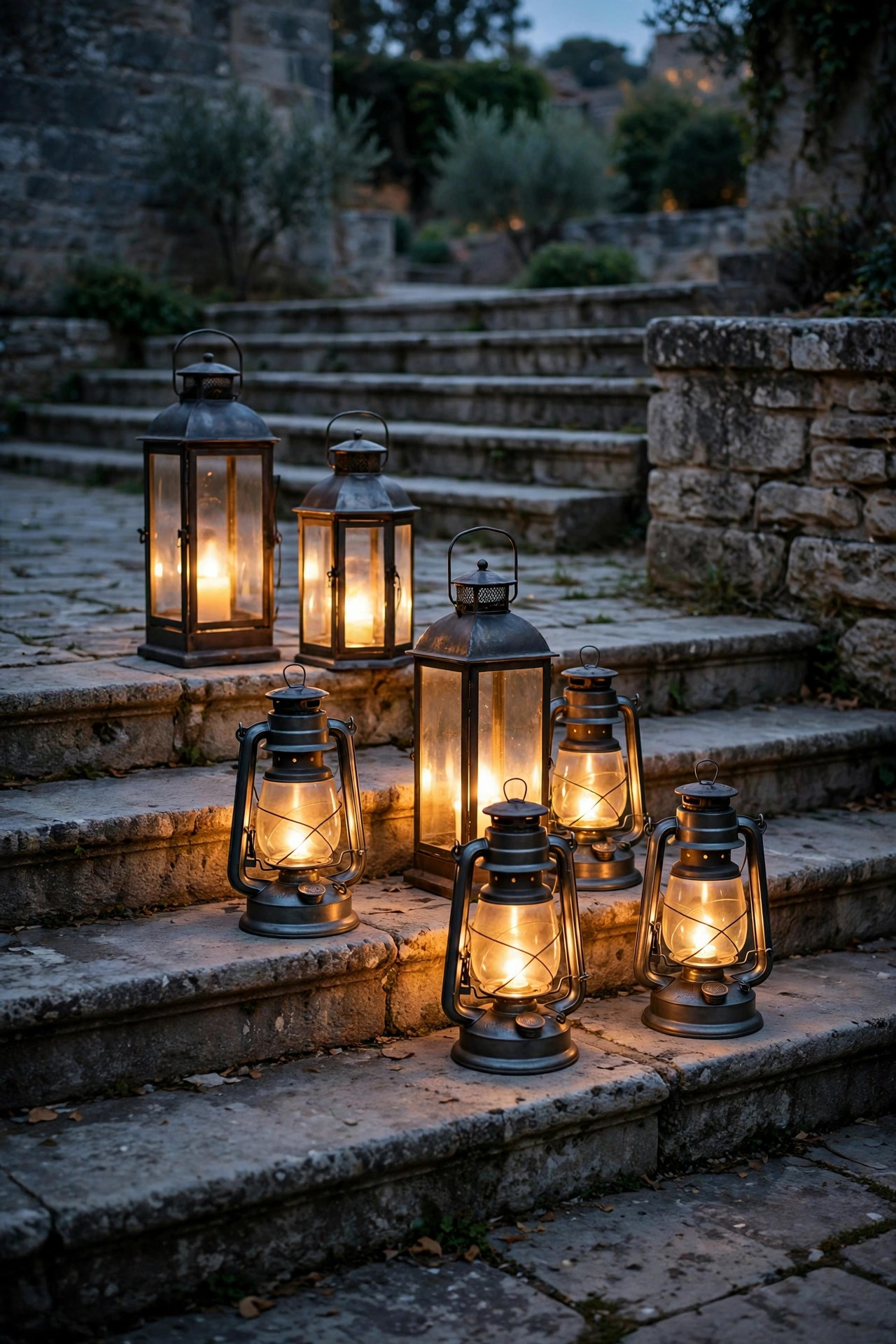
There is always one awkward spot: the wide steps down to the fountain terrace, or the landing where the path turns. I solve it with a cluster of freestanding lanterns at staggered heights, two or three grouped at the corner like they were set down mid-celebration and simply stayed. Flameless candles inside, always, since these live at ankle height near passing feet and trailing hems. Vary the lantern heights by at least 4 inches so the cluster reads as a composition, and choose heavy metal frames or weighted bases where wind funnels through the gate. This is also my favorite renter move in the whole post: no wiring, no mounting, instant old-world atmosphere, and the cluster can migrate to the dining table when guests come. Group in odd numbers, keep the glass clean so the glow stays clear, and one corner of your courtyard will always look like a painting.
Suggested budget range: $30 – $120.
17. Moonlight From a High Olive Branch
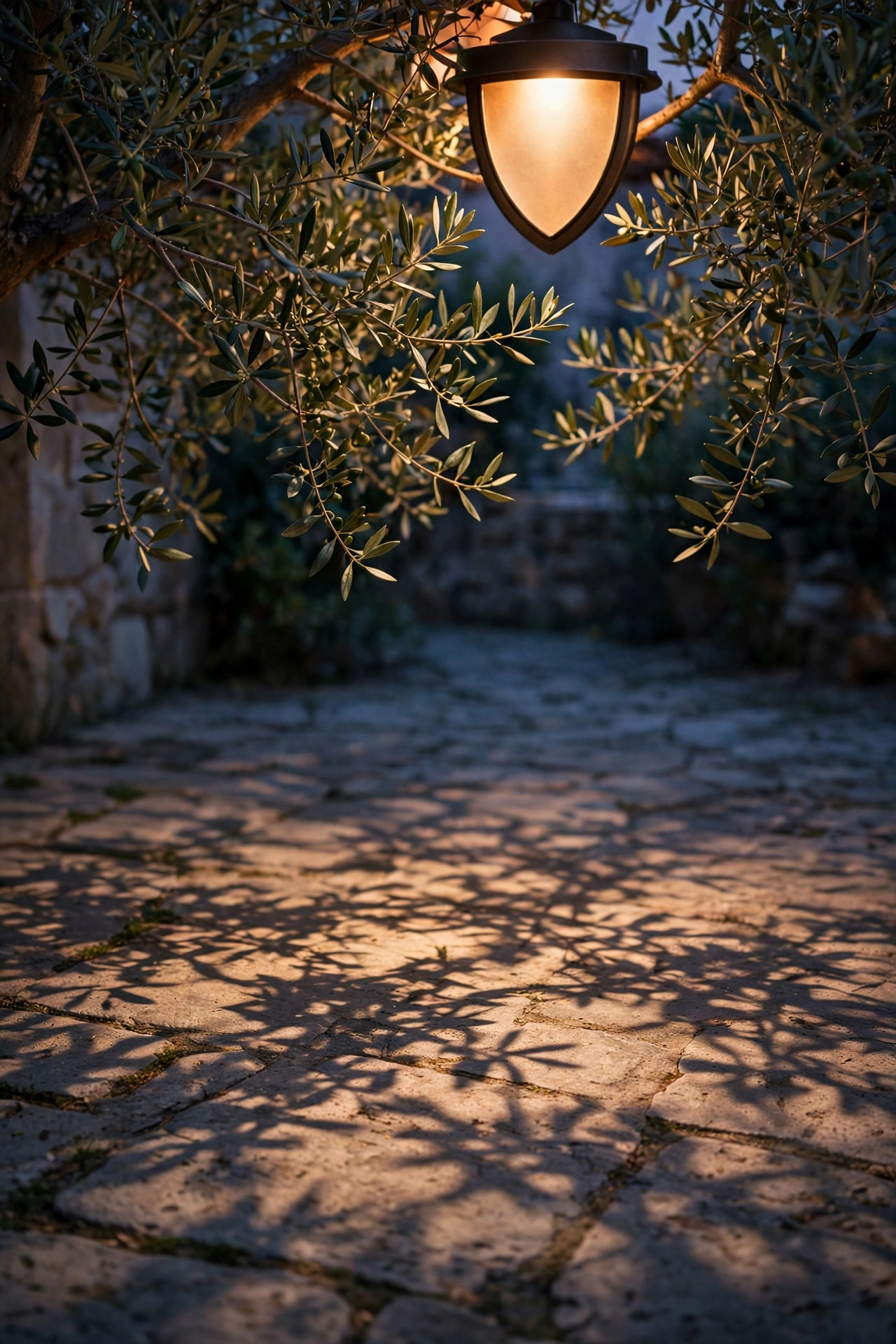
Moonlighting is the most romantic trick in landscape lighting, and a courtyard olive or citrus tree gives you the perfect perch for it. A small shielded fixture mounted high in the branches and aimed down casts dappled light through the leaves, so the paving below looks lit by a full moon. Use a soft 2700K lamp here even though real moonlight is cool; the warm version keeps faith with the rest of the courtyard and simply reads as gentle. The fixture must be fully shielded, so nobody at the table sees a bare bulb when they look up through the branches. This one is worth hiring out if the tree is tall or the mounting is fiddly, because a wobbly high fixture is worse than none at all. On a festival night, pair it with the uplight at the same tree's base and the canopy glows from within and above at once.
Suggested budget range: $60 – $180.
18. Choose Finishes That Survive Sun-Baked Days
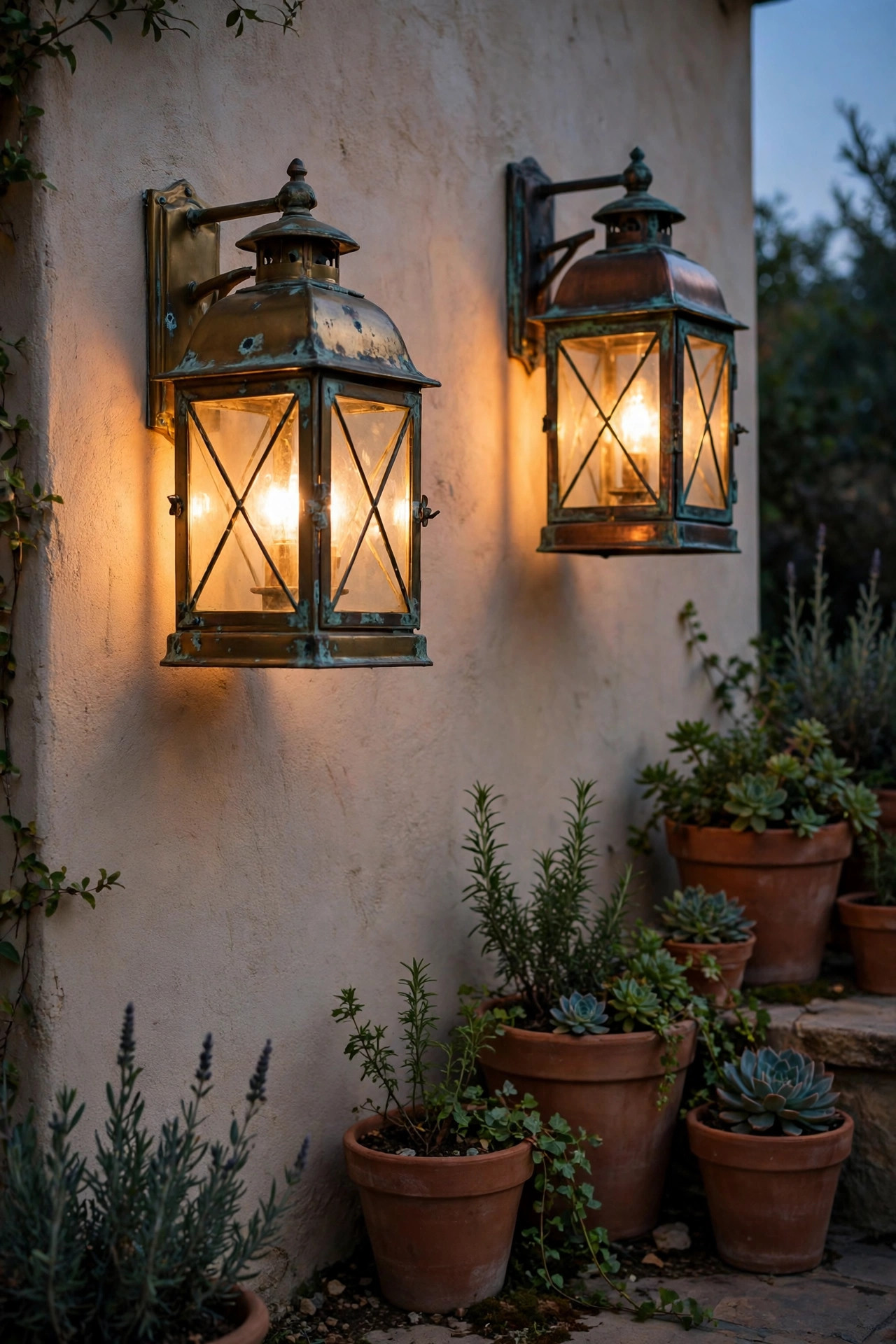
Mediterranean style means your fixtures will bake in serious sun, and finishes that look handsome in April can chalk, fade, and peel by September. I choose powder-coated aluminum, solid brass, or copper for courtyard fixtures, and I read the wet-location rating before I read the price tag, because courtyard walls concentrate both heat and reflected glare. Black iron-look finishes should be powder coat over aluminum rather than painted steel wherever sprinklers or fountain mist can reach them. Brass and copper earn their keep gracefully here, developing the soft patina that makes a new courtyard look settled years ahead of schedule. Give everything a quick rinse and wipe each spring, check seals and gaskets before the rainy season, and quality fixtures will outlast three generations of bargain-bin replacements. Buy once, in the right metal, and the budget goes to better things. Fixtures rated for wet locations shrug off both summer heat and winter rain, which is why I never install damp-rated pieces outdoors at all.
Suggested budget range: $50 – $200.
19. Finish With a Dusk Walk-Through of Your Mediterranean Courtyard Lighting Ideas
Every lighting plan deserves a final audit, and mine happens barefoot, at dusk, drink in hand. Walk your mediterranean courtyard lighting ideas the way a guest will live them: in through the gate as the motion lantern warms up, along the path lights to the door, then out to the table as the strings and pendants take over. Stand in each seat. Sit where your guests will sit. Look for the three classic flaws: a bare bulb glaring at eye level, a corner that fell completely black, and one fixture glowing a different color temperature than all the rest. Adjust angles with the lights on and the sun fully down, because noon adjustments lie to you. Nudge the fountain light, widen the olive uplight, dim the loggia pendants, then walk it once more. When every seat feels like the best seat in the house, you are done, and the courtyard is officially an evening room.
Suggested budget range: $0 – $40.
Frequently Asked Questions
What color temperature is best for a Mediterranean courtyard?
Warm white at 2700K is the sweet spot. It flatters stucco, terracotta, and stone, and it mimics candlelight and late sun, which is the whole old-world brief. Avoid anything above 3000K in the courtyard itself; cooler light reads modern and clinical against warm materials. Whatever you choose, match every source, bulbs, solar stakes, string lights, and flameless candles, because consistency matters more than the exact number.
How do I light a courtyard fountain safely?
Use only fixtures rated IP68 for submersion, run them on low voltage where possible, and power everything from a GFCI-protected outlet, no exceptions near water. Keep cords tucked under the basin rim or buried in conduit so nothing trails across wet stone. One small warm puck per tier is plenty; moving water multiplies light beautifully, so a modest fixture looks far grander than its size suggests.
Are solar lights bright enough for a courtyard?
For path edges, step markers, and accent glows, yes, especially since courtyard paving collects strong sun. Pick models with replaceable batteries and at least 25 lumens, and keep panels out of deep shade. For the lights you truly depend on, the gate lantern and the main step lights, wired low-voltage is still the reliable choice. Most courtyards end up happiest with a hybrid: solar for accents, wired for the backbone.
How much does it cost to light a whole Mediterranean courtyard?
A starter layer of path lights, one lantern pair, and string lights lands around $250 to $600 if you install it yourself. A full layered plan with a fountain light, uplights, pendants, and automation typically runs $800 to $2,000 in fixtures. The phased approach in this post, guide layer first, accents later, spreads that cost across seasons without ever leaving the courtyard half lit.
Conclusion
The best mediterranean courtyard lighting ideas all share one belief: the architecture was beautiful all along, and light just has to arrive gently and on time. Start with the three layers, hold your 2700K line, automate the dusk routine, and audit it all on a barefoot walk-through. Your courtyard will do the rest. When you are ready to carry the same warm layers beyond the walls, browse the rest of my outdoor lighting ideas here on the site for the garden, the patio, and the front walk. And I would honestly love to hear which idea your courtyard claims first.