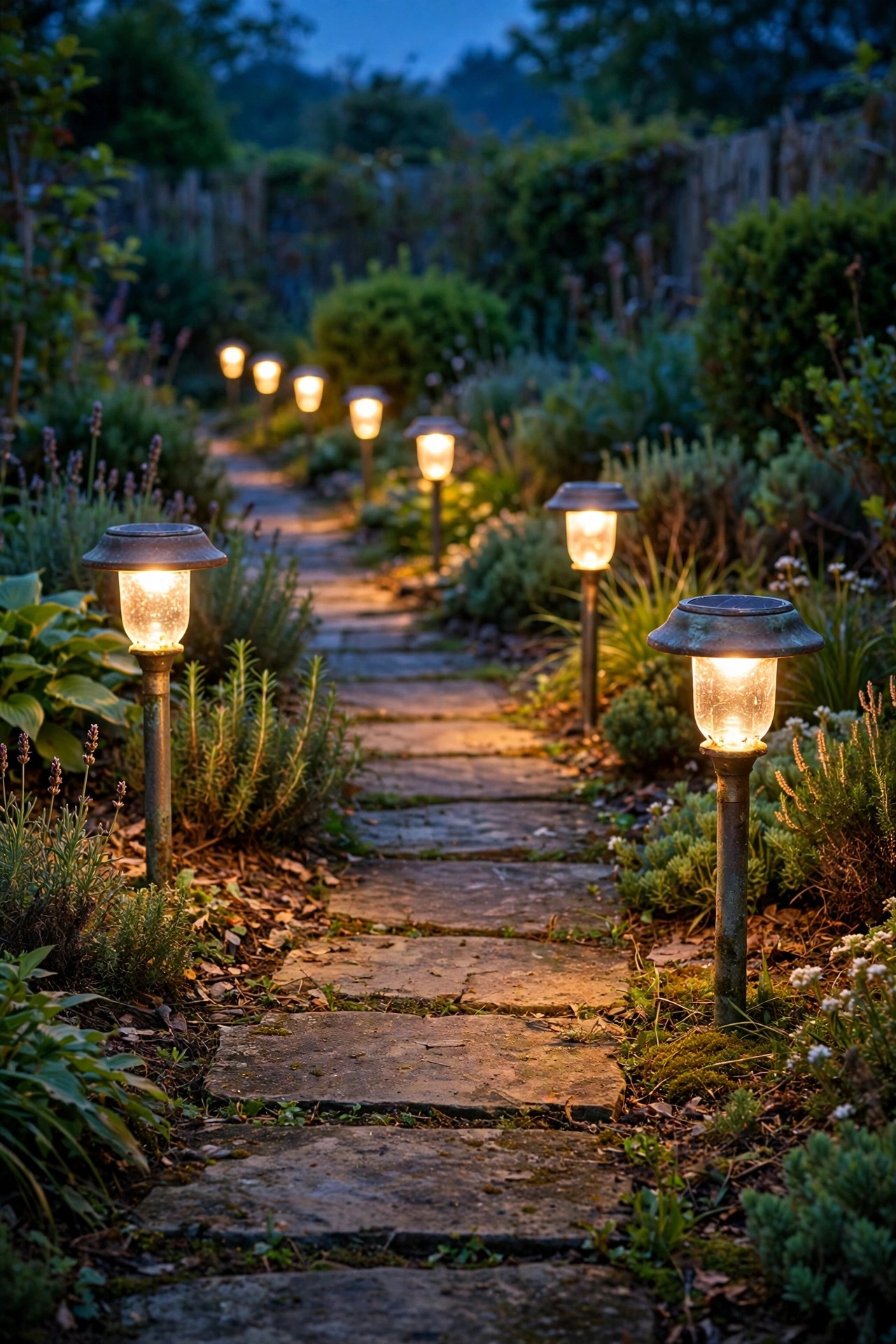
Every spring I do the same walk around my yard at dusk, coffee in hand, playing my least favorite game: which solar lights survived the winter? A few always surprise me — the cheap stakes by the mailbox are somehow still glowing their hearts out — and a couple of the nice ones have quietly given up. If you have ever stood in your own yard wondering how long do solar lights last, and whether a dim light is dead or just tired, this guide is for you. The honest answer is that a solar light is really four products in one housing, and each part ages on its own schedule. Once you know which part fails first (it is almost never the part people blame), you can predict how long yours should last, fix the ones worth fixing, and stop throwing away lights that only needed a fresh battery and a wash.
The Short Answer
Most solar lights last 2 to 4 years before they noticeably fade, and the rechargeable battery is nearly always the reason. The LED itself can run a decade or more, the solar panel usually 10 years plus, and a metal housing longer still. In practice that means one battery swap somewhere around year two or three restores most lights to nearly new, and a typical light gives you 4 to 6 good years total before replacement makes more sense than another repair.
How Long Do Solar Lights Last? Start With the Four Parts
Ask how long a whole solar light lasts and you get a meaningless number — the real answer lives part by part. The LED is the marathon runner: quality LEDs are rated for 25,000 to 50,000 hours, and at roughly 8 hours a night that works out to 8 to 17 years. You will almost certainly replace the entire light for other reasons before the LED dies. The solar panel is nearly as durable. A glass-covered panel keeps producing useful power for 10 to 20 years, losing a little output each year; the weak spot is the cheap clear epoxy coating on bargain lights, which yellows in 2 to 4 summers of sun and slowly starves the battery. The housing lands in the middle: thin plastic stakes and lenses often crack or cloud in 2 to 4 years, while metal and real glass housings shrug off 5 to 10 years easily. And then there is the battery, the sprinter of the group, typically done in 1 to 3 years. When someone tells me their solar lights "only lasted two years," they almost always mean the battery did. There is technically a fifth part inside every light — the little dusk sensor and circuit board — but it rarely fails first. When it does go, the light typically stays on all day, never wakes at all, or ignores the dark entirely, and that behavior is a replace signal rather than a repair project.

Battery Types, Compared Honestly
Since the battery sets the lifespan, it pays to know which one is inside your lights. Older and very cheap sets often use NiCd cells — they tolerate abuse but suffer memory effect, hold modest charge, and usually fade within 1 to 2 years. Most mid-range path lights today use NiMH AA or AAA cells, the friendliest option: widely available, forgiving of partial charging, and good for about 2 to 3 years or 500 or so charge cycles before runtime shrinks. Brighter spotlights and flood-style lights step up to lithium-ion cells, commonly the larger 18650 size, which pack far more energy and typically last 2 to 4 years. The premium option is lithium iron phosphate (LiFePO4), which handles heat better than standard lithium and can stretch to 3 to 5 years. Whatever the chemistry, the fade is gradual rather than sudden: a light that once ran until midnight starts quitting at nine, then at eight. That shrinking runtime is your earliest, most reliable warning that the battery — not the light — is nearing the end. When you do shop for cells, read the milliamp-hour rating printed on the side: a genuine 2000 mAh NiMH cell will noticeably outrun a 600 mAh one in the same light, and no-name cells often promise numbers they cannot deliver. Buy the highest honest capacity that fits, and keep a note of the size and chemistry somewhere you will find it in two years.

How Long Do Solar Lights Last After a Battery Swap?
Longer than most people expect — a fresh battery is the closest thing solar lighting has to a reset button. If the panel is still clear and the LED still bright, a new cell usually restores run time to nearly what the light managed when it was new, which means one swap around year two or three can carry a decent light to year five or six. The job itself is beginner-friendly: most lights hide a standard AA or AAA rechargeable under a twist-off top or a cover held by two small screws. Match the replacement to the original chemistry, size, and voltage printed on the old cell, seat it firmly, and give the light a full sunny day before judging the result. My full walkthrough of the swap, including the sizes that trip people up, is in my guide to replacing solar light batteries. One caution: a light that eats a second battery in under a year is telling you something else is wrong — usually a yellowing panel that can no longer fill any battery, however new. And judge the swap fairly: the first night often looks underwhelming, because replacement cells usually ship partly discharged. Give the light a full sunny day and assess it on the second or third night, when the new battery has taken a complete charge, before you decide the fix failed.

Dying, Dirty, or Just Shaded? How to Tell the Difference
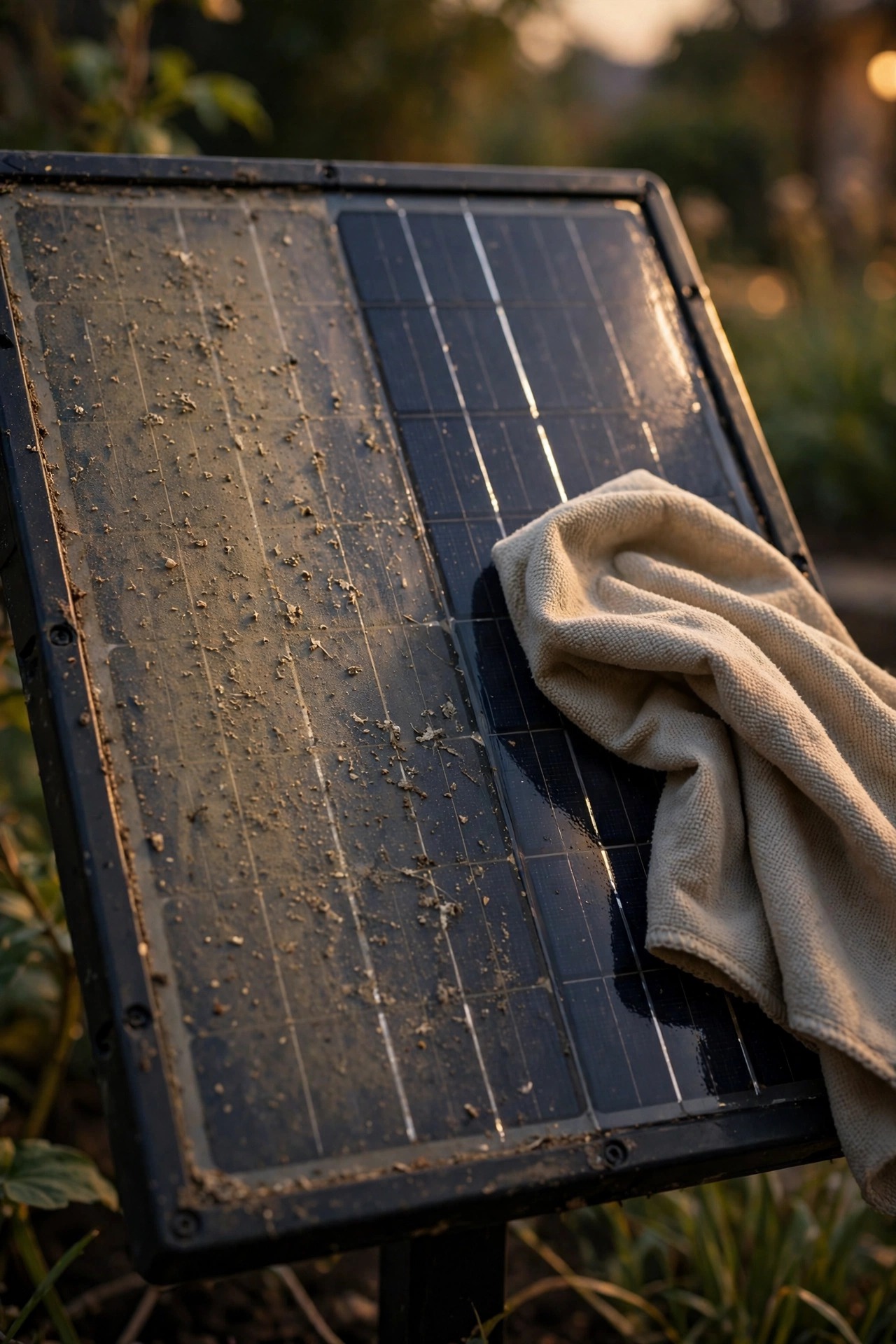
Before you declare a light dead, run the three-minute diagnosis, because two of the three usual suspects cost nothing to fix. Start with the panel: a season of dust, pollen, and sprinkler film can cut charging dramatically, and a wipe with a damp cloth is genuinely a repair, not a ritual. Next, check the shade. Shrubs grow, trees leaf out, and a light that charged beautifully in March can sit in shadow by June — a light that glows weakly after a cloudy week but recovers after a sunny one is undercharged, not dying. Then test the battery: swap in the cell from a light that works, or a freshly charged rechargeable of the same type. If the light springs back to full brightness and holds it past midnight, the old battery was the whole problem. Flickering points somewhere else entirely — usually corrosion on the battery contacts, which a dry cloth or a gentle rub with a pencil eraser often cures. My solar lights not working fixes guide walks through the stubborn cases step by step. One last clue worth knowing: if every light along the path dimmed during the same week, suspect the sky rather than the hardware — a stretch of storms, heavy cloud, or even wildfire smoke can leave an entire row undercharged at once, and they will all recover together when the sun comes back.
Maintenance That Genuinely Extends Their Life
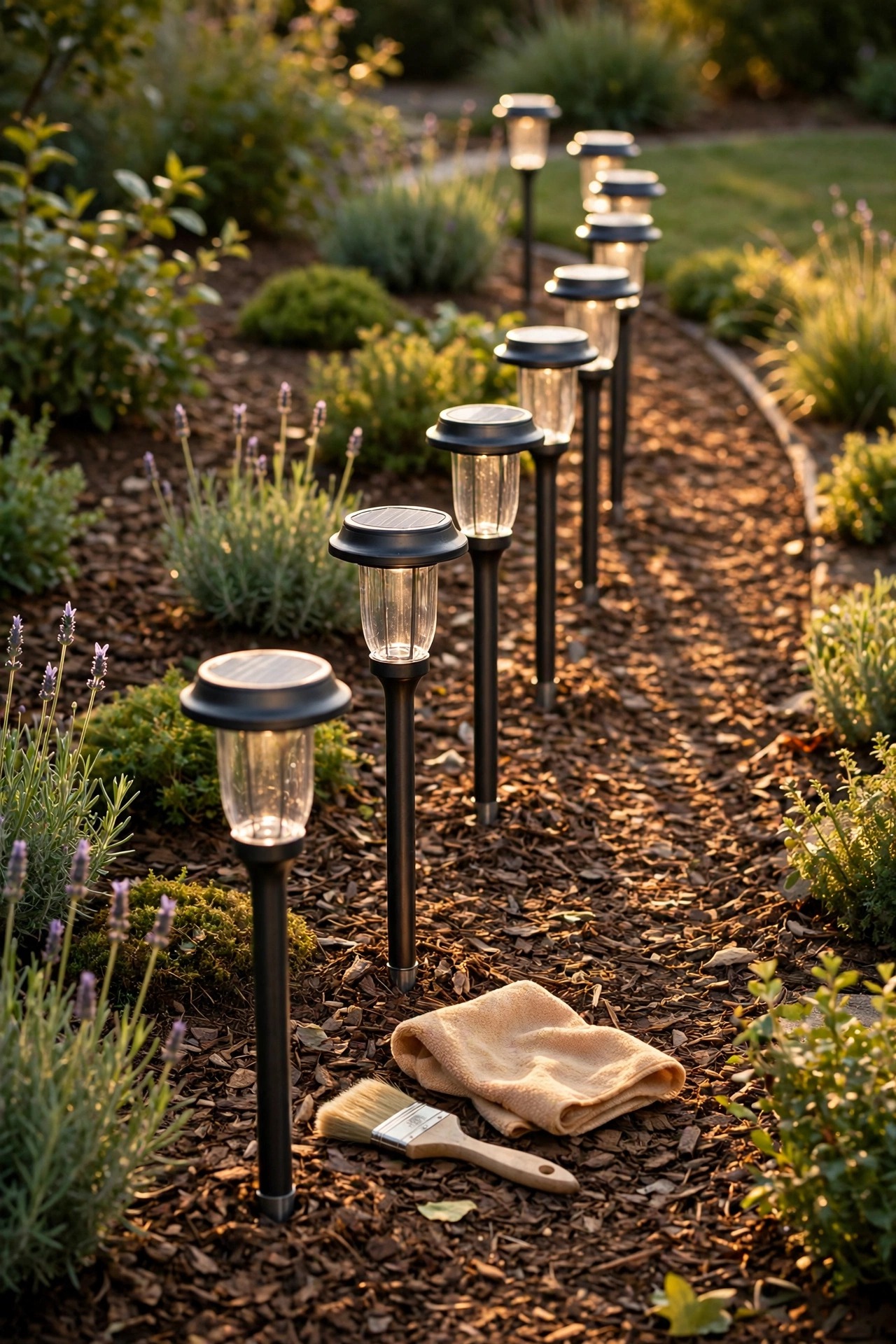
Solar lights ask for very little, but the little they ask for matters. Wipe the panels every month or two during the season — more often under trees or near sprinklers — because a clean panel charges the battery fully, and a battery that charges fully every day ages far more slowly than one stuck at half. Keep leaves, mulch, and snow from burying the panel, and brush snow off after storms rather than letting a light sit dark and frozen for weeks. Twice a year, open the battery cover, check the contacts for white or green corrosion, and confirm the seal is seated; a pinhead of moisture inside the lens is your warning that the gasket is failing. In cold-winter regions, bringing lights indoors to a garage shelf from December to March genuinely extends battery life, as long as you store them switched off with the batteries removed or the pull-tab replaced. Finally, reposition seasonally: the sun rides lower in winter, and shifting a light a few feet can be the difference between a full charge and a nightly disappointment. While you are out there, snip back any foliage creeping over the panels and check that mulch has not crept up around the stakes. Five unhurried minutes, a few times a year, really is all the scheduled care these lights ask for.
Climate and Seasons: Why Where You Live Changes the Answer
The same light, in the same box, can live twice as long in one yard as in another. Heat is the quiet battery killer: lithium and NiMH cells both age faster when they bake, and a light whose black housing sits in full Phoenix or Las Vegas sun all summer is aging its battery at double speed even while it works perfectly. Cold plays a different trick — it does not usually destroy the battery, but it temporarily shrinks capacity, so northern lights honestly look half-dead in January and recover in April. Short winter days compound it: six weak hours of December sun in Minnesota simply cannot fill a battery the way ten hours of June sun can, so runtime craters even on healthy lights. Coastal yards add salt air, which corrodes contacts and clouds lenses faster than inland air does. None of this means solar lights are a bad bet in tough climates; it means your expectations and your storage habits should match your zip code, and that a light "failing" in its first winter deserves a fair-weather retest before the trash bin. The flip side is that mild, temperate regions are solar-light paradise — modest temperature swings, decent winter sun, no deep freezes — which is why the identical set that limps through two Minnesota winters can look nearly new after five years in a gentler yard.
What Shortens a Solar Light's Life the Fastest
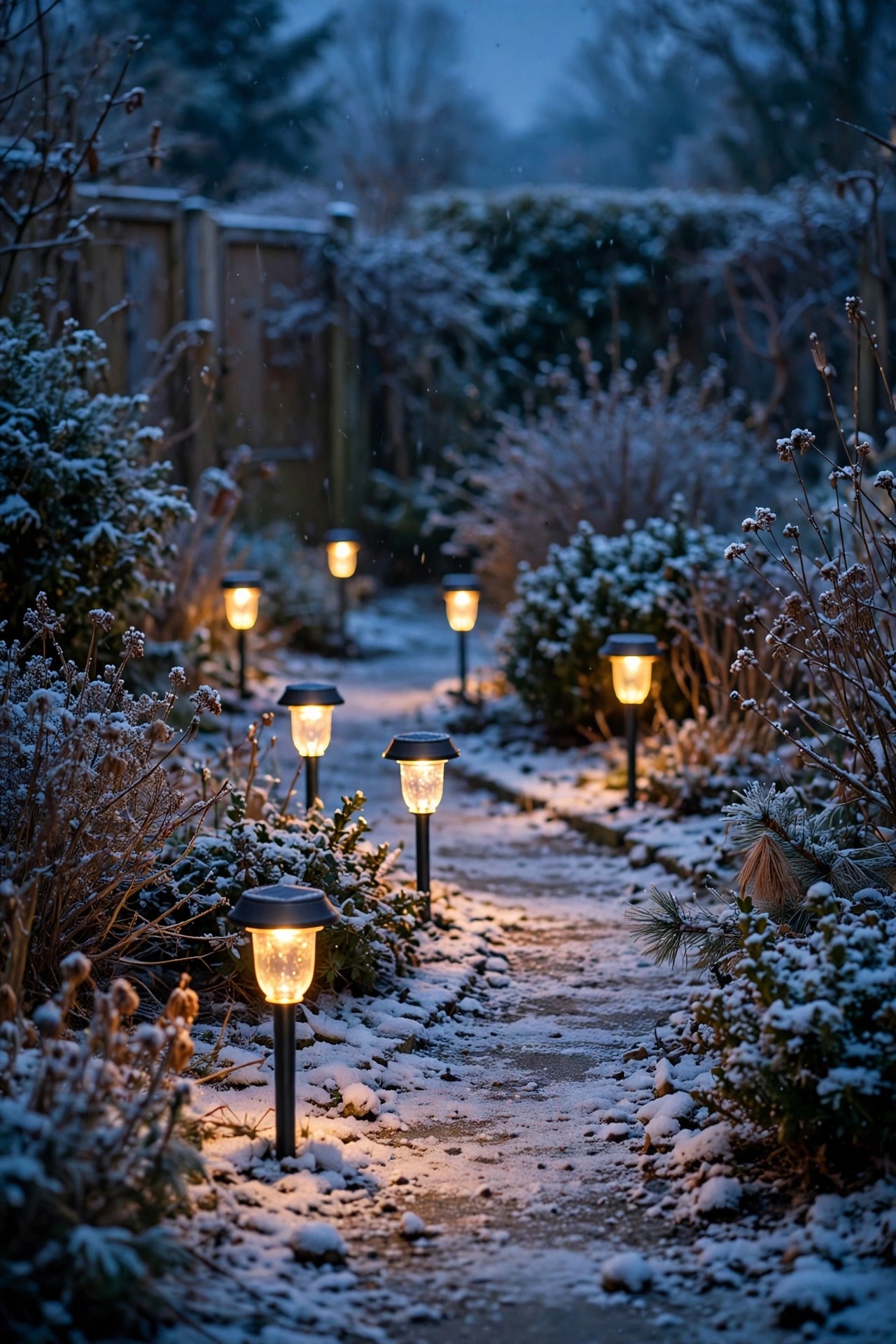
If I had to rank the habits that murder solar lights early, chronic undercharging tops the list. A battery that never reaches full — because the light sits in dappled shade, faces north, or hides under an eave — degrades far faster than one cycled fully each day, so placement is a lifespan decision, not just a looks decision. Second comes water: once a housing seal cracks or a lens crazes, every rain pushes moisture onto the contacts and circuit board, and corrosion does the rest within a season. Third, leaving exhausted batteries inside lights through a freezing winter lets a dead cell leak and take the contacts with it. Cheap epoxy-coated panels that yellow belong on the list too, since they strangle charging no matter how new the battery is. Add sprinkler overspray, which films panels and forces water past seals, plus the occasional string-trimmer strike that cracks a stake, and you have nearly every early death I have ever autopsied in my own garden. Two quieter culprits deserve a mention: storing lights wet, so droplets sit inside an already-cracked lens for weeks, and parking a grill or a sun-baked dark wall beside the housings, which cooks the battery from outside. Neither shows up in product reviews, because they are habits rather than defects — which also means they are entirely within your control.

Repair or Replace? My Simple Decision Rule
Here is the rule I use at my own dusk walk. Repair — meaning a battery swap and a good cleaning — when the housing is sound, the panel is still clear and colorless, the LED lights at full brightness on a fresh battery, and the light takes a standard cell size you can find anywhere. That describes most lights under four years old, and the fix takes ten minutes. Replace when the panel has yellowed, turned milky, or cracked, because no battery can outrun a panel that no longer produces. Replace when water has been living inside the lens, when the housing or stake has split, or when the light uses a sealed proprietary battery that cannot be changed at all. And replace, without guilt, when a bargain light needs its second battery: at that point you are maintaining the cheapest part of the purchase with the most expensive input, your time. The one exception is a matching set — saving one discontinued light that completes a row of eight is worth a little irrationality. When you do replace a light, keep the best of the old housings as donors: a sound stake, lens, or top from a dead light can rescue its twin after a trimmer hit or a dropped lens later, which stretches a matching set further than buying new ever will.

What It Costs in 2026
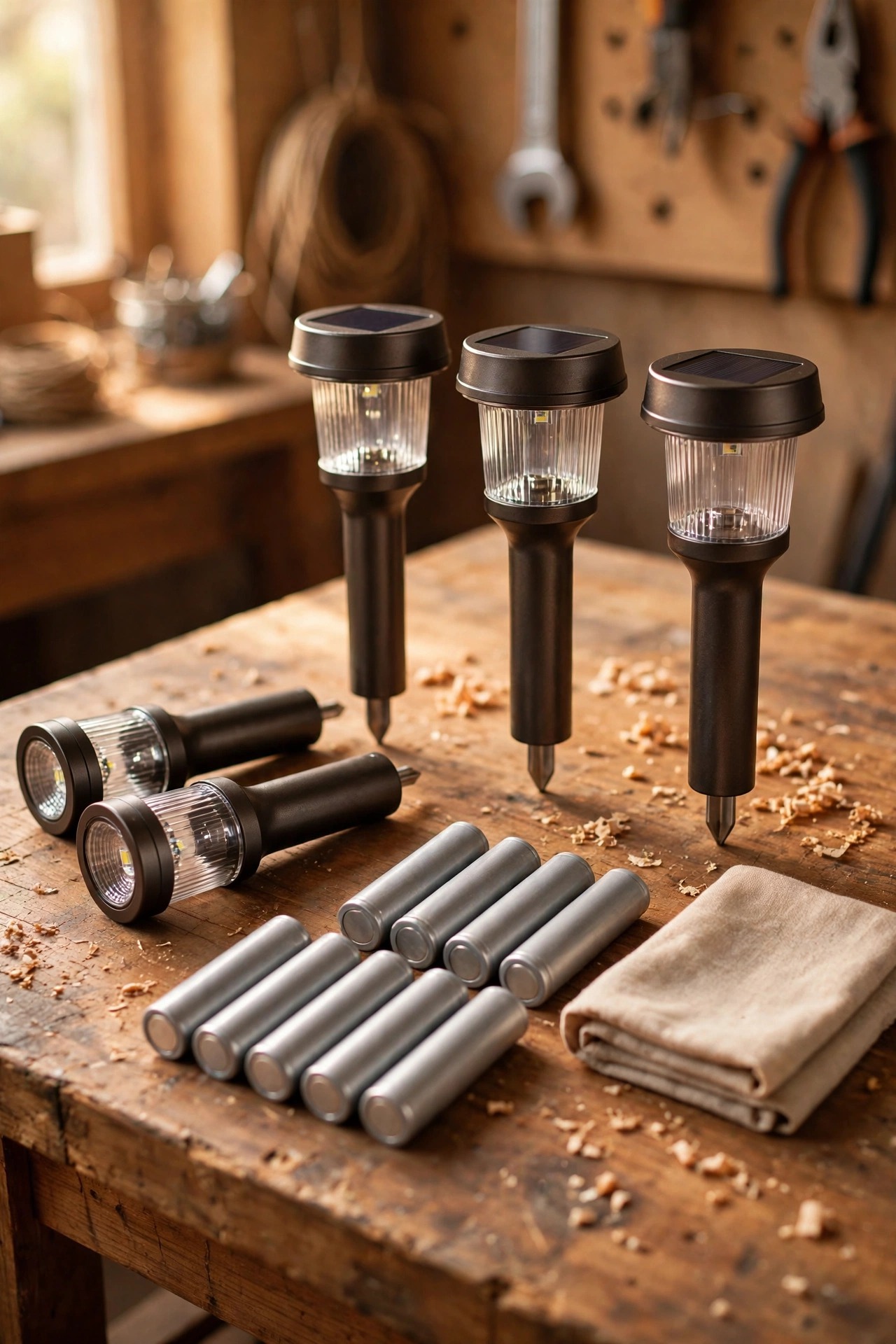
Replacement batteries are genuinely cheap insurance: standard NiMH AA and AAA rechargeable cells run about $2 to $4 each in multipacks, and the larger lithium 18650 cells about $6 to $10 each, so refreshing a whole row of path lights usually costs less than replacing two of them. New lights span a wide ladder — bargain multipack path lights at roughly $3 to $8 per light, sturdier mid-range metal lights at $10 to $25 each, and premium glass-and-metal designs or high-output solar spotlights at $30 to $60 and up. Run the math on a typical twelve-light path: a full battery refresh lands around the price of two or three new mid-range lights, and buys the whole original set another two to three years, which is why the swap almost always wins. There are no running costs to factor in — no electricity, no wiring, no transformer — so the honest lifetime comparison is purchase price plus one or two battery rounds, a math I break down fully in my look at the long term cost of solar lights. Premium lights tilt the math further toward repair: when a single statement lantern or high-output spotlight cost $40 or more, even a top-shelf lithium cell is an easy yes, while on a $4 bargain stake, that same cell is half the price of a whole new light — and the new light comes with a fresh panel and housing.
Frequently Asked Questions
Can solar lights actually last 10 years?
The light, sometimes; the original battery, almost never. A well-built metal or glass light with a glass-covered panel can still be standing and shining at year ten, because the LED and panel both have decade-plus lifespans. But it will have gone through three or four batteries to get there. Plan on the battery as a consumable, like a filter, and a 10-year light becomes completely realistic.
Why do my solar lights only stay on for an hour or two now?
That shrinking runtime is the classic signature of a fading battery: the light still charges and still turns on, it just cannot store enough to last the night. A filmed-over panel or new shade produces the same symptom, so clean the panel and check the sun exposure first. If neither helps, a fresh battery nearly always restores the old runtime.
Should I bring solar lights inside for the winter?
If your winters bring long freezes, yes — it is one of the kindest things you can do for the batteries. Store the lights switched off, with batteries removed or the insulating tab replaced, somewhere dry like a garage shelf. Lights you leave out should get their panels brushed free of snow so they can charge on bright days. Either way, give winter-dulled lights a few sunny spring days before judging them.
Do expensive solar lights really last longer than cheap ones?
Mostly yes, and the difference is specific: better lights use glass-covered panels instead of yellowing epoxy, larger and better-quality batteries, and metal housings with real seals. A bargain light might give you two decent summers; a well-made one, with battery swaps, can serve five to ten years. The LED brightness per dollar is similar — what the extra money buys is time.
Conclusion
So, how long do solar lights last? As long as you let the battery be a replaceable part instead of a death sentence. Expect 2 to 4 years from a set as it comes out of the box, add a fresh round of batteries and a habit of clean panels, and most good lights will serve 5 years or more — with the LED and panel ready for longer still. Clean first, test before you toss, and save the replacements for yellowed panels and cracked housings. For more ways to make the whole yard glow after dark, browse the solar and outdoor lighting guides here on the site — your future dusk walks will thank you.