Solar lights feel like the free option. You push a stake into the ground, the sun does the rest, and your electric bill never notices. I believed that too — right up until I added up everything I'd spent on mine over five years. When friends ask me about solar lights long term cost, I tell them the truth: the purchase price is only the first chapter. Batteries wear out, panels cloud over, cheap stakes snap at the neck, and a set that seemed like a bargain in year one can quietly cost more than a wired system by year five. None of this means solar is a bad buy. It means the real number depends on what tier you buy, whether the batteries are replaceable, and how you maintain them. In this guide I'll walk through exactly where the money goes over five years, the honest 2026 math for cheap, mid-range and premium sets, how solar compares with low-voltage wired lighting, and the handful of habits that keep a good set glowing for the full five years.

The Short Answer
Over five years, a dozen decent solar path lights typically cost you one to two times their purchase price once you count replacement batteries and the fixtures that fail early. Cheap sets are the trap: many need full replacement two or three times in five years, quietly passing the cost of a mid-range set that would have lasted. Buy replaceable-battery fixtures instead, plan on fresh rechargeable cells every two years or so, keep the panels clean and in full sun, and solar stays genuinely economical for the whole five years and beyond.
Why the Sticker Price Lies
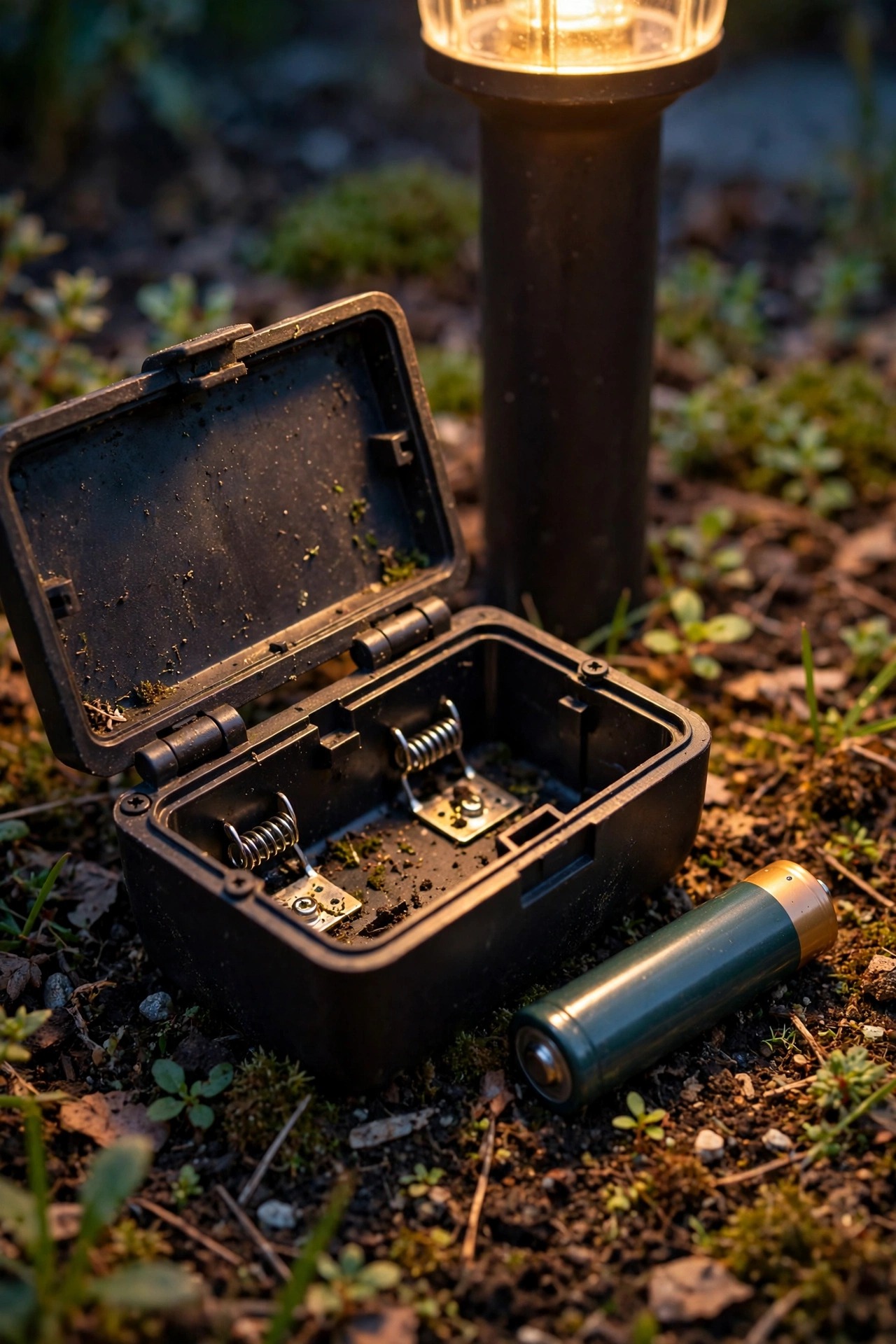
A solar light is really four products wearing one hat: a small solar panel, a rechargeable battery, an LED, and a housing that has to survive weather it was often not designed for. Every one of those parts ages on its own schedule, and the cheapest part usually sets the lifespan of the whole fixture. The battery is almost always the weak link. The small rechargeable cells bundled with budget lights are built to a price, and after a few hundred charge cycles they hold noticeably less energy — which is why a light that ran until midnight in its first summer is dark by nine the second. The panel ages too. Clear plastic lenses yellow and cloud under UV exposure, letting less light reach the cells, so the battery charges less even on a sunny day. Seals give up next: moisture creeps in, contacts corrode, and the light flickers or dies after a wet spring. Understanding this anatomy matters because it tells you which costs are coming. A fixture with a replaceable battery and a glass or well-sealed panel can be renewed cheaply. A sealed unit is a countdown timer — when the battery fades, the whole light goes in the bin, and that's where five-year budgets quietly double.
The Battery Cycle: The Biggest Piece of Your Solar Lights Long Term Cost
If you only plan for one recurring expense, plan for batteries. This is the engine of your solar lights long term cost, and it runs on a predictable schedule. Most solar path lights use AA or AAA nickel-metal hydride (NiMH) cells; better fixtures use larger lithium cells. In real garden conditions — daily cycling, summer heat baking the housing, winter cold sapping capacity — a typical NiMH cell gives you roughly two good years before run time drops off a cliff. Some go three. Budget cells bundled with cheap lights often fade within the first year. The practical rhythm I plan around is a full battery swap every 18 to 30 months for lights I want performing well. That swap is painless only if the fixture was designed for it: a little battery door, a standard cell size, contacts that aren't corroded shut. Sealed fixtures skip the battery cost entirely — by turning it into a whole-fixture replacement cost, which is several times more money and a lot more plastic in the landfill. There's a second, subtler battery issue: mixed ages. When one light in a row dims, the temptation is to replace just that battery. Do the whole row at once instead. Cells of different ages make the row look patchy, and you'll be back out there with a screwdriver again in a month. Treat batteries like windshield wipers — a scheduled pair, not an emergency purchase.
Panels, Lenses and the Slow Fade
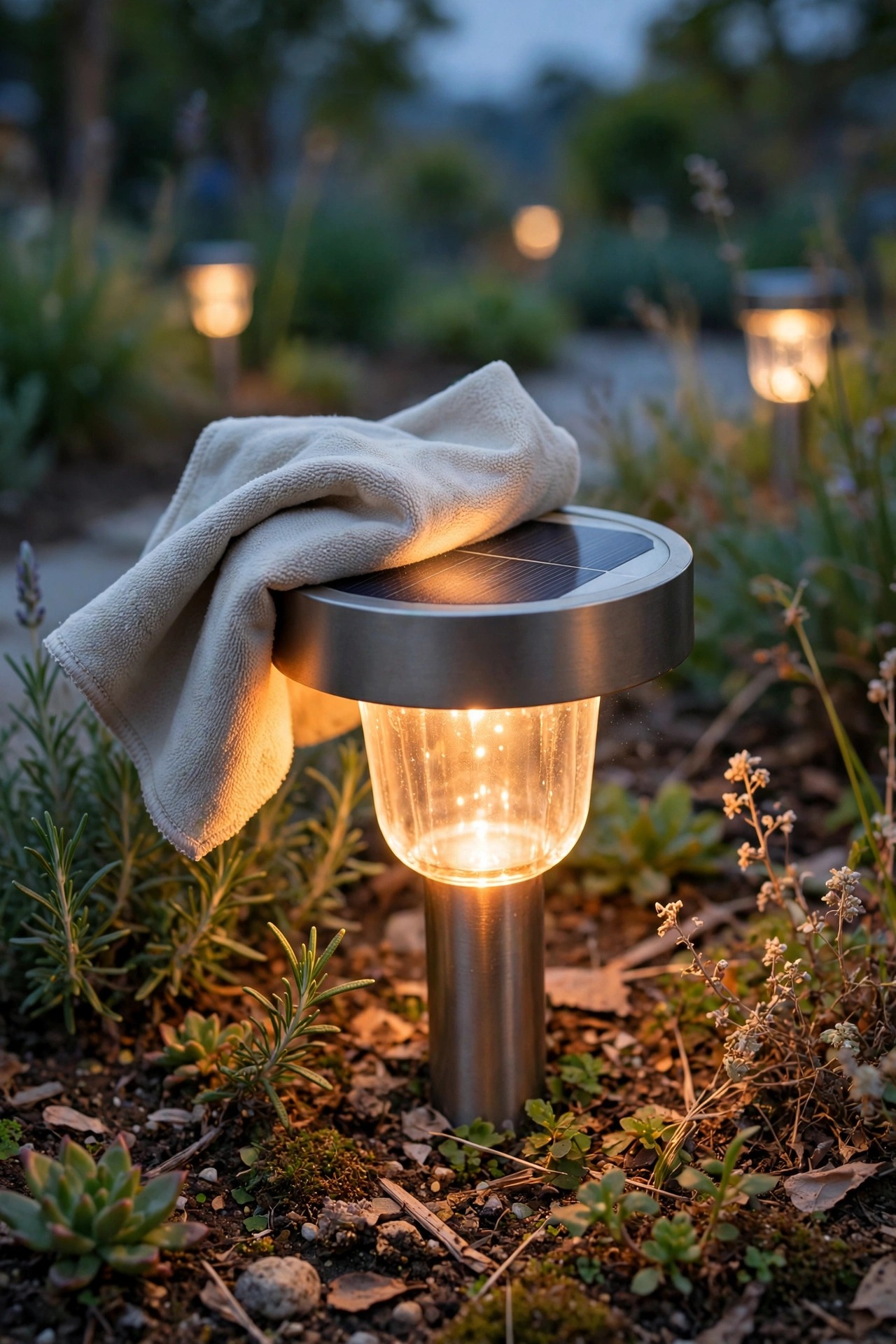
Batteries get the blame, but the panel is the silent partner in every five-year budget. The photovoltaic surface itself degrades slowly; the cover over it degrades fast. On inexpensive lights that cover is clear plastic, and after two or three summers of UV it turns milky. A clouded lens can cut charging noticeably — the light still works, it just works for fewer hours, and many owners misread that as another dead battery and spend money on cells that were never the problem. Water is the other slow killer. Every fixture breathes a little with temperature swings, and cheap seals let that breath carry moisture in but not out. You'll see it as fog inside the lens, then green or white corrosion on the contacts, then a light that only works when you wiggle it. In my own yard the fixtures that died before year three almost all died this way, not from dead LEDs — the LED itself is nearly immortal at these power levels. The good news is that both failure modes respond to maintenance. A twice-yearly wipe of the panel with a damp cloth, and storing or covering the cheapest stakes over the harshest winter weeks, genuinely adds seasons. I'll cover the full routine in the maintenance section below, but the budgeting takeaway is simple: fixtures with glass lenses and real gaskets age in years; fixtures with plastic lenses and friction-fit caps age in summers.

The Three Tiers, Compared Honestly
Everything about five-year cost depends on which tier you buy, so let's compare them the way I wish someone had for me.
| Tier | Typical build | Battery service | Realistic lifespan | Best for |
|---|---|---|---|---|
| Budget | Plastic stake, small panel, basic NiMH or sealed cell | Often sealed or hard to open | 1–2 seasons | Testing a layout, renters, events |
| Mid-range | Aluminum or sturdy ABS, replaceable AA/AAA NiMH | Battery door, standard cells | 3–5 years with one or two battery swaps | Most walkways and garden beds |
| Premium | Metal housing, glass lens, larger lithium or high-capacity cells | Replaceable, longer intervals | 5+ years | Permanent front-yard lighting |
The budget tier is not a scam — it's a rental. You're paying a small amount to light a space temporarily, and for a season or two the light is genuinely fine. The mistake is expecting it to behave like a permanent installation, or rebuying the same set three times and calling it savings. The mid-range tier is where the five-year math turns friendly: the fixtures cost more per light, but because the housing survives and the batteries are standard and swappable, your year-three and year-four expenses shrink to a pack of cells. Premium fixtures make sense where the light is part of the home's face — the front walk guests use nightly — and where you'd pay for looks and brightness anyway. My own yard is a mix: premium on the front walk, mid-range in the beds, and cheap stakes I accept as semi-disposable around the vegetable garden. Knowing which job each light is doing is what keeps the total sane.
Solar vs Wired Over Five Years
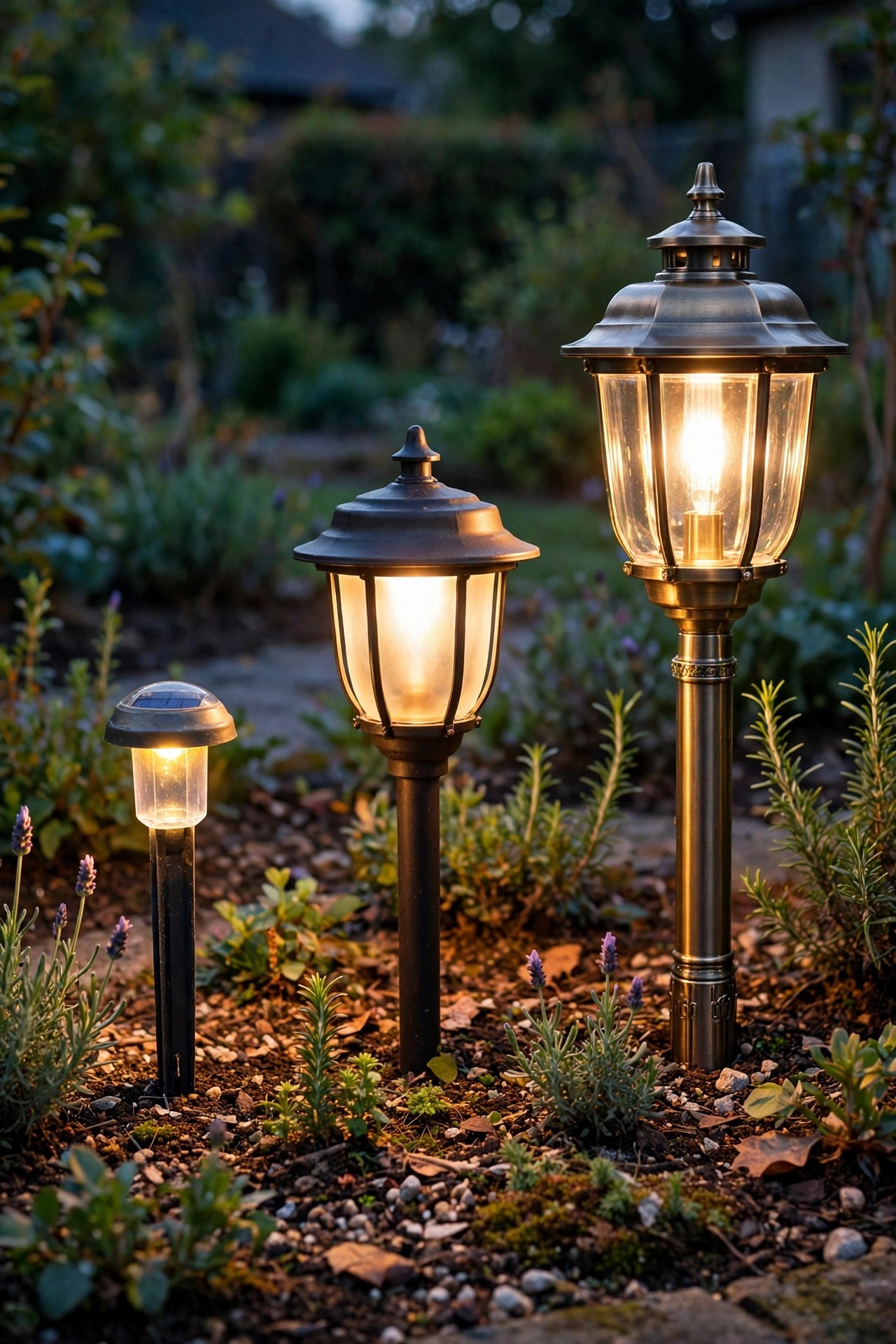
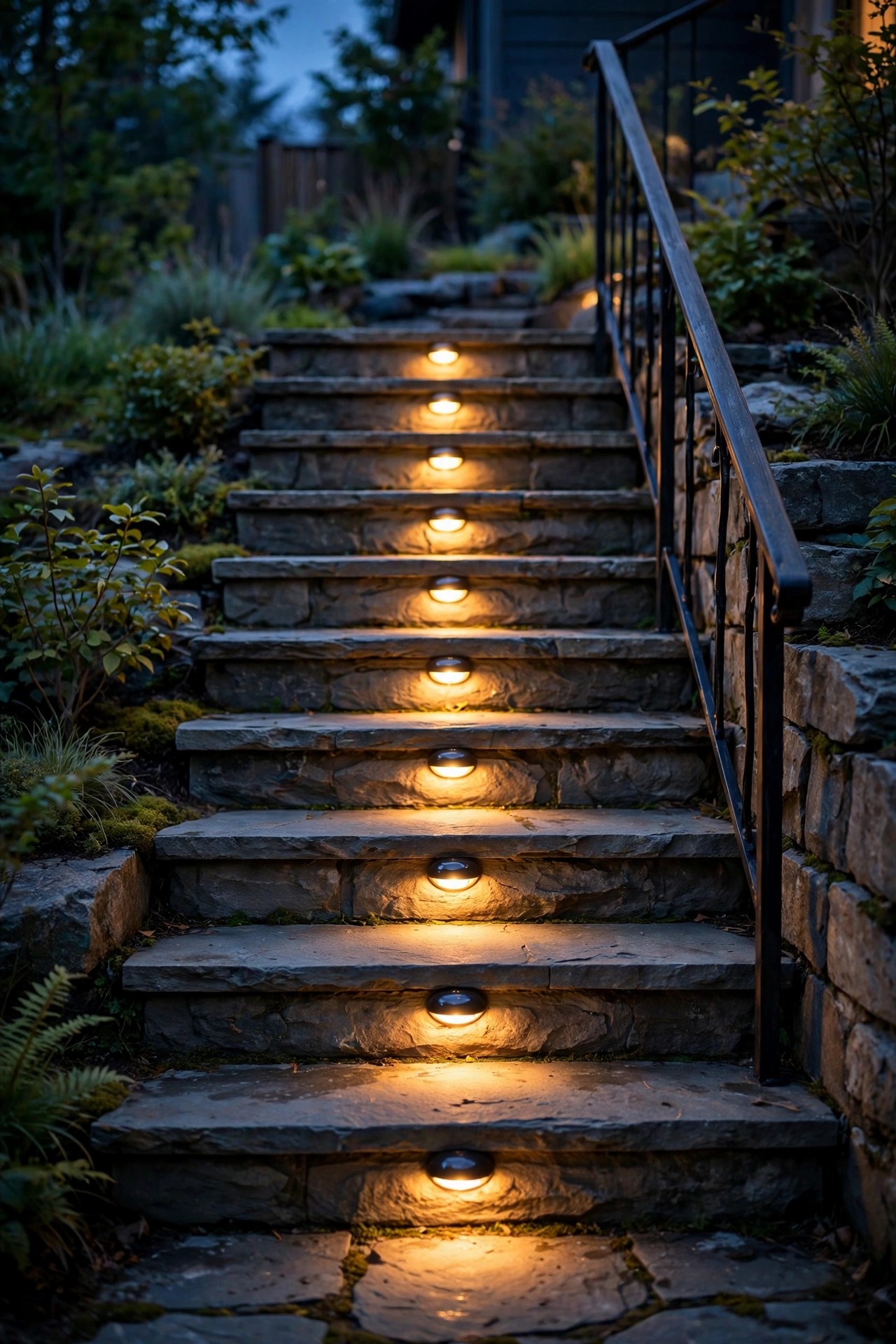
The fairest comparison isn't solar versus nothing — it's solar versus the low-voltage wired system you might install instead. The two have opposite cost shapes. Wired lighting front-loads nearly everything: transformer, cable, and fixtures cost real money on day one, and then the system mostly sits there, sipping electricity and asking for almost nothing for a decade. Solar spreads its cost out: a gentle day one, then a drip of batteries and replacements. Brightness isn't equal either. Even premium solar path lights are accent lighting; a wired fixture on a transformer will out-glow them every time, which matters on stairs and driveways. Where solar wins is installation: no trenching, no transformer placement, no planning a circuit — and for a shady-corner bed or a rental, that flexibility is worth money. I go deep on the head-to-head in my guide to solar vs wired landscape lighting, including where each belongs around a house. There's one more wrinkle: solar lets you start small and move lights as the garden changes, while a wired run is a commitment to a layout. That freedom has real value in a yard that's still evolving. For the pure wallet question, hold both shapes in mind as we get to the numbers next: wired is a mortgage, solar is rent — and rent only wins if you don't keep re-signing at the budget tier.

What It Costs in 2026
Here's the honest math for a typical project: twelve path lights along a front walk, tracked over five years.
Budget tier. A set of twelve inexpensive solar stakes runs about $25 to $40. Expect the first failures inside two seasons and a full or near-full rebuy around year two and again around year four. Five-year total: roughly $90 to $150 — plus a couple of evenings re-staking lights. Batteries are usually sealed or not worth replacing in this tier.
Mid-range tier. Twelve replaceable-battery fixtures at $6 to $10 each run about $75 to $120 up front. Add a full battery swap around year two and another around year four: quality AA NiMH cells cost about $8 to $12 per four-pack, so each full swap is roughly $25 to $35. Figure one or two individual fixture failures over five years at $8 to $10 each. Five-year total: roughly $140 to $200 — and the lights still look and perform like lights at the end of it.
Premium tier. Twelve metal, glass-lens fixtures at $15 to $30 each run about $180 to $360 up front. Batteries typically need one swap around year three or four, about $40 to $60 for the row. Five-year total: roughly $220 to $420, with the brightest result and fixtures that continue into years six through ten.
The wired comparison. A comparable DIY low-voltage setup — transformer at $60 to $120, cable around $40, twelve fixtures at $20 to $40 each — lands around $400 to $650 installed yourself. Electricity for twelve 3-watt LED fixtures running five hours a night is about 66 kilowatt-hours a year; at a typical 17 cents per kilowatt-hour that's roughly $11 a year, or $55 over five years. Five-year total: roughly $455 to $705, after which the system is barely middle-aged.
Two honest conclusions. First, solar is cheaper over five years at any tier — the sticker gap is real. Second, the gap narrows fast if you rebuy budget sets, and wired wins on brightness, reliability and decade-long cost per year of service. Choose based on the job, not just the total.

The Hidden Pieces of Your Solar Lights Long Term Cost
Time is a cost. Every spring I spend an hour or two walking my solar rows, swapping tired cells, reseating stakes the frost heaved, and wiping panels. That's pleasant gardening time for me, but if you'd hate it, price it in — a neglected solar set degrades faster, which converts your time savings into replacement purchases. There's also the performance cost: a dim light at the top of your steps isn't just ugly, it's a genuine trip hazard, and "the battery's old" is no comfort at 10 p.m. I keep wired or premium solar on true safety spots — steps, grade changes, the driveway edge — and let budget lights handle purely decorative duty where a dark night costs nothing. Finally, the landfill cost is real. A sealed budget light that dies in year two is a battery, a panel, electronics and plastic going out as one lump of e-waste. A mid-range fixture on its third set of batteries has delivered five years of light from one housing. If sustainability is part of why you chose solar in the first place, the replaceable-battery tier is the one that actually honors it — the math and the ethics point the same direction for once.
Step-by-Step: Work Out Your Own Five-Year Number
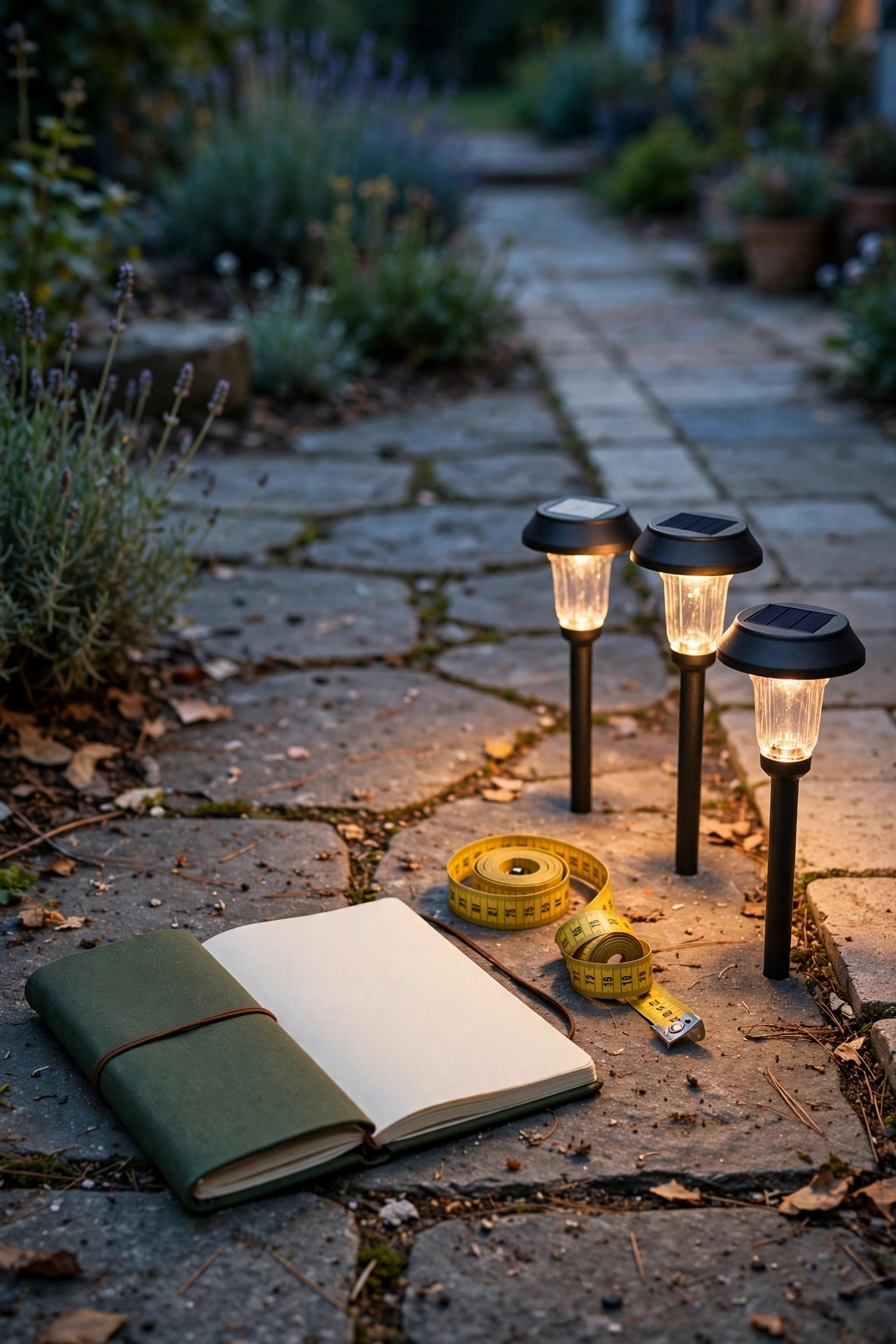
Your yard isn't my yard, so run your own numbers before you buy. It takes ten minutes:
1. Count the lights you actually need, walking the route at night with a flashlight. Most people overbuy by a third.
2. Pick the tier per location — premium or wired for steps and the main walk, mid-range for beds, budget only for temporary spots.
3. Write down the per-light price and multiply. That's year zero.
4. Check the battery door. If the fixture you like is sealed, write its full price again at year two and year four — that's its real schedule.
5. If batteries are replaceable, find the cell type and price a full row's worth; add one swap at year two and one at year four (mid-range) or one at year three (premium).
6. Add a failure allowance: one fixture in ten per five years for mid-range and premium, effectively the rebuy cycle for budget.
7. Compare against wired only if the location matters enough to trench for; include about $11 a year in electricity for a twelve-light LED system.
When I did this for my front walk, the mid-range set beat the budget set by year three and the premium set won on looks alone. Your sunlight, winters and walk length will move the numbers, but the method holds anywhere. If you're still choosing fixtures, my walkthrough of solar path lights covers brightness and placement before you spend anything.
How to Make a Set Actually Last Five Years
Longevity is mostly four habits. First, placement: a solar light in partial shade is a light on a starvation diet, charging at half rate and cycling its battery deeper every night, which shortens cell life dramatically. Give panels six-plus hours of direct sun, and re-check each spring — shrubs grow, and last year's sunny spot is this year's shadow. Second, cleaning: wipe panels with a damp cloth twice a year; a film of pollen and dust costs you real charging, and it takes ninety seconds per light. Third, battery discipline: swap full rows together, buy name-capacity cells from reputable sellers (wildly inflated capacity claims are a red flag), and never mix old and new cells in the same row. Fourth, winter sense: in cold climates, the cheapest stakes benefit from being pulled, cleaned and stored once the ground freezes, while good fixtures can stay out if you accept shorter winter run times. My full seasonal routine — including the contact-cleaning trick that revives "dead" lights — lives in my outdoor lighting maintenance checklist. None of this is heroic effort; it's about an hour twice a year, and it's the difference between the five-year totals in the friendly column and the ones in the rebuy column.
5 Mistakes That Quietly Double the Bill
1. Buying sealed fixtures for permanent spots. The battery dies on schedule and takes a perfectly good housing with it. Sealed is fine for a party or a one-season experiment; it's expensive for a front walk you use every single night of the year.
2. Rebuying the same budget set. Two budget cycles cost what one mid-range set costs — and the mid-range set is still working, on its second set of batteries, when the second budget set fades. Loyalty to a cheap set is the most expensive habit in solar lighting.
3. Replacing one battery at a time. Mixed-age rows look patchy, the strong cells can't rescue the weak ones, and you end up troubleshooting the same row every few weeks. Rows get swapped together, like tires in pairs, on a schedule you choose.
4. Blaming batteries for clouded panels. A milky lens starves a perfectly healthy battery, so the new cells you bought "fix" nothing and the light still dies by nine. Clean first, buy second — I've honestly "fixed" more lights with a damp cloth than with new cells.
5. Leaving lights in growing shade. A shrub that matures over the panel halves the charge and roughly doubles battery wear, because deep nightly discharge is what ages cells fastest. A five-minute trim each spring is the cheapest maintenance there is — cheaper than any battery you'll ever buy.
Frequently Asked Questions
How long do solar lights actually last before they need replacing?
The LED itself can last a decade, but the fixture around it is the limit. Budget stakes typically give one to two seasons, mid-range fixtures three to five years with battery swaps, and premium metal fixtures five years or more. The battery is almost always the first thing to fade — usually around the two-year mark for standard NiMH cells.
Are replacement batteries worth it, or should I just buy new lights?
If your fixtures take standard AA or AAA cells and the housings are sound, batteries win easily: a full row's swap costs a fraction of one new set. If the fixtures are sealed, cracked or clouded over, replacement lights are the honest answer — and that's exactly the trap to avoid on the next purchase by choosing a replaceable-battery model.
Do solar lights really cost nothing to run?
They cost nothing in electricity, yes — but not nothing overall. Budget for battery swaps every two years or so, occasional fixture failures, and an hour of cleaning and checking each spring and fall. Over five years those small costs are the difference between the tiers in this guide.
Is wired lighting cheaper than solar in the long run?
Over five years, solar is usually cheaper in total dollars. Over ten, wired pulls ahead: its high upfront cost is already paid, running costs are only about a dollar a month for a typical LED path system, and fixtures last a decade or more. Wired also wins on brightness and reliability at any horizon.
Conclusion
The real solar lights long term cost isn't printed on the box — it's decided by the tier you choose, whether the batteries can be replaced, and whether you give the panels a wipe and a sunny spot to work in. Buy mid-range or better for permanent spots, plan a battery swap around year two, and solar delivers exactly what it promised: free light, honestly earned. Save the budget stakes for parties and experiments, and you'll never be the person angrily rebuying the same set for the third time. Browse the rest of our outdoor lighting guides when you're ready to plan the next corner of the yard.