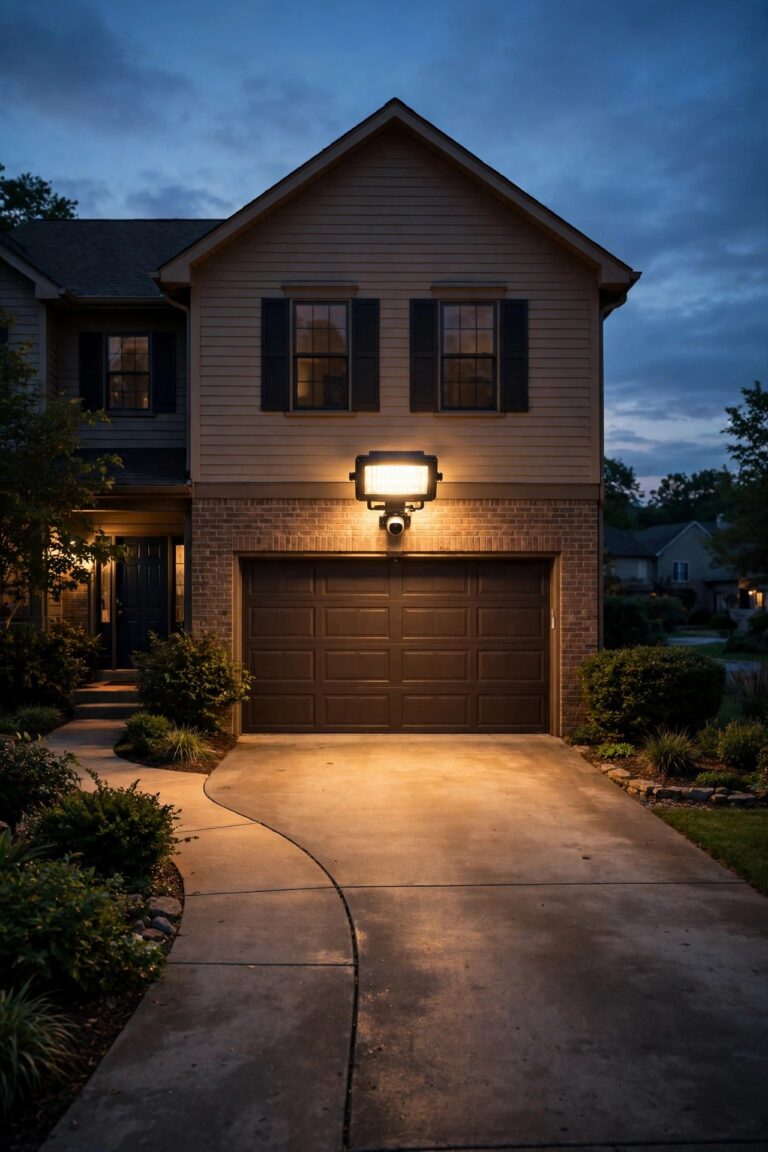
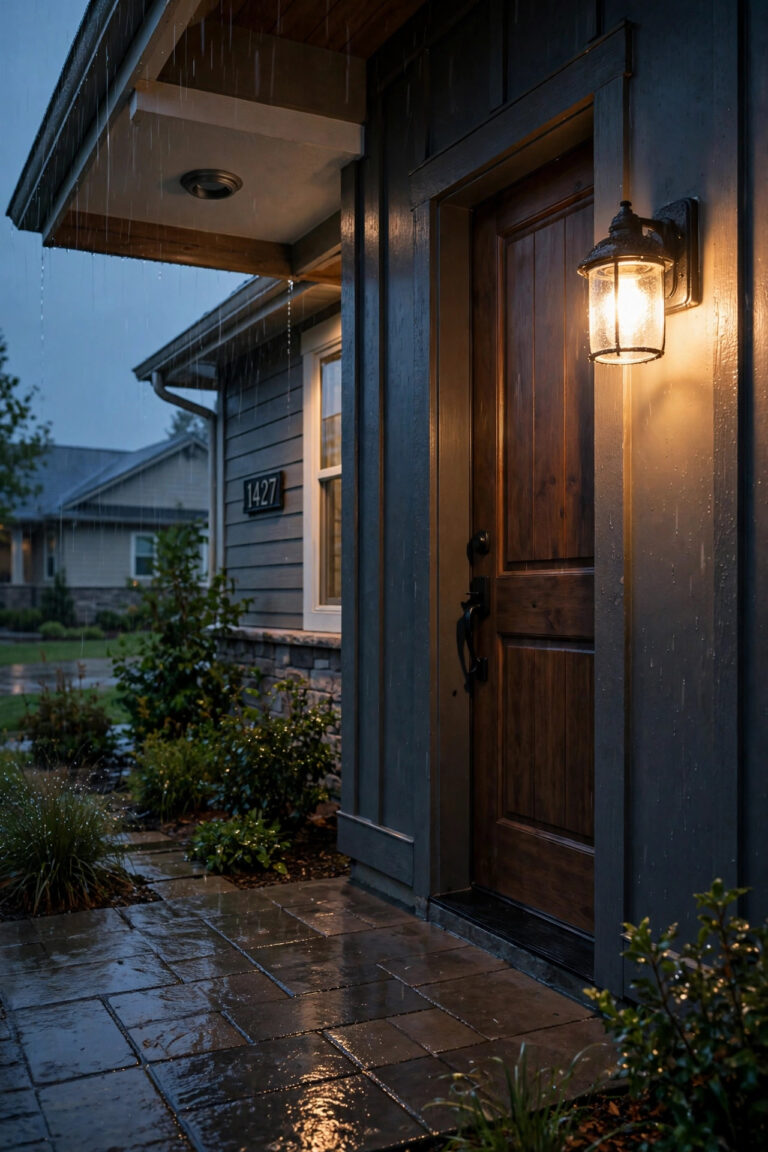
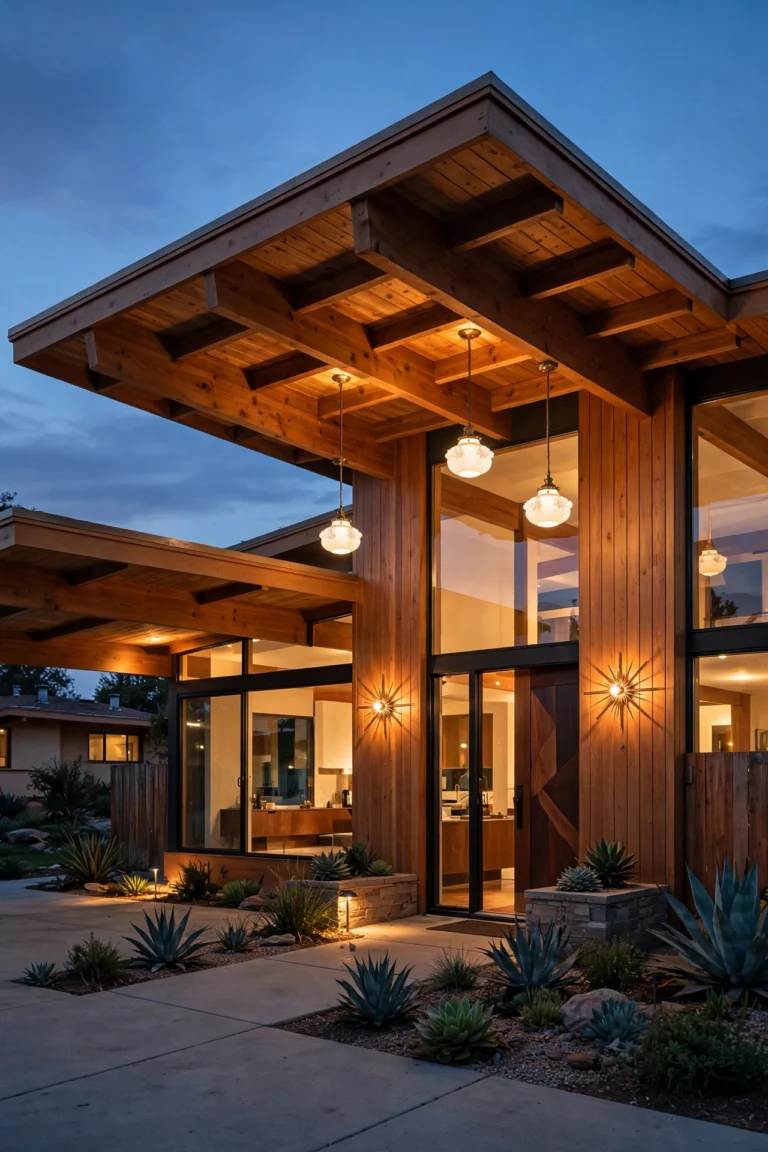
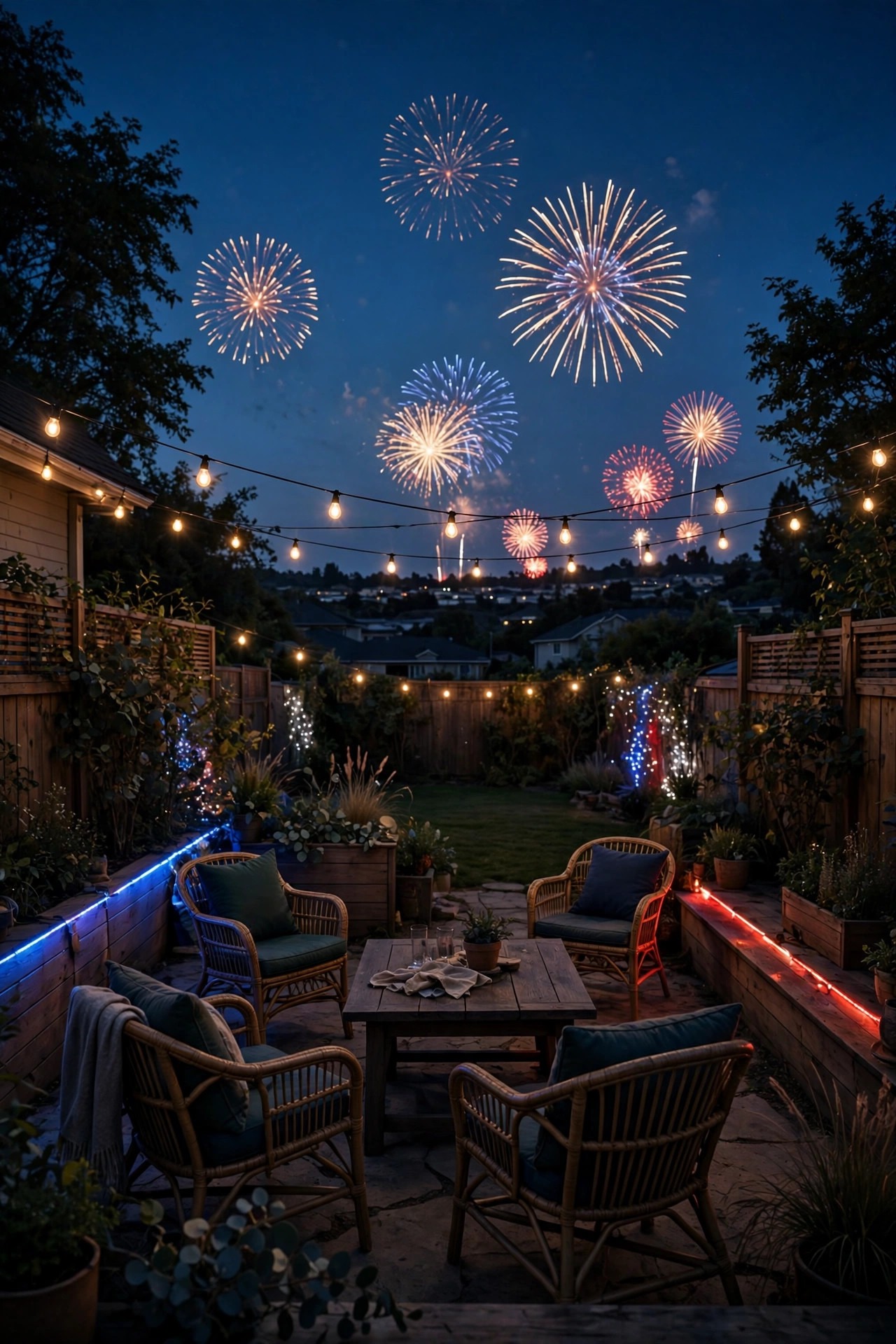
There is a very specific moment I wait for every Independence Day: the burgers are off the grill, somebody has cranked the playlist, and dusk settles over the yard just as the first string lights flicker on. That is when great fourth of july backyard party lighting turns a regular cookout into the party everyone talks about until Labor Day. After a decade of hosting, I can tell you the secret is never one big fixture. It is layering: a warm overhead glow so faces look happy, mid-level light at tables and railings so guests can see their plates, and low pathway light so nobody trips on the cooler in the dark. Add a red, white, and blue palette and a few smart timers, and the whole yard runs itself while you actually enjoy your own party. Below are the 19 ideas I rotate through every year, with honest budgets, placement measurements, and the safety notes I wish someone had handed me my first summer of hosting.
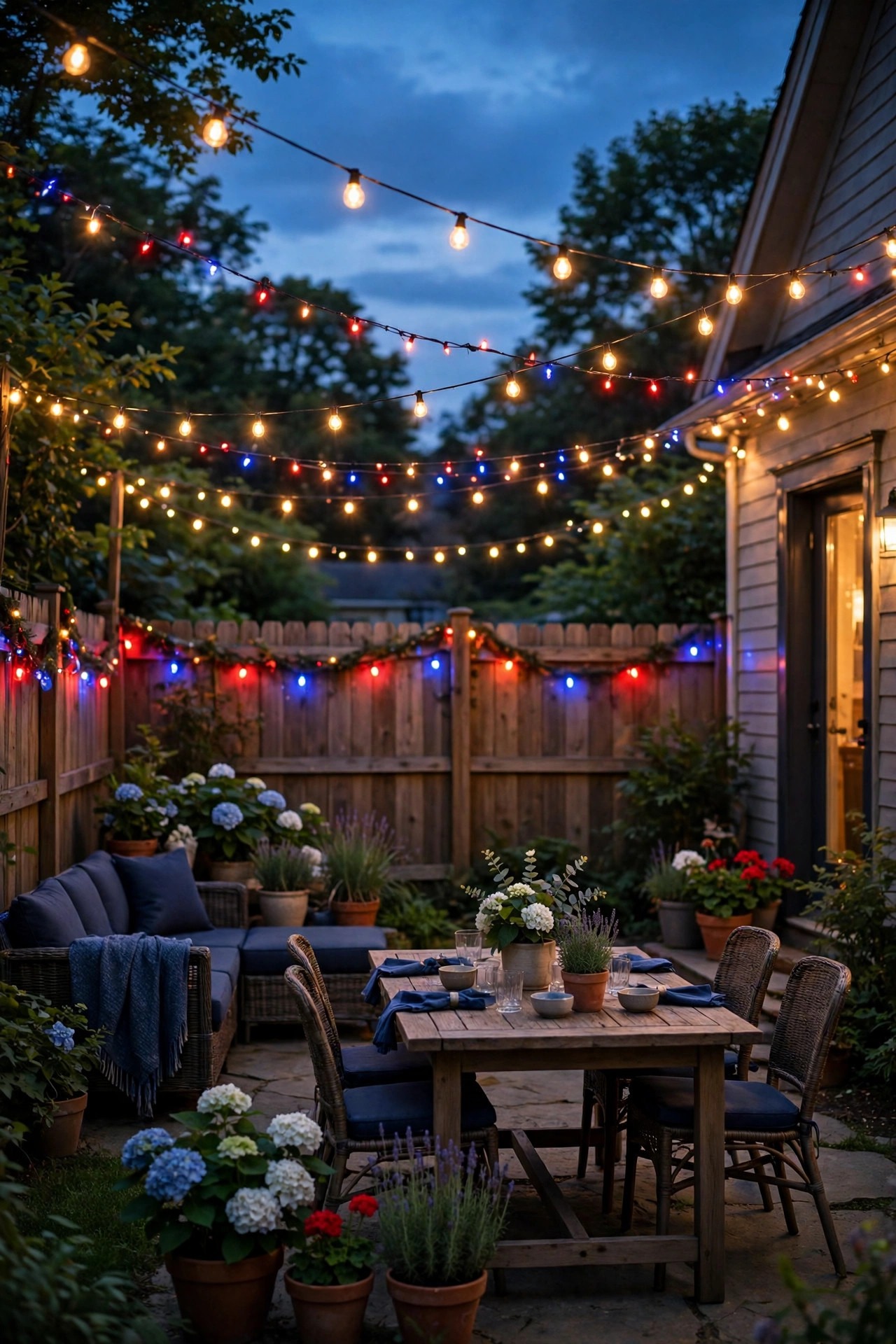
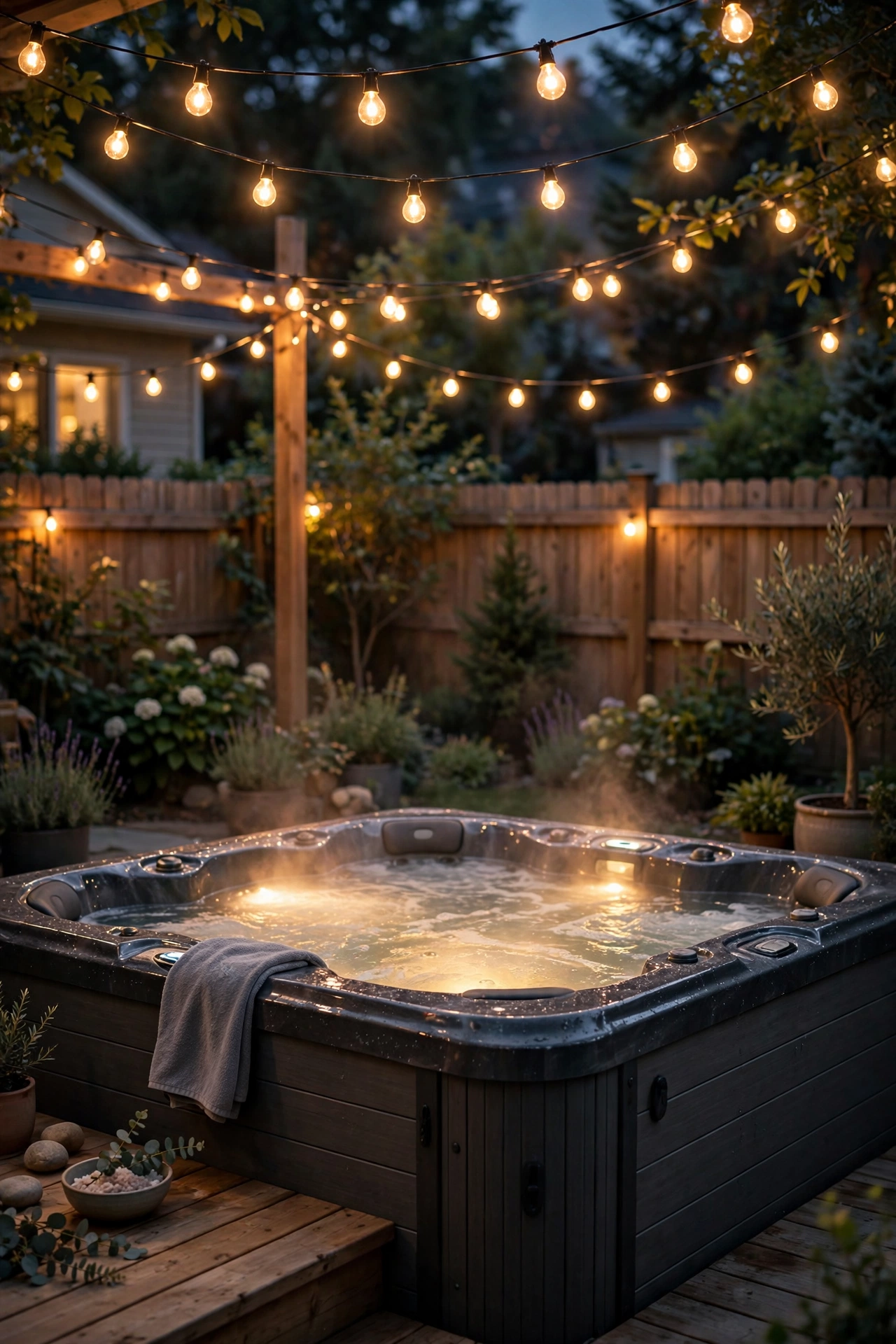
1. Start Your Fourth of July Backyard Party Lighting With a String Light Canopy
Every plan for fourth of july backyard party lighting in my yard starts overhead, because a canopy of string lights instantly defines the party space. I run commercial-grade LED string lights in a gentle zigzag over the patio and lawn seating, anchoring to the house eave and two 10-foot poles so the lowest swag hangs about 7 feet up, high enough for tall guests and low enough to feel cozy. For the palette, I alternate strands: warm white as the base, then swap in red and blue LED filament bulbs every fifth or sixth socket. Keep individual runs under the strand limit printed on the box, usually 3 to 5 strands end to end, and always plug into a GFCI outlet. If you want the full layout math, my guide to backyard string light ideas covers spans and pole placement in detail. The canopy alone makes photos look festive before a single firework goes up.
Suggested budget range: $45 – $120.
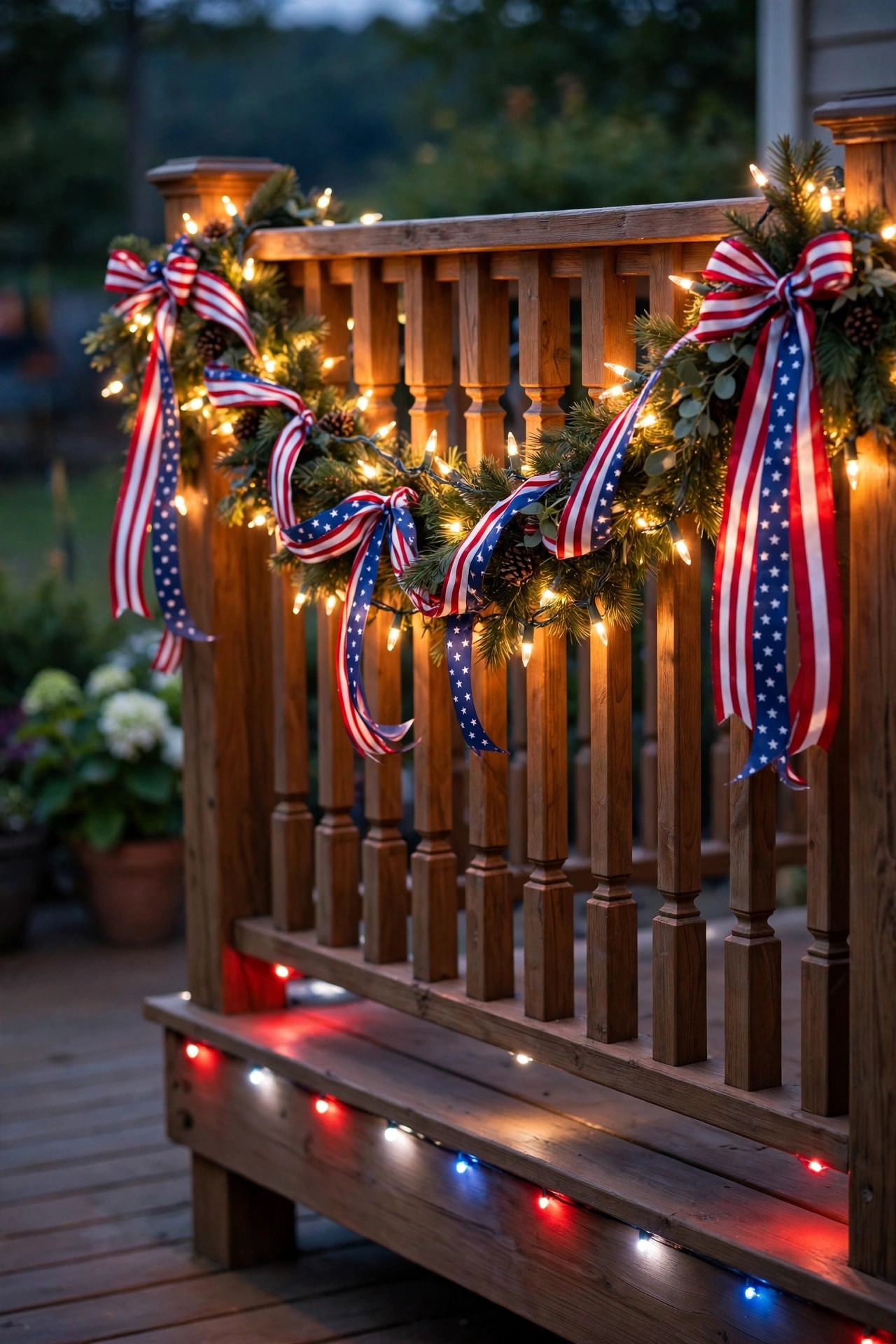
2. Wrap the Deck Railing in Patriotic Garland Lights
Railings are free real estate, and wrapping them solves the mid-level layer while making the deck look dressed. I use pre-lit garland strands in warm white, then weave in a simple red, white, and blue ribbon so the color story carries in daylight too. Secure the garland with reusable zip ties or floral wire every 12 to 18 inches so nothing sags when kids lean on the rail. Battery-operated strands are my honest preference here because deck rails rarely sit near an outlet, and a set of fresh AAs easily lasts the whole holiday weekend at 6 hours a night. Push the tiny battery pack out of sight under the top rail and set the built-in timer once. From the street, the railing reads as a glowing patriotic border, and from the yard it frames the seating beautifully. Keep garland clear of the grill by at least 3 feet, and choose LED strands only, since old incandescent minis can scorch faux greenery.
Suggested budget range: $20 – $55.
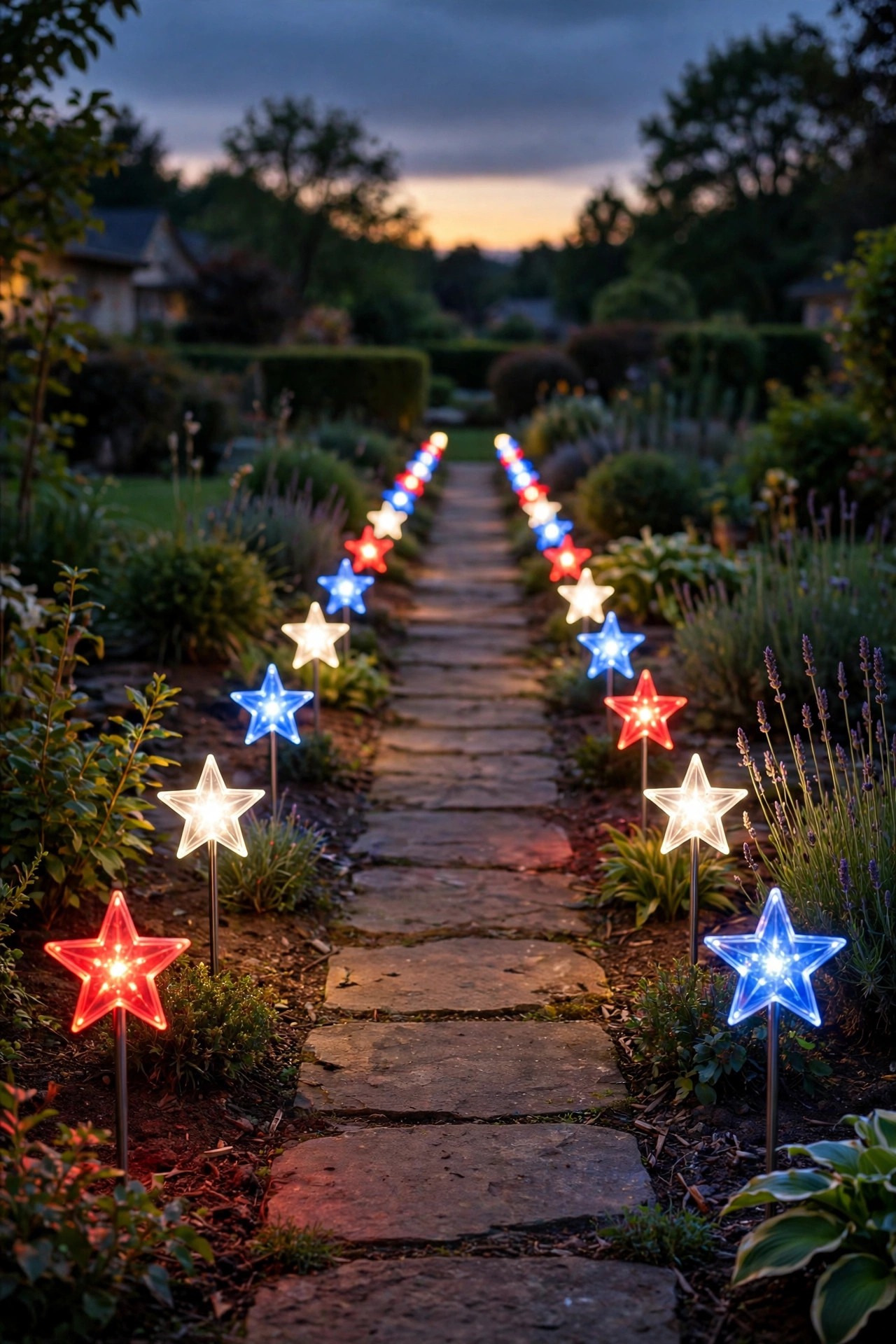
3. Line the Walkway With Solar Star Stakes
Guests arrive at dusk and leave in the dark, so the path from driveway to backyard deserves its own layer. Star-shaped solar stake lights are my favorite nod to the flag, and they cost almost nothing to run. I space them 4 to 6 feet apart along the walk, alternating red, white, and blue where the set allows, or sticking to warm white stars if the colored ones feel too theme-park. Push each stake a full 3 inches into the soil so it stands straight, and give the solar panels a full day of sun on July 3rd so they are charged for the big night. Solar stakes will never match wired path lights for brightness, but at 5 to 10 lumens each they mark the route clearly. Pull them the morning after and store them flat; mine have survived five summers of exactly this routine.
Suggested budget range: $18 – $40.
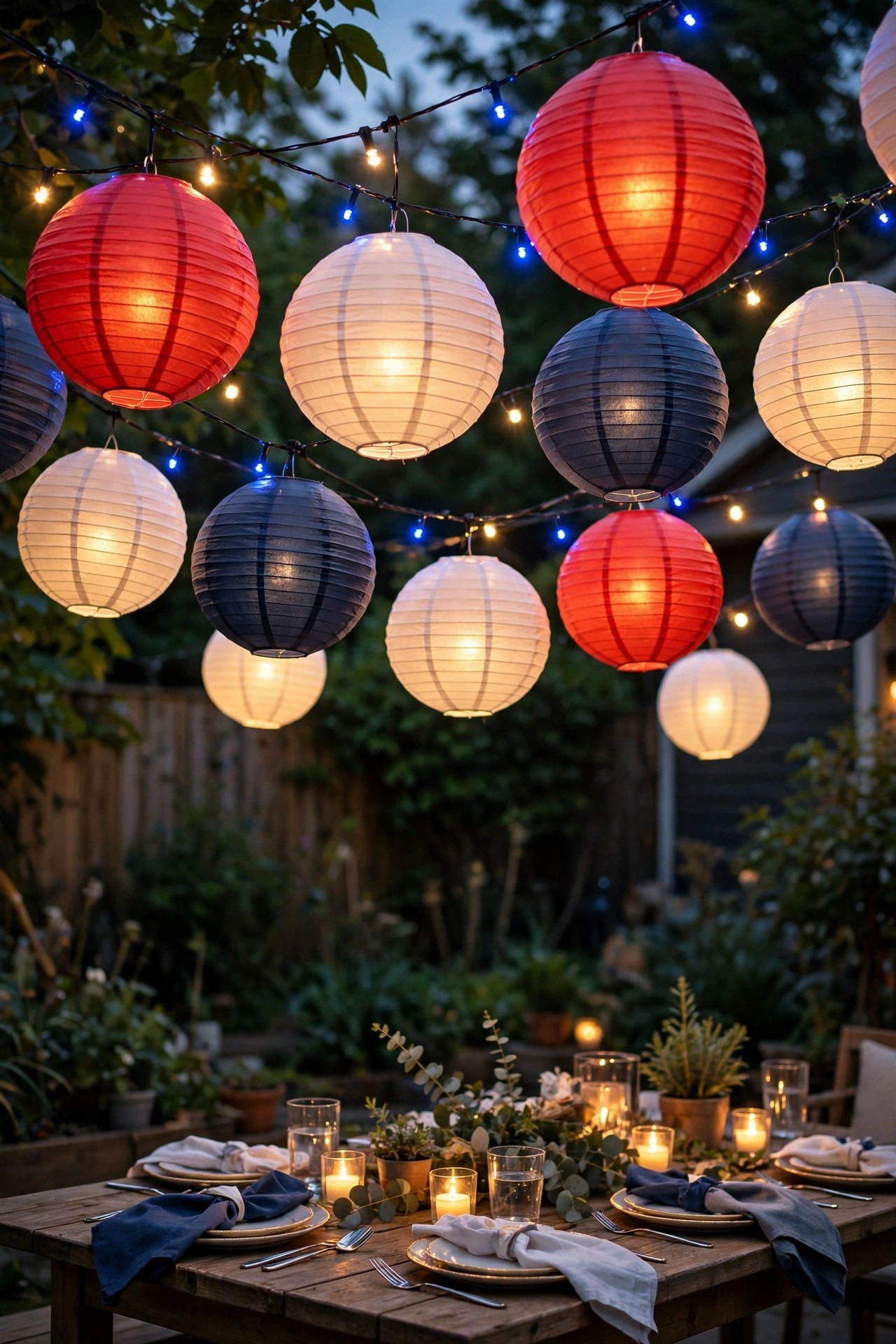
4. Hang Paper Lanterns in Flag Colors
Paper lanterns give you huge visual payoff for pocket change, and they photograph like a dream. I hang clusters of red, white, and navy lanterns at varied heights, 8, 12, and 16 inches across, from the pergola beams and low tree branches using clear fishing line so they appear to float. Inside each one goes a battery LED puck or a cool-burning LED bulb on a cord; never use real candles or incandescent bulbs inside paper, full stop. Group them in odd numbers, threes and fives, and vary the drop length by 6 to 10 inches so the cluster feels layered rather than lined up. A light breeze sets them swaying gently, which is half the charm. If rain threatens, take them down in five minutes and rehang after; paper and water are not friends. Stored flat in a tote, one set covers Memorial Day through Labor Day at my house.
Suggested budget range: $15 – $45.
5. Fill Mason Jars With Fairy Lights for Table Glow
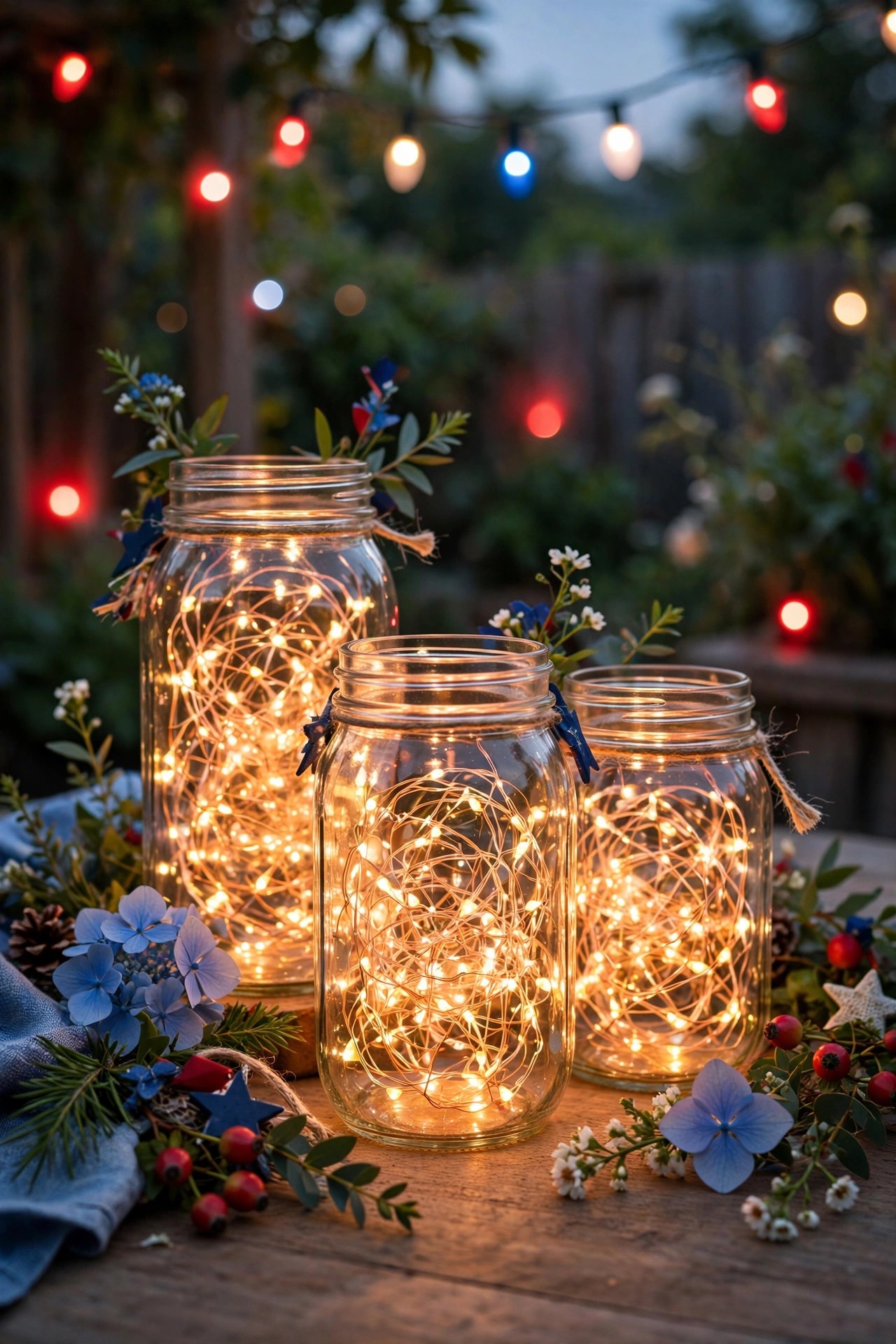
Every table needs its own small pool of light, or guests end up eating by phone flashlight. My standby is the humble mason jar stuffed with a 6-foot copper-wire fairy light strand, the kind with a tiny battery pack that hides under the jar lid ring. The warm pinpoints through glass look like captured fireflies, which feels exactly right for a July night. I put one jar per two place settings and add a couple of larger jars on the serving table. Battery fairy lights run 30-plus hours, so one set carries the whole weekend. Keep the jars at least a few inches from paper napkins and plates, not because LEDs get hot, they barely do, but because a knocked-over jar of anything is a mess. After the party, the strands coil back into the jars and the whole centerpiece stores on one shelf. Honestly, this is the idea guests ask about most.
Suggested budget range: $12 – $30.
6. Float Lights in the Pool for a Midnight Glow
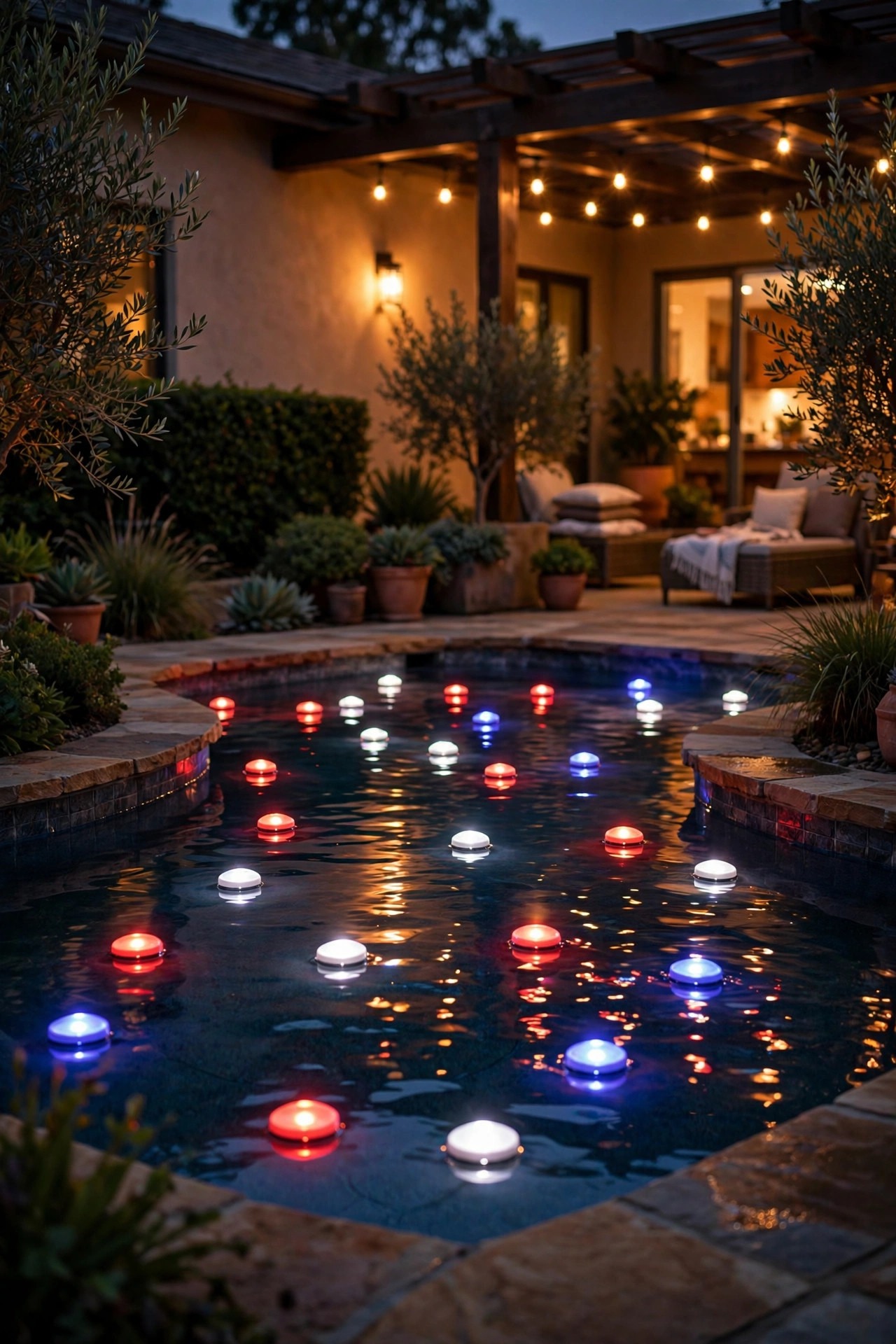
If you have a pool, lighting it turns the whole backyard into a resort after dark. I use waterproof floating LED orbs and lotus-style floaters, a few in color-changing mode set to slow-fade through red, white, and blue. Scatter 5 to 8 floats in a typical backyard pool so the surface sparkles without looking crowded. Choose sealed units rated for full submersion, and check the battery compartments are screwed tight before they go in. Solar floaters charge on the pool deck during the day and spare you the battery hunt entirely. Keep electrical safety absolute here: nothing corded ever goes in or near the water, and all chargers and outlets stay on dry deck at least 10 feet from the edge. If your pool area needs more than floats, my notes on pool deck lighting ideas walk through the permanent options. Pull floats out before anyone swims so they do not get kicked into the skimmer.
Suggested budget range: $25 – $70.
7. Wash the Fence With Color-Changing Smart Bulbs
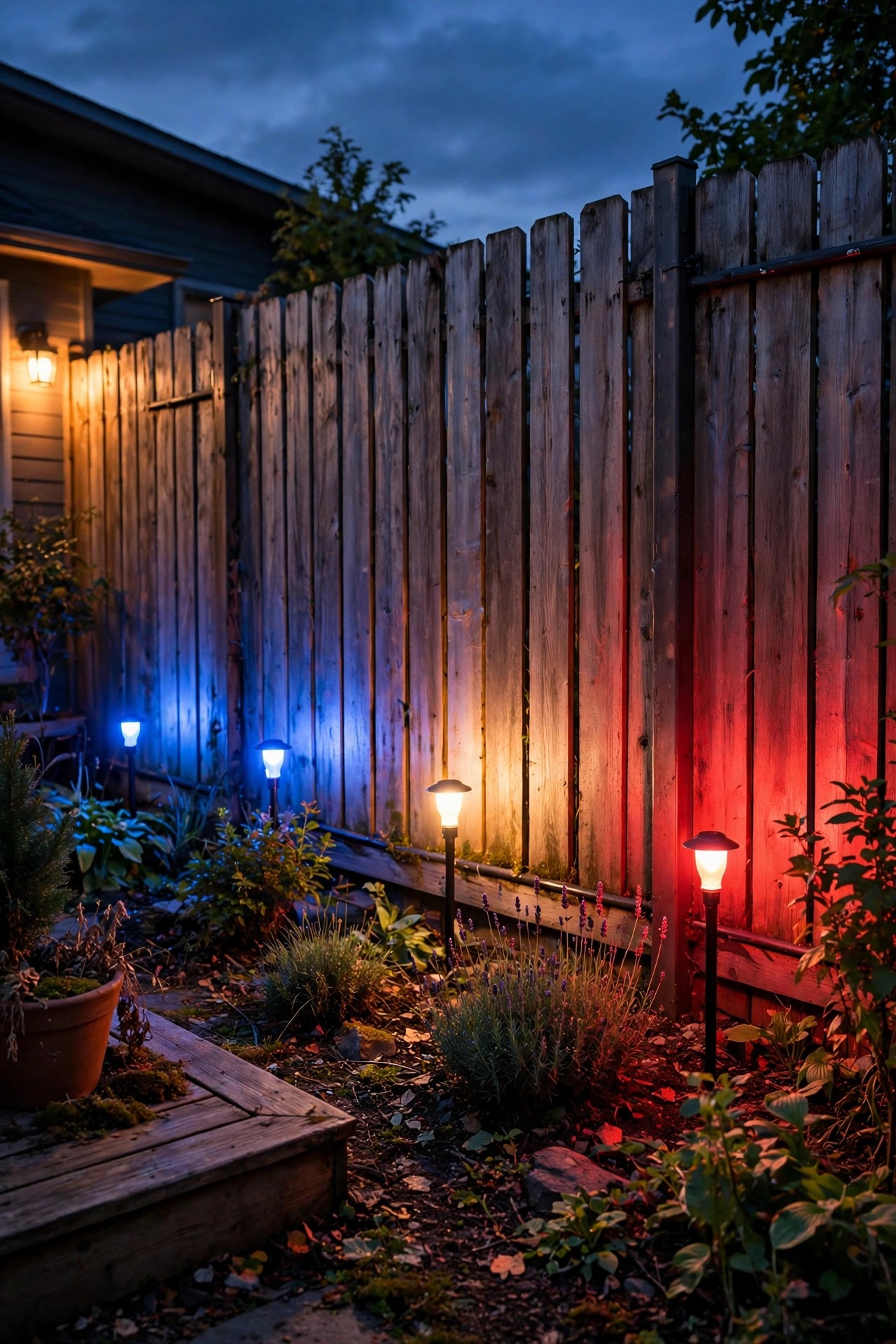
A plain fence is a blank canvas, and washing it in color is the fastest way to make a small yard feel like an event venue. I clip two or three outdoor-rated smart flood bulbs into simple stake or clamp fixtures along the back fence and set them to deep red and blue, alternating panels. Run them at about 60 percent brightness; full blast looks neon, while a softer wash reads rich and lets your warm white layers stay the star. Scene scheduling means the fence shifts from dinner warm to patriotic colors as the fireworks window approaches, no ladder required. All fixtures stay on GFCI-protected outlets with drip loops in the cords. If you love the color route generally, my roundup of color changing solar light ideas has more no-wiring options. Keep one section of fence in warm white behind the food station so guests can actually see what they are serving.
Suggested budget range: $30 – $85.
8. Drape Net Lights Over the Shrubs
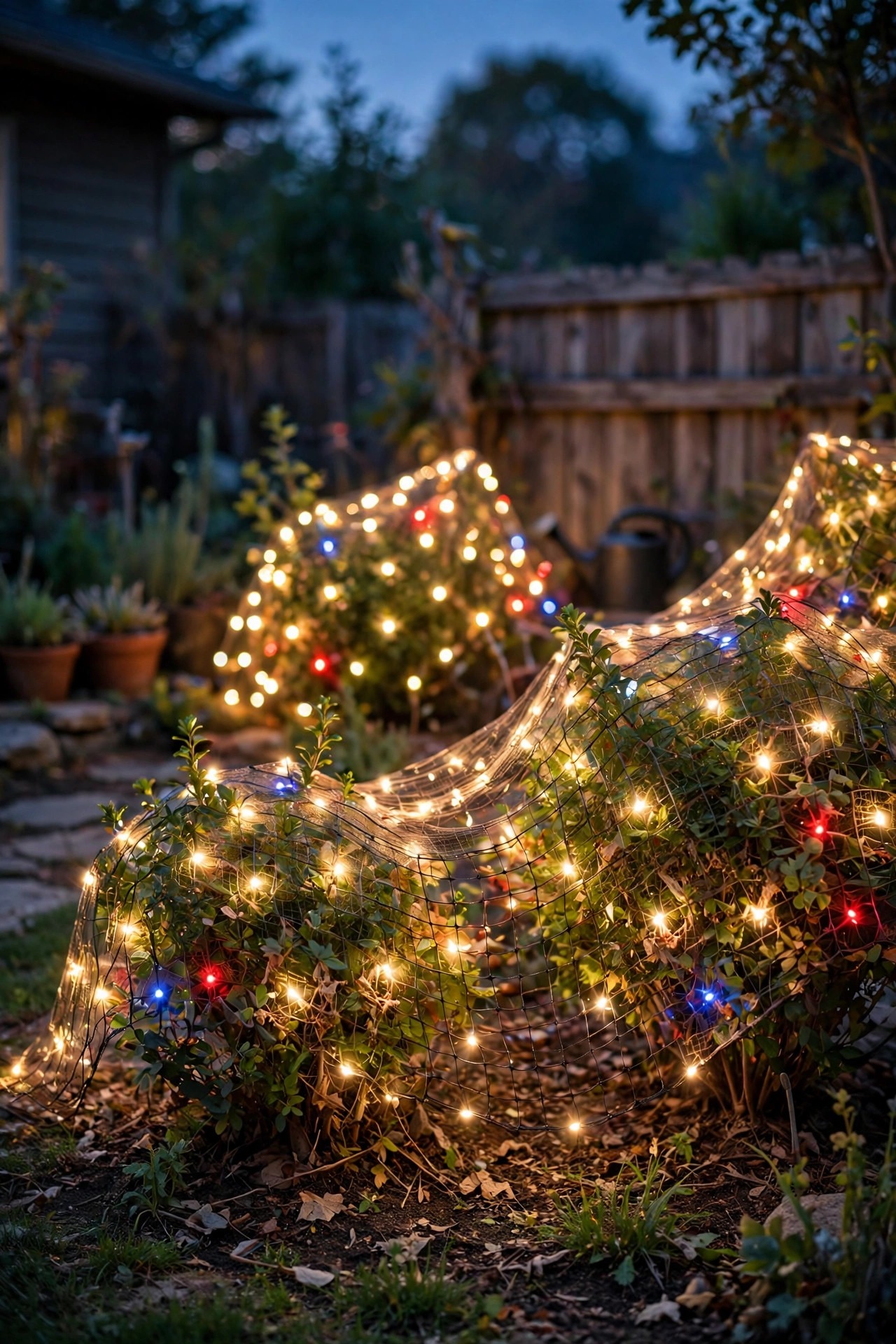
Shrubs and hedges are the easiest decorating win because net lights drape on in minutes with zero measuring. I throw warm white nets over the front-of-yard shrubs and switch to a red and blue pair flanking the patio steps. Standard nets cover about 4 by 6 feet, so measure your shrubs once and buy to fit rather than fighting a too-small net into place. Tuck the plug ends inside the foliage where they stay dry, and connect no more than the strand limit on the tag, typically 3 nets end to end. The even grid of tiny bulbs makes ordinary boxwoods look professionally trimmed with light. From the street this is the detail that makes neighbors slow down. After the holiday, fold each net flat like a blanket and it stores without the classic tangle. Five summers in, my original set still lights fully, which tells you how gentle this job is on the strands.
Suggested budget range: $16 – $42.
9. Give the Flag Its Own Spotlight
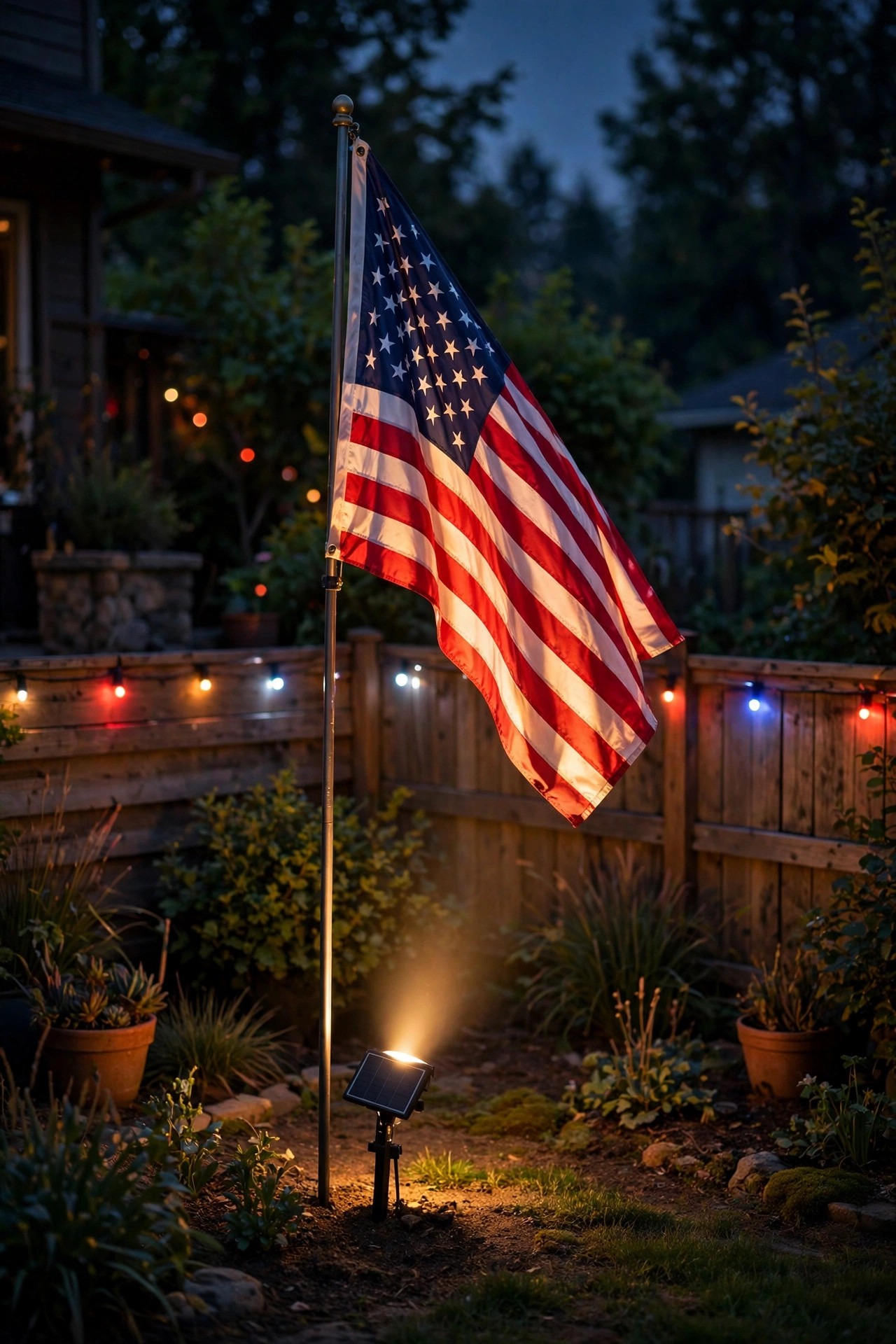
If you fly a flag for the holiday, light it properly; an unlit flag disappearing into the dark looks like an afterthought, and flag etiquette actually calls for illumination if it stays up overnight. I use a single solar spotlight staked 2 to 3 feet from the pole base, angled up so the beam covers the full flag without spilling much into the sky. Solar flag lights with a separate panel work best because you can park the panel in full sun while the fixture sits in shade. A warm-to-neutral 3000 to 4000K beam keeps the reds and blues true instead of orange-tinted. Keep the fixture low and shielded so guests are not staring into it from lawn chairs. This one small light carries a lot of meaning for veteran guests, and more than one has thanked me for it. It also doubles as a gentle landmark guests navigate by.
Suggested budget range: $20 – $50.
10. Light the Food and Drink Station Like a Stage
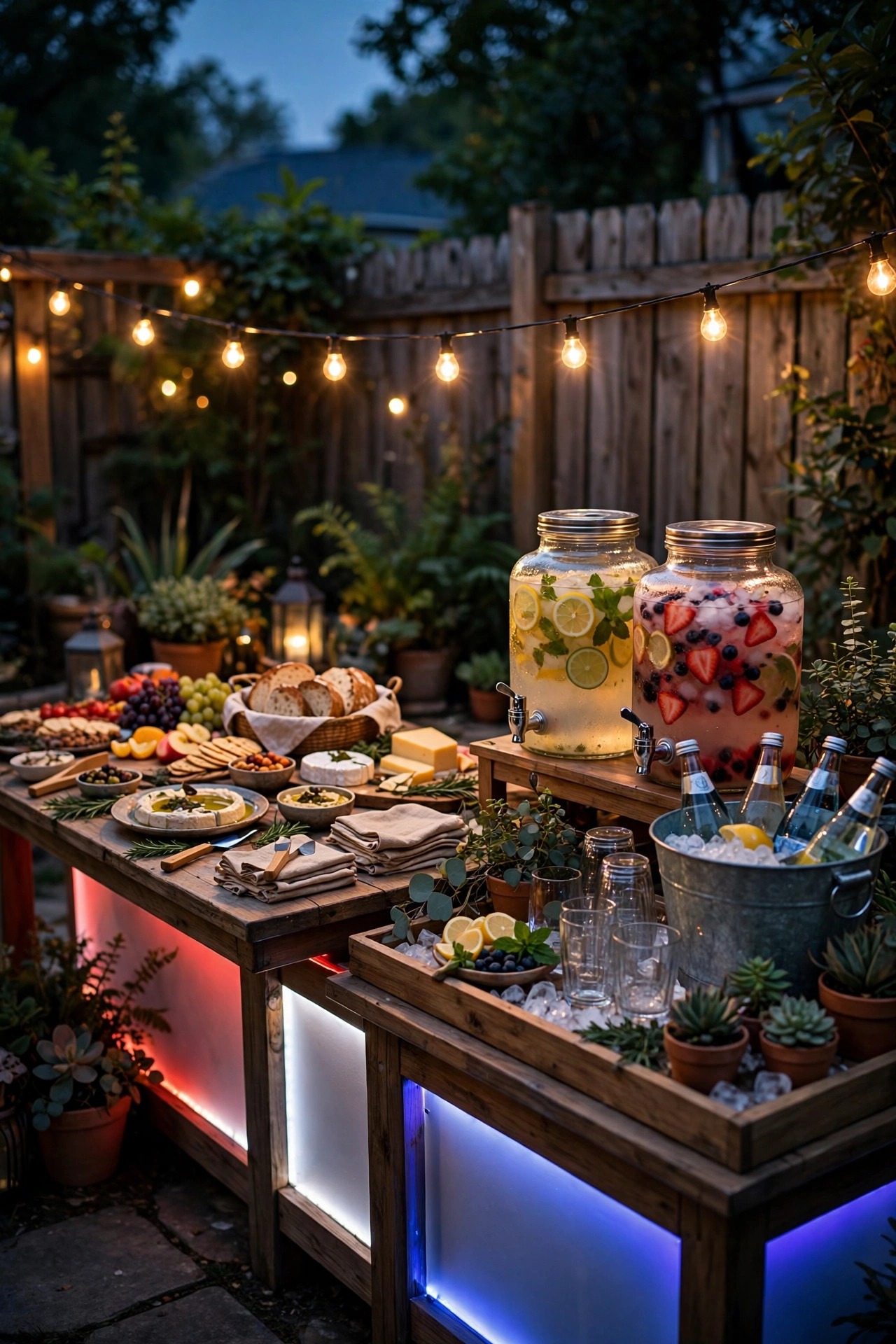
The serving table is the hardest-working zone of the party, and it needs brighter, whiter light than anywhere else. I hang a dedicated café string strand lower here, about 6 and a half feet, directly over the buffet, and add a battery lantern at each end of the table for shadow-free serving. Aim for task-level brightness: guests should be able to tell the coleslaw from the potato salad at a glance. Keep all cords taped down along the table edge and routed behind the station so nobody catches a foot while carrying a full plate. A small clip-on umbrella light over the grill master station earns its keep too. Position the whole food zone at least 10 feet from where any sparklers will happen later, and never let string lights hang low enough to brush a hot grill lid. Good light here prevents more spills than any other single upgrade on this list.
Suggested budget range: $25 – $60.
11. Ring the Perimeter With Flame-Effect Torches
The yard edge is where darkness creeps in, and a ring of flame-effect torches pushes the party boundary out to the fence line. Solar tiki-style torches with flickering LED flames are my pick: they charge all day, switch on at dusk by themselves, and carry zero fire risk around kids, dogs, and paper decorations. Space them 5 to 7 feet apart along the fence and garden beds, pushed firmly into soil so they stand plumb. The flicker reads as real flame from 20 feet away, and the warm orange glow flatters the red tones in your palette. If any section of yard needs real task light, like a gate latch, skip the torch there and use a steady path light instead; flicker is ambiance, not utility. My first set is on its third summer with nothing more than a panel wipe each spring. Stored upright in the garage, they take up one corner.
Suggested budget range: $28 – $75.

12. Set Up a Properly Lit Game Zone
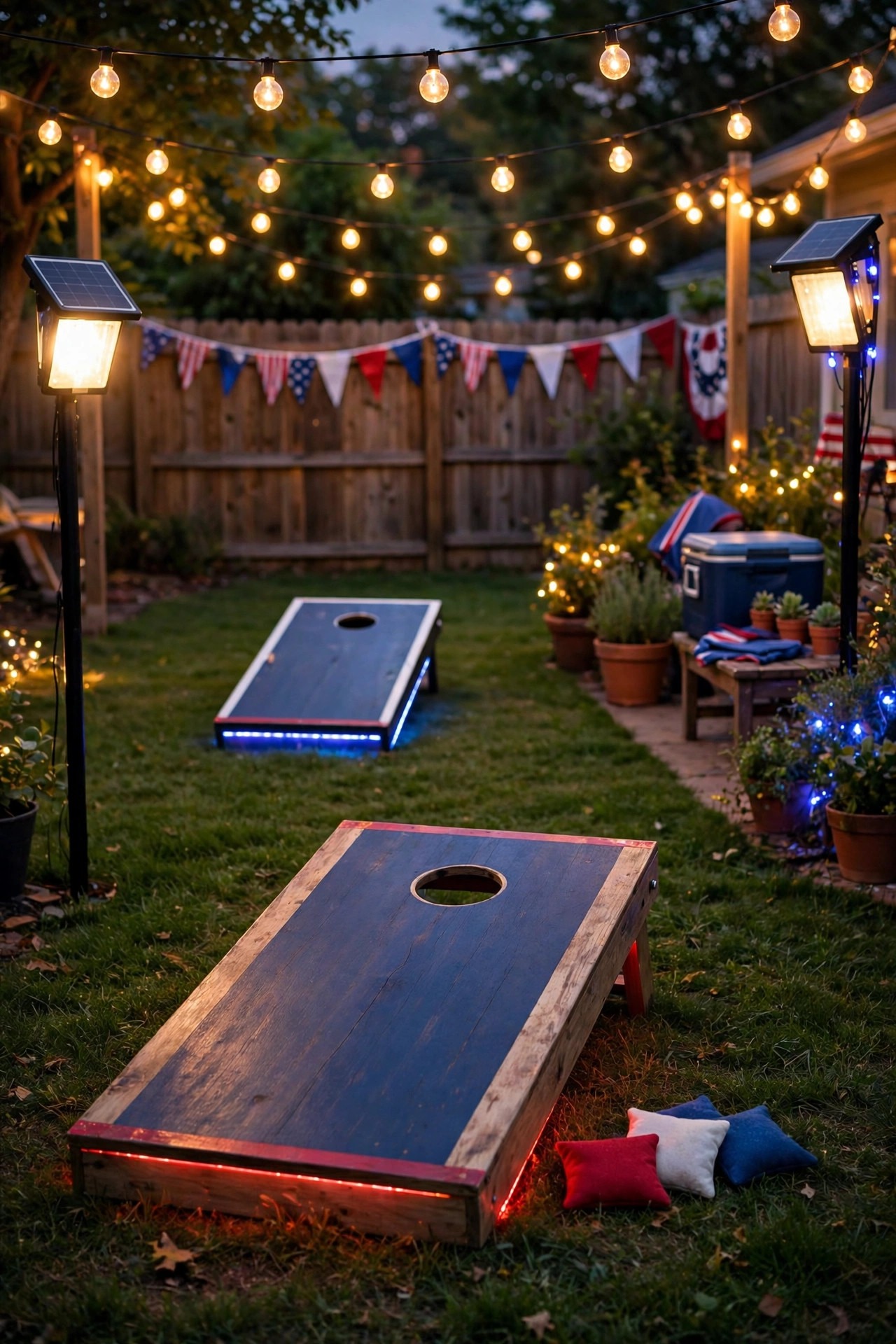
Cornhole at dusk without light just becomes an argument about where the bag landed. I give the game zone its own honest lighting: two solar flood lights on stakes at either end of the boards, or a single strand of globe string lights overhead if the zone sits near the patio. Aim light down the length of the boards, not across them, so players are not squinting into the beam when they toss. Keep fixtures at ground level behind the boards, angled up slightly, which lights the target and keeps glare out of eyes. The same setup flatters a ladder toss or horseshoe pit. Add one lantern on a side stool for score-keeping and drinks. The same layered approach works for dance floors and seating zones too, so borrow it freely across the yard. A lit game zone quietly keeps teenagers entertained and out of the dessert table until you are ready.
Suggested budget range: $22 – $65.
13. Project a Field of Stars Onto the House
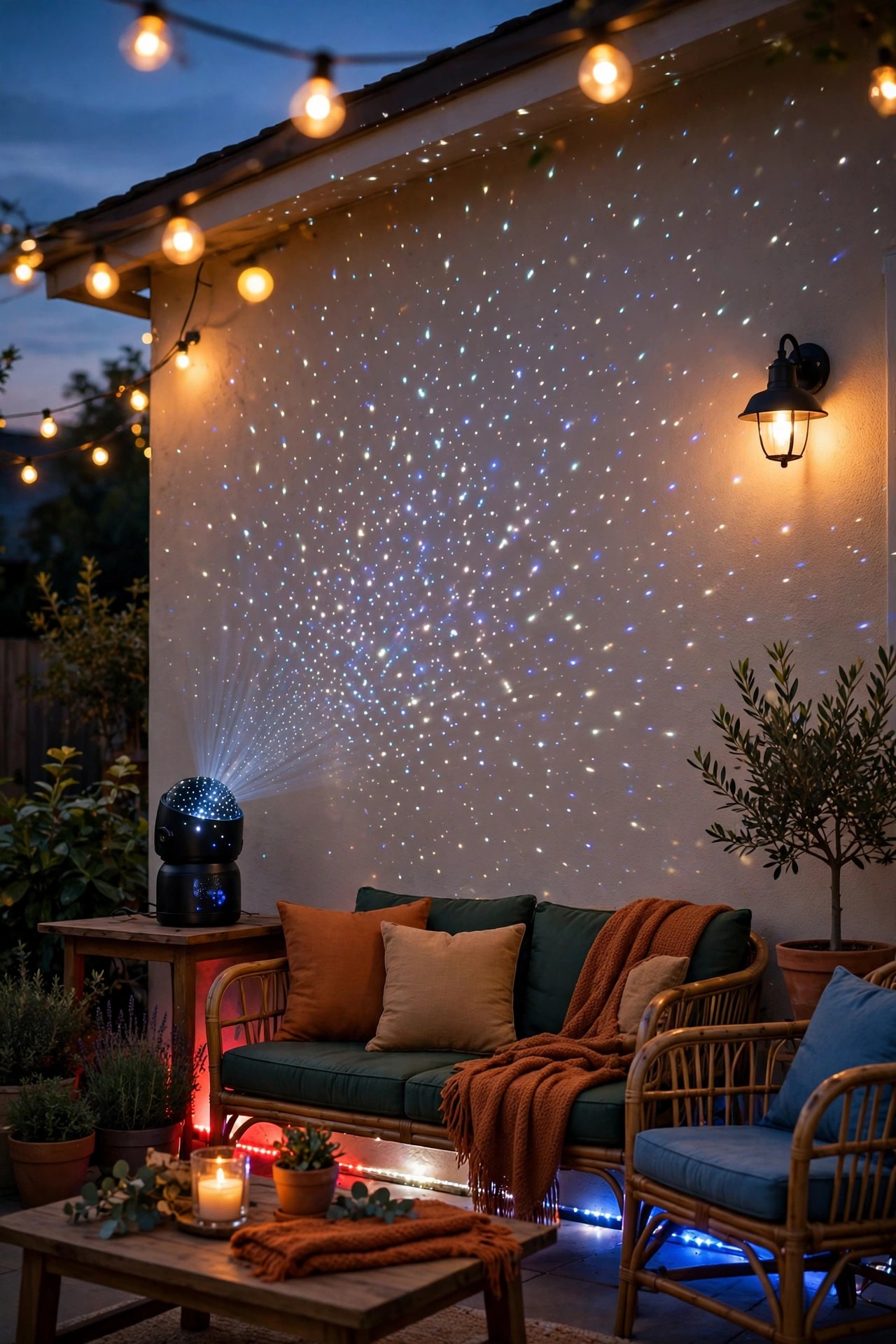
A star projector aimed at the house wall or a pale fence gives you an instant field of twinkling stars with about ninety seconds of setup. I set the projector on a low stool 10 to 15 feet from the wall, angled slightly upward, and let slow-drifting white and blue stars fill the space above the seating area. Keep it away from the main sightlines to the sky if your crew plans to watch real fireworks later; you want a backdrop, not competition. Outdoor-rated projectors handle summer humidity fine, but bring the unit in during rain regardless of the rating. One projector covers roughly 15 by 20 feet of wall, so larger houses may want two overlapping softly. The effect is especially kind in photos, filling dark background space with sparkle. Pair it with the string canopy and even a plain siding wall looks like a venue. Cleanup is literally unplugging one cord.
Suggested budget range: $25 – $60.
14. Build a Dark Zone for Fireworks Watching
This is the idea nobody thinks of: a deliberately dark corner. When the neighborhood fireworks start, every light you added competes with the show, so I plan one seating cluster, a few blankets and low chairs on the open lawn, with no direct fixtures at all. The path to it stays lit by the solar stakes from idea 3, but the zone itself relies on spill light only. Put the whole yard on dimmers or smart plugs grouped into a fireworks scene, so one tap drops string lights to 20 percent and kills the fence wash during the show. Announce it like a feature, not a compromise: drinks refilled, lights down, show up. Kids especially love the ritual of the big dim. After the finale, one more tap brings the party glow back for dessert. Honestly, this small bit of stage management is what guests remember and copy at their own houses.
Suggested budget range: $0 – $35.
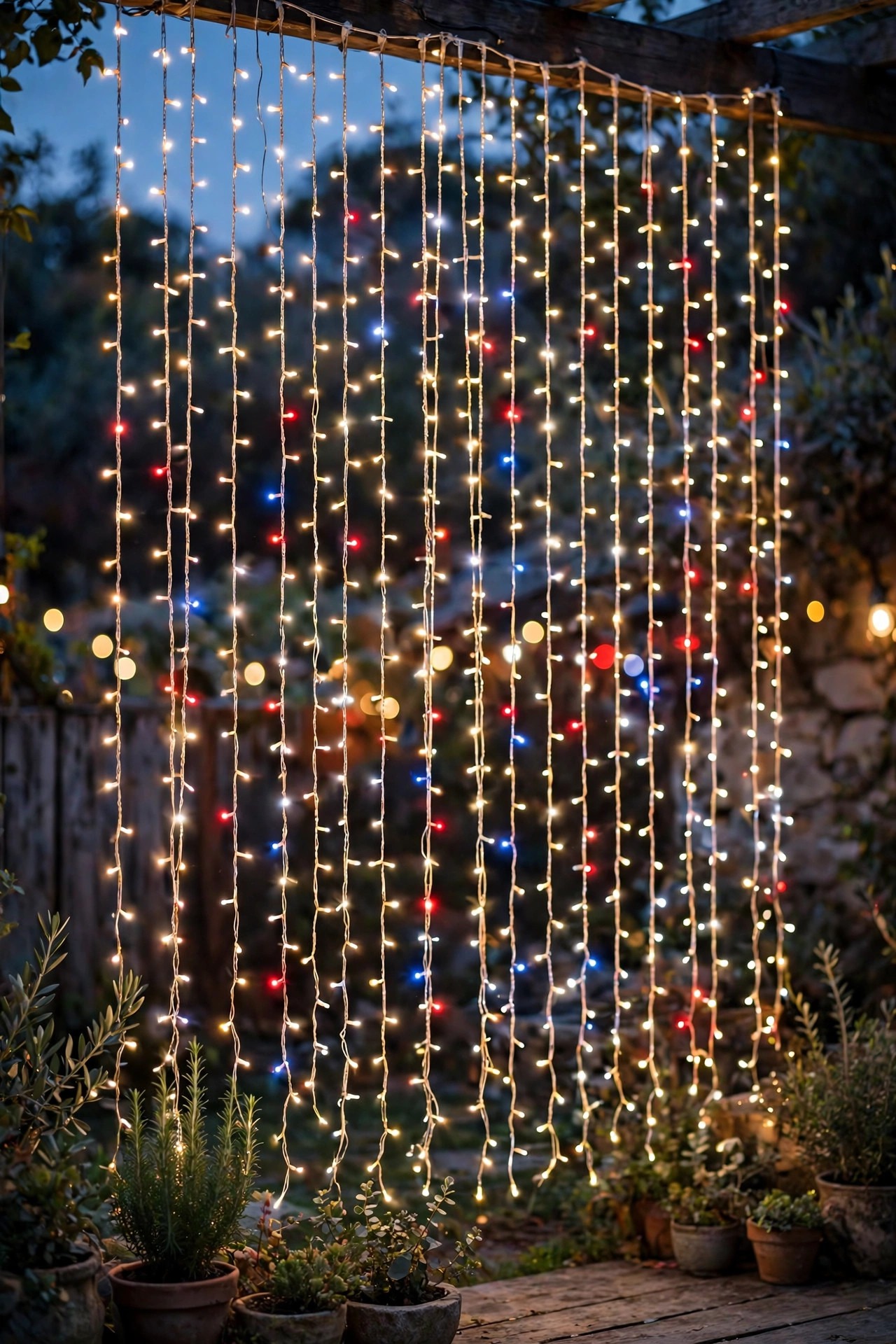
15. Hang a Curtain Light Backdrop for Photos
Every party needs one photo spot, and a curtain of falling fairy lights makes an irresistible one. I hang a 10 by 10 foot warm white curtain light across the fence or pergola opening behind the dessert table, then flank it with two navy paper lanterns and a small red bunting so photos read Fourth of July without a single prop. Set the curtain to steady-on for pictures; twinkle modes look magical in person but blur in phone shots. Stand the photo zone where a little ambient light reaches faces, ideally 6 to 8 feet from the buffet strand, so skin tones look warm rather than backlit-silhouette. Battery backup packs are worth it if the nearest outlet is far. Guests will gravitate here all night with zero prompting. In my experience the backdrop also hides a multitude of sins, including the recycling bin corner I never got around to screening.
Suggested budget range: $20 – $50.
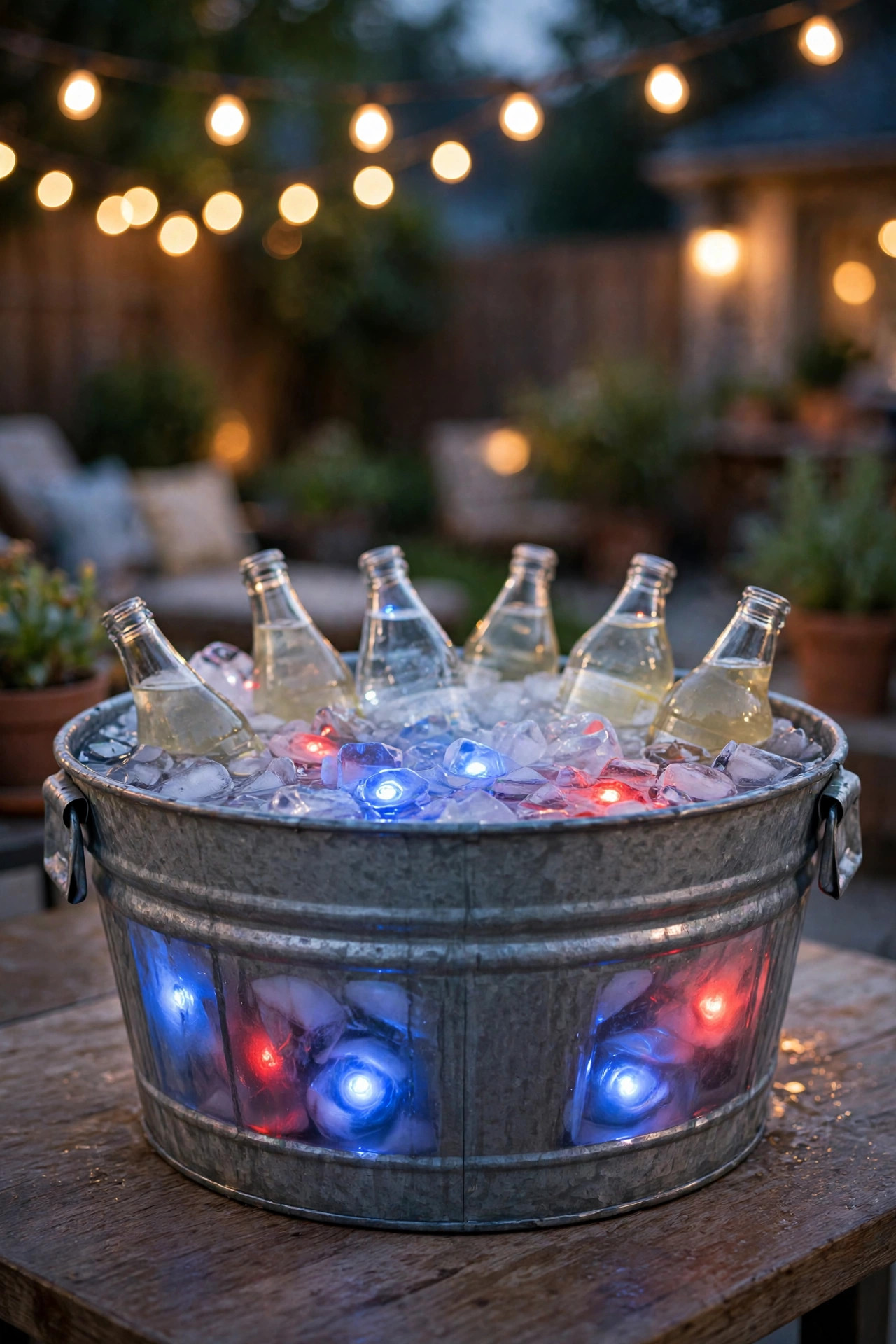
16. Drop Submersible LEDs Into the Drink Tub
Here is a small trick with an outsized wow factor: submersible LED pucks dropped into the clear drink tub and cooler ice. The ice diffuses the light into a glowing jewel box that pulls guests straight to the drinks, and setting two pucks to red and blue under clear bottles looks spectacular. Use only pucks sold as fully submersible with twist-tight seals, and give each a fresh set of batteries before the party; most run 24 to 48 hours submerged. Keep a small towel stationed by the tub because every hand comes out dripping. Never put anything battery-powered into a drink dispenser people pour from, tubs and coolers only, where the puck stays separate from what anyone drinks. The same pucks do Halloween and New Year duty at my house, glowing in punch bowls and vases. Fish them out in the morning, dry the seals, and they store in a sandwich bag until the next party.
Suggested budget range: $10 – $25.
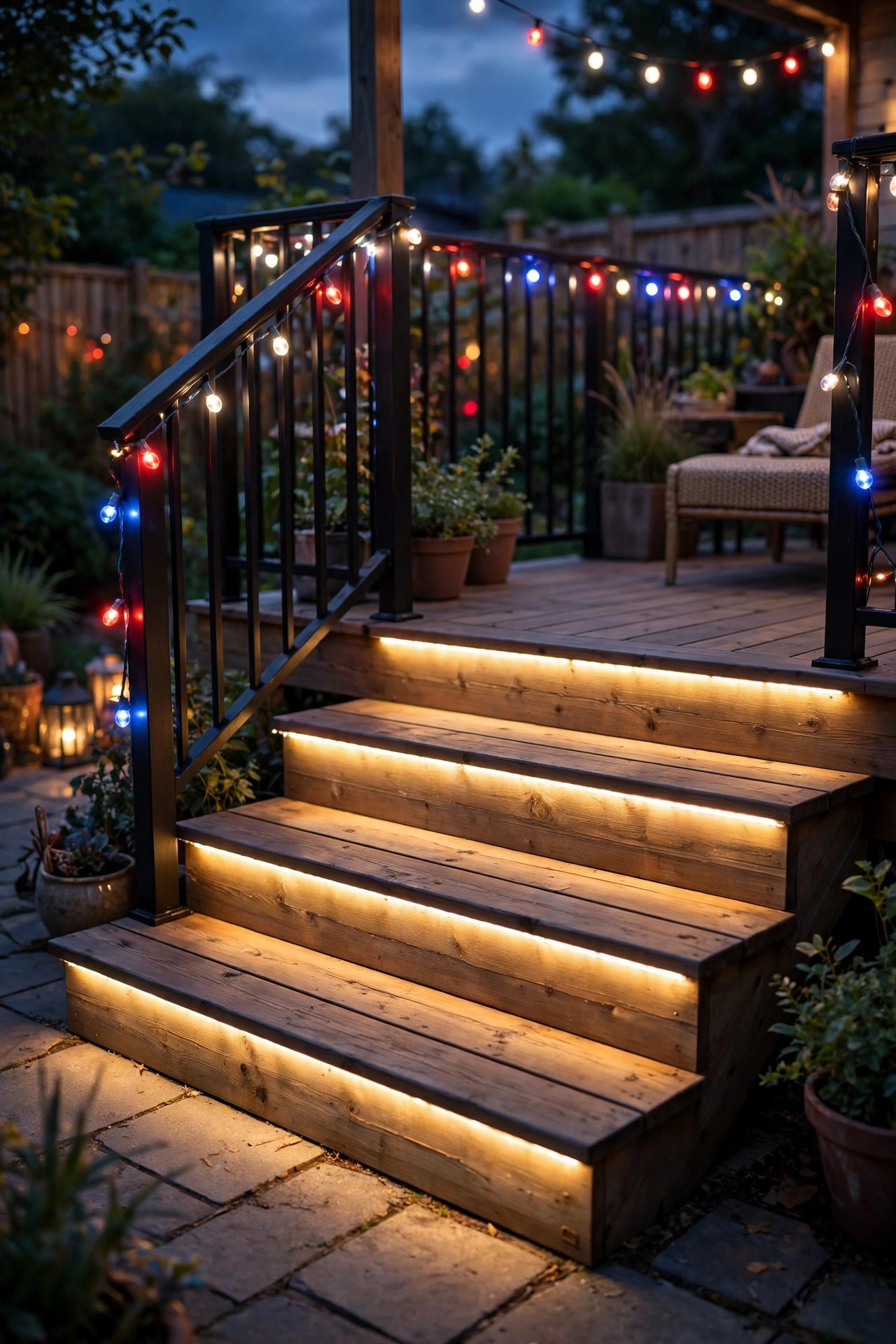
17. Edge the Deck Steps With Rope Light for Safety
Between the sparklers, the dimming scenes, and guests carrying plates in the dark, steps are where accidents happen. LED rope light tucked under the lip of each deck step or along the stair stringer gives a clean line of guidance light that looks intentional, not institutional. Choose outdoor-rated rope in warm white, secure it with mounting clips every 12 inches rather than staples, which can pierce the tubing, and run the plug end to the nearest GFCI outlet with the slack coiled out of the walking path. If your deck has a long edge instead of steps, the same rope run along the rim joist defines the drop-off beautifully. This is the one installation I leave up all summer, because barbecue season runs long past the Fourth. Test it after dark from the yard side; you want to see the glow line, not the individual diodes glaring back at you.
Suggested budget range: $18 – $45.
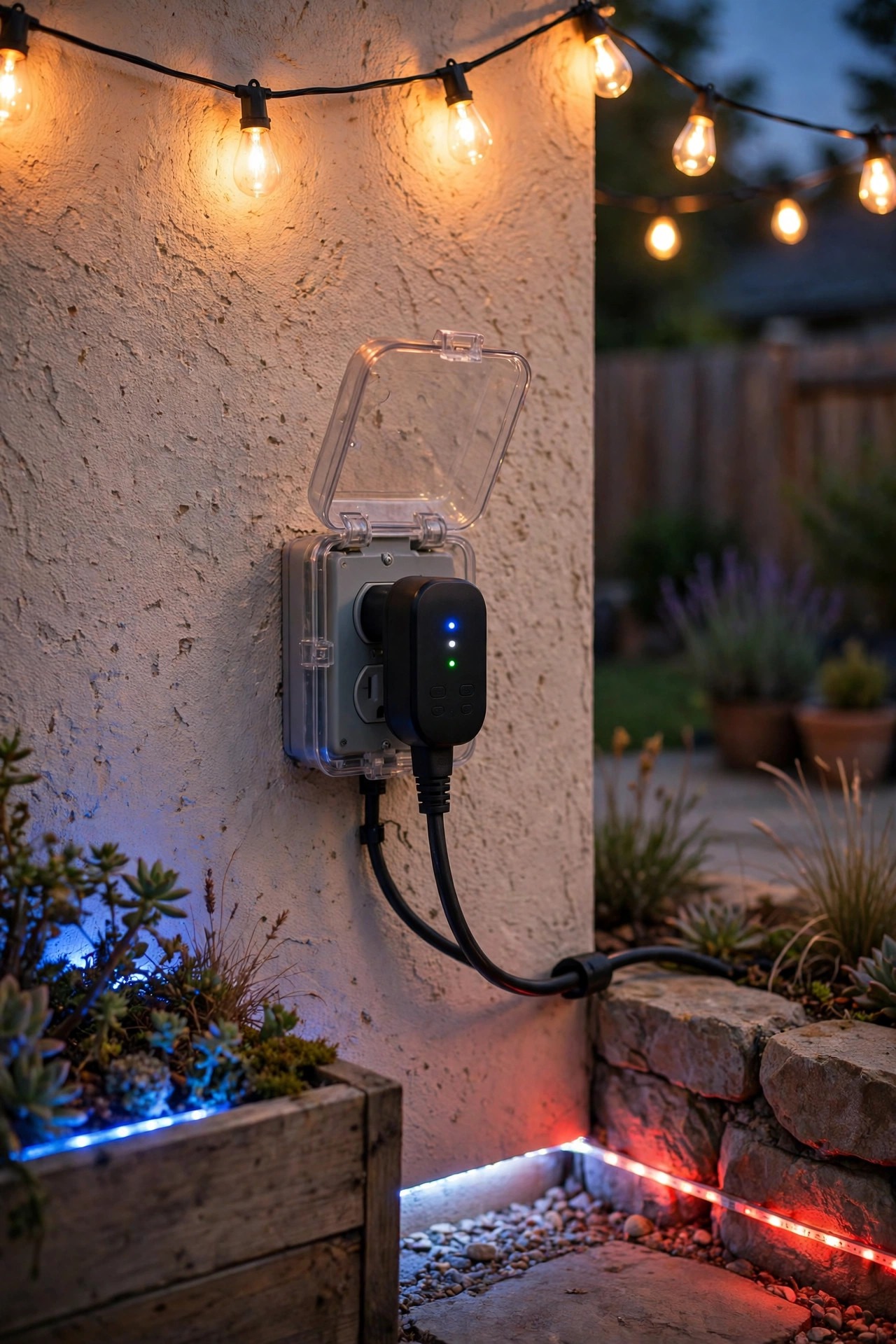
18. Put Everything on Timers and Dimmers
The best party light is the light you never think about. I group my plug-in strands on two outdoor smart plugs and one mechanical timer as backup: canopy and railing on one scene, fence wash and floods on another, all set to fire up at dusk and shut off at midnight. Dimmers on the main string circuit let me drop the yard to a glow for the fireworks, then bring it back for the late crowd, which is the whole trick behind idea 14. Check that your dimmer is rated for LED loads and matches your strand wattage; most string setups draw so little that almost any outdoor-rated unit works. Label the cords with tape flags once and future-you will thank present-you every single summer. Automation also means the house looks welcoming when guests arrive before you have finished the potato salad. Set it in the morning, and at party time your only job is lighting the grill.
Suggested budget range: $15 – $55.
19. Bring Your Fourth of July Backyard Party Lighting Together in Layers
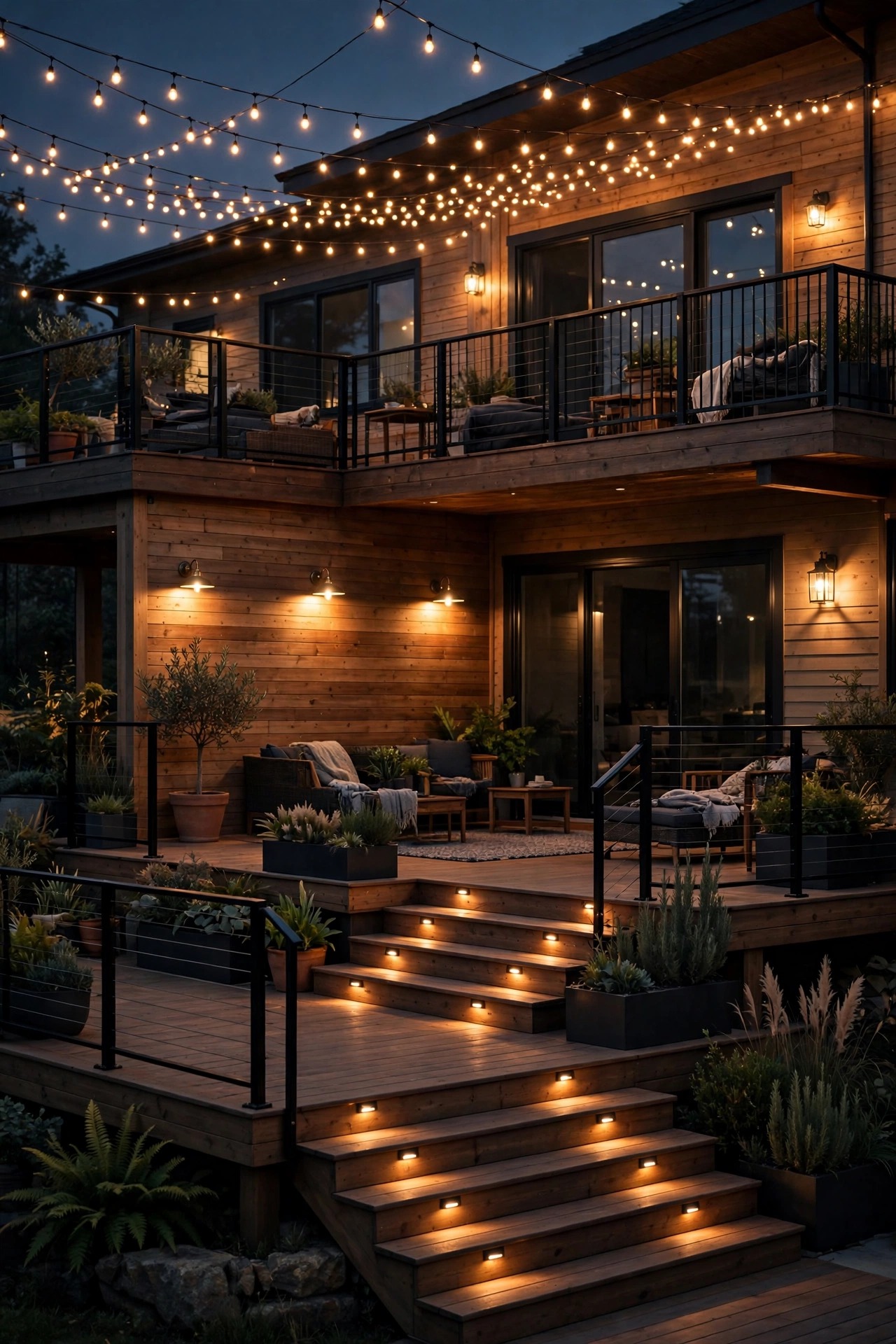
If you take one idea from this whole list, make it this final pass: walk your yard at dusk the night before the party and read it in layers, because the best fourth of july backyard party lighting is always a sum of small glows, never one bright blast. Check the overhead layer first, canopy or pergola strands at a warm 2700K. Then eye level: railing garland, lanterns, and table jars, where faces and food live. Then the ground: star stakes, rope-lit steps, and torch flicker marking every route. Squint from the street and from the back fence; anywhere that reads as a black hole gets one small addition, and anywhere glaring gets dimmed or shielded. Keep the color story disciplined, mostly warm white with red and blue as punctuation, so it reads patriotic rather than carnival. Photograph the yard once on your phone; the camera shows imbalance your eyes forgive. Then stop tweaking and go enjoy your own party.
Suggested budget range: $10 – $40.
Frequently Asked Questions
What color lights look best for a Fourth of July backyard party?
Warm white at 2700K should carry most of the yard, because it flatters skin, food, and wood tones, while red and blue work best as accents on railings, shrubs, and fence washes. An all-red-and-blue yard looks harsh fast; in my yard roughly 70 percent warm white to 30 percent color is the ratio that reads festive in person and in photos.
Are solar lights bright enough for a party, or do I need plug-in strands?
Solar works beautifully for accents like path stakes, torches, and flag spotlights, but plug-in string lights are far brighter and more reliable for the overhead canopy and food station. I run a hybrid setup: wired where brightness matters, solar everywhere else, so a cloudy afternoon can never dim the main event.
How do I keep party lighting safe around grills and sparklers?
Use LED only near any heat source, keep all strands and garland at least 3 feet from the grill and 10 feet from the sparkler zone, and plug everything into GFCI outlets. Never hang paper lanterns or fabric decorations over open flame, and route cords off walking paths or tape them down so a distracted guest cannot trip a strand into the food.
How much does it cost to light a whole backyard for the Fourth of July?
A full layered setup using the budget ranges above lands between about $150 and $400 if you buy everything in one year, but most hosts build it across two or three summers. Start with the string canopy, table jars, and path stakes for under $100 combined, then add one layer each year; nearly everything here stores and reuses for years.
Conclusion
Hosting on the Fourth asks a lot of you, but your lighting does not have to. A warm canopy overhead, honest light where the food and games are, gentle guidance along every path, and one planned dark moment for the show itself: that is the whole formula. Done right, fourth of july backyard party lighting fades into the background and lets the people, the food, and the fireworks take the credit, which is exactly what a good host wants. Start with two or three ideas this year, take that dusk walk to check your layers, and add a little more glow each summer. Then browse my other lighting guides here on the site for patio, pool, and string light layouts you can borrow for the rest of the season, and I will see you out in the yard at dusk.