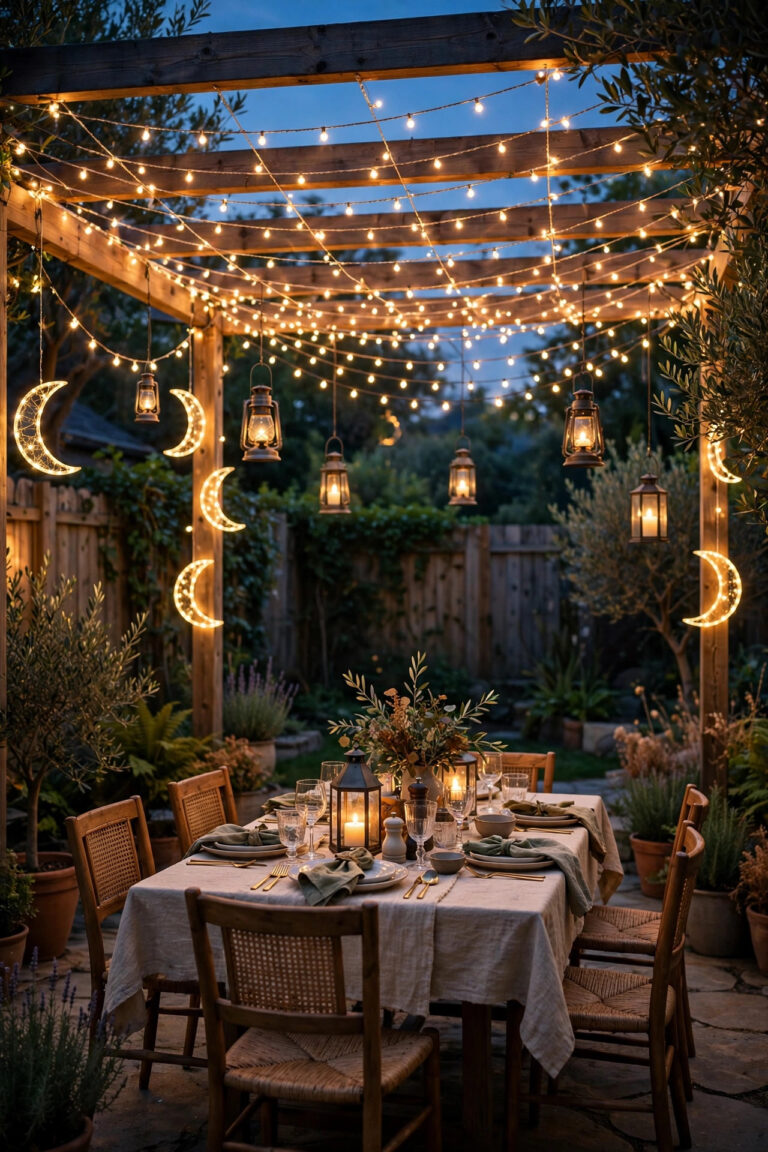
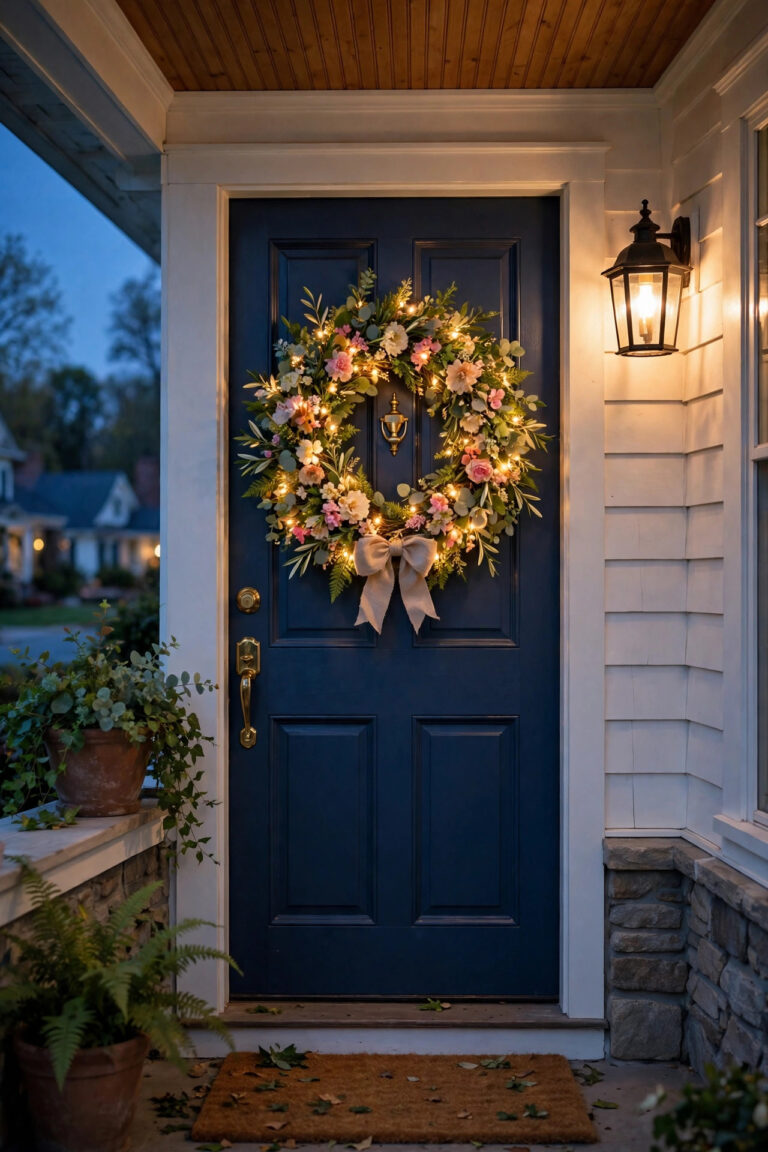
The surest sign of an empty house is not a dark one — it is a predictable one. A porch light that clicks on at exactly 7:00 and off at exactly 11:00, four nights running, may as well hang a sign on the door. Real homes are gloriously inconsistent: lights drift on at slightly different times, a lamp glows in the kitchen tonight and the den tomorrow, and the patio sparkles on Friday but rests on Tuesday. That is exactly what good vacation mode lighting has to copy. In my experience, the houses that fool the whole street are not the ones with the most fixtures — they are the ones whose lighting tells a slightly different story every night. I follow my usual layering philosophy: a welcoming base layer at the entry, a living layer that moves and varies, and a reactive safety layer for the driveway and side yard. Below are the 13 tricks I set up before every trip, most using smart plugs, photocells, and fixtures I already own.
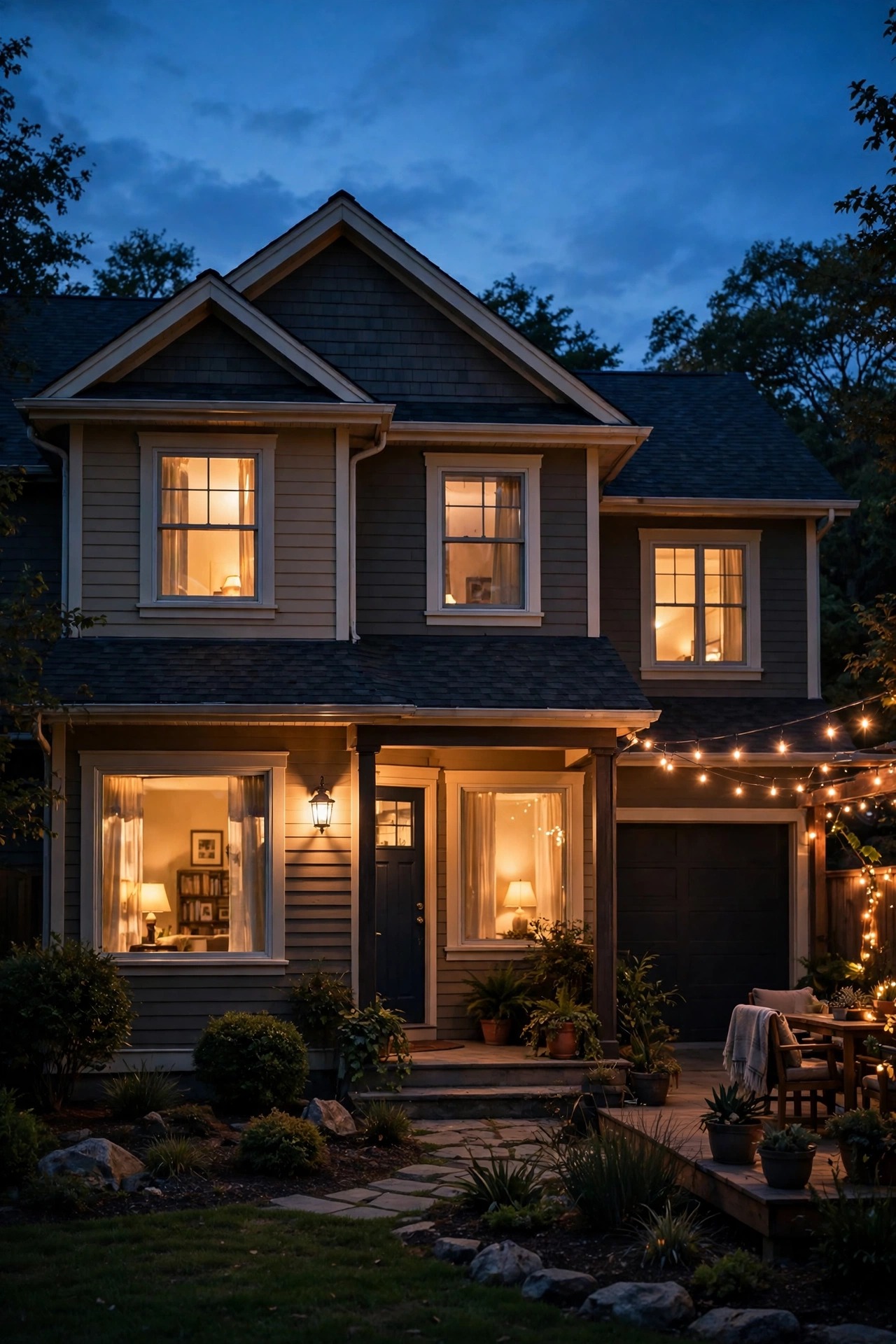
1. Vary Your Vacation Mode Lighting Schedule Every Single Night
This is the trick everything else builds on, so please do not skip it. A fixed schedule is the number one giveaway of an empty house, because nobody lives by a stopwatch. Instead, program each light with a window, not a moment: porch on somewhere between 6:40 and 7:25, off between 10:30 and 11:40. Most smart plug and smart bulb apps let you build a slightly different schedule for each day of the week in about ten minutes, and that small effort pays off all trip long. I like to copy my real habits: on our actual Fridays the patio stays lit later, and on Sundays everything goes dark earlier. Think about your own rhythm honestly — when do you really turn lights off on a work night versus a lazy Saturday? Build that pattern in, wobbles and all. Anyone watching the house for a week should see variety, not a metronome, and variety is what makes a schedule read as a person instead of a program.
Suggested budget range: $0 – $20.
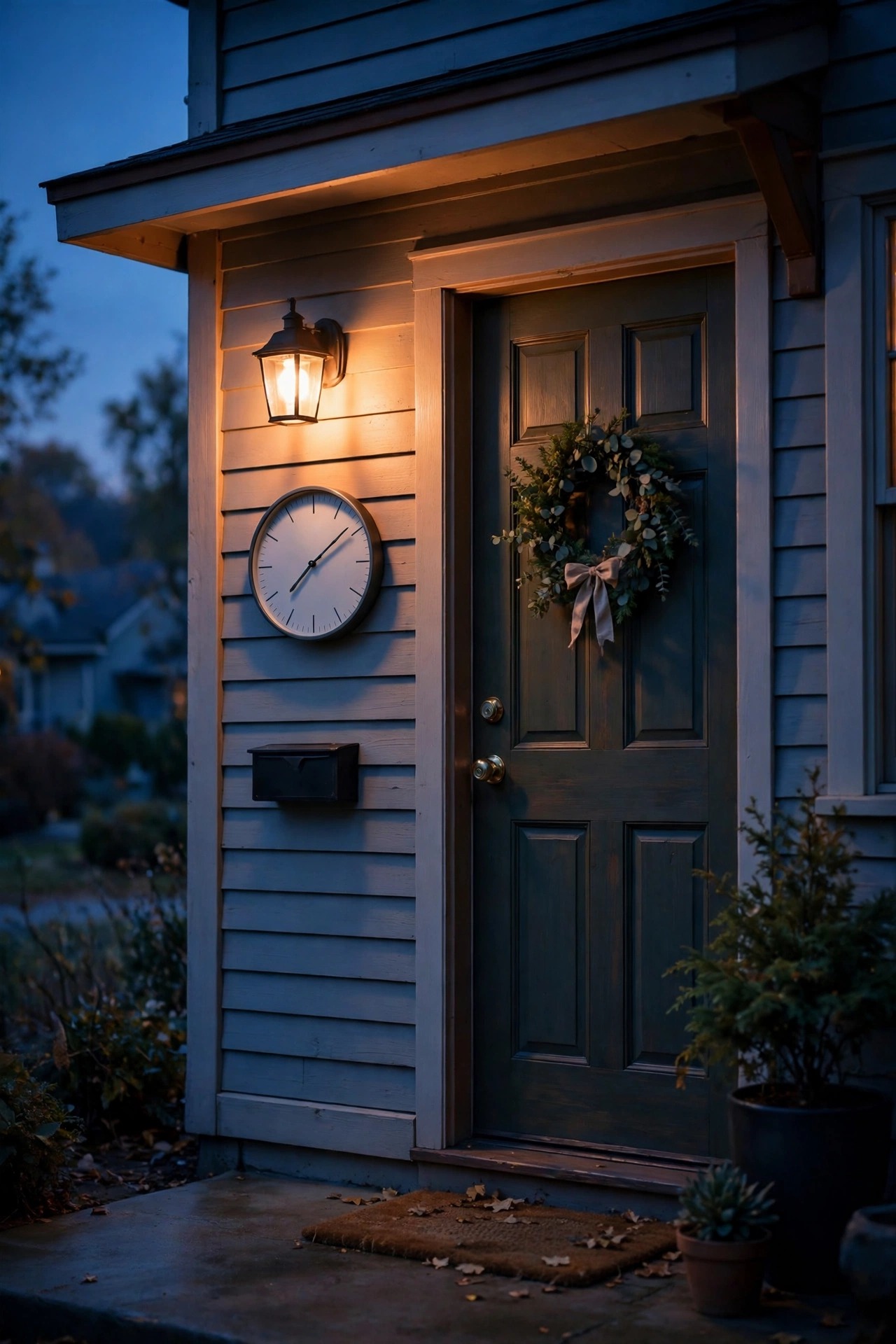
2. Put Smart Plugs in Random Mode and Let Them Improvise
If your smart plugs or indoor timers offer a random or vacation setting, use it — it is the easiest upgrade in this whole list. Random mode nudges your programmed on and off times by a few minutes to half an hour each day, so Tuesday never quite matches Wednesday. I run the living room lamp and the patio string lights on random mode whenever we travel, layered over the varied base schedule from trick one. One honest caution: random mode works best on one or two accent lights, not on everything. If every light in the house jitters, the effect can look haunted rather than lived-in. Keep the porch light steady and sensible, and let the softer indoor lamps do the improvising. If you are shopping before a trip, my guide to the best outdoor smart plugs and timers explains which features actually matter, including this one. A single plug with a true random mode is worth more than three basic timers.
Suggested budget range: $12 – $30.

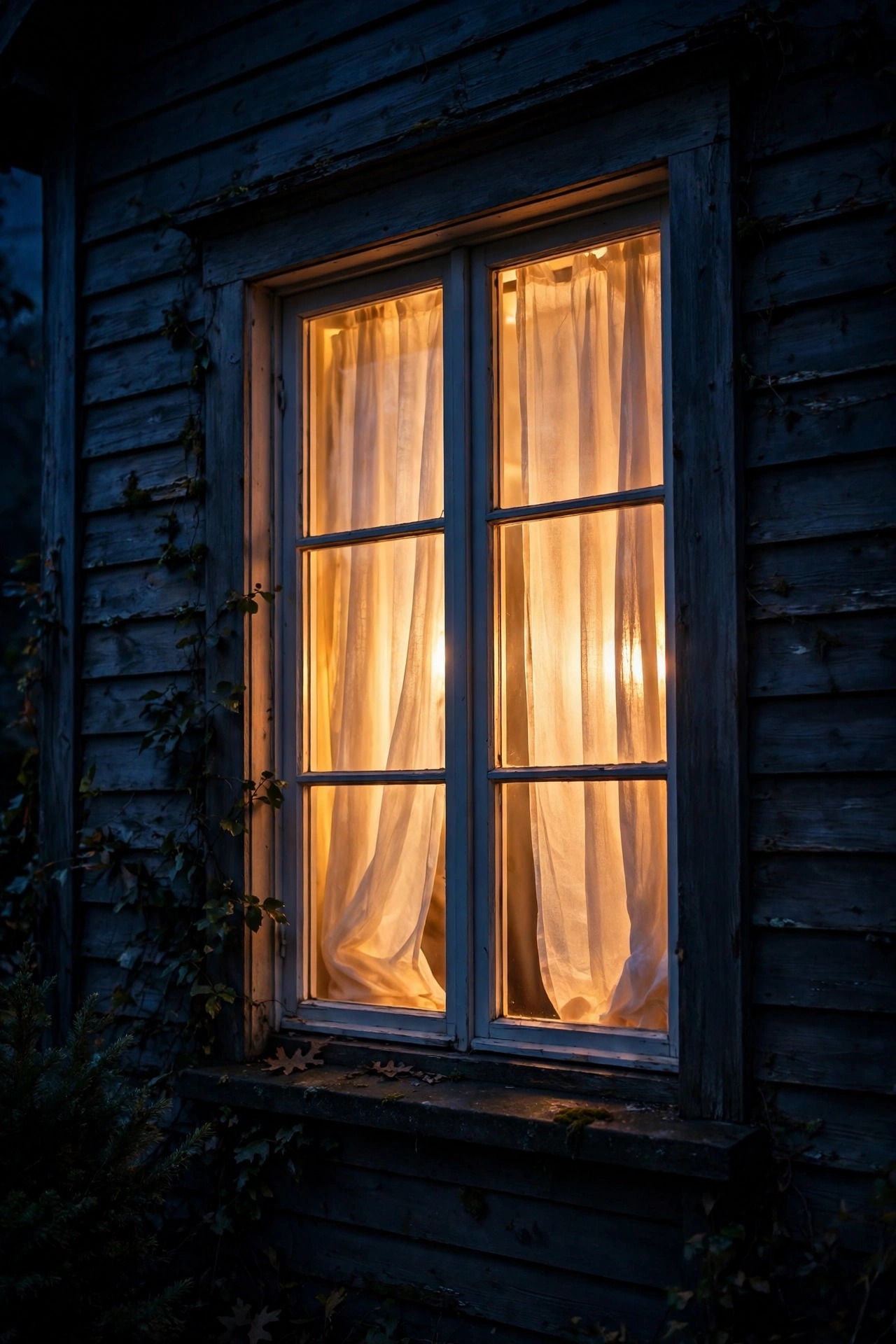
3. Add Indoor Glow That Shows Through the Windows
Outdoor lights alone cannot carry the illusion, because people live inside the house, and it shows. A warm lamp glowing behind sheer curtains is the single most convincing signal that someone is home reading, cooking, or watching the news. I put one lamp in a front room on a smart plug, fitted with a warm white LED bulb around 2700K, and let it run from dusk until my usual bedtime window. Half-close the blinds so the glow reads clearly but nobody can see the empty chair beside it. A television glow simulator — a small light that flickers and shifts colors like a real TV — is another lovely trick for the den, especially after 8 p.m. Honestly, this indoor layer matters more than any fancy fixture outside. A house with dark windows and a blazing porch light still looks empty; a house with one soft lamp inside looks occupied from the street.
Suggested budget range: $10 – $35.
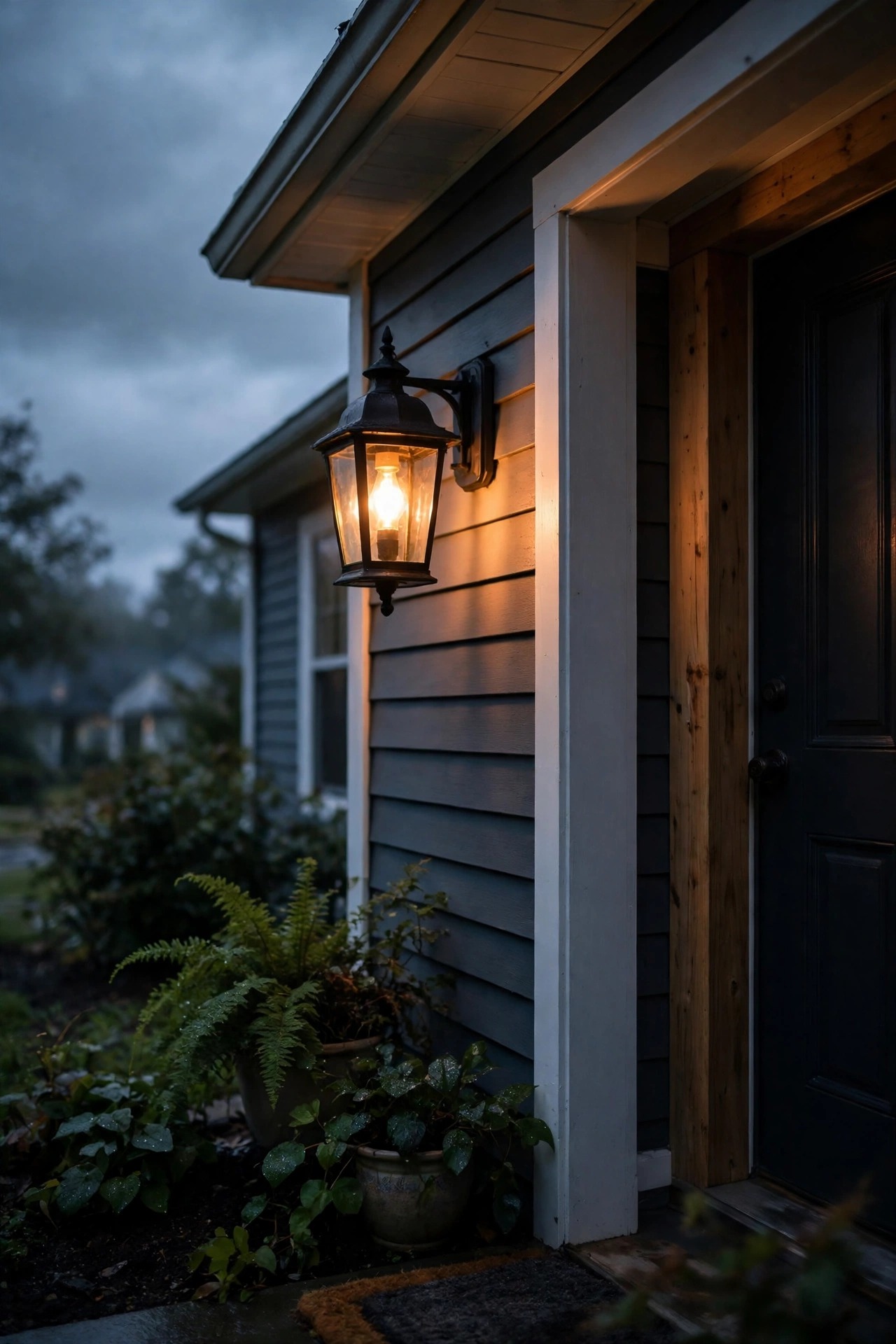
4. Let a Photocell Run the Porch Light Instead of a Clock
For the fixture that guards your front door, I actually prefer a photocell to any timer. A dusk-to-dawn bulb or screw-in photocell adapter turns the light on when the sky darkens and off when it brightens, which means it follows real weather: on a stormy, gloomy afternoon it clicks on early, just like a person flipping the switch because the house feels dark. No clock can imitate that. It also never drifts after a power outage, never needs reprogramming when the seasons change, and quietly handles the shifting sunset across a long trip. Pair it with an LED bulb so the all-night running cost stays pennies. If your porch fixture already has a built-in sensor, even better. I cover the full setup in my post on how to automate porch lights for vacation, including which bulbs play nicely with enclosed fixtures. Steady, weather-aware, zero maintenance — the porch light is the anchor of the whole act.
Suggested budget range: $8 – $25.
5. Use an Astronomical Timer for Sunset-True Timing
Astronomical timers are the quiet overachievers of lighting controls. Instead of a fixed clock time, you enter your location once and the timer calculates local sunset and sunrise for every day of the year, adjusting a minute or two daily just like the real sky. That matters on a two-week trip in June or December, when sunset can drift noticeably between departure and return — a light that came on at 8:15 the first night looks wrong coming on at 8:15 when dusk has moved to 7:50. An astronomical timer stays believable the whole time. Many smart switches and better plug-in timers include this feature, sometimes labeled as sunset offset, and you can add a cushion: on twenty minutes before sunset, off at a varied late-evening time. It is set-and-forget in the best way. Combined with the random offset from trick two, your schedule becomes something no casual observer could ever predict or clock.
Suggested budget range: $20 – $60.
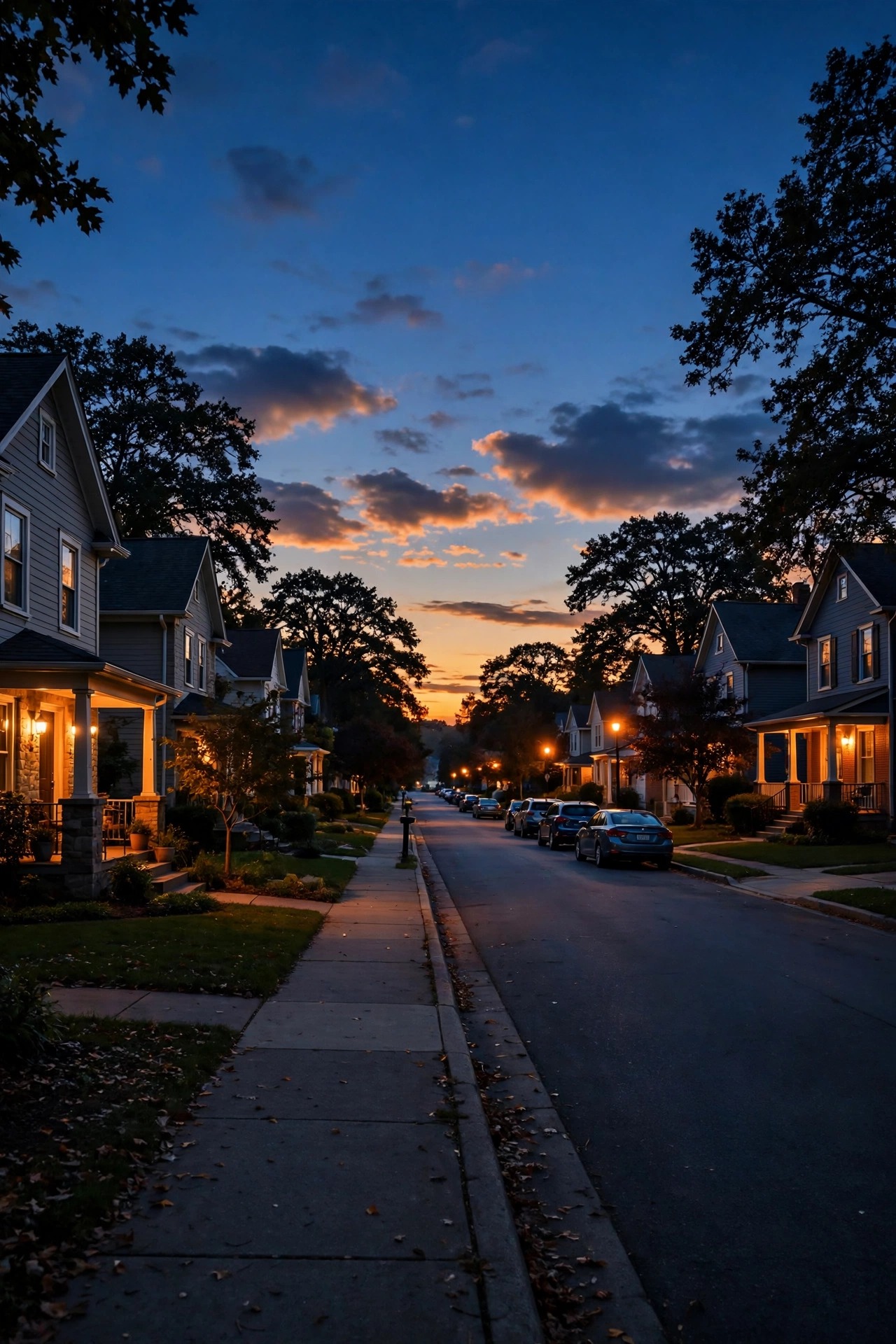
6. Stage an Evening Sequence Instead of One Big Switch-On
Watch your own home on a normal evening and you will notice lights arrive in chapters: the porch at dusk, the kitchen while dinner happens, the den lamp later, the patio only if someone wanders out. Rebuilding that sequence is what separates a believable house from a lit one. I program three short acts. Act one at dusk: porch and one front window lamp. Act two, roughly an hour later and varied nightly: kitchen-visible glow and hallway light. Act three on some nights only: patio string lights for an hour or two, as if we took coffee outside. Not every act plays every night — that irregularity is the point. Setting this up takes one sitting with your timer app and a little honesty about your habits, and it costs nothing extra if your plugs support multiple schedules. From the sidewalk, the house appears to be lived in by people with routines, appetites, and the occasional early night.
Suggested budget range: $0 – $25.
7. Rotate Which Zones Run Each Night
Here is a trick I borrowed from how our house actually behaves: the back patio gets used three or four nights a week, never seven. So before a trip, I rotate the zones. Monday, the front and den glow. Tuesday, add the patio. Wednesday, front only, early to bed. Thursday, the side yard path lights join in as if someone took the bins out or walked the dog. This rotation is simple to build into a weekly smart plug schedule, and it breaks the flat, identical footprint that betrays empty homes. It also saves a little electricity, which I appreciate. The key is restraint — rotate two or three zones, keep the porch constant, and never let the whole property blaze every single night. Real yards rest. A landscape that performs the same full show nightly reads as a storefront, not a family home, and anyone casing the street for a week can tell the difference.
Suggested budget range: $0 – $20.
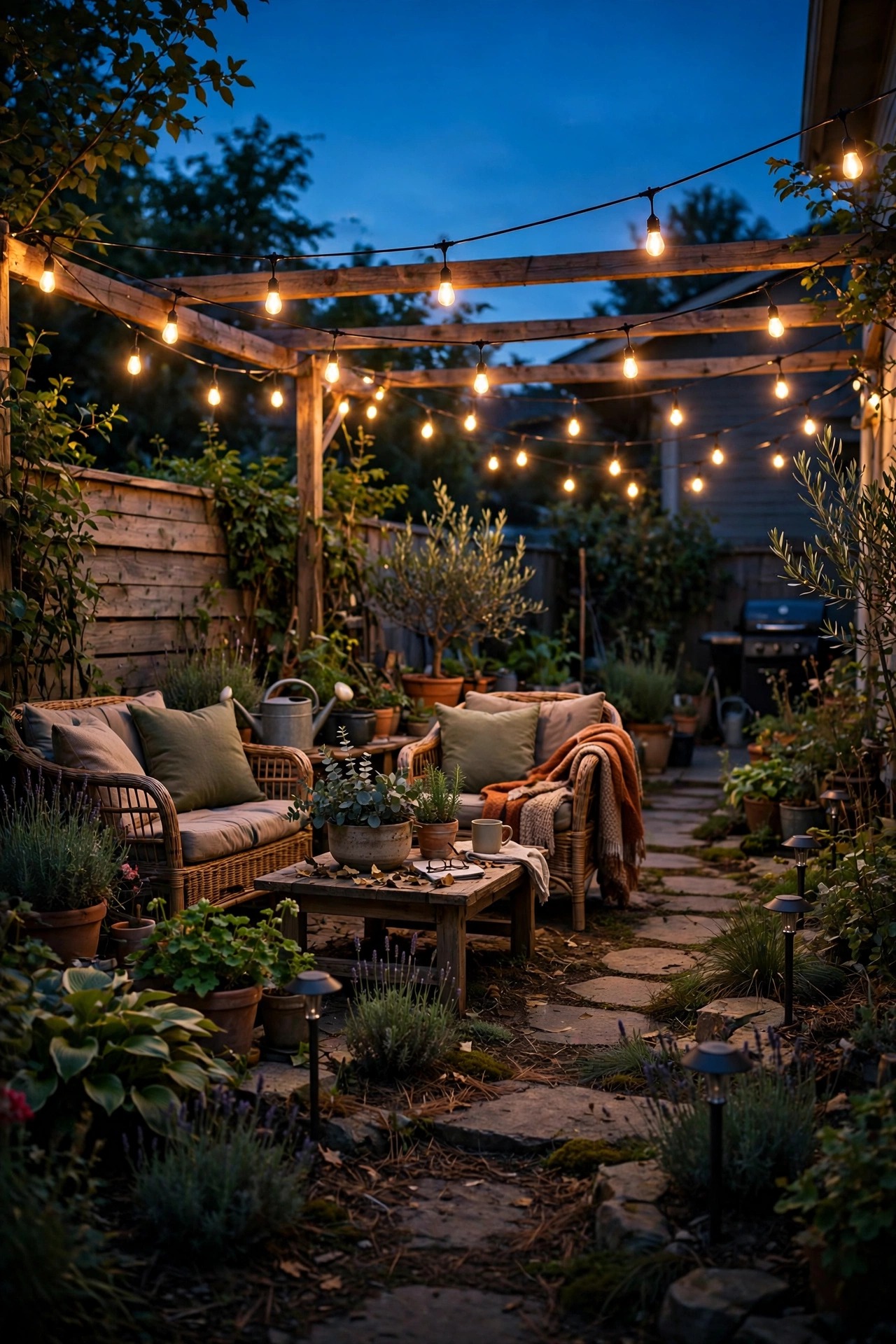
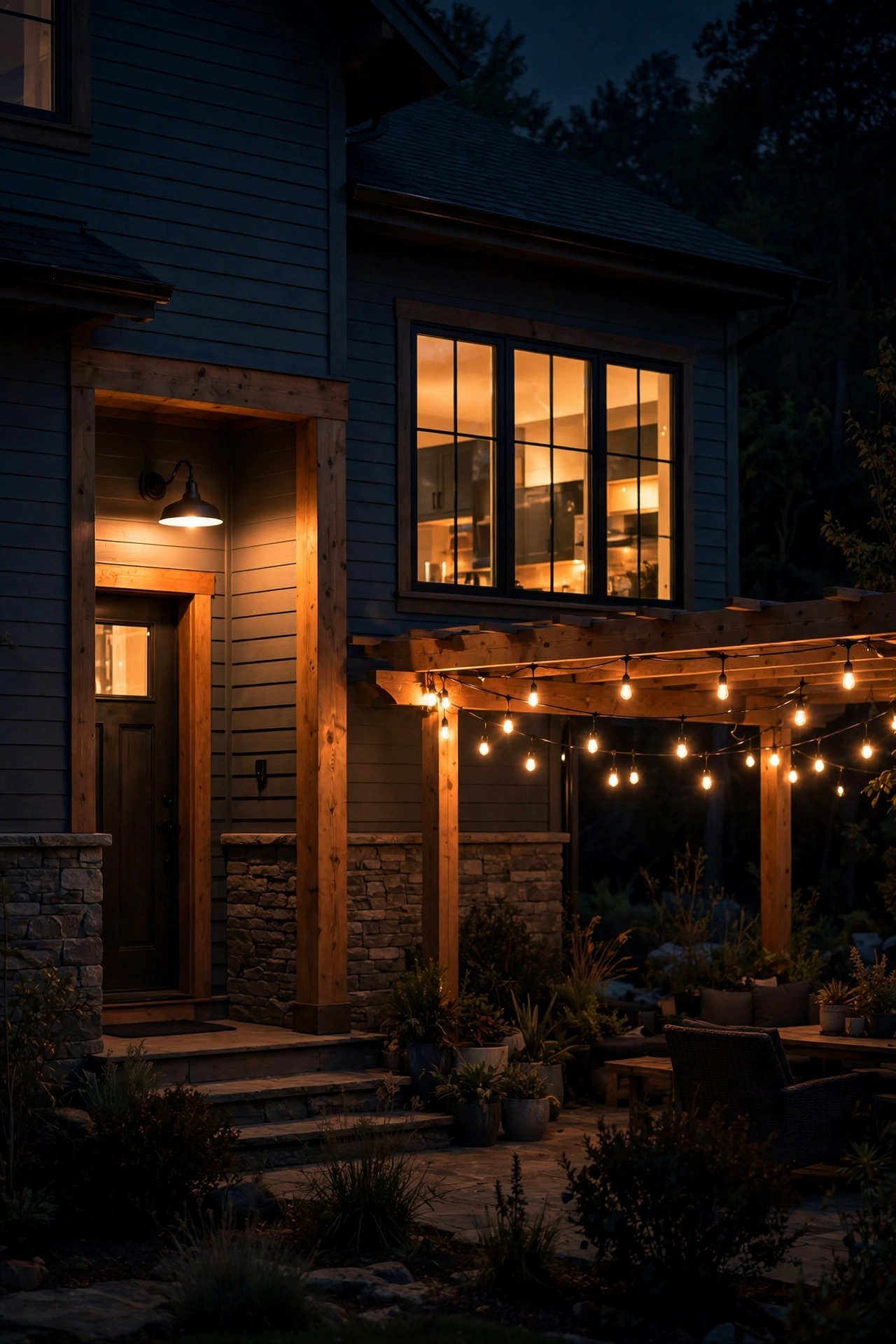
8. Keep Patio String Lights in the Mix for Weekend Energy
String lights are the sound of a backyard exhaling. If your patio wears them while you are home — and ours do, strung over the seating area in warm white — they should absolutely appear while you travel, but on a believable rhythm. I run ours on a smart outdoor plug, Friday and Saturday evenings only, switching off in a varied window before midnight. A Tuesday-night patio party at an otherwise quiet house would look staged; a weekend glow looks like life. Use LED string lights on an outdoor-rated plug, keep strands clear of anything flammable, and if your set has a dimmer, park it around half brightness. Full glare is for festivals; a soft canopy is for people lingering over lemonade. Honestly, this is my favorite trick on the list because it is pure personality. Schedules and sensors say a house is managed. String lights on a Friday say somebody there enjoys being home — and that little story is what makes the illusion hold.
Suggested budget range: $15 – $45.

9. Add a Morning Chapter for Early-Riser Believability
Most vacation setups only think about the evening, but a house that never shows a morning light can look just as staged, especially in winter when sunrise comes late. I add one small morning act: a kitchen-visible lamp or under-cabinet style glow that comes on in a varied window between 5:45 and 6:30, then off by 7:15, as if someone made coffee and left for work. On weekends it sleeps in — no morning light, or a later, shorter one. In summer this matters less because dawn does the work for free, but from November through February it is the difference between a house that wakes up and a house that is simply wired. Keep it to a single warm light, low and domestic. A floodlight blazing at 6 a.m. would announce the timer to the whole street. Subtlety, as always, is what sells the story.
Suggested budget range: $0 – $18.

10. Let Motion Lights Keep Doing Their Day Job
It is tempting to put every fixture on a clever schedule, but motion-activated lights should stay exactly as they are. A driveway floodlight that snaps on when a raccoon, a delivery driver, or a neighbor kid passes is normal life — it happens whether you are home or in another time zone, and its randomness is built in for free. In fact, motion lights quietly support the illusion, because their occasional bursts break up the evening pattern in ways no timer can script. Just give them a tune-up before you leave: clean the sensor lens, check the sensitivity so passing cars do not trigger it, and set the on-time to a sensible one to five minutes. Pairing honest motion lighting with your scheduled layers is also sound security practice generally — my overview of outdoor lighting for home security explains how the layers work together. Leave these fixtures alone, and let them improvise.
Suggested budget range: $0 – $30.
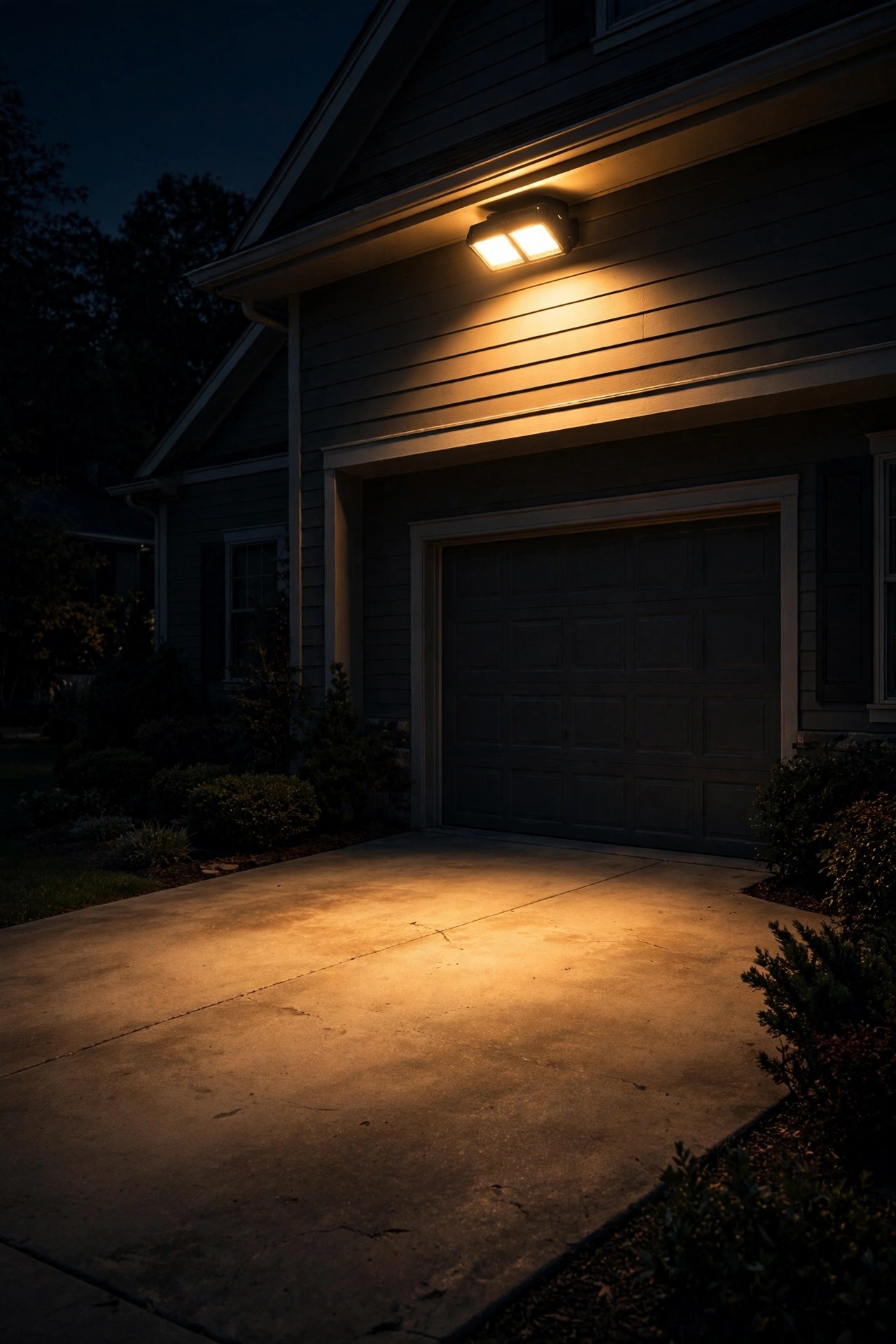
11. Dim Everything Down to Lived-In Levels
Nothing screams timer setup like a house lit at full theatrical brightness in an otherwise sleepy street. People at home do not run their porch, patio, path, and floods at one hundred percent all evening — they glow. Where your fixtures or smart bulbs allow it, set vacation scenes around 40 to 60 percent brightness, warm white around 2700K, and let a single brighter moment happen only where a person plausibly stands, like the entry. Dimming has a second benefit: it stretches bulb life and trims the electric bill while you are gone. It also keeps you in good standing with the neighbors, who will notice a light show far more than a gentle glow. Walk across the street before you leave and squint at your own house. If it reads as a warm home among other warm homes, you nailed it. If it reads as a display model, turn it down.
Suggested budget range: $0 – $22.
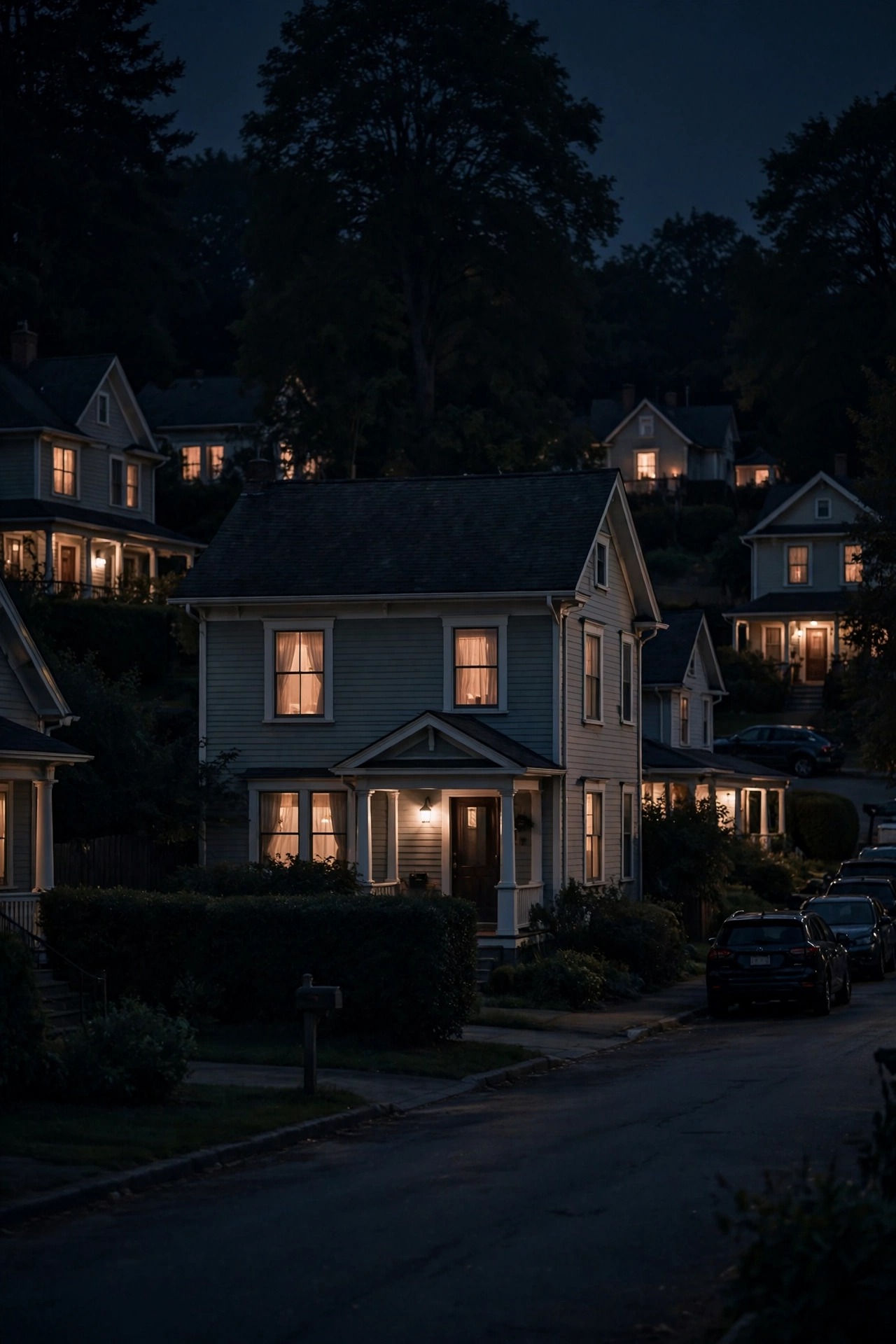
12. Do a Full Dress Rehearsal the Night Before You Leave
Every good performance gets a rehearsal, and this one takes fifteen minutes. Two nights before departure, run your complete vacation setup exactly as programmed, then go outside at 9 p.m. and look at your house the way a stranger would — from the sidewalk, from across the street, from the corner. I have caught real mistakes this way: a lamp I forgot was on a different plug, string lights firing on the wrong night, a porch bulb far brighter than everything else. Fix the story while you can still fix it. Also check the view from your own front windows for glare, and confirm nothing shines straight into a neighbor bedroom. Photograph the house on a normal night before the trip and compare — your phone camera is a brutally honest critic. That one rehearsal is the cheapest insurance on this list, and it turns a pile of timers into a performance you can trust while you are away.
Suggested budget range: $0 – $10.

13. Layer Indoor and Outdoor Vacation Mode Lighting Into One Story
The final trick is really the whole philosophy in one move: your indoor and outdoor vacation mode lighting should read as chapters of the same evening, told by the same imaginary family. When the kitchen lamp comes on, the porch is already glowing. When the patio strings light up on Friday, a den lamp joins them. When the house goes dark for the night, it goes dark in stages, bedrooms first, porch photocell last — exactly like real people winding down. I sketch this on paper before programming anything: dusk, dinner, evening, late, night. Five beats, a few lights each, varied by day. While you are away, ask a trusted neighbor to do one unscripted thing mid-trip — water the porch pots at dusk with the hose light on, or move the car — because one genuinely human moment refreshes the whole illusion. Layered, varied, and a little imperfect: that is a house that looks loved and lived-in.
Suggested budget range: $15 – $50.
Frequently Asked Questions
Should vacation lights stay on all night or turn off at some point?
Turn most of them off. Real homes go dark when people sleep, so a hard midnight blaze looks artificial. Let the photocell porch light stay on if that matches your normal habit, and let everything else wind down in a varied window between 10:30 and midnight.
Can smart bulbs and smart plugs really fool anyone watching the house?
They fool casual observation very well, because casual observation notices patterns, not devices. Varied times, rotating zones, and indoor glow break every pattern a watcher relies on. No lighting setup replaces good locks, a security system, and a neighbor who knows you are away, but lighting removes the obvious empty-house signals.
What color temperature looks most like someone is home?
Warm white, around 2700K to 3000K, matches the lamps and pendants most of us actually live with. Cool blue-white light outdoors reads as commercial or security lighting and can make a home look more staged, not less. Consistency matters too — keep the whole scene in one warm family of tones.
Is it expensive to run vacation lighting for two weeks?
Barely, with LEDs. A 9-watt porch bulb running dusk to dawn costs only a few cents a night, and smart plugs sip almost nothing on standby. The full layered setup in this guide typically adds well under a couple of dollars a week compared with leaving everything on a simple timer.
Conclusion
Good vacation mode lighting is not about more light — it is about better storytelling. Vary the times, rotate the zones, layer a little indoor glow behind the curtains, and let photocells and motion sensors supply the honest randomness no schedule can fake. Do that, and your empty house will simply look like a home where people are living their ordinary, slightly unpredictable evenings. If you want more ways to make your exterior work harder while you travel, browse the rest of my lighting ideas here on the site before your next trip — your future, relaxed, on-vacation self will thank you.