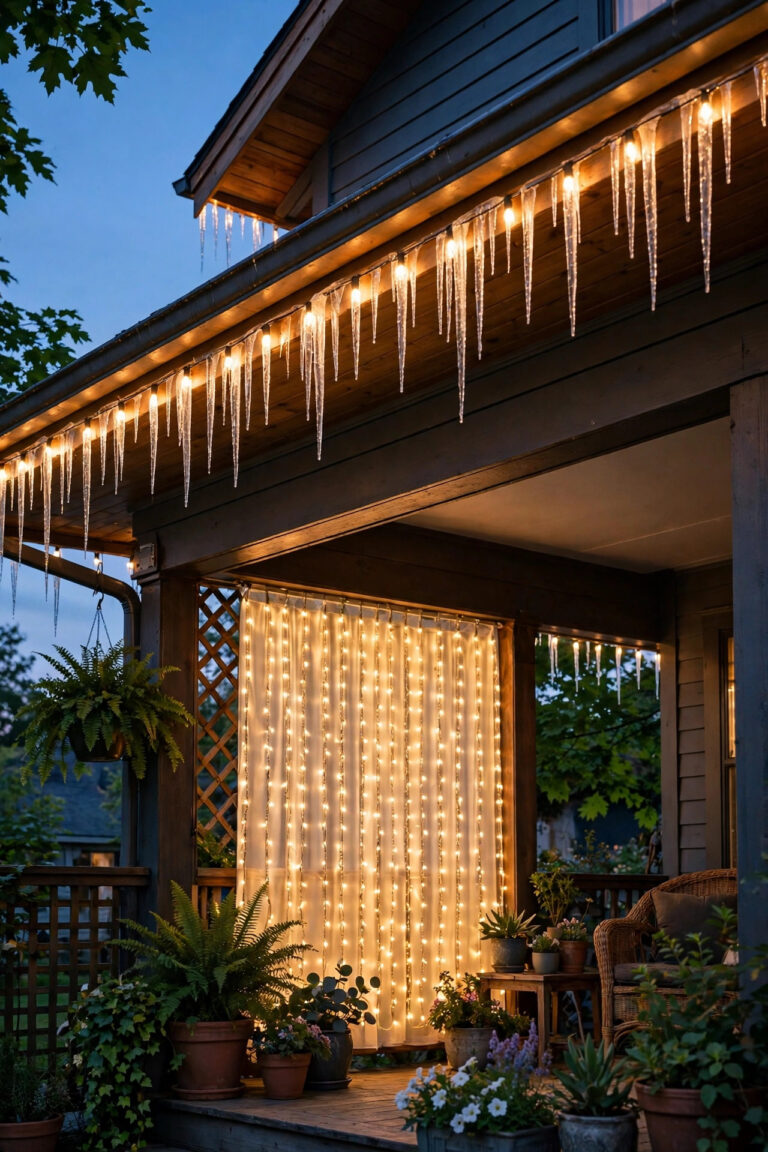
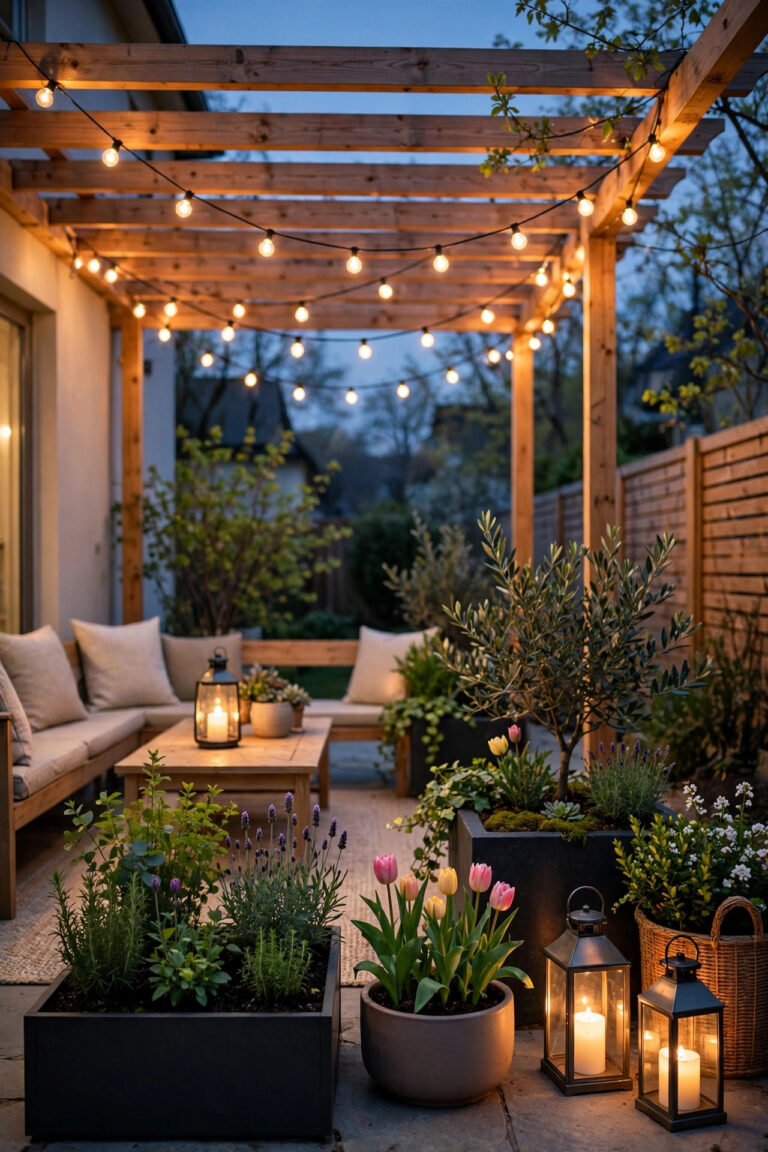
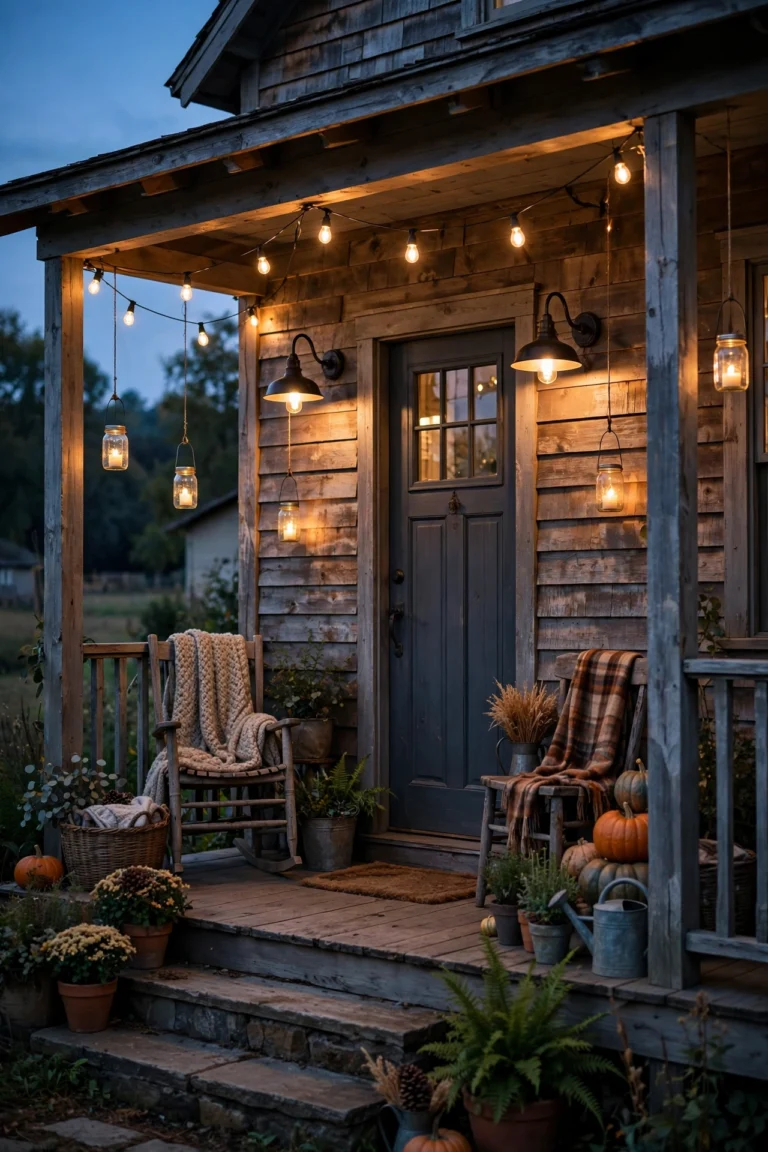
Our first patio was barely 10 by 12 feet, and for one whole summer I was convinced the answer was a bigger space, not better light. Then I swapped the single glaring porch bulb for a few small patio lighting ideas I had been saving, and the little slab suddenly had depth, corners, and a ceiling. That is the secret with a small patio: size is fixed, but perception is not. Light layered at three heights, overhead, eye level, and low along the ground, tricks the eye into reading the space as wider and taller than it really is. In this post I am sharing the 17 tricks that made our tiny patio feel twice as big, from crisscrossed string lights and mirror-backed lanterns to perimeter path lights that push the edges outward. Most are renter friendly, many are solar, and nearly all of them cost less than a nice dinner out. Pick three or four to start, stand back at dusk, and watch your small patio grow.

1. Start With a Layered Plan for Your Small Patio Lighting Ideas
Before you buy a single fixture, stand on your patio at dusk and look at the three horizontal bands where light can live: overhead, eye level, and down low along the ground. In a small space, using all three is what creates depth. One lonely porch bulb flattens everything into a single bright pool and leaves the corners in shadow, which is exactly why the patio reads as tiny. My rule is one light type per layer, no more. Strings or a pendant overhead, sconces or lanterns at eye level, and low path lights or step lights at the ground. Draw a quick sketch of your patio, mark where each layer will sit, and note the real measurements: our 10-by-12-foot patio needed only about 24 feet of string lights, two sconces, and six path lights. That is the whole shopping list. Resist the urge to add a fourth and fifth type of fixture, because visual clutter shrinks a small patio faster than darkness does. A simple, deliberate plan also keeps cords short and budgets sane, and it gives every idea that follows a place to land.
Suggested budget range: $0 – $20.
2. Crisscross String Lights Overhead to Lift the Ceiling
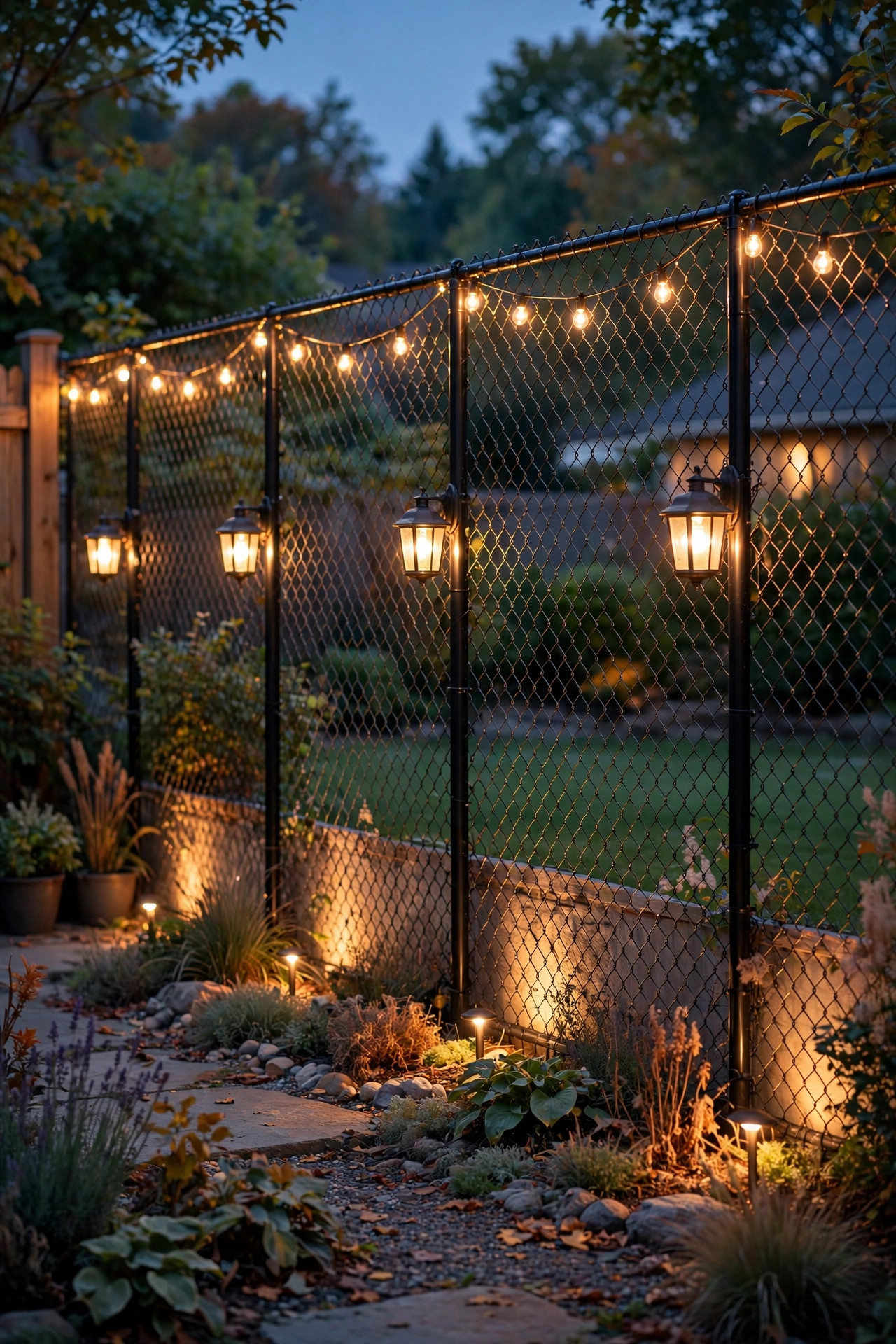
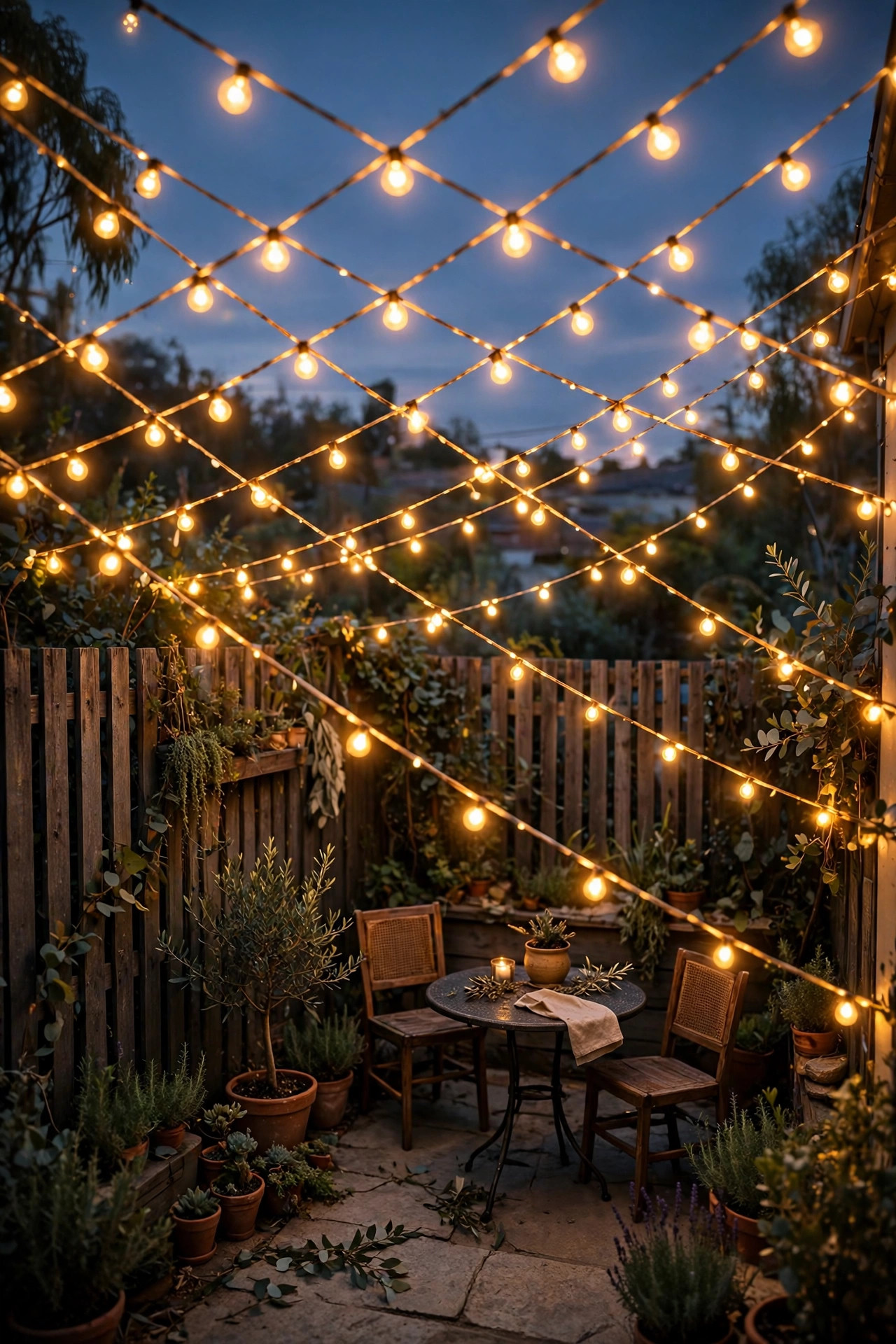
Nothing stretches a small patio like a ceiling of light, and a zigzag crisscross pattern does it better than straight parallel runs. Running the strands diagonally, corner to corner, makes the eye travel the longest possible line across the space, so the patio reads wider than it is. Use commercial-grade LED string lights with shatterproof filament-style bulbs spaced about 12 inches apart, and hang them 8 to 9 feet high where you can. Let each run sag gently, roughly 6 to 12 inches of swag between anchor points, so the lines feel relaxed instead of stretched tight like a clothesline. On our patio, two 24-foot strands in a crisscross pattern honestly outperformed four straight rows. Anchor into studs, fascia boards, or sturdy fence posts with screw hooks, never into vinyl siding alone, and always plug into a GFCI outlet with an in-use weatherproof cover. If your patio sits under a pergola, weave the strands over and under alternating beams for a woven effect that adds even more dimension. Keep the bulbs warm white at 2700K, and put the whole canopy on a plug-in timer so it glows every evening without you thinking about it.
Suggested budget range: $25 – $70.
3. Use String Light Poles When There Is Nothing to Hang From
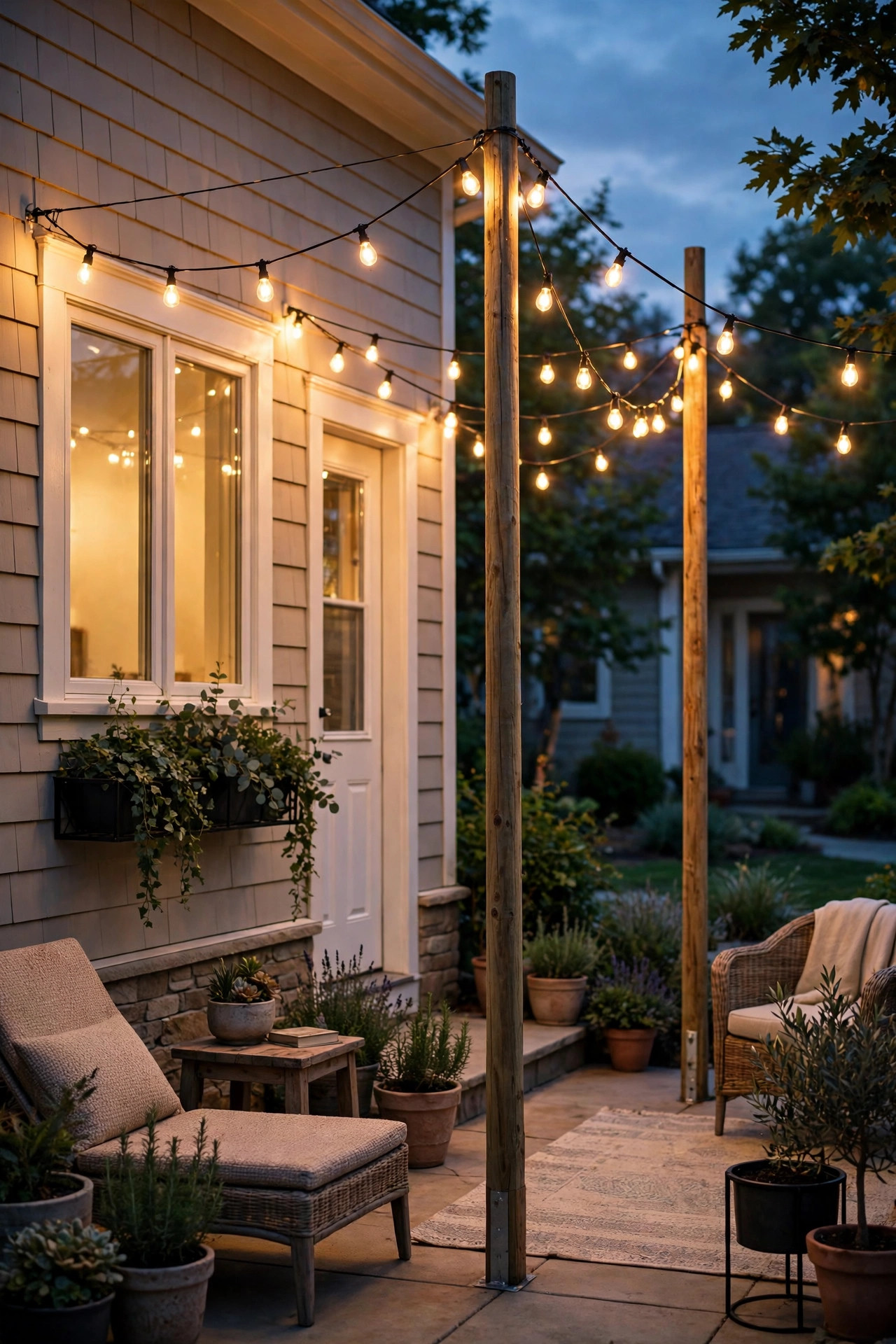
Plenty of small patios back onto open lawn or a plain stretch of fence, with no tree, eave, or pergola anywhere near the corners. That is exactly the problem string light poles solve. A sturdy 9- to 10-foot pole in each corner gives your strands a high anchor point, and because the poles sit right at the edges, they frame the patio instead of crowding it. My favorite renter-friendly setup is a metal pole dropped into a heavy planter filled with gravel or concrete, planted up with trailing greenery so the base disappears. Screw-in ground stakes work too if you have soil at the patio edge. Space the poles first, then measure your strand length with the swag included, because a strand that pulls drum-tight looks harsh and stresses the sockets. Four poles, one at each corner, will carry two crisscrossed 24-foot strands over a typical small patio with ease. If you are shopping or DIY-ing your own, my notes on patio string light pole ideas walk through heights, bases, and which style suits a rental versus a forever home.
Suggested budget range: $40 – $120.
4. Wash the Walls With Slim Solar Sconces
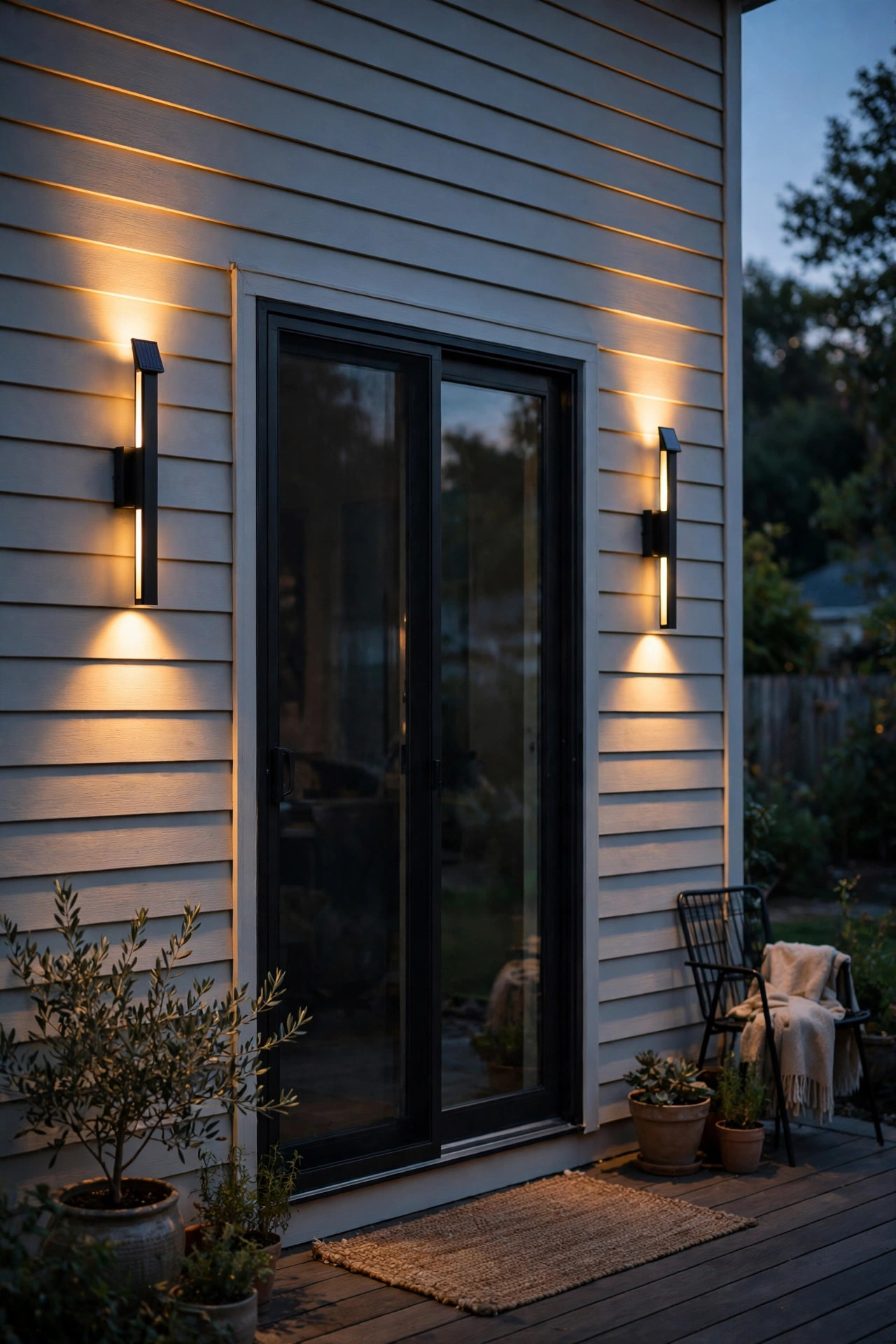
In a tiny patio, every fixture that lives on a wall is a fixture that takes up zero floor space, and that alone makes sconces a small-space hero. Slim solar wall sconces mount flat beside the back door or along the house wall, washing light up and down the siding in a soft fan shape. That wash is the trick: lighting the vertical surface makes the boundary glow, and a glowing boundary reads as farther away than a dark one. Mount them about 5 1/2 to 6 feet high, roughly at eye level, and place them in pairs flanking a door or spaced evenly along the longest wall. Solar versions with a separate little panel on a cord are worth choosing if your wall sits in shade, because you can park the panel in a sunny spot a few feet away. Look for warm white output around 2700K to 3000K and a modest 50 to 150 lumens per fixture; you want a wash, not a spotlight. Because there is no wiring, renters can hang them with heavy-duty outdoor mounting strips rated for the fixture weight.
Suggested budget range: $20 – $60.
5. Tuck LED Strip Lights Under Bench Edges and Steps
Some of the most space-expanding light on a small patio comes from fixtures you never actually see. Waterproof LED strip lights, the flexible kind rated IP65 or higher, tuck neatly under built-in bench seats, along the underside of deck steps, or beneath the lip of a raised planter. The light spills out from underneath and pools on the ground, which makes benches and steps look like they are floating. Floating furniture reads as lighter and less bulky, so the whole patio feels more open. Installation is genuinely simple: clean the surface, peel and stick, then press the strip firmly every few inches, and use the little mounting clips in the kit at corners and ends. Run the low-voltage cable tight along the back edge and down to a GFCI outlet, keeping it off walking surfaces. Choose a 2700K to 3000K strip for that warm candlelit feel, and add an inline dimmer so you can drop the glow to a whisper for movie nights. One 16-foot roll honestly handled our bench, two steps, and a planter edge with a little left over.
Suggested budget range: $15 – $45.

6. Set a Mirror Behind Lanterns to Double the Glow
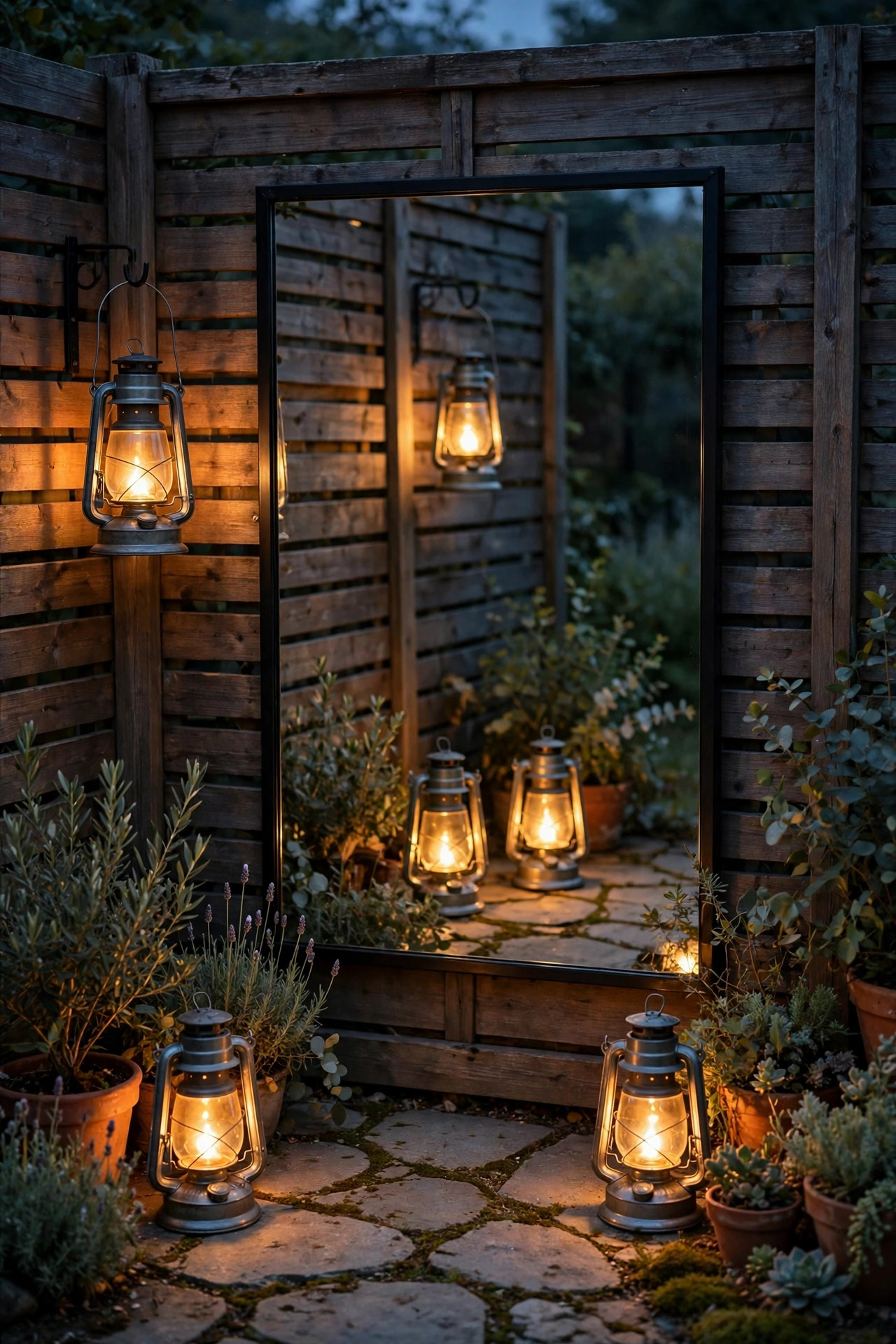
This is the oldest interior trick in the book, and it works just as well outside: put a mirror where it can catch the light, and you instantly get two lanterns for the price of one. On a patio, hang an outdoor-safe acrylic mirror panel, or a polished stainless panel with the same effect, on the fence or wall behind a cluster of lanterns or a sconce. The reflection doubles every point of light, adds a sparkle of depth, and fools the eye into sensing a space beyond the fence line. Acrylic matters here, because real glass is heavy, breakable, and not thrilled about freeze-thaw cycles. Angle the panel very slightly downward so it reflects the lanterns and the lit patio instead of the dark sky, and keep it at the back of the seating area rather than beside it, so the reflection greets you when you look out from the house. A framed thrift-store shape sprayed with outdoor sealant works beautifully and costs almost nothing. Wipe it down once a month; a dusty mirror reflects a sad, dim version of your pretty lights.
Suggested budget range: $10 – $40.
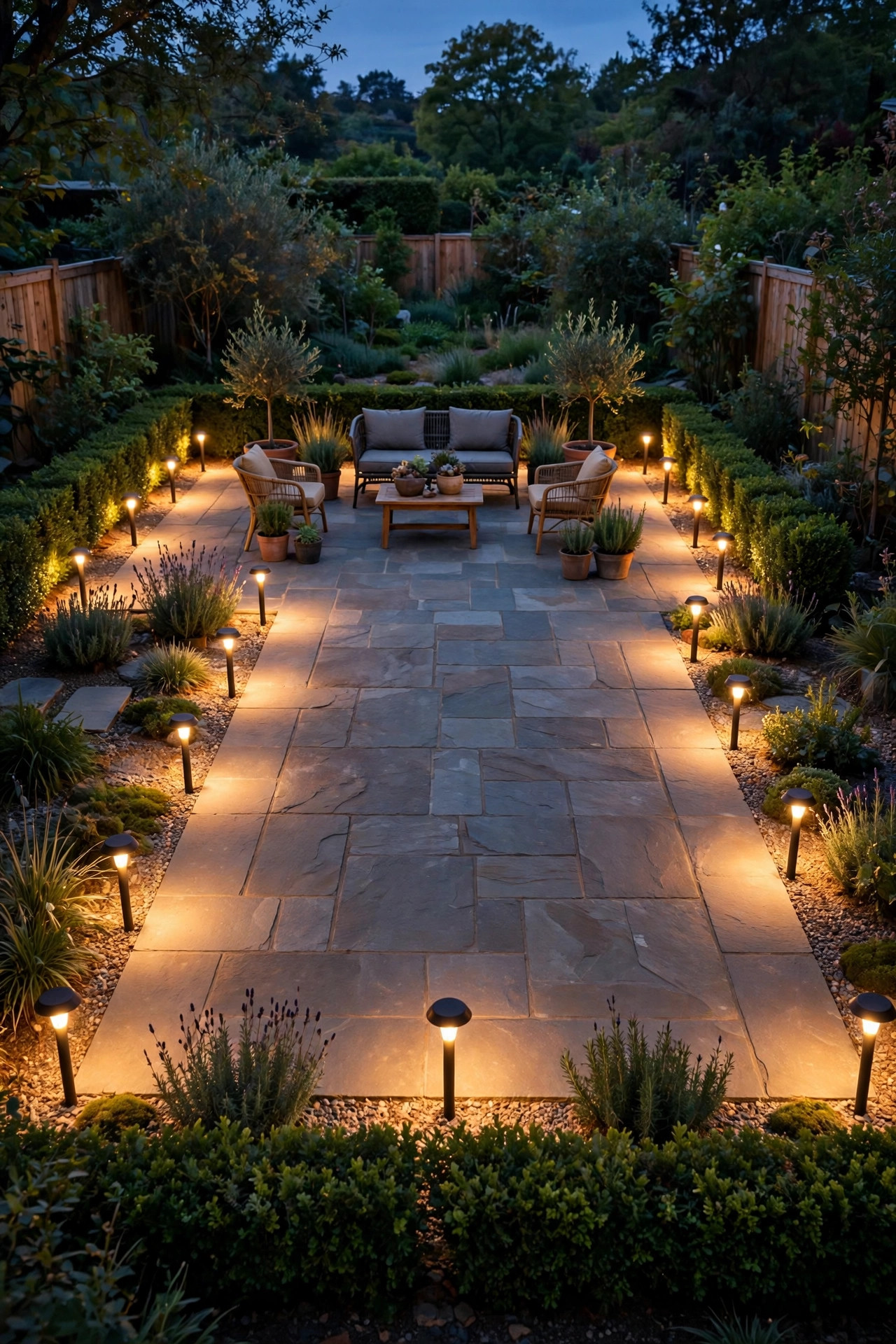
7. Line the Perimeter With Low Path Lights
If the edges of your patio disappear into darkness, your brain assumes the patio ends at the last thing you can see, so it feels small. Low path lights fix that by drawing a dotted outline of light around the full perimeter, and a clearly lit outline always reads bigger than a fuzzy one. Push small solar stakes or low-voltage fixtures into the beds and lawn edges just beyond the patio slab, spacing them about 4 to 6 feet apart so the pools of light nearly touch. Keep them low, 12 to 18 inches tall, and modest in brightness, around 20 to 50 lumens each; this is definition, not floodlighting. In my experience, lighting the far corners matters most, because those are the points the eye measures distance by. Solar stakes are the easy starting point since there is no cable to bury around a tight space, though a wired low-voltage run gives more consistent brightness in shady yards. Either way, resist lining only the front edge. The magic is in completing the loop so the whole shape of your patio glows after dark.
Suggested budget range: $25 – $80.
8. Hang a Single Pendant Over the Dining Table
Every small patio needs one clear focal point, and a single pendant light over the table gives it to you without stealing a single inch of floor space the way a floor lamp would. A pendant pulls the seating area together into a defined room, and a defined room always feels more generous than a vague slab with chairs on it. You do not need an electrician: battery-powered and solar pendants with a warm LED bulb inside have gotten genuinely good, and a plug-in swag pendant works if an outlet sits nearby. Hang the shade so its bottom edge sits about 30 to 36 inches above the tabletop, high enough that nobody bumps it standing up, low enough that the light pools intimately on the table instead of spraying everywhere. A woven rattan or black metal shade in the 12- to 16-inch range suits most small tables; oversized shades swallow a tiny space, and I learned that one the bulky way. Add a remote or timer if your model offers it, because reaching up to a switch chain with full dinner hands gets old fast.
Suggested budget range: $25 – $75.

9. Choose Small Patio Lighting Ideas That Work at Multiple Heights
Here is the principle that ties the whole list together: a patio lit at only one height feels flat and small, while light scattered across several heights makes the eye travel, and traveling eyes perceive more space. When I audit my own patio each spring, I count the heights. Strings arc overhead around 8 feet. The pendant hangs at about 6 feet over the table. Sconces wash the wall at eye level, roughly 5 1/2 feet. Lanterns sit on the table and the ground at 1 to 2 feet, and the path lights glow at ankle height. Five distinct levels in a 10-by-12-foot space, and guests regularly guess the patio is half again its real size. The trick is contrast: leave a few shadow gaps between the layers so each level reads separately instead of blurring into one wash. If you are collecting more tricks for tight outdoor spots, the small yard lighting tricks I use beyond the patio follow this same multi-height logic. Start by adding just one new height to whatever you already have, and you will feel the difference that same evening.
Suggested budget range: $30 – $90.

10. Add Fairy Lights to Planters and Shrubs
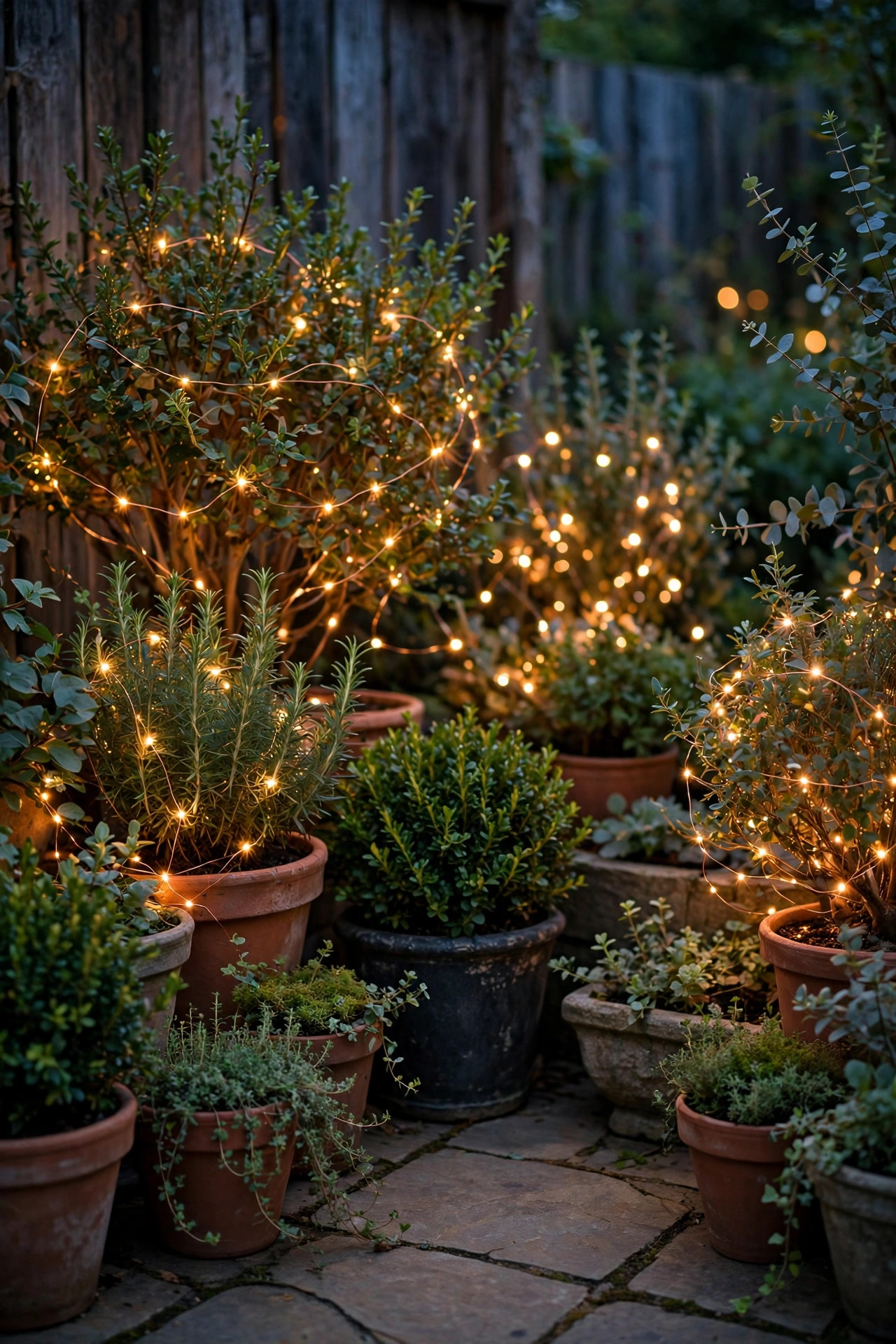
Copper-wire fairy lights are the smallest fixtures on this list, and they punch far above their weight in a small patio. A single 33-foot strand weaves invisibly through a shrub, a potted olive tree, or the trailing plants in a tall planter, scattering dozens of tiny warm pinpoints through the greenery. Those pinpoints at the edges of the patio do real spatial work: they give the eye interesting things to land on at the boundary, which makes the boundary feel intentional and farther away. The wire is thin enough to shape by hand, so wrap it loosely in a spiral around branches and let a few strands drape over the pot rim like falling sparks. Solar-powered versions hide a small stake panel in the soil, while battery packs tuck neatly behind the planter; either way, there are no cords crossing your limited floor. One honest note: fairy lights are atmosphere, not illumination, so keep them paired with the stronger layers from your plan. A strand per large planter or shrub is plenty. Too many, and the patio starts to look like a craft store exploded.
Suggested budget range: $10 – $30.
11. Use Uplighting to Make Trees and Fences Feel Farther Away
Uplighting is the landscape designer's depth trick, and it scales down beautifully to a small patio. A single low spotlight placed at the base of a fence panel, a small tree, or a tall ornamental grass, aimed upward at a gentle angle, grazes the surface with light and stretches it vertically. A fence that glows from bottom to top reads as a tall backdrop rather than a close wall, and that shift alone can make a patio feel a room bigger. Keep the fixture small and tucked tight to the base so it disappears into the planting bed, and choose a warm 2700K beam in the 100- to 300-lumen range; in a small space, a little uplight goes a long way. Solar uplights have improved and are fine for a single accent, though wired low-voltage spots give you aimable, consistent beams. Angle the light across fence boards rather than straight up them so the texture and shadow lines show; that texture is what sells the depth. One or two uplights is the sweet spot for a small patio. More starts to feel like a stage set.
Suggested budget range: $20 – $65.

12. Cluster Flameless Candles for a Flexible Glow
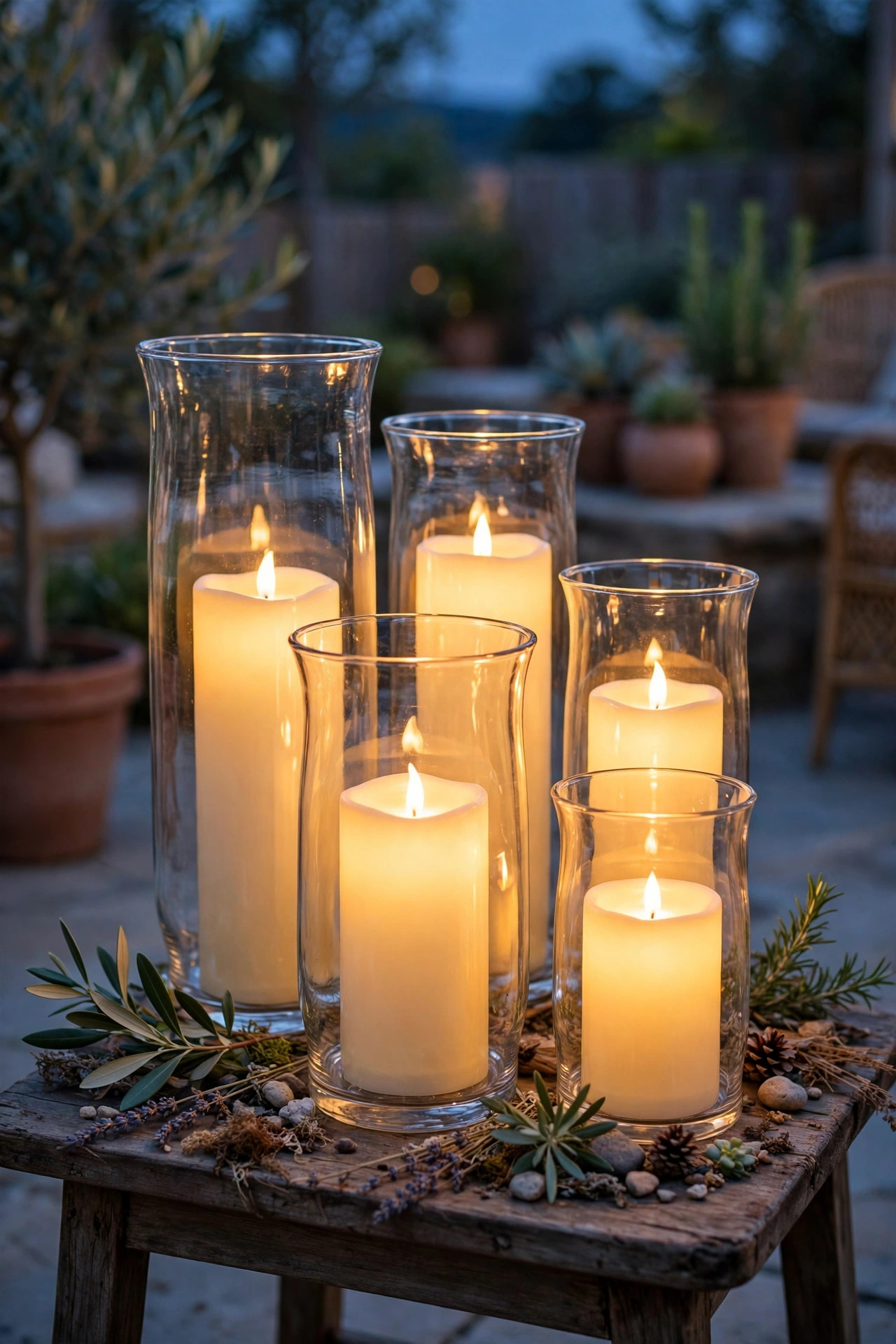
When floor space is precious, the best light source might be one that moves. Flameless LED candles, grouped in clusters of three or five, give you pools of warm flickering light on a side table, a step, a wide planter rim, or the ground in a dim corner, and you can rearrange them in thirty seconds when the party layout changes. Group them at mixed heights, say 4, 6, and 8 inches, inside glass hurricanes or open lanterns, and the cluster reads as one intentional design moment rather than scattered clutter. Because they are LED and cool to the touch, they are safe around chair cushions, trailing tablecloths, and curious kids, which real candles on a crowded small patio honestly are not. Most sets come with a remote and a timer function; set the 6-hour timer once and they will glow to life at the same time every evening like clockwork. Ivory wax-look pillars look the most convincing after dark. Keep a spare set of batteries in the patio storage box, since flameless candles fading mid-dinner is the tiniest tragedy I know.
Suggested budget range: $15 – $40.
13. Pick One Warm Color Temperature Everywhere
Mismatched light color is a silent space-shrinker. When one bulb glows amber, another burns blue-white, and a third sits somewhere greenish in between, the patio feels chopped into little zones, and little zones feel small. A single consistent color temperature pulls everything into one calm, unified room. For patios, my always-recommendation is 2700K, the warm white of a classic Edison bulb, with 3000K as the acceptable upper edge for a slightly crisper feel. Check the Kelvin number printed on every box before you buy, because soft white, warm white, and daylight labels vary wildly between makers. Solar fixtures are the worst offenders, so read their specs for an actual Kelvin rating or words like warm white, and skip anything described as cool or bluish. The good news is that this idea often costs nothing: swapping two mismatched bulbs you already own for matched ones instantly calms the whole scene. If you fall in love with a fixture that only comes in daylight white, let it go or use it far from the patio. Consistency is the whole point here.
Suggested budget range: $10 – $35.

14. Light the Steps and Edges for a Finished Border
Steps, grade changes, and patio edges are where a small space either feels finished or feels forgotten. Small solar step lights or low-profile LED fixtures mounted on each stair riser, or tucked along the edge where the patio meets the lawn, draw a clean glowing border that defines the room. Defined borders read as deliberate, and deliberate reads as bigger. Mount one fixture per step, centered or in pairs on wider stairs, and aim the light down at the tread so it pools where feet land rather than glaring into eyes. Recessed deck-style lights that sit flush in the surface are the neatest option of all, because they take up literally zero space and cannot be kicked loose. Beyond looks, this is the most safety-critical idea on the list: in a compact patio, guests are always stepping around furniture, planters, and each other, often with a drink in hand. A lit edge prevents the twisted ankle that ends the evening early. Choose fixtures rated for outdoor use, IP44 at minimum, and warm white output to match the rest of your layers.
Suggested budget range: $20 – $55.

15. Go Solar to Skip the Cords in a Tight Space
On a big patio, a cord snaking to an outlet is a minor nuisance. On a small patio, cords eat your limited floor, trip your guests, and force fixtures to cluster wherever the outlet happens to be, which is rarely where the light looks best. Solar lighting removes the whole problem. Modern solar path lights, sconces, string lights, and lanterns have gotten bright and reliable, and they let you place light exactly where your plan wants it: the dark far corner, the middle of the fence line, the step with no outlet in sight. The one real requirement is sun. Most fixtures need about 6 to 8 hours of direct light on the panel to glow all evening, so scout your patio's sun patterns before you buy, and favor models with detachable panels you can stake into a sunny patch a few feet away. In my experience, mid-priced solar in the $25-and-up range per set lasts years, while the cheapest dollar-store stakes fade within a season. Wipe the panels clean monthly; a dusty panel is the number one reason solar lights seem to die young.
Suggested budget range: $25 – $85.

16. Add a Dimmer or Smart Plug for Instant Mood Control
Brightness control is a secret room-expander. Light at one fixed level either glares or sulks, but light you can tune lets the patio shift: bright and welcoming when guests arrive, low and golden when dinner lingers. Glare, especially, makes small spaces feel harsh and cramped, so the ability to soften it matters. The simplest route is a plug-in outdoor smart plug or a plug-in dimmer for your string lights, letting you run the canopy at 60 or 70 percent, which in my experience is where small patios look their absolute best. Just confirm your bulbs are dimmable LEDs; many cheap string sets are not, and non-dimmable bulbs on a dimmer flicker or buzz. A smart plug also adds scheduling, so the patio can glow to life at sunset on its own, and app or voice control means nobody has to squeeze behind the planter to reach the outlet. If your sconces or strips run on separate circuits, a matched remote-control puck for each layer still keeps everything adjustable from your chair. Mood control from a seated position is a small luxury that feels enormous.
Suggested budget range: $15 – $50.

17. Finish With the Small Patio Lighting Ideas Walk-Through Test
The last step costs nothing and catches everything: once your layers are in, do a slow walk-through at full dark and judge the patio the way a guest would. Sit in every chair. Look toward the house, toward the fence, and back across the table. You are hunting for three things: dark holes where a layer is missing, glare spots where a bare bulb hits seated eye level, and any fixture your eye lands on instead of the glow it makes. Adjust angles before you adjust your shopping list; half the time, tilting a sconce or swapping two lantern positions fixes the problem for free. Check the view from inside the house too, since a small patio that glows like a lantern on the lawn makes your indoor rooms feel bigger as a bonus. If you want to keep building from here, my full roundup of patio lighting ideas covers the bigger spaces, and nearly every trick scales down to a small slab like ours. Take a photo when you are done. Comparing it to your before picture is the most satisfying part of the whole project.
Suggested budget range: $0 – $25.

Frequently Asked Questions
What color temperature makes a small patio feel bigger?
Warm white in the 2700K to 3000K range is my pick. The consistent golden tone unifies the whole patio into one room instead of chopping it into zones, and warm light bouncing off walls and fences reads as depth. Whatever you choose, match every bulb to the same Kelvin number, because a mix of warm and daylight bulbs makes a small space feel cluttered and cramped.
Are solar lights bright enough for a small patio?
Yes, for the way most small patios are actually used. Modern solar path lights, sconces, and string lights easily handle ambient and accent lighting in a compact space, as long as the panels get roughly 6 to 8 hours of sun. If your patio is deeply shaded, mix in one or two plug-in fixtures for the main layer and let solar handle the edges and accents.
How do I hang string lights on a small patio with no trees or posts?
Use string light poles set in heavy planters or screwed into ground stakes at the corners. Poles of 9 to 10 feet give you enough height for a gentle swag, and planter bases planted with greenery double as decor. On a covered patio, screw hooks into the ceiling joists or fascia instead, and always leave 6 to 12 inches of sag per run so the strands look relaxed, not strained.
How much does it cost to light a small patio?
Most small patios come together for $75 to $250 total. A starter layer of string lights runs $25 to $70, path lights $25 to $80, and lanterns or flameless candles $15 to $40. You do not have to buy it all at once; add one layer at a time, live with it for a week, and let the dusk walk-through tell you what the space still needs.
Conclusion
A small patio is never really about square footage; it is about how the light tells your eyes to read the space. Layer it at several heights, keep the color temperature consistent, push soft light out to the edges, and your patio will honestly feel twice the size it did last summer. Start with the small patio lighting ideas that fix your darkest corner first, add one layer at a time, and browse the rest of the lighting ideas here whenever you are ready for the next little upgrade. Your tiny patio is about to have a very big evening personality.