When we moved into our condo, the balcony was the room I claimed first — morning coffee, evening wine, a couple of tomato plants living their best life. The only problem? It went pitch dark by 7 p.m., and my HOA rulebook had opinions about everything from drilling into railings to hanging anything visible from the street. That is exactly why I started collecting condo balcony lighting ideas that work within the rules instead of against them. In my experience, the secret is layering: soft light low along the floor, a warm pool at sitting height, and a little sparkle overhead, all of it removable, solar, or battery powered so nothing permanent ever touches the building. Every idea below respects the three HOA commandments — no holes, no harsh colors, nothing left glowing at 3 a.m. Most take under 30 minutes to set up, and all of them come down clean when you move. Let me show you the 19 setups that turned our little slab of concrete into the coziest seat in the building.

1. Read Your HOA Rules First, Then Plan Your Condo Balcony Lighting Ideas
Before I bought a single bulb, I sat down with our HOA handbook and a highlighter, and honestly, it saved me a fine. Most condo associations restrict the same five things: drilling or screwing into railings and exterior walls, colored or flashing lights outside holiday windows, anything hanging below the railing line, open flames, and lights left on all night. Knowing that list turned my shopping into a treasure hunt instead of a gamble. I always recommend emailing your property manager one cheerful note describing what you plan to hang — solar, removable, warm white — because a written yes in your inbox is gold if a board member ever questions you. While you wait, measure your balcony honestly. Ours is 10 by 5 feet, which means two light sources would crowd it and four would clutter it; three layers turned out to be the sweet spot. Note where your outlet sits, if you even have one, because that decides whether your plan runs on plug-in, solar, or batteries. This homework takes one evening and makes every idea below smooth sailing.
Suggested budget range: $0 – $15.

2. Clip Solar Spotlights Onto the Railing — No Screws, No Fines
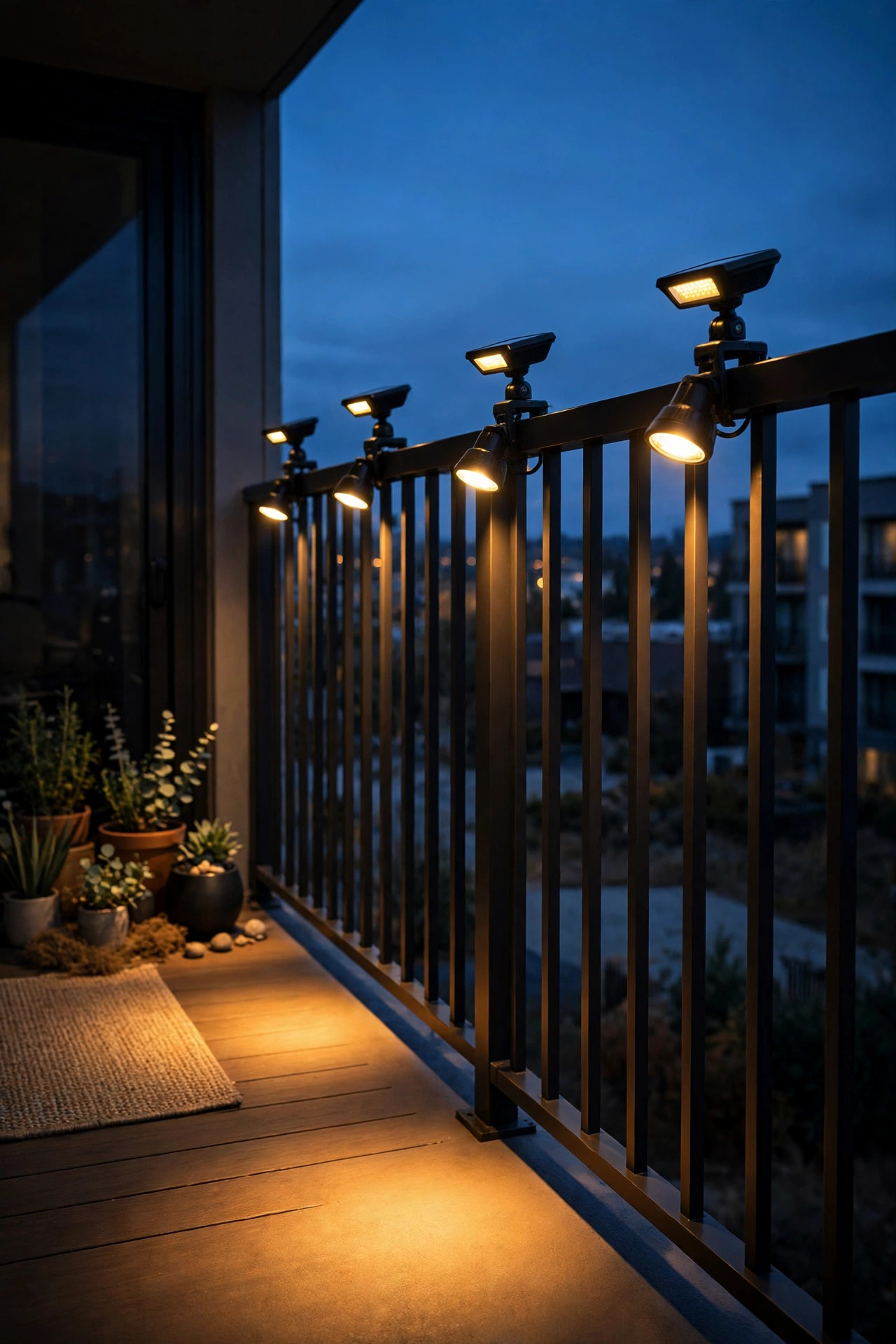
My first balcony upgrade was a set of clip-on solar spotlights, and they are still doing quiet, reliable work three seasons later. Each fixture clamps onto the top rail with a padded jaw, so there are no screws, no holes, and nothing for the HOA to object to when inspection day rolls around. I space mine about 3 feet apart and angle every head downward at roughly 45 degrees, which washes the balcony floor in soft pools of light instead of blasting the neighbors across the courtyard. The solar panels sit on top of each unit, so a south- or west-facing rail charges them beautifully; on a shaded balcony, clip them to the sunniest corner during the day and move them at dusk, since the clamps release in seconds. Look for warm white output around 2700K and an IP65 weather rating so a summer storm is a non-event. My full notes on spacing and angles live in my guide to balcony railing lighting ideas, but the short version is simple: clamp, angle down, and let the sun do the wiring.
Suggested budget range: $20 – $45.
3. Swag Solar String Lights With Removable Clips
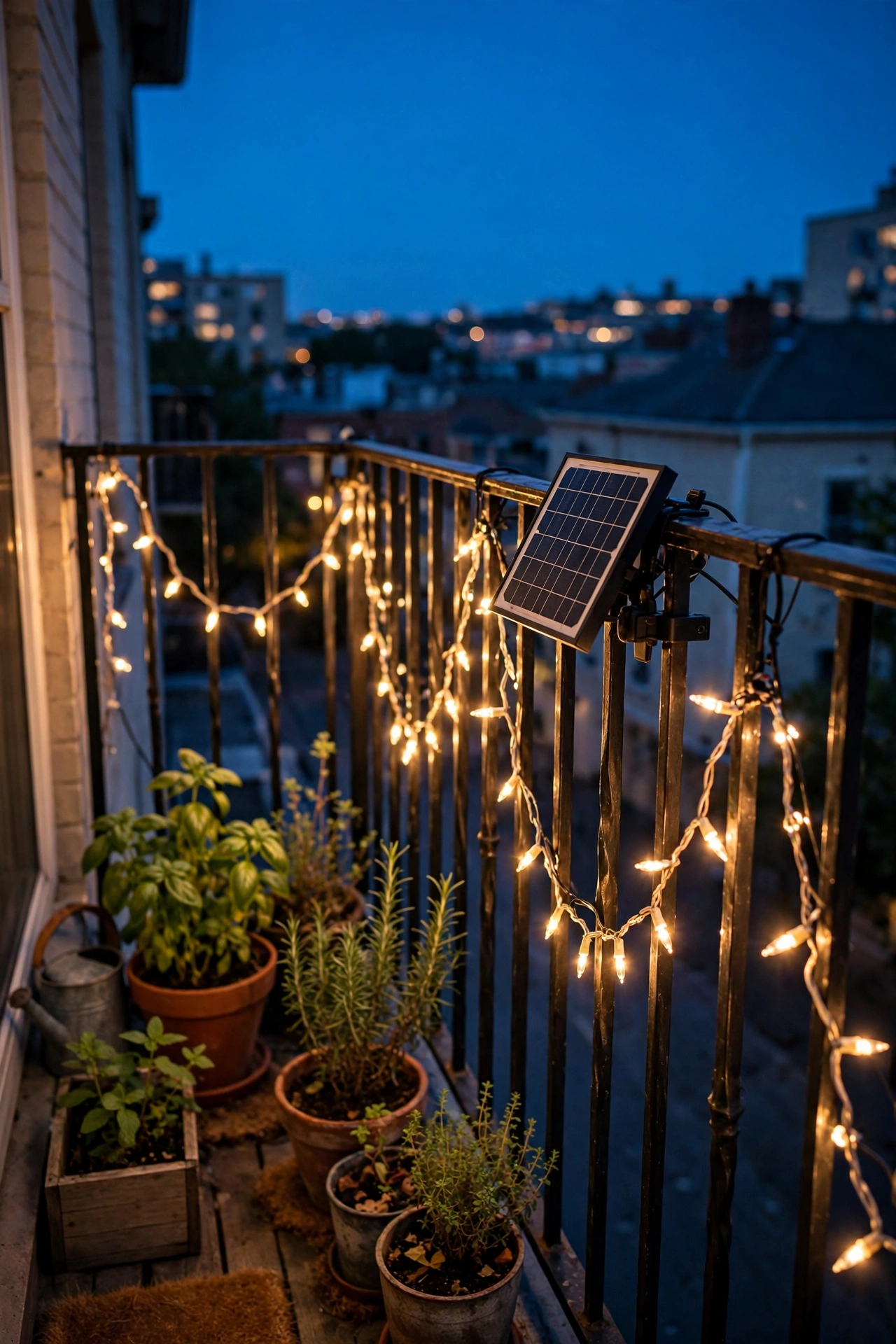
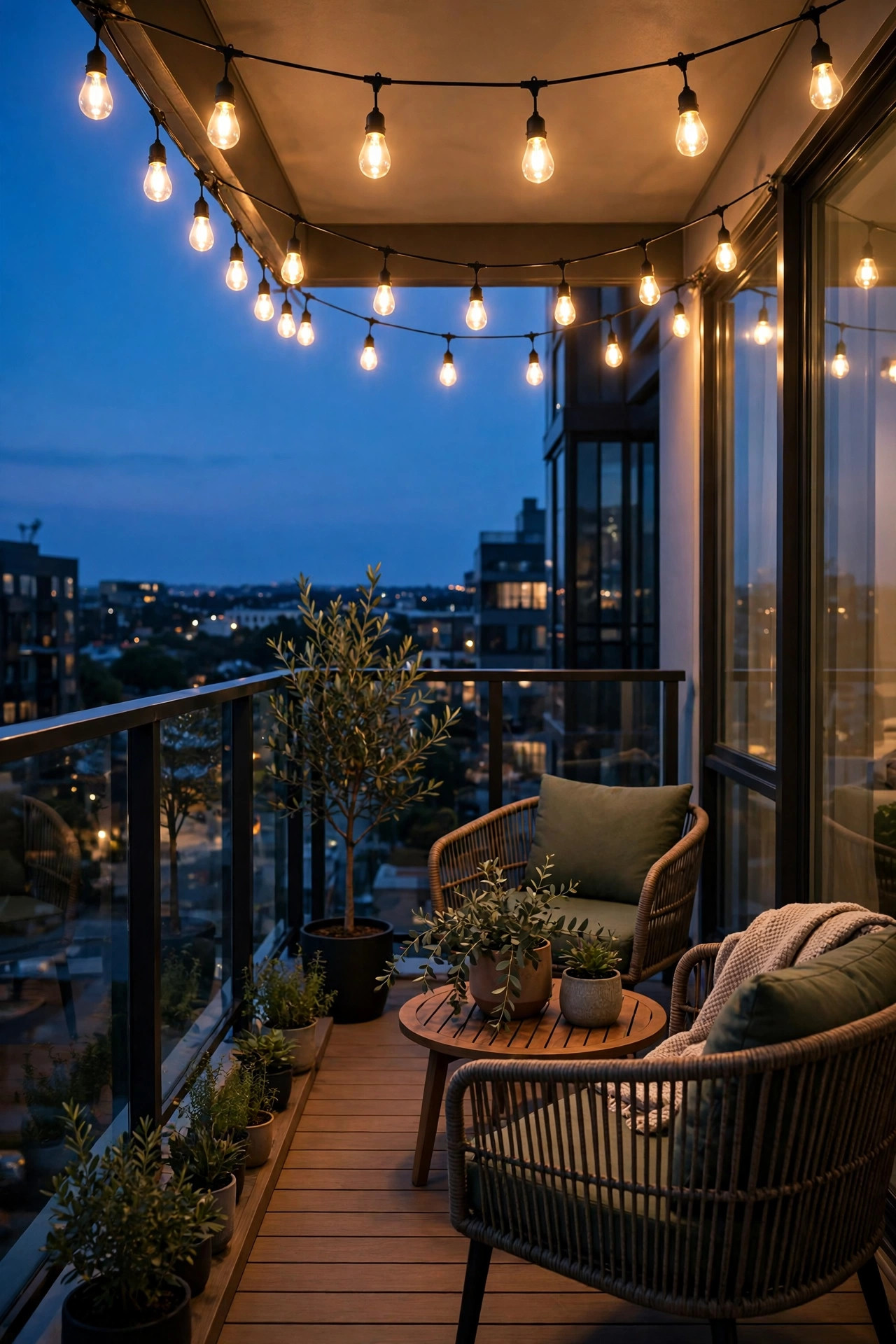
Nothing says evening on a balcony like a gentle swag of string lights, and the solar versions keep both the HOA and your electricity bill calm. Instead of screwing hooks into the siding — a guaranteed violation in most buildings — I use removable adhesive hooks and spring clips rated for outdoor use, one every 4 to 5 feet along the wall and railing. The solar panel stakes into my biggest planter, angled toward the afternoon sun. Choose shatterproof LED filament-style bulbs in warm white; they read as classic decor from the street, which matters, because many associations only allow displays that look tidy from the ground. Keep the swag inside your railing line rather than draped over the outside, and let each dip hang about 6 to 8 inches, deep enough to look relaxed but never low enough to catch a tall guest. A 20-foot strand covers most condo balconies in two graceful passes. When a storm threatens, the whole thing unclips in five minutes and lives in a basket by the door. Zero holes, zero fines, all glow.
Suggested budget range: $25 – $60.
4. Cluster Battery Candles Inside Glass Hurricanes
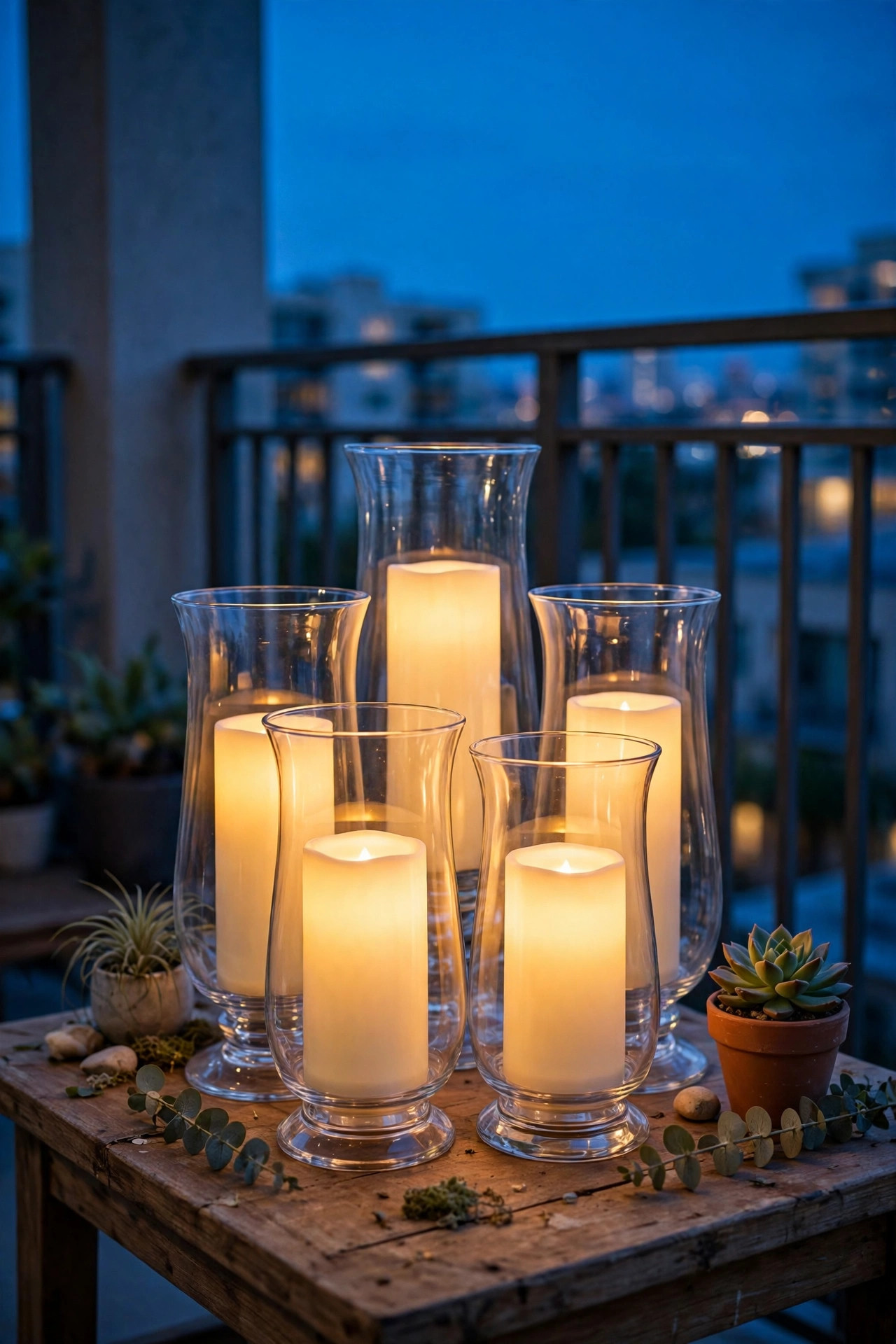
If your building bans open flame — and most condos do — flameless candles are how you keep the romance anyway. I group battery-operated pillar candles in threes inside clear glass hurricane vases, and the glass does two jobs: it shields the flicker from balcony breezes so it never looks frantic, and it makes the whole cluster look like real candlelight from across the room. Set the built-in timers once — five hours on, starting at dusk — and you will forget they are fake until the batteries fade around the two-month mark. Vary the heights inside each cluster, tall in back, short in front, and park one cluster on the side table and one on the floor beside a planter for that low, firelit layer. In my experience, the ivory wax-style versions with a moving flame tip fool everybody, including me. Because nothing burns and nothing plugs in, this is the single most HOA-proof idea on this entire list. Cleanup is a wipe with a damp cloth when pollen season dusts the glass.
Suggested budget range: $15 – $40.
5. Wind Fairy Lights Through Your Planter Boxes
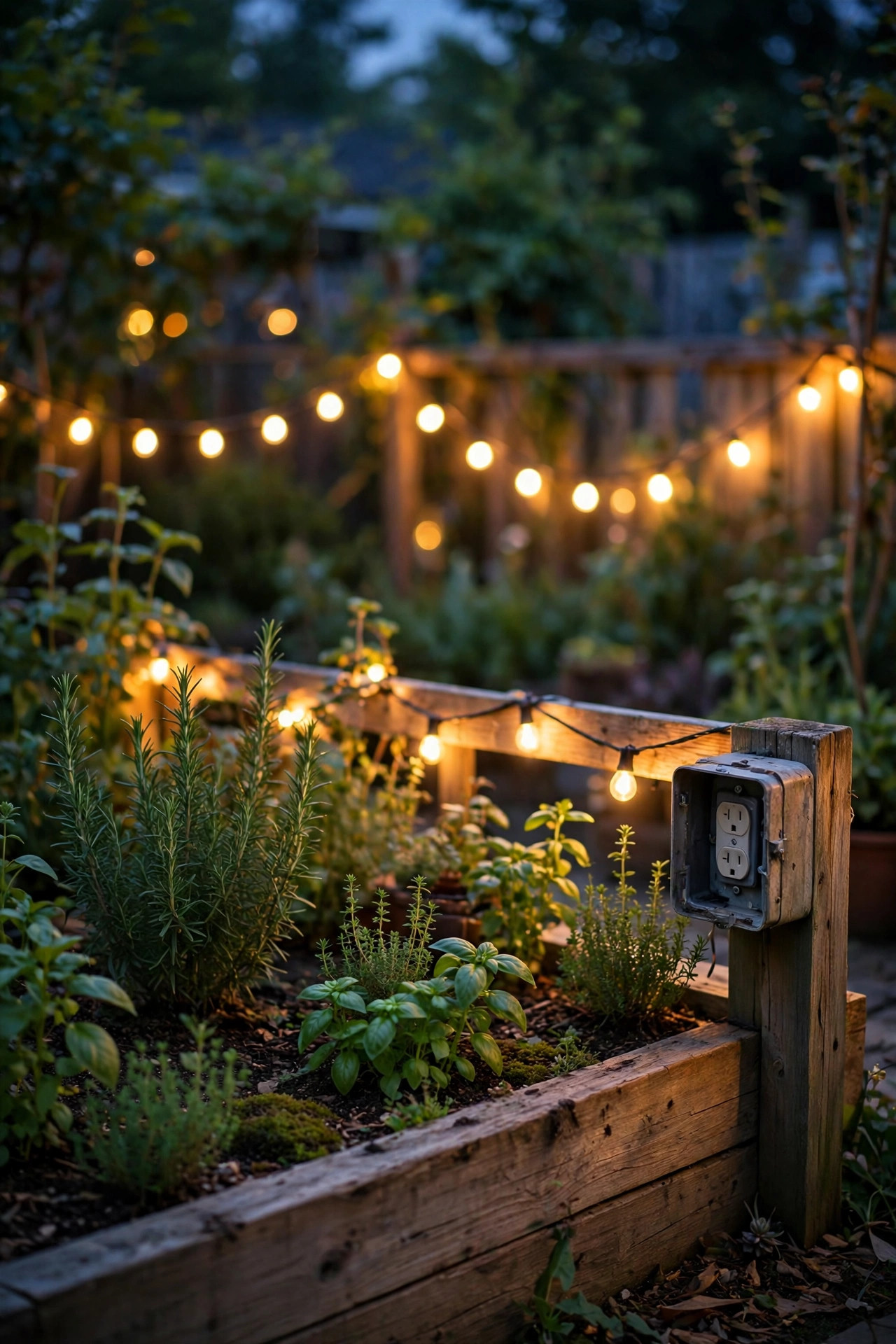
Planter boxes are the hardest-working real estate on a condo balcony, so I make them glow. A strand of copper-wire fairy lights weaves through the herbs and flowers in minutes — the wire is nearly invisible by day, which keeps the daytime appearance neat enough for even a picky association. I use the solar version with the little panel tucked behind the box, but battery packs work just as well if you coil the wire so the pack hides under the foliage. One 33-foot strand usually dresses two standard railing planters with a loose, generous hand; resist the urge to wrap tightly, because plants grow and a strangled tomato vine helps nobody. The pinpoints of light sit right at sitting eye level when you are in a chair, which is exactly where sparkle does the most good. Water as usual — the lights are rated for outdoor moisture, though I keep the battery pack itself out of the direct spray. By midsummer, when the basil is tall and the lights peek through the leaves, it looks like fireflies moved in permanently.
Suggested budget range: $10 – $25.

6. Hang a Plug-In Swag Pendant From a Heavy-Duty Adhesive Hook
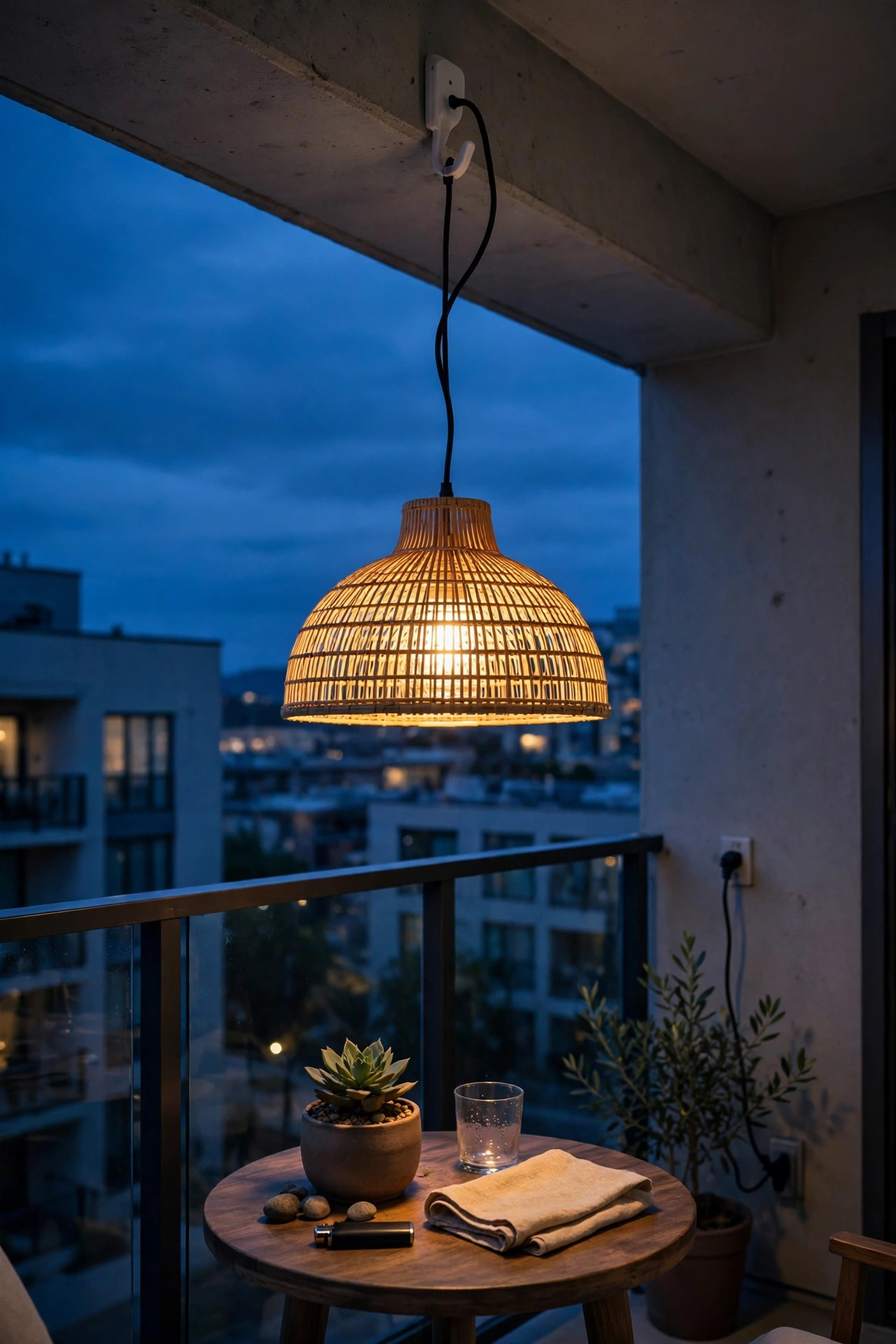
Every balcony needs one real light source at sitting height, and mine is a plug-in swag pendant that hangs from a heavy-duty removable adhesive hook on the ceiling edge — no junction box, no drilling, no electrician. The cord swags in a soft curve to the wall outlet, pinned with two more adhesive clips so it reads as intentional design rather than a dangling afterthought. A woven or matte-black shade about 12 inches across keeps the bulb from glaring into your eyes and throws a warm pool straight onto the table below. Use an LED filament bulb at 2700K, around 800 lumens, and put it on a plug-in dimmer if your outlet allows — dimming is the difference between interrogation room and bistro. I borrowed this whole approach from the no-drill playbook in my renter-friendly porch lighting notes, and it transfers to condos beautifully. Check the hook rating twice: it should hold at least twice your fixture weight, and press-and-wait a full 24 hours before hanging anything precious.
Suggested budget range: $30 – $75.
7. Tuck Solar Stake Lights Into Pots and Planters
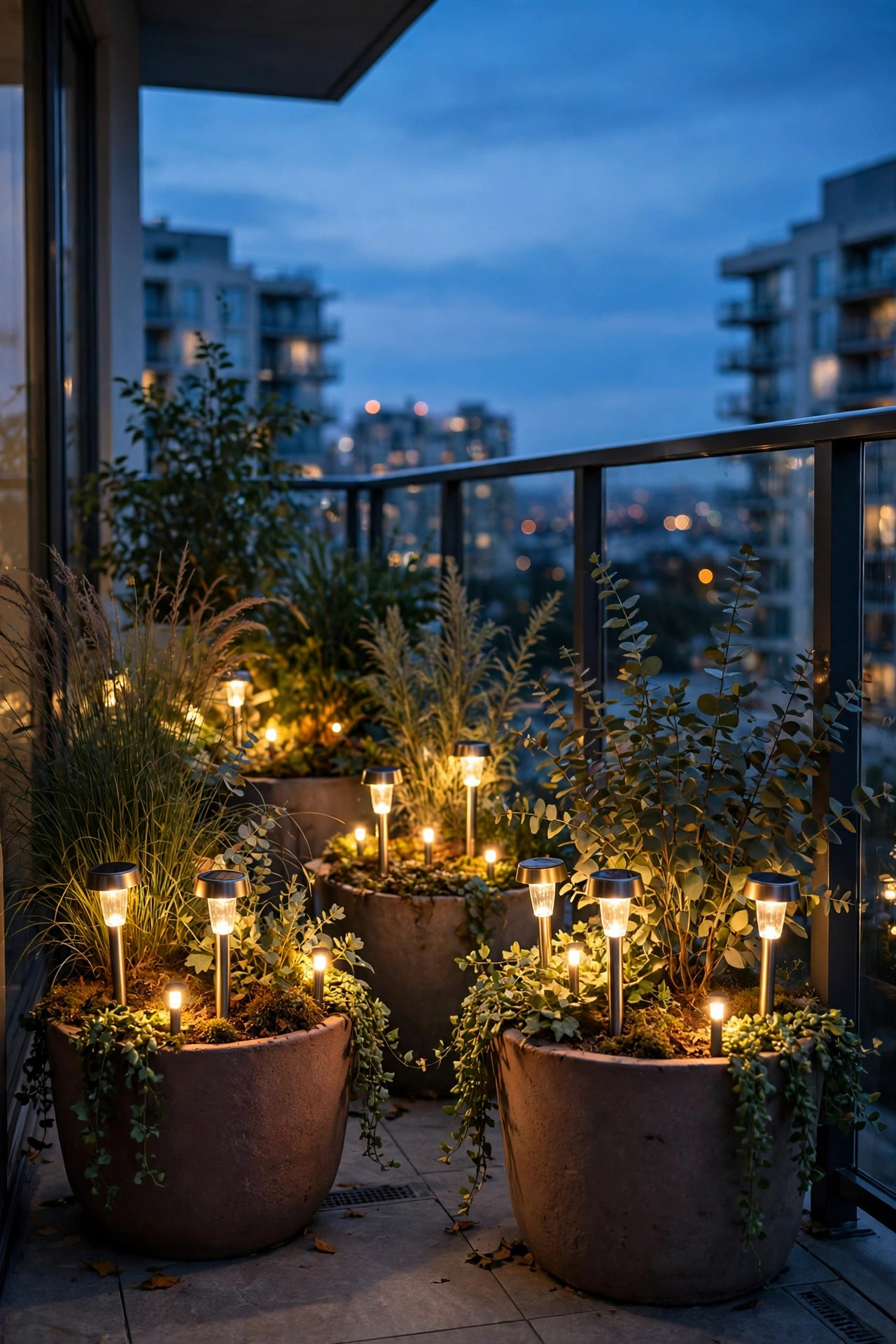
Condo balconies have no lawn to stake lights into, so I stake them into pots instead, and honestly it works better. Short solar path lights — 12 to 15 inches tall — push right into the soil of your largest planters and throw a soft ring of light at ankle height, which is the layer that keeps you from tripping over the watering can at night. I run one in each corner pot and one beside the door, a loose triangle that outlines the whole floor. Because the fixtures move with the plants, rearranging the balcony never means rewiring anything, and when a plant graduates to a bigger pot, its light goes along for the ride. Brightness on these is modest by design, roughly 10 to 30 lumens each, so think guidance rather than illumination. The trick for reliability is placement of the pot, not the light: the sunniest corner of the balcony gets the first stake, and shaded pots borrow rechargeable battery versions instead. Wipe the little panels monthly; a film of pollen can cut your evening glow in half.
Suggested budget range: $15 – $35.
8. Run a Battery LED Strip Under the Handrail
The most complimented light on our balcony is one nobody can find. A battery-powered LED strip hides under the top handrail, stuck on with its own adhesive backing, and washes the railing and floor below in a smooth ribbon of light. Because the source is invisible, the effect reads as pure architecture — guests assume the building came that way, which is precisely the kind of upgrade an HOA never flags. Cut the strip to length at the marked scissor points, press it firmly along the underside of the rail, and tuck the battery pack into a small weatherproof box zip-tied behind a post. Most of these run 30 to 60 evenings per set of batteries at a few hours a night, and the remote lets you dim to a whisper for movie nights. Choose warm white only; the color-changing rainbow modes are fun for exactly one evening and are the fastest way to draw a letter from the association. If your rail is metal and cold, warm the strip in your hands first so the adhesive grabs properly.
Suggested budget range: $12 – $30.

9. Add a Rechargeable Table Lamp You Can Carry Anywhere
Some evenings the light needs to come to you — a book on the lounger, cheese and crackers on the side table, a board game that migrated outside. A rechargeable cordless table lamp, the kind with a touch dimmer and a warm LED core, follows the evening wherever it wanders. I keep ours charged by the door on a USB cable and carry it out like a candle. Look for a metal or heavy resin base, because balcony breezes have opinions about top-heavy lamps, and an IP44 rating or better so a surprise drizzle is not a funeral. At full brightness most give 6 to 10 hours, and the lowest setting stretches across several nights of ambient duty. From the street it simply looks like a lamp in a window, so it has never once raised an eyebrow on our building walk-through. In my experience this is the purchase that makes a balcony feel furnished rather than decorated — light with a job, exactly where your hands are.
Suggested budget range: $25 – $60.

10. Layer Your Condo Balcony Lighting Ideas at Three Heights
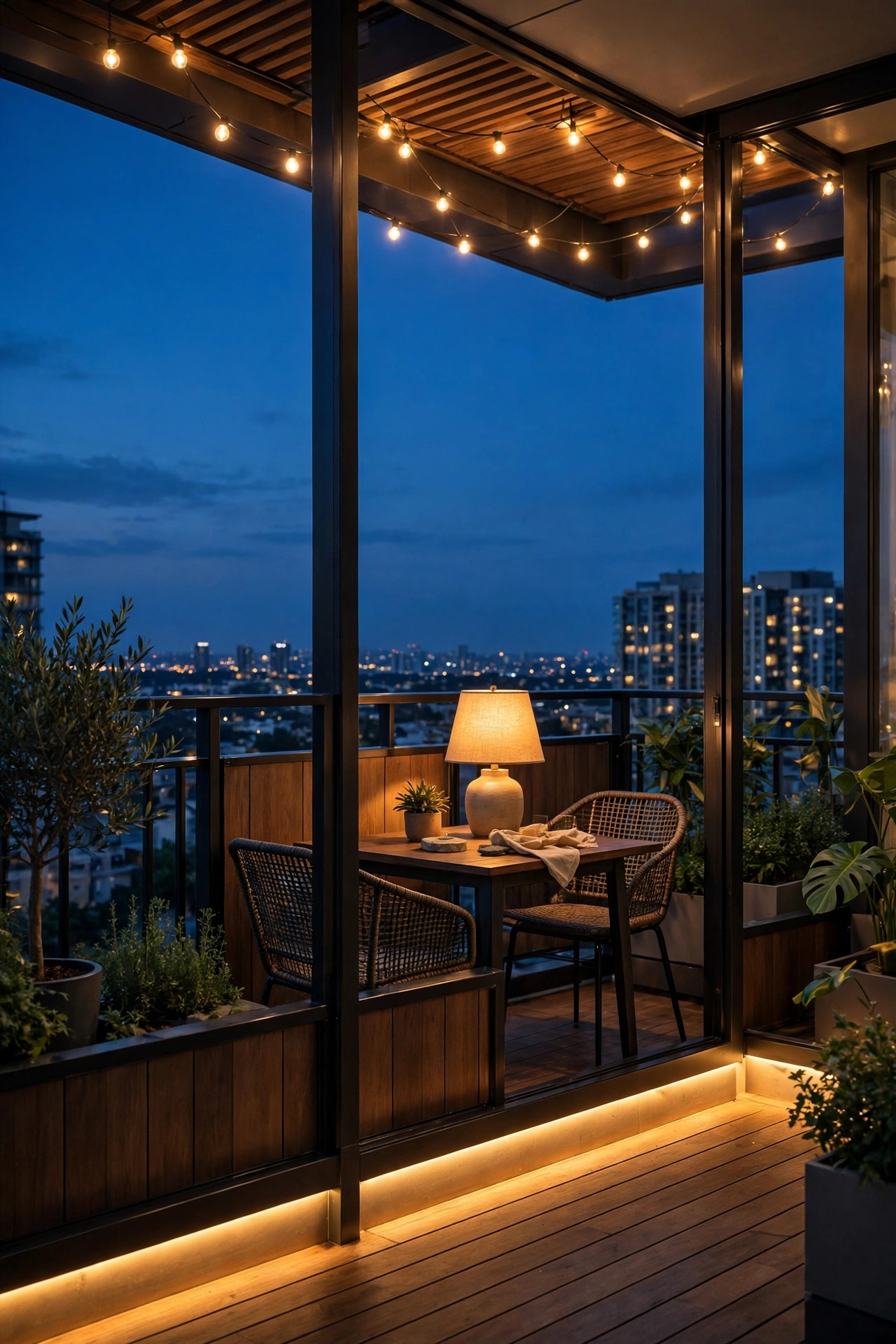
Here is the principle underneath this whole list, the one I come back to on every space I light: layers. A single bright source flattens a balcony and glares; three gentle sources at three heights make it feel twice its size. Low light belongs at floor level — stake lights in pots, the strip under the railing, candles on the deck boards — because it defines edges and keeps feet safe. Middle light lives at sitting height, around 2 to 3 feet: your table lamp, the candle cluster on the side table, lanterns on a stool. High light floats overhead — the string light swag and the pendant — and should always be the dimmest layer, more sparkle than illumination. When I plan lighting for friends, I literally sketch three horizontal lines on the railing and assign one fixture to each before buying anything. That sketch prevents the classic mistake of five overhead strings and total darkness at ankle level. Balance the layers and even a 40-square-foot balcony photographs like a boutique hotel terrace.
Suggested budget range: $40 – $120.
11. Hang Paper Lanterns With Battery Bulbs Inside
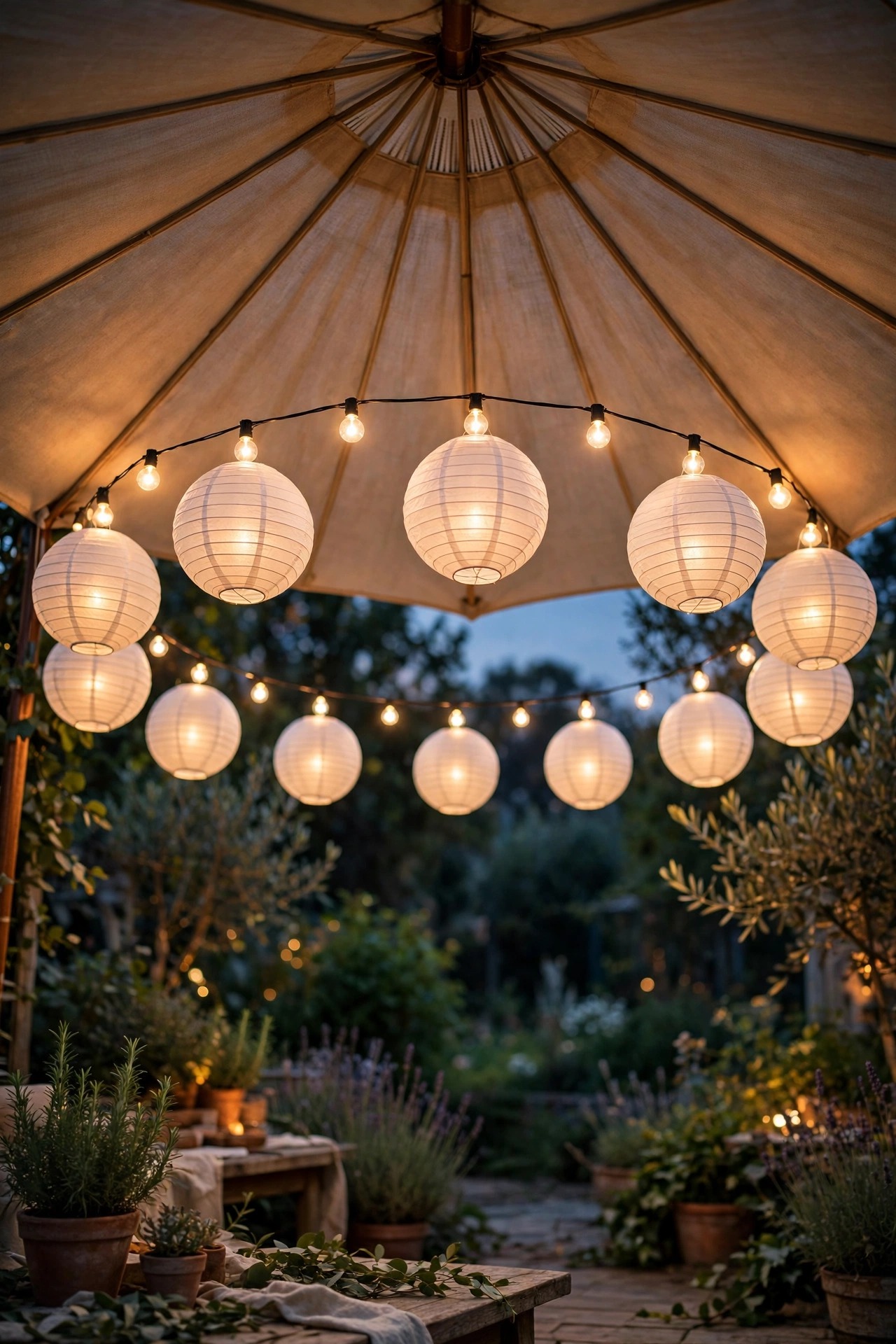
Paper lanterns deliver the softest, most flattering light on this list, and they cost less than a pizza. The HOA-safe way to run them is with battery-powered LED bulbs or short fairy strands tucked inside — never a hot bulb that heats the paper, and never anything resembling a flame, since most condo rules ban both open flame and hot fixtures near fabric and paper. I hang three lanterns, 12 to 16 inches across, at staggered heights from the same removable hooks as my string lights, clustered over the seating corner rather than spread thin. Warm white paper reads golden when lit; save the colors for the two holiday windows your association actually allows, because off-season colored displays are a classic citation. Take them down ahead of serious storms — paper and a thunderstorm are not friends — and store them flat in a closet bin. Up and down takes ten minutes once your hooks live on the wall permanently. For the effort involved, the transformation is honestly a little unfair to every other idea here.
Suggested budget range: $15 – $35.
12. Stick Motion-Sensor Puck Lights by the Door and Steps
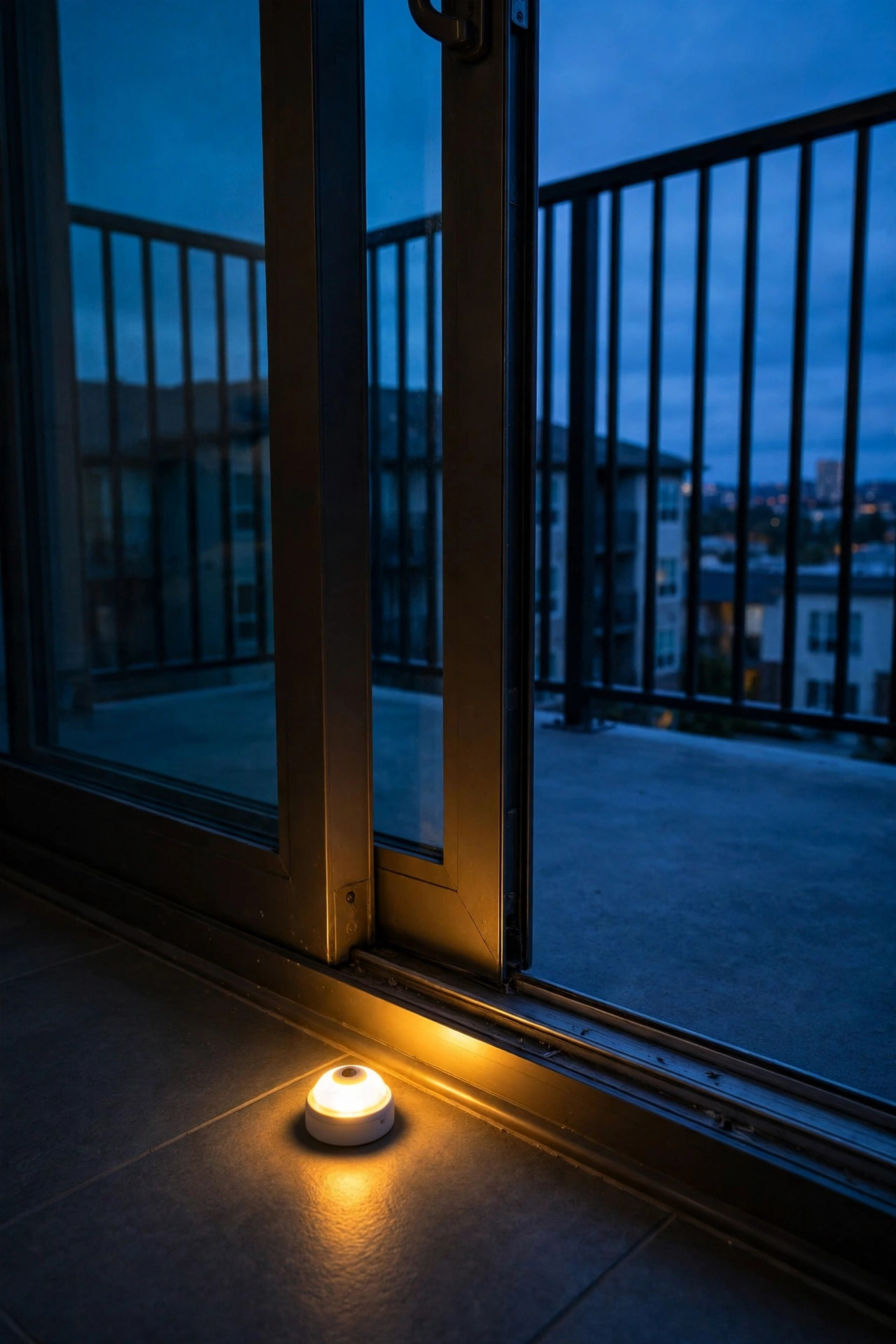
The most practical lights on our balcony are the ones I never think about. Battery puck lights with motion sensors, stuck on with removable adhesive pads, guard the two spots where people actually stumble: the threshold of the sliding door and the corner where the step down to the balcony floor hides in shadow. They wake when you approach, glow for about 30 seconds, and go back to sleep — which means they never violate lights-out rules, never waste batteries, and never shine in a window next door all night. Mount them low, around shin height, aimed across the walking path rather than up into faces. A three-pack covers most balconies; the adhesive pads peel off clean with a slow pull when you move, leaving the wall exactly as you found it. In winter these earn their keep double, because the balcony door is where ice melt, boots, and plant pots all conspire against your ankles. It is unglamorous lighting, and I would not give it up for any string light ever made.
Suggested budget range: $12 – $28.
13. Back a Privacy Screen With a Fairy Light Curtain
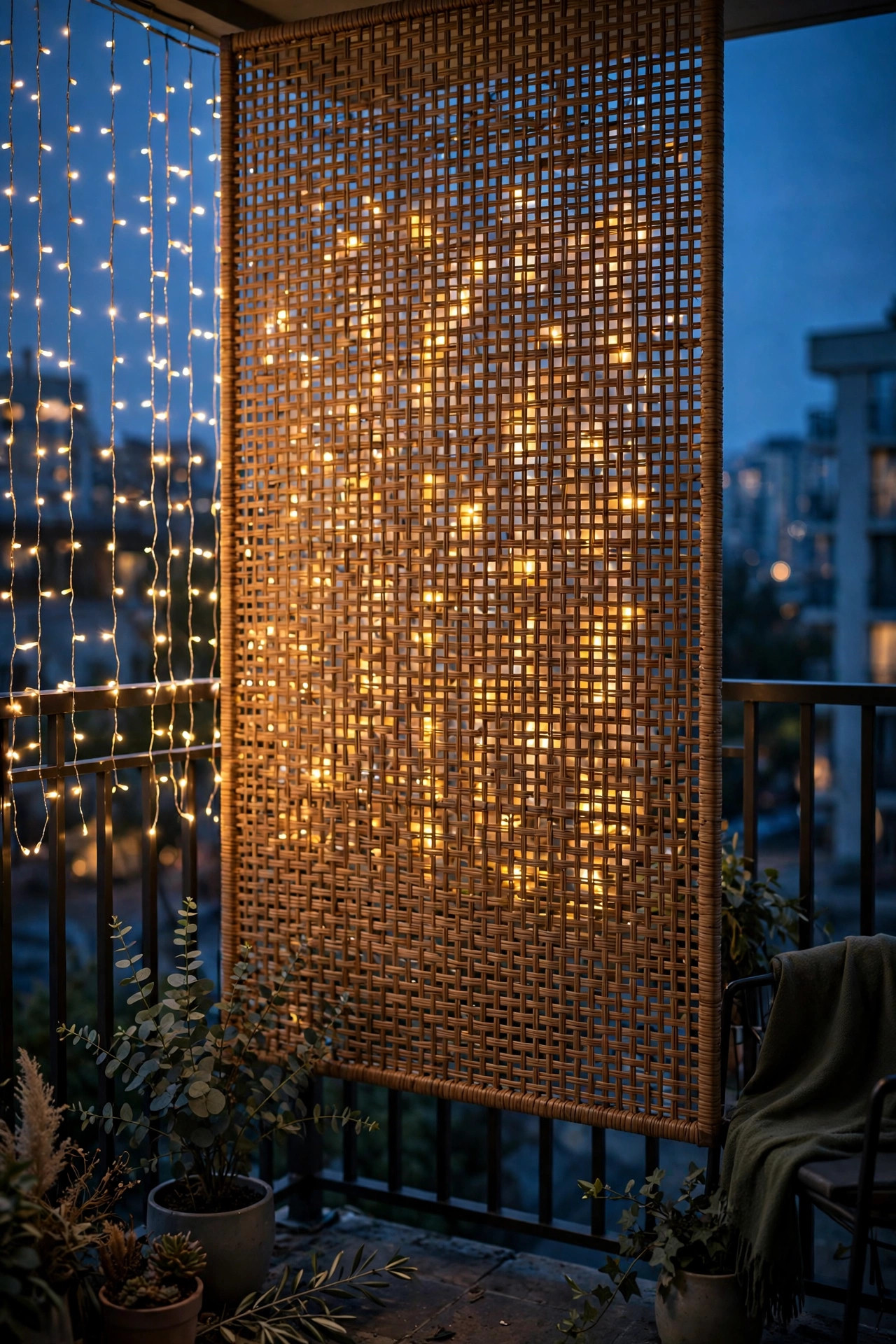
If your balcony stares straight into the living room across the way, a privacy screen earns its place — and the back of that screen is prime lighting real estate. I weave a fairy light curtain through a simple bamboo or fabric screen so the lights glow through the weave, turning a defensive barrier into the prettiest wall on the balcony. From the other side, it reads as soft, diffuse sparkle rather than a bare bulb aimed through a window, which keeps everyone friendly. The screen itself should be freestanding or zip-tied to the railing — most associations allow both, while anything screwed to the building exterior is where letters start. Run the fairy strands vertically, about 4 inches apart, with the battery pack in a weatherproof pouch at the bottom corner. Sit back and notice what happens at dusk: the screen becomes a lantern, the plants in front of it turn into silhouettes, and the balcony suddenly has a focal point that is not the parking lot. Privacy and atmosphere in one purchase is my favorite kind of math.
Suggested budget range: $30 – $80.
14. Set Out Solar Lanterns That Earn Their Keep as Decor
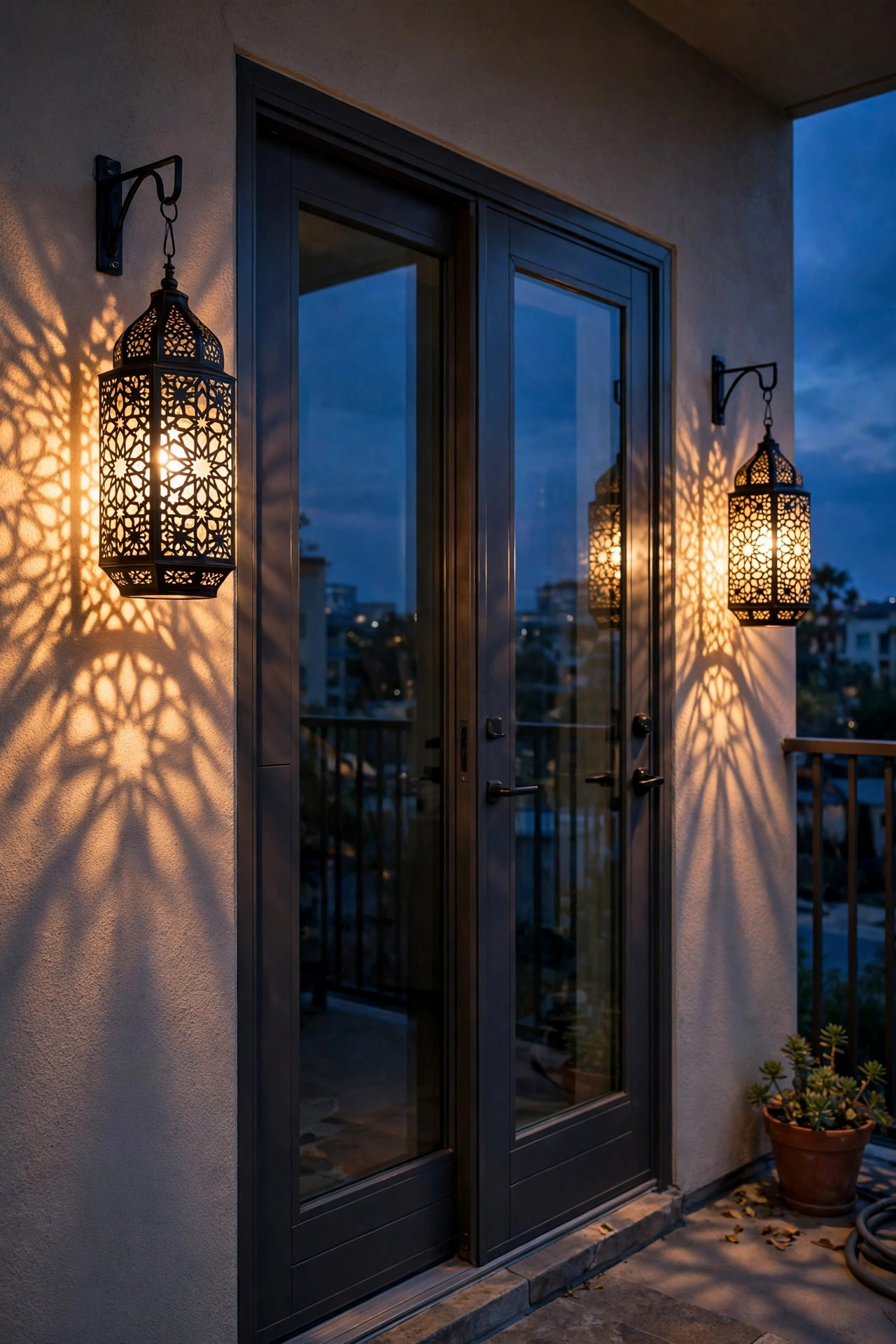
An HOA judges your balcony at noon as much as at night, so I choose lanterns that look like decor in full daylight and happen to glow after dark. Solar lanterns with cut-metal patterns, matte finishes, and real silhouettes — a pair flanking the door, one anchoring the coffee table — pass the daytime test easily. The patterned ones throw lacy shadows across the floor at night, which does more decorating than the lantern itself. Steady-on beats flicker mode for reading corners; save the candle-flicker versions for the table centerpiece where mood matters more than lumens. Expect 6 to 8 hours of light after a full sunny day, less in December, and park them in your sunniest railing corner to charge even if you move them at dusk. Because they are freestanding, there is nothing to approve, nothing to install, and nothing to remove at move-out except the lanterns themselves, walking out under your arm. Buy them in a finish that matches your railing and the association will swear they were always there.
Suggested budget range: $20 – $50.
15. Stick to Warm White at 2700K and Skip the Colors
If I could give condo dwellers one rule, it is this: warm white, somewhere between 2700K and 3000K, everywhere, always. Many HOA documents quietly ban colored, flashing, or color-changing exterior lights outside of designated holiday windows, and even where they do not, a blue-white 6000K bulb reads as a security floodlight from the street — the fastest route to a complaint from across the courtyard. A single consistent warm temperature also makes mismatched fixtures look like a designed set. Check the Kelvin number on every box before it goes in the cart; solar products are the worst offenders, often shipping icy-white with no marking on the front. Mixing one cool bulb into a warm scheme is like one wrong note in a chord — everybody feels it. The honest exception is your two allowed holiday windows, when a tasteful string of color is usually permitted for a few weeks. The rest of the year, warm white is your camouflage and your style statement in one. Every fixture in this list was chosen with that discipline in mind.
Suggested budget range: $10 – $30.
16. Put Everything on Timers So Nothing Glows at 3 A.M.
Plenty of associations require exterior lights off by a set hour — 10 or 11 p.m. is common — and timers are how you comply without ever thinking about it. My plug-in pendant rides on a simple timer set for dusk to 10 p.m.; the battery candles have their own five-hour timers; the solar pieces fade on their own by midnight at the latest. That layered schedule also saves real money and battery life across a season. An astronomical timer is the upgrade I recommend most: it tracks sunset for your area, so your balcony lights itself at the right moment in June and in January without a single adjustment. For battery pieces without built-in timers, a nightly habit works — lights come in with the last person — but built-in timers are more honest than my memory at the end of a long day. Being the considerate balcony also buys goodwill you may want later, the day you ask permission for something bigger. Good neighbors glow politely and then go dark on schedule.
Suggested budget range: $10 – $25.
17. Mount a Battery Wall Sconce With Removable Strips
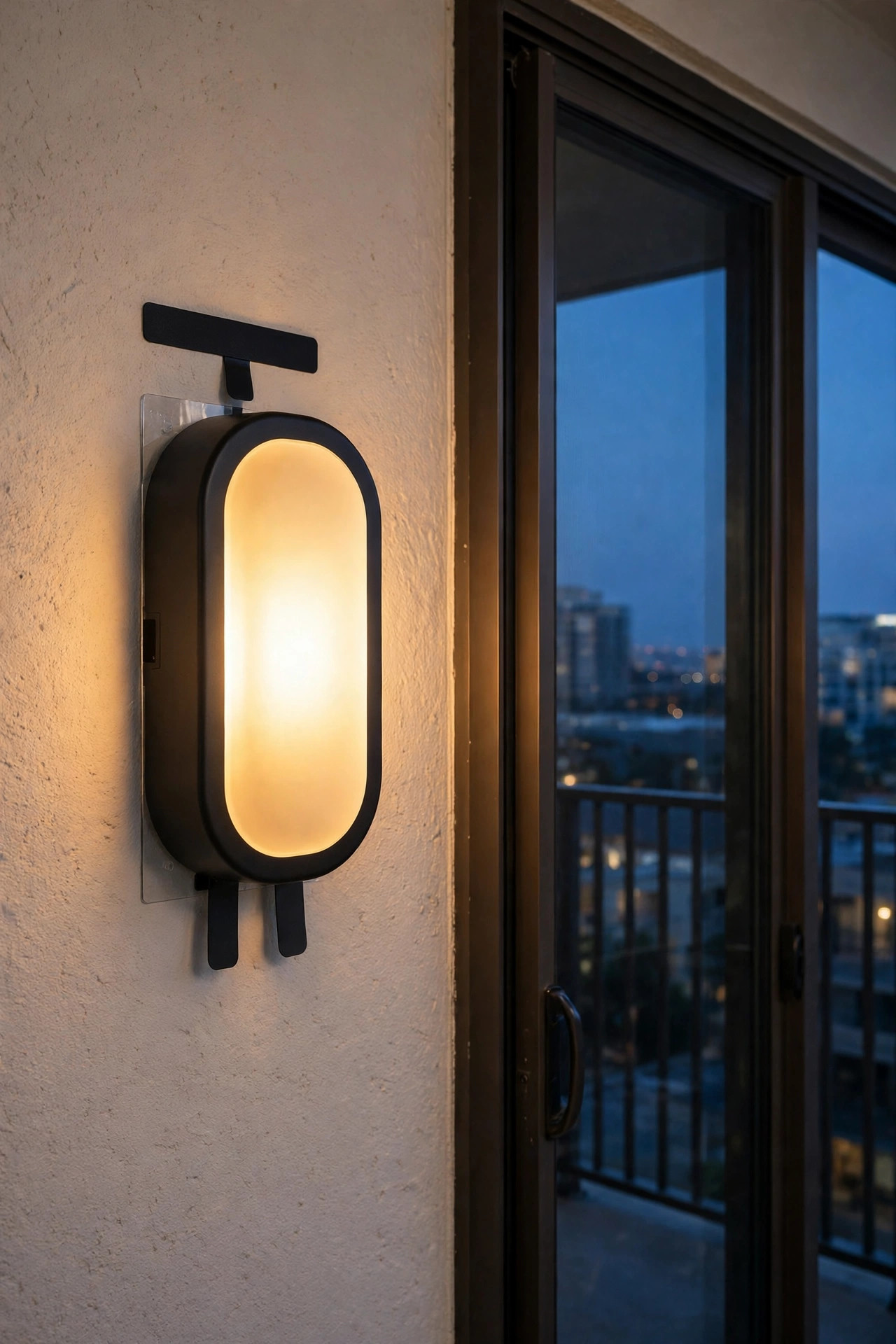
The blank wall beside most balcony doors begs for a sconce, and battery sconces finally make it possible without touching a wire or a drill. These mount on heavy-duty removable adhesive strips — the kind rated by the pound — and carry their own rechargeable battery, so installation is peel, press, wait an hour, and hang. I place ours at about 6 feet, beside the door, where it lights faces and the key in the lock like a proper entry fixture. A frosted shade or downward-facing design keeps the light polite for the balcony below you, which matters in stacked condo living more than any other rule on this list. Recharge it monthly with a USB cable; ours sips power because it runs only a few hours an evening at half brightness. Press the strips onto clean, dry siding and respect the weight rating with a fixture well under the limit. When you move, a slow downward pull releases everything without a mark — the deposit-friendly sconce is a genuine modern miracle.
Suggested budget range: $20 – $45.
18. Plant a String Light Pole in a Heavy Planter
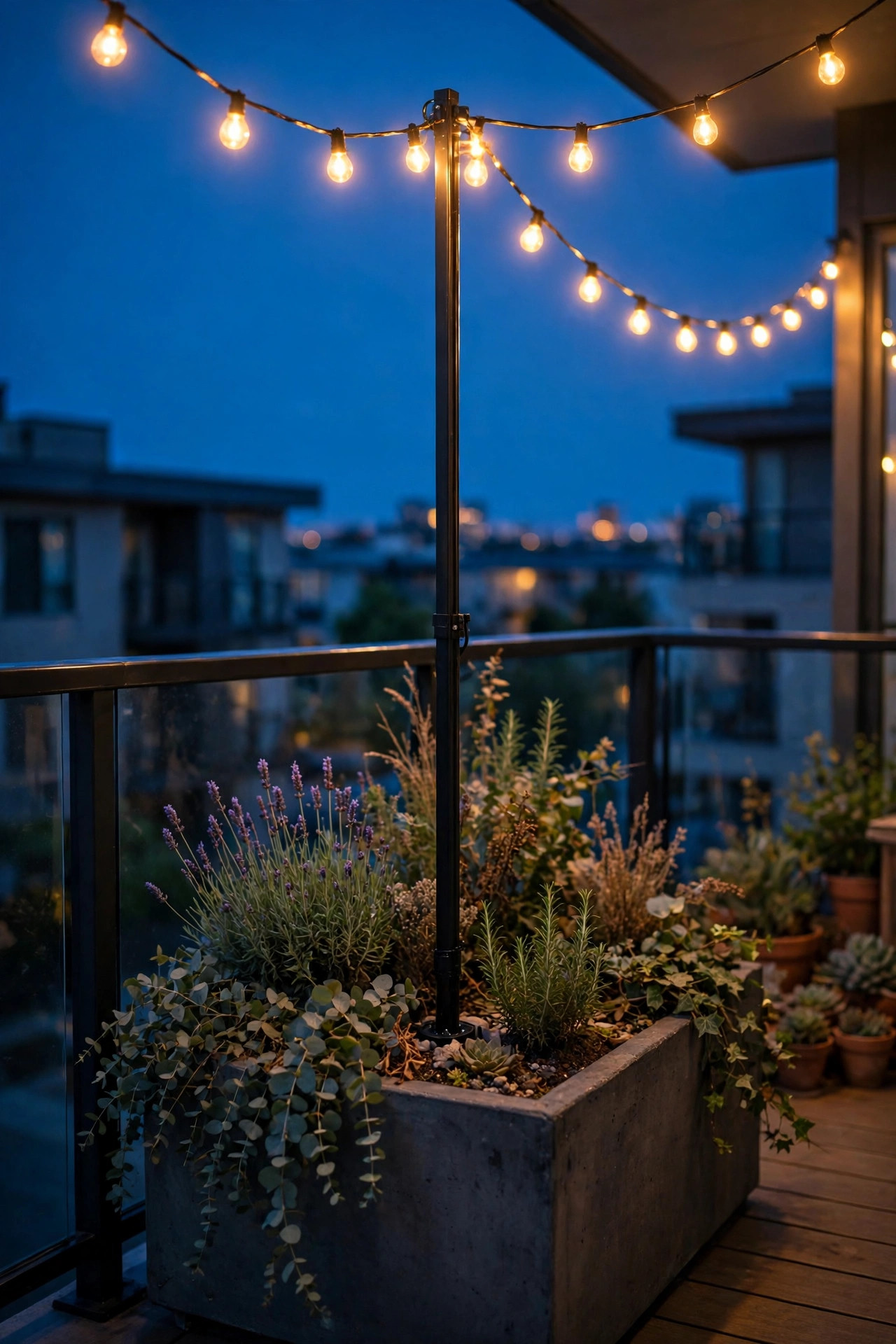
The most common balcony problem I hear is: I have nothing to hang lights from. The freestanding answer is a pole planted in a pot. Set an 8- to 9-foot garden pole or a sturdy wooden dowel into your heaviest planter — 20 inches across or better — anchored with gravel or a bag of concrete mix under the soil, then plant flowers around it like you meant it all along. Now you own an anchor point: string lights run from the pole top to your wall hooks, creating the overhead layer without touching the building at all. Two poles frame a larger balcony beautifully. Everything about this setup is yours — it sits on your floor, hangs over your space, and leaves with you — so associations have nothing to approve. Keep the pole inside your railing line, check it after big storms, and let a trailing plant climb it by July for the full garden-column effect. It is the single project that unlocks every overhead idea on this list for hook-less balconies.
Suggested budget range: $35 – $70.
19. Bring It All Together: Condo Balcony Lighting Ideas the Board Will Never Flag
On the first warm evening after everything is installed, do what I do: pour a drink, sit in your usual chair, and audit your own balcony like a board member with a clipboard and a grudge. Check the floor layer first — stakes and strip glowing, no dark trip zones. Then sitting height — lamp and candles warm, faces lit, no bare bulb glaring into anyone's eyes. Then overhead — swag and pendant dim and golden. Now the crucial test: go down to the sidewalk and look up. Your balcony should read as a soft warm window among dark ones, nothing flashing, nothing colored, nothing spilling hard light into the units around you. Set the timers, confirm the 10 p.m. quiet, and you have built what every association actually wants: a beautiful balcony nobody ever writes a letter about. Layered, warm, removable, and dark by ten — that is the whole formula, and it has kept our little balcony glowing happily for three seasons now, letter-free.
Suggested budget range: $50 – $150.

Frequently Asked Questions
Do I need HOA approval to hang string lights on a condo balcony?
For removable, no-drill setups like clips, adhesive hooks, and solar strands, most associations allow them without formal approval, but your own rulebook is the final word. I always recommend one short email to the property manager describing the plan; a written okay protects you if rules change later.
What color temperature is safest for HOA-friendly balcony lighting?
Warm white between 2700K and 3000K. It matches how residential buildings are expected to look at night, flatters skin and plants, and avoids the two things associations dislike most: icy blue-white glare and colored light outside holiday windows.
Can I leave solar lights out on my balcony all year?
Yes, as long as they carry an IP65 rating or better. Bring paper lanterns and fabric shades inside for storms and winter, wipe solar panels monthly, and expect shorter run times in December when daylight is scarce.
How do I light a condo balcony with no outdoor outlet?
Build the whole plan on solar and rechargeable pieces: clip-on solar railing lights, battery candles and sconces, a USB-charged table lamp, and fairy lights with hidden battery packs. Charge the lamp indoors weekly and the balcony never misses the outlet.
Conclusion
The balcony that survives HOA life is not the one with the most lights — it is the one where every light is warm, removable, and off by ten. Layer low, middle, and high; let solar and batteries do the heavy lifting; and keep one written okay from your manager in a drawer. Do that, and your condo balcony lighting ideas will outlast every season and every board. If you are ready to keep going, browse the rest of my balcony lighting ideas for patios, railings, and bigger spaces — your next favorite corner is in there somewhere.