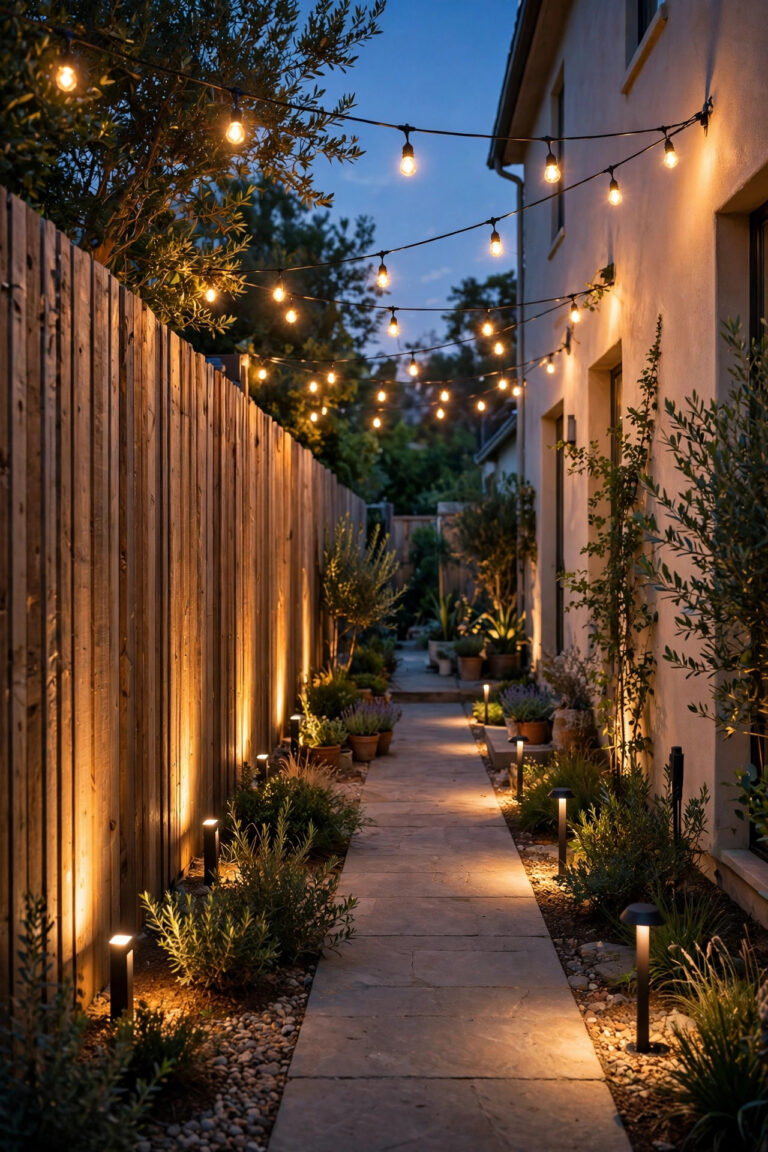
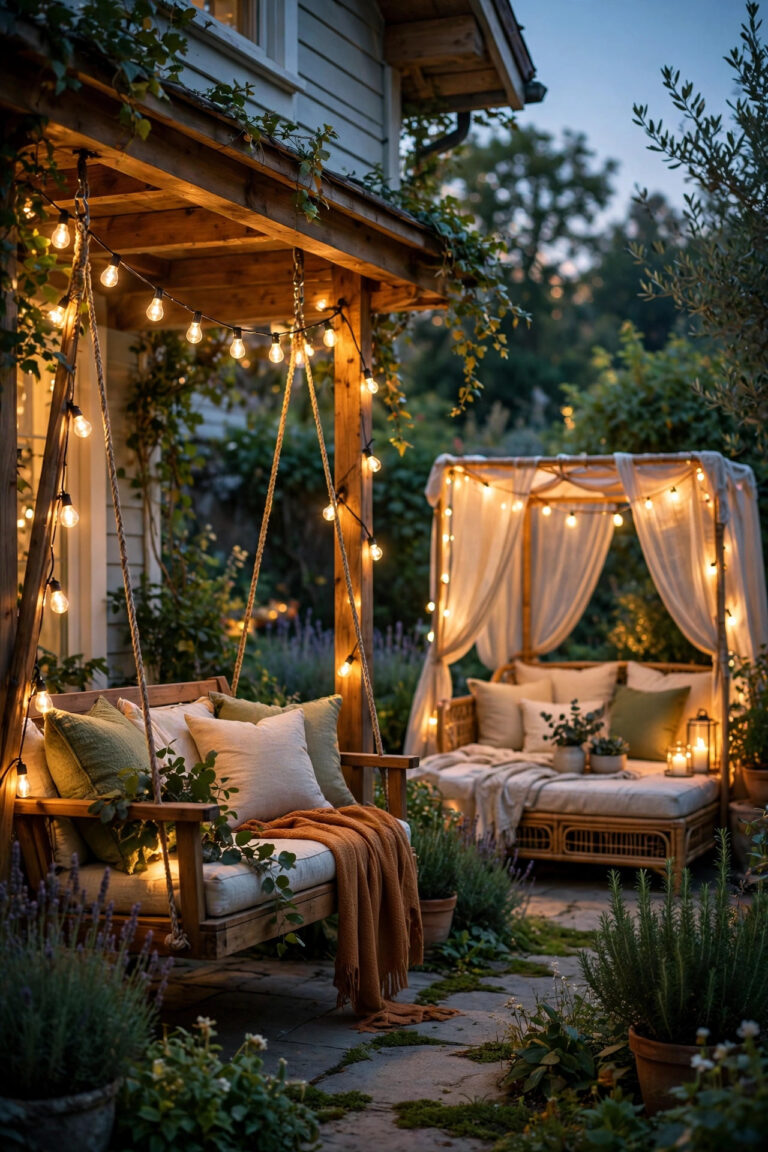
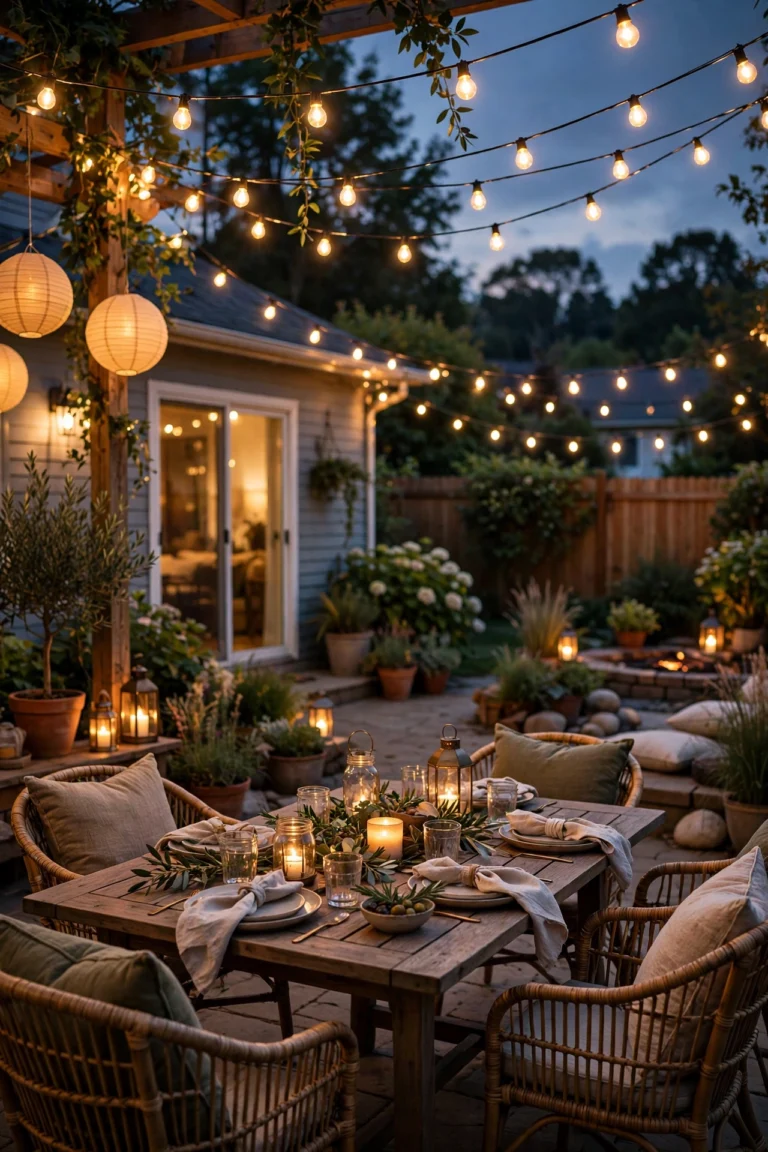
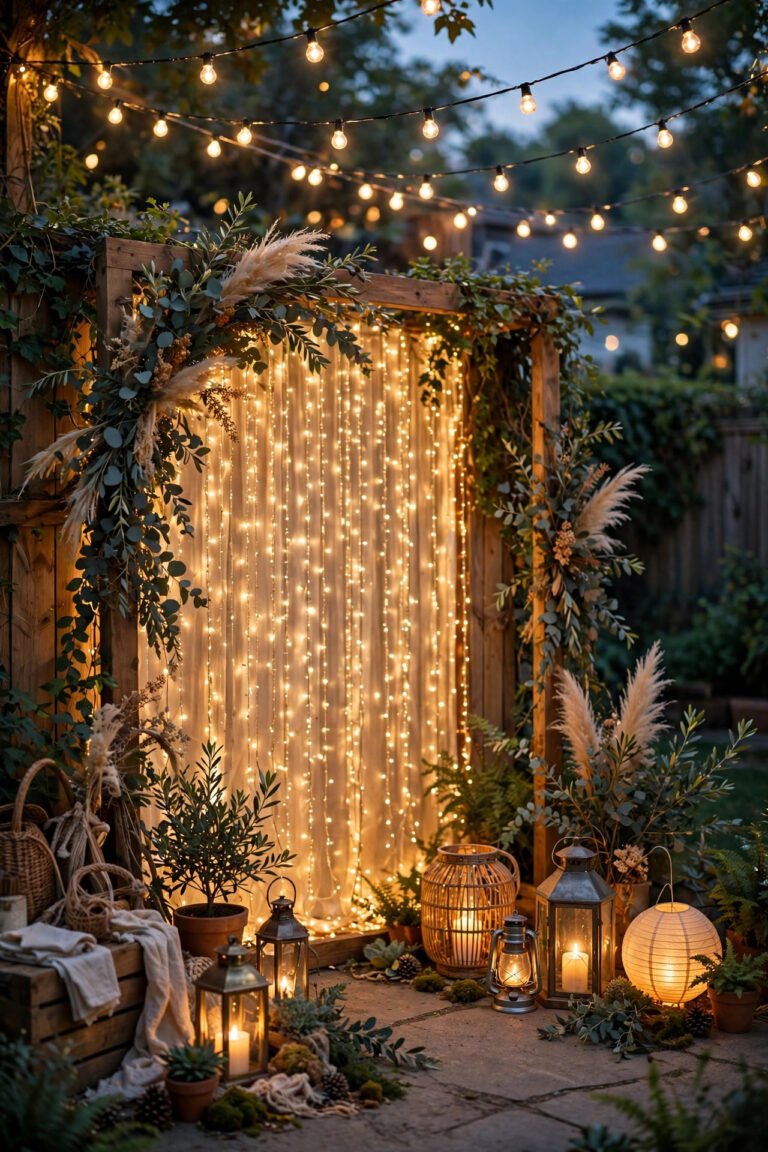
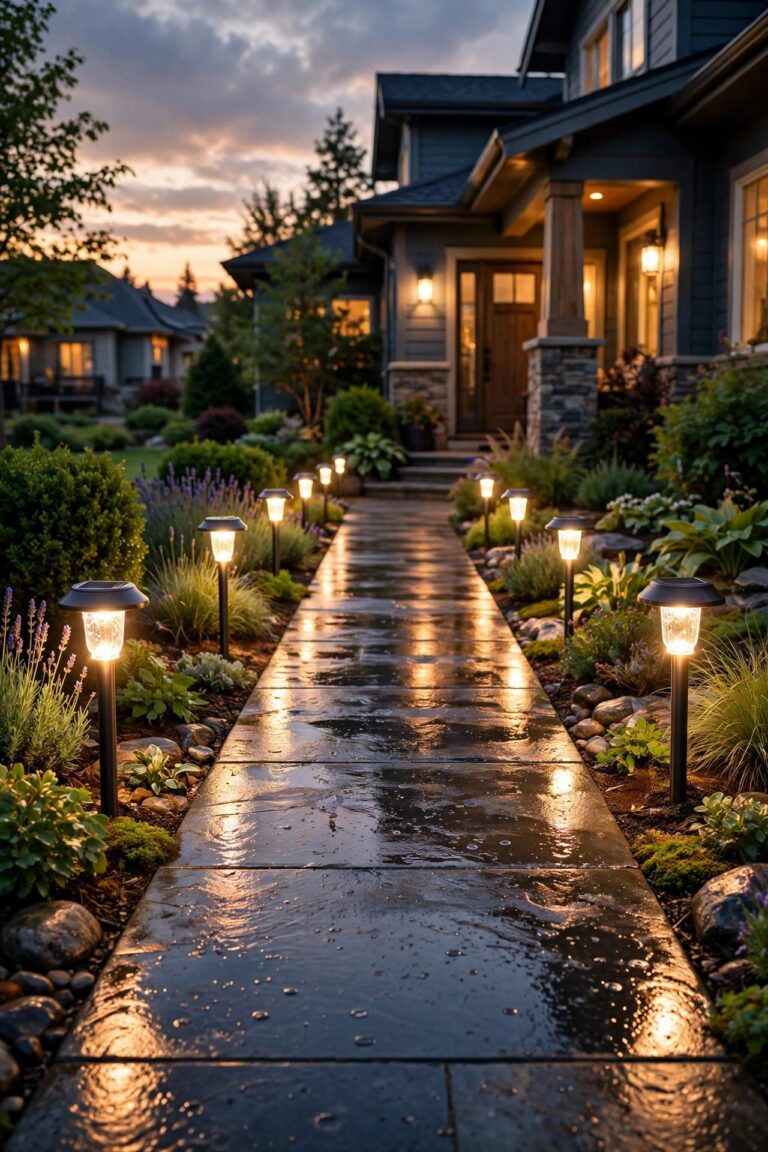
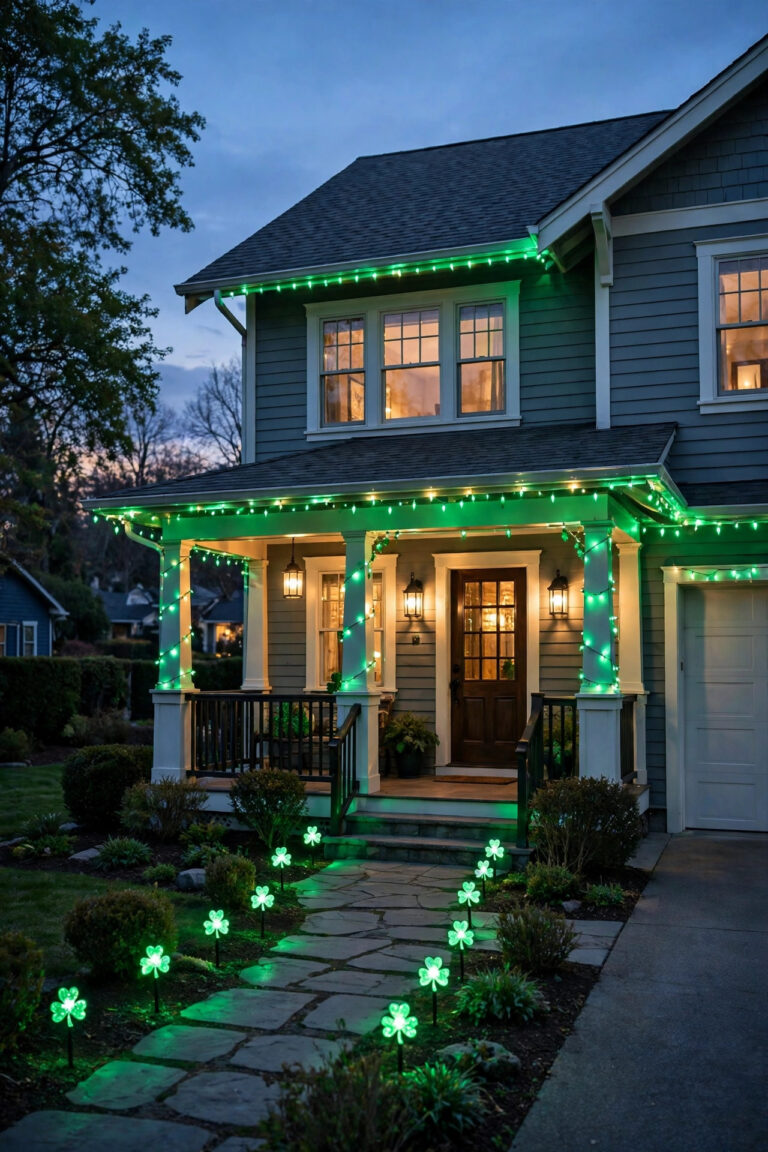
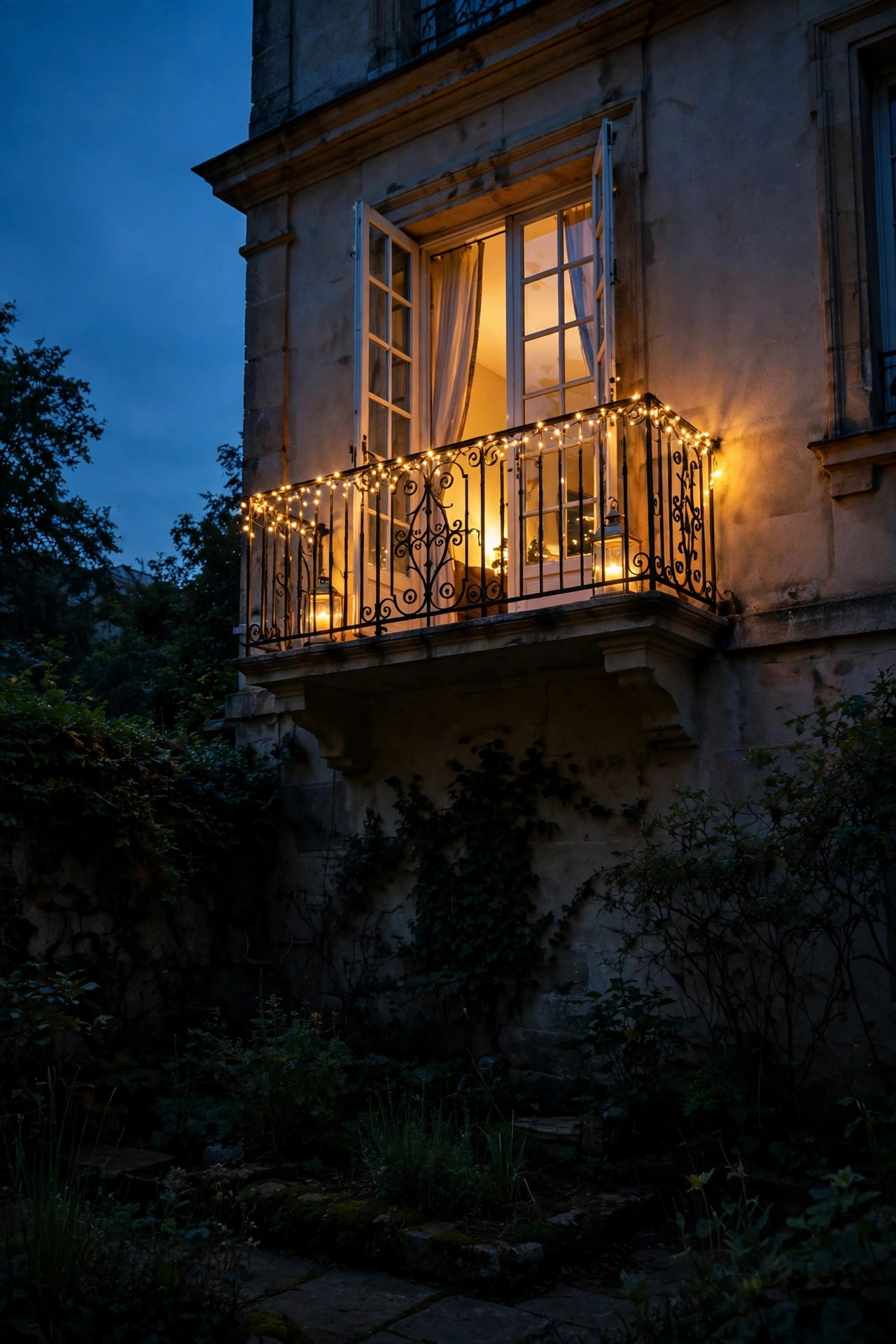
There is a special kind of magic in a front yard that glows like it was put together by hand, one lantern at a time, instead of ordered as one matching set. When neighbors slow down on their evening walks past our house, it is never the brightest fixture that catches their eye. It is the mason jars, the weathered wood, and the warm flicker that looks collected over years. That is exactly what these rustic front yard lighting ideas are about: pieces with texture, a little patina, and honest materials, layered the way I layer every outdoor space. My rule is always three layers — low guidance light along the paths, welcoming light at the door, and accent light on the trees and textures you love most. Below are 17 handmade-feeling ideas, most of them budget friendly and many of them solar, so you can build the look one weekend at a time, no electrician on speed dial required.
1. Layer Your Rustic Front Yard Lighting Ideas Like a Pro
Every yard that stops me mid-walk has one thing in common: the light comes from more than one height. I build my rustic front yard lighting ideas in three simple layers. The guidance layer sits low — path lights, solar stakes, and step lights that show feet where to go. The welcome layer lives at eye level around the door, porch, and garage, where guests actually arrive. The accent layer aims upward into trees, stone, and textured siding so the house has depth instead of a flat wash. Without layering, even beautiful fixtures look random. With it, a $12 jar lantern suddenly looks intentional. Before you buy anything, stand at the street after dark with a flashlight and a notepad. Mark where the walk disappears, where the door feels lost, and which tree or corner deserves a spotlight. Buy for the darkest gap first, live with it a week, then add the next layer. Rustic style forgives a slow build — honestly, it looks better collected gradually than installed all at once.
Suggested budget range: $50 – $200.
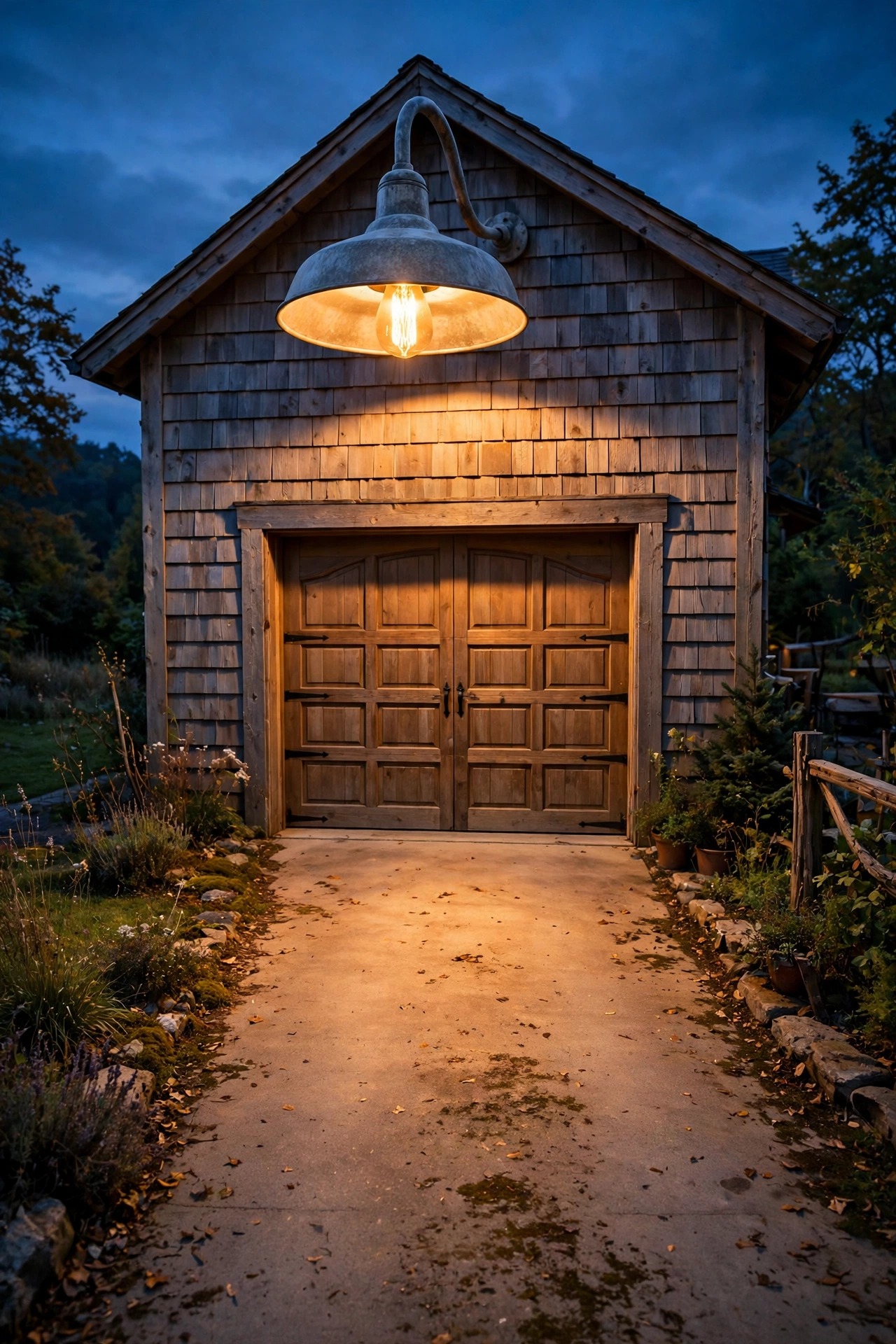
2. Hang a Gooseneck Barn Light Over the Garage
Nothing says handmade country welcome like a gooseneck barn light arcing over the garage door or the front entry. The curved arm and wide metal shade throw a generous pool of warm light downward, which makes the driveway feel safe without the glare of a floodlight. I look for a damp- or wet-location rating, a matte black or galvanized finish, and a shade around 14 to 16 inches wide for a standard garage door. Mount it 8 to 10 feet high so the light spreads but the bulb stays hidden from the street. Inside, use a filament-style LED rated 2700K — you get that old-barn glow for a fraction of the energy and none of the heat of a real Edison bulb. If you are replacing a hardwired fixture, kill the breaker and test the wires before you touch anything, or hire it out; electricity is the one part of rustic charm I never improvise. For styling ideas and sizing, my notes on gooseneck barn lights for outdoor spaces cover the finishes that weather best.
Suggested budget range: $60 – $180.
3. Line the Walkway With Mason Jar Lanterns
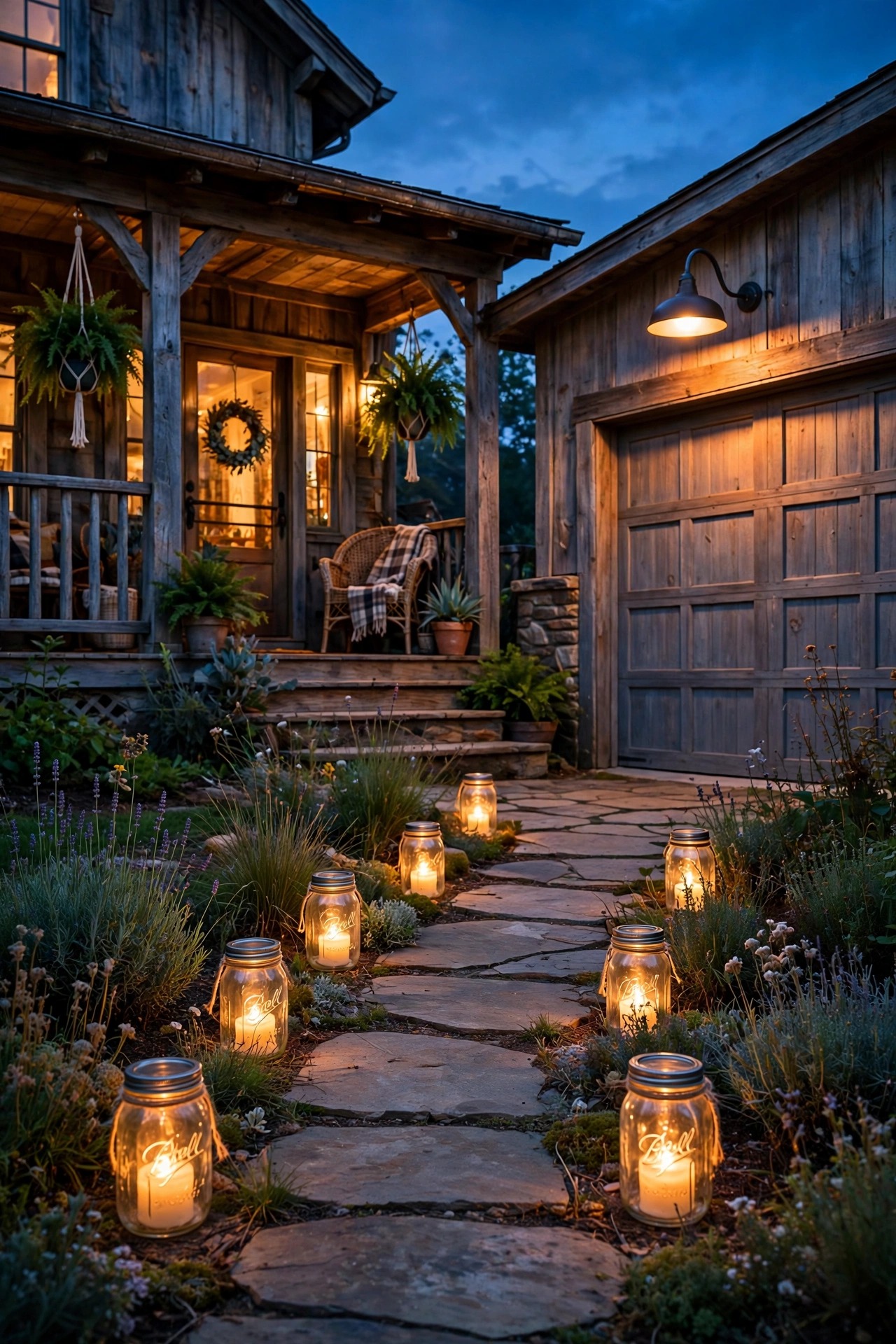
This is the project that started my whole rustic obsession, and it still gets more compliments than fixtures that cost ten times as much. Fill quart-size glass jars with a string of copper-wire fairy lights or a flameless tea light, hang them from shepherd hooks along the walk, or set them on the porch steps and garden edging. The glass softens the light into a candle-like flicker, and the slight imperfections in thrifted jars make every one a little different. Space them 4 to 6 feet apart so the pools of light just touch. Solar versions with the panel built into the lid are the easiest — charge all day, glow by dinner, zero wiring. Just remember these are accent light, not safety light: pair them with at least a couple of brighter path fixtures where steps or uneven stones need real visibility. And use LED or flameless candles only — real flames in glass jars near mulch and dry leaves is a risk no amount of charm justifies.
Suggested budget range: $20 – $60.

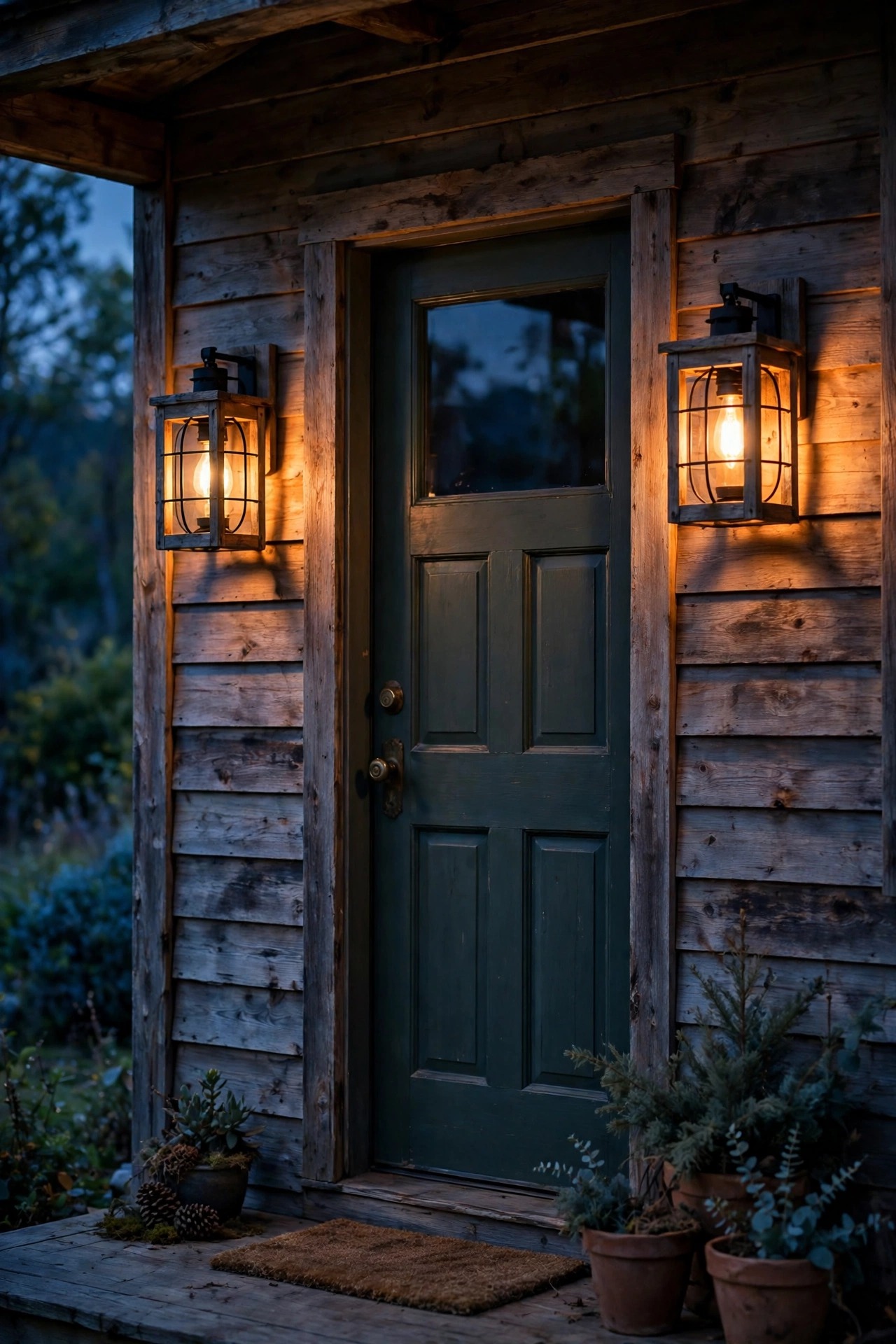
4. Flank the Front Door With Wooden Lantern Sconces
A matched pair of lantern sconces beside the front door is the fastest way to make an entry feel handmade instead of builder-grade. For the rustic look, I choose lanterns with wood or wood-look frames, black metal cages, and seeded or clear glass that shows off a filament-style LED bulb. Scale matters more than people think: each sconce should measure roughly one-quarter the height of your door, and the center of the fixture should sit 60 to 66 inches from the porch floor. Too small and they read as an afterthought; too big and they crowd the door. Warm 2700K bulbs keep the wood tones rich instead of gray. If your porch has only one junction box, a single larger statement lantern on the handle side looks deliberate, especially balanced by a lantern-topped planter on the other side. I pulled several of these pairings from my favorite farmhouse porch lighting setups, which lean on the same weathered finishes and generous sizing.
Suggested budget range: $70 – $220.
5. Uplight Your Biggest Tree for Instant Drama
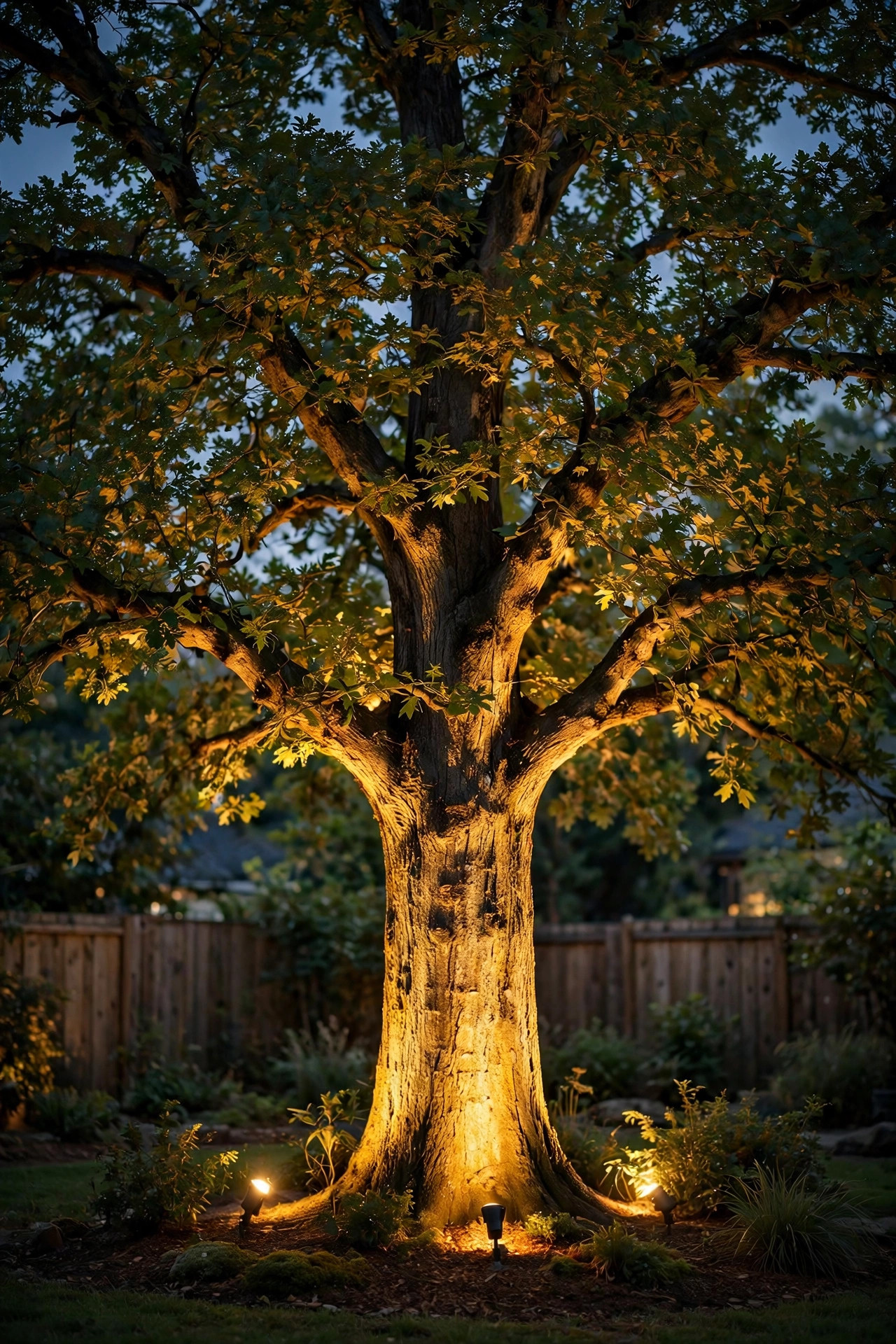
If your front yard has one mature tree, lighting it from below is the single highest-impact accent you can add. A single well light or bullet spotlight at the base, aimed up into the canopy from 1 to 2 feet out from the trunk, turns ordinary branches into a sculpture after dark. For a handmade feel, keep the fixture itself invisible — tuck it behind a stone, a log round, or a clump of ornamental grass so visitors see the glow, not the hardware. A narrow 30- to 45-degree beam suits tall, columnar trees; go wider, around 60 degrees, for spreading oaks and maples. Low-voltage LED kits with a plug-in transformer are beginner friendly and safe to bury cable shallowly under mulch. Keep the color at 2700K to match the rest of the yard, and resist the urge to light every tree — one hero tree beats five competing spotlights. My full walkthrough of angles and fixture types lives in these front yard tree lighting ideas.
Suggested budget range: $40 – $150.
6. Set Solar Stakes Along the Garden Beds
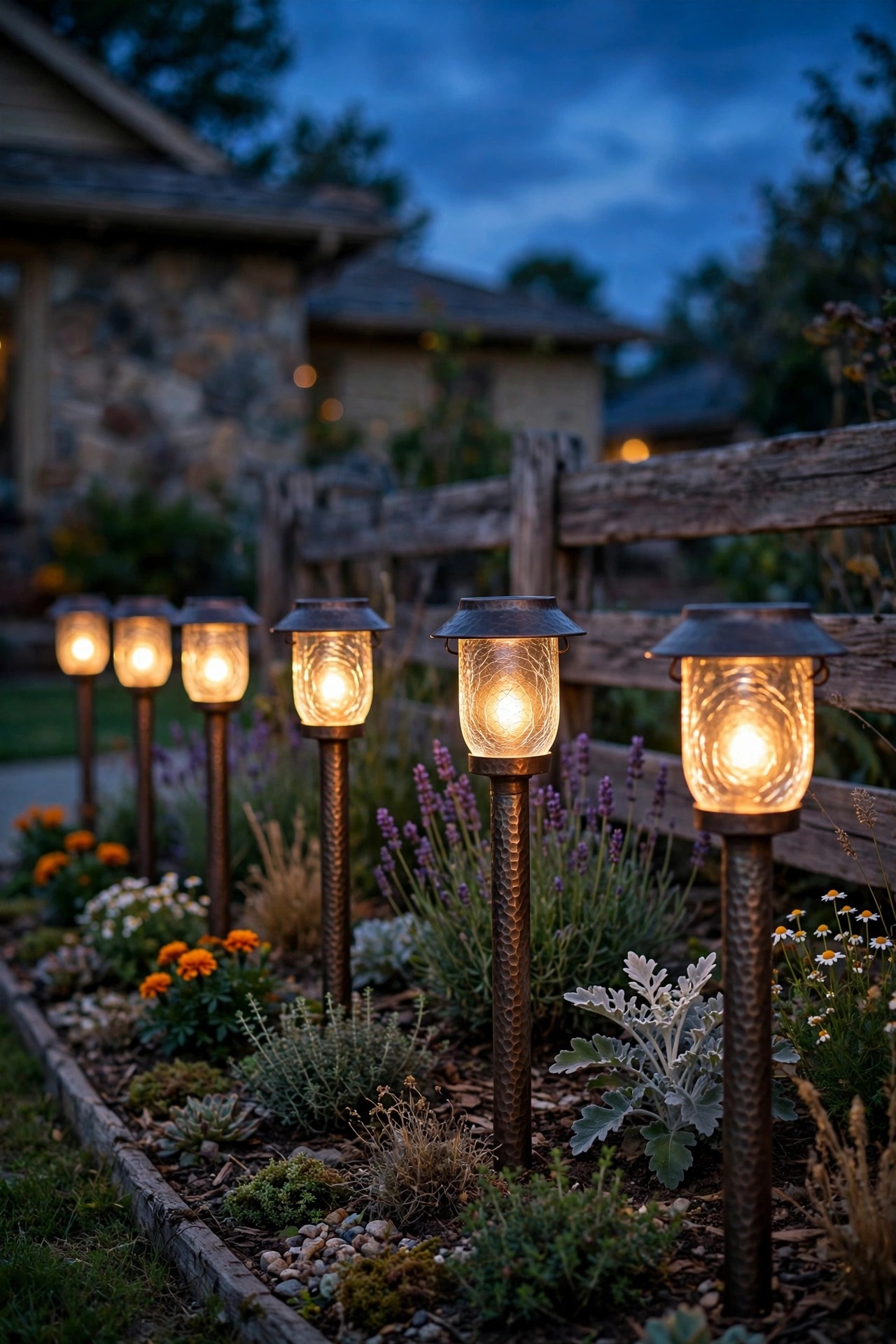
Solar stakes are the workhorses of a rustic front yard because they ask for nothing — no trench, no transformer, no outlet. The handmade trick is choosing stakes that look like objects, not gadgets: lantern-style tops, hammered metal finishes, amber-tinted lenses, and crackle glass all read collected rather than plastic. Push them along bed edges every 5 to 7 feet, angling the little panels toward the afternoon sun. In my experience, the panel position matters more than the price tag; a stake shaded by the very shrub it lights will fade by 9 p.m. Give new stakes two full sunny days to charge before you judge their brightness, and wipe the panels with a damp cloth every few weeks — dust and pollen quietly steal half the glow. Expect a soft accent, roughly flashlight-warm rather than porch-bright, and plan your real path lighting separately. Mix two complementary styles, like alternating lantern and crackle-glass stakes, for that gathered-over-time feel.
Suggested budget range: $25 – $80.
7. String Café Lights From Porch to Tree
A single swag of café string lights from the porch corner to a sturdy tree branch gives a front yard the feel of a permanent small celebration. Use commercial-grade string lights with shatterproof LED bulbs and a weatherproof rating — the indoor patio sets from the discount bin rarely survive a second season outside. Span no more than about 15 feet between anchor points without a guide wire, or the line sags and stresses the sockets. Screw hooks into solid wood or masonry, never into siding alone, and leave a gentle catenary curve rather than pulling the strand banjo-tight. One strand is charming; three zigzagged strands start to feel like a restaurant patio, which is a different look entirely. Put them on a plug-in timer so they greet you at dusk and click off at bedtime. Near the roofline or dry brush, LED bulbs are non-negotiable — they stay cool to the touch where old incandescent strings genuinely got hot.
Suggested budget range: $35 – $110.
8. Repurpose a Vintage Ladder as a Lantern Stand
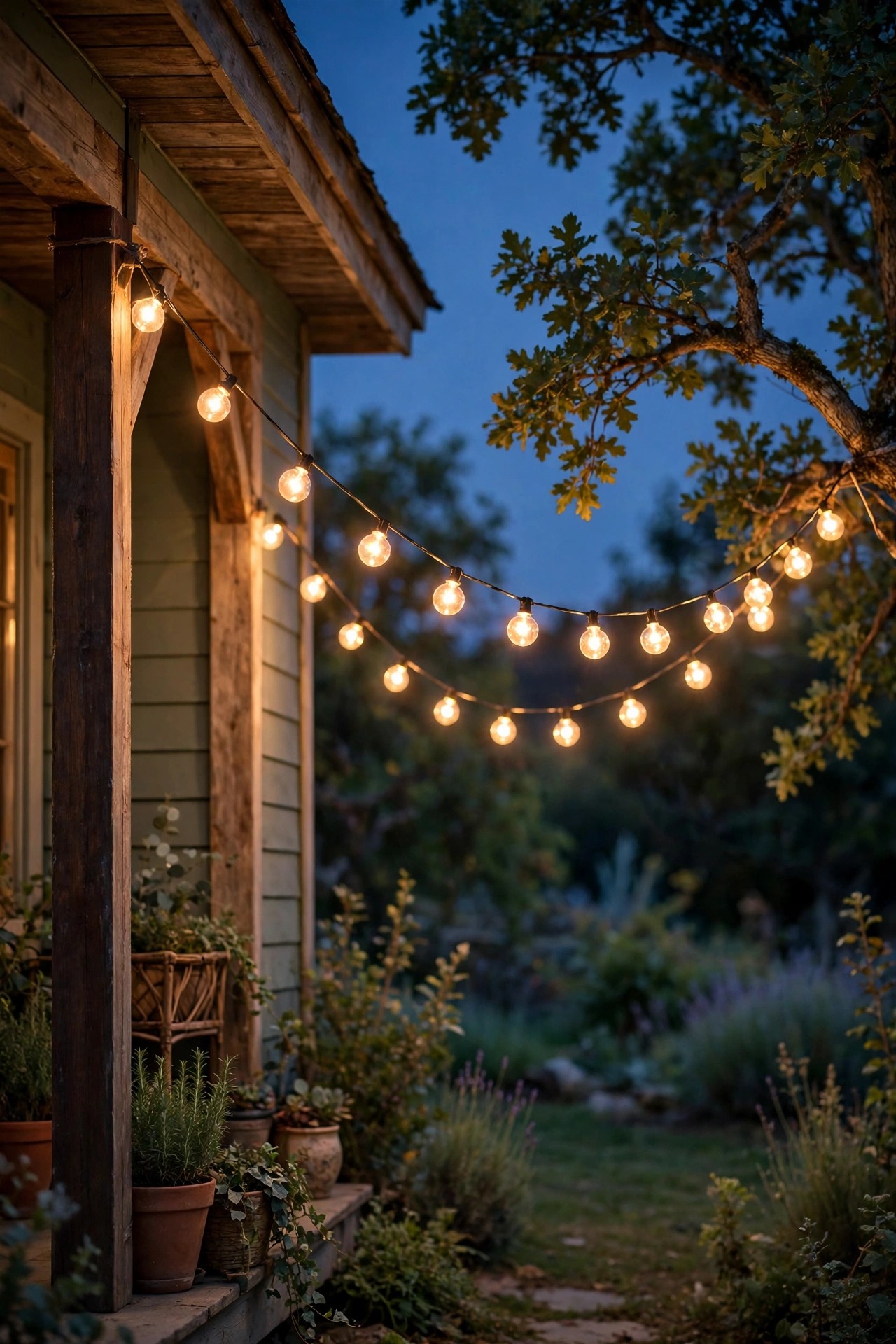
The most handmade-looking piece in my yard cost me four dollars at a yard sale: a weathered wooden ladder leaning by the front door, with a lantern hung from each rung. Old ladders, wooden crates, wash tubs, and even a retired wheelbarrow all make wonderful lantern stands that no catalog fixture can imitate. Lean the ladder against the porch wall at a slight angle and secure the top with a discreet screw or strap so wind and curious kids cannot topple it. Hang flameless candle lanterns or solar lanterns at staggered heights — odd numbers, three or five, always look more natural than even rows. Because these pieces live outdoors, either embrace the weathering or seal raw wood once a year with an exterior finish. Keep real candles out of this arrangement entirely; dry aged wood plus open flame is exactly the combination to avoid. Swap the lantern fillers seasonally — pinecones in fall, greenery in winter, small pots of herbs in spring — and the same ladder stays fresh all year.
Suggested budget range: $15 – $70.
9. Light the Fence Line With Post Cap Lanterns
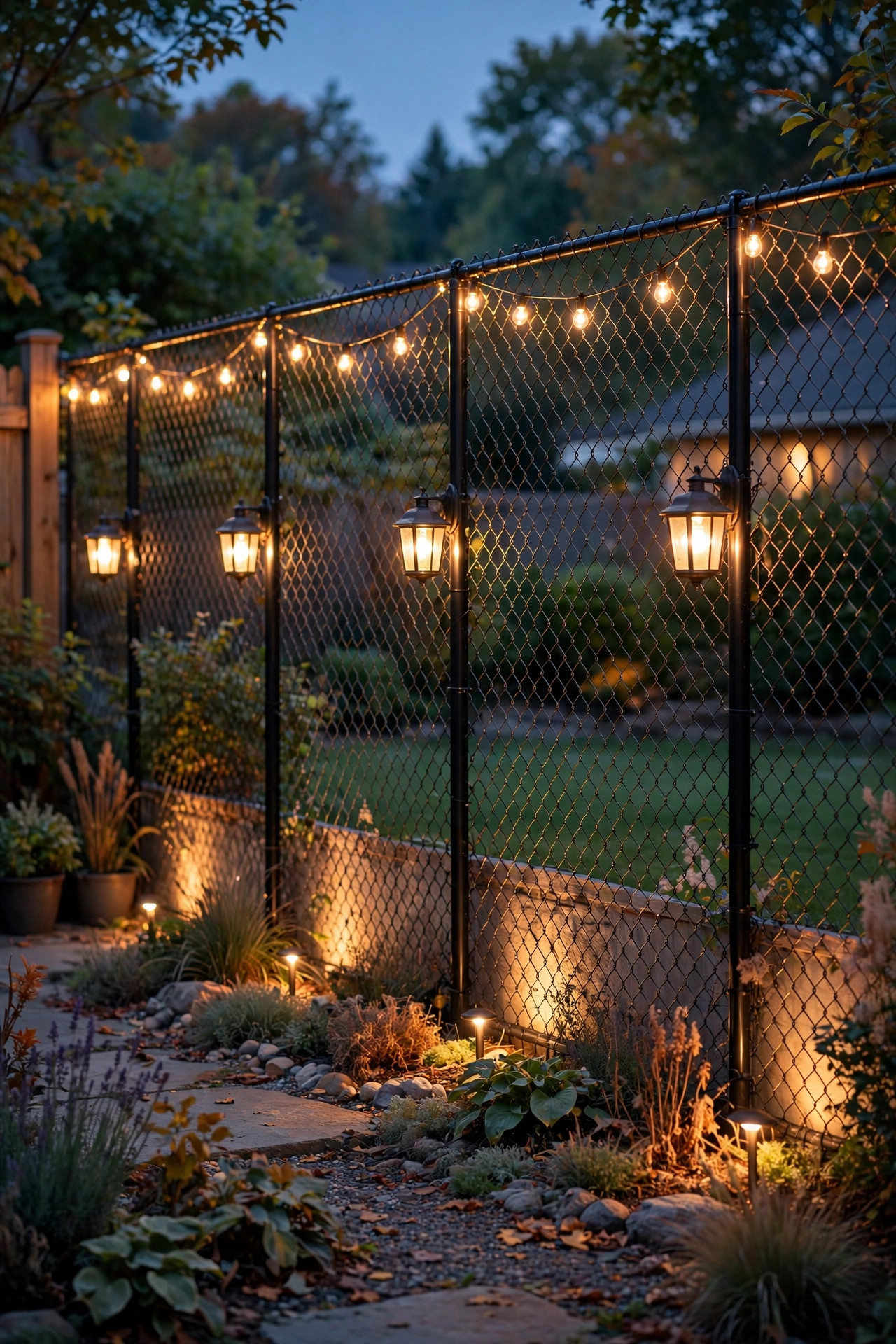
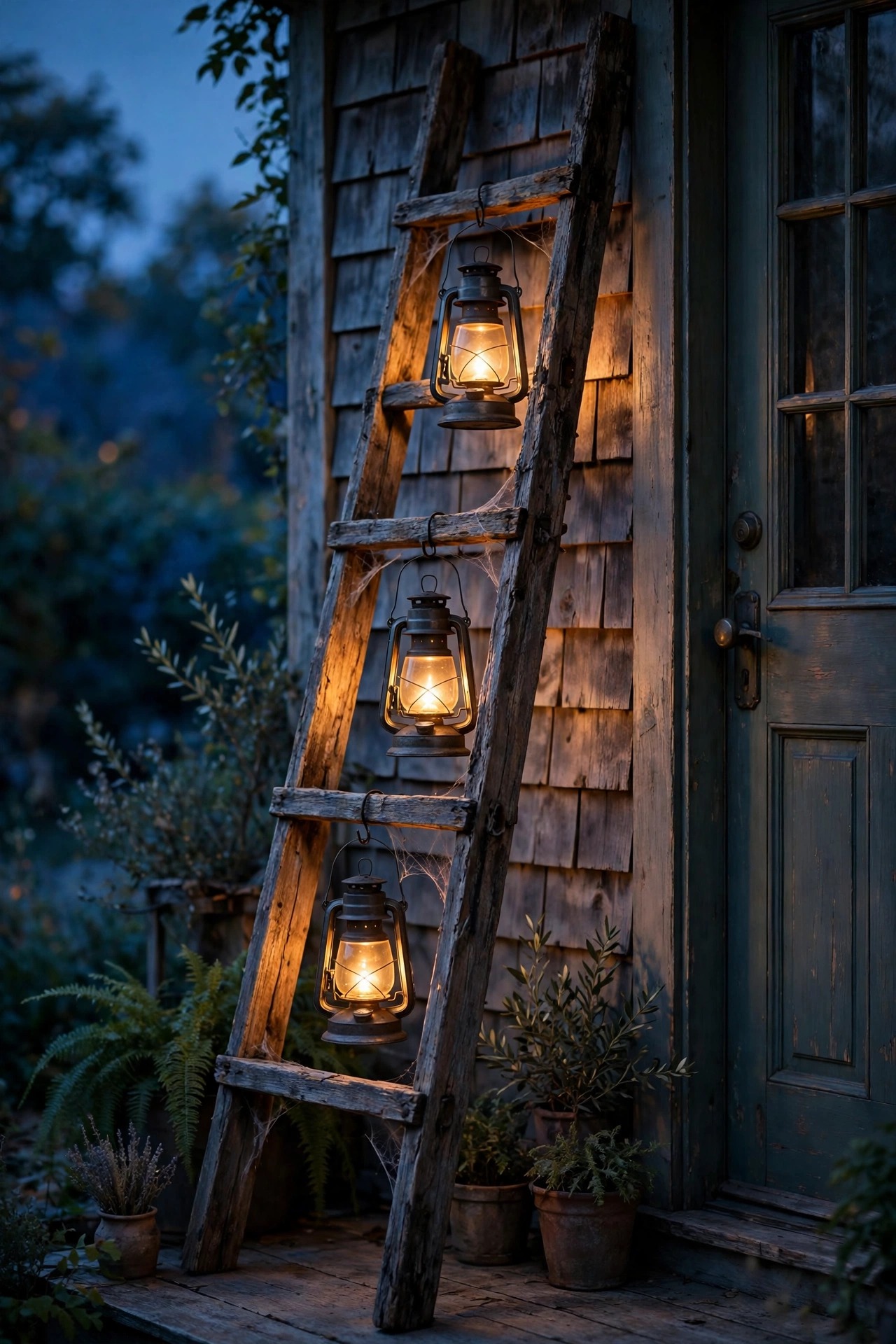
A picket or split-rail fence is prime rustic real estate, and solar post cap lights make it glow with about ten minutes of work per post. Measure your posts first — caps come sized for 4×4 and 6×6 posts, and a wobbly oversize cap looks sloppy fast. For a handmade feel, choose caps with a lantern silhouette and warm amber light rather than the cold blue-white glow of bargain sets. Lighting every post can look like a runway, so try every second or third post, or light just the gate posts and corners for definition. At the gate itself, one brighter lantern on a taller post acts like a tiny streetlamp and helps guests find the latch. Clean the solar panels when you clean the walkway stakes, and expect two to four seasons from a set before the batteries tire. If your fence is wire or chain-link instead, skip the caps and weave a solar fairy strand along the top rail instead — same rhythm of light, different hardware.
Suggested budget range: $30 – $120.

10. Tuck Fairy Lights Into Shrubs and Window Boxes
Copper-wire fairy lights are the seasoning of rustic lighting — a little woven through a shrub or along a window box adds sparkle that makes every other fixture look warmer. The wire nearly disappears in daylight, batteries hide in a pocket of the planter, and solar versions switch themselves on at dusk. One 20- to 30-foot strand per medium shrub is plenty; the goal is firefly glints, not a lit-up Christmas tree in July. Loosely drape rather than tightly wrap, both for the look and so you are not strangling new growth. In window boxes, thread the strand under the foliage so the light seems to come from inside the plants. Choose warm white or amber, and set the timer for six hours so the batteries are not drained by midnight. Keep battery packs tucked up off the soil where sprinklers will not soak them, and bring delicate strands in during the harshest winter weeks if your climate freezes hard.
Suggested budget range: $10 – $40.

11. Mark the Driveway With Rustic Bollard Lights
A dark driveway edge is where guests misjudge the turn and end up with a tire in your flower bed — ask me how I know. Short bollard lights fix it with a handmade silhouette: look for wood-look posts, slatted lantern tops, or galvanized metal housings that echo your other fixtures. Place them 8 to 10 feet apart along the curve or the straight run nearest the beds, set back at least a foot from the pavement edge so mirrors and snowplows clear them. Low-voltage wired bollards give the steadiest light, but good solar bollards have closed the gap for simple edge marking. Aim for shielded designs that throw light down onto the gravel or concrete rather than out into drivers' eyes. Two bollards flanking the driveway entrance from the street make a particularly welcoming gateway, especially paired with the mailbox light I describe later. Whatever you choose, keep the finish family consistent with your porch fixtures so the yard reads as one collected story.
Suggested budget range: $60 – $240.
12. Glow Up the Porch Steps With Recessed Lights
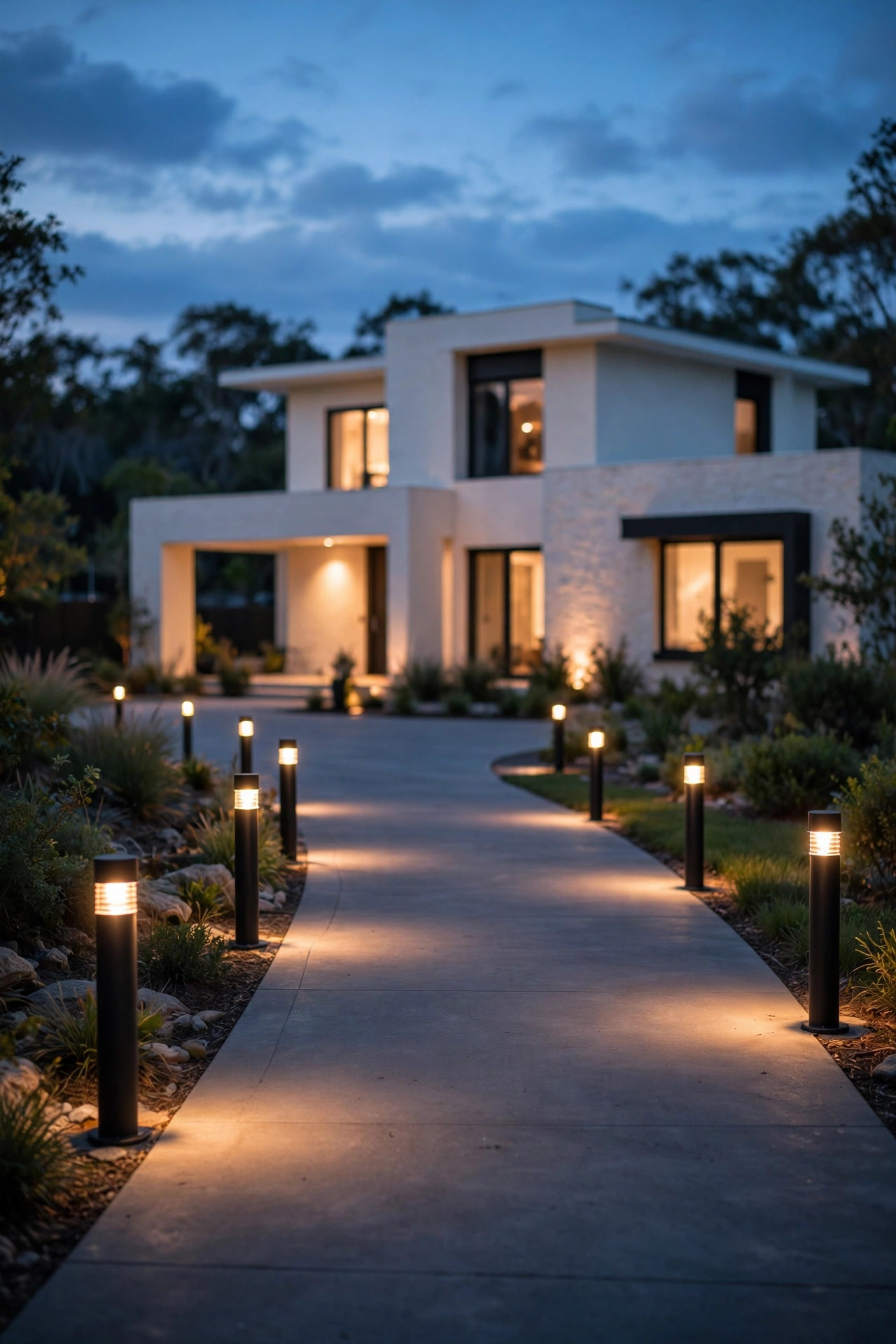
Porch and walkway steps are the one place rustic charm must never outrank safety. Recessed step lights — small fixtures set into the riser or tucked under each tread — wash the step surface in a soft pool that shows every edge without blinding anyone climbing them. If cutting into masonry is beyond your weekend ambitions, surface-mount solar step lights with warm LEDs do a respectable job and install with two screws each. Light every step, not just the top and bottom; an unlit middle step is precisely the one a guest carrying a casserole will miss. Keep the color temperature matched to your porch sconces so the entry reads as one scene, and choose fixtures with hooded or louvered faces that push light down instead of out. On wooden steps, check that fixtures are rated for the location and keep wiring in conduit or under the deck where feet and weather cannot reach it. This is the least decorative idea on the list and, honestly, the one your future self will thank you for most.
Suggested budget range: $45 – $190.
13. Cluster Flameless Candles in Hurricane Lanterns
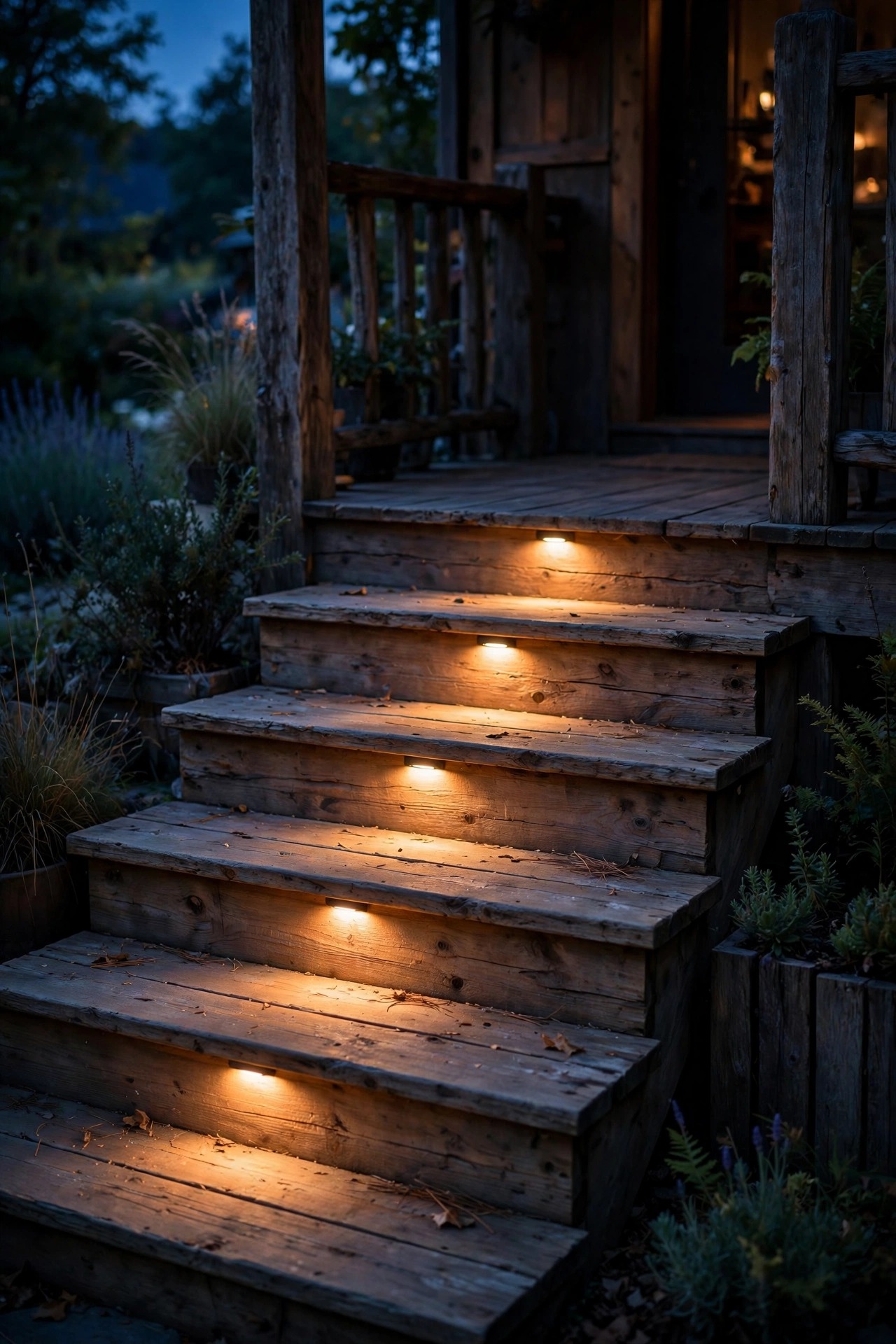
Some evenings call for the flicker only a candle gives, and hurricane lanterns let you fake it safely anywhere. Group three glass hurricanes of different heights on the porch floor, a garden stool, or a wide step, each holding a flameless pillar candle with a realistic flicker setting. The glass chimney protects the look from breezes and makes the glow feel deeper. Rustic frames — rope handles, distressed metal, wood bases — tie the cluster to the rest of your lighting. Because there is no real flame, you can nestle the group beside a hay bale in October or a basket of blankets without a second thought, something I would never do with real candles near fabric and foliage. Many flameless pillars come with remotes and timers, so the cluster can welcome you home on schedule. Vary the candle heights inside the glass rather than buying identical sets, and let one lantern in the group sit empty or hold a small plant for that un-styled, gathered feel.
Suggested budget range: $25 – $90.
14. Put Everything on Timers and Dimmers
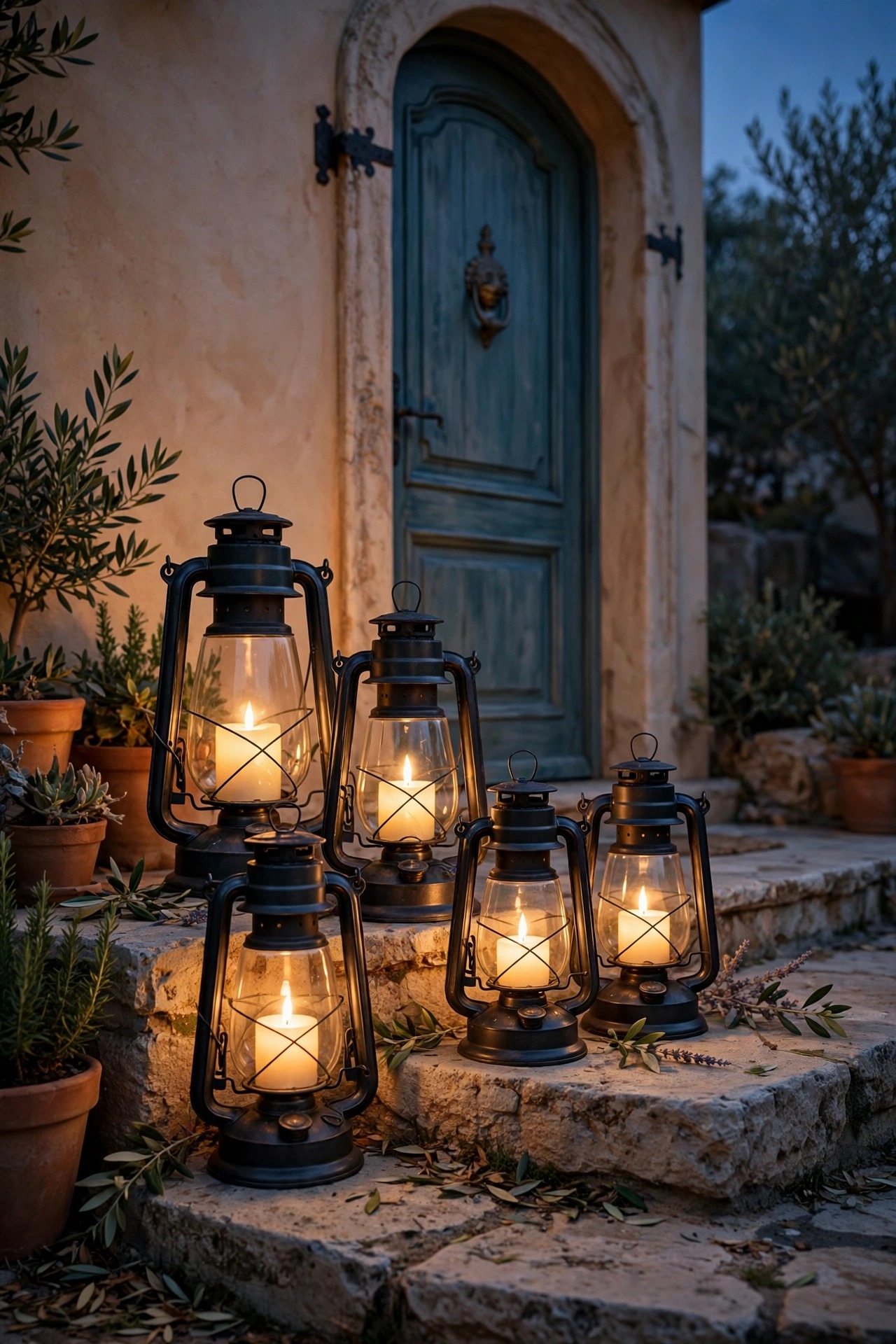
The secret to a yard that always looks effortlessly lit is never having to think about it. Plug your transformer and string lights into outdoor timers — simple dusk-to-dawn photocell timers are my favorite — and the whole scene wakes up as the light fades, even when you are not home. Set solar pieces to handle themselves, and put hardwired porch fixtures on a smart bulb or a dimmer rated for LEDs so you can drop the entry to a soft 40 percent after the dinner hour. Dimmers matter more than people expect: rustic light should feel like firelight, and most fixtures at full blast are simply too bright for that mood. Group your layers on separate controls if you can — paths off at midnight, the tree accent a little later, the porch lantern low until dawn. Check that any dimmer and bulb pairing is compatible to avoid flicker and buzz, and keep plug-in timers inside covered outdoor outlets with weatherproof boxes. Effortless is the whole point.
Suggested budget range: $15 – $75.
15. Choose One Warm Color Temperature and Stick to It
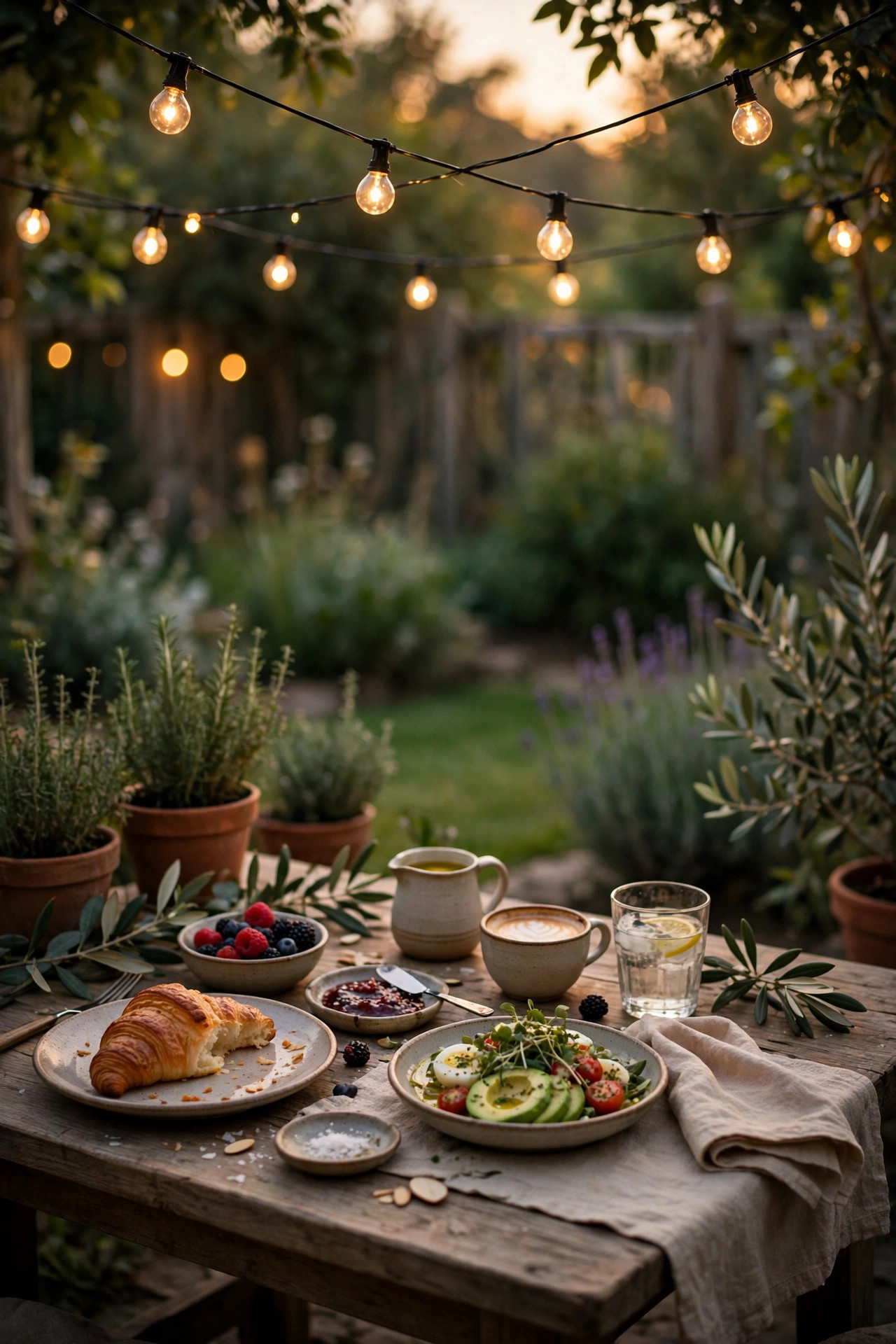
Here is the mistake I see on my own street every week: a beautiful rustic yard undone by one bluish daylight bulb glowing like a gas station in the middle of all that warmth. Color temperature, measured in kelvins, needs to stay consistent across every fixture. For the handmade, firelit feel, buy everything at 2700K, and treat 3000K as the absolute ceiling for a slightly crisper porch light. When you replace a bulb, check the box before it goes in the cart — wattage is about brightness, but that K number is the color, and it is printed right on the packaging. Solar products are the worst offenders, so look for packaging that says warm white or amber and skip anything labeled daylight or cool white. If a fixture you love only comes in a cool tone, a warm replacement bulb usually solves it for a few dollars. Stand at the curb once everything is installed and squint: any light that looks blue or stark white against the others is the one to swap.
Suggested budget range: $10 – $50.
16. Light the Mailbox and House Numbers the Handmade Way
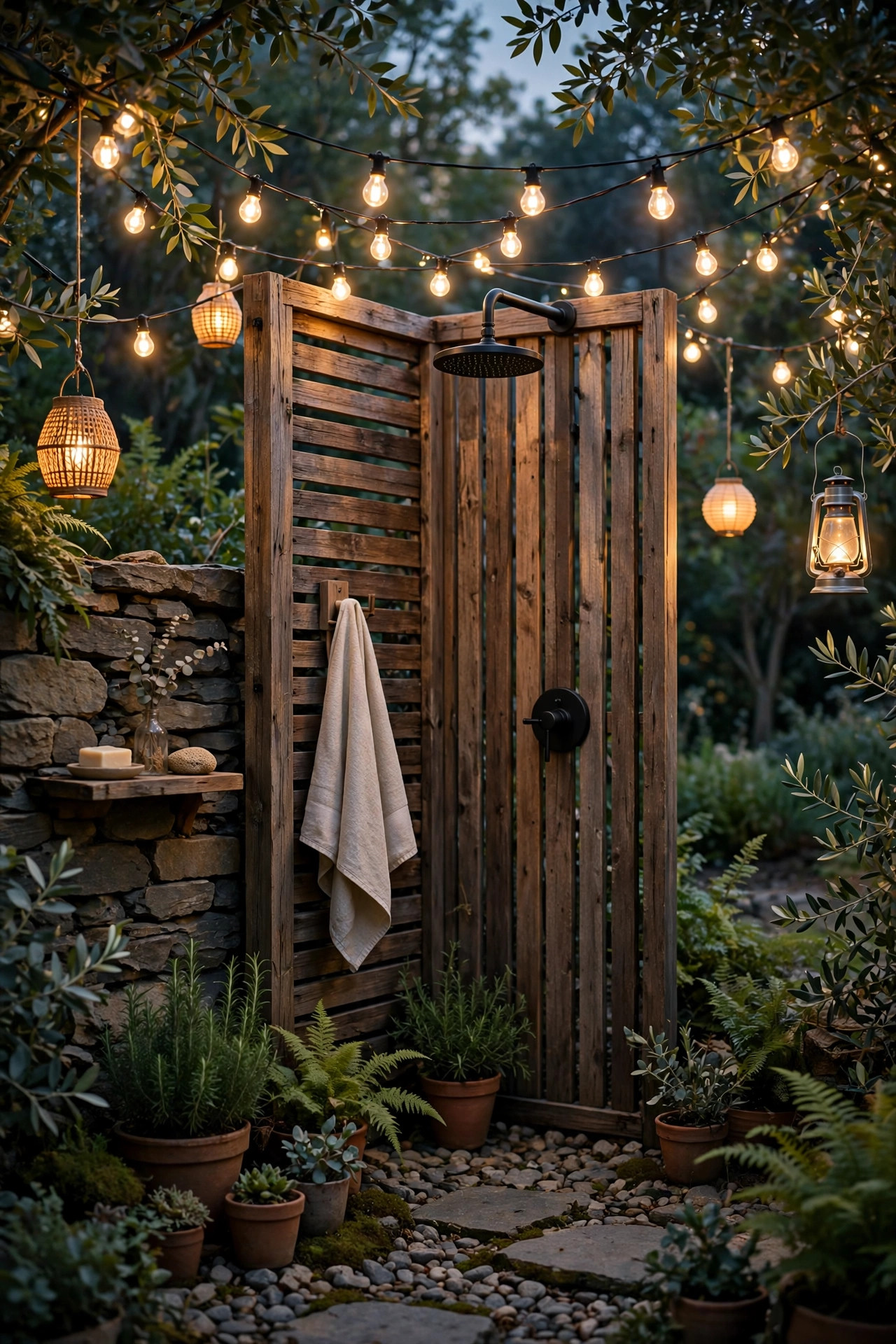
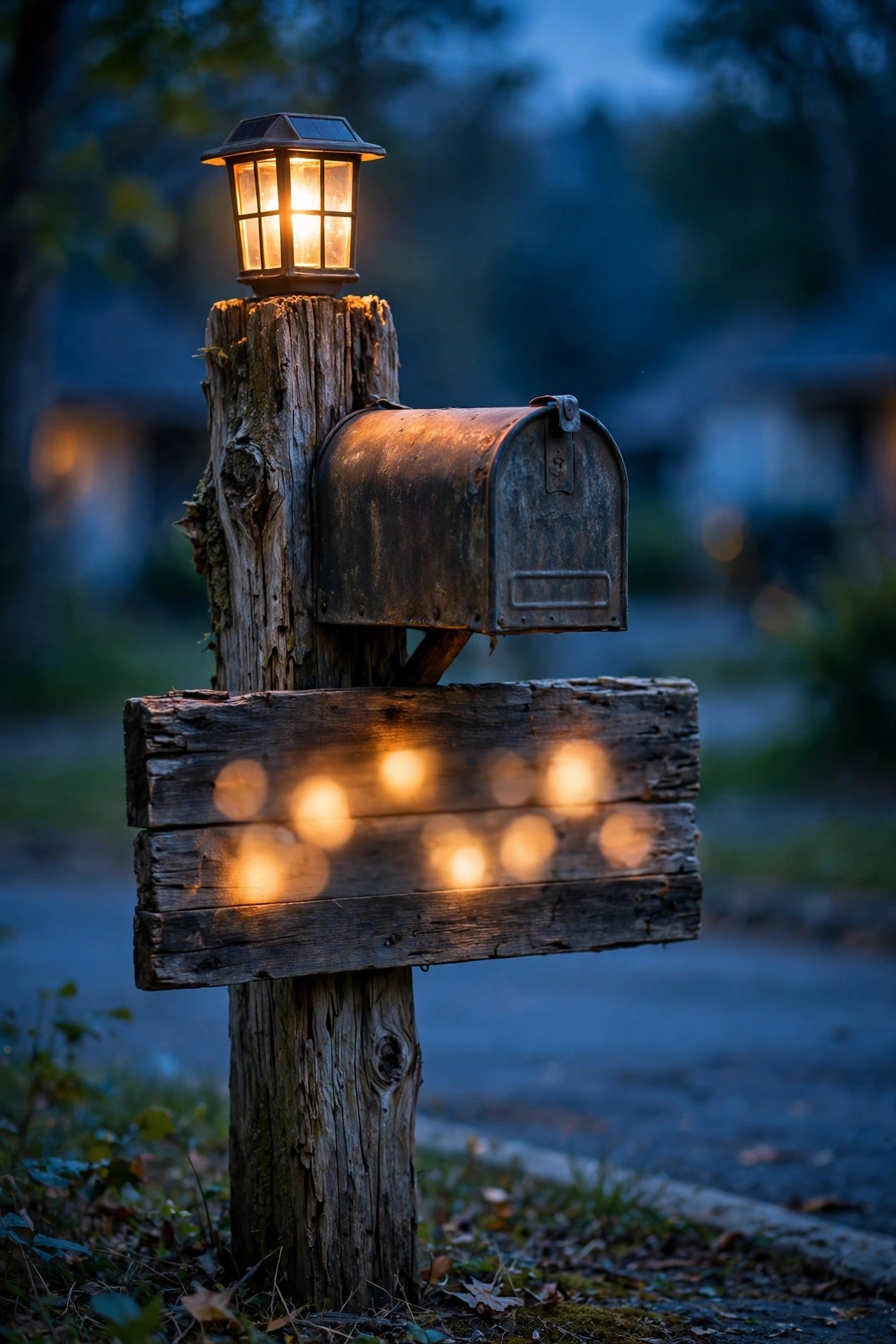
Delivery drivers and first-time guests judge your lighting at the mailbox, long before they reach the porch. A small solar lantern mounted on the mailbox post, or a lantern-style fixture on a short cedar post beside it, makes the whole property feel considered. House numbers deserve the same care: mount them where the porch light actually reaches, or choose backlit numbers in a warm tone, and you will never again watch a pizza driver circle the block. Keep numbers at least 4 inches tall — many local codes require it — and in a finish that contrasts with the siding so they read at a glance. If your mailbox stands alone at the street, a pair of low solar stakes at its base ties it visually to the beds by the house. This is also a kind little safety upgrade: emergency vehicles find lit, visible numbers faster at night. Rustic bonus points for numbers cut from wood or blackened metal mounted on a small reclaimed board by the door.
Suggested budget range: $20 – $85.
17. Do a Dusk Walk-Through of Your Rustic Front Yard Lighting Ideas
The last step is my favorite ritual, and it is what turns a pile of fixtures into a finished yard. Wait until full dusk, pour something warm to drink, and walk your rustic front yard lighting ideas the way a guest experiences them: from the street, up the walk, onto the porch, then back out to the driveway. Carry painter tape and mark anything that glares in your eyes, any dark gap on the steps, and any fixture that looks lost or lonely. Check the view from inside the house too, since a spotlight aimed carelessly will light your living room instead of the tree. Adjust angles with the lights on and hot — small nudges make big differences — and tighten any wobbly stakes before the soil softens with rain. Take one photo from the curb; it shows you the yard the way the whole neighborhood sees it. Repeat the walk once a season as plants grow and shift the light. A handmade yard is never truly finished, and that is the pleasure of it.
Suggested budget range: $0 – $30.
Frequently Asked Questions
What color temperature is best for rustic front yard lighting?
Warm white at 2700K is the sweet spot for a rustic, handmade feel because it mimics candlelight and old filament bulbs and flatters wood, stone, and brick. Anything above 3000K starts to look modern and cool, and daylight bulbs around 5000K will clash with everything else in the yard. Buy every bulb, stake, and string light at the same kelvin rating so the whole scene reads as one warm glow.
Should I choose solar or wired lighting for a rustic front yard?
Use both, for different jobs. Solar is perfect for accents — bed stakes, fence caps, mailbox lanterns — because it installs in minutes and costs nothing to run, but output fades on cloudy stretches and rarely lights steps safely. Low-voltage wired lighting is the reliable backbone for paths, steps, and tree uplights. A hybrid yard keeps the budget friendly and the important light dependable.
How do I keep rustic fixtures from rusting away too fast?
A little patina is part of the charm, but flaking rust is not. Choose fixtures rated for wet locations with powder-coated, galvanized, or solid metal construction rather than thin painted steel. Wipe fixtures down each spring, touch up chips with matching exterior paint, and keep mulch and soil from piling against fixture bases. Bring delicate lanterns and fairy light battery packs under cover for the harshest winter months.
How much does a rustic front yard lighting setup cost?
Most of the ideas in this list run between $10 and $240 each, and a satisfying layered yard typically comes together for $200 to $600 spread over a season. Start with the door and walkway, add the tree uplight and driveway markers next, then collect accents like jar lanterns and fence caps as you find them. Building gradually is not a compromise here — it is exactly how the handmade look happens.
Conclusion
A rustic front yard never comes from a single shopping trip. It grows layer by layer — guidance light on the paths, a warm welcome at the door, and accents that show off the tree, the fence, and the textures you already love. Start with the darkest gap, keep every bulb at a cozy 2700K, and let these rustic front yard lighting ideas collect slowly, the way handmade things always do. When you are ready for the next project, browse the rest of the lighting ideas here on the site and pick the one your yard asks for next.