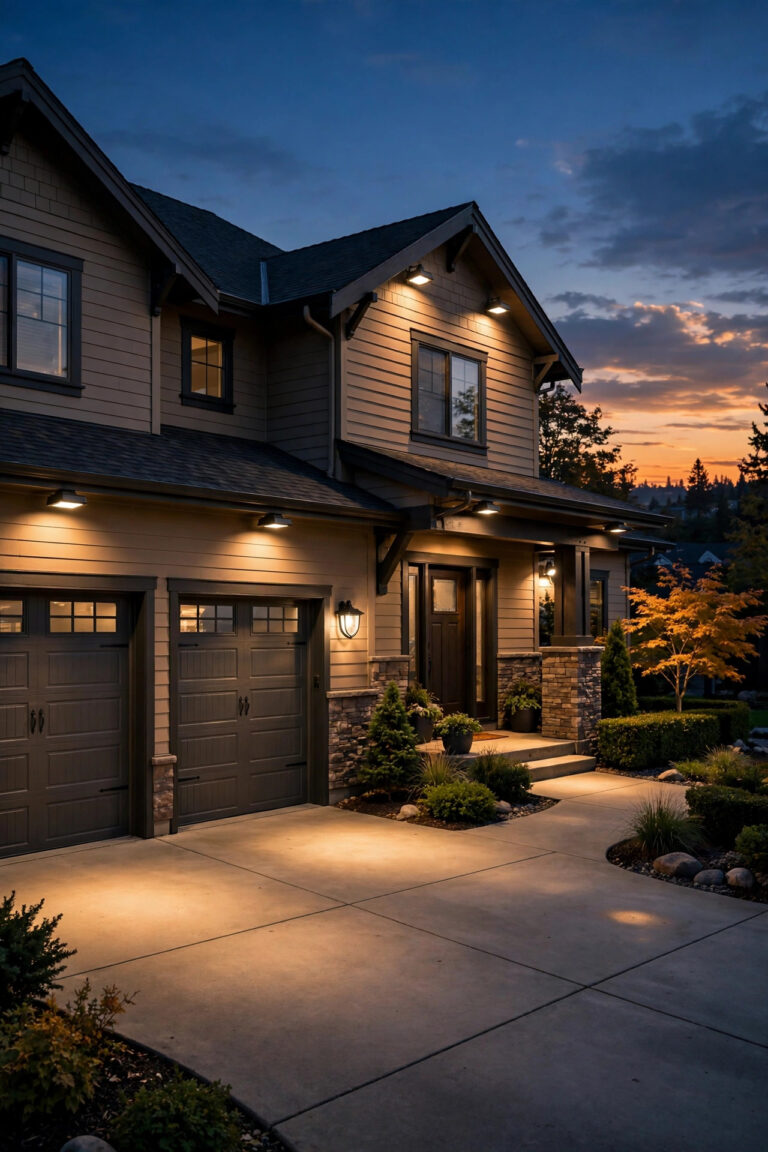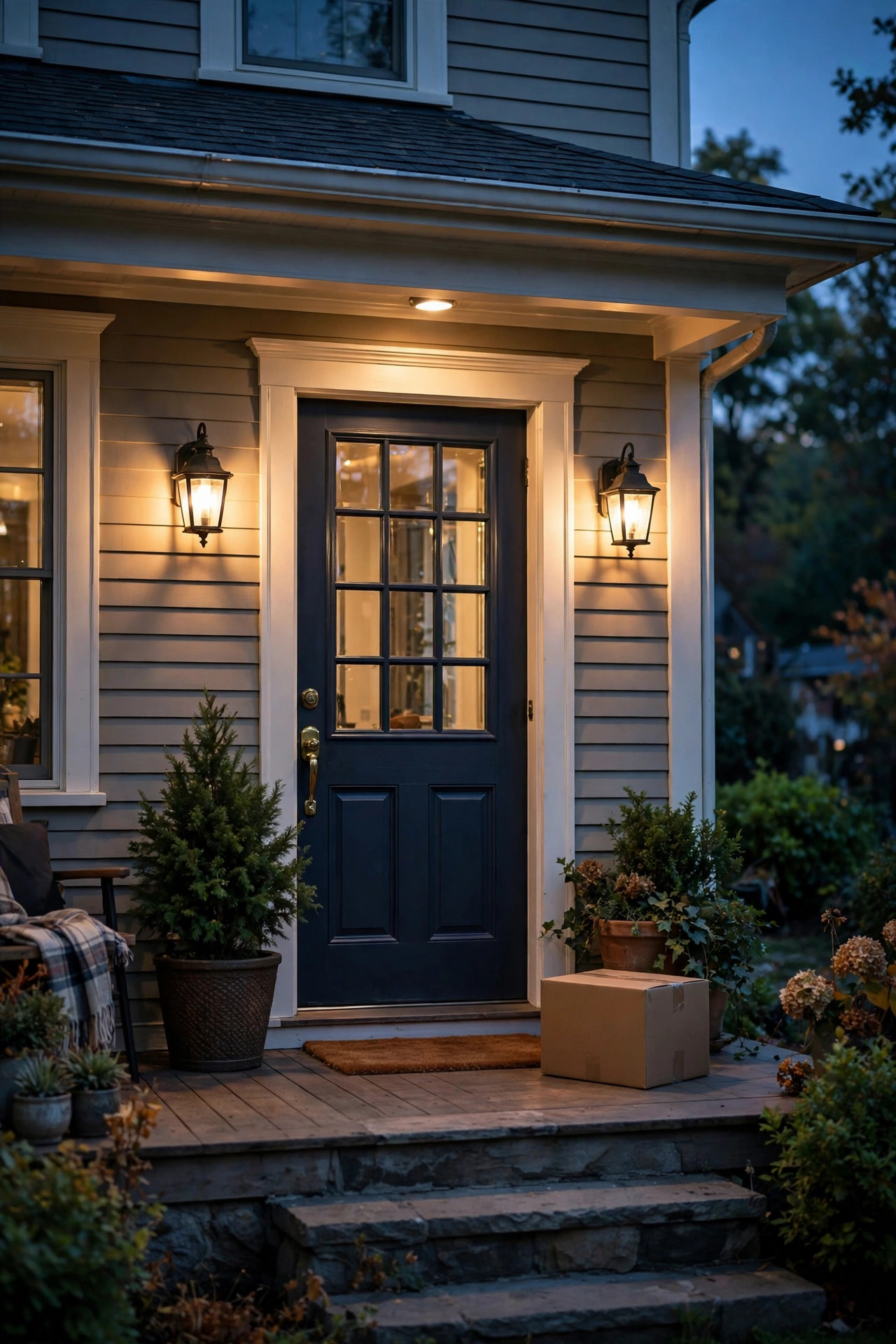
If you order online as often as I do, your porch has quietly become the busiest spot in your home — and honestly, most porches are lit for looks, not for the driver standing there at 8 p.m. with a box in both hands and a phone flashlight between their teeth. Good porch lighting for deliveries changes that completely. A driver who can find your house number, see your steps, and spot the drop zone in two seconds flat is a driver who delivers to the right porch, gently, the first time.
My approach is the same layering I use everywhere: a soft ambient glow so the porch reads as "occupied and cared for," a brighter task layer exactly where packages land, and small accents that guide the eye from the street to the door. Below are 15 package-ready ideas — most are under an hour to install, several need no wiring at all, and every one makes deliveries safer for the driver, the package, and you.
1. A Motion-Activated Light Right Over the Drop Zone
This is the single hardest-working fixture on my porch. A motion-activated light mounted 7 to 8 feet above the spot where packages actually land — usually beside the door, not above it — floods the zone with light the second a driver steps onto the porch, then switches off a minute or two later. Aim for 800 to 1,200 lumens, which is bright enough to read a label and see the ground clearly without blinding anyone. Most models let you adjust the sensitivity and the shut-off delay; I set mine to about 90 seconds so the light lingers while the driver scans the barcode and takes the delivery photo.
Look for a fixture with an IP65 rating or better, since this spot takes wind-driven rain. A dusk-to-dawn mode with motion boost is the sweet spot: a gentle 20 percent glow all evening, full brightness on approach. I cover placement angles and sensor ranges in more depth in my guide to motion sensor outdoor lights, but the short version is simple — light the landing pad, not the street.
Suggested budget range: $30 – $90.
2. Bright, Even Downlighting at the Front Door
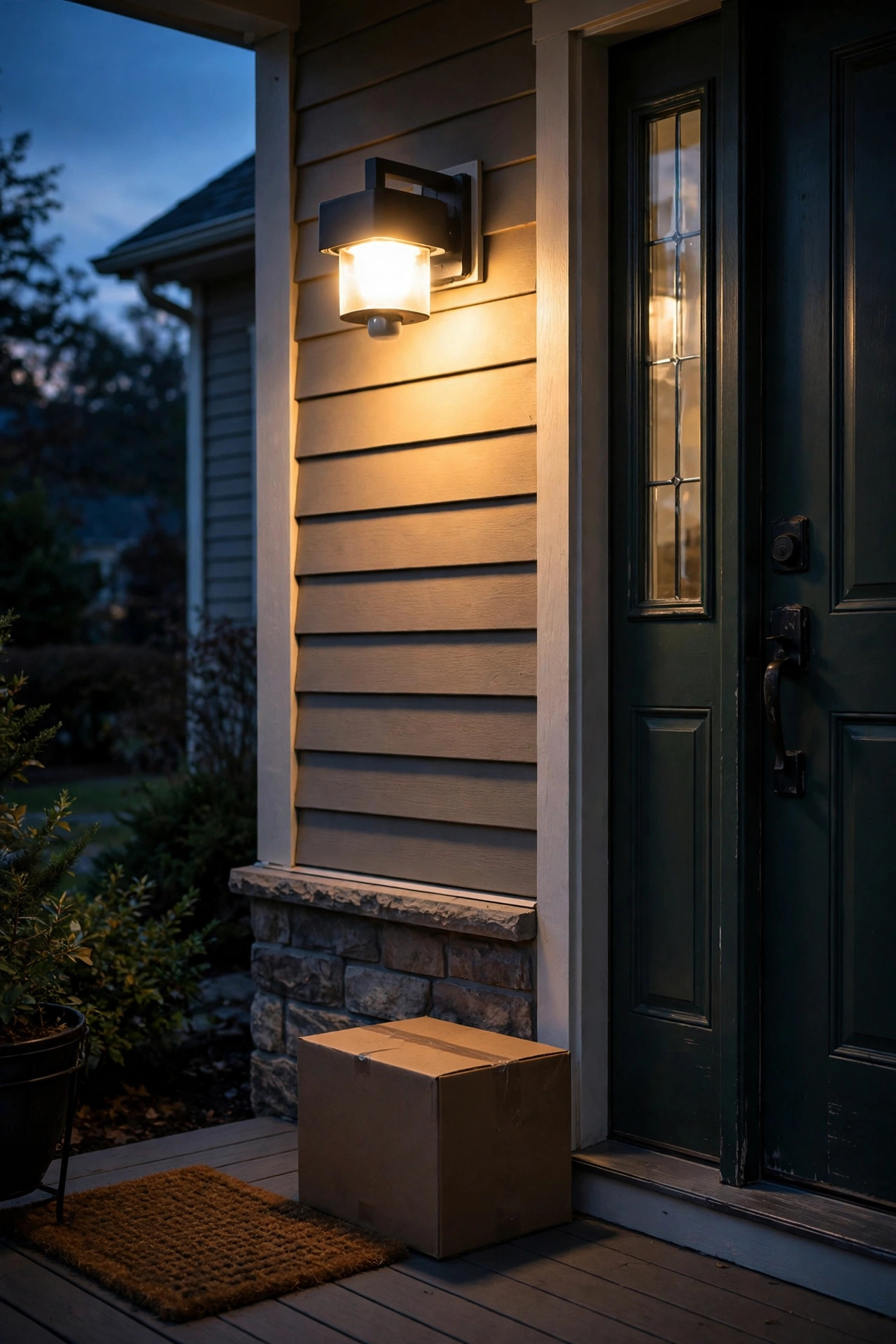
Here is a porch problem I see constantly: one pretty lantern beside the door and a porch that is half cave. Drivers trip on the doormat edge, packages get set down in shadow where your doorbell camera can't see them, and nobody is happy. A ceiling-mounted downlight — or a flush-mount porch light if you have a covered porch — evens all of that out. One fixture centered over the porch floor, throwing light straight down in a wide cone, turns the whole entry into a safe, visible stage.
Choose an LED fixture in the 1,000 to 1,500 lumen range with a frosted diffuser so there are no harsh hot spots, and stay at 2700K to 3000K so the light reads warm rather than interrogation-room. If your porch ceiling is 9 feet or higher, you may need a second fixture or a higher-lumen model to keep the floor pool bright. This is also your best defense against the classic driver photo problem: a dim porch means a blurry proof-of-delivery picture, and a blurry picture helps nobody if a package ever goes missing.
Suggested budget range: $40 – $130.

3. A Lighted Package Drop Box
If packages sit on your porch for hours, a drop box is the upgrade I recommend most — and the lit version is even better. These lockable benches or wall-mounted boxes have a soft interior light, or a lighted lid strip, that switches on when the lid opens, so the driver can see exactly where the parcel goes instead of guessing in the dark. Some have a small exterior courtesy light too, which signals "deliveries here" from the street better than any sign.
Size it honestly: measure your typical boxes. Most of us need at least a 24-inch-wide interior to swallow the big weekly orders. Battery-powered interior lights last months on a set of AAs, and solar-charged exterior strips need no wiring at all. Anchor the box to the porch floor or wall — an unanchored box can walk away with the packages inside it, which defeats the entire purpose. My one styling tip: match the box finish to your door or shutters so it reads as furniture, not equipment.
Suggested budget range: $120 – $350.

4. Solar Path Lights That Guide the Driver In
Drivers make their decision from the sidewalk: is this the right house, and is the walk safe? A simple run of solar path lights answers both questions before they ever reach your steps. I place mine every 6 to 8 feet along the walkway, staggered slightly rather than in a stiff runway line, with the brightest pair flanking the bottom step. Choose lights rated at 30 lumens or more — the tiny 5-lumen markers look sweet in the garden but do almost nothing for footing.
Modern solar stakes with warm-white LEDs and a decent panel genuinely work now, especially if your walk gets five or more hours of sun. In shadier yards, low-voltage wired path lights on a timer are the more reliable cousin and cost less to run than you'd think. Either way, keep the line consistent from street to porch: a lit path tells the driver "this way," cuts down on cut-across-the-lawn deliveries, and means fewer packages left by the garage because the route to the door was unclear in the dark.
Suggested budget range: $35 – $120.

5. House Numbers a Driver Can Actually Read at Night
Honestly? Half of all "delivered to the wrong house" stories are really "the driver couldn't read the numbers" stories. Backlit or front-lit house numbers fix it permanently. Individual LED numbers, 5 to 6 inches tall, mounted beside the door or on a plaque at the street-facing edge of the porch, are readable from a moving car — and that readability is what gets your package to your porch instead of your neighbor's.
If numbers are going on the wall by the door, light spill from the porch fixture may be enough; for numbers on a mailbox post or a low garden wall, choose solar-charged or battery LED digits with a dusk sensor. Keep contrast high in daylight too: dark numbers on light siding, light numbers on brick. One detail people skip — check your numbers from the street at night with your porch light off. If they vanish, they need their own light source, because drivers arrive at all hours, including the nights you forget to switch the porch on.
Suggested budget range: $25 – $110.

6. A Video Doorbell Paired With a Floodlight
A video doorbell on a dark porch is just a doorbell. Pair it with a compact floodlight — either a hardwired floodlight camera unit or a separate motion floodlight mounted above — and suddenly every delivery is documented in clear, color footage, day or night. The floodlight does double duty: drivers see clearly where to set the box down, and anyone considering helping themselves to it sees a brightly lit stage with a camera on it. That combination is the backbone of most sensible outdoor lighting for home security setups, deliveries included.
Aim the floodlight heads down at the porch floor at about a 45-degree angle rather than straight out at the street; you want the drop zone lit, not your neighbors blinded. If your doorbell camera has infrared night vision, test the floodlight interaction — a sudden blast of light can white out the first second of footage, so position the light to the side of the camera rather than directly above it. Keep the whole system on your home network's guest band if it offers one, and you have delivery evidence plus a porch that greets every driver properly.
Suggested budget range: $90 – $280.

7. Dusk-to-Dawn Porch Lighting for Deliveries at Any Hour
Deliveries do not keep office hours anymore — I have had groceries arrive at 6 a.m. and parcels at 9:40 p.m. A dusk-to-dawn fixture with a built-in photocell is the set-and-forget answer for porch lighting for deliveries outside your routine: it wakes up when the light fades, keeps a warm, steady glow all night, and rests during the day, all without you remembering a switch. Many standard porch lanterns now accept a dusk-to-dawn LED bulb, which makes this a five-minute upgrade on a fixture you already own.
Because this light runs roughly 10 to 12 hours a night, running cost matters. An LED bulb drawing 9 watts costs around a dollar a month at average electricity rates — genuinely pennies for the safety it buys. Choose a bulb rated for enclosed fixtures if your lantern is closed-top, since heat buildup shortens LED life. I like pairing a dusk-to-dawn lantern with the motion light from idea one: the lantern is the porch's warm baseline, and the motion light is the exclamation point when someone actually arrives.
Suggested budget range: $15 – $70.
8. Step Lights So Nobody Trips With a Box in Hand
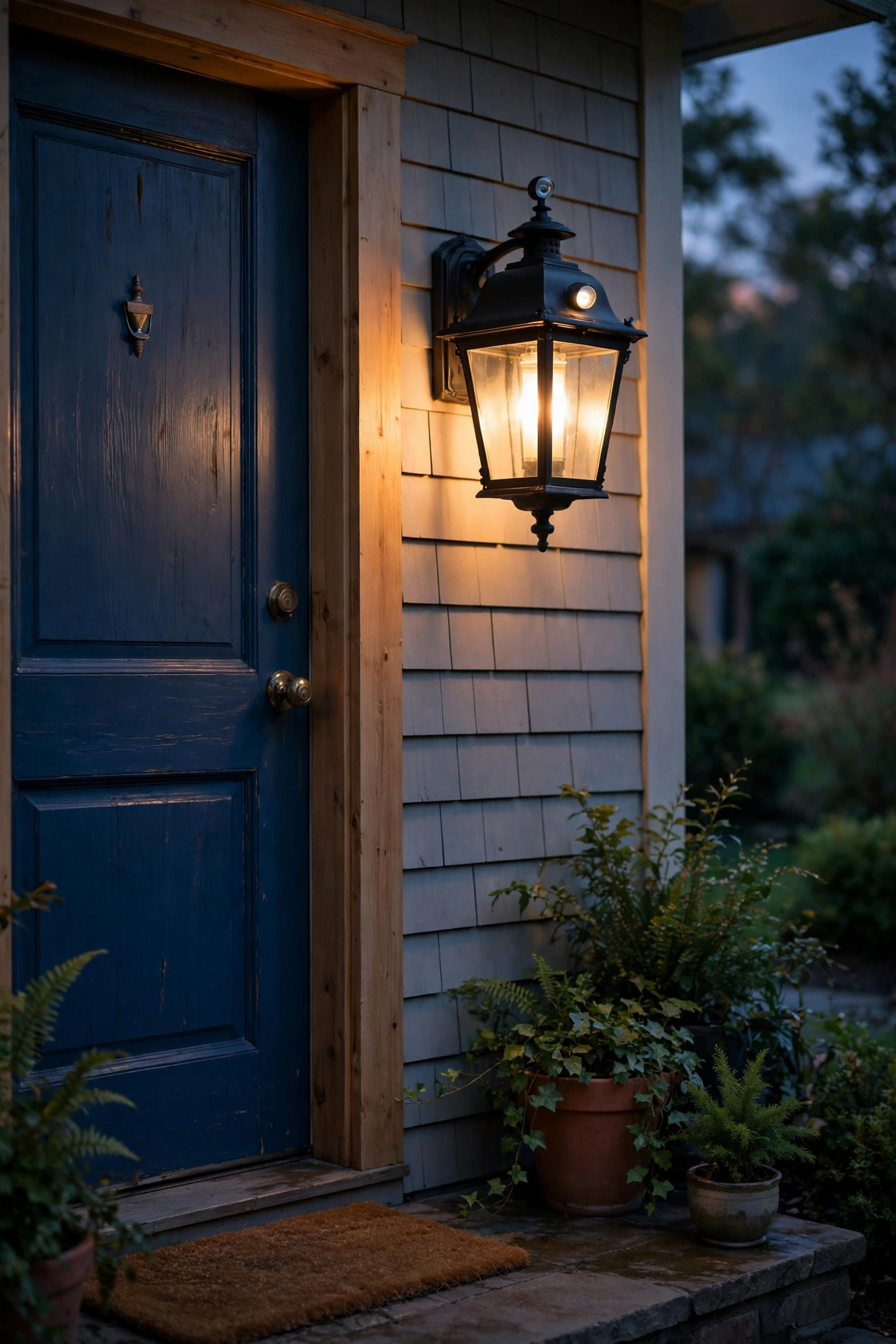
A driver carrying a large box cannot see their own feet. That is the whole case for step lights, and it is a strong one. Small recessed lights in step risers, low wall-washer fixtures aimed at the treads, or solar step lights stuck to each riser edge put a soft pool of light exactly where each foot lands. Space them on every step for short runs, or every other step on longer, gentler stairs, and keep the color warm — 2700K reads clearly without glare.
Solar step lights have become the renter-friendly favorite: peel, stick, done, with a small panel that charges all day. Wired low-voltage versions are brighter and more consistent through winter. Either way, test the route yourself at night carrying something bulky — if you are watching your feet, the driver is too, and one more light is cheaper than one twisted ankle. As a bonus, step lights outline your porch architecture beautifully; guests comment on them far more than on fixtures ten times the price.
Suggested budget range: $25 – $100.

9. A Softly Lit "Deliveries Here" Sign
Sometimes the kindest thing you can do for a driver is just tell them where the box goes. A small, tasteful "Packages" or "Deliveries" sign — a wooden plaque by the door, a stencil on your drop box, or a little sign tucked into the planter — works twice as well when it is lit. A tiny solar spotlight aimed at the sign, or a solar sign with backlit lettering, makes the instruction readable from the walkway without a word being exchanged.
Keep the lettering large, at least 2 inches tall, and high-contrast; script fonts are lovely on Pinterest and useless at 15 feet in the rain. Mount the sign at about chest height in the driver's natural sightline as they approach, usually on the wall beside the door or on the drop box lid itself. This is a small idea, I know, but in my experience it dramatically cuts down on packages left in creative places — the side gate, the garage door, behind the shrubbery where you find them three days later, damp.
Suggested budget range: $20 – $60.

10. Recessed Lights Under the Porch Eave
If your porch has a solid ceiling or deep eave, recessed downlights are the cleanest delivery lighting of all. Two to four small LED can lights or slim surface-mount discs spread an even wash over the whole porch — no shadows behind the planter, no dark corner by the door, nowhere a package can hide from you or the camera. Drivers get a brightly lit, unmistakably "correct" front door, which sounds like a small thing until you have watched a delivery photo taken on a shadowy porch.
Keep spacing at roughly 4 to 5 feet apart and position at least one light directly over the drop zone rather than centered decoratively over the doormat. Choose fixtures rated for damp locations, and if the eave is open rather than a closed ceiling, wet-rated. A warm 3000K color temperature keeps the look residential. This is the one idea on the list that often means an electrician for an hour — worth it, in my book, because recessed lights are essentially permanent, need no bulb changes for years, and make every other layer on the porch look better.
Suggested budget range: $150 – $450.

11. Timer-Scheduled Lights for Your Delivery Windows
You probably know your delivery rhythms better than you think: groceries Tuesday evening, the big parcel days, the meal kit that always lands before seven. A timer — an outdoor smart plug, a photocell timer, or a simple dial timer on the porch circuit — lets your lights burn bright during those windows and rest the rest of the time. Set the porch to full welcome mode from, say, 5 p.m. to 10 p.m., then drop to a soft overnight glow.
Smart plugs rated for outdoor use add app control, so when a tracking notification says "out for delivery," you can brighten the porch from the couch. I walk through schedules and hardware options in my outdoor lighting timers and automation guide, but even a basic setup pays off: lights that are reliably on when drivers arrive mean packages land in the right spot, and lights on a schedule also make the house look occupied when you travel. Astronomic timers are the connoisseur's pick — they adjust to sunset automatically all year, so your 5 p.m. setting in December is not a 9 p.m. setting in June.
Suggested budget range: $15 – $60.

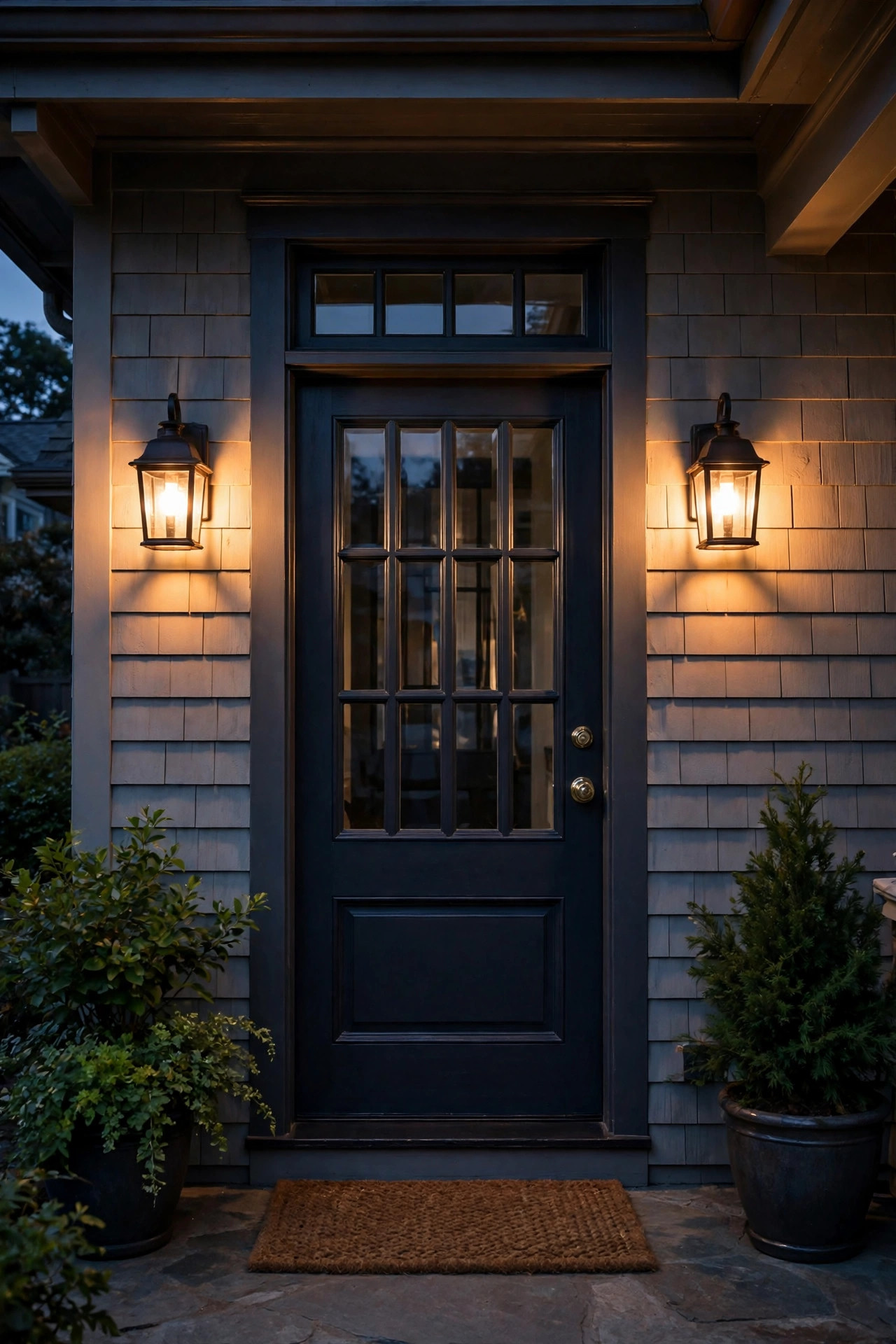
12. A Matching Sconce Pair Flanking the Door
One lopsided lantern is porch lighting; a matched pair of sconces is a welcome. Two fixtures flanking the door at about 66 inches from the porch floor — roughly eye level — frame the entry in balanced light, which matters for deliveries in a very practical way: even light means no deep shadow on either side of the door for a package to disappear into, and your doorbell camera sees the whole scene without one side blowing out white.
Solar and battery sconces have made this a no-wiring project; a decent pair charges by day and gives you a warm 6 to 8 hours of evening light, with motion-boost models brightening when a driver approaches. Hardwired pairs are brighter and steadier, and on a photocell they join the dusk-to-dawn team. Size the fixtures to your door: each sconce should be roughly one-quarter to one-third the height of the door. Too-small sconces are the most common porch mistake I see — they read as candlelight, charming but not useful to a driver scanning for the right house at dusk.
Suggested budget range: $45 – $180.
13. A Ground-Level Uplight Washing the Porch Front
This is the layer most people forget: a low spotlight at ground level, tucked into the planting bed and aimed up at the porch front. It does three quiet jobs. It silhouettes the porch edge so a driver crossing the lawn can judge the step up. It washes the house numbers and drop zone in grazing light that reads from the street. And it makes the whole entry look intentional and layered, the way professionally lit homes do.
A single low-voltage well light or a solar spotlight with an adjustable head is enough for most porches; angle it at about 30 degrees and keep it out of the direct line of sight so nobody gets glare in the eyes. Keep the fixture at least 12 inches from siding and plants, and use LED only — older halogen spots run hot near mulch, which is a safety note worth repeating. In winter, brush snow off the lens after storms; a buried uplight is just garden decor until spring.
Suggested budget range: $20 – $80.

14. A Smart Bulb That Blinks When a Delivery Lands
Now for the fun one. A smart bulb in your porch fixture, paired with your doorbell or delivery notifications, can change color or pulse gently when a package arrives — amber blink for "delivered," back to warm white after. You get an instant, silent alert visible from the living room or the street, and you can bring the package in promptly instead of discovering it hours later. Quick retrieval is quietly the most effective anti-theft habit there is; a package that sits for ten minutes rarely gets stolen, while one that sits for six hours might.
Setup takes minutes: screw in the bulb, pair it with your home hub or doorbell app, and build the routine. Keep the everyday color at 2700K warm white so the porch still looks like a porch, not a signal tower. Battery-backed smart bulbs even survive short power cuts, keeping your alert system alive on stormy nights when deliveries matter most. Is it essential? No. Is it delightful and genuinely useful? In my experience, absolutely.
Suggested budget range: $15 – $50.

15. The Layered Setup: Porch Lighting for Deliveries, Done Right
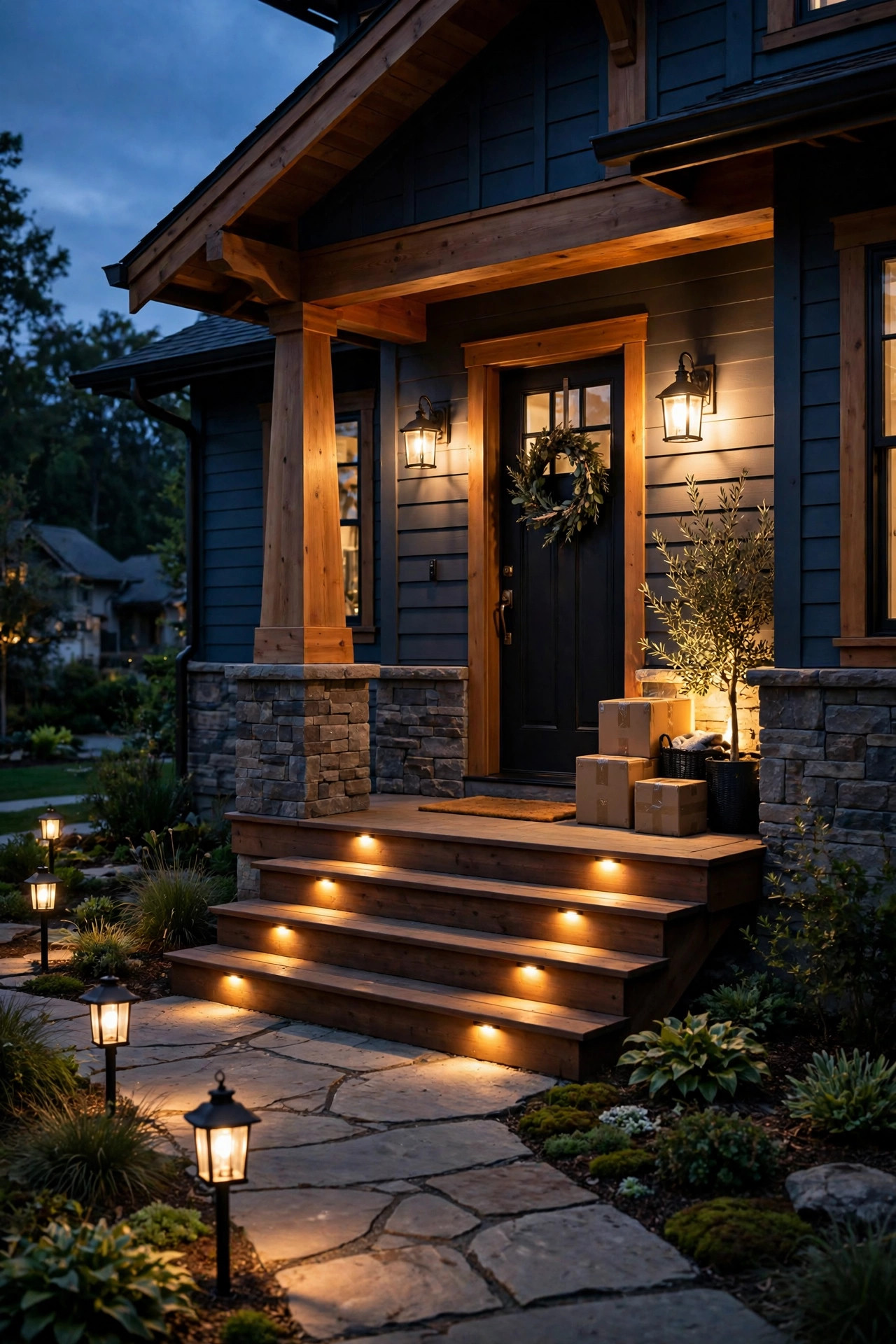
If you take one idea from this whole list, take the combination. The porches that handle deliveries best — where drivers stop at the right house, climb safely, drop the box in the right spot, and photograph it clearly — are layered: a dusk-to-dawn baseline lantern or sconce pair for the warm "occupied" glow, a motion-activated task light over the drop zone for the working brightness, and the small guides — path lights, lit numbers, step lights — connecting street to door. No single fixture has to do every job, so none of them has to be harsh.
Build it in an evening if you like: start with the baseline light and the numbers, since findability fixes the most deliveries. Add the motion light over the drop zone next, then steps and path as budget allows. Stand at the street when you finish, box in hand, and walk your own delivery route. If every step feels obvious and safe, you have nailed it — and your drivers will quietly thank you with every perfectly placed parcel.
Suggested budget range: $150 – $500.
Frequently Asked Questions
How bright should porch lighting for deliveries be?
For the drop zone itself, aim for a combined 800 to 1,500 lumens — roughly one good LED porch fixture plus a motion light. That is enough for a driver to read labels, see steps, and take a clear delivery photo. The rest of the porch can stay softer; you want one clearly lit "stage" where packages land, not a porch lit like a stadium.
Are solar lights reliable enough for delivery lighting?
For path lights, step lights, and small accents, yes — modern warm-white solar fixtures with a decent panel give a solid 6 to 8 hours after a sunny day. For the main drop-zone light, I still prefer wired, dusk-to-dawn, or battery fixtures, because a cloudy stretch in December is exactly when you most need dependable light. Mixing both is the practical sweet spot.
Will bright porch lights bother my neighbors?
They shouldn't if you aim them correctly. Keep floodlights angled down at your own porch floor, choose 2700K to 3000K warm-white bulbs instead of blue-white ones, and use motion activation or timers so the brightest light is brief. Shielded fixtures that throw light down rather than out solve nearly every glare complaint before it happens.
Do I need an electrician to set up delivery-ready porch lighting?
Usually not. Solar path and step lights, battery sconces, smart bulbs, and plug-in timers cover most of this list with zero wiring. An electrician earns their fee for recessed eave lights, new hardwired fixtures where no junction box exists, or anything involving a new circuit — an hour or two of labor for a permanent, weather-safe result.
Conclusion
Great porch lighting for deliveries is really just hospitality, aimed at the person carrying your box: findable numbers, a safe path, a bright and obvious place to set things down. Start with one layer this weekend — my pick is the motion light over the drop zone — and you will feel the difference with the very next delivery. Then browse more of my porch and entry lighting ideas here on the site and build your layers out, one cozy glow at a time.