There is a golden stretch in late August and early September when the evenings turn just cool enough for a sweater, the tomatoes are finally ripe, and I refuse to let summer slip away without a few more nights outside. Honestly, this is my favorite time to be in the yard, and the right late summer backyard lighting ideas make all the difference between a yard that feels finished for the season and one that begs you to stay out past dark. The secret is the same layering I use all year: a soft overhead layer for general glow, a middle layer at eye level for faces and food, and a low layer that marks paths and steps so nobody trips carrying a plate. For this last-hurrah roundup, I have gathered the setups I lean on when sunset creeps earlier every week — quick wins you can hang in an afternoon, cozy firelight for cooler nights, and a few party-ready tricks for one big send-off. Most use lights you probably already own, just rearranged with fresh eyes. Let us squeeze every last drop of light out of this season.
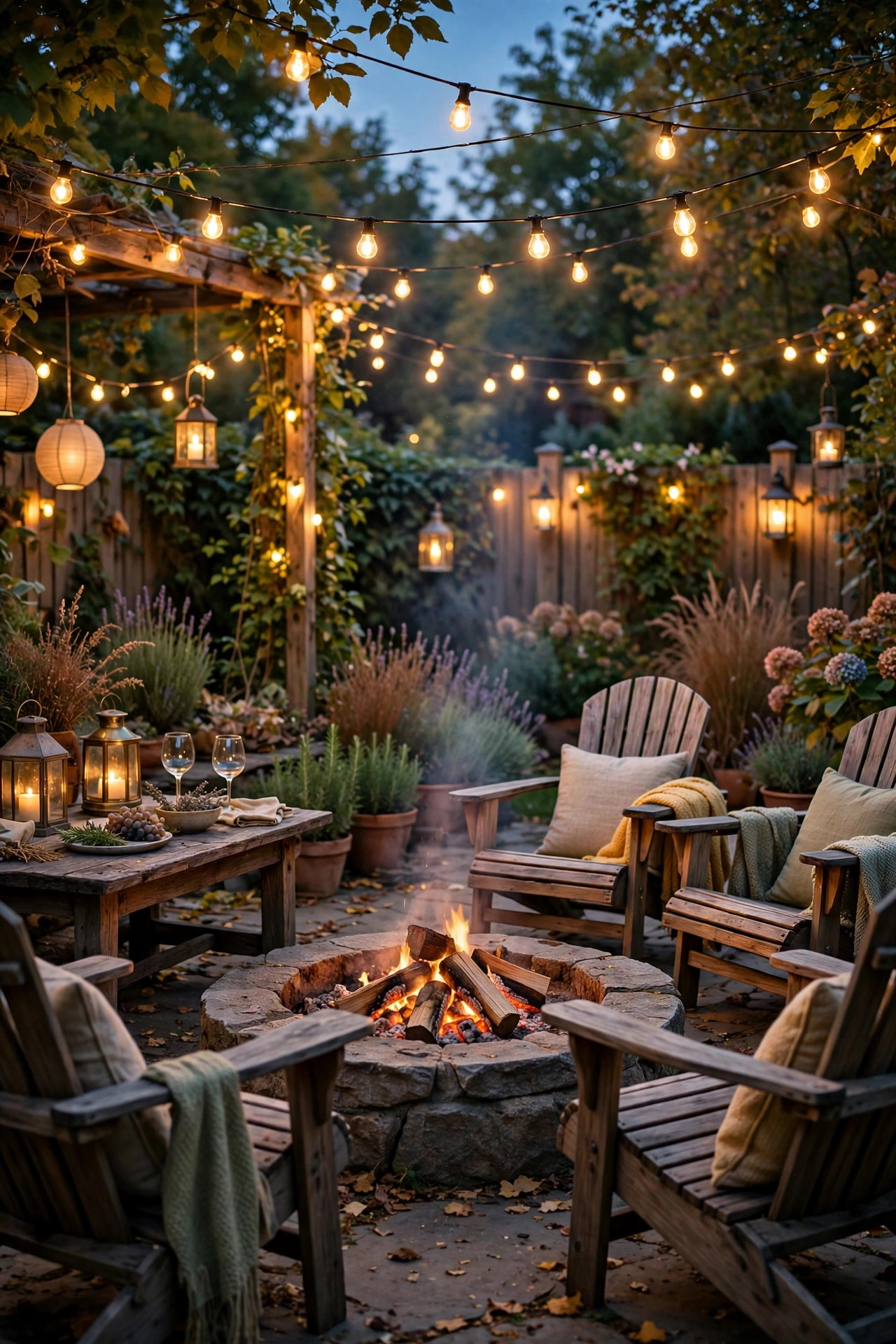
1. String-Light Canopy: The Heart of My Late Summer Backyard Lighting Ideas
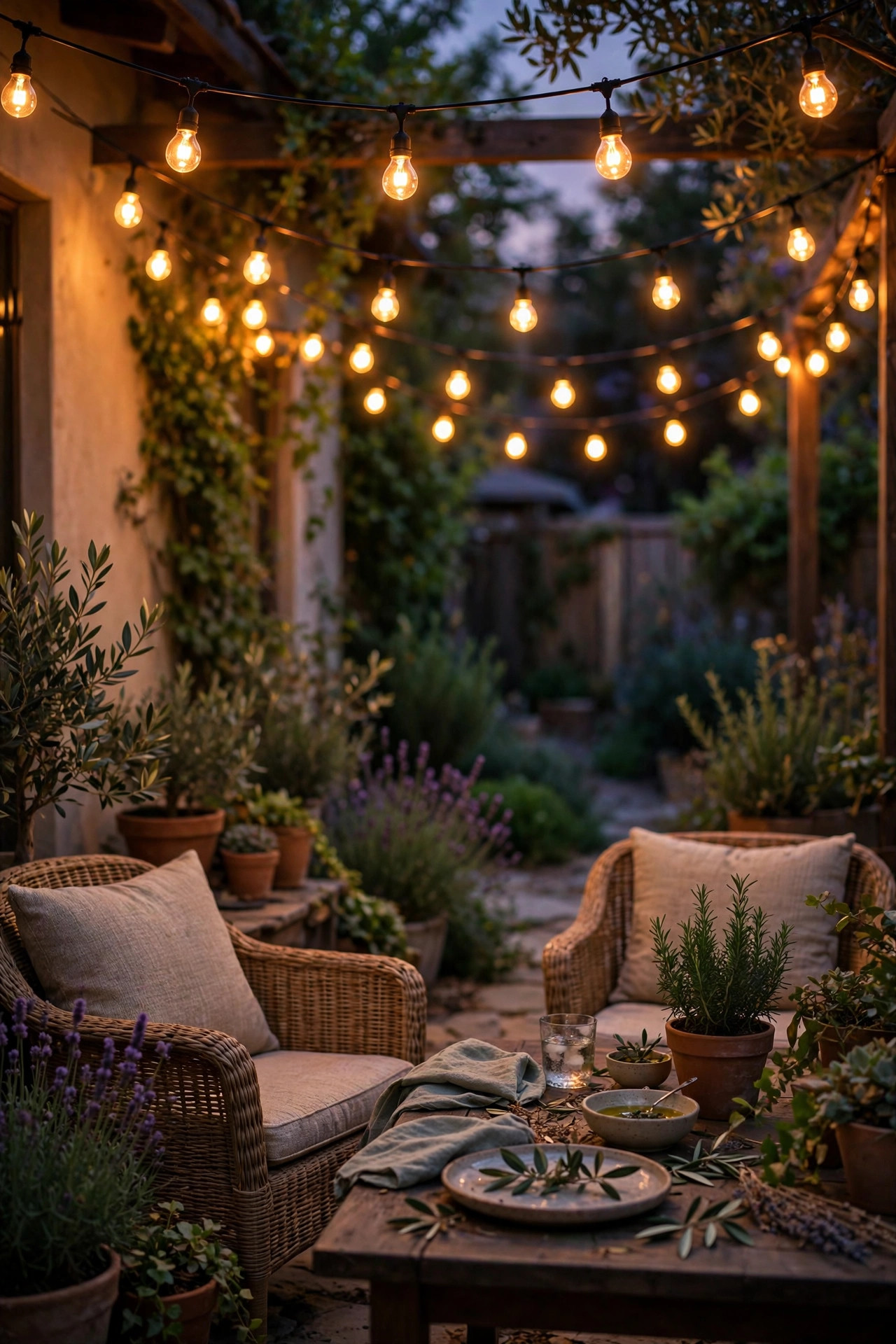
If you only do one thing on this list, do this. A canopy of café string lights instantly turns a plain patio into a room, and it is the backbone of nearly every late-summer night at my house. I run two 48-foot strands of commercial-grade LED string lights in a gentle X across our 12-by-14-foot patio, anchored to the house fascia on one side and to two 9-foot poles set in heavy planters on the other. Let each strand sag about a foot in the middle so the lowest bulbs sit roughly 7½ to 8 feet up — high enough to walk under, low enough to feel intimate. Space bulbs about 24 inches apart, and stick with warm white around 2700K; anything cooler reads like an office, not a garden party. Put the whole canopy on an outdoor dimmer plug so you can drop it to a candlelight level once everyone is seated. Always plug into a GFCI outlet, and use guide wire if your span is longer than about 15 feet so the weight rides on the cable, not the sockets. For hanging patterns and hardware details, I keep coming back to the tricks in my guide to backyard string light ideas.
Suggested budget range: $35 – $90.
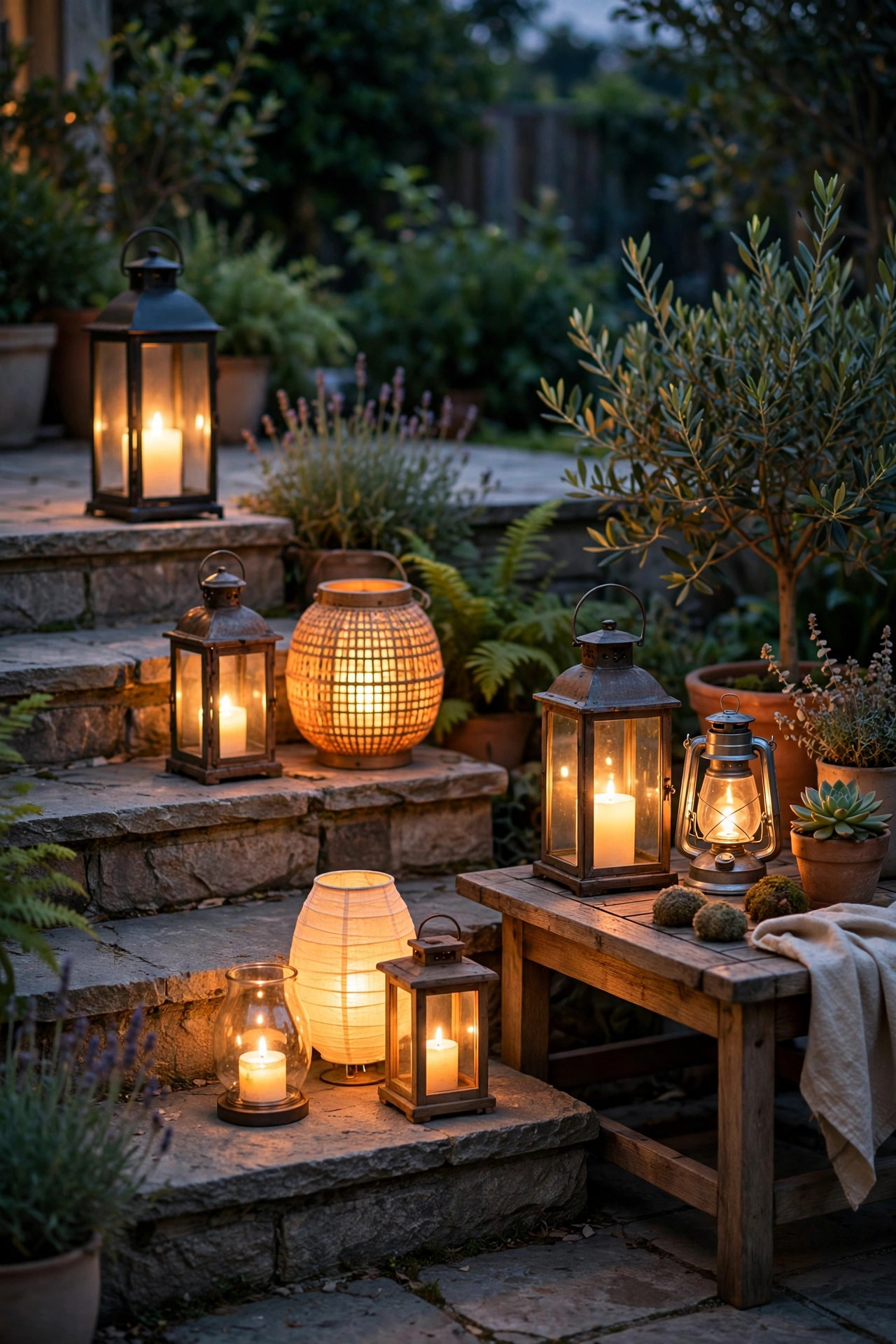
2. Cluster Lanterns at Three Heights
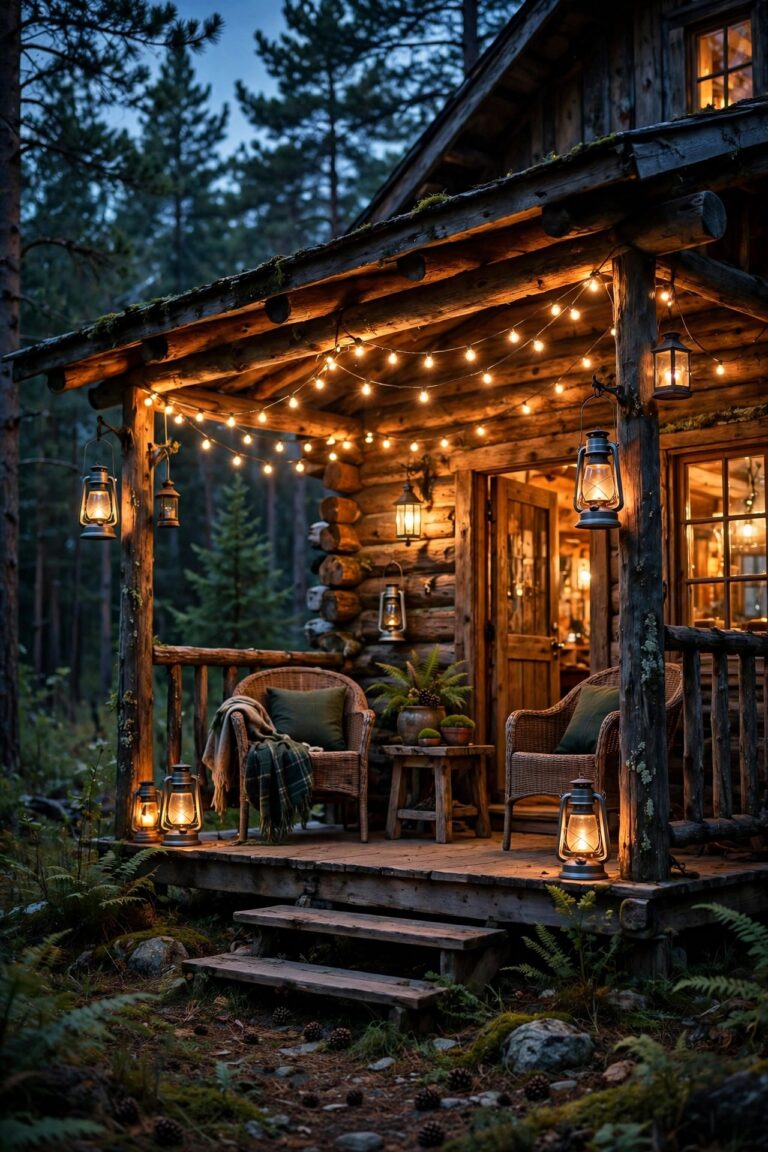
A single lantern looks lonely; a cluster looks designed. My rule is three heights at once: tall lanterns on the ground flanking the steps, medium ones on side tables, and small ones hanging from hooks or low branches above. Group them in odd numbers — threes and fives — and vary the sizes within each group, something like 12, 18, and 24 inches tall. Inside, I use flameless LED candles with a built-in timer, because real candles in late-summer breezes are a babysitting job and an open flame near dry August grass makes me nervous. Set the timers for six hours starting at dusk and they will greet you every evening without a thought. Clear glass hurricanes give a crisp, modern sparkle; seeded or amber-tinted glass softens everything for a more vintage mood. Tuck a sprig of greenery or a few river stones in the base to anchor the look. I scatter four or five clusters around the yard — by the seating, near the gate, on the buffet table — so the whole space feels dotted with little campfires. It is the fastest layer to set up and the one guests compliment most.
Suggested budget range: $25 – $75.
3. Ring the Fire Pit With a Low, Warm Glow
Late-summer nights are fire pit nights — finally cool enough to enjoy one without melting. The fire itself is the star, so everything around it should stay low and quiet. I ring the seating circle with short lantern stakes and a few squat jars holding flameless candles, set at least 3 feet back from the pit edge, well outside spark range. This low ring does two jobs: it defines the gathering circle so the space feels intentional, and it gives just enough light to find your seat, your drink, and the marshmallow sticks without ruining the firelight. If your pit sits on a patio, a circle of low-voltage well lights aimed outward from the base works beautifully too. Keep one brighter lantern on a side table for task light — someone always needs to see the graham crackers. Safety first, always: a spark screen on the pit, no strands of lights directly overhead where embers can land, and cords routed behind the chairs, never across the walking path. When the fire dies down to coals, that gentle ring keeps the circle glowing long after.
Suggested budget range: $30 – $85.

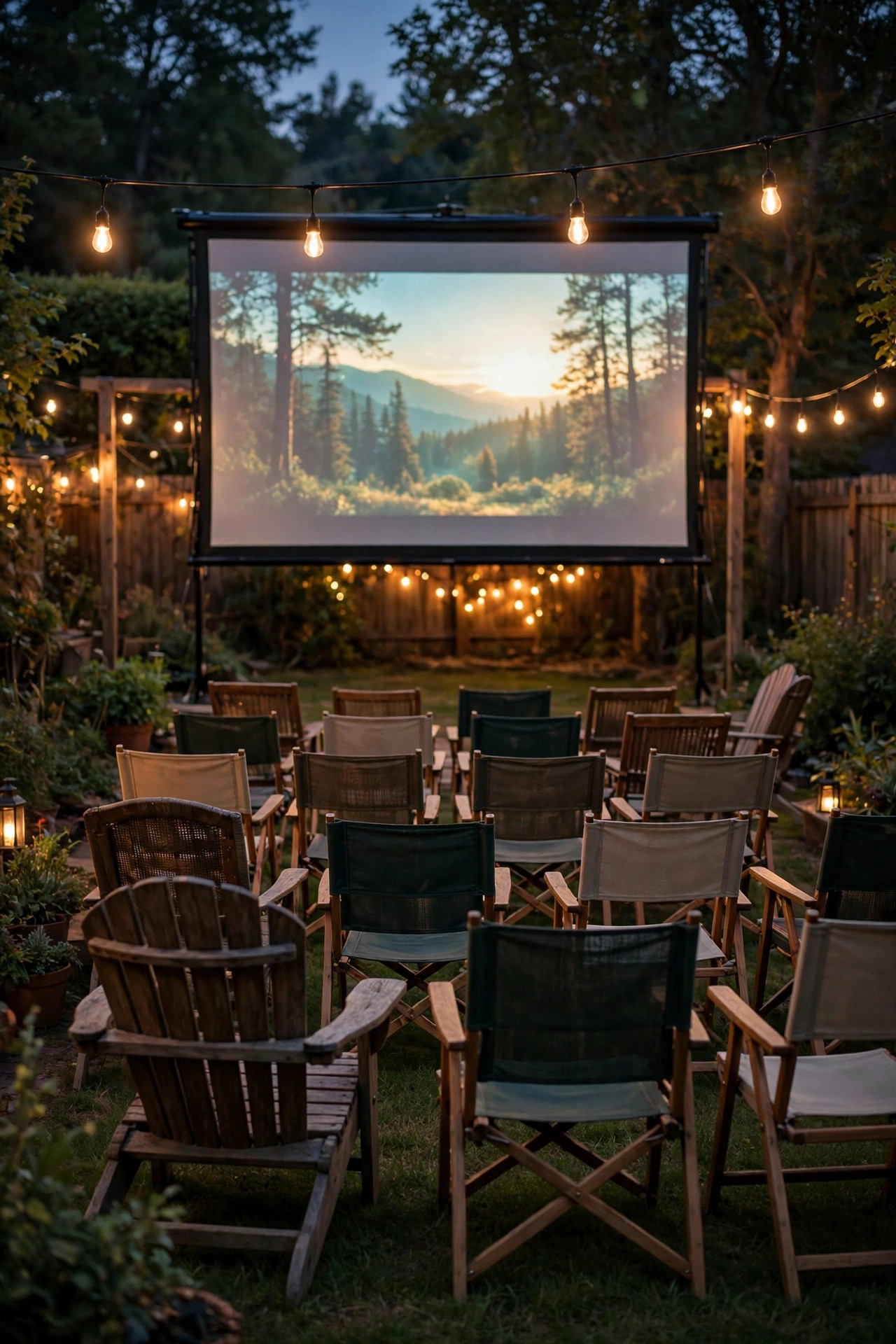
4. Set Up a Movie Night Before the Season Ends
There is still time for one more backyard movie night, and late summer is perfect for it — dark comes earlier, so the show can start by 8:30 and the kids are not up until midnight. Hang a white sheet or a portable screen on the fence, set the projector about 10 to 12 feet back, and then think carefully about light: the screen area needs to stay truly dark, so kill the canopy over that half of the yard. Behind the seating, though, keep a dim strand of string lights at its lowest setting and a couple of lanterns on the ground so people can find the popcorn and the bathroom path without a phone flashlight in everyone's face. Low path markers along the route to the house are the unsung heroes here. Run the projector cord along the fence line, tape down any crossing point, and use a GFCI outlet — non-negotiable outdoors. In my experience the cozy factor doubles if the seating glow stays under about 10 percent brightness. For screen choices and seating layouts, my backyard movie night lighting notes cover the details.
Suggested budget range: $45 – $160.
5. Line the Path With Mason Jar Luminaries
This is the project I make with my nieces every August, and it charms me every single time. Save up wide-mouth quart jars, drop a handful of sand or small pebbles in the bottom for weight, and set in an LED tea light or a solar lid insert. Line both sides of the garden path, staggered every 3 to 4 feet, and the walkway turns into a little river of light. Plain glass is pretty, but a light coat of frosted glass spray on the inside makes each jar glow like a captured moon — softer, and it hides the fake candle mechanism. Because the candles are LED, there is zero fire risk in dry late-season mulch, which is exactly why I prefer them to real tea lights out here. Solar lids charge all day and switch themselves on at dusk; just wipe the little panels every week or so, since late-summer dust and pollen film dim them fast. Cluster three jars at the gate and the front step as a welcome. When the season truly ends, the jars go back to canning duty. Nothing wasted.
Suggested budget range: $15 – $40.
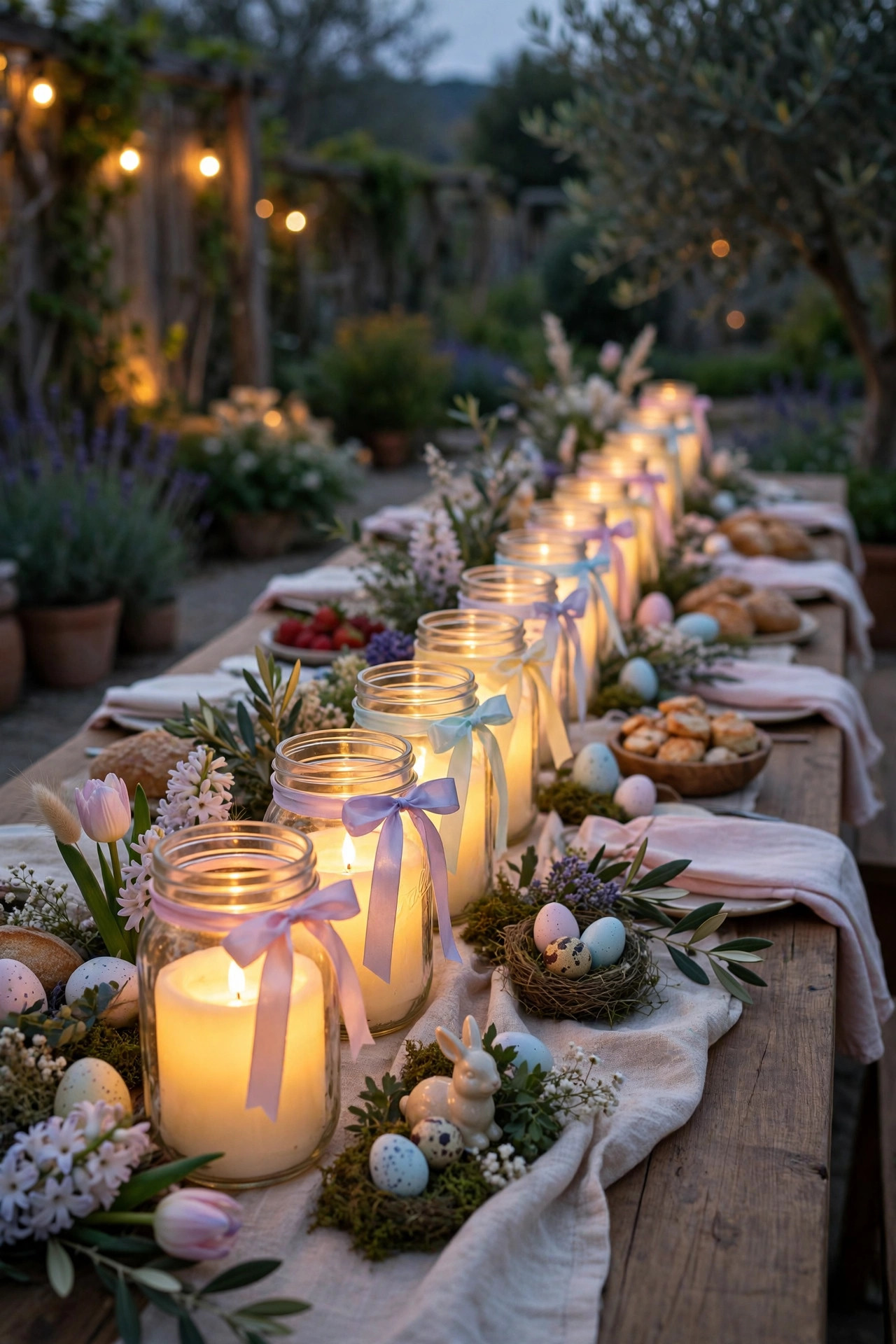
6. Uplight the Late-Blooming Garden Beds
The late-season garden deserves its moment. Hydrangeas going dusky pink, asters and sedum just opening, ornamental grasses catching the last light — a few well-aimed uplights make the beds look like a stage set after dark. I use low-voltage LED spotlights with a narrow 30-degree beam, staked 6 to 12 inches out from the base of each plant and tilted up into the foliage. Warm 2700K light flatters those dusty autumn tones far better than cool white, which washes them gray. Three fixtures per average bed is plenty: one for the anchor shrub, two for texture plants. Graze one light across a stone wall or fence behind the bed and you get depth for free, since the lit plants cast shadows against it. Keep the fixtures themselves tucked behind foliage so guests see the glow, not the hardware. This is also the moment to snip back any growth swallowing your existing path lights — by late August, mine are always half-buried in hosta leaves. Fifteen minutes with pruners and the whole system looks newly installed.
Suggested budget range: $30 – $95.
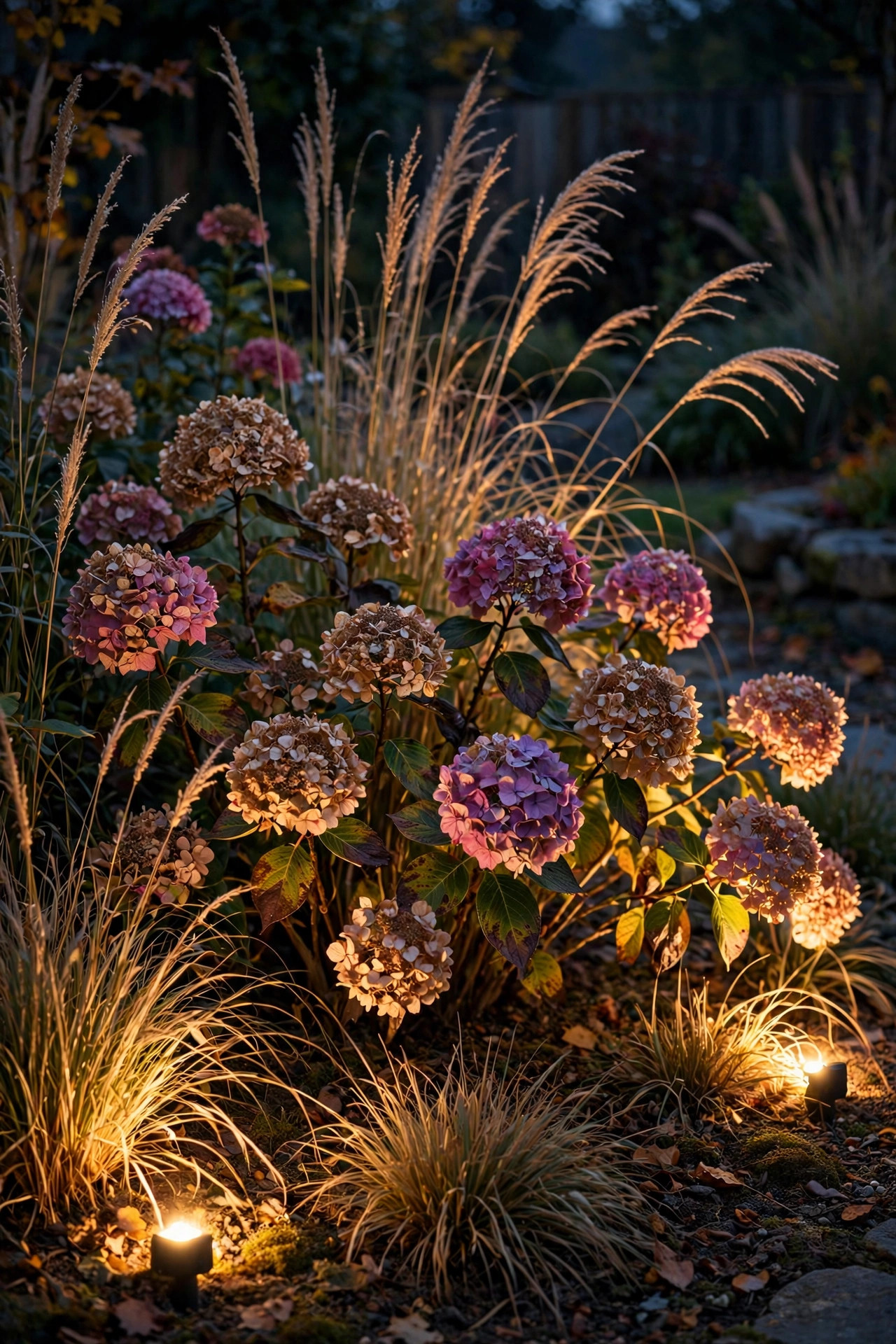
7. Add Solar Path Lights for the Walk Back In
By late August, sunset has crept from 8:45 to nearly 7:45, and the walk from the fire pit back to the house gets darker than anyone expects. Solar path lights are the cheapest insurance against a twisted ankle on a sprinkler head. I stake them every 5 to 6 feet along the main route, staggered on alternating sides rather than in a runway-straight line — it looks more natural and lights the walking surface better. Understand what you are buying: most decorative stakes throw 10 to 15 lumens, which reads as a marker glow, not real illumination. For a path people actually navigate, look for 50 lumens or more per fixture, or mix in a few brighter low-voltage spots at steps and grade changes. After a full summer, give the solar panels a proper wash with soapy water; that dusty film can cut charging dramatically. In my experience, lights that were fading by 10 p.m. in July often run past midnight again once the panels are clean. Pull the dimmest two or three now and warranty them before fall.
Suggested budget range: $20 – $65.
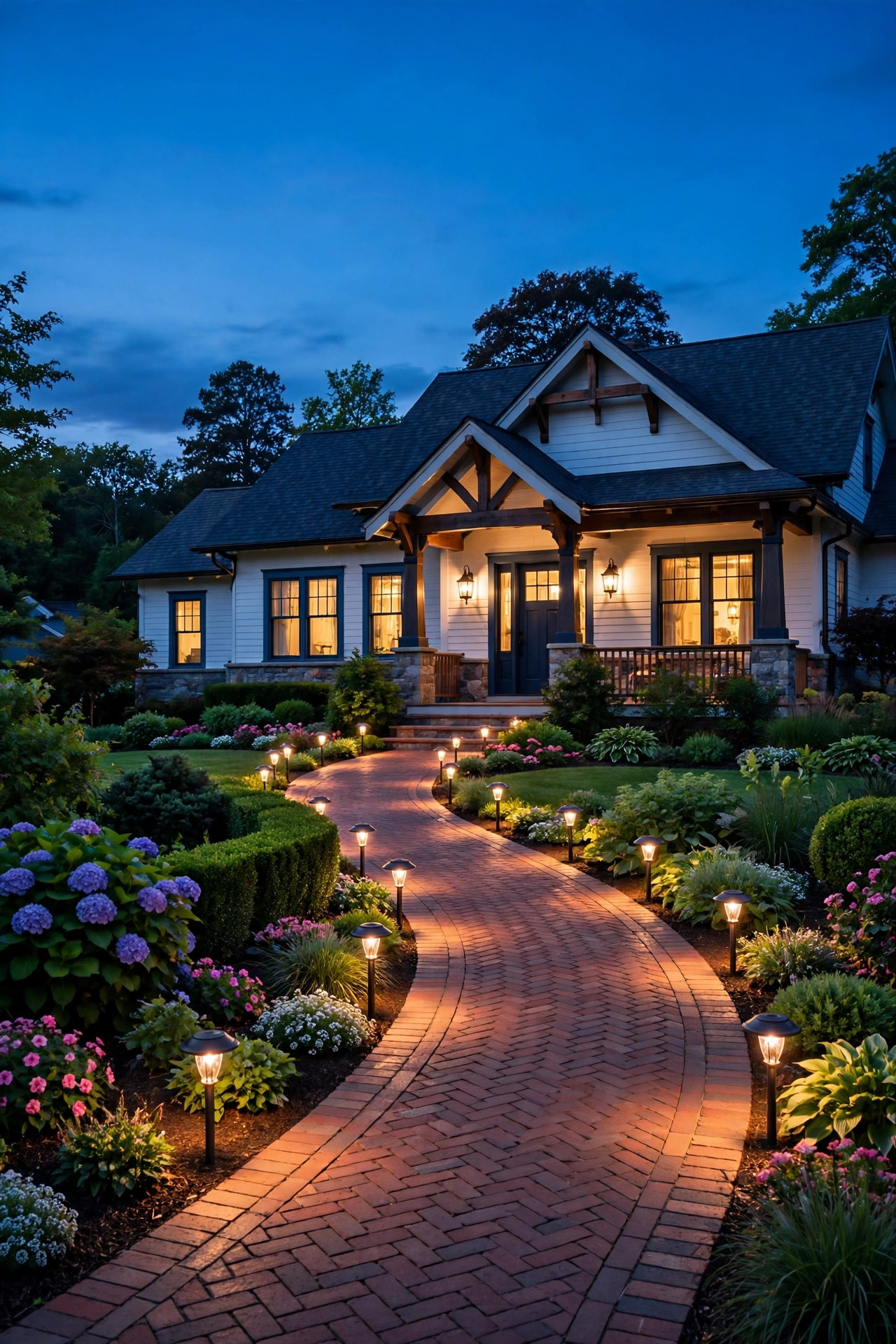
8. Hang Paper Lanterns for a Farewell-to-Summer Party
For the big send-off party, I go festive: paper-style lanterns strung above the buffet and the lawn games. Here is the trick I learned the hard way — buy nylon lanterns, not actual paper. They look identical, fold flat for storage, and survive a surprise rain shower and three seasons of reuse instead of one damp evening. Thread them onto a plain strand under the string-light canopy, or run them on their own line of heavy fishing line with small LED bulb inserts. Mix sizes — 8, 12, and 16 inches — and hang them at varied heights so the arrangement feels gathered, not gridded. Warm white is my classic choice, but a last-hurrah mix of coral, butter yellow, and white is pure late-summer joy. Only ever use LED bulbs inside lanterns; an incandescent bulb against nylon or paper is a genuine fire hazard, full stop. Anchor the ends well, because a lantern line catches wind like a sail. When the party ends, they fold into a single tote, ready to reappear for the first cookout of next year.
Suggested budget range: $20 – $55.

9. Wrap the Trees in Copper-Wire Fairy Lights
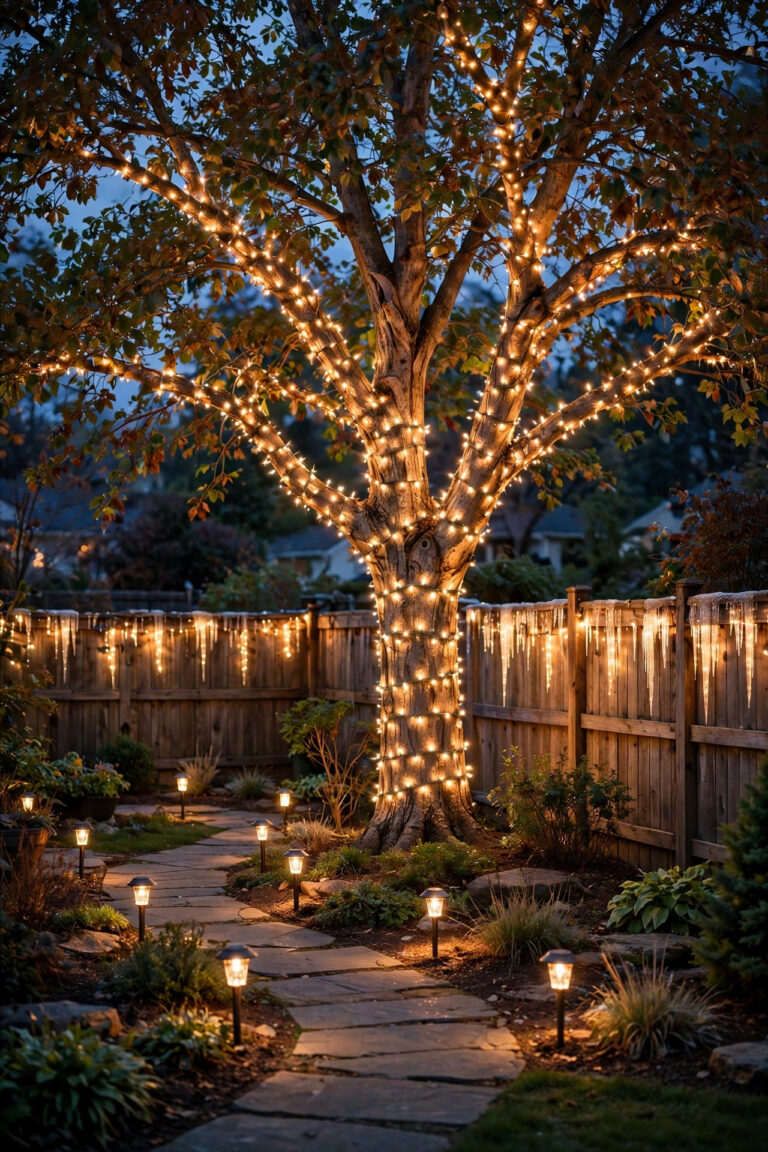
Fairy lights are my weakness, and the end of summer is their finest hour — the trees are still in full leaf, so a wrapped trunk and a few low branches glow like something from a storybook. Copper-wire strands are the easiest to work with: the wire bends and holds, disappearing against bark in daylight. I use 100-LED battery strands, spiraling loosely up the trunk with 4 to 6 inches between wraps, then out along two or three main branches. Loose is the key word — wire cinched tight will girdle bark as the tree grows, so keep it relaxed and plan to take it down before winter anyway. Choose the battery packs with a built-in timer, six hours on and eighteen off, and mount the pack at reachable height on the back of the trunk. Warm white reads classic; the soft amber strands are gorgeous against green leaves. One medium tree takes about three strands and twenty unhurried minutes. Do it once, and I promise it becomes the backdrop of every photo taken in your yard.
Suggested budget range: $15 – $45.

10. Plant Flame-Effect Torches Around the Seating
You know I love a flame effect without the actual flame. Solar torches with a flickering LED flame have gotten remarkably convincing, and late summer is peak season for them — full sun days charge them hard, and they dance away until well past bedtime. I stake them around the seating areas and along the fence every 4 to 6 feet, at slightly varied heights if your model allows, because uniformity kills the illusion. The warm flicker tricks the eye the same way candlelight does, and unlike real citronella torches, there is no fuel to spill, no soot, and no open flame near the kids' sparklers or dry grass. For the porch and patio fixtures, flame-effect LED bulbs in a 2000K amber tone give the same mood in lanterns and sconces you already own. Mix the two — torches out in the yard, flame bulbs near the house — and the layers flicker in conversation with each other. One honest note: cheap versions look like orange plastic by day, so buy a couple, live with them a week, then commit.
Suggested budget range: $35 – $90.
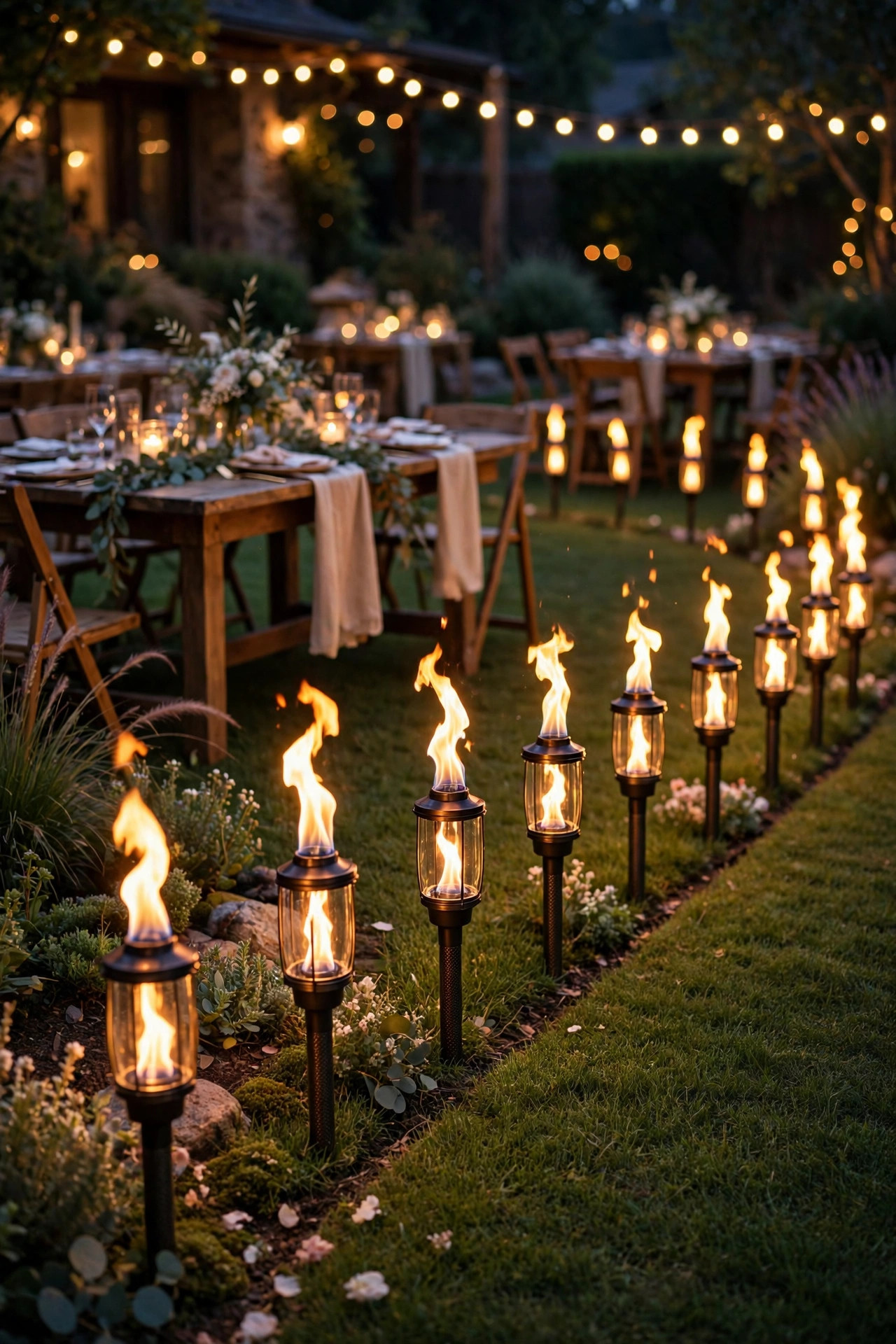
11. Make the Pool or Fountain Glow After Dark
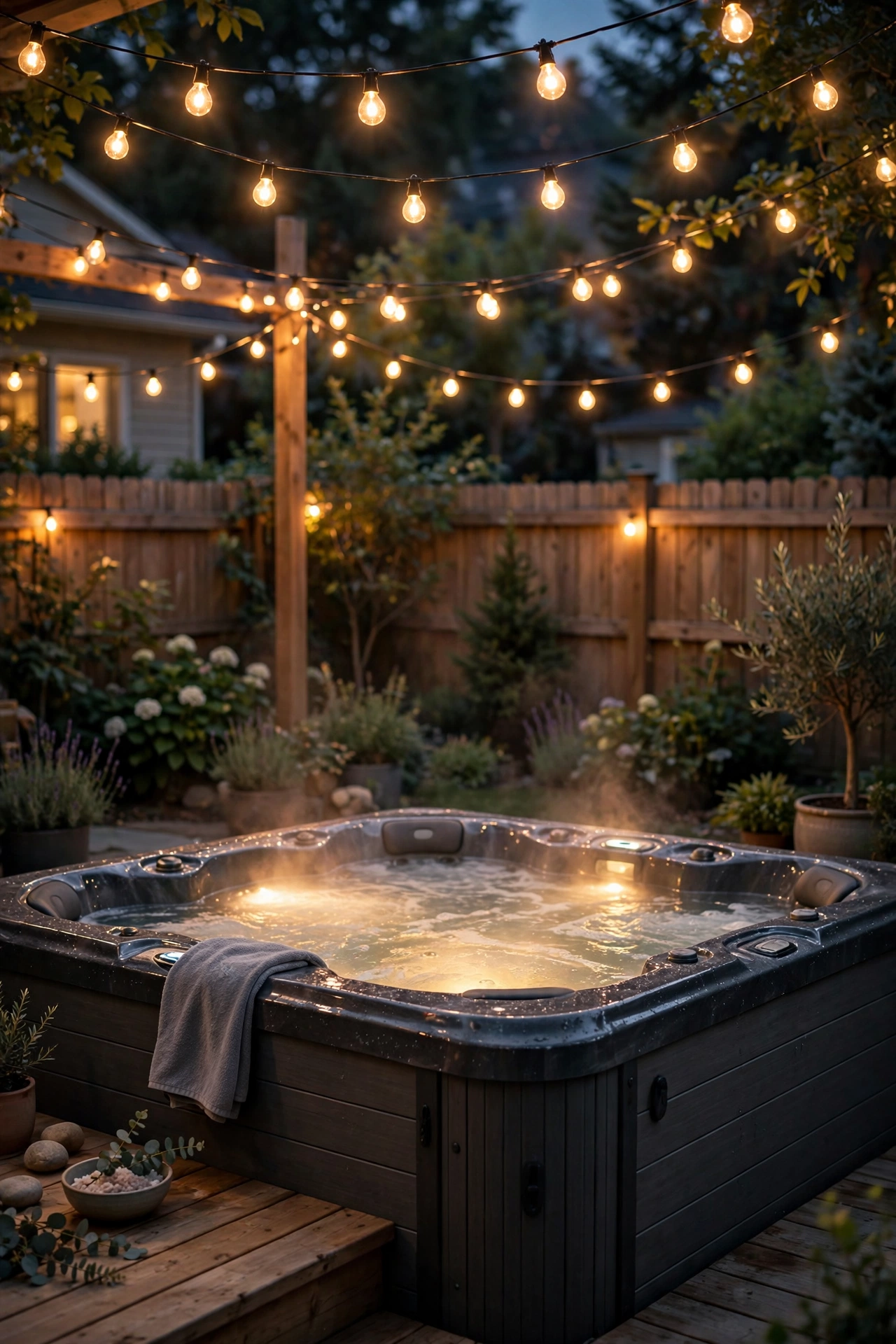
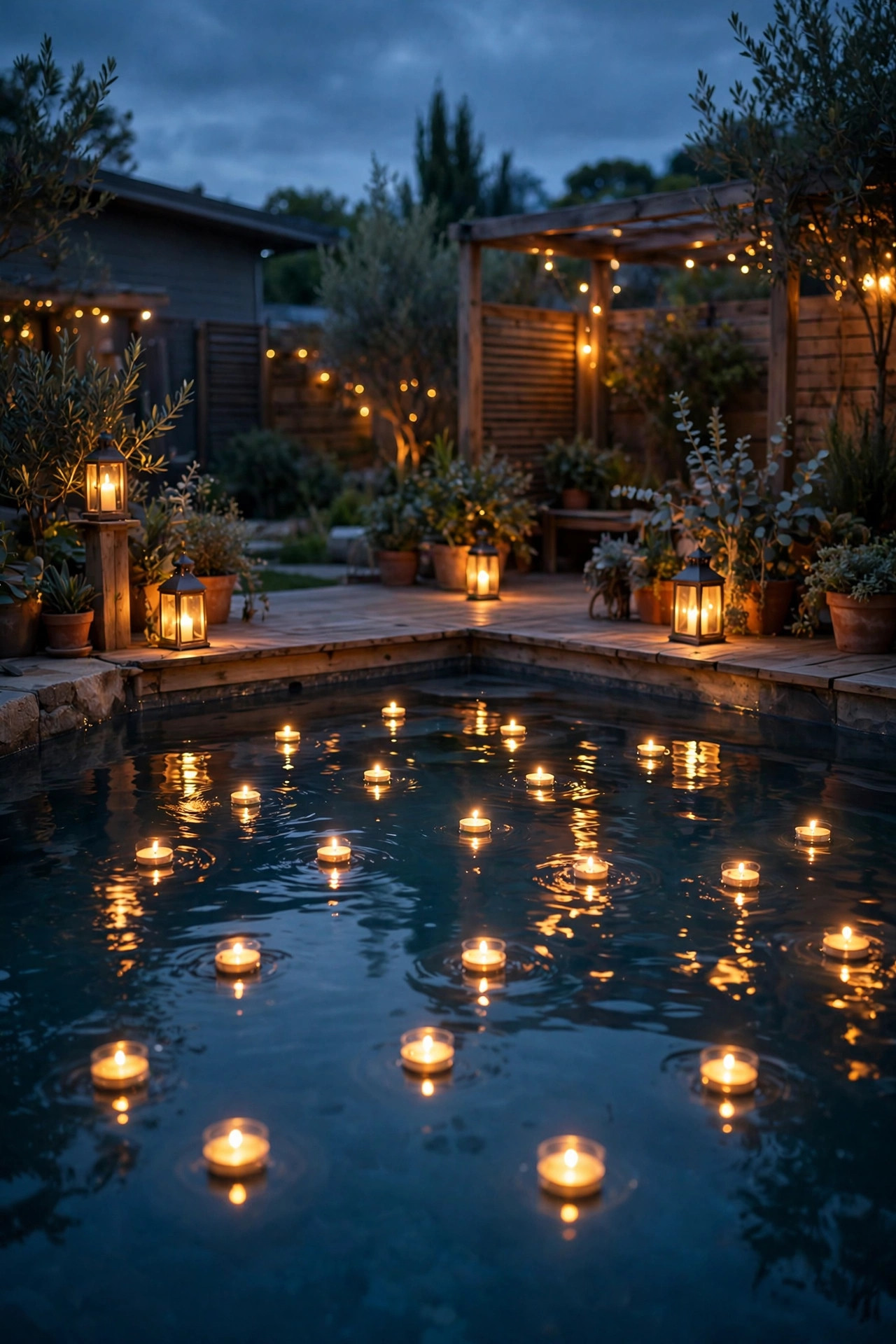
Water plus light is pure magic, and late summer is when we swim latest. If you have a pool, floating solar orbs are the easiest win I know: charge them on the deck all day, toss them in at dusk, and the whole surface shimmers. For a fountain or pond, submersible LED puck lights rated IP68 sit in the basin and wash the falling water from below — it looks like the water itself is lit. Two firm rules from my own near-misses. First, only battery or solar lights ever go in the water; nothing plugged into an outlet belongs anywhere near a pool, and any nearby receptacle must be GFCI-protected. Second, keep the color discipline: warm white looks elegant, while cycling rainbow modes turn a classy yard into a carnival in about ten seconds. One or two pucks per fountain is plenty — water multiplies light. If your late-summer evenings include the hot tub, a single floating orb and the lantern layer on the deck keep it spa-like rather than stadium-like. Pull submersibles out monthly to scrub algae off the lenses; green film dims them fast.
Suggested budget range: $25 – $80.
12. Light a Long Harvest Dinner Table
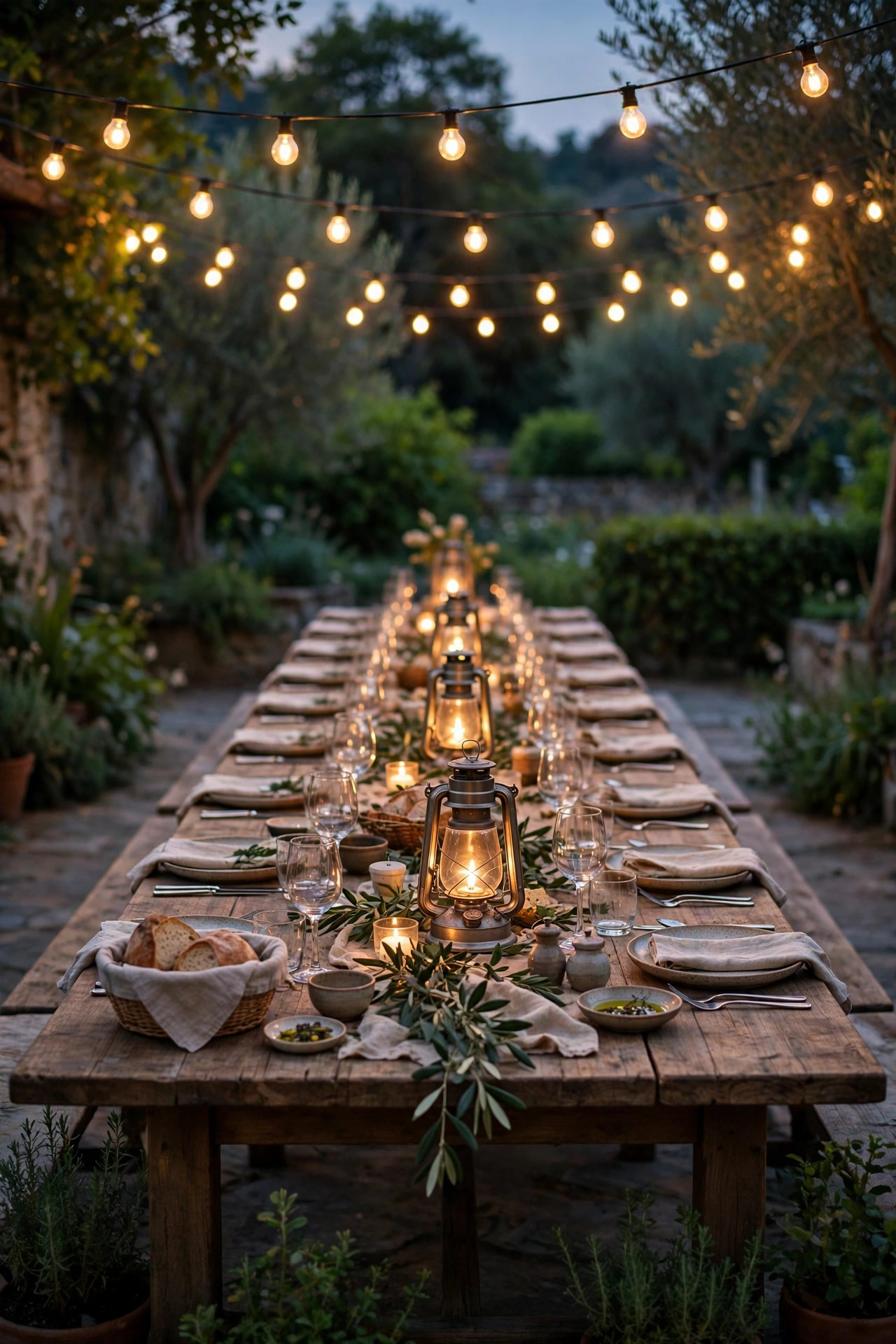
The tomatoes, corn, and zucchini all land at once, and that abundance deserves one long dinner outside before the season turns. Lighting a table well is about faces, not fixtures: light should fall from above and slightly in front of your guests, never from behind them, or everyone becomes a silhouette. I run a single strand of string lights directly over the table's centerline, about 6 feet above the tabletop, then layer a row of low lanterns and flameless candles down the middle runner. Keep flames — real or LED — below eye level when seated, roughly under 12 inches tall, so the glow lights chins and smiles instead of blinding across the table. A dimmer on the overhead strand lets you start brighter for serving and drift down as the evening settles. Set glasses and platters inside the light pool, not at its edges, and the food photographs beautifully. For place settings, timing, and more table layouts, my outdoor dinner party lighting guide is the one I send friends.
Suggested budget range: $30 – $85.
13. Hang Shepherd's Hook Lanterns Along the Fence
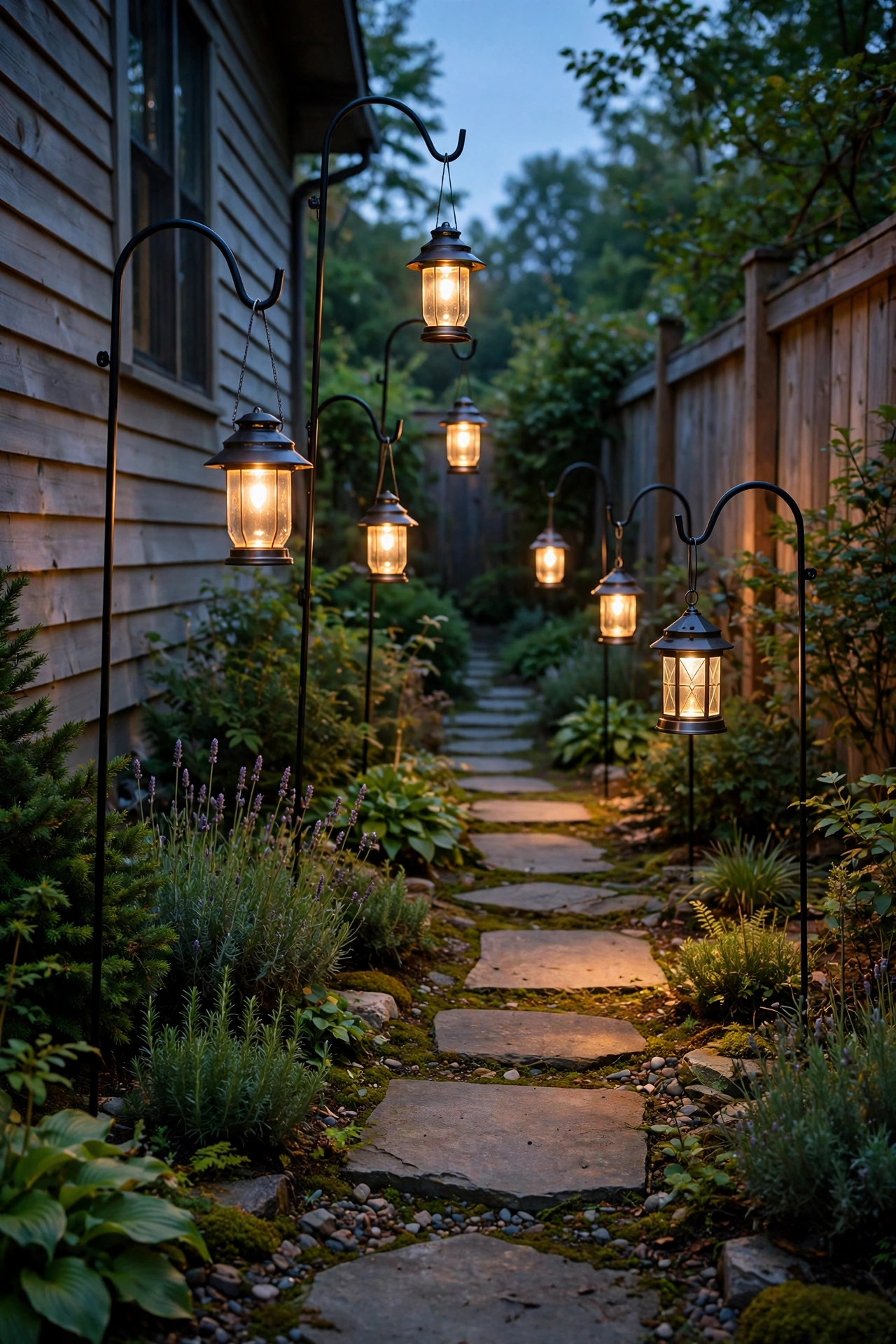
The fence line is the most neglected lighting real estate in most yards, and shepherd's hooks fix it in twenty minutes with no wiring at all. Push 48- to 54-inch hooks into the soil every 6 to 8 feet along the fence, hang a solar or battery lantern from each, and suddenly the yard has a glowing boundary that makes the whole space feel bigger and more finished. Stagger the heights slightly — hooks come in mixed lengths, and a gentle rhythm of high-low-high looks intentional. These lanterns are doing perimeter duty, so choose ones with a decent downward throw that pools light at the base of the fence rather than spraying it at the sky. Solar models with replaceable batteries are worth the small premium in late summer, when shorter days give tired batteries less charging time; swap in fresh rechargeables now and they will sail through fall. In my experience this single row is what makes guests say the yard feels like a boutique hotel. Nobody believes it took one trip to the garden center and a podcast episode's worth of time.
Suggested budget range: $28 – $70.
14. Fake the Moonlight From Your Biggest Tree
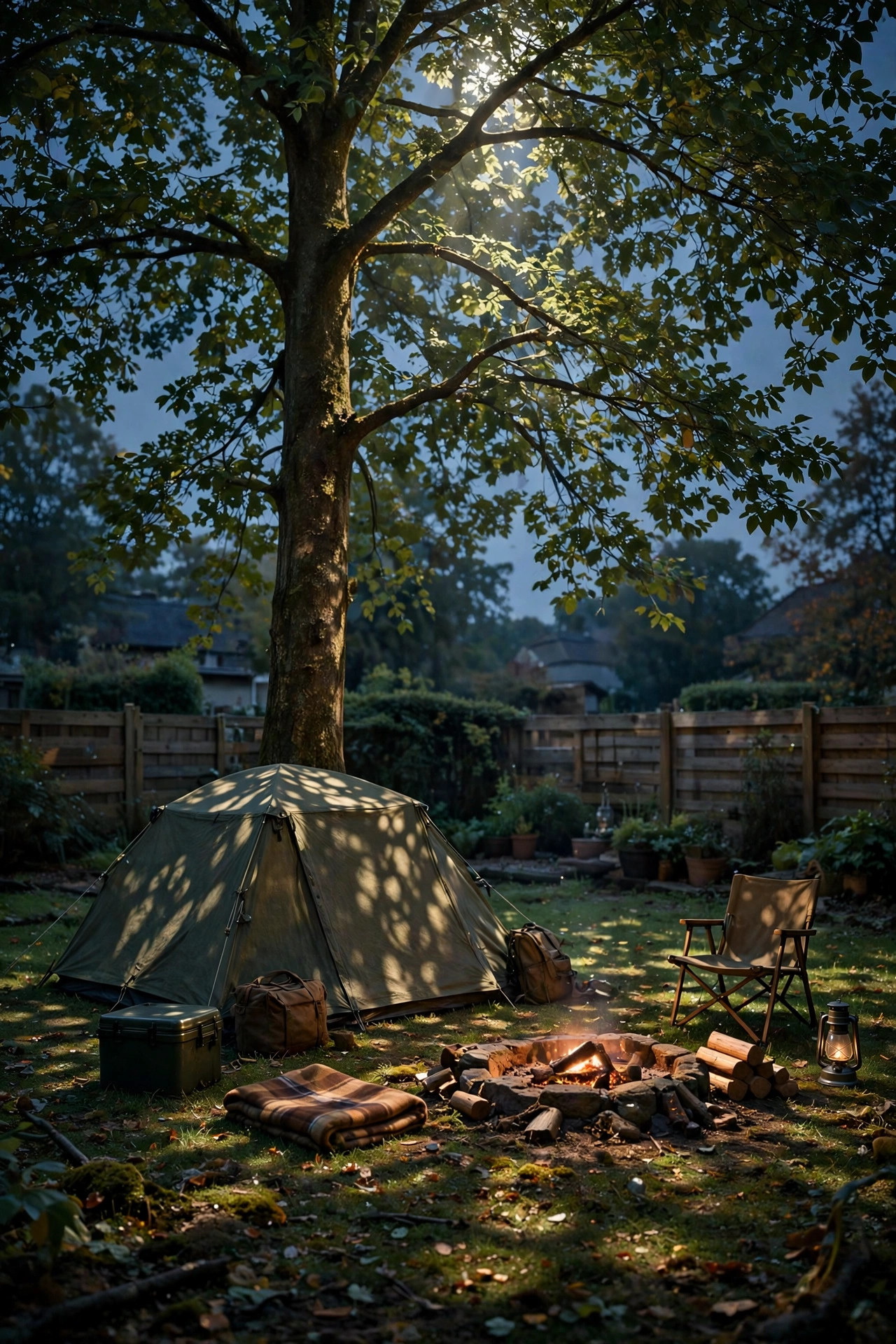
Moonlighting is the most complimented effect in my yard and the one people assume cost a fortune. A single fixture mounted 15 to 20 feet up in your largest shade tree, aimed down through the branches, casts dappled light and leaf shadows across the lawn exactly the way a full moon does. Use a slightly cooler 3000K bulb here — one of the only places I break my warm-white rule — because that faint coolness is what sells the moon illusion. The fixture needs a shield or glare guard so you never see the bulb itself, only its effect on the ground. Honest talk: mounting at that height means a tall ladder or hiring a pro for an hour, and the cable must be secured neatly down the trunk. Do not climb beyond your comfort; this is the one project on the list where paying for installation is money well spent. The payoff is a soft silver canopy over your late-summer seating that makes every other warm light below it look even cozier by contrast.
Suggested budget range: $40 – $120.
15. Swap in Amber Bulbs Where the Bugs Gather
Let us talk about the uninvited guests. Late summer is peak mosquito and moth season, and a bright white porch bulb is basically a dinner bell. Insects navigate by short wavelengths — blues and ultraviolet — and are far less drawn to long-wavelength amber and yellow light. Swapping the bulbs nearest your seating to amber LEDs in the 2000K to 2200K range will not make bugs vanish, but in my experience it cuts the swirling crowd around the chairs dramatically. The second move is a decoy: put one brighter white light at the far edge of the yard, away from people, and let it draw the audience over there instead. Keep task lighting for the grill on its own switch so it only blazes while you are cooking. Citronella candles and a small fan on the patio floor help more than any gadget — moving air genuinely disrupts weak fliers like mosquitoes. Amber light has a bonus, too: that deep honey tone is the most flattering, fireside-looking light of all, perfect for these last golden weeks.
Suggested budget range: $12 – $35.
16. Put It All on Timers as the Sunsets Creep Earlier
Here is the quiet heartbreak of late August: dinner runs long, and suddenly it is dark at the table because sunset moved twenty minutes while nobody was watching. Timers fix this forever. I use an astronomical timer plug for the string-light canopy — it tracks the actual sunset for our zip code and adjusts itself daily, no reprogramming as the evenings shrink. Battery lanterns and fairy strands go on their built-in six-hour timers, and a basic smart plug handles the fence lanterns on a schedule I set once. Stagger the start times by a few minutes so the yard wakes up in layers rather than all at once; it feels like dusk itself is arriving on cue. Set everything to wind down around 11 p.m. — your neighbors and the local birds will thank you, and honestly, a yard that politely dims itself is a yard you use more on weeknights. While you are at it, this is the perfect moment to check that every outdoor connection sits in a weatherproof in-use cover and that no cord crosses a walkway. Five minutes now, zero surprises in September rain.
Suggested budget range: $15 – $50.

17. Pull It All Together: Late Summer Backyard Lighting Ideas for the Big Send-Off Night
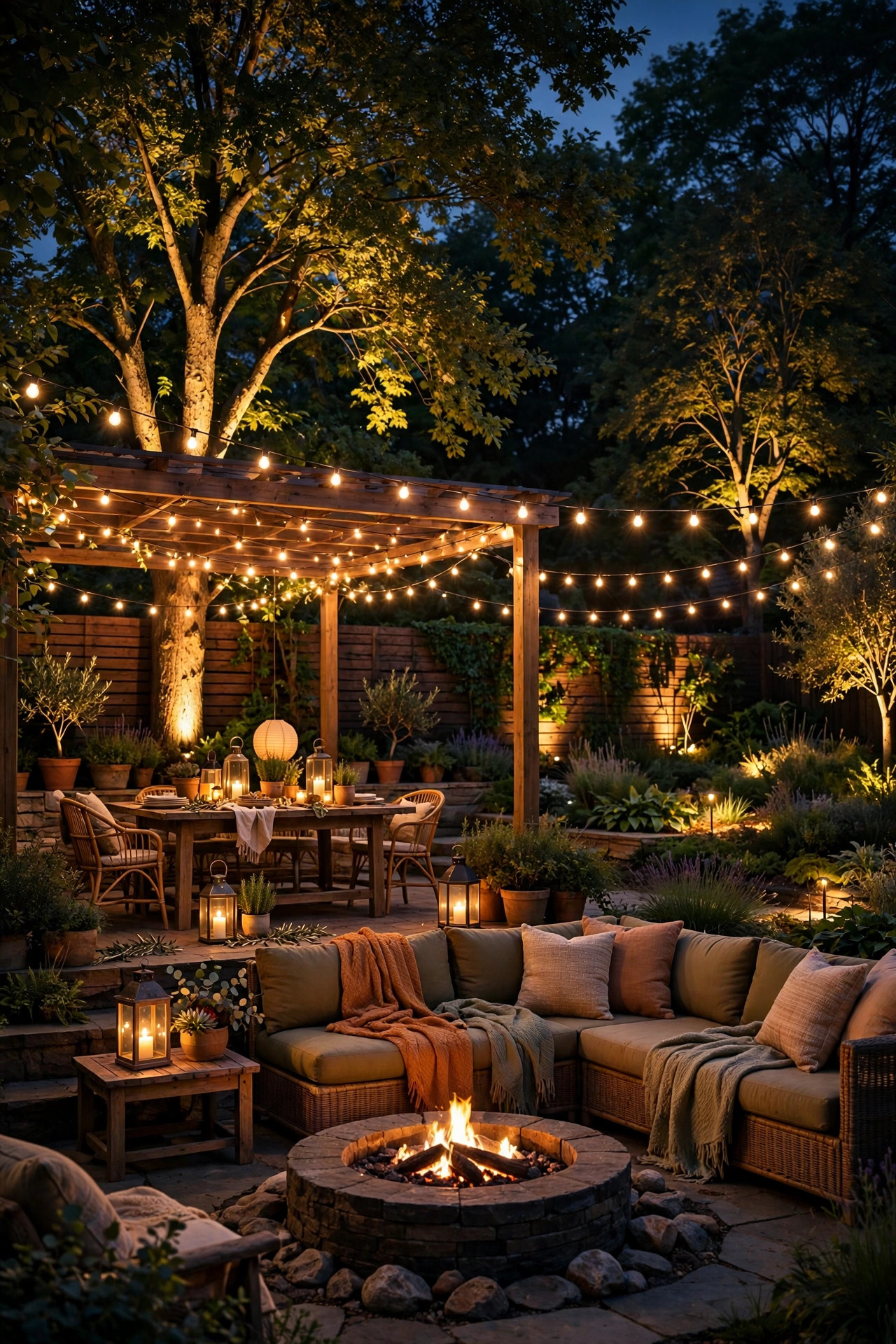
Now assemble the whole orchestra for one great night — Labor Day weekend at my house, and the yard's summer finale. Here is my run-of-show. Late afternoon, I walk the yard: panels wiped, lantern batteries checked, cords taped where they cross the path. At dusk, the canopy comes on first, then the lantern clusters, then the fence row — three layers waking in order. The fire pit gets lit as the light fades, with its low ring already glowing. Trees wear their fairy lights, beds are uplighted, and the pool orbs go in just before guests arrive. Notice what is happening: every layer is simple on its own, but together they add up to the warm, deep, stay-a-little-longer glow people remember all winter. Keep the whole palette at 2700K so nothing fights, and resist adding one more thing — restraint is the difference between designed and decorated. Stand at the gate with a drink and take the photo. That picture is what carries you through February, planning next year's first cookout.
Suggested budget range: $60 – $175.
Frequently Asked Questions
What color temperature looks best for end-of-summer evenings?
Warm white, every time — 2700K is my standard for string lights, lanterns, and path lights, and it flatters skin, food, and late-season foliage. Amber bulbs around 2000K to 2200K are lovely near seating and attract fewer bugs. The one exception is moonlighting from a tree, where 3000K sells the silvery effect. Whatever you choose, keep the whole yard in one family so nothing clashes.
Are solar lights bright enough for a backyard get-together?
For atmosphere and path marking, absolutely — modern solar stakes, torches, and lanterns handle those jobs well after a full day of sun. For real task light over a grill or a dinner table, solar is usually not enough on its own, so I layer in plug-in string lights or low-voltage fixtures for those zones. Clean the panels weekly in late summer; pollen and dust film quietly steal a lot of brightness.
How do I keep bugs away from my lights in late summer?
Start with amber or yellow bulbs near seating, since insects are drawn to blue and ultraviolet wavelengths and mostly ignore long-wavelength light. Add one bright decoy light at the far edge of the yard to pull the crowd away from your chairs. Citronella candles help a little, but a gentle fan on the patio is the real secret weapon — mosquitoes are weak fliers and moving air breaks up their approach.
Can I leave my string lights up into fall?
Yes, if they are rated for outdoor use and in good shape. Commercial-grade LED strands with sealed sockets handle autumn weather well; inspect the cords for nicks before the rainy season, keep connections in weatherproof covers, and confirm everything stays on a GFCI outlet. Bring paper or nylon lanterns and battery fairy-light packs indoors, though — those are fair-weather friends and will not survive October storms.
Conclusion
Summer is not over until the lights say so. Pick two or three of these late summer backyard lighting ideas, layer them the way you would layer a good outfit — something overhead, something at eye level, something low to guide the way — and your yard will hold its golden-hour magic long after the sun dips. Then send the season off properly: one long dinner, one crackling fire, one more night outside. If this roundup has you rethinking the whole yard after dark, browse more of my lighting ideas here on the site and start a little list for fall. I will be out back, making the most of every last evening.