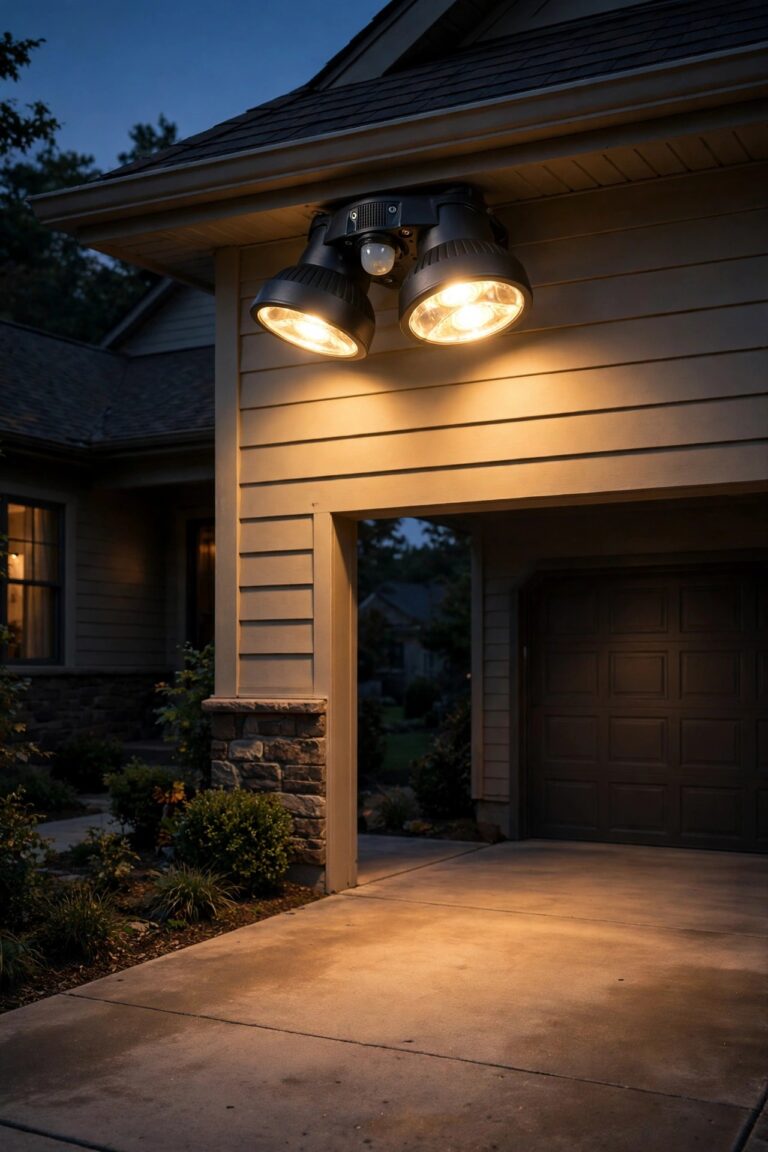
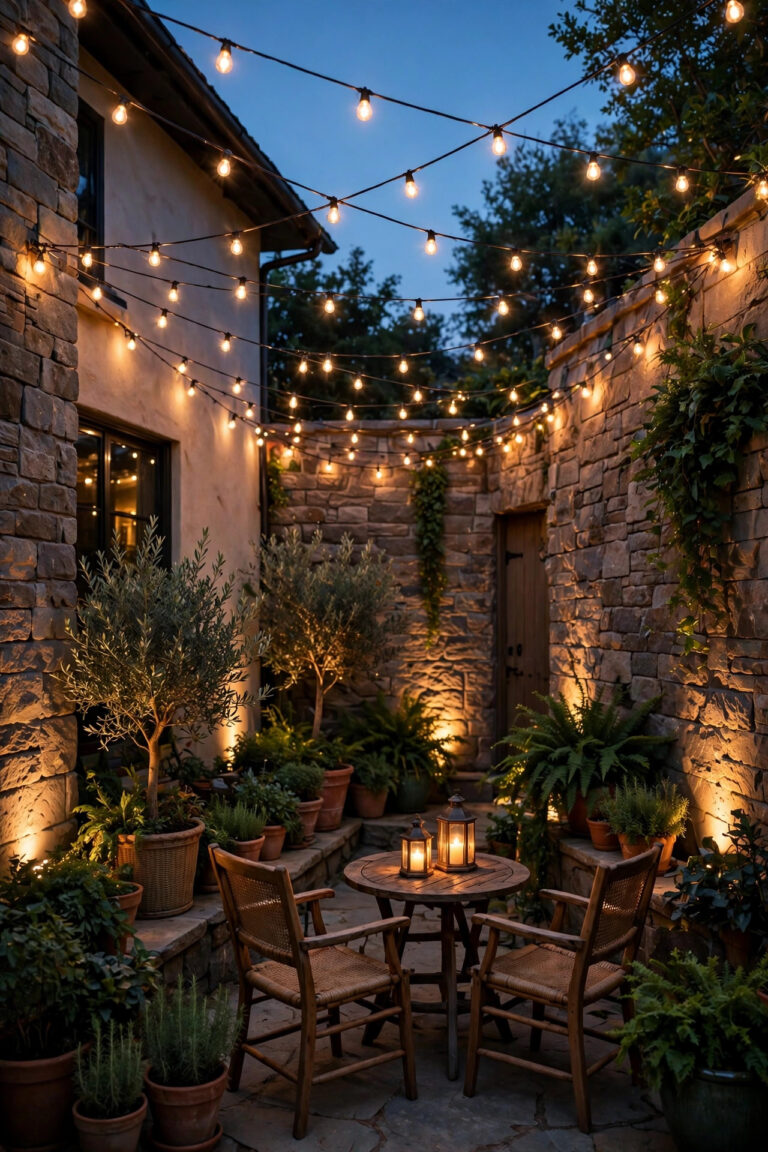
If your backyard is wide, deep, or just plain stubborn about staying dark in the corners, a single flood light rarely cuts it. That's exactly why I reach for dual head flood lights whenever someone writes in about a big yard — two (or three) adjustable heads on one fixture means one mounting point, one wiring run, and light aimed in two different directions at once. One head can wash the lawn while the other watches the gate, the driveway, or the pool deck. In my experience, it's the simplest version of the layering philosophy I use everywhere: light the zones people actually use, from more than one angle, and the whole space feels safer and prettier at the same time. Below I've gathered 15 dual-head and triple-head setups that genuinely work for wide yards — corner mounts, garage sweeps, tall pole mounts, solar options for spots with no wiring, and smart versions you can soften from the couch. Each one includes the mounting heights, aiming angles, and lumen ranges I actually recommend, plus a realistic budget, so you can pick the setup that fits your yard and your weekend.
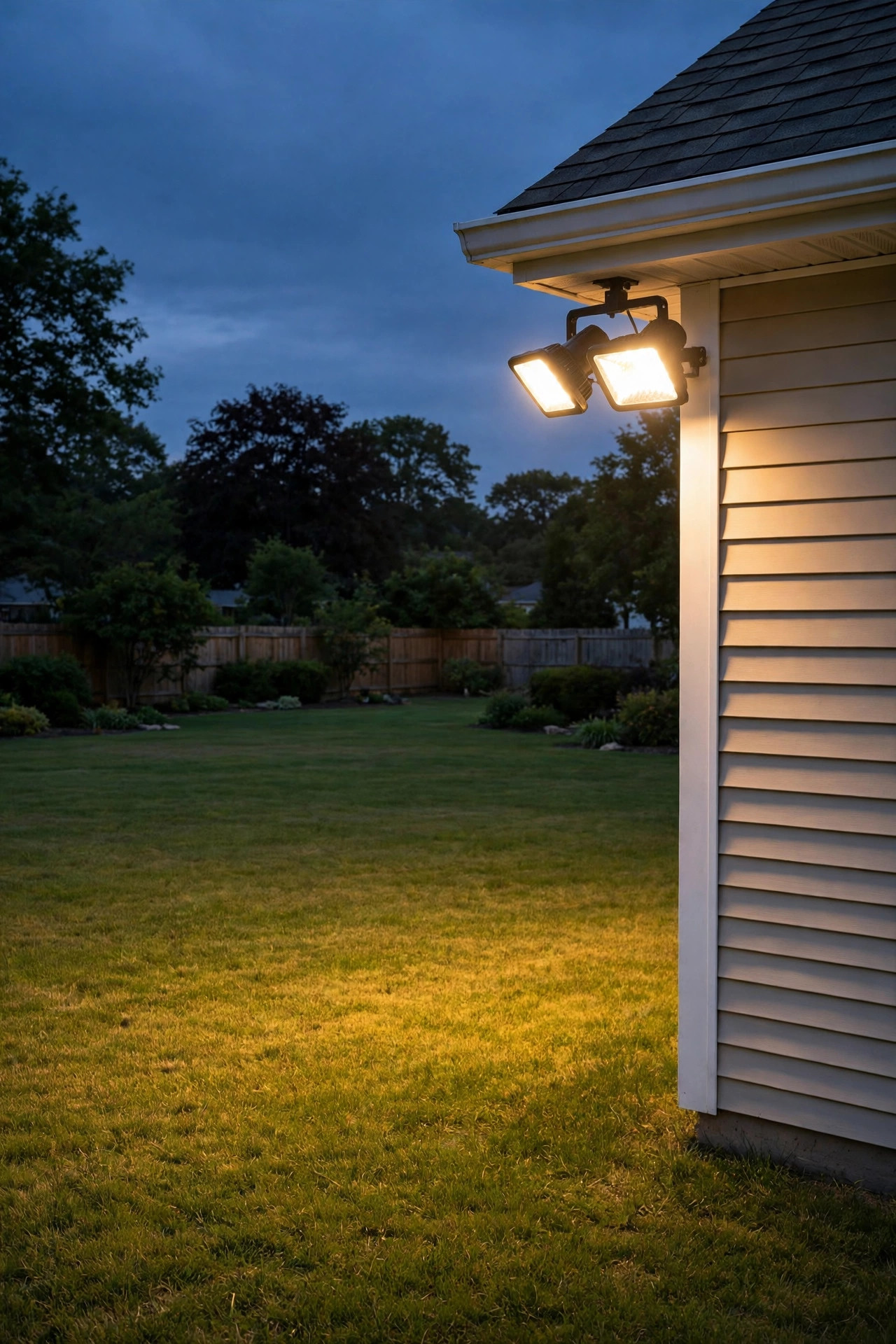
1. Corner-Mounted Dual Head Flood Lights for L-Shaped Yards
The corner of the house is the single best seat in the yard for a dual-head fixture, because the two walls already point in different directions. Mount the fixture 10 to 12 feet up on the corner, then aim one head along each wall so the beams overlap slightly in the middle of the lawn. That overlap matters — it's what erases the dark wedge that a flat wall-mounted light always leaves. I like heads with at least 2,000 lumens each for this job, tilted down about 30 degrees so the light pools on the grass instead of sailing into the neighbor's windows. Choose a fixture with independent swivels on both heads; the cheap fixed-angle models force you to compromise one side or the other. If your corner sits near a bedroom window, add a simple shield or pick heads with a cut-off design so the glow stays in your yard. This is the setup I recommend first for L-shaped and wraparound lots, and honestly? It solves about eighty percent of "my yard is too dark" emails all by itself.
Suggested budget range: $45 – $110.

2. A Triple-Head Sweep Over a Three-Car Garage
A wide driveway eats light for breakfast, and a single lamp over the garage door leaves the edges gloomy and uninviting. A triple-head fixture centered above a three-car garage fixes that beautifully: aim the outer heads diagonally toward the driveway corners and keep the center head pointed straight out to cover the apron where cars turn in. Mount it 12 to 14 feet high if your garage allows, and look for a combined output around 5,000 to 7,000 lumens so the whole pad reads evenly instead of spotlighting one oil stain. I always recommend warming the color temperature down to 3000K here — harsh 5000K light over concrete looks like a gas station, and your house deserves better. If the driveway doubles as a basketball or play zone, position the heads so nobody stares straight into a beam when they look up. A photocell model keeps it effortless, on at dusk and off at dawn, and a row of low path lights along the driveway edge layers in beautifully if you want the full picture.
Suggested budget range: $60 – $140.
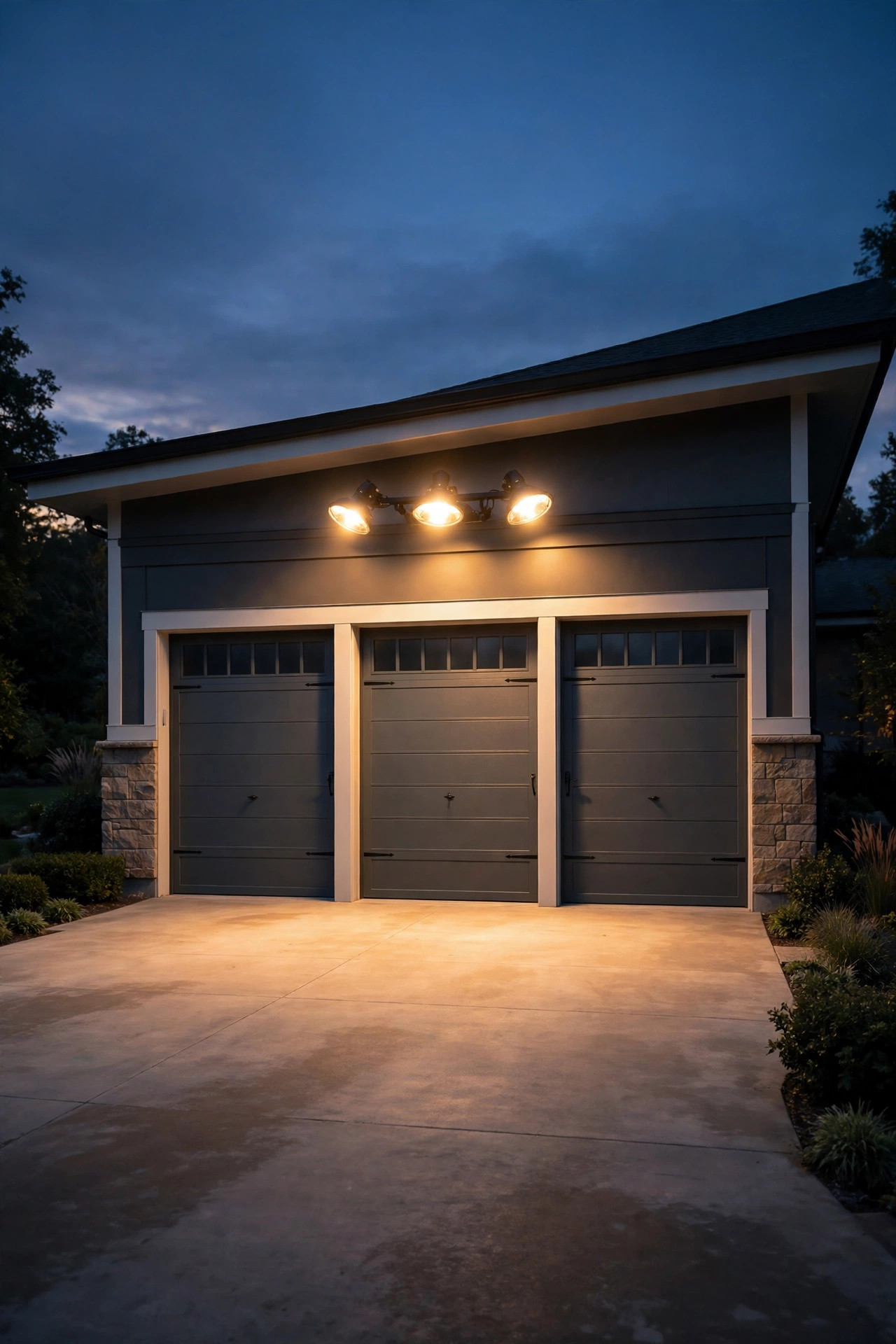
3. Motion-Sensor Dual Heads at the Back Door
The back door is where security lighting earns its keep, and a motion-sensor dual-head is the hardest-working version of it. One head watches the steps and landing; the other sweeps the path to the gate or the trash bins, so you're never carrying recycling through the dark. Set the sensor range to about 30 to 40 feet and the on-time to one or two minutes — long enough to get inside with groceries, short enough to not annoy you. Mount the fixture 8 to 10 feet up, just above the door swing, and angle the sensor slightly downward so pets under 30 pounds don't trigger it all night. In my experience, a 2700K to 3000K warm white reads friendlier on camera footage and on your own eyes at 2 a.m. than blue-white light does. Look for an IP65 rating minimum, since this fixture takes direct rain. If you want the deeper settings walkthrough, our motion sensor outdoor lights guide covers sensitivity dials in detail.
Suggested budget range: $35 – $90.
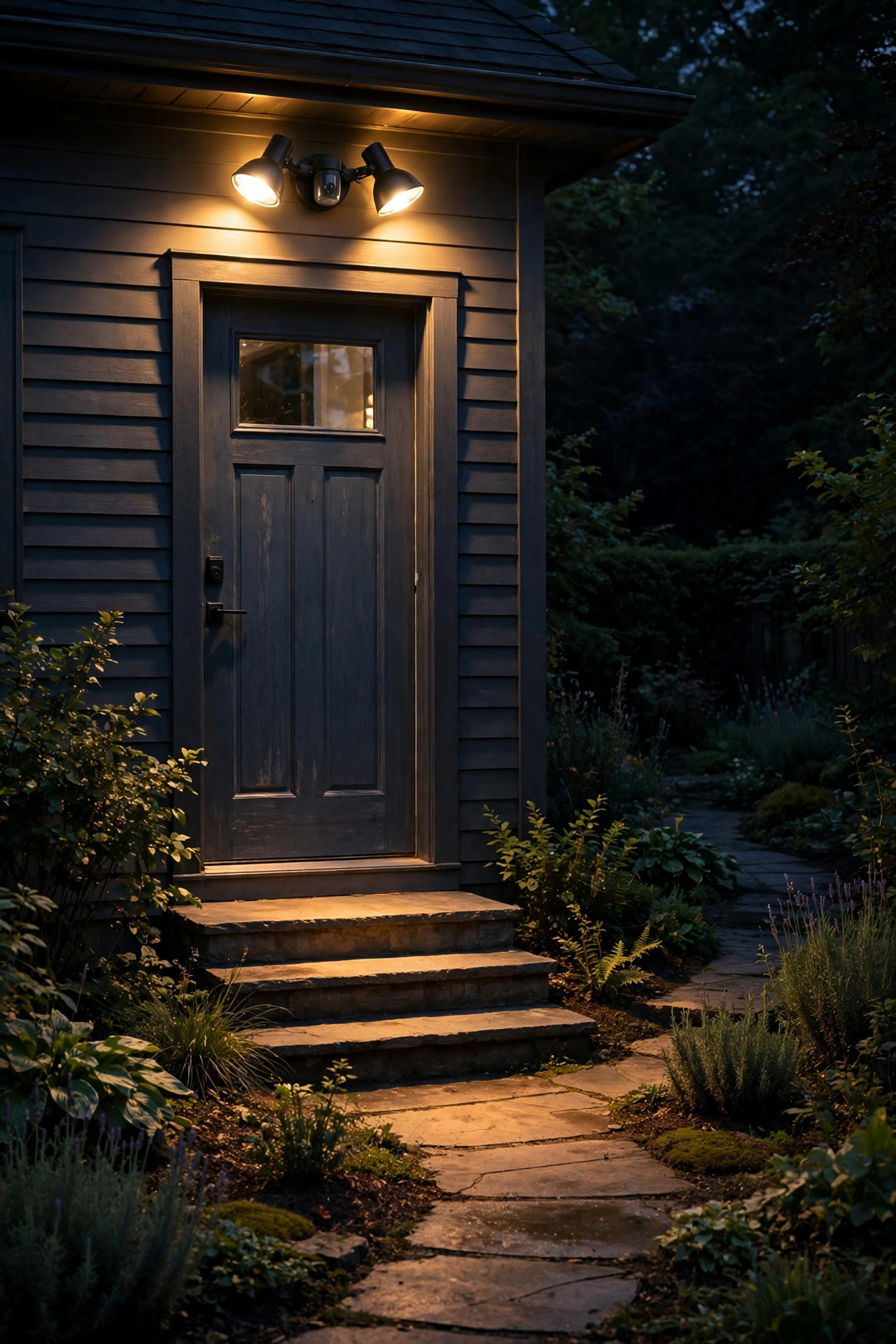
4. A Tall Pole-Mounted Dual Head for Big Open Lawns
Some yards are just too wide for the house to light them — half-acre lots, deep rectangular backyards, and anywhere the kids play past the patio's glow. A dual-head fixture on a 14 to 18 foot pole at the yard's midpoint changes everything: one head throws toward the back fence and play area, the other angles back toward the garden beds or fire pit zone. Use narrow-to-medium beam heads, around 40 to 60 degrees, with 3,000-plus lumens each so the throw actually reaches. Bury the cable in conduit at least 12 inches deep, and put the pole on a GFCI-protected circuit, no exceptions. I always suggest a photocell plus a simple indoor switch override, so you can kill the lights for stargazing or movie night on the lawn. A galvanized or powder-coated steel pole weathers best; wooden poles work too if they're pressure-treated. This is the most "sports field" idea on the list, but aimed with a little restraint and kept warm at 3000K, it still feels like a garden, not a stadium.
Suggested budget range: $180 – $420.

5. Eave-Mounted Dual Heads for Dark Side Yards
Side yards are the forgotten strip of every property — narrow, shadowy, and exactly where you'd rather not meet a raccoon at midnight. A dual-head tucked under the eave solves it elegantly: aim one head down the length of the side yard toward the gate, and the second head out into the back garden so the corner never goes black. Because the passage is narrow, you don't need much power; 1,200 to 1,800 lumens per head is plenty, and anything stronger just bounces glare off the fence. Tilt the heads lower than you think, about 40 degrees down, since the throw distance is short. A motion sensor is almost mandatory here — the light only runs when someone's actually passing through, which keeps light pollution (and your electric bill) down. Choose slim heads that sit close to the soffit so ladders and gutters still clear them during maintenance. Honestly, this is the idea that makes homeowners say "I wish I'd done that years ago" more than any other on the list.
Suggested budget range: $40 – $95.

6. Solar Dual Head Flood Lights Where There's No Wiring
No junction box, no problem — modern solar dual-head fixtures have gotten genuinely good, and they're my go-to for far fence lines, garden sheds, and the back corner where the trampoline lives. The trick is the panel: pick a model with a separate solar panel on a 10 to 16 foot cable, so the fixture can sit in shade while the panel bakes in full sun. Aim the two heads in a gentle V across the zone you want covered, and expect a realistic 800 to 1,500 lumens per head — plenty for security visibility, not quite sports lighting. Most run motion-activated with a dim standby glow, which stretches the battery through long winter nights. Mount the heads 8 to 10 feet up on the fence post or shed wall, and wipe the panel clean every couple of months; a dusty panel is the number one reason these "stop working." In my experience, spending a little more for a replaceable lithium battery doubles the useful life of the whole fixture.
Suggested budget range: $30 – $85.
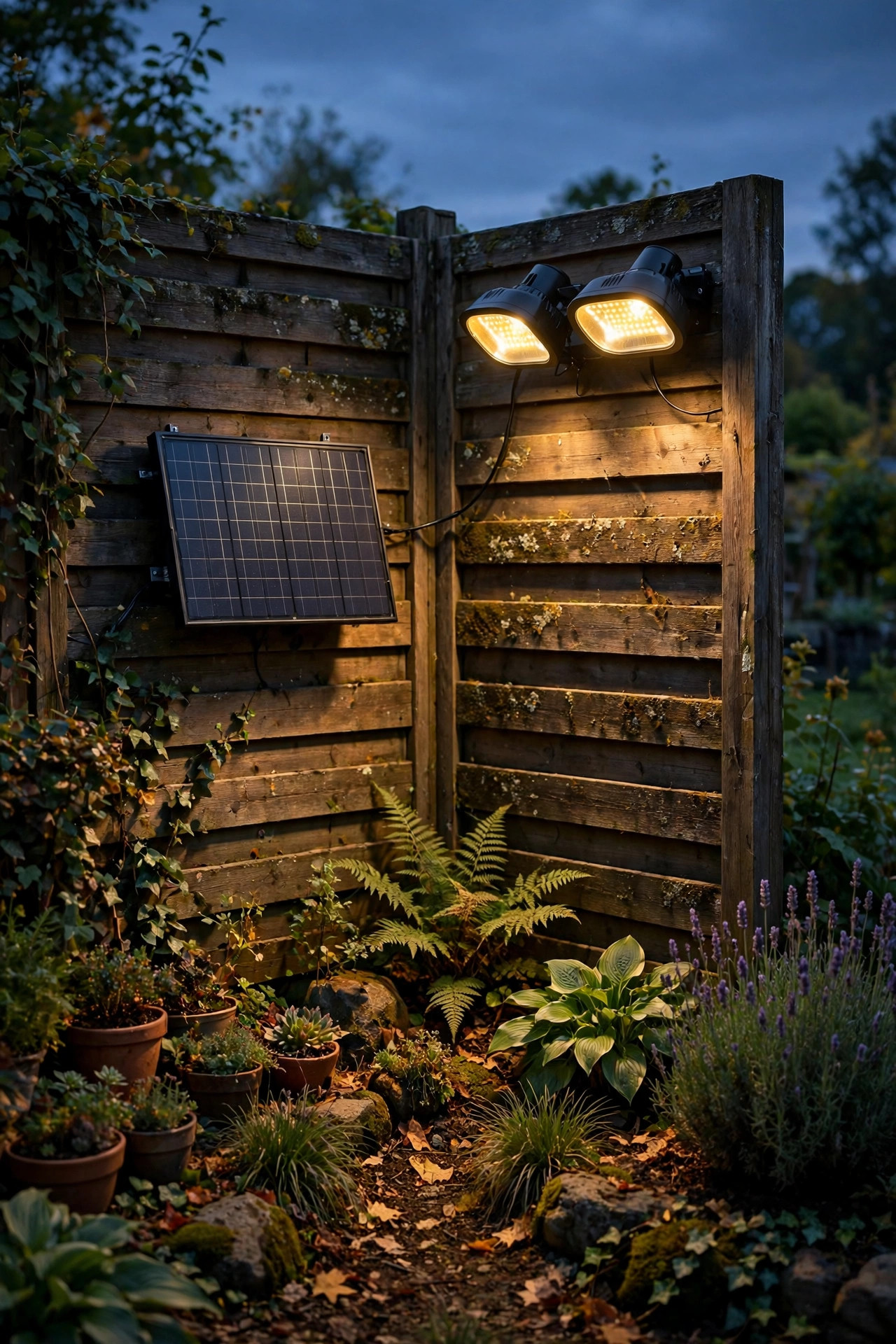
7. A Triple-Head Over the Pool Deck and Patio
Pool decks need two kinds of light at once: bright, even coverage so wet feet land safely, and a softer wash so the water itself glows instead of looking like a black mirror. A triple-head mounted on the house wall or a nearby pergola post, 10 to 12 feet up, handles both. Aim the two outer heads along the deck edges and coping, and let the center head skim across the water at a shallow angle — that grazing light is what makes the pool sparkle. Non-negotiable safety note: any fixture near a pool must be on a GFCI circuit, rated for wet locations, and mounted at least 5 feet horizontally from the water's edge (more if your local code says so, and many do). I keep pool-area floods at 3000K and put them on a dimmer, because full brightness kills the evening mood the second dinner moves outside. If swimmers use the pool after dark, add a dusk-to-dawn low setting rather than motion activation — nobody wants the lights timing out mid-lap.
Suggested budget range: $70 – $160.

8. One Head Up, One Head Down for Layered Walls
Here's a styling trick I use constantly on wide back walls and long fences: point one head down to pool light on the patio or lawn, and aim the second head upward to graze the wall, fence boards, or a row of ornamental grasses. The upward beam gives you the layered, designed look — texture, shadow play, depth — while the downward beam does the practical work. It works especially well mounted at about 9 feet on a pergola post or the back wall, with the up-head tilted to within a foot or two of the surface it's grazing. Keep both heads at 2700K for this one; the warmth is the whole point. Because the up-head is doing decor, not security, you can choose a lower-lumen model, around 1,000 to 1,500 lumens, and still get a dramatic effect. Just watch for glare sightlines from patio chairs — if seated guests can see the bare lens of the up-head, add a glare shield or drop the angle. Our guide to outdoor flood light placement has more on aiming angles if you want to fine-tune.
Suggested budget range: $45 – $100.

9. Smart Dual Heads You Can Dim From the Couch
Sometimes full flood is exactly wrong — you want a soft glow for drinks on the deck, then full brightness when the dog needs the yard at midnight. Smart dual-head fixtures (or standard dual heads on a smart switch) give you scenes: 20 percent for ambience, 100 percent for cleanup and security, all from your phone or a voice command. The better models let each head join a schedule, so the yard side runs dusk-to-dawn at low level while the driveway side waits for motion. Look for fixtures that remember their last setting after a power blip — the ones that reset to full blast at 3 a.m. get old fast. Color-tunable versions, roughly 2700K to 4000K, are lovely if your yard shifts between entertaining and task lighting. One honest caution from my experience: put smart floods on a reliable 2.4 GHz Wi-Fi spot or choose a hub-based system, because a fixture at the far corner of a wide yard is exactly where weak Wi-Fi goes to die.
Suggested budget range: $65 – $150.

10. A Triple-Head Work Light Setup for Barns and Sheds
Outbuildings work hard, and they deserve better than one bare bulb over the door. A triple-head flood centered above a barn or shed door covers the whole work apron: left head on the equipment parking spot, center head on the doorway and ramp, right head down the path back to the house. This is one place I happily spec brighter, cooler light — 4000K and 2,500 to 3,500 lumens per head — because you're splitting firewood and backing trailers, not hosting dinner. Mount it high, 12 to 16 feet, so machinery and stacked lumber don't block the beams, and choose metal housings with real heat sinks; outbuilding fixtures run long hours. A motion sensor with a manual override switch inside the door is the sweet spot, so the light waits for you but never strands you. Make sure the circuit is GFCI-protected and the fixture is wet-location rated, since shed eaves offer almost no shelter. It's not the prettiest idea here, but ask anyone who's loaded a truck in the dark — it's the most appreciated.
Suggested budget range: $55 – $130.
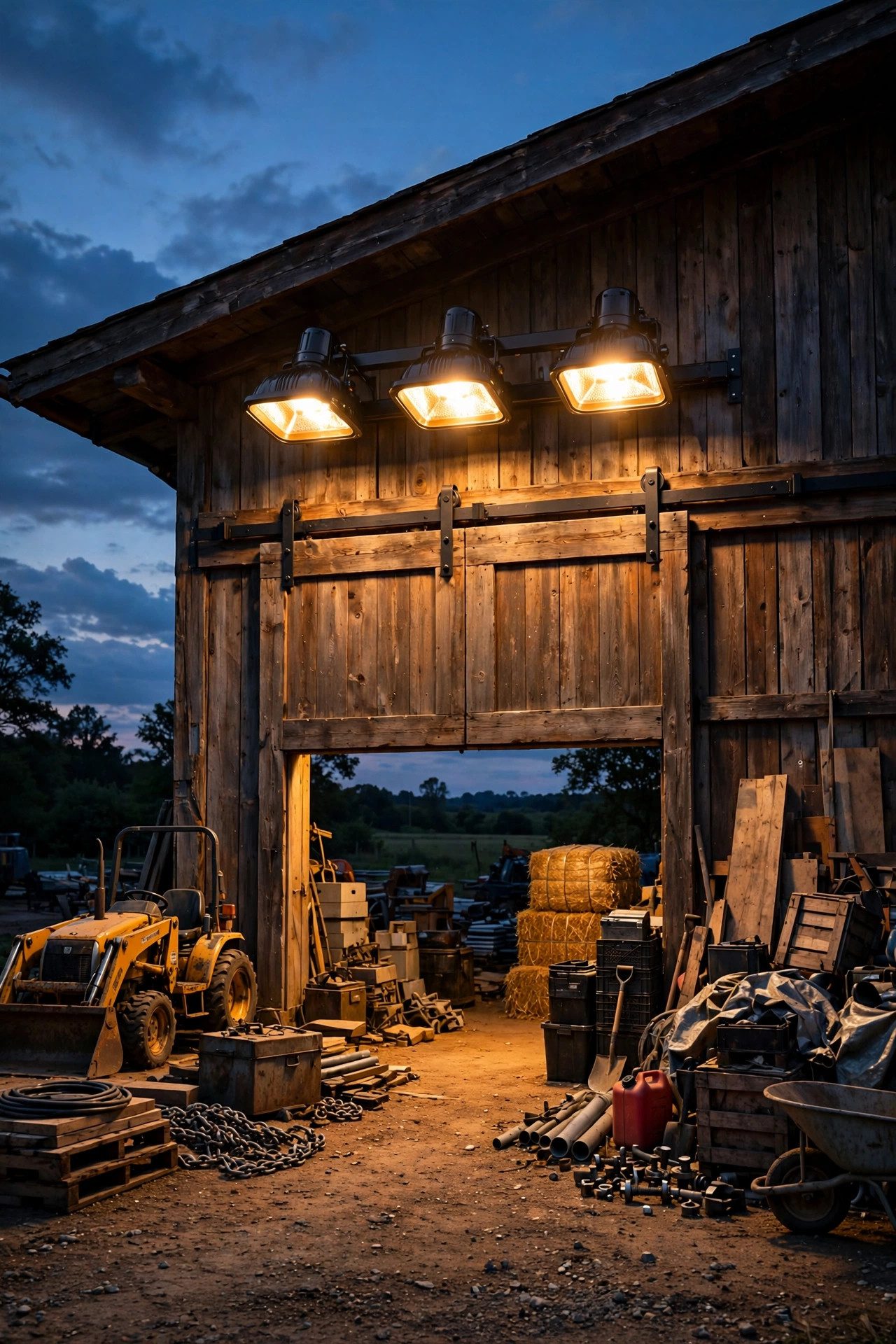
11. Dual Heads at the Driveway Gate and Entrance
A long driveway goes properly dark at the gate, which is awkward for guests, delivery drivers, and anyone coming home late. A dual-head mounted on the gate post or a nearby tree-side pole at 10 to 12 feet fixes the whole arrival experience: one head washes the gate and keypad area, the other throws down the drive so headlights aren't doing all the work. If there's no power at the gate — and there usually isn't — a solar dual-head with a remote panel is the practical pick, or run low-voltage cable along the fence line if the distance is under about 100 feet. Motion activation is ideal here, triggered as a car approaches, with a generous three to five minute run time so the gate can open and close in the light. Keep the keypad head aimed low and shielded; a driver blinded by the fixture can't read the numbers. Our broader outdoor lighting for home security guide covers how gate lighting fits into a full perimeter plan.
Suggested budget range: $40 – $120.

12. Dusk-to-Dawn Dual Heads for All-Night Peace of Mind
Some homes simply feel better with a light that stays on — rural properties with no streetlights, corner lots, and houses where someone works the night shift. A dual-head with a built-in photocell, set to run at a reduced level all night, gives you that security blanket without the stadium glare. The good models idle around 30 percent brightness and jump to full when the motion sensor trips, which is the best of both worlds: softer light for sleeping neighbors, full power when it matters. Because this fixture runs ten-plus hours a night, LED efficiency really counts — look for at least 100 lumens per watt so the yearly running cost stays in the price-of-a-pizza range. Aim both heads fully inside your own property lines; all-night light trespass is the fastest way to start a fence-line feud. I also suggest 2700K here for the same reason: warm light reads as "cozy porch glow" from the street, while cool white reads as "parking lot." Set it, forget it, and sleep better.
Suggested budget range: $50 – $115.
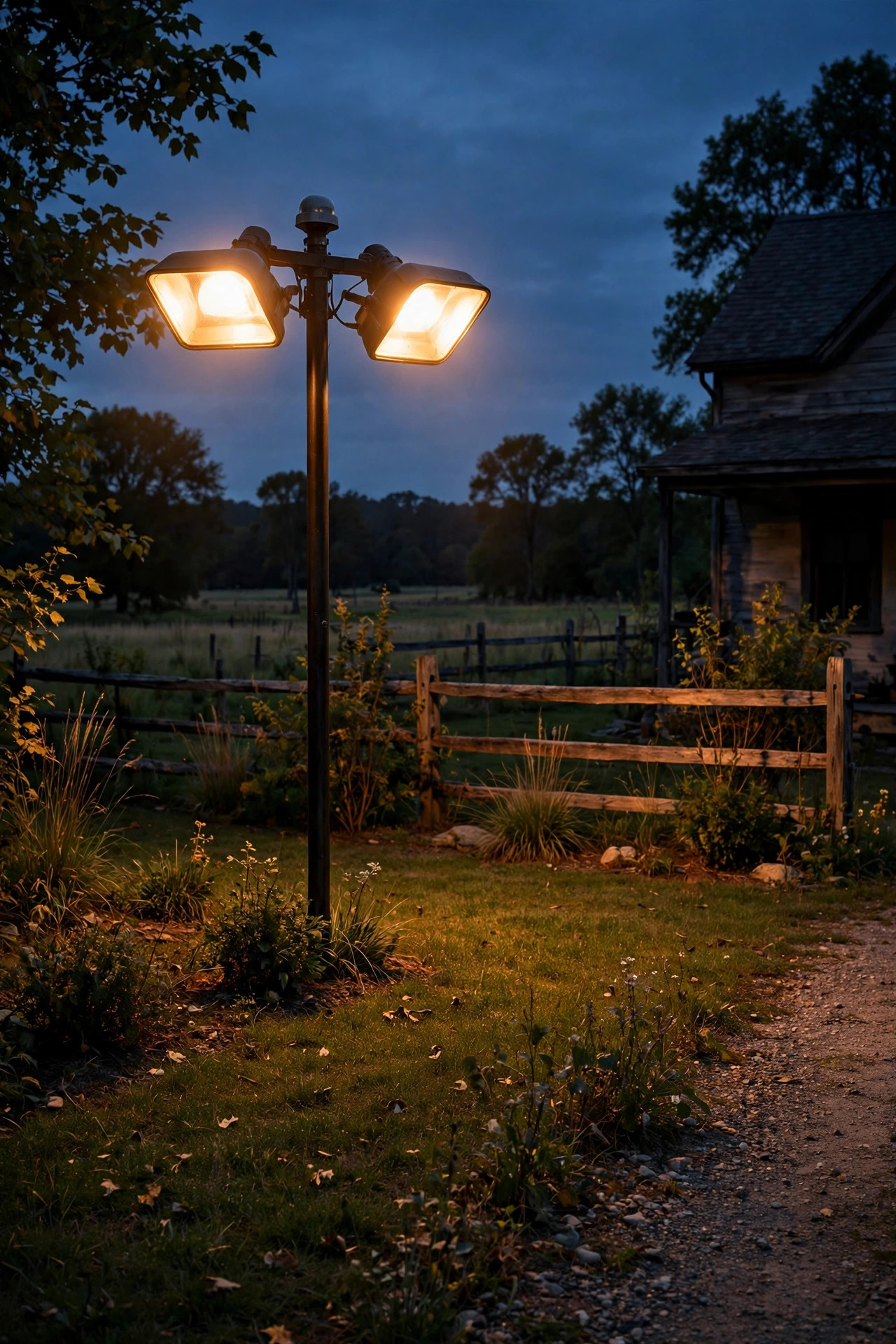
13. Dual Heads for Sloped and Terraced Backyards
Sloped yards break single floods — the top of the hill gets blasted while the bottom terrace sits in a shadow well. The fix is a dual-head mounted partway down the slope, usually on the house's lower level or a sturdy retaining-wall post, with the heads aimed at different depths: one long throw to the bottom terrace and play lawn, one short, wide spill across the upper patio. The secret is aiming along the slope rather than straight down it, which keeps beams out of seated guests' eyes. If your yard has retaining walls, a second smaller dual-head at the bottom looking back up creates beautiful cross-light and kills the shadow wells entirely. Keep mounting heights modest here, 8 to 10 feet, because elevation does the reach work for you. Step and path lighting layered between the terraces ties it all together — floods give you the zones, low lights give you the footing. In my experience, sloped lots end up looking the most dramatic of all once the two aiming depths are dialed in.
Suggested budget range: $45 – $105.

14. A Corner Dual Head Over the Basketball Hoop and Play Court
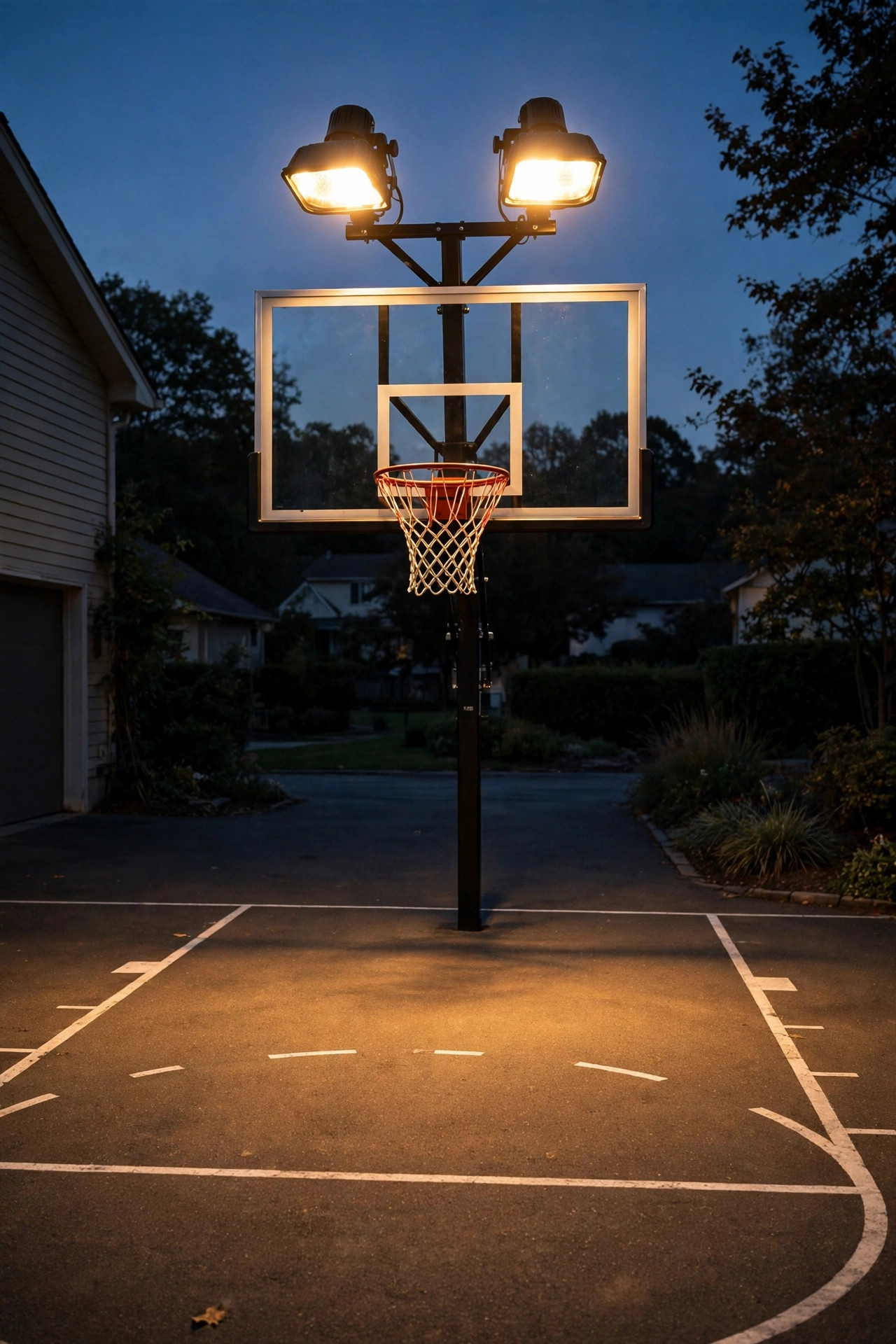
If your driveway or backyard court hosts evening games, lighting it from one side is a recipe for lost balls and squinting players. A dual-head mounted high on the garage corner or a court-side pole — 12 to 14 feet up — with both heads fanned across the court gives surprisingly even coverage for pickup games, hopscotch marathons, and late-night free-throw practice. Fan the heads about 50 to 70 degrees apart and tilt them down just enough that players looking up for a rebound aren't staring into the lenses. This is task lighting, so brightness is welcome: 3,000 to 4,000 lumens per head at 4000K keeps the ball visible without the blue harshness of 5000K. A simple timer or smart plug matters more than you'd think — courts that light themselves at dusk get used three times as much in my neighborhood observations. Choose shatter-resistant lenses, because baseballs and wayward shots happen, and a fixture with a guarded lens costs far less than replacing a cracked one mid-season.
Suggested budget range: $55 – $125.
15. Matching Dual Heads on Opposite Corners for Shadow-Free Yards
For the widest yards — the ones where every single-fixture idea still leaves a murky middle — the real answer is two dual-head fixtures on opposite corners of the house, aimed inward so their beams cross. Crossing light is what designers use because it fills shadows instead of just moving them: a person or pet lit from two directions never disappears into a dark silhouette. Wire both fixtures to the same switch or photocell so the yard lights as one system, and match the color temperature exactly — mismatched 2700K and 4000K corners look like a mistake, because they are. Four heads at a modest 1,800 to 2,200 lumens each usually beat one monster fixture for evenness, and you can drop one side to motion-only if the full wash feels like too much. This is the setup I'd choose for acre-plus lots, dog runs, and anywhere kids play after dinner in the summer. It costs more than a single fixture, honestly, but it's the idea that finally makes a big yard feel finished rather than merely lit.
Suggested budget range: $90 – $220.

Frequently Asked Questions
How many lumens do dual head flood lights need for a wide yard?
For most wide residential yards, look for 1,800 to 3,000 lumens per head. Smaller zones like side yards are fine at 1,200 to 1,800 lumens per head, while pole-mounted or court lighting wants 3,000-plus. Two well-aimed heads at 2,200 lumens almost always look better than one 5,000-lumen blast, because the overlap fills shadows instead of creating new ones.
What is the best mounting height for a dual or triple-head flood light?
Between 10 and 14 feet works for most homes — high enough for a wide throw, low enough to avoid lighting the sky. Back-door and side-yard fixtures can sit at 8 to 10 feet, while pole mounts for very large lots go 14 to 18 feet. Higher isn't automatically better: every extra foot flattens the light and increases glare for neighbors.
Are solar dual head flood lights bright enough for security?
For visibility and deterrence, yes — good solar models deliver 800 to 1,500 lumens per head with motion activation, which is plenty to identify activity and light a path. They're not a match for hardwired fixtures for all-night or sports lighting, though. Choose a model with a separate panel on a cable so the panel can sit in full sun while the fixture stays where you need it.
Can I put dual head flood lights on a dimmer or smart switch?
Standard LED dual-head fixtures without built-in sensors usually dim fine on a compatible LED dimmer or smart switch. Models with motion sensors or photocells built in sometimes misbehave on dimmers, so check the manufacturer's guidance first. If you want scenes and schedules, a purpose-built smart fixture is usually the smoother path.
Conclusion
A wide yard doesn't need more fixtures scattered everywhere — it needs light aimed in more than one direction from smart mounting points. Dual head flood lights do exactly that: one install, two zones covered, and shadows filled instead of shifted. Start with the corner mount or the back door, see how the yard changes after dark, and then layer in a second fixture or a pole mount if the far corners still call out to you. Pick warm color temperatures for living spaces, keep every circuit GFCI-protected, and aim with your neighbors in mind. Browse the rest of our outdoor lighting ideas here on the site for the path lights, string lights, and accent layers that turn a well-lit yard into a beautiful one.