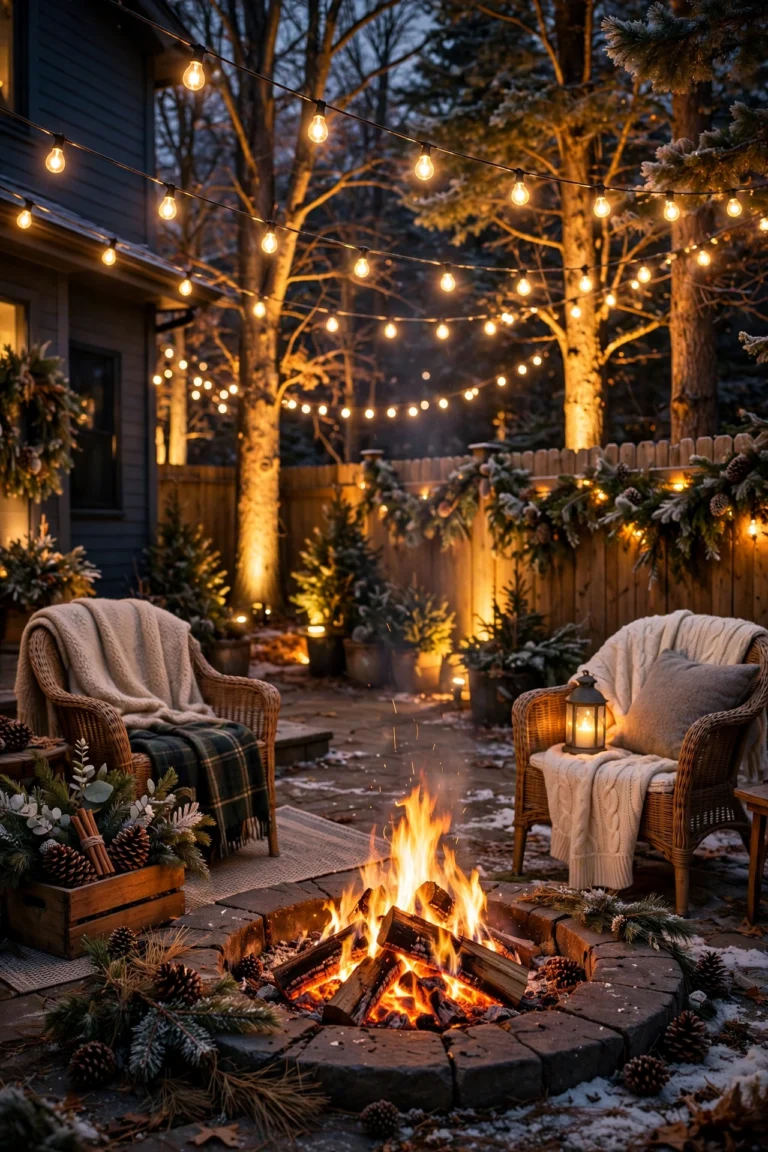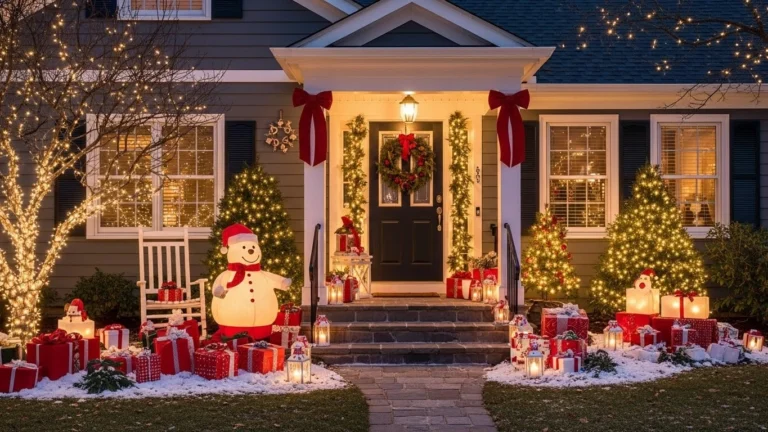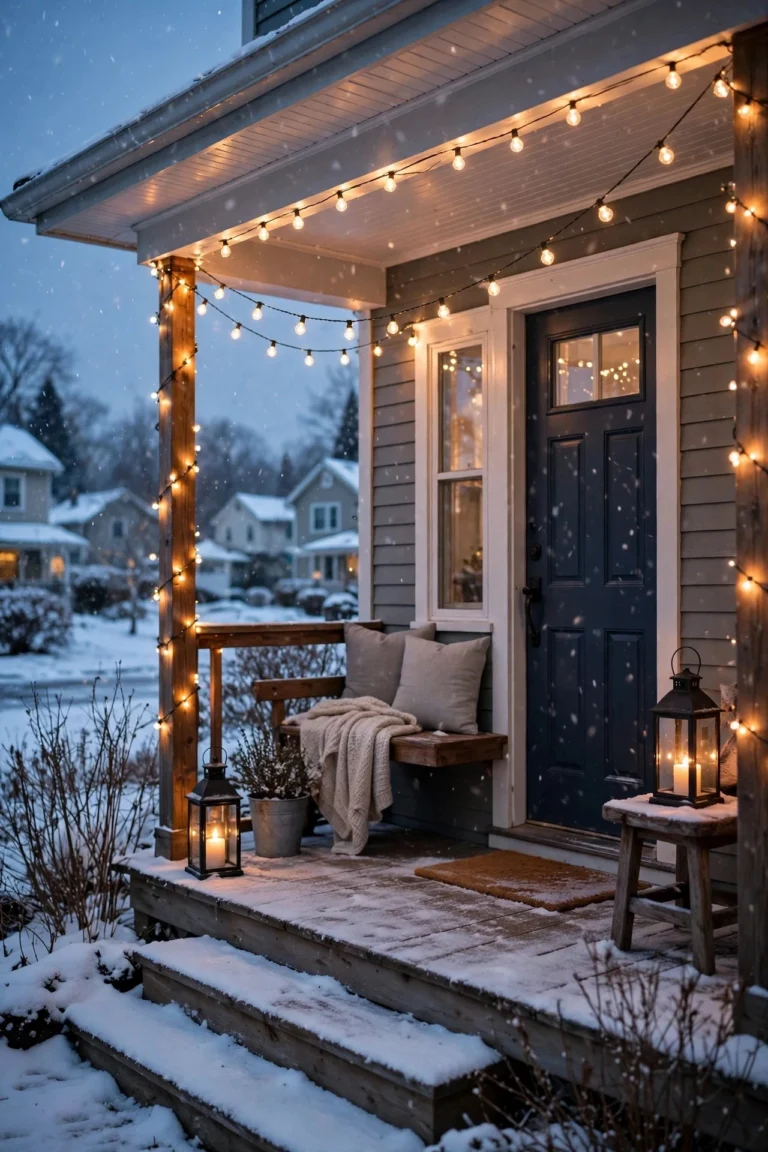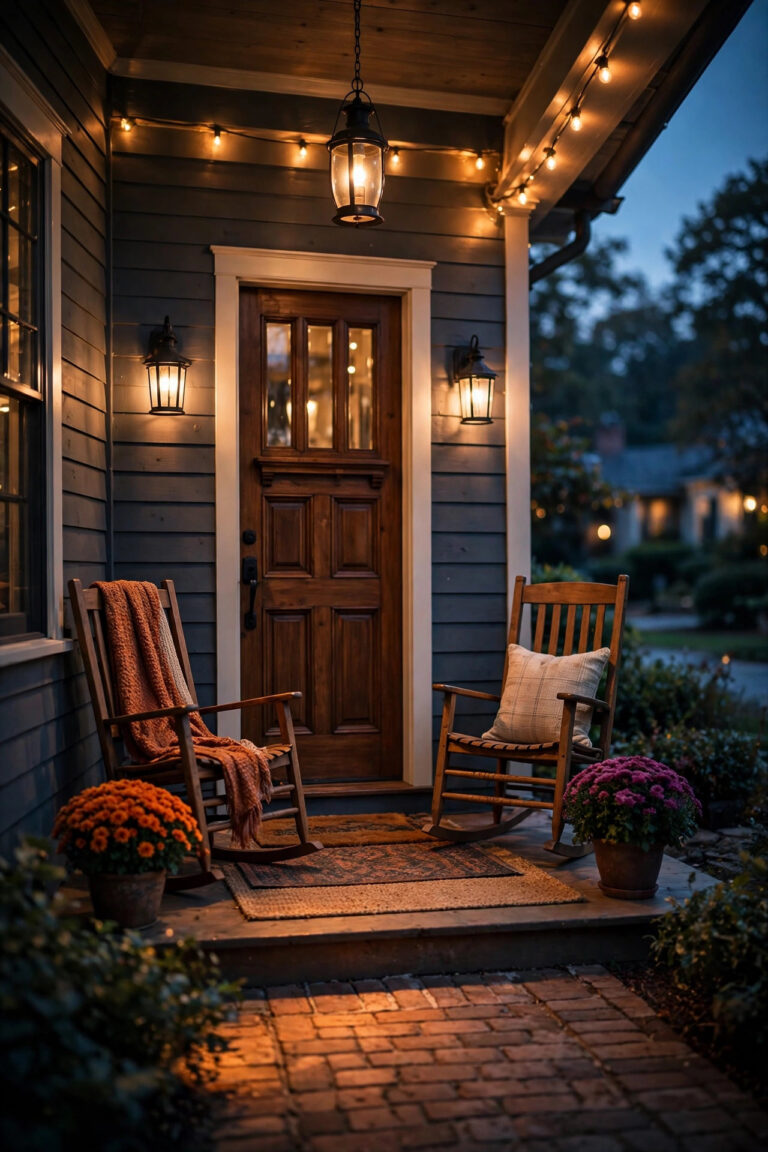
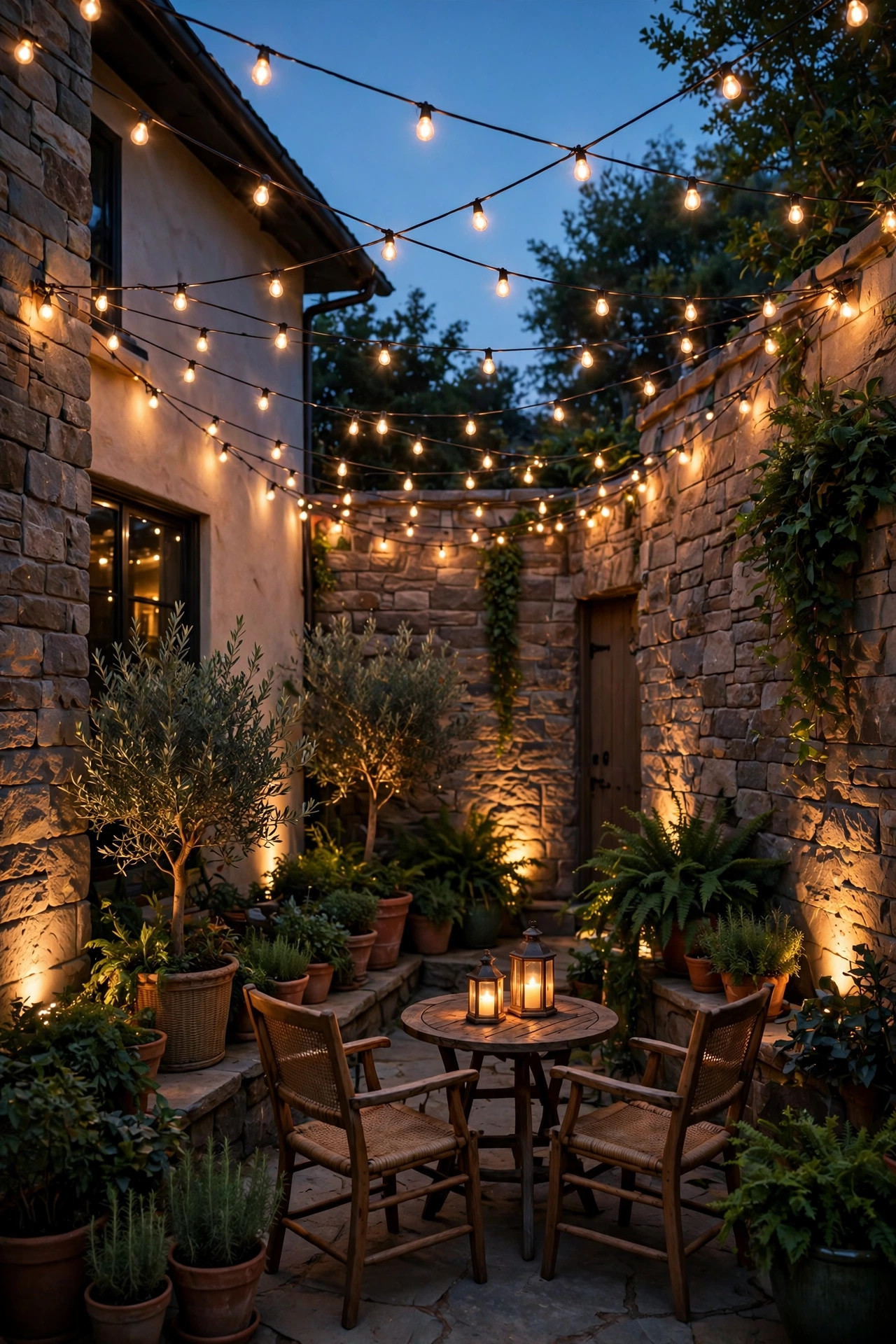
There's something about a courtyard — those four walls holding the sky — that turns even the tiniest side yard into a secret garden. When I first started playing with courtyard lighting ideas for my own enclosed patio, I realized the rules are totally different from an open yard: the walls bounce light back at you, there's zero light pollution from the street, and the whole space holds warmth like a little microclimate. It also means one harsh floodlight can ruin everything in about two seconds.
Honestly? The philosophy that saved me is layering: a soft wash on the walls, a glow at ground level, and one magical focal point, all in warm white (2700K is my sweet spot). In this post I'm walking you through 17 ideas that do exactly that — each one with placement measurements, bulb picks, safety notes for enclosed damp spaces, and honest budget ranges. Mix and match three or four, keep everything warm and dimmable where you can, and your courtyard will feel like the coziest room of your house. One more thing I've learned: because walls reflect light back at you, a small courtyard needs far fewer fixtures than you'd guess — restraint is the whole game here.
1. Wall-Wash Uplighting: The Courtyard Lighting Workhorse
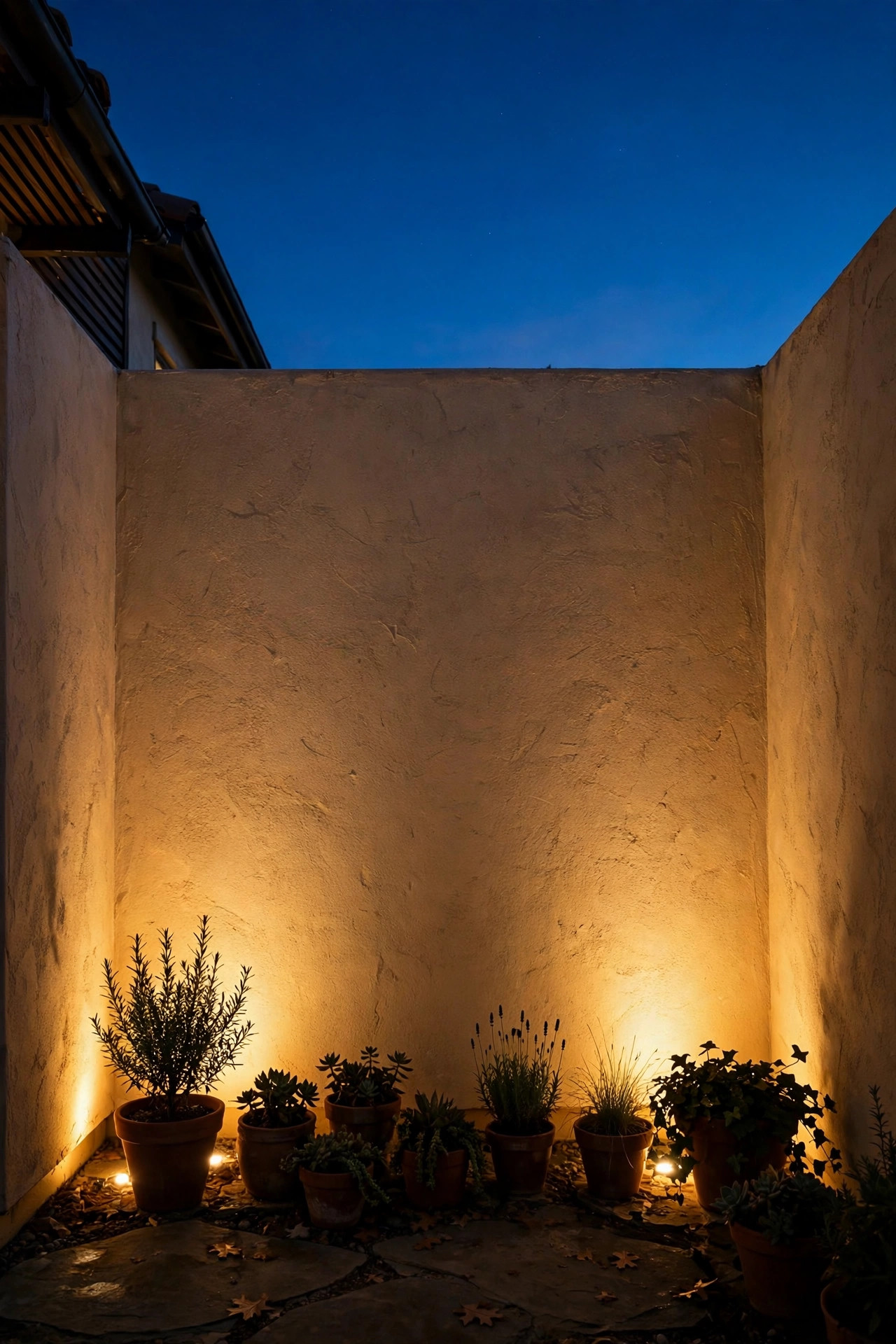
If you only do one thing on this list, make it this. Uplighting a wall turns a flat, boxy boundary into a glowing backdrop — in my experience, it's the single highest-impact move in an enclosed space because the light has nowhere to escape. Use wide-beam (60-degree) spike or surface-mount uplights set 6 to 12 inches out from the base of the wall, spaced every 6 to 8 feet along its length. Warm white LED bulbs at 2700K, 5 to 7 watts each, are plenty; anything brighter starts to feel like a parking lot. Pick fixtures rated IP65 or better so rain and splash don't kill them, and wire them on a low-voltage 12V transformer with a dusk-to-dawn timer so you never think about it. Styling tip: uplight just one or two walls, not all four — leaving one side darker adds depth and keeps the space feeling intimate instead of flat. Safety note: keep fixtures a few inches off the wall and never aim uplights at windows; your neighbors' bedrooms will thank you.
Suggested budget range: $80 – $250.
2. Recessed Step Lights
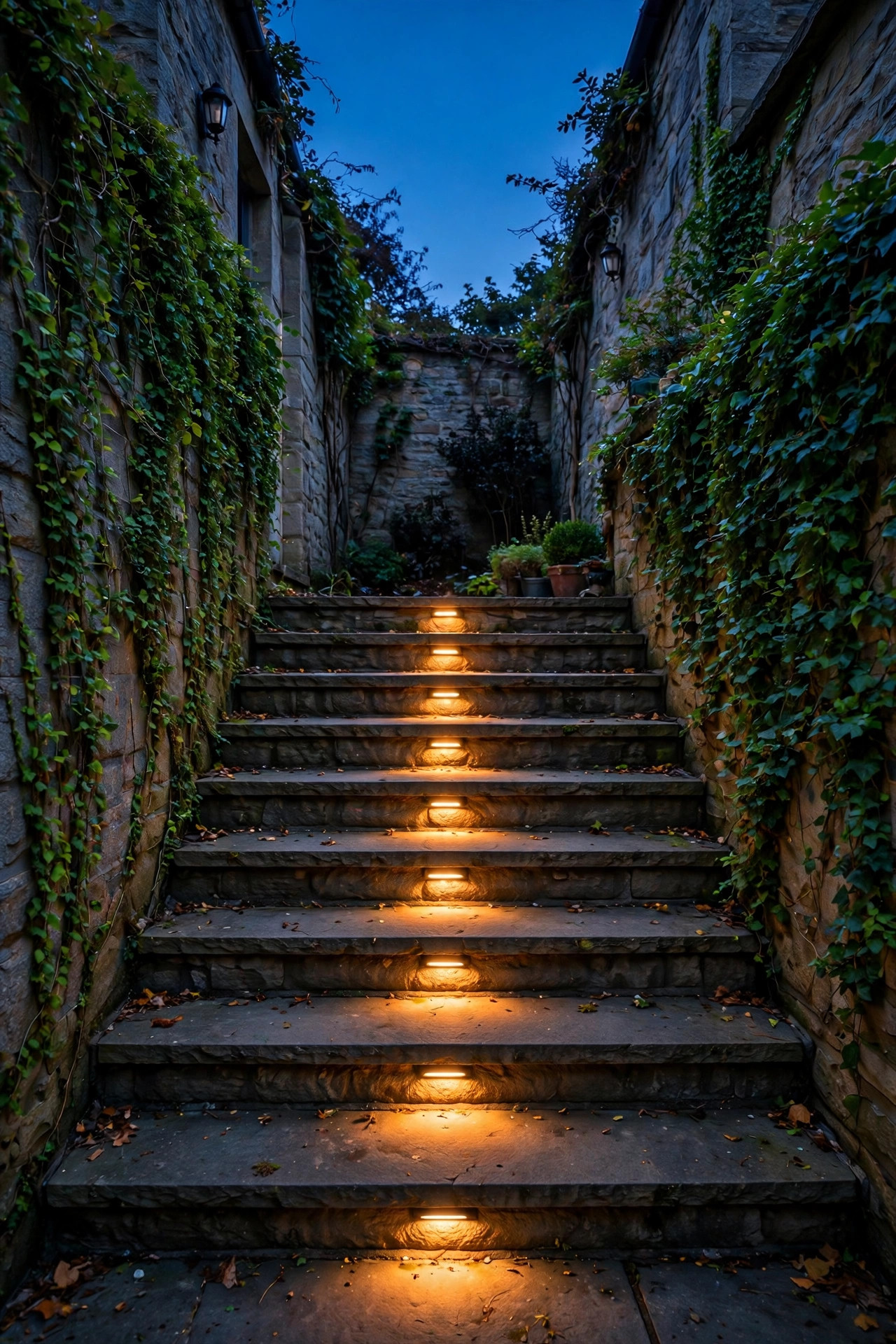
Courtyards often mean a step or two down into the space, and those are trip hazards after dark. Recessed step lights — the little square or round fixtures that sit flush in the riser or the wall beside a stair — solve it beautifully and add a floating-glow effect I adore. Look for 3.5-inch low-voltage LED step lights in warm white (2700K, 1 to 2 watts each). Install one per step, centered about 4 inches above the tread, or every other step on a short run. Because they're low voltage, the wiring is very DIY-friendly: run 12-gauge cable back to a plug-in transformer on a GFCI outlet, and bury or clip the cable along the wall base. Weatherproofing matters in enclosed courtyards where damp air lingers — choose fixtures rated IP67 and sealed connectors, since trapped moisture is the number-one killer of cheap step lights. They're subtle by design; you won't "see" the fixture, just the pool of light it makes.
Suggested budget range: $60 – $180.
3. Low Bollard Lights Around a Central Planting
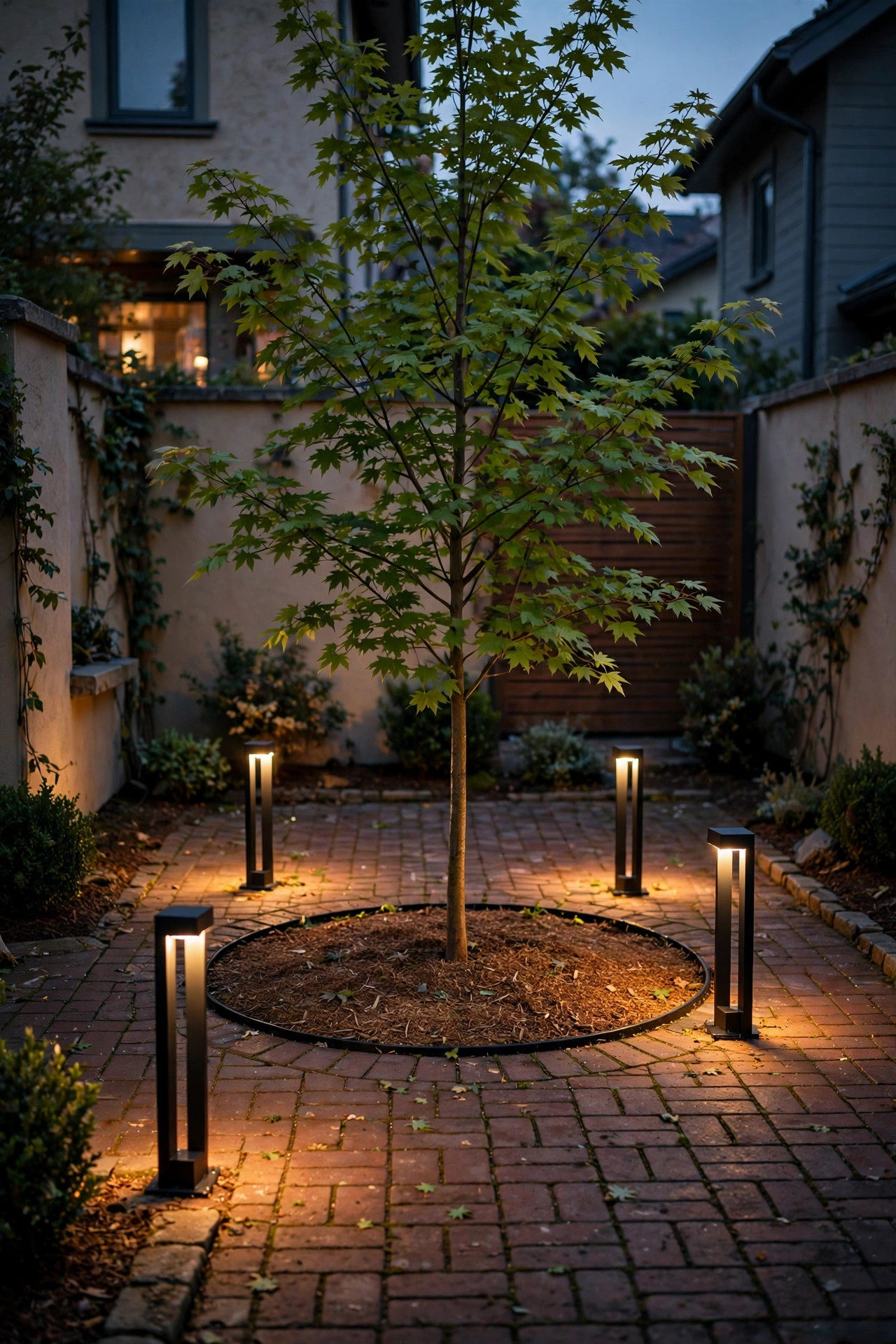
A little bollard garden — 12- to 18-inch-tall path lights ringing a central tree, planter, or water basin — gives a courtyard its jewel-box center. Space them 6 to 8 feet apart around the bed so the pools of light just touch without overlapping into glare. I like 3- to 5-watt warm white LEDs at 2700K with shielded or louvered tops so the light goes down, not into your eyes. Stake them into soil or a mulch bed about 12 inches back from the bed's edge. For a fuller rundown on spacing, wattage, and transformer sizing, my low-voltage path light guide walks through the whole setup. Styling tip: in enclosed spaces, bollards read best in odd-numbered clusters — three around a big planter, five around a small tree. Safety note: low-voltage systems still need a weatherproof transformer plugged into a GFCI-protected outlet, and keep cable runs tucked under mulch or in shallow conduit so mowers and feet never find them.
Suggested budget range: $90 – $260.
4. Crisscross String Lights Overhead
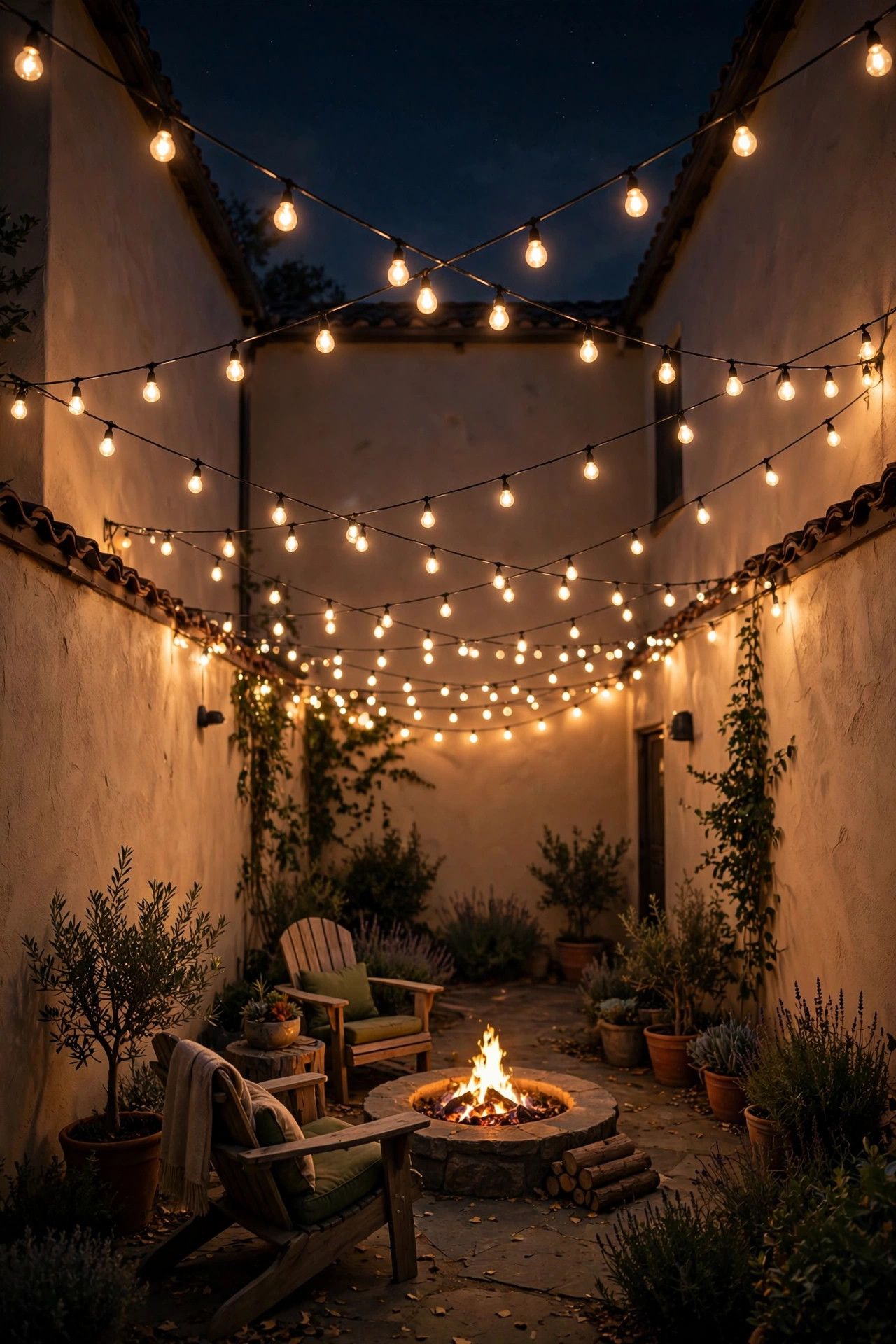
String lights are the courtyard classic for a reason — with walls on all sides, you have perfect anchor points and the canopy of light makes the ceiling of sky feel lower and cozier. Use commercial-grade strings with shatterproof LED bulbs (not glass), spaced every 12 to 18 inches, in warm white 2700K. Anchor mounting points 9 to 12 feet high on opposite walls using eye hooks into studs or masonry anchors, and let each run sag 6 to 8 inches in the middle for that relaxed swoop. Crisscross in an X or run parallel lines 3 to 4 feet apart depending on the courtyard's width. Hang the cable from a stainless catenary wire if spans exceed 15 feet — it keeps everything from stretching over time. Put them on a smart timer or dusk-to-dawn sensor; honestly, lights you have to remember to turn on don't get used. Keep strands at least 12 inches clear of any flammable dried vines or fabric sails — LED-only, always.
Suggested budget range: $70 – $220.
5. Moonlighting From a Small Tree
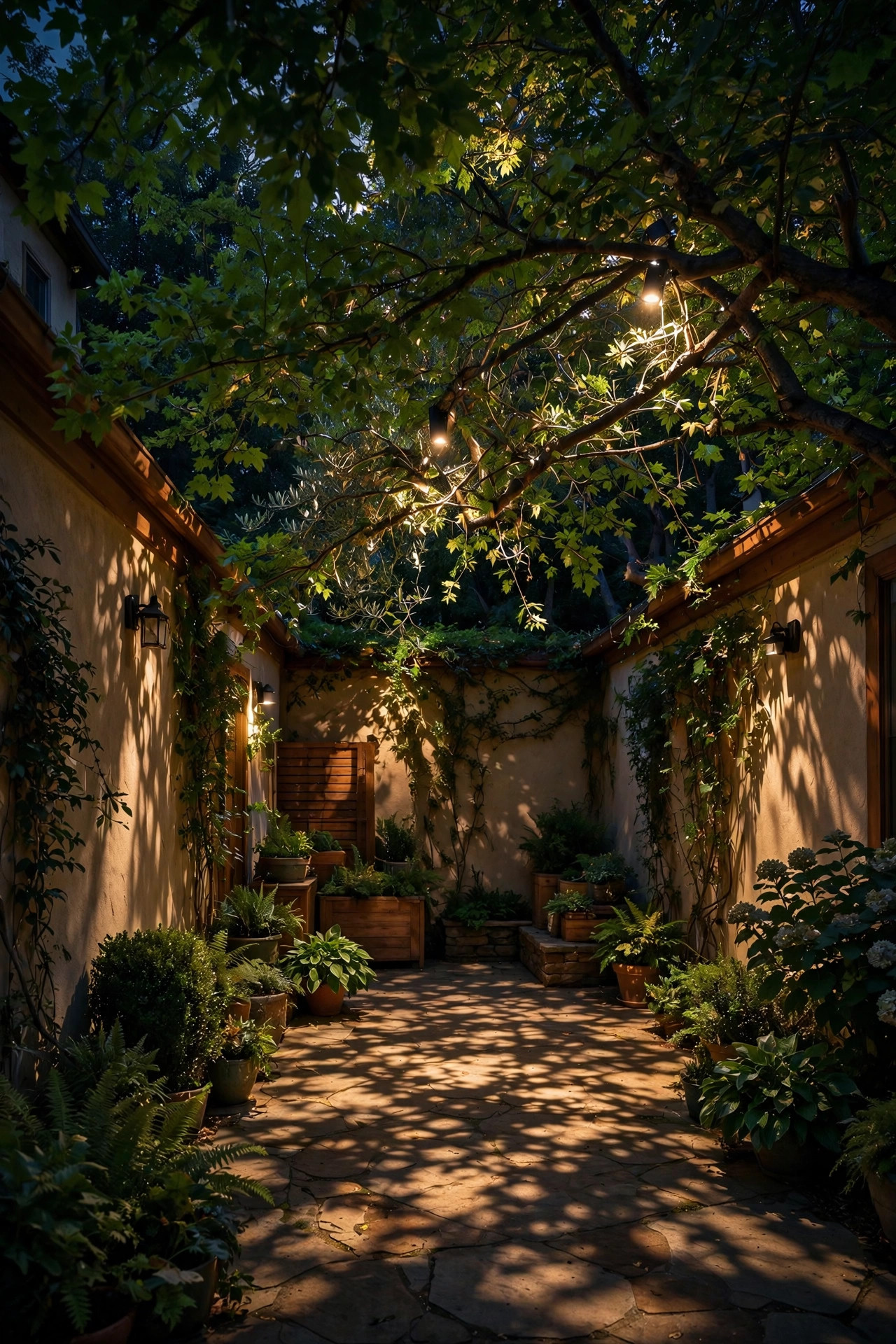
Moonlighting — mounting a downlight high in a tree so light filters through the leaves — creates the most romantic dappled shadows I've ever seen in a courtyard. Even a 12-foot ornamental tree works. Mount a weatherproof LED downlight 15 to 25 feet up (or as high as your tree allows), aimed down and slightly outward, using a narrow 25- to 40-degree beam at 2700K. The leaves do the decorating: every breeze moves the shadows. Use tree-friendly mounting straps, never screws into the trunk, and leave slack in the cable for growth. A single 6- to 9-watt fixture is plenty for a small courtyard; two fixtures in a larger tree prevent harsh dark spots. I cover tree lighting techniques more broadly in my spring front yard lighting ideas if you want to practice here before lighting bigger trees out front. Safety note: keep all connections above splash level and use gel-filled waterproof wire nuts.
Suggested budget range: $120 – $350.
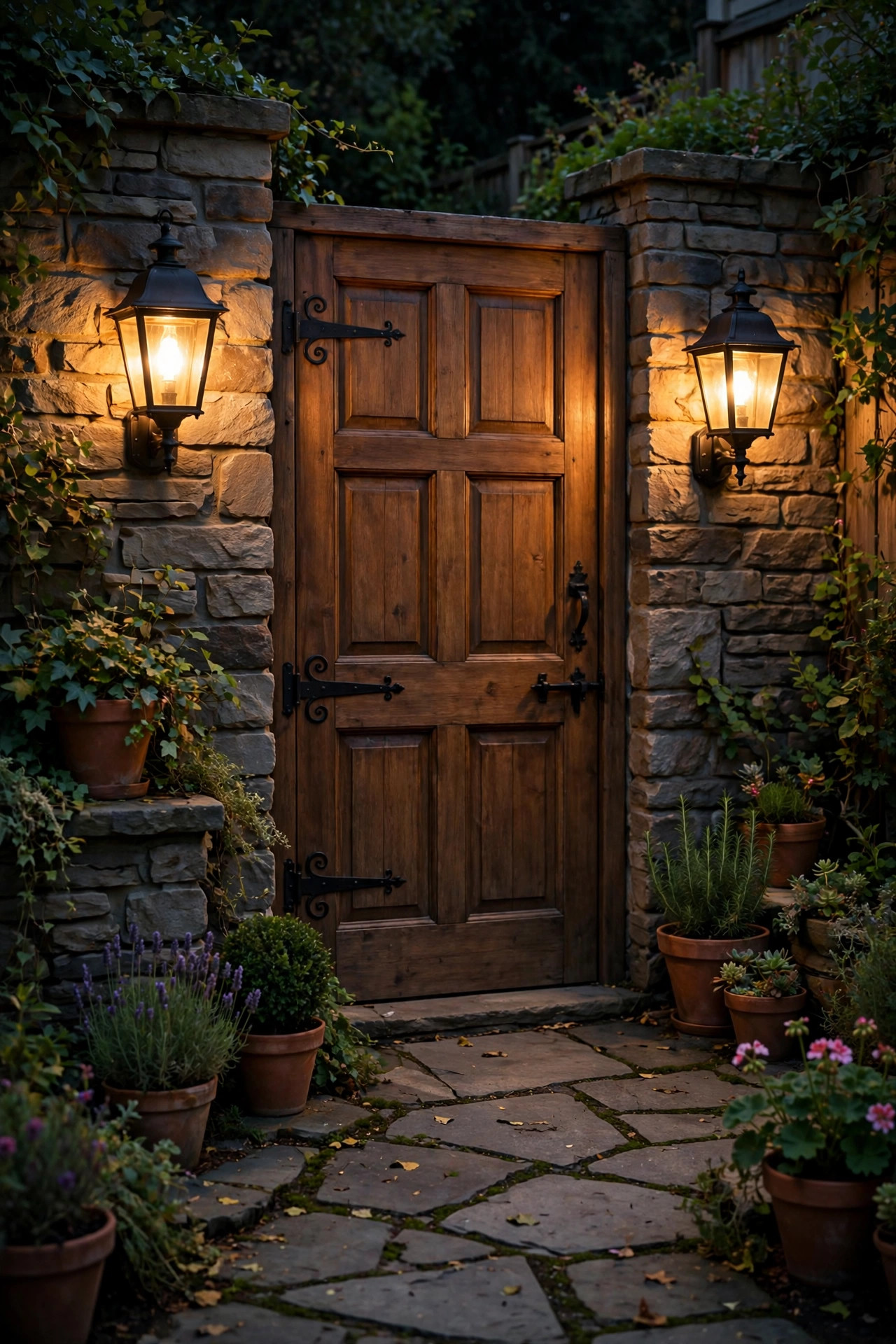
6. Wall Lanterns Flanking the Door or Gate
Nothing says "welcome in" like a pair of lanterns on either side of the courtyard door or gate. Mount them at eye level — 60 to 66 inches from the ground to the center of the fixture — and 6 to 12 inches out from the door frame so the glow frames the opening instead of washing it out. Choose damp- or wet-rated lanterns (enclosed courtyards trap humidity, so damp-rated is the minimum) with LED filament-style bulbs at 4 to 6 watts, 2700K, for that old-gaslight flicker feel without the flame. Dimmable bulbs on a smart dimmer are worth every penny here — full brightness for arrivals, half for late-night ambiance. If you're choosing between styles, my outdoor wall lantern ideas guide breaks down the looks that photograph best after dark. Styling tip: match the lantern finish to your gate hardware for a pulled-together look. Keep paper or fabric shades far from bulbs — LED-only near anything flammable.
Suggested budget range: $80 – $240.
7. LED Strip Under a Bench or Ledge
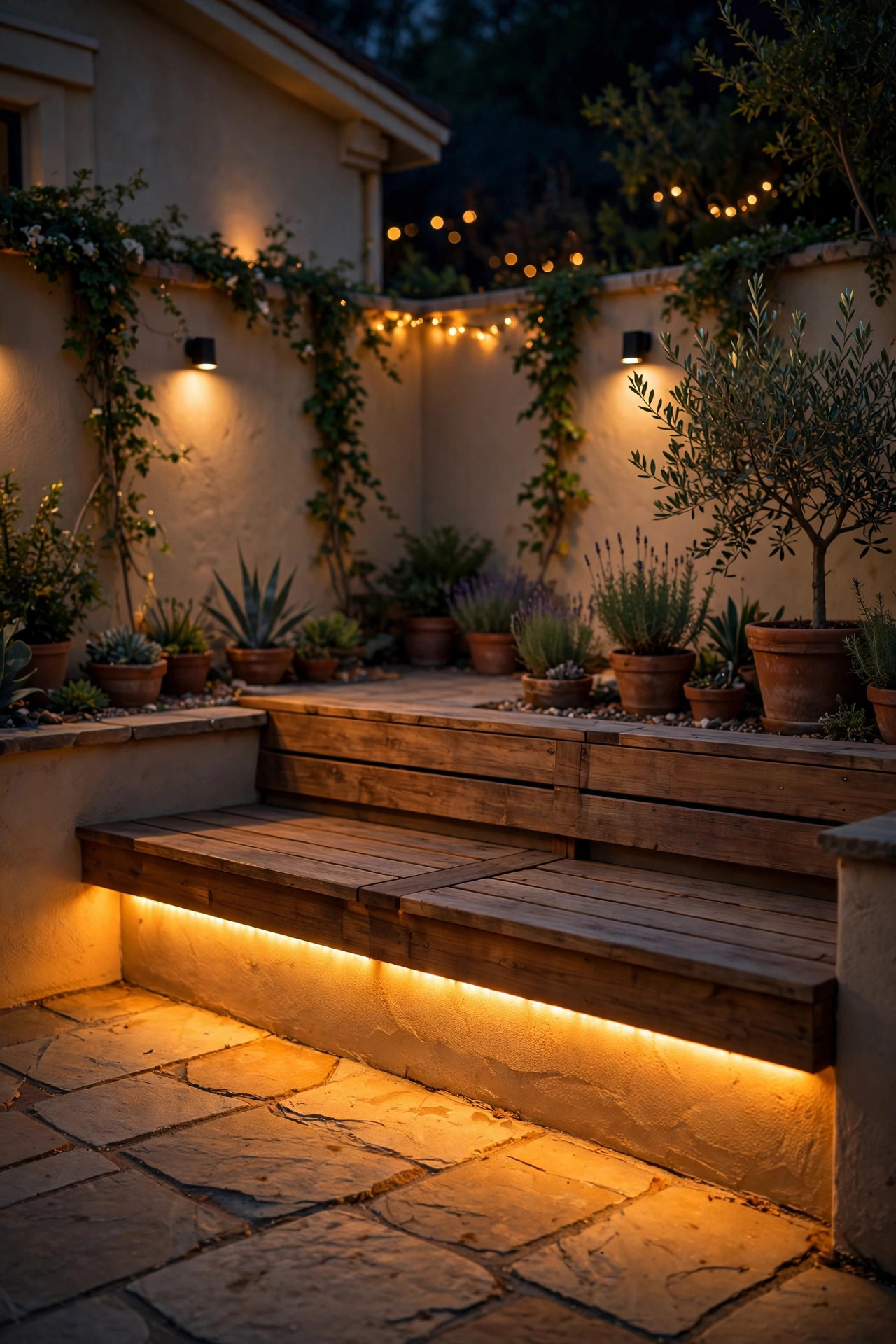
This is my favorite sneaky trick: a hidden LED strip under a seating ledge, bench, or planter cap makes furniture look like it's floating. Use an IP67 waterproof LED strip (2700K, about 300 lumens per foot is plenty) tucked into an aluminum channel with a frosted diffuser — the diffuser is non-negotiable, because bare LED dots look cheap up close. Mount the channel recessed under the lip so the strip itself is invisible from every angle; all you see is the wash of light on the ground. Power it with a 12V or 24V dimmable driver plugged into a GFCI outlet, and add an inline dimmer or smart controller so you can drop it to 30 percent for late evenings. In enclosed courtyards, moisture collects under ledges, so seal the end caps with silicone and route the driver somewhere ventilated and dry. Run the strip in one continuous length if you can — every splice is a future failure point.
Suggested budget range: $40 – $140.
8. Mini Stake Lights Ringing the Planters
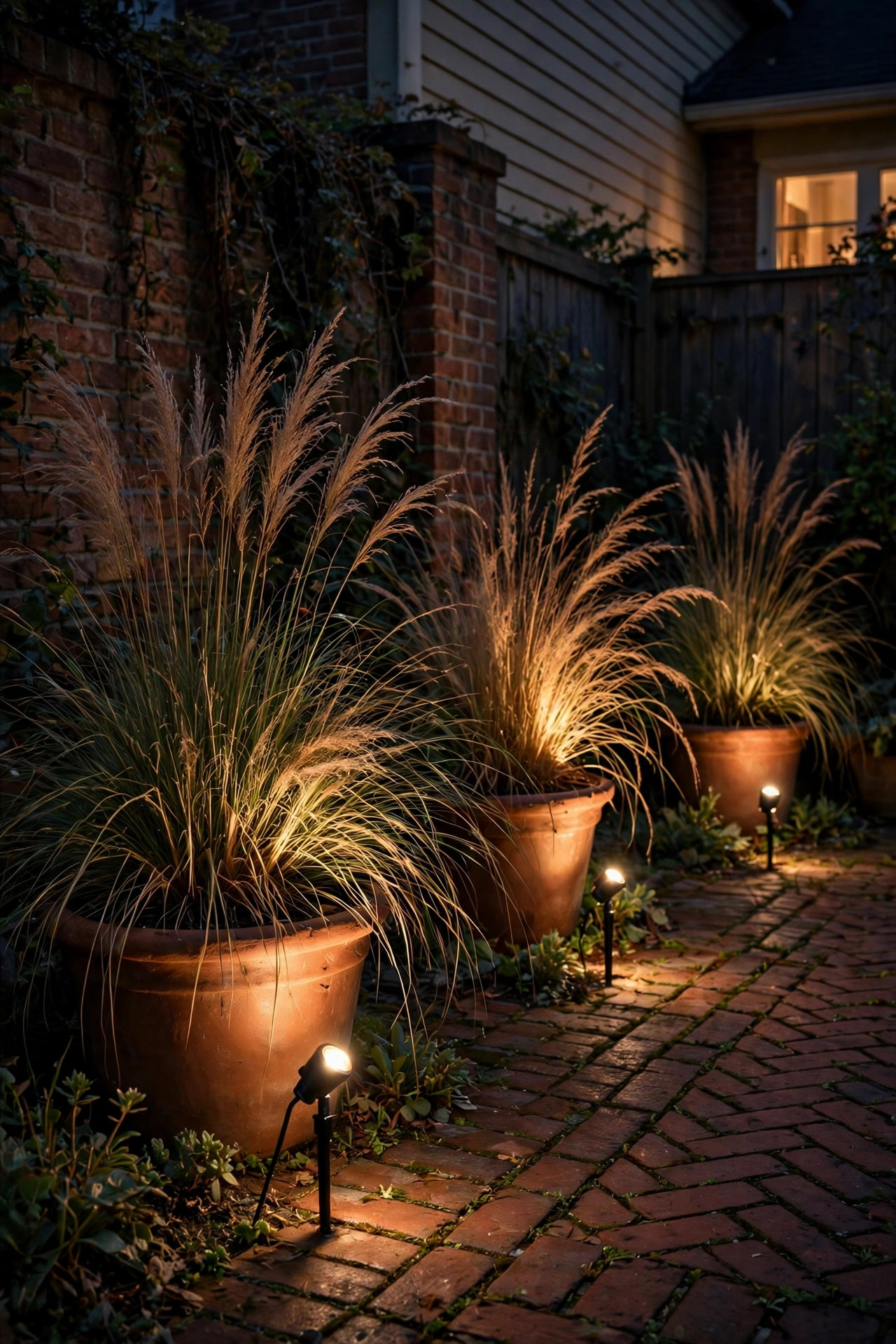
Big planters and raised beds deserve their own jewelry. Cluster 4 to 6 mini LED stake lights around each planter, spaced about 10 inches apart and set 6 to 8 inches back from the rim, aimed inward at the foliage. Tiny 1- to 2-watt warm white spots at 2700K are all you need — they make leaves glow from within like a terrarium at night. Run a single low-voltage cable daisy-chained between planters, tucked under mulch or clipped along the planter base. I like putting each planter's lights on its own cable run back to the transformer so a chewed wire in one bed doesn't darken the whole courtyard. Enclosed courtyards mean watering cans and hoses are always nearby, so pick fixtures rated IP65 minimum and raise connections 2 to 3 inches above soil level. Styling tip: uplight the tallest plant in each container and let the spill light the rest — it looks far more expensive than lighting everything evenly.
Suggested budget range: $60 – $160.
9. Fountain Spotlights: Courtyard Lighting Meets Water
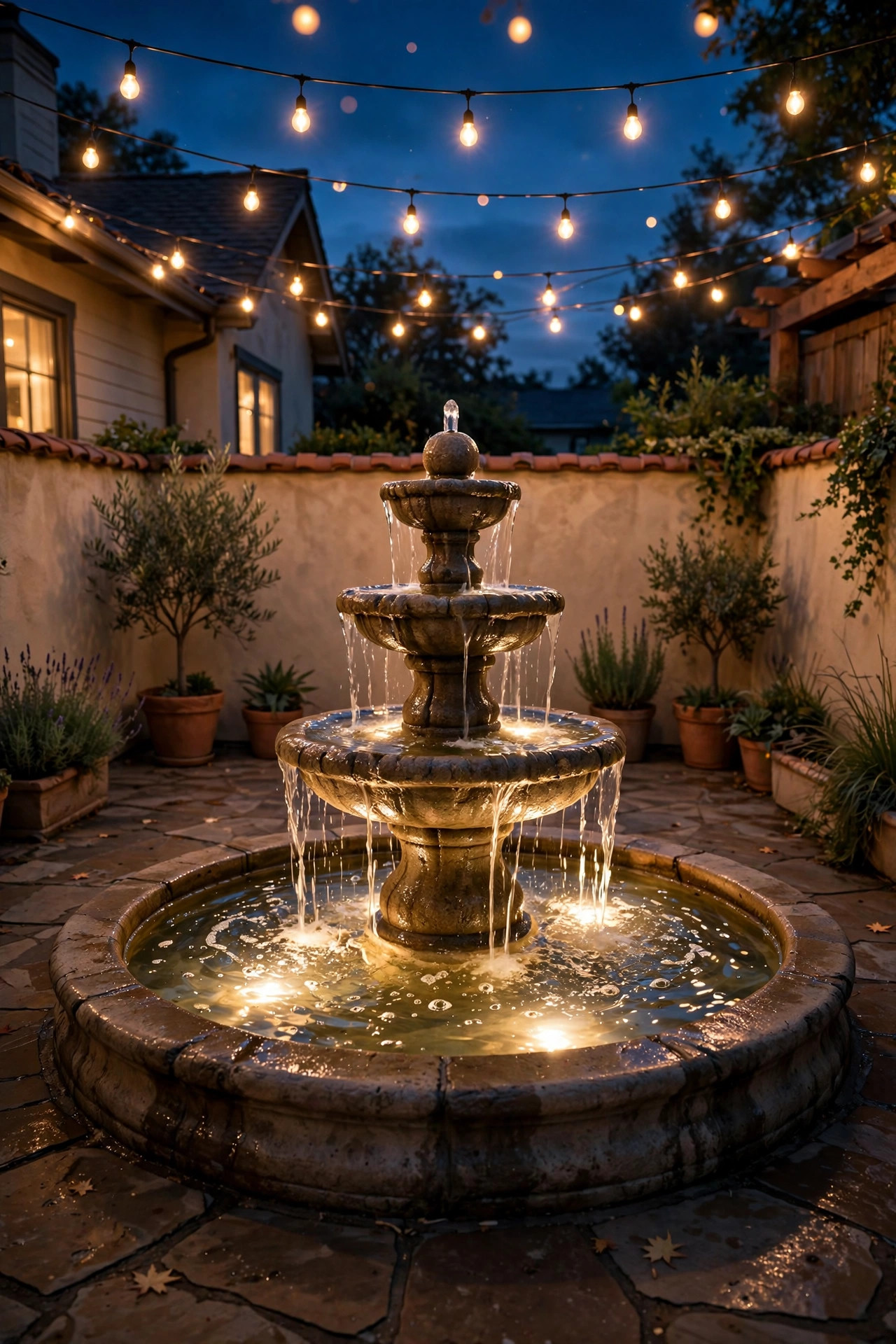
Moving water plus light is pure magic in an enclosed courtyard — the walls bounce the shimmer everywhere. Use submersible 12V LED spotlights (3 to 5 watts, warm white 2700K or a slightly cooler 3000K for extra sparkle) placed at the base of the fountain, aimed up through the water jet or falling stream. Two to three fixtures around a 2- to 3-foot fountain give full coverage without hot spots. Submersible fixtures must be rated IP68 — genuinely waterproof, not just "water resistant" — and the transformer must sit on a GFCI-protected circuit with all connections kept bone dry above the waterline. Safety is the whole game here: water and electricity mix only when everything is low voltage, sealed, and GFCI-protected, and you should unplug the system before any fountain maintenance. Styling tip: aim one fixture slightly off-center so the water sparkles asymmetrically — perfectly centered lighting looks staged.
Suggested budget range: $100 – $300.
10. Flameless Candle Lantern Clusters
Real candles in a walled courtyard are romantic right up until a gust catches a curtain — so I go flameless and never look back. Modern LED candles with real-wax exteriors flicker convincingly, and clustered in odd numbers (threes and fives) inside glass or metal lanterns, they read as genuine candlelight from three feet away. Group lanterns of varying heights — 8, 12, and 16 inches — on a side table, along a low wall, or at the base of a planter. Choose rechargeable ones with timers so they click on at dusk by themselves; in my experience, battery-swapping is where these setups go to die. Keep lanterns rated for at least damp locations if they sit uncovered, and move paper-shade styles under a covered corner. Safety note: LED-only near flammables is the rule — never put a real flame inside a fabric or dried-floral lantern, and keep all lanterns a foot away from cushions.
Suggested budget range: $30 – $110.
11. Uplighting Columns and Archways
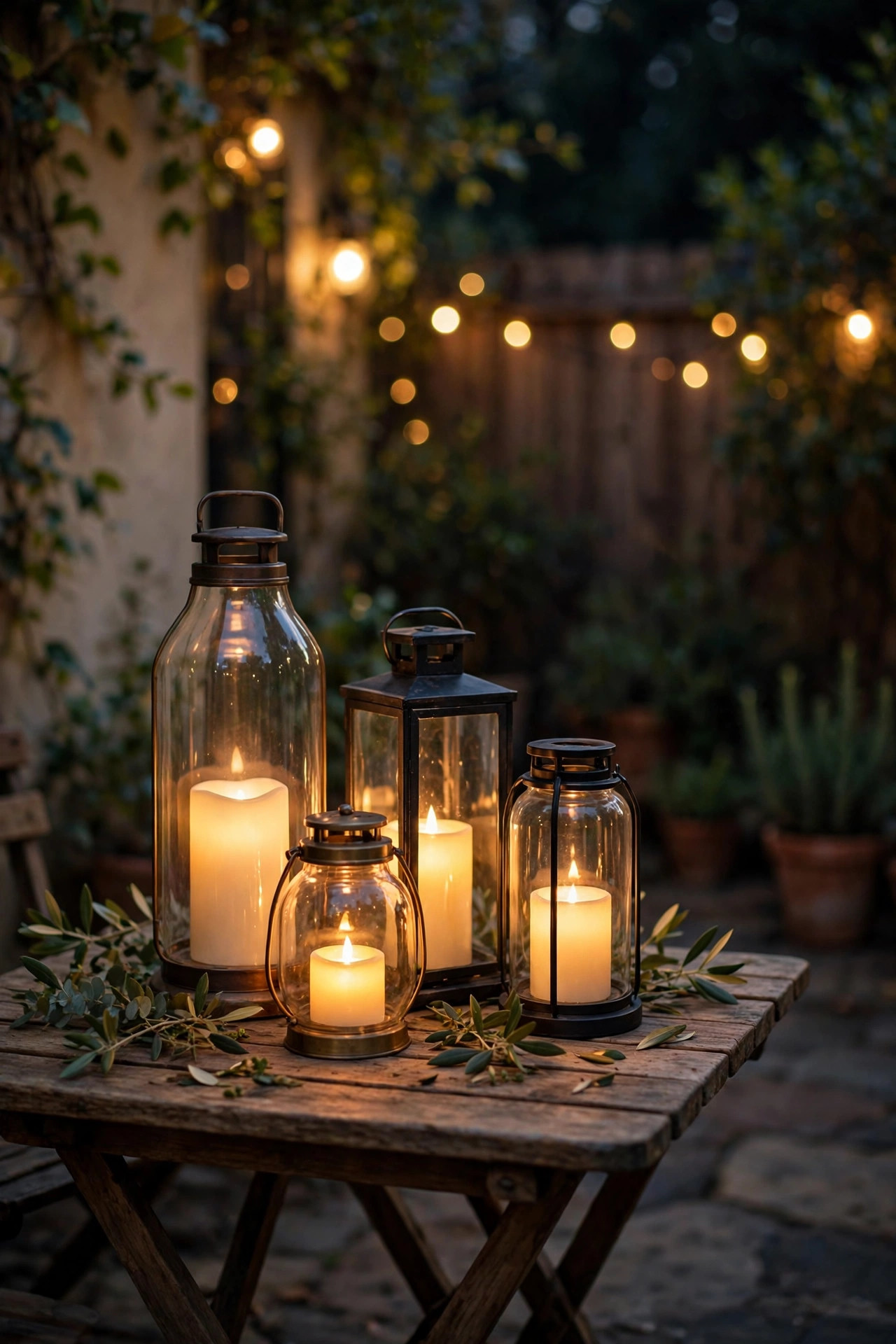
If your courtyard has columns, an archway, or even chunky wooden posts, they're begging for dramatic uplighting. Set narrow-beam (25- to 30-degree) LED spotlights 12 to 18 inches from the base of each column, aimed straight up the shaft — the tight beam keeps light on the architecture instead of spilling everywhere. Warm white 2700K at 5 to 7 watts per fixture is the sweet spot; cooler temperatures make stone look clinical. For arches, place two fixtures at the springing points (where the arch leaves the posts) aimed to follow the curve. Space fixtures consistently — one per column, same distance, same angle — because symmetry is what makes this look intentional rather than accidental. Use IP65-rated fixtures with glare shields so you're not staring into the bulb from across the courtyard. A simple photocell timer keeps them hands-free from dusk to midnight, which is honestly all you need.
Suggested budget range: $90 – $280.
12. Dimmable Wall Sconces for Adjustable Mood
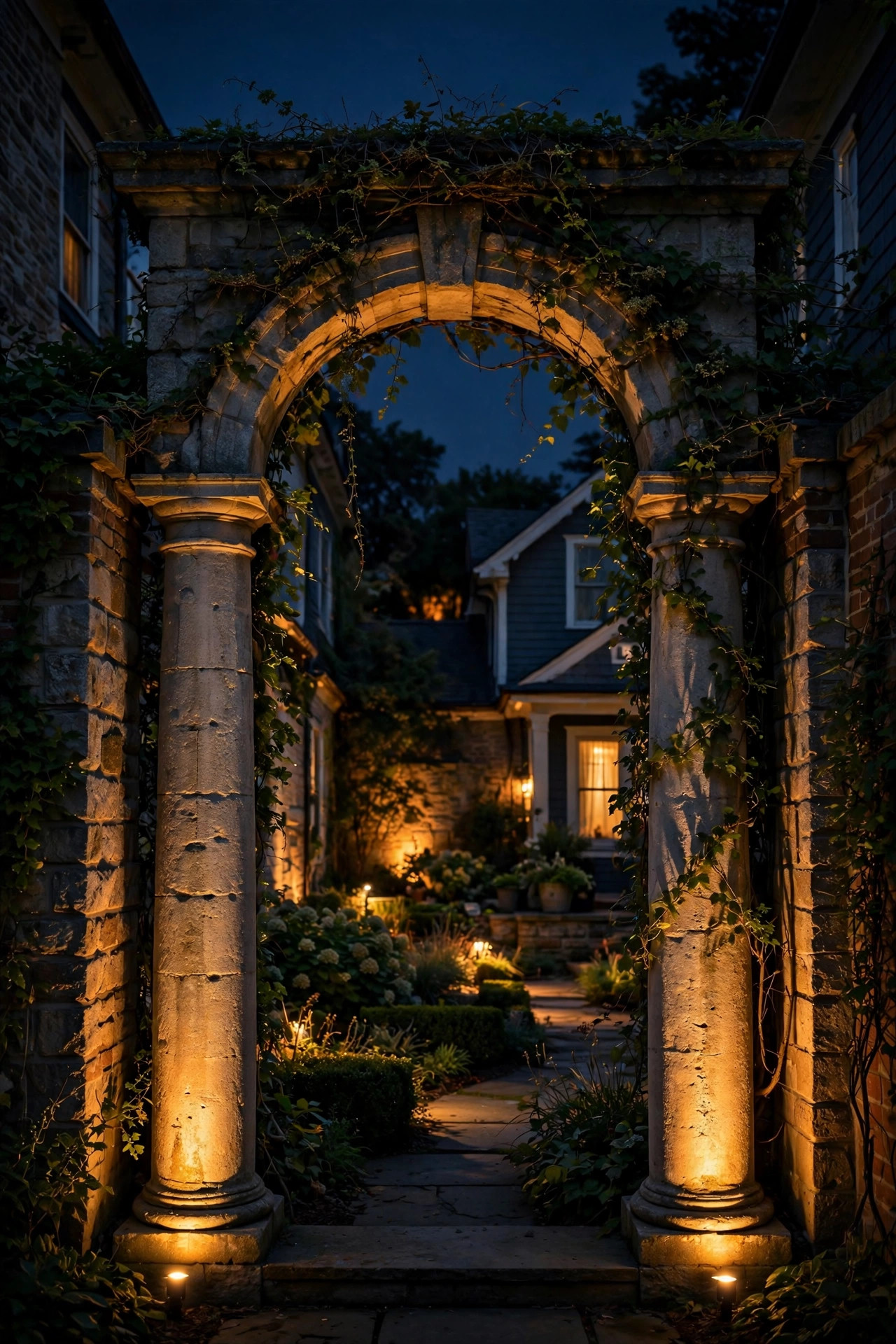
Fixed-brightness lighting is the enemy of a cozy courtyard — what you want is the ability to dial the mood. Dimmable LED wall sconces on a compatible dimmer switch let you go from dinner-party bright to late-night low in one slide. Mount sconces 66 to 72 inches high, spaced 8 to 10 feet apart, and choose fixtures with an opaque or frosted shade that pushes light up and down the wall rather than outward into eyes. Use bulbs rated 2200K to 2700K; at low dimmer settings, some LEDs shift cooler, so buy "warm-dim" bulbs that drop toward amber as they dim — they mimic candlelight beautifully. Compatibility check: match the dimmer to the bulb type (leading-edge vs. trailing-edge matters), and confirm every fixture is damp-rated at minimum for enclosed, humid courtyards. Never exceed the fixture's max wattage, and keep a few inches of clearance from wood or fabric walls.
Suggested budget range: $100 – $320.
13. In-Ground Well Lights in Gravel or Lawn
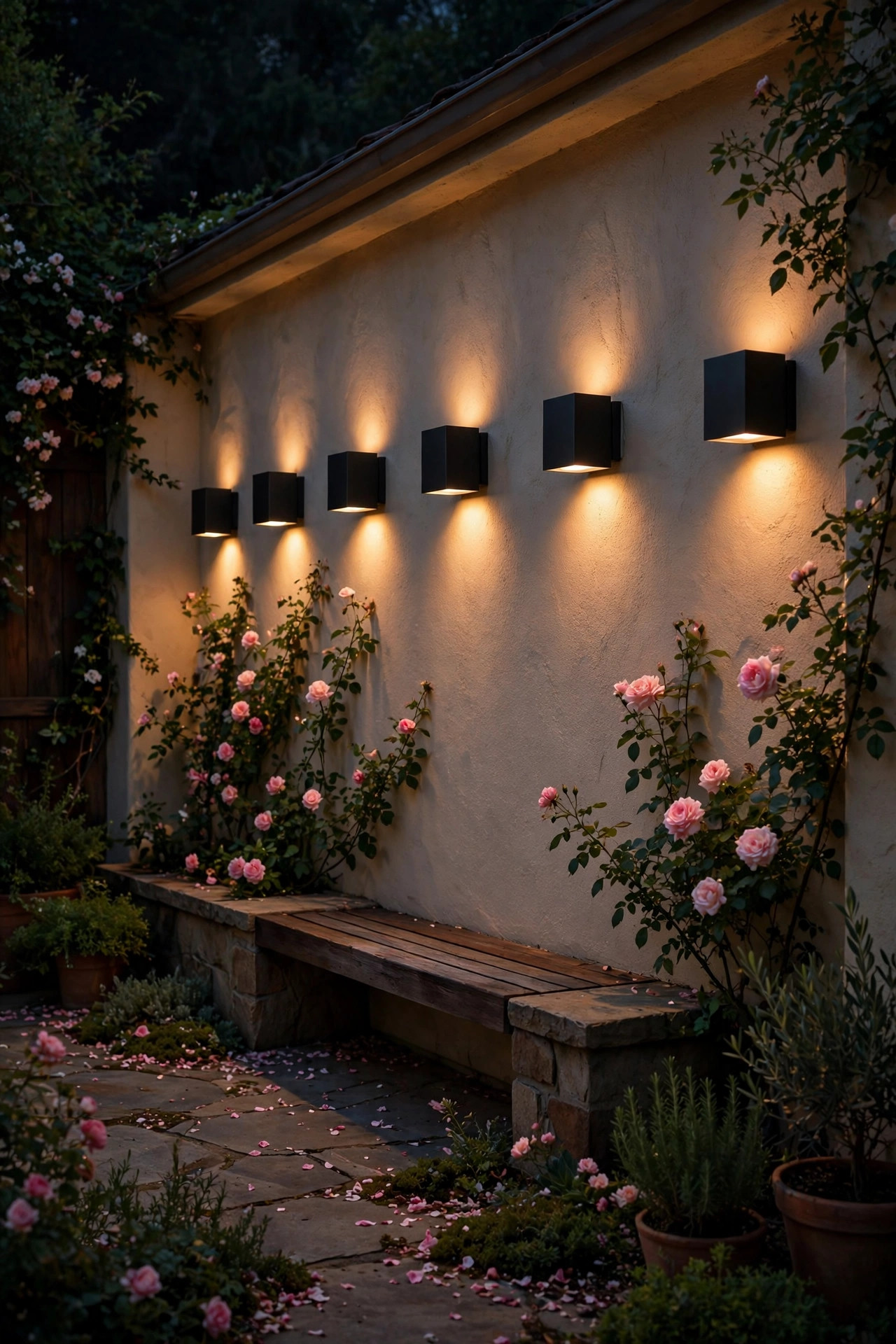
Well lights — the flush, in-ground fixtures that disappear into the surface — are perfect for courtyards with a gravel bed or a patch of lawn, because there are no visible fixtures to clutter the view. Install them so the lens sits exactly flush with grade (a half inch high collects debris and trips ankles; a half inch low collects water). Use IP68-rated LED well lights, 5 to 7 watts at 2700K, with adjustable gimbal heads so you can aim at a feature wall, a specimen plant, or back up a tree trunk. Space them 8 to 12 feet apart and always aim away from seating — nobody wants a spotlight in their wine glass. In enclosed courtyards, drainage is critical: set each fixture in a 12-inch-deep bed of coarse gravel so water drains instead of pooling around the seals. Wire them on the same 12V transformer as your other landscape lights, and cap the cable in conduit where it crosses walkways.
Suggested budget range: $110 – $330.
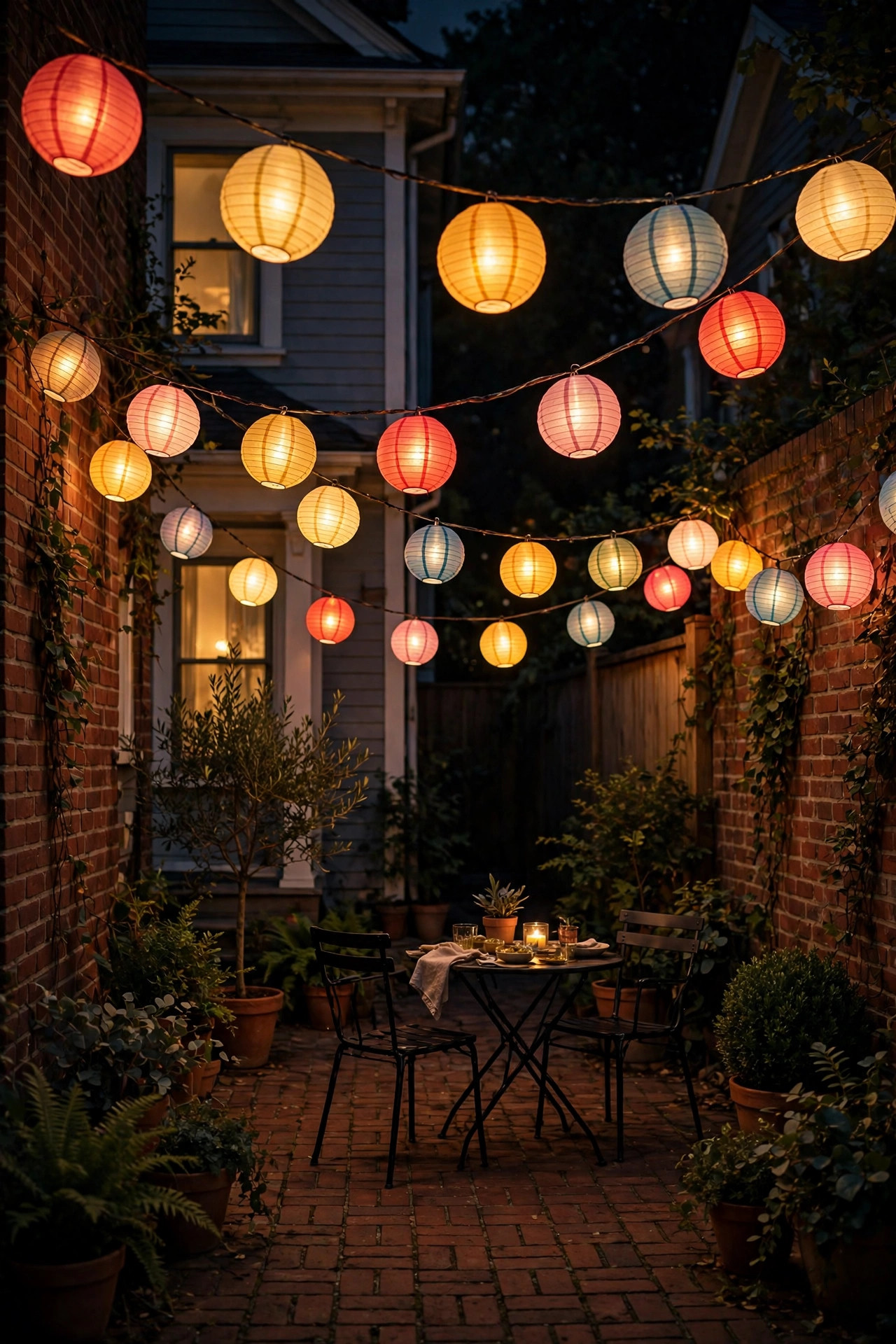
14. LED Paper-Style Lantern Swag
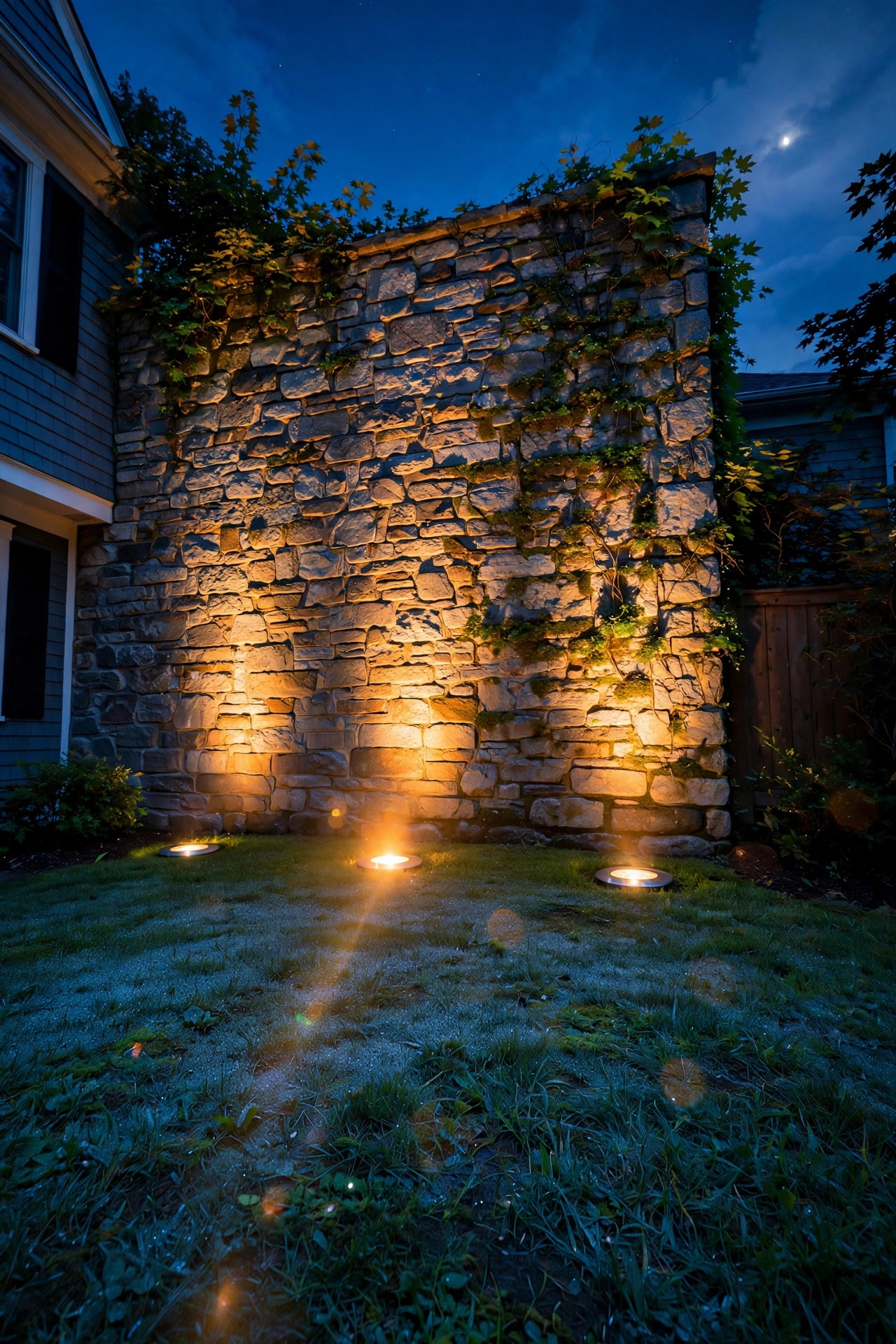
Paper lanterns strung across a courtyard look like a festival that never ends — the trick is using LED versions so they're safe and weather-tough. Hang 10- to 16-inch lantern shades on a heavy-duty festoon string with warm white LED filament bulbs (3 to 5 watts, 2700K), spacing lanterns 3 to 4 feet apart with plain bulbs between them for rhythm. Anchor the string 9 to 11 feet high with a gentle sag, just like string lights. If your lanterns are true paper, keep the whole swag under a covered corner or bring them in during storms; weatherproof nylon or plastic-ribbed lanterns can live outside year-round. Either way: LED bulbs only, never real candles or incandescents, and keep shades 12 inches from walls, wood beams, and dried vines. A warm-dim smart bulb in each lantern lets the whole swag breathe from bright to ember-glow. Honestly, this is the fastest way to make a plain courtyard feel like a celebration.
Suggested budget range: $50 – $170.
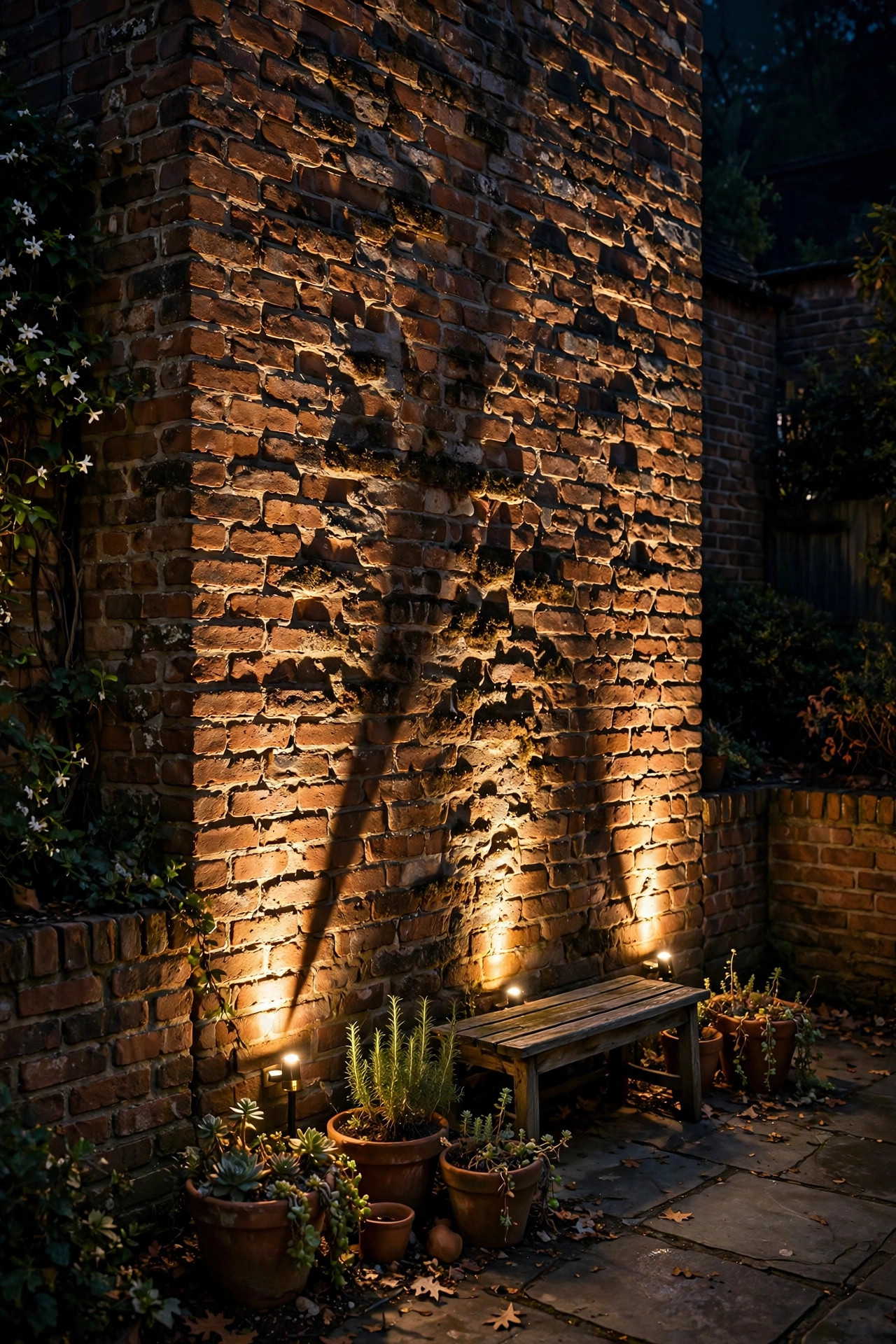
15. Grazing Light on Textured Brick or Stone
Got a brick or stone wall? Grazing — placing a fixture just 3 to 6 inches from the surface — rakes light across the texture and turns every mortar line and chiseled edge into sculpture. Use linear LED wall-grazers or a row of narrow-slot fixtures mounted tight to the wall, 2700K or even 2200K for extra warmth, spaced every 2 to 3 feet along the run. This is the opposite of wall-washing: the fixture hugs the wall, so the beam stays shallow and every bump throws a shadow. It works best on rough stone, tumbled brick, or board-formed concrete — smooth stucco just looks flat, so skip it there. Enclosed courtyards are ideal because there's no competing ambient light to dilute the effect. Keep fixtures IP65-rated and wipe the lenses seasonally; in a walled space, dust and spiderwebs show up fast in a raking beam. Dim to about 70 percent — full blast flattens the shadows you're trying to create.
Suggested budget range: $80 – $230.
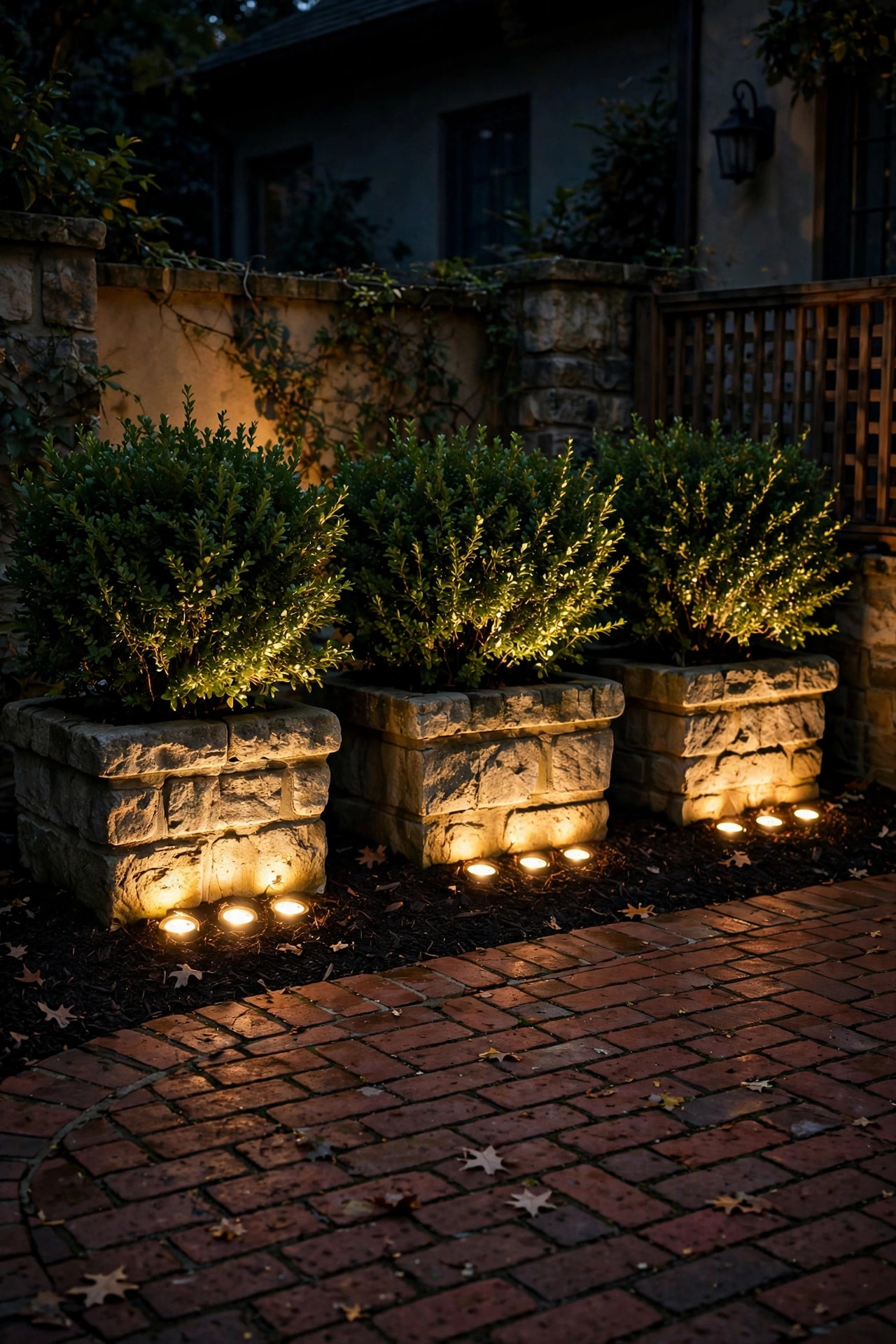
16. Puck Lights Tucked Into Planter Bases
Here's a tiny detail with an outsized payoff: small LED puck lights set into the base of planters or along the toe-kick of a built-in bench throw a low, mysterious glow that makes everything look custom-built. Use 1- to 2-watt warm white pucks (2700K) in weatherproof housings, one every 18 to 24 inches along the planter base, recessed so the lens is hidden but the light spills out. Surface-mount pucks with a small flange work on wood planters; for masonry, choose recessed models set into a drilled core. Connect them with waterproof quick-connectors on a 12V line, and keep the driver in a dry, ventilated spot — under-planter cavities trap humidity, which is the enemy of cheap electronics. Put them on the same dusk timer as your other accent lights so the whole courtyard wakes up together. They're nearly invisible by day, which is exactly the point — guests will wonder where the glow is coming from.
Suggested budget range: $35 – $120.
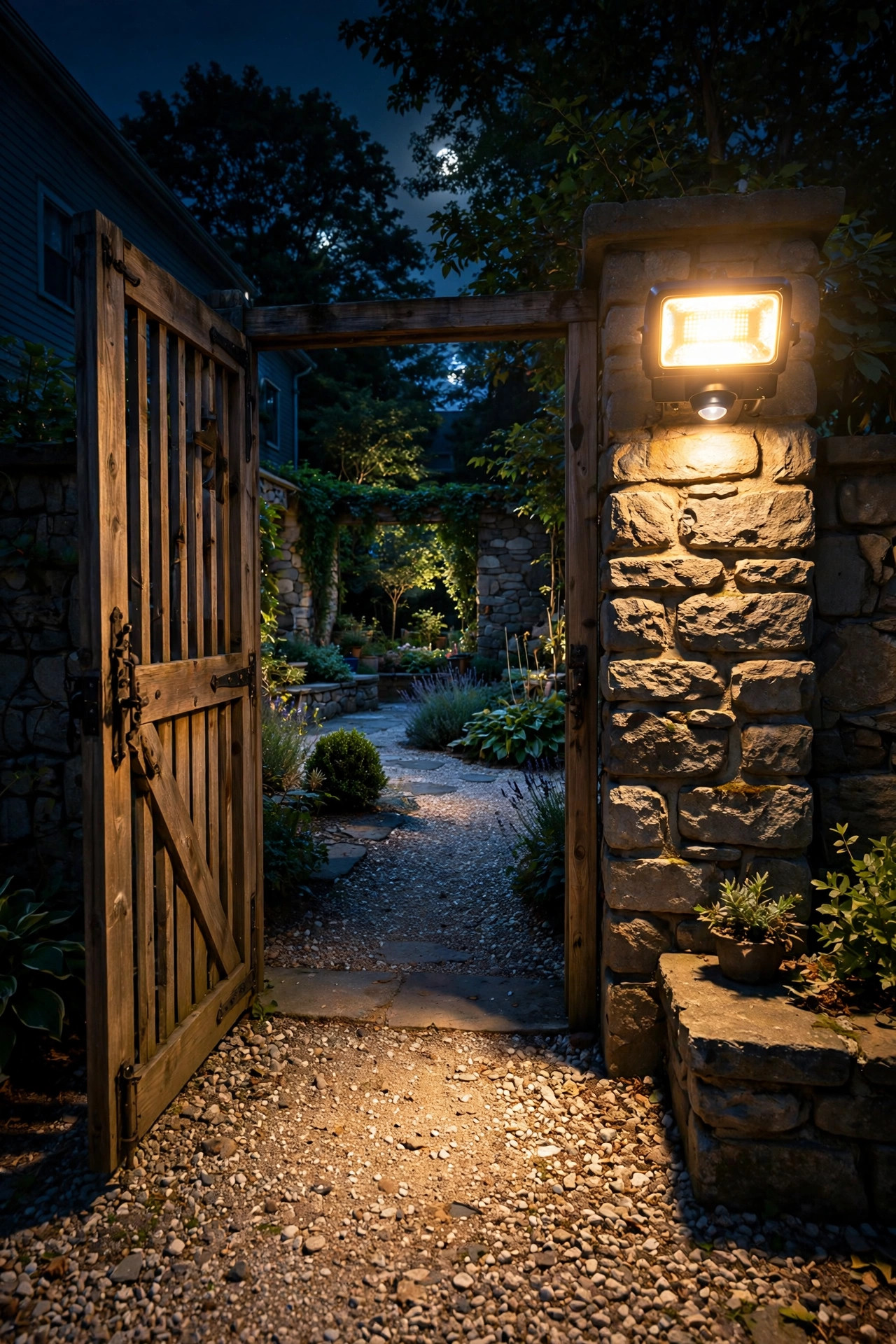
17. Motion-Sensor Gate Light for Smart Courtyard Lighting
Courtyards are private, but that gate still needs to welcome you home — a motion-sensor light at the entrance does it without lighting the whole space all night. Mount a warm white (2700K) motion-sensor wall light or low-voltage path light 6 to 7 feet high beside the gate, angled down the entry path, not into the courtyard seating area. Set the sensor to a 180-degree field covering the approach, with a 2- to 5-minute shutoff so it greets you and then gets out of the way. Keep brightness modest — 300 to 500 lumens is plenty — because a blazing security flood at the gate will nuke the intimate mood you've built inside. I like pairing it with a photocell so it only arms after dark, and battery or solar-powered models work if there's no outlet nearby (just confirm the solar panel gets a few hours of direct sun). Check the aim from your main seating spot — if you can see the bulb, add a shield.
Suggested budget range: $60 – $190.
Frequently Asked Questions
How do I uplight a courtyard wall without creating blinding glare?
Keep the fixture low and the beam wide: set wide-beam (60-degree) uplights 6 to 12 inches out from the wall base and choose fixtures with built-in glare shields or louvered tops. Warm white 2700K LEDs at 5 to 7 watts are plenty in an enclosed space — the walls bounce light around, so you need far less wattage than you'd think. The biggest mistake is aiming fixtures at seating areas or windows; always point the beam up the wall and away from eye level, and stand in your main seating spot during installation to check for hot spots before you bury the cable. A quick trick I love: test each fixture's position at night with a battery-powered work light first, so you're not re-digging holes twice.
How do I protect courtyard lights in a damp, enclosed space?
Enclosed courtyards trap humidity, so treat them like a damp location even if they're technically outdoors. Choose fixtures rated IP65 or better for anything exposed to rain, and damp-rated minimum for covered areas. Use gel-filled waterproof wire connectors on every splice, keep all electrical connections 2 to 3 inches above soil or standing-water level, and give low-voltage drivers and transformers a ventilated, dry home — sealed boxes under planters will cook them with trapped moisture. Wipe lenses once a season, since dust and cobwebs show up fast in walled spaces. If you notice flickering after a rainy week, check the connectors first — nine times out of ten it's moisture in a splice that wasn't sealed properly.
How can I power courtyard lights if I don't have outdoor outlets?
You have three good options. Solar-powered fixtures work for accents like stake lights and lanterns, as long as the panels get a few hours of direct sun daily. Battery or rechargeable LED candles and puck lights need no wiring at all and are perfect for tables and planters. For anything bigger — string lights, uplights, sconces — have an electrician add a single GFCI-protected outdoor outlet or run a low-voltage transformer from an indoor outlet through a window or wall penetration; one 12V transformer can power a whole courtyard's worth of accent lights on one cable run. In my experience, one properly placed outlet near the courtyard's main seating corner is all most people ever need, and it's a quick job for an electrician.
How bright should lights be in a small enclosed courtyard?
Dimmer than you think. In a walled space, light bounces and accumulates, so aim for warm white (2700K or lower) fixtures in the 1- to 7-watt range per accent light, with total accent lighting often under 1,000 lumens for the whole courtyard. Put key lights on dimmers and start at 50 percent — you can always go up. If your courtyard feels harsh, the fix is almost never "add more lights"; it's dim what you have, shield the bulbs from direct view, and let shadows do half the decorating. As a rule of thumb, if you can comfortably read a menu at your courtyard table, you have enough light — anything beyond that is washing out the very intimacy that makes a courtyard special.
Wrapping Up Your Courtyard Lighting Ideas
The secret behind every great enclosed oasis on this list is the same: layering beats brightness. A soft wall wash, a glow at ground level, and one sparkling focal point — all in warm white, all shielded from direct view — will outshine a single floodlight every time. Pick three or four courtyard lighting ideas that fit your space and budget, install them on one dusk-to-dawn timer, and give yourself a week to live with the layers before tweaking. If you're hungry for more after-dark inspiration, browse the rest of our outdoor lighting ideas and keep building your glow, one warm layer at a time.