Introduction
When we listed our neighbor's house two springs ago, the daytime photos were lovely — but the home sat for three weeks. Then her agent reshot at twilight after a weekend of lighting tweaks, and honestly? It looked like a different house. Showings doubled. That's the quiet power of curb appeal lighting for selling a home: most buyers scroll listings at night, many do their first drive-by after work, and a warm, layered glow tells them "this home is cared for" before they ever step inside. I always think in layers — low lights to guide the eye, mid-level lights to welcome, and soft uplighting to show off the architecture. In this post I'll walk you through 21 fixes, most of them a single afternoon and under $200, that make your home photograph beautifully and feel irresistible at dusk. Pick the ones that fit your facade, set them on a timer, and let your house glow its way to a faster sale.
1. Line the Front Walkway With Low-Voltage Path Lights
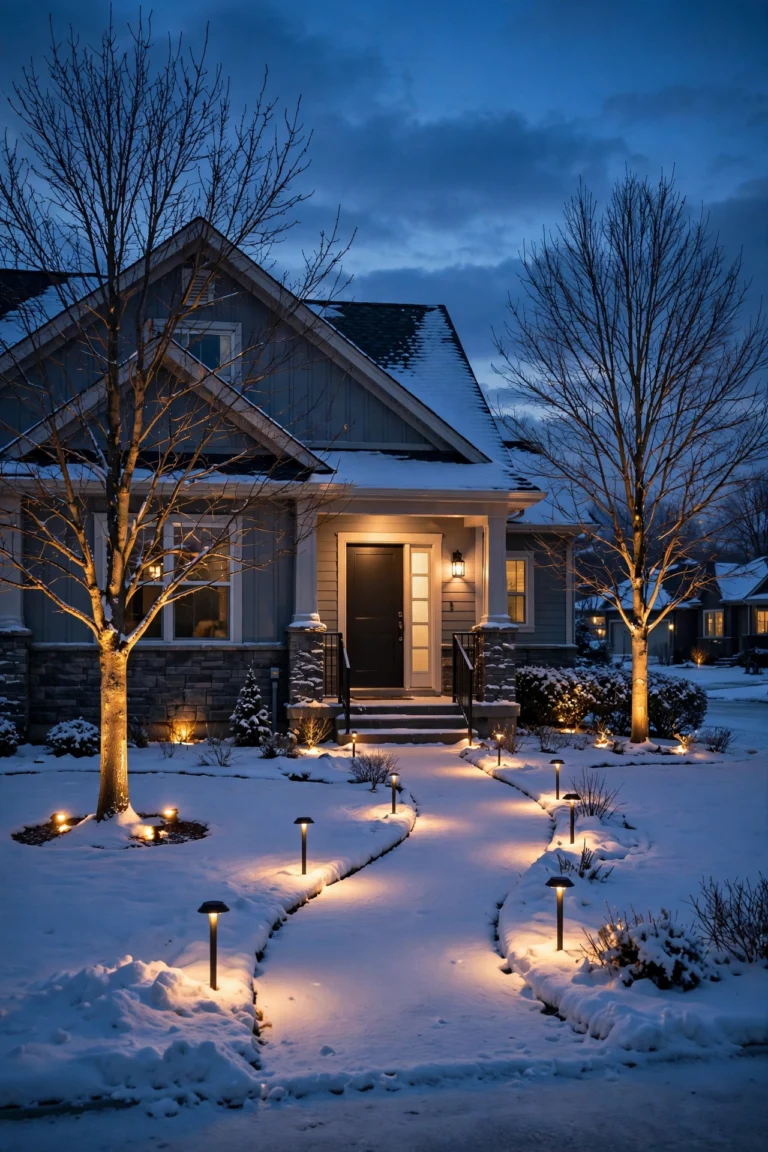
If I could only do one thing before listing, this would be it. A lit walkway reads like a runway of welcome in photos, and it tells evening buyers exactly where to go. Choose low-voltage LED path lights in a simple finish that matches your door hardware — matte black and oil-rubbed bronze photograph best. Space them 6 to 8 feet apart, staggered on alternating sides rather than in two stiff rows, which looks like an airport runway. Keep them 12 to 15 inches tall so the light pools on the path instead of glaring into the camera. A basic kit with a transformer takes about an hour to install: stab the stakes, bury the cable 2 to 3 inches under the mulch, and connect. Plug the transformer into a GFCI outlet only. In listing photos, that gentle scalloped line of light is the single strongest "come home" signal you can buy for the money.
Suggested budget range: $60 – $180.

2. Wash the Facade With Warm Uplights
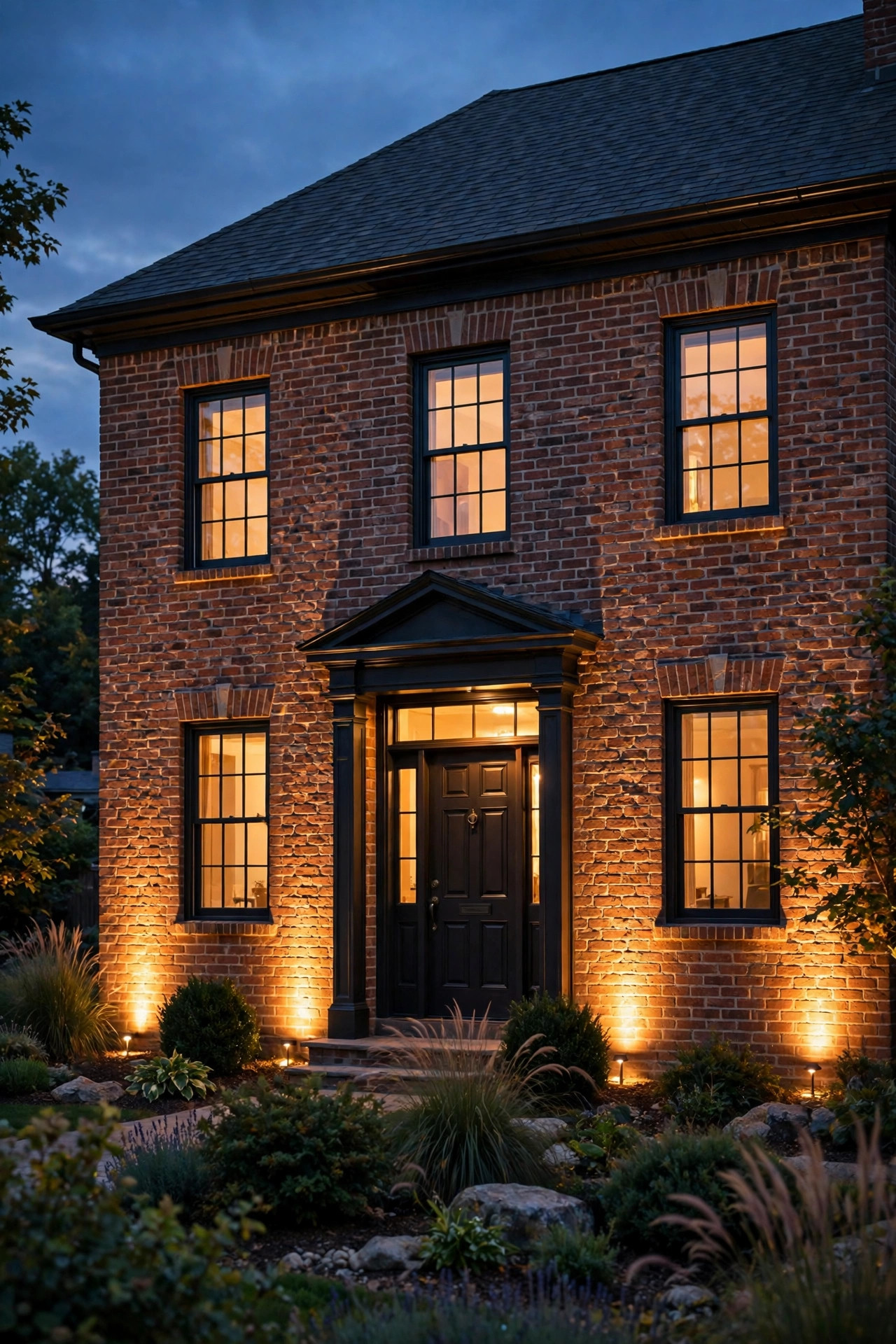
A dark facade disappears in twilight photos; a softly washed one looks expensive. Place two or three LED uplights in the planting beds, 12 to 18 inches out from the foundation, angled up at the wall. Wide 60-degree beams give an even wash on siding, while narrower 30-degree beams graze brick and stone to show off texture — texture reads as "quality" to buyers. Aim for the corners and the tallest part of the front elevation, and avoid shining straight into windows, which looks harsh and a little spooky in photos. In-ground well lights sit flush and tidy for showings, but simple adjustable stake spotlights work fine and are easier to reposition after you see the first test shots. Keep every fixture at 2700K so the wash looks golden, not blue. This is the exact trick behind those magazine-style twilight listings, and it costs less than a single professional photo session.
Suggested budget range: $50 – $160.
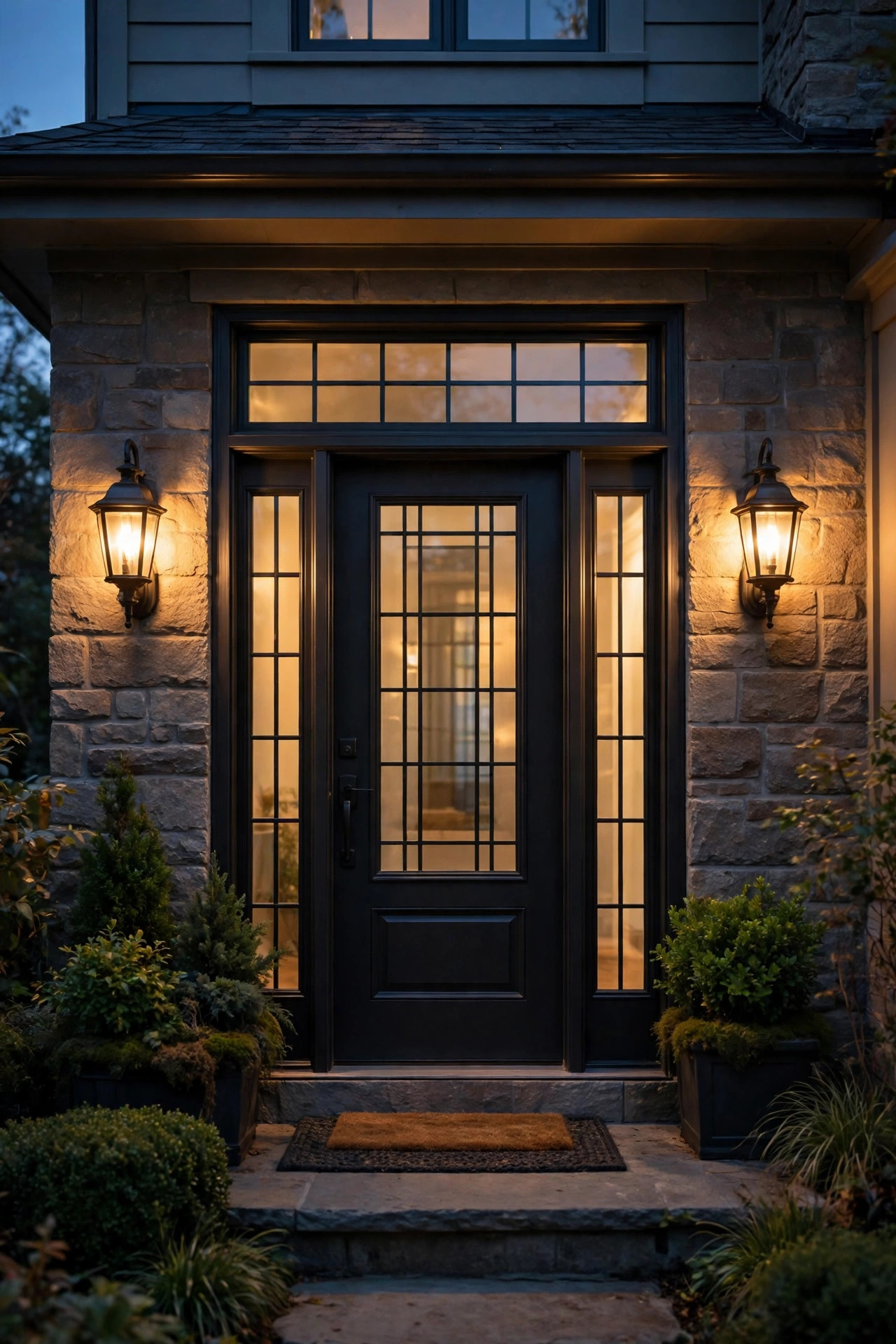
3. Flank the Front Door With Matching Sconces
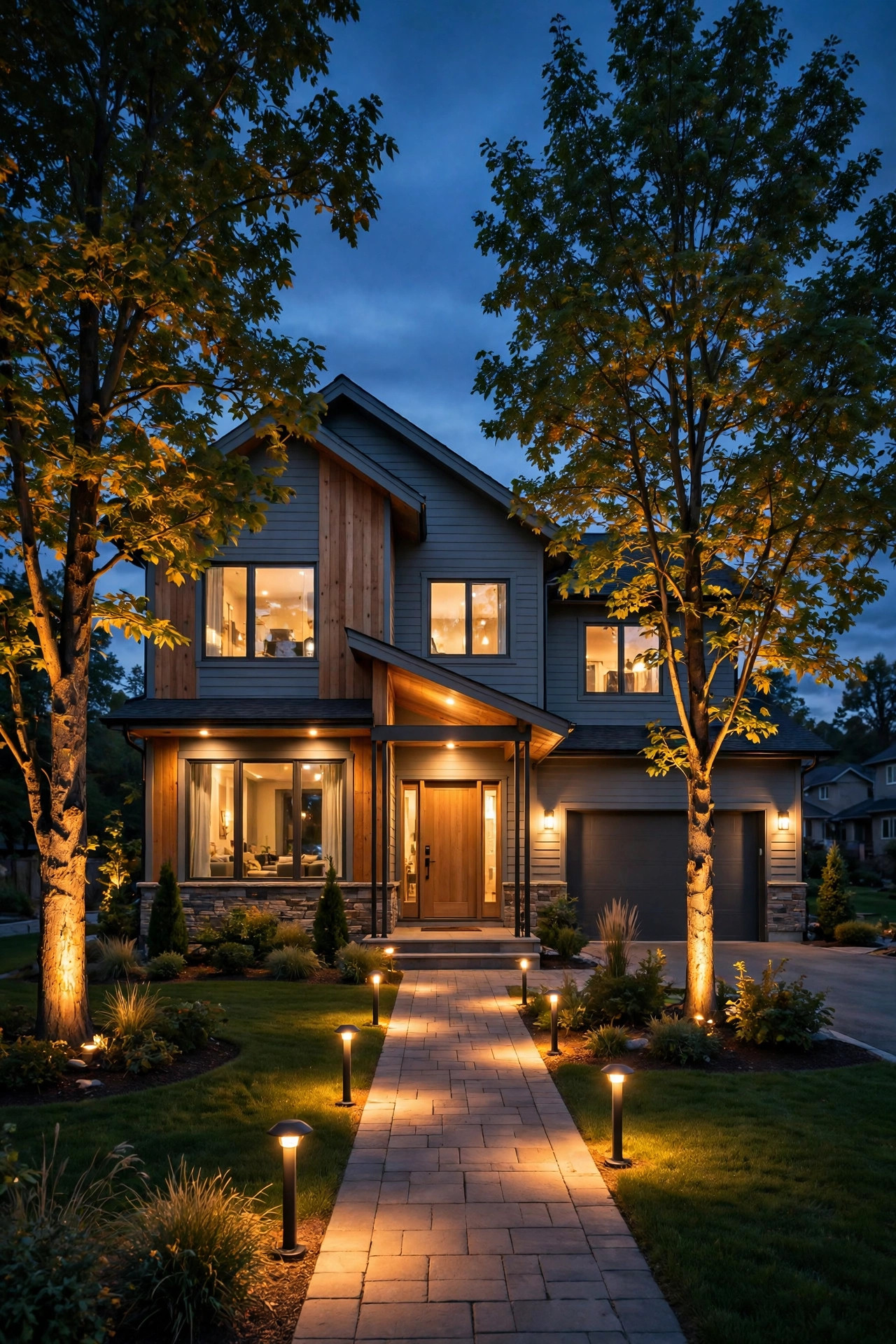
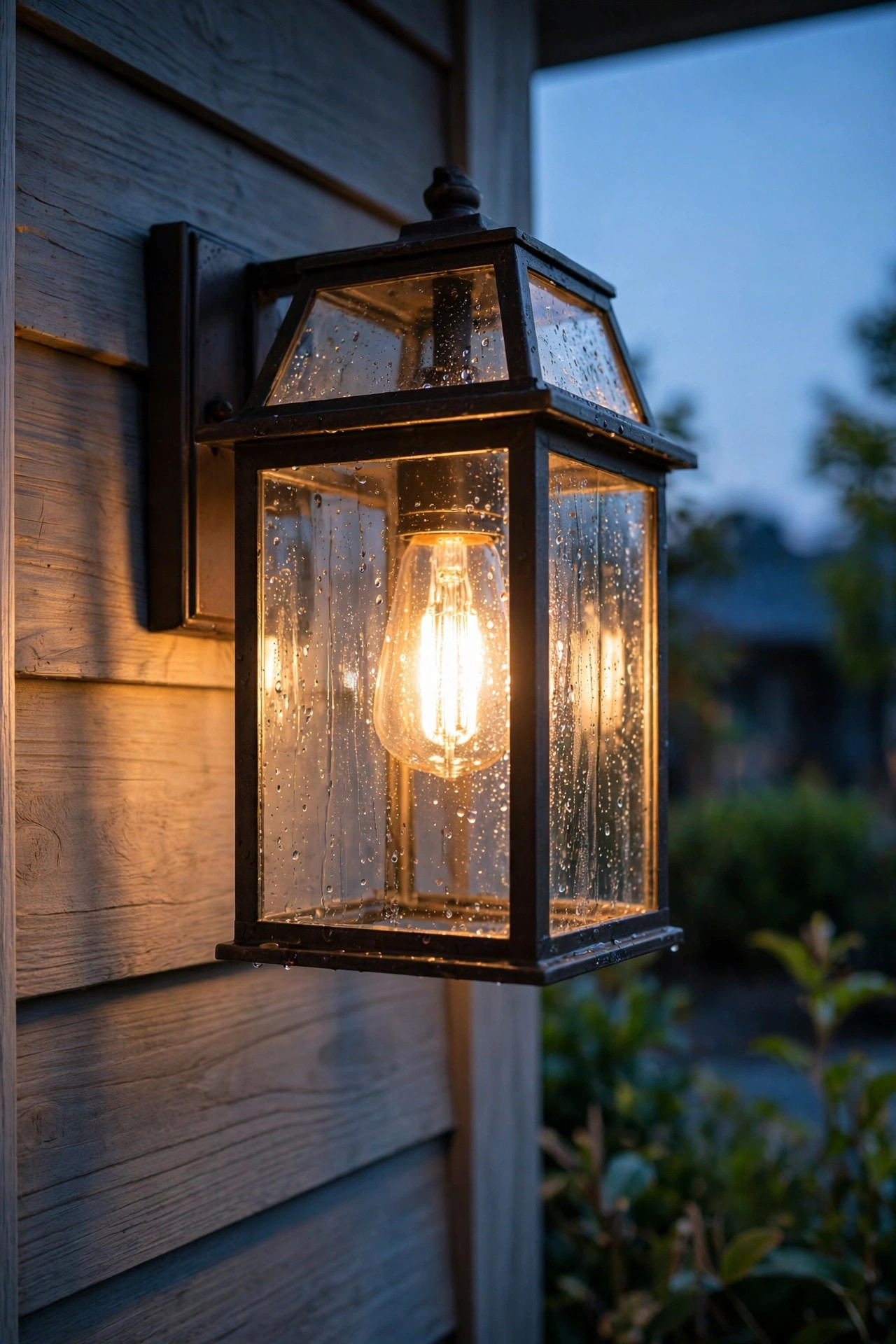
Buyers' eyes land on the front door first, so give it a frame. A matching pair of wall sconces, one on each side of the door, instantly makes the entry look intentional and symmetrical in photos. Size matters here: each fixture should be roughly one-quarter to one-third the height of the door, mounted with the center about 66 inches from the ground. Undersized sconces are the most common mistake I see — they read as an afterthought. Choose clear or seeded glass with LED filament-style bulbs so the light sparkles a little in photographs, and pick a finish that matches your house numbers and door handle for a pulled-together look. If your door sits off to one side, a single oversized lantern-style sconce plus a lit planter on the other side balances the composition. There are more entry combinations in my front porch lighting ideas if your porch layout is tricky. This one change makes the whole entry feel like a magazine cover.
Suggested budget range: $80 – $250.
4. Make the House Numbers Glow
Here's a detail sellers forget and buyers absolutely notice: if someone drives by at 7 p.m. and can't find your address, you've lost them. A backlit address plaque or individual illuminated numbers solve it and look quietly high-end in listing photos. Solar-powered plaques charge all day and switch on at dusk with no wiring at all — just mount them where they get at least six hours of sun. Hardwired backlit numbers are brighter and more even; they tap into your doorbell transformer or a low-voltage landscape line, which is a simple job for a handyman if you're not comfortable. Keep digits at least 4 inches tall so they're readable from the street, and mount the plaque where a path light or sconce won't wash it out. I love this in twilight shots: a glowing address floating beside the door quietly signals a well-maintained, detail-loved home. It also photographs crisply from a slow-moving car, which is exactly how most drive-by buyers first meet your house.
Suggested budget range: $30 – $120.

5. Uplight Your Best Tree
Every yard has one tree doing the heavy lifting, and lighting it turns your whole front yard into a scene. Place one or two LED spotlights at the base, 2 to 3 feet from the trunk, aimed up into the canopy. A 36 to 60-degree beam works for most shade trees; for a tall oak, a narrower beam from a few feet further back keeps the light inside the branches instead of spilling into the sky. In photos, a lit canopy adds height and drama that flat daytime shots can't match, and it makes the lot look bigger and more established — two things buyers pay for. Renting for photos only? Battery and solar uplights have gotten surprisingly good for a weekend shoot. Just keep fixtures off the lawn itself so the yard looks clean for showings, and rake mulch neatly around the base. One gorgeous tree, lit well, is worth ten gimmicks.
Suggested budget range: $40 – $140.

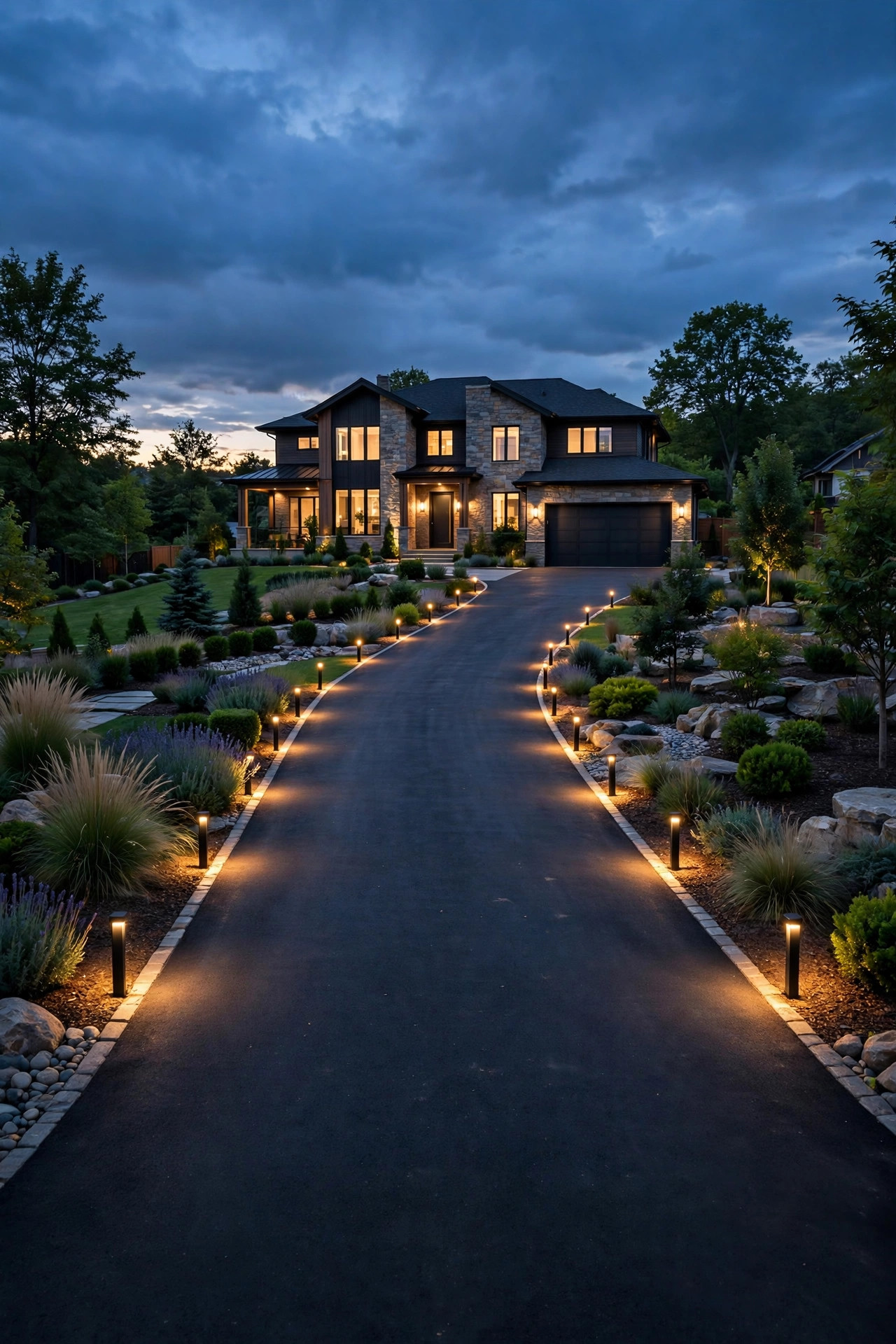
6. Edge the Driveway With Subtle Markers
The driveway is the first thing a drive-by buyer actually uses, so make it feel grand but effortless. Low marker lights along one or both edges — spaced 8 to 10 feet apart — define the approach and photograph like a boutique hotel entrance. In-ground LED pucks sit flush so nobody trips and the lawn crew won't clip them, while short bollard-style markers suit wider, more formal drives. My honest advice for sellers: skip the colored solar markers from the dollar aisle. Inconsistent brightness and a bluish tint scream "cheap" in photos, which is the opposite of what we're doing here. If you want the full menu of layouts, my driveway lighting ideas covers gates, pillars and long country drives too. Keep the markers low and warm, and stop the line where the drive meets the garage so the eye finishes its journey at the house, not the car park.
Suggested budget range: $70 – $220.
7. Hang a Statement Pendant or Flush Mount on the Porch
That bare bulb or builder-grade flush mount over your porch is quietly dating your whole entry. Swapping it for a lantern-style pendant or a handsome semi-flush fixture takes twenty minutes with the breaker off, and it transforms the "ceiling" of every porch photo. Hang pendants so the bottom sits about 7 feet above the porch floor — high enough for the door swing and tall buyers, low enough to feel intimate. Match the finish to your sconces so the entry reads as a set, and use a warm LED filament bulb so the fixture glows rather than glares. On low ceilings under 8 feet, choose a flush mount with clear glass so you don't lose brightness. In my experience, realtors notice this one instantly, because the front-door photo is the thumbnail buyers click on. A beautiful fixture in that thumbnail earns clicks before a single showing is booked. Best of all, it's a same-day project — no contractor, no permits, just a ladder, a screwdriver and twenty quiet minutes.
Suggested budget range: $60 – $200.

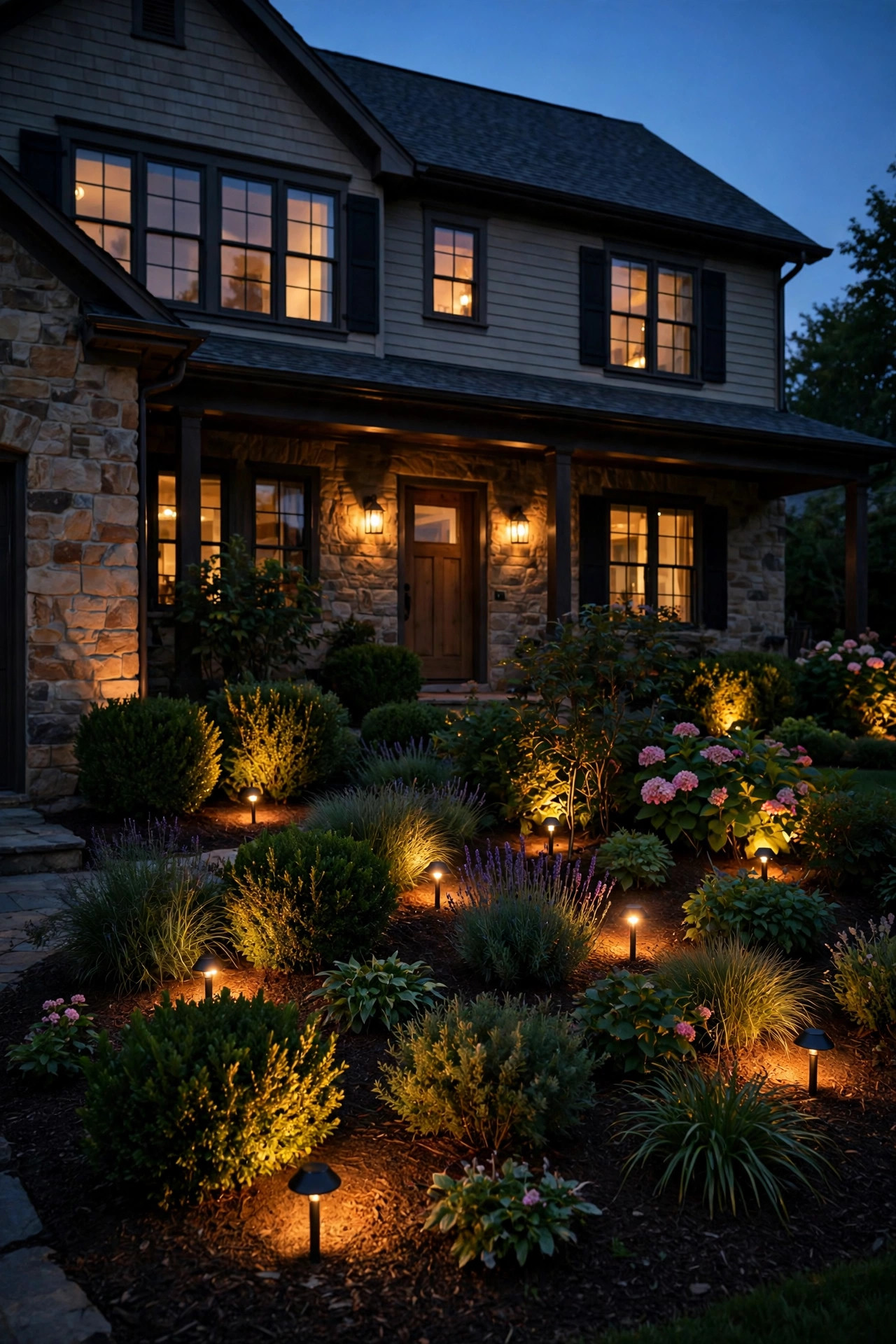
8. Accent the Flower Beds With Small Spotlights
Buyers read neat, lit planting beds as "low-maintenance, loved garden" — even in the dark. Tuck three to five small LED spotlights among your foundation plantings, aimed at the fullest shrubs, a flowering specimen, or a pretty ornamental grass. Short 12-inch stake fixtures disappear into mulch during the day, which keeps daytime showings tidy too. Vary the aim: one light grazing across the bed, one pointing up into a shrub, one catching a small garden statue or birdbath if you have one. Odd numbers and varied heights look natural; a soldier-straight row does not. Give solar fixtures a fairness test — charge them two full sunny days, then check at dusk. Replace any that glow noticeably dimmer, because mismatched brightness shows up mercilessly in photos. Fresh mulch underneath makes the light bounce warmer and the beds look newly done, even if you planted everything years ago. Buyers may not know a boxwood from a hydrangea, but they absolutely register a garden that glows with intention.
Suggested budget range: $35 – $110.
9. Put Every Light on a Timer
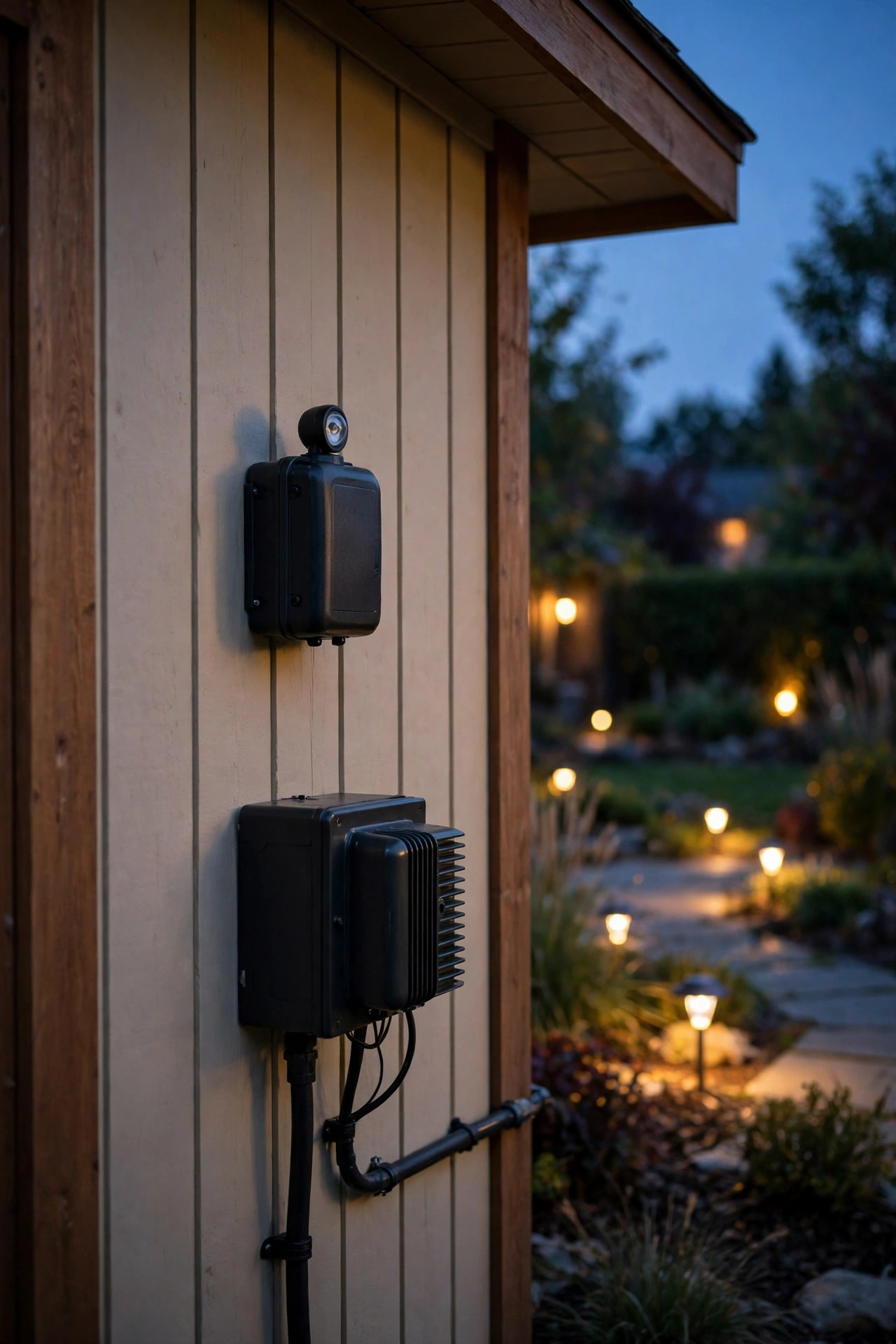
The best curb appeal lighting for selling a home is the kind that's actually on when buyers drive by — and sellers forget. A simple plug-in timer or a low-voltage transformer with a built-in photocell solves it forever. Set lights to switch on about 30 minutes before sunset and off at 11 p.m.; that covers the after-work drive-by crowd and the evening dog-walkers who become tomorrow's showing requests. Photocell models adjust themselves as the days shift, which I love during a listing that might run a few weeks. Smart plugs add app control, so your agent can flip everything on from the car before a twilight showing. Whatever you choose, test the full sequence on two consecutive nights and drive past your own house at 8 p.m. to confirm the scene is lit. A dark house on a lit street quietly tells buyers the listing is stale — even when it isn't.
Suggested budget range: $15 – $60.
10. Match Every Bulb to 2700K Warm White
Mismatched bulbs are the fastest way to make a cared-for home look chaotic in photos. One blue-white porch bulb, one yellow sconce and one daylight floodlight, and the whole facade fights itself. Before listing, walk the exterior at night with fresh eyes and replace every outdoor bulb with 2700K warm white LEDs — 3000K is my absolute ceiling. Cameras exaggerate color differences, so what looks "fine" to you looks patchy in the listing gallery. Match brightness too: porch and path lights should feel gentle (roughly 100 to 300 lumens each), while facade uplights can run brighter. Keep spare matching bulbs in a labeled box for your agent, because one burnout mid-listing breaks the whole effect. This is honestly the cheapest idea on the list and the one photographers thank me for most — consistent warm light is what makes twilight shots look like a boutique hotel instead of a patchwork.
Suggested budget range: $20 – $70.
11. Cluster Flameless Lanterns on the Porch Steps
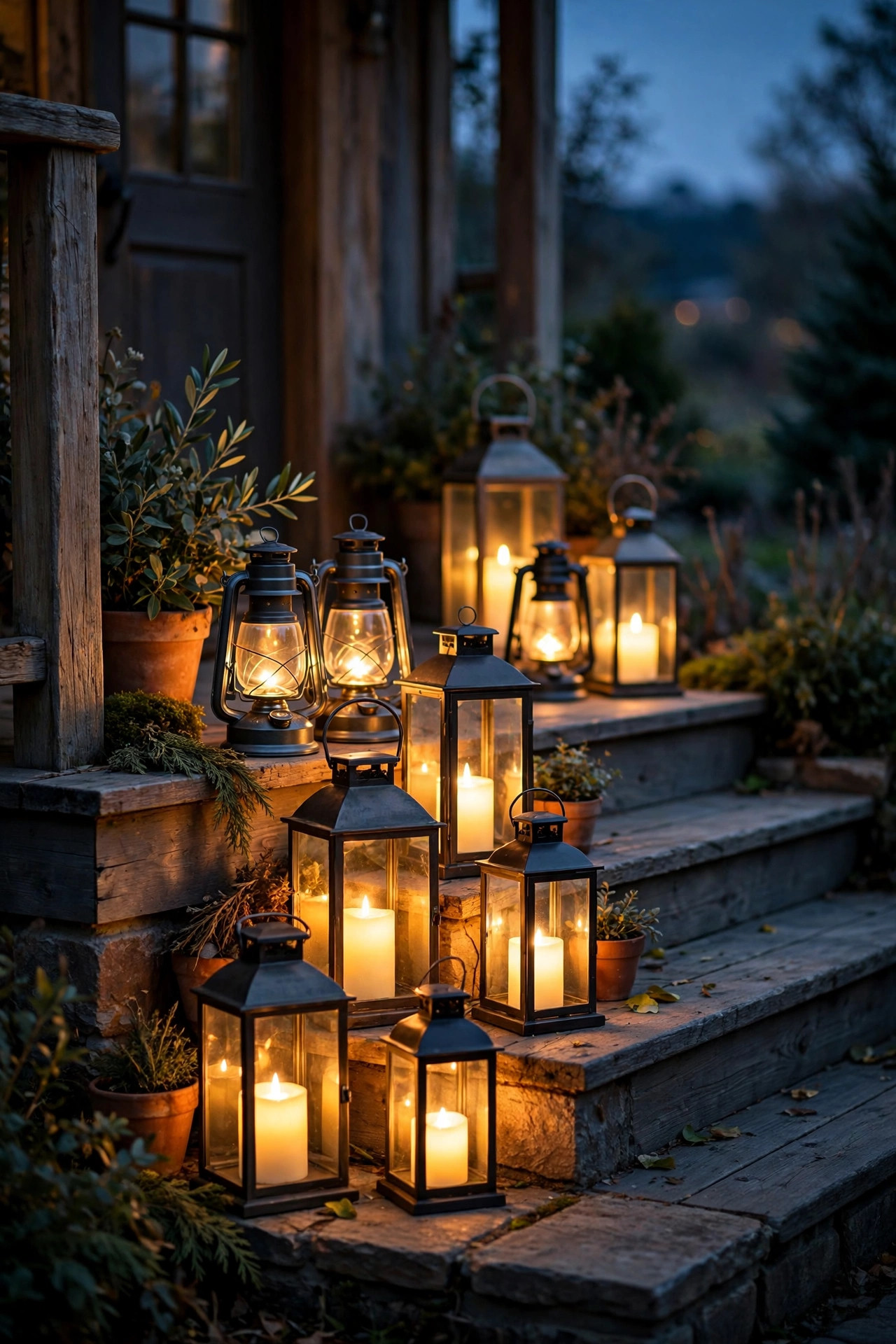
For open-house evenings and twilight showings, nothing beats the flicker of lantern light — without an open flame anywhere near buyers, kids, or your insurance policy. Group two or three battery lanterns with flameless LED candles on the porch steps or beside the door, at staggered heights. Timers built into most flameless candles let you set a five-hour window, so they're glowing when the agent arrives and off before midnight. Black metal and weathered wood lanterns photograph beautifully against most siding colors, and you can take them with you to the next house. Keep real candles out of this entirely — LED-only near anything flammable, always, and especially in a home full of visiting strangers. I set these out about an hour before evening showings, and agents tell me buyers linger on the porch longer. Lingering is good. Lingering is where offers start. Set the lanterns out, step back to the sidewalk, and check that the grouping reads as one warm pool of light rather than three separate dots.
Suggested budget range: $25 – $80.
12. Highlight the Architecture, Not Just the Yard
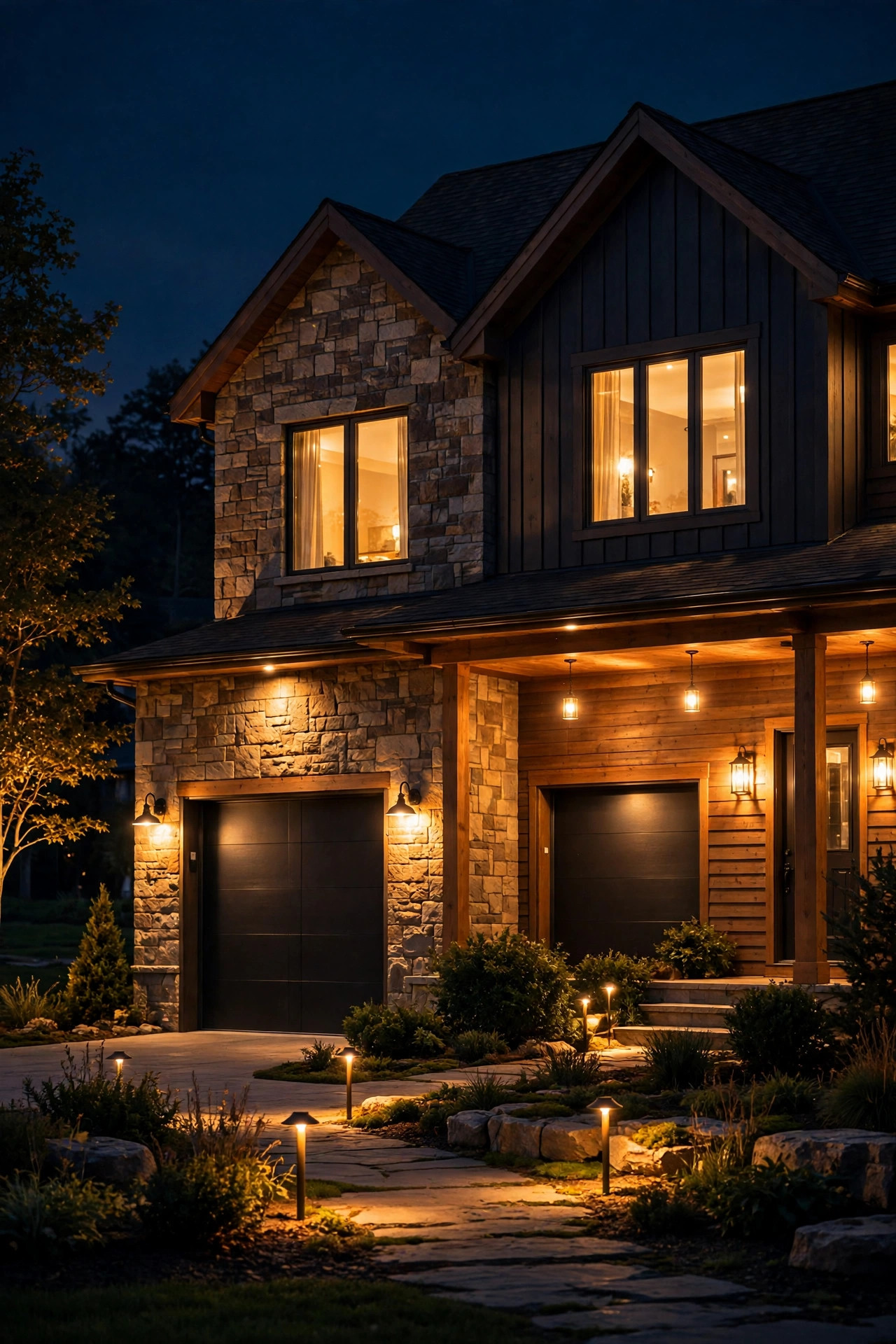
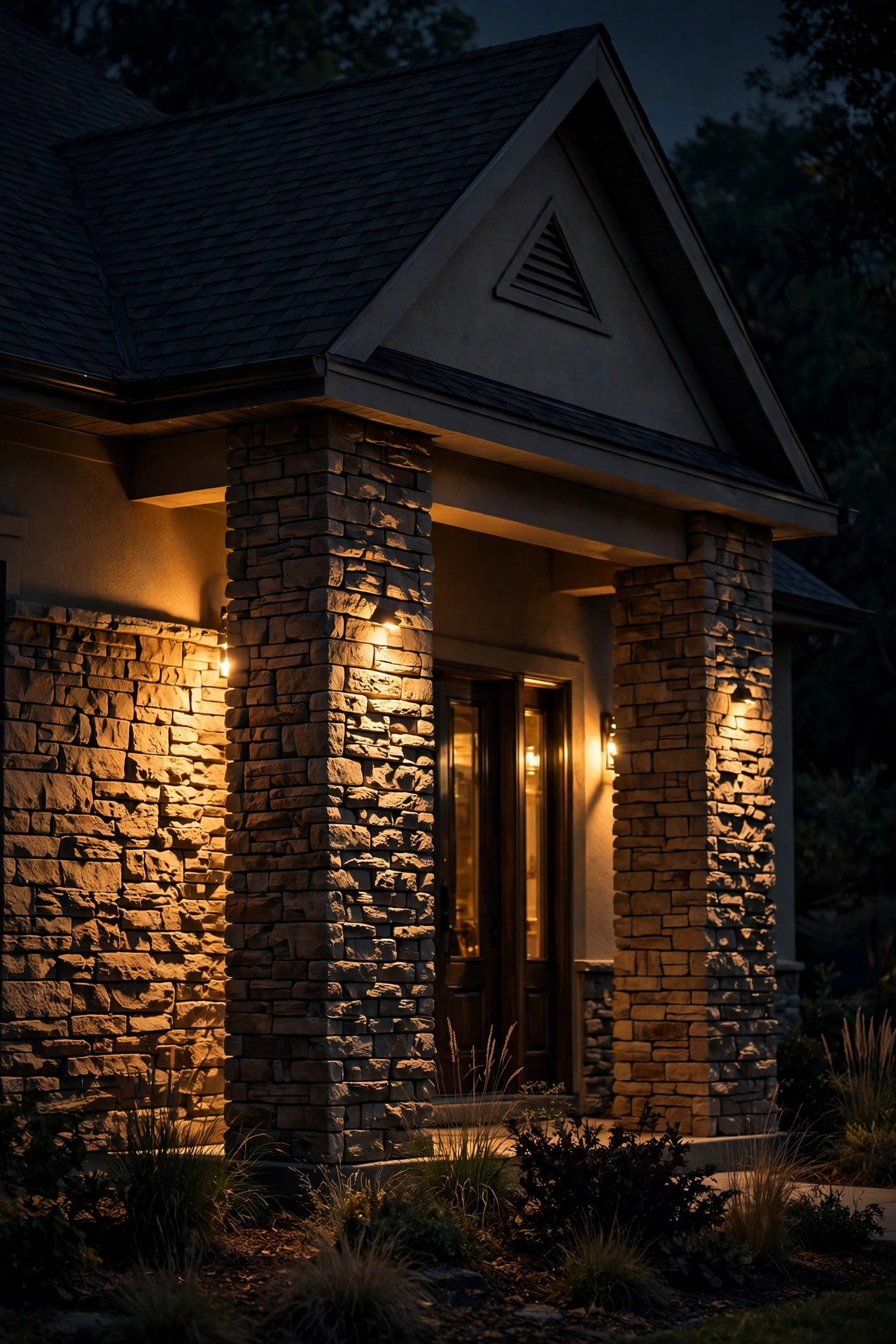
Buyers pay more for character, so show them yours. Brick or stone veneer deserves a grazing light placed close to the wall so the texture throws tiny shadows — it looks rich and solid in photos. Columns and porch posts love a small uplight at the base or a sconce at capital height. Gables and dormers can take one soft spotlight from the planting bed, aimed to catch the peak without blasting the roof. Even a simple craftsman-style tapered column or a pretty arch over the door deserves its own little pool of light. The rule I follow: light the features you'd mention in the listing description. If the ad says "gorgeous stone facade" or "charming covered porch," those exact things should glow in the twilight hero shot. For a deeper look at what buyers actually value, I break down the returns in my guide to outdoor lighting and curb appeal value. Architecture lit well reads as money well spent.
Suggested budget range: $60 – $200.
13. Use Solar Stakes When There's No Time to Wire
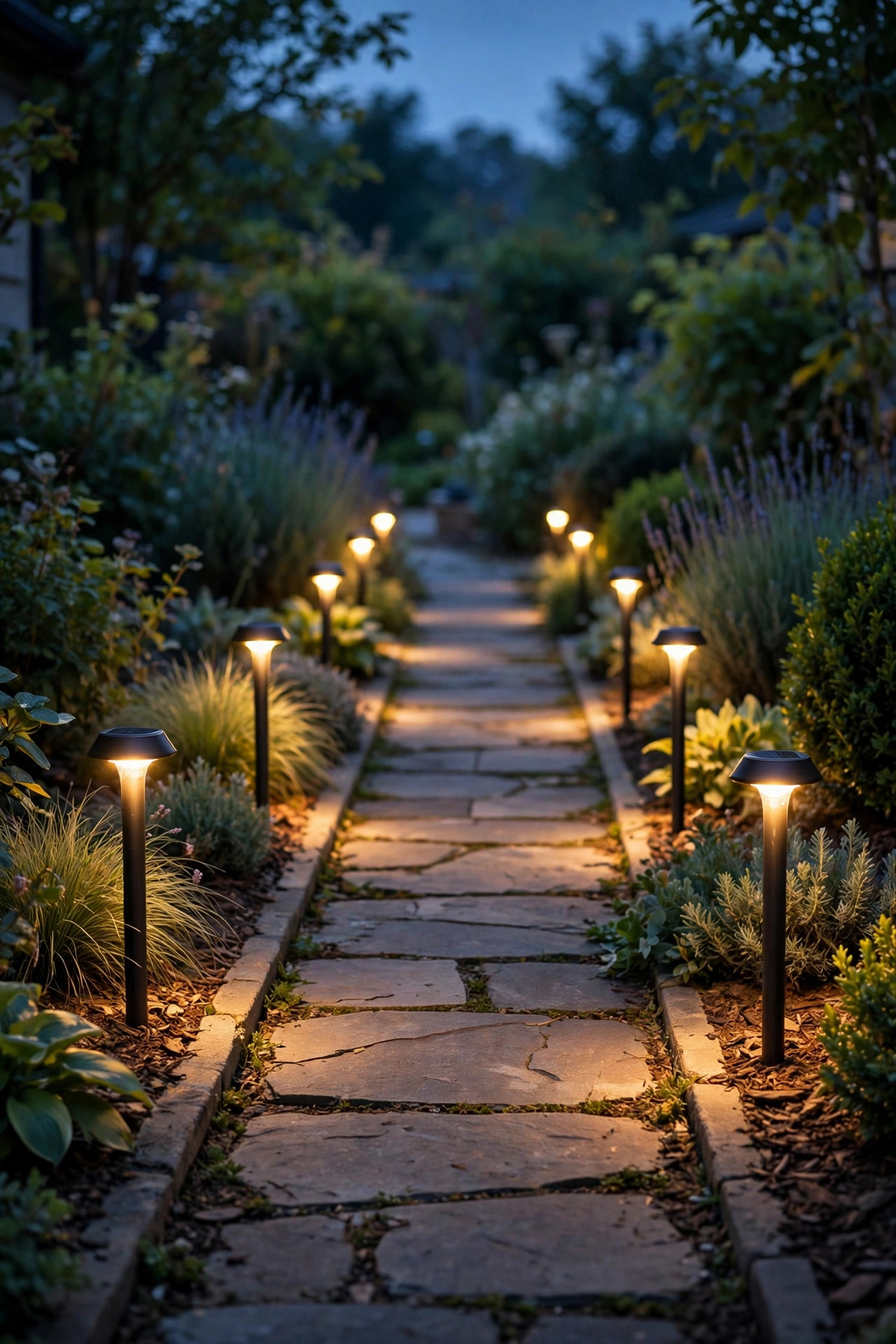
Listing in ten days? Solar is your fast lane. A dozen decent solar path stakes and two solar uplights can go from box to glowing in under an hour, with zero wiring and zero electrician. The catch is quality: choose models rated at least 30 to 50 lumens with warm-white LEDs, and avoid the ultra-cheap multipacks whose light dies by 9 p.m. Place panels where they truly get sun — south-facing beds, away from porch shadows — and wipe the little panels clean before photo day, because dusty panels charge poorly. Solar works best as the supporting cast: path edges, bed accents, a soft uplight on a small tree. Let wired or battery fixtures carry the front door and facade, where brightness matters most. Used this way, honestly, buyers will never know which lights are solar. They'll just see a house that glows. That invisible competence is the whole point — the yard looks professionally planned, not hastily staged in a weekend panic.
Suggested budget range: $40 – $120.
14. Light the Garage Doors Like They Matter
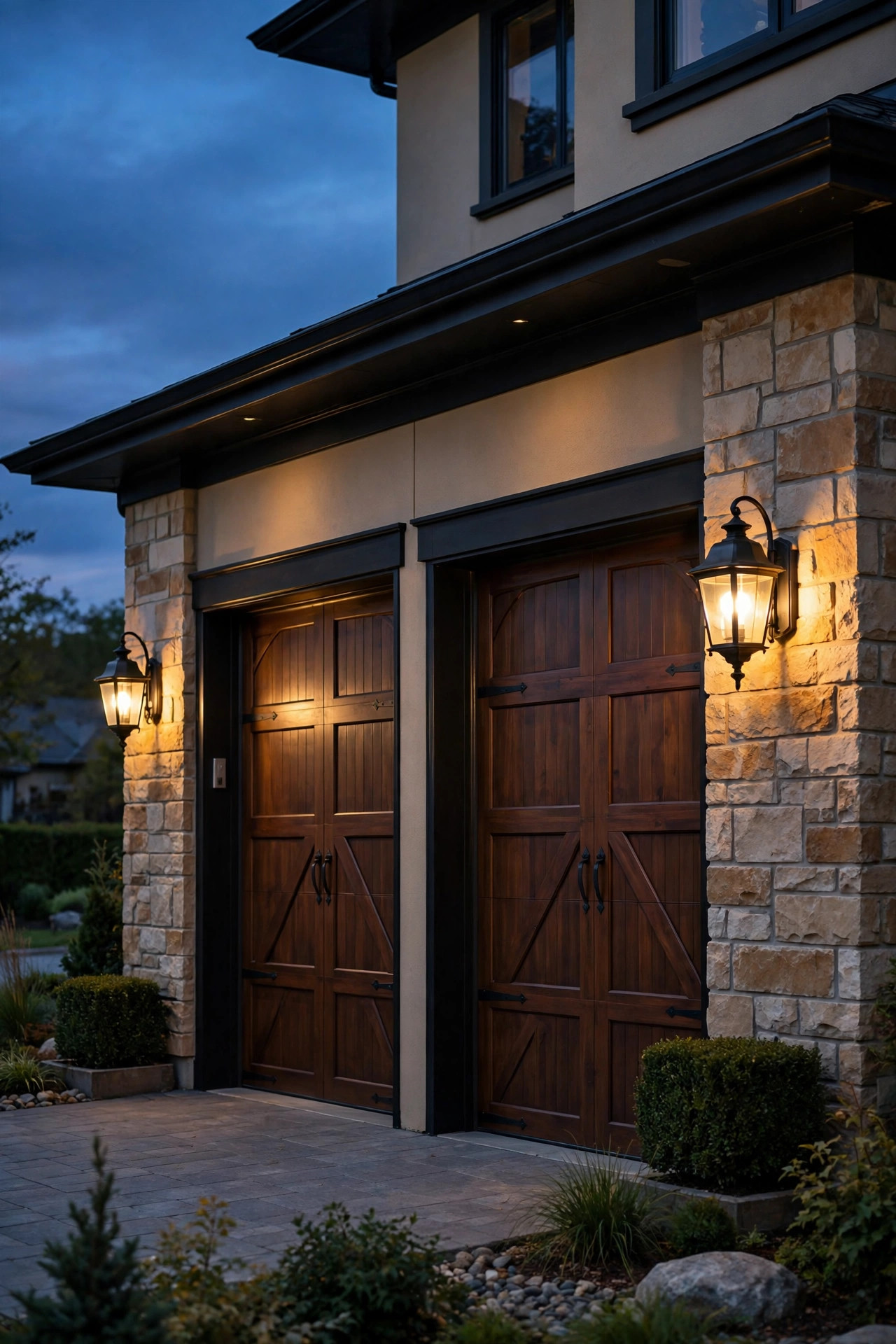
On many suburban homes the garage takes up a third of the front elevation, yet sellers light it like an afterthought. A pair of carriage-style sconces — one beside each door, or centered above a single wide door — makes that whole wall look designed instead of blank. Mount them 66 to 72 inches high, sized in proportion to the door; on a two-car garage, fixtures around 12 to 15 inches tall hold their own in photos. Match the finish and bulb temperature to your front-door lighting so the facade reads as one composition from the street. No hardwiring where you need it? Solar carriage-style lights and battery motion models have become genuinely handsome. A lit garage also photographs wider — the eye travels across the whole frontage instead of stopping at the entry. For a home that competes with new construction down the street, this is where you borrow their polish.
Suggested budget range: $70 – $240.
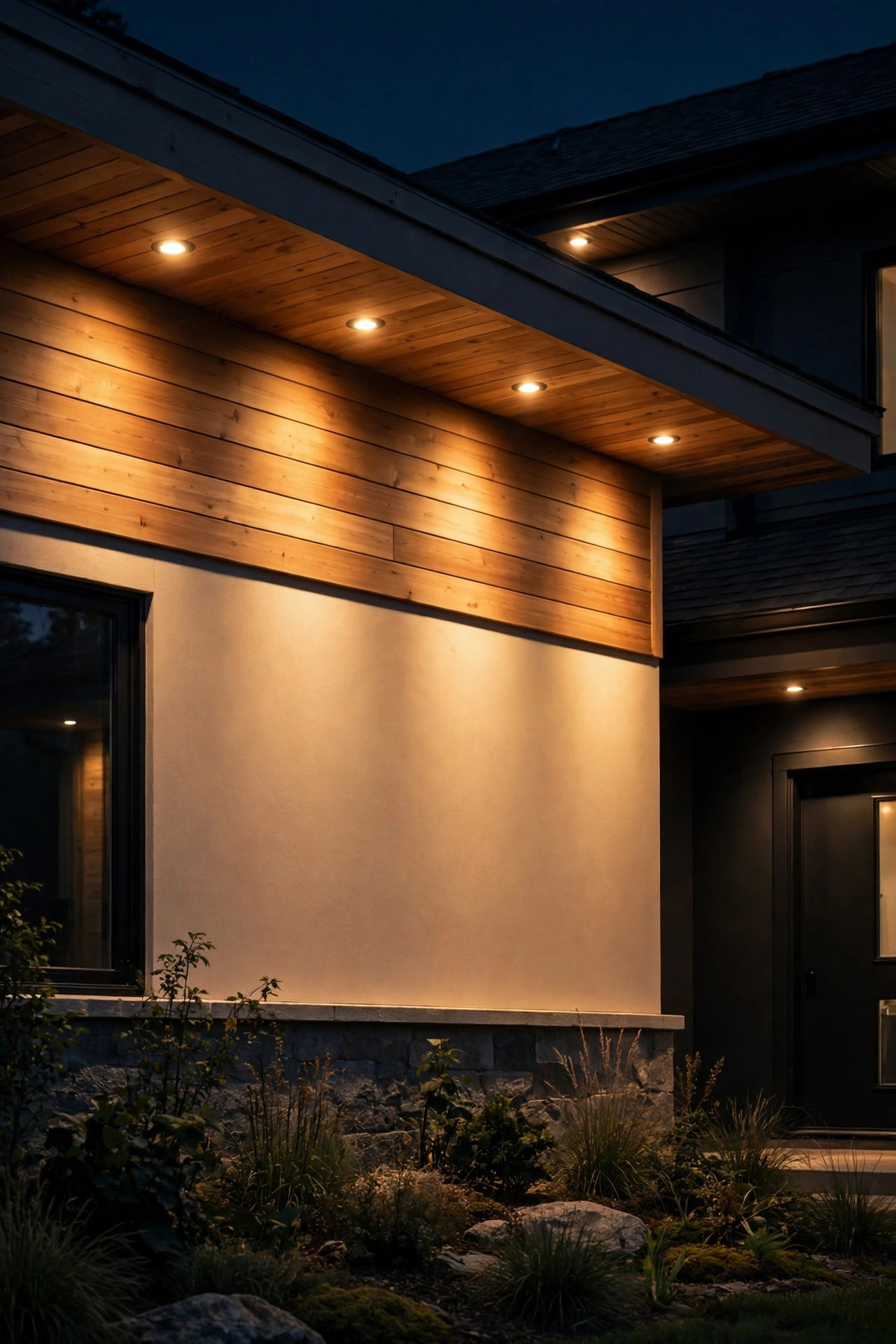
15. Add Soffit Downlights for a New-Construction Glow
Ever notice how new builds always look crisp at night? That's soffit lighting — small recessed or surface-mount downlights tucked under the eaves, washing the walls in even light. Adding a few over the front elevation gives a listed home that same finished, modern feel. Space them 4 to 6 feet apart above key features: the entry, a bay window, the garage corners. Surface-mount LED pucks are the seller-friendly option — they install with a junction box or even battery power for photo week, no attic crawling required. Keep the beam gentle; you're washing the wall, not spotlighting the sidewalk, and the light should never aim into a neighbor's windows. In twilight photos, soffit light adds the "high layer" that makes a facade look three-dimensional instead of flat. If a full install is too much before listing, even two fixtures flanking the front door area deliver most of the effect for a fraction of the effort.
Suggested budget range: $90 – $300.
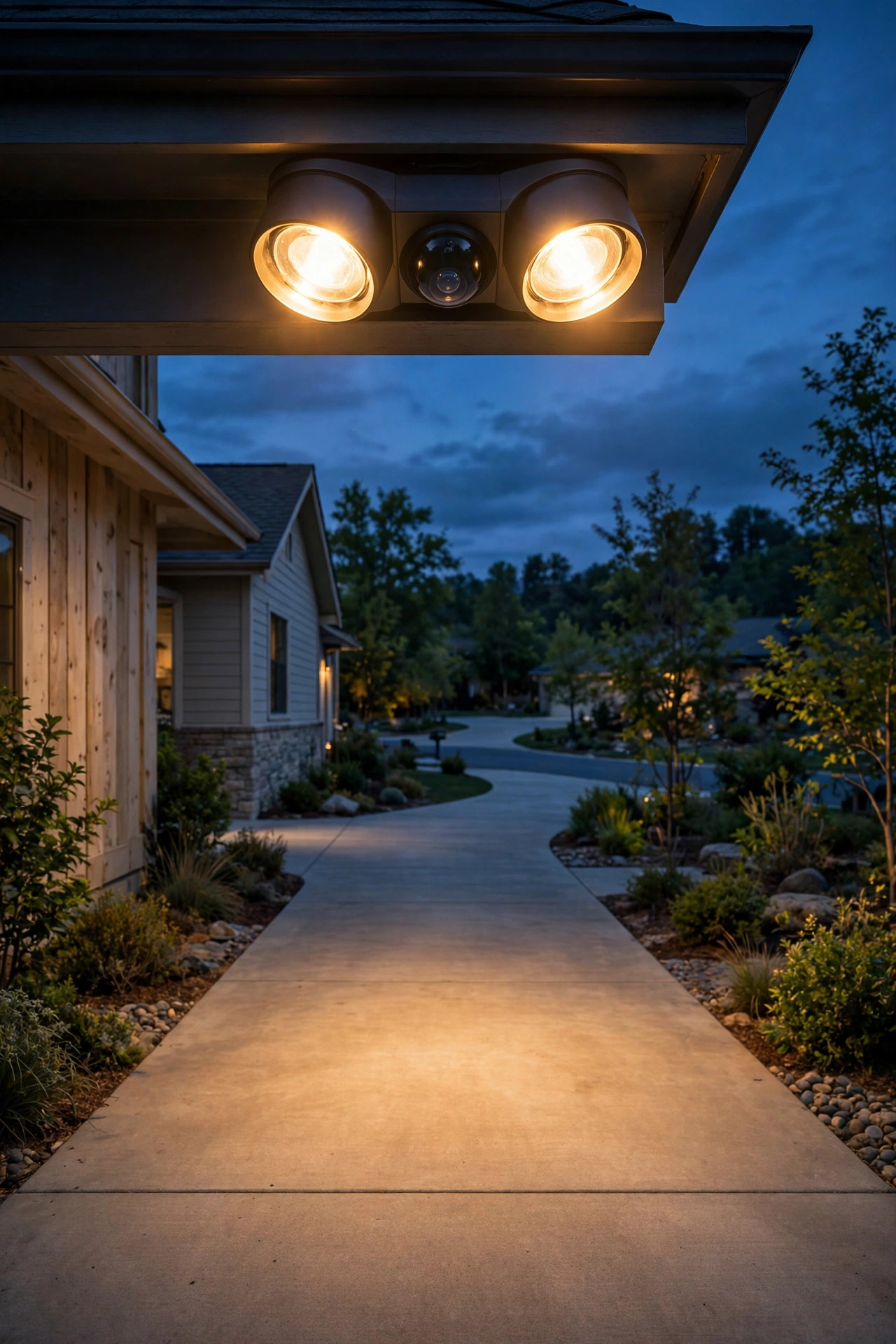
16. Choose Motion Lights That Flatter, Not Frighten
Security lighting matters to buyers, but a harsh floodlight blasting on at full brightness makes evening showings feel like an interrogation. Swap older floods for dual-brightness motion fixtures: a soft warm glow all evening that brightens gently when someone approaches. That reads as "safe and smart" in person and keeps your twilight photos free of blown-out white spots. Aim sensors toward the driveway and side gate rather than the street, so passing cars don't trigger a strobe show during an open house. Keep the fixture finish consistent with your other exterior lights, and test the trigger distance — 20 to 30 feet is plenty for a front yard. Place the brightest security light where buyers will appreciate it most: over the garage and along the path from driveway to door. Safety that feels welcoming is a selling point; safety that feels like a parking lot is not. During the day, keep the fixture wiped clean and the lens clear, because a grimy sensor cover reads as deferred maintenance to a careful buyer.
Suggested budget range: $35 – $110.
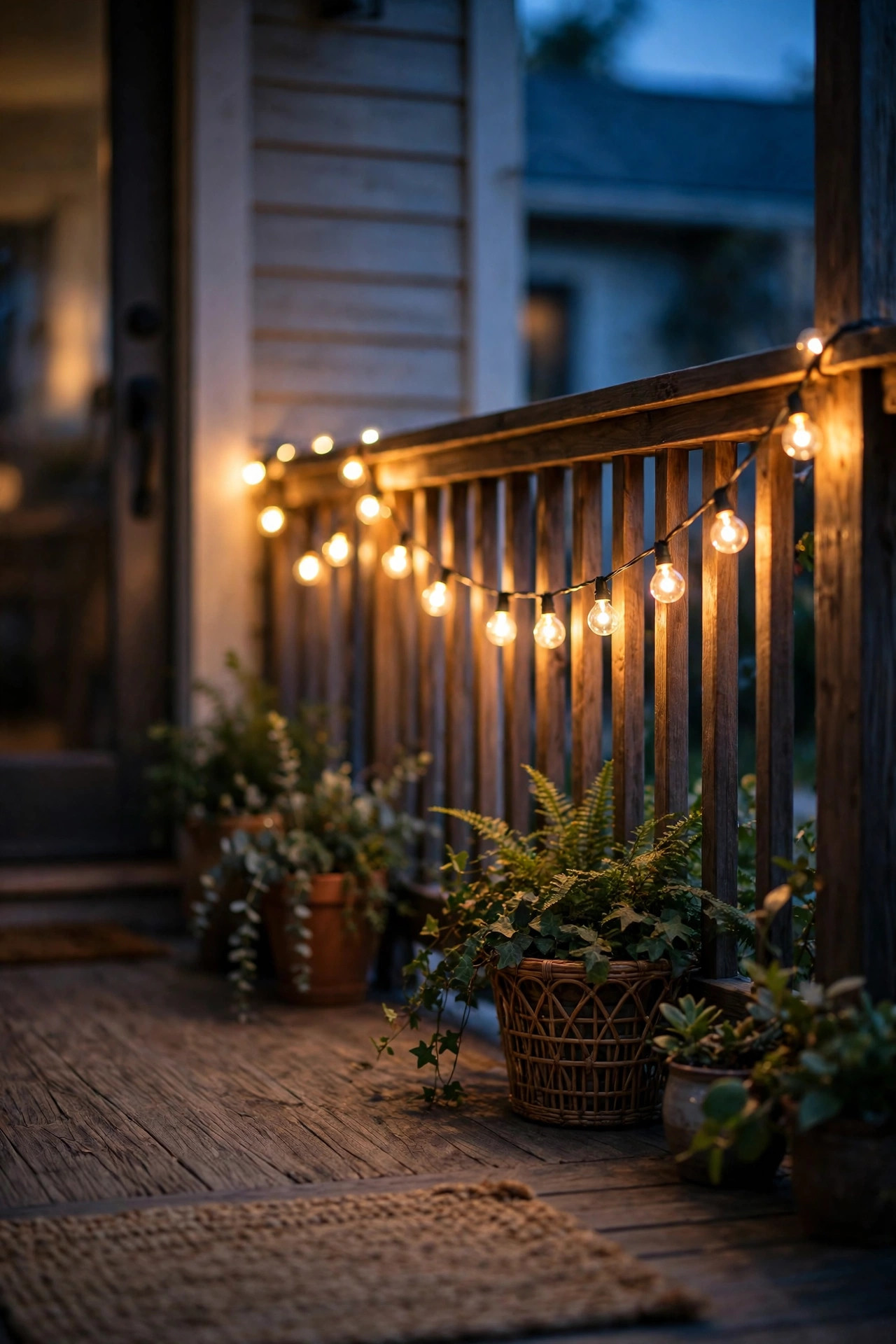
17. Drape String Lights Along the Porch Rail
A short run of warm string lights along the porch railing or across the porch ceiling adds instant lifestyle — the suggestion of evening coffee, a glass of wine, a life well lived in this house. That suggestion is exactly what staging is, just outdoors. Use commercial-grade outdoor string lights with shatterproof LED bulbs, hung with a gentle swag rather than pulled tight, and keep the run modest: one porch edge is charming, a whole yard of strings is a wedding venue. Stick to warm white; multicolor reads "party house" in a listing. Secure cords so nothing dangles near steps, and plug into a GFCI outlet with the timer from idea nine. Honestly, this is the lowest-cost, highest-charm item here, and in twilight photos it draws a glowing line that frames your porch like a picture. Buyers don't just see a house — they see their evenings in it. Keep a spare strand in the garage while you're listed, because one dark section at photo time quietly undoes the whole spell.
Suggested budget range: $20 – $60.
18. Clean, Repair and Straighten What You Already Own
Before you buy a single thing, spend one Saturday morning with a ladder, a bucket of soapy water, and fresh eyes. Wash the glass on every exterior fixture — a season of dust and bug residue can steal a third of your light. Replace any burned-out or mismatched bulbs, straighten tilted path lights, and re-aim spotlights that have drifted toward the street. Tighten loose sconces, touch up rusty spots with matching outdoor paint, and pull the weeds growing through your fixture bases. Dead moths inside a porch light are the kind of detail buyers photograph mentally and mention in the driveway afterward. This zero-dollar polish multiplies the value of everything else on the list, because new lights in a grimy fixture still look tired. In my experience, agents notice the difference immediately even if they can't name it. Clean light simply reads as a clean, cared-for home — and cared-for homes sell faster.
Suggested budget range: $0 – $25.
19. Give the Mailbox Its Own Little Moment
The mailbox is literally the first part of your property a drive-by buyer reaches, so let it introduce the house properly. A solar post-cap light or a small lantern mounted on the mailbox post creates a friendly first beacon at the curb. Keep the style in step with your other fixtures — black metal post, warm light, clean lines — and make sure the address numbers on the box are fresh and legible; repaint or replace faded numbers while you're out there. A small lit moment at the curb also visually extends your property in twilight photos, making the frontage feel wider. If your mailbox shares a post with a neighbor, keep the light modest and aimed at your own side. It's a tiny spend, but it sets the tone before buyers even slow down: this home pays attention to details, all the way to the street. Pair it with a swept curb and a freshly trimmed edge, and the first ten feet of your property quietly promise the same level of care inside.
Suggested budget range: $15 – $50.

20. Layer Three Heights for a Designer Finish
Here's the principle behind every idea on this list, and the one photographers swear by: beautiful curb appeal lighting for selling a home works in three heights. Low — path lights, bed accents and step lights under 18 inches, guiding the eye along the ground. Mid — sconces, porch fixtures and lanterns at door height, creating the welcome. High — soffit downlights, tree canopy light and facade washes, giving the scene depth and drama. Walk your plan at dusk and squint: if all your light sits at one level, the photo will look flat no matter how much you spent. Most homes only need one or two additions per layer. A $300 weekend spent balancing the three layers beats $800 spent on a single row of brighter path lights every single time. When the layers are right, the house doesn't just look lit — it looks composed, like a portrait. Portraits sell houses.
Suggested budget range: $100 – $350.

21. Do a Dusk Drive-By Test Before Photo Day
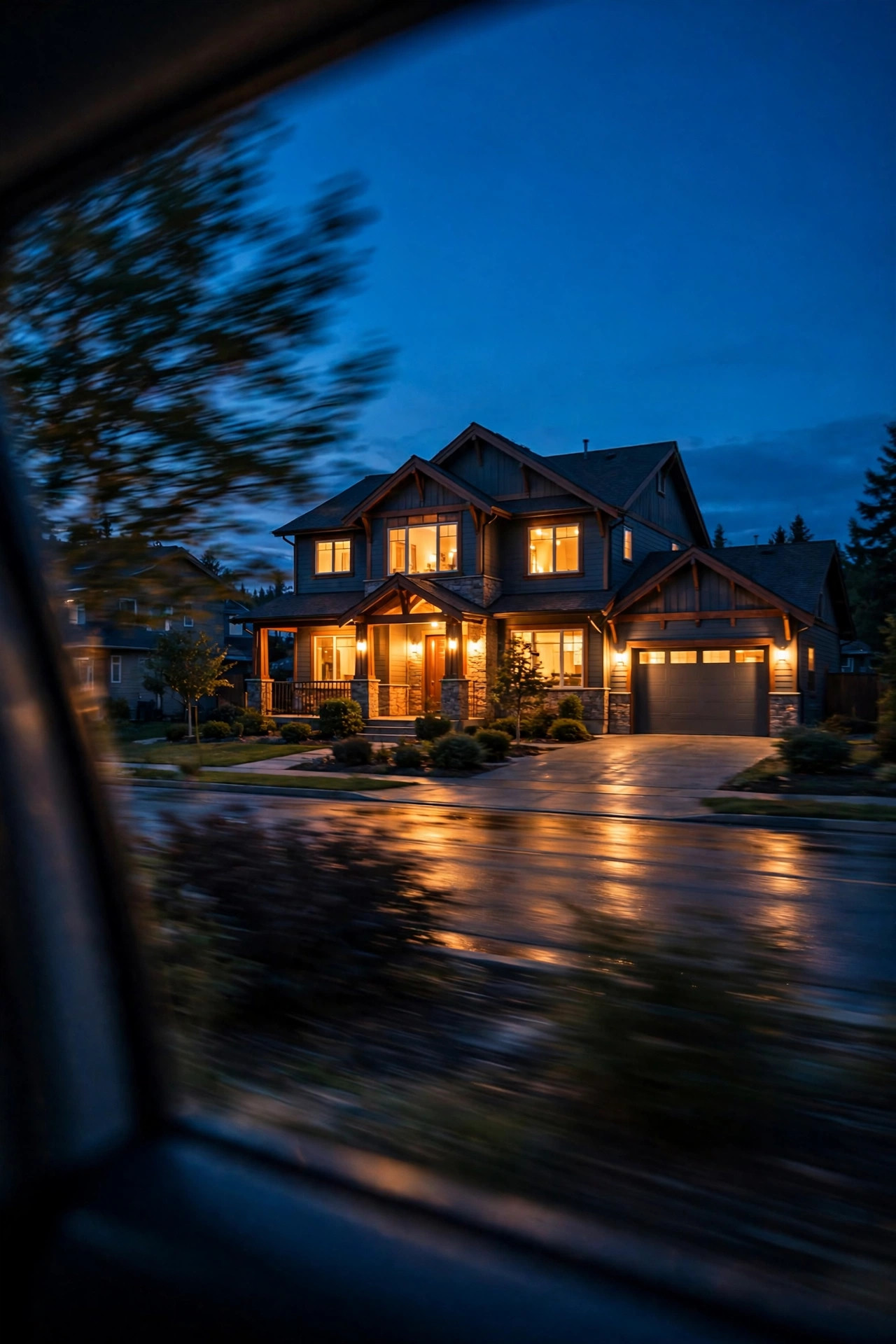
The last step is the one almost everyone skips: audition your own house. The evening before listing photos, turn everything on, drive to the end of the street, and approach slowly like a buyer would. Take phone photos from the curb, the driveway and the front walk. You'll spot the dark gap over the garage, the one path light blinking out, the uplight glaring straight into your lens — things invisible from the porch. Adjust angles, swap the weak solar stake, straighten the lantern. Then repeat the drive-by at the exact time your photographer plans to shoot, since a yard that glows at 8 p.m. may still look flat at blue-hour 7:15. Ask a friend to drive past too; fresh eyes catch what pride overlooks. This twenty-minute ritual is free, and it's the difference between lighting you installed and lighting that actually sells. Write down the angles and settings that worked, and tape the note inside a kitchen cabinet so anyone can recreate the scene on showing days.
Suggested budget range: $0 – $20.
Frequently Asked Questions
How much should I spend on lighting before selling my home?
For most homes, $150 to $500 covers the high-impact fixes: path lights, door sconces, matching bulbs and a timer. Spend on the front elevation only — backyard lighting is lovely, but it rarely appears in the photos that drive showings.
What color temperature looks best in listing photos?
Warm white at 2700K is the sweet spot. It makes siding, brick and skin tones look golden and inviting. Avoid anything above 3000K outdoors; blue-white light reads cold and institutional on camera, and mismatched temperatures look messy.
Are solar lights good enough for curb appeal?
Good solar lights are fine for path edges, beds and accents if they get six or more hours of sun and you choose warm-white models rated 30 lumens or higher. For the front door and facade — the stars of your listing photos — wired or battery fixtures are noticeably brighter and more reliable.
Should I leave my outdoor lights on all night while listed?
Run them from dusk until about 11 p.m. on a timer or photocell. That covers evening drive-bys and showings without wasting electricity or annoying the neighbors, and a consistent schedule makes the home look occupied and cared for.
Conclusion
Selling a home is a first-impression business, and first impressions now happen on a phone screen at 9 p.m. Thoughtful curb appeal lighting for selling a home — layered low, mid and high, all in the same warm glow, all switching on like clockwork — makes your listing photos sparkle and your evening drive-bys unforgettable. Start with the walkway, the front door and one beautiful uplight, then balance from there. If you'd like more inspiration for the porch itself, browse the rest of my outdoor lighting ideas here on the site, and go get that twilight hero shot. Your future buyers are already driving by.