If your garage sits at the back of the lot, you already know the walk out there after dark can feel like a small expedition — trash bins in the shadows, a pitch-black alley, and a door you have to unlock by phone light. Good detached garage lighting ideas change all of that. The trick, as with every part of your home's exterior, is layering: a welcoming glow at the door, practical task light where you actually park and unload, and security light along the alley where nobody should be lurking. In this post I'm sharing 17 ways to layer that light, from a $20 solar motion light you can stick up in five minutes to wired carriage sconces that make a plain garage look like a little carriage house. Every idea includes what I'd buy, where I'd put it, and what it honestly costs, so you can plan a weekend project that fits your budget.
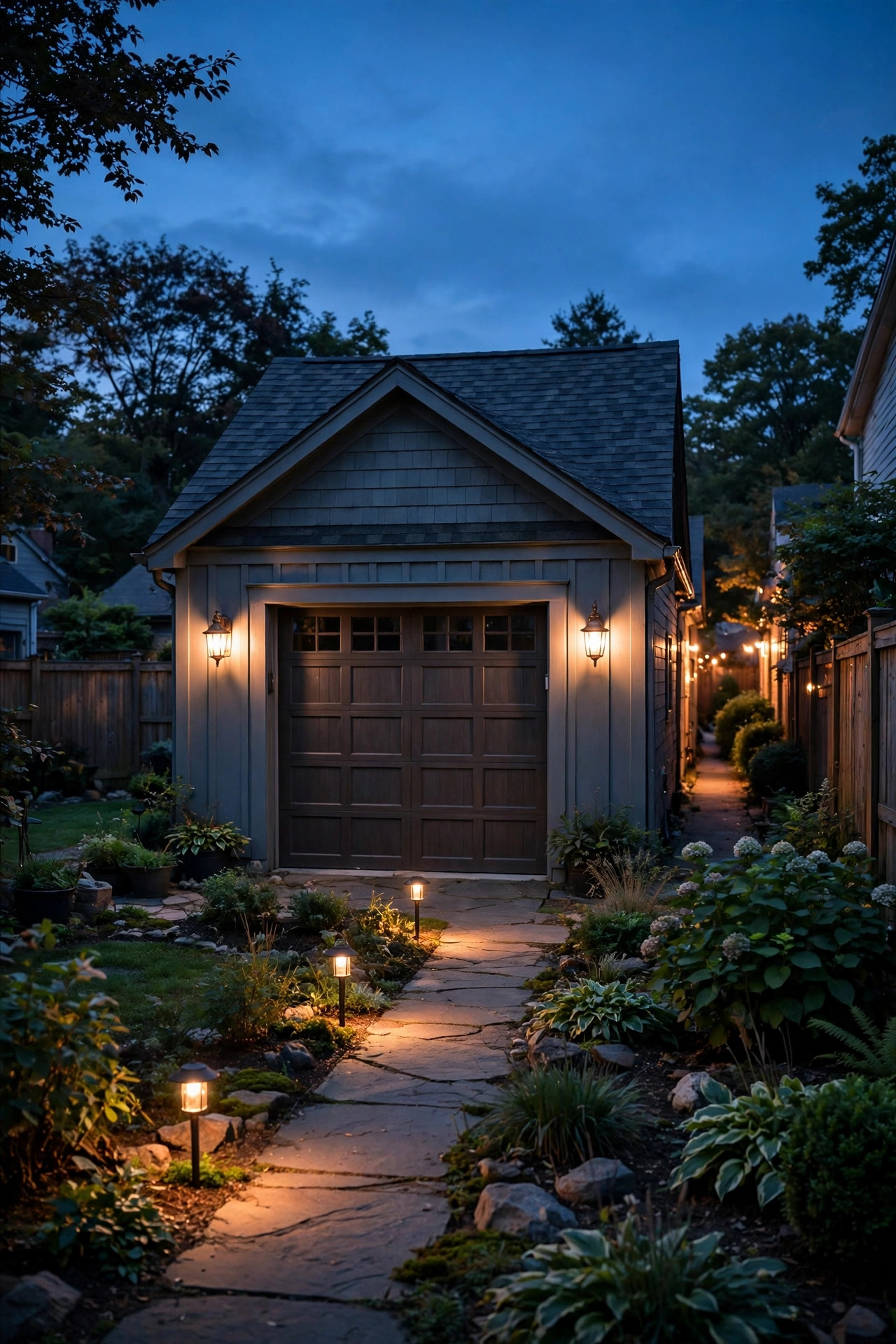
1. A Motion-Sensor Floodlight Over the Garage Door
This is always my first recommendation, because it solves the two biggest problems at once: you get bright light exactly when you pull in, and anyone approaching from the alley gets lit up too. Mount a dual-head LED floodlight centered above the garage door, about 8 to 10 feet up, and angle the heads slightly outward so the beams wash the driveway apron instead of blinding you through the windshield. Look for a fixture rated for wet locations, with an adjustable sensitivity dial and a timer that keeps it on for 1 to 5 minutes after motion stops — long enough to unload groceries without it clicking off mid-trip. A warm-to-neutral 3000K LED keeps it from feeling like a prison yard. If your garage already has a junction box above the door, this is a straightforward swap; if not, an electrician can add one from the garage panel in under an hour. For settings that actually prevent false triggers from passing cars, my motion sensor outdoor lights guide walks through sensitivity and range adjustments in detail.
Suggested budget range: $25 – $60.
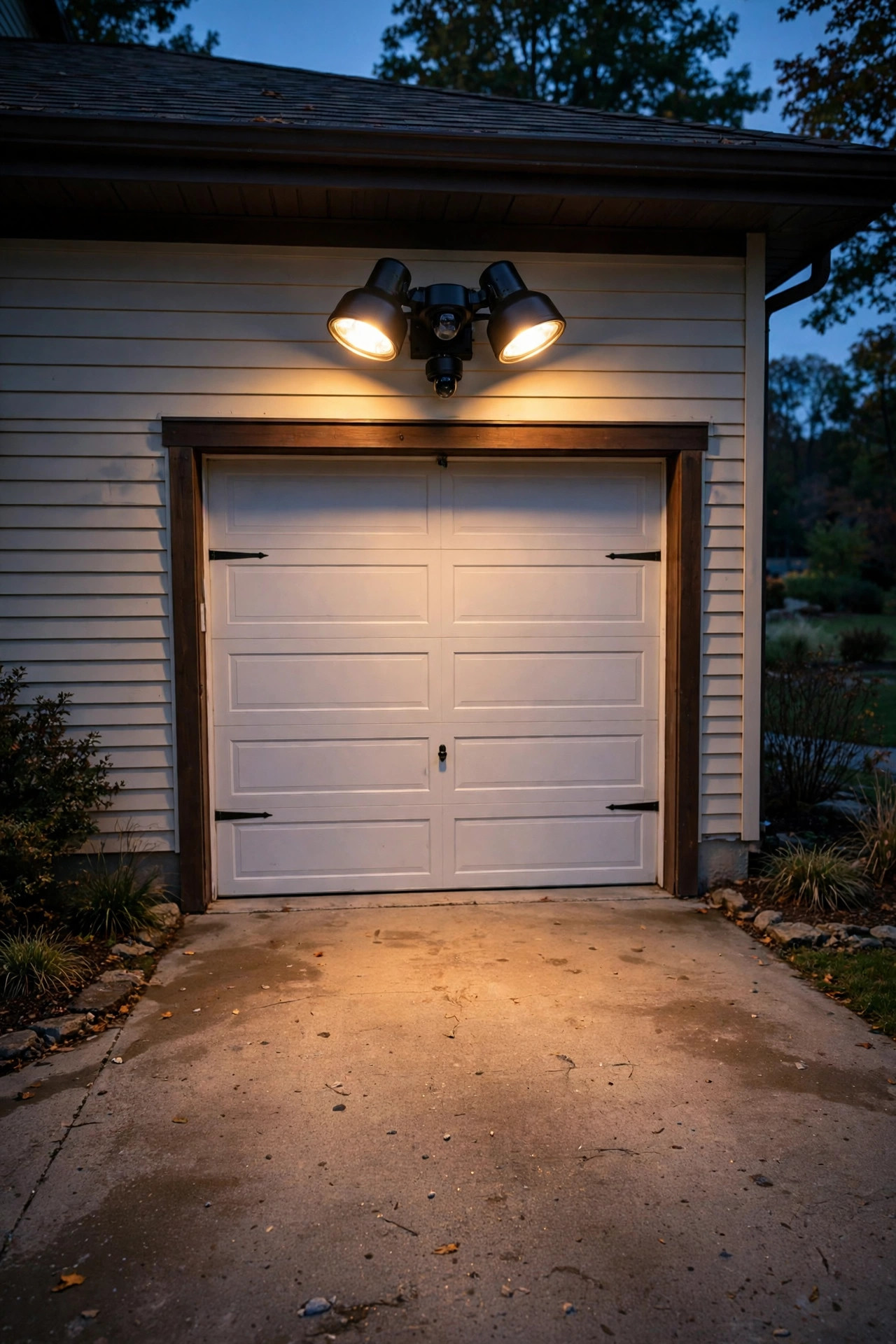
2. Carriage-Style Sconces Flanking the Door
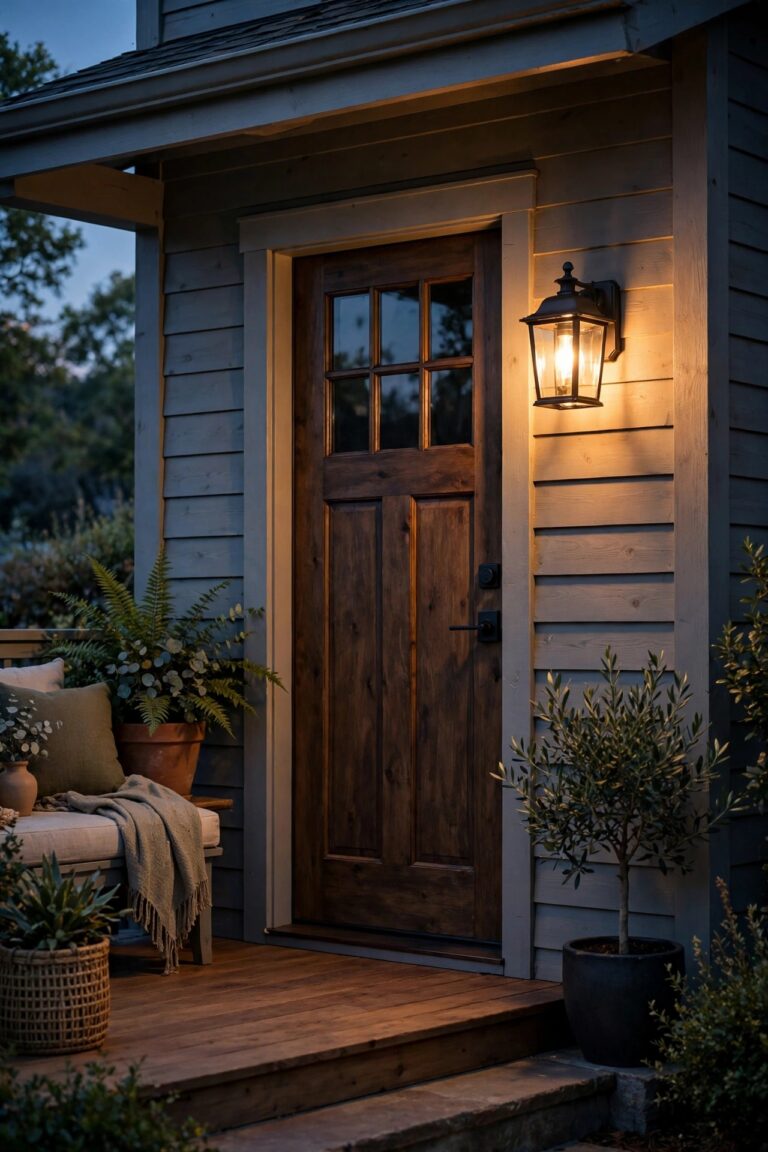
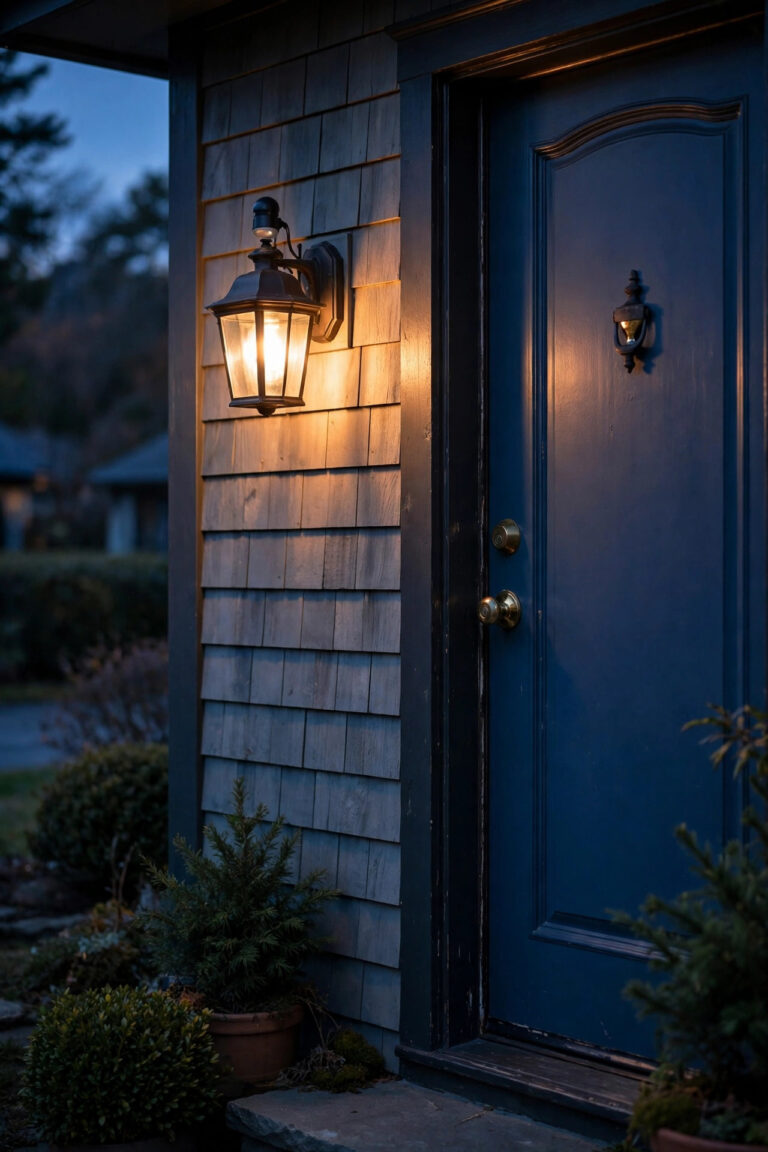
If you want your detached garage to look like it belongs with the house — and honestly, to look a little charming — carriage-style sconces on either side of the door are the move. Choose fixtures sized to the door: for a standard single door, lanterns around 12 to 15 inches tall look balanced; for a double door, go 15 to 18 inches. Mount them 66 to 72 inches from the ground, centered on the trim, and use LED filament-style bulbs in 2700K for that soft, candlelit glow. Black or oil-rubbed bronze finishes read classic against almost any siding, and seeded or clear glass shows off the filament. Because these are more about welcome than work light, put them on the same switch or timer as your porch light so the whole property lights up as one scene at dusk. This is the single change neighbors will actually compliment, and it photographs beautifully for listing photos if you ever sell. For sizing and mounting rules by door type, my roundup of garage carriage light ideas is worth a look before you order.
Suggested budget range: $60 – $180.
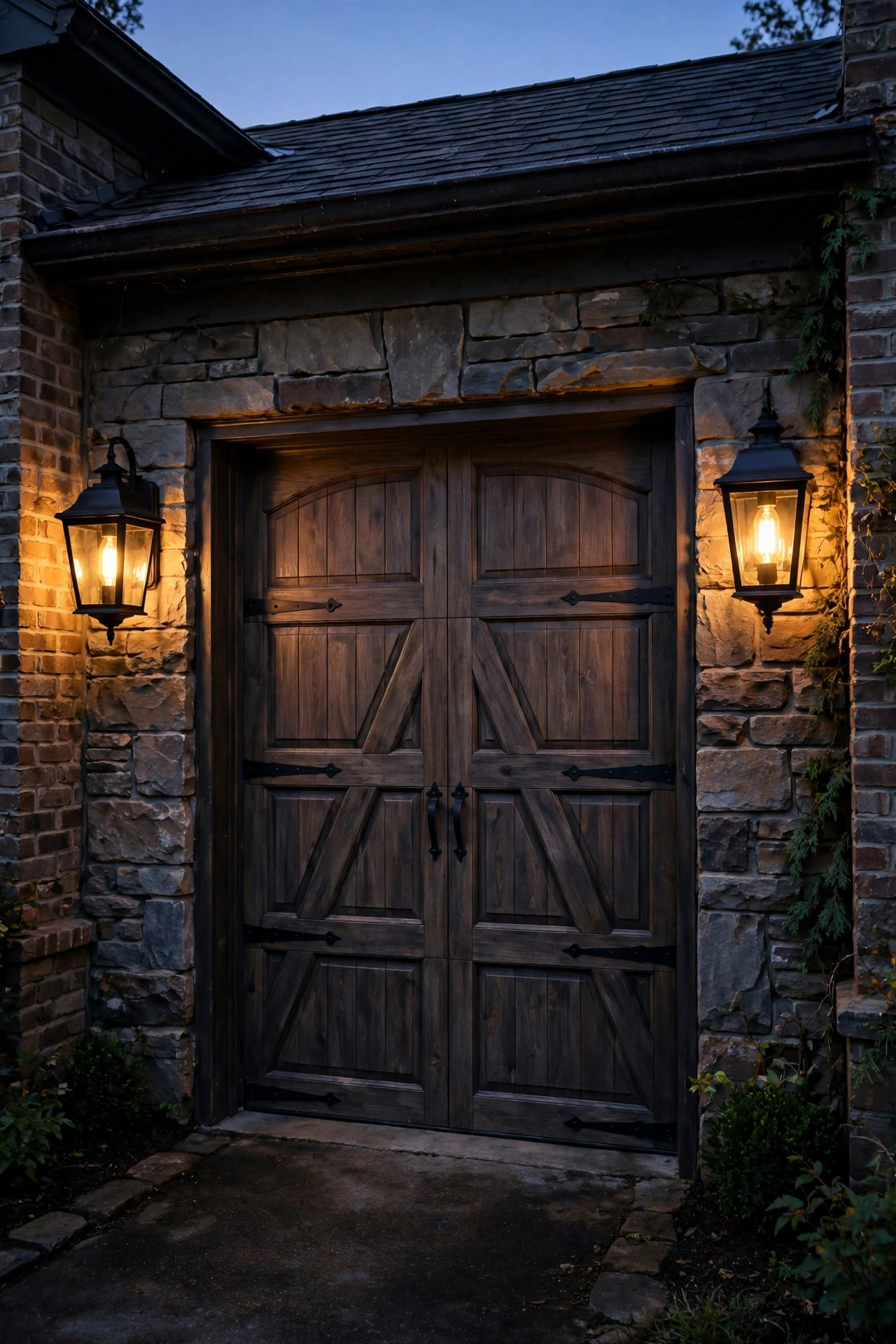
3. Solar Path Lights From the House to the Garage
The stretch between your back door and the garage is where most people trip over a hose, a toy, or the edge of a stepping stone, so a gentle ribbon of path light makes the whole setup feel intentional. Solar stakes are the easiest win here — no trenching, no transformer, just push them in every 6 to 8 feet along the walking line, alternating sides slightly so it doesn't look like an airport runway. Spend a little more for lights with real glass lenses and replaceable batteries; the cheapest plastic sets fade to a dim blue-white within a season. Aim for 2700–3000K warm white and at least 30–50 lumens per light so you're lighting the path, not just decorating it. In shady yards, choose models with a separate solar panel you can mount on the garage roof edge or fence where the sun actually hits. Pull them up before the first snow if you live somewhere with hard freezes, and they'll last for years.
Suggested budget range: $30 – $80.

4. String Lights Along the Alley Fence
Alleys don't have to be purely utilitarian. A run of outdoor string lights along the fence line softens the whole back boundary and quietly discourages anyone from treating your alley as a shortcut, because lit spaces simply feel occupied. Use commercial-grade string lights with heavy-duty cord and hanging sockets — the lightweight patio sets won't survive a windy season against a fence. Screw small stainless eye hooks into the fence posts every 8 to 10 feet, and thread a guy wire if your run is longer than about 25 feet so the cord doesn't sag and strain the sockets. Shatterproof LED bulbs in warm white keep replacement costs at zero. Put them on a plug-in timer or a smart plug at the garage outlet so they come on at dusk and shut off around 11 p.m. — your neighbors will appreciate the curfew, and so will your electric bill. Honestly, this one is as much about enjoying your backyard in the evening as it is about the garage.
Suggested budget range: $25 – $70.
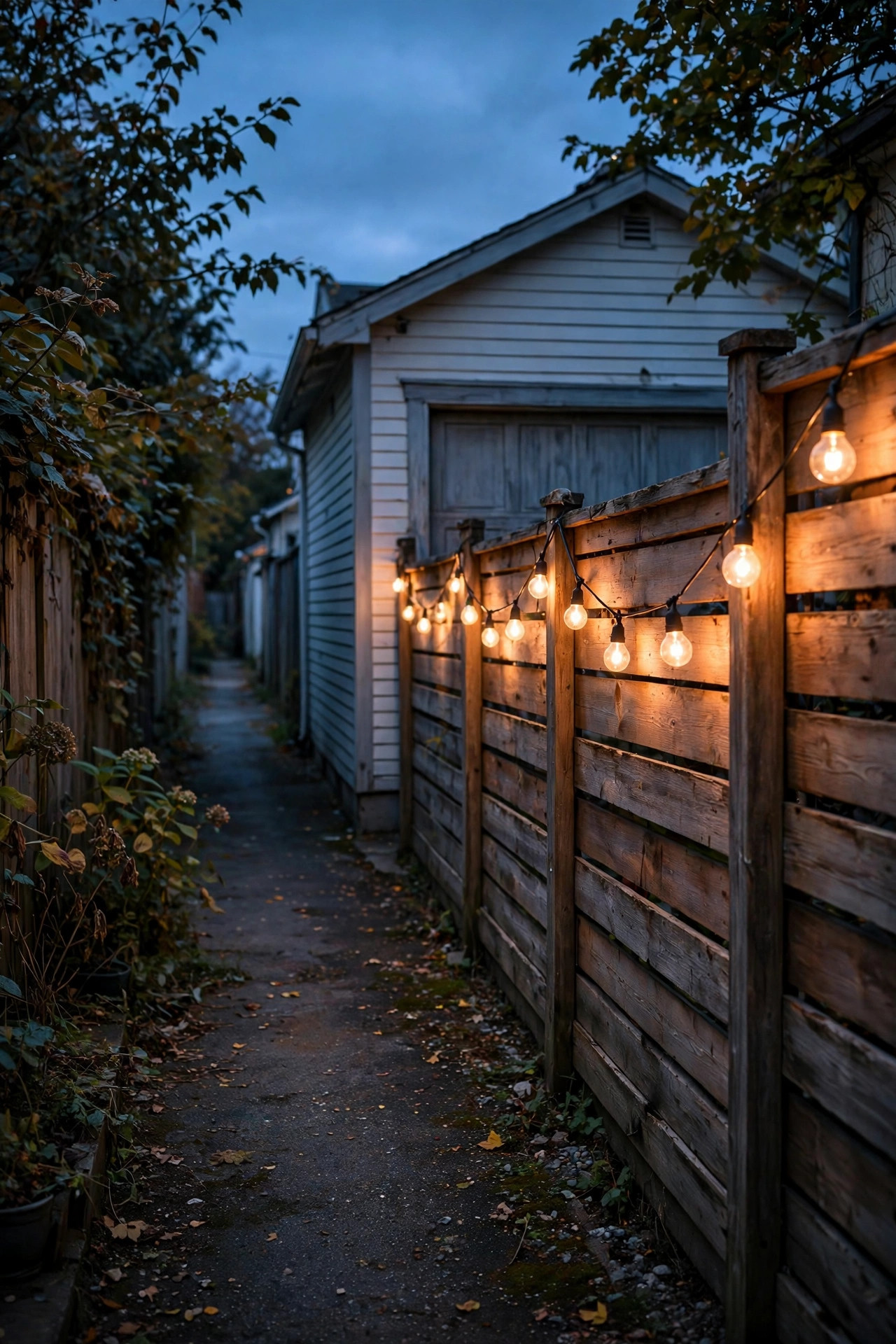
5. A Dusk-to-Dawn Photocell Light Over the Side Door
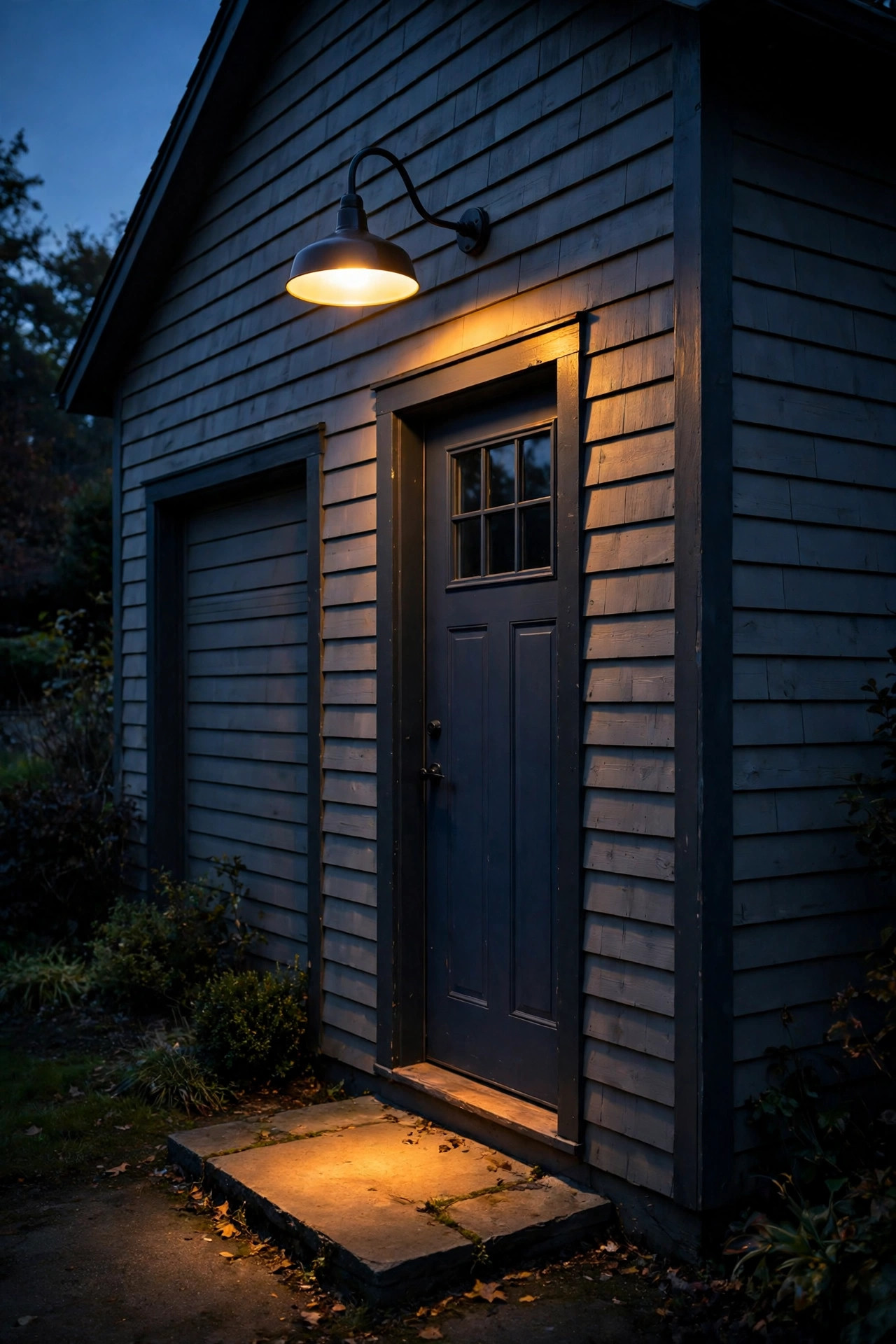
Most detached garages have a pedestrian side door, and it's usually the one you actually use — carrying in tools, grabbing the mower, letting the dog out. A photocell wall light above that door is the definition of set-it-and-forget-it: it turns itself on at dusk, off at dawn, and you never fumble with a key in the dark again. Look for an integrated LED fixture with the sensor built in, rated for wet locations, and sized around 800–1,100 lumens — bright enough to see the lock and the step, not so bright it floods the neighbor's bedroom window. A barn-light or gooseneck silhouette suits a garage perfectly and throws the light downward where you need it. Mount it 7 to 8 feet up, centered over the door. If the fixture will share a wall with a bedroom window, choose a shielded, dark-sky-friendly style that keeps the beam below the horizontal line.
Suggested budget range: $30 – $75.
6. Low-Voltage Bollard Lights Along the Driveway Apron
Where the alley meets your garage apron is where tires hop curbs and guests misjudge the turn in the dark. Short bollard lights — 12 to 24 inches tall — mark that edge beautifully and throw a low, wide pool of light across the concrete without glare. Low-voltage (12V) systems are the sweet spot for a detached garage because the cable can run in a shallow trench along the driveway edge and tie into a transformer inside the garage, no electrician required for the low-voltage side. Space bollards every 8 to 10 feet, set back about a foot from the concrete edge so snow shovels and tires don't take them out. Choose solid metal housings over plastic; they'll be bumped. This looks especially sharp paired with the path lighting on the house side, since the whole route from street to back door reads as one designed system. If you're planning the driveway itself too, my driveway lighting ideas cover layouts for every length and budget.
Suggested budget range: $80 – $250.

7. Solar Motion Lights on the Alley Side (No Wiring Needed)
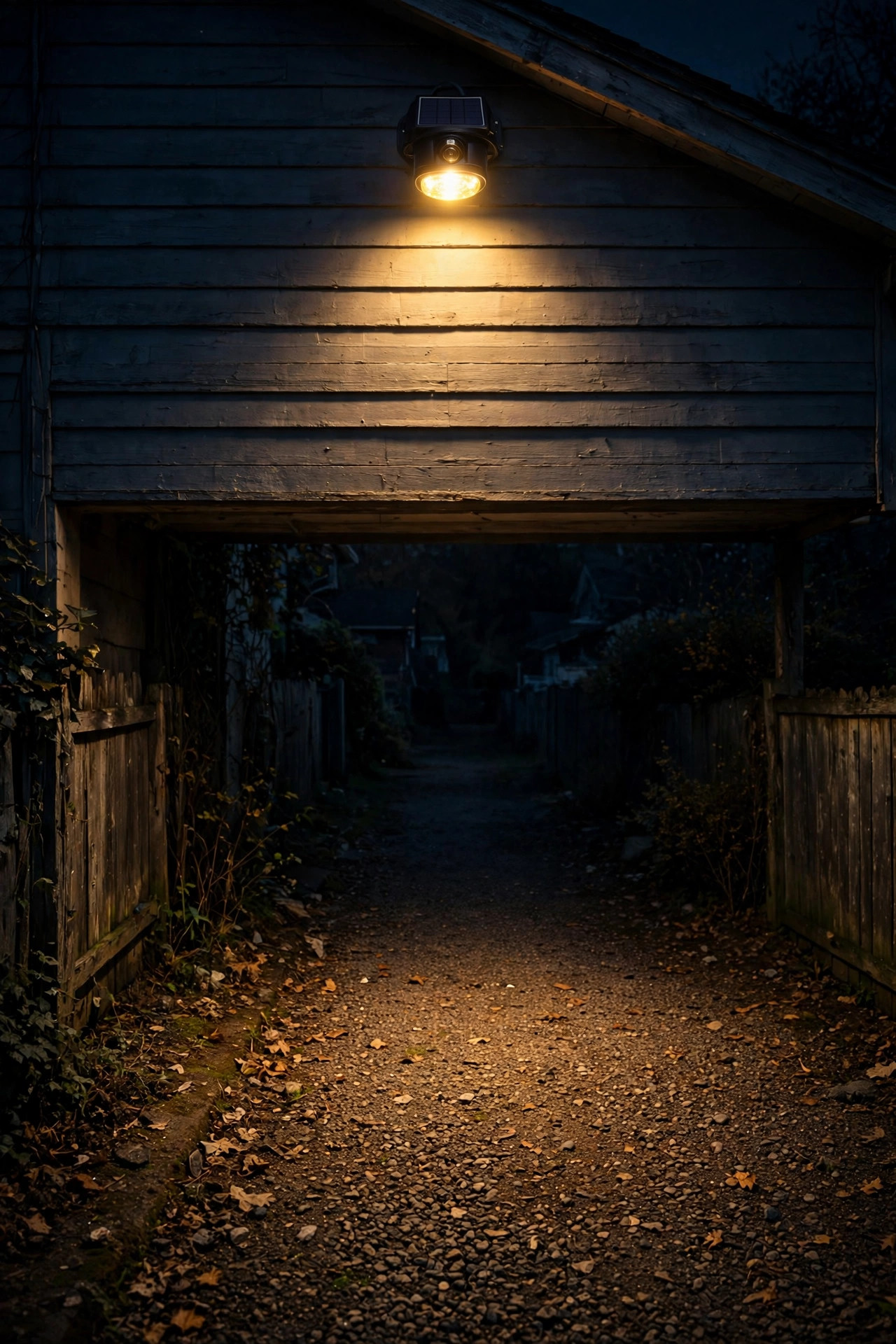
The back wall of the garage — the one facing the alley — usually has no power run to it at all, and trenching a line back there just for one light rarely makes sense. Solar motion lights were made for exactly this spot. Modern units with a decent-size panel and a lithium battery will give you 800–1,500 lumens for 20–30 seconds per trigger, all night long, even through a cloudy week. Mount two of them: one near each corner of the alley-facing wall, about 8 feet up, with the panels tilted toward the southern sky. The corner placement means anyone walking the alley trips the light before they're beside your garage door. Installation is four screws and ten minutes. Wipe the panels clean every couple of months — a dusty panel is the number one reason these underperform — and expect to replace the unit in three to five years. For a dark alley on a tight budget, nothing else comes close per dollar.
Suggested budget range: $20 – $50.
8. Under-Eave Soffit Downlights
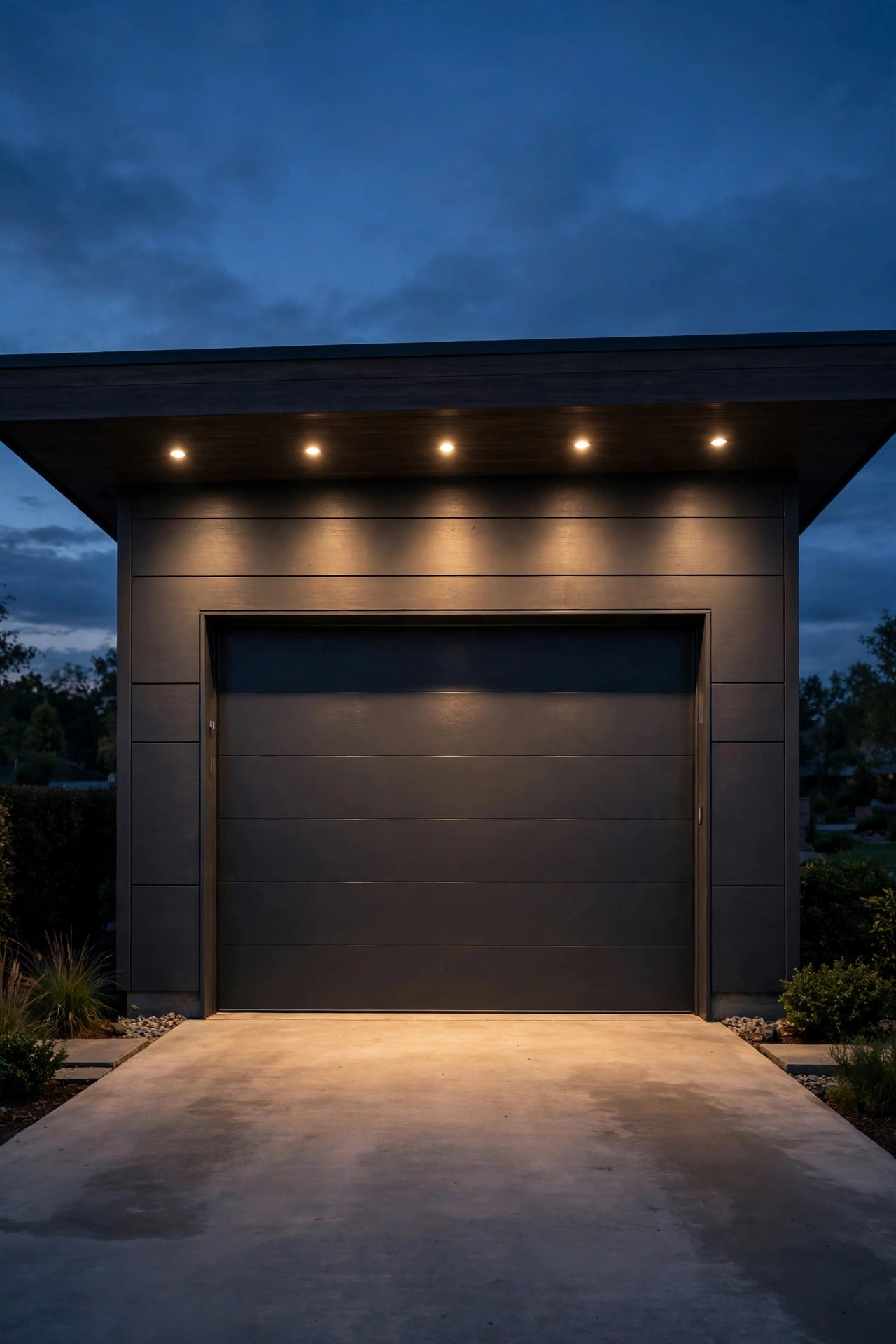
If your detached garage has even a modest roof overhang, recessed or surface-mount soffit downlights give you the cleanest, most "built-in" look of any idea on this list. A row of two or three 4-inch LED downlights under the front eave washes the garage door and apron in even, shadow-free light — wonderful for actually seeing what you're doing when you load the car. Choose fixtures rated for damp or wet locations with sealed trim, 3000K color temperature, and at least 700 lumens each. Space them evenly across the door width, roughly 18 to 24 inches out from the wall. This is a wired project: power usually comes from the garage's existing circuit, and while a handy homeowner can do it in an afternoon, I'm comfortable saying an electrician is worth it if your soffit has no existing box. On a timer or smart switch, soffit lights plus carriage sconces are the combination that makes a plain garage look custom-built.
Suggested budget range: $60 – $200.
9. A Smart Floodlight You Control From Your Phone
A smart floodlight takes idea #1 and adds the one thing a standard motion light can't do: tell you. When motion trips it at 2 a.m., your phone buzzes, the light blasts on at full brightness, and if your model has a camera, you can see whether it's a burglar or a raccoon with ambitions. Even without a camera, app control is genuinely useful — schedule the light to sit at a dim 30% glow in the evening for ambiance, then jump to full power on motion. Look for a hardwired model that connects directly to your Wi-Fi (check your signal strength at the garage first; a detached garage at the back of the lot is exactly where Wi-Fi goes to die, and you may need an outdoor access point or a mesh node in the garage). Set the motion zones in the app so the alley triggers it but the street doesn't. It's the priciest option here, but for a garage storing bikes, tools, or a classic car, the alerts alone earn it.
Suggested budget range: $60 – $150.

10. A Lantern Post Light at the Alley Gate
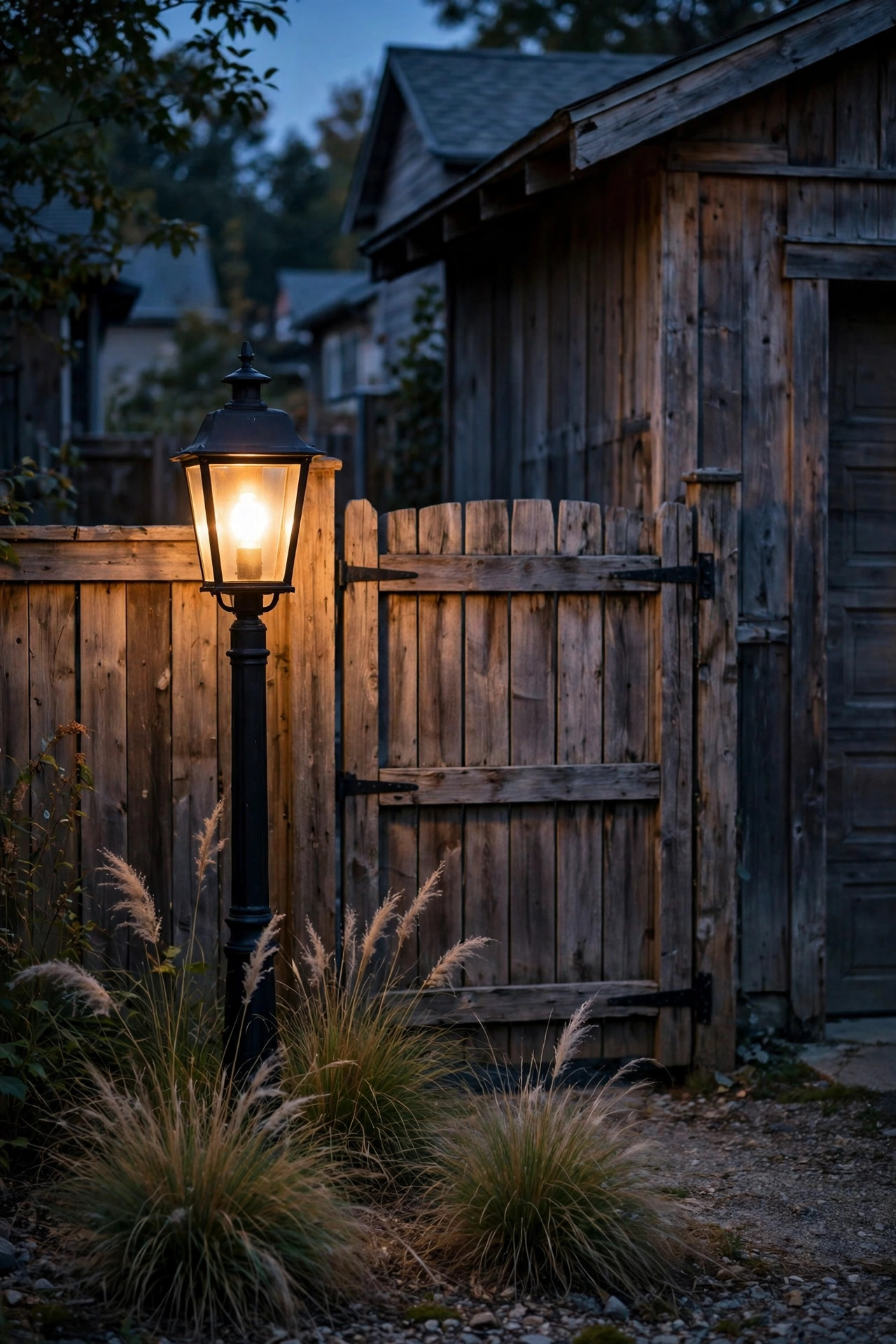
Where your yard meets the alley, there's usually a gate — and it's usually invisible after dark. A single post lantern at that gate does triple duty: it marks your entrance for guests arriving from the alley, lights the latch so you're not fumbling, and signals that this property is looked after. A 5- to 7-foot post with a traditional lantern head in black aluminum suits almost any garage style. If you have power at the garage, a wired post light on the same timer as the sconces keeps everything in sync; if not, solar post lights have improved enormously and a good one gives a solid 8 hours of warm light. Plant a small cluster of ornamental grass or a low boxwood at the base and the whole corner looks landscaped instead of forgotten. Set the post about a foot inside the property line so the gate swing clears it.
Suggested budget range: $90 – $300.
11. An LED Strip Under the Garage Awning or Overhang
Many detached garages have a little awning, a lean-to, or at least a generous overhang over the side door or the work area beside the building — and the underside of it is prime real estate for an outdoor LED strip. A weatherproof (IP65 or better) strip in an aluminum channel gives you a continuous ribbon of glare-free light that's perfect over a potting bench, a bike repair spot, or the trash and recycling station. The channel matters: it protects the strip, diffuses the light so you don't see individual dots, and makes it look installed rather than stuck on. Warm white 2700–3000K, and put it on a simple inline switch or motion-activated controller so it lights when you step under with your hands full of grocery bags. Measure your run carefully and buy the strip and channel in one kit sized to it. This is one of those cheap projects that makes you wonder why you waited.
Suggested budget range: $20 – $60.

12. Solar Step Lights for the Path and Garage Stoop
Steps are where dark yards actually hurt people, and detached garages tend to collect them: a stoop at the side door, a step down from the patio to the path, a raised threshold at the gate. Solar step lights screw or stick onto the vertical face of each step and throw a small fan of light across the tread — exactly where your foot needs to judge the edge. Buy them in matching sets so the color temperature stays consistent, and choose models with at least 3 LEDs and a wide beam; the tiny single-diode markers are decoration, not lighting. Clean the little panels when you think of it, and in northern winters, set expectations — shorter days mean dimmer lights by February, which is why I keep one wired photocell light (idea #5) as the anchor and let solar handle the accents. For a guest carrying a casserole dish across your yard at Thanksgiving, these small lights are the difference between a compliment and a story.
Suggested budget range: $25 – $60.
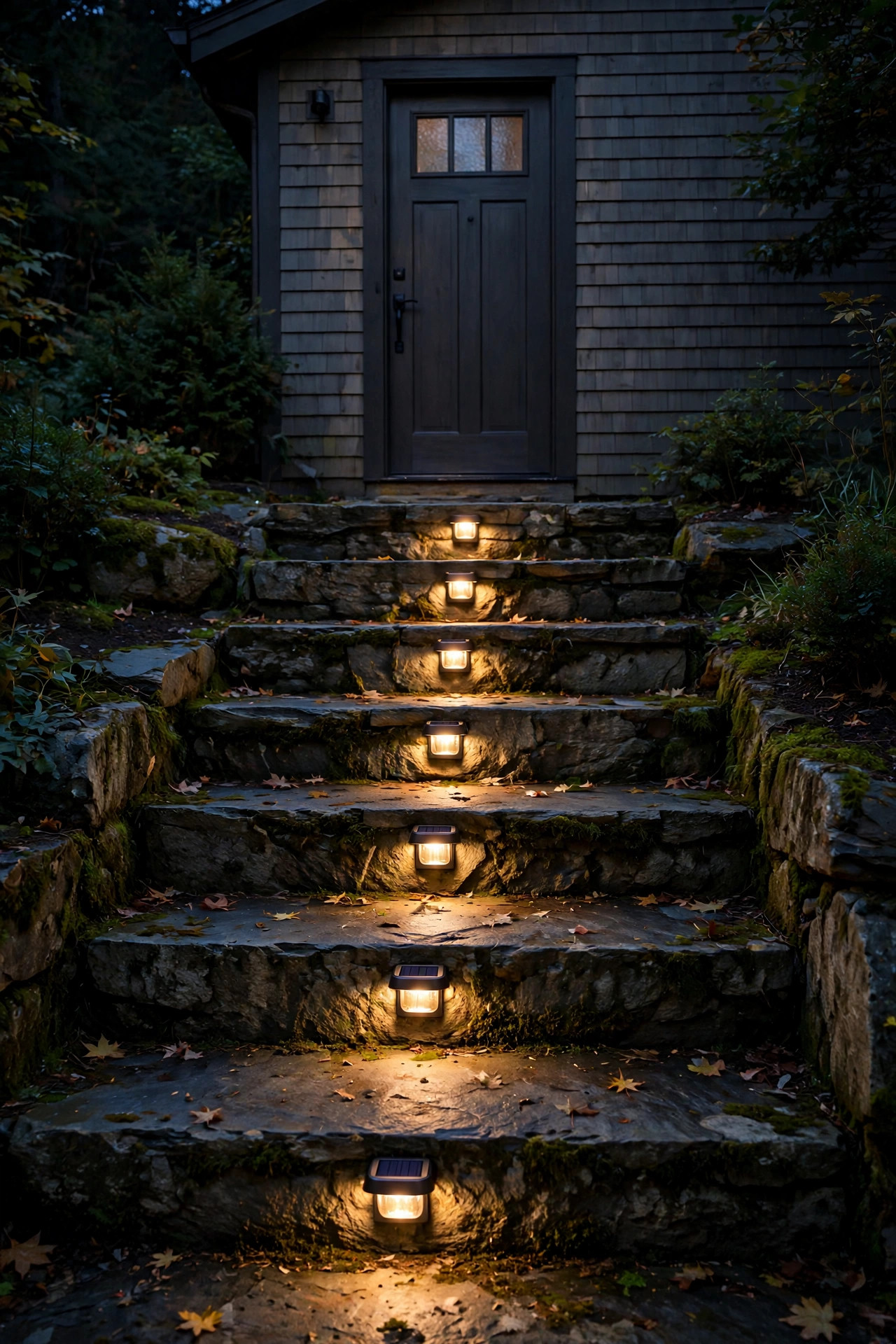
13. A Timer-Controlled Coach Light by the Pedestrian Door
A single coach light beside the pedestrian door, on an astronomical timer, might be the best quality-of-life upgrade on this whole list. Astronomical timers are the quiet heroes of exterior lighting: you program your location once, and they track sunrise and sunset all year, so the light is simply always on when it's dark and off when it's not — no photocell to get dirty, no schedule to adjust in October. The coach light itself can echo your front porch fixture for a matched look across the property. Mount it at eye level beside the latch side of the door, use a 2700K LED filament bulb, and if the door has a window, keep the wattage modest so you're not lit up like a stage every time you grab something from the garage fridge. Total install is a fixture swap plus a timer switch inside the garage. Simple, classic, done.
Suggested budget range: $40 – $120.
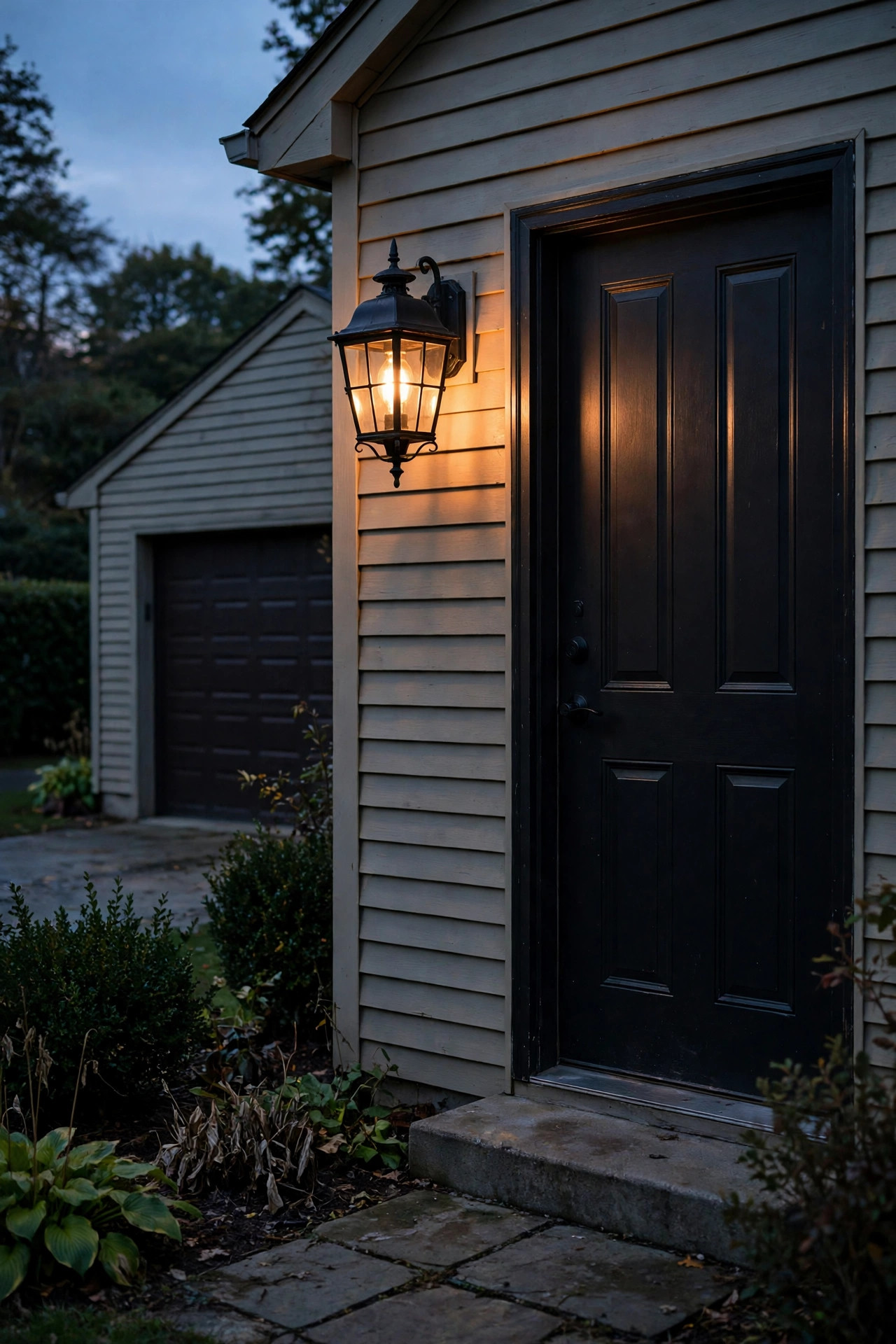
14. An Illuminated Address Plaque at the Alley Entrance
Here's one most homeowners never think of: if your garage faces the alley, delivery drivers, guests, and — most importantly — emergency services may approach your home from the back. An illuminated address plaque at the alley gate or on the garage's alley wall makes your house findable from both directions. Solar plaques charge by day and glow softly all night with no wiring at all; wired low-voltage versions tie into your landscape lighting transformer and burn steadier and brighter. Choose numbers at least 4 inches tall in a high-contrast finish — white or reflective numbers on a dark plaque read best at distance. Mount it at eye level where a driver stopped in the alley will naturally look, and keep shrubs trimmed below it. It's a small, inexpensive detail that looks sharp and is genuinely useful the one night you really need it.
Suggested budget range: $35 – $90.
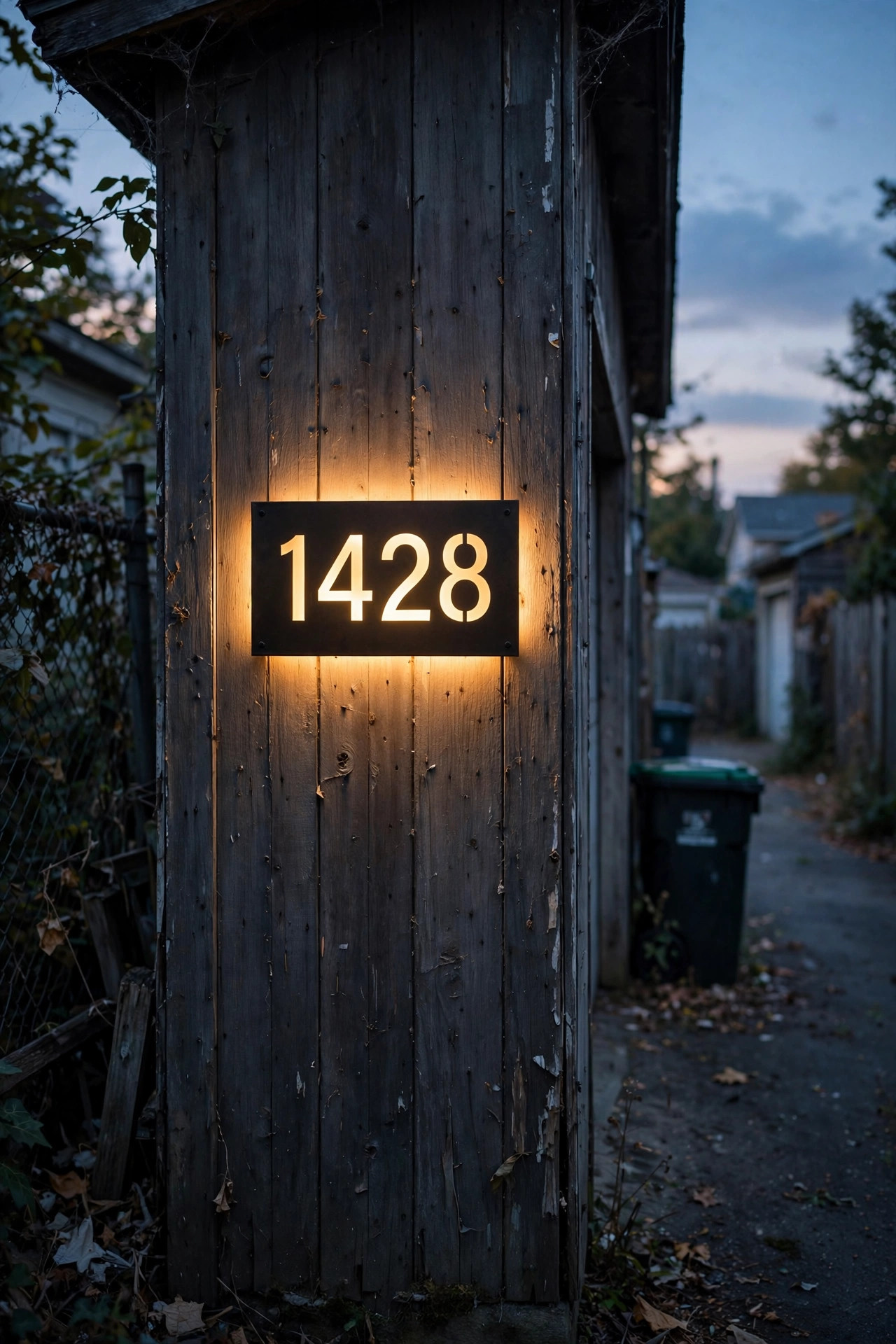
15. Battery Motion Lights Inside the Gate and Along the Dark Side
Every detached garage has one side that gets nothing — the narrow gap between the garage and the fence where the bins live and the spiders govern. Running power there is rarely worth it, but a two-pack of battery-powered motion lights absolutely is. These stick or screw onto the fence or the garage wall in minutes, run for months on a set of batteries (many are USB-rechargeable now), and pop on for 20 seconds when you step in to grab the recycling. They're also perfect inside the alley gate, lighting the latch and the first step into the yard. Output is modest — 200 to 400 lumens — but in a narrow passage that's plenty, and the motion-only operation means they're dark when nobody's there, which your neighbors and the local wildlife will both appreciate. I keep a spare charged set in the garage so there's never a dark week while one recharges.
Suggested budget range: $15 – $40.
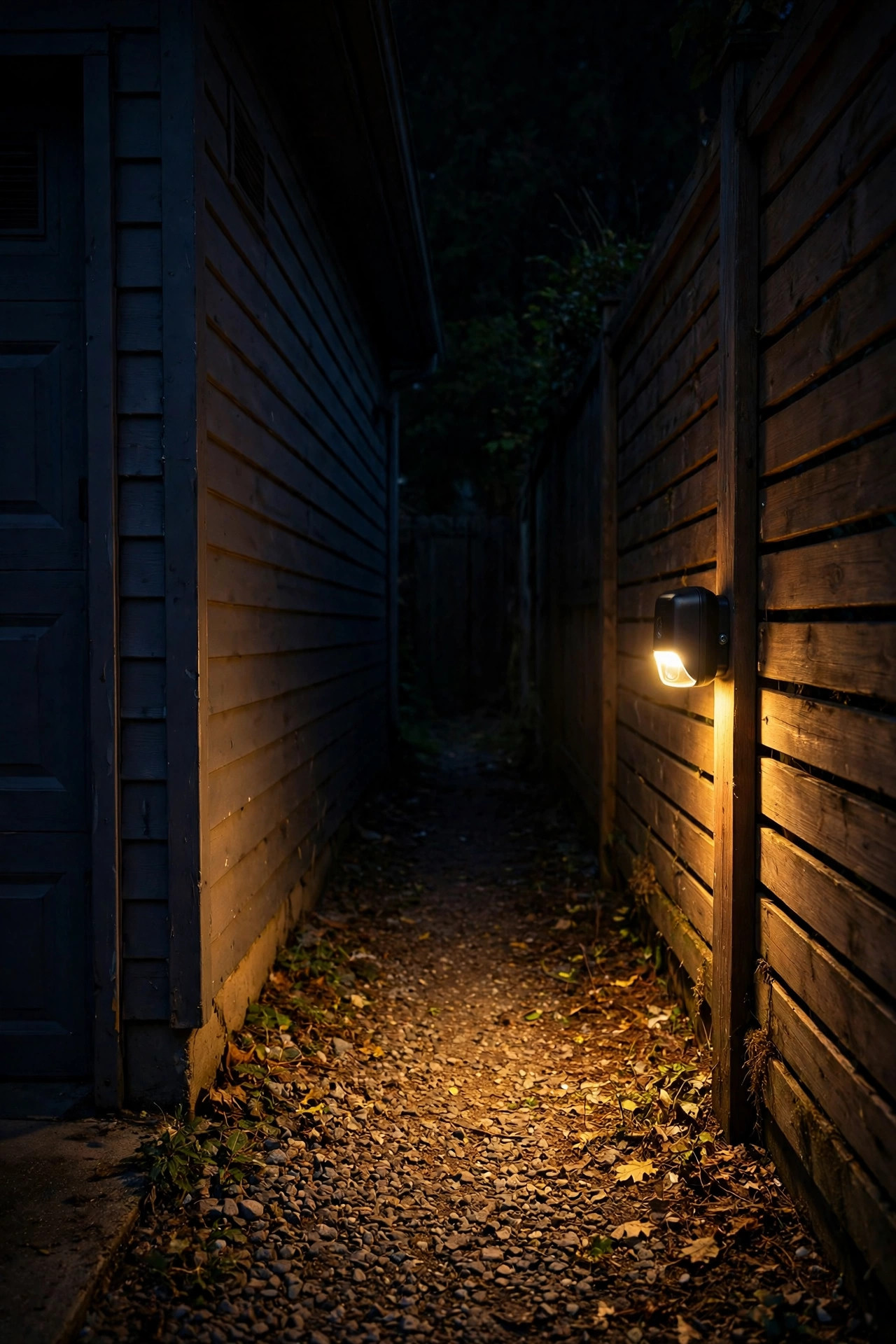
16. In-Ground Well Lights Grazing the Garage Facade
If your detached garage has nice bones — brick, board-and-batten siding, a handsome door — in-ground well lights let you show it off after dark the way landscape designers light a beautiful tree or facade. Set two well lights in the ground 12 to 18 inches out from the front wall, angled up so the beam grazes across the surface and pulls out every bit of texture. The fixtures sit flush, so you can mow and drive right over the apron edge without clipping them, and there's nothing above ground to knock over. These belong on your low-voltage system with the bollards from idea #6, on the same timer, so the whole garage scene comes on as one composition. Keep the beam narrow (15–30 degrees) and the output modest — you're grazing a wall, not launching a searchlight — and if your garage is plain vinyl, honestly, skip this one and spend the money on the carriage sconces instead.
Suggested budget range: $50 – $140.

17. A Cozy Lantern Corner Where the Garage Meets the Patio
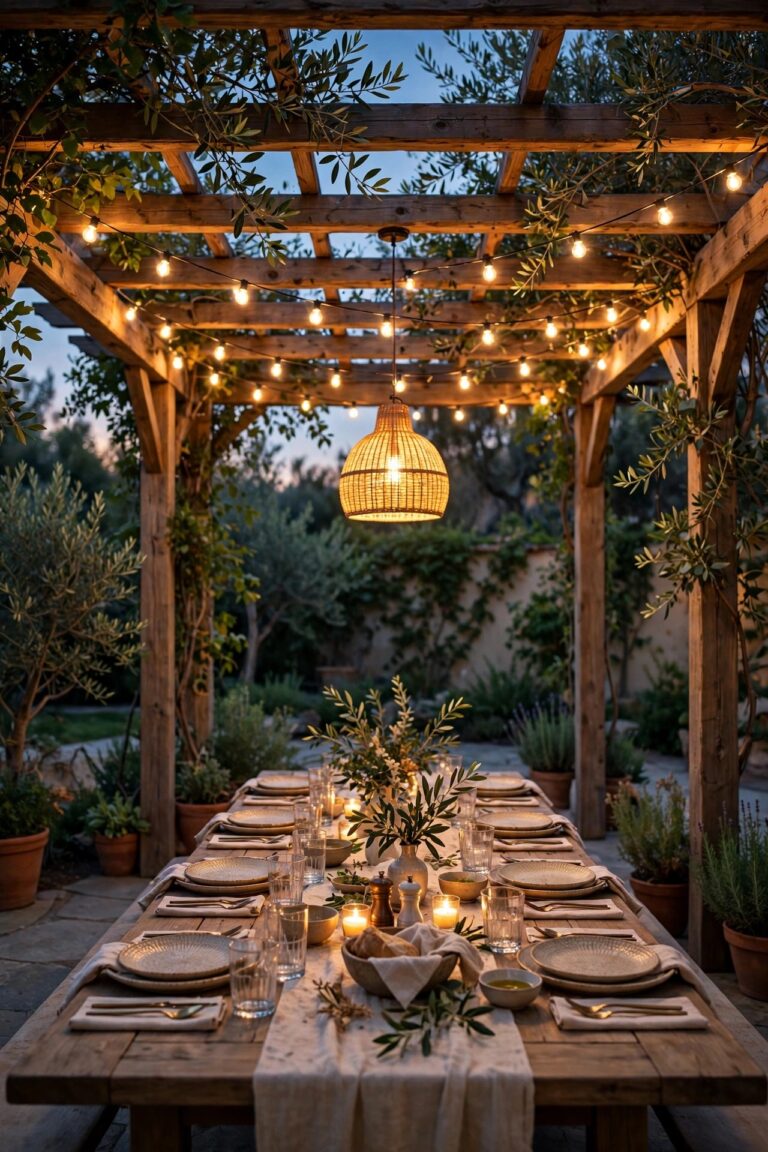
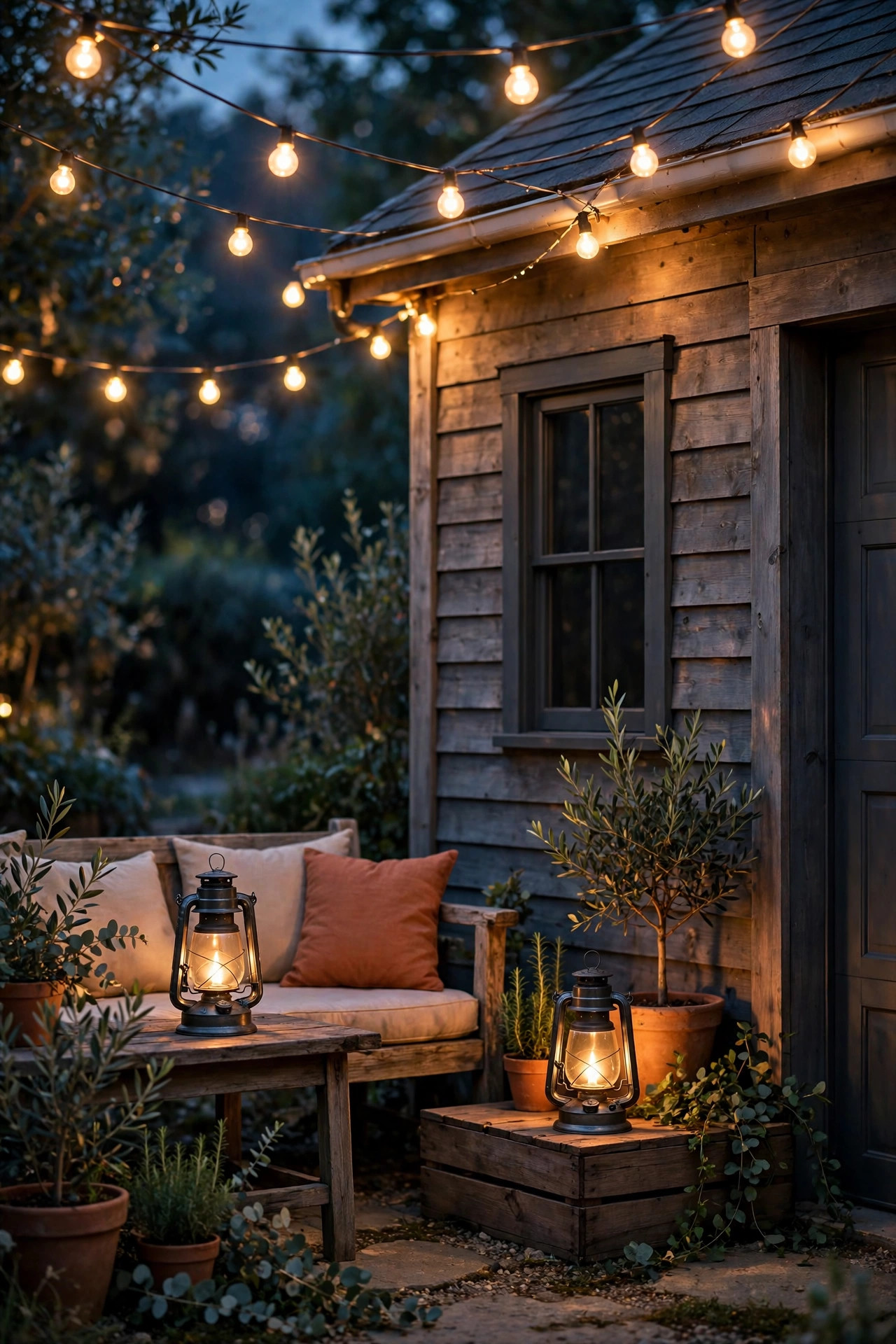
Finally, my favorite: treat the little triangle of space where the garage wall meets the patio or garden as a room, not a leftover. A couple of weatherproof lanterns — real candle-style LED lanterns on hooks, or a short shepherd's hook with a hanging lantern — plus the string lights from idea #4 overhead turn the garage side into the backdrop for your evening seating instead of the thing you apologize for. Lanterns at two heights (one hanging around 6 feet, one sitting on a crate or low wall) create the layered, flickering warmth that makes people linger outside. Choose lanterns rated for outdoor use with timers built in, and they'll light themselves at dusk for five hours and shut off before bed. This corner is where our neighbors end up with a drink every single summer evening, and it started as the darkest spot in the yard. That's the whole philosophy of detached garage lighting ideas in one corner: no part of your property has to stay forgotten after dark.
Suggested budget range: $45 – $130.
Frequently Asked Questions
How many lights does a detached garage actually need?
For most homes, four layers cover everything: one motion floodlight over the door, a welcoming fixture at the pedestrian door, path lighting between the house and garage, and one light on the alley side. Add more only where you have a specific dark spot — steps, a gate, a narrow side passage. Beyond that, more fixtures usually means more glare, not more safety.
Can I light a detached garage without running new wiring?
Absolutely. Solar path lights, solar motion lights for the alley wall, battery motion lights for side passages, and solar address plaques all work with zero wiring. The trade-off is brightness and winter performance: solar does best with at least 6 hours of direct sun on the panel, so combine a couple of solar pieces with one wired anchor light if you have any power at the garage at all.
What color temperature is best for garage and alley lighting?
I recommend 2700K to 3000K warm white for anything you see from the house or yard — it matches porch lighting and feels welcoming. For a pure security floodlight on the alley side, up to 4000K is acceptable because it reads slightly brighter, but avoid the blue-white 5000K daylight bulbs; they're harsh, they annoy neighbors, and they make your home look like a parking lot.
How much does it cost to light a detached garage?
A basic, effective setup — a motion floodlight, a photocell side-door light, and a set of solar path lights — runs about $85 to $215 in fixtures. A fully layered system with carriage sconces, bollards, a post light, and a smart floodlight can reach $500 to $900, and adding an electrician for new circuits typically adds $200 to $500 depending on the run. Running costs are minimal with LEDs: a whole garage lighting scene usually draws less than a single old 60-watt bulb.
Conclusion
The best detached garage lighting ideas aren't about any single fixture — they're about layers working together: security light where strangers approach, task light where you park and unload, path light where you walk, and a little warm glow where you live. Start with the motion floodlight and the side-door light this weekend, then add the pretty pieces as your budget allows. Before long, that walk to the garage will feel less like an expedition and more like part of your home. Browse more of my outdoor lighting ideas here on the site for the driveway, patio, and front yard, and your whole property will glow as one.