When I bought my first little duplex, the porch light had a burned-out bulb, the front walk was pitch black, and the back steps were lit by nothing but optimism. My first tenant was kind about it. My second tenant tripped on those steps carrying a laundry basket, and while nobody was hurt, I got the message loud and clear. Outdoor lighting for rental properties is not decor. It is the cheapest insurance you will ever buy, the easiest curb appeal there is, and the one system on the property that should never depend on a tenant remembering anything. In this guide I will show you exactly how I light a rental now: the liability spots to fix first, the durability rules I buy by, the automatic controls that run for years untouched, and the turnover routine that keeps every fixture alive between tenancies. No fragile fixtures, no apps, no settings for anyone to fiddle with. Just warm, steady light that turns itself on every night, protects the people who live there, and quietly protects you too.

The Short Answer
Light a rental like it has to run itself, because it does. Put durable metal fixtures with shatter-resistant lenses on every step, walk and entry, and wire them to photocells or astronomic timers so they come on every single night without anyone touching a switch. Standardize on one LED bulb type across every property you own. Treat solar as a garden accent and nothing more. Test every fixture at every turnover, keep a labeled spare bulb on site, and buy fixtures rated to last a decade instead of a season. Simple, automatic, and built to be ignored — that is the whole system.
Liability First: Dark Steps and Walks Are Injury Claims
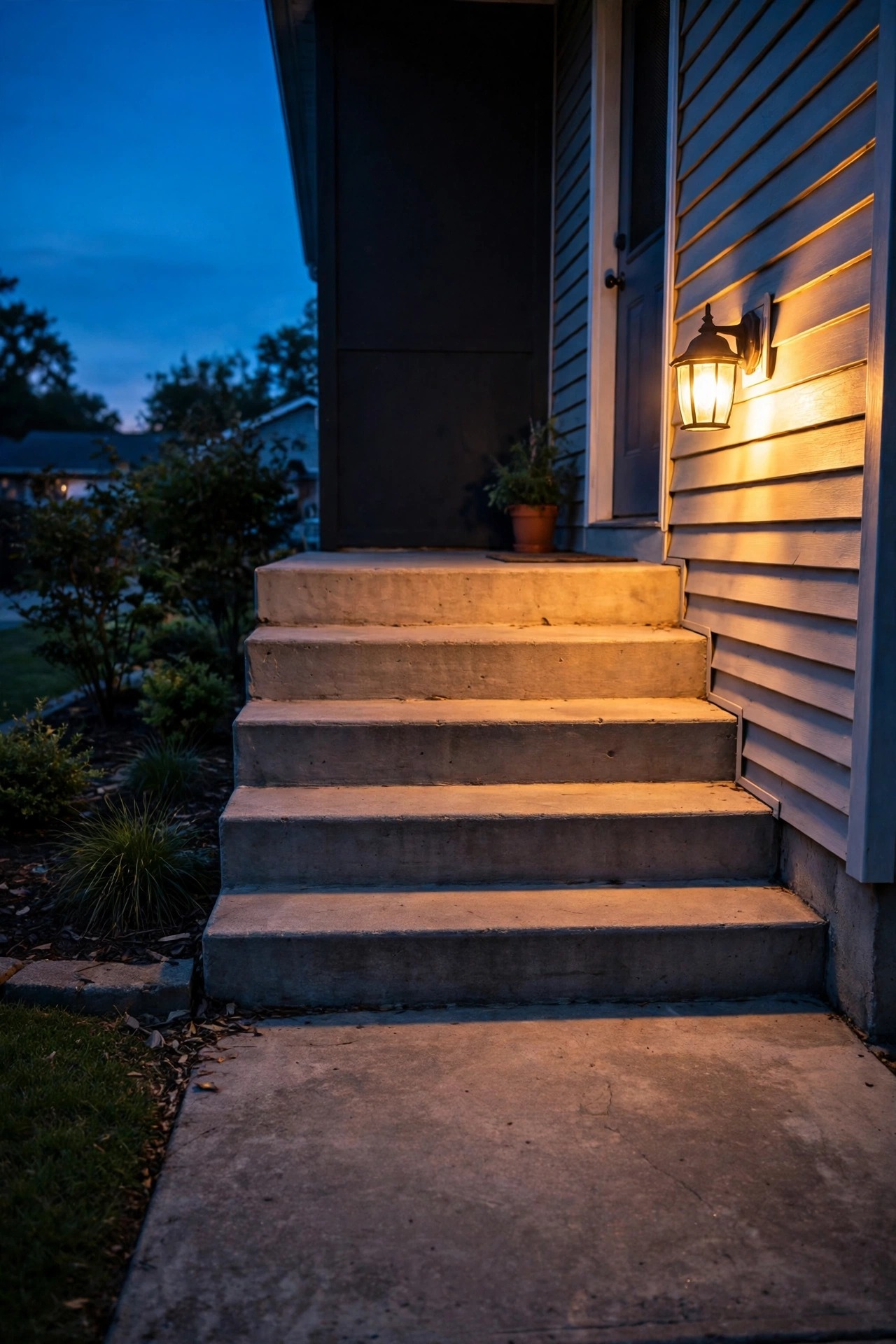
Before we talk about a single fixture, let us talk about the fall. Exterior steps, uneven walks, dark parking areas and unlit side gates are exactly where tenants and their guests get hurt, and "I did not know the bulb was out" is not a defense anyone enjoys making. Many local codes require a working light at each exterior door, and even where the code is silent, your insurer and any attorney looking at the case will ask the same question: was the route from the car to the door safely lit? Honestly, this is why I light a rental more thoroughly than I light my own home. Start with the path a tenant walks every night — parking spot or street, walkway, steps, porch, lock. Every change in level needs light on it, every landing needs light on it, and the lock itself needs light on it, because a tenant fumbling with keys in the dark on an icy step is the scenario you are designing against. Photograph the lit exterior at move-in, keep the photos with the lease file, and treat a dead fixture like any other safety repair: prompt, documented, done. The lighting that protects your tenants is the same lighting that protects you.
Durability Rules for Outdoor Lighting for Rental Properties
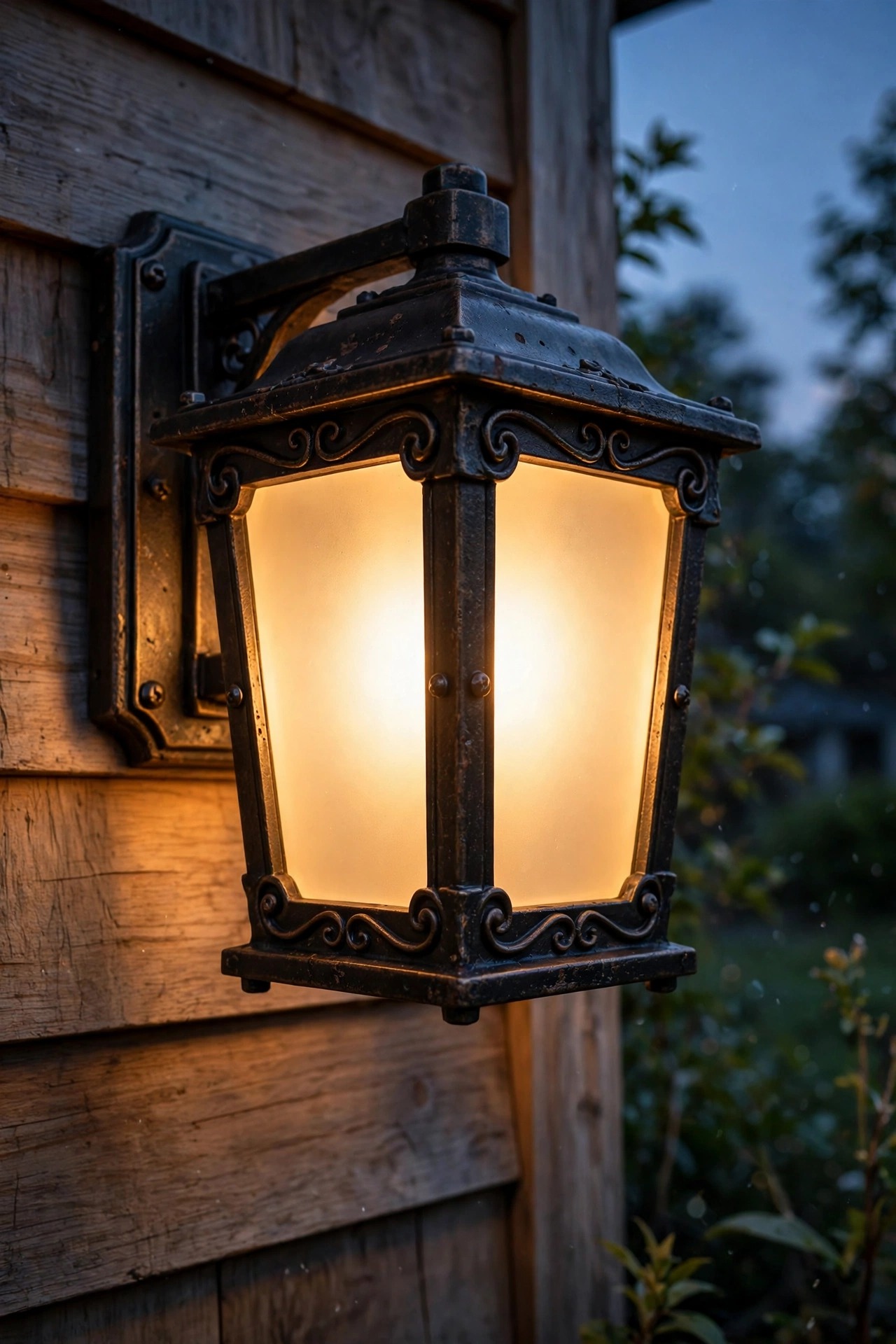
Rentals are hard on fixtures. Nobody washes a rented porch light, nobody is gentle with it, and it will be hit by moving furniture, ladder feet, pressure washers and the occasional basketball. So my buying rules are blunt. Metal bodies only — die-cast aluminum or steel with a powder-coated finish — because plastic housings yellow, chalk and crack within a couple of summers. Polycarbonate lenses instead of glass where a fixture can be struck, since a polycarbonate lens bounces and a glass one shatters into the mulch. Sealed, wet-location-rated fixtures, ideally IP65 or better, so driven rain and sprinkler overspray stay outside the housing. I want fixtures with nothing to adjust: no modes, no color dials, no remote controls to lose, no decorative arms thin enough to bend. Mount everything solidly to a box or a post, high enough to discourage casual tampering but reachable on a step ladder for service. Warm white light only, in the 2700–3000K range, because it looks residential and welcoming rather than institutional. And I buy the same fixture family for the whole property, so a replacement five years from now matches instead of starting the patchwork look that quietly drags a building down. Matched, sturdy fixtures also photograph beautifully at dusk, which matters every single time a unit turns over.
Automation: Lights That Run Themselves for Years
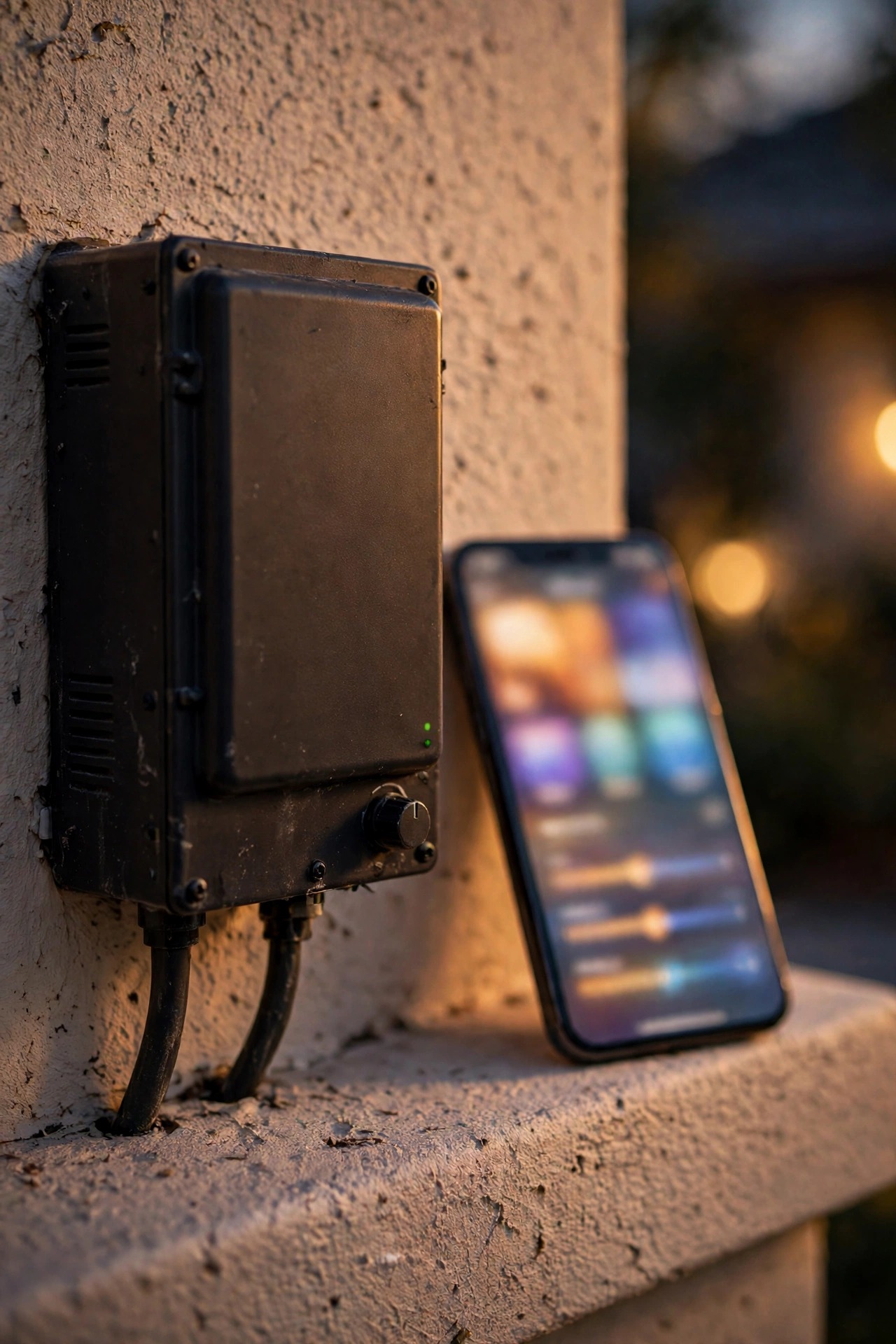
The single best decision I ever made as a landlord was taking my tenants out of the lighting loop entirely. A porch light on a manual switch will be off — because the last person left it off, because someone hit the wrong switch, because nobody thought about it. A light on a photocell cannot forget. Photocells turn fixtures on at dusk and off at dawn automatically, in every season, and a good one lasts for years without being touched. For low-voltage landscape systems, an astronomic timer does the same job and even adjusts itself as sunset drifts across the year. I cover the how-to in my guide to adding a photocell or timer to a porch light, and the principle is simple: hardwired automation over plug-in gadgets, because a plug-in timer is one curious unplugging away from a dark property. Put controls where they will not be casually changed — inside a locked utility area, a garage, or at least away from the bank of switches a tenant uses daily. The goal is a property that lights itself at dusk on the day a tenant moves in and is still lighting itself, unthought-about, on the day they move out. Every call you never get about a dark porch pays for the photocell many times over.
One Bulb Everywhere: Standardization That Ends the Callbacks
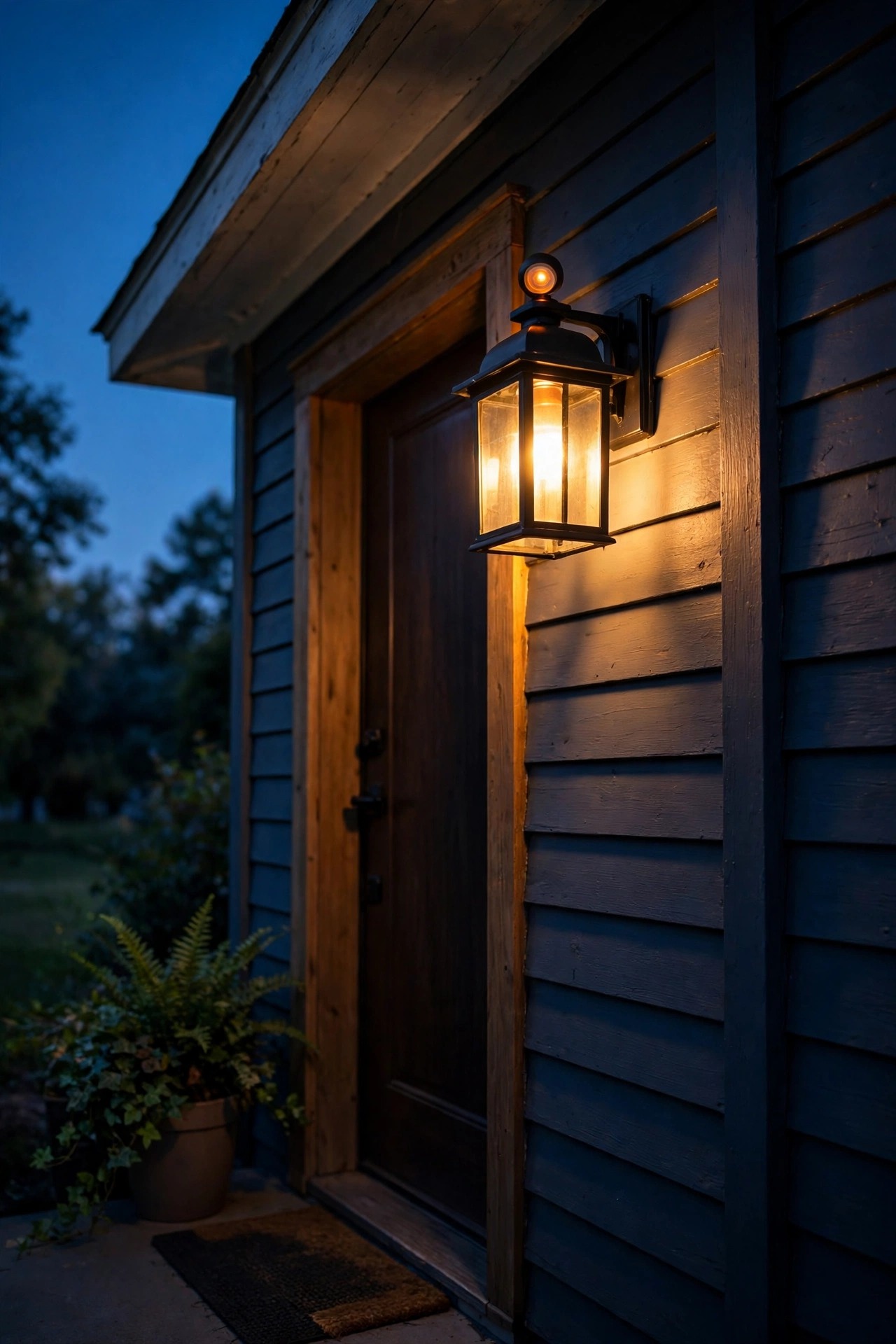
Here is a boring little habit that will save you more drives across town than anything else in this guide: pick one bulb and use it everywhere. Mine is a medium-base LED, warm white around 2700–3000K, roughly 800 lumens, rated for enclosed fixtures. It lives in the porch lanterns, the garage coach lights, the side-door fixtures, at every property. That means one spare in the truck, one spare in each utility closet, and zero decisions when something burns out. Speaking of burning out — a decent LED is rated for 15,000 to 25,000 hours, and at five hours a night that is eight to thirteen years, which means a bulb installed today will likely outlast the next three tenancies. I prefer fixtures that take replaceable bulbs over fully integrated LED fixtures for rentals, because when an integrated module eventually dies you are replacing the whole fixture on a ladder, while a bulb swap takes ninety seconds. Leave one labeled spare bulb on site with a sticky note on the box — most tenants will happily swap a bulb they can reach if the right one is sitting there — and keep a simple per-property list of what is installed where. Boring, yes. Callback-proof, also yes.

Solar, Honestly: Fine for Accents, Never for Steps
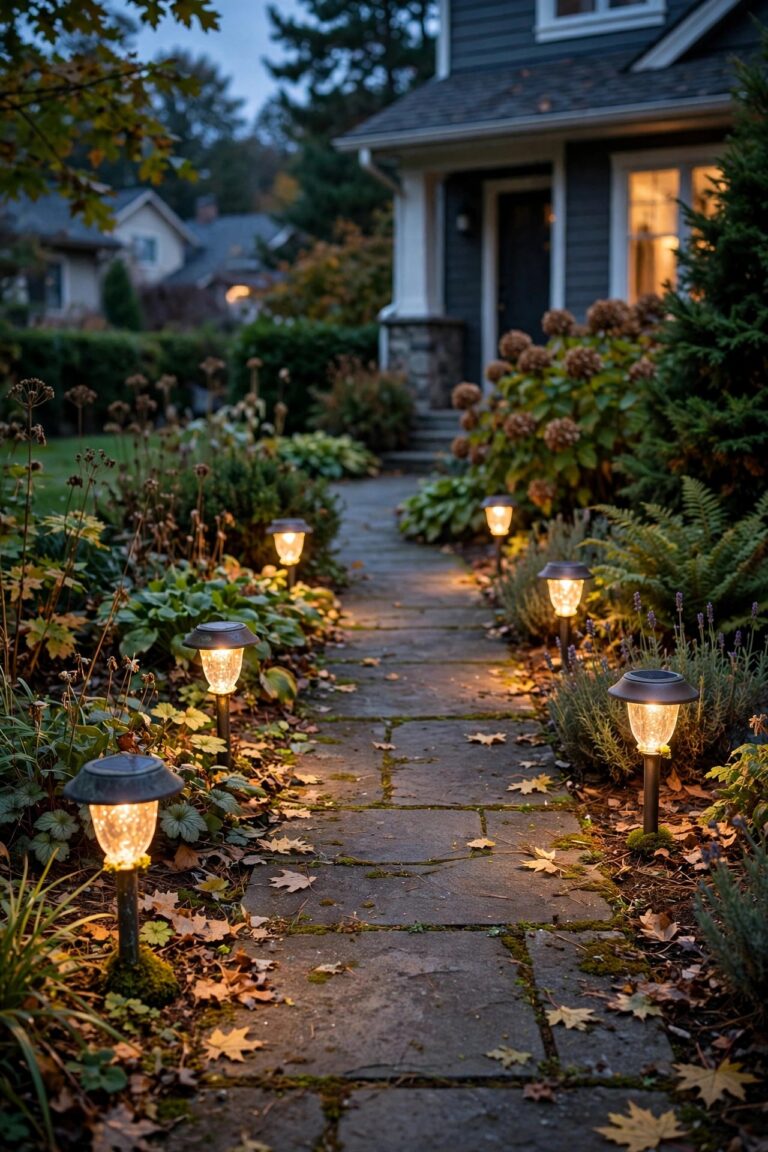
I get asked about solar constantly, because the appeal is obvious: no wiring, no electric bill, stick it in the ground and done. And for a rental, solar has exactly one legitimate job — soft accents in planting beds, away from anywhere a foot lands. Everywhere else, I have to be straight with you: solar is not reliable enough to be responsible for anyone's safety. The small panels cloud over, the little rechargeable cells fade hard after a winter or two, output drops exactly when nights get longest, and a dimming solar stake will never be reported by a tenant — it just quietly stops lighting the step it was supposed to protect. I have pulled too many dead solar stakes out of rental mulch to pretend otherwise. So the rule at my properties is simple: if a light guards a step, a walk, a lock or a parking spot, it is wired — line voltage or low voltage — and it comes on at full brightness every night regardless of how sunny Tuesday was. Solar may sparkle in the flower bed for charm, and it is genuinely handy for a week while a real fix is scheduled, but it is decor, not infrastructure.

Security Lighting That Deters Without Annoying Anyone
Good security lighting at a rental does two jobs at once: it makes the property feel safe to the people who live there, and it makes the property look like a poor choice to anyone casing it. The workhorse is the motion-sensor flood at entries, parking areas, side gates and dumpster enclosures — dark and quiet until someone steps into the zone, then a firm wash of light. Aim motion heads down and across your own ground, shield them so the beam does not rake the street or blast a neighbor's bedroom window, and set the range honestly; a light that fires for every passing car trains everyone to ignore it. Around the building itself, I like a low, steady baseline — photocell lanterns at doors and a few low-voltage path lights — with motion fixtures as the boost on top, because constant stadium brightness annoys tenants, washes out any cameras, and argues with the neighbors. I go deeper on placement in my guide to outdoor lighting for home security, but the landlord version of the rule is short: light the approaches, light the parking, light the doors, and let motion handle the rest. Tenants renew leases in buildings where they feel safe walking in at night.
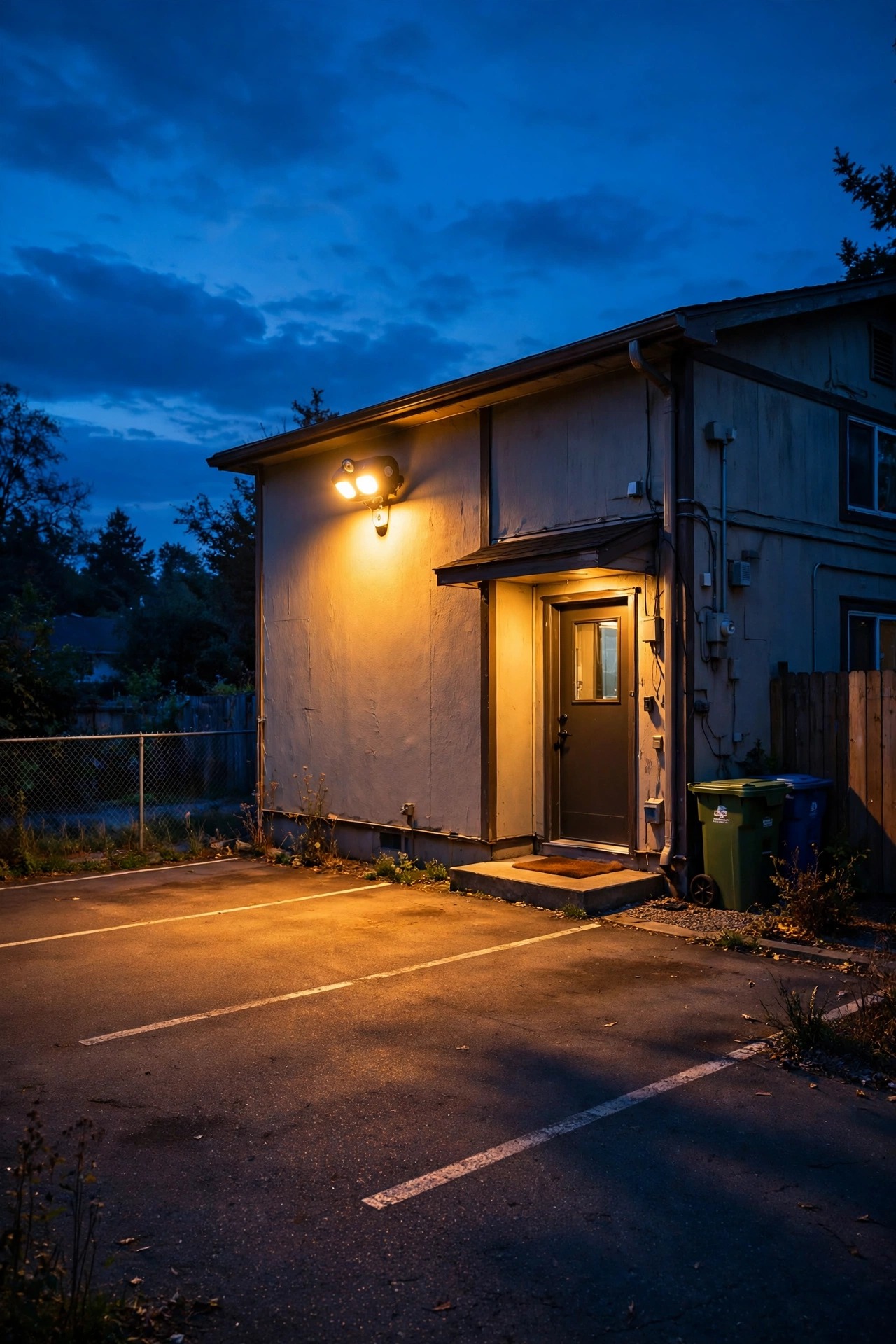
Turnover Time: Outdoor Lighting for Rental Properties, Checked and Reset
Turnover is when rental lighting quietly dies — a fixture fails during the vacancy, nobody notices, and the new tenant's first impression is a dark porch on move-in night. So exterior lighting is a fixed block on my turnover checklist, done at dusk, not at noon. I walk the whole property after dark and test every fixture: porch, steps, walks, parking, side gate, garage. I wipe every lens and solar-free sensor eye, because a season of grime and cobweb can steal a surprising share of the light. Porch bulbs get replaced in pairs if one is out, so the entry looks even in the listing photos. I cover each photocell with a glove to confirm it actually switches, tighten any mount a ladder or mover has knocked loose, pull mulch and vines back off path lights, and check that nothing has been unplugged or switched off by the previous tenant. Ten minutes of this, and the exterior shot for the next listing — taken at dusk, when warm light makes a place look cared for — sells the property before a word of the ad is read. My outdoor lighting maintenance checklist has the seasonal version of this same routine if you want to go further.

Who Pays for the Power? Run the Pennies Math Once
Landlords sometimes hesitate over dusk-to-dawn lighting because somebody pays for those hours, and if the tenant pays the utilities, leaving lights on all night can feel like spending their money. Run the numbers once and the worry evaporates. A modern LED porch bulb sips a fraction of what the old incandescent used, and an entire low-voltage yard system — transformer, path lights, a couple of accents — typically draws less in total than a single old porch bulb did. We are talking about pocket change per month for a property that is lit, safe and welcoming every night of the year. My approach is to say so plainly in the lease packet: exterior lights are automatic, they cost very little to run, and they are there for everyone's safety. Where the building allows it, I put exterior fixtures on the house or common-area circuit so the cost is mine and the subject never comes up at all — it is the cheapest goodwill in landlording. What I never do is let the cost question push me toward timers that leave the property dark at 2 a.m., which is precisely when a light over the steps earns its keep. Tenants notice a building that is lit every night, and they say so — in renewals, in referrals, and in reviews that future tenants actually read.
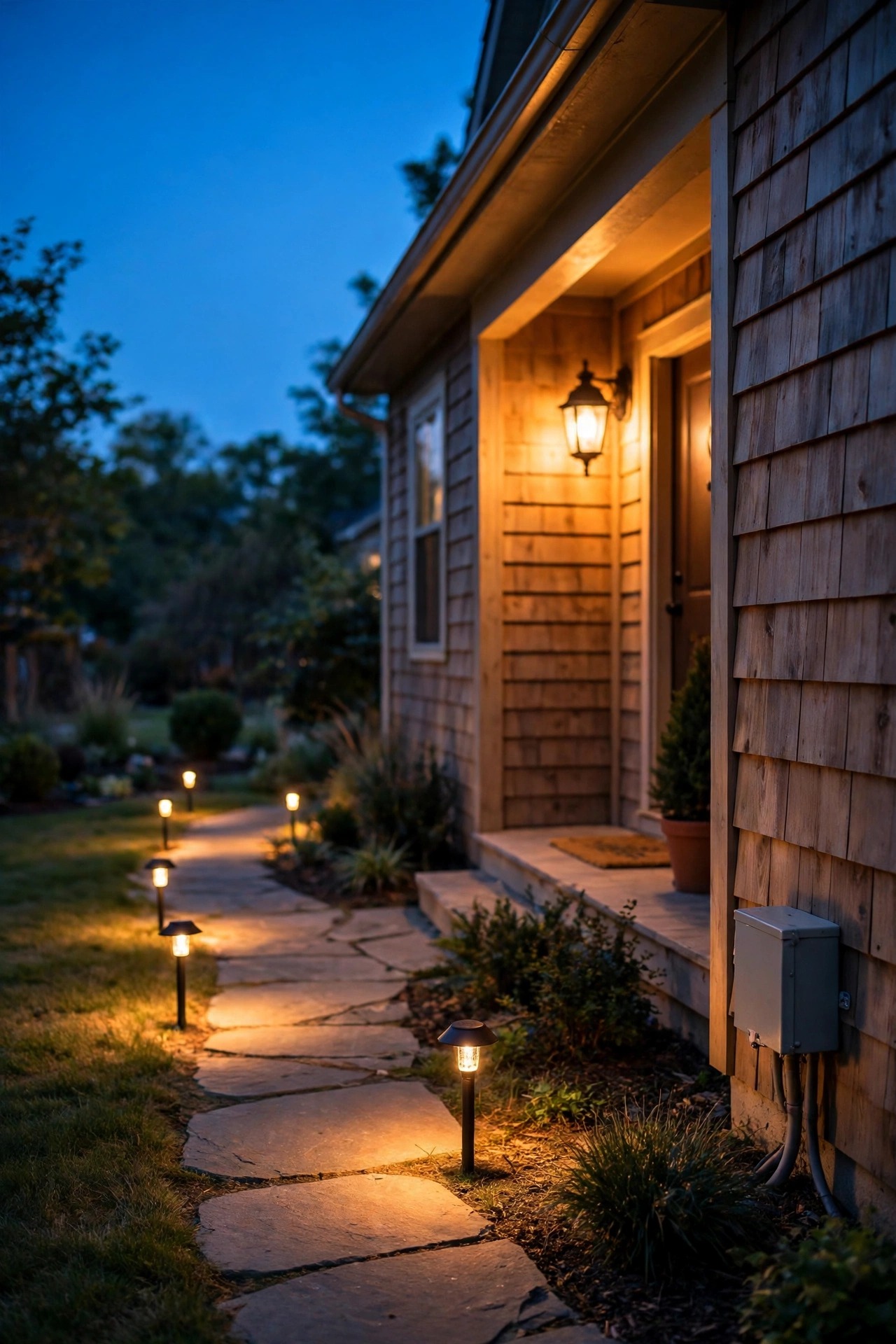
What to Skip: Smart Accounts, Color Shows and Fragile Anything
Every year brings a fresh crop of clever lighting that is a terrible idea at a rental. Smart bulbs and smart switches top my skip list: they live on somebody's account and somebody's Wi-Fi password, and both of those change every time the tenancy does. The fixture that needs an app your tenant will never install is a fixture that will be dark, stuck on a weird setting, or factory-reset into uselessness by spring. Color-changing anything is the same story — a novelty for exactly one evening, then a porch glowing purple for a month because nobody can find the remote. Skip fragile, too: glass stake lights anywhere near a mow line, delicate solar ornaments, thin decorative lanterns that dent when a bike leans on them, and string lights installed as if they were permanent wiring. Skip motion lights with a panel of tiny dials nobody will ever set correctly twice. The test I apply to every purchase is one question: will this still be working, unchanged, with zero cooperation from whoever lives here in three years? If the answer needs an app, an account, a remote or a careful owner, it fails the test, and something dumber and sturdier gets bought instead.
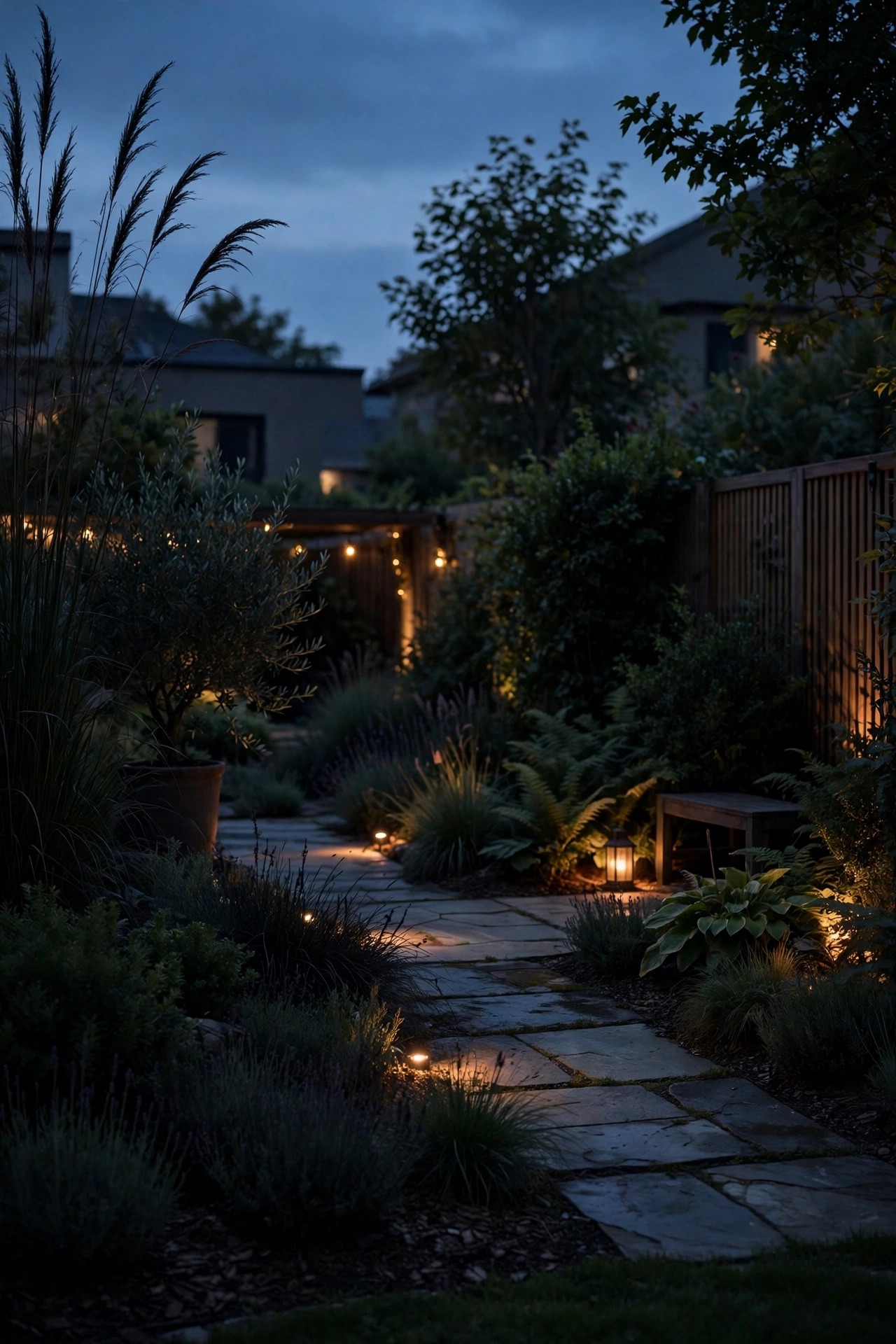
5 Mistakes That Keep Costing Landlords Money
First, buying consumer-grade plastic fixtures because they are cheap. They are not cheap; they are rented. UV turns them yellow and brittle in a season or two, the housings crack, and you buy the fixture three times while a metal one would still be on its first decade. Second, installing anything that depends on an app or a personal account — covered above, and worth repeating because it is the fastest route to a permanently dark porch. Third, leaving bulb replacement entirely to tenants. Tenants do not buy bulbs for fixtures they do not own; by month six half the property is dark, and when a tenant does replace one, it is whatever was on sale, which is how a building ends up with five shades of white across one facade. Fourth, replacing fixtures one at a time with whatever is on the shelf, until the property looks patched together — standardize and replace in matched groups. Fifth, putting lighting on manual switches and assuming it will be used. It will not be, reliably, and the one night it matters will be the night it was off. Automate it, standardize it, and check it at turnover, and nearly every lighting problem a landlord ever has simply never happens.
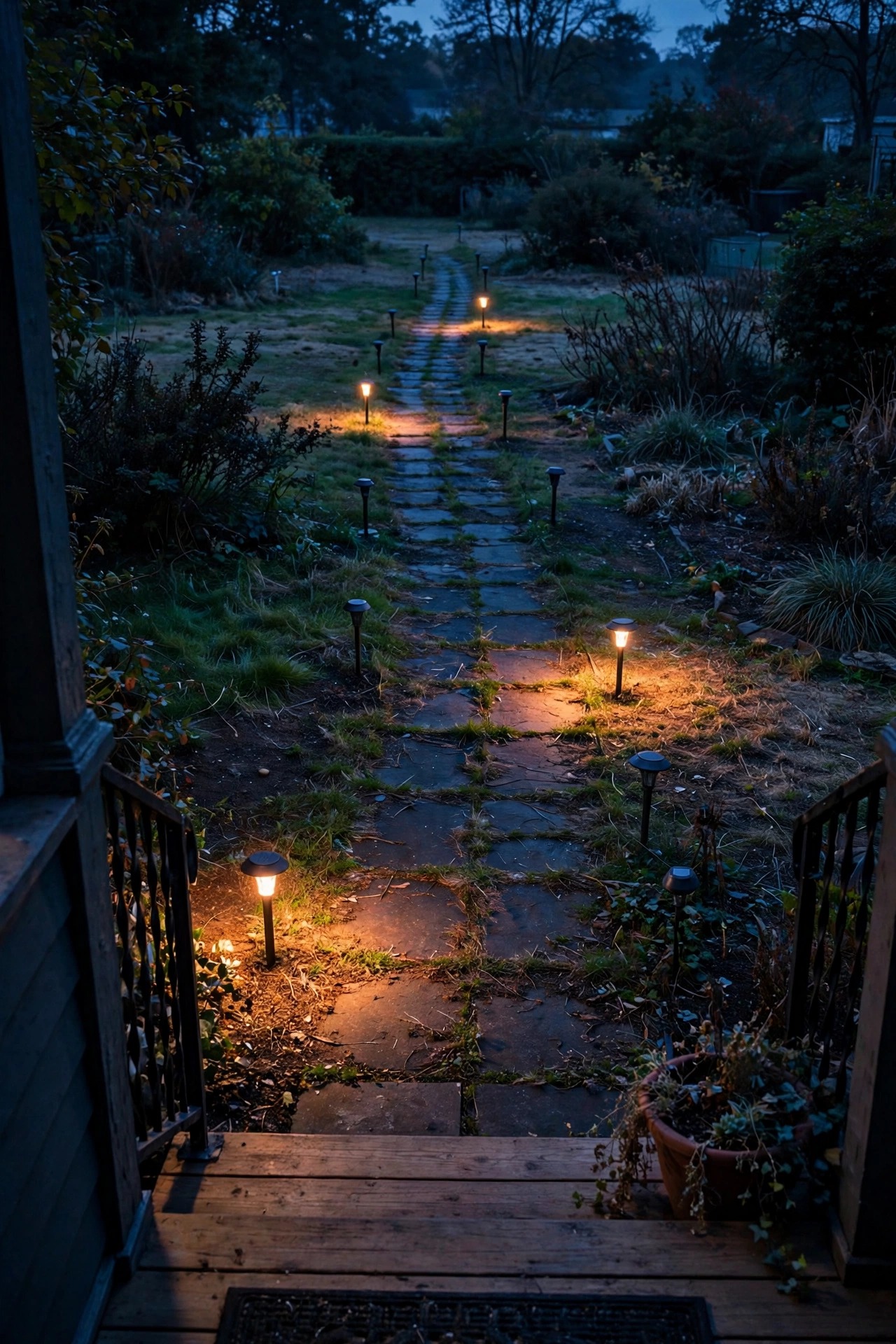
What It Costs in 2026
Durable is not the same as expensive, and the honest numbers are friendly. A solid die-cast porch lantern with a replaceable bulb runs about $40–$90, against $12–$20 for the plastic version you will replace three times in five years. A good motion-sensor flood for a parking area or side gate is $35–$80. Photocell control adds roughly $10–$25 per fixture, or use photocell bulbs at $8–$15 each where the fixture allows. A small low-voltage starter setup for walks and steps — transformer, cable and four to six path or step lights — lands around $250–$450 installed by you, and a full lighting refresh on a typical duplex (two entries, walks, one motion flood, accents) usually totals $350–$700 in fixtures if you do the ladder work yourself. An electrician for genuinely new hardwired work, like adding a motion light where no box exists, typically runs $150–$350 for the visit. Running costs stay tiny: a full LED exterior package commonly draws 40–80 watts total, and at roughly eleven hours a night that is on the order of $3–$8 a month — less than the cost of one service call to fix the fall somebody took in the dark. Keep a $20 spares bin — two bulbs, one photocell, wire nuts, tape — and most repairs become free and immediate.
Frequently Asked Questions
Who should replace outdoor bulbs at a rental, the landlord or the tenant?
In my leases, exterior lighting is my job, full stop. It is safety equipment, like a handrail, and I never want a dark step blamed on a tenant who forgot. I leave one labeled spare bulb in the utility closet so a tenant can swap a reachable bulb if they are willing, but the responsibility — and the turnover check — stays with me.
Are landlords legally required to provide outdoor lighting?
It depends on your city and state. Many local housing codes require a working light at each exterior door and on stairways, and some are stricter about parking areas and common walks. Check your local code before you assume either way — and honestly, even where nothing is mandated, the liability math in this guide makes good lighting the obvious call.
Can solar lights be the only lighting on rental property steps?
No, and I feel strongly about this one. Solar output fades with panel age, short winter days and a few cloudy afternoons in a row, so the night a tenant comes home late in January is exactly the night solar is weakest. Steps, locks and walks need wired light that is at full brightness every night. Solar belongs in the flower beds.
How long should outdoor LED fixtures last at a rental property?
A quality metal fixture should serve ten years or more, and the LED bulbs inside are typically rated for 15,000 to 25,000 hours — many years of nightly use. What usually ends a fixture's life early is water getting into a cheap housing, not the light source itself, which is another reason the durability rules above matter more than any single feature.
Conclusion
Outdoor lighting for rental properties rewards the landlord who keeps it simple: metal fixtures that shrug off weather and tenants, photocells and timers that need no cooperation from anyone, one standard bulb everywhere, wired light on every step and walk, and a ten-minute check at every turnover. Do that, and your property will greet every tenant, every guest and every showing with the same warm, safe glow — while you think about it almost never. If you are standing in the aisle right now, start with the entry and the steps, automate them, and work outward from there. And when you are ready to plan the prettier layers, browse the other lighting ideas here on the site — even a rental deserves to look loved.