Every spring, my inbox fills with the same sad photo: a patio strand that went up with such hope last May, sagging by July, half dark by September, and in the trash by Halloween. Here is the unglamorous truth I have learned after a decade of stringing, unstringing, and re-stringing my own patio: the best outdoor string lights are not the prettiest ones in the box photo. They are the ones with thick, UV-resistant cable, sealed sockets, and bulbs you can replace one at a time instead of retiring the whole strand. In this post I am sharing the 13 types I recommend when someone tells me they want lights that will still be glowing five summers from now. My picks are by type, not by brand, and I judge every strand the same way: cable and socket build first, weather sealing second, bulb replaceability always. I also keep my layering philosophy in mind — string lights are the warm canopy layer of a patio, the glow everything else gathers under. Choose that layer once, choose it well, and you can stop rebuying it every spring.
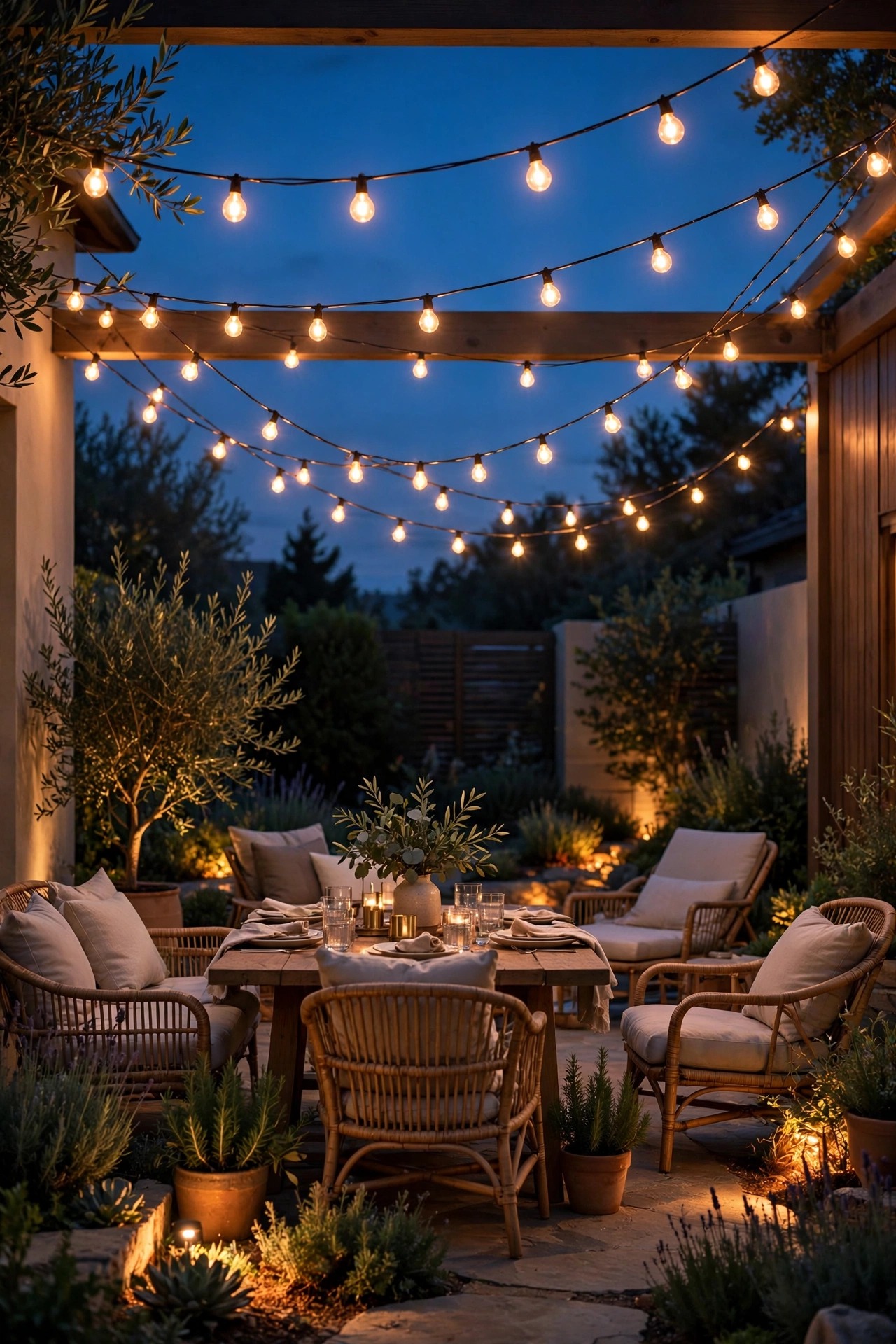
1. Heavy-Duty Commercial-Grade Strands — Best Outdoor String Lights for Year-Round Patios
If you buy one strand and hang it for a decade, make it this one. Commercial-grade strands use thick 14- or 16-gauge cable — the same heft as a good outdoor extension cord — with suspended sockets that hang a few inches below the wire so rain sheds off instead of pooling in the socket. Look for medium-base (E26) sockets with rubber weather seals and bulbs you unscrew and replace individually, because on a strand built this well, the cable and sockets will outlive several generations of bulbs. That is exactly what you want: replace a two-dollar bulb, not a sixty-dollar strand. These handle year-round exposure, real wind, and spans strung between solid anchor points without stretching or going brittle in the sun. The honest downsides are weight and price. A 48-foot strand is heavy enough that it needs lag hooks into structure, not adhesive clips, and it is overkill for a tiny balcony. But costed out over eight or ten summers instead of two, it is the cheapest strand on this whole list, and it is the one hanging over my own patio right now.
Suggested budget range: $45 – $90.
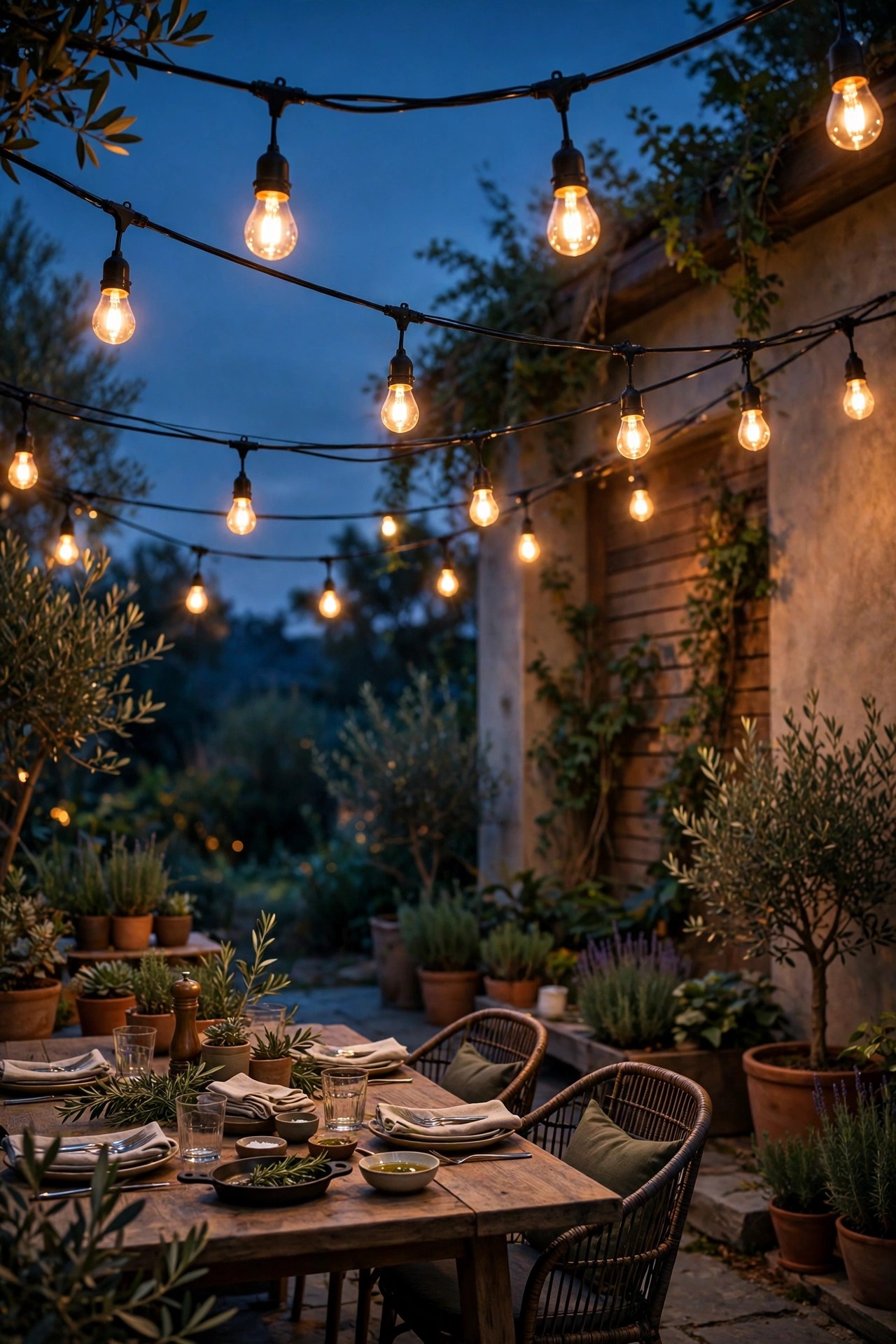
2. Shatterproof Plastic-Bulb Strands for Busy Family Patios
Glass bulbs and backyard life are natural enemies: one stray soccer ball, one wind gust swinging a strand into a pergola post, one dropped bulb during installation, and you are sweeping shards off the pavers barefoot guests will cross later. Shatterproof strands solve this with polycarbonate bulbs that bounce instead of breaking. Dropped on concrete, they scuff at worst. That makes them my automatic recommendation for homes with kids, dogs, pool decks, and anywhere people walk barefoot. The trade-off is small but real: plastic diffuses light a touch more softly than glass, so you lose a whisper of that crisp filament sparkle, and very cheap plastic can yellow after several summers of UV — mid-priced versions hold their clarity much better. My non-negotiable even here: choose a version with screw-in, replaceable bulbs rather than sealed ones. A strand where one dark bulb means replacing the whole run is not durable, no matter how tough the plastic is. Hang them exactly like glass strands, keep two spare bulbs in the drawer, and stop worrying every time the wind picks up.
Suggested budget range: $30 – $60.
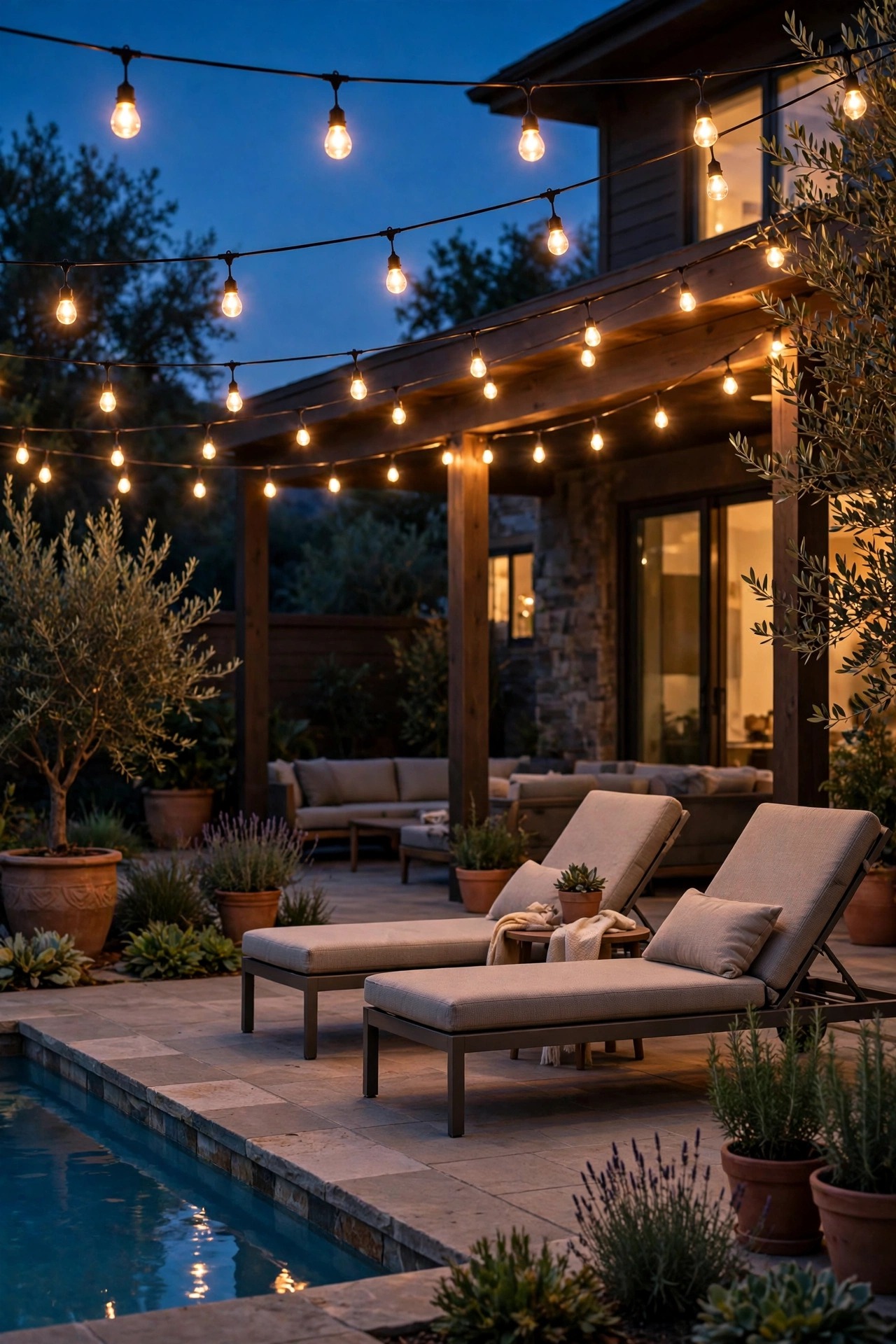
3. Solar Strands With a Separate Panel for Patios With No Outlet
No outdoor outlet is the most common patio problem I hear, and solar strands are the honest workaround — with honest limits. The versions worth your money have a separate solar panel on a stake or clip, connected by several feet of lead wire, so the panel can sit in full sun while the strand drapes through shade. Even better are the ones with a replaceable rechargeable battery, because that battery is the part that wears out; swap it in year three and the strand lives on. Set expectations correctly and you will be happy: solar strands are ambiance, not task lighting. After a full sunny day you get roughly six to eight hours of gentle glow, less in December, and two gray days in a row will dim the third evening. The bulbs are usually sealed LEDs, which is the acceptable exception to my replaceable-bulb rule — there is simply less to fail. For a fence line, a rented patio, or a far corner of the yard where running power would mean an electrician and a trench, these earn their place and ask almost nothing of you.
Suggested budget range: $25 – $50.

4. Long-Span Strands Made to Ride a Guide Wire
A wide patio with no middle support is where pretty strands go to die: the cable stretches, the sag deepens every month, and the sockets end up straining at angles they were never meant to hold. The fix is to let a stainless steel guide wire do the structural work. Run the wire taut between two solid anchors with a turnbuckle to tension it, then hang the strand from it with the clips or ties the strand provides, so the cable carries only its bulbs, not its own weight. Expect about a foot of gentle, even swag on a 25-foot span and plan your height around the lowest point — I keep the bottom of the swag at least seven and a half feet over walkways. If you have nothing to anchor to on one side, sturdy patio string light poles give you an anchor point anywhere. Choose a strand whose listing specifically allows suspension mounting, keep the total run within its stated limit, and this setup shrugs off storms that would wreck a free-hung strand.
Suggested budget range: $60 – $120.

5. Dimmable Filament-Style LED Strands for Dinner-Party Glow
Full brightness is right for a barbecue and wrong for a slow dinner, and this is the strand type that understands the assignment. LED filament bulbs imitate the warm line of an old incandescent filament at about one watt per bulb, and the better strands pair them with genuine dimming range — from a bright 100 percent down to a candlelit 20 without flicker or buzz. That last part is where you must be picky: a strand has to be sold as dimmable, and it needs a compatible outdoor-rated plug-in dimmer or a heavy-duty smart plug with dimming built in. A mismatched dimmer is the number one cause of the strobing, humming disappointment people blame on the lights themselves. At 2700K these read warm and flattering on faces and food; 2200K versions go moodier still, lovely for a wine-bar corner. Because the bulbs are standard screw-in shapes, replacements are cheap and instant. Hang a dimmable strand over the dining table on its own circuit, separate from the brighter perimeter lighting, and you have built the single most-used scene on your patio: dinner, at exactly the light it deserves.
Suggested budget range: $40 – $80.
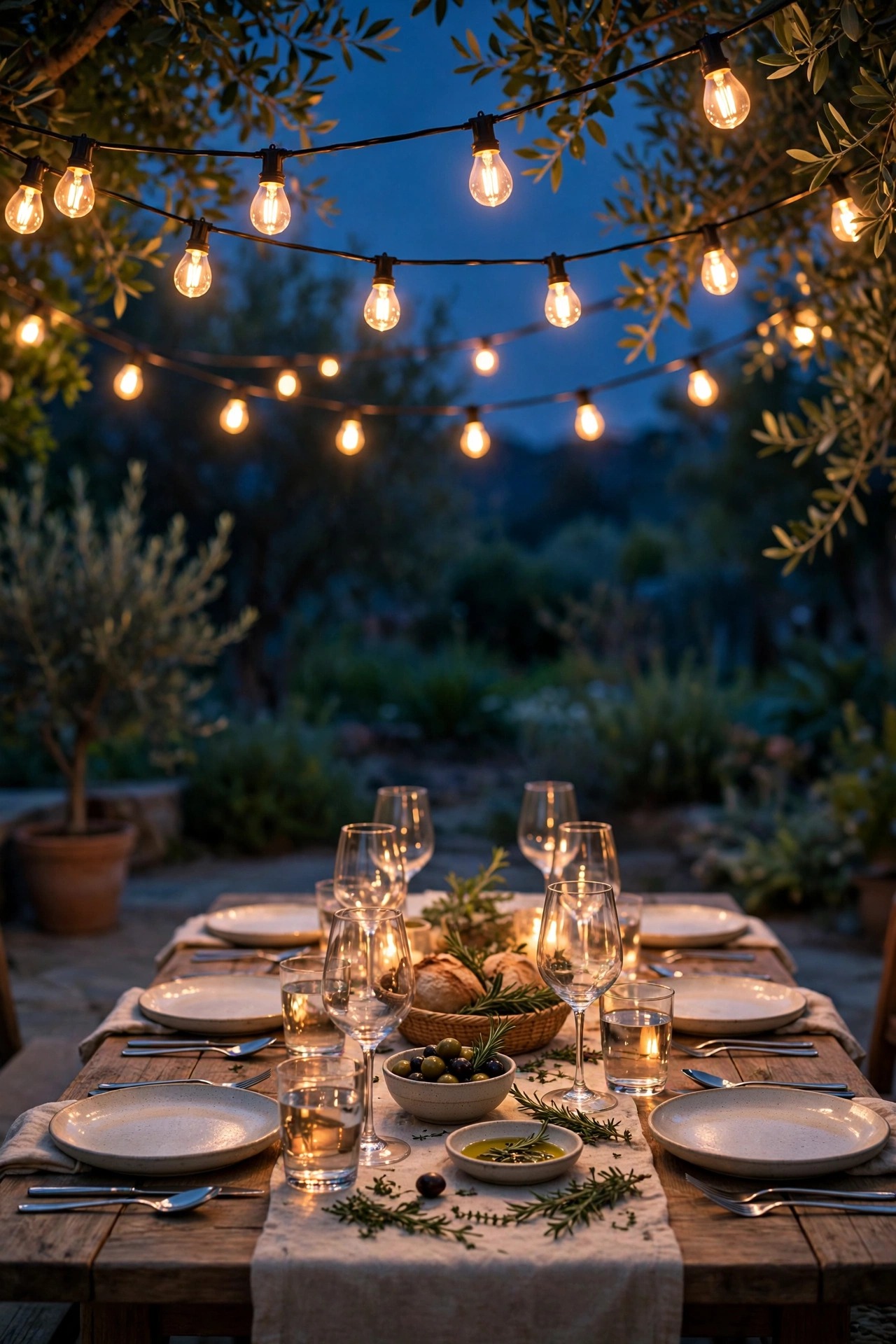
6. Glass Globe Strands — the Best Outdoor String Lights for a Classic Bistro Glow
There is a reason every café courtyard in every travel photo you have ever saved uses this shape: the round globe diffuses light in every direction at once, so faces look soft, shadows disappear, and the whole patio feels like somewhere you would pay to sit. Globe strands — look for the classic G40 size, about the diameter of a golf ball — usually sit on smaller candelabra bases, and the mid-priced versions have a detail I love: little clips at each socket that grip the wire and keep every globe pointing down instead of twisting sideways over the season. Glass is the honest cost of this beauty. Globes chip when they swing into posts and crack when they fall, so hang them where wind is gentler — under a pergola, along a covered patio, between the house and a fence — and order a spare pack of bulbs with the strand, not after the first casualty. Kept that way, a globe strand is not fragile at all; the cable and sockets last for years, and the bulbs become a five-minute seasonal errand instead of a funeral.
Suggested budget range: $30 – $65.
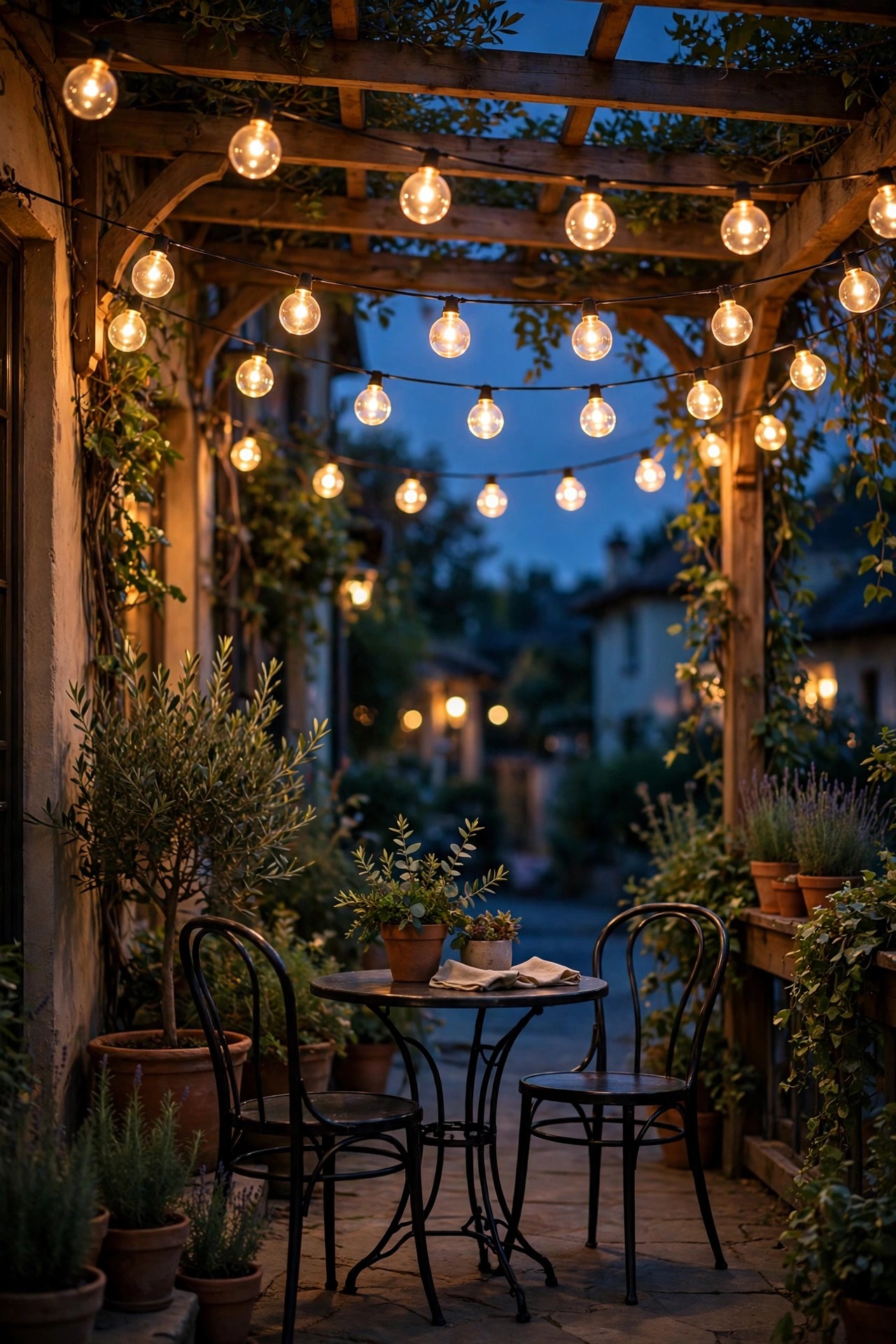
7. Elongated Edison-Tube Strands for a Statement Look
Where globes are soft, tube bulbs are sculpture. These elongated vintage-style bulbs — the long tubular shapes often labeled ST40 or ST64 — show off a looping LED filament that is honestly prettier unlit than most bulbs are lit, and strung at eye level over a bar cart, a railing, or a narrow side patio, they read as intentional design rather than decoration. I reach for them when a patio has one short, photogenic run rather than a big area to cover, because the bulbs cost two to three times what globes do and the glass is just as breakable, with more of it to break. Treat them like the statement they are: one careful run, anchored firmly so the tubes never swing into wood or stucco, with a full spare pack bought on day one — matching a discontinued filament style two years later is a special kind of frustration. Keep the rest of the patio lighting quiet and warm so the tubes stay the headline. Nothing else on this list gets compliments from guests before the sun has even gone down.
Suggested budget range: $35 – $75.

8. Connectable Strands for Big Yards and Long Perimeters
Some patios are not a square to canopy but a whole perimeter to trace: down the fence, around the deck, out to the fire pit and back. Connectable strands are built for exactly that, with a plug at one end and a socket at the other so runs link end to end. LED is what makes this practical — a string of LED bulbs sips so little power that many strands allow eight, ten, or more linked together, while old incandescent strands often maxed out at three before the fuse complained. Whatever the number, treat the printed maximum as a hard law, not a suggestion; it is set by the wire gauge, and exceeding it is how strands overheat. Weatherproofing matters most at the joints: elevate connections off the ground, keep them out of sprinkler spray, and use the little gaskets the strands ship with. My guide to hanging outdoor string lights walks through measuring and anchor planning step by step, and an hour spent on that math saves a weekend of re-hanging.
Suggested budget range: $35 – $70.
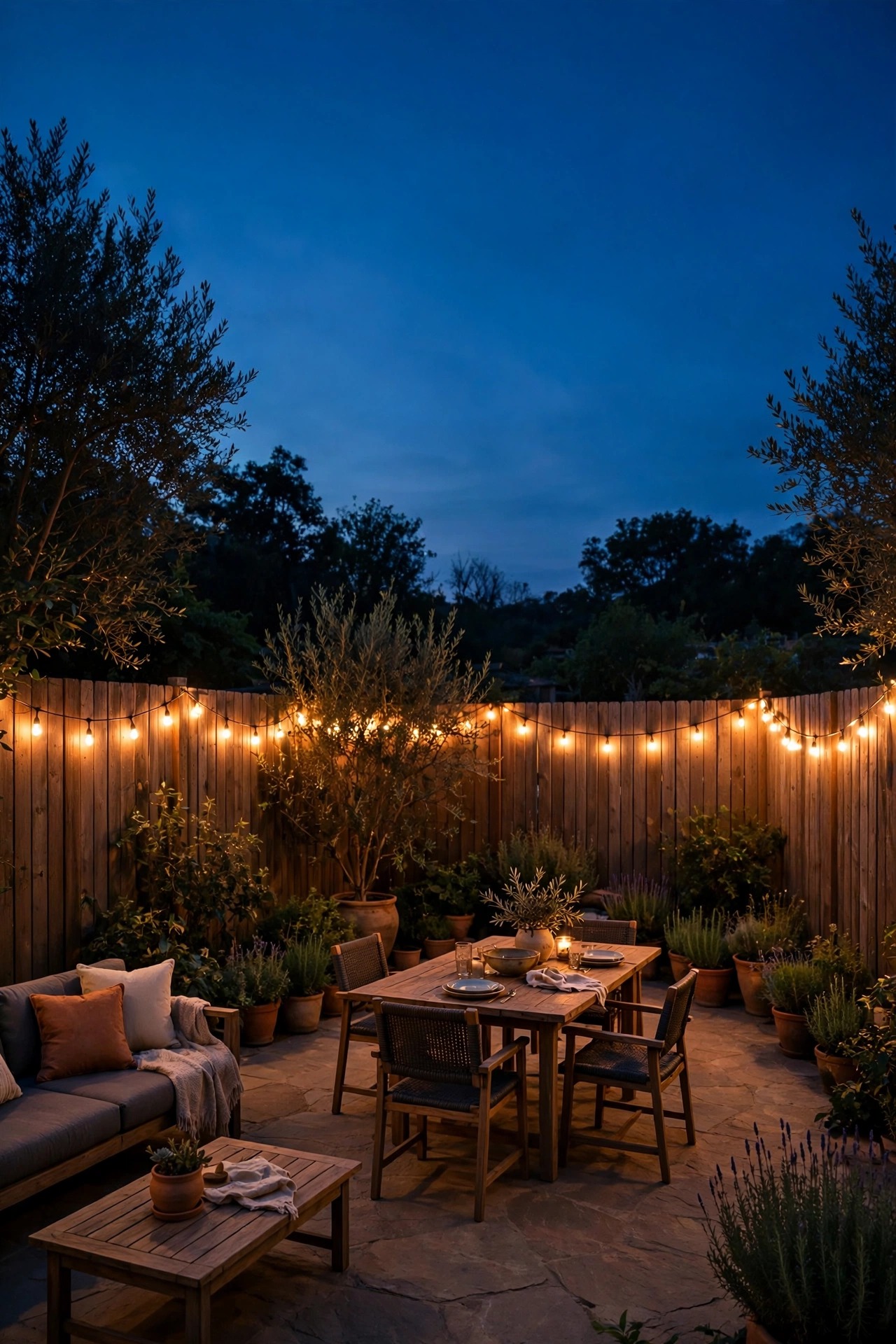
9. Rubber-Cord Strands for Cold Climates and Year-Round Hangers
Standard strand cable is vinyl, and vinyl has a winter secret: below freezing it stiffens, and after enough freeze-thaw seasons it starts to crack at the bend points, right where the sockets hang. Rubber-cord strands are the northern answer. Their heavier rubber jacket stays flexible in serious cold, shrugs off ice load better, and does not go brittle in summer sun either, which is why you see this build on ski-town restaurant patios that never come down. If your plan is to hang lights once and leave them through January — over a hot tub deck, along the porch you use all winter, around a fire-pit circle — this is the type that makes that plan safe instead of hopeful. They cost more and they look a little more utilitarian, with thicker, matte cable that reads rugged rather than delicate. I call that a fair trade for never climbing a ladder in December with numb fingers. Pair them with shatterproof bulbs if ice and wind both visit your yard, and you have the most weather-indifferent setup on this list.
Suggested budget range: $50 – $95.

10. Low-Voltage Strands for Patios Near Pools and Hot Tubs
Electricity and water get along fine when you respect the rules, and low-voltage strands are the respect built into hardware. These run on 12 volts from a plug-in transformer — often the same kind that powers landscape lighting — so the strand draped over your pool deck or hot tub pergola carries a gentle current instead of full household power, while the transformer itself plugs into a protected GFCI outlet at the house. For families who want glow right at the water, it is the most comfortable setup I know. Now the honest limits, because there are two. First, the light is softer: these are ambiance strands, and nobody is reading a novel under them. Second, voltage fades over distance, so very long runs can dim noticeably at the far end — keep individual runs modest, or feed the run from the middle. The transformer also needs a home within reach of the strand start, which takes a minute of planning. Accept those terms and you get years of worry-free sparkle exactly where standard strands make people nervous.
Suggested budget range: $55 – $110.

11. Simple Budget Strands With Replaceable Bulbs
A tight budget does not have to mean a disposable strand — you just have to know which cheapness kills and which is harmless. Two things murder inexpensive strands: sealed bulbs, where one dead LED retires the whole run, and molded one-piece sockets that crack and drink water by the second season. So my budget rule is simple: skip every feature, keep the bones. A plain strand with standard screw-in sockets and replaceable bulbs, a real weather rating for outdoor use, and cable that feels like cable instead of thread will quietly outlive strands costing twice as much that sealed everything shut. You give up dimming, fancy bulb shapes, and app control, and honestly, on a first patio you will not miss them. Buy one spare pack of bulbs at the same time, store them dry, and your twenty-five-dollar strand is suddenly a five-year strand. This is the pick I give every new homeowner who tells me the patio budget is spent: bones first, beauty upgrades later, one replaceable bulb at a time.
Suggested budget range: $20 – $40.
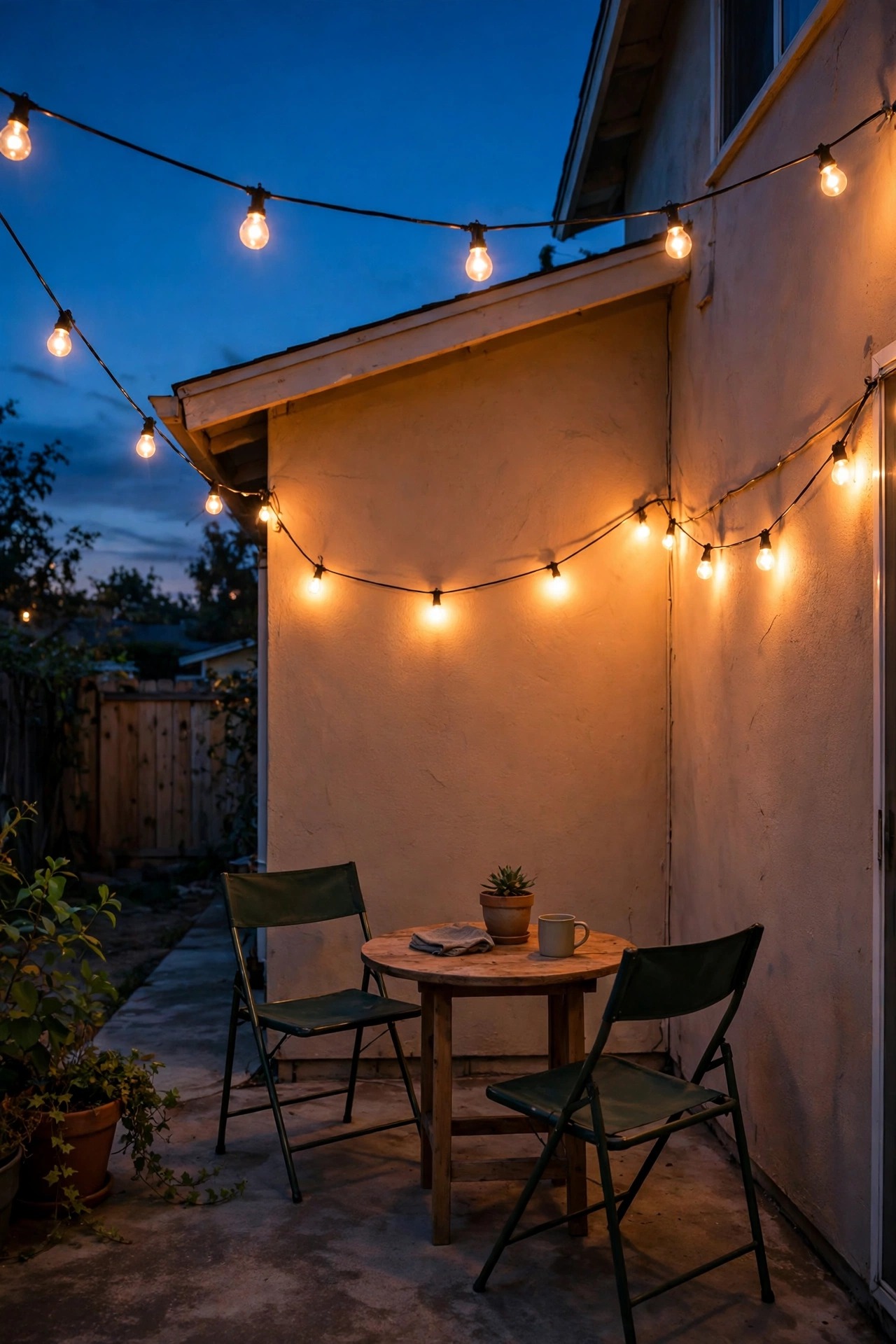
12. Lightweight Strands and Removable Hooks for Renters
Renters are my favorite lighting problem, because the glow matters just as much and the rules forbid every permanent thing. The formula: a lightweight strand — lighter cable means less sag and less pull on its mounts — hung from removable outdoor adhesive hooks, tension straps around posts or tree trunks, or the railing clamps made for exactly this. Everything goes up in twenty minutes and comes down without a single hole, a fact your deposit will appreciate. Weight discipline is the durability trick here: choose shorter runs of 24 feet or so, anchor every eight to ten feet, and never ask an adhesive hook to hold a heavy commercial cable, because gravity always collects its debt at 2 a.m. during a storm. Solar or shatterproof versions pair especially well with the rental life — nothing to plug in, nothing fragile to pack when you move. When the lease ends, the whole canopy coils into one tote, and the patio you leave behind shows no evidence it was ever the prettiest one on the block.
Suggested budget range: $18 – $38.

13. Rope-Style Strands for Pergolas, Railings, and Clean Lines
Every pick so far hangs bulbs in the air; this one thinks in lines instead. Rope-style strands seal their LEDs inside a flexible, weatherproof tube, which makes them the most weather-indifferent option on this list — no sockets to flood, no bulbs to swing, nothing for the wind to argue with. Wrapped along a railing, traced under a pergola beam, or outlining the edge of a deck, they give you a clean, even ribbon of light that reads modern next to the swagged strands elsewhere. Fastening is gloriously simple: clips or hook-and-loop straps every couple of feet, gentle curves only, since a hard kink is the one injury the tube cannot forgive. The honest trade-off mirrors the solar strands: the LEDs are sealed in, so when a section eventually fails — usually after many seasons — you replace that run rather than a bulb. In exchange you get the lowest-maintenance glow I know for the architectural bones of a patio. For more ways to mix lines and swags, my backyard string light ideas are full of combinations worth stealing.
Suggested budget range: $25 – $55.

Frequently Asked Questions
How long do outdoor string lights actually last?
It depends on which part you mean. On a well-built strand, the cable and sockets are the long game — five to ten years for commercial-grade builds kept up year-round. LED bulbs typically run 15,000 to 25,000 hours, which at five hours a night is a decade or more; incandescent bulbs give you roughly one to two seasons. On solar strands, the rechargeable battery is the wear item at one to three years, which is why replaceable-battery versions last so much longer.
Can I leave string lights up all year?
Yes, if the strand carries a genuine outdoor rating and sealed sockets, and you give it a two-minute spring inspection: check the cable for cracks, reseat each bulb, and clear anything rubbing against the run. Strands with delicate glass bulbs in harsh-winter or high-wind regions often live longer if the bulbs come down while the cable stays. What shortens life fastest is not weather itself — it is water sitting in unsealed sockets.
How many feet of string lights do I need for my patio?
Measure the actual path the strand will travel, then add 20 to 30 percent for the swag — those pretty drapes eat more length than anyone expects. A 12-by-14-foot patio traced on three sides is about 40 feet of path, so plan on roughly 50 feet of strand, usually two shorter strands rather than one long one. Always measure with a rope or a cheap clothesline first; it is the most accurate ten minutes in the whole project.
Do LED string lights really last longer than incandescent ones?
By a wide margin. Heat is what kills bulbs, sockets, and eventually cable insulation, and incandescent bulbs turn most of their energy into exactly that. LEDs stay cool, draw about a tenth of the wattage for the same glow, and their filaments do not snap when a strand swings in the wind. The warm look people fear losing has been solved for years — a 2700K LED filament bulb at dusk is nearly indistinguishable from the real thing.
Conclusion
If this list has one sentence worth remembering, it is this: durability lives in the cable, the sockets, and the spare bulbs in your drawer — everything else is decoration. Match the type to your real life and the best outdoor string lights stop being a yearly purchase and become part of the patio itself. Most patios are happiest with the commercial-grade strand in pick 1; families should look hard at the shatterproof pick 2; no-outlet and far-corner patios belong to solar pick 3; wide-open spaces need the guide-wire setup in pick 4; and renters can have the whole dream with pick 12. Choose once, hang it properly, and let the canopy layer do its quiet work while the rest of your lighting layers gather underneath. Browse the rest of the site for the path lights, lanterns, and wall lights that complete the picture — your patio is about to become the room everyone migrates to after dinner.