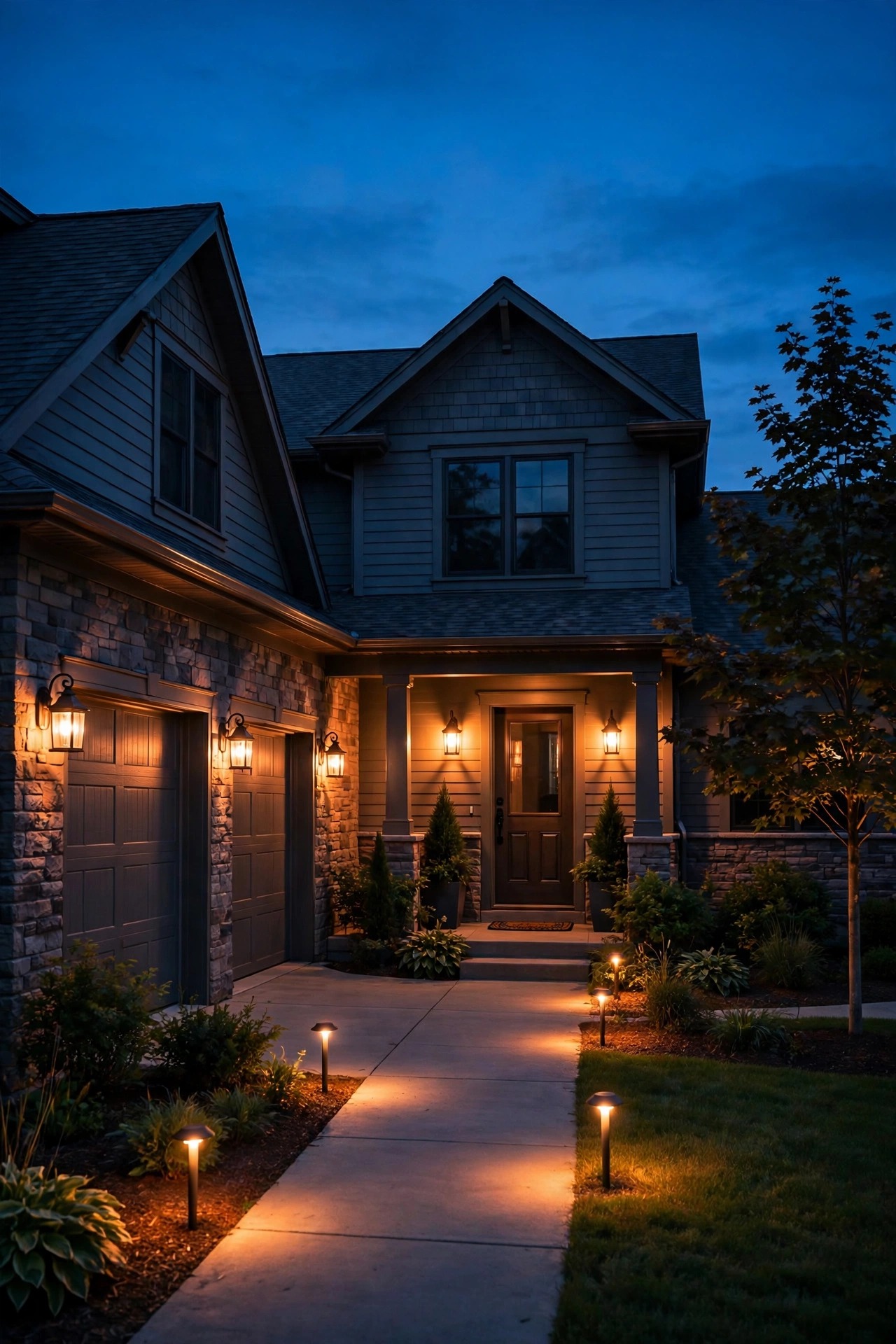
Every October I do the same dusk walk around our house, coffee in hand, listing the bulbs that have gone dim, yellow or flickery. This year the list was long enough that I stopped patching one by one and did the full swap, zone by zone — and honestly, it changed how the house feels after dark more than any brand-new fixture ever has. Here is what I wish I had known sooner: the led retrofit bulbs outdoor fixtures reward are rarely the ones with the loudest promises on the box. A fixture outside lives a hard life — heat trapped inside a closed glass sconce, January cold snaps, rain creeping toward the contacts — so the right bulb is the one rated for that life, in the base and brightness the socket already expects. This guide walks the swap the way I did it: read the old bulb first, nail the ratings that actually matter outdoors, then go area by area — porch, garage, patio, security, garden — holding one warm color temperature the whole way around. By the end you will know what to buy, in what order, and which cheap mistakes make a good bulb look bad.
The Short Answer
Unscrew one old bulb from each fixture and take a photo of its base, shape and wattage before you buy anything — that five minutes saves every wrong order. Match the base exactly (most porch and coach lights take an E26 screw base), shop by lumens instead of watts (800 lumens replaces a 60-watt bulb), and only buy bulbs marked for damp or wet locations, with an enclosed-fixture rating wherever the fixture is closed in glass. Pick one color temperature — 2700K warm white — for every zone so the whole house matches at dusk. Swap the longest-burning lights first and the security floods last, and keep the working old bulbs as labeled spares.
LED Retrofit Bulbs Outdoor Fixtures 101: Read the Old Bulb First
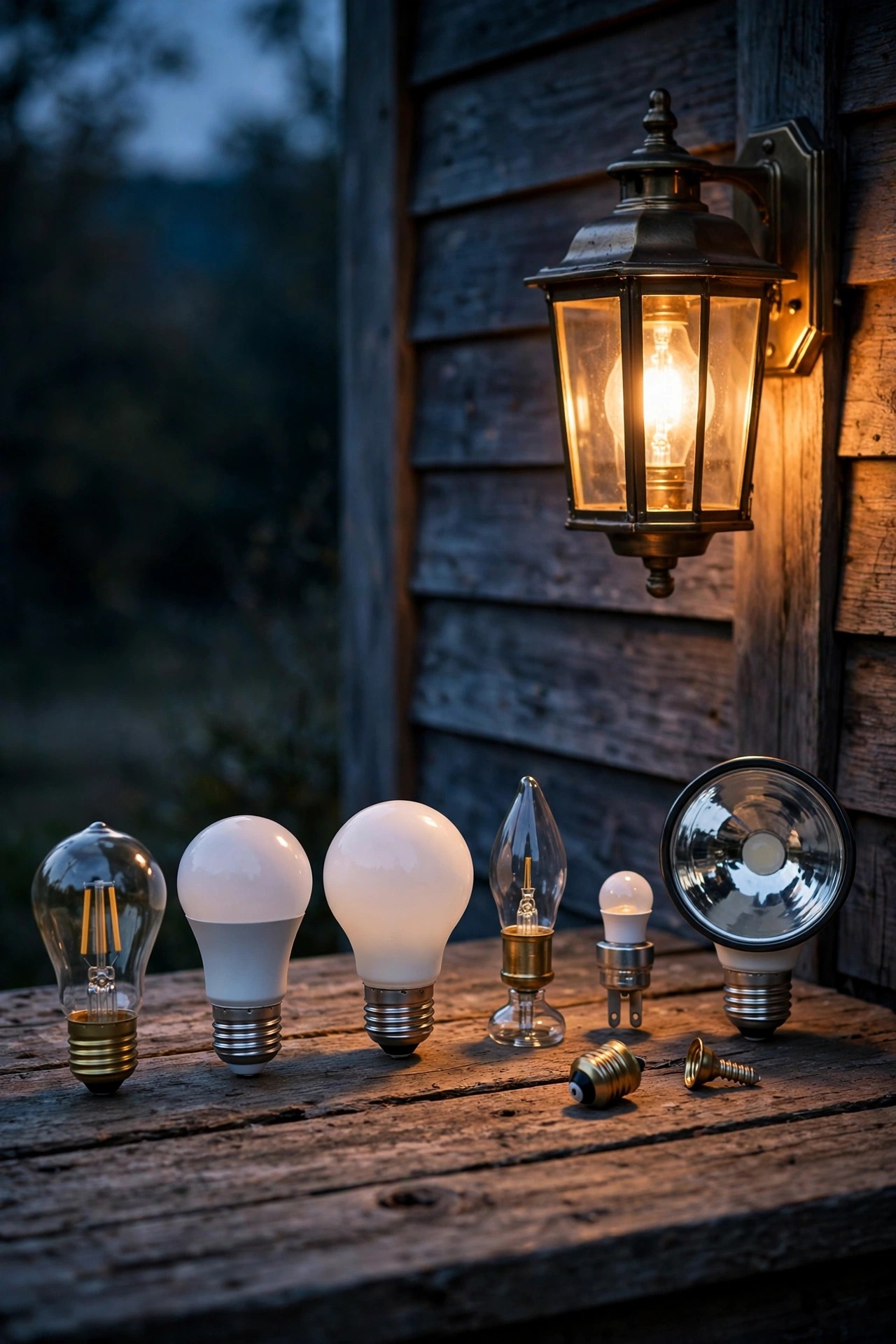
Every socket in your house is already telling you what it wants; you just have to read it before it goes in the trash. Start with the base. Most porch sconces, coach lights and patio fixtures use the standard E26 medium screw base. Prettier coach lights and chandeliers often hide slim E12 candelabra bases instead. Landscape spotlights usually take two-pin MR16 or GU10 bulbs, while low-voltage path lights use tiny G4 bi-pin or wedge bases. Match the base exactly — almost is not a thing with bulb bases.
Shape matters just as much. An A19 is the everyday all-purpose bulb. An ST19 filament style is the pretty one for exposed coach-light glass. PAR bulbs are the weather-sealed floods, BR bulbs give a soft wide wash, and G25 globes are the round charmers in string lights and bare-socket fixtures. Then forget watts entirely and shop lumens: 450 lumens replaces a 40-watt bulb, 800 replaces a 60-watt, 1,100 a 75-watt and 1,600 a 100-watt, while the LED itself sips somewhere between 5 and 15 watts doing it. Last, measure the fixture. A bulb that is a quarter inch too long for a closed sconce either will not seat or will cook itself against the glass, so bring the old bulb's length and width to the store — or better, bring the old bulb.
Ratings That Matter Outside: Enclosed Fixtures, Wet Locations and Cold Starts
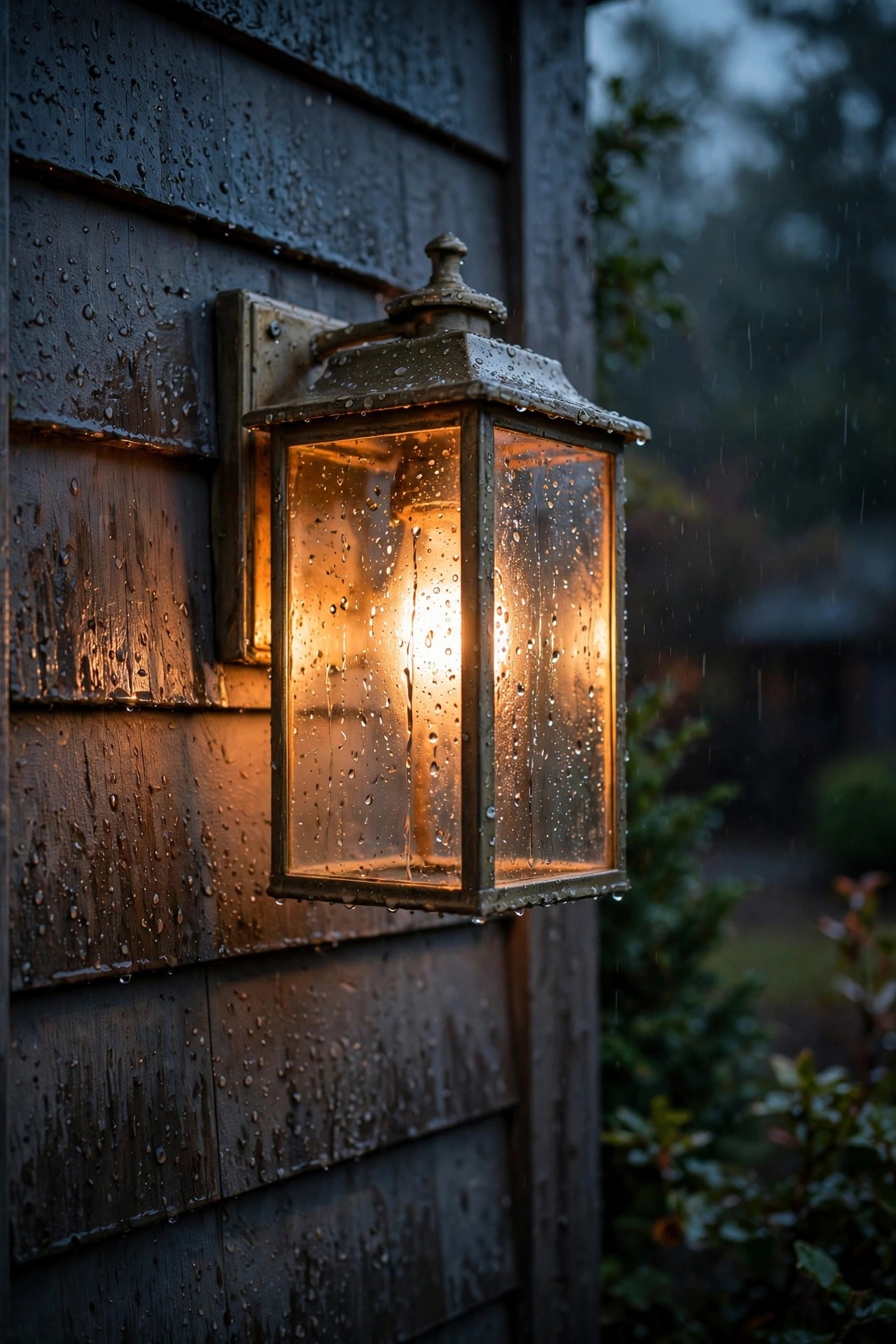
This is the section that decides whether your new bulbs live fifteen years or fifteen months. First, location rating. A bulb marked damp location handles covered porches and humid air; wet location means it can take direct rain and snow, which is what exposed coach lights, open floods and unsheltered path fixtures demand. Indoor-only bulbs outside usually do not die dramatically — they corrode quietly at the contacts and start flickering in the second winter.
Second, the enclosed-fixture rating, the one almost nobody reads. Heat is the natural enemy of the little driver electronics inside an LED, and a sealed glass sconce on a July evening is a tiny oven. A bulb rated for enclosed fixtures is built to shed that heat; one that is not will dim and shift color years early, and I have killed exactly two bulbs learning this. Third, check the operating range: look for a bulb rated to start at 0°F or lower if your winters bite, because cheap drivers sulk in real cold. A high color rendering index — CRI 90 or above — is my one splurge near the front door, where it makes faces, wreaths and house numbers look like themselves. Bulbs are cheap; relighting the same fixture three times is not.
Dimmable or Not: Switches, Timers, Photocells and Smart Controls
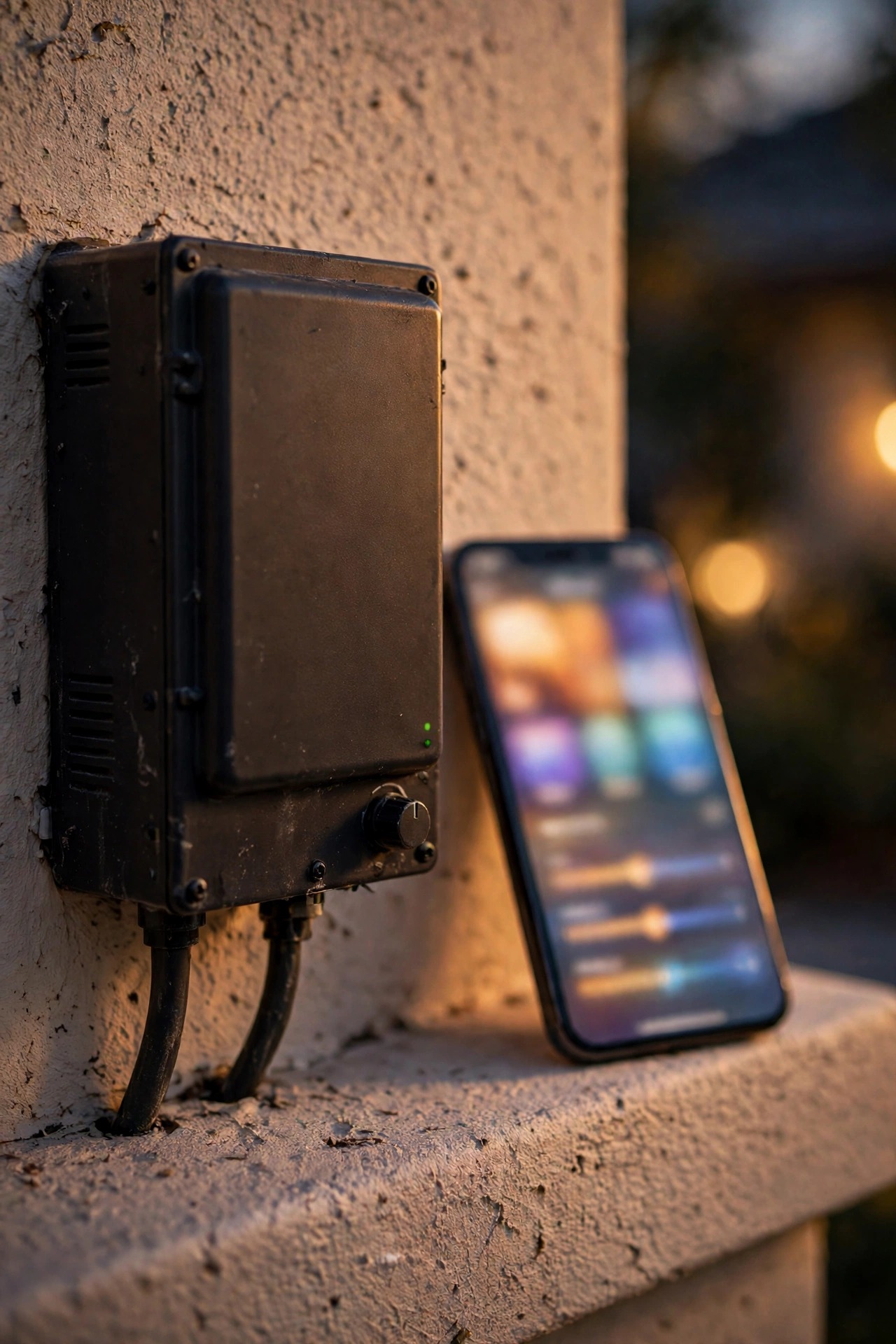
Most outdoor lights do not live on dimmers — they live on plain switches, timers and dusk-to-dawn photocells — and each of those has opinions about your bulbs. If a fixture is on a dimmer, both halves must agree: an LED-rated dimmer (trailing-edge if you can) and a bulb that says dimmable on the box. A non-dimmable bulb on a dimmer circuit is the classic recipe for buzzing, flicker and a bulb that dies by spring. Photocells are gentler but still prefer bulbs whose packaging blesses photocell and timer use, and some ultra-cheap bulbs glow faintly all day on certain sensors because of trickle current.
My honest setup now is boring in the best way. The everyday zones run on a timer and standard dimmable bulbs. For the two hero fixtures by the front door I used smart bulbs instead, which dim and schedule themselves from an app and skip the wall dimmer entirely — my notes on choosing them live in my guide to smart bulbs for outdoor fixtures. Everything else gets its marching orders from the timer, and if you are setting that side up, my roundup of outdoor smart plugs and timers covers the reliable options. Rule of thumb: dim where you linger, automate where you do not.
Zone One and Two: The Porch and the Garage
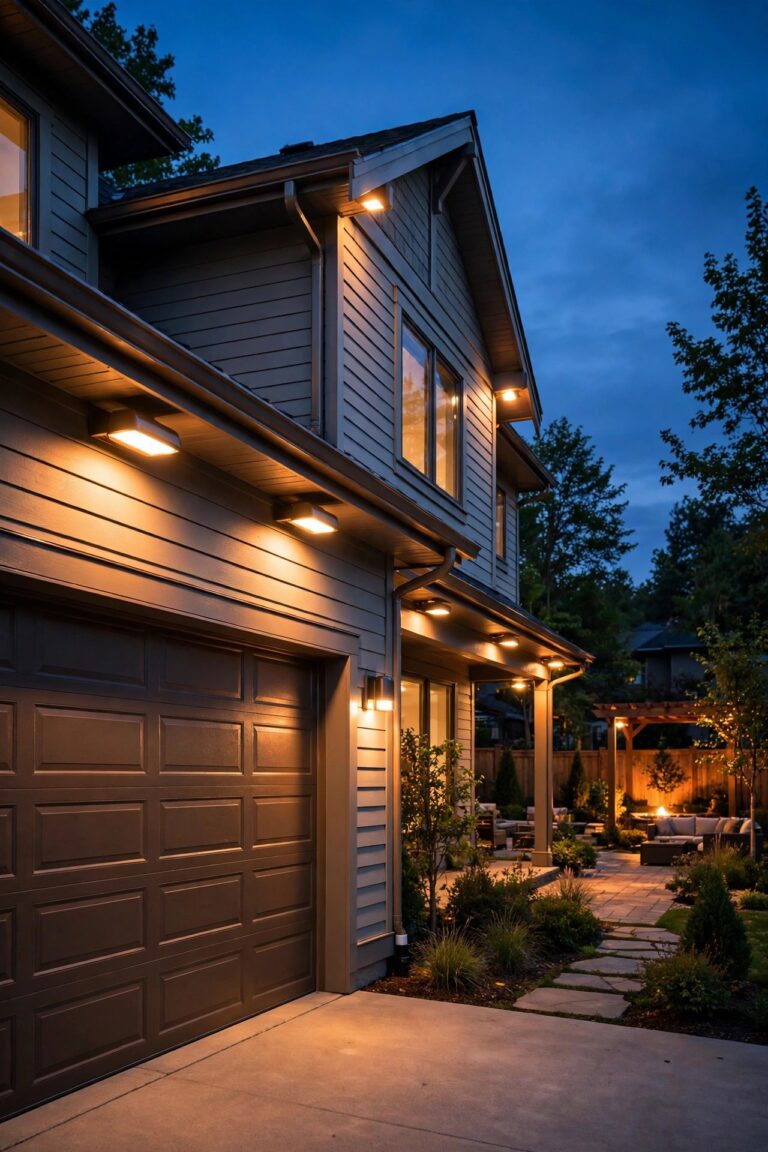
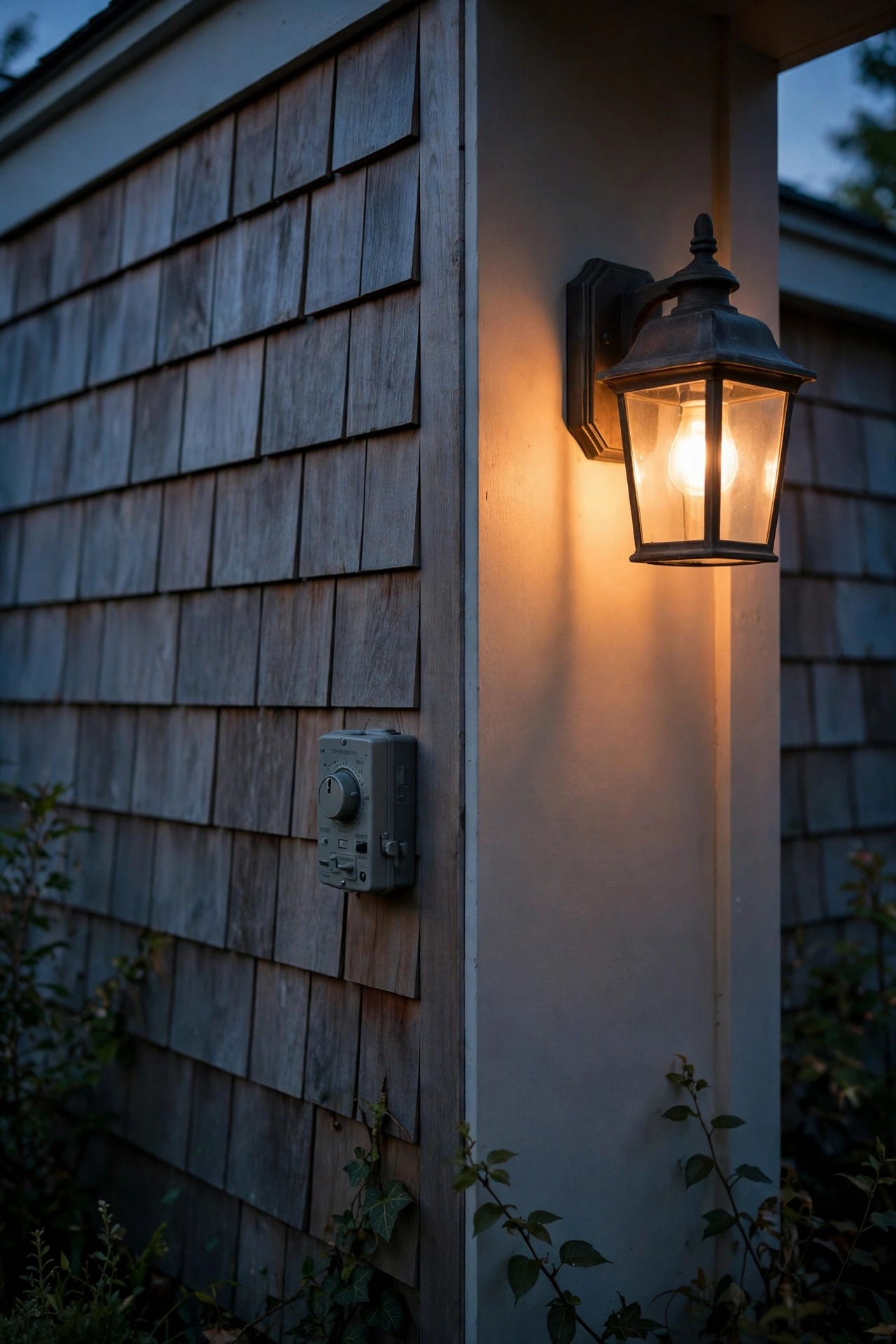
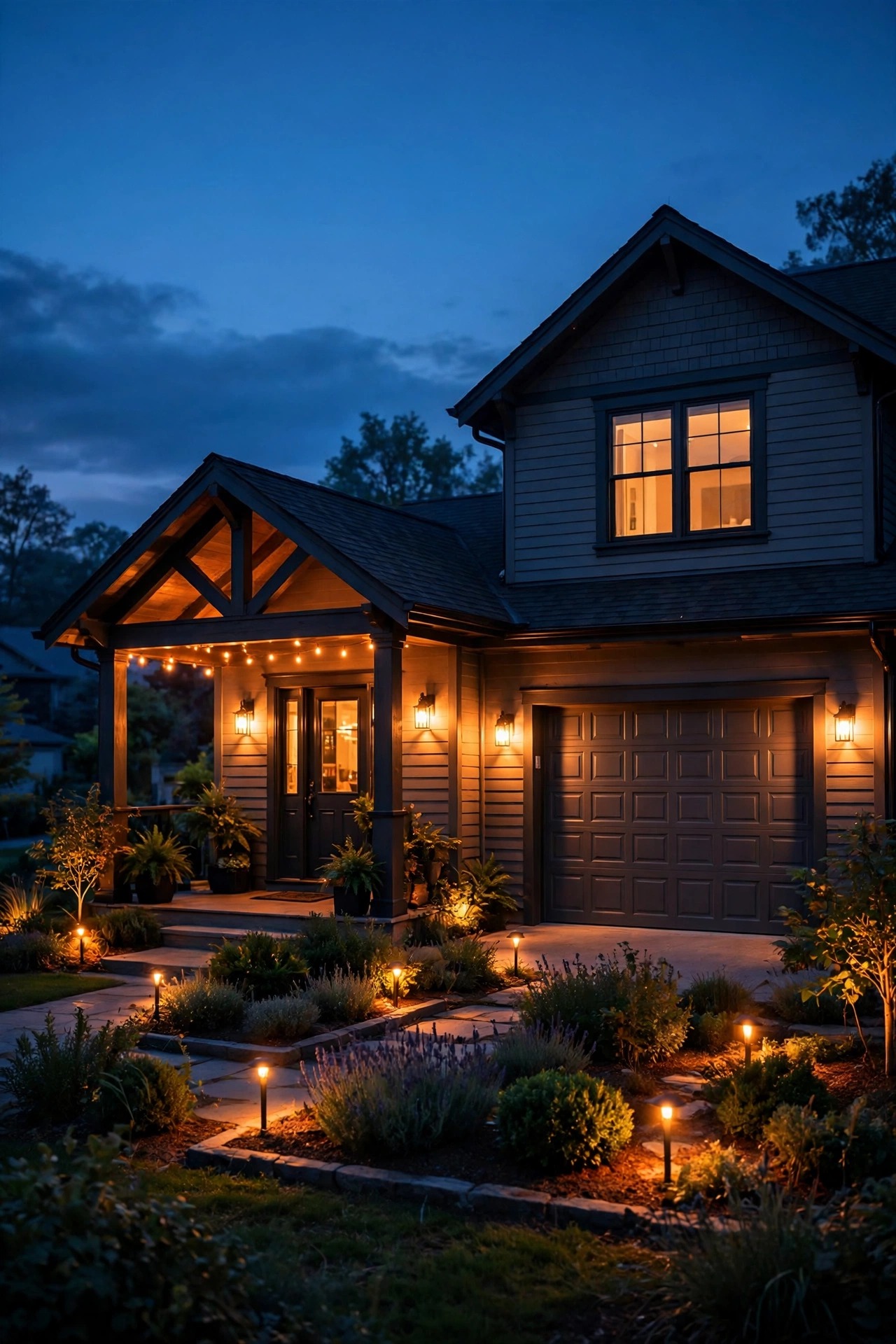
The porch is the handshake of your house, so it gets first pick of the bulbs. For a typical sconce, an A19 at 2700K between 450 and 800 lumens is the sweet spot — bright enough to find the keyhole and read a package label, soft enough that nobody squints. If your sconce or coach light shows the bulb through seeded or clear glass, switch to an ST19 filament style; the warm visible filament reads like candlelight and makes even a plain fixture look deliberate. Enclosed glass means that enclosed-fixture rating from earlier is non-negotiable here.
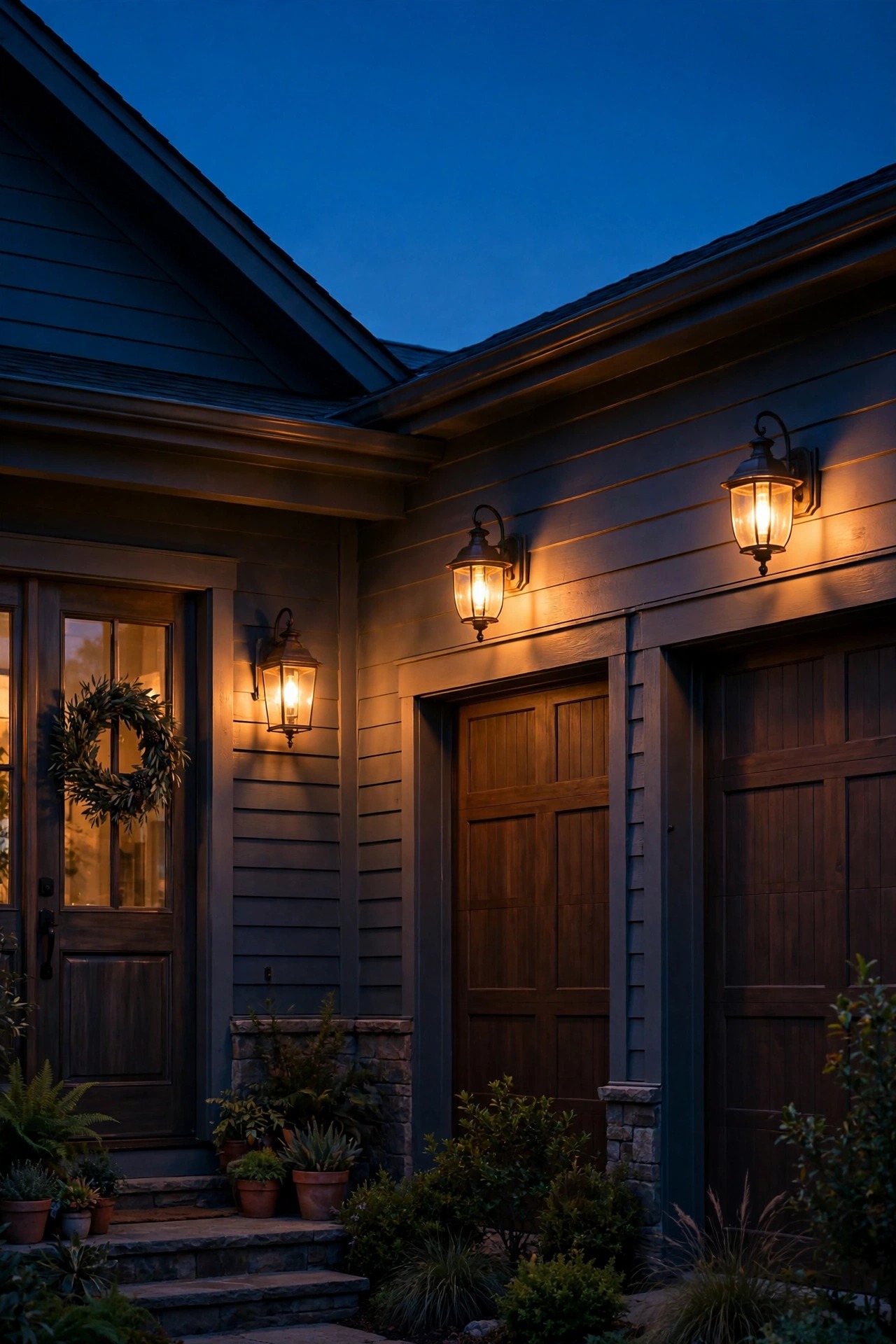
The garage wears its coach lights in pairs, usually flanking the door, and pairs have one rule: same bulb, same box, bought the same day. Two bulbs of the same spec from different production runs can glow a half-shade apart, and you will see it every single night. Many coach lights take candelabra E12 flame-tip bulbs — keep the wattage modest, because their job is welcome, not interrogation. One trick I love near any door: an amber, bug-light style bulb in the fixture closest to where people gather. Insects barely see that spectrum, so the porch conversation stops happening inside a cloud of moths while the rest of the house stays classic warm white.
Zone Three: The Patio, the Deck and the String Lights
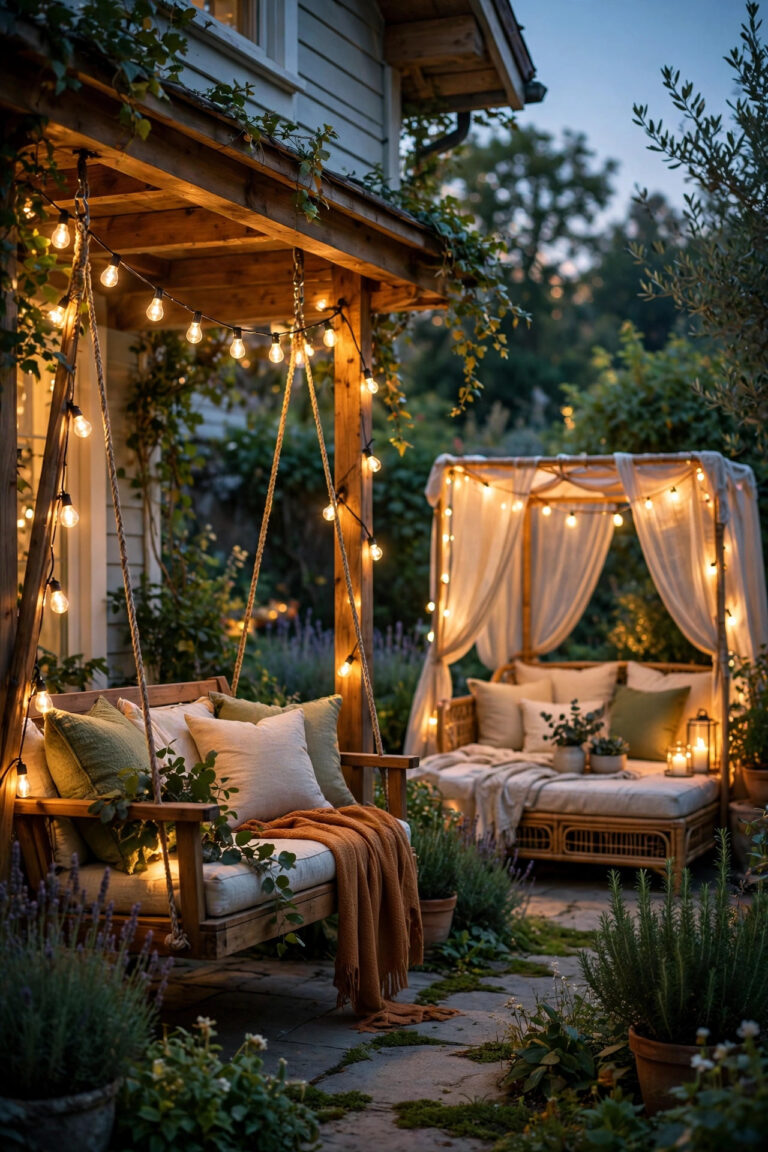
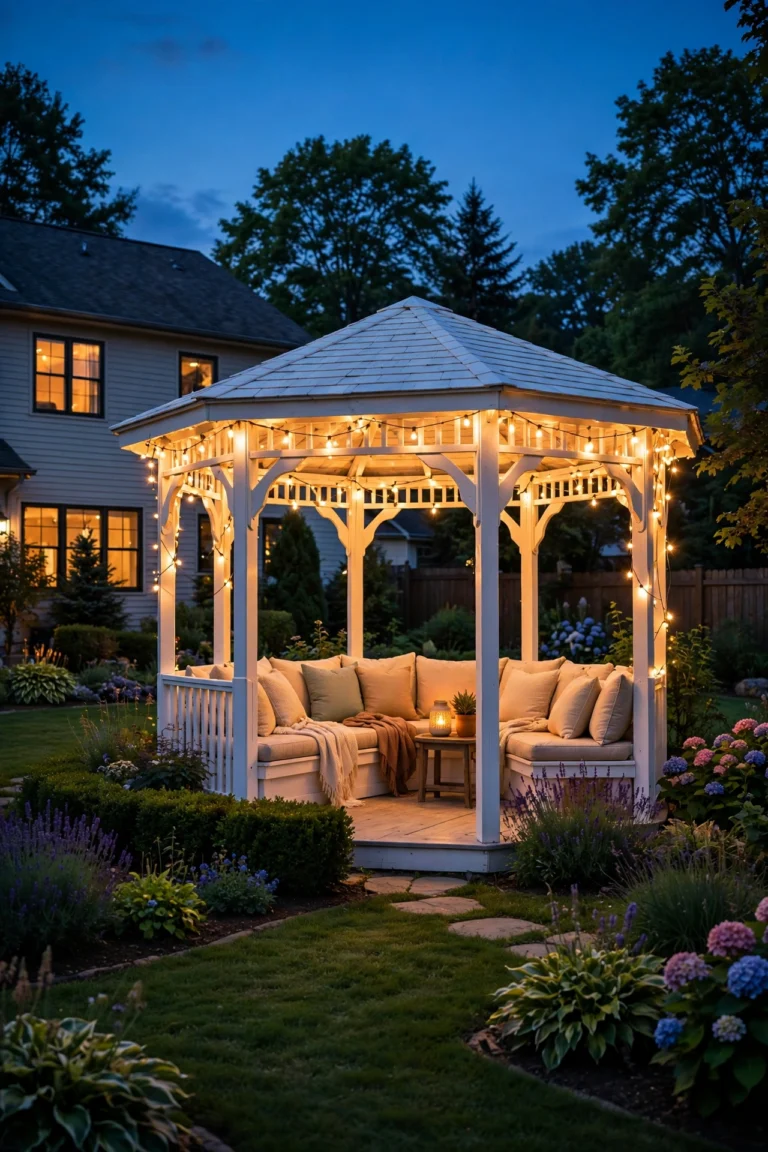
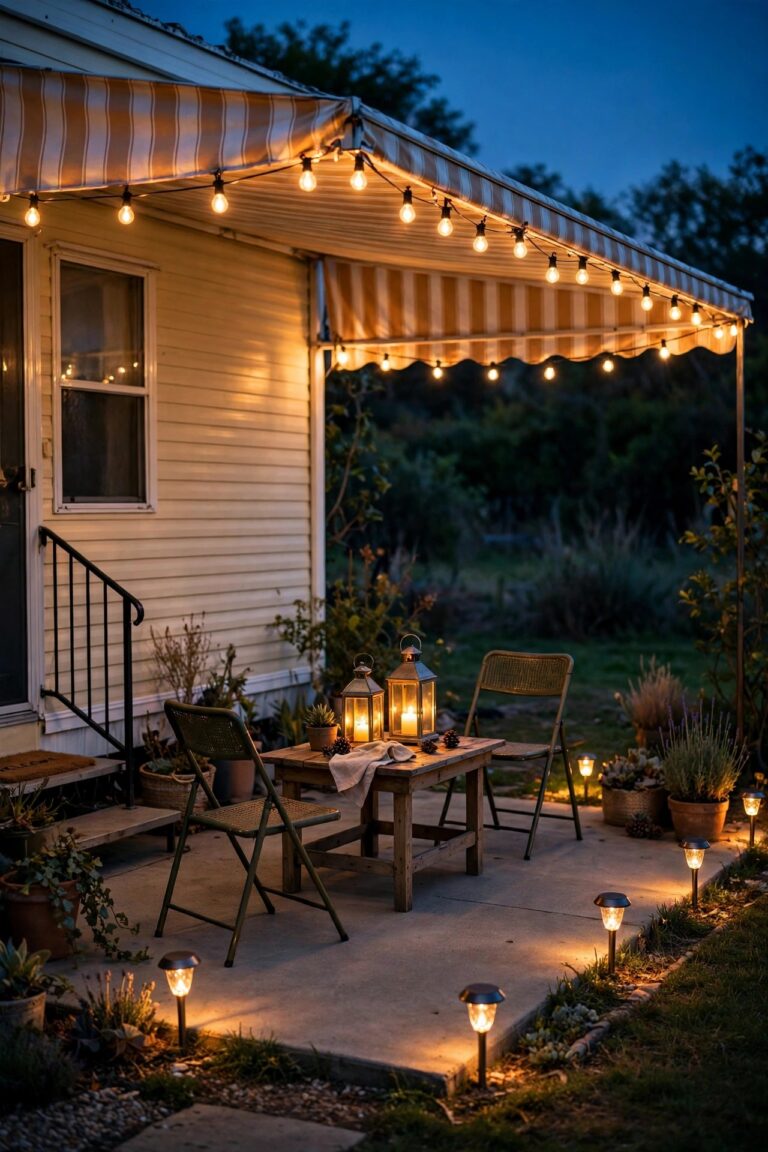
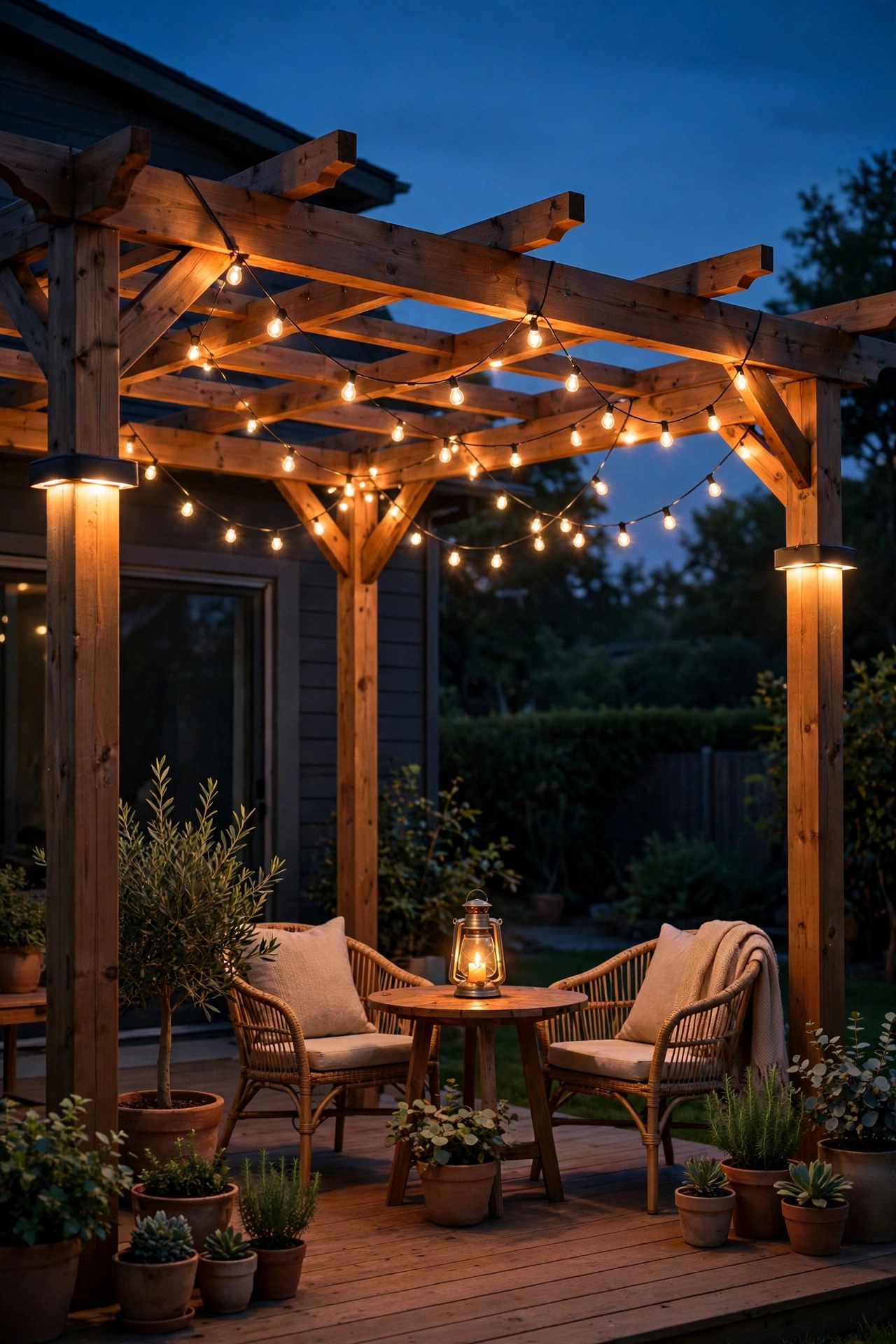
Out back, comfort is the whole brief, and this zone is where bulb choice is most forgiving — with one exception. String lights are the exception. If your strands take replaceable bulbs, choose shatterproof plastic ST19 or G40 globes: they shrug off the inevitable drop onto the patio, stay cool against pergola wood and fabric shades, and survive being taken down in a tangle every fall. Integrated strands with sealed, non-replaceable bulbs are fine until one section dies, at which point you own a very long extension cord. Buy replaceable, and buy a few spare bulbs the same day — strings age as a set, and a strand swapped one bulb at a time slowly turns into a patchwork of mismatched whites.
Deck post caps and rail lights usually take small wedge or bayonet specialty bulbs; photograph yours before ordering, because three nearly identical bases exist and only one fits. Under a covered patio, the ceiling fan light kit typically hides candelabra bulbs behind a dome — the same matched-pair rule from the garage applies, times three. And for table lanterns and hurricane lamps, small A15 bulbs in warm white give you the candle-adjacent glow without the candle-adjacent fire risk on a breezy night. Keep the lumens low back here; the patio is for lingering, and 450 lumens a bulb is plenty when there are six of them.
Zone Four: Flood and Security Bulbs
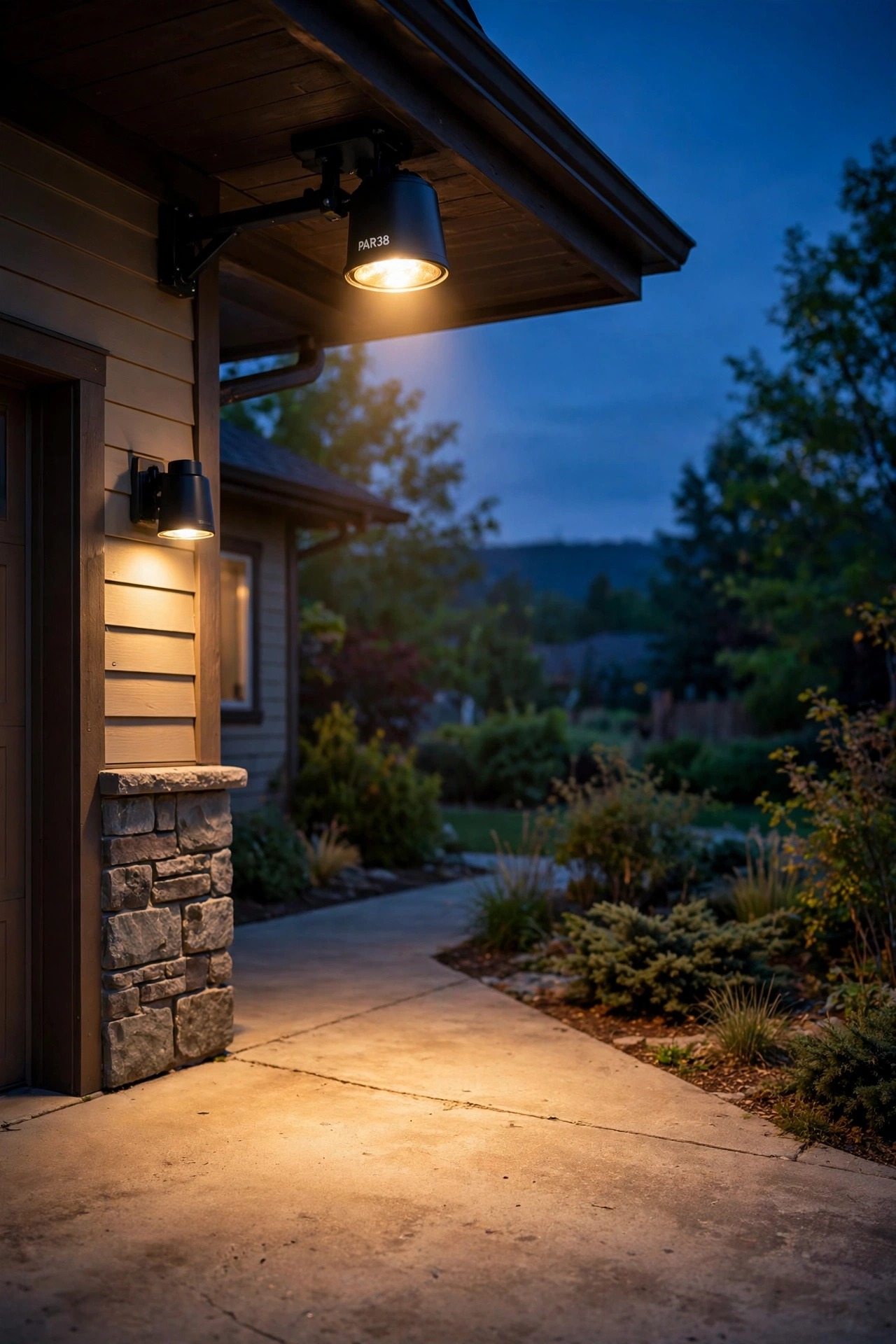
Security lighting is the one zone where more light is genuinely the point — up to the moment it starts lighting your neighbor's bedroom. PAR38 is the workhorse: a sealed, weatherproof flood built for eaves and corners, and 1,200 to 1,600 lumens is the honest range for a two-story mount. Single-story homes do better with a PAR30 around 800 to 1,100 lumens, aimed down at the driveway or side yard rather than out at the street. Wide yards may want two gentler floods crossing each other instead of one blazing hotspot with black corners.
Motion-sensor fixtures love LED because it strikes at full brightness instantly — no warm-up — but they hate smart bulbs, whose little radios get confused by being power-cycled fifty times a night. Use plain, wet-location PAR bulbs in motion fixtures and let the sensor do the thinking. And if a fixture has no sensor and no timer, a dusk-to-dawn bulb with its own built-in photocell is the laziest upgrade in this whole guide: screw it in, and it handles sunset forever. One courtesy rule from hard experience: walk to the property line after dark and look back. If your new flood reads as glare from the sidewalk, tilt it down ten degrees — the driveway will still be lit, and so will your reputation on the street.
Zone Five: Path and Landscape Bulbs
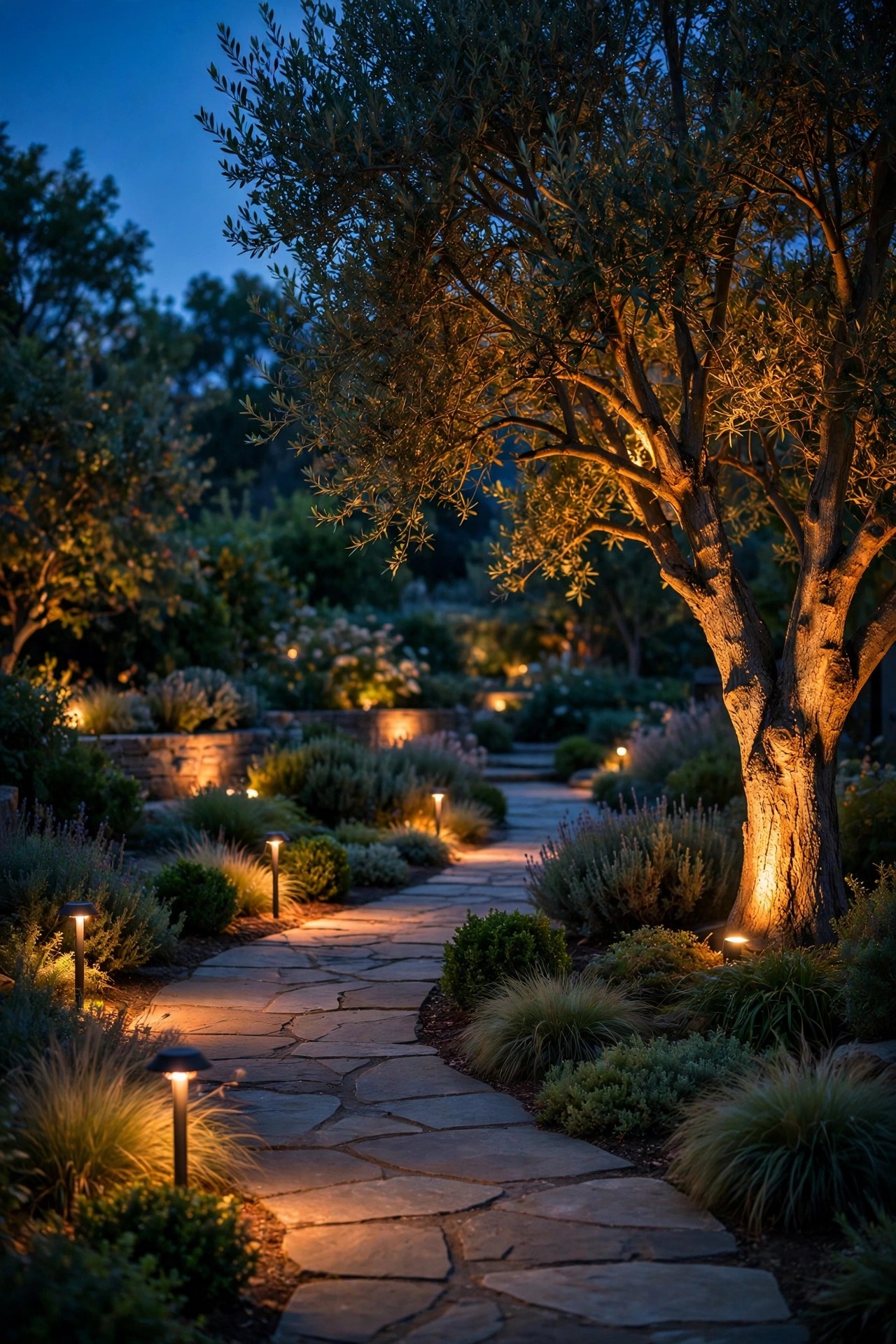
Down at ground level, almost everything runs on a 12-volt low-voltage system, and the retrofit is the most satisfying swap in the yard because the old halogens were tiny furnaces. Uplights and spotlights in the beds usually take MR16 bulbs with a GU5.3 two-pin base — a 20-watt halogen spot becomes a 3 to 4-watt LED, a 35-watt becomes 5 to 6 watts, same pools of light on the tree canopy. Path light hats hide G4 bi-pin or wedge bulbs, and well lights often take the same MR16 as the spots. The one spec to check twice: the bulb must say 12V and AC compatible, because landscape transformers put out AC and a DC-only bulb will flicker or fail early.
Your transformer will not mind the change — the total draw across the whole run collapses, which also fixes the dim-at-the-far-end problem underpowered runs used to have. Beam angle is your styling tool here: narrow 30-degree spots for tree trunks and columns, wide 60-degree washes for beds and walls. If your yard still runs on halogen, my full walkthrough on converting halogen landscape lighting to LED covers transformer sizing and the swap step by step. This zone rewards patience — do one bed, live with it a week, then finish the run.
One Color Temperature Story: Keeping LED Retrofit Bulbs Outdoor Fixtures Consistent
Here is the mistake that makes a whole expensive swap look cheap: mixed color temperatures. A 2700K porch beside a 4000K garage coach light does not read as variety — it reads as a mistake, two houses arguing across the driveway. Color temperature is measured in kelvins, and for a home's exterior my rule is one number everywhere: 2700K, the warm white of a good table lamp, flattering to brick, wood, faces and fall pumpkins alike. Floods may climb to 3000K if you want a slightly more alert feel over the driveway, but no further; past that, light turns blue and institutional fast.
Consistency is a buying strategy, not just an aesthetic one. Purchase every zone's bulbs in one trip, from one product line where you can, because the same labeled 2700K can drift noticeably between manufacturers. If you must mix, put the odd bulb where no other light is visible in the same glance — a lone shed light can be anything; the front elevation cannot. Keep one labeled spare of each base in a drawer, bought with the original batch. And write the kelvin number on the fixture with a pencil inside the housing if you are fancy. Future you, standing on a ladder in November, will be grateful.
The Swap Order That Saves the Most
Sequence is where the money hides. Swap first whatever burns the most hours: for most of us that is the porch light on a dusk-to-dawn habit and any path lights that run all evening, every evening. Second, swap matched sets together — coach light pairs, string light strands, the run of identical path hats — because doing them piecemeal guarantees the mismatched-white problem and a second ladder session. Third, hunt the remaining halogens, especially in the landscape system, where the old bulbs draw several times what their replacements will. Security floods come last, counterintuitive as that feels: a motion flood might burn twenty minutes a night, so its old bulb was never the one costing you.
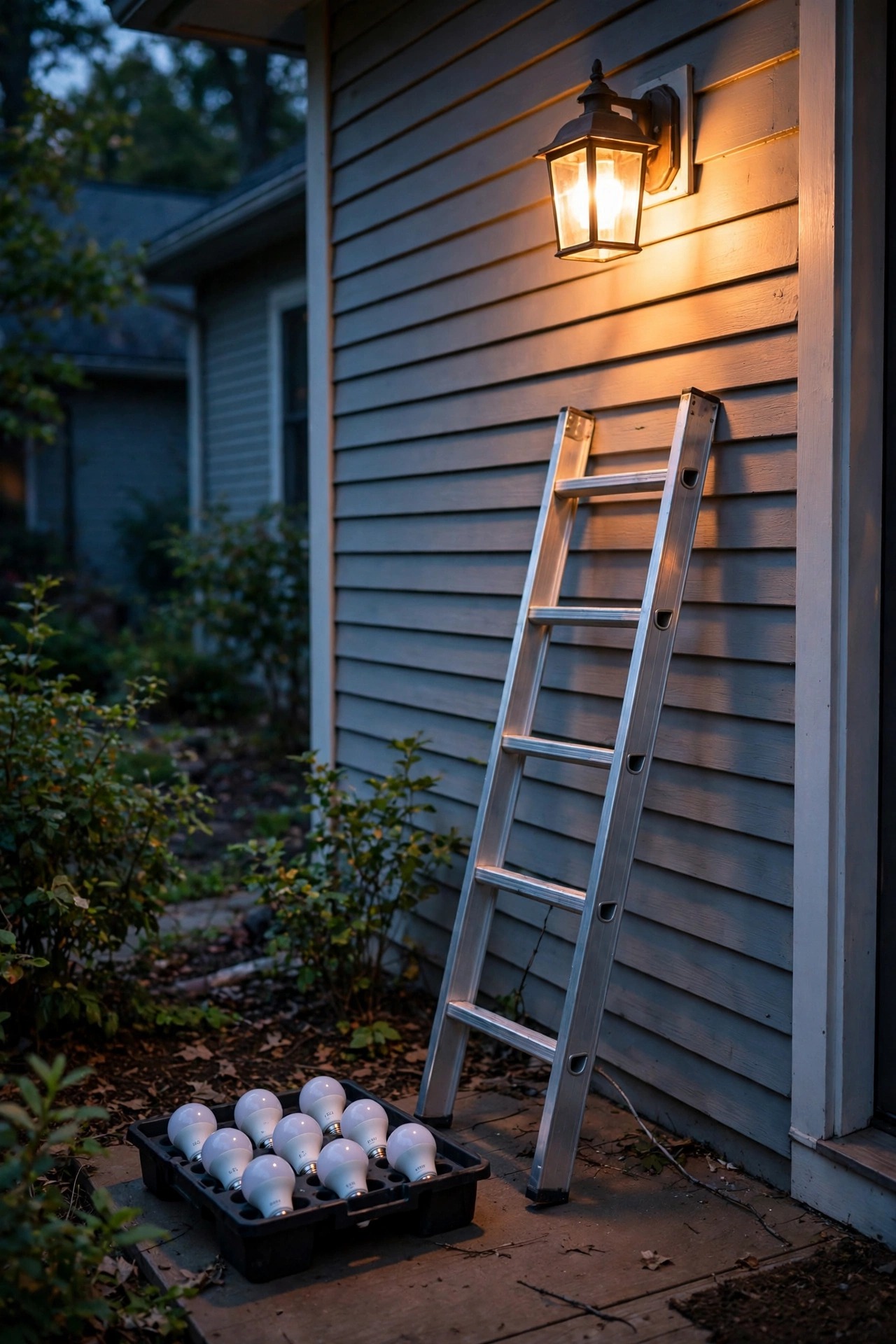
Work by elevation, not by zone, on the day itself — every fixture that needs the tall ladder in one session, everything at ground level in another. Label each working pull with painter's tape and its home ("garage left, still good") and store them as your spares; the dead ones and any old CFLs go to a hardware-store recycling drop, since CFLs carry a trace of mercury and do not belong in the kitchen trash. Photograph each fixture as you finish it. When a bulb dies in year four, that photo is your shopping list.
What It Costs in 2026
Honest numbers, because this is where the swap earns its keep. Everyday A19 bulbs run about $2 to $5 each in multipacks. Pretty filament ST19 styles are $5 to $9, candelabra bulbs $4 to $8, and sealed PAR38 floods $7 to $14. Low-voltage landscape bulbs — MR16 spots and G4 pins — land between $6 and $12 each, dusk-to-dawn sensor bulbs $8 to $13, and smart bulbs for hero fixtures $10 to $18. A whole-house exterior swap typically totals $75 to $250 in bulbs, with big halogen-heavy yards at the top of that range.
The running math is the real argument. At an average residential rate around $0.17 per kilowatt-hour, a 9-watt LED burning five hours a night costs about $2.80 a year; the 60-watt incandescent it replaced cost about $18.60. That is roughly $15 back per bulb, per year — a ten-bulb swap returns around $150 annually, and the landscape conversion saves even more per socket. Most-used bulbs pay for themselves inside a year; even the lazy motion flood gets there eventually. My advice: spend the savings once, on the CRI 90 porch bulbs and a spare of everything. After that, the swap is pure profit and better light.
Frequently Asked Questions
Can I just use a regular indoor LED bulb outside?
In a covered, enclosed porch fixture, an indoor bulb will often work — for a while. The problem is everything it is not rated for: humidity corrodes the contacts, heat in a closed fixture shortens its life, and the warranty quietly excludes outdoor use. A damp-location rated bulb costs barely more and is built for the job, so save the indoor bulbs for indoor sockets.
Why does my new LED bulb flicker or buzz in the porch light?
Three usual suspects. The fixture is on a dimmer the bulb does not agree with — try a bulb labeled dimmable, or remove the dimmer from the equation. The bulb sits behind a photocell or timer that leaks a trickle of current. Or the socket contact is corroded or sprung, common in older outdoor fixtures — clean it with the power off and gently lift the center tab. Swap in a known-good bulb first to learn whether the bulb or the fixture is talking.
How many lumens do I actually need for a porch or entry light?
For one sconce by a door, 450 to 800 lumens is the comfortable range — enough to read a label and find the keyhole without glare. A pair of coach lights can sit at the lower end each. Big two-story entries with tall ceilings can take 1,100 lumens. If guests shield their eyes at your front door, you have bought a security light by mistake.
Will LED bulbs work in my low-voltage landscape system?
Yes — this is the easiest conversion in the yard, as long as the replacement says 12V and AC compatible on the box. Match the base (MR16 two-pin for spots, G4 or wedge for path lights), keep the beam angle close to the old halogen, and expect the whole run to look more even because the transformer is no longer straining. Most people finish a bed in under an hour.
Conclusion
The whole swap took me one Saturday, and the house has looked finished at dusk ever since. If you remember nothing else, remember the order: read the old bulb, respect the ratings, keep one warm color telling one story from the front step to the back fence. Because the led retrofit bulbs outdoor fixtures actually reward are never the brightest box on the shelf — they are the ones matched to the socket, the weather and the job that light has to do. Start with the porch this weekend. The rest of the zones have a way of talking you into themselves, and there are plenty more lighting ideas here on the site when they do.