Every house has one: the porch light that flips on at dusk and burns until sunrise, quietly adding itself to the electric bill 365 nights a year. When I went hunting for the cheapest outdoor lighting to run at my own place, I expected solar to win and old bulbs to lose, but the middle of the list genuinely surprised me, because control beats wattage almost every time. Here is my method, so you can check my math: every option is ranked by yearly running cost at roughly $0.17 per kilowatt-hour, the US residential average, and dusk-to-dawn means about 12 hours a night, or 4,380 hours a year, unless a light is motion-triggered or scheduled, which I note where it applies. I still light in layers — guidance, welcome, accent — but now every layer has to earn its keep on the bill too. A few of these options cost literally nothing to run for years at a time, while one beloved classic near the bottom of the list quietly costs more than the rest of a modern yard combined.

1. Solar Path Lights — The Cheapest Outdoor Lighting to Run, Full Stop
Nothing beats free, and solar path lights are exactly that: zero watts pulled from the grid, so the yearly running cost is a flat $0.00. The little panel on top charges a small battery all day and gives you a soft pool of light along the walk from dusk until the charge runs out. Honestly, they are dim — most stake lights put out 10 to 30 lumens, which is guidance light, not task light — but for marking a path edge they are genuinely enough, and they ask for nothing but sunshine. Place them where the panel sees six or more hours of direct sun, not under the eaves or a thirsty shrub, and space them 4 to 6 feet apart so the pools overlap. My one firm rule: buy sets with replaceable batteries, because the cell wears out in a year or two while the fixture is still fine, and I break down that long-term math in my guide to what solar lights really cost over time. In winter expect shorter run times on short days; that is the honest trade for a zero on the bill.
Suggested budget range: $15 – $40.

2. Solar String Lights
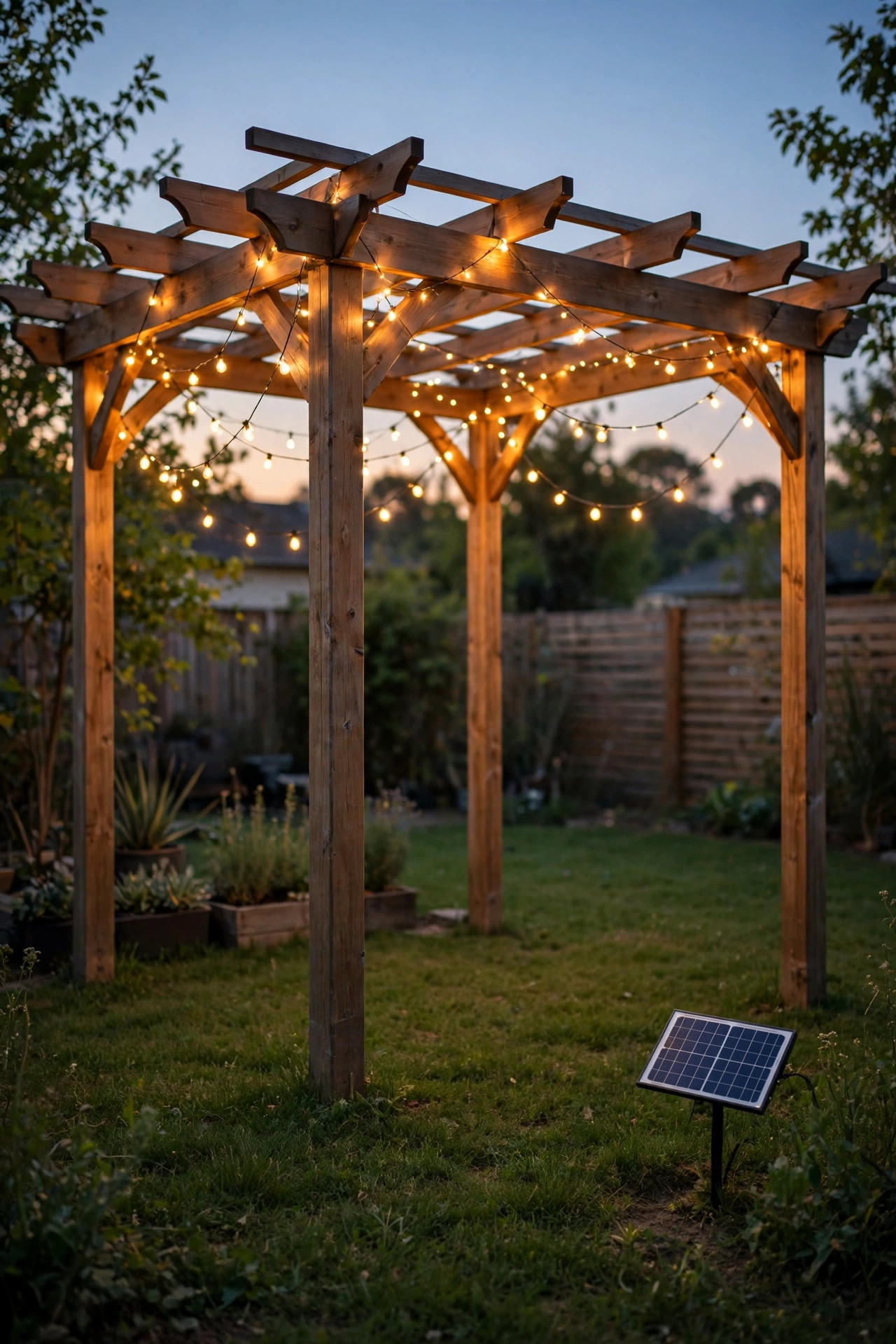
A strand of solar string lights over the patio also runs at $0.00 a year, and it delivers more atmosphere per penny than anything else I own. The bulbs sip from one small solar panel — clip it to a fence rail or stake it in a sunny bed, because panel placement matters more than bulb count. A typical 20 to 30 foot strand gives you that café glow for dinner outside, and because the whole thing is low-voltage and sun-fed, there is no cord to bury and no outlet to hunt for. Look for warm white sets around 2700K, shatterproof plastic bulbs if your strand will live outdoors year-round, and a panel you can angle toward the afternoon sun. The honest limits mirror the path lights: a string of cloudy days shortens the show, and deep shade starves it. In my experience a strand over a sunny south-facing patio runs six to eight hours a night through summer without complaint. For pure mood lighting with a zero on the meter, this is the easiest yes on the whole list.
Suggested budget range: $18 – $45.
3. Solar Motion-Sensor Floodlights
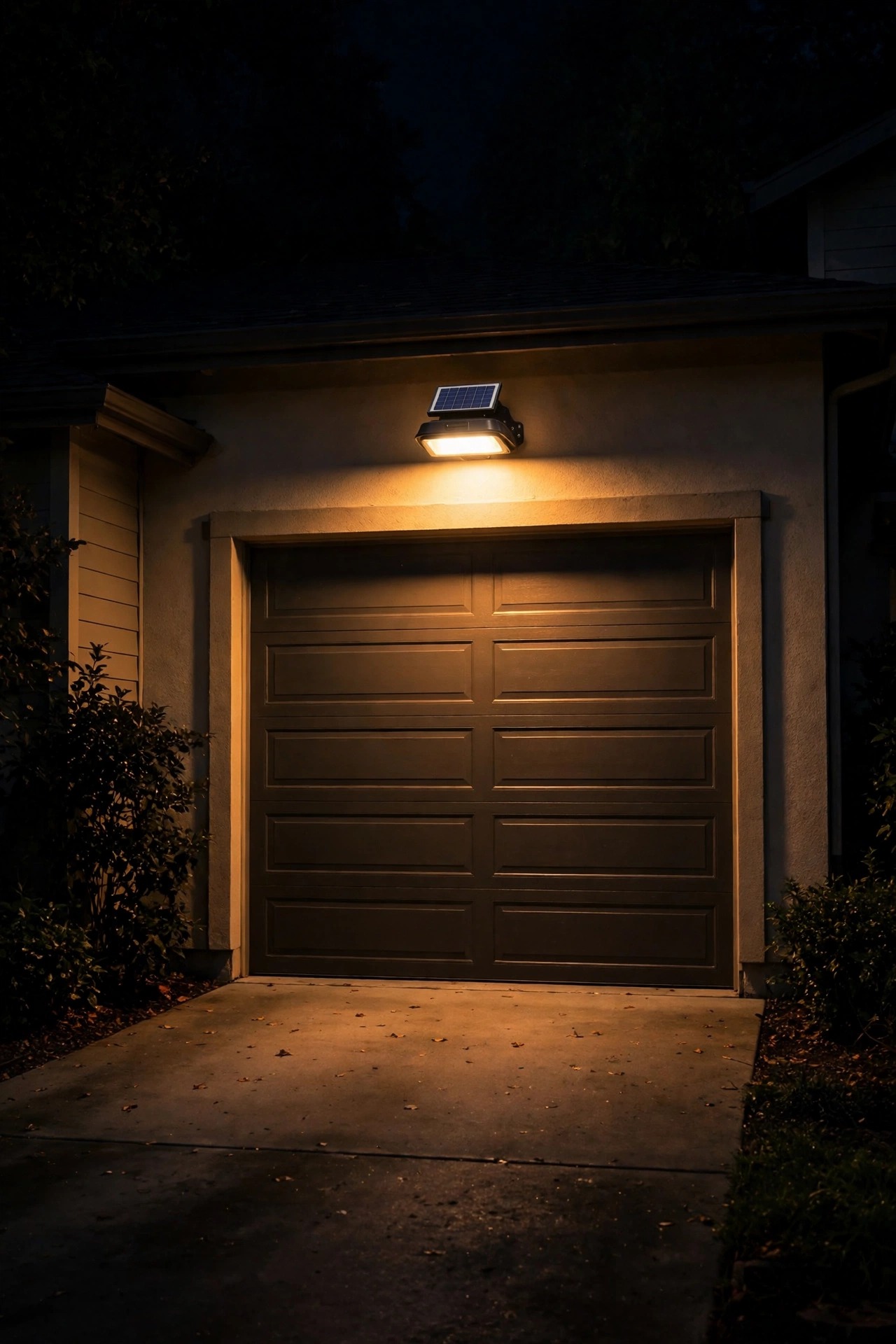
The third zero on this list earns its place differently: a solar motion floodlight is bright — 500 to 1,500 lumens in short bursts — but it only lights when something moves, so its battery is not drained by hours of empty yard. Yearly running cost from the grid: $0.00, same as the other solar picks. I use one over the garage apron and one at the side gate, and they have turned both spots from pitch black to properly lit exactly when I need them, which is when I am actually there. Mount the light 7 to 9 feet up, aim the head down at about 45 degrees, and put the panel where midday sun hits it; many models have a separate panel on a cord, which solves the shady-wall problem neatly. Choose a wide detection angle, around 120 degrees, and a stay-on time of 20 to 30 seconds so it does not flicker off mid-task. Brightness on demand, nothing on the bill — for security corners, solar motion lights are very hard to argue with.
Suggested budget range: $25 – $60.
4. A Wired LED Floodlight on a Motion Sensor
Here is where the ranking gets interesting. This is a mains-powered 20-watt LED floodlight — genuinely bright, no battery fade, ready every single night — yet it lands at about $0.62 a year. The math: triggered for roughly 30 minutes total on an average night, 20 watts × 0.5 hours × 365 nights is 3.65 kilowatt-hours, and at $0.17 that is pocket change. The lesson I keep relearning is that how long a light burns matters far more than how much it draws while burning. A sensor does the saving for you, which is why I rank this ahead of every always-on fixture below. Set sensitivity so passing cars on the street do not trigger it, angle the head to light your own driveway rather than the neighbors' windows, and pick an outdoor-rated fixture with a sealed housing. If your security light currently burns dusk-to-dawn out of habit, this single change is the biggest ranking jump on the list — the same 20-watt floodlight sits at number 11 when it never switches off.
Suggested budget range: $30 – $70.
5. Low-Voltage LED Path Lights
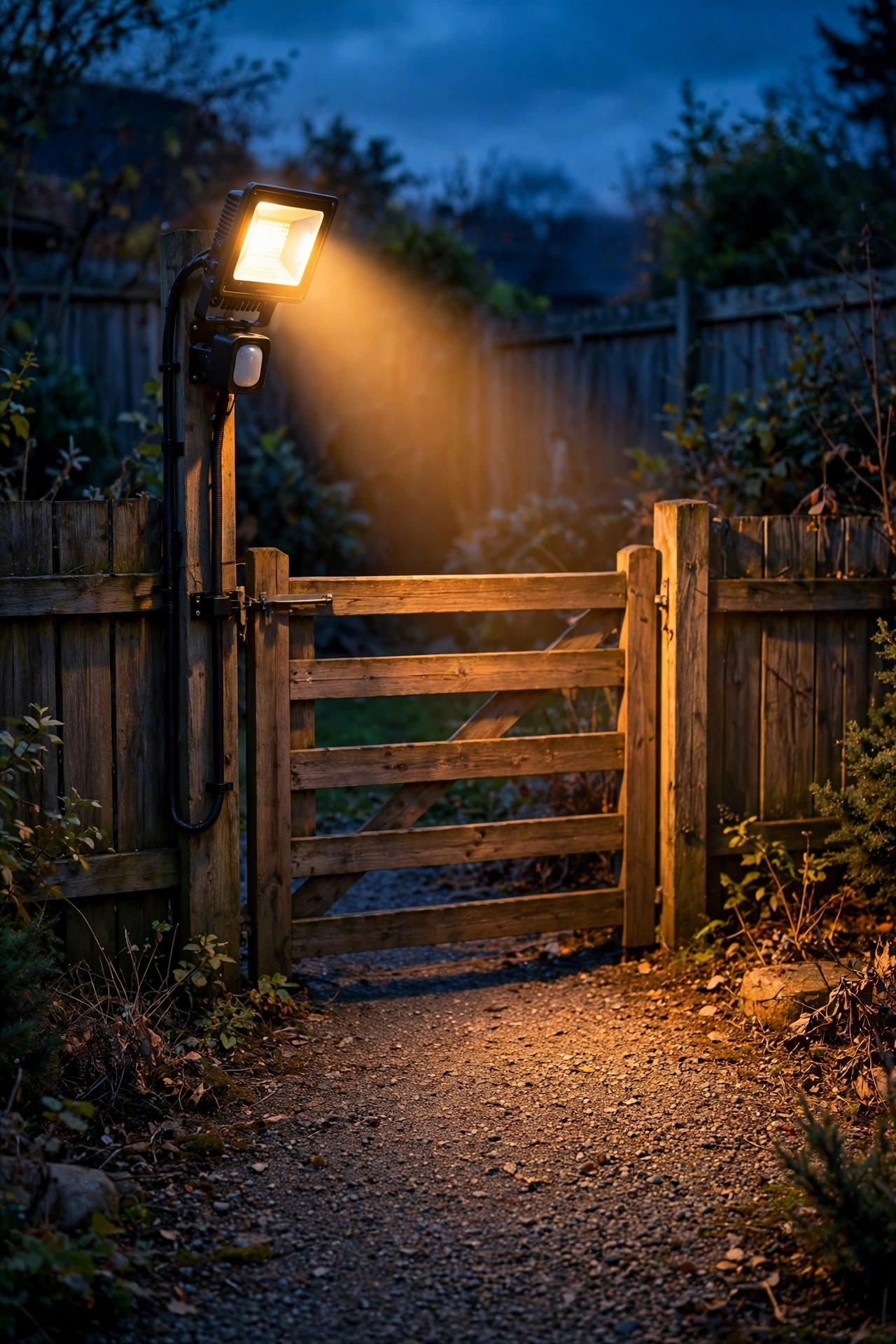
The classic wired path light has quietly become a bargain in the LED era. A modern low-voltage fixture draws about 2 watts, so dusk-to-dawn all year works out to 2 × 4,380 hours = 8.76 kilowatt-hours, roughly $1.49 a year per light. That buys you noticeably brighter, steadier light than a solar stake — 100 to 200 lumens that does not fade by February — plus even spacing you can plan to the inch, typically 6 to 8 feet apart along a walk. One honest asterisk: a whole run shares a transformer, and the transformer sips a little standby power around the clock, so add a few dollars a year for the system as a whole; spread across six or eight fixtures it barely moves the per-light number. Bury cable a few inches deep along the bed edge, use waterproof wire connectors, and keep total wattage under 80 percent of the transformer rating. For a permanent front walk that looks intentional every night of the year, a dollar fifty per light is a price I happily pay.
Suggested budget range: $20 – $45.
6. A Smart LED Bulb on a Sunset Schedule
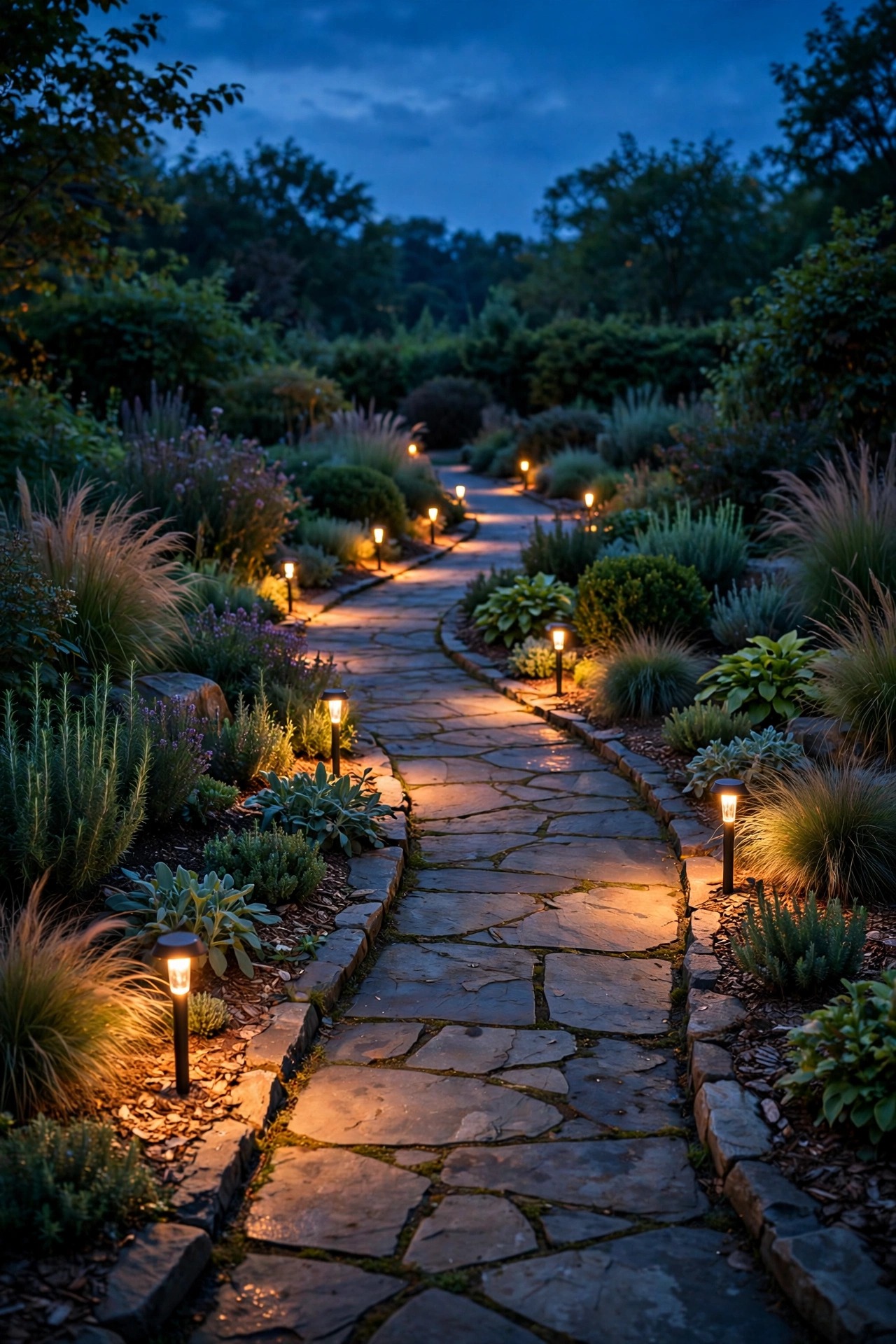
A standard LED bulb draws about 9 watts, but pair it with a schedule and the hours collapse. Mine comes on at sunset, runs the busy evening stretch, and goes dark at 11, with a brief early-morning encore — call it 5 hours a night on average. That is 9 × 5 × 365 = about 16.4 kilowatt-hours a year, or $2.79. No new fixture, no wiring: the bulb screws into the porch light you already own, and the app or a smart plug handles the timing. I cover the plug route in my roundup of the best outdoor smart plugs and timers, which does the same trick for fixtures where the bulb cannot be swapped. Two tips from my own setup: use a bulb rated for enclosed fixtures if your sconce has a cover, and set a randomized away mode so the house looks lived-in on vacation. Scheduled light when the evening is alive, darkness when nobody is awake to see it — that is the whole secret of this ranking spot.
Suggested budget range: $10 – $20.

7. An LED Uplight for Your Best Tree
Accent lighting earns its keep by transforming one good feature, and a 5-watt LED uplight does it for about $3.72 a year dusk-to-dawn: 5 × 4,380 hours = 21.9 kilowatt-hours. One fixture aimed up through the canopy of a small ornamental tree gives a yard more drama than a dozen dim stakes, and at this wattage I do not feel guilty letting it run all night. Place the fixture 12 to 18 inches from the trunk, tilt the beam up at roughly 30 degrees so it grazes bark and branches instead of blasting straight into the leaves, and choose a narrow-to-medium beam, around 24 to 36 degrees, for a sculptural effect. A stake mount is fine for most soils; in beds you water often, a surface-mount base keeps the head from tilting as the ground softens. Warm white around 2700K keeps bark and foliage looking natural. It is the priciest of my true bargains, and still under four dollars a year.
Suggested budget range: $25 – $60.

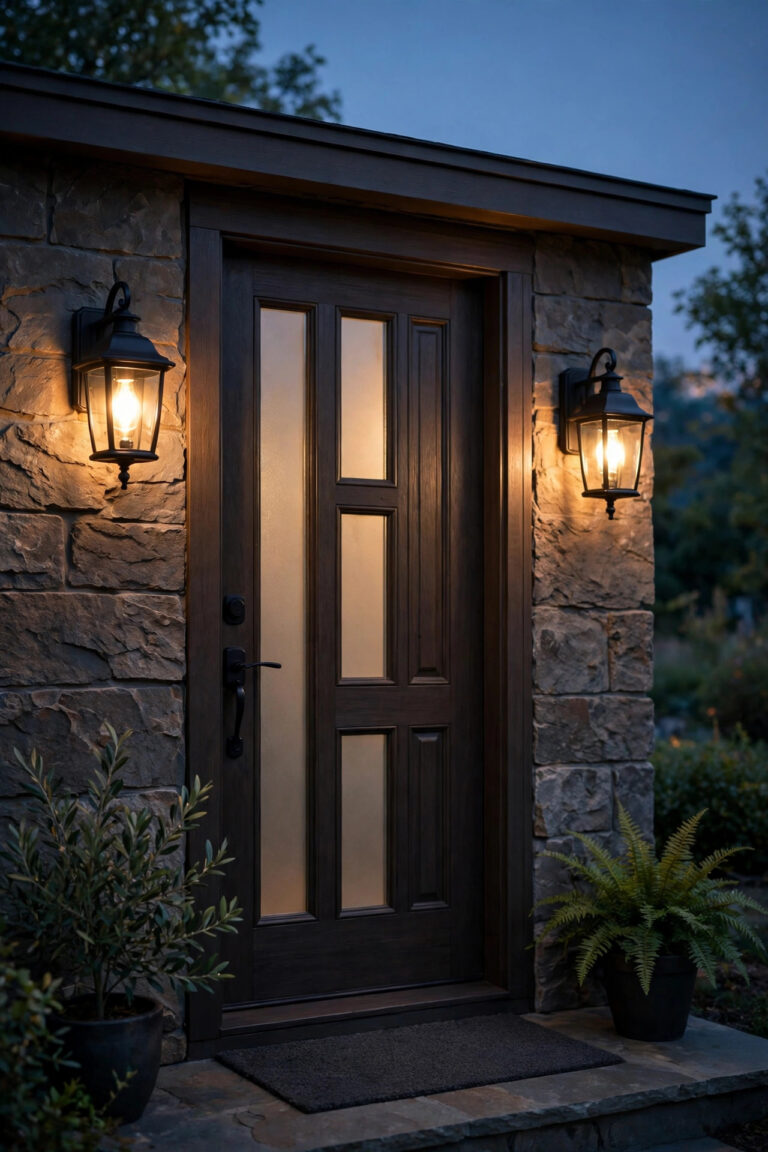
8. An LED Porch Sconce, On All Night
This is the default American porch light upgraded: a fixture with a 9-watt LED bulb, burning dusk-to-dawn because somebody in the house likes a lit entry at 3 a.m. The bill for that comfort is 9 × 4,380 hours = 39.4 kilowatt-hours, about $6.70 a year. Not bad at all — but look at the spread in this ranking: the identical bulb on the schedule at number 6 costs less than half as much, which is why I nag friends about timers before I nag them about bulbs. If your fixture is enclosed, use an enclosed-rated LED so heat does not shorten its life, and stay with 2700K warm white so the entry looks welcoming rather than clinical. A frosted bulb or a fixture with a diffuser keeps glare out of guests' eyes at the door. Six seventy a year for a welcoming, always-ready entry is a fair price; just know you are paying for the overnight hours, and decide honestly whether you want them.
Suggested budget range: $25 – $80.
9. Plug-In LED String Lights
The plug-in cousin of the solar strand at number 2 draws real power, and dusk-to-dawn it shows. A typical 48-foot LED café strand pulls about 12 watts total, so a full year of every-night glow is 12 × 4,380 hours = 52.6 kilowatt-hours, roughly $8.94. That is still cheap entertainment — but only if the lights are actually being enjoyed. At my house these live over the patio from May to September, and they run on a timer that cuts them at 11 p.m., which drops the real cost closer to three dollars a season. Hung all year and left on all night, they become the priciest mood lighting you own. Hang them with proper guide wire or cup hooks rather than a staple gun, keep connections off the ground, and plug into a GFCI outlet. My honest verdict: wonderful lights, wrong job. Atmosphere is an evening activity, so schedule it like one and this option climbs right back up the ranking.
Suggested budget range: $25 – $60.
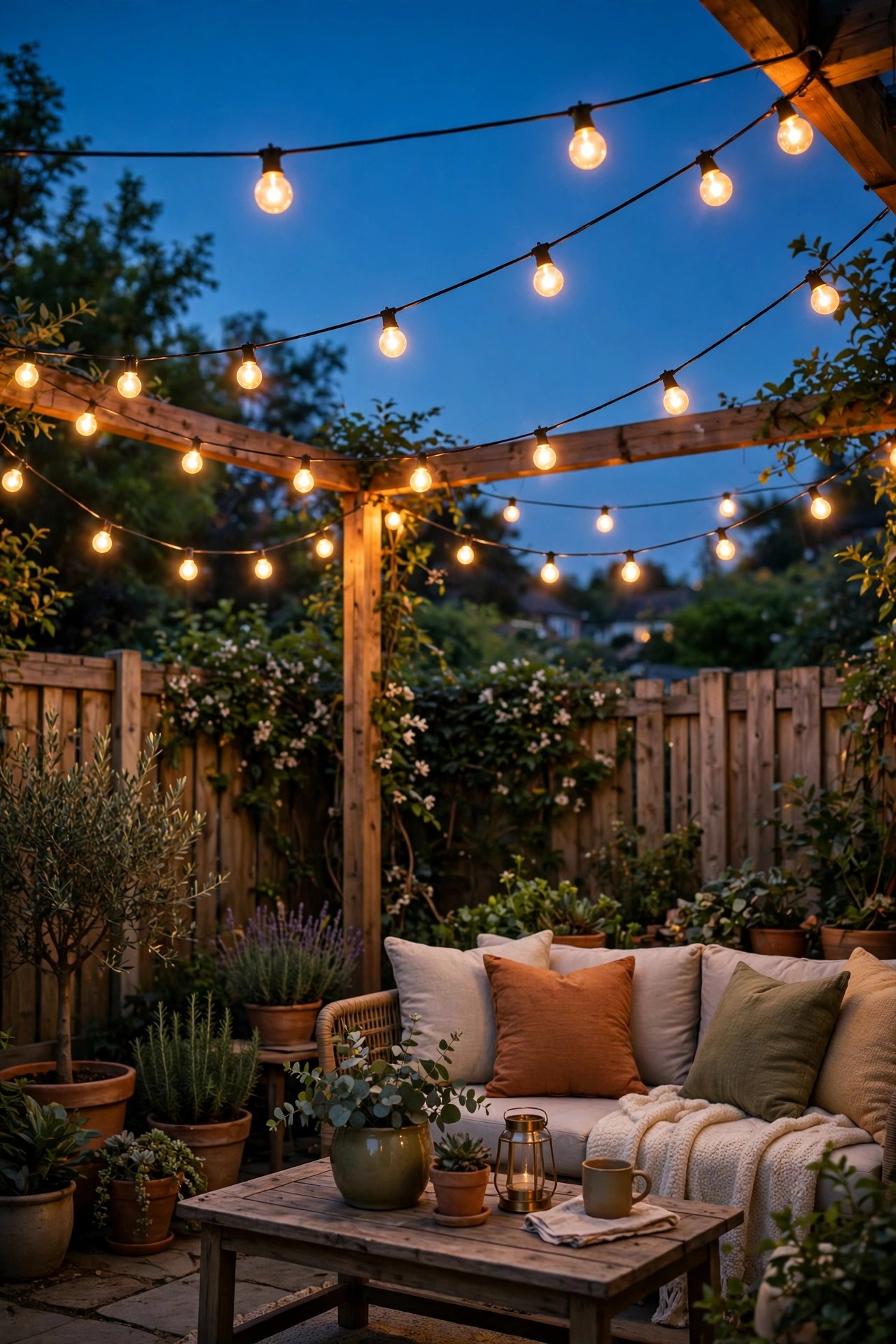
10. A CFL Porch Bulb
Remember when the curly compact fluorescent was the efficient choice? A 14-watt CFL burning dusk-to-dawn uses 14 × 4,380 hours = 61.3 kilowatt-hours a year, about $10.42 — more than every LED option on this list, including LEDs twice as bright. The CFL loses three ways: it draws more than an LED for the same light, it hates the cold and comes on dim and pinkish on winter mornings while it warms up, and it contains a trace of mercury, so a dead one goes to a recycling drop-off, not the kitchen trash. Plenty of porches still run one out of pure inertia, and honestly it was a fine bulb in 2010. But the swap costs a few dollars and thirty seconds, and it pays for itself in a single season. If you find a box of these in the garage during a cleanout, my advice is to retire the outdoor ones first, where the dusk-to-dawn hours multiply every wasted watt into real money.
Suggested budget range: $3 – $8.

11. An LED Security Floodlight Left On All Night
Same fixture as number 4, wildly different bill — this is the entry I show people when they ask whether timers really matter. A 20-watt LED floodlight burning dusk-to-dawn: 20 × 4,380 hours = 87.6 kilowatt-hours, about $14.89 a year. Still a modest number in absolute terms, and for a genuinely exposed property an always-lit yard may be worth it. But it is 24 times the cost of the motion-sensor setup for the same hardware, and in my experience an always-on flood mostly lights an empty driveway beautifully for nobody. Two further costs hide here: constant light annoys neighbors and washes out the dark-adapted view from your own windows, and a lamp that never rests still ages its driver electronics faster. If all-night security light is a deliberate choice, make it a dim one with a motion boost — plenty of fixtures idle at 20 percent and jump to full brightness on movement, which lands the yearly cost somewhere near number 6 instead.
Suggested budget range: $35 – $90.
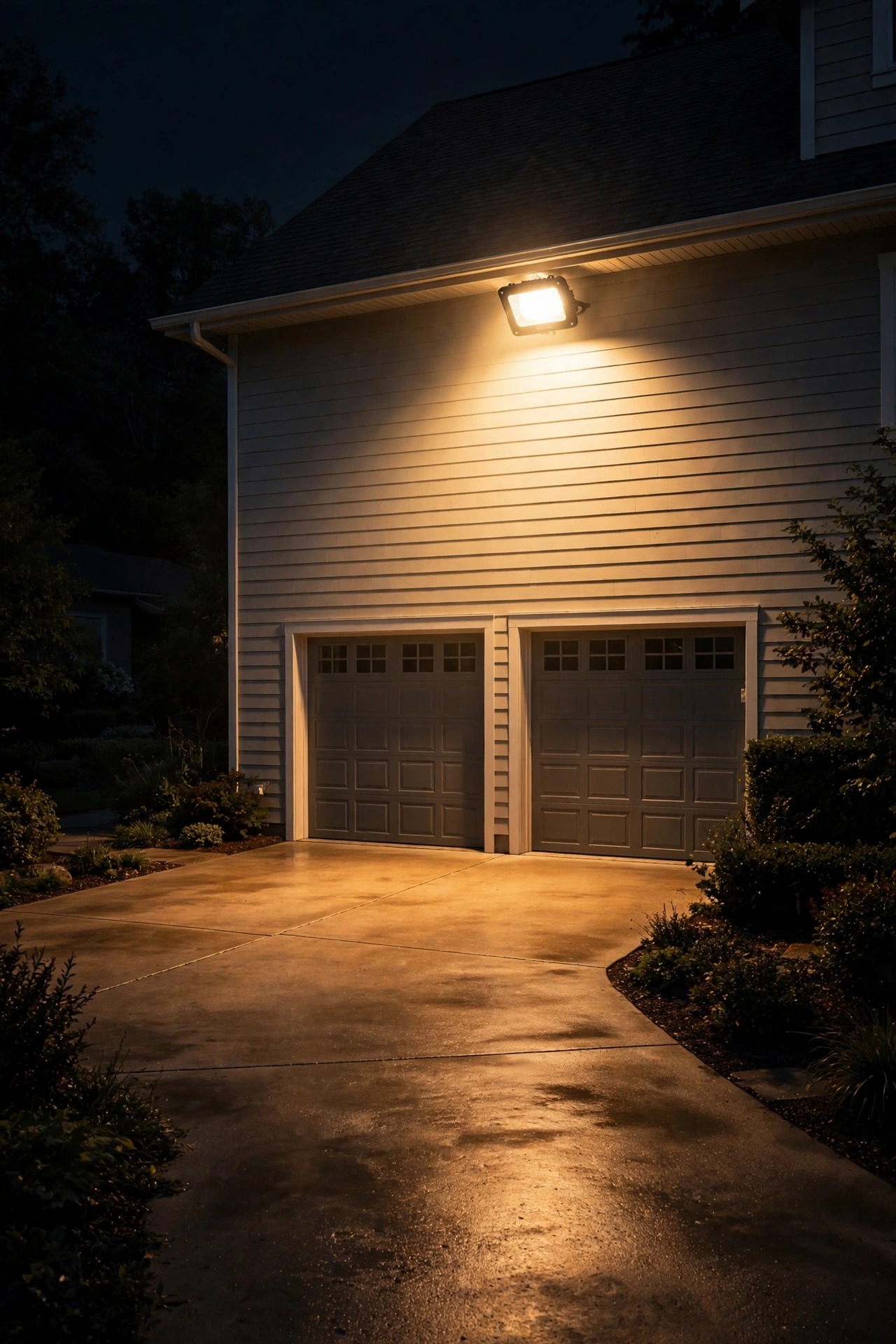
12. A Halogen Landscape Spotlight
Now we reach the options that are cheap to buy and expensive to own. A 50-watt halogen spotlight — still lurking in thousands of older landscape systems — burning dusk-to-dawn consumes 50 × 4,380 hours = 219 kilowatt-hours, roughly $37.23 a year. Per light. A six-light halogen uplight set from the early 2000s can quietly outspend everything else on this page combined, and the bulbs also burn hot, which near mulch and dry leaves is a safety note, not just a budget one. The fix is painless and I have walked through it step by step in my guide to converting halogen landscape lighting to LED: most fixtures take a drop-in LED replacement bulb, and the 50-watt draw becomes 5 to 7 watts with the same warm look. Keep the fixtures, keep the transformer, lose ninety percent of the running cost. If your yard still glows halogen-orange at night, this is the single most valuable line item on the whole list.
Suggested budget range: $15 – $40.

13. The Incandescent Porch Bulb — The Opposite of the Cheapest Outdoor Lighting to Run
Last place goes to the bulb that started it all: a 60-watt incandescent in the porch fixture, burning dusk-to-dawn out of sheer habit. The math is brutal in its simplicity: 60 × 4,380 hours = 262.8 kilowatt-hours, about $44.68 a year — for one bulb, doing a job a 9-watt LED does just as well for $6.70. That is nearly forty dollars a year spent heating a glass envelope, since most of an incandescent's energy leaves as heat rather than light. These bulbs also burn out in about a year of nightly use, so add replacement cost and ladder time to the bill. I keep one in a drawer as a museum piece, and that is where it belongs. If your porch still runs one, the thirty-second swap to an LED is the best-returning home improvement I know: no tools, no fixture change, and the savings show up on the very next bill. Every ranking has a cautionary tale, and this glowing little tale is still screwed into far too many American porches.
Suggested budget range: $1 – $3.

Frequently Asked Questions
Is solar lighting really free to run?
For electricity, yes — a solar fixture pulls nothing from the grid, so its running cost is genuinely zero. The honest footnote is upkeep: the rechargeable battery inside wears out every one to three years and a replacement cell costs a few dollars, and panels need an occasional wipe to charge well. Even counting a new battery every couple of years, a solar path light costs well under a dollar a year to own, which is why solar sweeps the top of this ranking.
How do I work out the yearly cost of my own lights?
Use one formula: watts × hours per night × 365, divided by 1,000, multiplied by your electric rate. A 9-watt bulb on for 6 hours a night is 9 × 6 × 365 ÷ 1,000 = 19.7 kilowatt-hours a year; at $0.17 per kilowatt-hour that is about $3.35. Find your real rate on your bill by dividing the total due by the kilowatt-hours used, then run every fixture you own through the same math.
Does color temperature change how much a light costs to run?
No — cost follows watts, not warmth. A 9-watt bulb costs the same to run whether it glows at a cozy 2700K or a bluish 5000K, because the meter only sees the 9 watts. Choose color temperature for how the yard feels at night; I stay at 2700K to 3000K outdoors for warmth. Just compare actual watts when you shop, not the "equivalent watts" printed big on the box.
What is the single cheapest change I can make tonight?
Swap any dusk-to-dawn incandescent or halogen bulb for an LED, then put it on a timer or sensor. The bulb swap alone takes a porch light from about $44.68 a year to about $6.70, and adding a sunset schedule drops it near $2.79. It needs no tools beyond your hands, costs less than a pizza, and starts paying you back the first night.
Conclusion
The pattern running through this ranking is simple: solar costs nothing, LEDs cost pennies, and control — motion sensors, schedules, timers — saves more than any bulb technology on its own. The cheapest outdoor lighting to run is rarely the cheapest to buy, and the priciest habit in most yards is leaving old bulbs burning for empty hours. Pick one fixture tonight, run its numbers with the formula above, and make it earn its place. Then come browse more outdoor lighting ideas here on the site and build your layers up one honest bargain at a time.