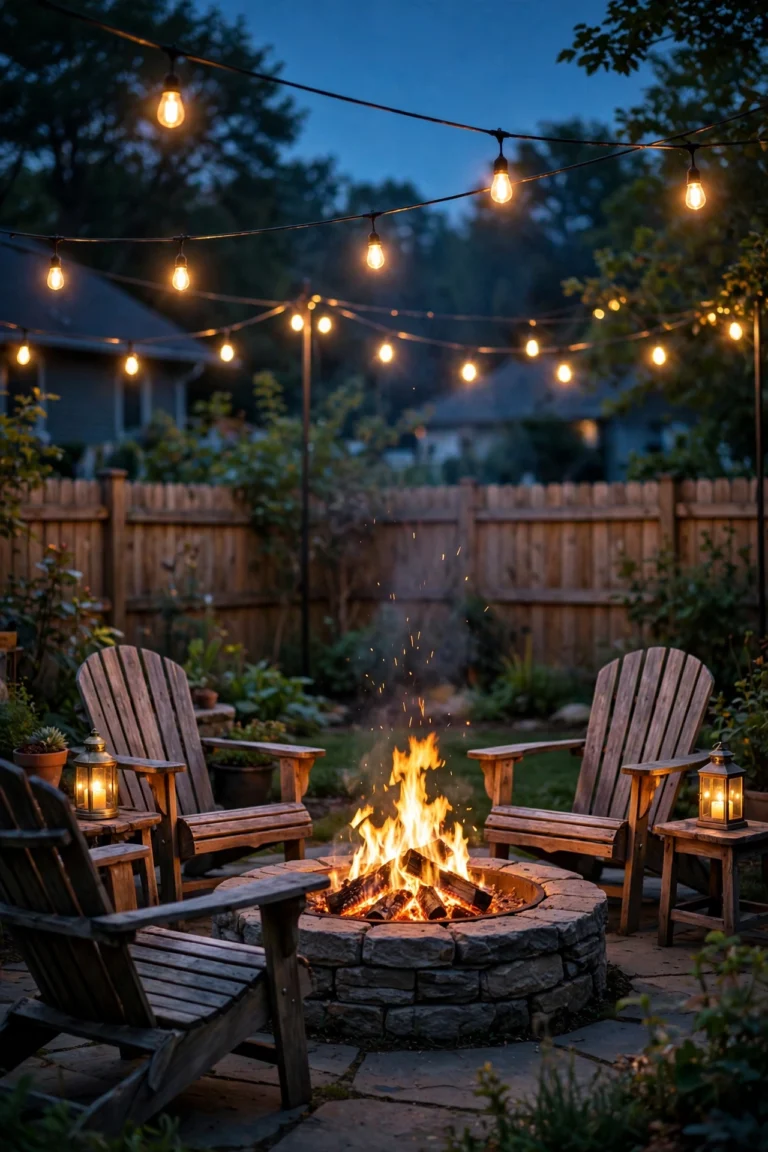
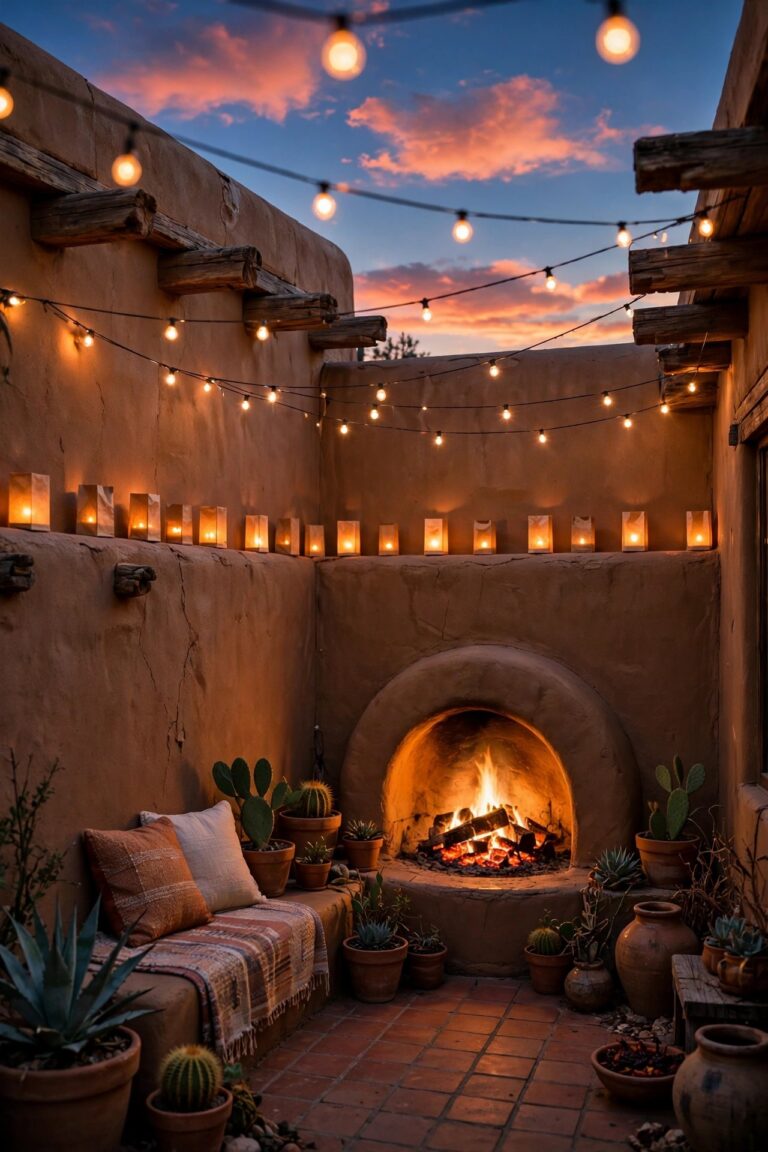
When our electric bill jumped one winter, I did what everyone does — I blamed the space heater, the dryer, maybe the kids leaving lights on. The outdoor lights never even crossed my mind, because honestly: how much electricity does outdoor lighting use? They are little bulbs in the yard. How bad could they be? So I sat down with a pencil, our last power bill and the wattage labels off every fixture we own, and I did the math properly. The answer surprised me in both directions. A modern LED yard costs less to run than a single pizza night. But one forgotten halogen floodlight, or a porch bulb burning dusk to dawn out of habit, can quietly outspend the entire garden. This guide walks through the real numbers: the simple formula, what each fixture type costs per year, a full whole-yard example, the standby draw nobody warns you about, and how to redo every calculation with the exact rate on your own bill.

The Short Answer
A typical LED outdoor fixture uses 3 to 10 watts and costs about $1 to $4 a year to run for six hours a night. A whole LED-lit yard — paths, uplights, sconces and string lights together — usually lands near $40 a year at the national average rate of about $0.17 per kilowatt-hour. The same yard in halogen runs closer to $230. The outliers do the damage: one 60-watt incandescent porch bulb left on dusk to dawn costs roughly $45 a year all by itself. Hours matter as much as watts, so a timer is worth as much as an LED upgrade.
Watts and Kilowatt-Hours, in Plain English
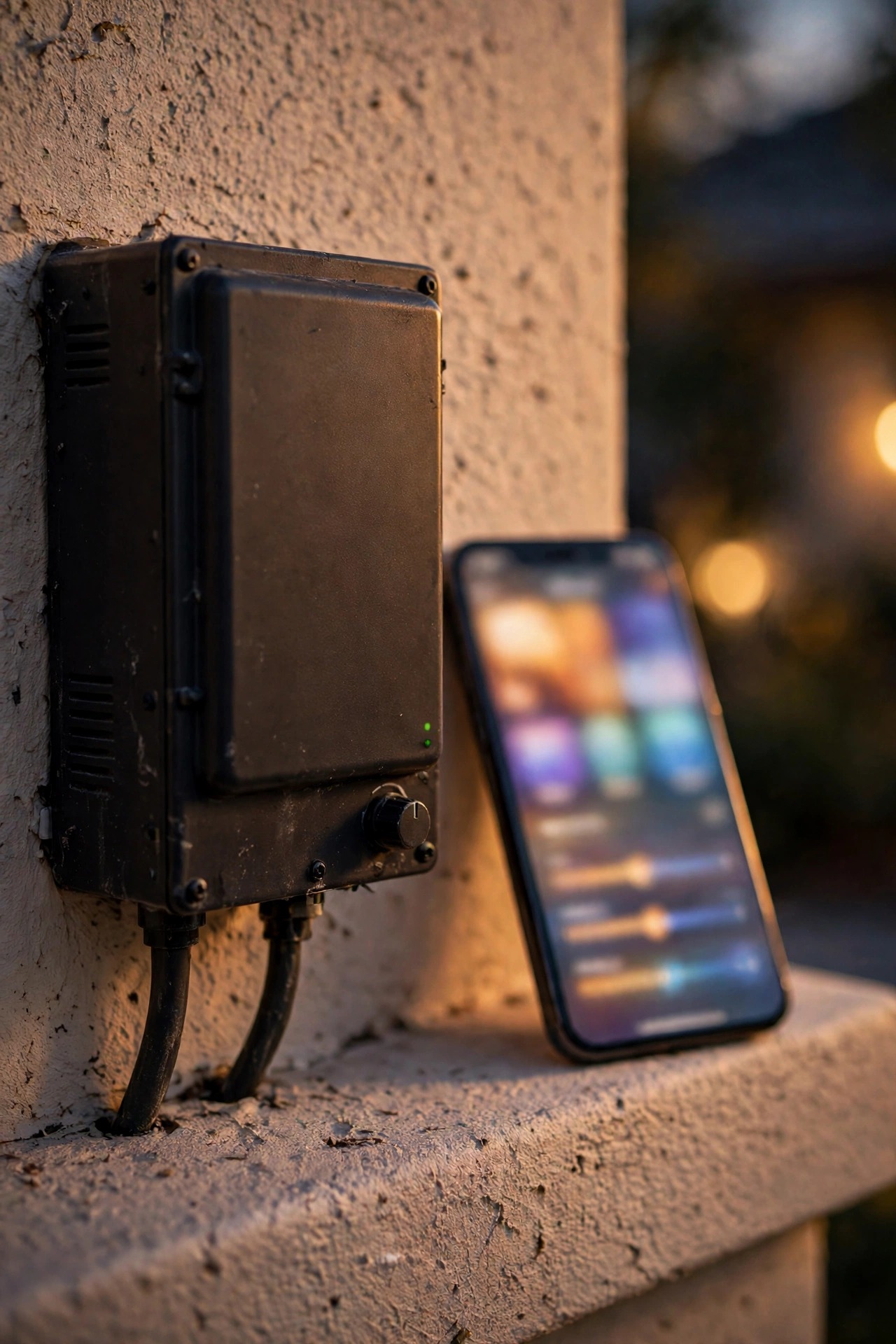
Everything on your power bill comes down to two words that sound alike and mean completely different things. A watt measures how fast a fixture drinks electricity while it is on — its appetite. A kilowatt-hour measures how much it actually drank — the total serving. Your utility does not bill you for watts. It bills you for kilowatt-hours, usually written kWh, and that one distinction explains almost every surprise in this guide.
The conversion is the whole trick, and it is genuinely simple. One kilowatt is 1,000 watts. Run a 1,000-watt load for one hour and you have used exactly 1 kWh. Run a modest 10-watt LED for 100 hours and you have also used exactly 1 kWh — the same serving, just sipped slowly. That is why a little light burning long hours can quietly tie a big light that only runs briefly.
So the only formula this entire guide needs is this: watts × hours ÷ 1,000 = kilowatt-hours. Multiply those kilowatt-hours by your rate and you have dollars. At the national average of about $0.17 per kWh, one kilowatt-hour costs seventeen cents. Picture it as running a big 1,000-watt space heater for one hour, or a 10-watt LED for four straight days and nights — same seventeen cents either way.
Two honest footnotes before we start spending. First, the wattage printed on a fixture is its rated draw, and bargain LEDs sometimes pull a touch more or less than the label claims. Second, low-voltage systems do their math at the transformer, which adds a small markup of its own that we will cover a few sections down. For planning and bill-checking purposes, label watts are close enough. The formula itself is exact; only the inputs wobble a little.

How Much Electricity Does Outdoor Lighting Use Per Fixture?
Let us work one fixture all the way through, slowly, because once you see a single calculation you can price any light in your yard in about ten seconds. Take the LED wall sconce by my front door: 10 watts, on a timer, lit six hours a night.
Step one: multiply watts by hours. Ten watts times six hours is 60 watt-hours per night. Step two: divide by 1,000 to get kilowatt-hours — 0.06 kWh a night. Step three: multiply by the rate. At $0.17, that is $0.0102, which is to say almost exactly one penny a night. Step four: stretch it over a year. Six hours a night for 365 nights is 2,190 hours, so 21.9 kWh a year, or $3.72. A whole year of welcoming light at the front door costs less than the bulb itself did.
Now scale that shortcut across the fixtures most of us actually own, all at six hours a night and $0.17 per kWh. A small 3-watt LED path light uses 6.6 kWh a year and costs about $1.12. A 5-watt LED step or deck light lands near $1.86. The 10-watt sconce we just priced is $3.72. A 12-watt LED string-light run costs about $4.47. Step up to a 20-watt LED floodlight and you are at $7.45 a year — real money, but still less than a dollar a month.
The pattern to notice: at six hours a night, every watt a fixture draws costs roughly 37 cents a year. One watt, 37 cents. So you can price anything on sight. Twenty watts? About $7.40. Two hundred watts of combined lighting? About $74. It is the handiest rule of thumb I know, and everything else in this guide is just this math with bigger numbers attached.

LED vs Halogen vs Incandescent: What One Fixture Costs Per Year
Bulb technology is where the yearly numbers split wide open, because the three generations of outdoor bulbs produce the same light for wildly different wattages. An LED needs roughly one-sixth the watts of the halogen it replaces, and about one-seventh the watts of an old incandescent, for the same brightness. Run all three through our formula at six hours a night and the gap becomes money.
Here is the lineup, same math as before, $0.17 per kWh. A 3-watt LED path light: about $1.12 a year. A 9-watt LED sconce or flood: $3.35. A 20-watt halogen path light: $7.45. The classic 35-watt halogen spotlight that shipped with a million landscape kits: $13.03. A 50-watt halogen flood: $18.62. And a 60-watt incandescent porch bulb: $22.34 at six hours a night — or about $44.68 if it burns dusk to dawn, which porch bulbs so often do.
Lifespan widens the gap further. A decent LED is rated around 25,000 hours, which at six hours a night is more than eleven years. A halogen lasts roughly 2,000 to 4,000 hours, so one to two years of evenings, and each replacement bulb costs $4 to $8. An incandescent gives you about 1,000 hours — it will not even survive a year of dusk-to-dawn duty. The electricity is only part of what the old bulbs charge you; the ladder trips are the rest.
If your yard still runs halogen spots, the swap math is unusually kind: one 35-watt halogen replaced by a 7-watt LED saves about $10 a year in electricity alone, so the bulb pays for itself in a single season. My guide to converting halogen landscape lights to LED walks through the swap fixture by fixture. In my experience it is the highest-value hour a homeowner can spend on a lighting system.
A Whole-Yard Example: Adding Up a Real Setup
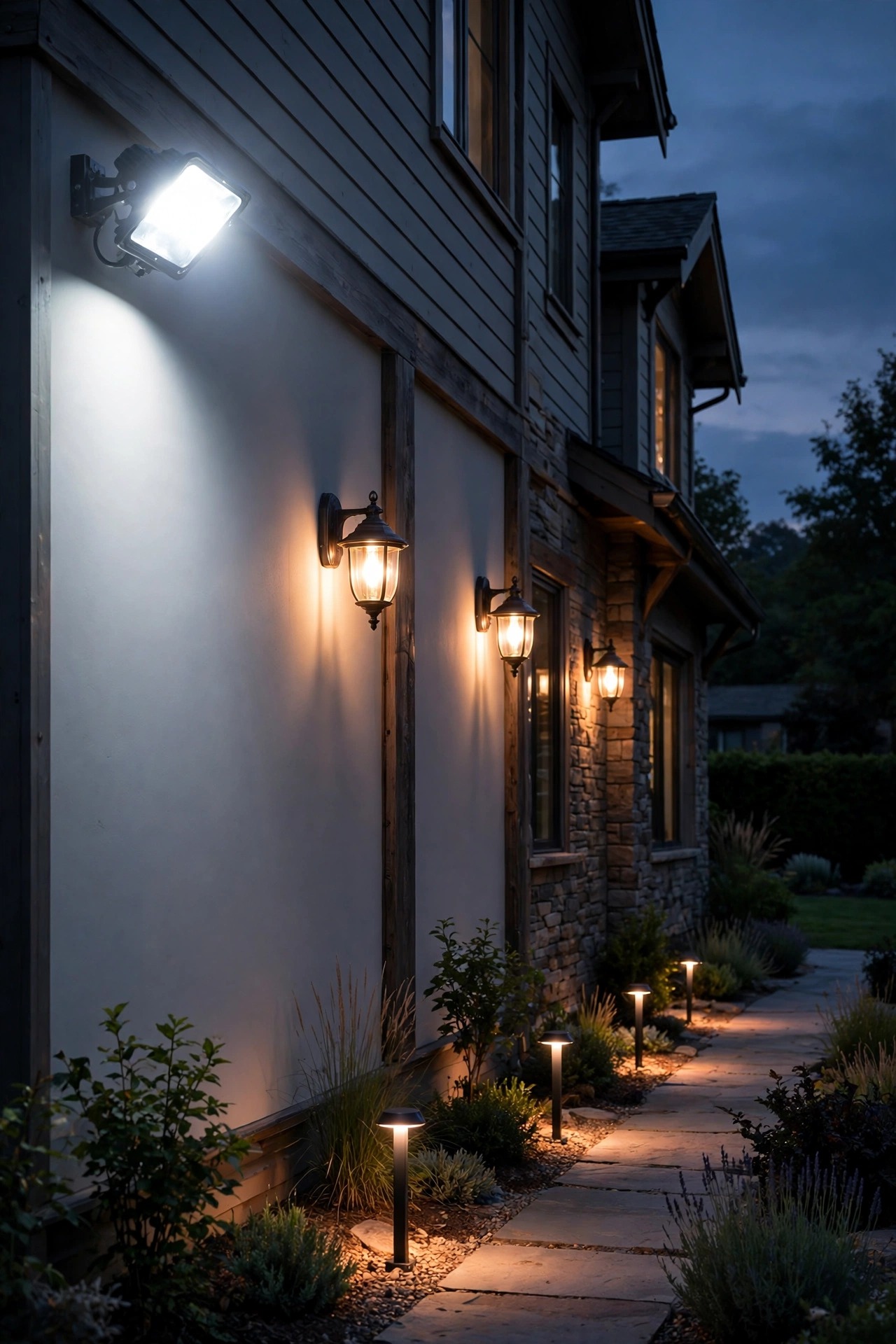
Per-fixture numbers are useful, but nobody writes a check per fixture. Let us add up an entire yard — mine, roughly, since it is a typical size: nineteen fixtures, all LED, all on one timer that runs them six hours a night.
The inventory: twelve path lights at 3 watts each is 36 watts. Four tree and facade uplights at 9 watts each is another 36. Two porch sconces at 10 watts each is 20. One LED string-light run over the patio is 15. Add it up and the whole show — every pool of light in the front and back yard — draws 107 watts, about what one old incandescent bulb used to pull from a single socket.
Now the math: 107 watts times six hours is 642 watt-hours a night, call it 0.64 kWh. Over a year that is 234 kWh, and at $0.17 the total is $39.84. About forty dollars a year, or $3.30 a month, for a yard that looks like a magazine photo every single evening. It genuinely disappears into the noise of a normal electric bill.
Run the identical yard in the older technology and the story changes. Eighteen-watt halogen path lights, 50-watt halogen uplights, 60-watt incandescent sconces and an incandescent string run total 611 watts. Same six hours: 1,338 kWh a year, about $228. And if my LED yard ran on photocells instead of a timer — dusk to dawn, averaging eleven and a half hours — it would cost about $76 a year. Same lights, same yard, nearly double the money, purely because of hours. Keep that in mind; it becomes the moral of this whole guide.

The Transformer Tax: Standby Draw and Conversion Loss
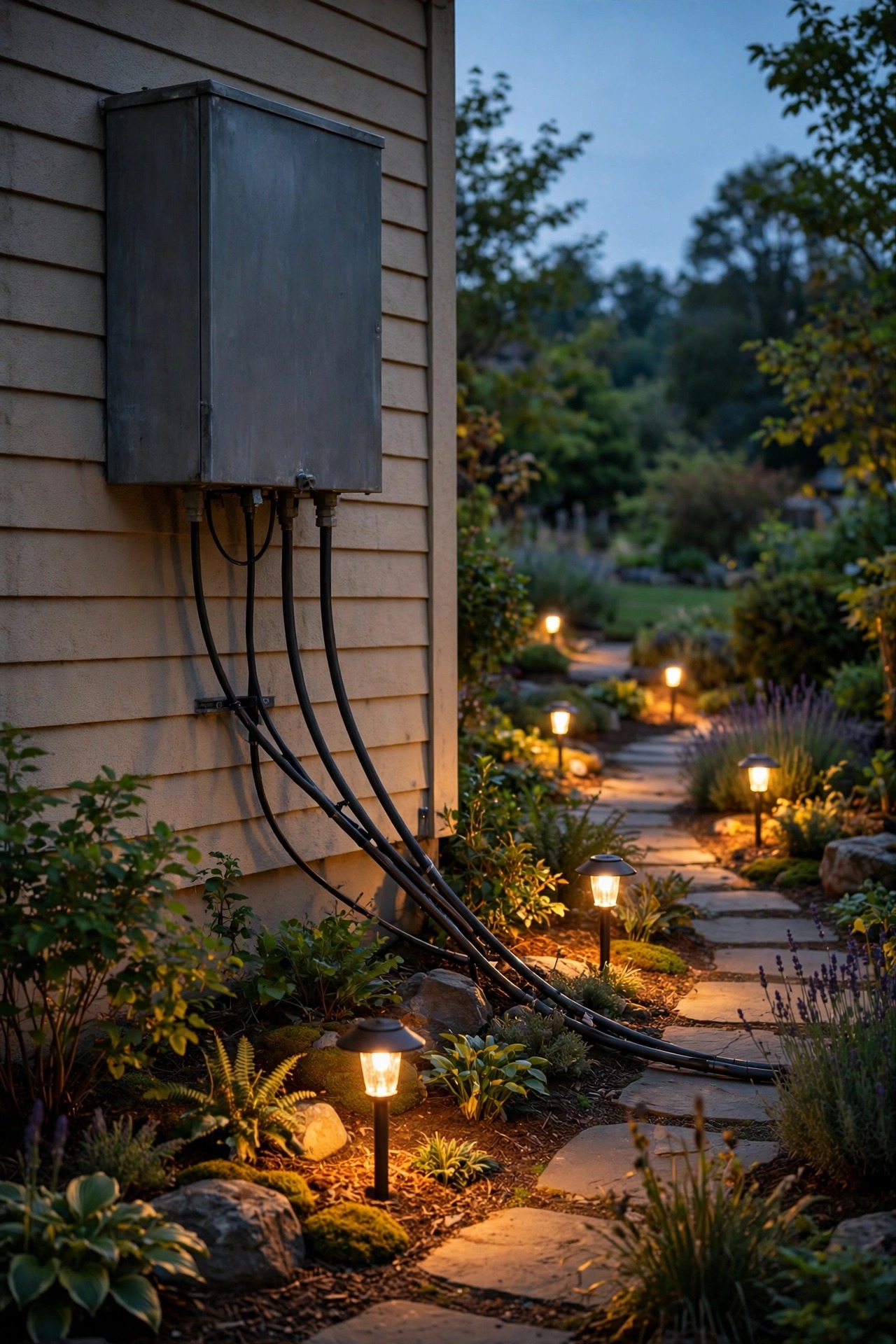
If your landscape lights are low-voltage, there is a middleman between them and your bill: the transformer, which converts 120-volt house current down to 12 volts. It does the job well, but it charges two small tolls that almost nobody budgets for.
The first toll is conversion loss. A typical transformer runs at about 90 percent efficiency, which means for every 100 watts of light in the yard, roughly 111 watts leave the wall outlet. My 107-watt yard actually pulls about 119 watts. Priced out over a year at six hours a night, that is 261 kWh instead of 234 — the transformer quietly adds about $5 to the annual bill. Not a scandal, but it means low-voltage math should always be done on wall watts, not bulb watts.
The second toll is standby draw, and it is the sneakier one. Most transformers stay plugged in around the clock, sipping power even when the lights are off — typically 3 to 8 watts, with older magnetic units at the thirsty end. Take the middle, 5 watts: 5 watts times 24 hours times 365 days is 43.8 kWh a year, about $7.45, spent lighting nothing at all. Put it another way, a sleeping transformer uses as much electricity in a year as six or seven of the path lights it feeds. The little electronics add their bit too: a photocell or motion sensor sips half a watt to a watt continuously, which works out to a dollar or two a year each.
The fixes are cheap. Use the timer or photocell built into the transformer rather than leaving it in always-on mode, put the whole system on a smart plug that cuts power outside lighting hours, or simply unplug it for the winter months if your yard goes dark anyway. Any of the three erases most of the standby toll overnight.
Timers, Motion Sensors and Solar: Where the Savings Live
Once a yard is LED, the watts are already small — so the remaining savings hide in the hours. This is the section where a twenty-dollar part outperforms a two-hundred-dollar fixture upgrade, and the math is not close.
Start with the timer. My example yard on photocells, burning dusk to dawn, cost about $76 a year. The same yard on a timer running six evening hours costs $40. That is $36 a year saved by one device — an astronomical timer tracks sunset by date, so the lights still come on exactly at dark in December and June alike. Smart plugs do the same job with app schedules and vacation modes; my roundup of the best outdoor smart plugs and timers covers which style suits which setup.
Motion sensors are the second lever, and they shine on security lighting. A 20-watt LED flood burning dusk to dawn uses about 84 kWh a year — $14.27. Put that same flood on a motion sensor and it might total thirty minutes of actual light a night: about 3.7 kWh, or 62 cents a year. The light is there every time it matters and dark the other eleven hours. Just keep sensor lights aimed inside your own lot lines, and remember the sensor itself sips a watt or so standing guard.
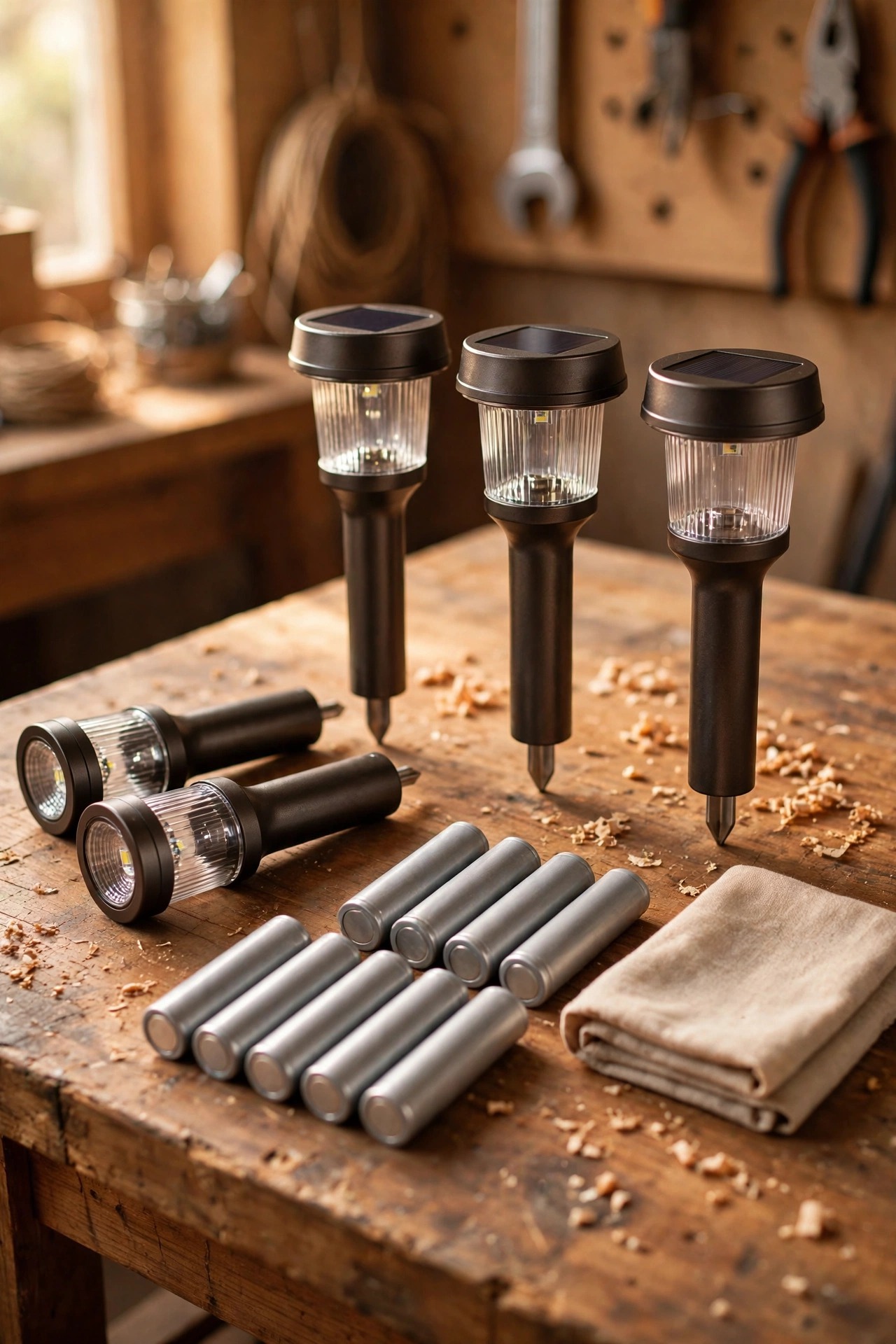
Solar is the third path: fixtures that never touch the grid at all. The honest accounting is that the electricity is free but the hardware is not — budget $2 to $4 per light every year or two for replacement batteries, and expect shorter run times in December. My breakdown of what solar lights cost over the long term does that math in detail. For path lighting in a sunny yard, solar usually wins on total cost; for bright uplights and security floods, wired LED on a timer is still the better tool.
How Much Electricity Does Outdoor Lighting Use at Your Rate?
Every number so far uses $0.17 per kWh, the rough national average for residential electricity in 2026. It is a fair planning number, but your actual rate might be eleven cents or thirty, and that swings every total in this guide. So here is how to find your real one — it takes one bill and thirty seconds.
Find the line that shows your total kilowatt-hours used for the month, then find the total amount due. Divide dollars by kilowatt-hours. If your bill says 900 kWh and $153 due, your true all-in rate is exactly $0.17. This method folds in the delivery charges, taxes and fixed fees that the printed per-kWh price leaves out, which makes it the right rate for deciding what a light actually costs you. Just note that dividing this way slightly overstates the saving from using less, since a slice of the bill is fixed fees that never change — close enough for lighting decisions.
Rates vary enormously. Parts of the Southeast and Pacific Northwest sit near $0.11 to $0.13. California and much of New England run $0.28 to $0.32, and Hawaii is higher still. Watch for time-of-use plans too: many charge the most for the early-evening hours, which is precisely when outdoor lights switch on, so a high-rate household saves even more by trimming hours.
The swap test shows why this matters. My 234-kWh LED yard costs about $26 a year at eleven cents and about $70 at thirty cents. The halogen version, at 1,338 kWh, costs about $147 at eleven cents and just over $400 at thirty. Same yard, same glow — your zip code decides whether leaving the halogens in place is a shrug or a car payment.
Where the Real Money Goes
After pricing every fixture we own, the ranking of what actually costs money surprised me, and it probably will not match your instincts. The pretty string lights and the dozen path lights are nearly innocent. The money leaks out in four specific places, in this order.
First, the forgotten legacy bulb. One 60-watt incandescent porch light burning dusk to dawn uses about 263 kWh a year — $44.68. That is more electricity than my entire nineteen-fixture LED yard uses on its timer. A single bulb, outspending a whole landscape. If you only fix one thing after reading this guide, make it the oldest bulb you own.
Second, the dusk-to-dawn habit. Hours multiply everything. My yard costs $40 a year on a six-hour timer and $76 on photocells, with not one watt changed. Every fixture you leave running until sunrise roughly doubles its line in the ledger.
Third, halogen holdouts. Each 35-watt halogen spot on the timer costs $13.03 a year where a 9-watt LED costs $3.35. Four remaining halogen uplights quietly add about $39 a year over their LED equivalents — a slow leak that runs for years because the bulbs still work.
Fourth, standby draw: the transformer sipping $5 to $12 a year while doing nothing, covered two sections back. And for perspective on what is not the problem: one evening of a 1,500-watt space heater, four hours, costs about $1.02 — more than nine full nights of my entire LED yard. Outdoor lighting, done in LED and on a timer, is one of the cheapest pleasures a house offers.
What It Costs in 2026
Here is the whole guide compressed into the numbers most readers came for — yearly electricity costs at the average $0.17 rate, with fixtures on a six-hour nightly timer unless noted. Swap in your own rate from the section above and these ranges scale in proportion.
A single LED porch light: about $2 to $4 a year on a timer, or $4 to $7 burning dusk to dawn. A small LED yard of ten to twelve fixtures: roughly $20 to $30 a year. A full LED landscape like my nineteen-fixture example: $35 to $60 a year depending on hours. A comparable halogen landscape system: $150 to $250 a year. And one legacy security light — a halogen or incandescent flood left on dusk to dawn — runs $15 to $45 a year, each, which is why two forgotten floods can outspend an entire modern yard.
The non-electric costs deserve a line in the summary too, because they are where ownership money really goes. Halogen replacement bulbs run $4 to $8 apiece and may be needed yearly. LED fixtures typically go a decade before replacement. A quality low-voltage transformer costs $60 to $150 and usually lasts ten years or more. Solar lights swap their $2 to $4 batteries every year or two. Add it all together and the honest verdict is this: for an LED yard, the electricity is the smallest bill you will ever pay for it. The fixtures were the investment; the glow itself costs about a dime a day.
Frequently Asked Questions
Do outdoor LED lights raise the electric bill very much?
Honestly, no. A 10-watt LED running six hours a night costs about $3.72 a year at the average rate — roughly 31 cents a month. Even a full yard of nineteen LED fixtures lands near $40 a year. If your bill jumped, the cause is almost never LED outdoor lighting; look at dusk-to-dawn schedules and any remaining halogen or incandescent bulbs first.
How much does it cost to leave a porch light on all night?
It depends entirely on the bulb. An old 60-watt incandescent left on for an average eleven-and-a-half-hour night costs about 12 cents a night, roughly $45 a year. A 9-watt LED in the same socket costs about 2 cents a night, near $6.40 a year. Nights run longer in December and shorter in June, so think of those as yearly averages rather than exact nightly bills.
Do solar lights really cost nothing to run?
On grid electricity, yes — a solar fixture draws zero kilowatt-hours from your bill, so its running cost is genuinely $0. The honest costs sit elsewhere: replacement batteries at $2 to $4 per light every year or two, dimmer output on short winter days, and a shorter overall lifespan than wired fixtures. For sunny path lighting the trade usually wins; for bright security light, wired LED is cheaper over time.
Does a landscape lighting transformer use electricity when the lights are off?
Yes, a little — and it adds up precisely because it never stops. Most transformers draw 3 to 8 watts on standby, around the clock, which works out to roughly $5 to $12 a year at the average rate. A built-in timer does not always cut that draw. A smart plug or switched outlet that removes power outside lighting hours is the clean fix.
Conclusion
So, how much electricity does outdoor lighting use? In a modern LED yard, about a dime a day — $40 a year for nineteen fixtures on a timer, at average rates. In a halogen yard, or one lit dusk to dawn out of habit, the same glow can cost five times that, and almost all of the difference comes down to three levers you now know how to price: watts, hours and your own rate. Swap the oldest bulbs first, put the system on a timer, and let the formula — watts times hours, divided by a thousand, times your rate — tell you the truth about every light you own. Then browse the rest of our lighting ideas here on the site and build the pretty version of that yard, knowing exactly what it costs to keep it glowing.