Can I tell you the question I get asked more than any other? It usually comes from a friend standing in the lighting aisle, phone in hand, staring at a wall of boxes covered in numbers. They want to know how many lumens for outdoor lighting their home actually needs — and honestly, I don't blame them for being confused. For decades we all shopped by watts, and watts told us almost nothing about brightness. Now every box shouts lumens, kelvins and "daylight equivalent," and the numbers swing wildly from 50 to 5,000. Here's the good news: once you know the right range for each area of your yard, the guessing disappears. A porch, a path and a driveway each have a sweet spot, and brighter is not always better — sometimes it's just glare. In this guide I'll walk you through the exact lumen ranges I use at my own house, area by area, with simple charts you can screenshot before your next hardware store run. By the end, you'll know precisely what to buy, where it goes, and which common mistakes leave homes looking dim or blinding.
The Short Answer
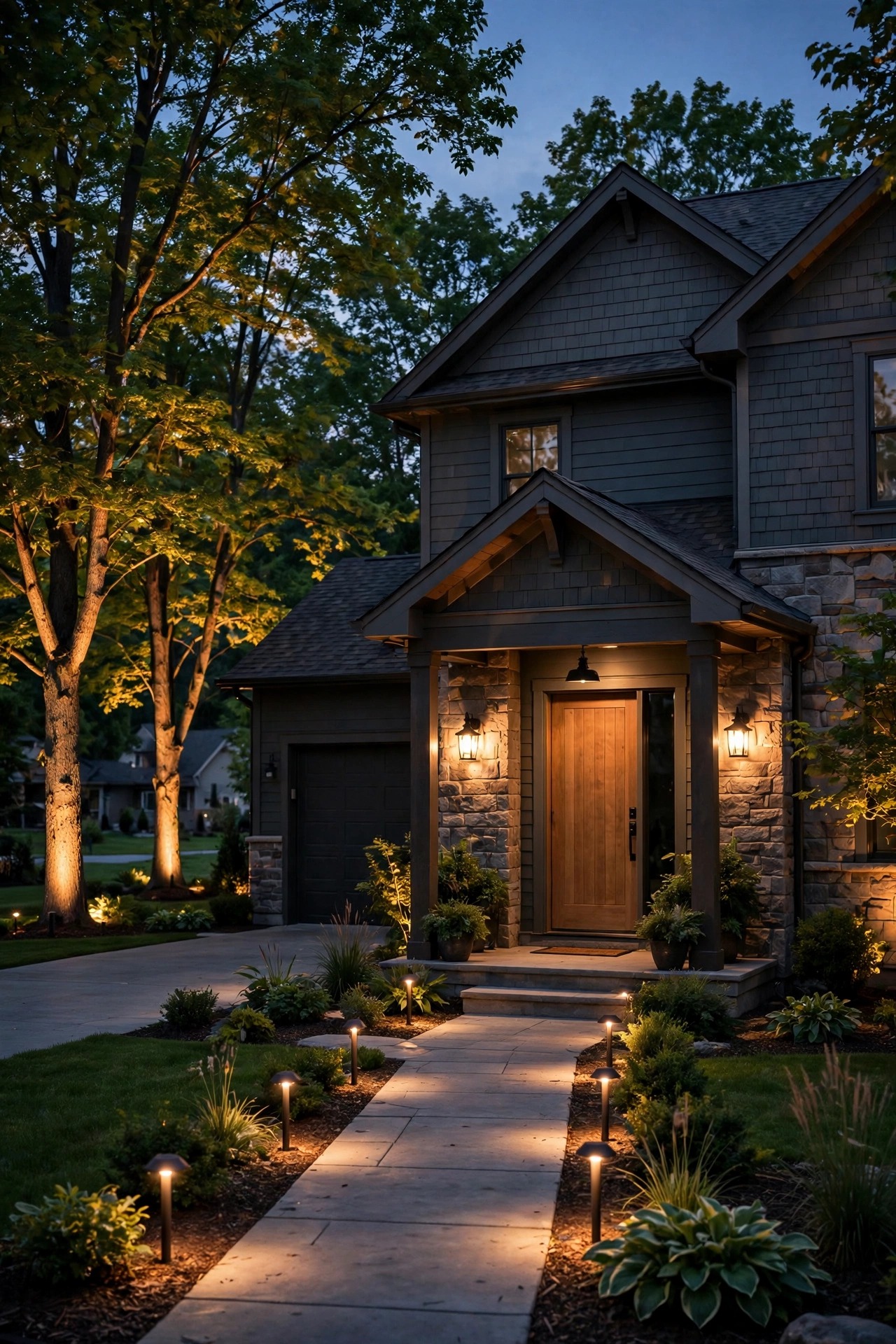
Short on time? Here are the ranges I start with. Porch and entry lights: 800–1,700 lumens per fixture. Path and walkway lights: 100–300 lumens each, spaced so the pools of light just touch. Driveway: 1,500–4,000 lumens total from bollards, posts or a garage flood. Deck and patio ambient light: 300–800 per fixture, layered in zones. Accent spots on trees and house features: 300–1,000 each. Security floods: 1,300–2,500, aimed carefully. And here's the secret: placement matters more than raw power. Three modest fixtures almost always beat one blazing one. The charts below break it all down.
How Many Lumens for Outdoor Lighting? Start With the Master Chart
When neighbors ask me for a number, this is the chart I sketch on a napkin. It gives you a per-fixture range and a realistic total for each zone, because the two numbers do different jobs. The per-fixture figure tells you what to buy; the total tells you whether the whole area will feel balanced once everything is switched on. A few notes before you use it. First, these are warm-white LED numbers — an 800-lumen bulb at 2700K feels gentler than the same 800 lumens at 5000K, and I'll explain why later. Second, totals assume a typical suburban lot; a long rural driveway or a big two-story facade will stretch the top of the ranges. Third, when in doubt, buy in the middle of a range and put the fixture on a dimmer or a timer. It is far easier to soften light you have than to invent light you didn't install.
| Area | Lumens per fixture | Typical total | Notes |
|---|---|---|---|
| Porch and entry | 800–1,700 | 800–3,400 | One sconce, or two gentler ones flanking the door |
| Path and walkway | 100–300 | 600–2,400 | Spaced 6–8 feet apart, staggered |
| Driveway edges | 300–800 | 1,500–4,000 | Bollards, posts or low markers |
| Deck and patio | 300–800 | 900–2,400 | Layered ambient plus task light |
| Garden accent | 200–500 | Varies | Shrubs, statuary, water features |
| Tree uplighting | 300–1,000 | 600–2,000 | Tall trees may need 1,500 per spot |
| Security flood | 1,300–2,500 | 1,300–5,000 | Motion-activated, aimed down |
| String lights | 50–150 per bulb | 500–2,000 | Ambience only, never task light |
Lumens vs. Watts: Why the Old Shopping Rules Broke
Here's the plain-English version I wish someone had given me years ago. Watts measure how much electricity a bulb uses. Lumens measure how much light actually comes out. With old incandescent bulbs the two marched together, so "60-watt brightness" became shorthand — a 60-watt incandescent made about 800 lumens, a 100-watt about 1,600. LEDs broke the relationship in the best possible way: a modern LED makes those same 800 lumens using just 8–10 watts, and a 1,600-lumen LED sips 14–17 watts. That is why "equivalent wattage" labels cause so much trouble. One brand's "60-watt equivalent" is 750 lumens, another's is 840, and both are technically telling the truth. My rule now: ignore watts completely when you shop, and ignore the equivalent claim too. Flip the box over and find the actual lumen number, printed in the Lighting Facts panel. That single number, matched against the chart above, decides whether a bulb belongs on your porch or back on the shelf. If you want the deeper version — including how halogen and CFL numbers compare — I walk through it in my complete lumens and watts guide, but honestly, lumens alone will get you 95% of the way there. One last translation for the garage shelf: that old 75-watt bulb you loved was about 1,100 lumens, so match it, don't mourn it.
Porch and Entry Lighting: 800–1,700 Lumens Gets It Right
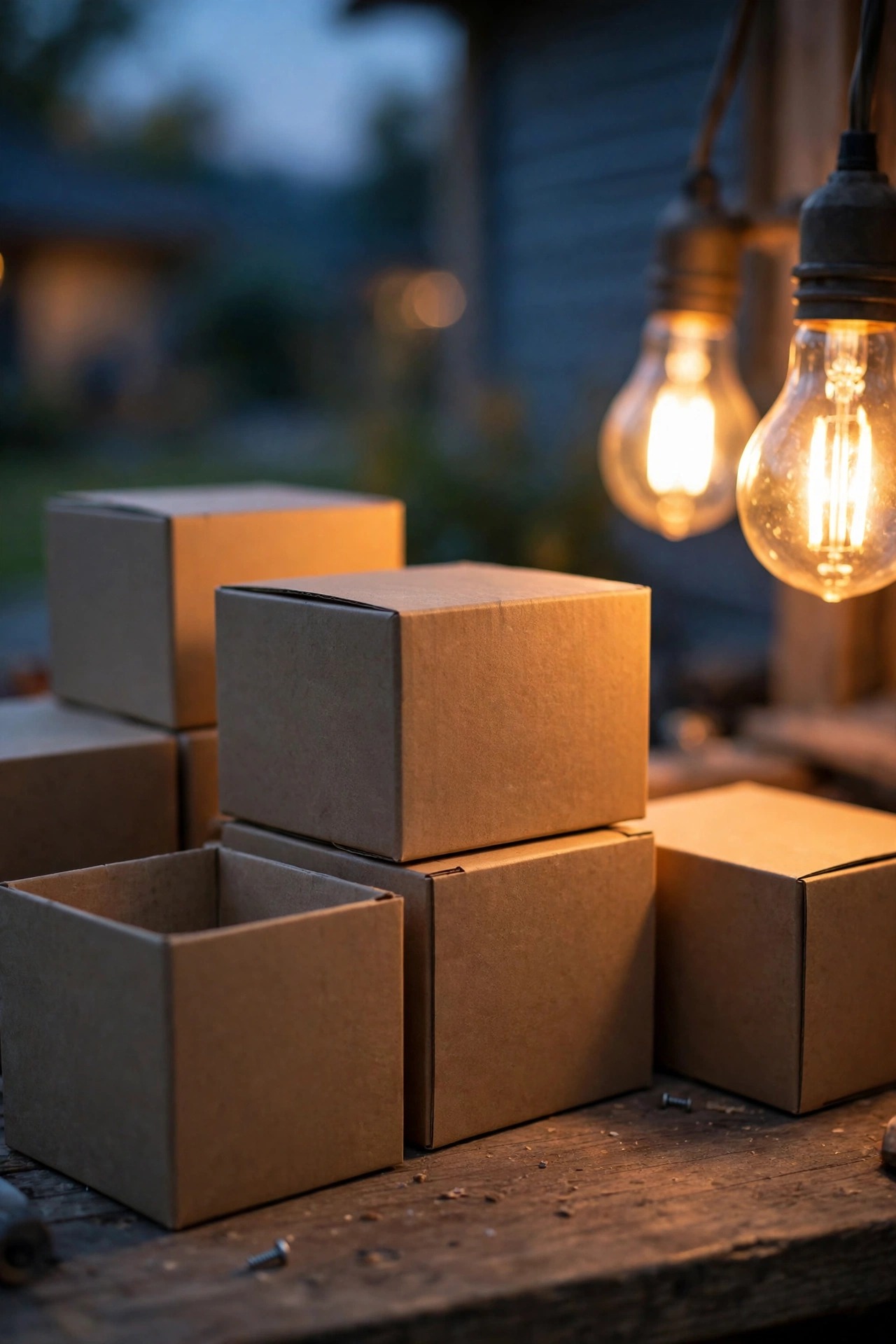
Your front door is the face of your house, and it's also a working space — you're finding keys, reading house numbers, greeting guests and watching your step. That is why the porch needs the strongest ambient light of any decorative zone: 800–1,700 lumens from a single fixture beside the door. If you have sconces flanking the door, split the job — 400–800 lumens each gives you symmetry without the interrogation-room glare of one blazing bulb. A covered porch with a ceiling fixture can sit at the lower end, around 800–1,200, because the ceiling bounces light back down and softens everything. Exposed, open porches need the higher end since light escapes into the night. One thing nobody tells you: bulb shape changes the result as much as lumens do. A clear filament bulb at 800 lumens throws sparkle and shadows in every direction, while a frosted bulb at the same rating feels a full step calmer. For steps down from the porch, add small 50–150 lumen step lights rather than cranking the main fixture higher. And if your porch light is on a dimmer — which I always recommend — buy toward 1,700 and dial it down. You can soften light you have; you can't invent light you didn't install.
Path and Walkway Lighting: 100–300 Lumens per Fixture
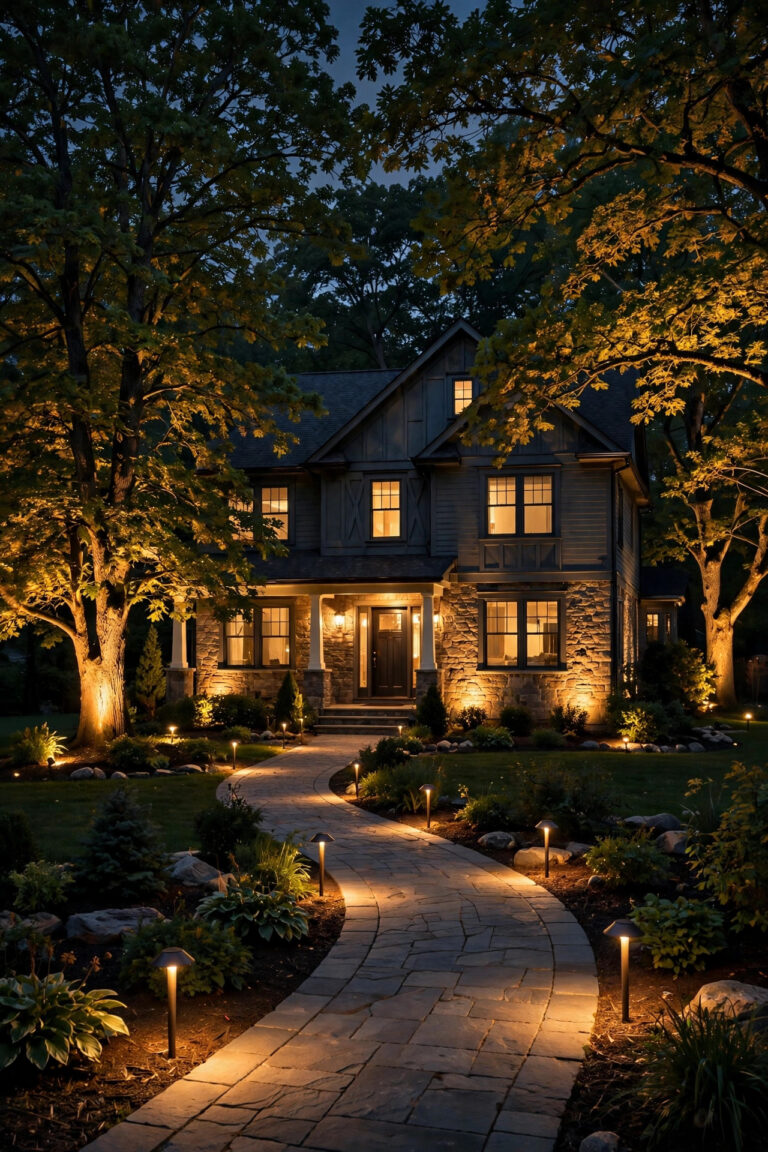
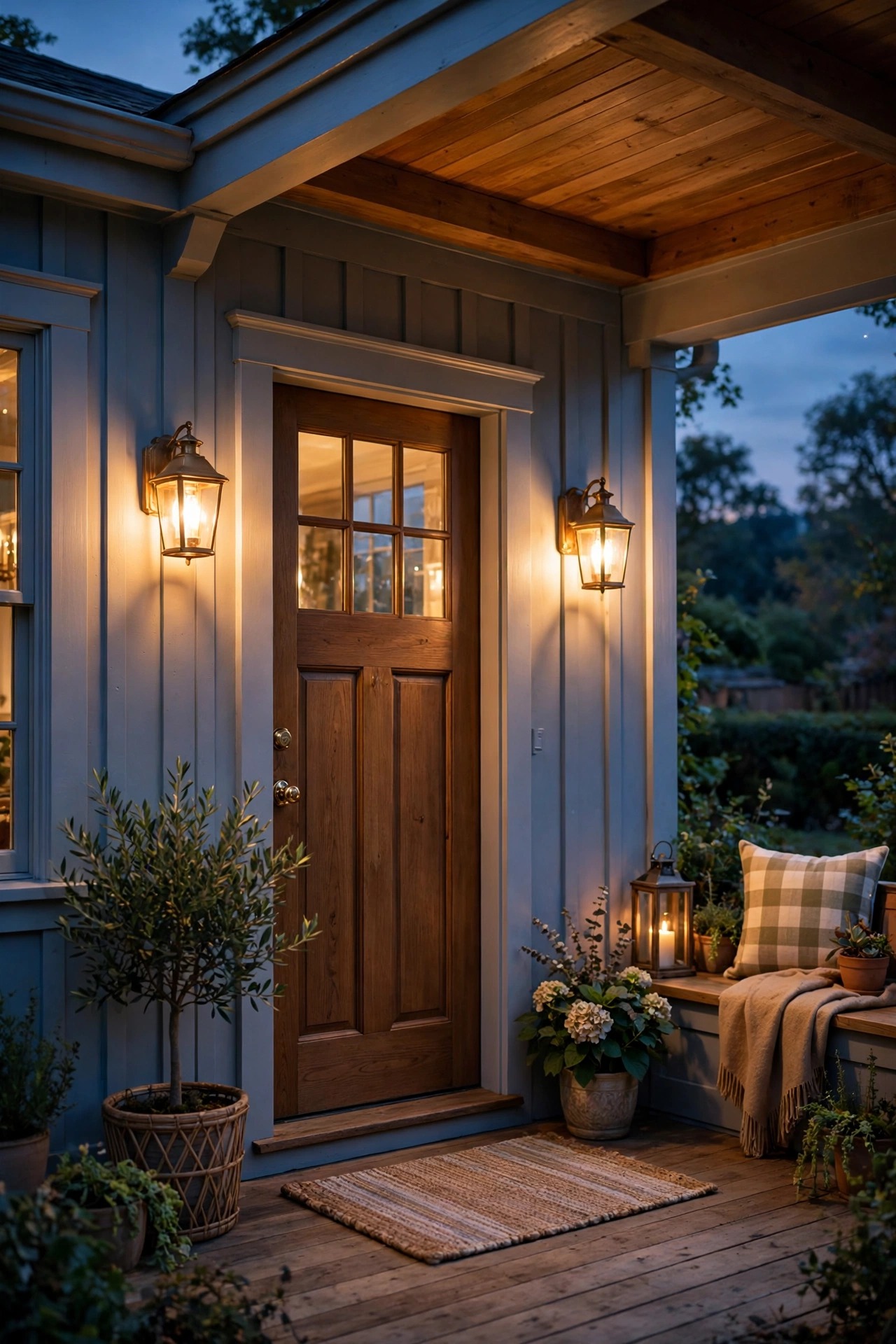
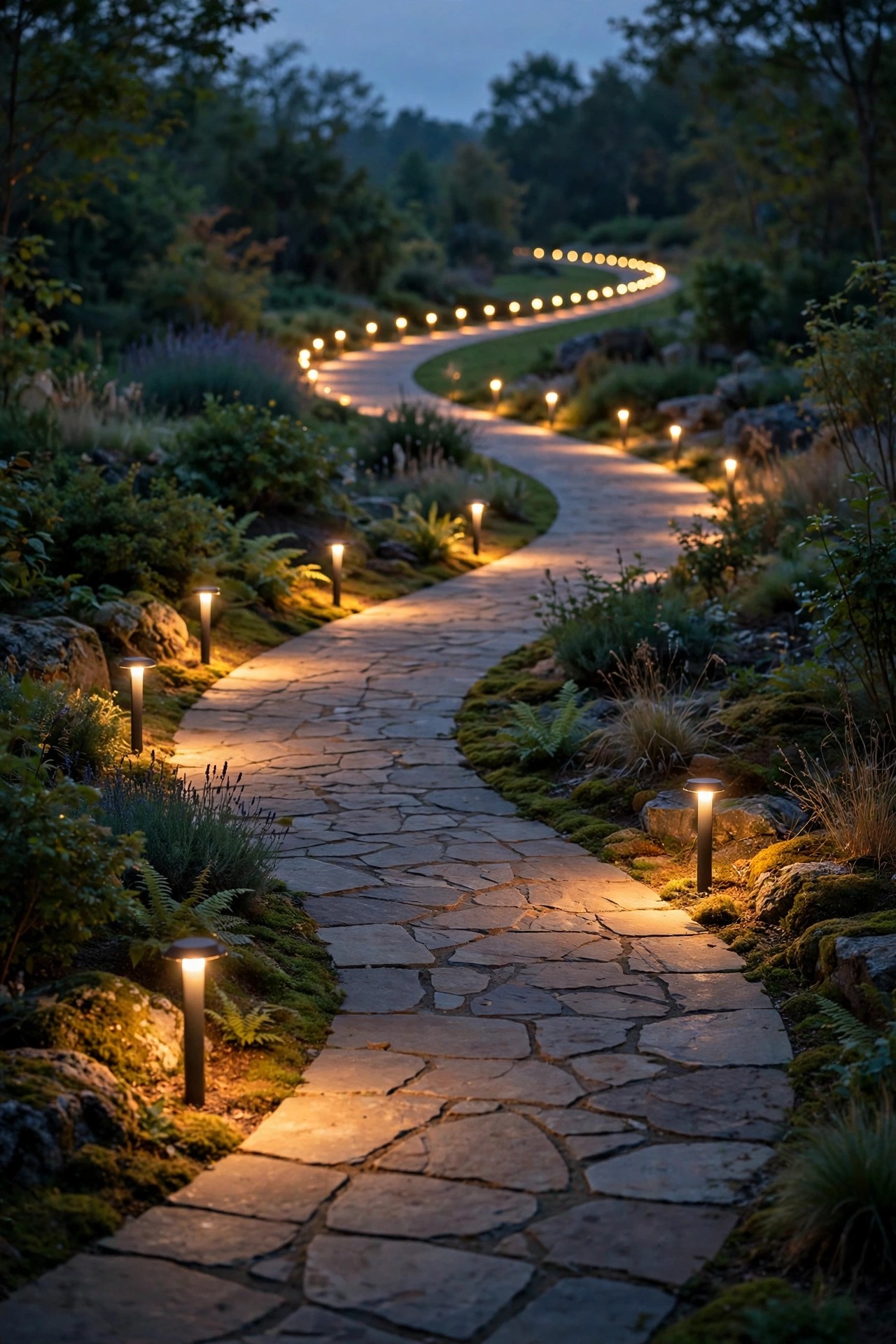
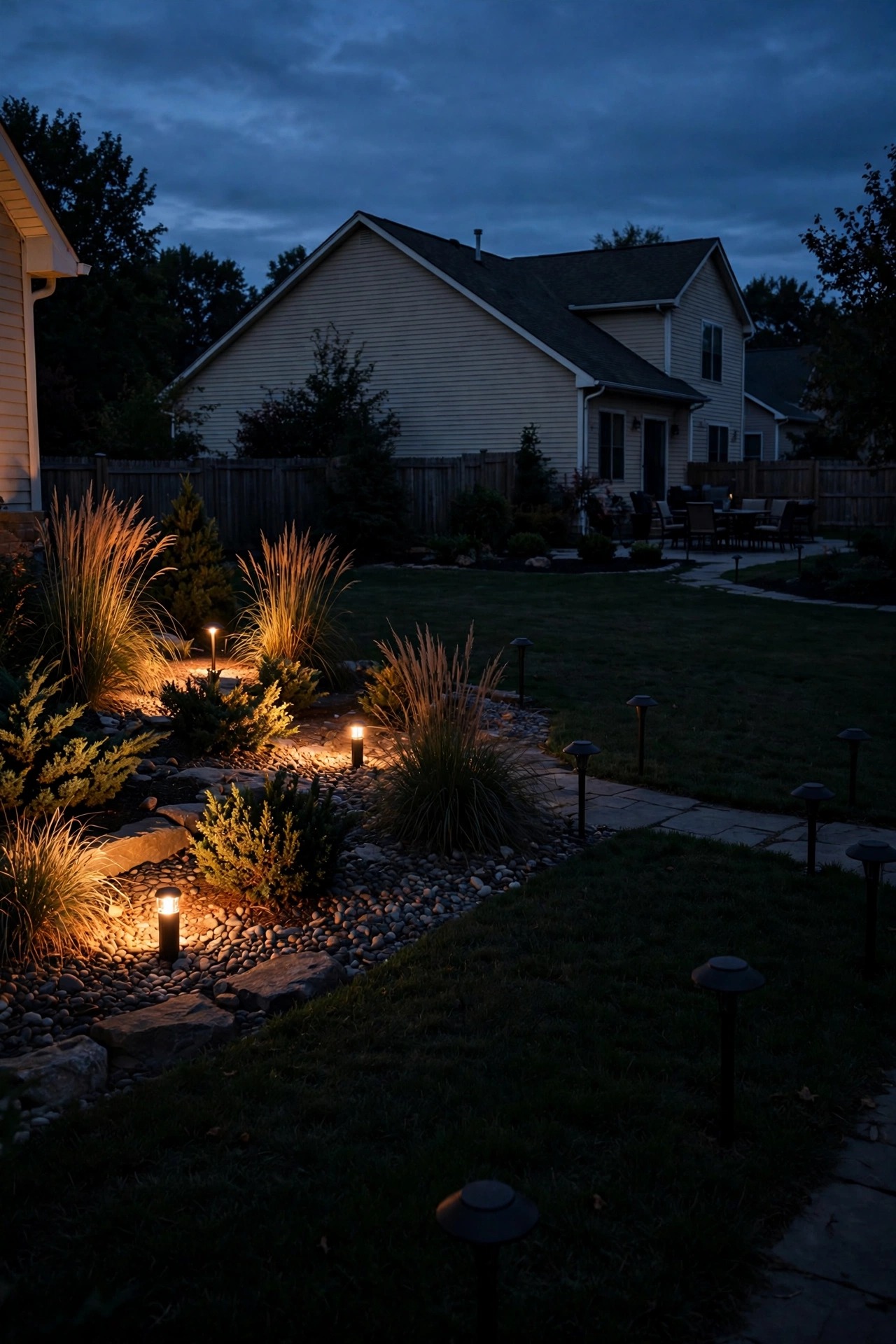
Path lights are where most people overspend on brightness and underspend on thought. The sweet spot for a low-voltage path fixture is 100–300 lumens — enough to define the edge of the walk and show a guest where the surface changes, without turning your front walk into a landing strip. Here's the honest truth about the cheap solar stakes you'll see everywhere: most produce 20–100 lumens, which reads as a dotted glow rather than actual guidance light. They're fine as markers along a flower bed, but if someone needs to see a step or an uneven paver, wired fixtures in the 150–300 range do the real work. Spacing matters as much as output. Set fixtures 6–8 feet apart, staggered on alternating sides, so the pools of light just kiss. At 200 lumens each, six fixtures give you a 1,200-lumen total that feels generous and calm. Doubling the lumens instead of adding fixtures creates the classic mistake I see constantly: bright polka dots separated by darkness, which actually makes the dark stretches feel darker because your eyes keep readjusting. Gentle, even, overlapping light is the goal — the path should read as one soft ribbon, not a row of interrogation spots.
Driveway Lighting: 1,500–4,000 Lumens Where It Counts
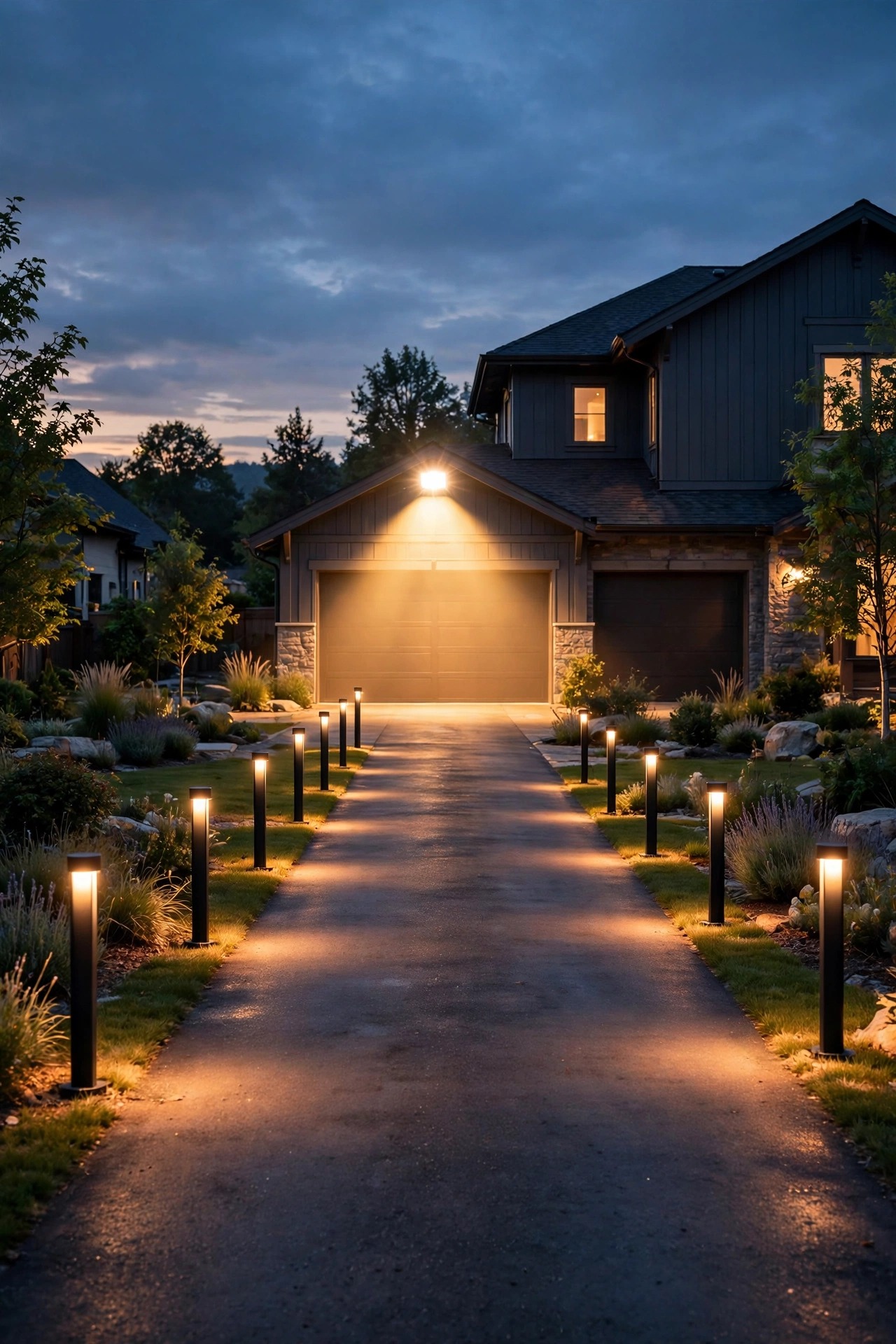
A driveway is a task area — you're backing out at night, guests are parking, kids are crossing it with bikes — so it earns a bigger total: 1,500–4,000 lumens spread across the run. The key word is spread. Bollards or short posts at 300–800 lumens each, placed along both edges of a long drive, outline the corridor beautifully and keep headlights from doing all the work. A single garage-mounted flood at 1,500–3,000 lumens on a motion sensor handles the parking pad itself, and it should be aimed down at the concrete, never out at the street where it blinds drivers and annoys the neighbors. For a standard two-car suburban driveway, I usually land here: two bollards at the entrance around 500 lumens each, plus the motion flood over the garage. That's roughly 2,500 lumens total and it feels safe without feeling commercial. Long rural driveways are a different animal — zone them. Bright markers at the entrance and any curve, then let the straight middle run stay dimmer. One practical note from my own snowy-climate friends: keep fixtures back from the plow line, or choose low-profile markers, because the most beautifully lit driveway in the neighborhood won't survive February if the fixtures sit where the snow goes.
Deck, Patio and Yard Lighting: Layer the Lumens
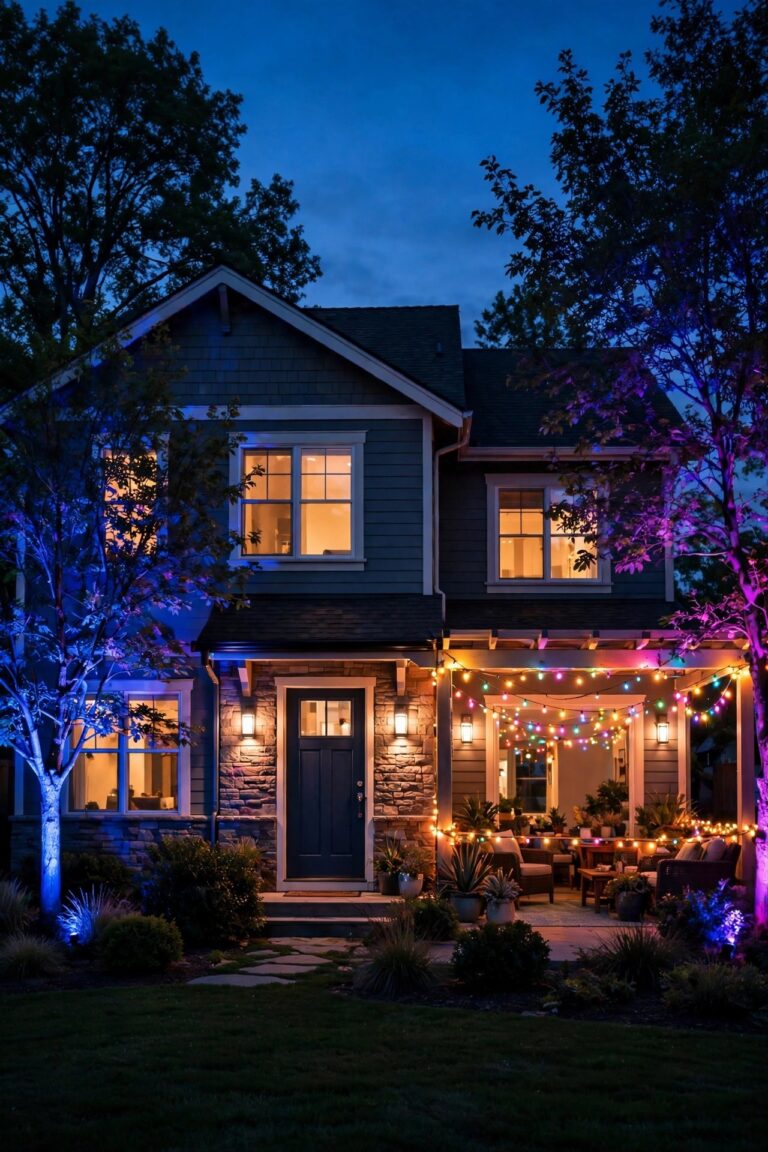
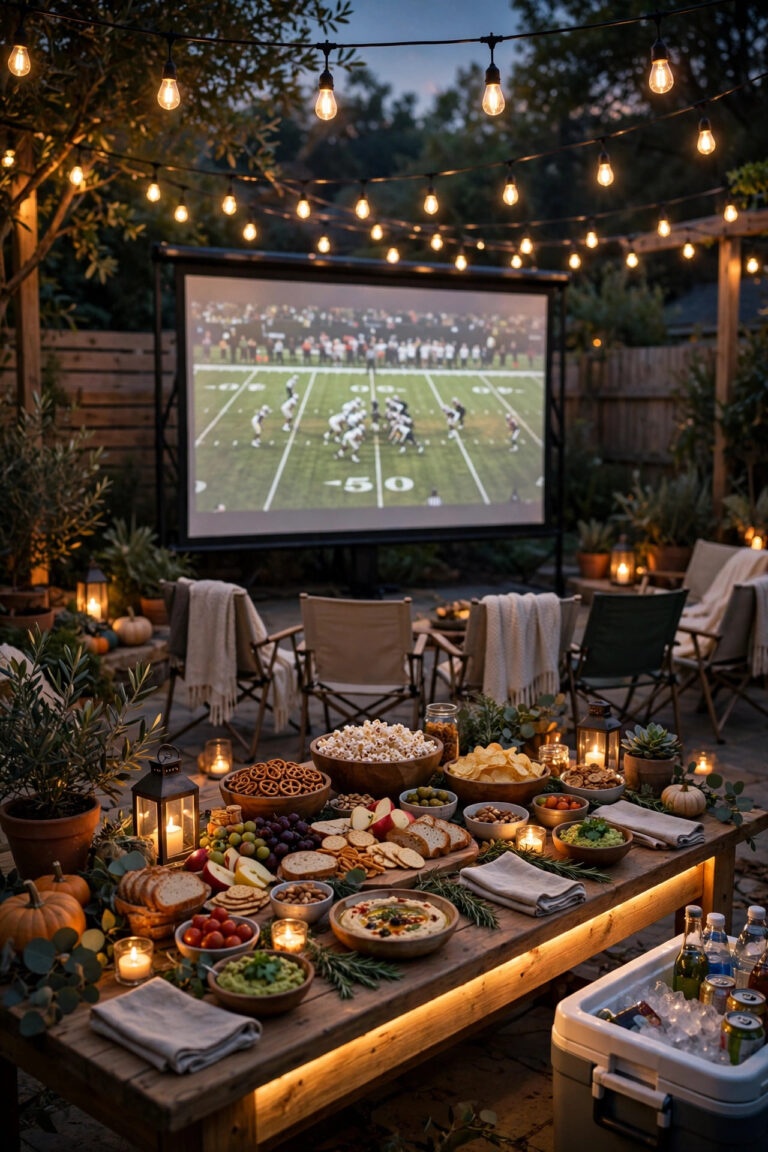
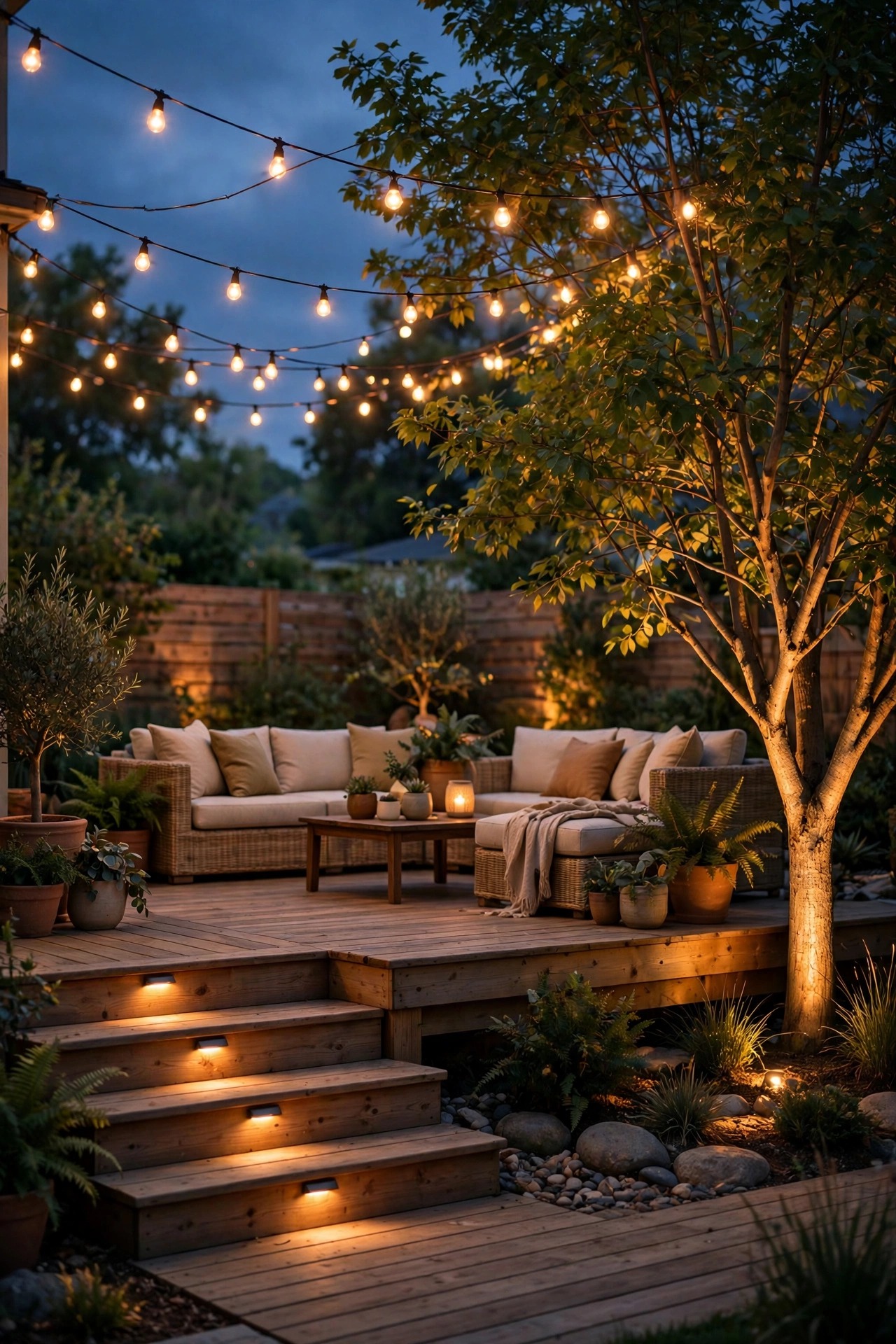
Out back, the goal changes completely. Nobody wants to eat dinner under stadium light, so backyard brightness is about layers, each one modest on its own. Ambient light — string lights, a soft wall fixture, a shaded table lamp — works at 300–800 lumens per source, and string lights contribute just 50–150 lumens per bulb, which is exactly why they feel so magical: thirty small glows instead of one harsh one. Task light is the exception. At the grill or an outdoor kitchen counter, you genuinely need 800–1,500 focused lumens to see whether the chicken is done, and I suggest putting that fixture on its own switch so it only blazes when you're cooking. Step and deck-rail lights at 50–150 lumens each handle safety without touching the mood. For the open yard itself, resist the urge to flood it. A couple of 400–800 lumen accents on your best trees and a dim wash on the fence line will make the whole space feel deep and finished, while a single 4,000-lumen flood flattens it into a parking lot. Zones on separate timers or smart plugs let the yard evolve through the evening: brighter at dinner, embers by ten. Think of it like indoor lighting: nobody lights a living room with one ceiling bulb anymore, and your patio deserves the same respect.
Accent, Uplighting and Trees: 300–1,000 Lumens per Spot
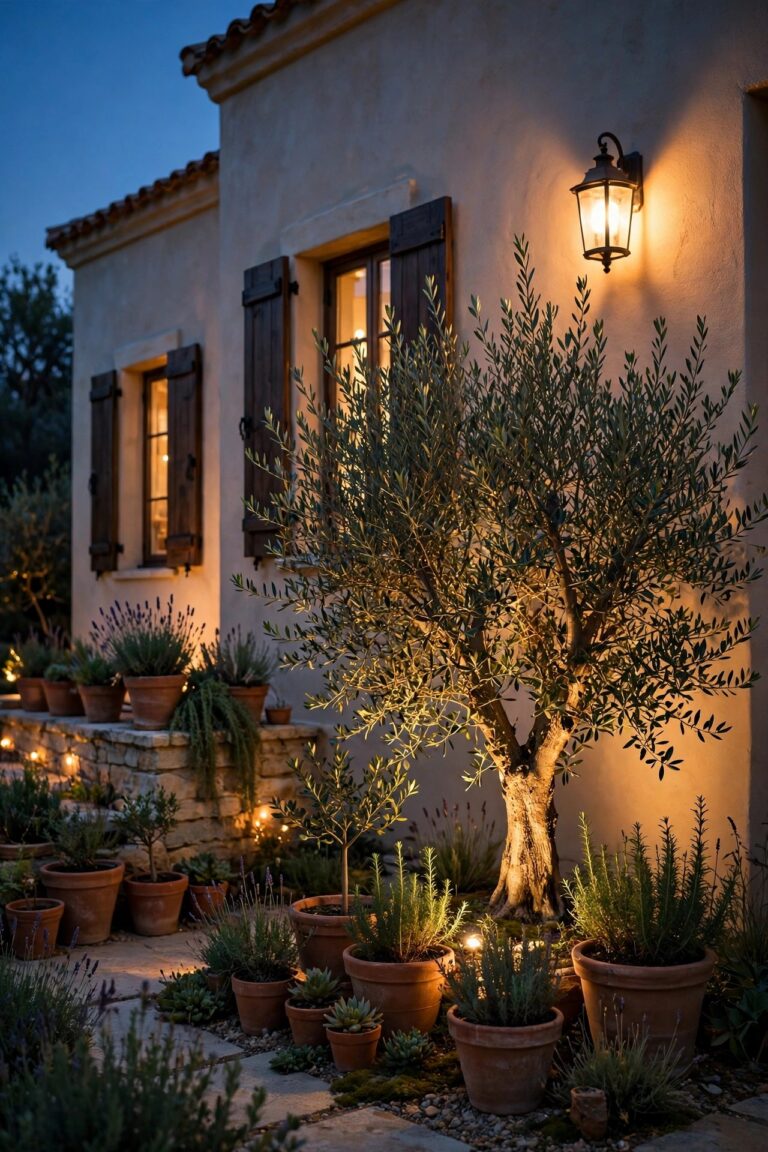
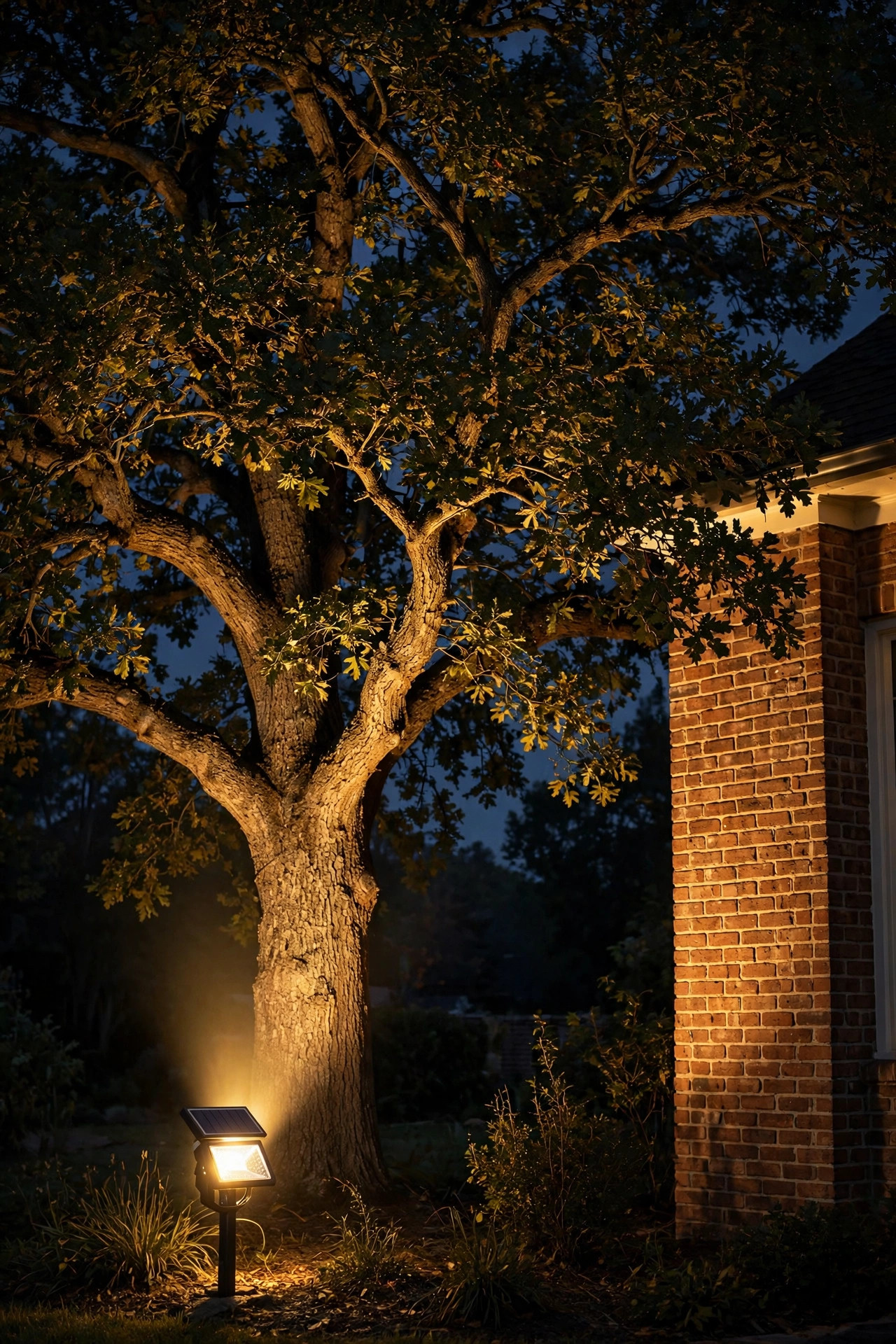
Accent lighting is where lumens get fun, because the right number scales with the size of what you're lighting. A small shrub or garden statue needs only 200–400 lumens in a tight beam. A medium ornamental tree — say 12–15 feet — wants 400–800. A mature oak or a two-story facade can honestly use 800–1,500 per spot, sometimes two fixtures crossing from different angles. But here's what the box won't tell you: beam angle matters as much as raw lumens. A 500-lumen spot in a narrow 15-degree beam will punch a bright column up a trunk, while the same 500 lumens in a 60-degree flood spreads into a soft wash — same number, completely different picture. As a rule, narrow beams for trunks and columns, wide beams for canopies and walls. Dark surfaces also drink light: a brick or dark-sided house needs roughly a third more lumens than white siding to achieve the same effect, because the surface reflects so much less back. Moonlighting — fixtures mounted high in a tree shining down through the branches — is the one accent job where I go gentler, 200–400 lumens through the canopy, because you're imitating moonlight, not staging a show. When you're standing in the store, I suggest buying one fixture first and testing it against your biggest tree before committing to a full set.
Security and Flood Lighting: Bright, But With Restraint
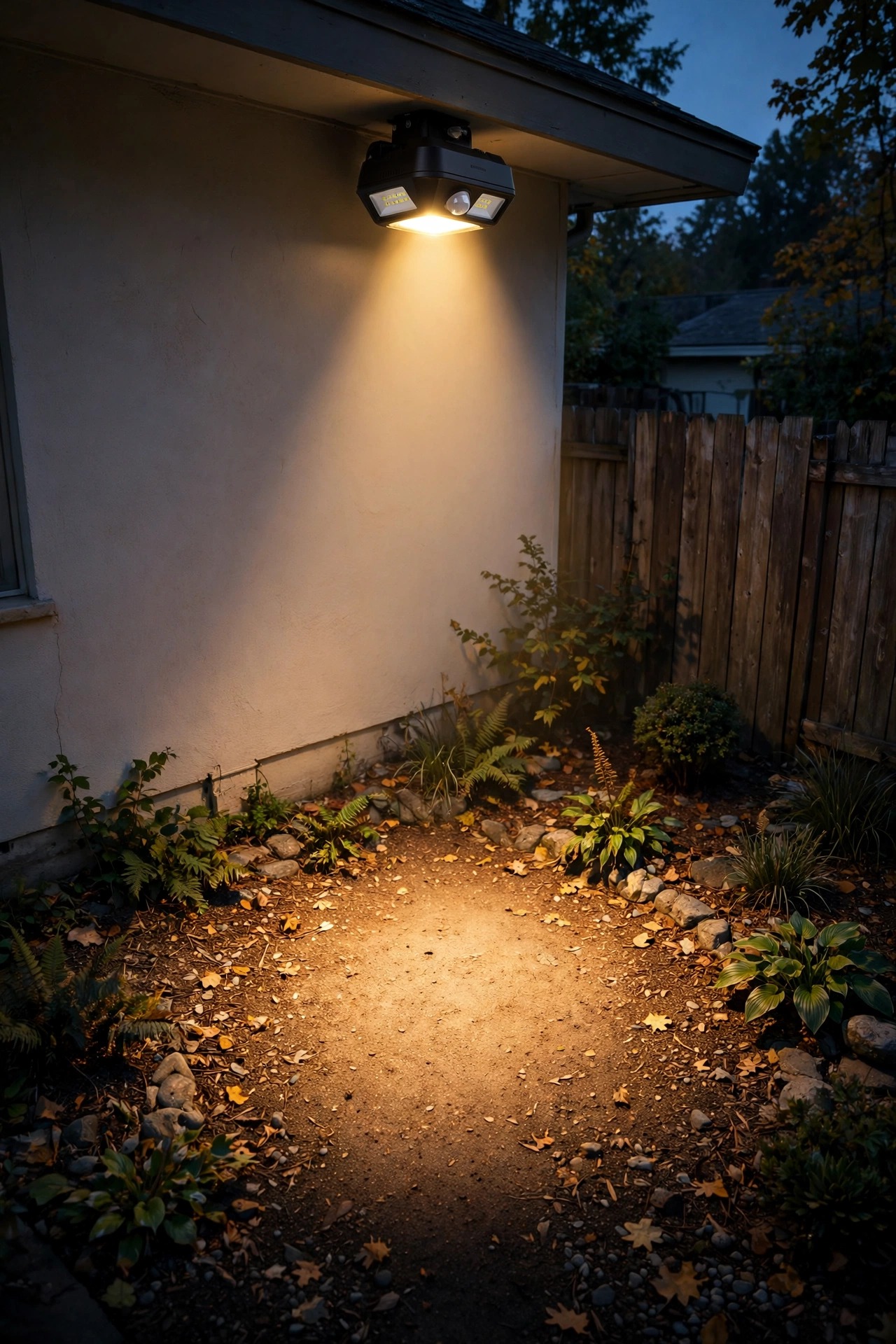
Security lighting is the one place people assume more lumens is always better, and it's the place I push back hardest. For a typical residential yard, 1,300–2,500 lumens from a motion-activated flood is genuinely plenty — that's the output of the old twin 100-watt halogen floods most houses were built with. Yes, fixtures advertising 5,000, 8,000, even 10,000 lumens exist, but in my experience they mostly buy you three things: glare that blinds your security camera right when it matters, light trespass arguments with the neighbors, and a yard so harshly lit that the shadows beyond it become perfect hiding places. What actually deters people isn't stadium brightness; it's the sudden change — a dark yard snapping to 2,000 lumens as someone crosses the sensor. Two modest heads aimed at the driveway approach and the side gate beat one monster aimed at the whole lot. Aim everything down at 45 degrees or less, keep the beam on your own property, and test it from your neighbor's sidewalk before you call it done. If a flood washes out your camera feed with a white flare, drop a lumen level, not the other way around. Also check your local rules — many towns now cap residential flood brightness or require shielded fixtures, and a quick look at the ordinance can save you a redo.
Color Temperature Changes How Bright Light Actually Feels
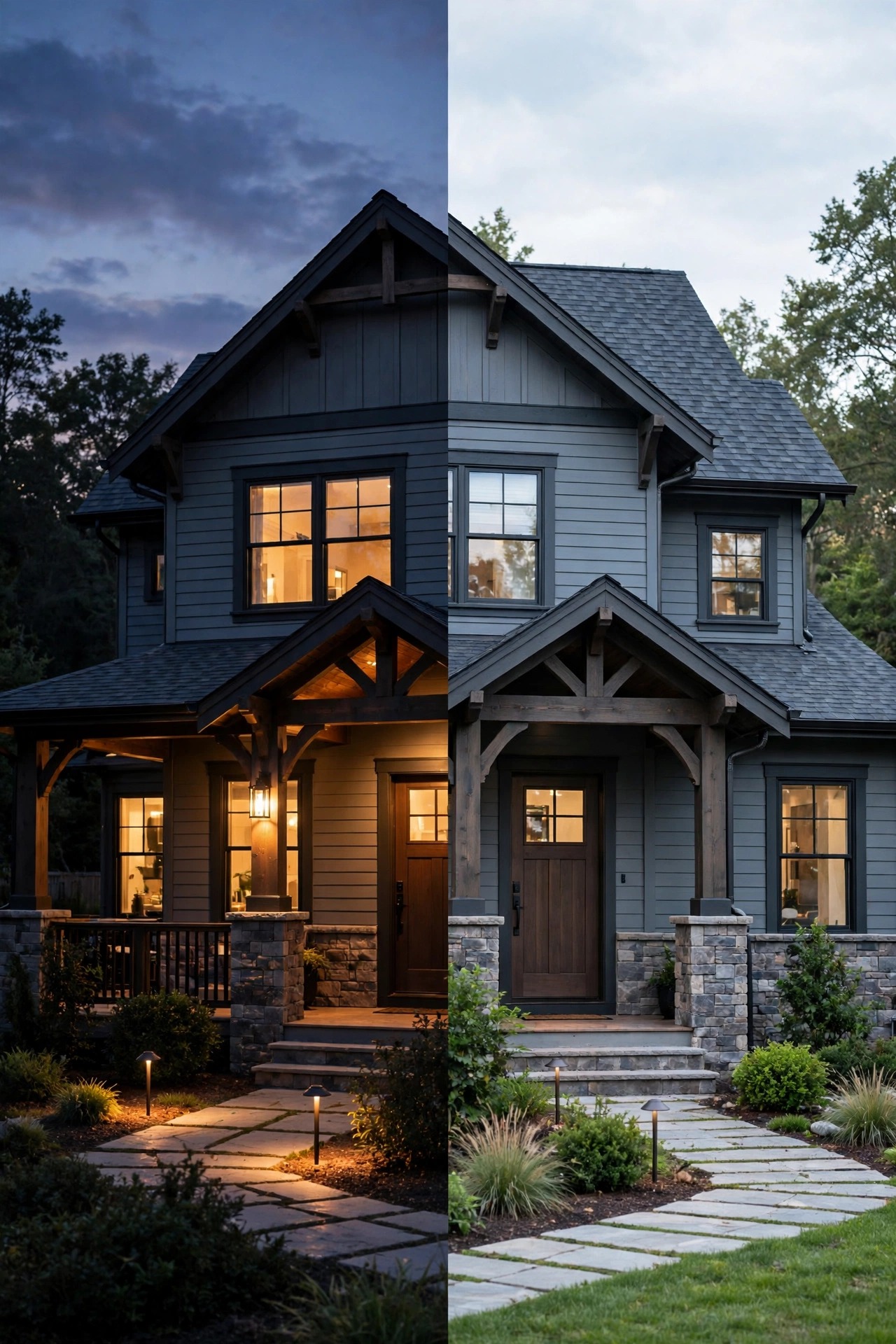
Here's a wrinkle that surprises almost everyone: two bulbs with identical lumens do not look equally bright. A 2700K warm-white bulb casts that golden, candlelit glow most of us love on a home, and your eyes read it as soft. A 5000K daylight bulb at the exact same lumens reads noticeably harsher and "brighter," partly because cooler light scatters differently in the eye and partly because it feels institutional — like a parking garage. This is why my chart numbers assume warm light around 2700–3000K. If you prefer a crisper 4000K for a modern house or a work area, you can often buy one step lower in lumens and get the same perceived brightness. The bigger sin, though, is mixing temperatures. A warm porch sconce next to a blue-white flood makes both look wrong — the sconce turns orange, the flood turns icy — and no lumen adjustment fixes it, because the problem is color, not quantity. Pick one temperature per sightline and hold it across every fixture you can see at once. I go deep on choosing between 2700K, 3000K and 4000K in my outdoor color temperature guide if you're mid-renovation and deciding for the whole house. My own home sits at 2700K from the porch sconces to the last path light, and that consistency is honestly half the reason it looks good.
The Bulbs Behind the Numbers: Picking the Right LED
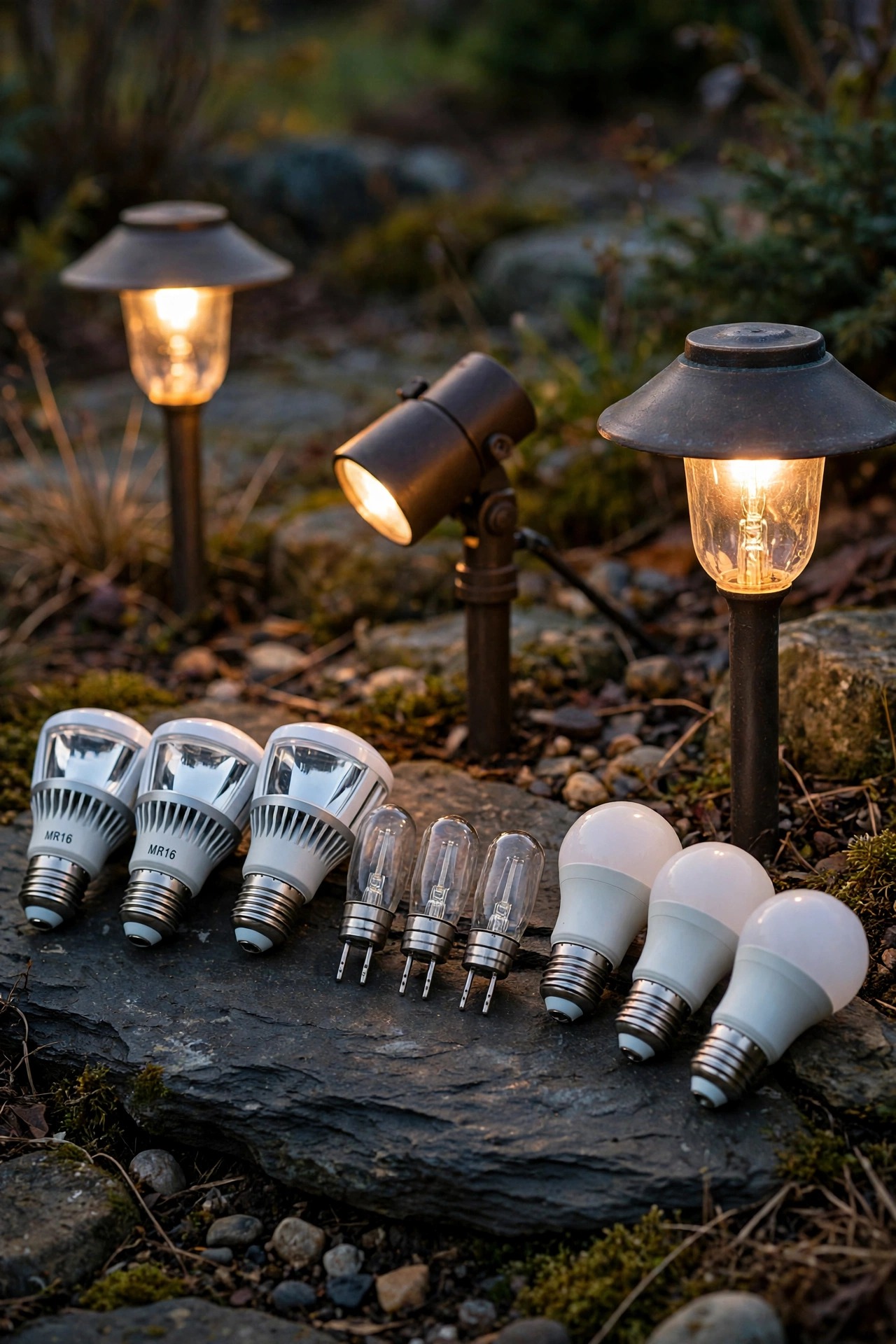
Charts are only useful if you can translate them into actual bulbs, so here's the quick field guide. For low-voltage landscape fixtures, MR16 bulbs typically run 200–600 lumens and G4 bi-pins 100–300 — which is why path lights cluster in the range they do. Standard screw-in A19 LEDs for porch fixtures come in 450, 800, 1,100 and 1,600 lumen steps, roughly matching old 40, 60, 75 and 100-watt bulbs. Flood and PAR bulbs for security fixtures start around 1,300 and climb fast. The decision that matters most: integrated LED fixtures versus replaceable bulbs. Integrated fixtures print one honest total-lumen number and tend to weather better, but when the light dies you replace the whole fixture. Bulb-based fixtures let you adjust brightness later for a few dollars — genuinely useful when you're still dialing in a zone. My habit: integrated for in-ground and hard-to-reach fixtures, replaceable bulbs anywhere I might change my mind. Whatever you choose, buy the lumen output in writing on the box, not the "equivalent" claim on the front. I keep a friendly guide to landscape bulb types bookmarked for the base-and-shape questions, because the wrong base in the right lumens is still the wrong bulb. And if a package hides its lumen rating in microscopic type, that tells you everything you need to know — put it back on the shelf.
Step-by-Step: How Many Lumens for Outdoor Lighting Does Your Yard Need?
Ready to turn the chart into a shopping list? This is the exact process I use at my own house. (1) Sketch your yard in zones — porch, paths, driveway, deck, accents, security — just boxes on paper. (2) Assign each zone a total from the master chart: a typical front yard might be 1,700 porch, 1,200 path, 2,500 driveway. (3) Decide fixture counts per zone; divide the zone total by the fixture count to get your per-fixture target. (4) Check what you already own — pull one existing bulb and read its lumen rating, because half the time the fix is swapping 450-lumen porch bulbs for 800s, not buying fixtures. (5) Buy for one zone first and live with it for two nights. Brightness perception shifts once your eyes adapt, and a week of evenings tells you more than an afternoon of math. (6) Adjust with dimmers, lampshades or one-step bulb swaps before adding fixtures. Most yards end up within 10–20% of the chart on the first pass, and this loop gets you the rest of the way without a single return trip. (7) Finally, write the winning numbers on a card and tape it inside a kitchen cabinet — future you, standing in that aisle next spring, will be so grateful.
What It Costs in 2026
Here's the comforting part: lumens themselves are nearly free now. A quality LED A19 bulb costs $3–$8, so moving your porch from 450 to 800 to 1,600 lumens costs a few dollars per step, not a renovation. Low-voltage MR16 and G4 LED bulbs run $6–$15 each, and a full path-light refresh for six fixtures is usually $40–$90 in bulbs alone. Fixtures are where the money lives: decent path lights run $25–$60 each, bollards $60–$150, and a good motion flood $40–$120. Running costs are almost a rounding error. An 800-lumen LED draws about 9 watts; run it five hours a night and you've used roughly 16 kilowatt-hours in a year — about $2.50–$3 at average US rates. Even a whole 3,000-lumen layered yard on LED typically costs $15–$25 a year to operate. Solar fixtures cost nothing to run but cap out at accent-level brightness. The honest summary: budget for fixtures and installation, choose lumens freely, and never let a $4 bulb decision talk you out of the brightness a zone actually needs. Smart dimmers and timers add $20–$60 per zone, and I consider them money well spent, because they let one installation serve bright-task and soft-evening moods. Hiring out installation is the real variable: a pro install typically adds $150–$300 per fixture in labor, which is exactly why nailing your lumen plan before anyone starts digging matters so much.
5 Mistakes That Leave Homes Too Dim or Blinding
After years of fixing my own lighting — and quietly judging everyone else's — these are the five errors I see on repeat. (1) Shopping by watts or "equivalents." The box front is marketing; the lumen number on the back is truth. (2) Buying one giant flood to do a whole zone's job. Light needs to be distributed; a single 5,000-lumen source creates glare and black shadows in equal measure. (3) Mixing color temperatures in one sightline, which makes perfectly good fixtures look broken. (4) Ignoring beam angle on accent lights — 500 lumens in a narrow spot and 500 in a wide flood are two different products wearing the same label. (5) The runway effect: path lights cranked to 400+ lumens in a straight, evenly spaced line, so the walk looks like a taxiway and everything beyond it disappears. The fix for all five is the same habit: plan by zone, buy the middle of the range, and always do a two-night test before committing to the full install. I've made at least three of these myself, including a runway phase my neighbors still tease me about. The chart on this page exists so you can skip my tuition payments.
Frequently Asked Questions
How many lumens do I need for a porch light?
For a single fixture beside the door, 800–1,700 lumens is the comfortable range — about what an old 60–100 watt bulb produced. With two sconces flanking the door, 400–800 each is plenty. Covered porches can sit at the lower end because the ceiling reflects light back down.
Is 3,000 lumens too bright for a backyard?
As one floodlight, usually yes — it will feel harsh and flatten the space. Spread across a whole layered yard — string lights, accents, a task light at the grill — 3,000 total lumens is modest and lovely. It's concentration, not the total, that blinds.
How many lumens is a 100-watt bulb?
A 100-watt incandescent produced about 1,600 lumens. An LED making the same 1,600 lumens uses only 14–17 watts. A 60-watt bulb was roughly 800 lumens, and a 40-watt about 450 — handy numbers when you're replacing bulbs one for one.
Are solar path lights bright enough?
Most solar stakes produce 20–100 lumens, which works as a gentle marker along a bed or border but won't safely light steps or uneven pavers. For real guidance light, choose wired fixtures at 150–300 lumens, or premium solar models that honestly advertise 100+ lumens.
Conclusion
If you remember one thing, make it this: ask how many lumens for outdoor lighting each zone needs, not how bright the whole yard should be. The porch wants presence, the path wants a whisper, the driveway wants honest task light, and the backyard wants layers. Buy the middle of each range, keep your color temperature consistent, and give every new zone two nights before you judge it. Do that, and your home will land in that sweet spot every great-looking house on the block seems to share — bright exactly where it counts, and soft everywhere else. Browse the rest of the site for fixture ideas to pair with your new numbers, and happy glowing.