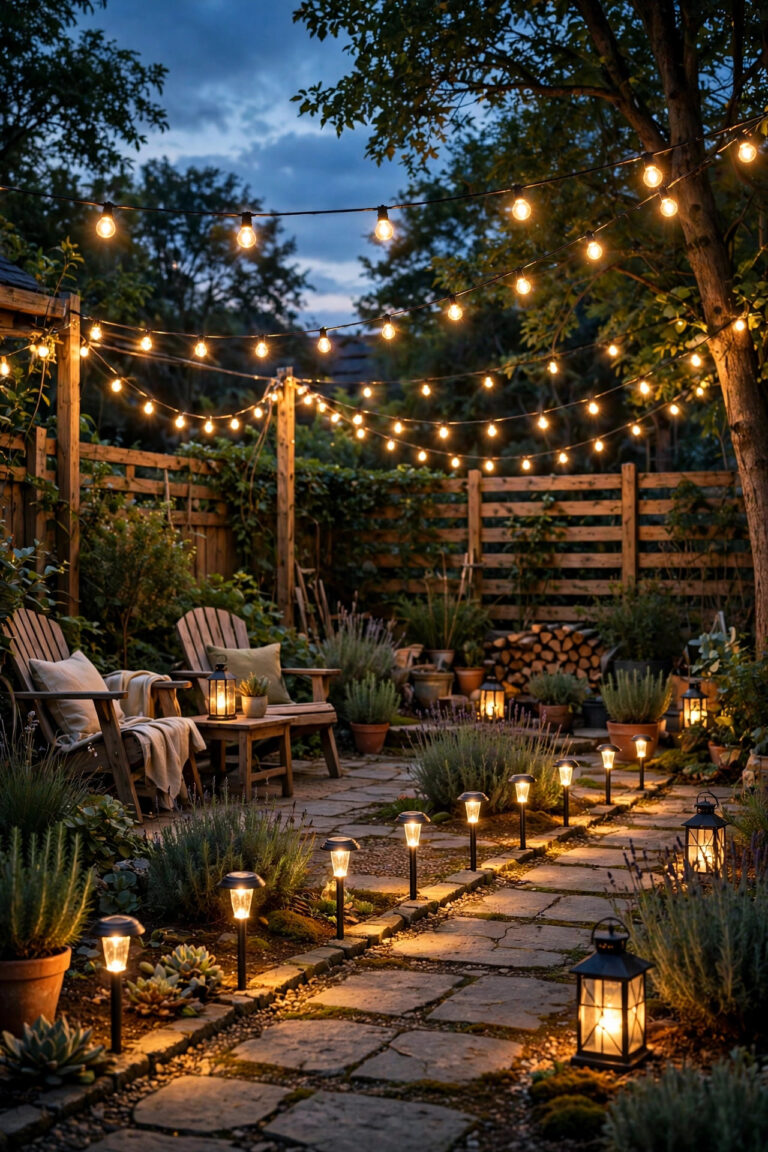
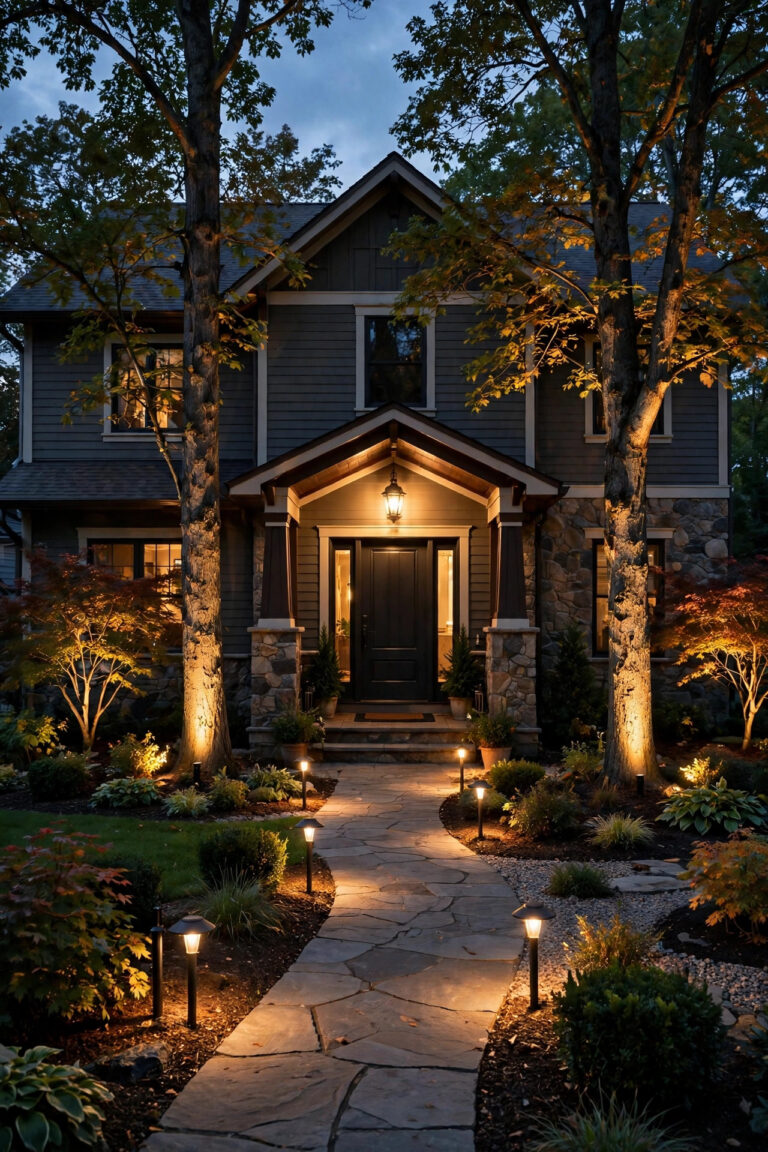
My first apartment balcony was five feet wide, faced a parking lot, and came with exactly zero outdoor outlets, and I adored it anyway, because that is where I learned cheap balcony lighting ideas can out-glow setups that cost ten times more. If you are staring at a bare little balcony and a bank account that laughed at you this month, you are in the right place. None of the 21 ideas below costs more than $50, most need no outlet at all, and every single one comes down in minutes when moving day arrives, so your deposit stays safe. The trick is the same layering I use on big porches: a soft glow low for footing, warm light at sitting height for faces and snacks, and a little sparkle overhead. Solar, battery, and USB power do the heavy lifting, and warm white bulbs in the 2700K range keep everything feeling cozy instead of budget. Let me show you how far fifty dollars actually goes.

1. Start With Solar String Lights, the Classic Cheap Balcony Lighting Ideas Move
If you buy only one thing on this whole list, make it a strand of solar string lights. They are the backbone of nearly all my favorite solar string light ideas because they ask for nothing: no outlet, no wiring, no batteries to feed. You clip the little solar panel to the railing where it catches afternoon sun, drape the strand in two gentle swags overhead or along the rail, and the lights switch themselves on at dusk. A 20 to 25 foot strand is the sweet spot for a small balcony; much longer and you are storing coils of extra wire. Push for shatterproof plastic bulbs rather than glass, because balcony strands live hard lives in wind and get knocked by broom handles. Warm white, not daylight, or the whole space turns into a dentist office. In my experience the panel placement makes or breaks these: south or west facing rails charge best, and a panel tucked behind a planter will leave you with lights that fade by nine. Wipe the panel with a damp cloth once a month. Dust is the silent killer of cheap solar, and a ten-second wipe buys you noticeably longer evenings.
Suggested budget range: $15 – $30.
2. Fill Mason Jars With Copper-Wire Fairy Lights
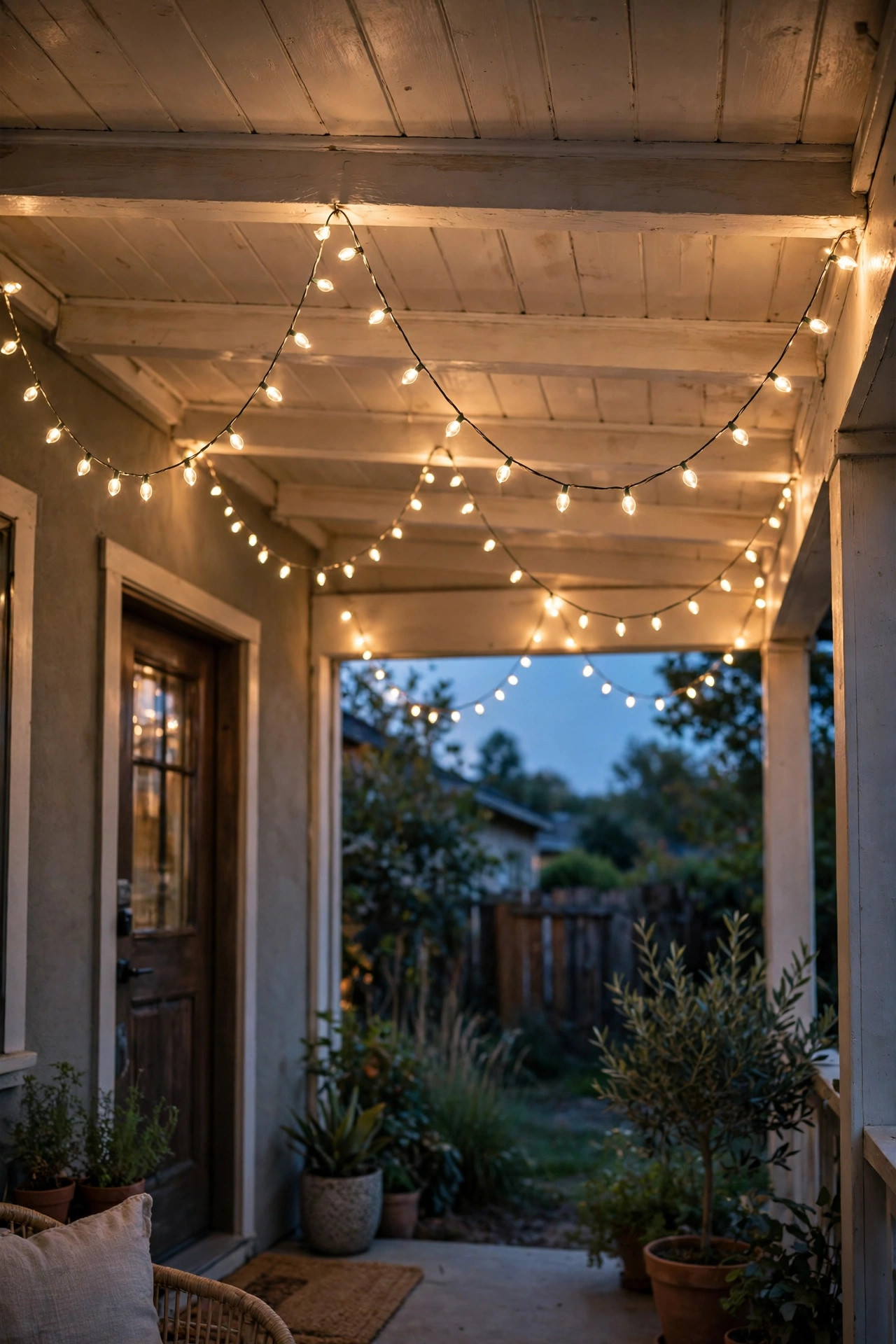
A single strand of copper-wire fairy lights costs less than a fancy coffee, and stuffed into a mason jar it becomes a lantern that looks like it belongs in a magazine. The wire is bendable, so you coil it loosely inside the jar, tape the tiny battery pack under the lid, and set the jar wherever you need a pool of light: the side table, the floor by your chair, the top of the railing if it is wide and flat. I always recommend making three jars instead of one. Groups of three at different heights read as a deliberate design choice, while a single jar reads as an accident. The lights run cool, so they are safe around curtains, paperback books, and the throw blanket that lives on your chair. Battery life on a set of AAs is honestly weeks of evenings, and the warm micro-dots reflect off the glass in a way that photographs beautifully. If your jars are thrifted, even better: mismatched sizes look collected rather than cheap. Just keep the jars out of direct heavy rain, since the battery packs are rarely waterproof even when the wire is.
Suggested budget range: $8 – $15.

3. Clip Solar Lights Straight Onto the Railing
Railing clip lights are the fastest upgrade on this list, start to finish in about four minutes. Each little fixture clamps onto the top rail or a baluster, solar panel up, and throws a small downward pool of light right where your feet and your drink land. A four-pack usually lands between twelve and twenty-five dollars, which works out cheaper per light than almost anything else here. Space them every 3 to 4 feet and stagger them slightly so the pools of light overlap instead of leaving dark gaps. In my experience they are the single best safety buy for a balcony, because the step down from the sliding door and the edge by the plant stand are exactly where trips happen after dark. Look for models with a simple on-off switch rather than motion-only versions; you want steady ambient light, not a strobe every time you shift in your chair. The clips fit most standard rails, but measure yours first, since extra-wide capped rails need the larger jaw style. Bring them inside before serious storms, because the clips hold well but the little panels scratch easily against flying debris.
Suggested budget range: $12 – $25.

4. Hang Battery-Powered Paper Lanterns for Soft Overhead Glow
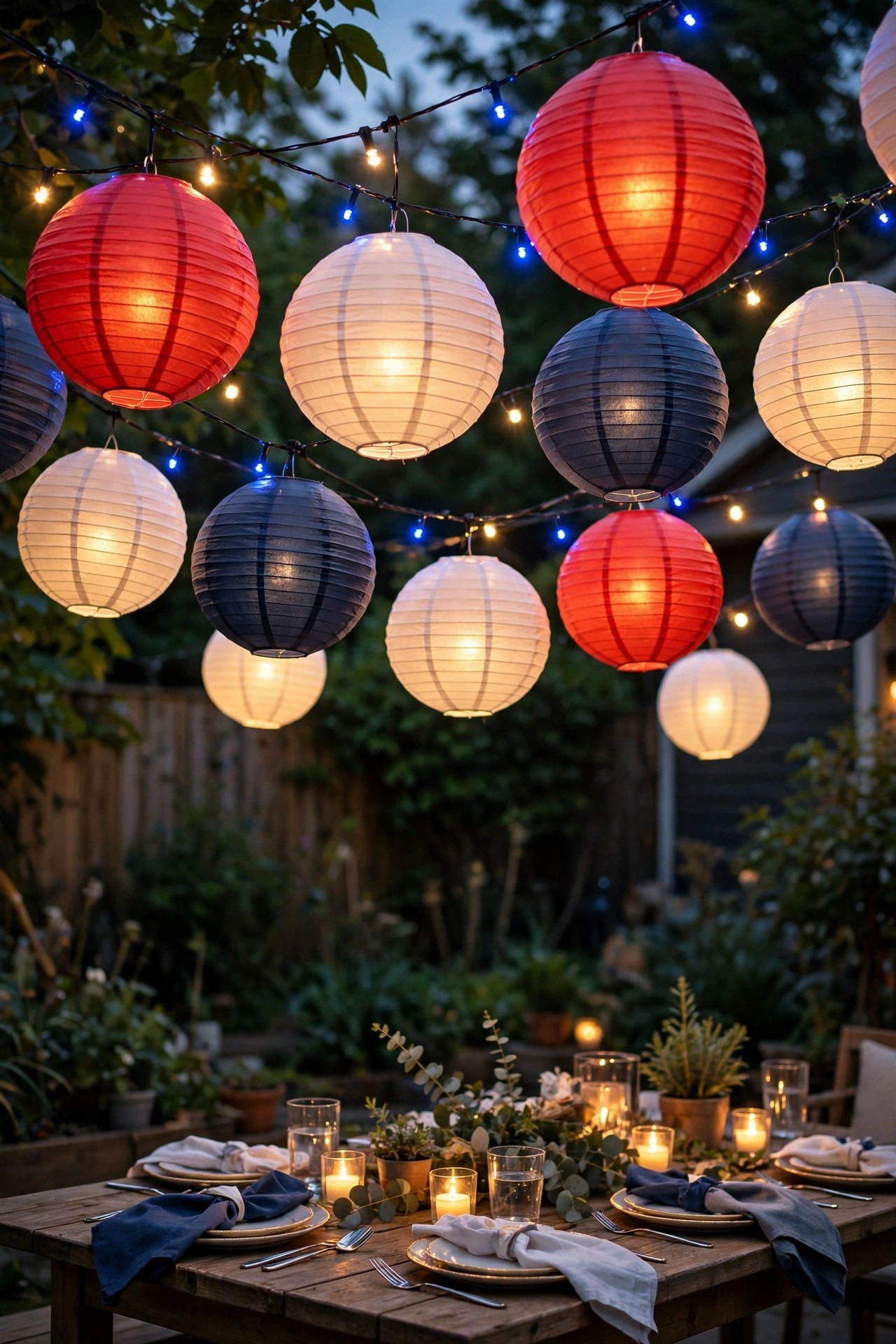
Paper lanterns give you the diffused, flattering light of a patio restaurant for the price of a pizza. The battery-powered versions have a little LED unit inside each lantern, so there is no cord to run and no outlet to hunt for. Hang three at staggered heights from the ceiling hooks many balconies already have, or from a tension rod wedged between the walls of a recessed balcony. Odd numbers and mixed sizes, say one 12-inch and two 8-inch, look intentional. Keep them warm white; colored lanterns are fun for a party but turn everyday evenings into a carnival. Two honest warnings from my own first apartment: paper lanterns are fair-weather friends, so pop them off their hooks before rain, and never, ever put a real candle or an incandescent bulb inside one. LED only, always, near paper. Storage is where they win back your heart, because they fold flat into a drawer. When a lantern eventually tears, the LED unit usually still works and can move into a five-dollar replacement shade, which makes this one of the most repairable cheap balcony lighting ideas I know.
Suggested budget range: $10 – $20.
5. Push Solar Stake Lights Into Your Planters
Solar stake lights are sold for garden paths, but on a balcony they belong in your planters, and they are wonderful there. Push one into each large pot and the foliage itself becomes the lampshade, with light grazing up through leaves and flowers. It hides the cheap plastic housing almost completely, which is the real secret: nobody sees a ten-dollar stake, they see a glowing fern. Choose stakes 12 to 18 inches tall so the light sits above the soil but below the bulk of the plant. Warm white again, and avoid the color-cycling novelty versions unless a disco herb garden is genuinely your vision. Group your planters in twos and threes near the seating area rather than spacing stakes evenly around the whole rail; pools of light with darkness between them feel designed, while a uniform ring feels like a runway. Solar stakes do need sun, so put the biggest, thirstiest-for-light planter where the afternoon sun lands. If your balcony faces north and lives in shade, charge the stakes on a sunny windowsill inside for a day before a big evening. Slightly fussy, completely free, and it honestly works.
Suggested budget range: $10 – $22.

6. Cluster Flameless Candles in Thrift-Store Hurricane Glasses
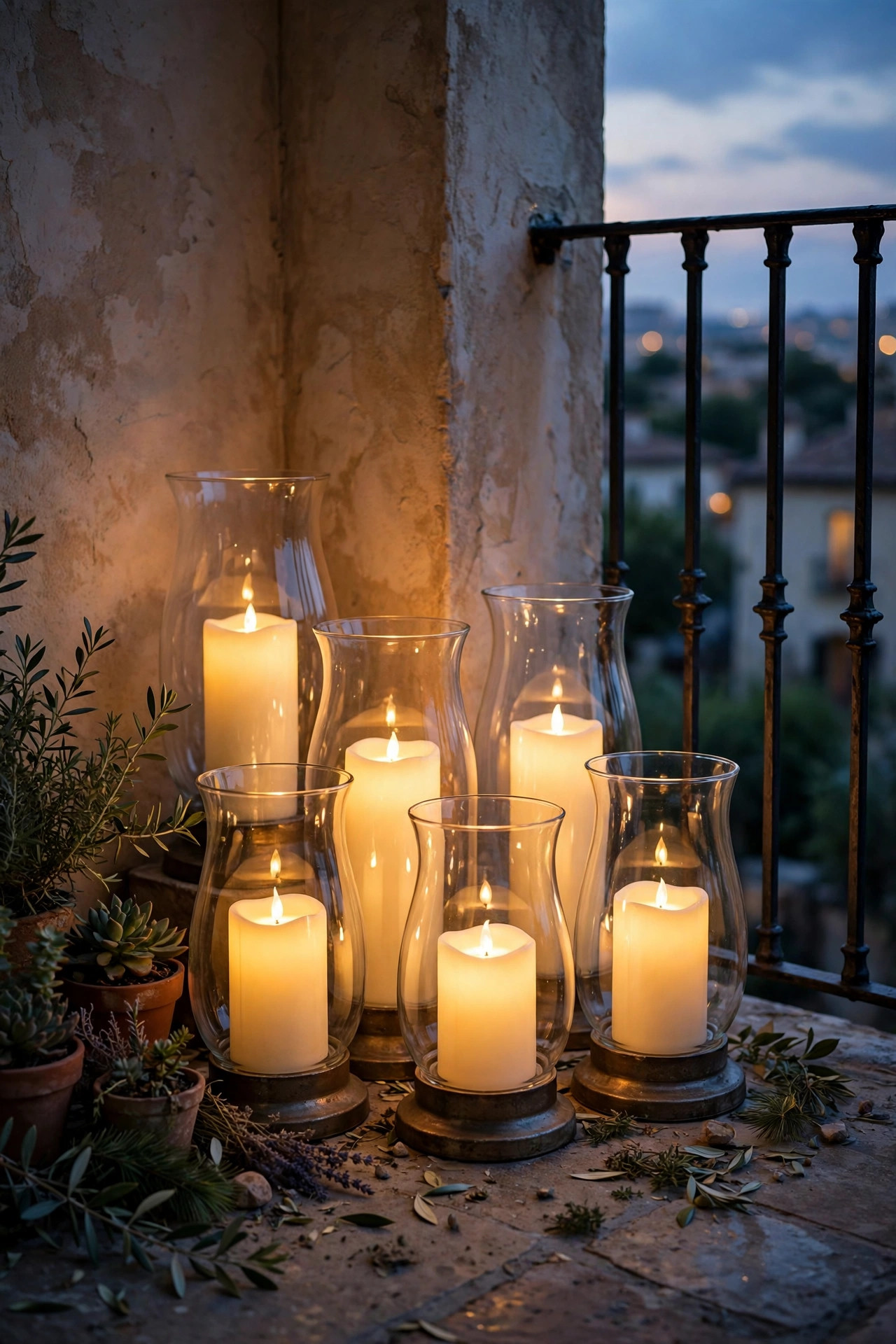
Real candles on a balcony are a wind-blown, lease-threatening nuisance, but flameless LED candles inside glass hurricanes give you the same flicker with zero drama. The candles themselves are a few dollars each, the hurricanes turn up constantly at thrift stores for a dollar or two, and together they look like something from a boutique catalog. The glass does two jobs: it makes the LED flame read as real by layering reflections, and it keeps the candle from looking naked and plasticky. I cluster three on the floor in the corner by my chair, tallest in back, and the whole corner glows like a fireplace. Many flameless candles come with a little remote and a timer, which is a small luxury: set them to switch on at dusk and off at bedtime and the balcony lights itself. Melted-look wax shells read far more real than smooth plastic ones, so choose those if you can. And because there is no flame, these are safe near the outdoor rug, the cushion stack, and the paperback pile. This is the idea guests ask about most, and it might be the cheapest one here.
Suggested budget range: $8 – $18.
7. Run a Rope Light Along the Railing for a Clean Line of Glow
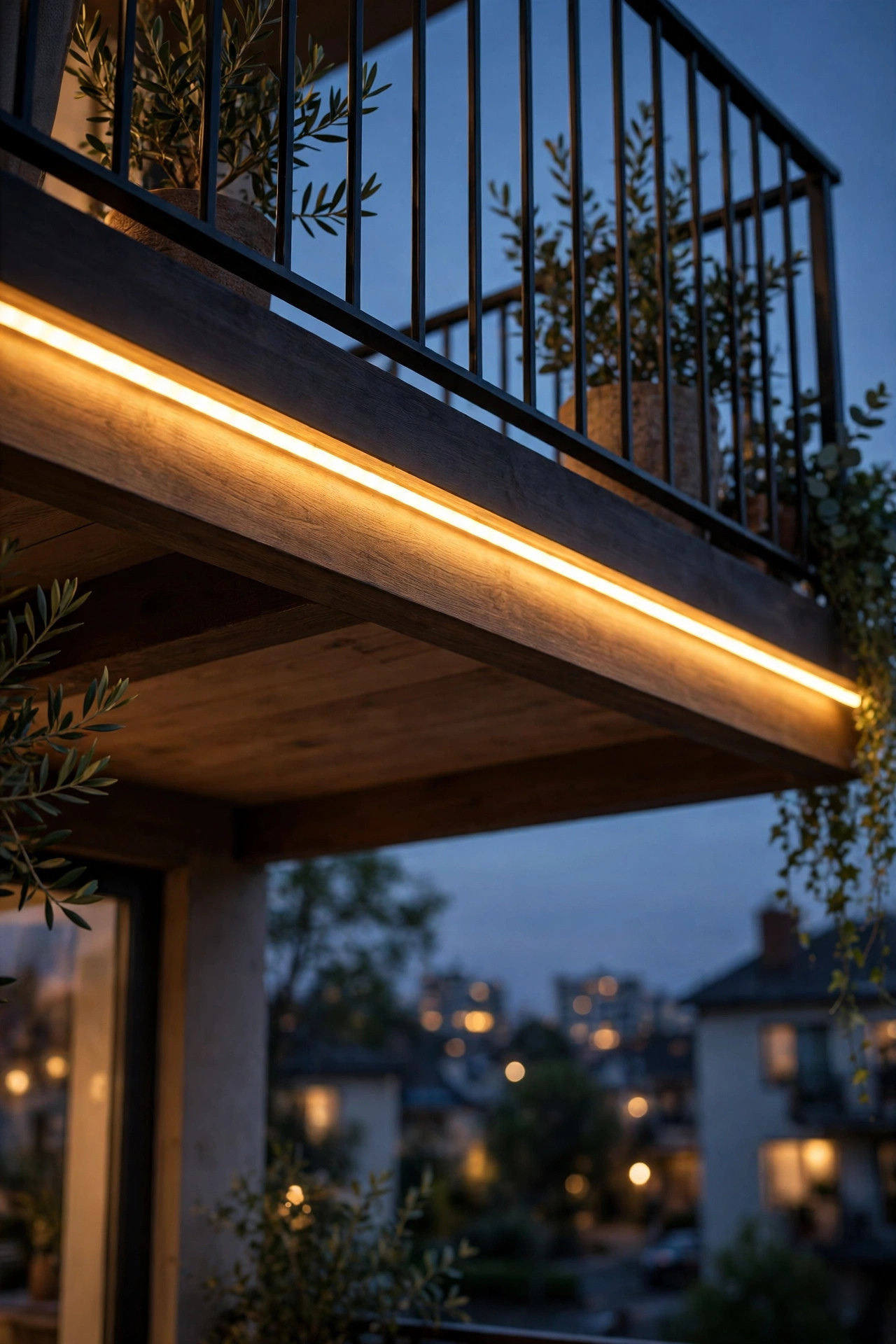
A rope light is just a flexible tube of LEDs, and run along the underside of your top rail it draws one clean, modern line of light around the whole balcony. Attach it with the little clips it comes with, or with clear zip ties every 12 inches if your lease forbids screws; the clips are kinder to the rail. Battery and solar versions both exist, and I lean solar for a set-and-forget setup. The effect is surprisingly architectural: instead of points of light, you get a horizon line that makes the balcony feel finished, like a boutique hotel terrace. It also lights the floor edge beautifully, which your shins will appreciate at midnight. Buy warm white and check the length before ordering, because rope lights cannot be stretched and a two-foot shortfall looks tragic. If you want a softer look, mount the rope on the inside face of the railing pointing down rather than on top pointing up; the light washes the balusters and bounces gently instead of glaring into your eyes while you sit. Simple, tidy, and it survives weather that would murder most of this list.
Suggested budget range: $10 – $20.
8. Swap Your Jar Lids for Solar Mason Jar Lids
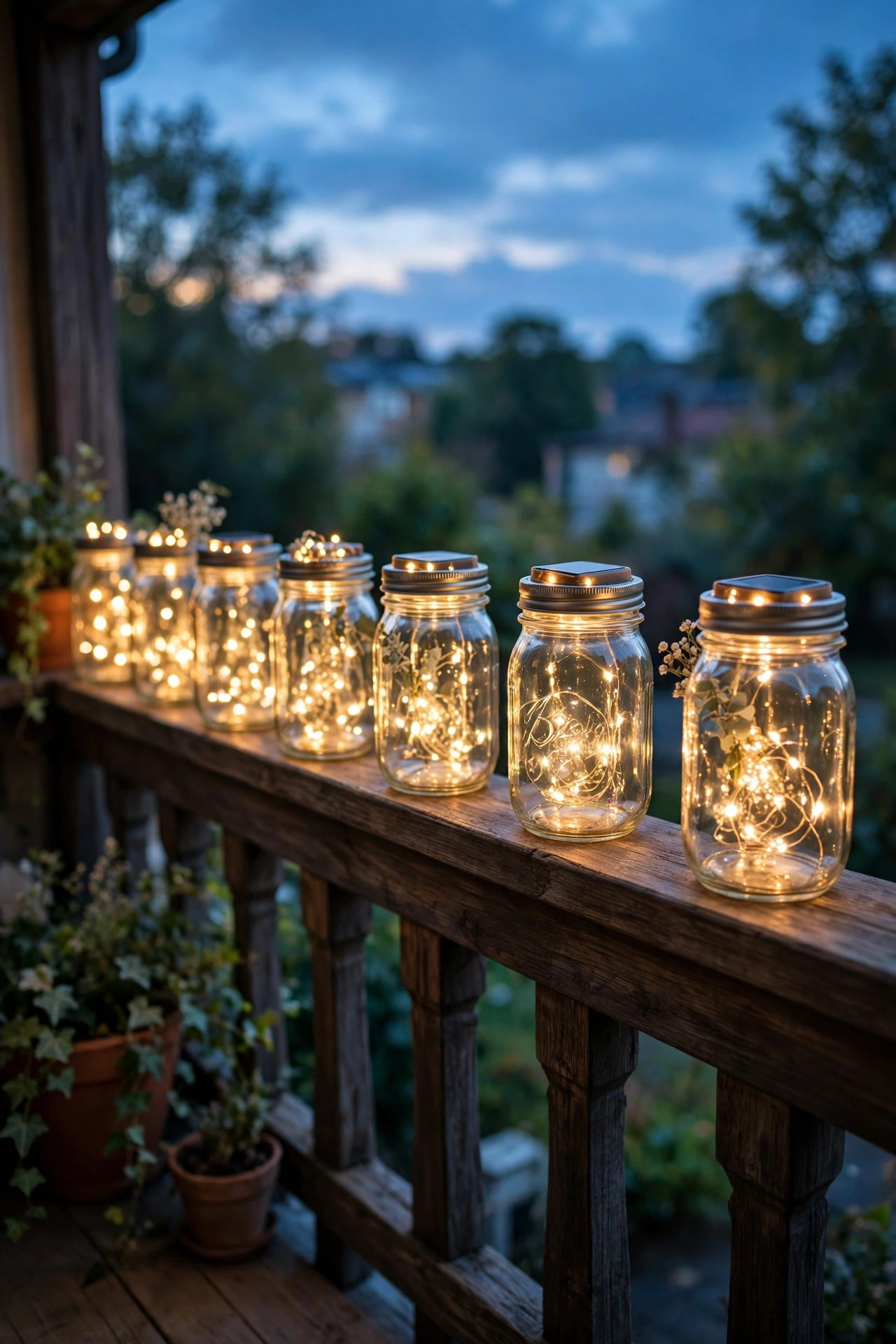
If idea two charmed you but the battery packs annoyed you, solar mason jar lids are the upgrade. Each lid is a tiny solar panel with a short string of fairy lights attached underneath, sized to screw onto a standard mason jar. Charge all day on the railing, glow all evening on the table, no batteries ever. A set of four to six lids usually costs twelve to twenty-four dollars, and you provide whatever jars you already own, which in my kitchen is a small army. Hang them from the railing hooks for a row of floating lanterns, or line them along the floor edge as soft markers. The light is gentle rather than bright, so think of these as atmosphere, not task lighting. One honest note: the seals on cheap solar lids vary, so after a heavy rain, tip the jars and check for condensation inside. A night indoors with the lid off dries everything out. Match the lid size to your jars before ordering, because wide-mouth and regular-mouth are not interchangeable, and a box of the wrong size glowing beautifully in a drawer helps nobody. Small detail, real heartbreak, easily avoided with thirty seconds and a ruler.
Suggested budget range: $12 – $24.
9. Stick a USB LED Strip Under the Railing and Power It From a Power Bank
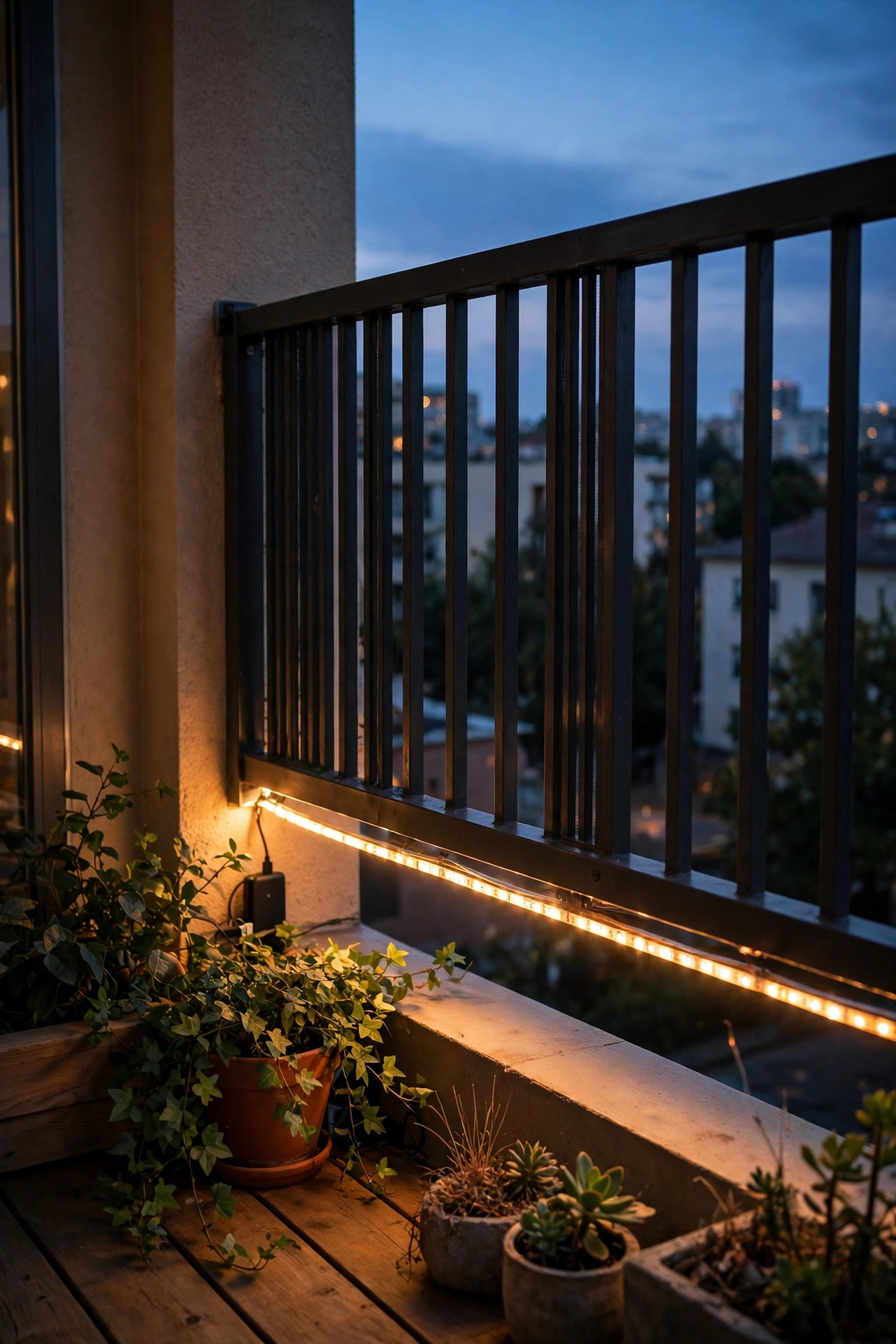
Here is a renter trick I wish someone had handed me years ago: a USB-powered LED strip runs happily off the same power bank that charges your phone. Peel-and-stick the strip under the top rail or along the underside of a shelf, plug it into the power bank, and tuck the bank into a planter. A decent power bank runs a short strip for several evenings, and the whole setup removes in minutes without a mark. The light is even and shadowless, perfect for the floor zone and for seeing the steps of a raised deck tile. Buy warm white, 2700K to 3000K, and choose the version with a little inline dimmer remote if it is only a dollar or two more; full brightness on a small balcony is a lot. Adhesive backing gives up in heat waves, so add a dab of removable mounting putty every foot or so as insurance. And keep the power bank itself out of direct rain, because strips shrug off weather that electronics do not. This is the most modern-looking glow on the list, and renters especially love that the entire installation fits in a shoebox on moving day.
Suggested budget range: $9 – $16.
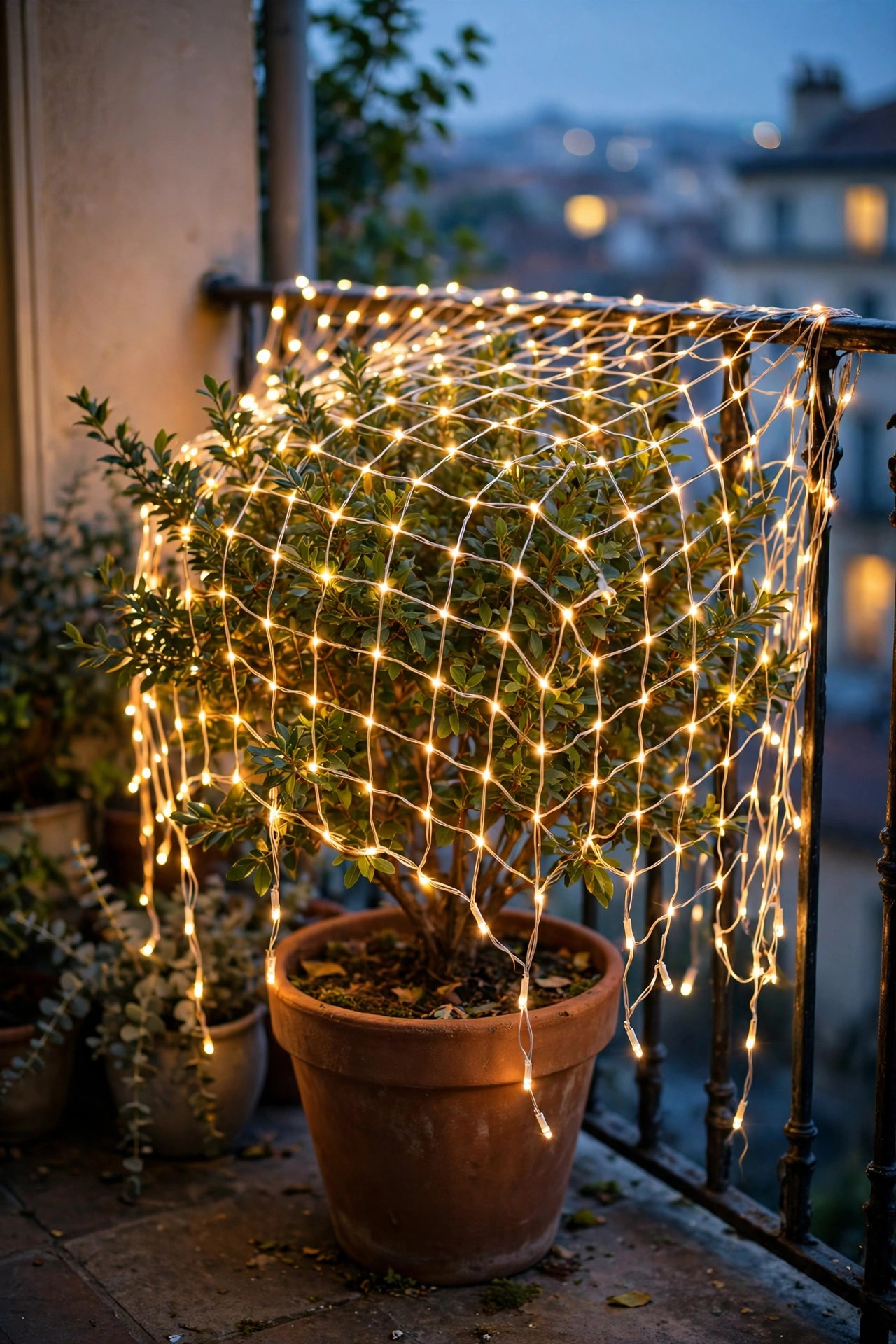
10. Drape Net Lights Over a Shrub or Trellis for Instant Even Coverage
Net lights are a grid of small LEDs woven into a mesh, made to drape over bushes, and on a balcony they solve the hardest problem: even light. Drape one over a potted shrub, a small trellis, or even a folded privacy screen, and you get a whole glowing panel instead of scattered dots. It takes ninety seconds, needs no spacing decisions, and hides completely in the daytime foliage. Solar versions exist and suit our no-outlet theme perfectly. In my experience this is the best backdrop for a seating corner: one net-lit shrub behind your chairs makes every photo look like a string-light restaurant patio. Choose warm white and the smallest grid that covers your shrub; a net stretched too thin shows the mesh pattern, while a slightly bunched one reads as dense sparkle. Keep the solar panel poked out of the top of the foliage toward the sun, because a panel buried under leaves charges nothing. If your balcony railings allow it, a net draped over the rail itself with planters in front is gorgeous too, though check your building rules first, since some complexes have opinions about anything visible from the street.
Suggested budget range: $15 – $28.
11. Tuck Battery Puck Lights Under Shelves and the Umbrella
Puck lights are the workhorses nobody photographs, and they quietly make a balcony usable. These flat, battery-powered discs stick under a shelf, under the side table, or up inside a patio umbrella, and switch on with a tap or a little remote. A six-pack often costs under fifteen dollars. Their job is task light: finding the drink coaster, reading the snack label, seeing the step. Because they point down and hide under surfaces, they add no visual clutter, and the glow they throw makes everything around them feel more expensive. Put one under the railing-side shelf where glasses land, one inside the umbrella if you have one, and keep the rest as spares. Battery discipline is the only homework: rechargeables pay for themselves by the second summer. If your set has a timer function, use it, because pucks left on overnight are dead pucks by morning. I learned that one the wasteful way. Honestly, of everything here, pucks are what I rebuy without thinking when a set dies, because evenings simply run smoother with them in place.
Suggested budget range: $8 – $15.

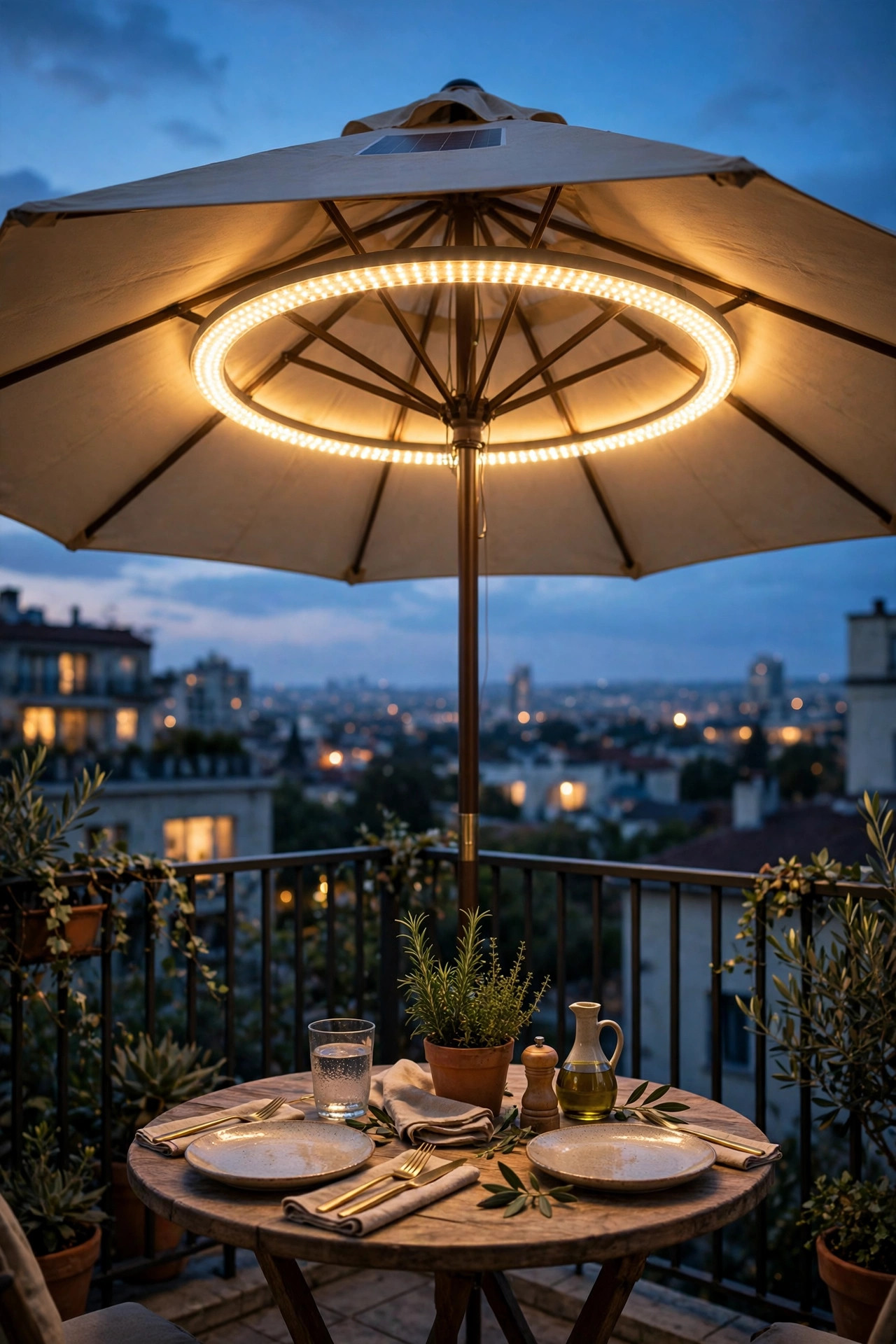
12. Clip a Solar Light Ring Inside Your Patio Umbrella
If your balcony fits a small umbrella, a solar umbrella light turns it into a dining room. The light is a flat ring or disc of LEDs that clamps around the umbrella pole and shines down onto the table, exactly where plates and faces are. Most versions charge from a small solar panel that clips to the top of the canopy, so the setup stays fully cordless. The downward light is flattering and surprisingly strong, strong enough for cards, sketchbooks, and board games. It also defines the seating zone better than any other single fixture: light over the table says this is the room, everything else is the view. Measure your pole diameter before buying, since clamps fit standard poles but grumble at chunky wooden ones. Take the light down when you close the umbrella for storms; the clamp is sturdy, but the panel is not storm-rated. Pair it with dim little accents like jars or stakes rather than competing overhead lights, because one clear light source over the table plus sparkle around the edges is the whole restaurant secret. Simple math, delicious result.
Suggested budget range: $12 – $22.
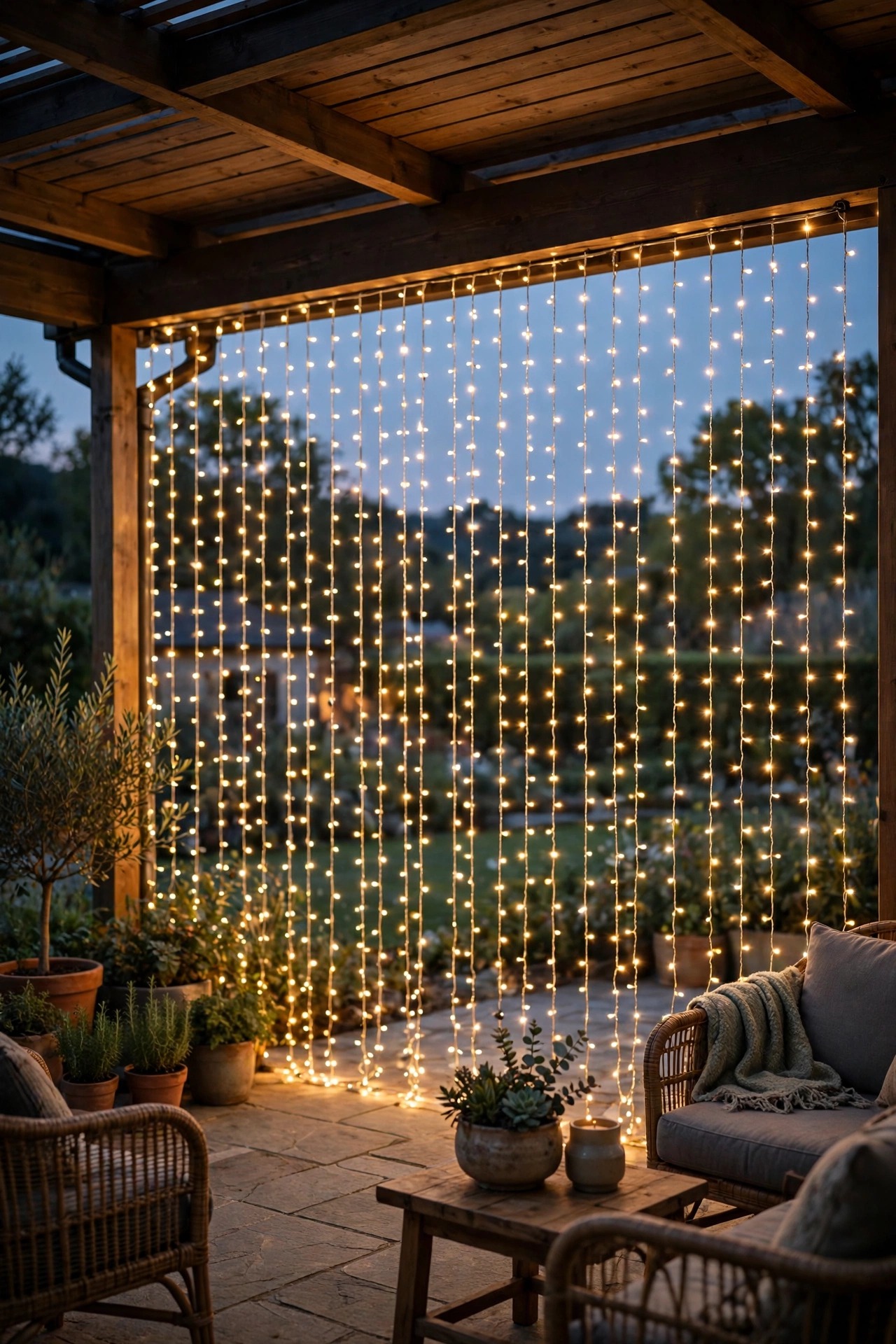
13. Hang a Fairy Light Curtain Across the Sliding Door
A fairy light curtain is a wall of vertical copper-wire strands, and hung inside or just outside the sliding door it turns the whole doorway into a glowing backdrop. Battery and USB versions keep us cordless, and solar ones exist if your door gets sun. The effect from inside the apartment is pure magic: dinner at the kitchen table suddenly has a sparkling view even in February. From the balcony side, it gives you a lit wall to sit against, which makes a tiny space feel like a room instead of a ledge. Hang it from removable adhesive hooks rated for a few pounds, spaced evenly, and let the strands fall straight; tangles are the enemy, so unroll each strand slowly rather than shaking the bundle like salad. Choose the warm white setting if yours cycles colors. Curtain strands are delicate, so I bring mine in for winter storms and hang it again in spring, a small ritual I genuinely enjoy. If your building bans exterior additions, the inside-the-glass version shows off almost as well and breaks no rules at all.
Suggested budget range: $14 – $26.
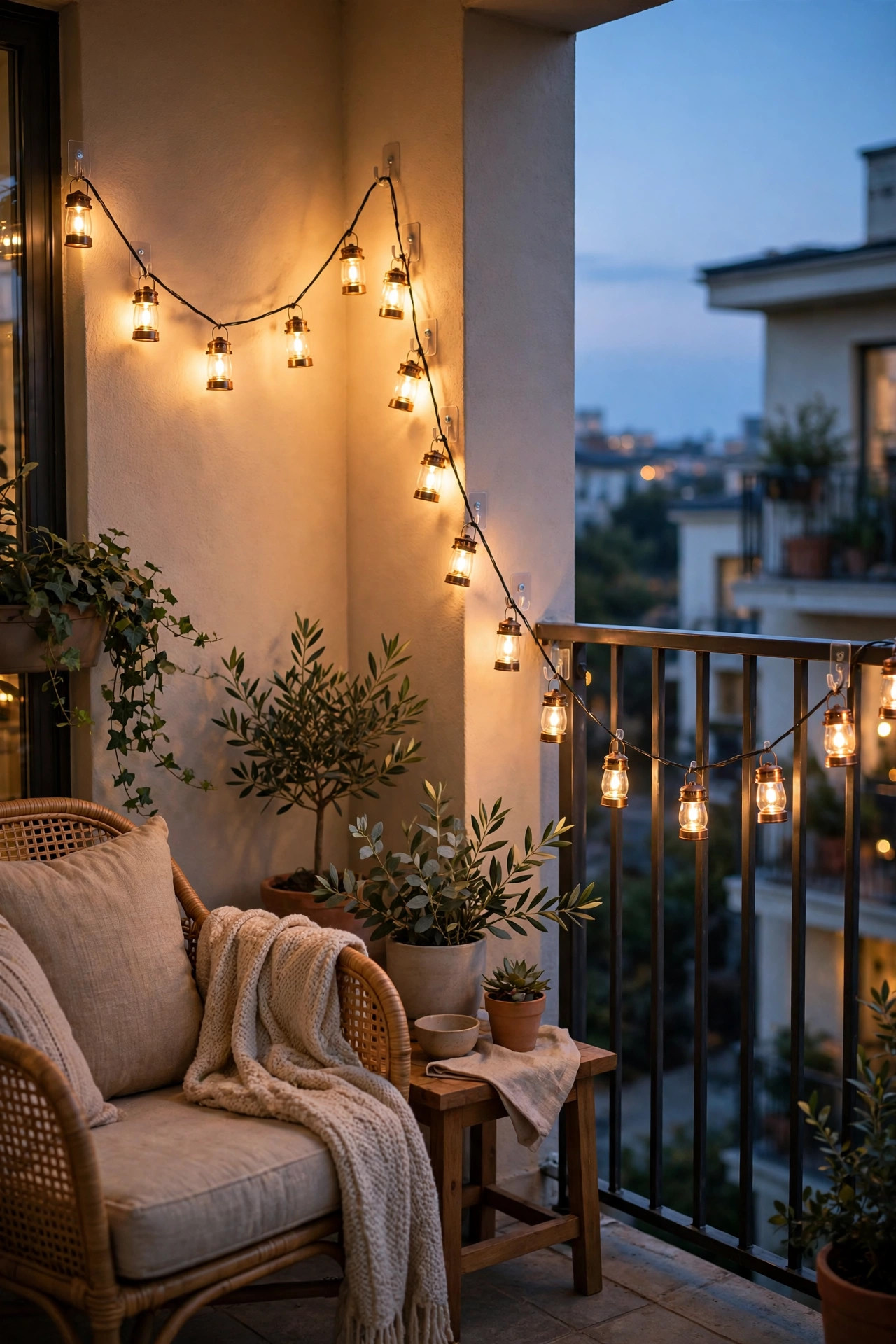
14. String a Lantern Garland on Removable Hooks
A garland of small battery lanterns gives you the swagged, styled look of cafe lights with a softer, more collected feel. The lanterns are usually metal or bamboo-style frames with a warm LED inside each, pre-strung on a cord with a battery pack at one end. Hang the swag from removable adhesive hooks on the walls or rail posts, letting it dip in a gentle curve over the seating corner. Because each lantern throws its own little pool, the light feels hand-placed rather than installed, which suits a first apartment perfectly: charming now, boxed up in ten minutes later. Keep the battery pack somewhere reachable, because you will use the timer switch nightly and curse a pack zip-tied six feet up. That voice is experience talking. Garland lengths are modest, often 6 to 10 feet, so measure your swag before ordering two and discovering you needed one, or the reverse. In wind, a couple of small clear clips along the rail keep the swag from swinging against the wall. The tap-tap of lantern on siding at 2 a.m. is a sound you only need to hear once.
Suggested budget range: $15 – $30.
15. Plant Solar Flame-Effect Torches in Your Biggest Pots
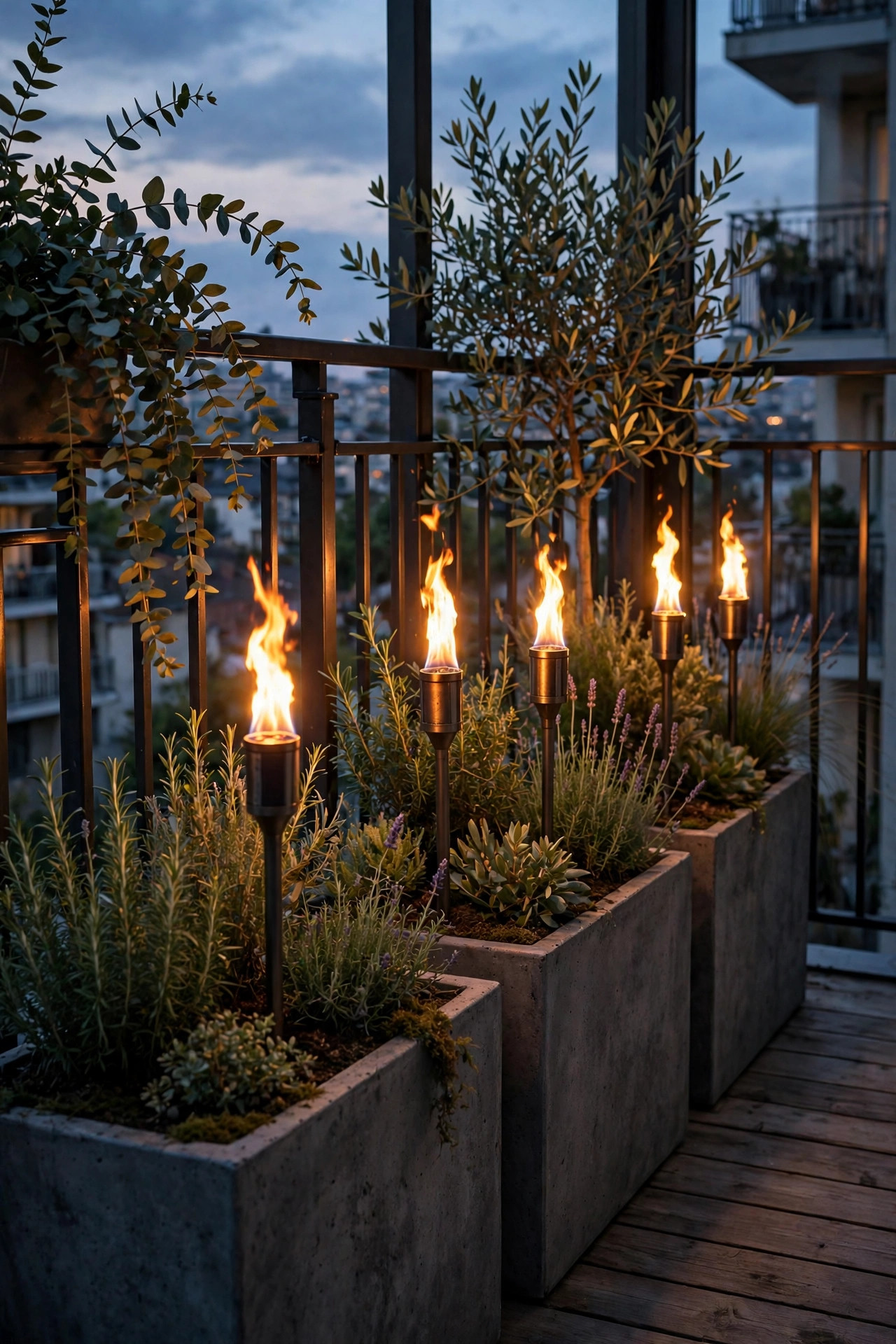
Solar flame torches flicker like real tiki flames, and in a pair of big balcony planters they bring instant drama for very little money. Each torch is a stake with a dancing amber LED flame, solar panel on top, and they switch on at dusk with a genuinely convincing flicker when seen from a few feet away. Two or four in your largest pots, flanking the door or the seating corner, give the balcony a focal point that reads almost tribal and very grown-up. Because they are LEDs, there is no fuel, no smoke, and no open flame for your lease or your eyebrows to worry about. Height matters: choose torches that will stand a little above the foliage, around knee to waist height once planted, so the flame shows. Mix them with one calmer light source like jars or pucks, since an all-flicker balcony starts to feel like a volcano exhibit. The stakes pull out in seconds for repotting or moving day. In my experience these get the second-most compliments of anything here, right after the candle hurricanes, and they cost about the same as a delivered sandwich each.
Suggested budget range: $14 – $26.
16. Screw One Smart Bulb Into the Fixture You Already Have
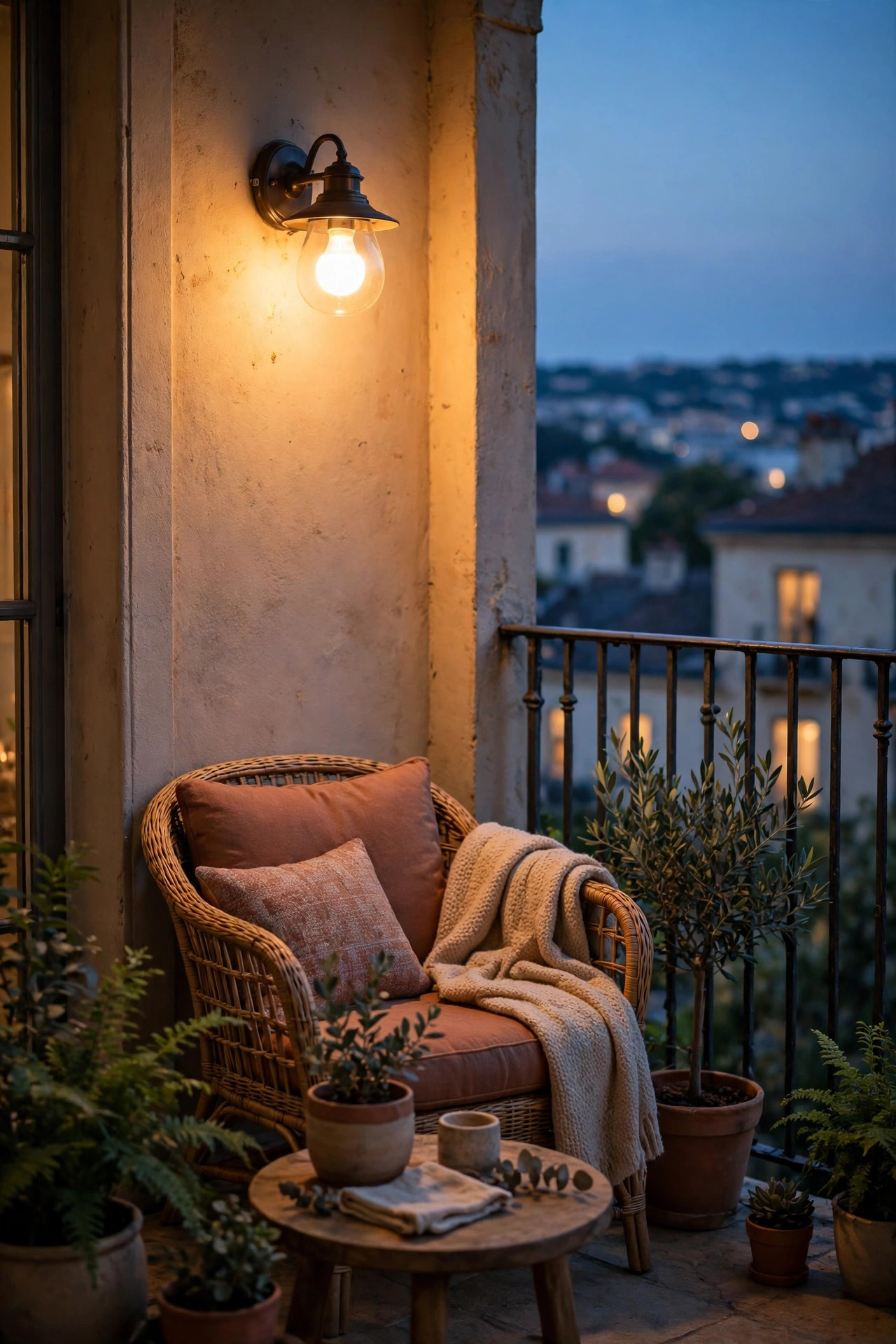
Your balcony almost certainly came with one sad ceiling or wall fixture, and the cheapest renovation in history is unscrewing its bulb and screwing in a smart bulb. One color-changing smart bulb costs eight to fifteen dollars and suddenly that harsh porch light becomes a warm 2700K glow you control from your phone, dimmable, schedulable, and capable of a sunset amber for parties. No new fixture, no wiring, and when you move you take the bulb and leave the original, which you kept in a drawer like a responsible adult. Set a schedule so it fades on at dusk and the balcony greets you lit. This pairs beautifully with the ultra-cheap layers: let the smart bulb be the room light, then jars and stakes add the sparkle it lacks. One caution: the fixture stays landlord property, so skip this idea if the cover needs tools or force to open; a stuck glass dome is not worth your deposit. And if the fixture is fully enclosed, check the bulb is rated for enclosed use, because heat builds up in those little globes and shortens bulb life.
Suggested budget range: $8 – $15.
17. Hide an LED Strip Behind Planters for a Floating Glow
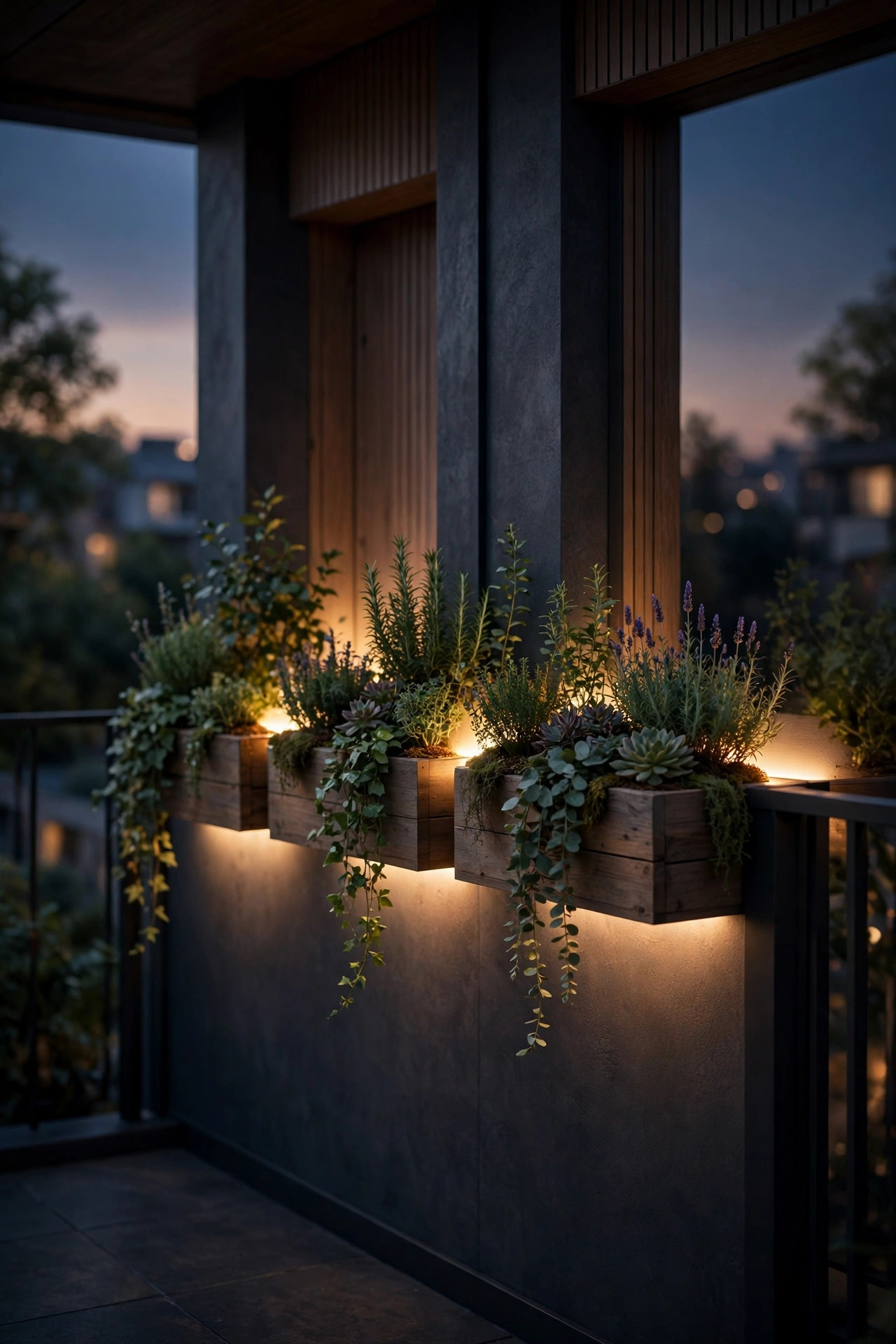
Indirect light is the fanciest trick in design, and an adhesive LED strip makes it nearly free. Run the strip along the back edge of a long planter box, behind a bench, or under the bottom rail facing the wall, so you see the glow but never the source. The furniture appears to float, the wall washes with warm light, and visitors cannot figure out why your balcony looks like a boutique hotel. Battery and USB strips both work; USB strips powered by phone-style power banks run longest. I aim the strip at a surface, a wall or the underside of the rail, rather than at open air, because bounced light is always softer than direct light. Choose warm white with a dimmer, since strips default bright. One practical note from my own balcony: adhesive strips and summer heat are fair-weather friends, so reinforce with a few dabs of removable putty or the little mounting clips many strips include. When the strip eventually sags in August, and it will, that is a five-minute fix, not a failure. This is the idea that most changes the feel of the space per dollar spent.
Suggested budget range: $9 – $18.
18. Choose Battery Globe String Lights for a Softer Cafe Look
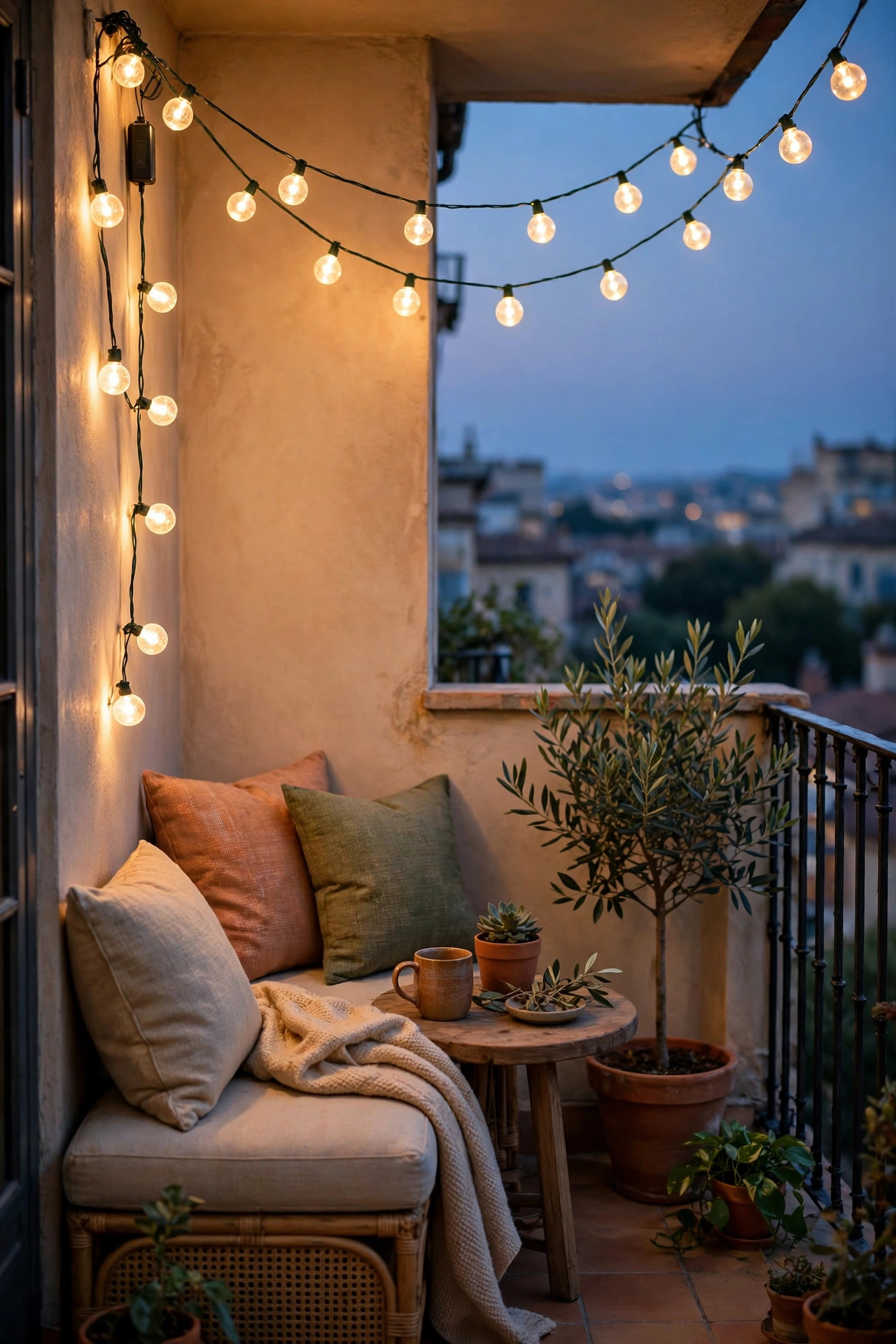
If solar strands feel unreliable on your shaded balcony, battery globe string lights are the dependable cousin. The globes are small plastic orbs that diffuse the LED inside, so instead of pinpoints you get little moons, and the light on faces is noticeably kinder. A battery pack with a timer is the feature to hunt for: set six hours on, eighteen off, and the strand runs your evenings for weeks before the batteries fade. Hang one strand in a single swag over the seating corner rather than outlining the whole rail, because the globes read best as one sculptural gesture. Keep a spare set of rechargeable AAs rotating through the charger and the cost per evening drops to nearly nothing. Globe strands are a little pricier per foot than basic fairy wires, so this is where I spend the saved money from the thrifted hurricanes. They also travel brilliantly: mine have lit campsites, a friend's porch, and one memorable power outage. Of all the strands here, these photograph the most warmly, which matters if your balcony doubles as your backdrop for video calls after dark.
Suggested budget range: $12 – $24.
19. Add Stick-On Solar Sconces Beside the Door
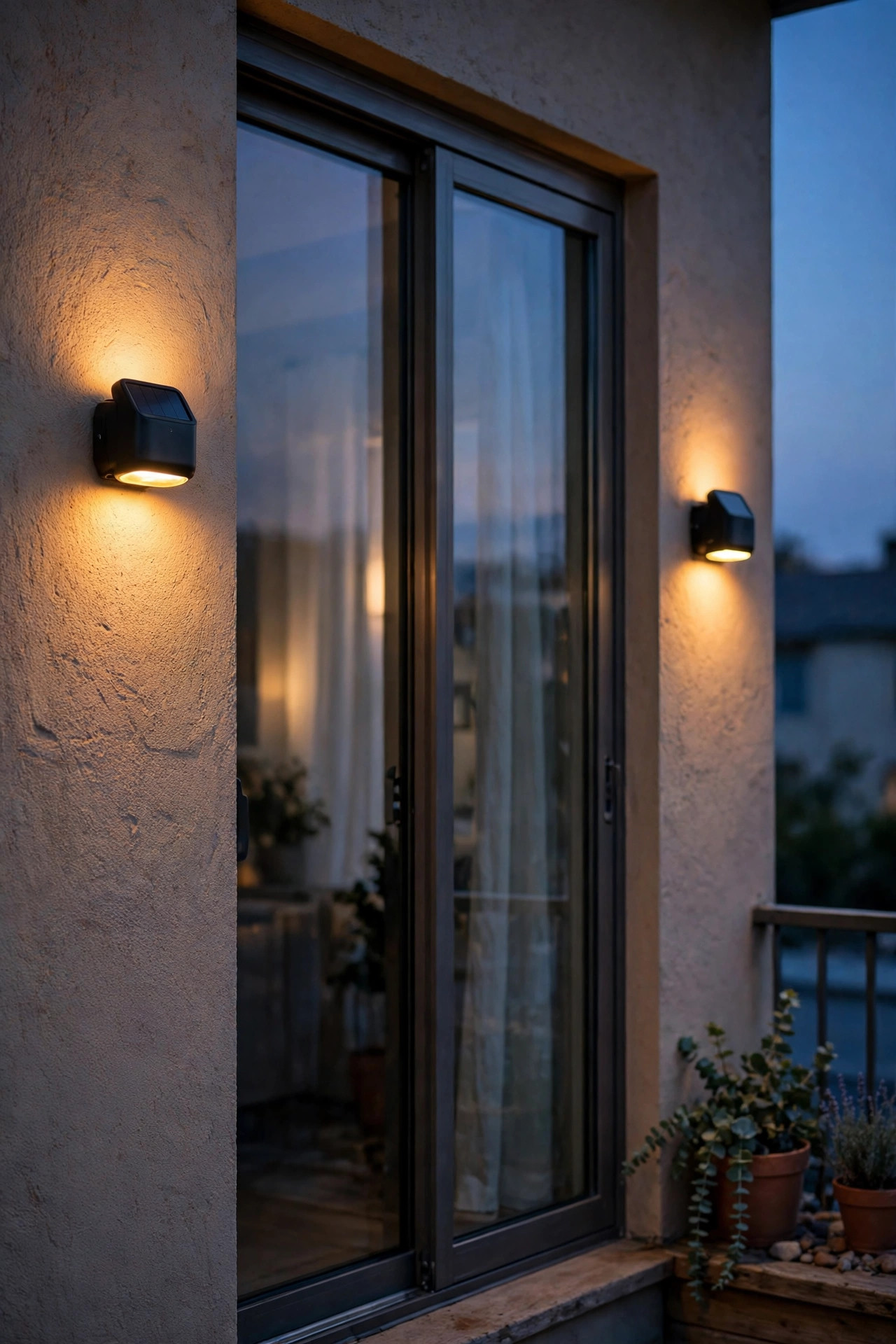
Solar wall sconces used to be a homeowner purchase, but the stick-on and clip-on versions belong in every renter's cart. Each sconce is a small panel-and-lantern unit: peel the backing or clip it to the rail post beside your door, and it throws a warm fan of light down the wall like a real wired fixture. A pair flanking the sliding door makes coming and going feel ceremonial, and the downward throw keeps light out of your neighbor's windows, which everyone appreciates. They charge all day and run most of the night; south and west doors will do best. Because they mount flat, they eat zero floor space, precious on a five-foot balcony. Check the adhesive rating if you rent: the good removable strips release cleanly with a pull tab, and that is the only kind I allow on painted surfaces now. One of mine survived two summers and a move, riding in the kitchen box labeled fragile-ish. Place them at about eye level or a touch above, roughly 5 to 6 feet, so the light fans down across the door zone rather than blazing at face height.
Suggested budget range: $14 – $28.
20. Plug One Cafe Strand Into a Smart Plug Timer, If You Have an Outlet
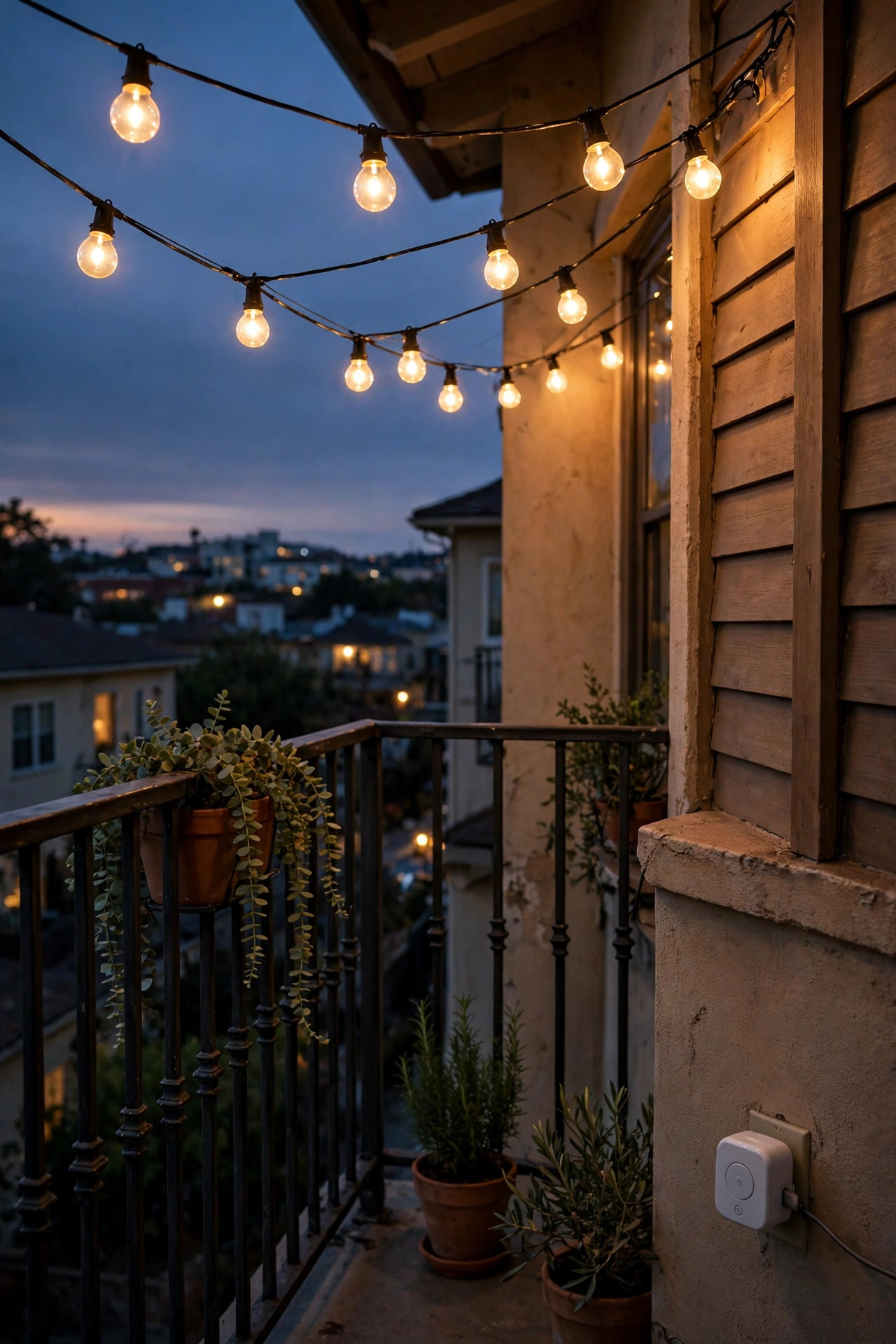
If your balcony does have an outlet, you get one power move the rest of us envy: a real plug-in cafe strand on a smart plug. The strand itself, commercial-feeling with bigger shatterproof bulbs, costs fifteen to thirty dollars, and an outdoor smart plug or a simple mechanical timer adds a little more but keeps the whole idea honest. Set it to switch on at sunset and off when you usually head in, and the balcony runs itself like it has a tiny staff. Plug-in strands are brighter and steadier than solar, so this becomes your overhead layer and everything else can stay soft. Respect the one safety rule that matters: outdoor-rated strand, outdoor-rated plug, and a drip loop in the cord so rain runs off instead of into the socket. Never run the cord through the door where it gets pinched; that is how insulation dies. In my experience, a timer is also the politest option in an apartment building, because lights that reliably die at eleven never become a neighbor complaint. Small courtesy, big peace.
Suggested budget range: $18 – $35.
21. Layer It All Together: Cheap Balcony Lighting Ideas That Feel Anything But
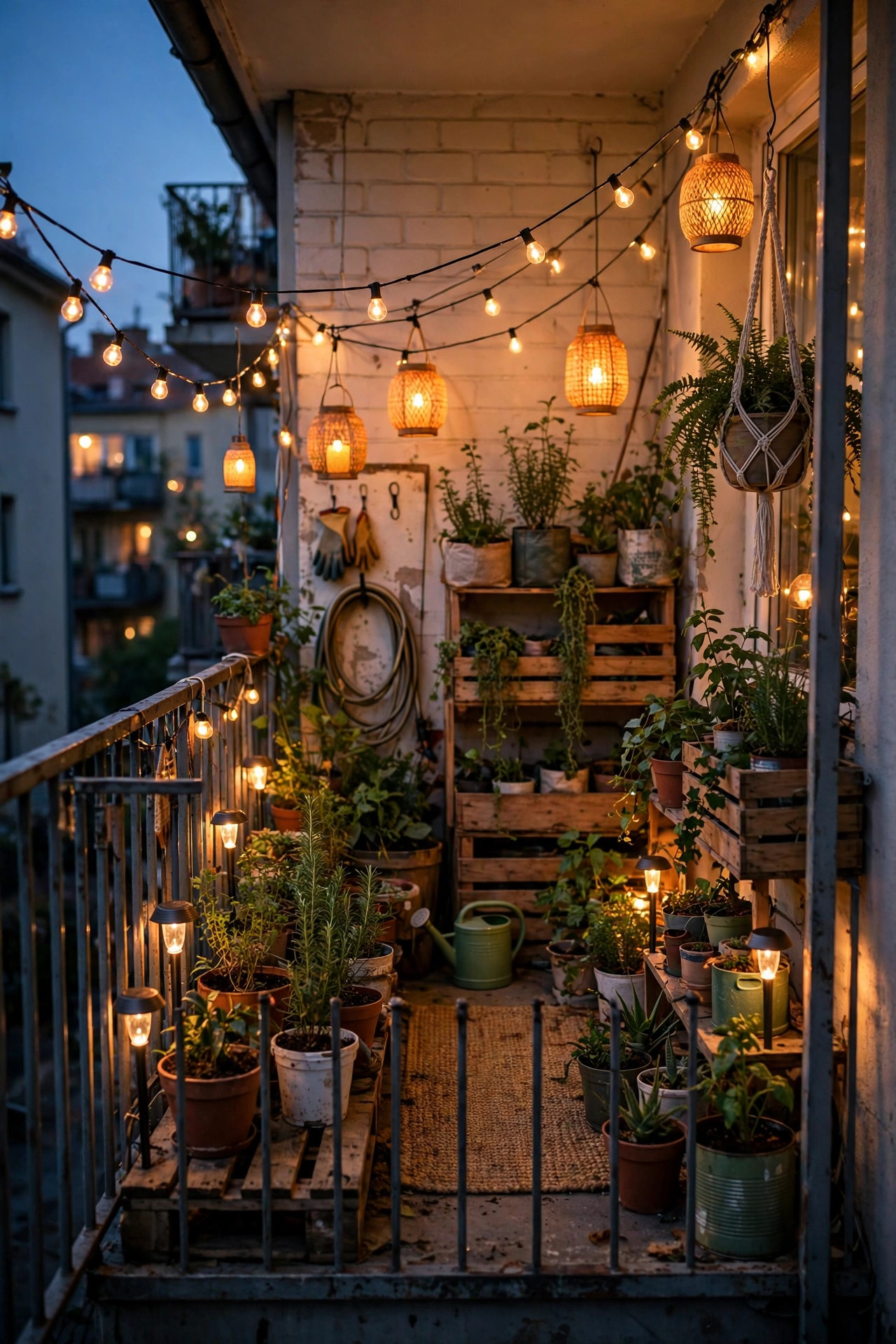
Here is the whole philosophy in one idea: no single cheap light looks expensive, but three layers of cheap lights look like a designer's portfolio. Pick your overhead sparkle (a strand, a garland, or paper lanterns), your sitting-height warmth (hurricane candles, jars, or the umbrella ring), and your low glow (stakes, clips, or a hidden strip), and almost any trio from this list lands between thirty-five and fifty dollars total. That is the entire budget, spent once, for a balcony that glows in depth instead of blinking in dots. The budget outdoor lighting ideas I use in big yards follow this same math, just with more zeros. Sequence matters too: buy the overhead layer first, live with it a week, then add the layer you miss most. Your eyes will tell you honestly whether the gap is at the floor or the table. Keep every bulb warm white so the layers blend, and stand at the doorway at dusk to judge. If the view makes you exhale, you are done. If it makes you squint or shrug, one more layer, not more brightness, is almost always the answer.
Suggested budget range: $35 – $50.
Frequently Asked Questions
How can I light my balcony if there is no outdoor outlet?
Easily, and honestly it is the norm for first apartments. Solar fixtures charge all day and switch themselves on at dusk, battery strands and lanterns run for weeks on a set of AAs, and USB strips happily sip power from a phone power bank. Most of the ideas on this list were chosen precisely because they never touch an outlet, and the two that do are optional upgrades, not the foundation.
What color temperature looks best on a small balcony?
Warm white, around 2700K to 3000K, wins every time. It flatters faces, food, and skin tones, and it makes inexpensive materials like plastic and paper look warm rather than cheap. Cooler daylight bulbs in the 5000K range read as office or security lighting and shrink a small space visually. Whatever you buy, buy the same temperature for every layer so the whole balcony blends into one glow.
Are cheap solar lights actually bright enough to use?
For atmosphere and gentle wayfinding, yes, with realistic expectations. An individual solar stake or clip light is a soft marker, not a floodlight, so brightness comes from layering several of them rather than from any single fixture. Keep panels clean and sun-facing, because dust and shade are the two reasons cheap solar disappoints. If you need true task light for reading or games, add one battery umbrella light or puck light to the mix.
Will all of this really come down cleanly when I move?
That was the design brief for this entire list. Solar stakes pull out of pots, clips unclamp, garlands unhook, strips peel away, and the one smart bulb unscrews while the original goes back in. Nothing here needs holes, wiring, or landlord permission in most leases, though it is always worth a quick scan of your lease for rules about items visible from outside. Moving day, the whole balcony fits in one box.
Conclusion
Fifty dollars is not a limitation; it is an editing tool. The best cheap balcony lighting ideas all do the same three things: they sip solar, battery, or USB power so no outlet or electrician is needed, they layer light overhead, at sitting height, and low, and they come down in minutes when life moves you along. Start with one strand or a trio of candle hurricanes, then add layers as your evenings ask for them. For the full-size version of this glow-up, my complete roundup of balcony lighting ideas covers the bigger budgets and permanent fixtures too, and the rest of the site is full of outdoor lighting ideas that scale from a five-foot balcony to a full backyard. Your little ledge deserves to glow. Go make it happen.