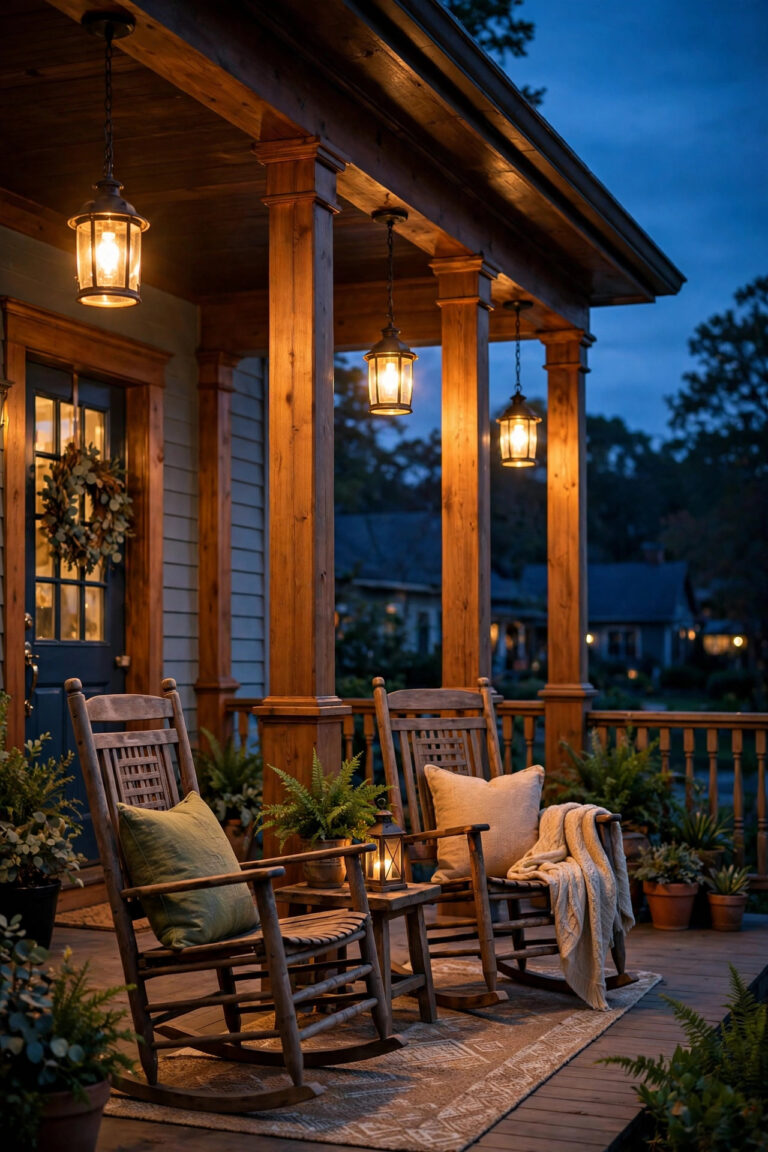
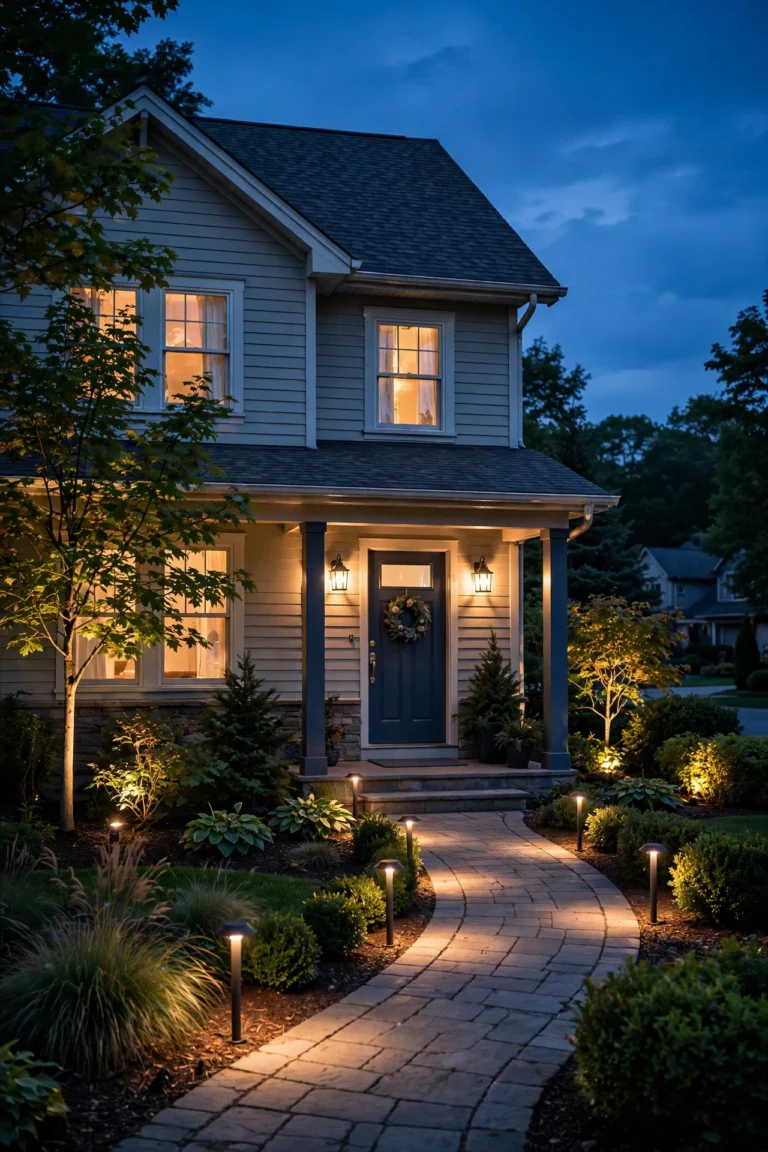
There is a reason the coach lantern has outlived every lighting trend of the last hundred years: it just looks right on a classic home. When I help friends choose outdoor coach lights, I always start with the same advice — this is the fixture style that never fights your architecture. Whether your house is brick colonial, white clapboard, or a farmhouse with a wide front porch, a barn-style sconce or coach lantern reads as if it was always meant to be there. In this post I'm sharing 19 ways to use them, from the classic pair flanking a front door to gooseneck barn lights over the garage and copper lanterns that get prettier every year. You'll get my honest sizing rules, mounting heights that actually look balanced, finish pairings by house color, and what each project really costs. Think of coach lights as your anchor layer — the warm, welcoming glow at every door — and then layer path lights and accents around them.

1. A Classic Black Coach Lantern Pair Flanking the Front Door
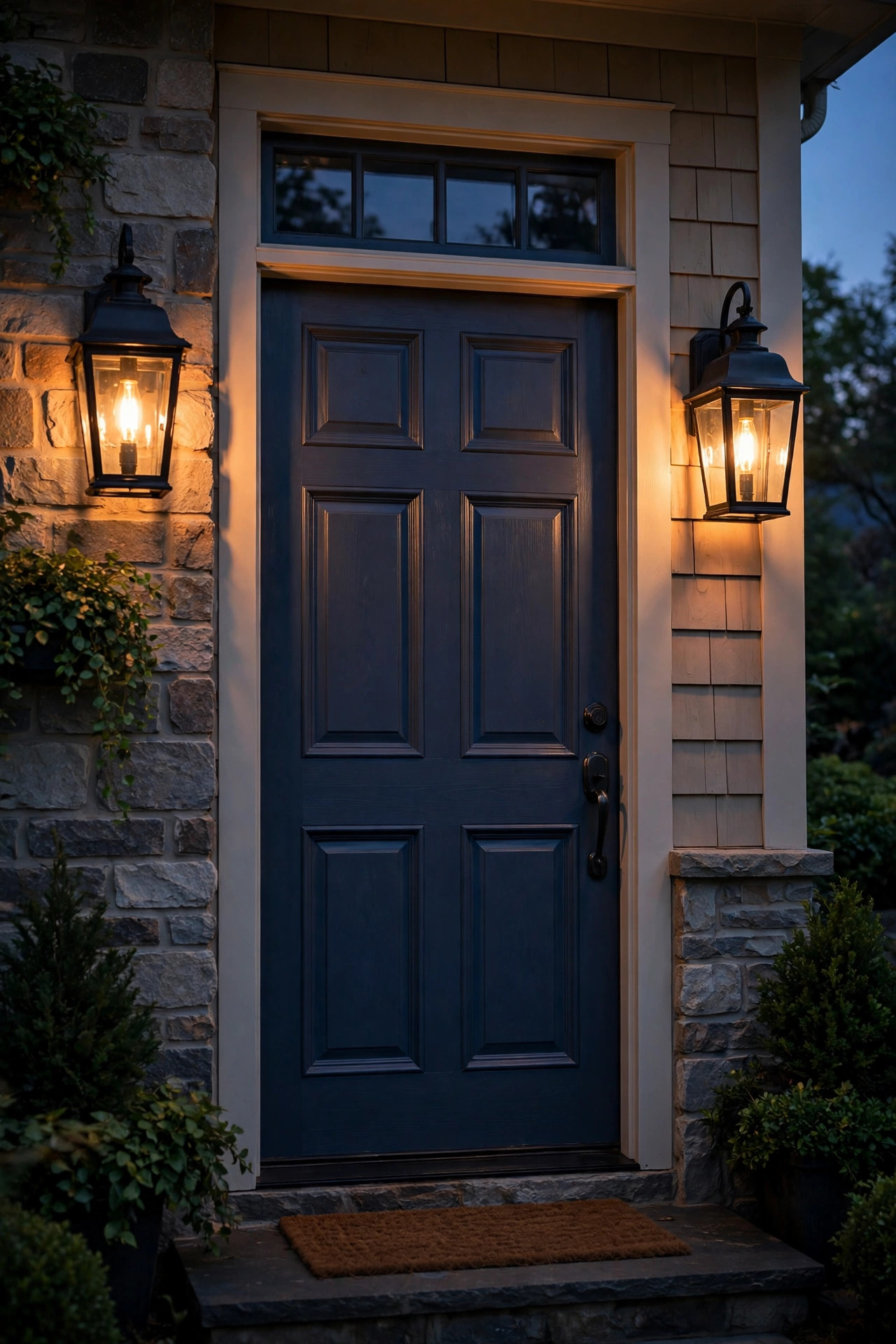
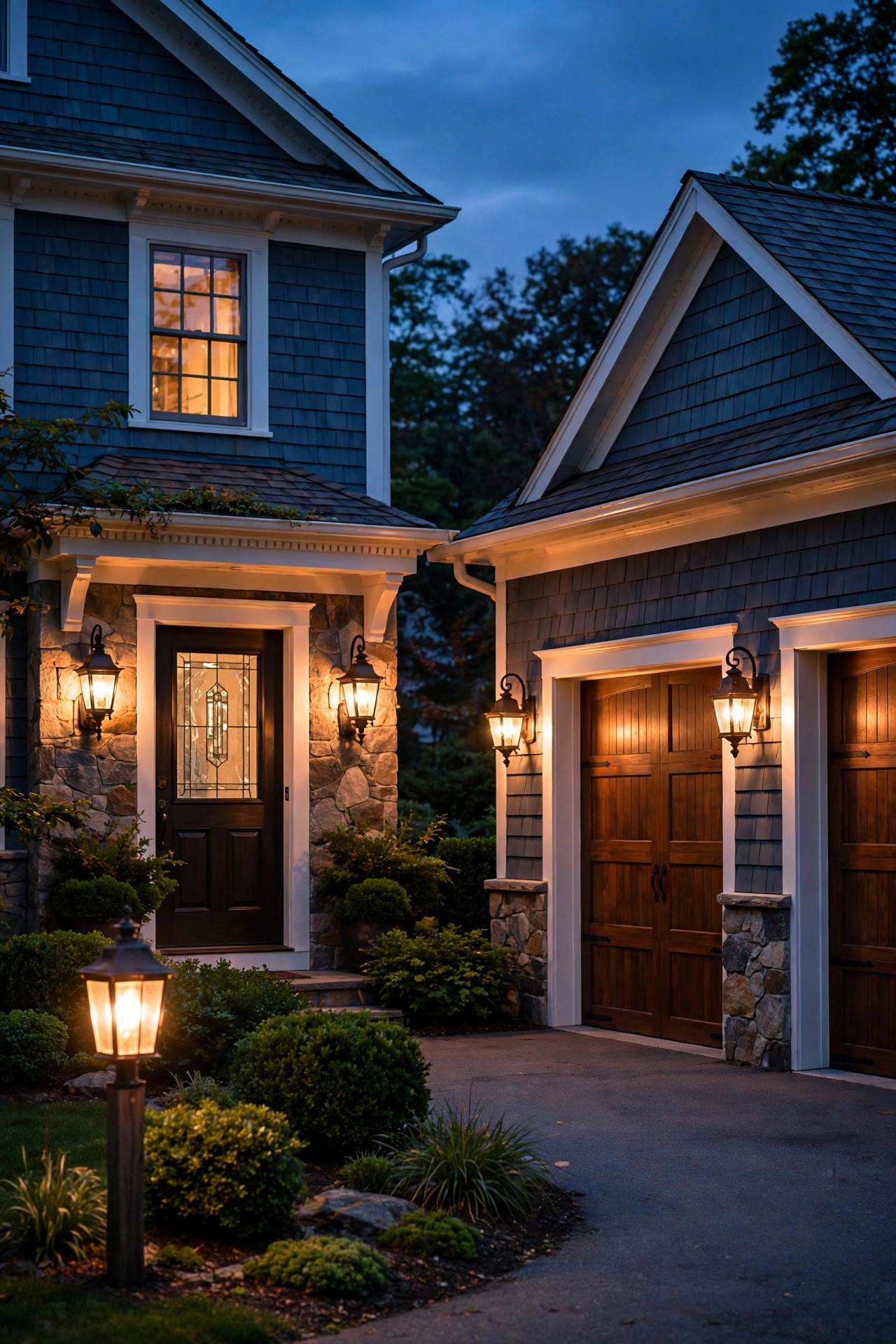
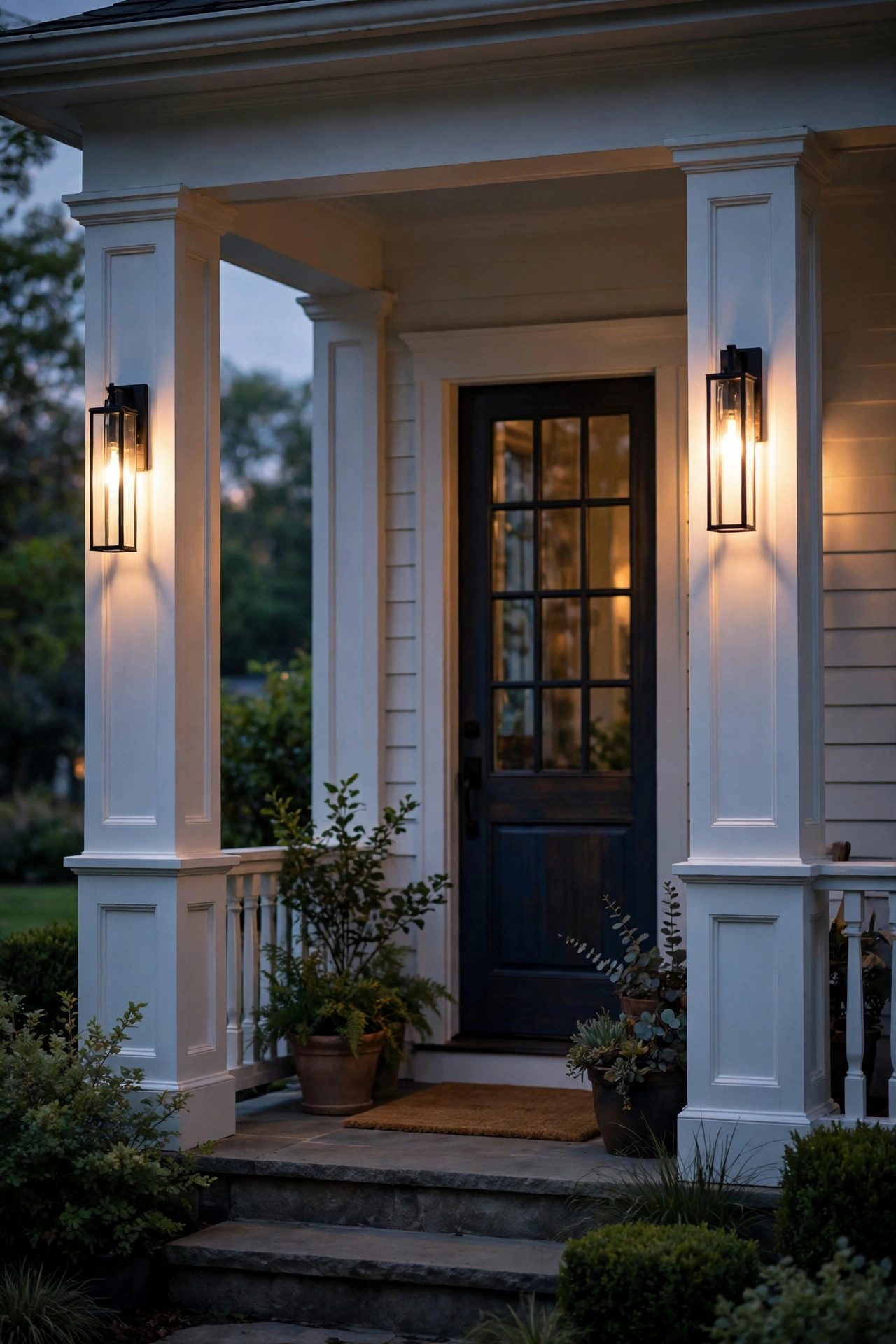
This is the look most people picture, and honestly? It's popular because it works on almost everything. Two black coach lanterns, one on each side of the front door, give you symmetry, balance, and that instant "this home is cared for" feeling from the street. My sizing rule: each fixture should measure roughly one-quarter to one-third the height of your door. For a standard 80-inch door, that means lanterns about 18 to 24 inches tall once you include the mounting tail — smaller than that and they read as an afterthought. Mount the center of each fixture about 66 inches off the porch floor, roughly at eye level, so the glow lands on faces rather than blinding guests. Choose clear glass if you want that sparkly, candlelit look with an LED filament bulb inside, or seeded glass to soften the glare. Use 2700K bulbs in the 450–800 lumen range per fixture; a pair doesn't need to be stadium-bright, just warm and welcoming. If your entry only has one junction box, don't panic — idea #15 covers a no-rewire trick, and a single larger lantern beside the handle side of the door still looks intentional.
Suggested budget range: $80 – $240.
2. A Gooseneck Barn Light Over the Garage Door
The gooseneck is the coach light's hardworking country cousin, and over a garage door it is pure charm. That curved arm throws light downward in a wide, useful pool — exactly what you want when you're unloading groceries after dark — while the barn silhouette keeps a classic facade from ever looking too formal. Size matters here: for a single garage door, a shade 12 to 14 inches in diameter looks balanced; for a double door, go 16 inches or use two smaller goosenecks, one centered over each half. Mount the fixture 10 to 12 feet up, or just above the door trim if your facade is shorter. I love a matte black or galvanized finish here, with a warm 3000K LED inside so the driveway feels lit but not clinical. Because the shade points the light down, goosenecks are also naturally dark-sky friendly and won't annoy the neighbors across the street. If your garage is the wide three-car style, my roundup of garage carriage light ideas has more layouts for mixing goosenecks with carriage lanterns across a big facade.
Suggested budget range: $60 – $180.

3. Oversized Outdoor Coach Lights for a Two-Story Entry
If your entry is tall — a two-story foyer, a big portico, or 9-foot doors — standard sconces will disappear. This is where oversized outdoor coach lights earn their keep. Scale up to fixtures 24 to 30 inches tall, and don't be shy: on a grand entry, a lantern that looks almost too big in the store usually looks exactly right once it's up on the wall. Hang the pair so the visual center of the glass sits around 72 inches from the porch floor, a touch higher than standard, to match the taller proportions. Because these fixtures hold bigger glass panels, choose LED filament bulbs with a little more output — 800 to 1,100 lumens each — so the lantern glows evenly instead of showing one hot spot. A four-sided lantern with a candelabra cluster inside reads especially classic on brick and stone. One practical note from experience: oversized fixtures catch more wind, so make sure the mounting bracket is rated for the fixture's weight and the backplate is screwed into solid blocking, not just siding. Done right, these become the jewelry of the whole facade.
Suggested budget range: $180 – $450.

4. Oil-Rubbed Bronze Sconces on a Brick Facade
Black fixtures on red brick are classic, but if you want something softer and a little more old-world, oil-rubbed bronze is my pick. The deep brown finish with its faint coppery edges picks up the warm tones in the brick instead of contrasting against them, so the whole wall feels richer. This pairing is especially beautiful on brick that leans brown or orange rather than true red. Because bronze fixtures tend to have a slightly traditional profile — curved arms, finial tops, beveled glass — they suit colonials, Tudors, and brick traditionals best. Pair them with 2700K filament bulbs; cooler light washes the bronze out and makes it look gray. One caution: true oil-rubbed bronze is a living finish that lightens at the edges over time, which I think is charming, but if you want zero change, choose a powder-coated "bronze" finish instead and you'll get the color without the patina. Wipe them down once a season with a dry cloth — never polish, or you'll strip the finish unevenly. Mount at the standard 66 inches and let the brick do the showing off.
Suggested budget range: $90 – $260.

5. Seeded Glass Coach Lights for Colonial Homes
Colonial architecture is all about symmetry and restraint, and seeded glass coach lights fit that brief perfectly. The tiny bubbles in seeded glass diffuse the bulb just enough to hide the harsh point of light while still showing a warm sparkle — it genuinely looks like old glass, which is exactly the effect you want on a historic-style home. I recommend a simple four- or six-sided lantern shape with minimal ornament: a clean finial, a loop or hook top, and straight lines. Black is the traditional choice, and on white or cream clapboard it gives you that crisp Williamsburg contrast. Keep the pair perfectly level and equidistant from the door casing — colonial entries punish sloppy measurements because the eye goes straight to any asymmetry. Inside, a single LED filament bulb around 600 lumens mimics a candle flame's brightness without the fire risk. For more period-correct pairings across the whole facade, my guide to colonial exterior lighting covers porch pendants and post lights that match this style. This is quiet, confident lighting — nothing trendy, nothing you'll regret in ten years.
Suggested budget range: $70 – $220.

6. Barn-Style Sconces Flanking a Carriage Garage Door
Carriage-style garage doors — the ones with crossbuck panels and strap hinges — deserve fixtures with the same barn DNA. A pair of barn-style sconces, one on each side of the door, frames the whole opening and makes the garage look like part of the house instead of an add-on. Look for fixtures with a wide metal shade or a caged lantern design; both read "barn" instantly. Size them boldly: garage doors are big, so fixtures 12 to 15 inches wide hold their own where a dainty porch sconce would vanish. Space them evenly — centered on the trim or pilasters on either side — and mount the light source about 8 feet up so the glow washes the doors without glaring into the driver's eyes. Galvanized steel, matte black, and deep barn red are the classic finishes; red is a commitment, but on a white farmhouse garage it is absolutely gorgeous. Put the pair on the same switch or timer as your front-door coach lights so the whole property lights as one scene at dusk.
Suggested budget range: $90 – $280.

7. A Copper Coach Lantern That Patinas Beautifully
Copper is the one fixture material that honestly looks better in year five than on install day. A new copper coach lantern starts bright and penny-shiny, then deepens through bronze-brown and eventually — if you let it — develops that soft green verdigris that looks incredible against stone, cedar, and white siding. If you'd rather keep the warm metallic glow, choose a lacquered copper finish and give it a coat of clear protectant every couple of years; if you want the aged look, buy unlacquered copper and simply leave it alone. Copper pairs naturally with warm light, so stick to 2700K bulbs. It's also naturally antimicrobial and shrugs off coastal salt air better than most painted metals, which makes it a smart splurge for shore homes. Expect to pay more — real copper costs real money — but a single copper lantern beside the front door, flanked by simple black fixtures elsewhere, gives you the heirloom moment without the heirloom invoice. Never use abrasive cleaners on it; a soft cloth and mild soap are all it needs.
Suggested budget range: $150 – $400.

8. A Motion-Sensor Coach Light for the Side Entry
Side doors and mudroom entries get the daily traffic but rarely the pretty fixtures — and they're exactly where you want light that turns itself on. A coach light with a built-in motion sensor gives you the classic lantern silhouette with security-light brains. Look for an adjustable sensitivity dial and a time setting that keeps the light on 1 to 5 minutes after motion stops; too short and it clicks off while you're juggling grocery bags and keys. The better models offer a dual-brightness mode: a soft 20–30% glow all evening for welcome, jumping to full brightness when someone approaches. That's the setup I recommend, because a side entry that blasts full power at every passing cat gets old fast. Mount it about 7 feet up beside the latch side of the door, and angle-test it at night — you want the sensor's view crossing the walking path, not pointing down the driveway where every car trips it. Keep the fixture's style matched to your front coach lights so the house reads as one design, and choose 2700–3000K so the side of the house doesn't glow a different color than the front.
Suggested budget range: $60 – $160.
9. Dusk-to-Dawn Photocell Coach Lights for Zero-Effort Evenings
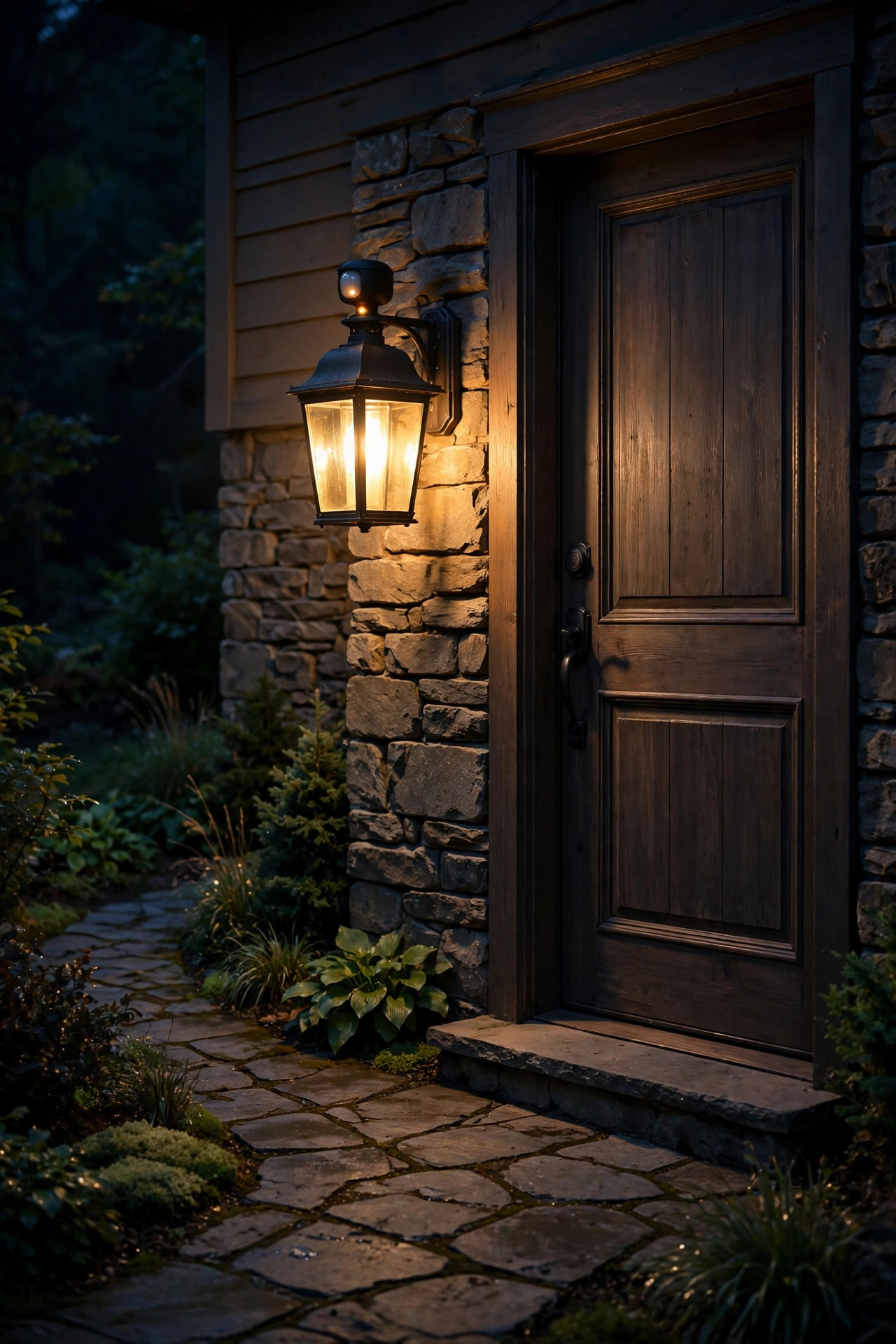
If you love the look of coach lights but know yourself well enough to admit you'll never flip the switch consistently, photocell fixtures were made for you. A dusk-to-dawn coach light senses ambient darkness and turns itself on at sunset and off at sunrise, every single night, with no timer to program and no app to fuss with. You can buy the sensor built into the fixture, or — my preferred trick — screw a photocell socket adapter into an existing lantern and keep the fixture you already love. One installation note: keep the sensor out of the fixture's own light spill and away from other bright sources like streetlights, or it can flicker or refuse to trigger. These are wonderful for the front-door pair, for elderly parents' homes, and for anyone who travels a lot, since the house always looks lived-in at night. Pair them with long-life LED bulbs rated 15,000 hours or more so you're not changing bulbs on a ladder every season. The running cost is pennies: two 8-watt LEDs burning dusk to dawn average roughly 8 to 10 dollars a year in electricity.
Suggested budget range: $50 – $150.

10. The Matching Trio: Outdoor Coach Lights at the Door, Garage, and Post
Here's the designer secret for a facade that looks professionally planned: repeat the same fixture family in three places. Outdoor coach lights at the front door, matching carriage lanterns at the garage, and a coordinating post light at the walkway or driveway create a rhythm your eye reads as "finished." They don't have to be identical twins — same finish, same glass style, same design language at different scales is actually better. Scale each to its job: largest at the front door, medium at the garage, and the post light tall enough to stand on its own. Keep every bulb the same color temperature — 2700K across the board — because mismatched whites are the number one thing that makes a lighting scheme look accidental. Wire the three zones to come on together at dusk, ideally on one timer or photocell circuit, so the whole scene rises as one. If budget forces you to stage it, start with the front door pair, add the garage next, and finish with the post light; the family resemblance means each addition snaps into place. This trio approach is the backbone of almost every classic exterior I put together.
Suggested budget range: $250 – $700.
11. Galvanized Barn Sconces for a Farmhouse Front Porch
Galvanized steel — that speckled, silvery-zinc finish — is the barn look at its most authentic, and on a farmhouse porch it is unbeatable. The finish shrugs off weather, hides dust and pollen beautifully between cleanings, and pairs with everything from white board-and-batten to natural wood doors. The most classic farmhouse pairing is a galvanized barn sconce with a gooseneck arm or an angled shade beside the front door, sized generously — these fixtures were born on working barns, so they look best a little oversized. Because the metal is silvery, it reflects bulb color honestly: use warm 2700K LED filament bulbs to keep the glow golden instead of industrial. A pair flanking the door plus one more by the porch steps gives you even, glare-free light along the whole porch. Galvanized fixtures are also among the most affordable in this roundup, which makes them a smart pick for a full wraparound porch where you might need four or five matching lights. Wipe them with a damp cloth once a season; the finish needs nothing else, and small dings just add to the story.
Suggested budget range: $40 – $130.

12. Candle-Style LED Filament Coach Lanterns
The original coach lanterns burned actual candles, and modern LED filament bulbs let you fake that look so convincingly that guests will ask how you keep the flames lit. Inside a clear-glass coach lantern, a candle-shaped filament bulb — or a small cluster of three on a candelabra base — gives you that vertical, flickering-adjacent glow that flat LED panels never will. Choose bulbs labeled 2700K or warmer; some "flame effect" bulbs even add a gentle flicker animation, which is delightful at a porch lantern but a bit much at the garage, in my opinion. Keep output modest, around 400–600 lumens per bulb — candlelight was never bright, and the charm is in the softness. This style sings on colonials, cottages, and any home with traditional bones, and seeding the glass slightly (idea #5) softens it further. One practical check: measure your lantern's interior before ordering, because candle-cluster bulbs are taller than standard bulbs and need clearance from the glass and top vent. Never use real candles or oil lamps in enclosed outdoor lanterns near siding — LED filament only, always.
Suggested budget range: $60 – $200.

13. Coach Lights Mounted on Porch Columns
Not every porch has wall space beside the door — French doors, sidelight windows, and board-and-batten siding all eat the usual mounting spots. The elegant workaround is mounting compact coach lights on the porch columns themselves. A lantern centered on each column at about 6 feet high frames the porch opening like a picture, and the light washes inward across the porch instead of glaring out at the street. Choose slimmer fixtures here, roughly 6 to 8 inches wide, scaled to the column width so they don't overhang the edges — the fixture should never be wider than the column face. Wiring runs up through the column if it's hollow, or in discreet paintable conduit if it's solid wood; an electrician can usually add column lights to an existing porch circuit in a few hours. This placement is also a gift for rocking-chair porches: the light sits in front of you, lighting faces and books, rather than shining from behind the door wall into your eyes. Match the finish to your door hardware and the effect is pure Southern porch charm.
Suggested budget range: $120 – $320.
14. Rustic Wood-and-Metal Barn Sconces by the Back Door
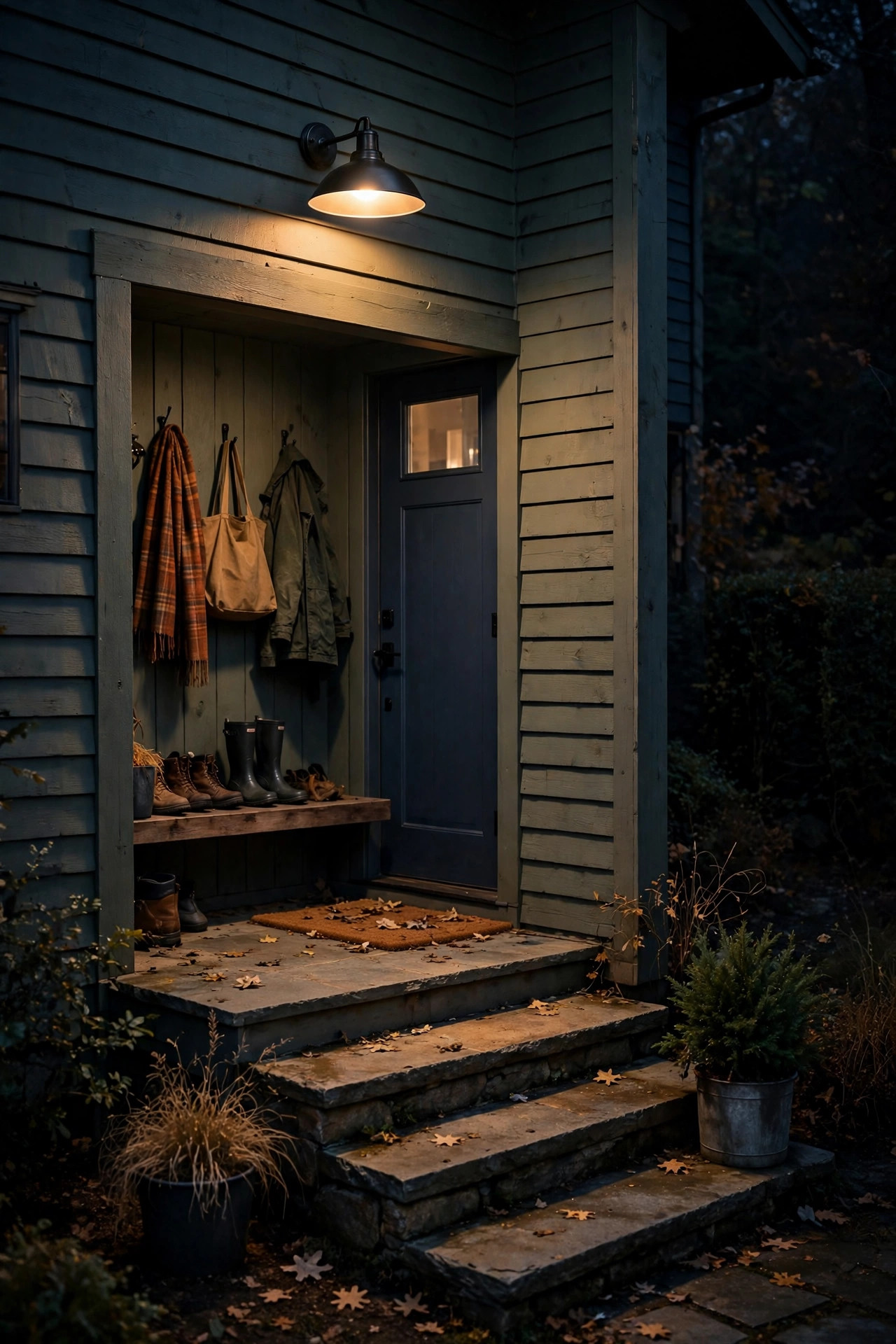
The back door deserves better than a bare bulb in a jelly jar. A rustic barn sconce — blackened metal frame, seeded or clear glass, sometimes a wood backplate or crossbuck detail — gives the hardest-working entrance in the house some dignity. This is the fixture I recommend for homes with a casual, lodge, or mountain feel, and for anyone whose back entry opens to a deck or fire pit area where the light will be seen all evening. Because back doors live harder lives — muddy boots, dog traffic, grill smoke — choose a fixture rated for wet locations with an open bottom so bugs and water don't collect inside. Mount it on the latch side at 66 inches, and if the back porch is uncovered, a short barn shade over the lantern keeps rain off the glass and cuts glare. Keep the bulb warm and modest; this light's job is a friendly pool at the door, not a stadium wash. It photographs beautifully against horizontal siding and log walls alike.
Suggested budget range: $55 – $170.

15. Solar Coach-Style Sconces Where There's No Wiring
Plenty of older homes have exactly one porch light — or a junction box in precisely the wrong place — and running new wire means an electrician and wall patches. Solar coach-style sconces have gotten genuinely good: a small panel on top of the lantern charges all day, and modern versions give you a real 6 to 8 hours of warm light at 100–200 lumens. That's accent brightness, not task brightness, so set expectations honestly — solar coach lights are for glow and guidance, and they pair beautifully with one wired fixture doing the heavy lifting. Placement is everything: the panel needs direct sun, so these shine on south- and west-facing walls and disappoint on deep shaded porches. Look for models with replaceable batteries and an on/off switch so you can rest them during dark winter weeks. Installation is four screws and ten minutes, which makes them perfect for renters, garden gates, detached garages, and the far end of a long fence. Buy them in matched pairs from the same production run so the color temperature matches — mismatched solar whites are painfully obvious side by side.
Suggested budget range: $35 – $110.

16. A Low-Profile Barn Sconce for the Mudroom and Utility Entry
Every classic home has one purely practical door — mudroom, laundry, basement walk-out — and it needs light that's useful, tough, and unbothered by weather. A low-profile barn sconce with an opaque metal shade pointing down is the workhorse here: it throws a clean cone of light on the steps and landing, keeps glare out of your eyes, and never pretends to be decorative, which is its own kind of handsome. Choose powder-coated steel or aluminum rated for wet locations, and a shade wide enough — 10 to 12 inches — to cover the whole landing. Because the bulb is hidden inside the shade, you can run a brighter 800–1,000 lumen LED without harshness, which you'll appreciate when you're carrying laundry baskets in the dark. Add a simple motion sensor or put it on the same dusk-to-dawn adapter from idea #9 and it simply always works. This is also the right fixture under eaves and on garage side walls where a glass lantern would get bumped by ladders and trash bins. Cheap, cheerful, and nearly indestructible.
Suggested budget range: $30 – $90.
17. A Coach Lantern Post Light at the Driveway Entrance
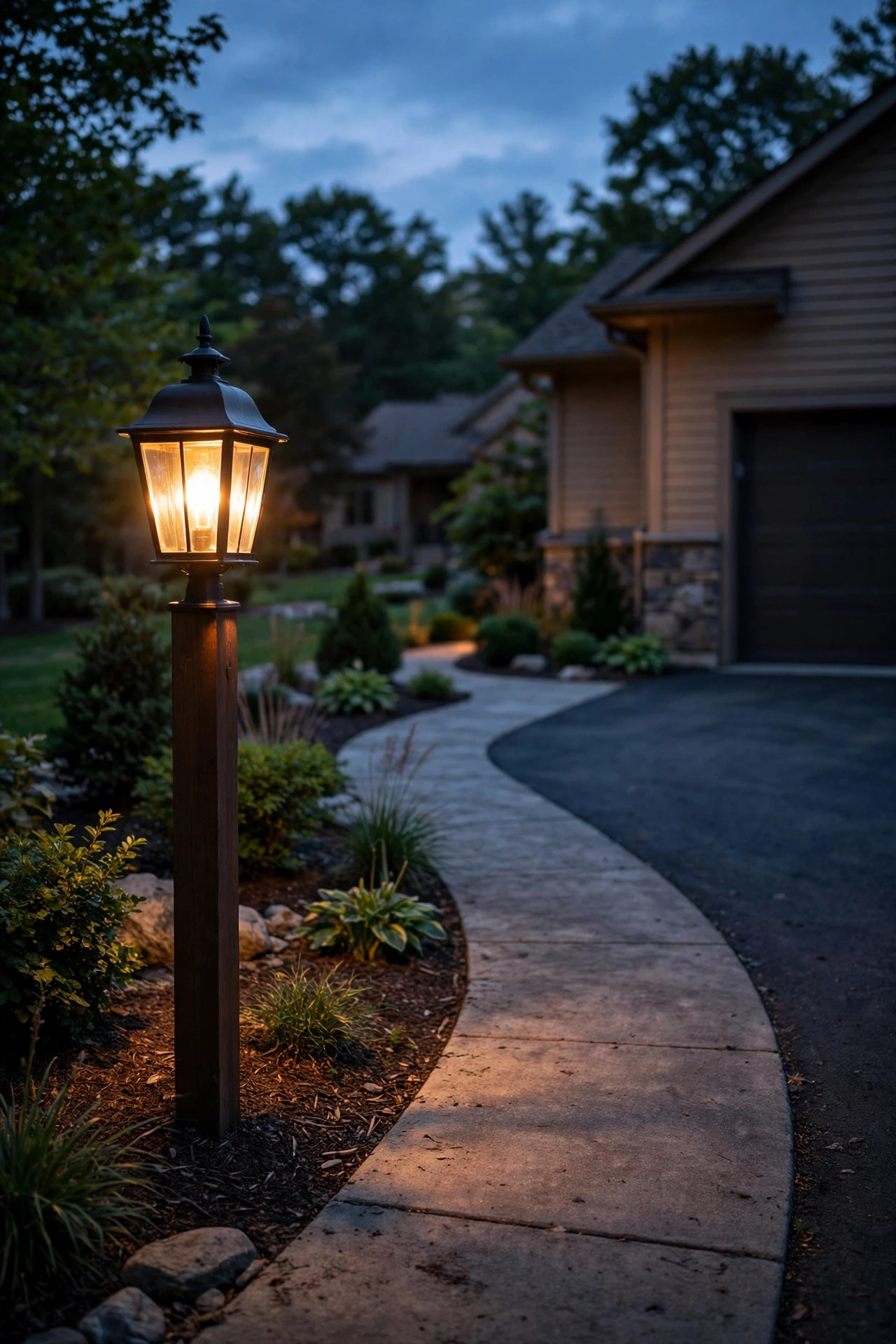
A post-mounted coach lantern at the end of the driveway or the start of the front walk is the warmest welcome a classic home can offer — it's the modern descendant of the carriage lamps that once lit estate gates. Height is the rule here: a post 5 to 7 feet tall puts the lantern above hedge height and lets the light pool generously on the walk without blinding drivers. Choose a lantern that echoes your front-door fixtures in shape and finish, but one size larger, since it stands alone with nothing around it for scale. Wired versions on a photocell or timer are the reliable choice; solar post lights work at sunny driveway entrances but fade on tree-lined lots. Set the post back about a foot from the driveway edge so car mirrors and snowplows clear it, and plant a low ring of boxwood or ornamental grass at the base to ground it. If your property has a gate or pillars, a lantern on each pillar beats a post — same glow, grander architecture. Guests will find your house on a dark street by this light alone.
Suggested budget range: $120 – $350.
18. Smart Coach Lights on a Schedule for a Home That Glows on Cue
Classic fixture, modern manners. Putting your outdoor coach lights on smart bulbs or a smart switch means the whole facade lights itself ten minutes before sunset, dims to a candle-soft glow at 11 p.m., and brightens instantly if you tap your phone when a car pulls in. My recommendation is a smart switch rather than smart bulbs for a matched pair or trio — one switch controls everything, the bulbs stay simple and long-lived, and guests can still flip the physical switch without breaking your automations. If you do choose smart bulbs, warm-to-dim models that slide from 2700K down to a firelight 2200K as they dim are pure magic inside clear-glass lanterns. Set an astronomical schedule so the on-time drifts with the seasons automatically. A vacation mode that randomizes the schedule slightly keeps the house looking occupied while you're away. Keep the Wi-Fi hub within reasonable range of the front wall; brick and stone eat signal, so a switch inside the entry or garage usually connects more reliably than a bulb out at the post light.
Suggested budget range: $70 – $220.

19. The Layered Finish: Coach Lights Plus Barn Floods for the Whole Facade
The most beautiful classic exteriors I've lit never rely on coach lights alone — they layer. Think of it in three bands: coach lights and barn sconces at every door for welcome, a pair of shielded barn-style floods or gooseneck accents washing the facade for depth, and soft path lighting connecting the two. Start with the door fixtures from this list, then add wide-beam, downward-aimed light from the eaves or garage to graze brick and stone texture — that grazing light is what makes a house look expensive after dark. Keep everything at 2700K so the layers blend into one warm scene, and put each layer on its own switch or zone so you can run "welcome" (doors only), "evening" (doors plus path), or "full" (everything) depending on the night. Walk the whole setup from the street before you call it done: squint, and you should see pools of warm light and zero bare bulbs glaring back at you. If you're planning the full property, my notes on gooseneck barn lights go deeper on shade sizes and mounting for the accent layer. Layered, warm, and matched — that's the whole secret.
Suggested budget range: $300 – $900.

Frequently Asked Questions
What size coach light should I buy for my front door?
Use the door as your ruler: the fixture should be roughly one-quarter to one-third the height of the door itself. For a standard 80-inch door, that means a lantern about 18 to 24 inches tall. When in doubt, size up — the most common mistake I see is fixtures that are too small, which read as timid from the street. For a pair flanking the door, each fixture follows the same rule.
How high should outdoor coach lights be mounted?
Mount the center of the fixture about 66 inches above the porch floor — roughly eye level — so the light lands softly on faces and the step. For taller entries and oversized fixtures, 72 inches works better. At garage doors, the light source usually sits 7 to 8 feet up for sconces beside the door, or 10 to 12 feet for a gooseneck centered above it.
Are coach lights and barn lights weatherproof enough for uncovered spots?
Only if they're rated for it. Look for a "wet location" rating for fixtures exposed to direct rain, like most garage and post placements. "Damp location" fixtures belong under porches and eaves only. Open-bottom designs drain freely and collect fewer bugs; sealed fixtures with a gasket last longer in coastal and very wet climates. Always match the rating to the spot, not just the style.
What color temperature looks best in coach lanterns?
Warm white, 2700K, is my answer almost every time — it mimics candlelight and gaslight, flatters brick, stone, and wood, and makes clear-glass lanterns glow the way they were designed to. A 3000K bulb is acceptable over driveways where you want slightly crisper task light, but avoid 4000K and above in coach fixtures; the blue-white light fights the classic styling and makes the whole facade feel like a parking lot.
Conclusion
Nineteen ideas in, the principle never changes: outdoor coach lights and barn-style sconces work because they respect the house. Match the fixture to the architecture, size it bravely, mount it at eye level, keep every bulb warm at 2700K, and layer the doors with the garage and the path so the whole property glows as one scene. Start with the front door pair — that single weekend project changes how your home feels every night you come home. Then add the garage, the post light, and the accents as your budget allows. Browse the rest of my outdoor lighting ideas here on the site when you're ready for the next layer, and enjoy that first evening you pull up to a house that looks lit on purpose.