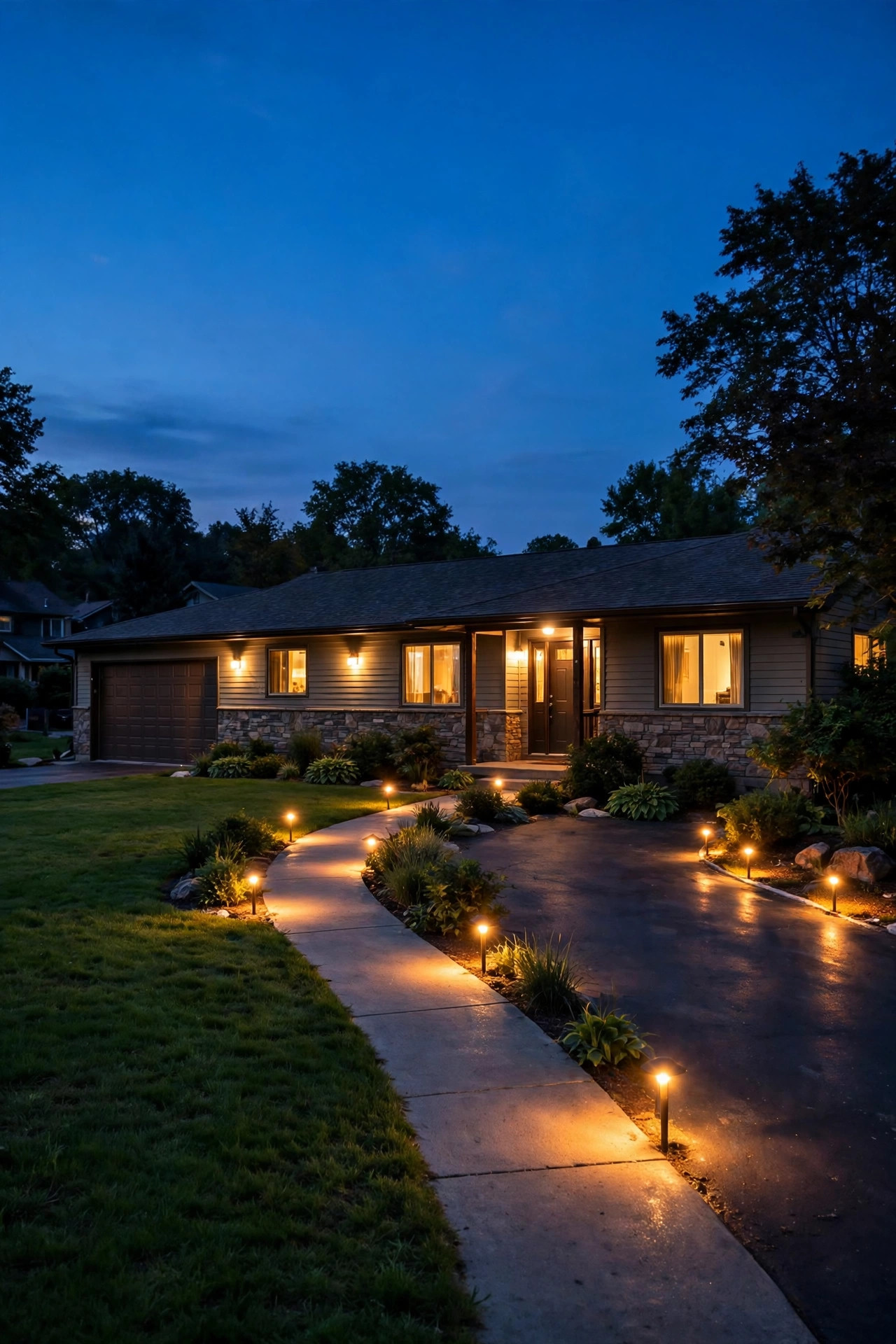
Ranch homes have a special kind of charm after dark — all that horizontal sweep, the low roofline, the wide welcoming lot. But that same long, low shape is exactly why ranch home front yard lighting needs its own playbook: light has to travel sideways here, not up. A tall two-story can get away with a couple of bright fixtures, while a ranch just goes dark at the ends. In my experience, the trick is layering — a soft wash along the facade, pools of light where feet actually land, and one or two accents to give the eye somewhere to rest. Spread the glow wide and low, keep everything warm (2700K is my sweetheart), and the whole house seems to stretch out and sigh. Below are my 17 favorite ways to do it, from $25 string lights to a full low-voltage plan, each with an honest budget so you can mix and match.
1. Low Path Lights Along the Front Walk
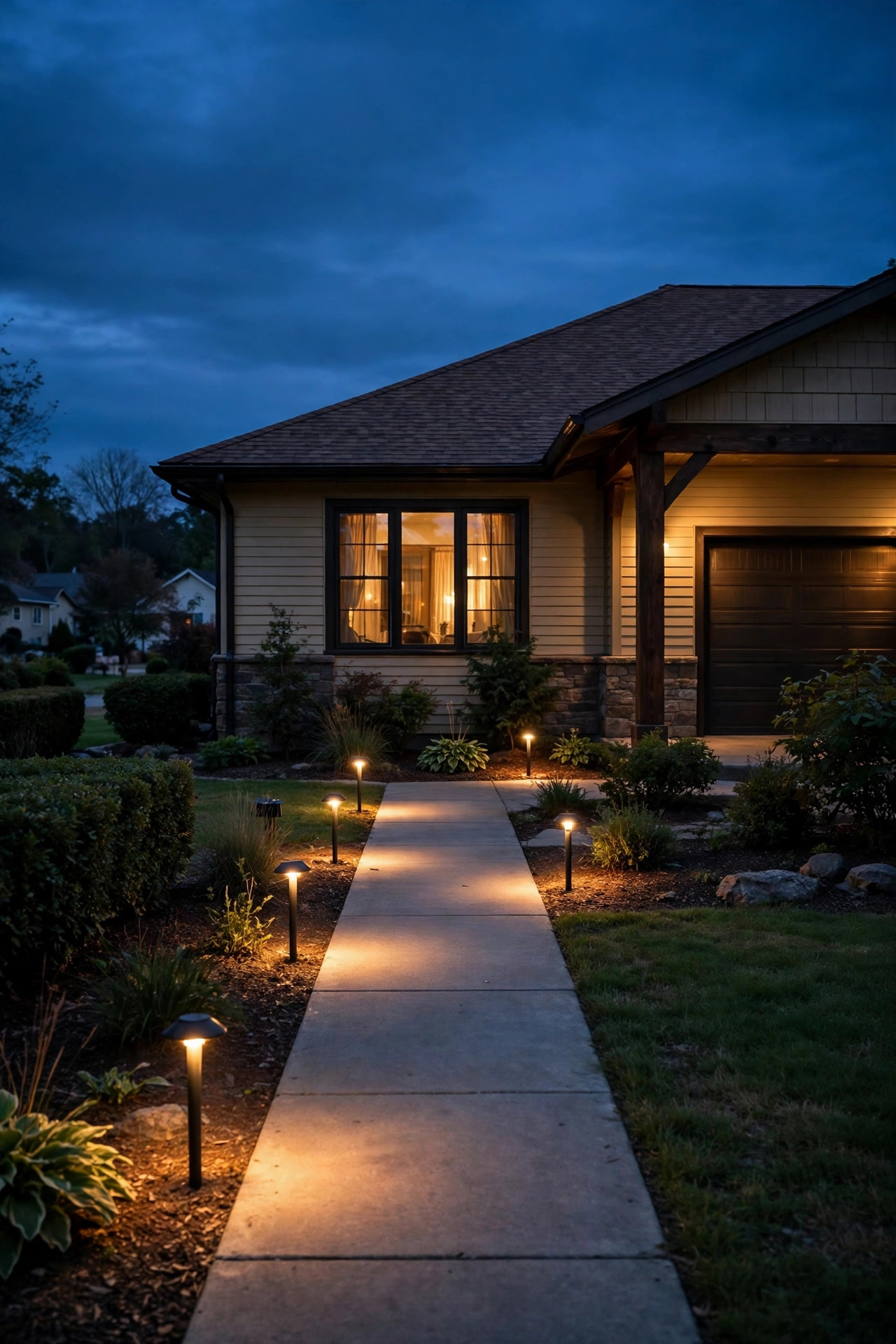
A ranch walkway usually runs long and straight from the driveway to the door, and it's the first thing guests navigate after dark. Short path lights — 12 to 15 inches tall, not the tall mushroom kind — suit the low profile of the house perfectly. I space them every 6 to 8 feet, staggered on alternating sides rather than lined up like an airport runway, so the pools of light overlap gently. Choose hooded or louvered fixtures that push light down onto the pavers instead of into people's eyes. Low-voltage LED versions in a warm 2700K blend beautifully with brick and stone, and one 150-watt transformer can usually run the whole walk plus a few accents. If your walk curves, tighten the spacing on the bend. Stake them a few inches back from the edge so the mower never clips them.
Suggested budget range: $60 – $180.
2. Uplight the One Big Front Tree
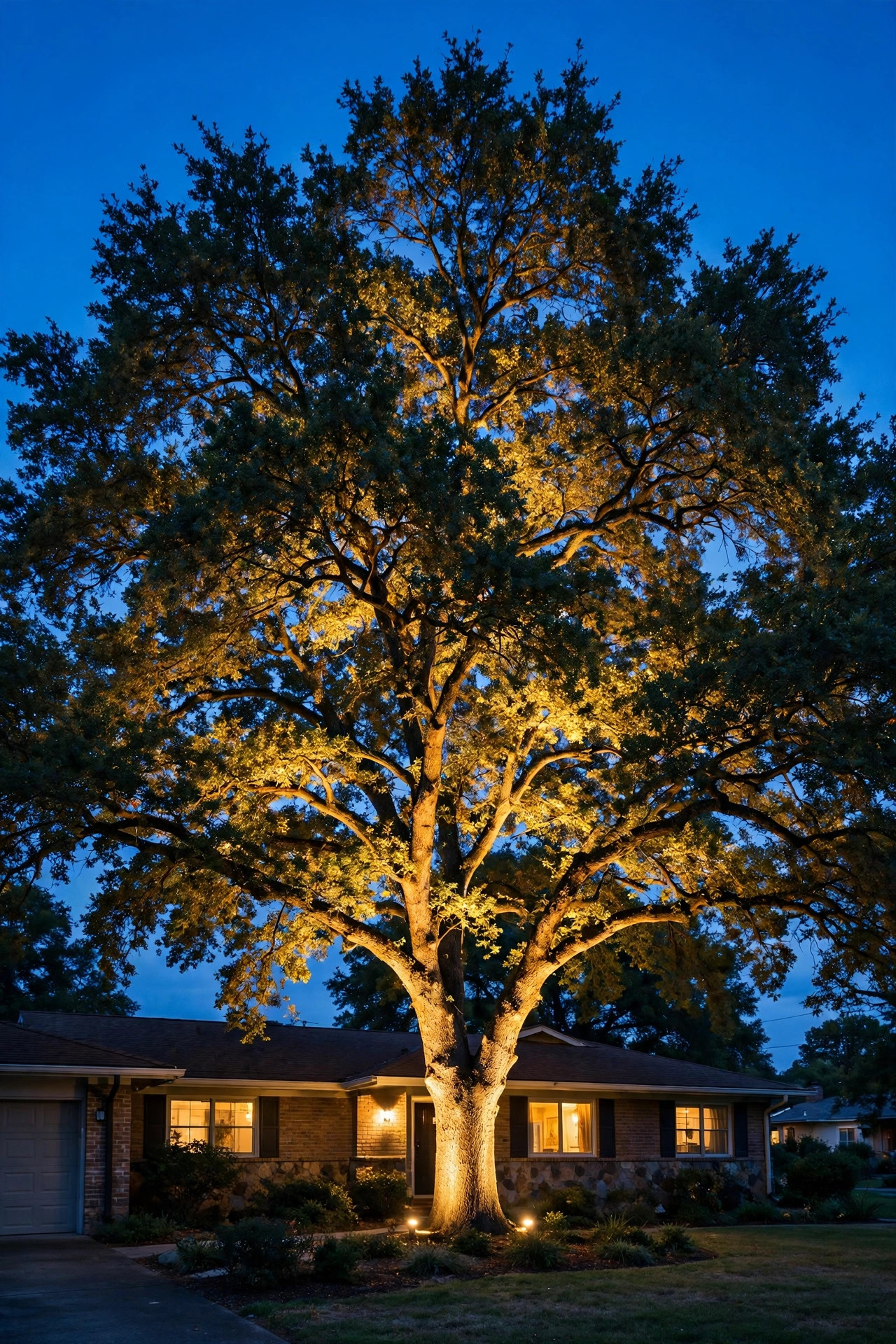
Most ranch lots have a single hero — a mature oak, maple or pine that towers over that low roofline — and lighting it is the fastest way to give the whole yard depth. Place one or two well lights or bullet spotlights 12 to 18 inches from the trunk, aimed up into the canopy at a fairly steep angle. A narrow-to-medium beam (about 35 degrees) keeps the light in the branches instead of spilling into the sky. In my experience, one fixture is enough for a slim tree; a wide-spreading shade tree may want two, angled from opposite sides so the canopy reads full, not flat. Keep the fixture a few inches above mulch level and clear leaves off the lens each fall — a buried lens is a dim lens. This single move makes the house feel nestled rather than exposed.
Suggested budget range: $75 – $250.
3. Matching Sconces Beside the Front Door
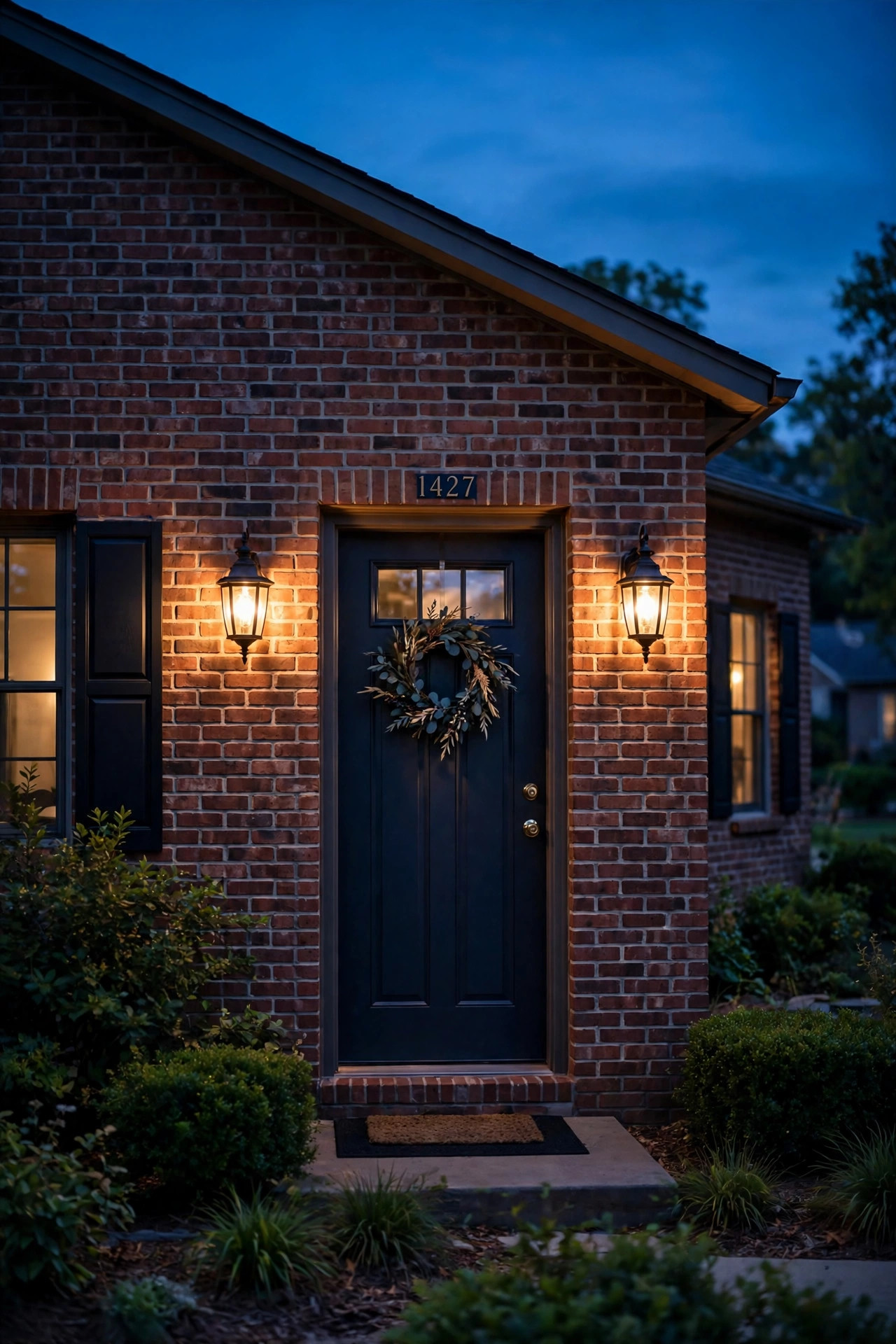
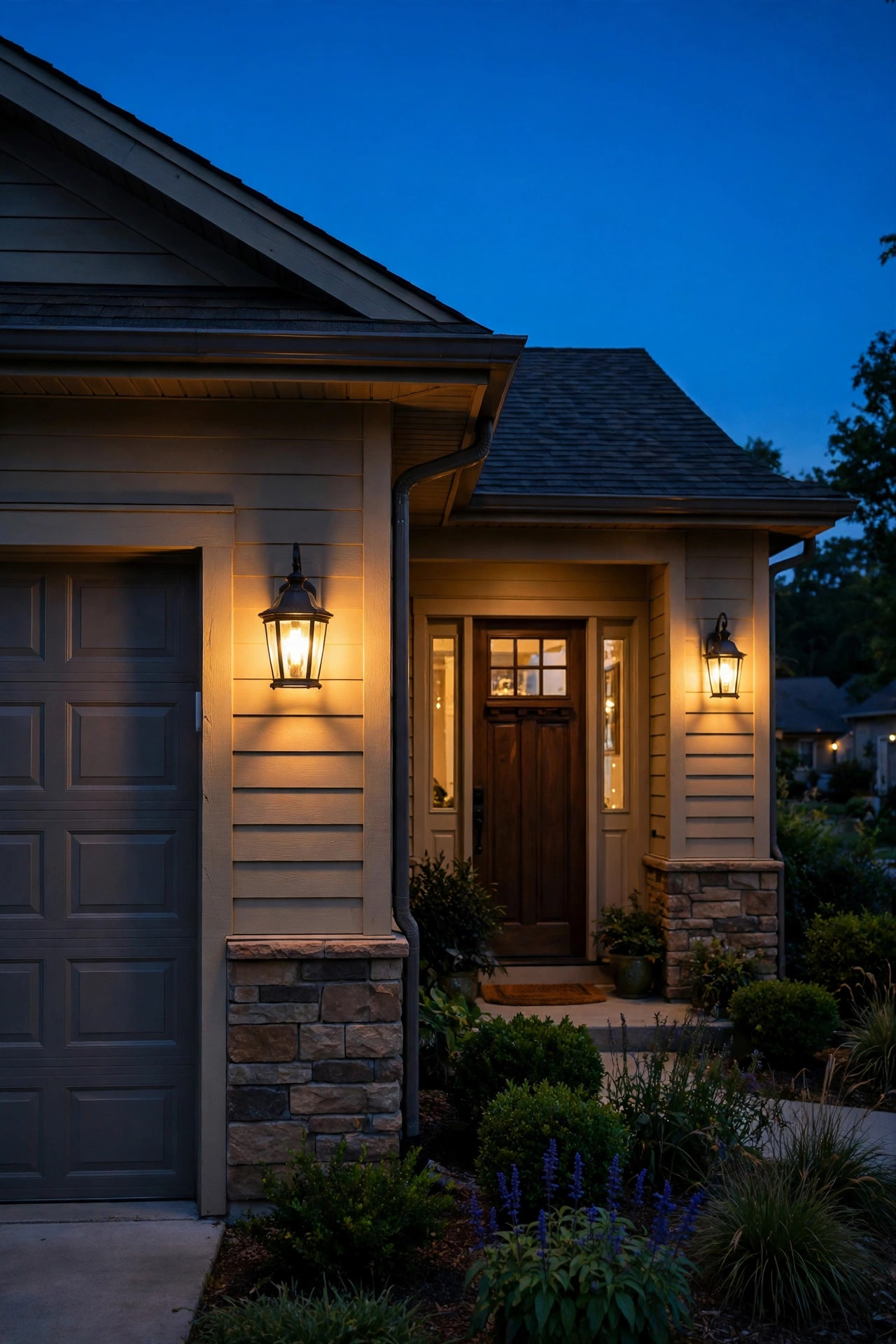
Ranch entries are often tucked modestly under the roof overhang, sometimes nearly hidden — which makes the front door sconces do double duty as both welcome and wayfinding. A matched pair flanking the door, mounted about 60 to 66 inches from the ground to the center of the fixture, frames the entry and balances the long facade. If your door has only one wired side (common on older ranches), a single larger statement lantern on the hinge side works honestly well. Look for fixtures sized in proportion: the lantern should be roughly a quarter to a third the height of the door. Warm LED filament-style bulbs at 2700K, around 450–800 lumens each, give glow without glare. I always recommend a photocell or timer here so the welcome light is simply on when you come home, no thinking required.
Suggested budget range: $80 – $300.
4. Graze the Long Facade With Wall-Wash Light
That long, low wall is the ranch's signature — and at night it can turn into a long, dark void. Grazing solves it: place small wash lights or well lights 12 to 24 inches out from the foundation, aimed up so the light skims across brick, stone or siding and pulls out every bit of texture. Space them 6 to 10 feet apart under windows and blank stretches, skipping the spots already lit by sconces. The effect is pure evening theater; the house reads wide, warm and intentional from the street. On smooth siding, pull fixtures slightly farther out and use a wider beam so you don't get harsh hot spots. This is the layer that ties the whole composition together, and it's the one I add first when a client says their ranch "disappears" at night. Our guide to front yard landscape lighting walks through the full layered plan if you want the bigger picture.
Suggested budget range: $120 – $400.

5. Solar Stakes Down the Long Driveway
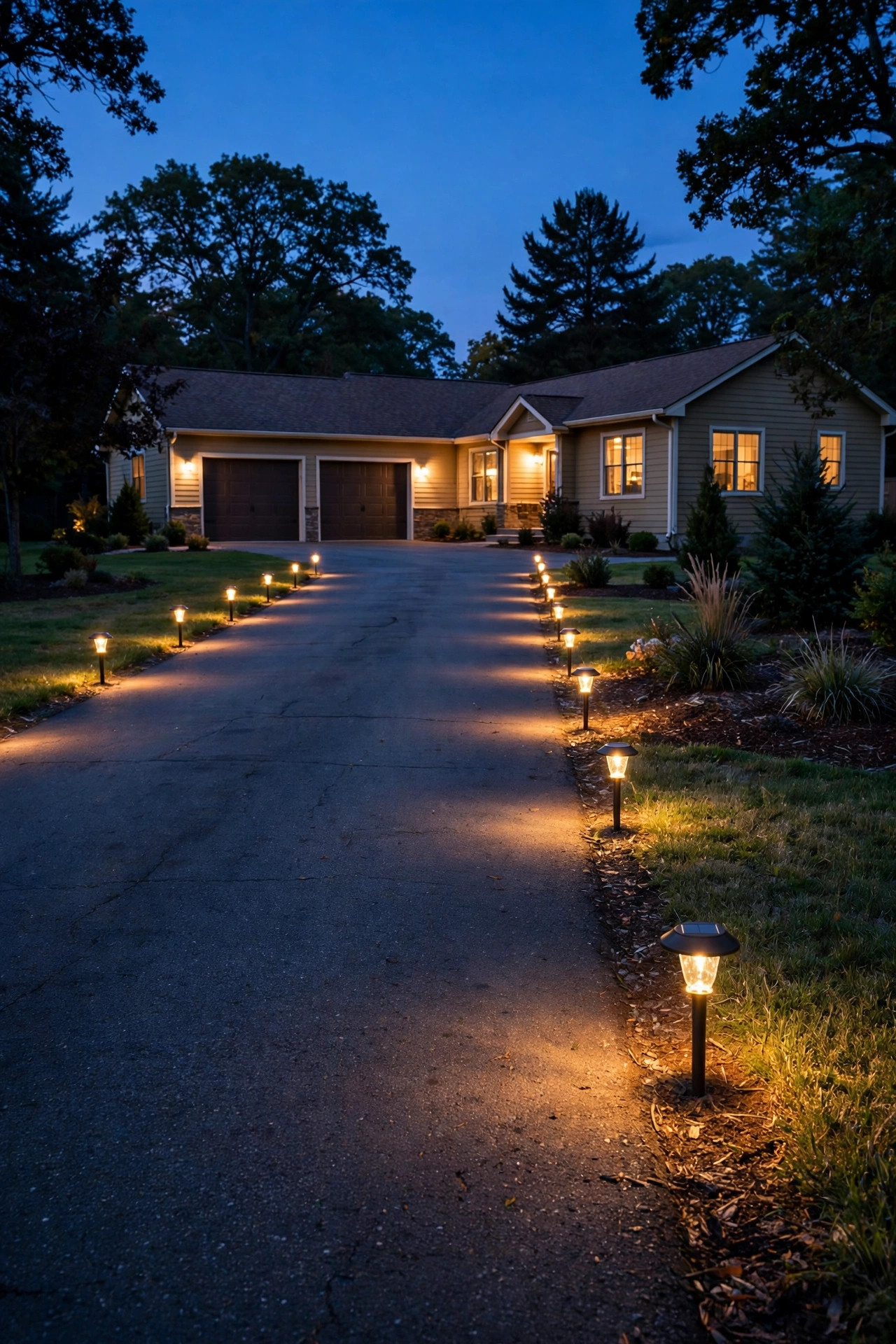
Ranch driveways are famously long, and trenching cable the full length isn't always practical. Solar stake lights earn their keep here: line one side (or alternate sides) every 8 to 10 feet so headlights and guests get a soft dotted guide all the way in. Choose stakes with a separate, larger solar panel or a high-capacity battery if your drive is tree-shaded — small integrated panels sulk in shade. Honestly? Solar brightness won't match wired, so think of these as markers, not illumination. For a more polished look, mix: wired fixtures for the first half near the house where the transformer lives, solar for the far stretch by the street. If you want the full wired treatment instead, our driveway lighting ideas cover bollards, strips and in-ground options in depth.
Suggested budget range: $50 – $160.
6. A Post Lantern Where the Driveway Meets the Street
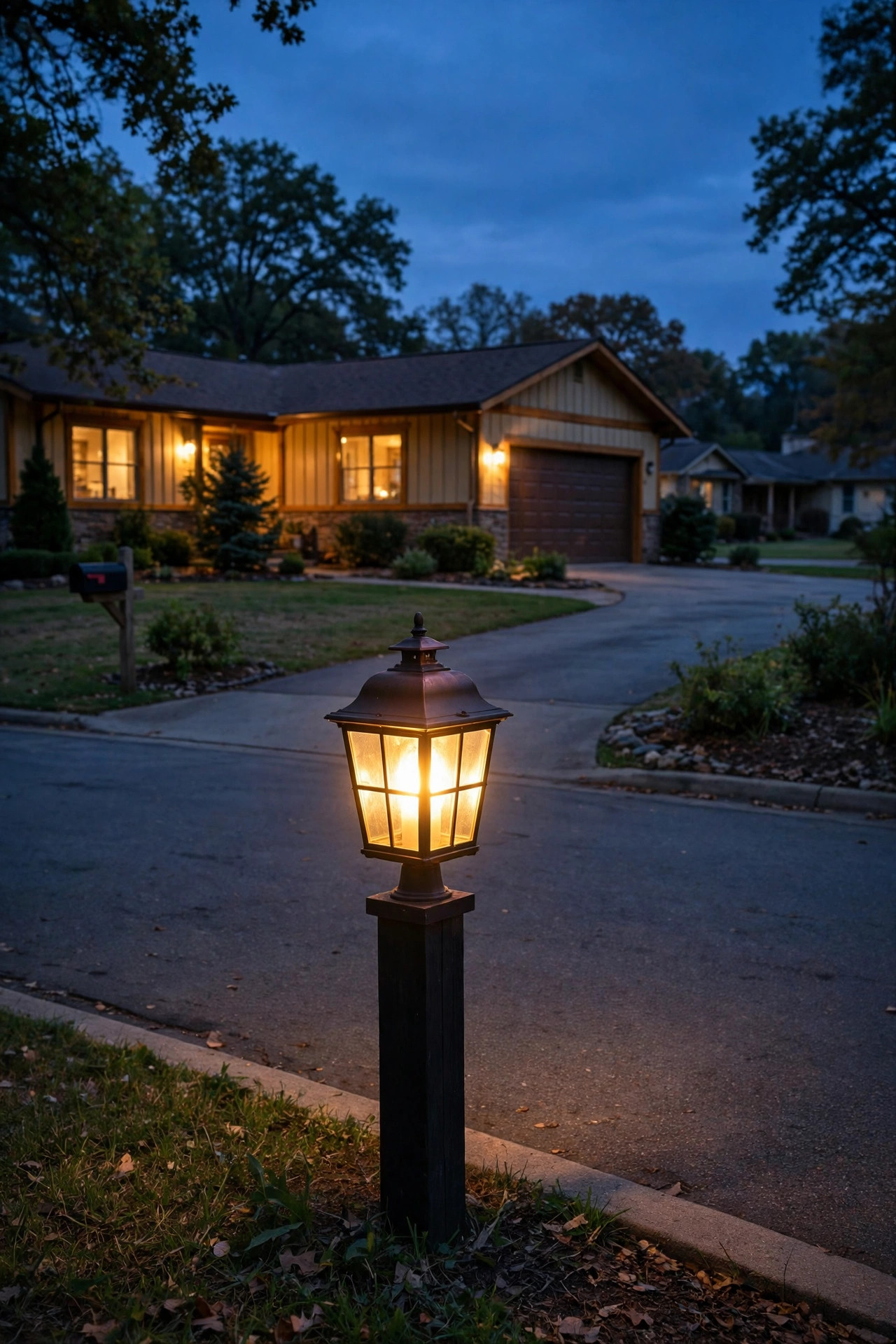
Every ranch driveway deserves a period at the end of the sentence — a lantern-style post light where the drive meets the street tells guests "the welcome starts here" and gives the wide lot a finished edge. Aim for 5 to 6 feet tall overall, in a finish that matches your door sconces so the whole front reads as one composition. On a long lot, this light also quietly marks your address zone for delivery drivers and friends arriving after dark. Wiring one usually means a trench along the drive edge — about 6 inches deep for low-voltage cable, which is a manageable Saturday project — though solar post lanterns have gotten genuinely decent if the spot gets six-plus hours of sun. Put it on the same timer as your path lights so the whole front wakes up together at dusk.
Suggested budget range: $90 – $350.
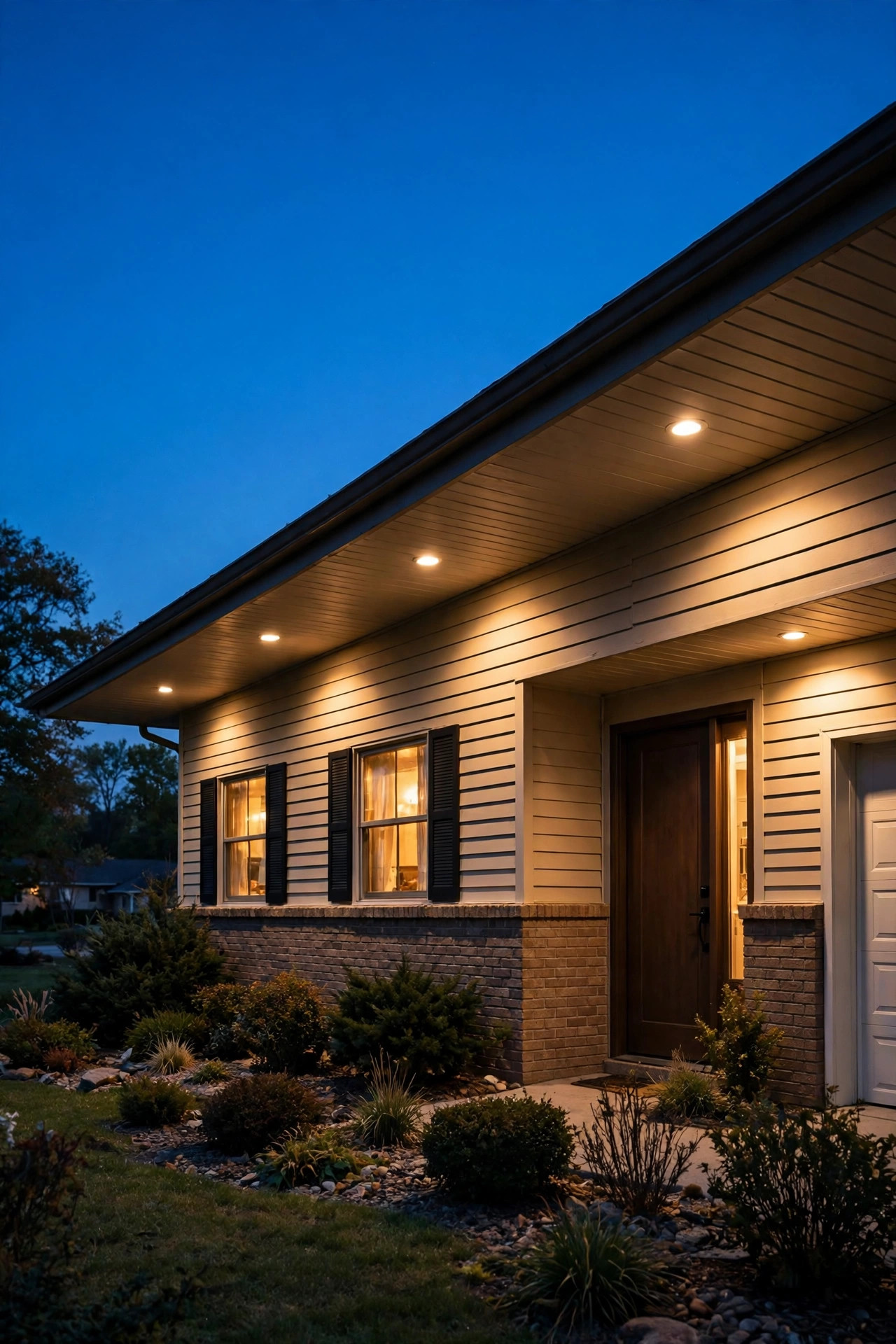
7. Recessed Soffit Downlights Under the Eaves
Ranch homes wear those deep, low eaves like a hat brim, and recessed soffit downlights turn that overhang into the cleanest overhead lighting you can get — all glow, no visible fixture cluttering the roofline. I space them 4 to 6 feet apart in a row, with one centered over the front door and others washing the garage face and the corners of the house. Use outdoor-rated (wet-location) recessed modules, 2700K, and put them on a dimmer if you can; full brightness can feel like a gas station, but dimmed to about half they're pure boutique-hotel. This is usually an electrician job since you're tying into house wiring, and it's worth every penny — the light also deters the wasps that love building nests in visible porch fixtures. Corners matter most: light both ends of that long facade or the house still vanishes at the edges.
Suggested budget range: $150 – $600.
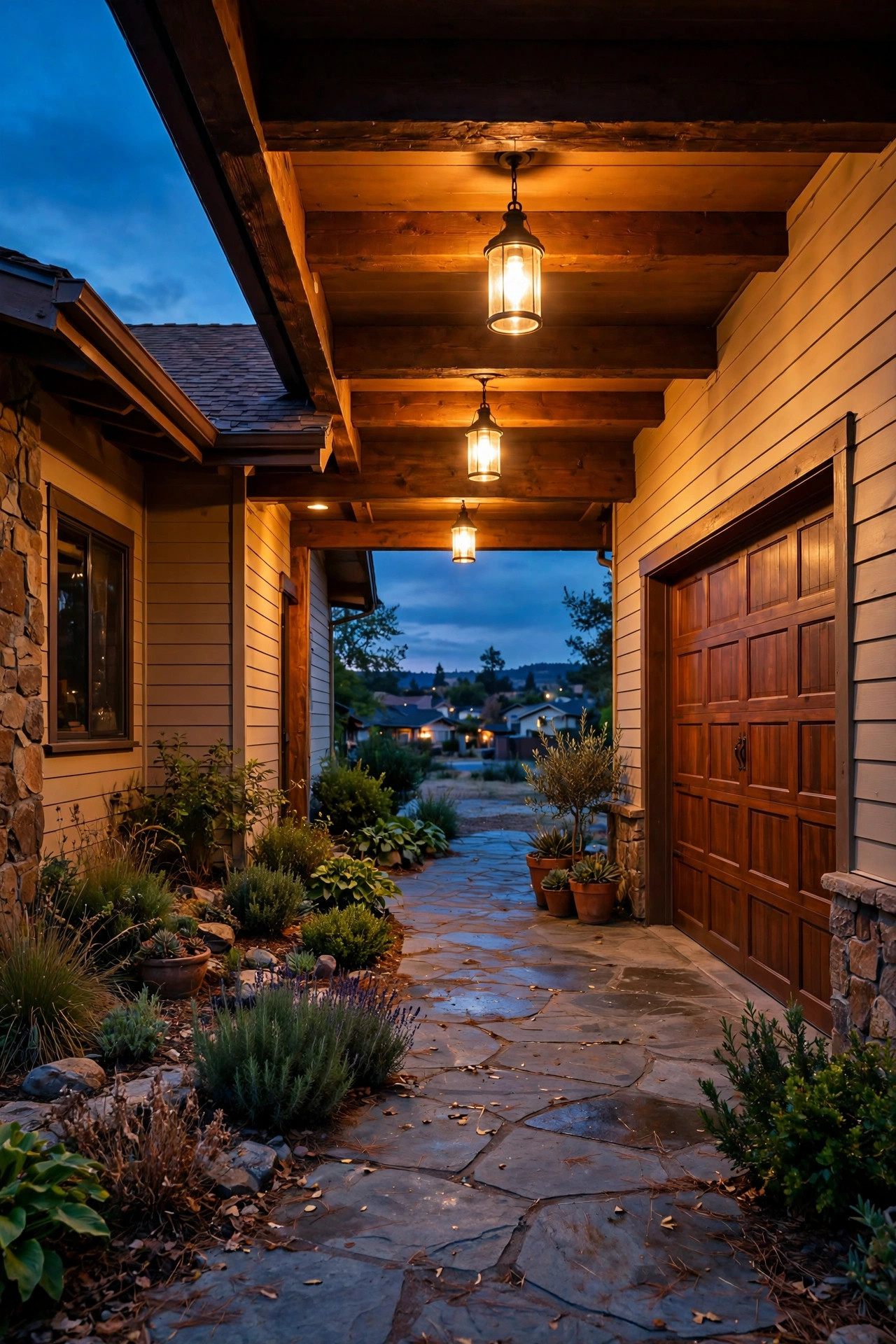
8. Light the Breezeway and Carport
The breezeway between house and garage is pure ranch architecture — and pure darkness on most homes by 8 p.m. A pair of flush-mount ceiling lights or a short run of weatherproof string lights overhead turns it back into a passage you actually enjoy using. If your ranch has a carport instead, one or two wall packs or a motion-sensor fixture on the house wall keeps unloading groceries civilized. I like to match the bulb temperature to the front door sconces (2700K) so the whole arrival sequence — street, drive, breezeway, door — feels like one warm story. Motion sensors make sense in the carport itself, but keep the breezeway on a timer or photocell so it glows steadily; a light that snaps on and off as you carry in bags gets old fast. Wet-location ratings are non-negotiable in these semi-exposed spaces.
Suggested budget range: $60 – $250.
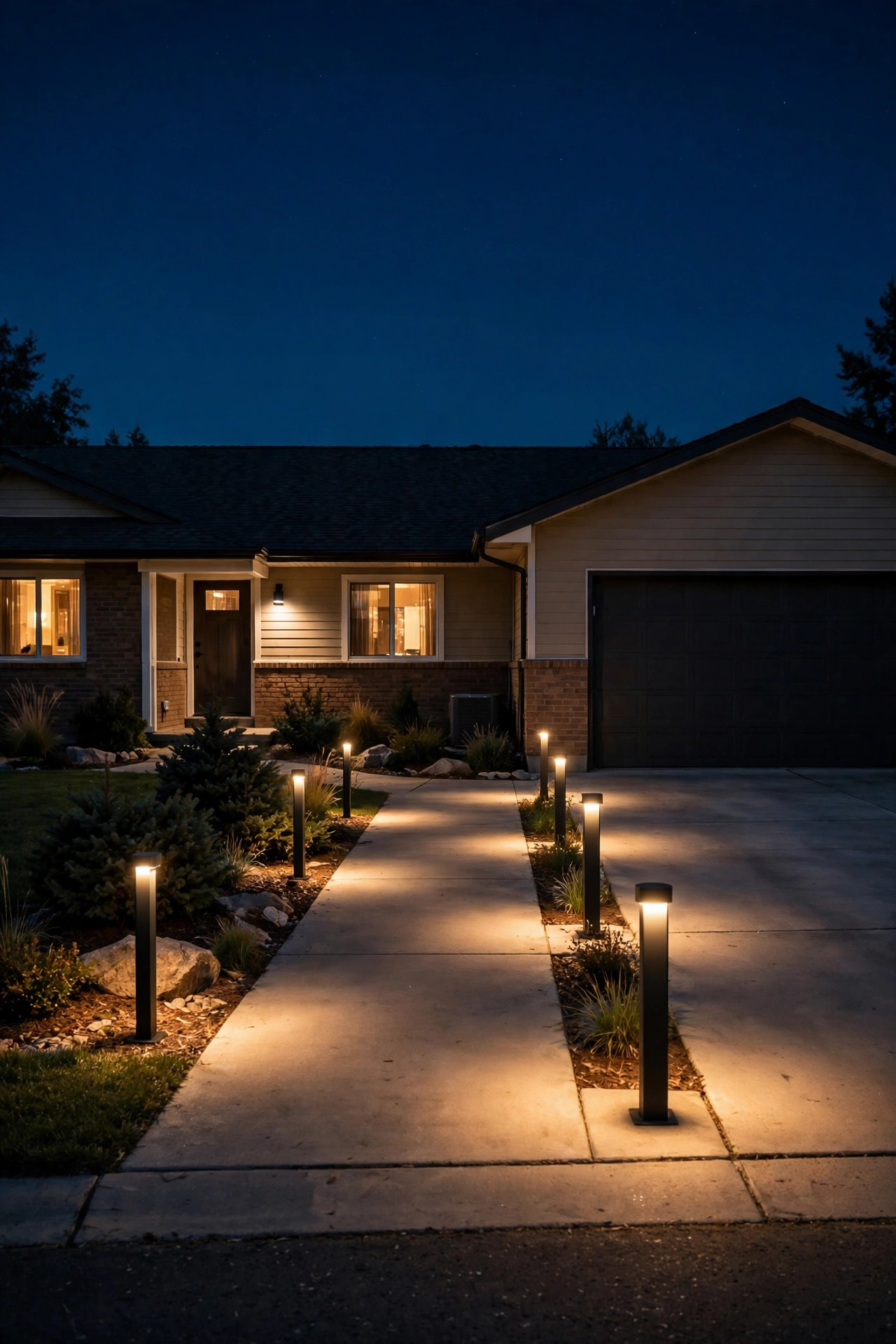
9. Low Bollard Lights for a Modern Ranch
If your ranch leans mid-century or you've updated it with clean lines and dark trim, bollard lights are its natural partner. Choose short bollards — 12 to 24 inches — in matte black or bronze, and use them where path lights feel too cottagey: flanking the driveway apron, marking a parking pad, or marching along a wide modern walk. Bollards throw a controlled fan of light downward and outward, so three can do the work of five path stakes with far less visual clutter during the day. Space them 8 to 12 feet apart; their wider spread forgives bigger gaps. I especially love a pair flanking the front walk where it meets the drive — it reads like a gateway. Wired low-voltage versions are sturdier than solar here, since bollards take the occasional bump from car doors and basketballs.
Suggested budget range: $100 – $320.
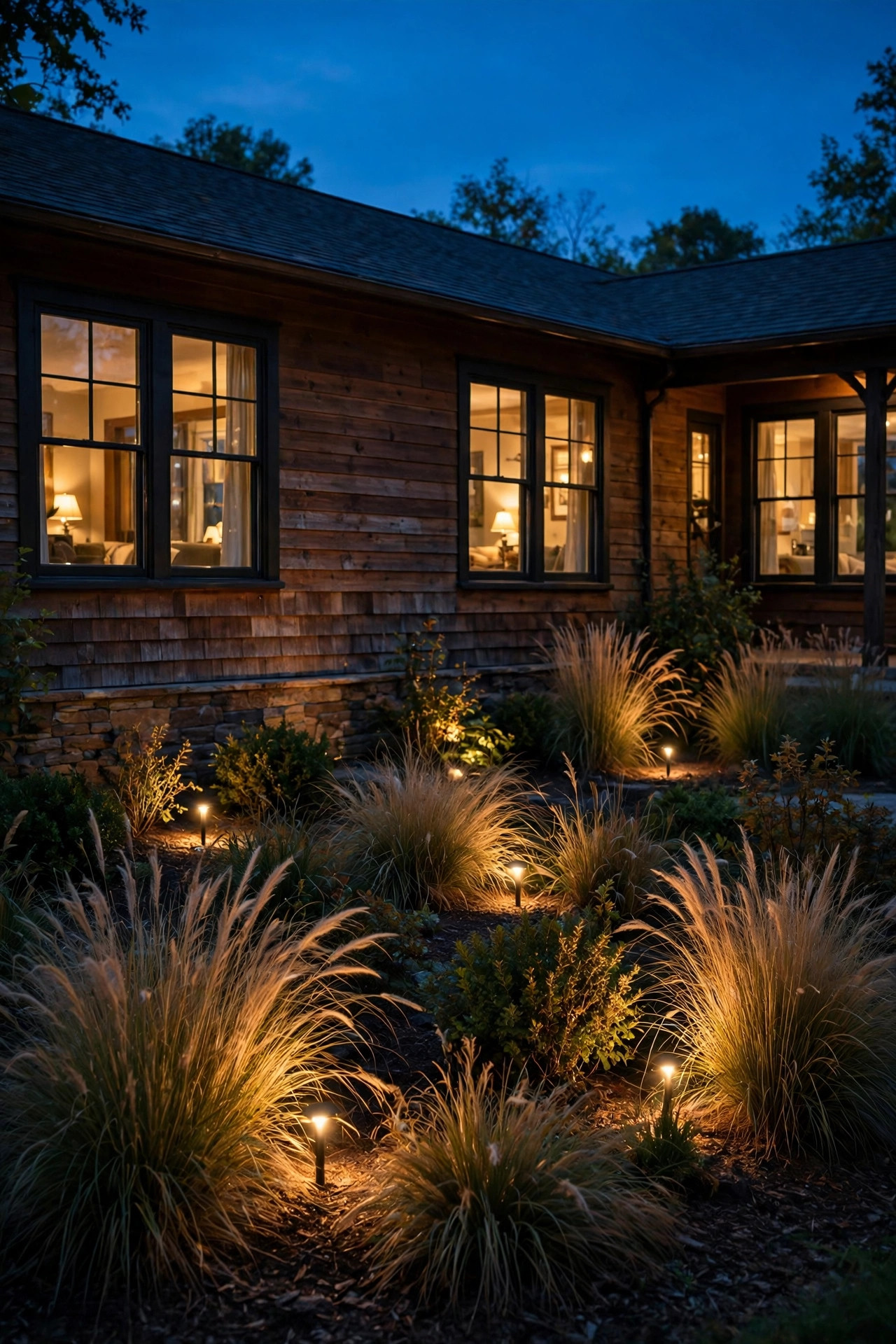
10. Accent Spots for Foundation Plantings and Flower Beds
Ranch homes wear their foundation plantings in one long ribbon — boxwoods, hydrangeas, ornamental grasses running the full width of the house — and a few small accent spotlights make that ribbon glow instead of going black. Tuck small bullet or well lights into the bed, 18 to 24 inches out from the shrubs, aimed up and slightly back so the foliage catches the light and throws soft shadows on the wall behind. Three to five accents across a typical ranch front is plenty; you're seasoning, not flooding. Feather reed and pampas-type grasses are the show-offs here — their plumes practically sparkle when lit from below. Keep fixtures a few inches above mulch and angle them away from windows so you're lighting the plants, not your own living room. This layer is cheap, forgiving and weirdly addictive to adjust.
Suggested budget range: $70 – $220.
11. String Lights Along the Porch Beam
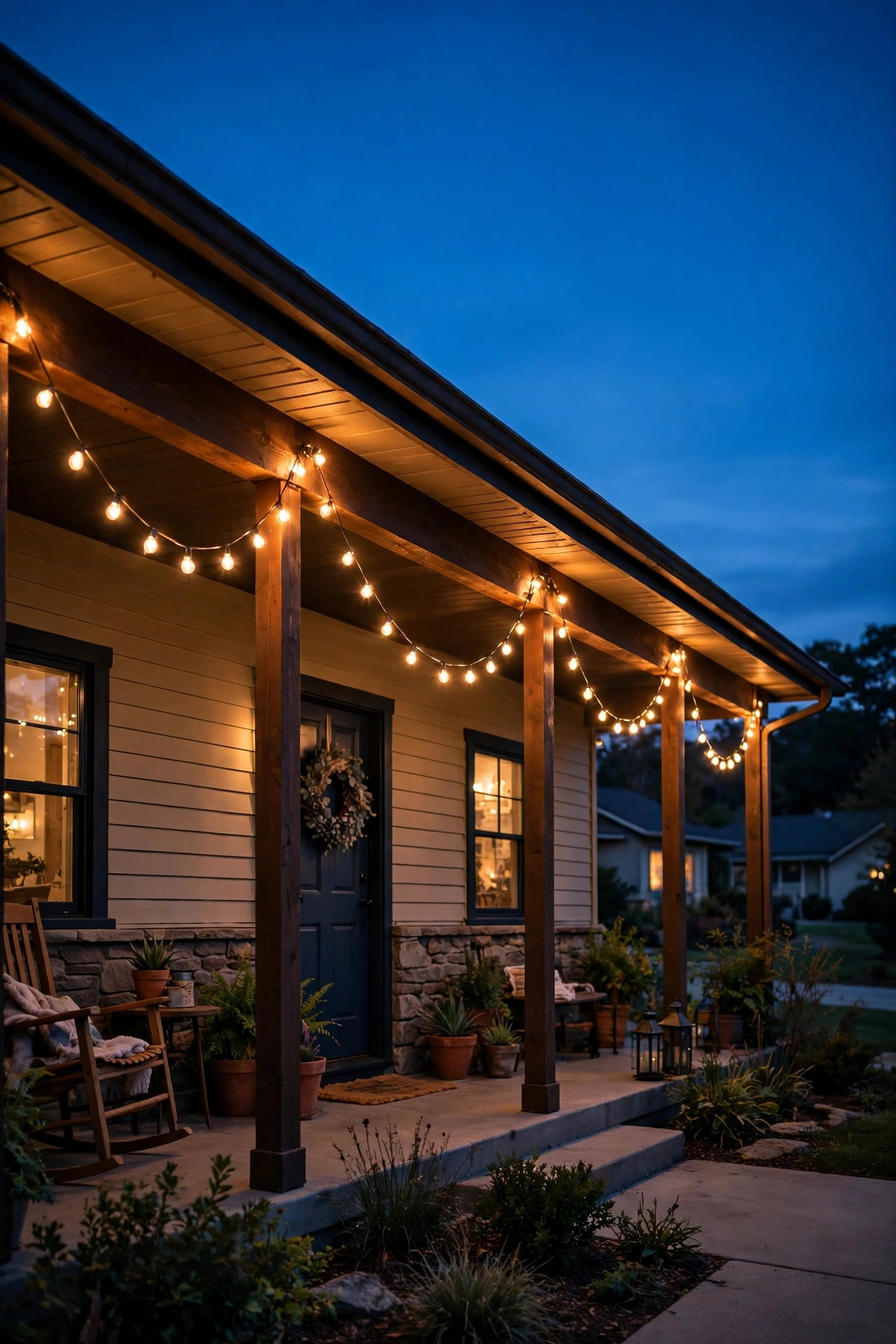
Many ranches have that long, shallow front porch running under the eaves, and a single strand of warm string lights along the porch beam is the cheapest charm in this whole list. Use outdoor-rated LED cafe strands with shatterproof bulbs, hung in a gentle swag — dips of about 6 to 8 inches between hooks — rather than pulled drum-tight. Screw hooks into the beam every 4 to 5 feet, and run the cord to an outlet with a smart plug so the strand joins your dusk-to-dawn schedule automatically. The glow reflects softly off the porch ceiling and makes the whole entry feel occupied and friendly from the street. Keep strands clear of anything flammable and use LED only — those bulbs stay cool. On a wide ranch porch, two parallel strands (beam and house edge) look downright magical for summer evenings.
Suggested budget range: $25 – $90.
12. Step Lights for a Safe Entry
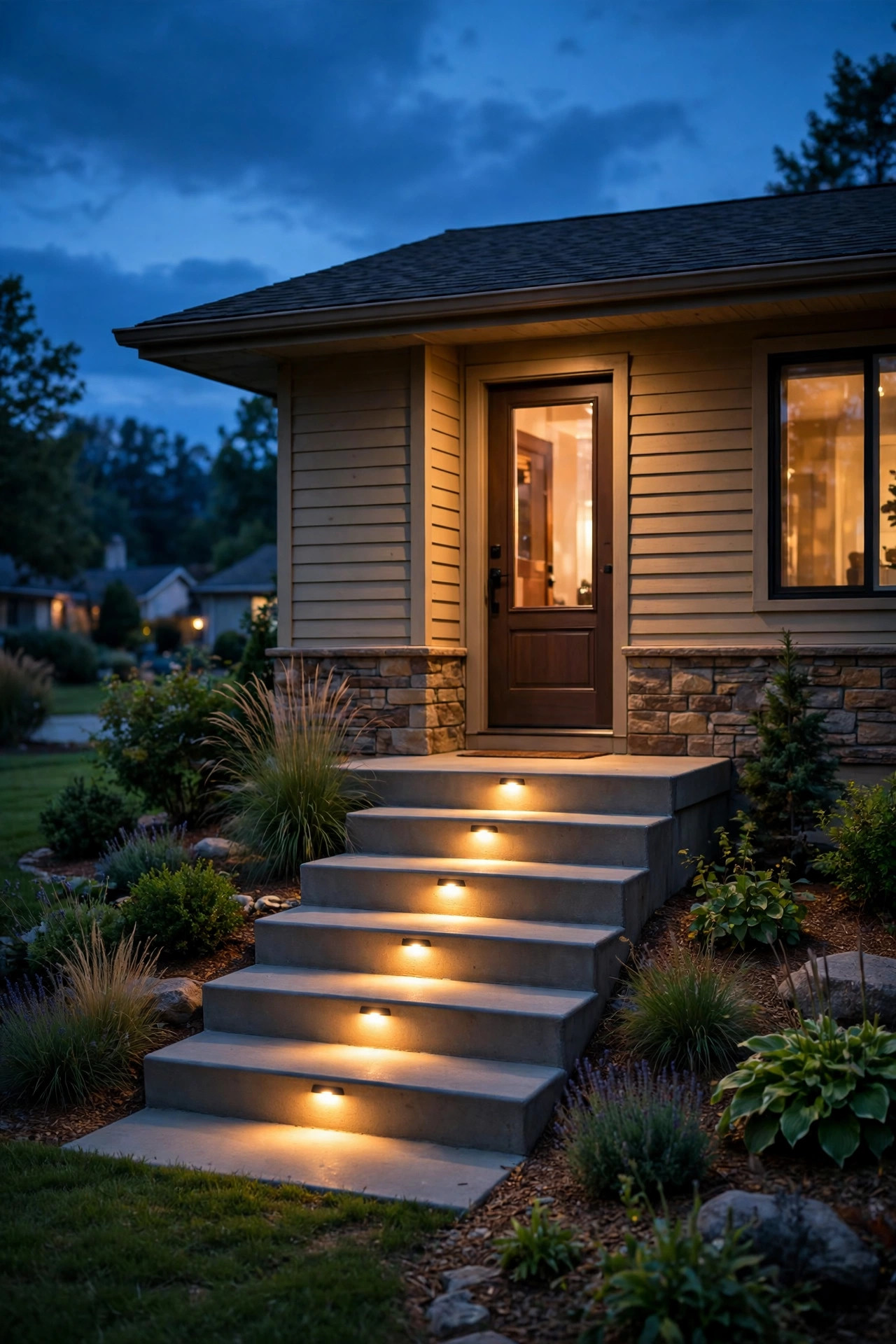
Ranch entries often sit just a step or two above grade — exactly the height people misjudge in the dark. Recessed step lights mounted into the riser face, or small surface-mount lights on the wall beside the steps, wash each tread in light so the edge reads clearly. If your ranch has a stoop with cheek walls, a light low on each wall is the polished version. Wire them into your low-voltage system if you have one; solar step lights exist but are dimmer and better as a supplement. Two fixtures usually cover a standard entry stoop, spaced to light each tread evenly rather than glaring at ankle height. Honestly, this is the least glamorous idea here and the one your future self will thank you for every single night. Safety lighting that looks this finished is never a wasted dollar.
Suggested budget range: $45 – $180.
13. Moonlighting Through the Canopy
Moonlighting is the ranch's secret luxury: a fixture mounted high in a mature front tree — 20 feet up or so — shining down through the branches so the lawn gets dappled, natural-looking light, like a full moon that shows up every night. It flatters low ranch architecture beautifully because the light comes from above the roofline and softens everything. Use a downlight with a glare shield and a fairly wide beam, mounted with tree-friendly straps or stainless hardware that won't girdle the limb (never lag bolts straight through if you can avoid it — straps let the tree grow). One fixture can wash a big circle of lawn and walk; a second, dimmer one balances a really wide lot. This is the one project on the list where I'd hire a pro with a ladder and a lift — the effect is worth it, the heights are real.
Suggested budget range: $150 – $500.

14. A Lit House Number Guests Can Actually Find
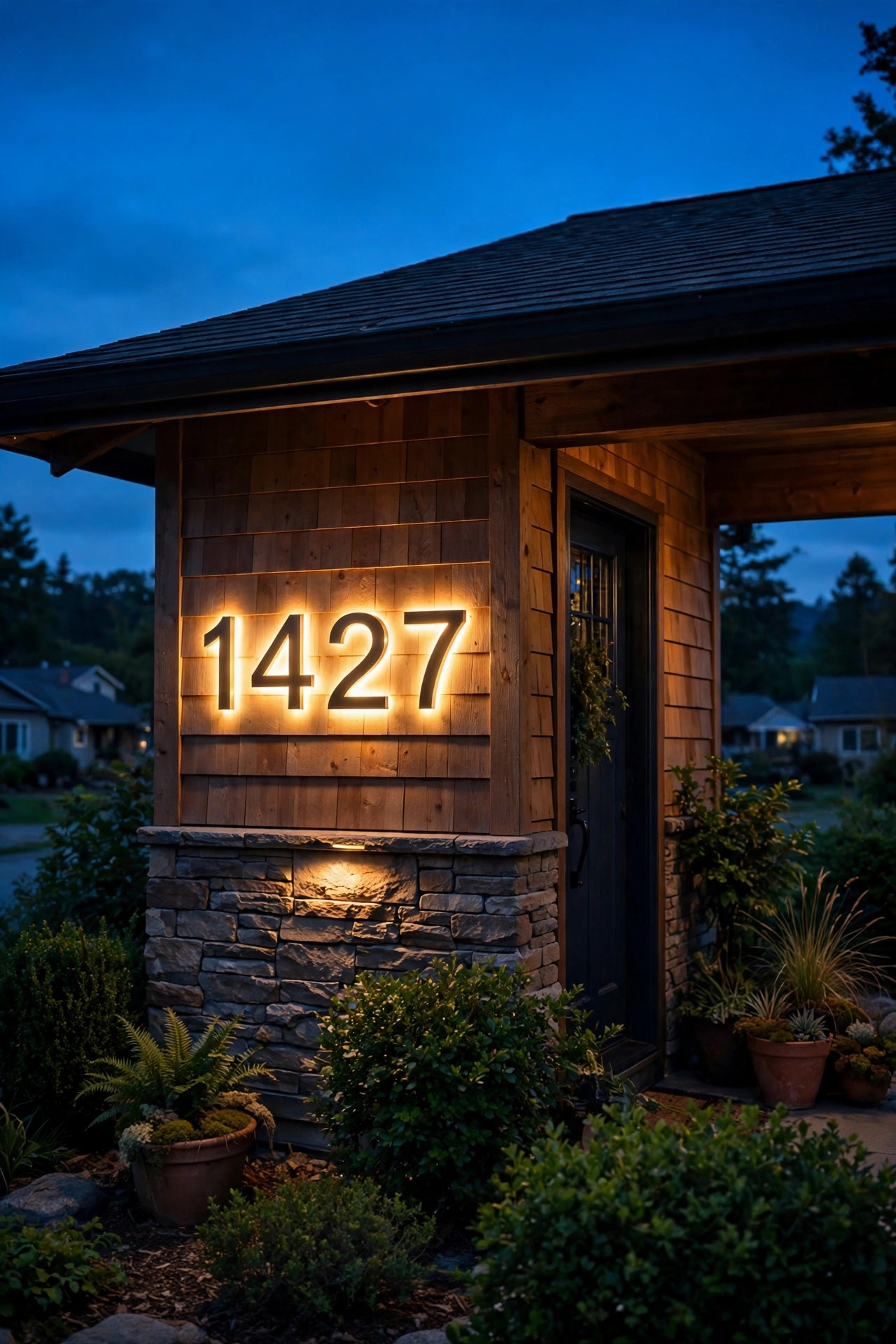
On a long ranch facade, the house number often sits a fair distance from the street — and in the dark, it's simply gone. Fix it with a small spotlight aimed at the numbers, a backlit address plaque, or a solar address sign staked near the drive entrance. Backlit numbers floating an inch off the siding on standoffs look sharp on updated ranches; a simple warm spotlight works on traditional ones. Keep the light modest — you're helping the pizza driver, not opening a dealership — and angle it to avoid bouncing off windows. If your mailbox lives at the street, lighting the number there instead (or as well) is genuinely the most useful placement of all. This is a tiny project with an outsized payoff in "we drove past your house twice" prevention. Pair it with the post lantern from idea 6 and your home becomes the easiest on the street to find.
Suggested budget range: $20 – $120.
15. Ground-Level Light for the Long Front Hedge
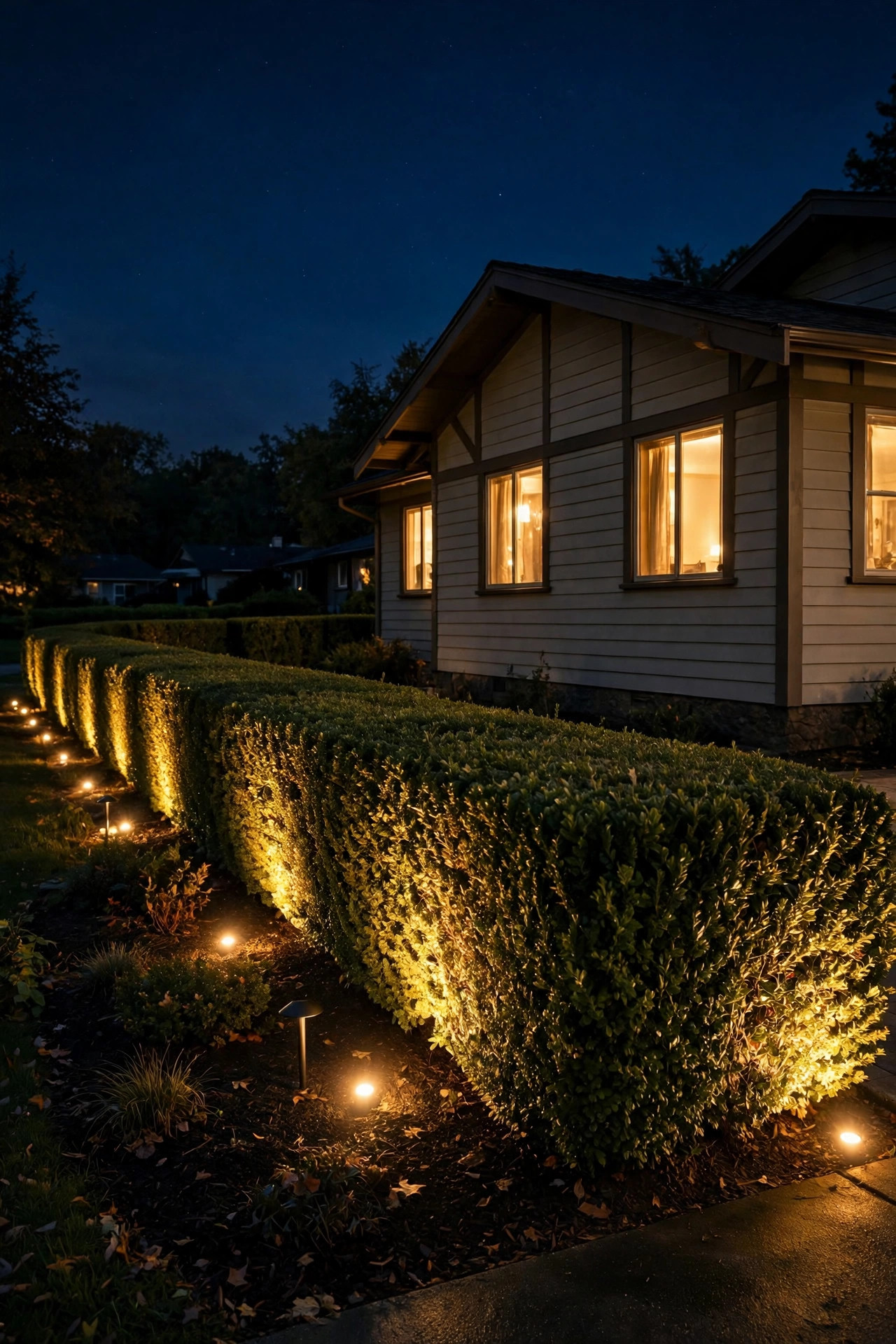
That long privacy hedge or shrub row running parallel to the street is a ranch staple — and a black wall at night. A line of low well lights or short wash fixtures tucked at its base, spaced 6 to 8 feet apart and aimed up into the foliage, turns it into a soft green backdrop that makes the whole yard feel deeper. Evergreen hedges respond best; the light catches the leaf texture and glows rather than glaring. Keep fixtures just inside your property line and aim carefully so you're washing your hedge, not the neighbor's bedroom. On a really long lot, light the middle stretch and let the ends fade naturally — total coverage can look like a runway, and a gentle fade is prettier and cheaper. This layer also quietly signals the yard's boundary to anyone pulling in at night.
Suggested budget range: $80 – $260.
16. Garage Carriage Lights That Match the Entry
On a ranch, the garage often sits right up front — sometimes it's a third of the whole facade — so its lighting matters as much as the front door's. Carrying the same carriage-lantern style from the garage to the entry is the move that makes the home look designed: same silhouette, same finish, same bulb temperature. A pair flanking a double garage door, plus one beside the entry door in the same family, and suddenly the architecture reads as one composition. Mount garage fixtures 66 to 72 inches high, centered over each door bay or flanking it. If your garage faces the street at an angle (that classic L-shaped ranch), a single lantern on the corner bay plus a motion-sensor light over the drive apron covers beauty and practicality. Match everything at 2700K — mismatched temperatures across one facade are the fastest way to make nice fixtures look like mistakes.
Suggested budget range: $90 – $380.
17. One Glowing Focal Point in the Front Bed
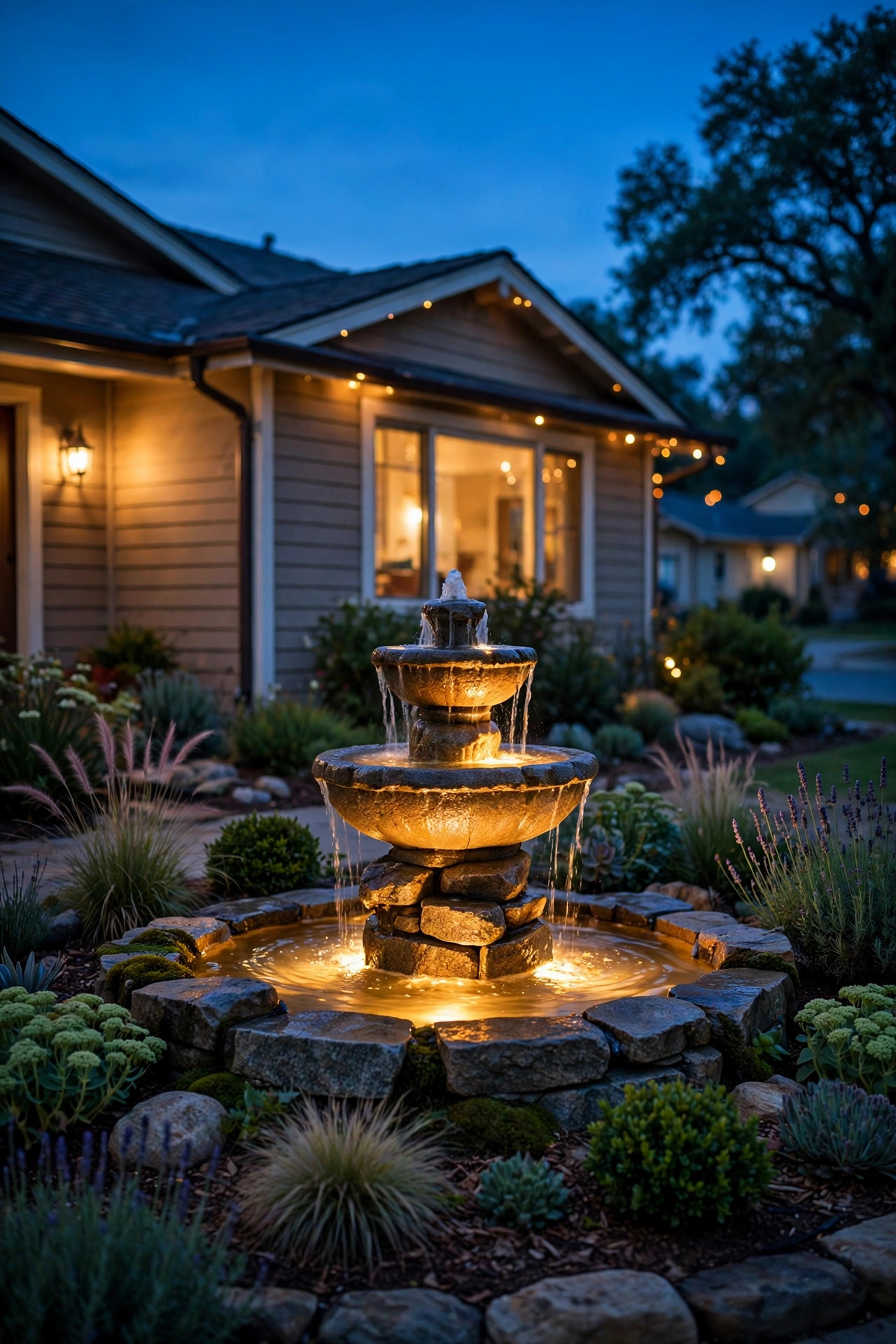
After all the practical layers, give the eye a reward: one lit focal point in the front bed — a birdbath, a small fountain, a piece of garden sculpture, even a beautiful specimen shrub in a big pot. Light it with a single narrow-beam spotlight placed 18 to 24 inches away, aimed to rake across its texture. A gentle underwater light inside a fountain basin is pure magic on a summer night, and the sound of water plus warm light is the most welcoming combination a front yard can offer. Keep the rest of the bed dim by comparison; a focal point only works if it's the brightest thing in its little scene. Rotate seasonally if you like — a lit pumpkin cluster in October, a glowing evergreen arrangement in December. This is the layer guests photograph, and it costs less than almost anything else on the list. When you're ready to plan the electrical backbone behind ideas like these, our low-voltage landscape lighting design guide covers transformers, cable runs and zoning step by step.
Suggested budget range: $30 – $200.
Frequently Asked Questions
What color temperature looks best on a ranch home?
Warm white, 2700K, wins on nearly every ranch facade I work on. It flatters brick, stone and wood siding, feels welcoming rather than clinical, and matches the glow of a lit interior spilling from the windows. If your home is painted cool gray or white with black trim, 3000K can look crisp and intentional. The one rule that matters more than the number: pick one temperature for everything visible at once and commit — mixed temperatures across a long ranch facade are painfully obvious.
How many lights does a wide ranch front yard actually need?
Fewer than you think. A typical ranch front — walkway, one tree, foundation beds, entry, garage — usually lands between 10 and 16 fixtures total for a properly layered look. Because the house is wide rather than tall, spread fixtures horizontally in zones (walk, facade, accent) instead of clustering them near the door. Start with the path and entry, live with it a week, then add the wash and accent layers. You can always add fixtures to a low-voltage run; overspending up front is the common mistake.
Solar or low-voltage for a long ranch driveway?
Low-voltage wired wins on brightness, reliability and dusk-to-dawn consistency, and a single cable run along the drive edge is a manageable DIY trench. Solar wins on zero wiring and price, and it works well as markers along the far half of a long drive where the sun is good. My honest recommendation for long driveways is the hybrid: wired near the house where the transformer sits, quality solar stakes for the stretch by the street.
How do I light a ranch home without bothering the neighbors?
Use shielded fixtures that aim light down or at your own walls and plants, never outward toward the street or side lots. Keep beams inside your property lines, choose warm 2700K bulbs (less glare, less sky glow), and put everything on a timer so the display dims or shuts off by 11 p.m. or midnight. Your home will look better for the restraint — good lighting is about pools and accents, not floodlighting the whole parcel.
Conclusion
Ranch home front yard lighting is really one idea repeated 17 ways: think long and low. Wash the wide facade, pool light where feet land, stretch the glow to both ends of the house, and let one or two warm accents do the showing off. Start with the walkway and entry, add the layers that suit your lot, and keep every bulb at the same warm temperature so the whole composition hums. Browse more of our outdoor lighting ideas here on the site whenever you're ready for the next project — your ranch is going to be the one the neighbors slow down for.