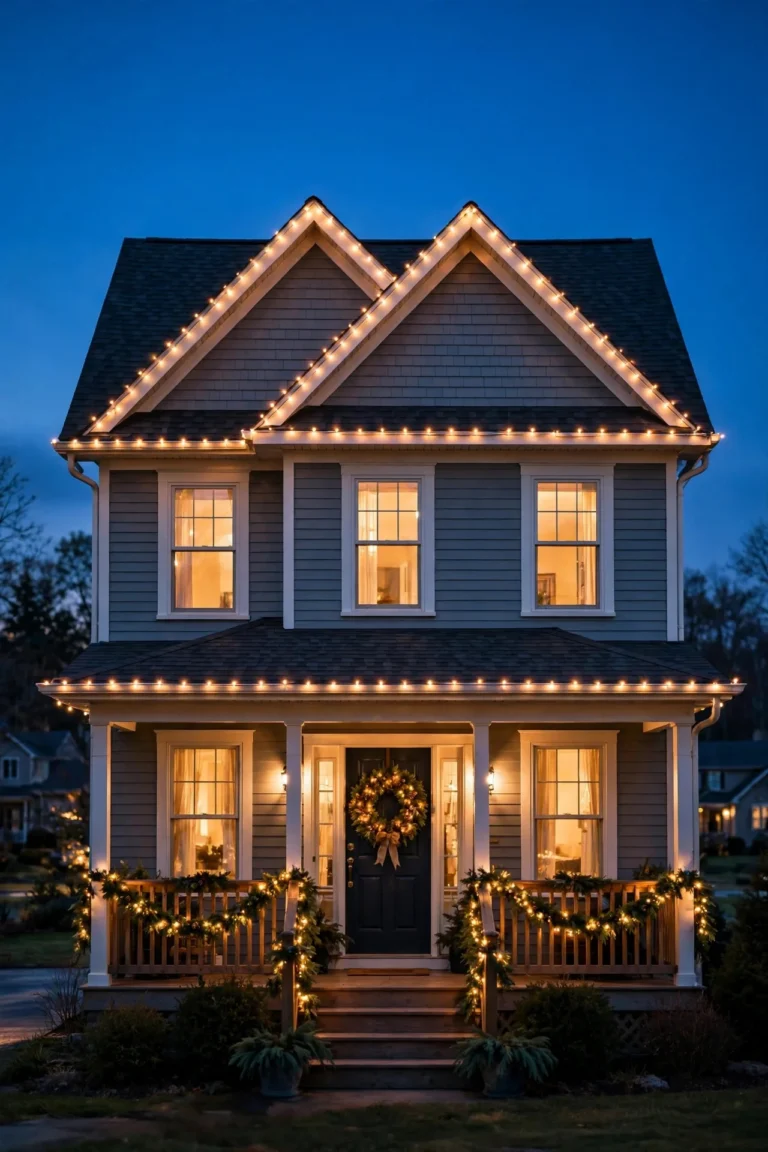
Have you ever driven past a beautiful house at dusk and thought, something about that porch just looks off? In my experience, it is almost never the door color or the wreath. It is the lighting. Porch lighting mistakes are sneaky because each one is tiny on its own — a fixture a little too small, a bulb a little too blue, steps that vanish into the dark — but together they whisper "cheap" before a guest ever reaches the doorbell. The good news? A porch is the smallest lighting project in the whole house, which makes these the cheapest mistakes you will ever fix. I always say an entry should feel layered and warm: a properly scaled fixture by the door, gentle light washing over the steps, and a bulb color that flatters your siding, your paint, and your guests alike. Below are the nine mistakes I see most often, why each one drags an entry down, and the exact fix for it. Most take under an hour and a very modest budget.
Mistake 1: A Single Undersized Fixture That Gets Lost on the Wall
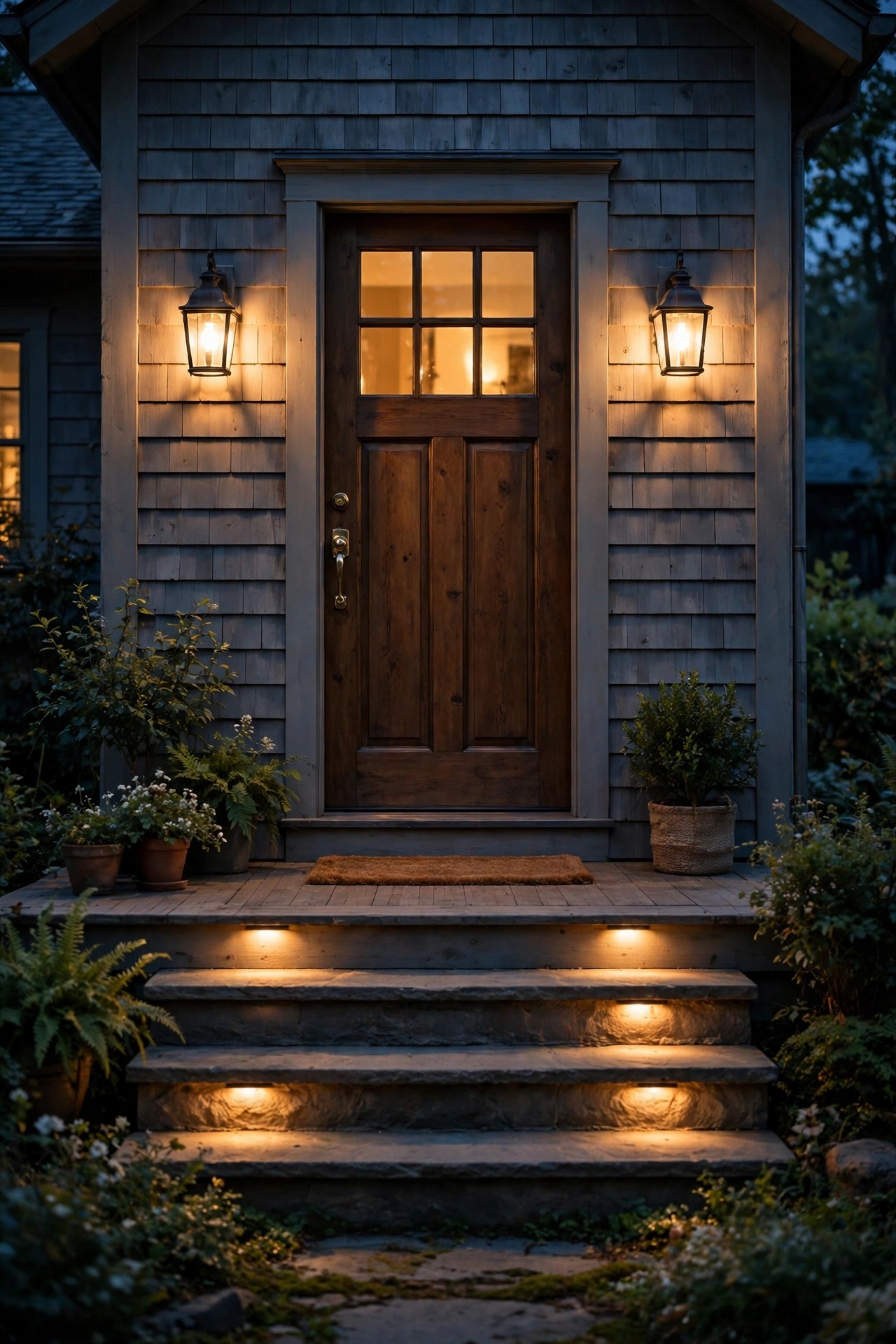
This is the mistake I spot from the street most often: a sweet little lantern, all of eight inches tall, clinging to the wall beside a full-size door. It reads less like a design choice and more like an afterthought, the lighting equivalent of hanging a postage stamp over a sofa. Scale is everything at an entry, because the fixture is the jewelry of the whole facade. My rule of thumb is simple: the fixture height should be roughly one-quarter to one-third of the door height. For a standard 80-inch door, that means a lantern around 16 to 20 inches tall for a single fixture, and you can go slightly smaller per fixture, around 14 to 18 inches, when you hang a matched pair. Before you buy, cut a piece of cardboard to the fixture dimensions and tape it beside the door, then walk to the curb and look. If it disappears from the street, it is too small. Honestly, almost nobody regrets going one size bigger at the front door, and a properly scaled fixture makes even a plain entry look intentional and finished.
Suggested budget range: $80 – $220.
Mistake 2: A Mismatched Pair — One of the Classic Porch Lighting Mistakes
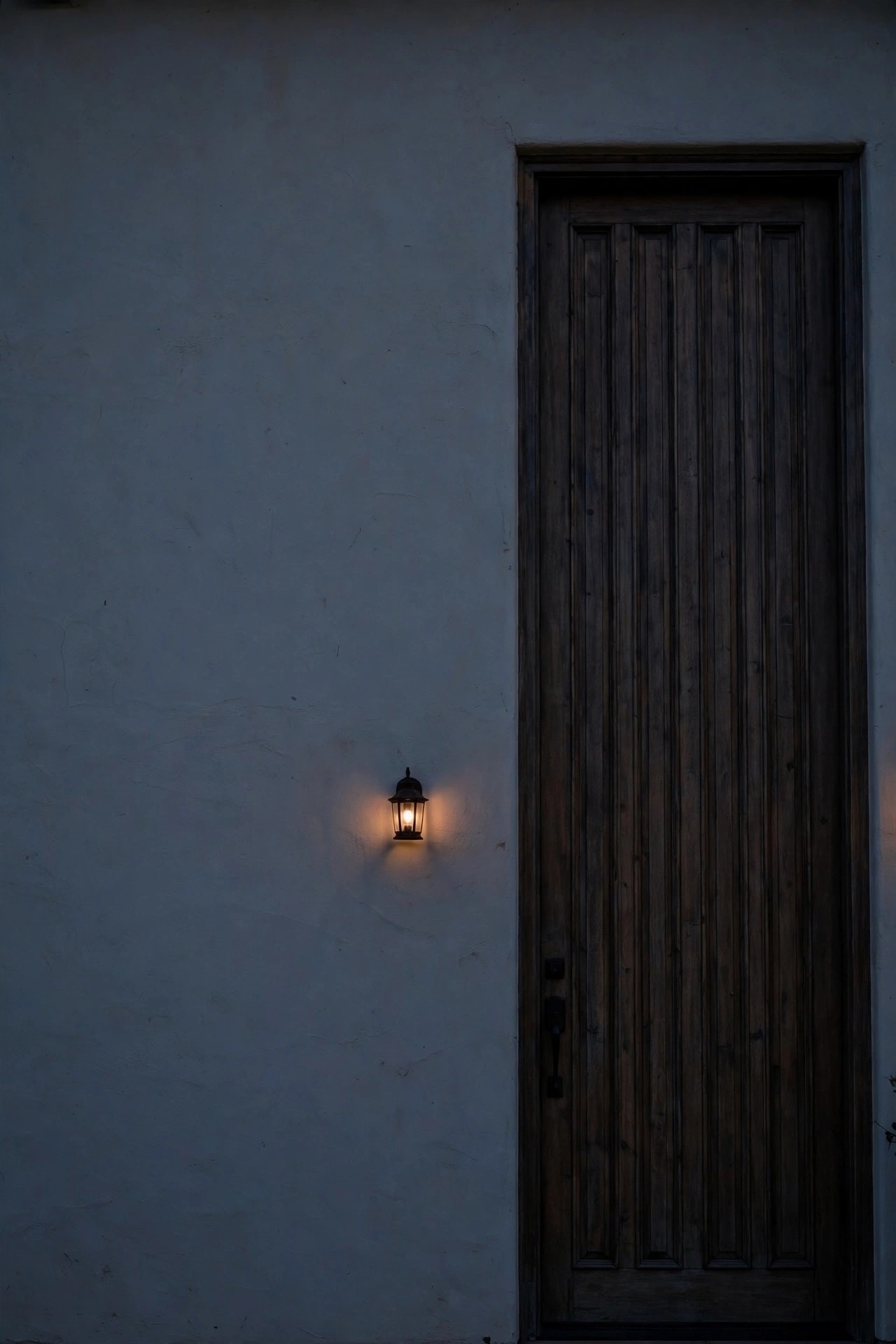
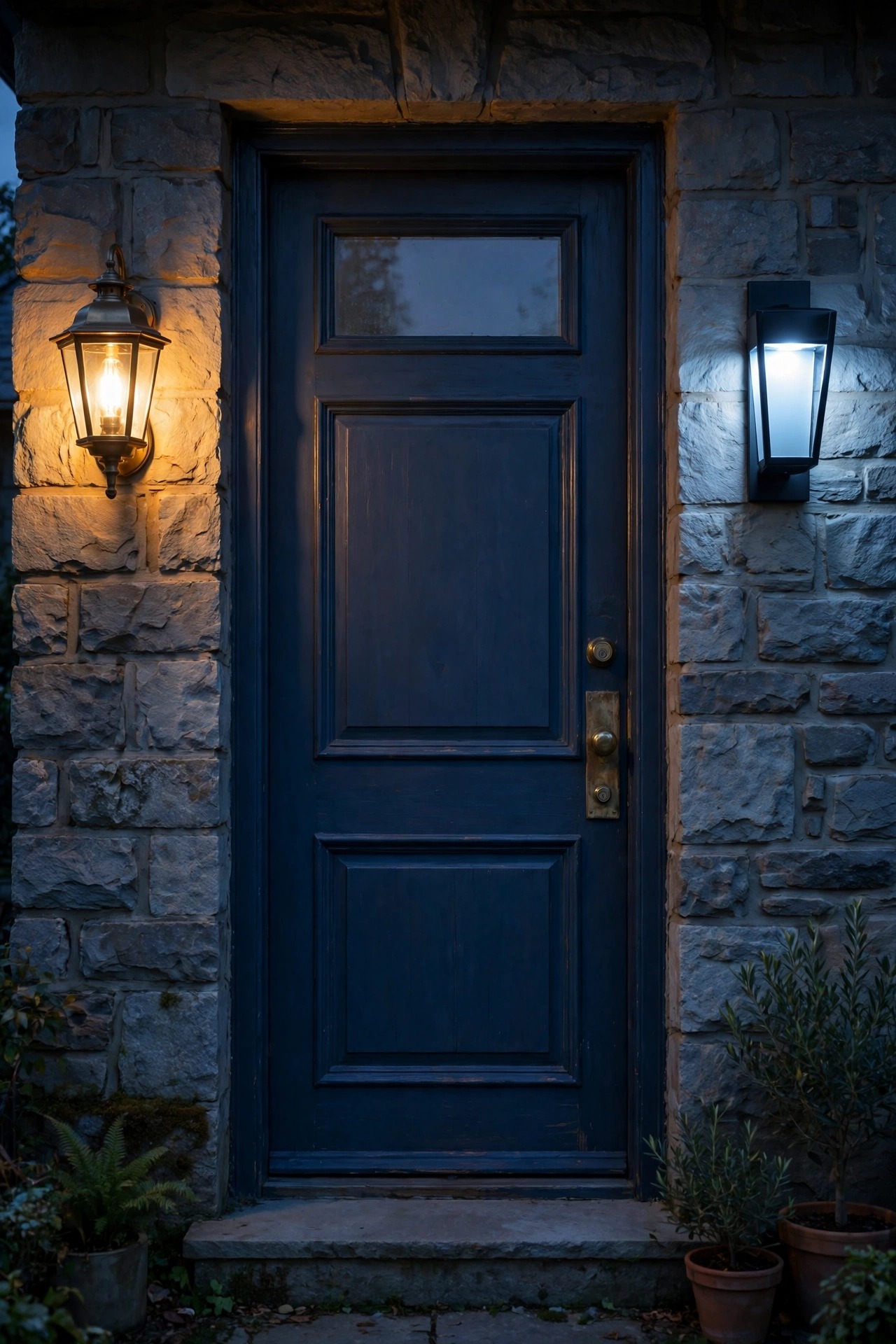
A front door is a symmetrical moment, and your eye knows it instantly. So when one side wears a black carriage lantern and the other wears a brushed-nickel cylinder, or the fixtures match but one bulb glows warm and the other glows cool, the whole entry reads as "one broke and got replaced with whatever was in the garage." Nothing looks cheaper faster, because it suggests nobody is paying attention to the house. I see this constantly on porches where a bulb burned out and the replacement came from a random multipack with a different color temperature. The fix is discipline, and it is not expensive: buy fixtures as a true matched pair from the same style line, and always replace bulbs in pairs, using two identical bulbs from the same package so the color and brightness match perfectly. If one fixture dies years later and its twin is discontinued, move the survivor to the back door and buy a fresh pair for the front. My guide to choosing a front door sconce pair covers sizing and spacing for pairs if you want the details.
Suggested budget range: $90 – $260.
Mistake 3: Bare-Bulb Glare With No Shade or Diffuser
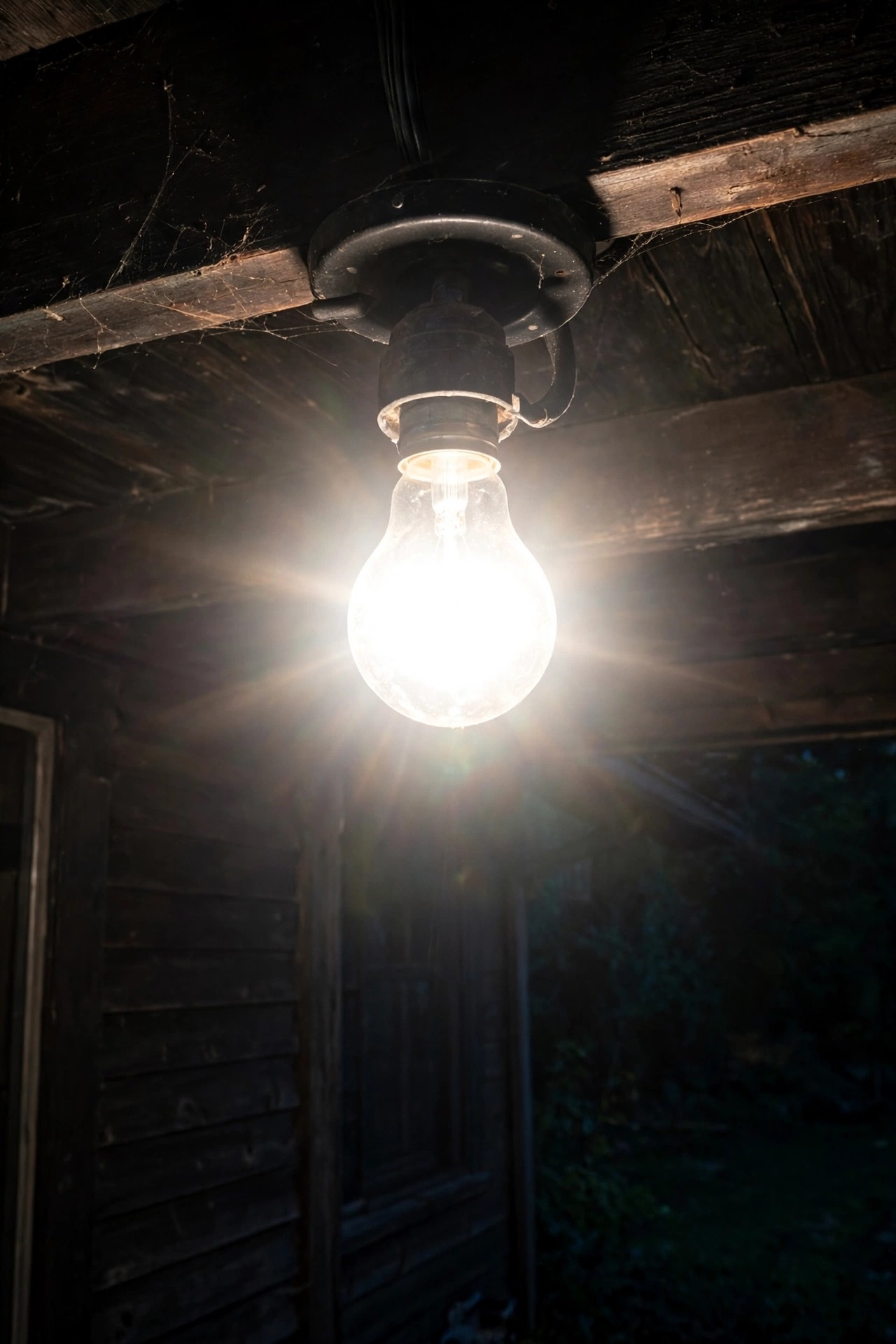
An exposed bulb at eye level is the fastest way to make a porch feel like a motel corridor. Guests do not see your pretty door or your seasonal wreath — they see one blazing point of light, and they squint at it. Bare bulbs also throw hard, ugly shadows and make faces look ghastly, which is not the welcome anyone is going for. This mistake sneaks in with open-cage fixtures and clear-glass lanterns fitted with bright, undimmed bulbs, and it gets worse the more powerful the bulb is. The fix is to soften and shield. Choose frosted, seeded, or opal glass so the light source glows instead of glares, or pick a fixture design that aims light down or out through a diffuser rather than straight into faces. If you love your clear-glass lantern, keep it and simply drop the bulb output: for a porch, 450 to 800 lumens is plenty, and a lower-wattage filament-style LED gives you that pretty candle-like glow without the interrogation effect. Test it at night from the sidewalk and from the door itself. If you can see the actual bulb filament from where guests stand, you still have glare to fix.
Suggested budget range: $45 – $150.
Mistake 4: Cool-White Daylight Bulbs That Make It Look Like a Storefront
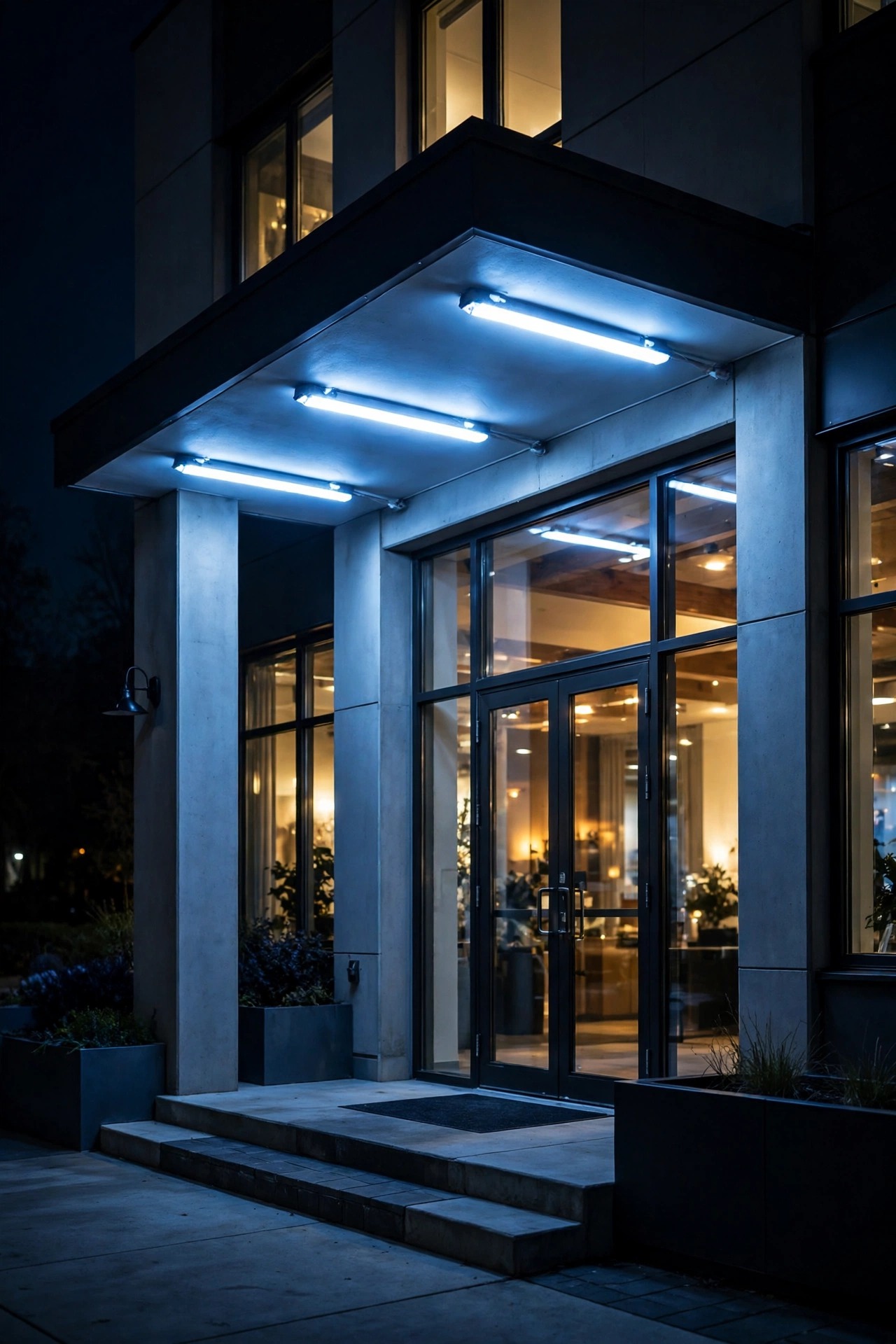
Color temperature can undo an otherwise lovely porch in seconds. Bulbs in the 5000K to 6500K "daylight" range cast a blue-white light that reads as commercial and institutional — think gas station canopy or big-box storefront, not cozy home. That icy light washes out warm paint colors, turns red brick gray, makes skin tones look tired, and clashes horribly with the warm lamplight spilling from your own windows. I have seen beautiful entries with quality fixtures ruined entirely by a two-pack of the wrong bulbs, so this is the cheapest transformation on the whole list. The fix: choose warm white bulbs, 2700K to 3000K, for every fixture on the porch, and check that any built-in LED fixture lists that same range before you buy it. Warm light flatters wood, brick, and people, and it signals "home" from the street. If you want help decoding the numbers on the box, my outdoor light color temperature guide walks through the whole scale and where each range belongs. Swap the bulbs, stand back at dusk, and the entry instantly looks more expensive.
Suggested budget range: $10 – $30.
Mistake 5: A Fixture Mounted at the Wrong Height
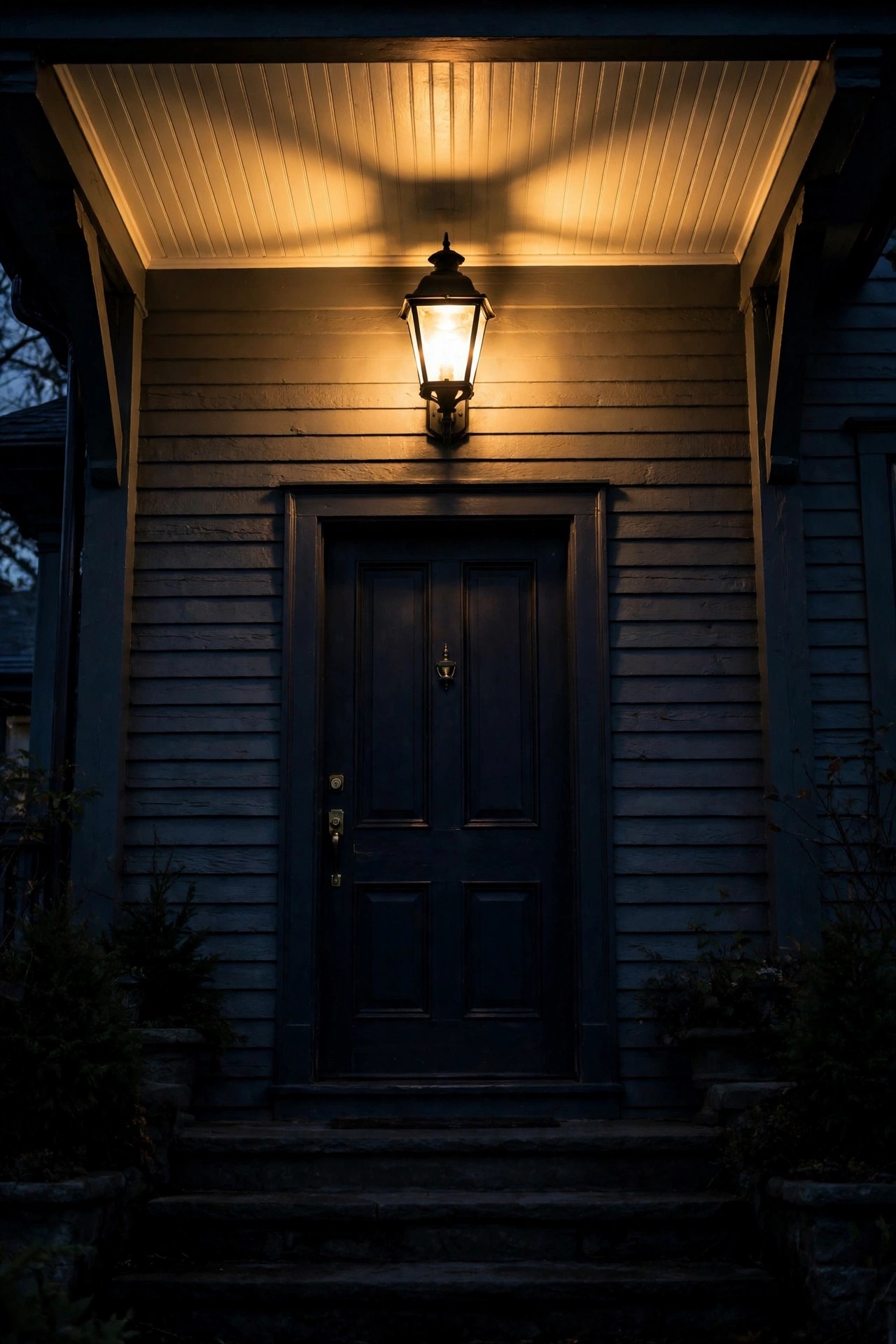
Height is the quiet detail that separates a polished entry from an awkward one. Mount a fixture too high and the light pools uselessly near the eaves while faces at the door fall into shadow; mount it too low and guests get an eyeful of glare, the door swing clips it, and tall visitors duck. In my experience, the sweet spot for a beside-the-door fixture is with the center of the light around 66 to 72 inches above the porch floor, roughly at or just above eye level for most people, so it lights faces instead of the top of their heads. For a fixture above the door, keep the bottom edge at least a few inches above the door frame, and always check the swing of both the door and any storm door before you drill — an outward-swinging storm door smacking a new lantern is a heartbreaking sound. If your fixture is already too high or too low, remounting it on the same wall is usually a straightforward job, and the patched holes hide behind the new canopy plate. Stand at the door at night and look at where the light lands; it should wash the door, the steps, and the faces of the people standing there.
Suggested budget range: $30 – $150.
Mistake 6: A Dirty, Cobwebbed Fixture Nobody Has Cleaned in Years
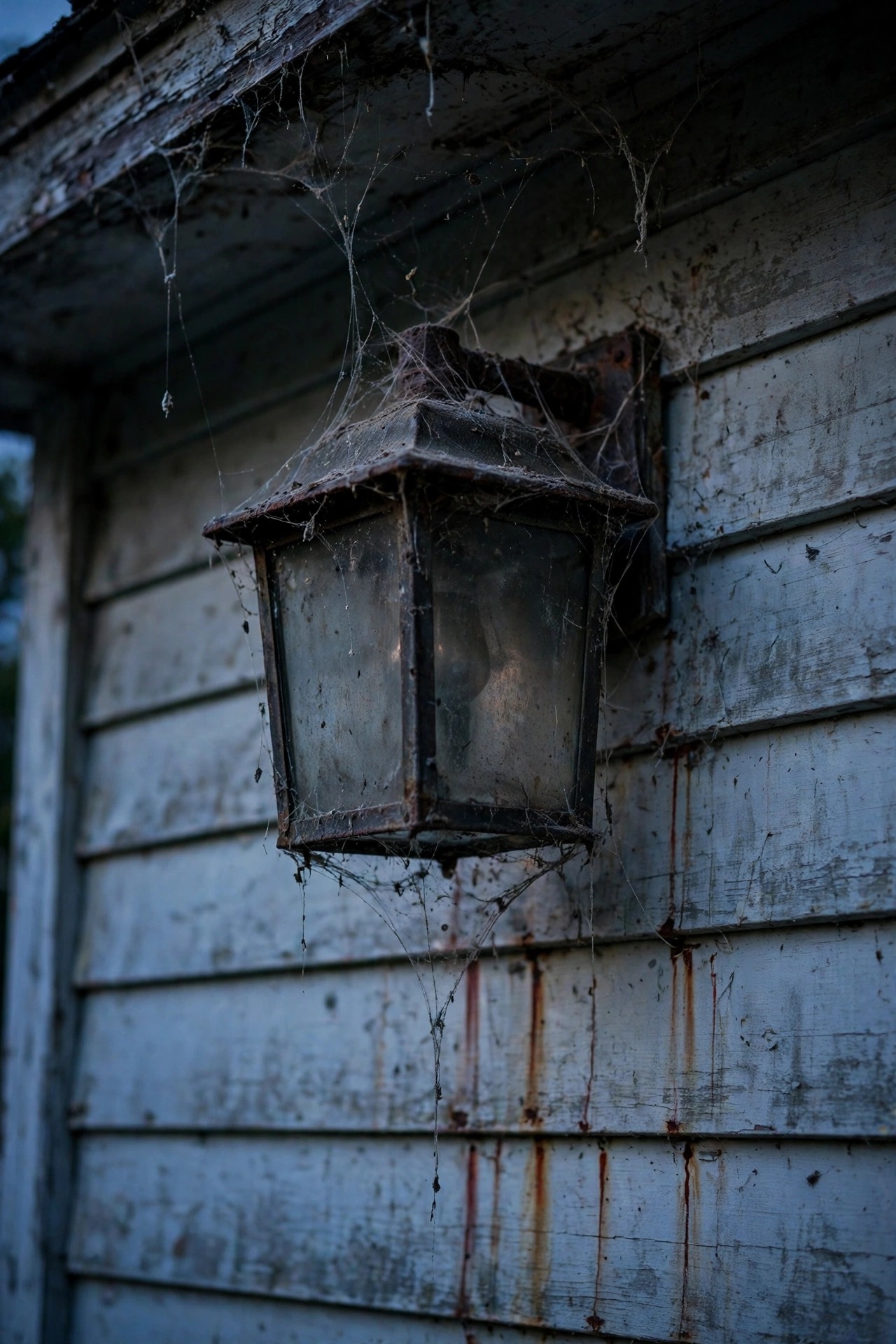
Here is the least glamorous mistake on the list, and one of the most common: a fixture so filmed with dust, cobwebs, and dead bugs that it glows at half strength and reads, from the street, as a house nobody tends. Rust streaks bleeding down the siding make it worse. Neglect is visible, and it cheapens an entry no matter how nice the fixture was the day it went up. The fix costs almost nothing, just a habit. Twice a year, in spring and fall, turn the power off, let the bulb cool, and give each fixture ten minutes: brush out the cobwebs, lift out the dead insects, wash the glass panels in warm soapy water, dry everything thoroughly, and wipe the finish. Check for rust at the screws and mounting plate, touch up any chips with matching outdoor paint, and make sure the weep holes at the bottom are clear so water drains instead of pooling. A clean fixture throws noticeably more light, too, so you may find the porch feels brighter without changing a single bulb. Put it on the same calendar as changing your porch decor for the season and it never gets away from you.
Suggested budget range: $10 – $40.
Mistake 7: Light at the Door and Pitch-Black Steps in Front of It
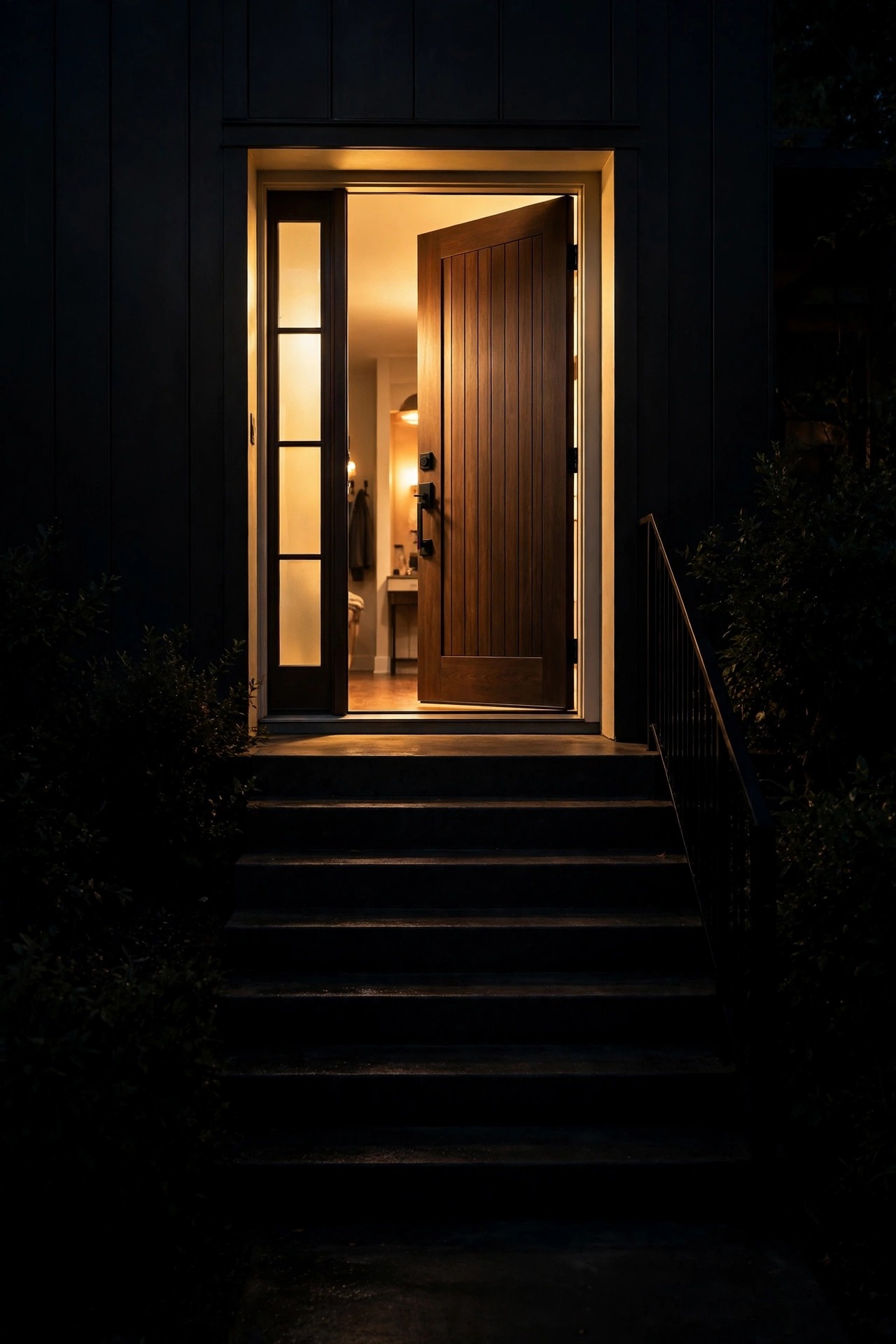
A glowing door floating above a black staircase looks unfinished from the street and feels genuinely risky underfoot. This is the layering mistake: all the light budget went to one fixture, and none of it went to the journey from the sidewalk to the doorbell. Guests shuffle, reach for a railing that may not exist, and remember your steps for the wrong reasons. From the curb, the entry looks like a bright island in a dark yard rather than a welcoming path. The fix is to light the whole approach in gentle layers. Add small step lights to the risers or the side wall if your steps are masonry or wood, or flank the stair base with a pair of low lanterns. Solar path lights leading from the walk to the steps tie it together beautifully and cost very little to run. You do not need much brightness on the steps — a soft wash that reveals each tread edge is plenty — just consistency, so there is no dark gap between the path and the door. Once the steps glow, the whole entry suddenly looks deliberate, like it was designed instead of accumulated.
Suggested budget range: $35 – $140.
Mistake 8: A Cheap Plastic Fixture Already Yellowing and Peeling
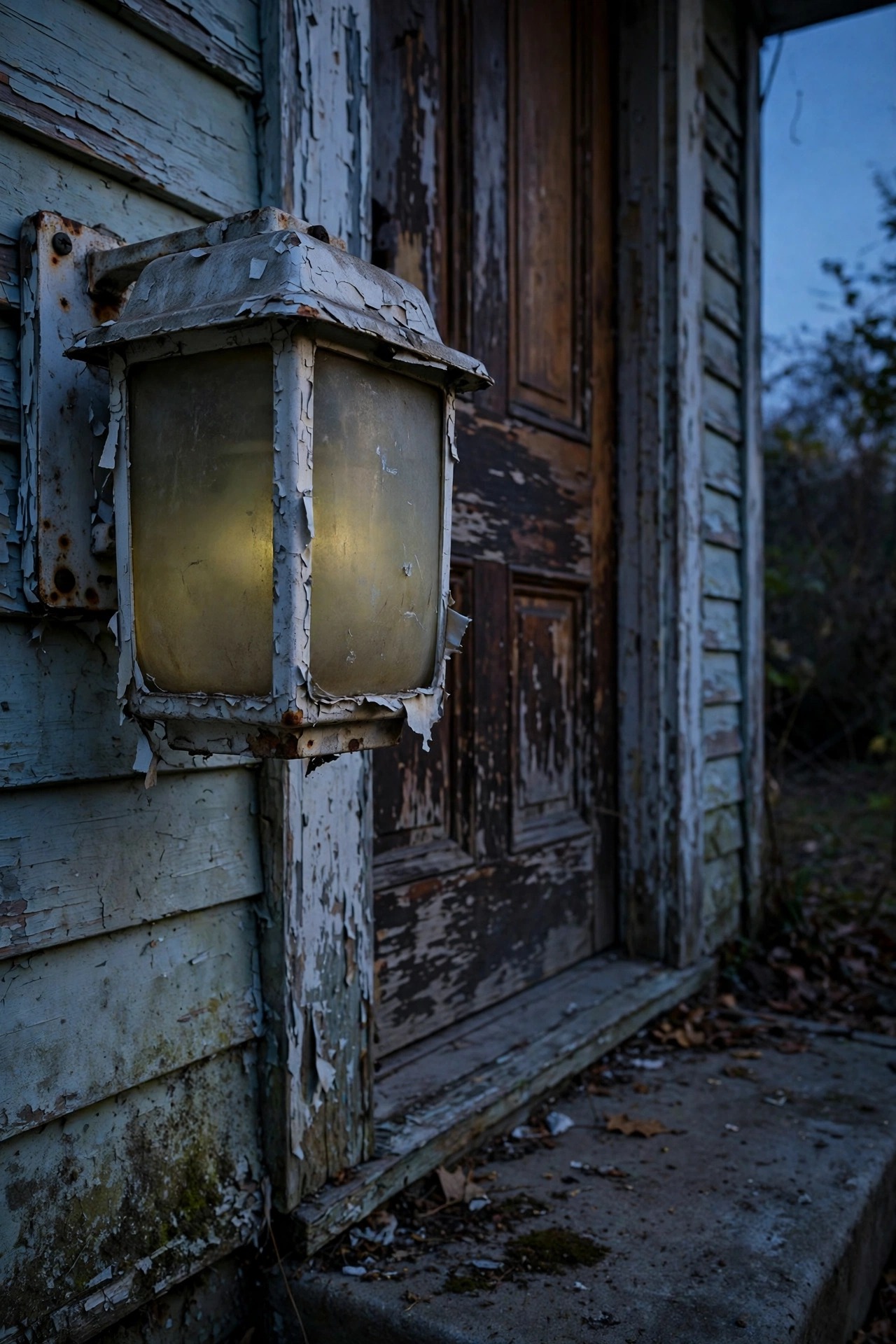
Some fixtures announce their price tag within a single season. Thin plastic housings yellow and cloud over in the sun, painted finishes chalk and peel, and the "antique bronze" rubs down to gray plastic at every corner. It is not really about the purchase price — plenty of affordable fixtures hold up well — it is about materials that cannot survive weather, and a UV-degraded fixture makes the whole entry look tired and temporary. When you shop, pick the fixture up. A metal body, cast aluminum or steel, with a powder-coated finish and real glass panels will outlast a plastic one many times over, and it ages gracefully instead of disintegrating. Check that the finish covers the edges and underside, look for a proper outdoor wet-location rating, and be suspicious of any fixture that feels feather-light for its size. If your current plastic fixture has gone yellow, there is no cleaning your way back — UV damage is permanent — so replace it once with a metal fixture and be done. It is one of those spend-once fixes: the entry looks better immediately, and you stop re-buying the same cheap lantern every two years.
Suggested budget range: $70 – $200.
Mistake 9: No Timer or Photocell (the Last of Our Porch Lighting Mistakes)
The most polished fixture in the world does nothing sitting dark at 7 p.m. because nobody flipped the switch — and a porch that is dark when you come home reads as uninviting and a little unsafe. The opposite habit is just as wasteful: a light left burning around the clock quietly eats electricity, shortens bulb life, and guarantees the bulb gives up on the one dark, rainy night you really need it. I put this last because it is the mistake that quietly undoes all the others. The fix is wonderfully cheap. A dusk-to-dawn photocell bulb turns itself on at sunset and off at sunrise with zero effort from you. A screw-in photocell socket adapter does the same for a bulb you already own. Or swap the wall switch for a timer or astronomical timer that tracks sunset through the seasons, so the porch greets you every single evening. My walkthrough on how to add a photocell or timer to a porch light covers all three options step by step. Set it once, and your entry is lit exactly when it should be — which is really the whole point of porch light in the first place.
Suggested budget range: $15 – $60.
Frequently Asked Questions
How big should a porch light fixture be?
Use the door as your ruler: the fixture height should be about one-quarter to one-third of the door height, so roughly 16 to 20 inches tall for a standard 80-inch door with a single fixture. Pairs can be slightly smaller each. When in doubt, tape a cardboard outline beside the door and check it from the street — if it vanishes, size up.
What color temperature is best for a front porch?
Warm white, between 2700K and 3000K, is the range that makes entries look welcoming and expensive. It flatters brick, wood, and skin tones and matches the lamplight inside your windows. Save cooler temperatures for task areas like a garage workbench, and keep every bulb on the porch in the same range so nothing clashes.
How high should porch lights be mounted?
For fixtures beside the door, aim for the center of the light to sit about 66 to 72 inches above the porch floor, near eye level, so it lights faces rather than scalps. For an above-door fixture, keep the bottom edge a few inches clear of the door frame, and always confirm that both the door and the storm door can swing without hitting it.
Can I fix my porch lighting without replacing the fixtures?
Usually, yes. Swapping in matched warm-white bulbs, cleaning the glass, and adding a photocell adapter or dusk-to-dawn bulb fixes three of the most common problems for very little money. Replacement only becomes necessary when the fixture itself is the issue — too small for the wall, badly glared with no way to diffuse it, or made of plastic that has already yellowed.
Conclusion
None of these fixes asks for a renovation — just a little attention to scale, symmetry, warmth, and habit. Get the fixture sized to your door, match the pair, soften the glare, warm up the bulbs, light the steps, keep it clean, and let a timer do the remembering, and the porch lighting mistakes quietly disappear. What is left is the entry every house deserves: warm, layered, and welcoming the moment the sun goes down. Browse more of my outdoor lighting ideas here on the site for your next project — your front door has earned it.