If you have been standing in the garden aisle comparing led vs solar garden lights, I have a confession that will save you some confusion: it is not really a choice between two different kinds of light. Nearly every solar garden light on that shelf is an LED. The diode technology is the same. What you are actually choosing is how the light gets its power — a low-voltage wired system fed by a transformer plugged into your house current, or a small solar panel and rechargeable battery that has to fend for itself all day. That one difference changes everything else: how bright your beds look at 10 p.m., whether your coral bells render their true color, how much work installation takes, and how often you will be replacing fixtures. I have run both systems in my own beds for years, and honestly? I like each one — for different beds, for different reasons. This guide walks through the real trade-offs so you can match the right power source to each bed, instead of lighting the whole yard one way and wondering why half of it disappoints you.

The Short Answer
If a bed carries your curb appeal — the front foundation planting, the bed around your focal tree — choose wired low-voltage LED. It is brighter, its color stays true, and it looks identical every night of the year. Choose solar for accents in sunny back beds, temporary plantings, rentals, and any spot a cable genuinely cannot reach. Solar asks nothing of you at install and gives back a modest glow that fades through the night; wired asks for one planned afternoon and gives back a system. Most yards, mine included, end up happiest with both: a wired backbone for structure, solar sprinkled where wiring makes no sense.
First, the Honest Framing: It Is Wired LED Versus Solar LED
Let me say the quiet part plainly, because it clears up every comparison that follows. Both systems shine through LED diodes. LEDs are efficient, long-lived, and cool to the touch, which is exactly why solar lights use them — a tiny battery could never feed an old incandescent bulb. So when we compare these two, we are really comparing power supplies. A wired LED garden light draws steady 12-volt power from a transformer, all night, at full strength. A solar LED garden light spends the day converting sunlight into a small battery charge, then spends the night rationing it.
That is why the two behave so differently after dark even when the fixtures look nearly identical on the shelf. One is connected to an essentially unlimited supply; the other is a careful little budget that runs out. Everything in this guide — brightness, consistency, lifespan, control — flows from that single fact. If you want the deep dive on how the two systems compare across a whole landscape, I wrote up my experience in my solar vs wired landscape lighting comparison, but for garden beds specifically, here is what matters.
Brightness and Color Quality: LED vs Solar Garden Lights Side by Side
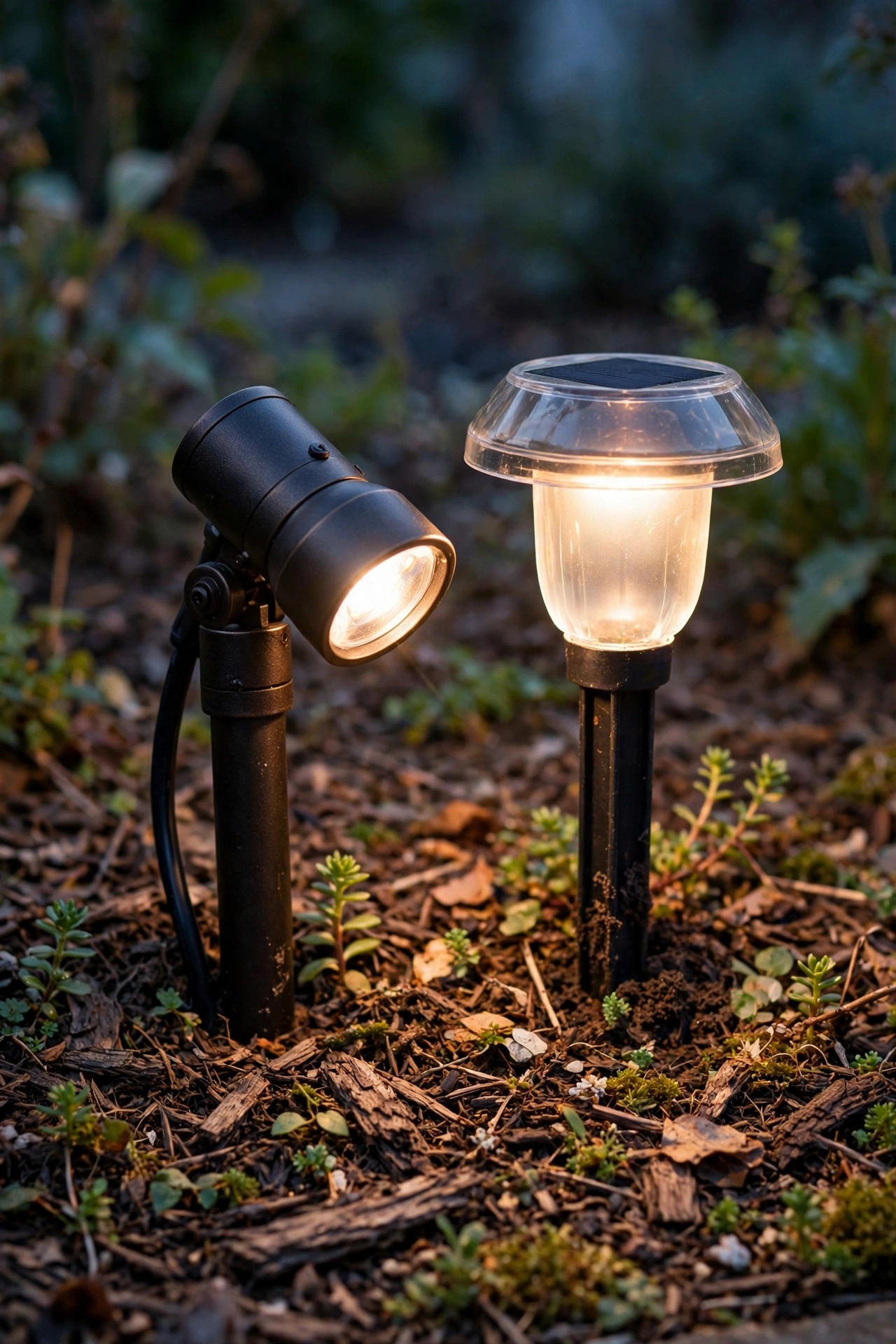
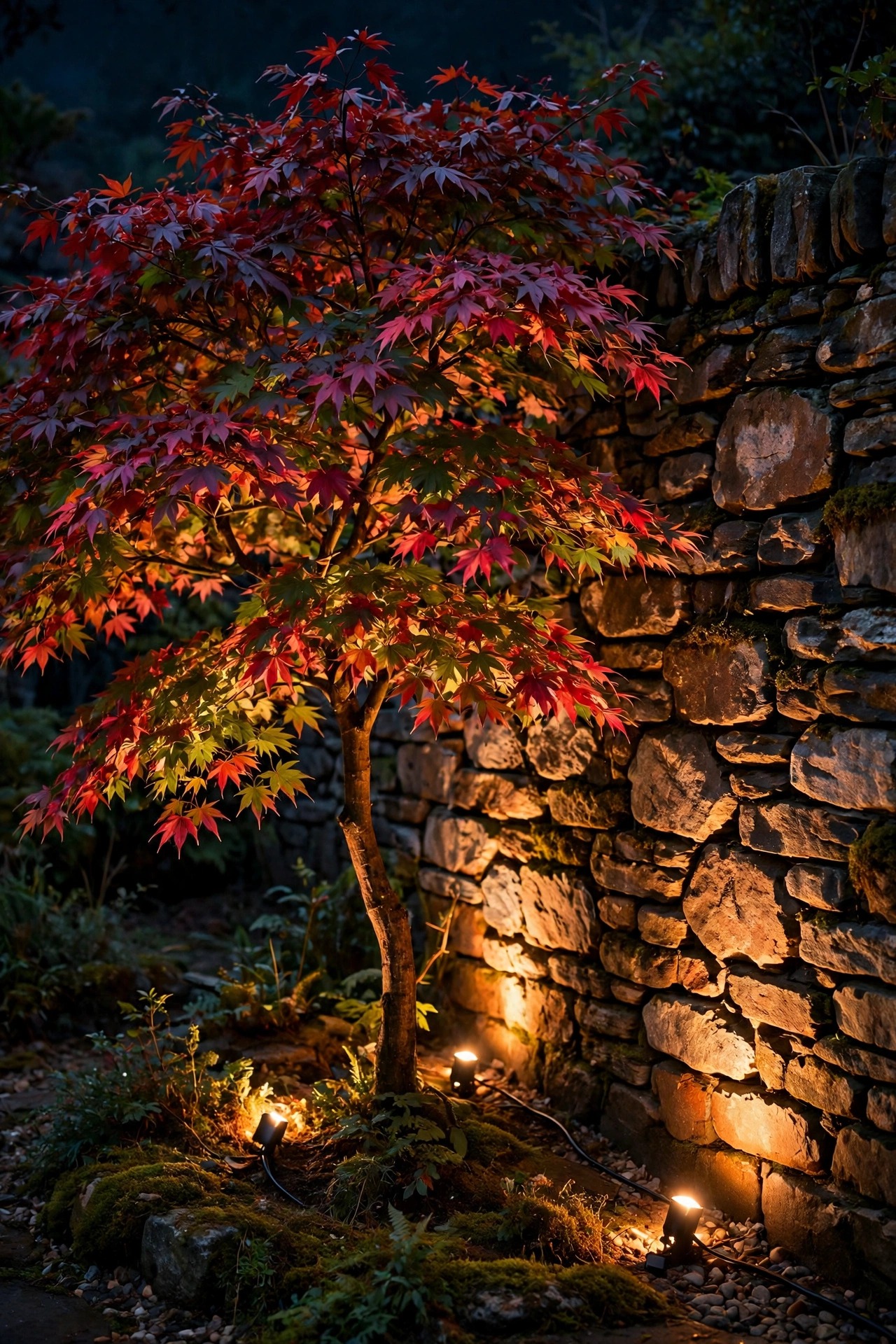
Put the two in the same bed at dusk and the difference is obvious within the hour. A wired LED fixture typically delivers a steady 100 to 400 lumens, and it delivers exactly that at midnight as well as at 9 p.m. Uplight a Japanese maple or wash a stone retaining edge and the light is genuinely there — strong enough to sculpt, not just suggest. Color quality is the bigger gap, in my experience. Good wired fixtures offer consistent warm color, usually 2700K to 3000K, with honest color rendering, so hosta blues, burgundy heuchera, and warm limestone all look like themselves.
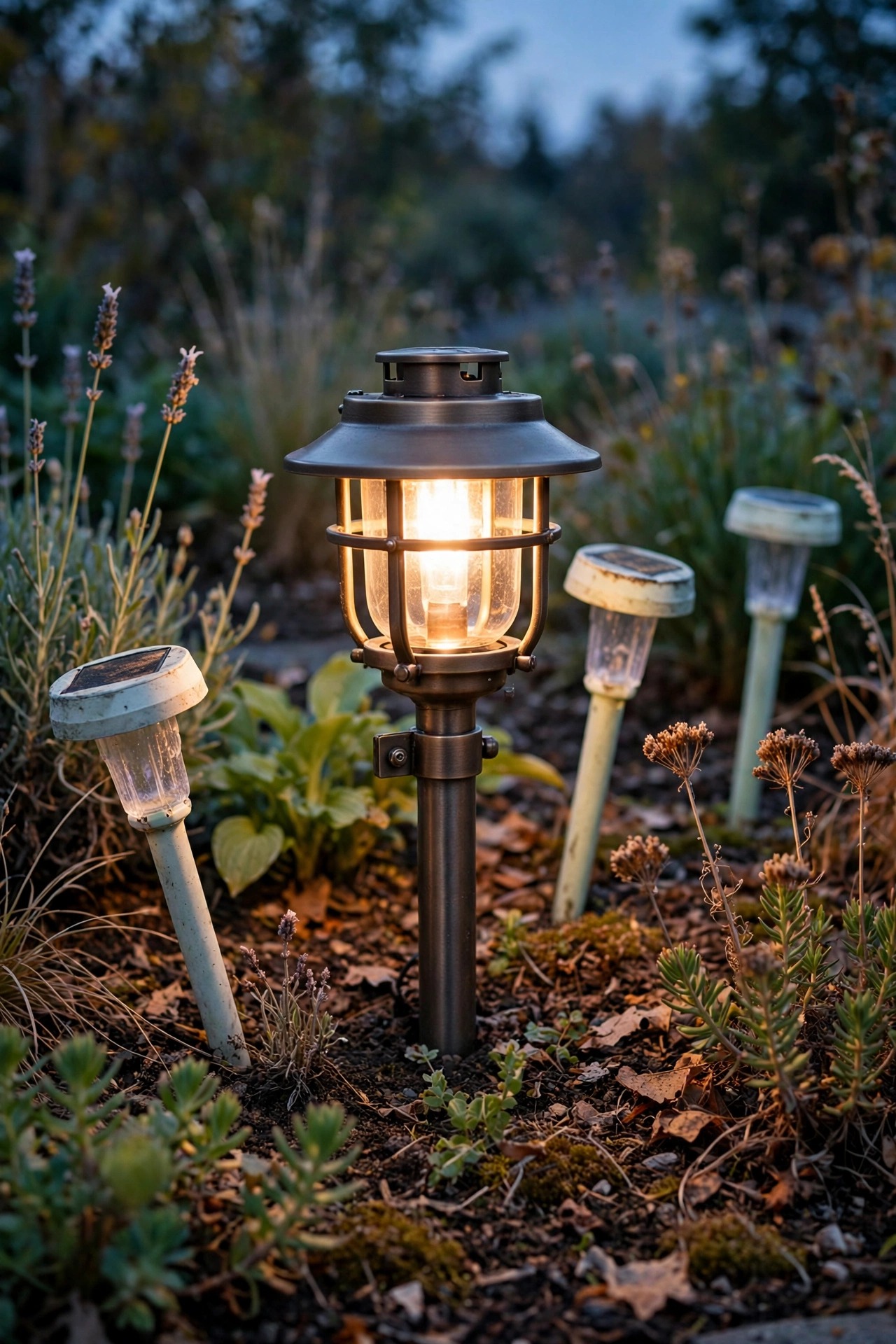
A typical solar stake gives you 5 to 30 lumens — a glow, not a wash — and better models reach 50 to 100. That glow is lovely for marking a bed edge, but it cannot light a plant. Worse, the output slides downhill as the battery drains: pleasant at dusk, noticeably dimmer by 10 p.m., an ember by 2 a.m. Inexpensive solar units also tend to render cool and slightly blue, and the color can shift as the voltage sags. In a bed you planted for color, that skew matters more than raw brightness does.
Consistency Across Seasons, Shade and Dark Evenings
Wired LED is boringly dependable, and I mean that as the highest praise. It looks the same on the longest June evening and the darkest December night, because your house current does not care about the weather. If you host a holiday party or sell your home in winter, the beds perform.
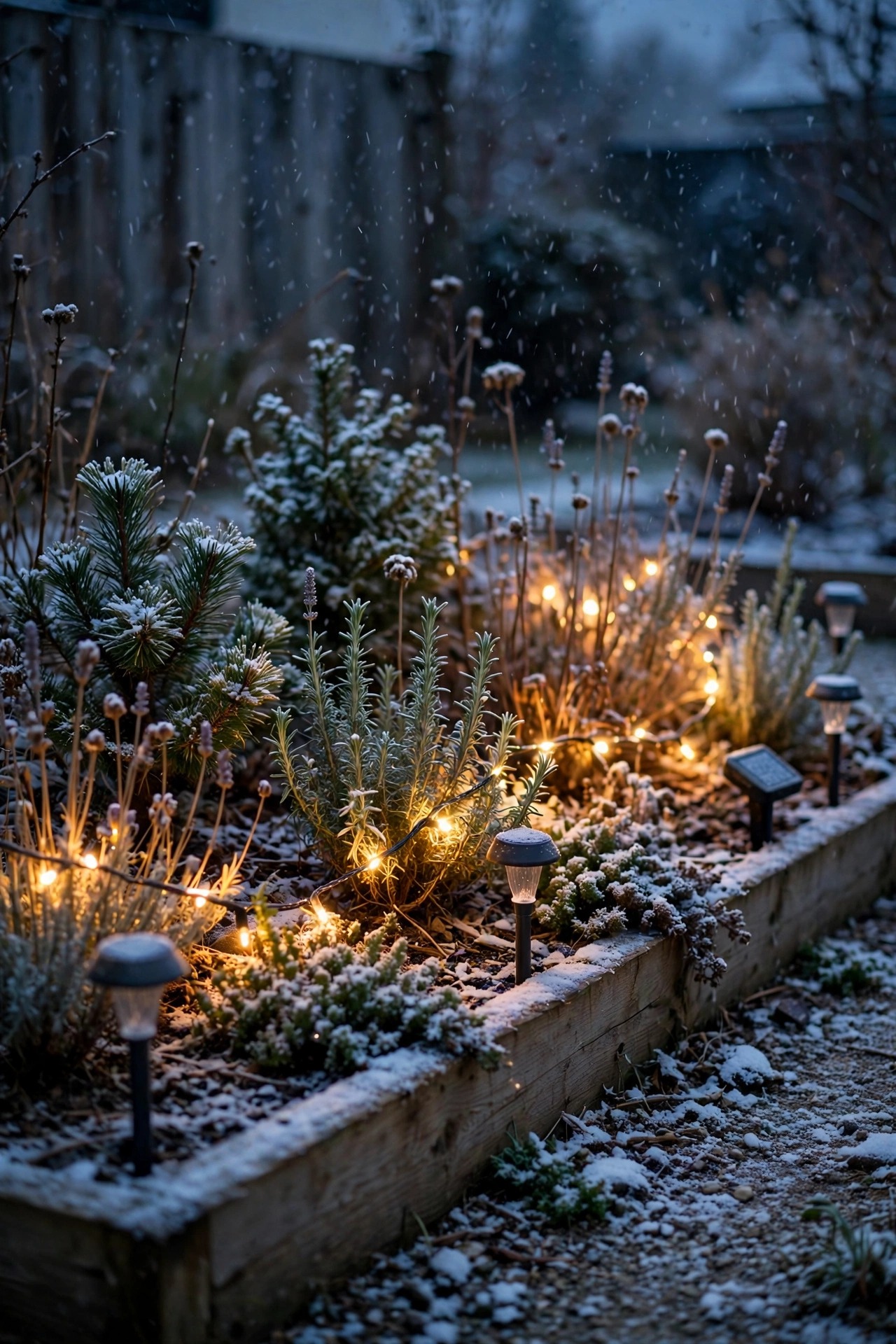
Solar runs on yesterday's weather — well, today's sunshine, spent tonight. In summer, with long days and a high sun, decent solar lights charge fully and glow respectably for six to eight hours. Then the year turns. Short days, a low sun angle, a week of overcast skies, frost or snow filmed over the little panel, and output collapses to an hour or two of weak light. Shade compounds it: the very shrubs you are lighting leaf out and shadow the panels by May. A bed on the north side of your house may never give a solar panel the direct sun it needs, no matter the season. I angle the panels I can toward the midday sun and wipe them down when I deadhead, and it helps — but that is management, not a solution. The wired beds never ask me to think about any of it. If a bed must look good every single night — the entry beds guests walk past — that inconsistency is the deciding factor for me.
Installation: Stakes Anywhere Versus a Transformer and a Plan
Solar wins the installation contest, and it is not close. Unbox, pull the tab, push the stake into the soil, done. Ten lights take ten minutes. Rearranging is just as easy, which gardeners should not undervalue — I move solar stakes every time I divide perennials or rework a bed. No outlet, no cable, no digging: perfect for rentals, far corners, and beds across a driveway where a cable would need to be trenched under concrete.
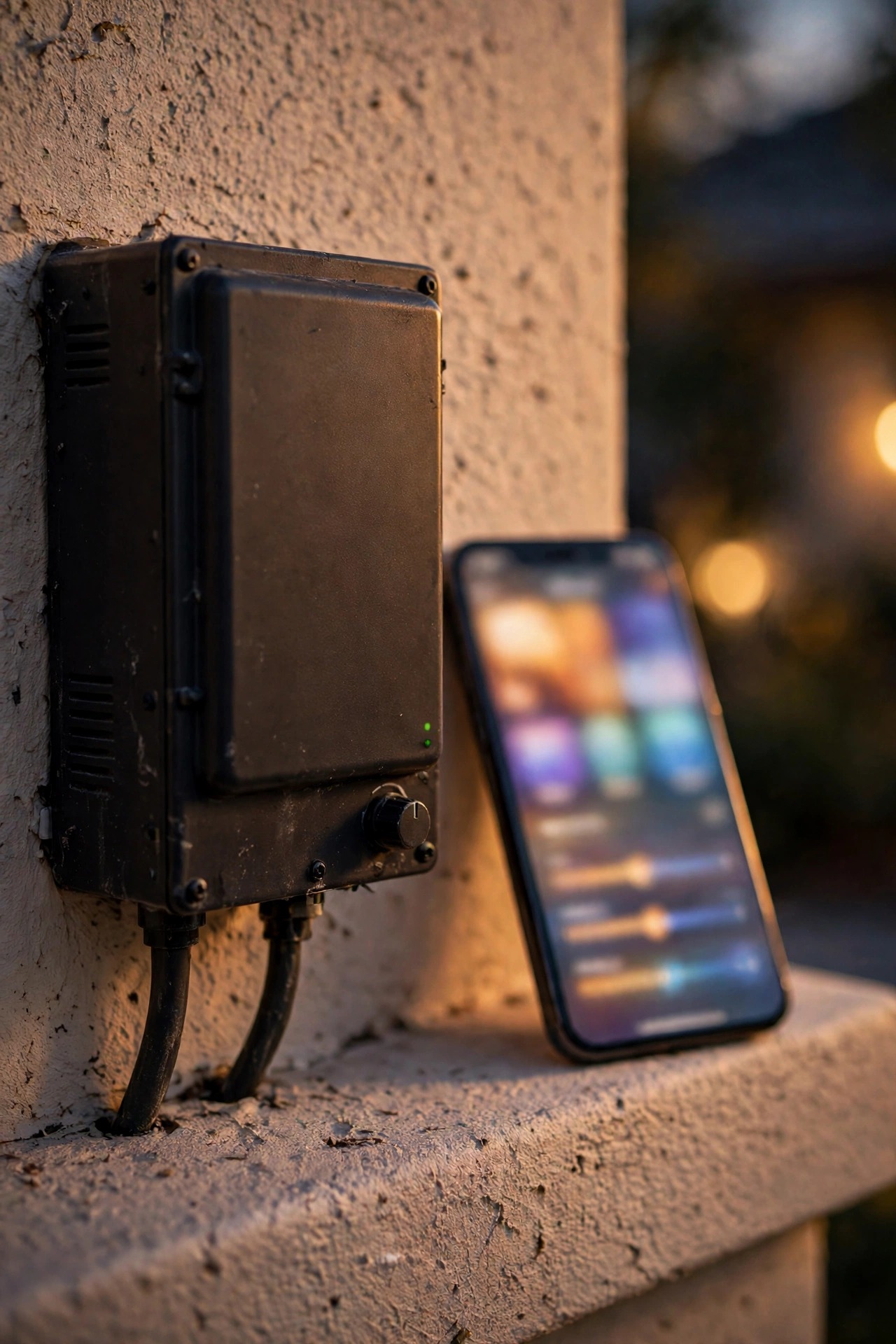
Wired is a project, though a genuinely DIY-friendly one. You mount a transformer near an outdoor GFCI outlet, size it so your total fixture wattage sits at roughly 70 to 80 percent of its capacity, run a main cable around your beds, clip each fixture on with waterproof connectors, and bury the cable a few inches down or tuck it under mulch. A typical front yard takes one honest afternoon. In return you get permanence — nothing to knock over with the mower, nothing that wanders. My low-voltage landscape lighting design notes walk through transformer sizing and cable layouts if you go this route, and because it is only 12 volts, the whole system is safe to handle while powered.
Lifespan, Repairs and the Throwaway Problem
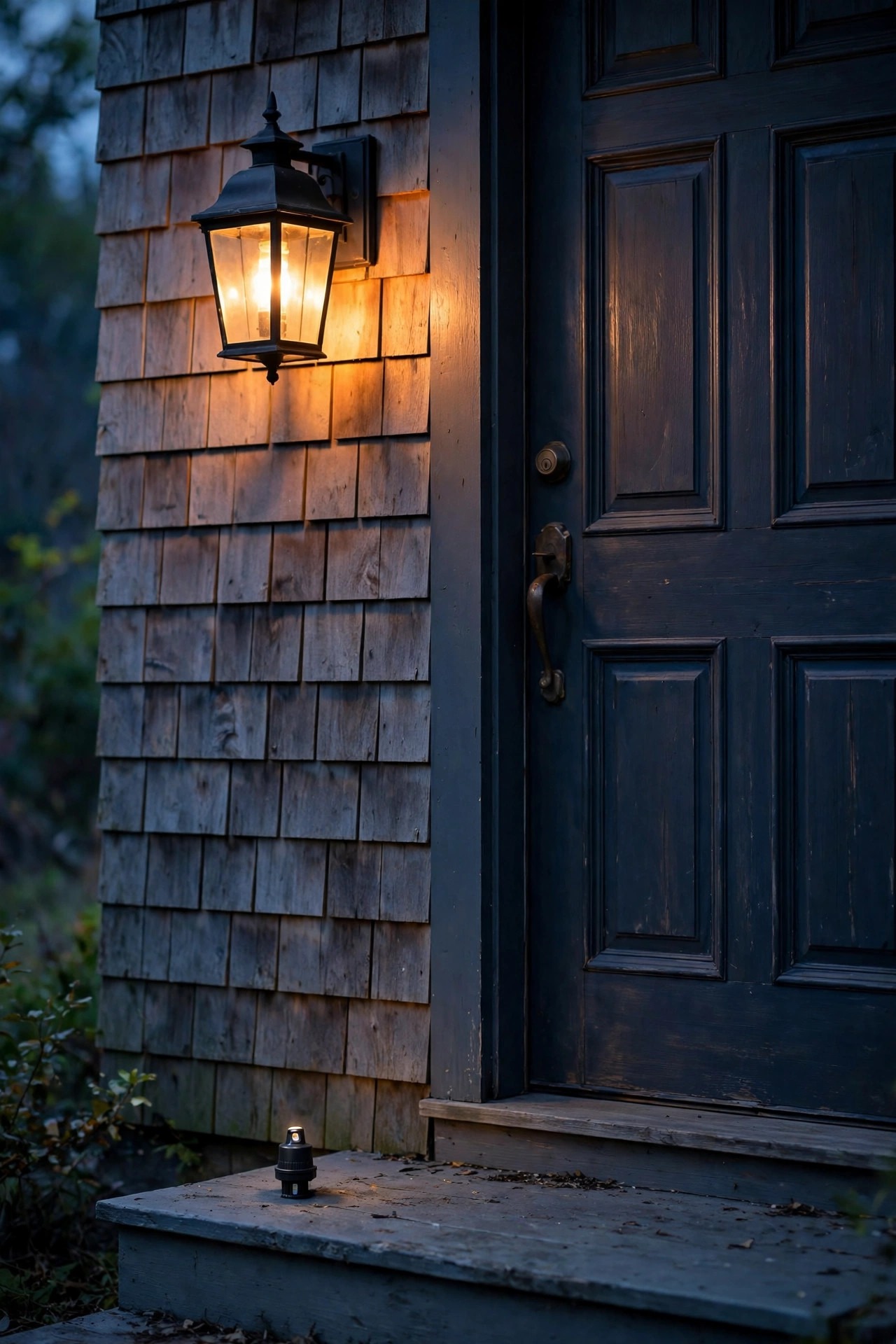
This is the section where my feelings get strong. A quality wired fixture — real metal housing, a replaceable or long-rated LED module — serves for a decade or more. When something fails, you replace one part: a connector, a lamp, one fixture. The cable run is essentially permanent, and even the transformer — the hardest-working component in the system — typically runs for many years and swaps out as a single unit when it finally retires. The system ages gracefully and repairably.
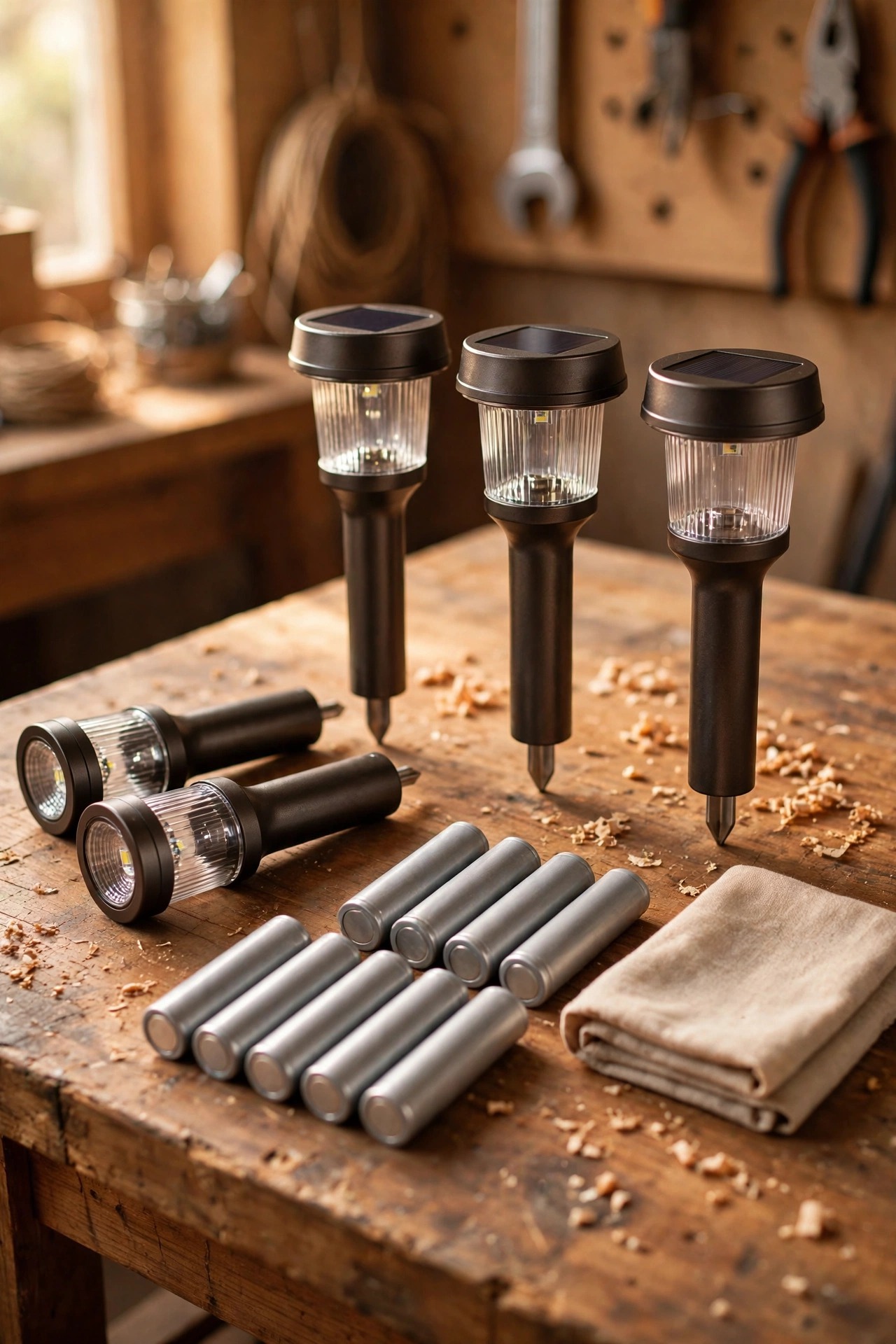
Solar lights usually die from the battery outward. The rechargeable cell inside most solar stakes is good for one to three years of nightly cycles. In sealed, inexpensive units, that is the end of the story — you cannot open the fixture, so a two-dollar battery failure sends the whole light to the landfill. Panels also haze over with UV exposure, starving the battery a little more each season, and moisture creeps into seams. The fix is choosing solar fixtures with replaceable batteries and real housings, which cost more upfront but break the throwaway cycle. Still, be honest with yourself: buy the cheapest multipack and you are signing up to rebuy it. Over five years, a wired fixture bought once quietly becomes the cheaper and far less wasteful option.
Control: Timers and Smart Switches Versus Dusk Sensors
Wired systems hand you the remote. Most transformers offer a timer, a photocell, or both, so your beds can switch on at 6 p.m. sharp in December — when it has already been dark for an hour — instead of waiting for a sensor to decide. Swap in a smart plug or a smart transformer and you get app control, vacation schedules, and scenes. Some systems dim. Your beds become part of how the house runs.
Solar control, by contrast, is mostly a dusk sensor and your hopes. Lights come on when it gets dark and go off at dawn or when the battery gives out, whichever comes first. Better models add a motion boost or a couple of modes, and that is about it — no schedules, no dimming scenes, no "on for the party, off at eleven." For many beds that simplicity is a genuine feature: nothing to program, ever. There is also the midnight factor to consider: a timer lets me shut the beds down at 11 p.m. to spare the night sky, the neighbors, and the electric bill, while a solar light burns on until its battery quits, whether anyone is awake to enjoy it or not. But if you enjoy control, or your beds need to perform on a timetable for guests and security, wired is the only real answer.
Which Beds Win With LED vs Solar Garden Lights
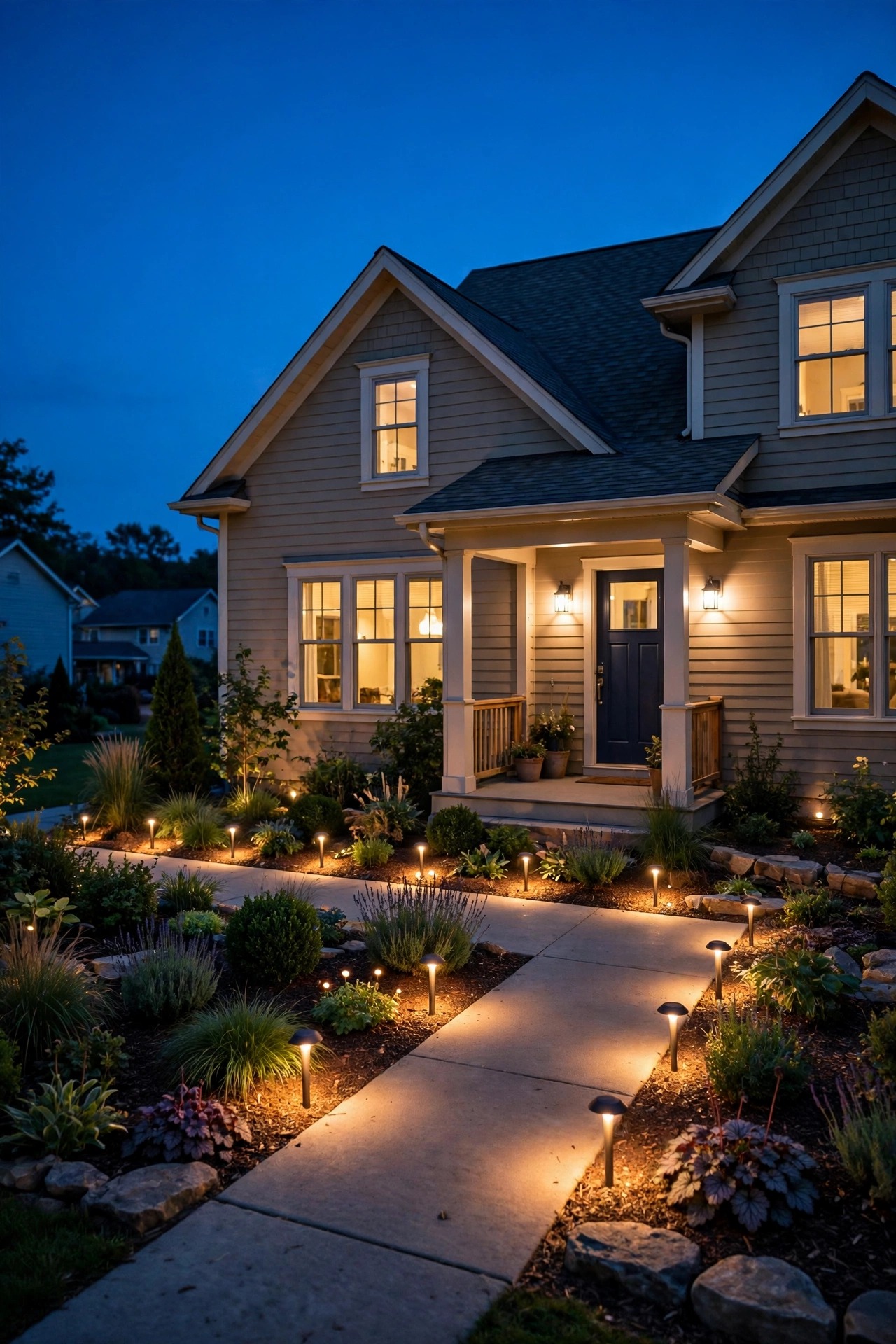
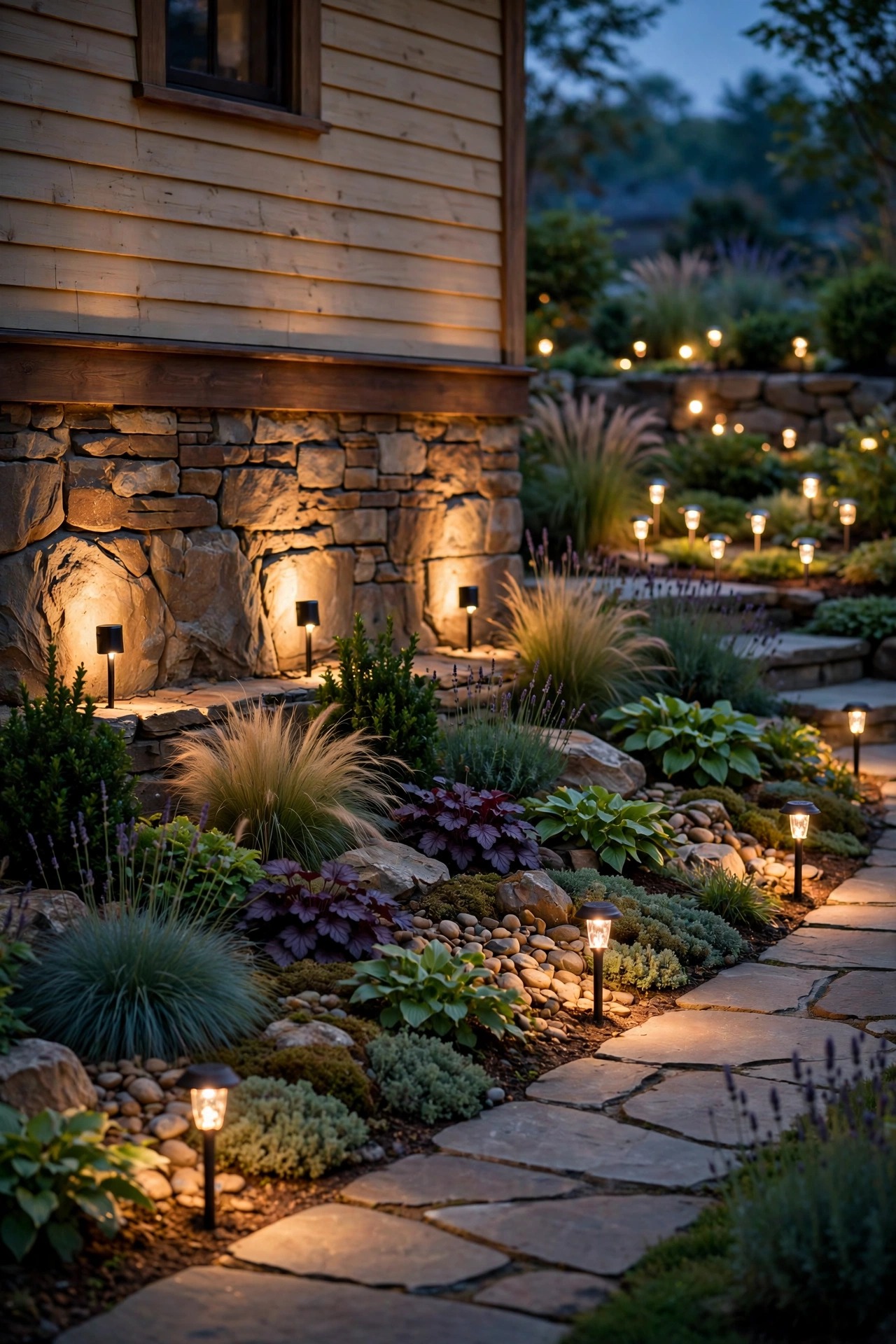
Here is how I actually assign them around my yard, bed by bed. The front foundation beds and the entry planting — the ones in every photo, the ones guests walk through — get wired LED, full stop. Beds built around a specimen, like a sculptural pine or a boulder grouping, get wired uplights, because accent lighting that fades by 10 p.m. is not accent lighting.
Sunny back and side beds seen from the patio get solar, and they wear it well: the light there is atmosphere, not task lighting, and a gentle fade as the evening winds down honestly suits a garden at rest. Temporary beds, new plantings you may move next spring, and the vegetable garden rows get solar stakes I can pull in seconds. Deep-shade beds under mature trees are wired-only territory — or the one exception, remote-panel solar, where the panel sits in a sunny spot on a lead while the light works in the shade. And a rental home, or a bed a cable simply cannot reach without crossing concrete, is solar's home turf. Match the power to the bed's job, not the other way around — honestly, that single habit simplifies every lighting decision that comes after it.
The Hybrid Setup I Actually Use
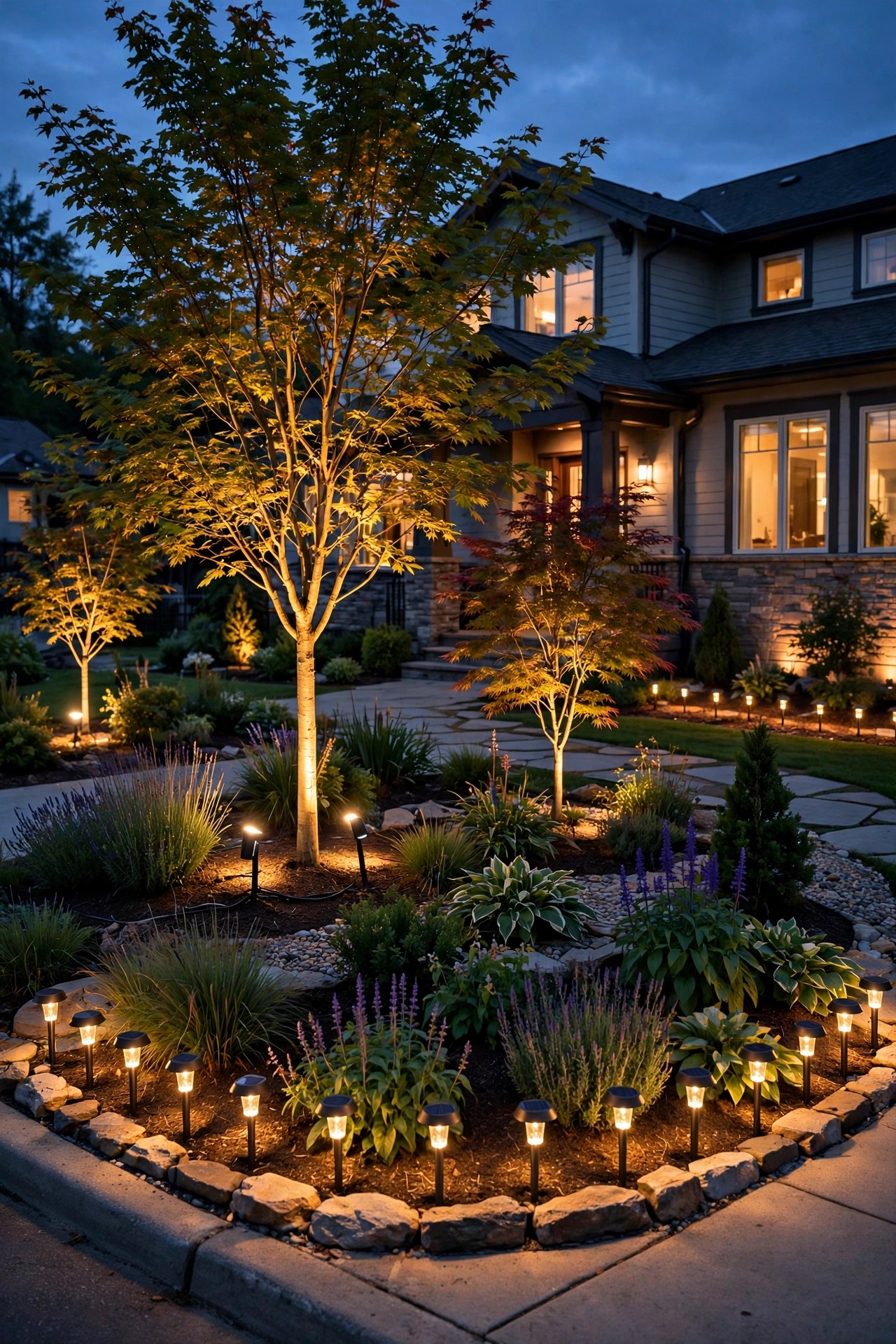
If you have read this far, you will not be surprised that my own yard runs both, and I think that is the honest destination for most gardens. The wired system is my backbone: foundation beds, the focal tree, the bed edging the front walk. Those lights define the garden's structure after dark, and they never embarrass me in December.
Solar fills the gaps where copper cable makes no sense: accents in the back perennial bed, a few stakes in the cutting garden, the mailbox planting stranded across the driveway. The result, when it works, is a garden that reads as layered and intentional from the curb — and I never had to trench a cable across the driveway to get there. Two rules keep the mix looking intentional. First, match color temperature across both systems — 2700K to 3000K everywhere — so the eye reads one design instead of two competing purchases. Second, never ask solar to share a starring role in the same bed as wired focal lighting; the fading will make the whole composition look broken by late evening. Keep solar in its own supporting beds and it will charm you. Let wired carry the architecture, let solar sprinkle the sparkle, and stop expecting either to do the other's job.
What It Costs in 2026
Let us talk real numbers, because the shelf prices lie by omission. Solar looks nearly free: basic stake multipacks run about $2 to $5 per light, and genuinely good solar fixtures with metal housings and replaceable batteries run $12 to $25 each. Lighting a back bed with a dozen decent solar stakes costs roughly $50 to $200 upfront and $0 to run. But factor in the replacement cycle — replacing most of a cheap set every two years puts a five-year cost around $100 to $300, plus the waste.
A wired system asks for real money once: a transformer runs $60 to $150, a 100-foot cable $30 to $60, and fixtures $15 to $45 each, so a ten-fixture front-bed setup lands around $300 to $600 as a DIY project. Running it is nearly nothing: ten 5-watt fixtures burning five hours a night use about a quarter of a kilowatt-hour daily, roughly $15 a year at average residential rates. Hiring a pro to design and install instead adds $800 and up. The wired electricity math also shrinks further if your timer runs the beds for four evening hours instead of five, which is all most of us actually sit outside to enjoy. My verdict: solar is cheaper to start and dearer to keep replacing; wired is dearer to start and cheaper for a decade after.
5 Mistakes That Ruin the Effect
1. Solar in a north-facing bed. The panel never sees direct sun, the lights glow for forty minutes, and you conclude solar is junk. The light was fine; the placement was impossible. North and deeply shaded beds need wired power or a remote-panel fixture.
2. Judging color temperature from the box. Packaging photos are rendered, not photographed, and plenty of "warm white" solar lights shine a ghastly blue-white in person. Buy one light first, live with it for a night, then commit to a set.
3. Mixing both systems in one bed. It sounds flexible and looks broken: the wired fixtures hold steady while the solar ones fade by 10 p.m., and the bed reads as half-failed. Give each bed one power source and one job.
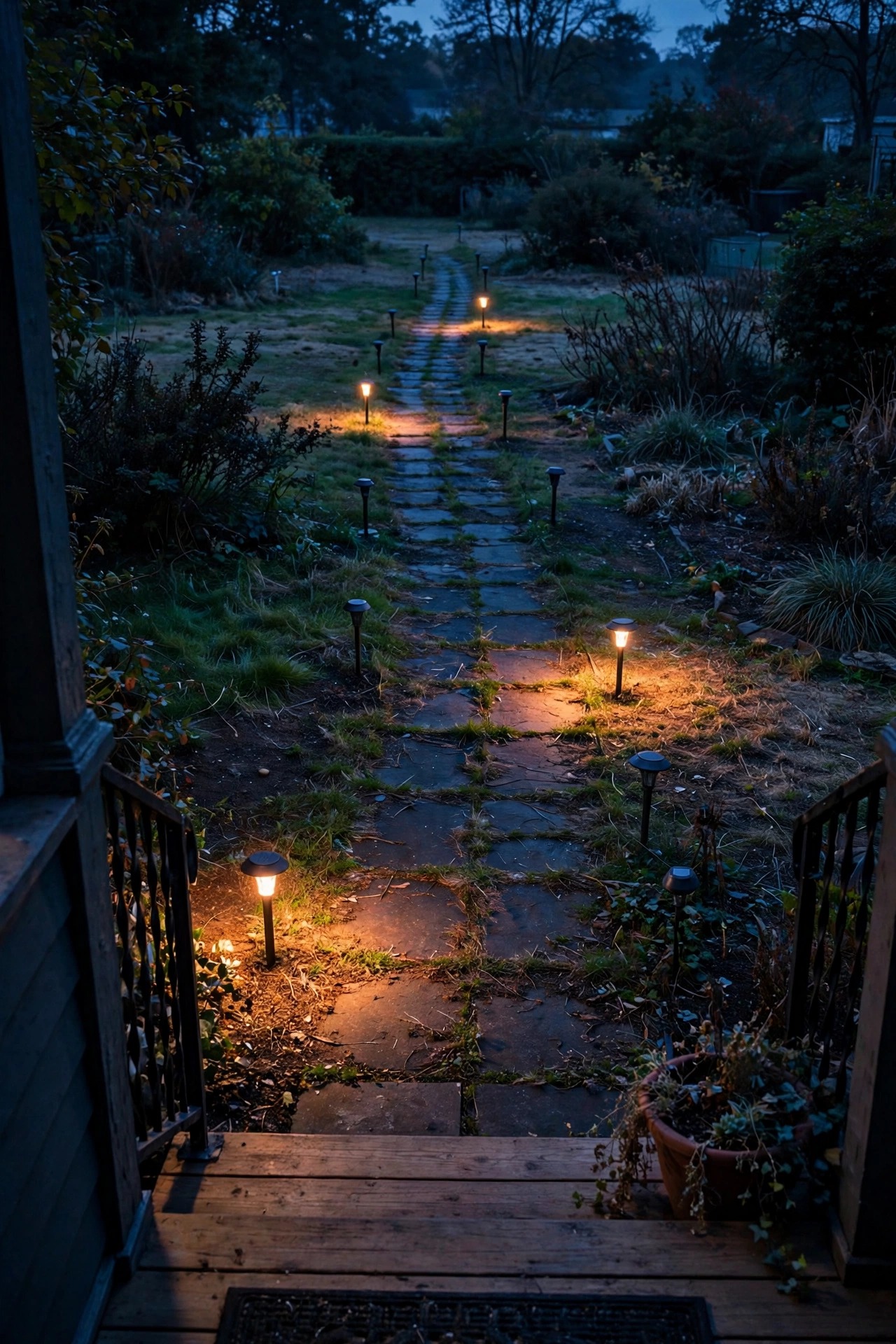
4. Spacing solar like wired. A solar stake is a glow, not a wash. Space them like wired path lights and you get lonely dots; cluster them closer, four to six feet apart, for a continuous ribbon of light.
5. Burying wired cable before a night test. Live with the layout above ground for a week, walk it after dark, adjust — then bury. Digging twice is nobody's idea of a Saturday.
Frequently Asked Questions
Do solar garden lights work in the middle of winter?
They work, but modestly. Short days and a low sun mean a partial charge, so expect two to four hours of softer light rather than a full evening. Brush snow off the panels, angle them toward the midday sun where the fixture allows it, and lower your expectations gracefully — or let wired lights carry the beds that matter in December and treat solar as a fair-weather accent.
Can I mix solar and wired lights in the same flower bed?
You can, but I talk most people out of it. The wired fixtures hold their brightness all night while the solar ones fade, and by late evening the bed looks uneven and half broken. If you love both, give them separate beds or separate jobs, and at minimum match the color temperature — warm 2700K to 3000K across everything — so the light at least reads as one family.
How long do solar garden lights actually last?
The battery is the clock: most are spent after one to three years of nightly cycling. Fixtures with replaceable batteries and metal housings can serve much longer, since you can refresh the cell and clean the panel. Sealed bargain fixtures usually become throwaway items when the battery dies. Wired fixtures, by comparison, commonly last a decade with only minor part replacements.
What color temperature looks best in garden beds?
Warm white, 2700K to 3000K, flatters foliage, bark, and stone and matches the light spilling from your windows, so the garden feels like part of the house. Cool 5000K light turns greens blue and makes beds look like a parking lot. Whatever you choose, hold it consistent across every fixture in view — consistency is what reads as designed.
Conclusion
So, led vs solar garden lights is not a contest with one winner — it is a matching exercise. Wired LED gives your showcase beds brightness, true color, and year-round reliability for one planned afternoon and a higher upfront spend. Solar gives sunny accent beds effortless, movable glow with a fade you either forgive or plan around. Give the front beds the backbone, give the back beds the sparkle, match your color temperature, and your garden will look deliberate from the street and magical from the patio. If you want fresh layout inspiration before you buy a single fixture, browse my favorite garden lighting ideas and start sketching your beds tonight.