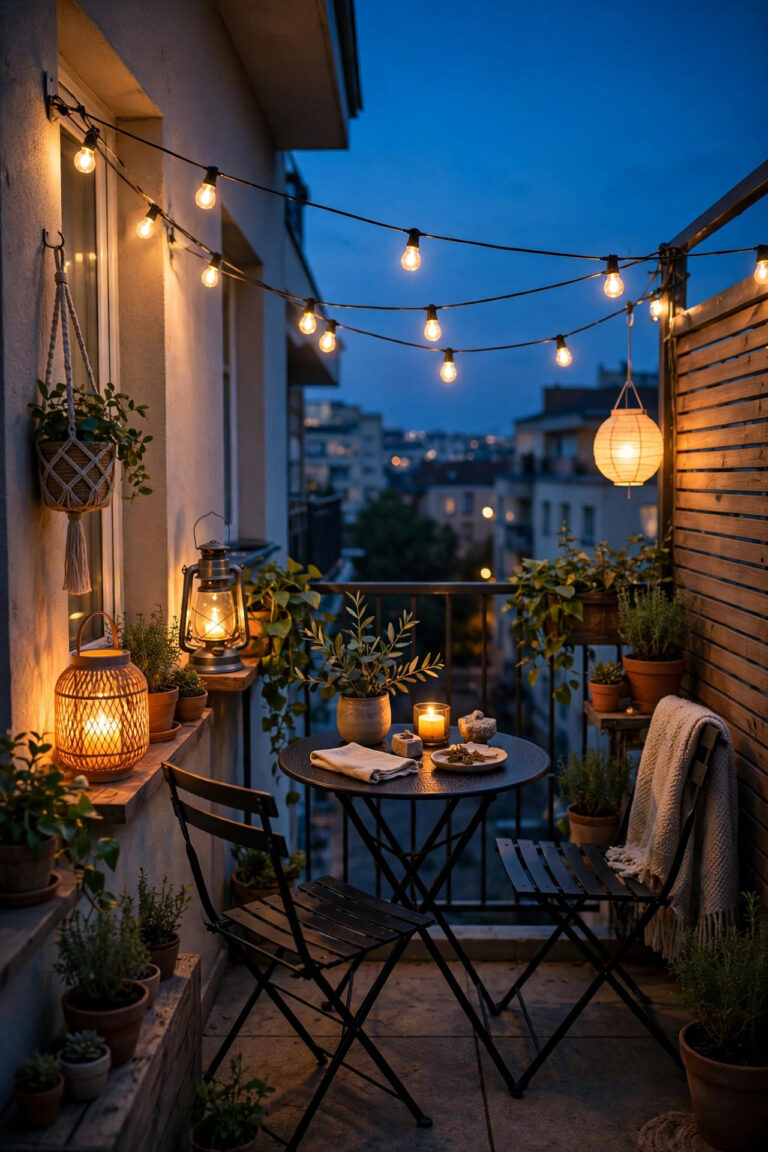
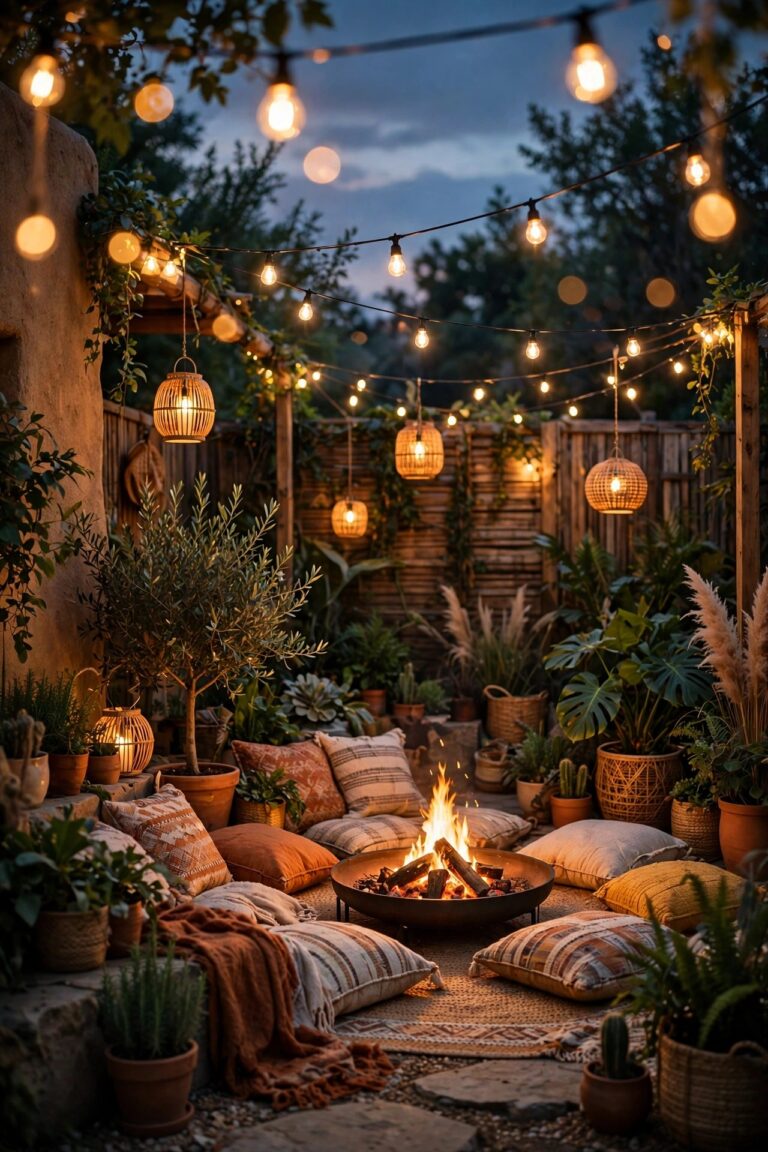
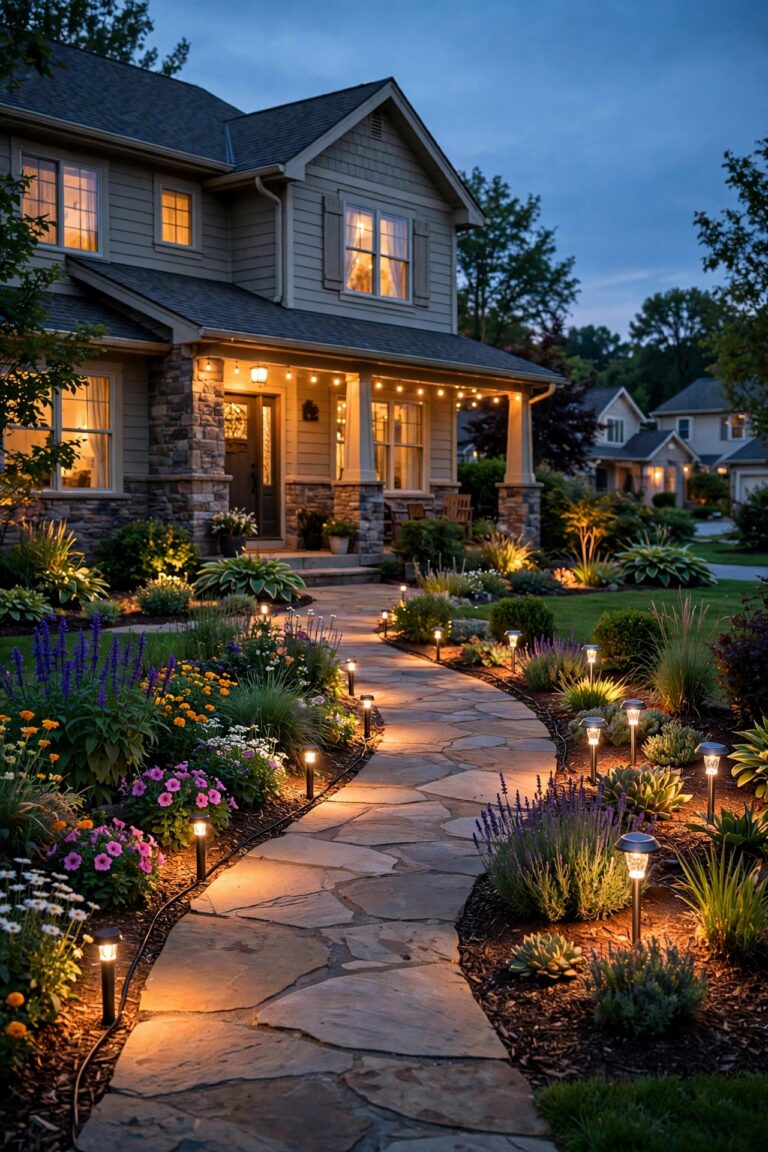
When I planned my first serious lighting layout, one question stopped me cold: did I need an electrician for all of this, or could I do it myself? The answer came down to a single decision — low voltage vs line voltage outdoor lighting. Those two systems power nearly every fixture in a residential yard, and they could not be more different in how they install, what they cost to run, and how they behave when something goes wrong. One plugs into a porch outlet through a transformer. The other is your house current, buried in the ground and hardwired in place. Both can look beautiful when you layer them the way I always recommend: a task layer for steps and grills, an ambient layer for glow, and a guide layer along the paths. This guide compares the two systems honestly — safety, brightness, flexibility, the sneaky problem of voltage drop, and where each one genuinely belongs. By the end, you will know exactly which system gets your paths, which gets your porch, and why most yards I design end up using both.
The Short Answer
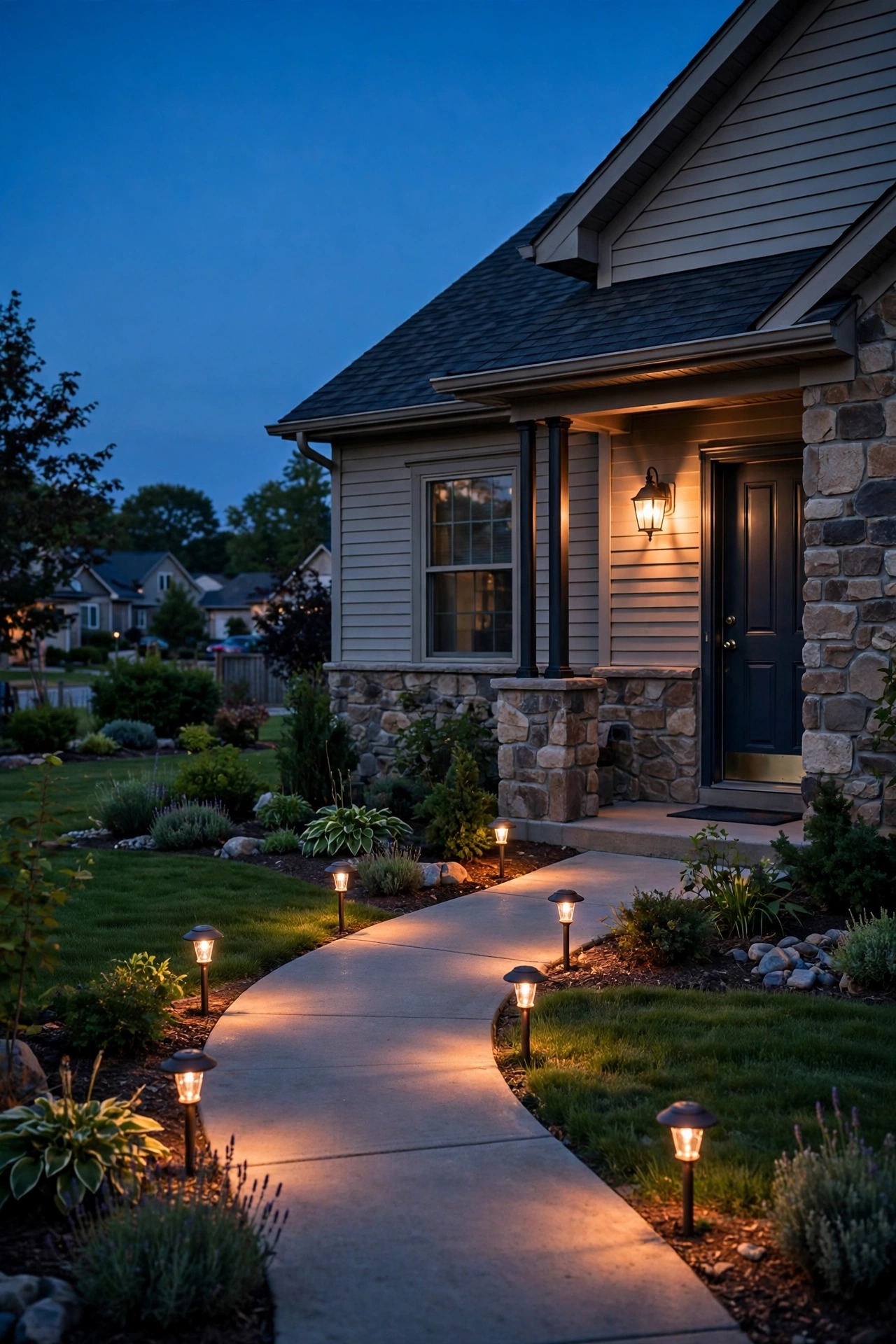
For landscape lighting — paths, beds, trees, accents — low voltage wins for most homeowners: it is safer, far easier to install yourself, and simple to rearrange as your garden changes. Line voltage is the right call where house wiring already exists, like porch and garage fixtures, and for very long runs or serious floodlight output. Energy use is basically a tie now that both systems run LED. The honest answer for most yards is a hybrid: hardwired fixtures at the house, low-voltage runs everywhere else.
Low Voltage vs Line Voltage Outdoor Lighting: What Each System Actually Is
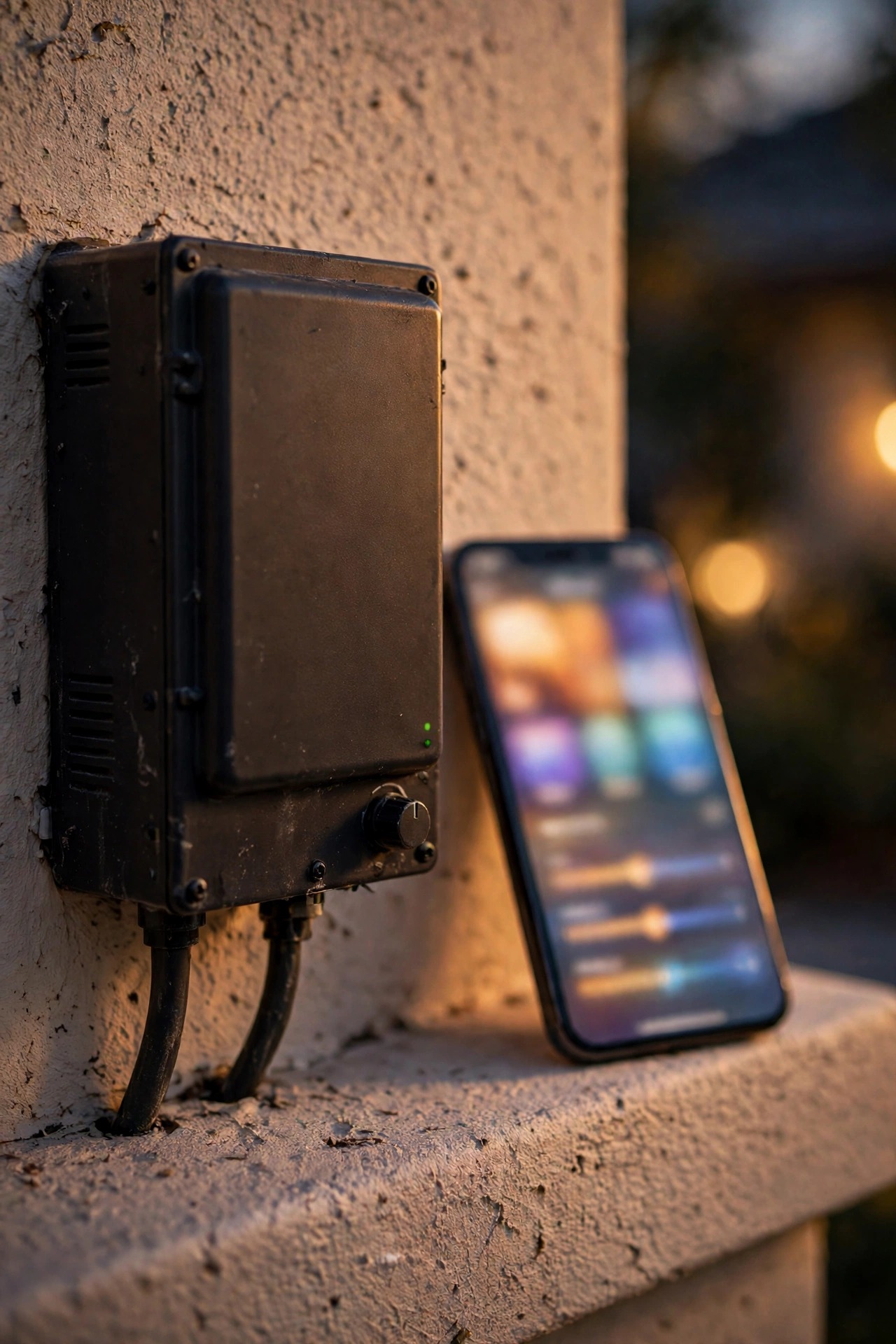
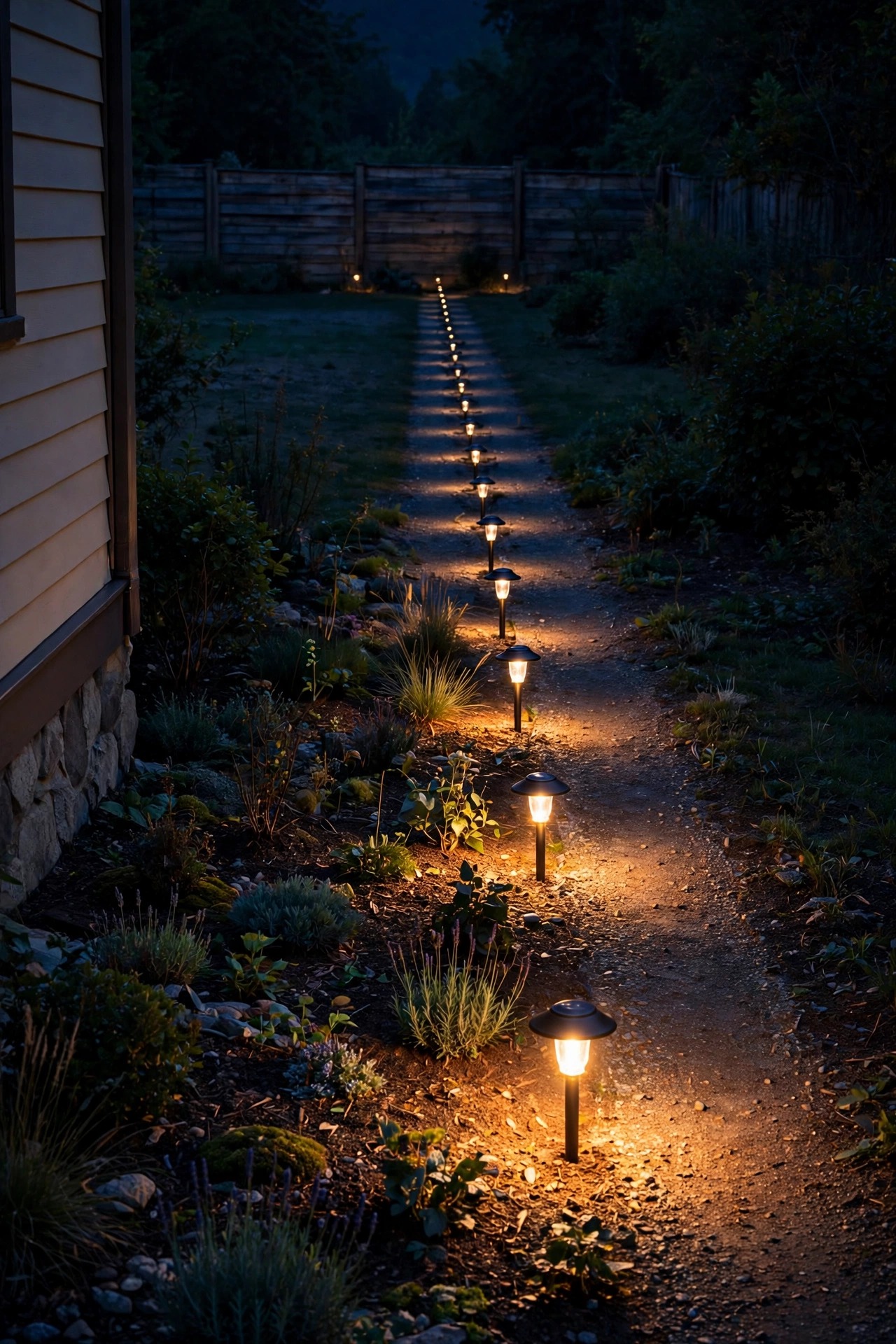
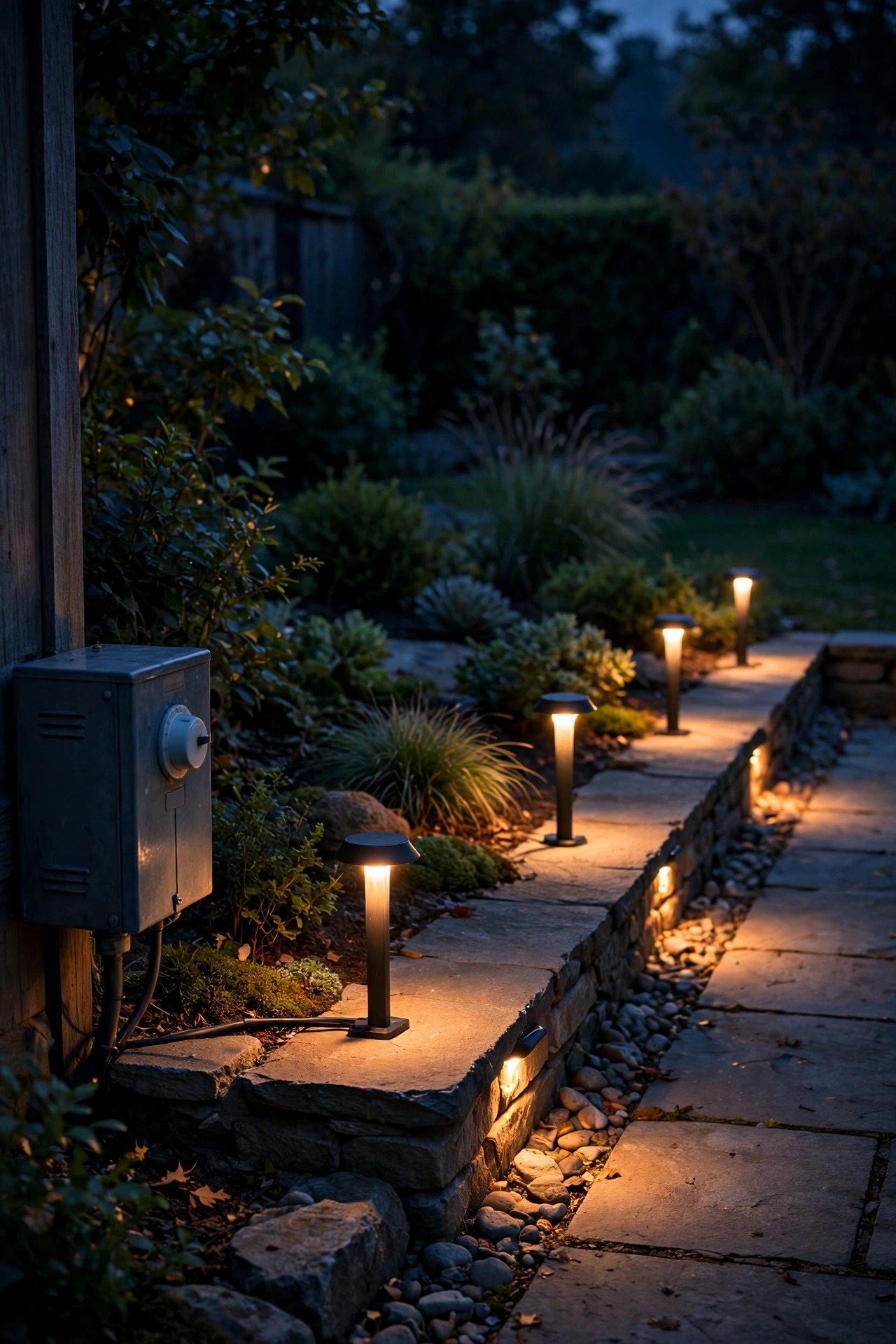
A low-voltage system runs on 12 volts. A transformer plugs into an ordinary outdoor outlet and steps your 120-volt house current down to 12, and a single low-voltage cable carries that gentle current out into the yard. Fixtures clip onto the cable with piercing connectors, so adding or moving a light is a five-minute job. Nothing about it is permanent, and nothing about it can seriously hurt you.
A line-voltage system runs on the full 120 volts that powers everything else in your house. Fixtures hardwire into junction boxes, cable runs underground in conduit or as rated burial cable, and switches live on the wall like any other circuit. Your porch lantern, garage lights, and most security floods are almost certainly line voltage already.
Here is the part that surprises people: the fixtures themselves have nearly converged. Both systems burn LED now, both come in path, spot, wash, well, and deck styles, and both can produce the same warm 2700–3000K glow I use everywhere. The real differences are not in the light. They are in the wiring, the rules, and how forgiving each system is when your plans change — which, in a living garden, they always do.
Safety: The Difference That Matters Most
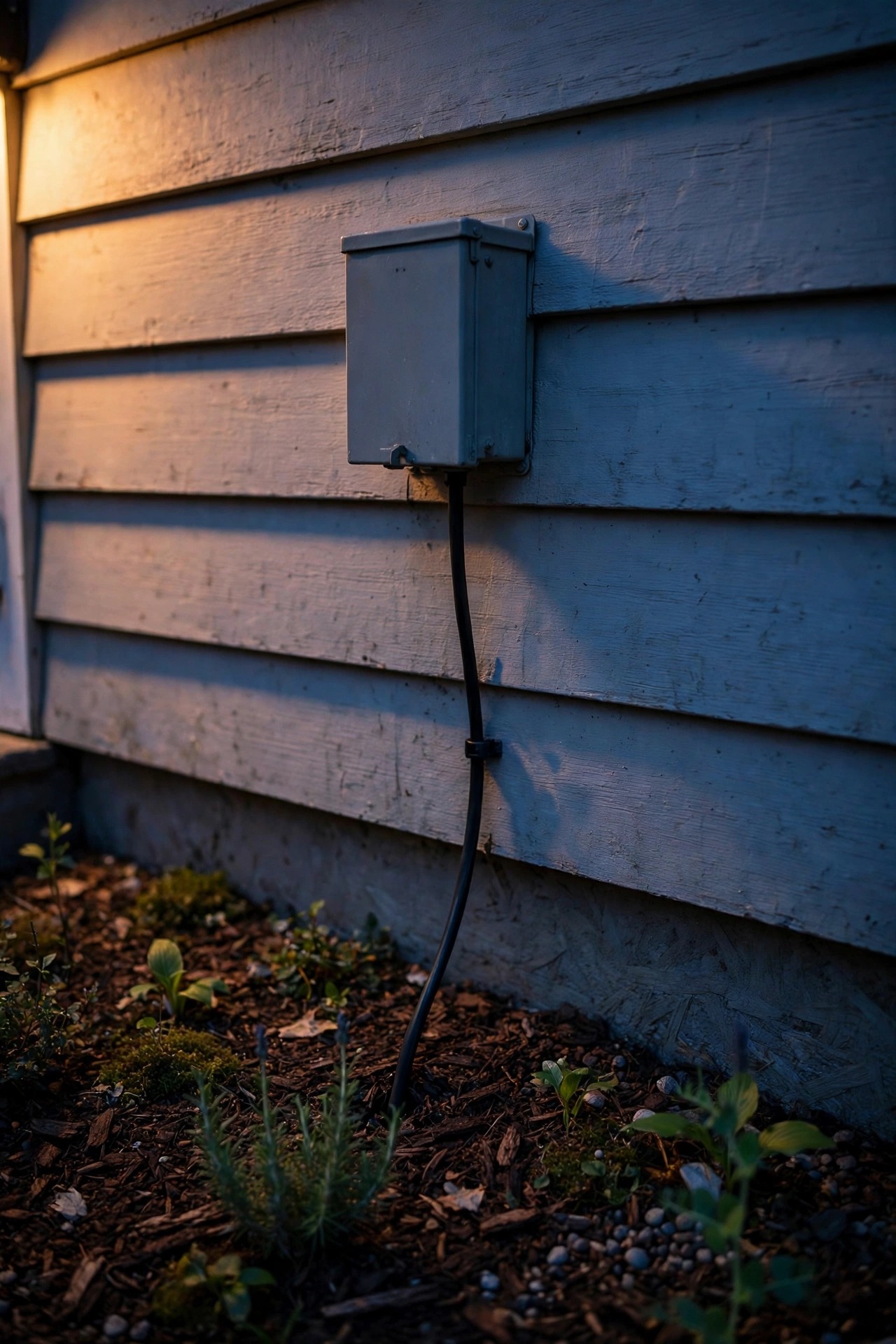
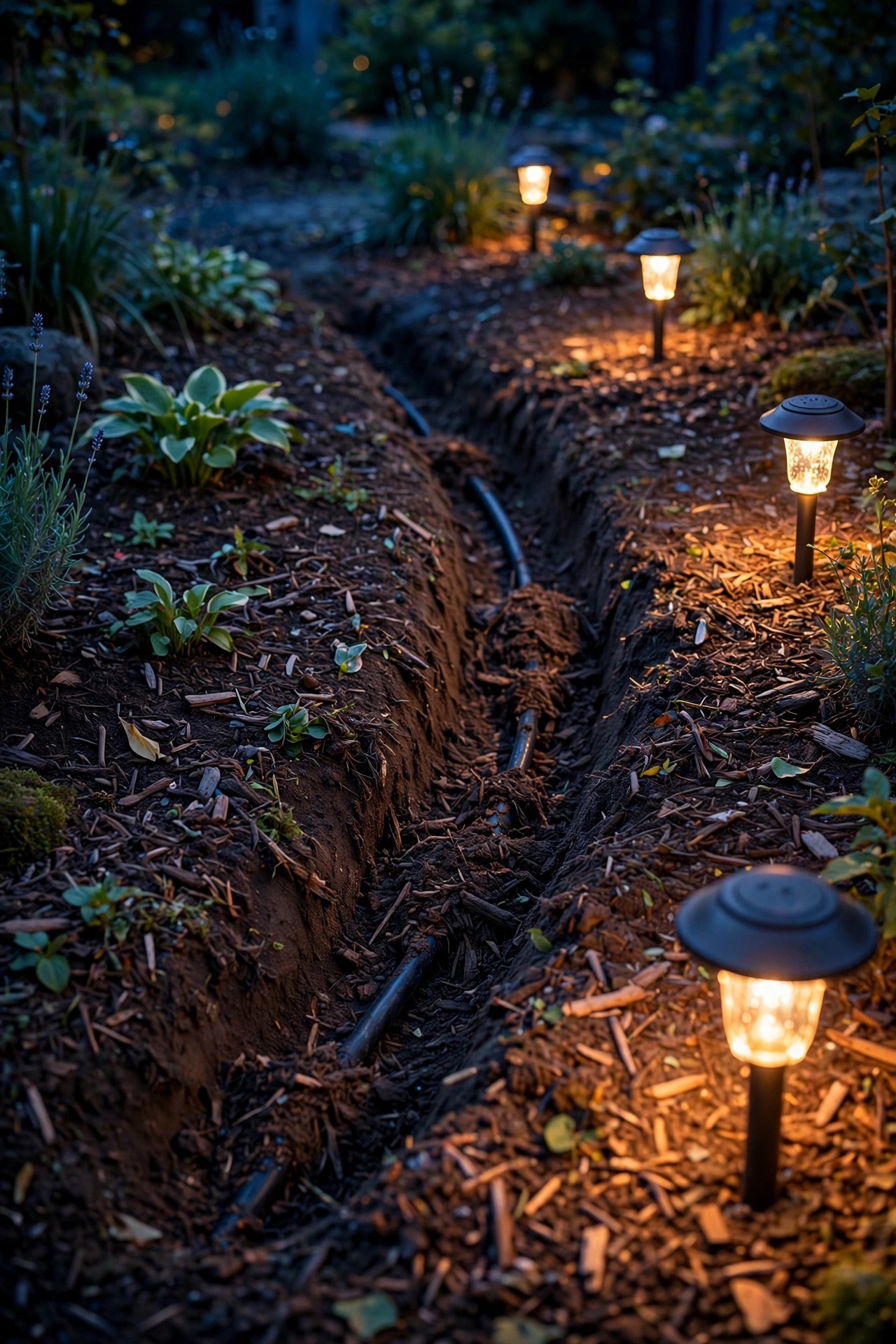
This is where the two systems truly part ways. Twelve volts is doorbell power. You can hold a bare low-voltage connector in a wet hand and feel nothing, and if a shovel nicks the cable, the worst outcome is a tripped transformer and a dark section of path. That cable only needs to sit about 6 inches down — honestly, mine often just tucks under the mulch with a shallow slit trench, safe because the current inside it is harmless.
Line voltage is a different animal. One hundred twenty volts can kill, full stop, so the electrical code treats buried outdoor wiring seriously. In plain terms: line-voltage cable generally has to rest about 18 inches deep when protected inside conduit, and deeper — around 24 inches — when direct-buried without it. Outdoor circuits need GFCI protection, the same ground-fault technology in your bathroom outlet, so a fault cuts power in a fraction of a second. Junction boxes must stay accessible, and new buried runs typically require a permit and inspection, which in practice means a licensed electrician for most homeowners.
My honest take: if kids dig in your beds, dogs excavate, or you replant every spring like I do, the low-voltage safety margin is worth a great deal. Line voltage is perfectly safe when installed to code — it just leaves no room for improvising.
Brightness and Fixture Choice
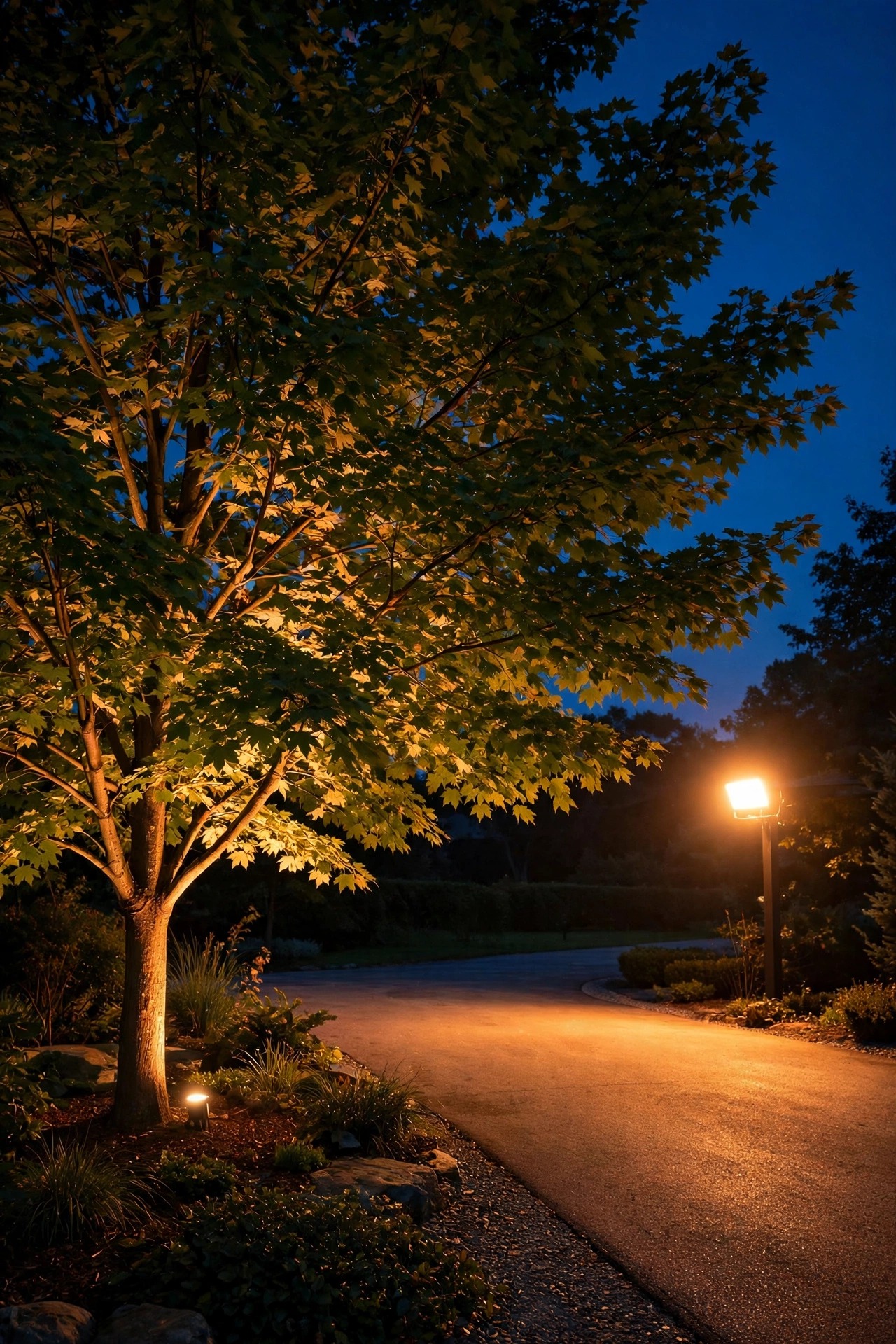
Let me clear up the most common myth first: low voltage does not mean dim. A lumen is a lumen, and modern low-voltage LED fixtures run from a soft 100-lumen path glow up to 800 or 900 lumens for a proper tree spotlight — more than enough for any residential accent work. In my own yard, the brightest-looking light is a low-voltage uplight on the maple, and guests assume it is hardwired every time.
Line voltage pulls ahead only at the extremes. Need a 3,000-lumen flood washing a long driveway or a sports court? That is line-voltage territory, because the fixture can draw whatever wattage it wants straight from the house. Line voltage also owns the big decorative categories: porch pendants, hanging lanterns over an outdoor dining table, ceiling fixtures on a covered patio — anything that mounts to a box in a wall or ceiling is usually a 120-volt design.
For the 90 percent in the middle — paths, steps, trees, walls, water features — the styles overlap so completely that you can shop by look alone and pick the power system second. Beam spread, shielding, and color temperature will change how your yard feels at night far more than the voltage ever will.
Installation and Flexibility: An Afternoon vs a Project
A basic low-voltage layout is a Saturday afternoon. I lay the fixtures on the lawn where I think they belong, slit a 6-inch trench with a flat spade, drop in the cable, pierce on the connectors, plug in the transformer, and wait for dusk to judge the result. If a path light looks wrong, I move it ten feet before dinner. Nothing is buried deep, nothing is permanent, and next spring, when the beds change, the lighting changes with them.
Line-voltage installation is a project with a capital P. Deep trenching, conduit runs, junction boxes, wire pulls, GFCI breakers, an inspection — and once that fixture is set, it is set. Moving it means a new trench and another round of everything. That permanence is fine, even good, for a porch light that will never move. It is a genuine liability in a garden that evolves.
If you are renting, phasing a landscape over a few years, or simply the kind of gardener who moves perennials on a whim (guilty), low voltage respects that reality. I walk through my own step-by-step process in my low-voltage landscape lighting installation guide, and the whole thing stays firmly in DIY territory from start to finish.
Voltage Drop: The Honest Low-Voltage Tax
Every system has a tax, and this is the low-voltage one. Push 12 volts through a long, thin wire and resistance quietly eats it. The fixture 40 feet from my transformer might see the full 12 volts and shine bright and clean, while its twin 150 feet out is sipping 9 volts and glowing noticeably dimmer and more amber. The light still works — it just does not match, and mismatched brightness is exactly what makes a yard look amateur.
The fixes are well understood, and I use all of them. Run heavier 12-gauge or even 10-gauge cable on long hauls. Split one giant run into shorter hub-and-spoke runs that radiate from a central junction. Choose a multi-tap transformer that can feed a distant run at 13, 14, or 15 volts to compensate. And keep each run's total wattage comfortably under the transformer's rating so nothing sags under load.
Plan for drop on paper and it never bites you. Ignore it and daisy-chain a skinny 200-foot run, and you will see it every single night. I explain the math in plain English in my guide to landscape lighting voltage drop if you want to size a long run properly before you buy cable.
Energy Use: A Tie, Now That Everything Is LED
Twenty years ago this section mattered. Line-voltage fixtures burned 60, 90, even 120 watts apiece, and a low-voltage halogen system could quietly drink real power too. Today both camps run the same LED technology, and a 5-watt LED is a 5-watt LED no matter which wire feeds it. If the fixture makes the light you want at 6 watts, the meter barely cares where the watts came from.
Two small footnotes, honestly stated. A transformer is not perfectly efficient and most sip a little standby power around the clock, so I put mine on its built-in timer or a smart plug so it sleeps when the lights do. And line voltage has no conversion loss at all — what the fixture draws is what you pay for, nothing more.
Where your bill actually moves is behavior, not voltage: how many fixtures, how bright, and how many hours they burn. Ten modest fixtures on a timer cost pennies a night either way, which is exactly why I tell people to stop shopping for the "efficient system" and start shopping for the right system. A photocell or astronomical timer that runs lights dusk to midnight instead of dusk to dawn will save more than any system choice ever could. Pick your power for safety and flexibility; manage your hours for the bill.
Where Line Voltage Genuinely Wins
I recommend low voltage a lot, but I am not a zealot about it, and there are places in my own yard where line voltage is simply the right tool.
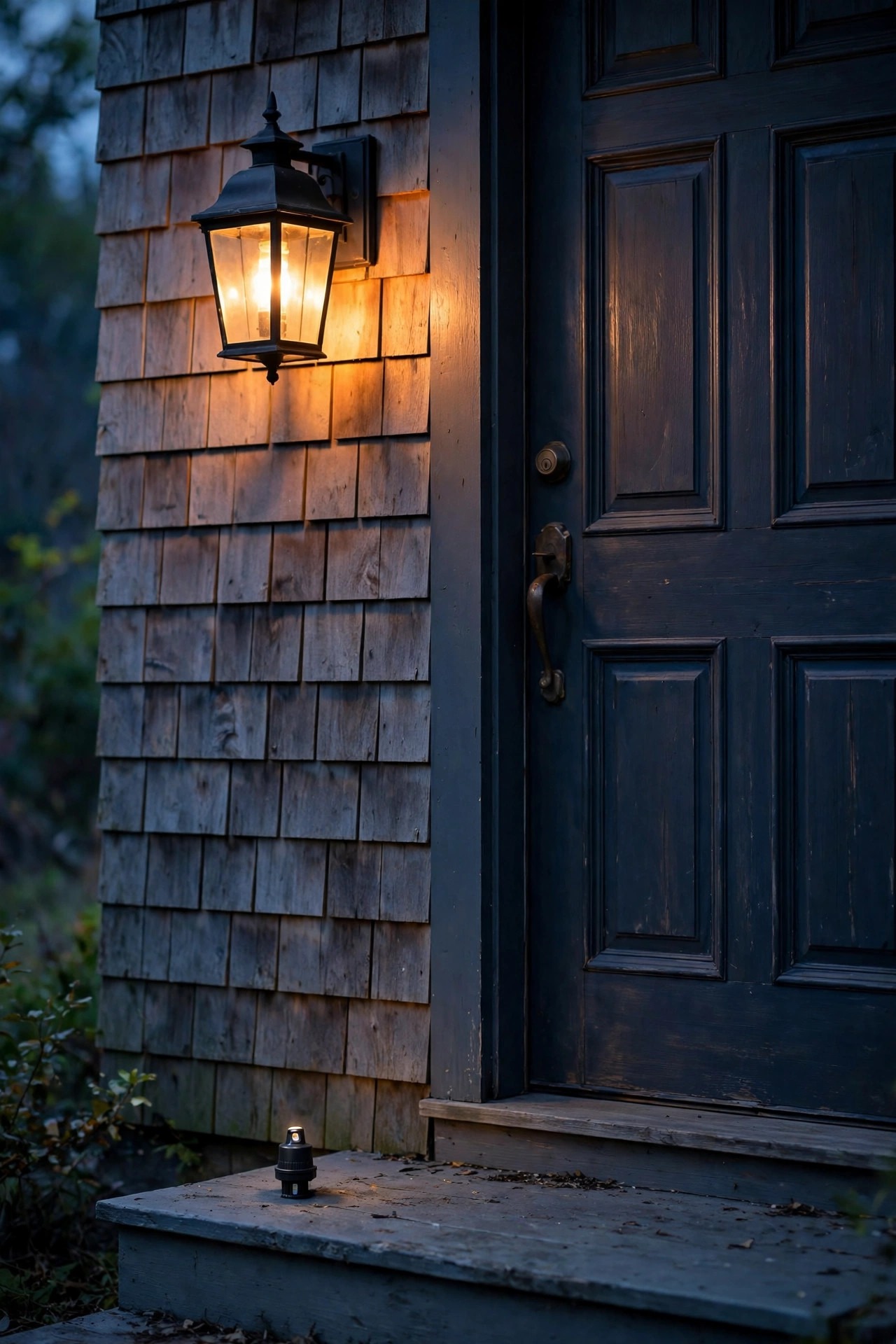
The porch and entry are the clearest case. The wiring is already in the wall, the box is already mounted, and swapping a tired fixture for a beautiful new 120-volt lantern takes an hour. Running low voltage there would mean adding a transformer and a cable to solve a problem that does not exist. Garage lights, coach lights flanking a door, and any fixture mounted on the house itself belong to line voltage for the same reason.
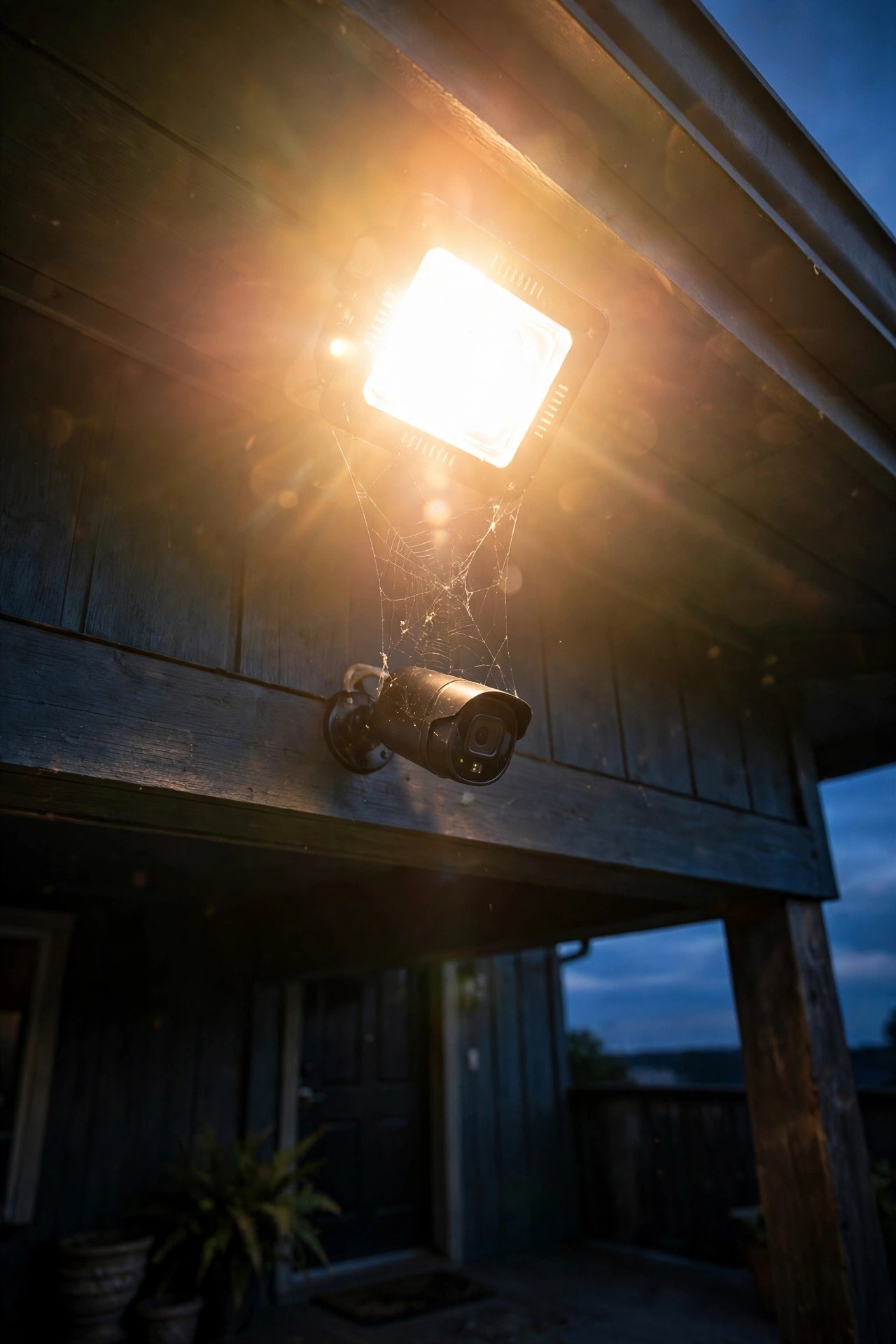
Distance is the second case. Past a couple of hundred feet — a long rural driveway, a barn, a gate at the road — voltage drop turns low-voltage design into an engineering fight, while line voltage just arrives at full strength. Third is raw output: big security floods and wide area lights that need serious lumens are line-voltage fixtures, and trying to fake that output with low-voltage gear costs more and delivers less.
If your project leans that way, my line-voltage outdoor lighting guide covers the planning and code side in more depth.

What It Costs in 2026
Low voltage is cheaper to start, and it is not close. A decent transformer runs $60–$200 depending on wattage and smarts. Quality LED path fixtures cost $20–$50 each, spots $25–$75, and a 100-foot spool of 12-gauge cable lands around $40–$90. A ten-fixture DIY layout with paths and a couple of tree spots typically totals $350–$900 all in, with your own afternoon as the only labor. Hiring a pro to design and install that same low-voltage system usually runs $2,500–$6,000.
Line voltage splits into two stories. Replacing a fixture on an existing box is cheap: the fixture itself, plus $125–$300 if an electrician makes the visit. A brand-new buried run is the expensive story — trenching, conduit, GFCI protection, permit, and the electrician's hours typically put one new run at $600–$2,500, with electricians commonly charging $75–$150 per hour.
Running costs are nearly identical and nearly trivial. Ten 5-watt LEDs burning five hours a night use about 7.5 kWh a month — roughly $1.30 at 17 cents per kWh. Whichever system you choose, the purchase and installation decide what you spend; the meter will not settle the argument. Budget the wiring first, the fixtures second, and keep a little aside for the second season, because nobody's yard stays exactly the size they first planned.

5 Mistakes That Cause the Real Regrets
1. DIY line-voltage burial without a permit or GFCI. This is the one genuinely dangerous mistake on the list. House current buried shallow, unprotected, and uninspected is a hazard to whoever digs there next — possibly years from now, possibly a stranger. If a run is 120 volts, it gets the depth, the conduit, the GFCI, and the permit, or it does not happen.
2. Undersizing the transformer. Add up every fixture's wattage, then keep the total under 80 percent of the transformer's rating. Run a 200-watt transformer at 195 watts and you get dim lights, hot components, and a short life. Headroom is cheap insurance.
3. Mixing systems on one run. Twelve-volt fixtures and 120-volt power must never share a cable, a junction, or a plan. Each system gets its own wiring, its own controls, its own everything. They can share a yard beautifully — never a wire.
4. Burying line voltage shallow, just this once. See mistake one. The depth rules exist because of the next person with a shovel, and there is always a next person with a shovel.
5. Ignoring voltage drop at the planning stage. One long daisy-chain on thin cable guarantees a bright end and a sad end. Sketch your runs, respect the distances, and size the cable before you buy a single fixture.
Low Voltage vs Line Voltage Outdoor Lighting: The Verdict by Zone
After years of designing with both, my yard settled into a pattern I now recommend to everyone. Paths, garden beds, trees, and water features are low-voltage country: safe, flexible, cheap to evolve, and bright enough for everything those zones ask. Front paths and planting beds are where gardens change most, and change is exactly what low voltage forgives.
The house itself is line-voltage territory. Porch, entry, garage, and patio ceiling fixtures should use the wiring that already lives in the walls — hardwired, switched, permanent, and proud of it. Long driveways and big floods split the difference: line voltage for the far flood, low voltage for the glowing markers along the way.
So the real answer is not a winner at all. It is a map. Match each system to the zone it serves best, layer the two together, and your yard gets the safety of 12 volts where hands and shovels go, and the strength of 120 where permanence pays. That combination is what makes a home look lit by a designer instead of a compromise — and honestly, it is not even the expensive way to do it. Browse the rest of my lighting guides and idea galleries here to plan your own zones.

Frequently Asked Questions
Is low-voltage lighting bright enough to light a whole yard?
Yes, with honest planning. Modern low-voltage LED spots reach 800–900 lumens, which uplights a mid-size tree beautifully, and path and wash fixtures cover their zones easily. What low voltage cannot do is match a giant line-voltage flood for a sports court or a very long driveway. For everything residential — paths, beds, trees, patios — brightness is a design question, not a voltage limit.
Can I install line-voltage outdoor lights myself?
Replacing a fixture on an existing junction box is a common DIY job, as long as you cut power at the breaker and the wiring is sound. New circuits and new buried runs are different: most jurisdictions require a permit, code-depth burial, GFCI protection, and often a licensed electrician. The rules exist because 120 volts buried wrong stays dangerous for decades, so this is the place to hire help.
Does low-voltage lighting use less electricity than line voltage?
Essentially, it is a tie. Both systems drive the same LED chips, so equal light output means nearly equal wattage. A transformer adds a small conversion loss and a bit of standby draw, which a timer mostly erases. Your real running cost is set by how many fixtures you install and how many hours they burn each night.
Can I mix low-voltage and line-voltage lights in the same yard?
Absolutely — most well-lit yards do exactly that, mine included. Hardwired fixtures belong on the house, low-voltage runs belong in the landscape, and the two systems coexist happily. The one hard rule is electrical separation: separate cables, separate controls, separate junction boxes. They share the yard and the design, never the wiring.
Conclusion
If you remember one thing, make it this: the low voltage vs line voltage outdoor lighting question is answered zone by zone, not yard by yard. Low voltage wins the landscape on safety, price, and the freedom to change your mind; line voltage keeps the house itself, the long runs, and the big floods. Put the two together with a layered plan, and the debate dissolves into what it always should have been — a beautiful yard at dusk, with the right current flowing quietly underneath it.