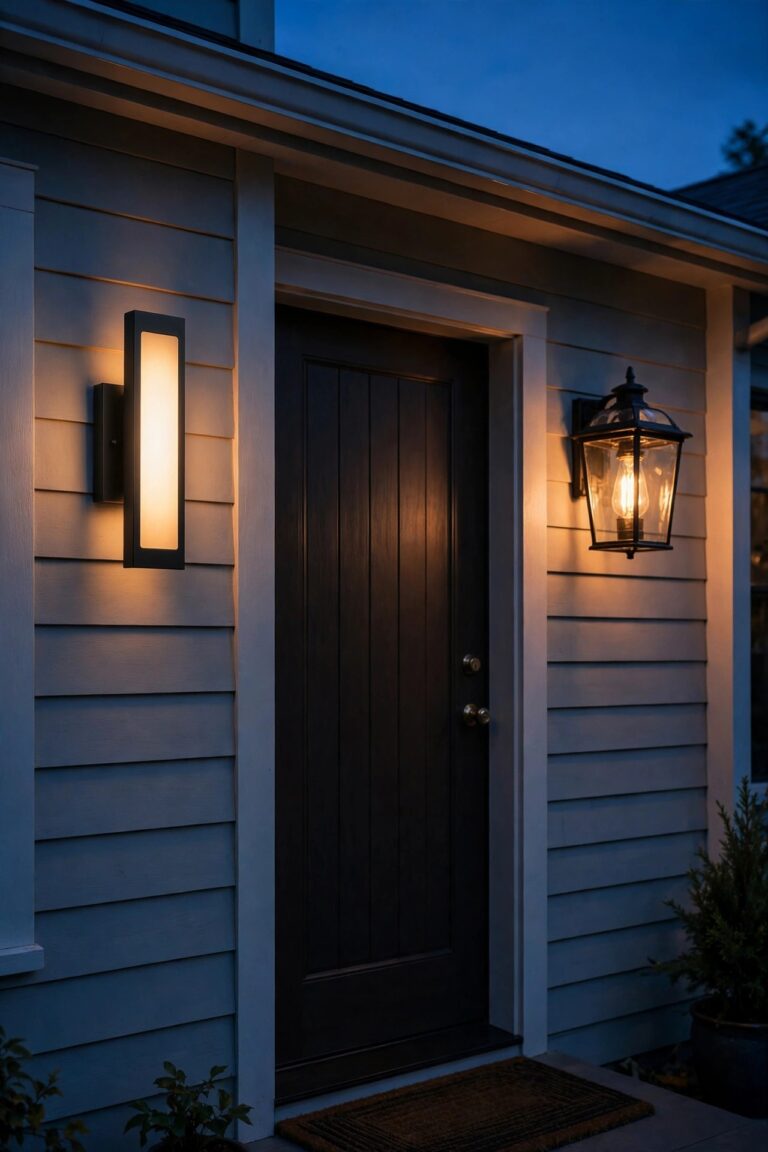
Your porch light is the hardest-working fixture on the whole house. It welcomes guests, shows delivery drivers where to step, keeps the steps safe after dark, and it is the first detail people notice from the street. After helping neighbors rework more entries than I can count, I can tell you the best porch light fixtures are never just the prettiest ones in the catalog. They are the ones sized right for the door, rated for the weather they actually get, and matched to the architecture of the house. A fixture that is too small disappears; one that is too big swallows the whole entry.
Just like the rest of my outdoor lighting, I think of the entry in layers: a main fixture for welcome and facial light, then step or path lighting below, so nobody is lit like a stage actor from one harsh bulb. Below, I walk through 13 fixture types by home style, with honest strengths, real limits, sizing rules, and the budget each one actually takes. By the end, you will know exactly which type belongs on your house, and which ones to skip.

1. Craftsman Lanterns (Best Porch Light Fixtures for Bungalows)
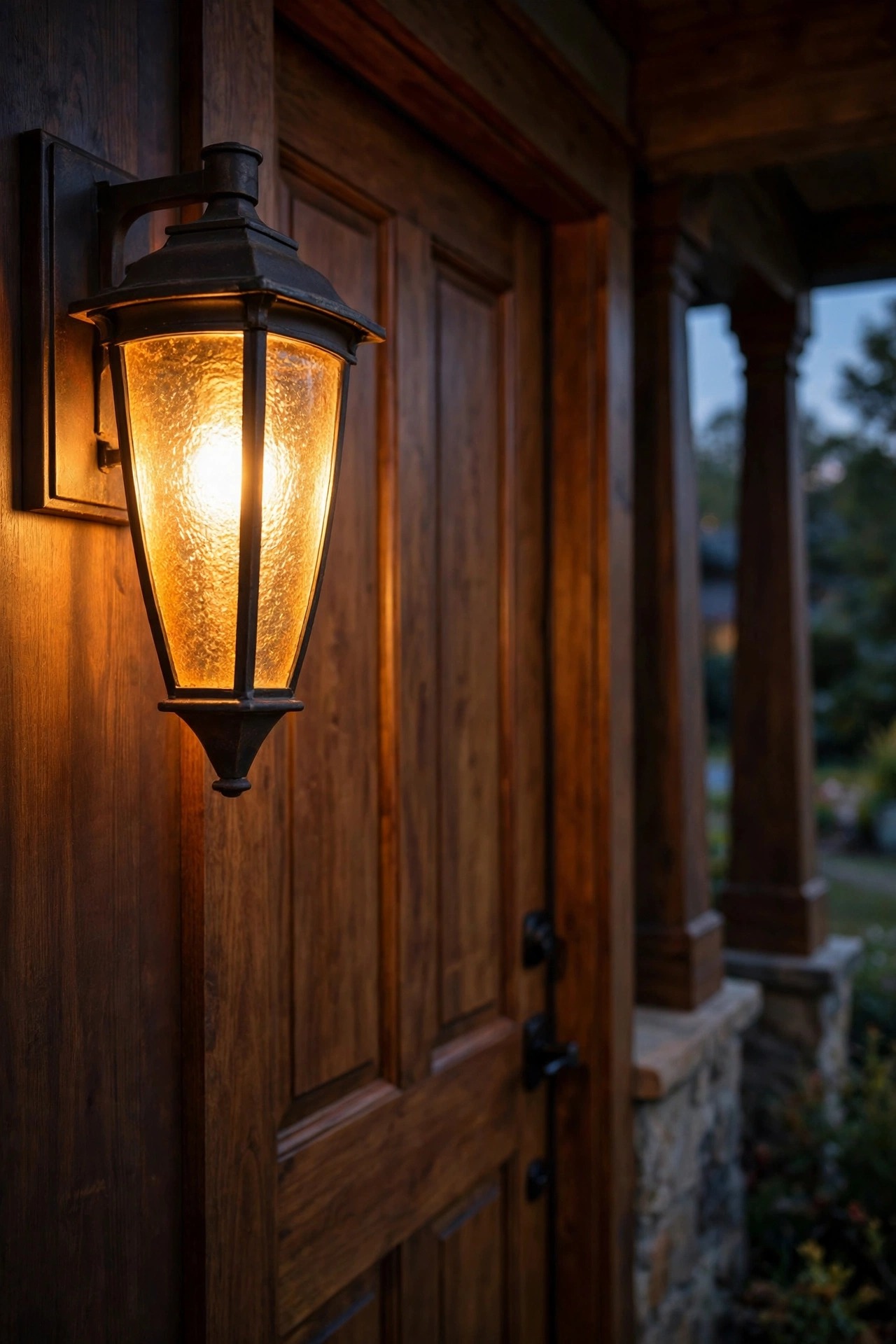
If your home is a bungalow, a foursquare, or anything with tapered porch columns, the craftsman lantern is the native species. The shape gives it away: a slightly tapered square or rectangular body, a flat or gently sloped cap, and glass panels, often seeded or lightly amber, divided by simple geometric bars. That seeded glass is doing real work, by the way. It hides the bulb, softens glare, and throws the speckled, firefly-ish glow that makes craftsman entries feel so welcoming. Look for a solid metal frame in oil-rubbed bronze or matte black, and check that the bottom is open or easy to reach, because you will be changing bulbs and evicting moths. The honest limits: divided panels collect grime, so expect a wipe-down twice a year, and the cheapest versions use thin stamped metal that rattles in wind and rusts at the seams within a few seasons. For sizing, a lantern around 12 to 16 inches tall suits a standard door in a pair; go bigger if it flies solo. Of all the types on this list, this is the one neighbors ask me about most.
Suggested budget range: $60 – $180.
2. Farmhouse Gooseneck Shades
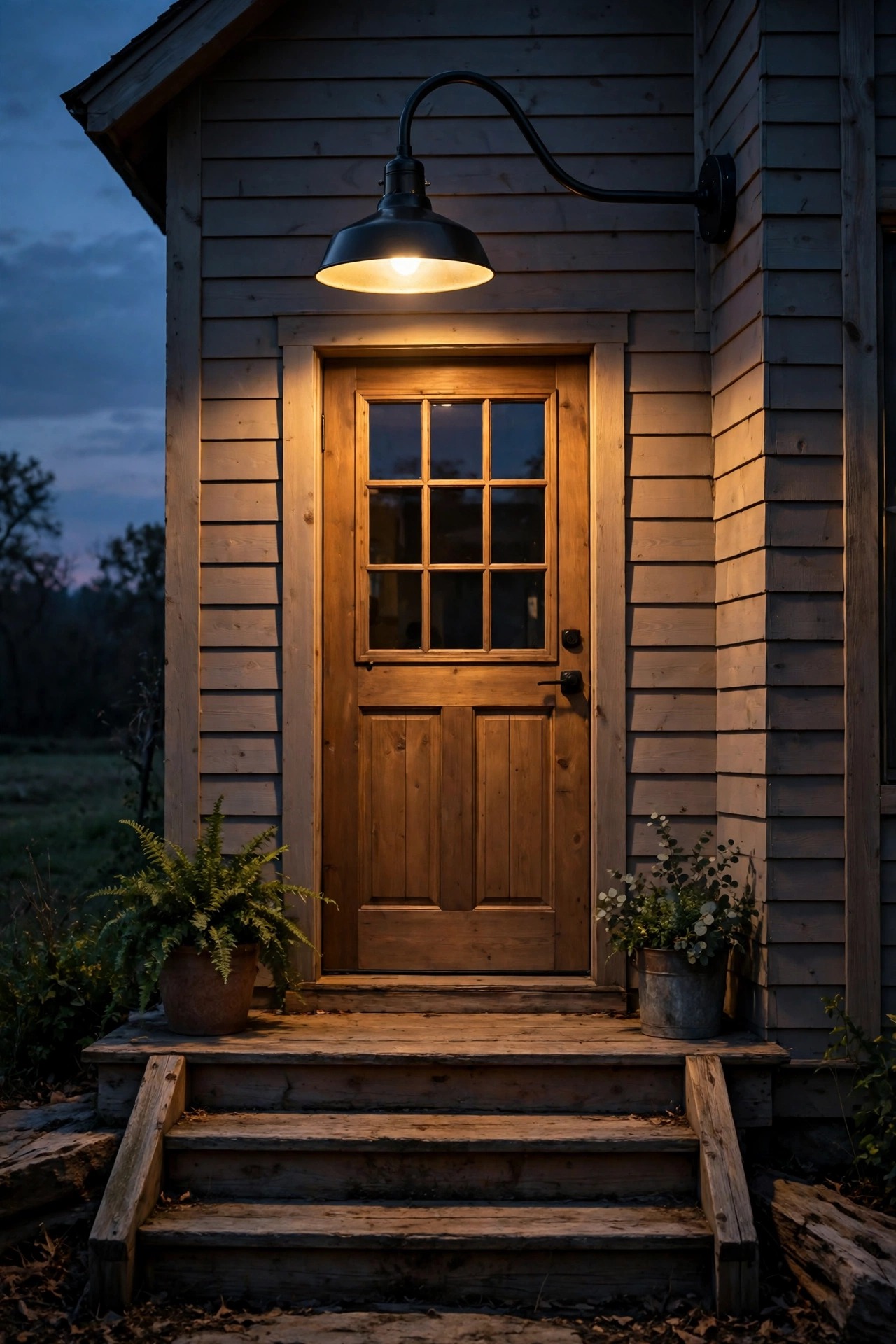
The gooseneck is the farmhouse workhorse: a wide metal shade on a curved arm that arcs out from the wall and pours light straight down onto the porch floor and steps. That downward throw is its superpower. Faces are not its job, safe footing is, and a gooseneck over the door plus one over the steps is the combination I recommend most for older farmhouses and country cottages. The shade also shields the bulb completely, so there is zero glare from the street and the light lands in a warm pool exactly where you walk. Choose a shade 12 to 16 inches across for a front door; smaller shades look lost and throw a tight, spotlight-ish circle. Finishes run from galvanized and white to matte black, and the powder-coated ones shrug off weather beautifully. Honest limits: the look is unmistakably barn-inspired, so it fights with formal brick colonials and sleek contemporary homes. It also lights downward only, so if your porch is also your evening sitting spot, add a softer second fixture for faces and conversation. And because the bulb hides up inside the shade, use a warm 2700K LED so the pool of light stays cozy, not clinical.
Suggested budget range: $45 – $150.
3. Modern Up-Down Cylinders
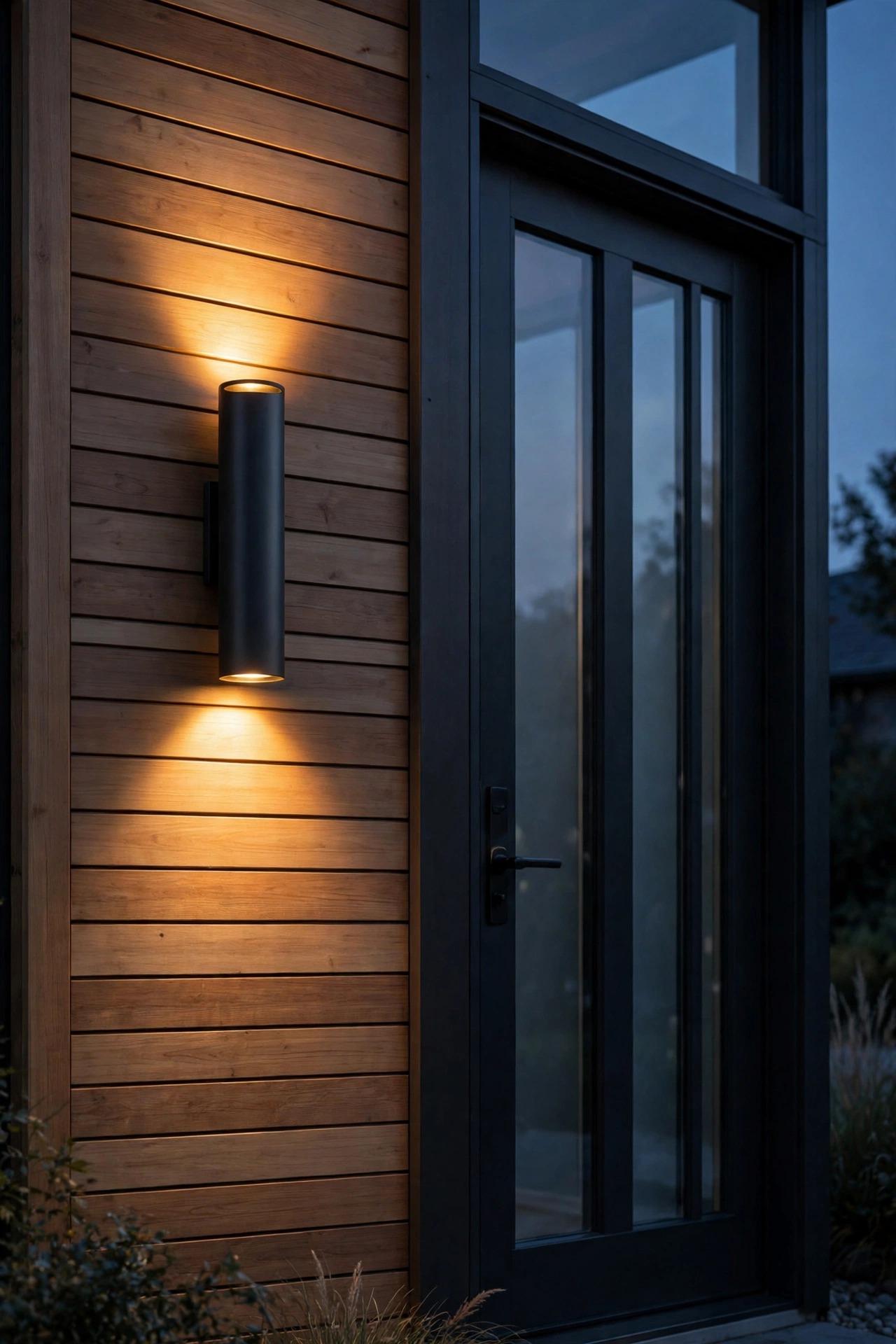
For a contemporary home, a remodel with clean lines, or a ranch you are dragging into this decade, the up-down cylinder is the pick. It is exactly what it sounds like: a slim metal tube, usually 10 to 14 inches tall, mounted vertically, with light washing out of both ends to graze the wall above and below. That grazing light shows off siding texture and stone veneer in a way a lantern never will, and at night a pair of them reads like architecture, not decoration. Most use integrated LED modules, which keeps the profile tiny and the output strong. The trade-off is real, though: when an integrated LED dies, you replace the whole fixture, not a bulb, so buy from the mid-range up where driver quality is better. Beam spread is the other honest limit. Cylinders throw dramatic but narrow light, so steps and the porch floor can stay darker than you expect; plan a step light or a soft ceiling fixture as the second layer. Keep finishes simple: matte black, white, or a true bronze, and match the diameter to your trim so the fixture looks intentional, not stuck on.
Suggested budget range: $55 – $170.
4. Colonial Carriage Lanterns
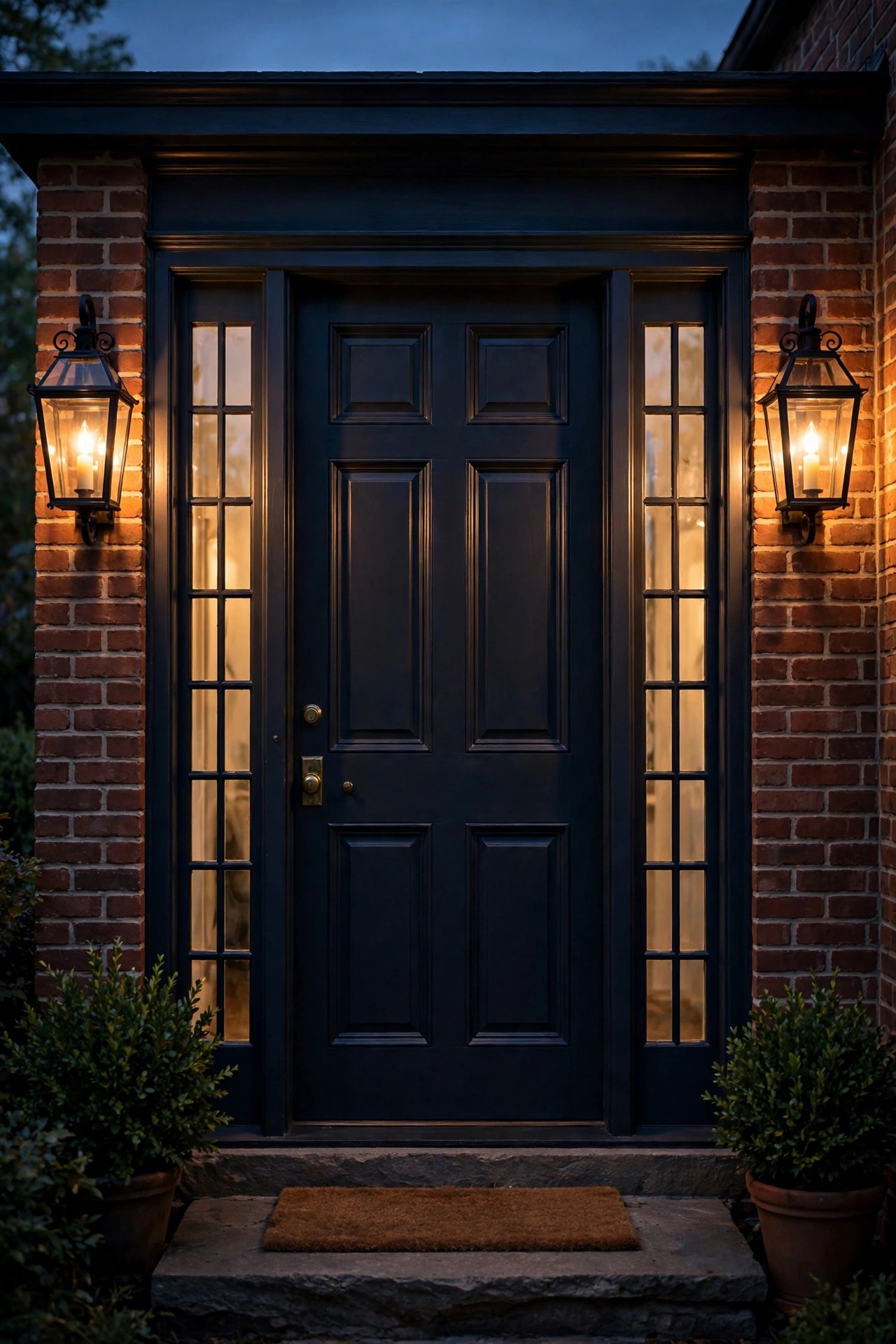
Carriage-style lanterns were designed for actual carriage houses, and on a colonial, Georgian, or Cape Cod home they still look like they grew there. The hallmarks are a boxy lantern body, a slightly pagoda-shaped cap, cross-bracing or multipane glass, and often candle-style bulbs standing in a row inside. That row of small flames is the charm and the catch. Individually the candle bulbs are dim, so choose a fixture with three candles or plan on brighter LED candle bulbs in the 2700K range to actually light the entry. Mounted in pairs beside a paneled door with sidelights, carriage lanterns are hard to beat for symmetry. The maintenance truth: all those panes and braces collect pollen and spider webs, and the open bottoms invite wasps, so keep a long-handled duster nearby and check the fixtures each spring. Finish-wise, black is the classic, aged bronze warms things up, and polished brass is a commitment, since it will patina outdoors whether you want it to or not. Size a pair at about one quarter of the door height; a single centered-over-door version can go a size larger.
Suggested budget range: $70 – $220.
5. Mid-Century Opal Globes
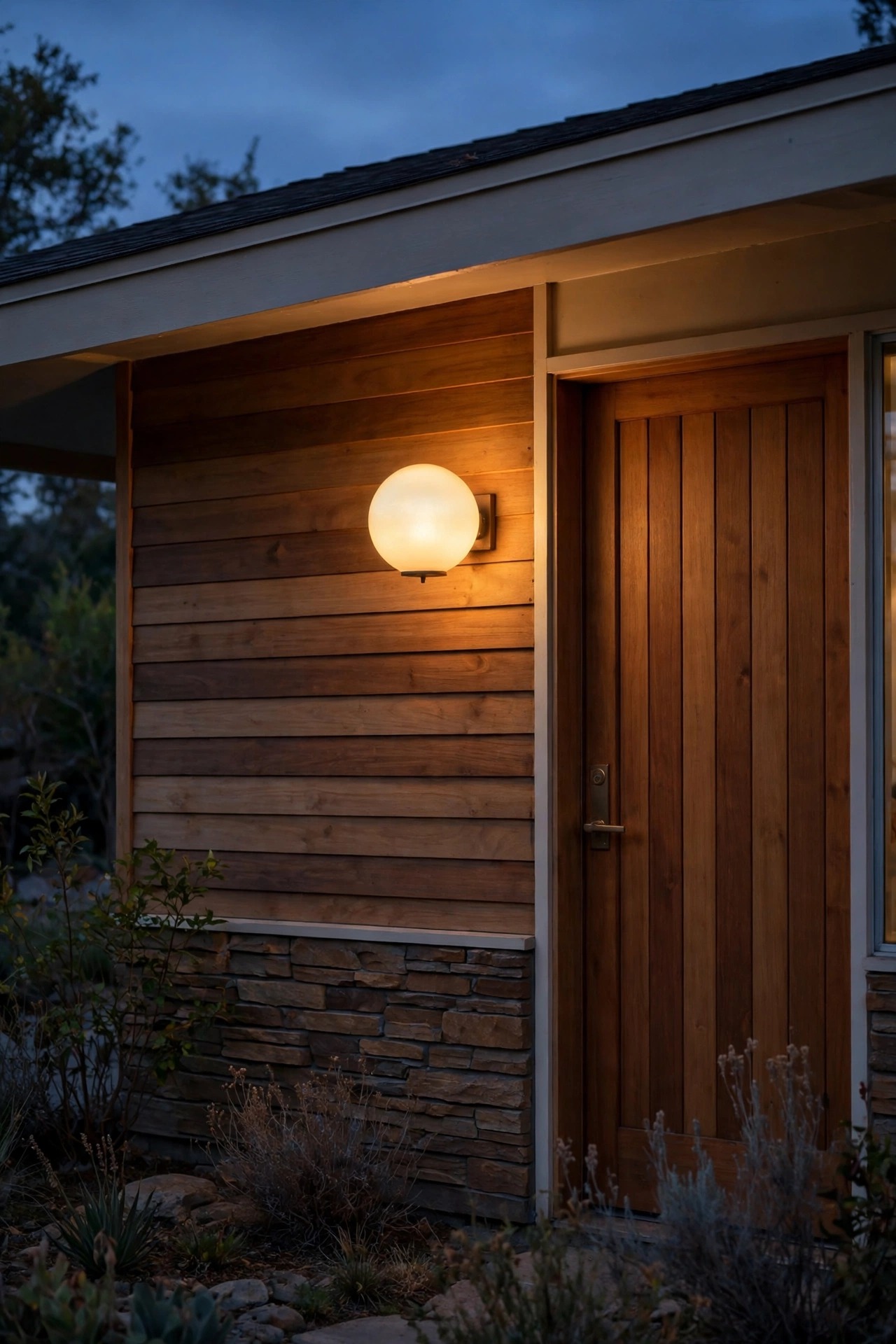
The opal globe is the mid-century signature: a milky white glass sphere on a slim stem or minimalist arm, glowing like a little moon beside the door of a ranch or atomic-era home. Because the glass diffuses light in every direction, a globe is the gentlest fixture on this list. There is no visible filament to squint at, faces look kind, and the whole porch gets an even wash instead of a bright spot with dark corners. That diffusion is also the limit: opal glass swallows some brightness, so a globe that looks big enough on paper can feel dim in person. Size up one step and use the brightest bulb the socket rating allows. Two practical warnings from experience. First, the bottom opening where the globe meets its fitter is a bug hotel; a globe with a closed or screened base saves you a gross cleaning job. Second, replacement globes are oddly hard to match years later, in size and in that exact milky tone, so if you fall in love with a style, buy a spare globe now and store it. It will feel silly until the day it saves the whole look.
Suggested budget range: $50 – $160.
6. Coastal Fixtures Built for Weather
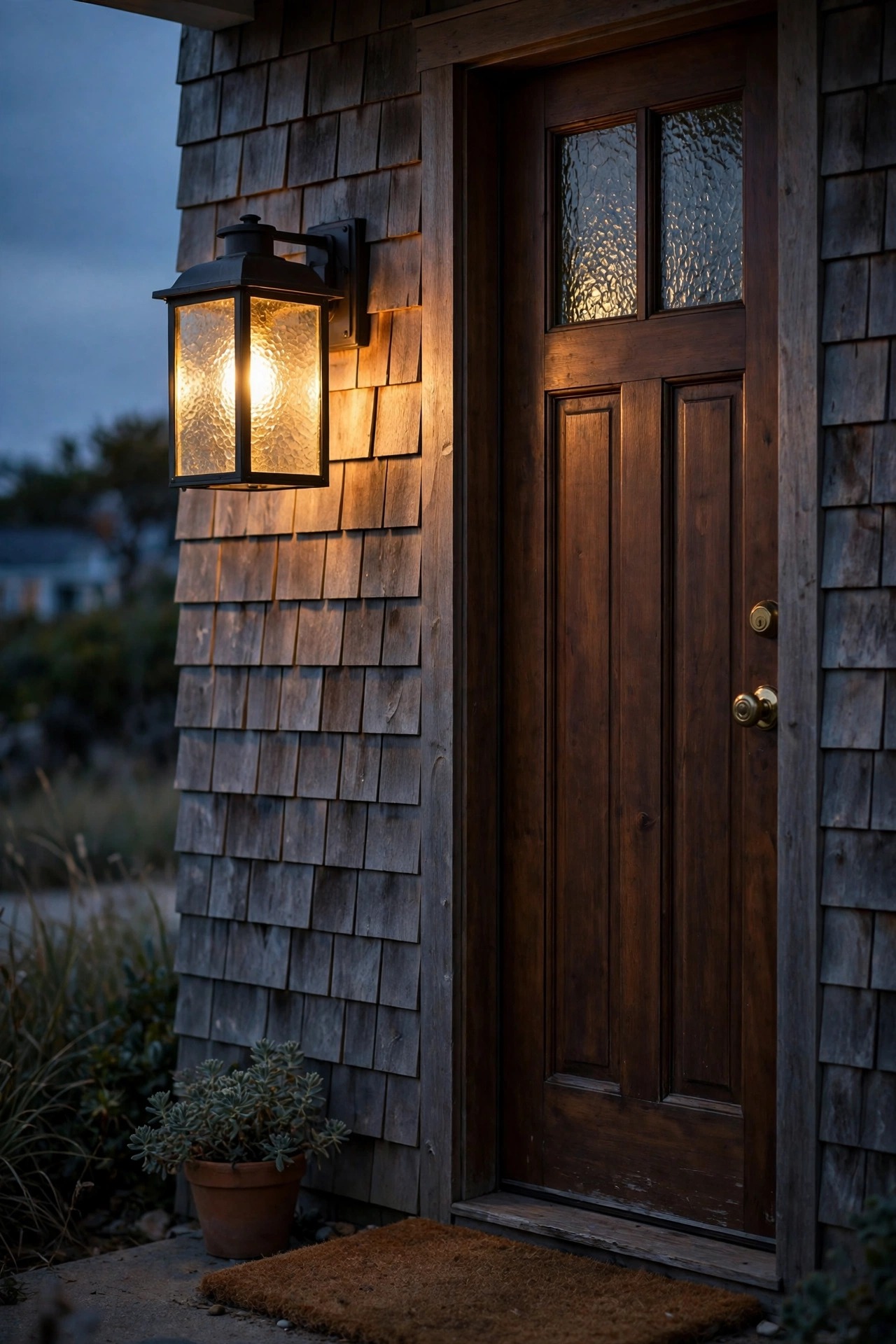
Coastal fixtures are built for the porch that gets weather: salt air, sideways rain, humidity that never quite leaves. The style reads relaxed, think a lantern silhouette with seeded glass and a slightly weathered finish, but the real story is the construction. Look for aluminum or resin-composite bodies that cannot rust, powder-coat or marine-grade finishes, and stainless hardware. On a true beach house this is not fussiness; I have watched bargain steel fixtures pit, streak, and stain the siding orange within a single season. Seeded glass earns its keep here too, because it disguises the salt film and water spots that build up between cleanings. This is also the category where the wet-location rating matters most. A coastal porch with no real overhang exposes the fixture to direct rain, so damp-rated is not enough; insist on a wet-rated, fully sealed fixture. The honest limits: genuine corrosion-resistant construction costs more than look-alike fixtures, and resin bodies, while they never rust, can chalk and fade under hard sun after several years. For shore-style homes inland, the same fixtures work beautifully as a low-maintenance choice, even without the ocean.
Suggested budget range: $65 – $200.
7. Industrial Cage Lights
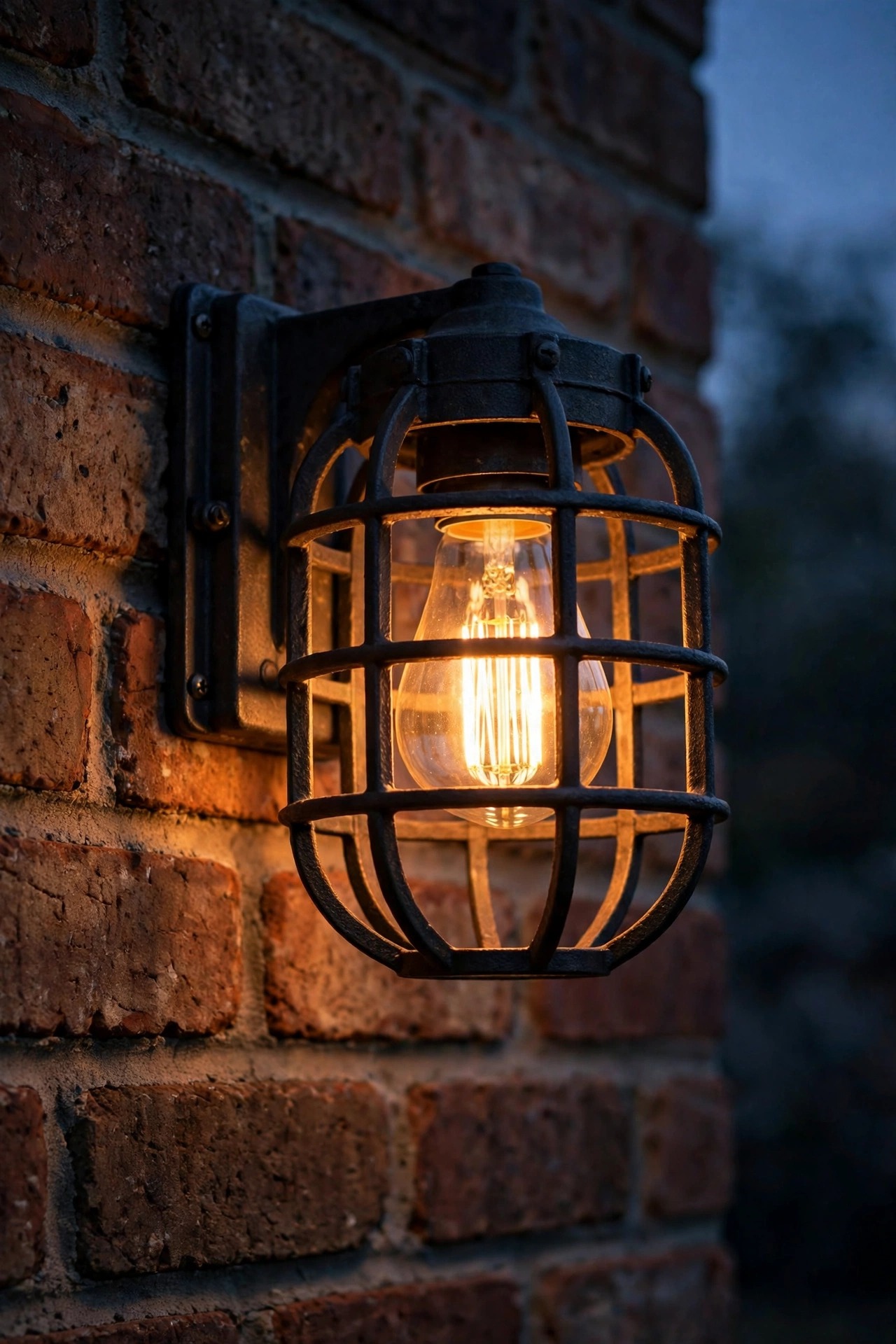
The industrial cage light is basically a beautiful guard rail for a bulb: a metal cage, in black, galvanized, or aged copper tones, wrapped around an exposed filament bulb, sometimes with a small shade cap on top. It suits loft-style homes, modern farmhouses, workshops, and any porch with brick or concrete to play against. The appeal is that the bulb IS the design, and swapping bulb shapes, from a long tube to a round globe filament, changes the whole personality for a few dollars. Now the honesty this fixture demands: a bare filament bulb at eye level can be genuinely glaring, especially the high-lumen ones marketed as extra bright. Keep porch cage bulbs modest, around 200 to 400 lumens, warm 2700K, and let the cage do the showing off. My guide to the best bulbs for porch sconces breaks down filament styles and brightness if you want to get it exactly right. Also know that cages throw patterned shadows, pretty on a wall, less helpful on steps, so pair this fixture with step lighting. Construction is simple and sturdy, parts are cheap, and there is almost nothing to break, which makes this the budget overachiever of the list.
Suggested budget range: $40 – $130.
8. Traditional Coach Lanterns
If the craftsman lantern is the bungalow native, the coach lantern is the suburban classic, the gently tapered, four-or-six-sided lantern with a finial on top that has flanked American front doors for decades. On traditional, transitional, and brick homes it simply never looks wrong, and it is the safest choice if you are lighting a house to sell. Coach lanterns are usually sold in matched sizes, which makes the classic pair beside the door easy: mount them with the center of each fixture about 66 inches off the porch floor, roughly eye level, so the light greets faces instead of scalping them. Most take a standard screw-in bulb behind clear or seeded glass, and I lean seeded, since clear glass shows every dead bug and dust streak. The limits are more about imagination than function. A coach lantern will not give a contemporary home any edge, and the smallest sizes, under 9 inches, read as dollhouse-scale next to a full-size door, so when in doubt go one size up. Output is honest and middle-of-the-road: one good 800-lumen LED bulb in each lantern lights a porch pair beautifully.
Suggested budget range: $55 – $175.
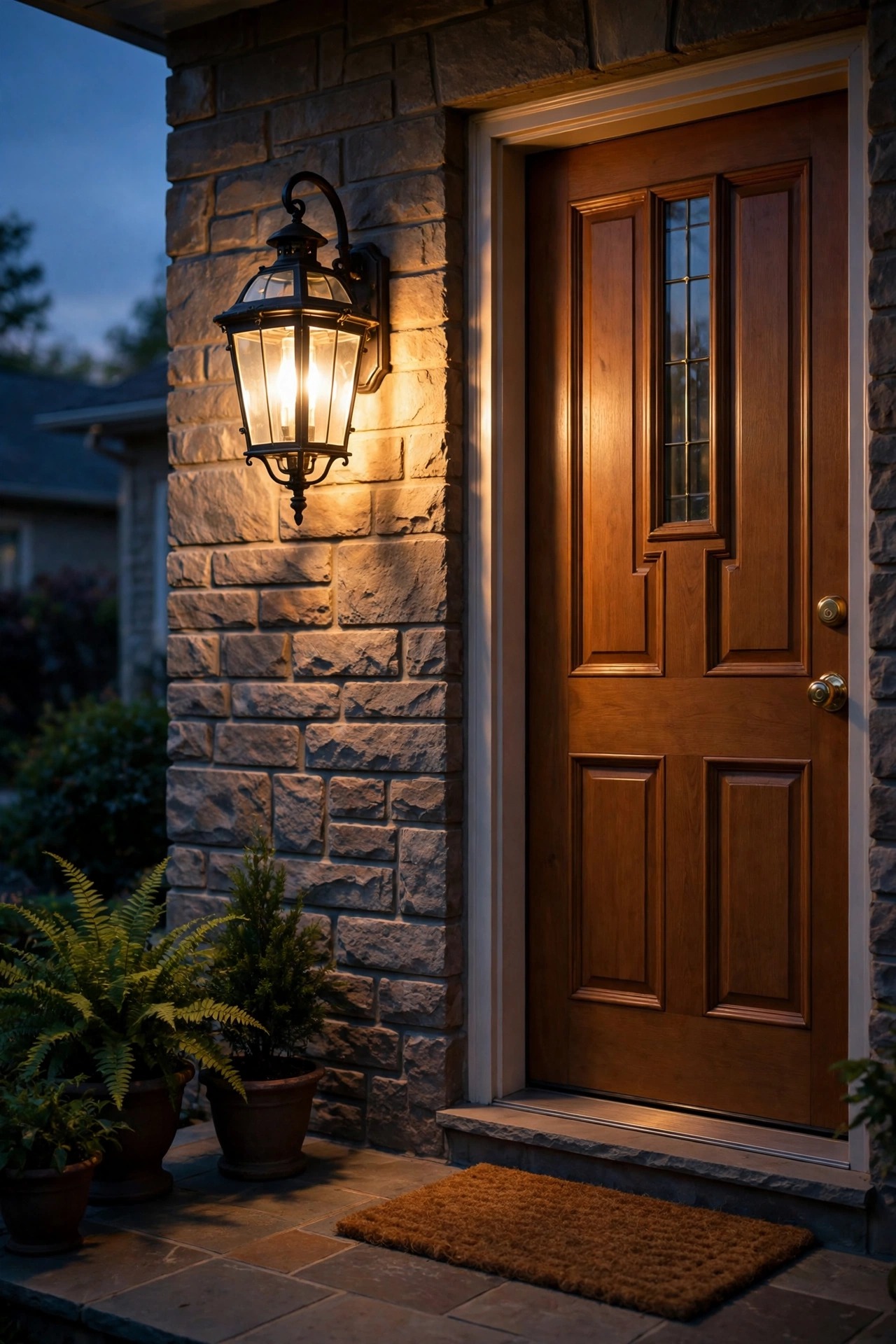
9. Motion-Sensor Fixtures
A motion-sensor fixture is the practical pick for side doors, basement entries, and front porches on busy streets where you want light when it matters and darkness (and lower bills) when it does not. The sensor, a small dome or lens usually tucked under the fixture, watches for movement and fires the light for a set stretch, typically one to ten minutes. Look for three adjustments: sensitivity, duration, and a light-level setting so it ignores daylight. The better designs add a dusk-to-dawn low-glow mode, idling at a soft 20 percent so the entry never looks abandoned, then snapping to full brightness when someone approaches; that is the version I recommend for front doors. The honest frustrations are aim and trigger discipline. A sensor pointed at the street will flash for every passing car, annoying you and your neighbors, so angle it down the steps and walkway and test it from the sidewalk at night. Small animals can trigger sensitive settings, and cheap sensors lose their calibration after a couple of summers. Style has caught up, too: sensor fixtures now come in lantern and coach shapes, not just the old twin-spotlight look.
Suggested budget range: $45 – $150.
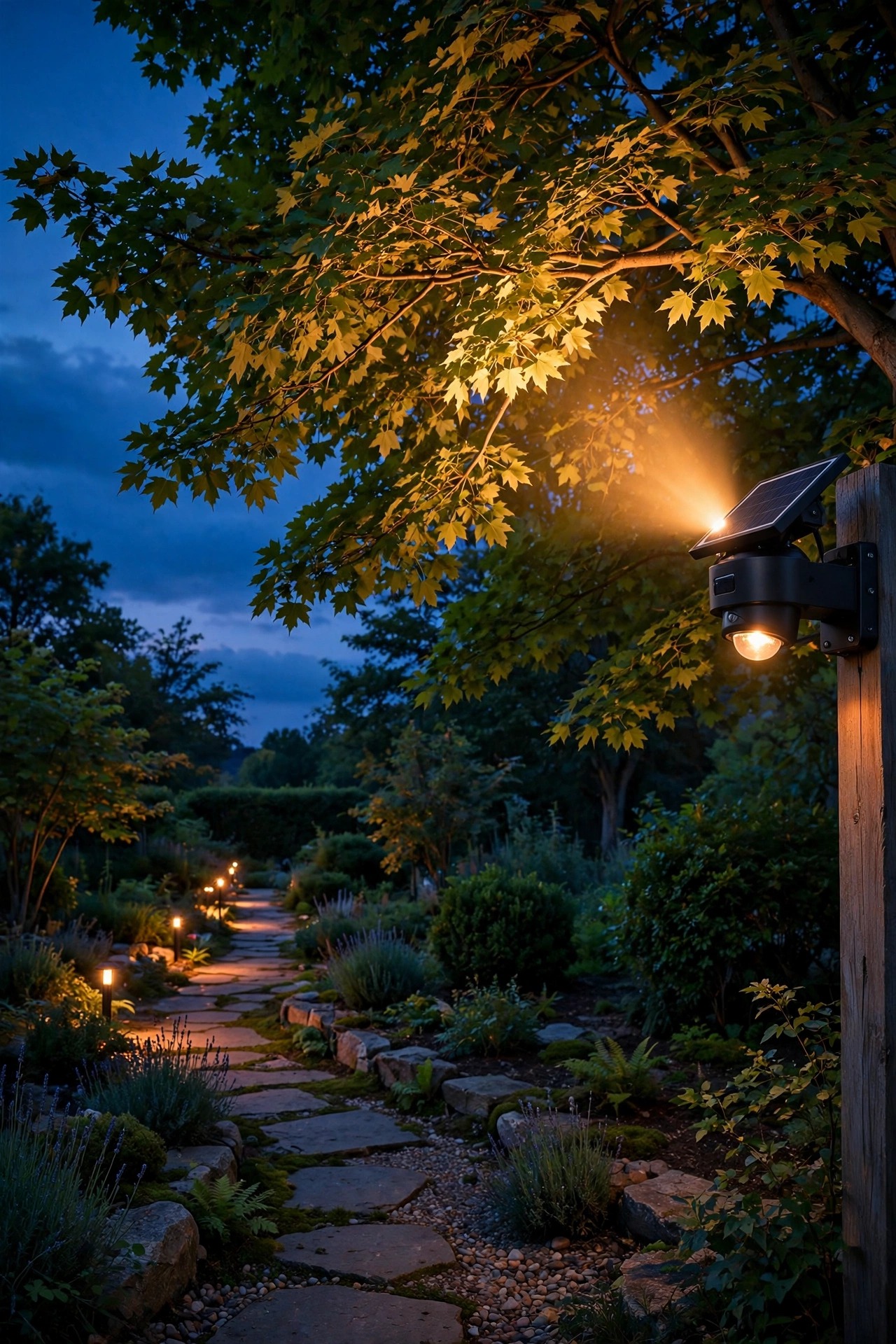
10. Dusk-to-Dawn Photocell Fixtures
The photocell fixture is the set-and-forget champion. A tiny light sensor reads the sky, switches the fixture on at dusk, off at dawn, every single day, tracking the seasons on its own. No timers to reset after a power outage, no coming home to a dark porch because you forgot. Photocell versions exist inside lanterns, coach lights, and flush mounts, so this is less a style than a superpower you add to a style you already like. If your current fixture is a favorite, you may not even need a new one: my walkthrough on how to add a photocell or timer to a porch light covers the screw-in and switch-based options. Two honest quirks to know. First, a photocell can be fooled by its own light bouncing off a pale wall or a white porch ceiling, which makes the fixture cycle on and off all night; a small shield or repositioning usually fixes it. Second, the sensor itself is the wear part, and bargain photocells can give up in two or three years, so keep the receipt. For rental properties and second homes, this is the fixture type I suggest first.
Suggested budget range: $40 – $140.
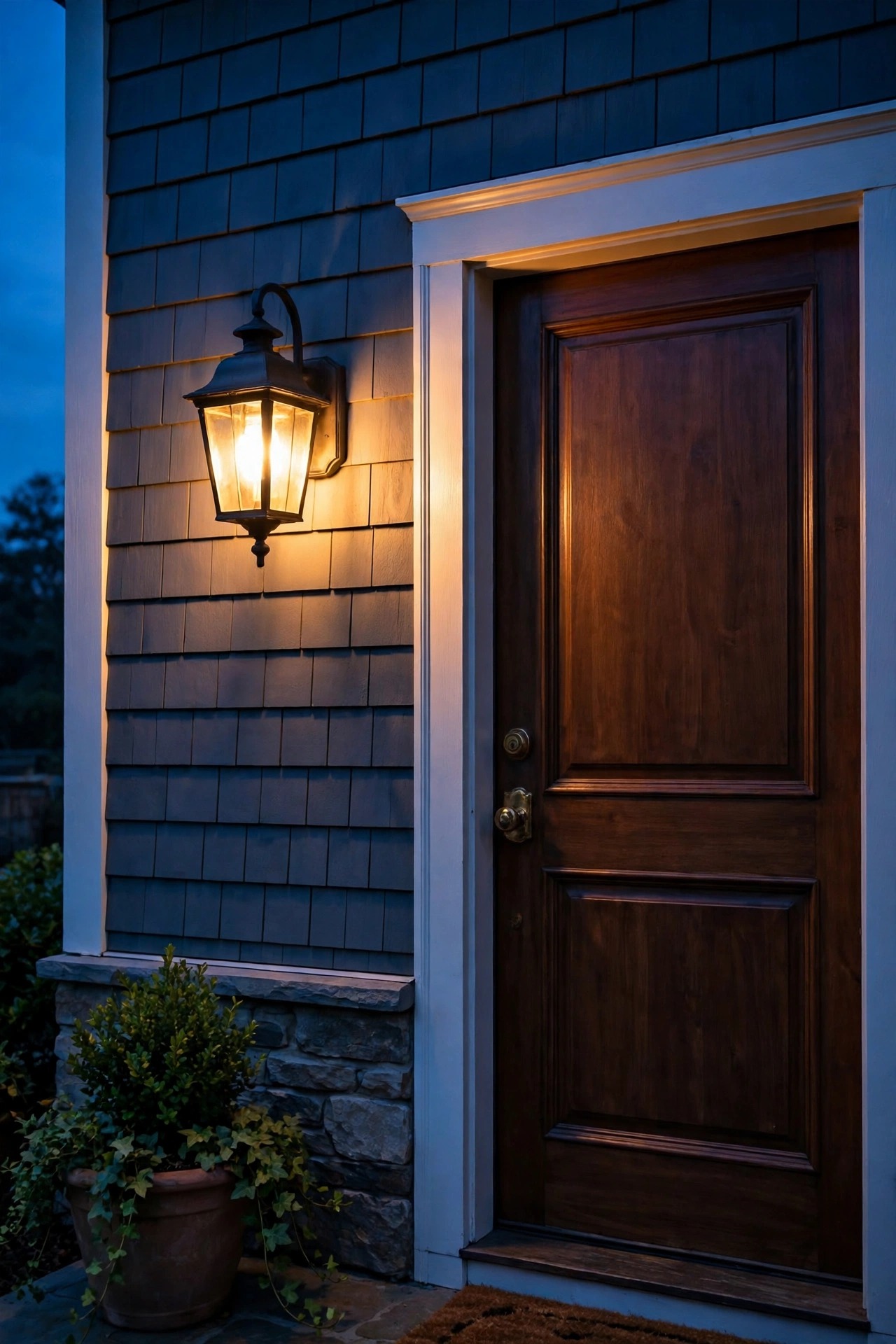
11. Smart-Ready Fixtures
Smart-ready is my favorite way to buy porch lighting right now, and it comes in two flavors. The safer flavor is a completely ordinary fixture with a standard screw-in socket, into which you put a smart bulb. The fixture is timeless hardware; the bulb carries the tech: scheduling, dimming, color temperature tuning, and an away mode that makes the house look lived-in. When the tech improves or the bulb dies, you spend fifteen dollars, not two hundred. The sleeker flavor is the fully integrated smart fixture, app-controlled out of the box with no visible bulb at all. It looks clean, but the whole unit is one product with one lifespan, and when its electronics age out, the fixture goes with them. Whichever route you take, be honest about your porch Wi-Fi: a weak signal at the front door makes every smart feature flaky, so test your phone standing at the fixture before you buy. Also confirm the fixture is still fully usable from a normal wall switch, because guests and grandparents will flip it, and a smart bulb left switched off is just a bulb. Start with scheduling and dimming; the color shows are fun for exactly one holiday weekend.
Suggested budget range: $60 – $190.
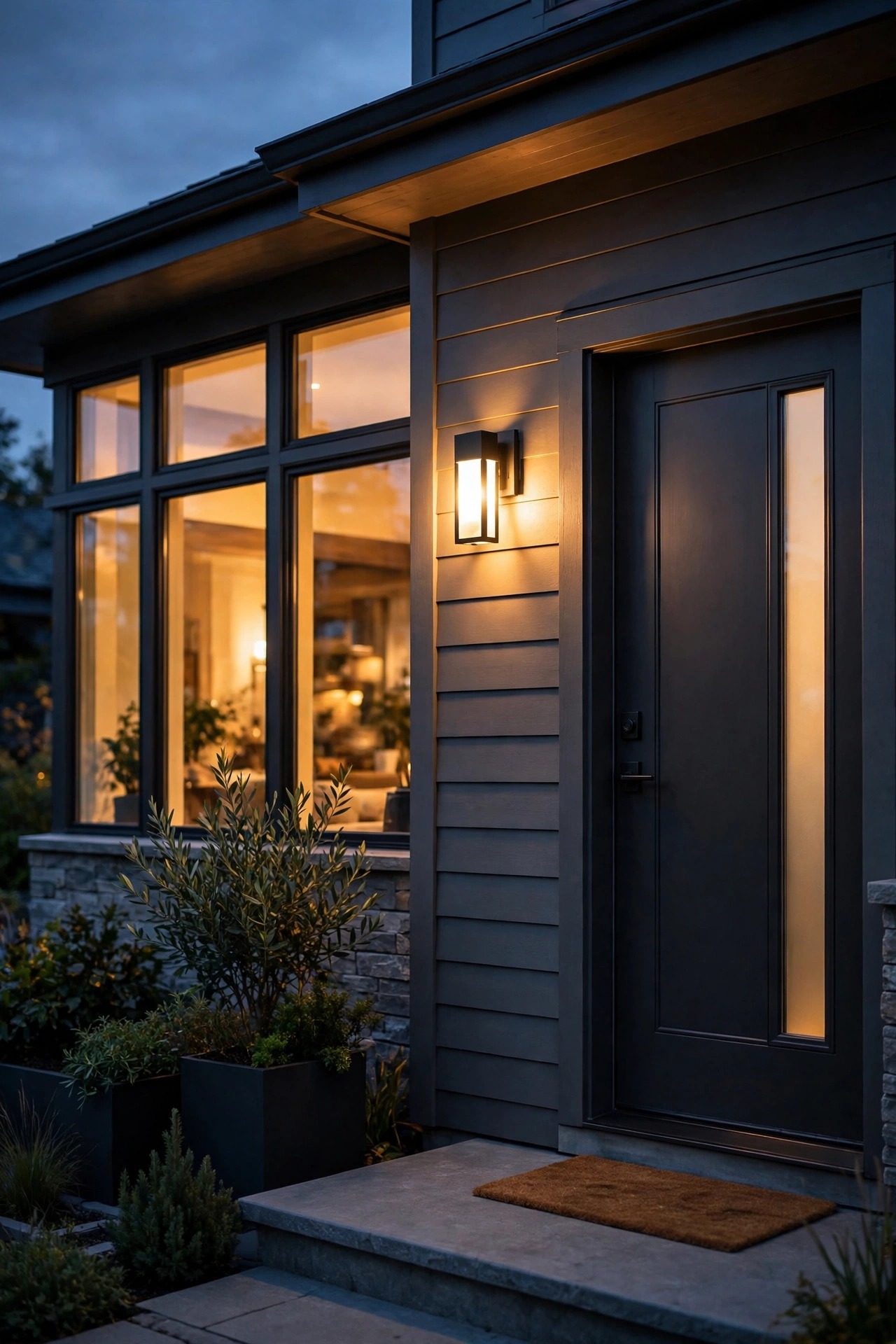
12. Oversized Statement Fixtures (Best Porch Light Fixtures for Tall, Two-Story Entries)
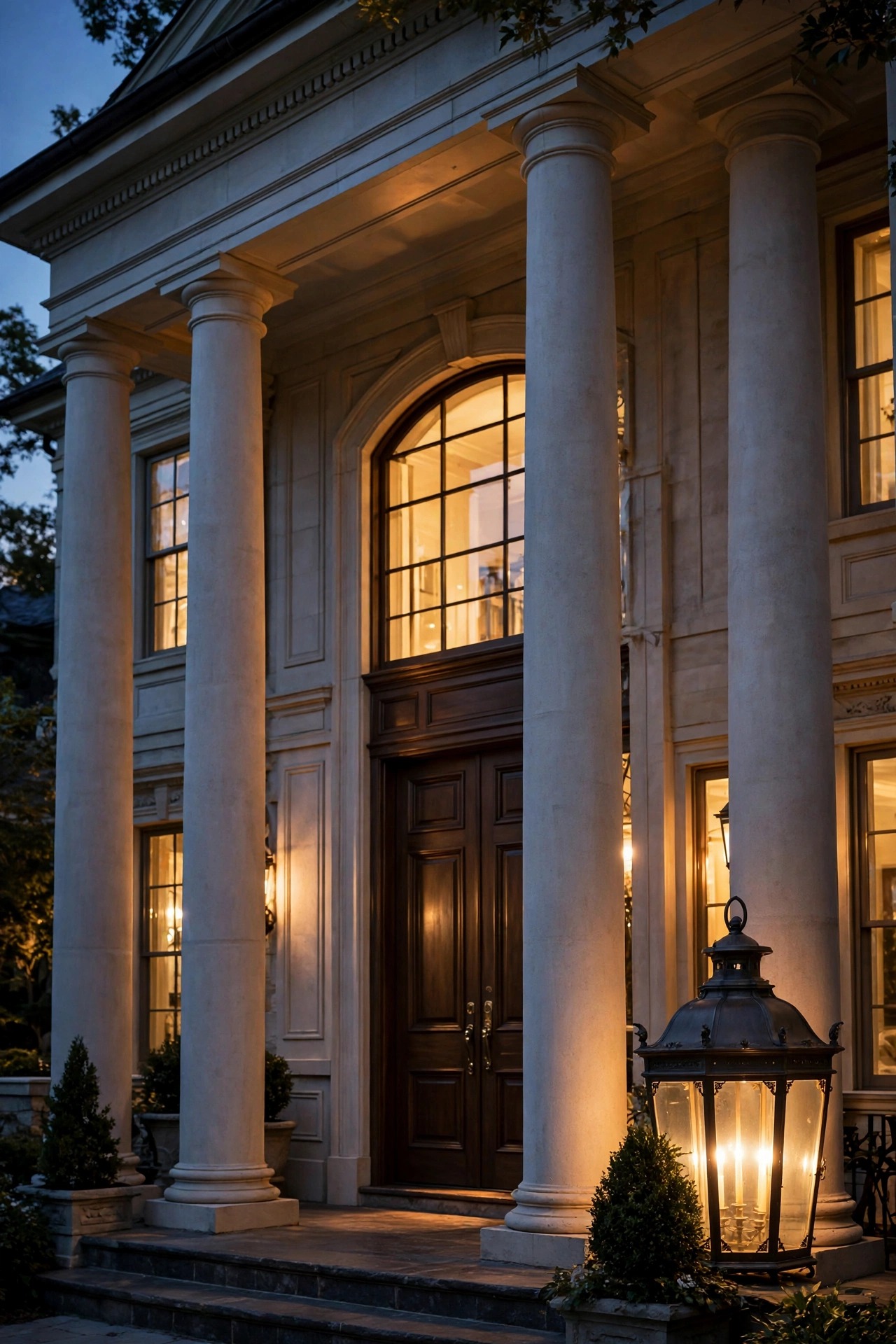
Tall entries break normal fixtures. A two-story foyer wall, a 9 or 10 foot door, or a grand portico will shrink a standard 12-inch lantern to the size of a night-light. This is where the sizing rule earns its keep: a wall fixture should stand roughly one quarter to one third as tall as the door it serves. For a standard 80-inch door that means 20 to 27 inches if the fixture flies solo, or a pair at about one quarter scale. For tall doors and two-story entries, think 24 to 32 inches, and do not be shy; I have never once heard a homeowner say their statement lantern was too big, but I hear the opposite monthly. If you are hanging a pendant instead, keep the bottom of the fixture at least 7 feet above the porch floor so tall guests and carried furniture clear it. My front-door sconce pair guide walks through pair spacing and mounting heights in detail. The honest costs: oversized fixtures are heavy, so confirm your mounting box is rated for the weight, and big glass means big cleaning. But for curb appeal per dollar on a tall entry, nothing else is close.
Suggested budget range: $120 – $350.
13. Flush-Mount Fixtures for Low Ceilings
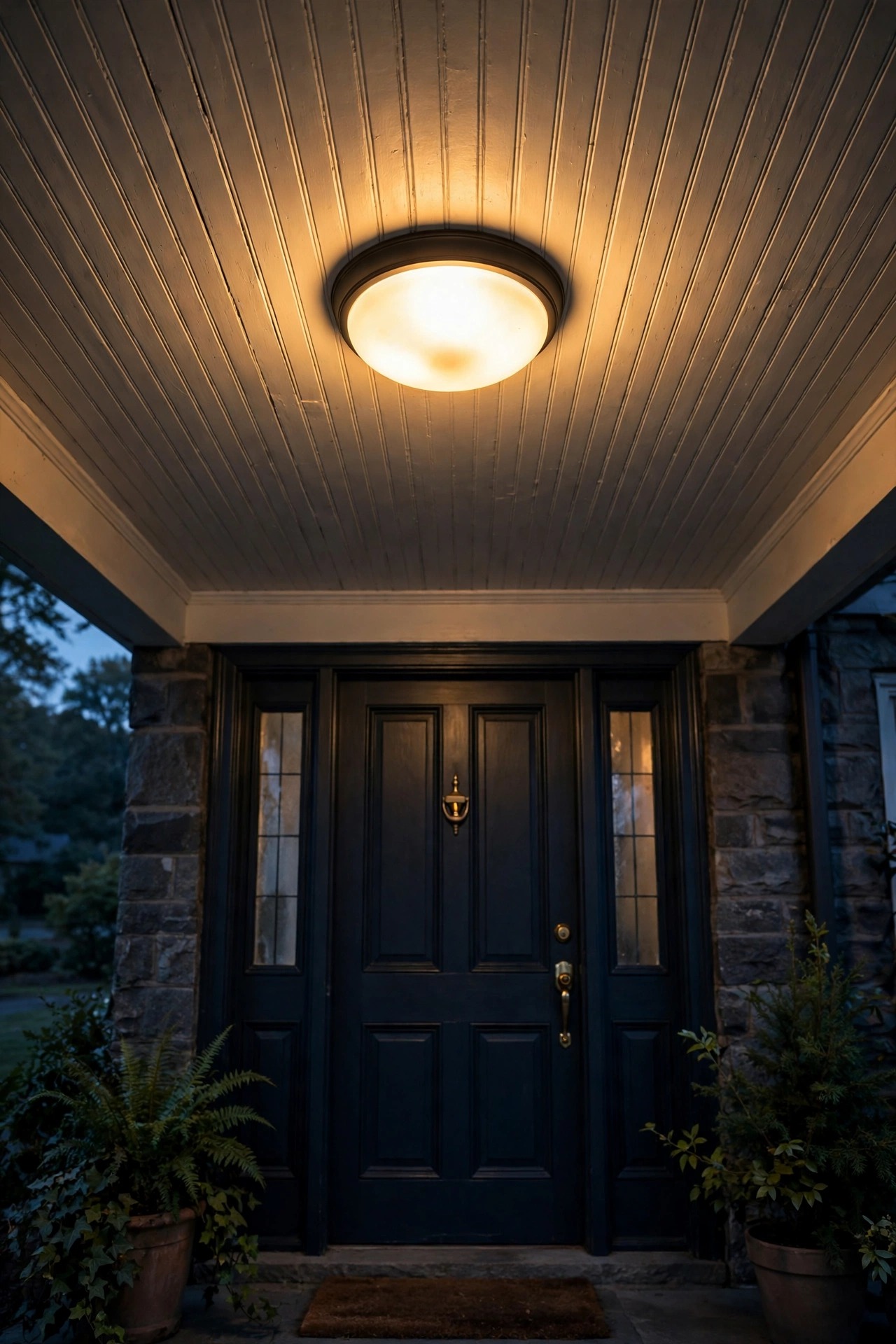
Not every porch gives you a wall beside the door or the ceiling height for a hanging lantern. Bungalows, ranches, and older homes often have porch ceilings under 8 feet, and that is flush-mount territory. A flush or semi-flush ceiling fixture tucks tight to the porch ceiling, spreads light in a wide, even wash, and never gets clipped by a screen door swinging or a ladder going up. Under a solid porch roof, a damp-rated fixture is perfectly fine here, since rain never reaches it directly; choose wet-rated only if your ceiling edge is exposed to wind-driven rain. The style risk is real: plain flush mounts can read a little motel corridor. Dress it up with seeded or opal glass, a trim collar that matches your door hardware, or a semi-flush drop of a few inches that gives the fixture a silhouette. Output spreads wide and flat rather than focused, which is lovely for sitting porches and weaker for steps, so keep a step light in the plan. Because ceiling fixtures are out of easy reach, pick LED, either integrated or a long-life bulb, and save yourself the ladder trips.
Suggested budget range: $35 – $120.
Frequently Asked Questions
How tall should a porch light be next to a front door?
Use the door as your ruler. A single wall fixture should measure about one quarter to one third of the door height, so for a standard 80-inch door, look at fixtures 20 to 27 inches tall. A pair can sit at the smaller end of that range. Mount the center of the fixture around 66 inches above the porch floor, and if the numbers fight with your siding or trim lines, trust your eye at the one-third mark.
Do porch lights need to be wet-rated?
Only if weather can actually reach them. A fixture tucked under a solid porch roof is fine with a damp rating. A fixture on an open entry, at the edge of an overhang, or anywhere rain and sprinkler spray land directly needs a full wet rating. Check the listing on the box rather than the product photos, and when in doubt, buy the wet-rated version; it is sealed better and lasts longer everywhere.
What color temperature looks best on a porch?
For nearly every home, 2700K. It matches the warm glow spilling from your windows, flatters brick, wood, and skin tones, and reads as welcome from the street. Avoid 4000K and above outdoors; that blue-white light belongs in a parking garage and makes even pretty homes look stark. If a fixture has an exposed bulb, frosted or seeded glass keeps the same warmth without the glare.
Can I replace a porch light fixture myself?
A like-for-like swap is a comfortable DIY job for most homeowners: kill the breaker, confirm the wires are dead with a voltage tester, match wire colors, and seat the new fixture on the existing box. Recruit a second pair of hands, because fixtures get heavy at arm height. Call an electrician instead if you are adding a fixture where none exists, moving a box, or find scorched or crumbling wiring when you open things up.
Conclusion
The right fixture is the one a stranger would assume was built with the house. Match the type to your architecture first, size it to the door second, and only then fall in love with a finish. Do that, and the best porch light fixtures stop being a guess and become the easiest upgrade on your whole entry. If you are still deciding, start with my three all-rounders: a craftsman lantern for bungalows, a coach pair for traditional homes, and a gooseneck anywhere you want warm, glare-free light pooling on the steps. Then browse the rest of my porch and entry lighting ideas here on the site, and plan the step and path layers that complete the welcome.