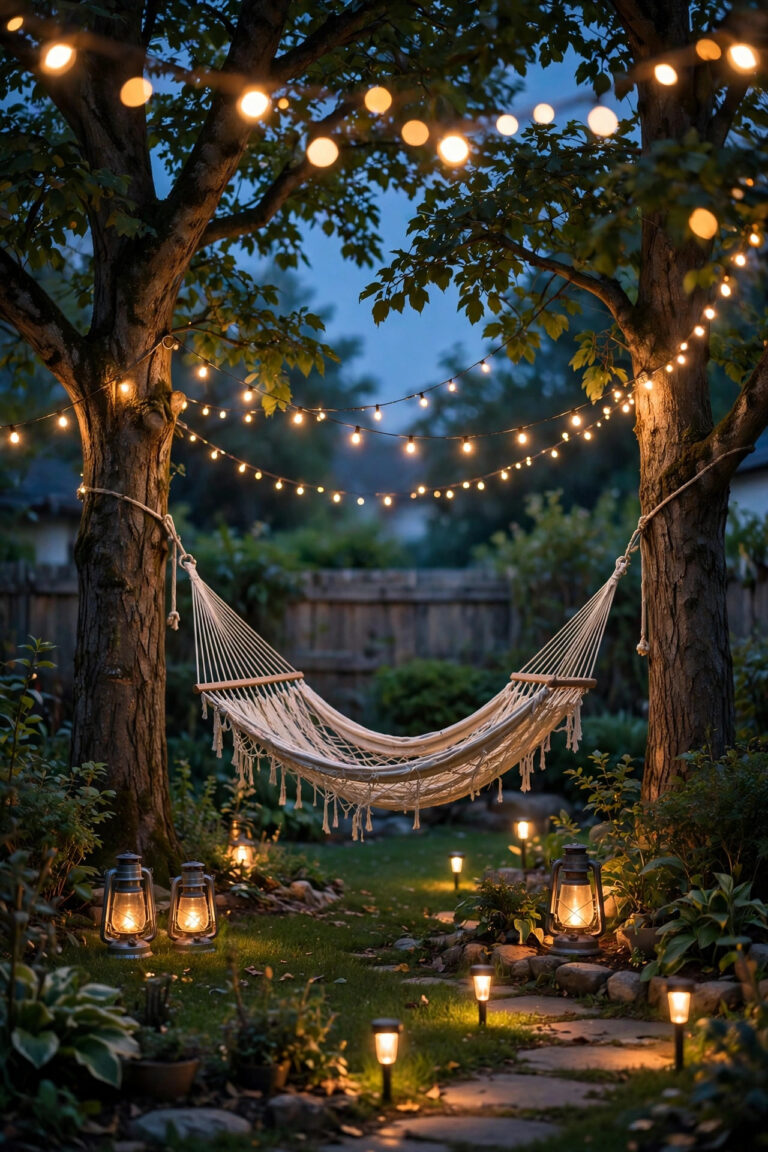
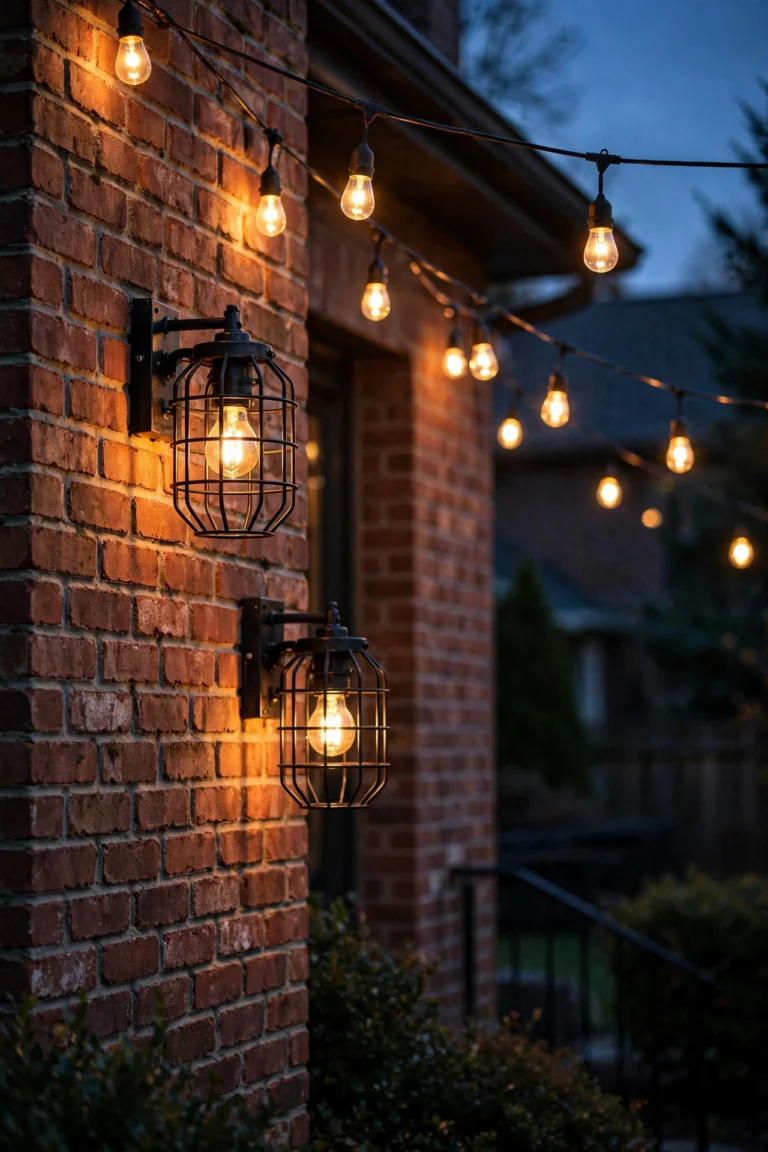
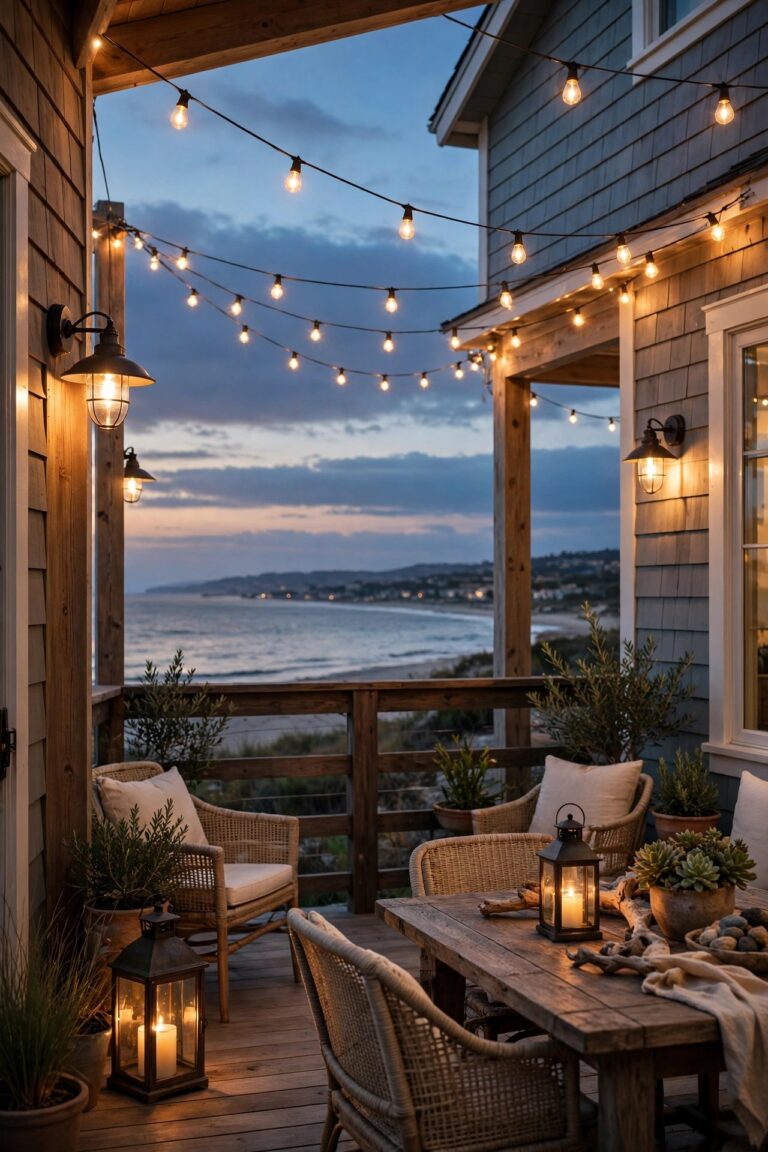
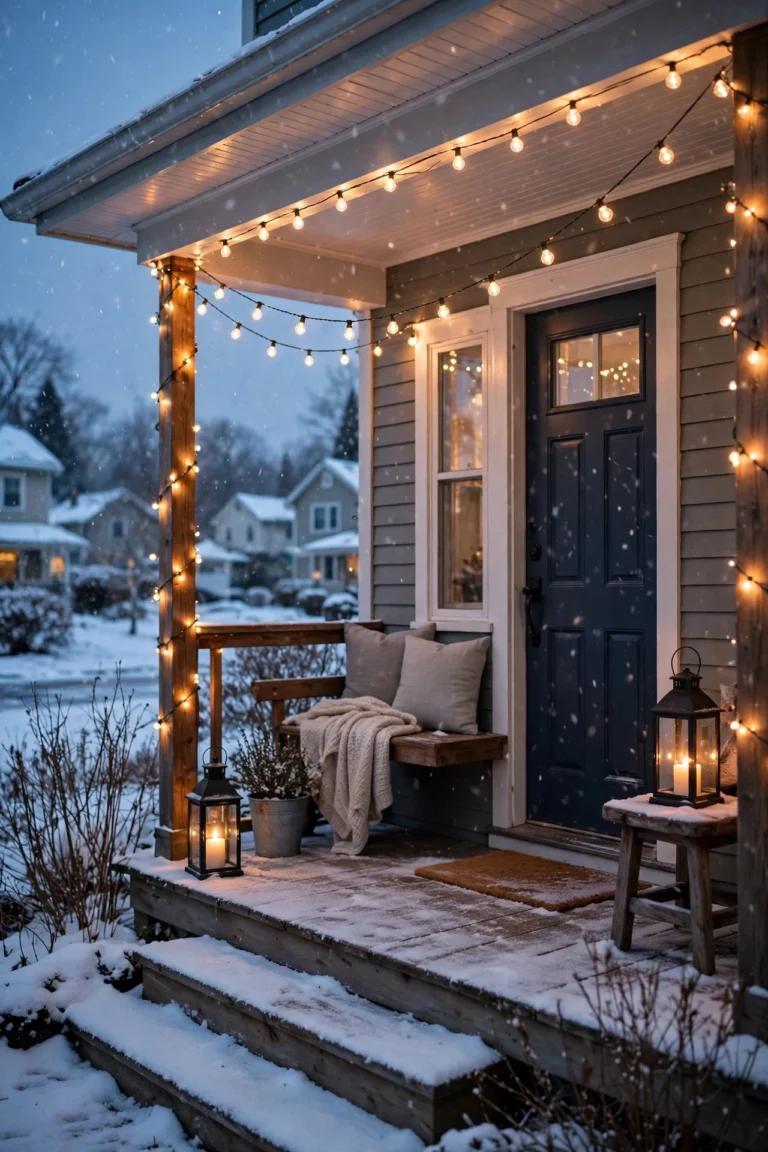
There is a moment every summer night at my house when the yard flips from chores to magic — the grill is cooling, someone is carrying out drinks, and the patio needs to glow without anyone hunting for a switch. That is exactly where smart string lights changed everything for me. One tap on my phone, or a single saved scene, and the whole backyard settles into that warm café shimmer I used to spend twenty minutes building with plug-in timers and dimmers. In my experience, the secret is layering: the strings are the welcome layer, the glow people actually sit under, so they deserve the most control. If you are new to the whole idea, my smart outdoor lighting guide explains the basics of apps, plugs, and zones before you spend a dime. Here I am sharing the fifteen app-controlled setups I actually use, from sunset schedules and dinner scenes to vacation modes and movie-night dimming. Pick two or three to start, and your evenings will mostly run themselves.
1. Start Your Smart String Lights With One Strand and One Scene
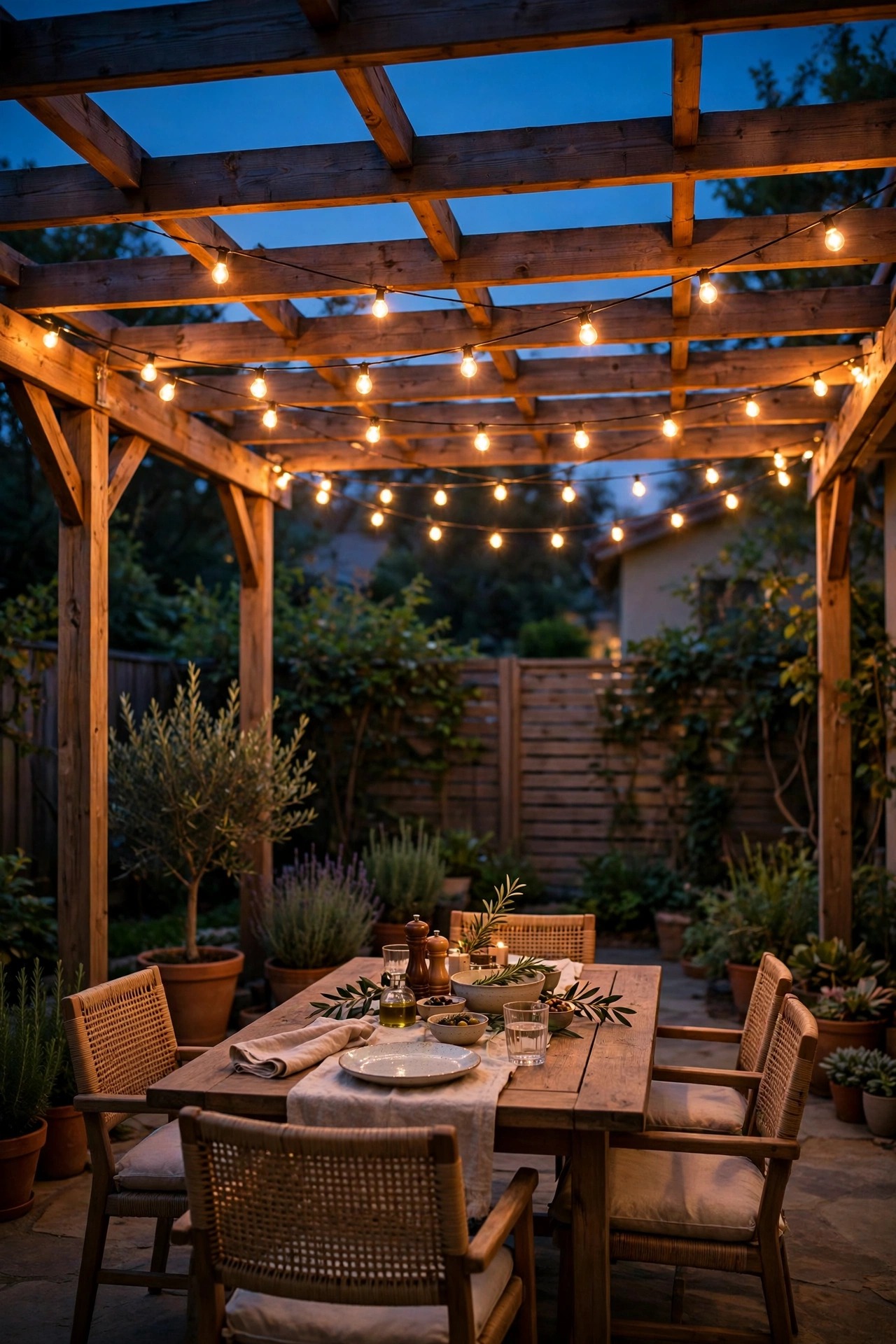
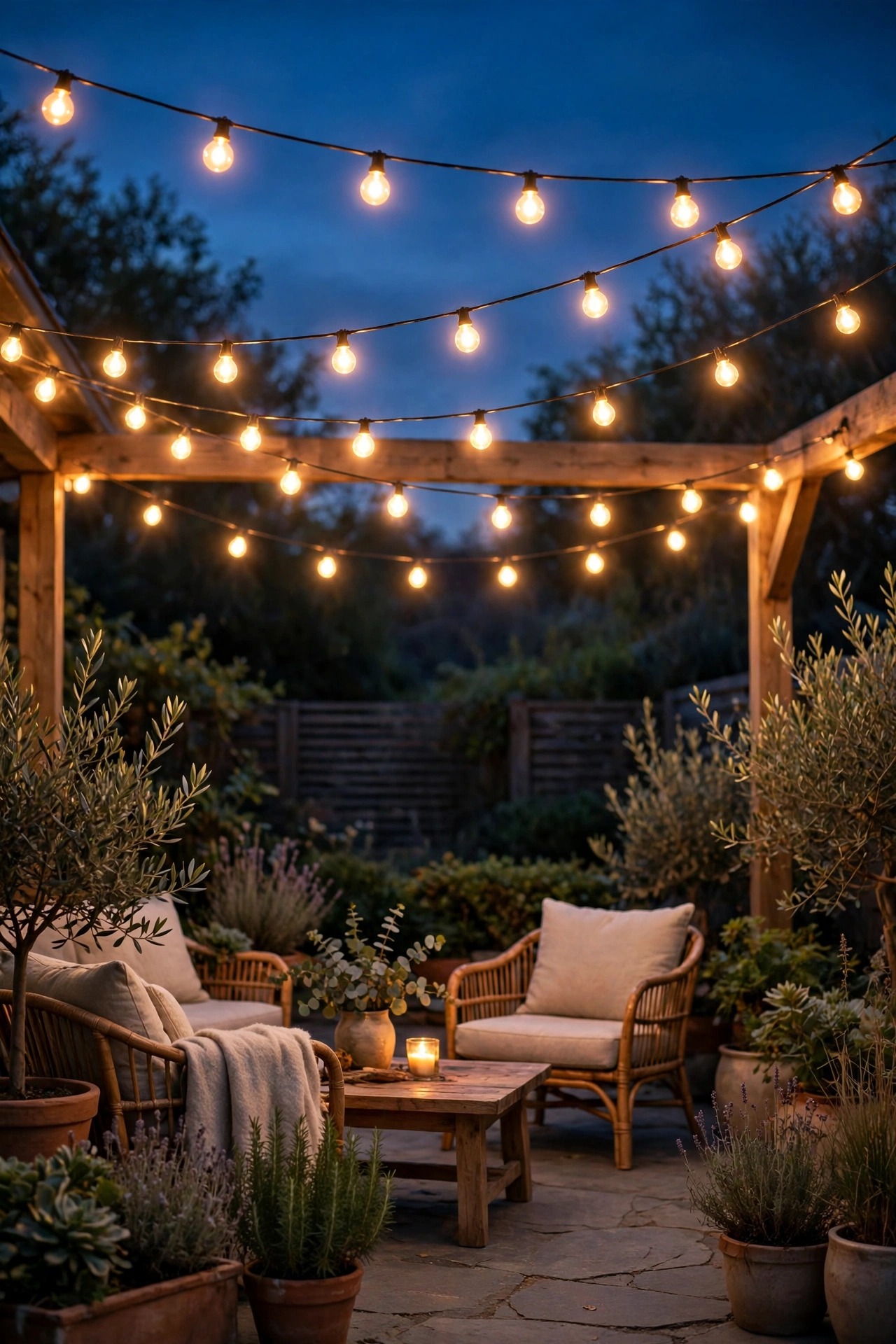
If you buy nothing else, buy one quality strand of dimmable smart string lights and learn the app on that single run before you add more. Hang it over your main seating area, connect it, and build one scene — I call mine Evening — at about 70 percent brightness on the warmest white setting. That single scene teaches you almost everything: how the dimmer curve feels, how the color shifts warmer as it dims, and whether your Wi-Fi honestly reaches the far corner of the patio. Keep the strand on its own zone so the dining glow never gets tangled up with path or garden lights later. Choose shatterproof LED bulbs rated for wet locations, with sockets pointing down so rain sheds off instead of pooling inside. Space the bulbs roughly 12 to 18 inches apart, and keep the first bulb at least a foot from any wall or post so the light spreads instead of hot-spotting. Honestly, this single-strand start has saved me more money than any other tip in this guide, because you learn your yard on forty feet of lights instead of four hundred. Once the scene feels right at dusk, you have a template every later strand can simply copy.
Suggested budget range: $45 – $90.
2. Let a Sunset Schedule Do the Remembering
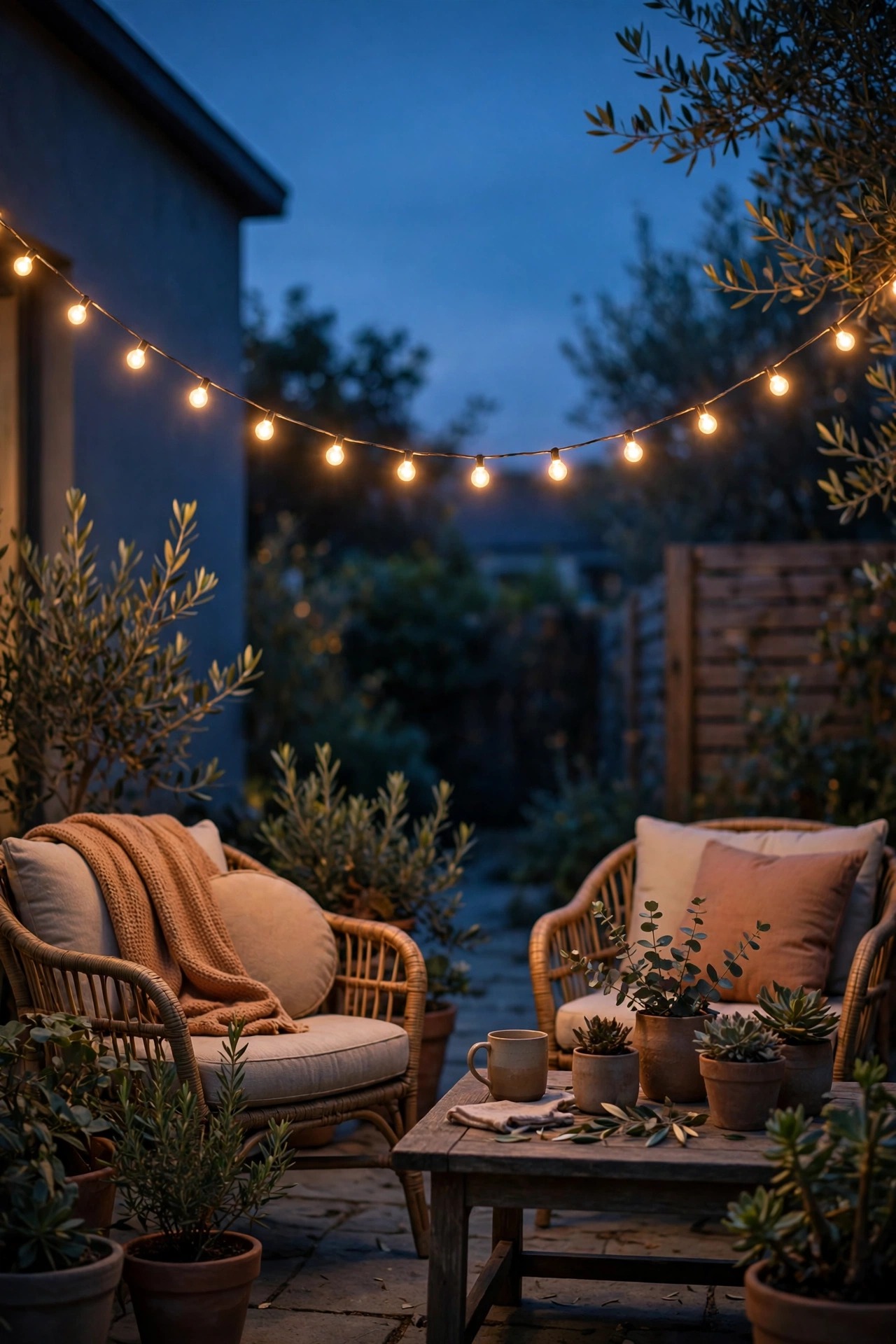
The best feature of smart string lights is a schedule tied to sunset instead of a fixed clock time. Set your main strands to fade on about twenty minutes before sunset and the patio is already glowing when you step outside, in June and in October alike, with zero effort from you. Most apps calculate local sunset automatically once you share your location, and they nudge the time daily as the seasons shift. I add a second rule for lights-out: off at 11 p.m. on weeknights and midnight on weekends, because a yard that goes dark on time respects the neighbors and the electric bill. If the app offers a gentle fade, use a ten-minute ramp rather than a hard switch, so the evening winds down instead of blinking out. Keep one manual scene on your home screen for stormy nights and early bedtimes. One practical note: schedules only work while the strand stays powered, so if there is a physical switch in the line, leave it on and add a tiny label beside it, or guests will defeat your automation purely out of habit. Set it once in spring, glance at it monthly, and it simply works.
Suggested budget range: $0 – $25.
3. Save a Dinner Scene at 40 Percent
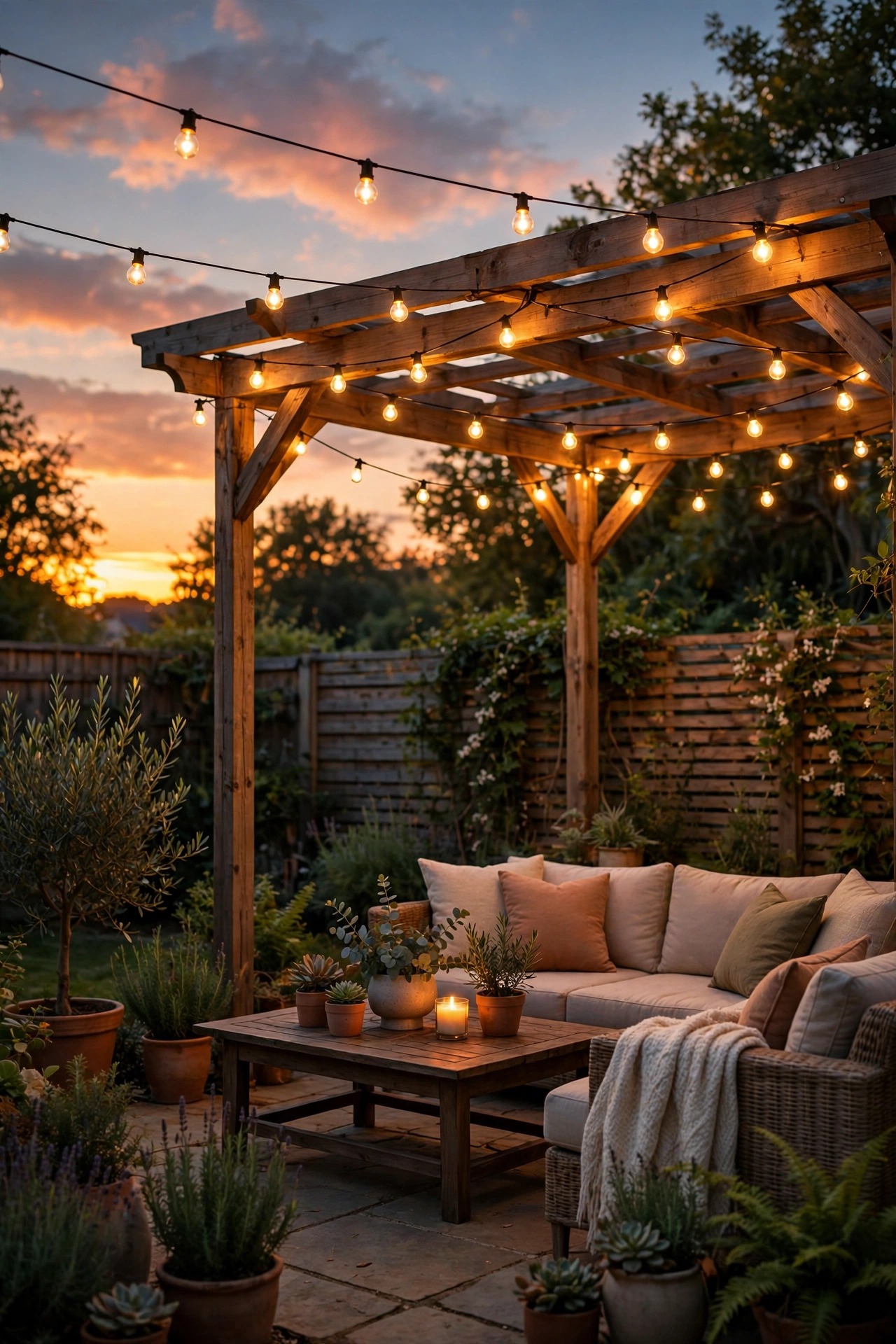
Full brightness is for finding a dropped fork, not for eating under. My dinner scene runs the overhead strands at about 40 percent, on the warmest white setting, and it flatters everything it touches — the food, the faces, and the table itself. Save it as its own named scene so one tap replaces five minutes of slider-fiddling, and give it a plain name a voice assistant will understand the first time you say it. If your strands form a canopy over the table, dim the center zone a touch deeper than the edges; the gentle falloff makes the table feel like its own little room. Keep the overall light low and warm, around 2700K, which keeps skin tones kind and draws fewer bugs than a cool white would. I also set this scene to leave the garden strings completely off, because a dark green backdrop makes the lit table look richer than lighting everything at once. Try the scene on an ordinary weeknight dinner first, then adjust in five-percent steps until nobody squints and nobody reaches for a phone flashlight. When it feels right, lock it in and stop tweaking.
Suggested budget range: $0 – $40.

4. Split Two Strands Into Zones With Separate Levels
One strand is a light; two strands on separate zones are a lighting design. I run the patio canopy as Zone One and the fence-line strand as Zone Two, each with its own control, so I can light the seating area without washing the whole yard at equal brightness. The fence strand usually sits ten to fifteen percent dimmer than the canopy, which pushes the background back and makes the yard feel deeper after dark. When you shop, buy both strands from the same product line so their dimming curves and color temperatures match — mismatched whites sitting side by side look like a mistake even when everything technically works. Power each zone from its own outdoor-rated outlet or smart plug, and label them in the app with plain names like Patio Canopy and Fence Line, because Future You at dusk will not remember which is which. Leave a gentle swag in both runs, about six inches of dip for every ten feet; it reads as intentional café styling, while a guitar-string-tight line looks strained and stresses the sockets. Two zones also fail gracefully — if one strand ever quits mid-party, the other still carries the evening.
Suggested budget range: $90 – $180.

5. Put the Strands You Already Own on a Smart Plug
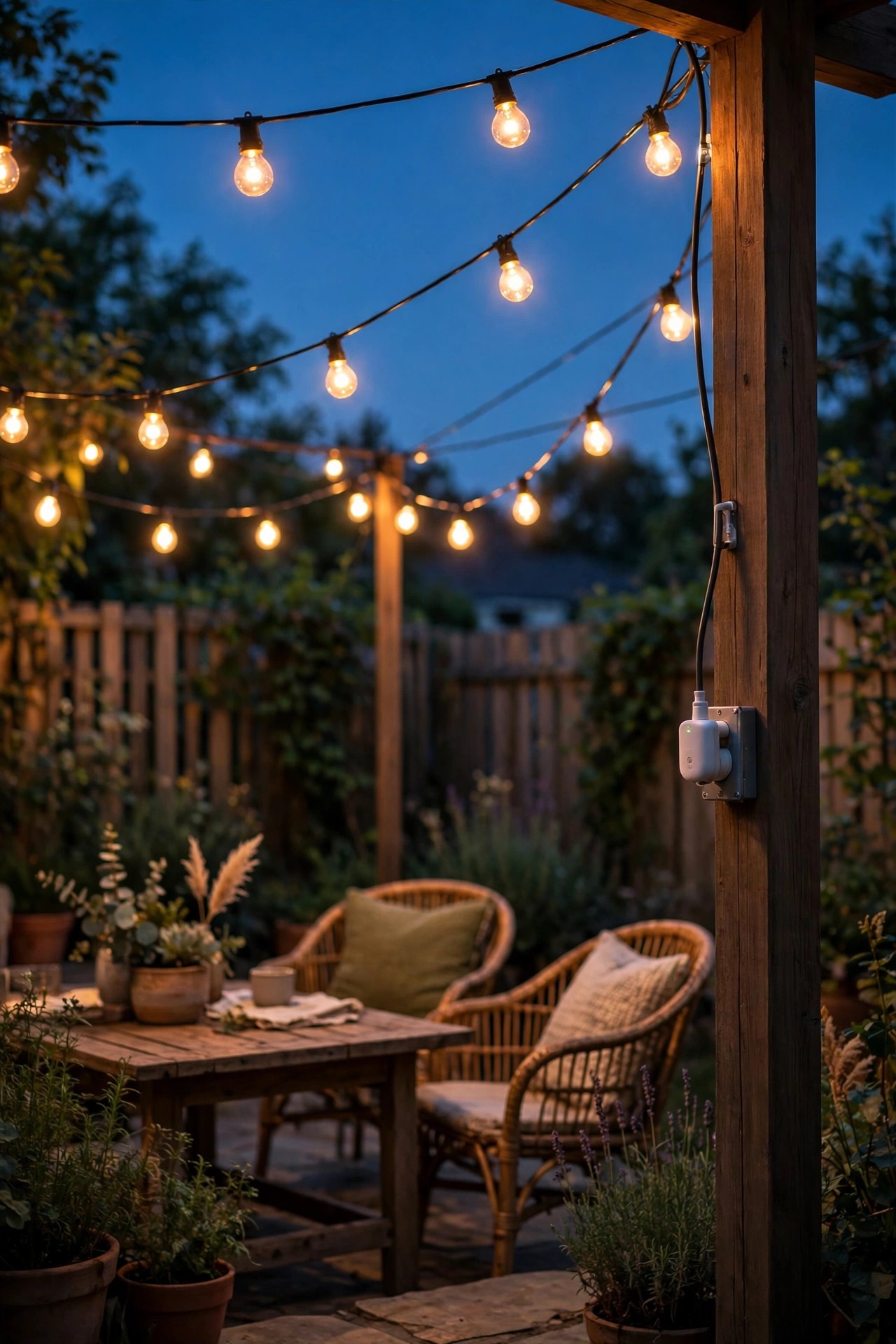
You do not have to replace a single bulb to get smarter. An outdoor-rated smart plug turns your existing strands into app-controlled lights with schedules, scenes, and voice control, for about the price of a pizza. Plug the strand in, pair the plug, and your classic café strings join the system in about five minutes. The honest trade-off is control depth: a plug switches the whole strand on or off, and it cannot dim or change color unless the strand itself has a built-in dimmer, so plugs suit the strands you simply want present or absent. Never use an indoor-rated plug outside, and run it from a GFCI-protected outlet — water and electricity deserve that respect every single time. Hang the plug with its sockets facing down so rain sheds away from the connections, and keep cords and plugs off the ground where puddles form. I use smart strands in the hero spots and plugs everywhere else, and honestly, no guest has ever noticed the difference. If you are still choosing classic strands worth upgrading, my roundup of backyard string light ideas covers the bulb shapes and styles I would buy again.
Suggested budget range: $15 – $35.
6. Keep Color-Changing Strands for Parties and Holidays
Color is seasoning, not the main course — but on the right night it is pure joy. Color-changing strands let me wash the fence line in team colors on game day, trade that for orange and purple in October, and land on soft red and green in December, all from the same bulbs. Build and save each look as a named scene during a calm afternoon, instead of designing under pressure while guests are holding plates. Keep the overhead canopy in warm white even when the accent strand goes wild; people still need to see their food, and faces always look better under warm light. Set colors at about 60 percent saturation rather than full blast — softer color reads festive, while full saturation reads like a carnival midway. One caution before you buy: some inexpensive color strands cannot produce a true warm white, so check the white mode carefully if the strand will do everyday duty too. I reserve full color for the accent strand and maybe one party zone, and that restraint is the whole trick. Used this way, color becomes the signal that tonight is special, and your everyday warm glow keeps its dignity the other 350 nights a year.
Suggested budget range: $55 – $110.

7. Pair a Motion Sensor With the Gate and Side Path
The back gate and the side path are where I want light that thinks ahead of me. A battery-powered motion sensor paired with a short run of smart string lights means the path glows softly as anyone approaches, then fades off about two minutes after the coast is clear. Set the brightness low — around 30 percent is plenty for safe footing — so the welcome never feels like an interrogation. In the app, link the sensor to just that one zone rather than the whole system; you want the path to wake up, not the entire yard. Mount the sensor about seven feet high, angled slightly downward, and out of the direct line of sprinklers. Because this strand only runs in short bursts, it is the one place I happily use a solar-charged or battery smart strand where wiring would be a nuisance. Test the trigger zone on a calm night, then again on a windy one, and trim any branch that waves through the sensor's view and causes false alarms at 2 a.m. It is a small setup, but guests mention it constantly: the yard feels like it is paying attention.
Suggested budget range: $40 – $85.

8. Swag a Canopy Over the Pergola on Poles and Guide Wire
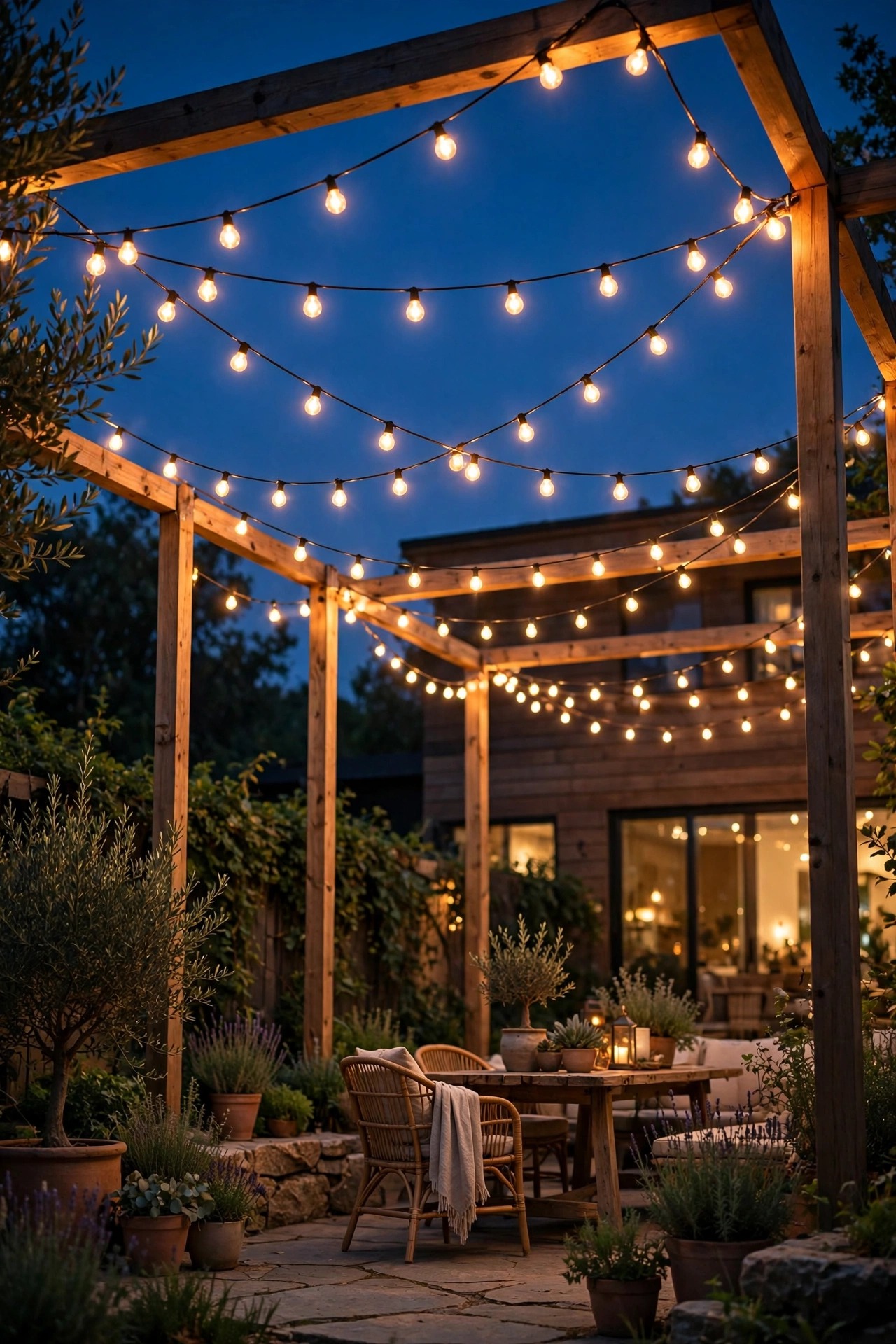
A pergola canopy is the classic string light scene, and the structure underneath decides whether it looks dreamy or droopy. If the posts feel far apart, add dedicated string light poles at the corners so each run stays under about fifteen feet — longer unsupported spans sag in the middle and swing hard in a storm. Guide wire is the quiet hero here: run a thin steel cable first, clip the strand to it every few bulbs, and the cord never has to carry the load. My full rundown of patio string light pole ideas covers heights, planter-base poles, and mounting options if your yard needs them. Over a square pergola, plan two crossing runs rather than a single perimeter loop; the X pattern puts light in the center, where people actually sit. Keep the lowest swag at least seven and a half feet above the floor so tall guests and raised glasses clear it comfortably. Because this canopy is the hero zone, give it the dimmable smart strand rather than a simple plug — the slow dim from dinner to late-night is exactly what this spot exists for. Bring the power down one post inside a weatherproof cover, and the whole ceiling of light stays clean and safe.
Suggested budget range: $120 – $260.
9. Build a Movie-Night Scene That Dims on Cue
Outdoor movie night lives or dies on light discipline. My movie scene drops the overhead canopy to about 10 percent — just enough to find a seat and a snack — switches the fence strand off entirely, and leaves one low string glowing along the steps so nobody trips on a refill run. Save it under a name you can say out loud, and the whole yard obeys before the opening credits finish. If your app supports it, add a slow five-minute fade into the scene; eyes adjust gradually, and the screen seems to brighten by magic. Keep whatever light remains behind the viewers, never beside or beyond the screen, where even a gentle glow washes out the picture and pulls eyes away from the film. Warm white only, please — color modes near a screen fight the movie all night long. For intermission, a second scene lifts everything to 50 percent for bathroom runs and snack raids, and one tap returns you to the dark. It takes about ten minutes to build both scenes the first time, and after that, movie night runs on two taps for the rest of the season.
Suggested budget range: $0 – $60.

10. Lock In Warm White as Your Everyday Default
Here is my honest rule: on ordinary nights, the fancy features stay in the drawer. I keep most of my strands set to a warm-white default around 2700K, because that is the light that makes my yard feel like my yard — flattering, calm, and consistent. Color temperature discipline is the real difference between a designed space and a collection of gadgets. If your app lets you set a default power-on state, choose warm white at your favorite brightness, so after an outage or a curious guest's reset, the yard returns to itself instead of booting up like a spaceship. Buy strands whose warmest setting genuinely looks like candlelight rather than pale yellow, and standardize on one product line so every zone matches. Keep a single accent strand free for color play if you like having the option, but treat warm white as the house standard everywhere else. Neighbors notice this more than any party trick: a yard that glows the same warm gold every single night simply looks well kept. Features are what sell smart lights; consistency is what makes you glad you bought them, three summers in.
Suggested budget range: $0 – $30.
11. Give the Fire Pit Corner Its Own Whisper Scene
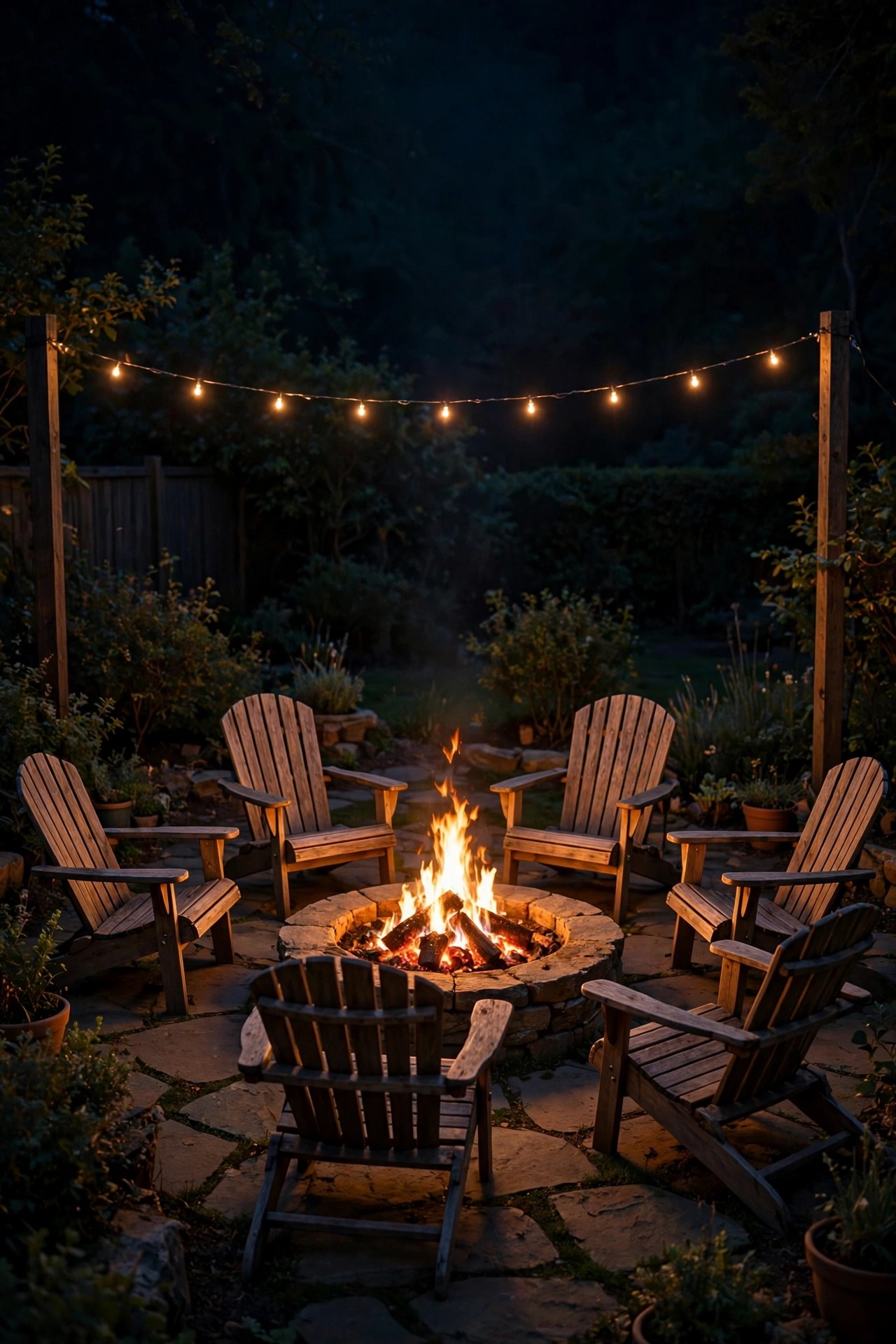
The fire pit corner wants restraint, because flames are already a light show and the strings above them should only whisper. I run one short strand high over the seating — nine feet up at least — on its own scene at about 25 percent warm white. It exists to light faces and the path between chairs, never to compete with the fire. Keep every bulb and cord well clear of the heat column; my rule is no strand directly above the pit itself, so offset the run over the circle of chairs instead. Use LED bulbs only near any open flame, and check the strand's heat rating before it goes up, because this is not the spot for bargain glass bulbs. A dedicated scene also means I can switch the strings off completely on nights when we want pure firelight and stars, then bring back a whisper of glow when someone goes hunting for the marshmallow sticks. Aim the gentle swag along the seating rather than across it, so the brightest bulbs stay out of everyone's direct view. Done right, guests remember the fire — the strings just quietly made sure nobody sat in the dark beyond it.
Suggested budget range: $35 – $80.
12. Turn On a Vacation Mode That Looks Lived-In
A dark house advertises an empty one, so before any trip I switch on vacation mode. The patio strings follow their normal sunset schedule, because lived-in houses glow at dinner time, but the app adds small random offsets — on at 7:42 one night, 8:05 the next — so the pattern never looks mechanical. Mid-evening, my dinner scene runs at half brightness for about an hour, as if someone were eating out there, and then everything settles to the usual late-night off time. Keep the routine modest; a yard blazing until 3 a.m. fools nobody. This is where the system honestly earns its keep, because strands on a plain plug-in timer, in an otherwise silent house, read as exactly what they are. If you have a trusted neighbor, mention that the lights are automated, so a glowing patio does not prompt a worried phone call. Glance at the app once mid-trip to confirm everything is reporting normally, the same way you would check the weather back home. Then put the phone away. Coming home to your own warm yard glowing on schedule, after a week of hotel hallways, is a quietly wonderful thing.
Suggested budget range: $0 – $20.
13. Group Your Smart String Lights Into One Master Scene
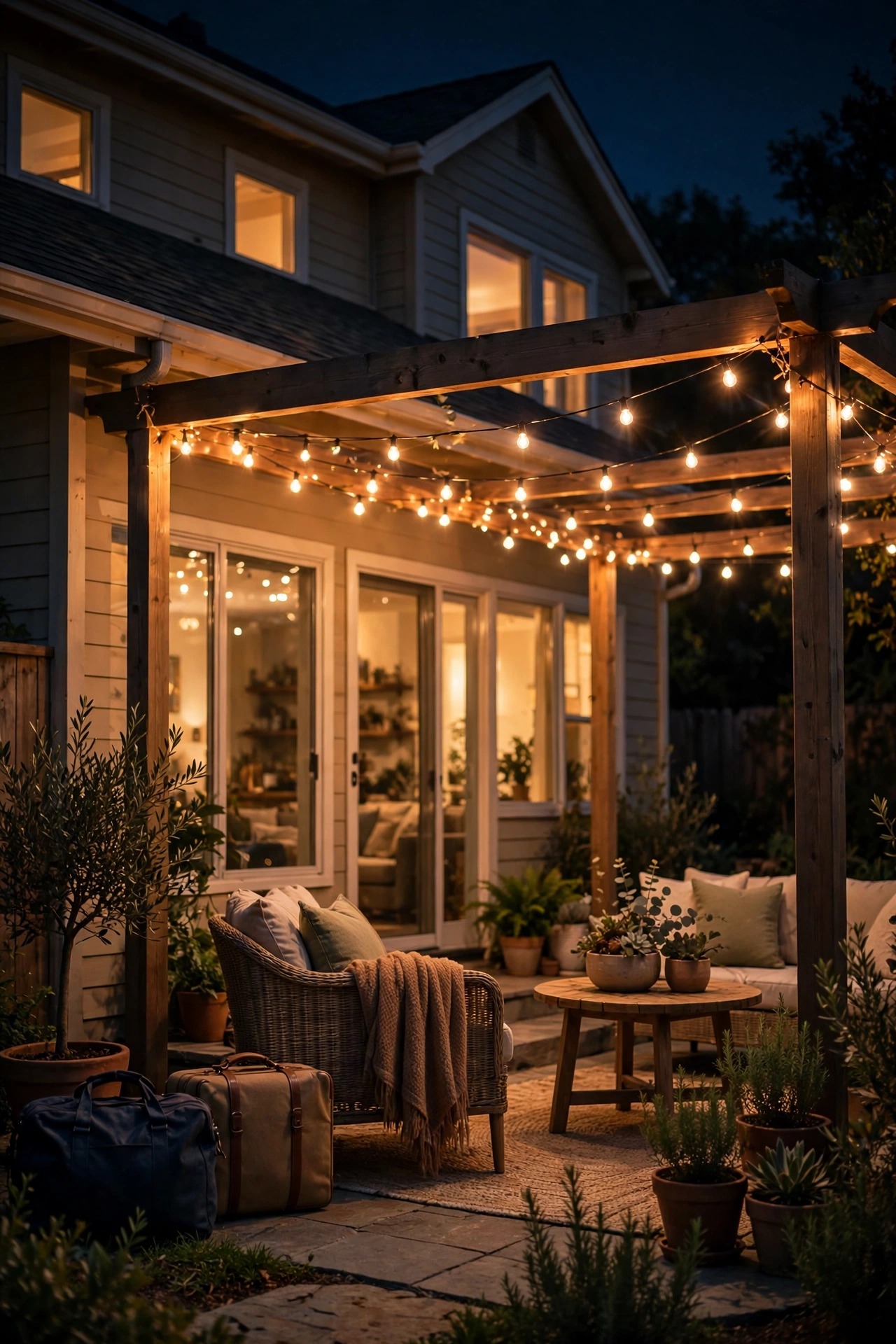
Individually, scenes are convenient; grouped together, they become choreography. My master scene, Full Glow, sets the canopy at 70 percent, the fence strand at 55, the fire pit whisper at 25, and the gate path armed and ready — every zone at its own level, recalled with a single tap. Build yours only after the individual zones already behave, the same way you would tune each instrument before the concert. In the app, group by purpose rather than by product: names like Entertaining, Quiet Night, and Full Glow mean something at a glance, while a list of device codes means nothing when you are holding a tray. Add the master scene to your phone's home screen or a voice shortcut so calling it up takes two seconds. The first time you run it, walk the whole yard — a group scene always exposes the one zone whose brightness you guessed wrong, usually the one nearest the seating. Save seasonal variants too: a summer Full Glow and a winter version with earlier timing take seconds to duplicate now and save reprogramming twice a year. One tap, whole yard, every light where it belongs.
Suggested budget range: $0 – $50.
14. Set Plain Timers for the Porch and Path Strings
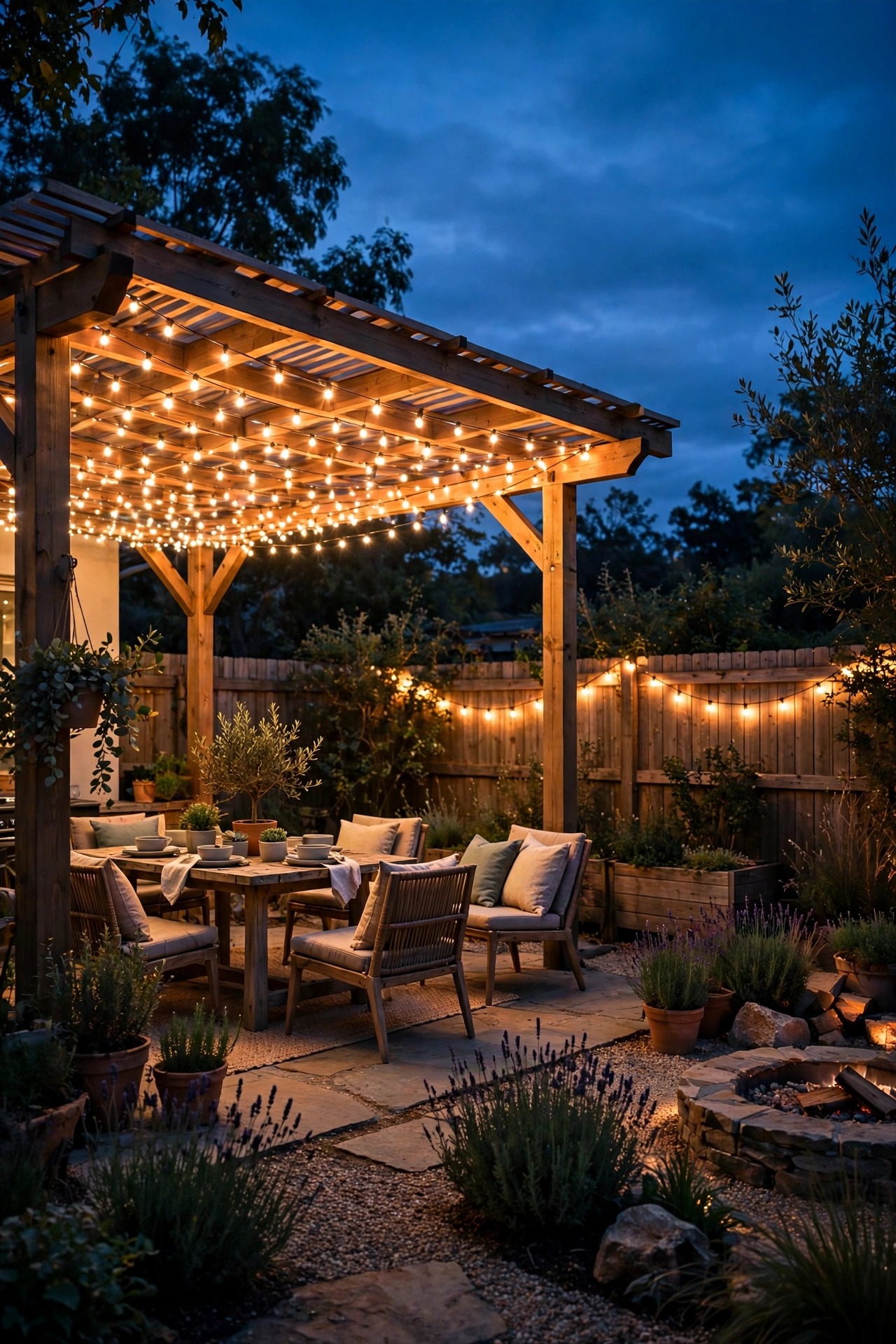
Not every strand needs a scene — some just need a dependable job. The short string over my side door and the little run along the garden path live on plain timers inside the app: on at dusk, off at 10:30, seven days a week. I use the app's timer instead of stacking these strands onto an old mechanical timer, because one system means one place to adjust when daylight saving time or a late dinner changes the plan. Set path strings a touch brighter than their size suggests; safe footing matters more than mood at the exact spots where guests walk between zones. If the porch string shares a circuit with a wall switch, leave the switch on and let the timer rule, since consistency beats a well-meaning guest flipping things off. Once a season, review the timer list the way you would review a calendar: delete the holiday leftovers, confirm the off times still suit your evenings, and check that nothing is set to run all night by accident. These humble strings never get compliments, and that is honestly the point — they are the dependable stagehands that let the hero strands shine.
Suggested budget range: $10 – $40.

15. Smart String Lights, Tuned: The Dusk Walk-Through Edit
Every setup in this guide ends the same way at my house: with a drink in hand and a slow lap of the yard at dusk. The walk-through is where smart string lights stop being settings and become a place. Stand where your guests will stand. Sit where your guests will sit. You will spot the bulb that glares at eye level from the grill, the zone that wants five percent less, the strand whose warm white leans a shade pink against its neighbor. Fix one thing per lap — shift a bulb, soften a scene, re-aim a run — and resist rebuilding everything at once. Take a photo from the best seat; it freezes the scene exactly as guests see it and gives you a reference when an app update shuffles your settings. I do this lap at the start of every season and after any new strand goes up, and it takes fifteen unhurried minutes. The app gives you control, but your eyes at dusk are the final editor. When a lap ends with nothing left to fix, pour the drink, sit down, and call up your favorite scene. The yard is officially smarter than the effort it took.
Suggested budget range: $0 – $15.
Frequently Asked Questions
Do smart string lights need Wi-Fi in the yard?
They need a signal where the controller or smart plug sits, not blanketing the whole yard. Most patios sit close enough to the house router. Stand at the farthest outlet with your phone: if you can stream a song there, your lights will behave. For far corners, move the smart plug closer to the house and let the strand reach outward, or pick strands that also include a handheld remote as a backup.
Can I make the string lights I already own smart?
Almost always, yes. An outdoor-rated smart plug gives any plain strand scheduling, app control, and voice control; you only give up dimming and color changes, which live in the strand itself. If your existing strand has an inline dimmer, a smart plug still handles the timing beautifully. Just keep the plug's sockets facing down, run it from a GFCI outlet, and confirm the total wattage stays comfortably under the plug's rating — an easy check with LED strands.
How many strands can I connect end to end?
Follow the limit printed on the strand's tag — commonly three to five strands per run for LED sets. The limit exists because the cord, not the bulbs, carries the combined load. For longer spans, feed two shorter runs from opposite ends or from separate outlets, which conveniently gives you separate zones for scenes. And never defeat the little fuse in the plug to push more length; a blown fuse is the system protecting your patio.
Can smart string lights stay up all year?
Strands rated for wet locations with shatterproof LED bulbs can stay up year-round in most climates, and mine do. What shortens their life is water sitting in sockets, so hang them socket-down, keep connections off the ground inside weatherproof covers, and power everything from a GFCI outlet. Bring lightweight seasonal strands indoors after their holiday, reserve the heavy-duty sealed-socket sets for permanent duty, and give everything a quick inspection each spring.
Conclusion
Smart string lights are the hardest-working glow in my yard, because they ask so little and give something back every single night. Start with one dimmable strand and one good scene, then add schedules, zones, and a little color as your evenings ask for them. Keep warm white as the nightly standard, save the bright scenes for gatherings, and let the app do the remembering. Walk the yard at dusk once a month, adjust a scene or two, and the whole system stays tuned to how you actually live outside. For more ways to layer light across the whole yard, browse the other lighting ideas here — your future self, drink in hand at sunset, thanks you.