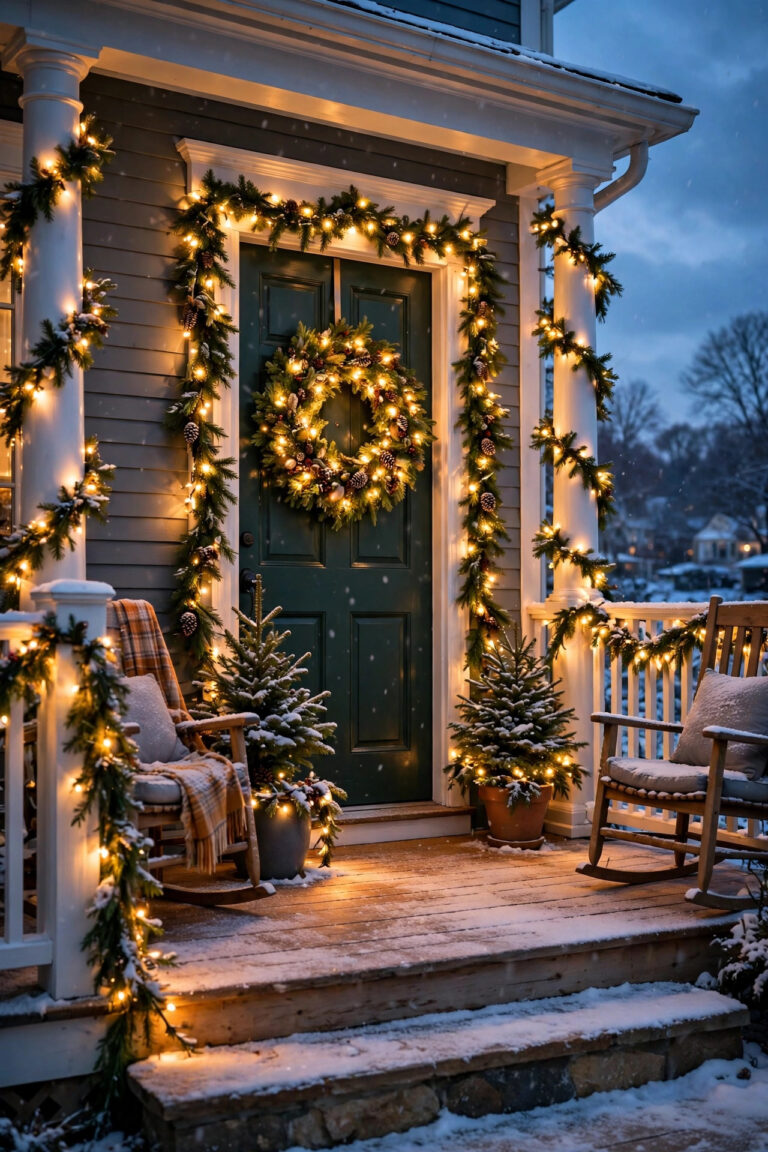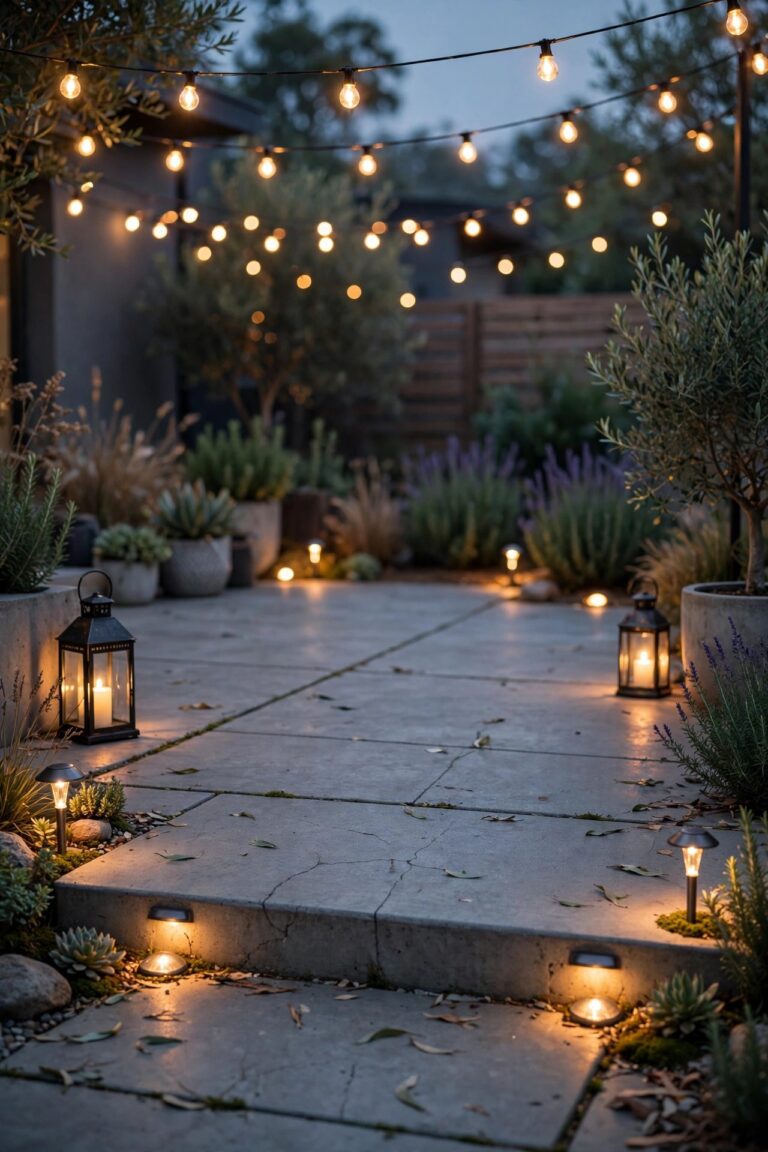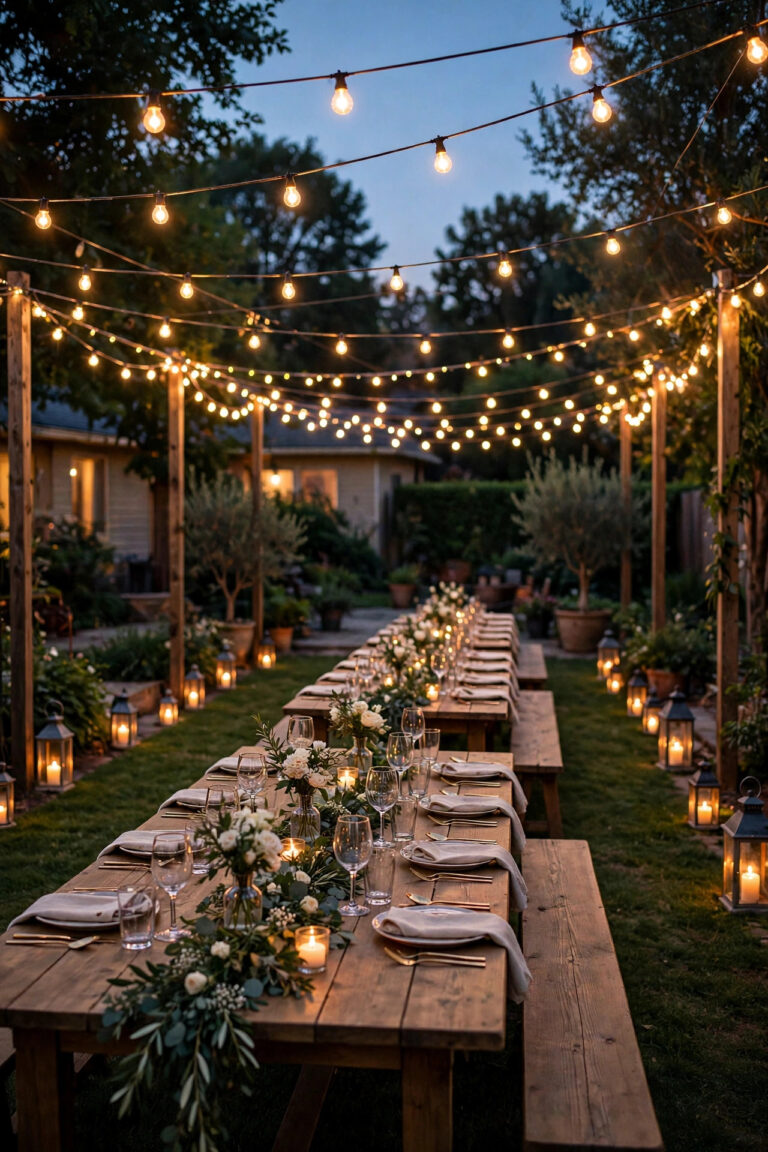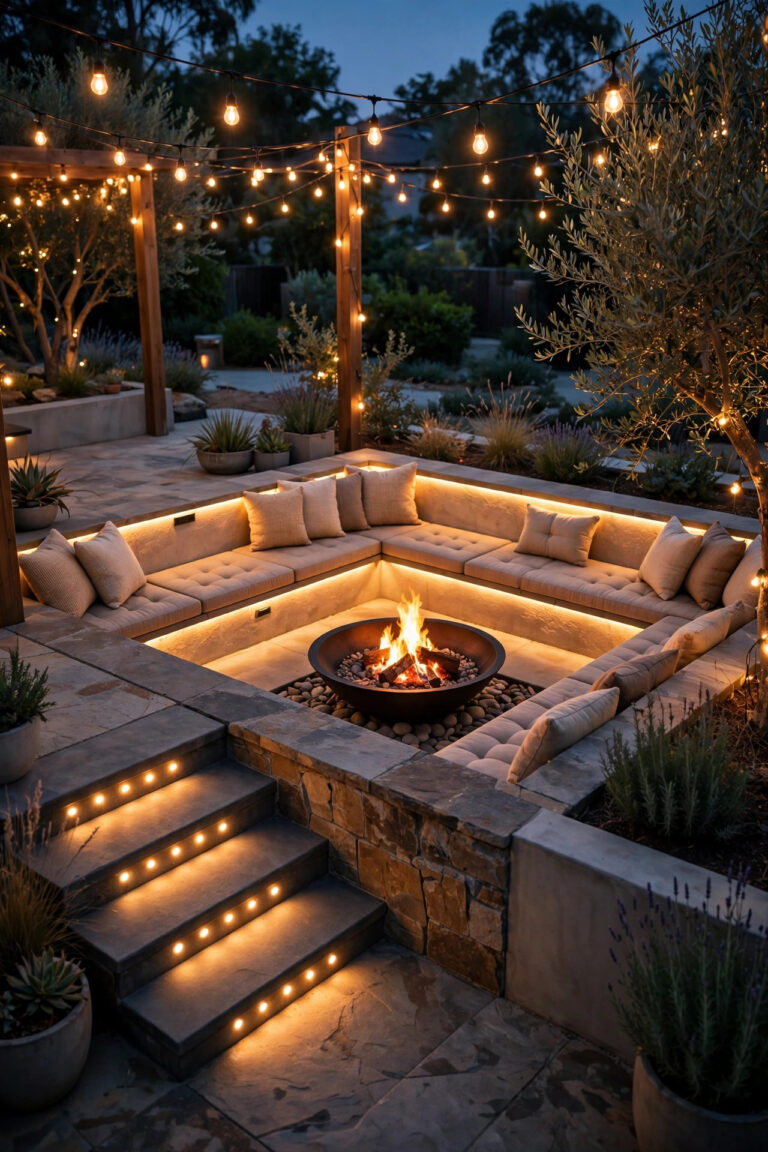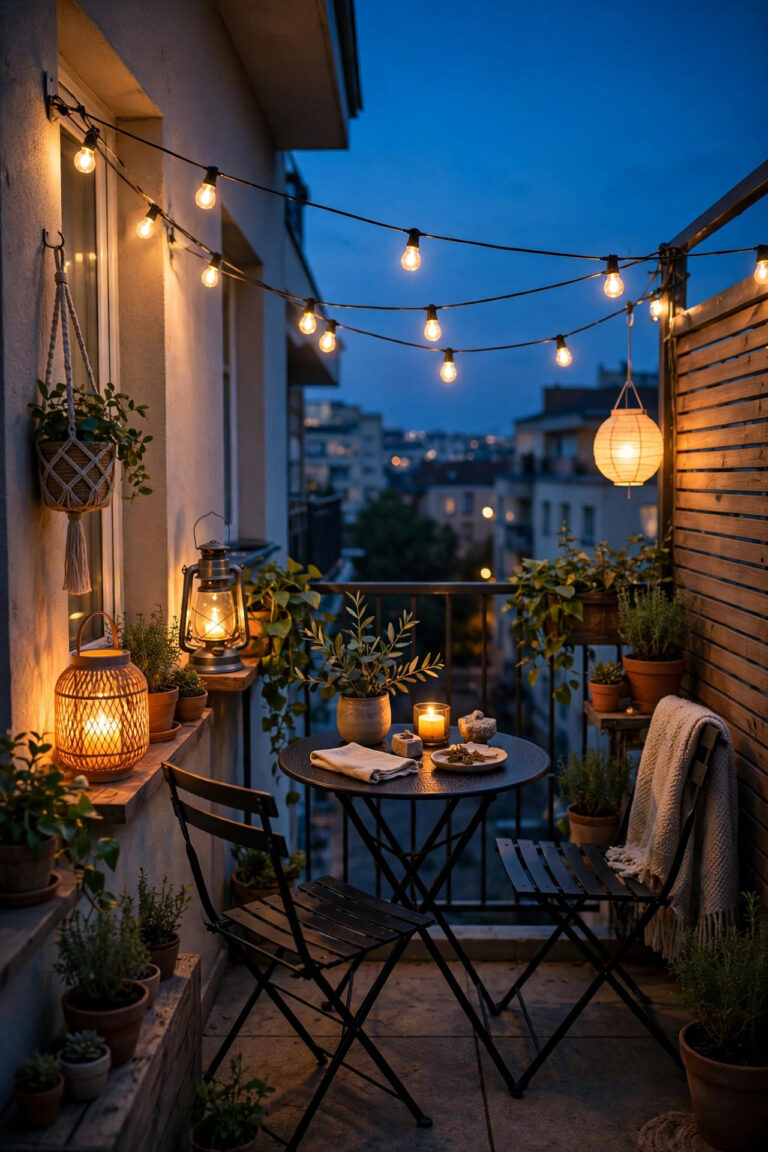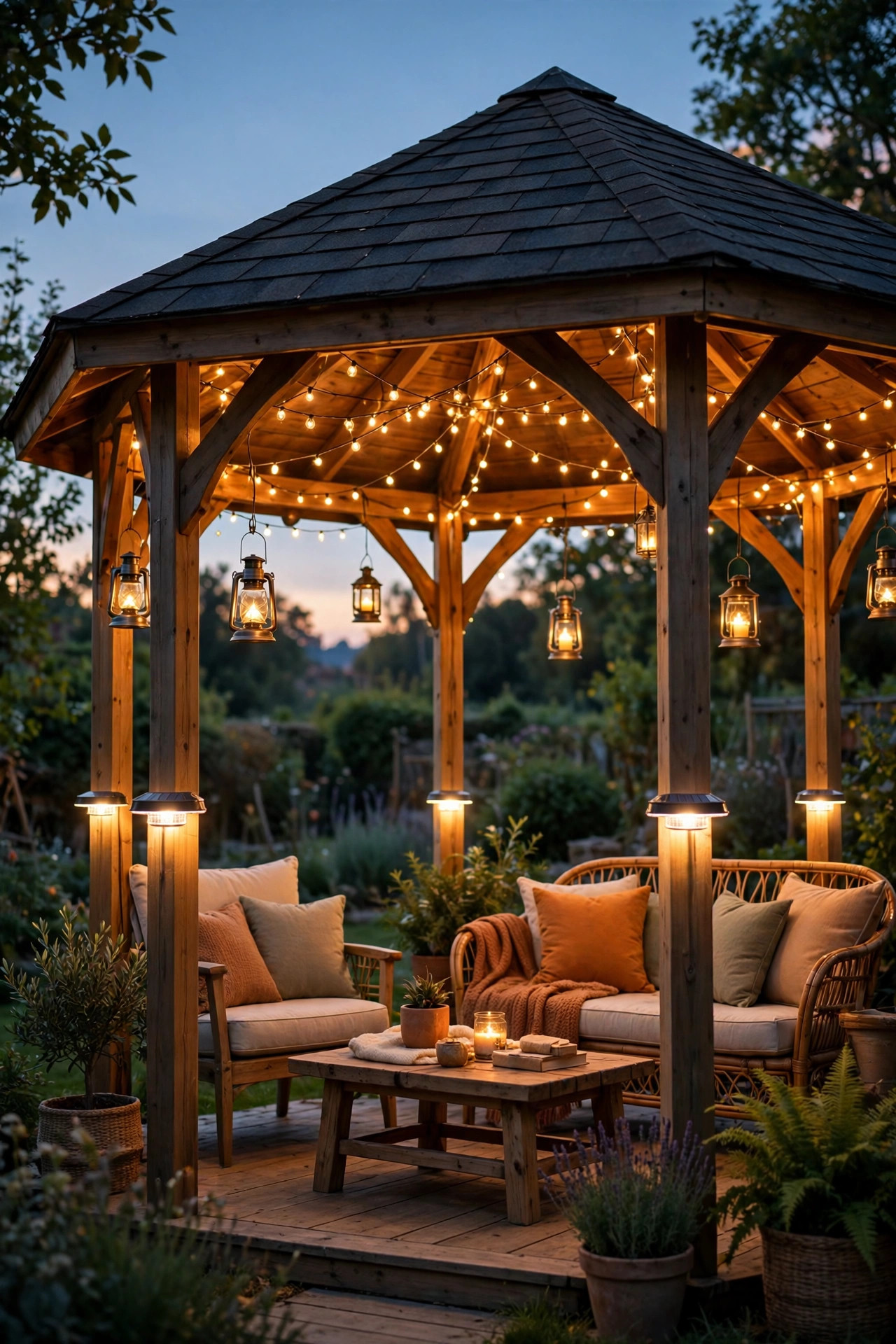
Our gazebo sits a good 60 feet from the nearest outdoor outlet, and for the first two summers we owned it, that meant one ugly orange extension cord snaking across the lawn every time we wanted light out there. Then I went all-in on solar, and honestly? I have never looked back. These solar gazebo lighting ideas are the exact setups I have tested, tweaked, and lived with — no trenching, no electrician, no cord to mow around. The secret is the same layering philosophy I use everywhere: light at three heights. Something glowing overhead, something warm at eye level, and something low that keeps steps and edges safe. Solar makes layering easy because every fixture carries its own power, so you can place light exactly where it looks best instead of where the cord reaches. Below you will find 17 ideas, from five-minute clip-ons to a proper chandelier moment, plus the panel-placement tricks that make solar actually reliable. If your gazebo is shaded, do not worry — a couple of these were made for you. For the bigger picture, my roundup of gazebo lighting ideas covers wired and solar options side by side.
1. Solar String Lights, Swagged Rafter to Rafter
If I could only pick one solar upgrade for a gazebo, this would be it. A good strand of solar string lights with shatterproof bulbs turns the roof into a glowing canopy, and because the panel sits on a stake or clips to the roof edge, there is no cord running back to the house. I hang mine with small screw-in cup hooks spaced about 4 feet apart along the rafters, letting each run sag 8 to 12 inches for that relaxed café swag. Crisscross two strands on a square gazebo, or run three parallel lines on a rectangular one. Aim the panel south and tilt it toward the sun; even a partly shaded panel usually stores enough for 6 to 8 hours of light. Choose warm-white bulbs around 2700K so faces look golden, not gray, and look for strands where the bulbs hang at least 12 inches below the wire so they read as separate points of light. My full breakdown of styles and lengths lives in my guide to solar string light ideas, but for most gazebos a 27- to 48-foot strand is the sweet spot.
Suggested budget range: $25 – $60.
2. A Solar Chandelier as the Centerpiece
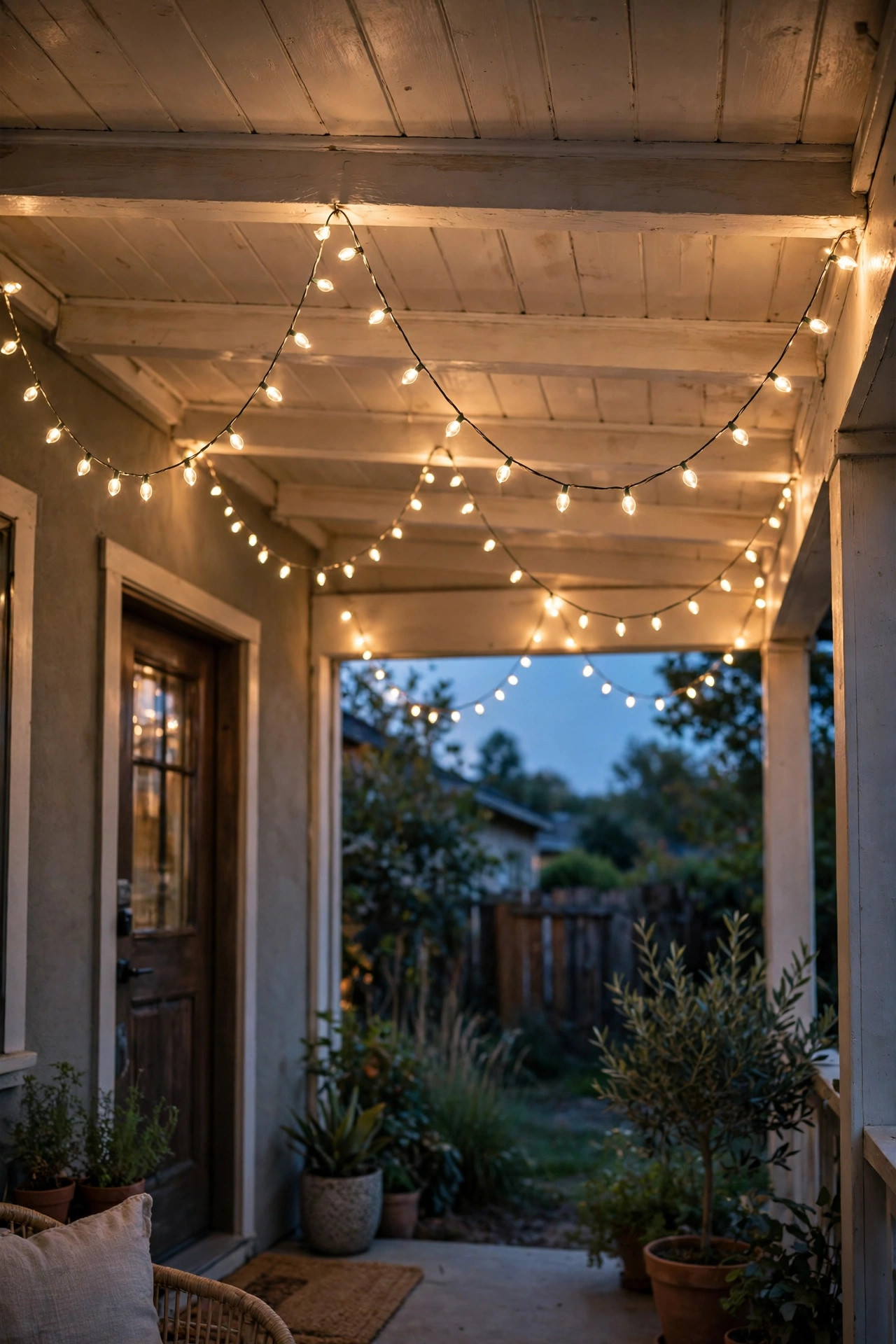
Every gazebo deserves one statement piece, and a solar chandelier hung dead-center is mine. Purpose-built solar chandeliers come with a small remote panel on a 10- to 15-foot cord: the panel mounts on the sunny side of the roof, the cord drops through the center, and the fixture hangs from the main hook or a short chain. Hang it so the bottom sits about 7 feet above the floor, or roughly 30 inches above your table if you dine underneath. The look is pure drama for almost no effort — guests always assume it is hardwired. A few honest notes from my own trial and error: chandeliers are mood light, not task light, so pair them with brighter layers if you play cards out here. In deep shade, a chandelier with a dinky built-in panel will disappoint; the remote-panel versions are worth the small premium. And bring lighter-weight models down before serious storms — most hang from a simple hook and take thirty seconds to lift off.
Suggested budget range: $45 – $120.

3. Solar Post Cap Lights on Every Corner
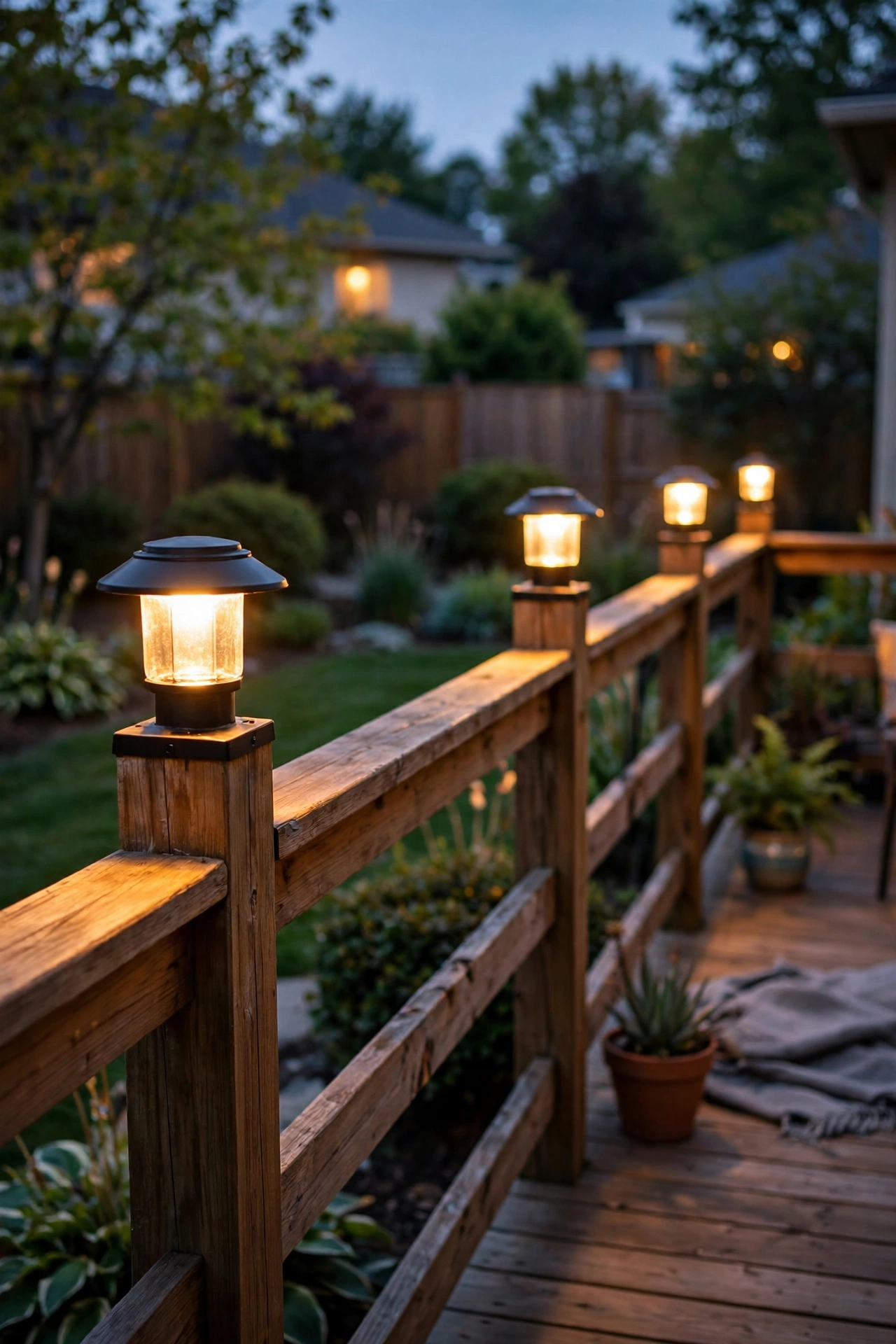
Your gazebo posts are already standing at the perfect height for eye-level glow — they just need caps. Solar post cap lights slip over the top of 4×4, 5×5, or 6×6 posts (measure before you order; most include adapter bases for the common sizes) and throw a soft pool of light downward where people actually sit. I like them because they define the gazebo's footprint after dark and mark the corners so nobody clips a post while carrying a tray of drinks. Installation is two screws or a bead of outdoor adhesive, and the panels are built right into the cap, so there is nothing else to mount. Expect a gentle 5 to 15 lumens per cap — ambience, not illumination — which is exactly why they layer so well under brighter string lights. Choose warm white to match your other layers, and wipe the little panels with a damp cloth each spring; a season of pollen film can cut charging more than you'd think. Sets of four or six keep the look symmetrical.
Suggested budget range: $20 – $45.
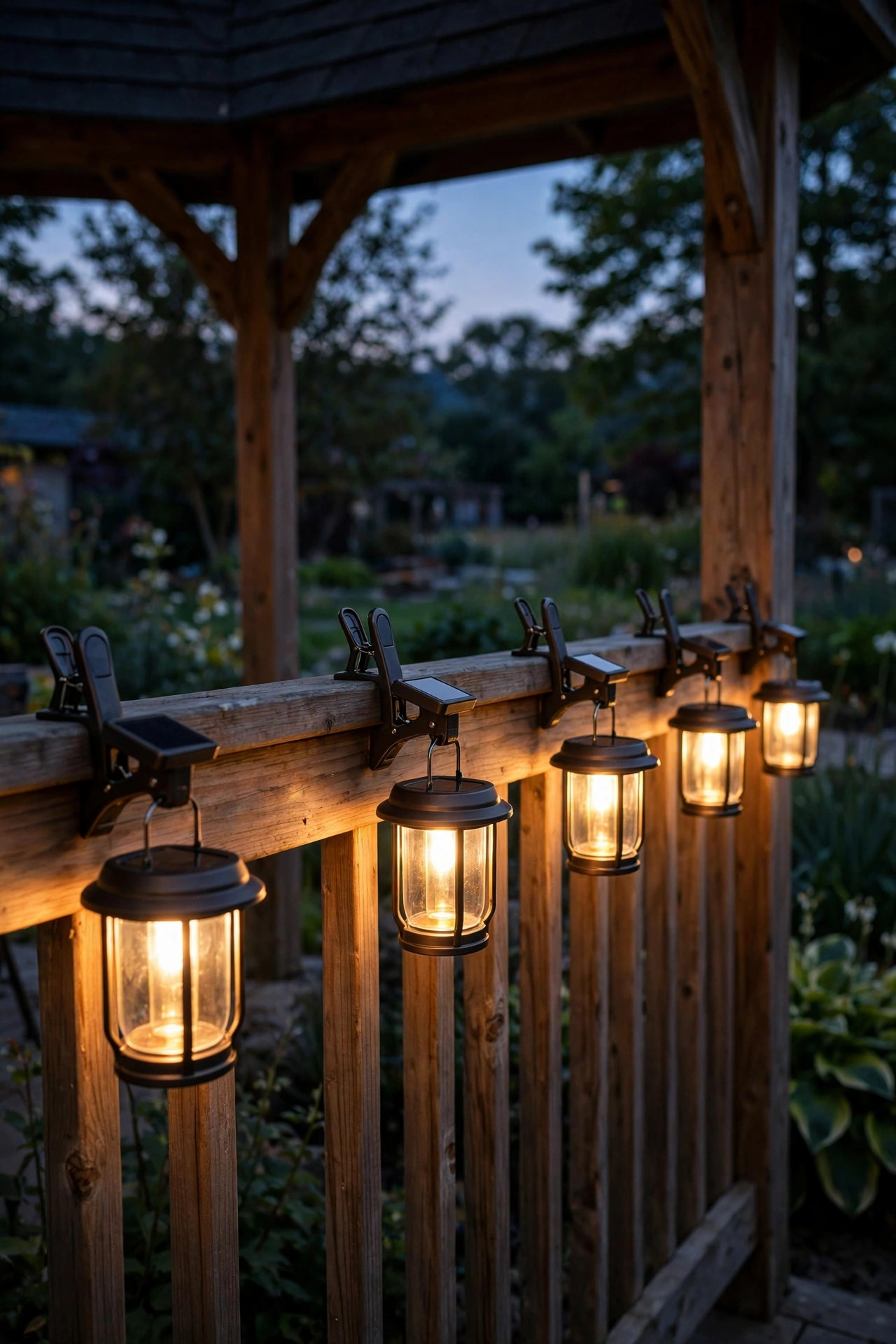
4. Clip-On Solar Lanterns Along the Railings
For renters, commitment-phobes, and anyone who likes to rearrange, clip-on solar lanterns are the hardest-working little lights I own. Each lantern has its own small panel and a sturdy clip or carabiner, so you can hang them along the railings, from the curtain rod, or off the ends of the rafters in about five minutes. I space mine 3 to 4 feet apart at railing height, where the light lands right on laps, books, and snack bowls. Because they charge individually, you can rotate a dim one to the sunniest railing for a day — a trick that has saved many a dinner party. Look for lanterns rated IP44 or better and a warm 2700K to 3000K glow; some of the cheapest ones shine a bluish white that makes everything look like a parking lot. They also travel beautifully: unclip a pair and carry them down to the fire pit or the picnic table. When a storm rolls in, the whole set comes down in minutes and stores in a single tote.
Suggested budget range: $18 – $40.
5. Copper-Wire Fairy Lights Woven Through the Curtains
The prettiest ten dollars in my entire yard is a strand of copper-wire fairy lights woven through the gazebo curtains. The wire is nearly invisible by day, and at night the tiny LEDs turn plain sheers into a glowing backdrop — it genuinely looks like something from a wedding venue. Solar versions come with a small ground-stake panel, so thread the panel's lead wire outside the curtain line where it catches sun, then weave the strand loosely along the top hem and let a few tendrils trail down the sides. One safety note I never skip: LED only, always, anywhere near fabric. These little diodes stay cool to the touch, which is exactly what you want against curtains that move in the breeze. The same weave works through climbing vines on the posts if your gazebo is curtain-free. A 33-foot strand covers two sides of an average gazebo; go for the 66-foot version if you want all four. Expect twinkle, not brightness — this layer is pure atmosphere, and it photographs like a dream.
Suggested budget range: $12 – $28.

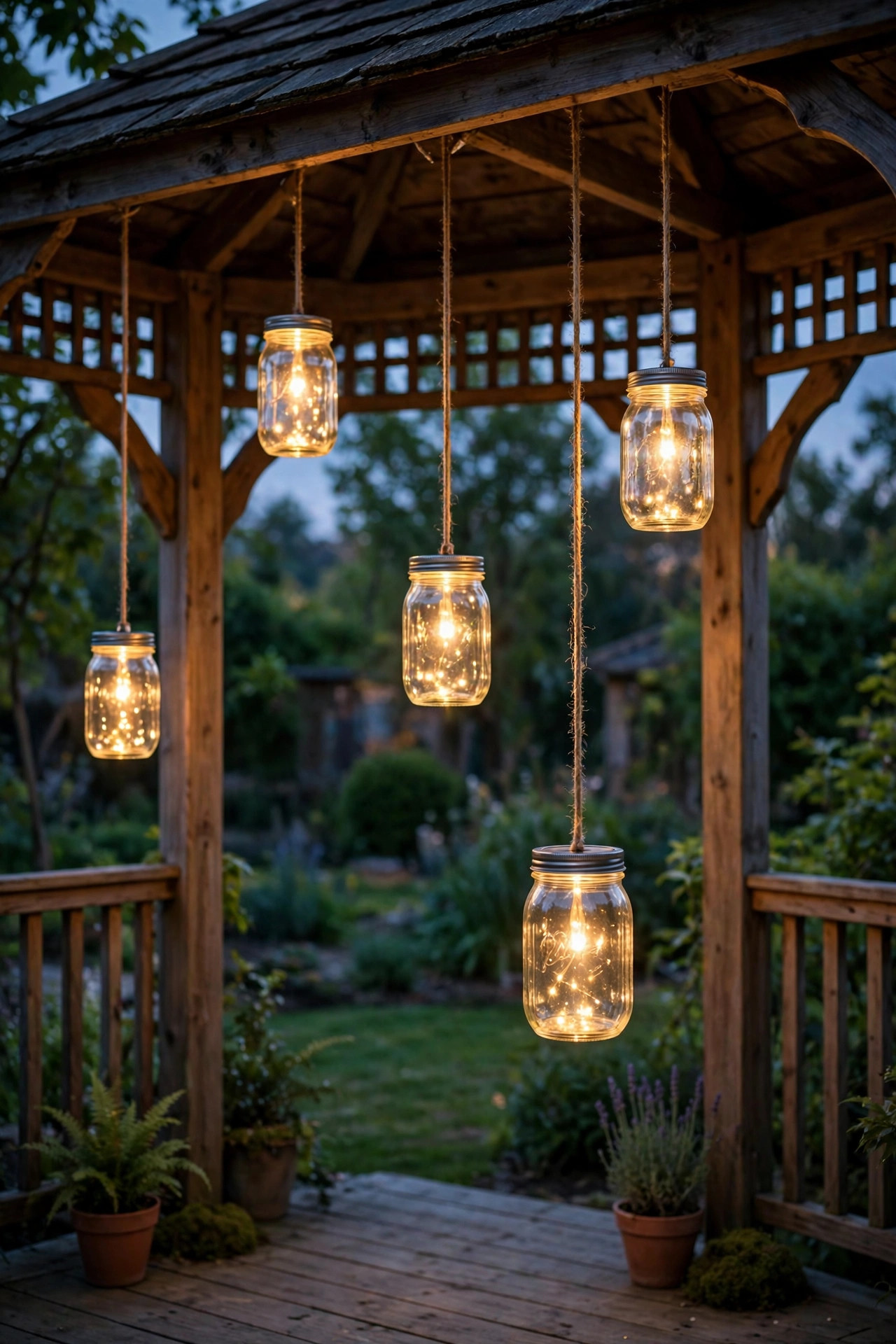
6. Hanging Solar Mason Jar Lights
Mason jar solar lights hit that sweet spot between crafty and classy, and they take about a minute each to hang. The solar lid screws onto any standard jar and hides a little LED string or a single bright diode under the panel; hang the jars from rafter hooks at staggered heights, or line them along the railing for a softer look. I use a mix of clear and frosted jars — frosted glass diffuses the light into a lantern-like glow, while clear jars show off the fairy-light coil inside. Group them in odd numbers, three or five together, and vary the heights by 4 to 6 inches so the arrangement feels collected rather than lined up. Because each jar is self-contained, a cloudy week just means one or two jars take the night off, not the whole gazebo. They are also the easiest layer to gift: I have sent home many a dinner guest holding a glowing jar. Keep spare lids on hand, since the lids are the part that eventually wears out.
Suggested budget range: $15 – $35.
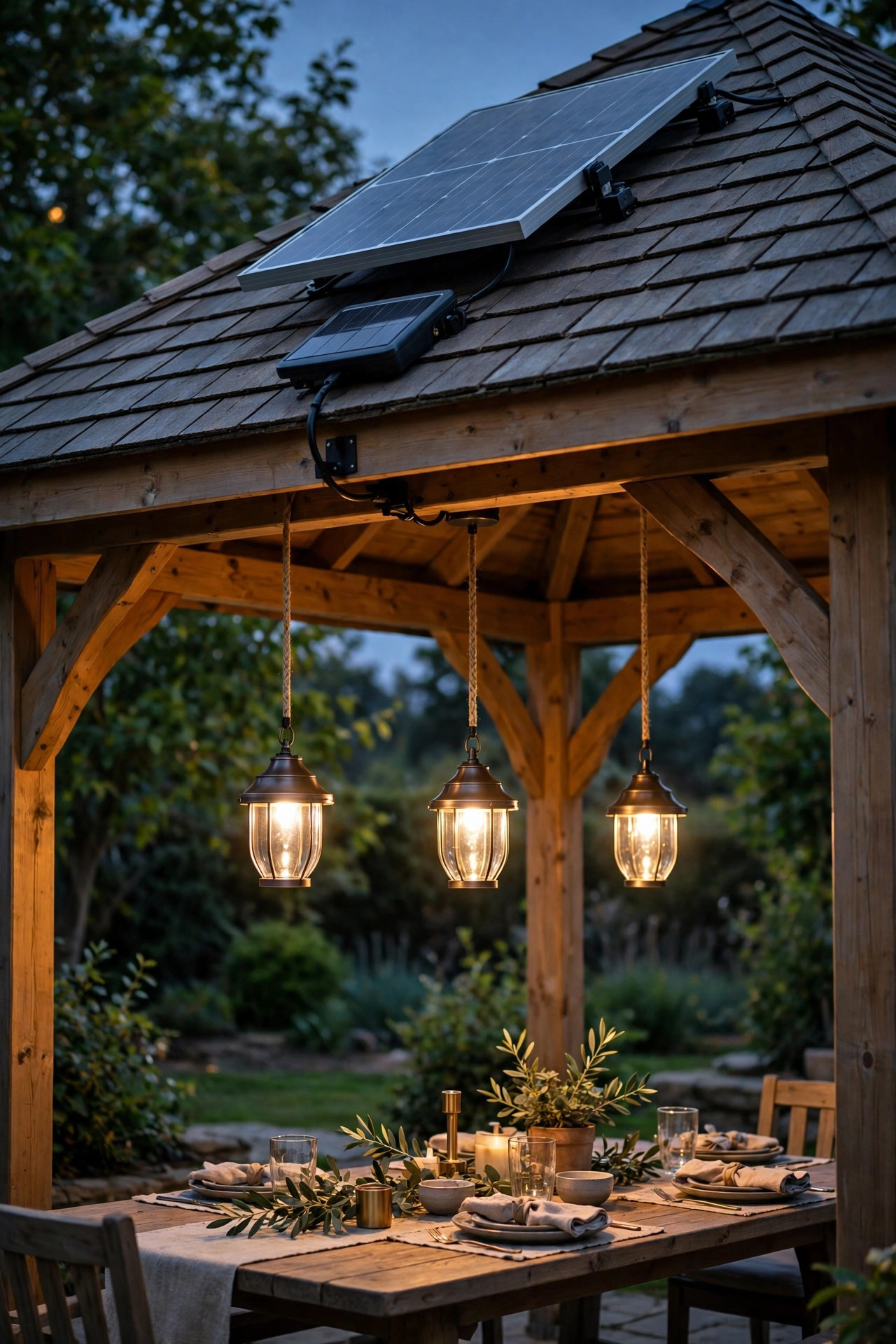
7. Solar Pendant Lights With a Remote Panel Over the Table
When we started eating dinner in the gazebo most nights, I wanted real light over the table — the kind you can read a menu by — without calling an electrician. Solar pendant lights with remote panels solved it. The panel mounts up on the roof where it gets full sun, and a thin cord feeds two or three pendant heads that hang over the table or seating area. Filament-style LED bulbs give you that warm Edison look at 2700K. Hang pendants so the shades sit 28 to 34 inches above the tabletop, and stagger the heights slightly if your set has three heads. Honestly, this is the layer that makes people ask who wired our gazebo. Two tips: mount the panel with the included bracket rather than adhesive so you can adjust the angle seasonally, and route the cord along a rafter with small cable clips so it disappears. Brightness is genuinely useful — many sets put out 150 to 300 lumens total — yet the whole thing still runs free on sunshine.
Suggested budget range: $30 – $75.
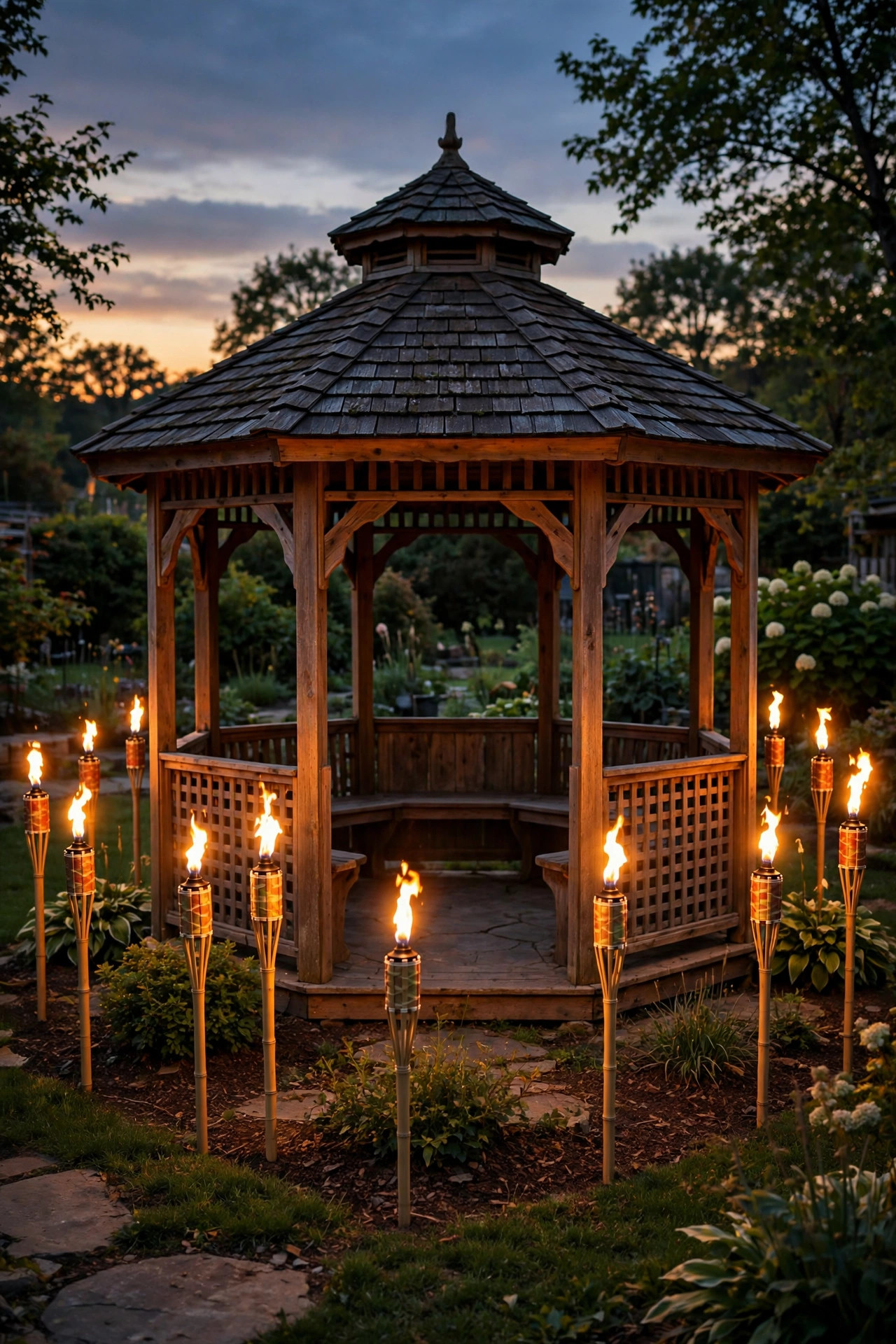
8. Flame-Effect Solar Tiki Torches Around the Perimeter
A circle of flame-effect solar torches around the gazebo makes the whole structure feel like a destination instead of a shed with chairs. These stake lights flicker with a dancing LED flame — no oil, no open fire, nothing to refill — and the effect from the house is pure resort. I push the stakes in 2 to 3 feet out from the posts, roughly in line with each corner, so the flicker frames the gazebo rather than competing with the light inside. Most torches stand about 2 feet tall once staked; taller 3-foot versions read better around bigger 12-foot gazebos. Check for an IP65 rating so sprinklers and summer storms are non-events, and choose the flicker mode over the solid mode — the movement is the whole point. One caution: even though the flame is fake, keep the stakes out of deep, dry mulch beds in fire season; the housing is plastic, and common sense is cheap. On a full charge they flicker 8 to 10 hours, easily outlasting the party.
Suggested budget range: $25 – $55.
9. Uplight the Roof: My Favorite Solar Gazebo Lighting Ideas Trick
Here is the trick designers use that nobody expects from solar: aim the light up. Two or three solar spotlights staked in the planting beds around your gazebo, angled up at the roofline, wash the underside of the roof and the tops of the posts with soft reflected light. The gazebo glows like a lantern from across the yard, and because the light bounces, there is no glare in anyone's eyes. Adjustable heads matter here — you want a fairly narrow beam tilted about 45 degrees, close enough to graze the structure rather than flood the lawn. Spotlights with separate panels on short cords are easiest to position, since the light can sit in shade as long as the panel reaches sun. Warm-white spots keep the mood consistent with your other layers. I angle one at each of the two front posts and let the roof do the rest. It is also brilliant security dressing: a softly lit structure looks occupied. Expect 50 to 200 lumens per spot, and wipe the lenses when you mow — grass clippings are relentless.
Suggested budget range: $20 – $45.

10. Solar Step Lights for the Gazebo Entrance
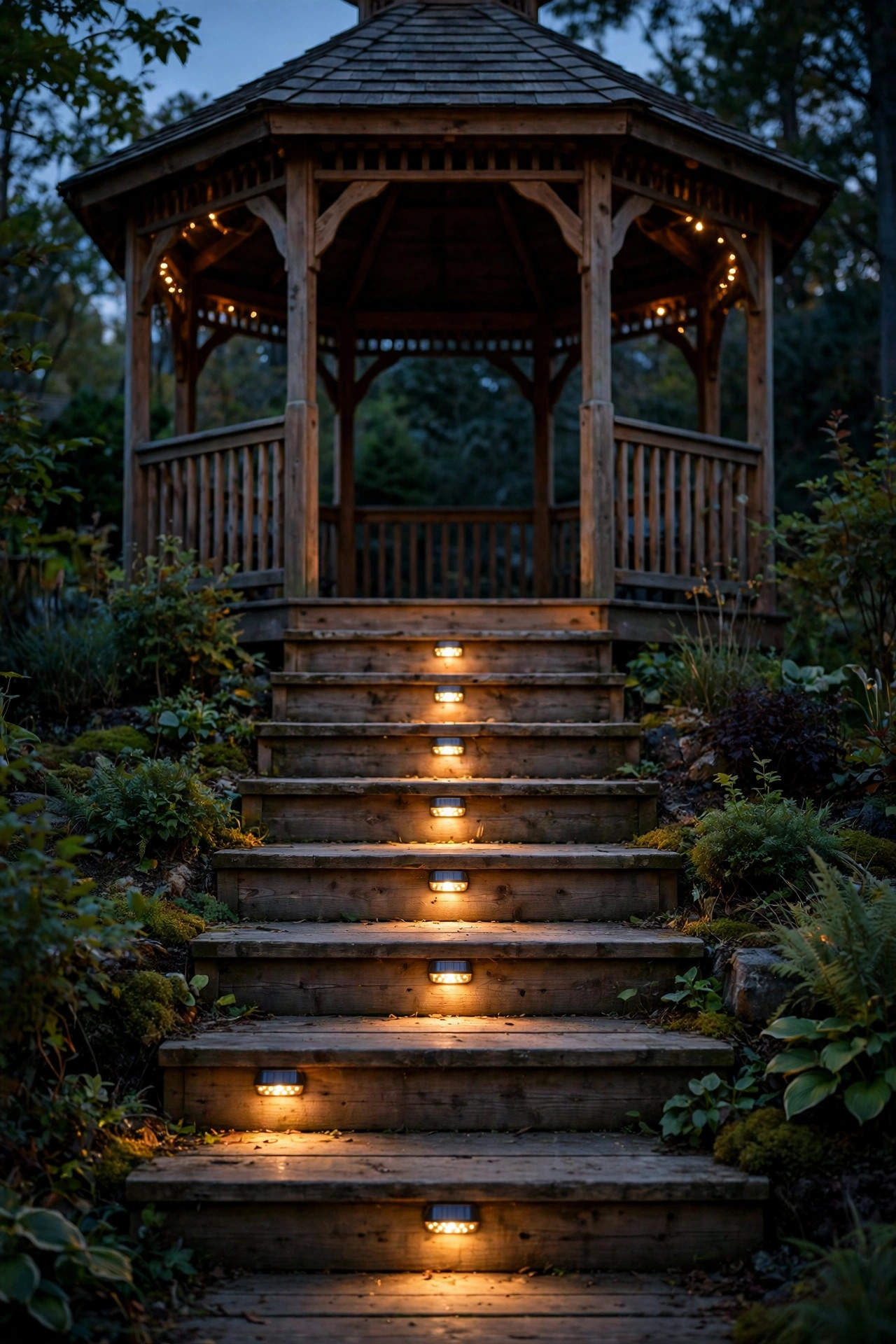
Every gazebo has that one step, threshold, or deck edge that somebody eventually trips on in the dark. Solar step lights fix it for the price of a pizza. These little pucks and wedges mount with two screws or outdoor tape on the riser of the step, the rim of the deck, or the gazebo's raised floor edge, and they throw a small, focused pool of light exactly where feet land. I put one on each step up into ours, plus two flanking the entrance, and the difference in confidence when carrying a tray at night is honestly huge. Choose downward-aimed styles so the light stays on the ground instead of shining into eyes. Solar disks that sit flush in the decking work too, though I find riser-mounted lights stay cleaner and charge better. They are small, so manage expectations — this is guidance light, not reading light — but as the safety layer of your setup, nothing else earns its keep like these do. Replace the rechargeable batteries every couple of years and they will keep marching on.
Suggested budget range: $15 – $35.
11. A Solar Net Light for Privacy on One Side
If one side of your gazebo faces the neighbors — or the road, or just a view you'd rather not study — a solar net light or curtain light gives you privacy and glow in a single move. These panels of gridded LEDs hang from the beam like a shimmering backdrop, typically 5 to 10 feet wide, with the solar panel clipped outside the roofline where it can drink up sun all day. I hang ours on the west side, where it also softens the late-afternoon glare at dinner time. The effect at night is a wall of soft stars behind the seating area, and it makes the inside of the gazebo feel like a room. Practical notes: measure your beam-to-rail distance before ordering, since drop lengths vary, and secure the bottom corners with small hooks so the panel doesn't billow into your seating on breezy nights. Twinkle and fade modes are fun, but the steady warm-white setting is the one we live with daily. One panel is usually enough — more than one side starts to feel like a stage set.
Suggested budget range: $18 – $40.

12. Solar Globe String Lights for a Softer Glow
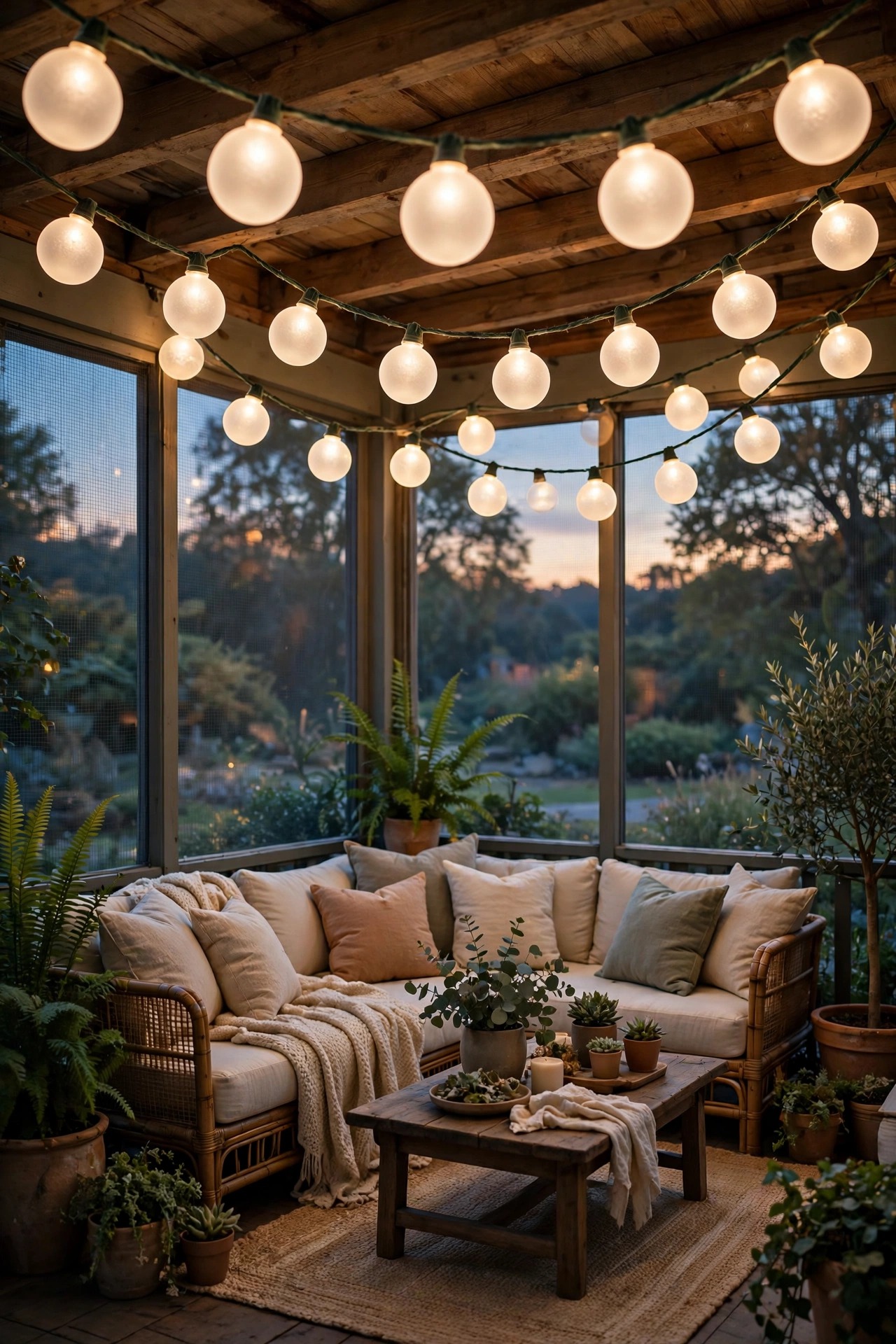
Globe string lights are the softer-spoken cousins of café bulbs: milky orbs, usually 2 to 3 inches across, that glow like little moons strung between the rafters. Where filament-style strands sparkle, globes diffuse, so the light feels calmer and more even — lovely for a gazebo that doubles as your morning coffee and evening reading spot. Solar globe strands come in lengths from 15 to 35 feet, with the panel on a stake you can park in the sunniest bed nearby. I run a single strand around the inside perimeter of the roof rather than crisscrossing, letting the round shades trace the gazebo's shape. Keep the spacing honest: if the strand sags between hooks, add a midpoint hook every 5 to 6 feet so the orbs hang in a tidy rhythm. Shatterproof plastic globes are the right call outdoors; glass versions exist, but one hailstorm will change your mind. Match the warm-white tone to your other layers, around 2700K to 3000K, so the whole structure reads as one design instead of three competing purchases.
Suggested budget range: $28 – $65.
13. A Solar Lantern Cluster on the Table
Do not underestimate the humble tabletop. A cluster of solar lanterns or flameless solar candles in the middle of the gazebo table puts warm light exactly where faces and food are, and it is the layer guests compliment most. My formula: three pieces at three heights — a taller lantern around 12 inches, a medium one, and a low candle cluster — grouped on a tray or a wooden board so the arrangement moves as one. Solar lanterns charge on the table all day if your roof is open, but under a solid roof I set mine on the railing in the morning sun and bring them in at dusk; thirty seconds, and they burn all evening. Frosted and rattan-style shades throw the prettiest patterns. Because this layer is portable, it moonlights everywhere — down the porch steps for a party, or inside during a power outage. Keep the look uncluttered: one strong cluster beats six singles scattered around. And choose flameless always for anything near napkins, table runners, or curious kids. Real candlelight is lovely; real candles plus a breeze plus paper napkins is a story nobody wants.
Suggested budget range: $15 – $38.

14. A Remote-Panel Downlight Kit for Shaded Gazebos
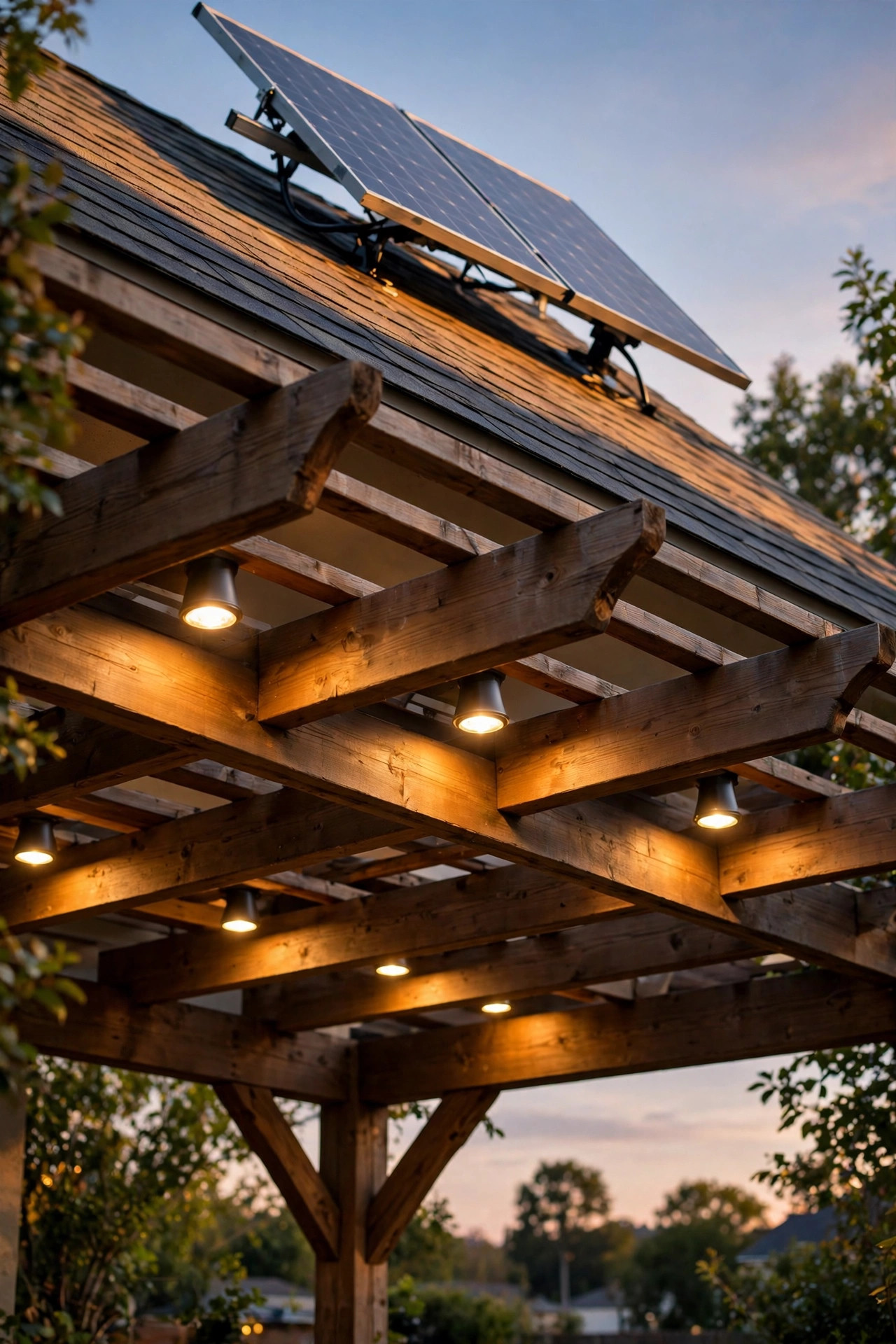
Shade is the number-one reason people tell me solar "doesn't work," and this is the setup that proves them wrong. A downlight kit pairs two to four small ceiling heads with one generous solar panel on a long cord — often 15 feet or more — so the panel lives on the sunny peak of the roof, or even on a nearby fence, while the lights work under your shaded ceiling. I mounted our panel on the south slope with the included screws and ran the cord down the center post; by dinner the heads pour clean, bright light over the whole seating area. This is the most "real light" solar gets: many kits reach 300 to 600 lumens combined, enough for games and grilling prep. Installation takes under an hour with a drill and a ladder. If your gazebo sits under mature trees, this kit — not a bag of cheap stakes — is where your money belongs. Pair it with moodier layers like fairy lights, and you have both brightness and atmosphere covered, still without a single inch of extension cord.
Suggested budget range: $40 – $95.
15. Color-Changing Solar Lights for Party Nights
Most nights our gazebo glows warm white and looks like a magazine. But for birthdays, the Fourth of July, and grandkid visits, color-changing solar lights earn their place. RGB solar strands, lanterns, and spotlights come with a small remote that flips between colors and modes — steady red for a cookout theme, soft purple for Halloween, a slow rainbow fade for a party. The trick is discipline: buy color lights that also do a true warm white, so the everyday look stays classy and the color is a costume the gazebo wears a few nights a year. I keep one color-capable layer — a single strand — and leave the rest of my layers warm, which keeps the setup flexible without risking a permanent carnival. Battery life drops a bit on the animated modes, so for a long party night, start them at full charge at dusk. Storage tip: keep the little remotes in a labeled baggie inside the house; they are the easiest thing in the world to lose and the hardest to replace.
Suggested budget range: $22 – $50.

16. A Solar Motion-Sensor Light at the Entrance
Light you do not have to think about is a special kind of luxury. A solar motion-sensor light mounted on the gazebo's entry post stays dark until you walk up with your hands full, then washes the steps and doorway in bright light for 20 to 30 seconds. It is the welcome-home layer of the whole setup, and it makes the gazebo feel looked after even on nights you never sit in it. Mount it about 6 to 7 feet up on the post facing your usual approach path, and angle the sensor head so it catches movement 10 to 15 feet out. The panel is built in on most models, so pick the sunniest post. These lights sip power in standby, so even a mediocre charge carries them through weeks of triggers. I also love them for security: a structure that lights up when someone approaches looks occupied, which is half the battle. Match the finish to your post caps if you use them — black and bronze versions blend in nicely, and at this size the fixture all but disappears by day.
Suggested budget range: $16 – $35.

17. Layer It All Together: The Solar Gazebo Lighting Ideas Formula I Trust
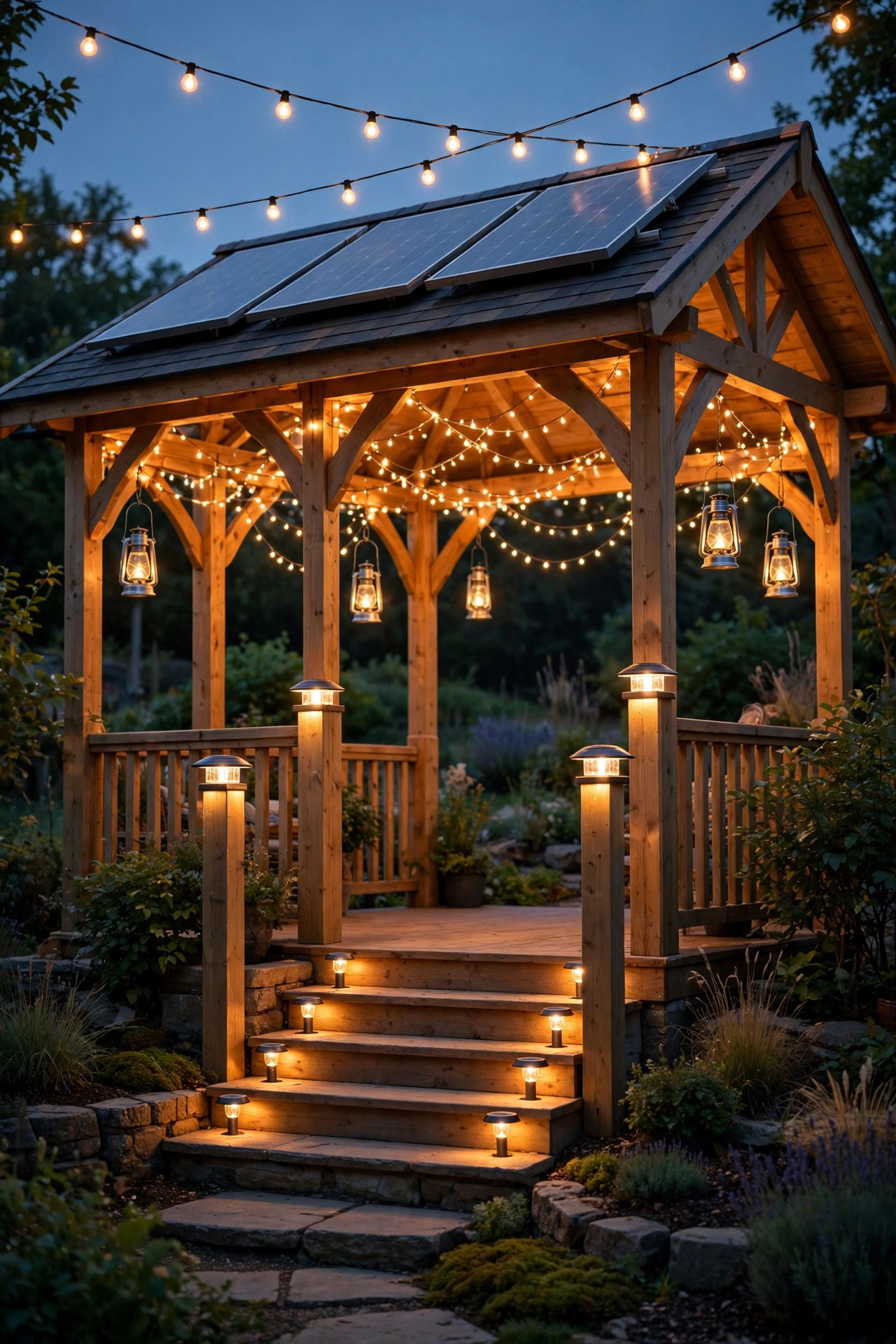
After two summers of experimenting, here is the exact recipe I would hand a friend. Overhead: one strand of string lights or a chandelier, for the canopy glow. Eye level: post caps plus a lantern cluster on the table, so faces are lit warmly and nobody is talking to a silhouette. Ground level: step lights at the entrance and a pair of flame torches or uplights outside, marking the way in and giving the structure its lantern-from-the-lawn moment. Every piece is dusk-to-dawn solar, so the whole scene builds itself each evening while you are still making dinner — no switches, no timers, no cord. Buy the overhead layer first, live with it a week, then add eye level, then ground. Spreading the purchases out keeps the budget gentle and shows you exactly where your gazebo still feels dark. One last habit worth stealing: every spring, wipe every panel and swap any tired rechargeable batteries, and your whole system runs like new. The gazebo that glows every single night is not the one with the most lights — it is the one with the right three layers.
Suggested budget range: $120 – $300.
Frequently Asked Questions
Will solar lights work if my gazebo sits in the shade?
Yes, with the right gear. Fixtures with remote panels — downlight kits, pendants, chandeliers — let you put the panel in full sun on the roof peak or a fence while the light itself works in the shade. For built-in-panel fixtures, choose the sunniest posts and railings, and expect shorter run times in deep shade. Even 4 to 6 hours of direct sun charges most quality lights for a full evening.
How bright are solar gazebo lights, really?
Decorative layers like fairy lights and post caps run 5 to 50 lumens — ambience only. String lights and lanterns land in the 50 to 150 range per fixture, and remote-panel downlight kits reach 300 to 600 lumens combined, which is genuinely useful task light. Layering three modest sources looks far brighter than one strong one, so judge the system, not the single fixture.
What color temperature looks best in a gazebo?
Warm white, 2700K to 3000K, every time. It flatters skin, wood, and food, and it reads as candlelight rather than office light. Avoid anything labeled daylight or over 4000K unless you want your gazebo to feel like a dentist's waiting room. Whatever you choose, keep every layer in the same range so the setup looks designed, not accumulated.
How long do solar gazebo lights stay on at night?
On a full day's charge, most run 6 to 10 hours — on at dusk and still glowing when you head to bed. Run times shrink in winter when days are short and the sun sits lower, and a run of cloudy days will dim the third night in a row. Lights with replaceable rechargeable batteries recover their stamina with a fresh set every 1 to 2 years.
Conclusion
Taking our gazebo off the cord was the single best upgrade we have made to the backyard — and it happened one solar fixture at a time. Start with the overhead layer, add warmth at eye level, and finish with safe footing at ground level, and these solar gazebo lighting ideas will carry your evenings from May cookouts to October cider nights without an electrician ever visiting. If the rest of your yard has the same outlet problem, my guide to backyard lighting with no outlet walks through the same tricks at whole-yard scale. Now go hang something glowing — sunset is coming, and your gazebo is ready for it.