Here is the situation so many of us are in: the front yard goes completely dark at night, but there is no outdoor outlet anywhere near it, and the quotes for trenching cable and hiring an electrician made your eyes water. I have been there. The good news is that front yard lighting without electricity — meaning solar and battery powered — has gotten genuinely good in the last few years. Warm color temperatures, real metal housings, and dusk-to-dawn sensors mean nobody will guess your yard runs on sunshine and AAs. The trick is the same one I use for wired lighting: layer it. A path layer for safety, an accent layer for your trees and beds, and a porch layer for that welcoming glow. Below are the 19 ideas I recommend most, with honest budgets and the placement tips that make the difference between "cute" and "wait, is that solar?"
1. Solar Path Lights: Where Front Yard Lighting Without Electricity Starts
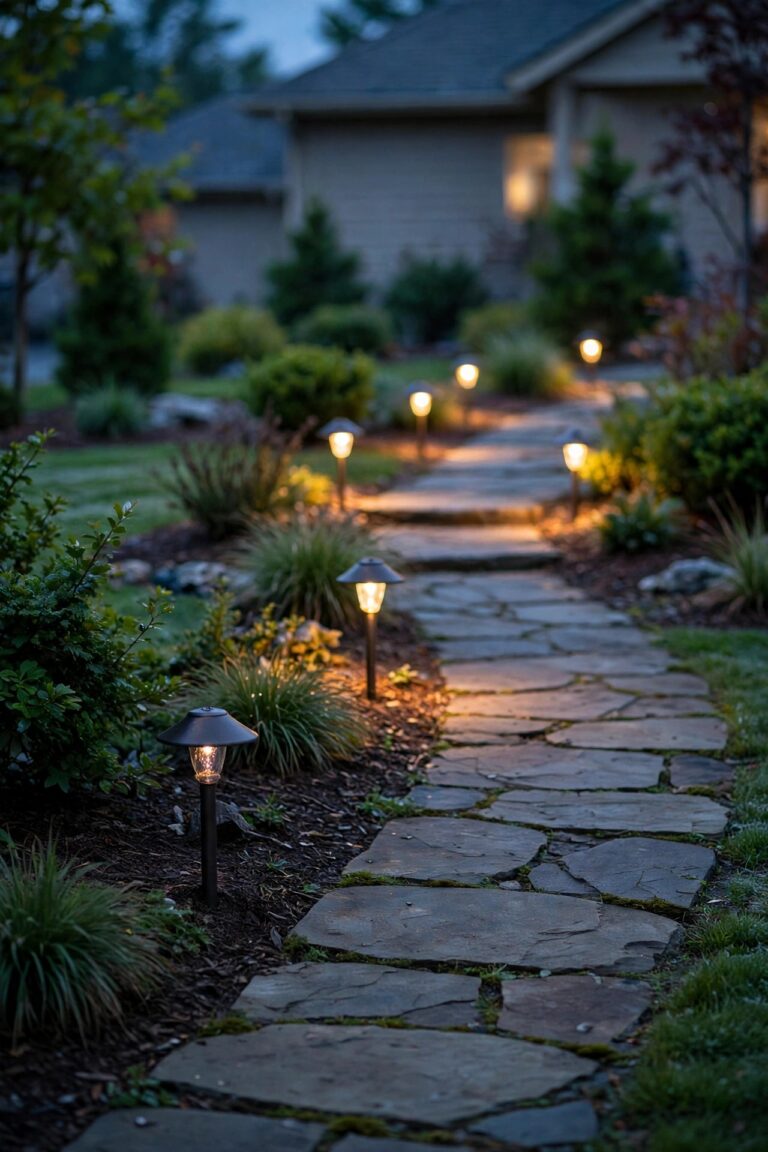
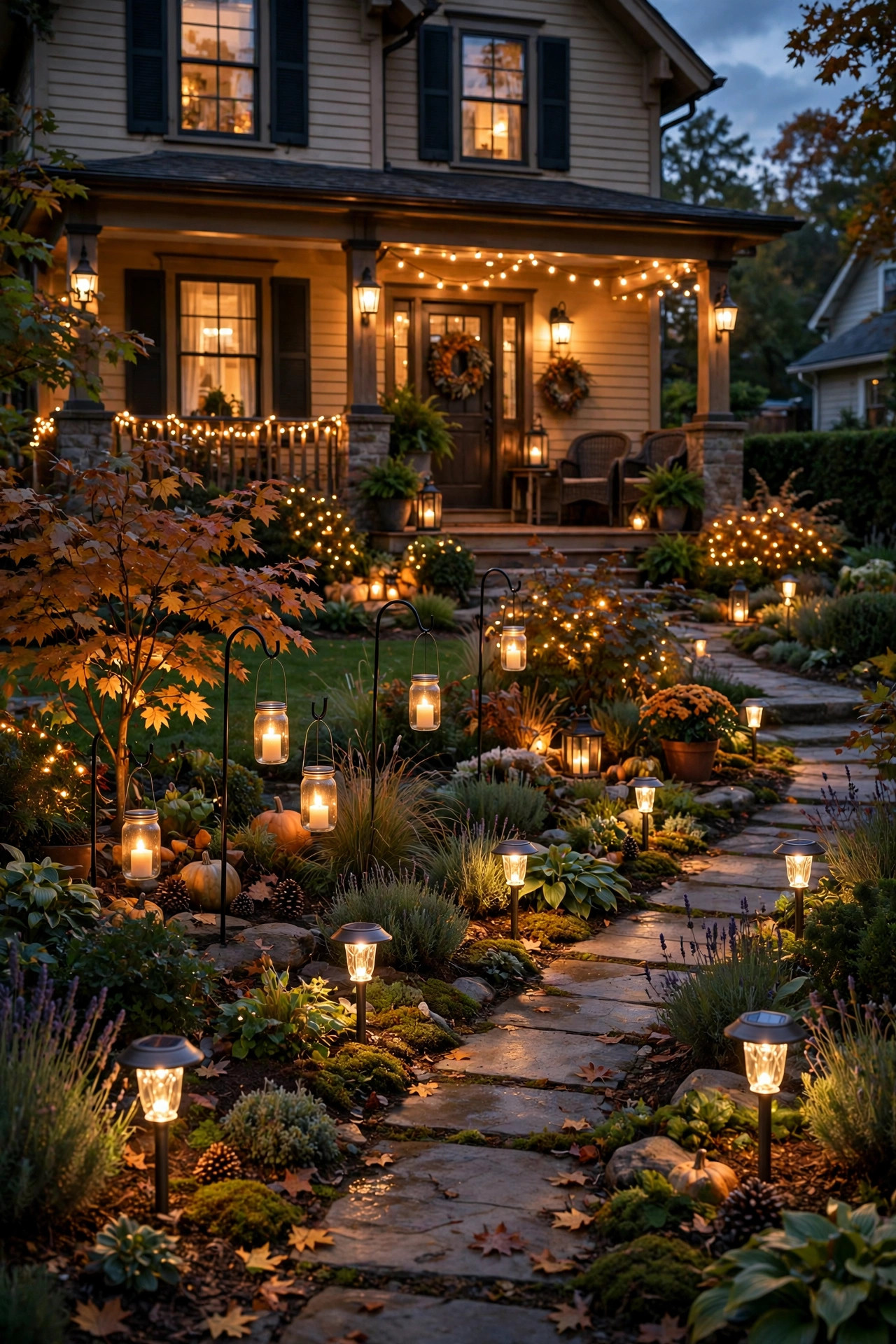
If you buy nothing else, buy these. Solar path lights are the backbone of any no-wiring front yard because the walkway is where guests actually walk, trip, and form their first impression. Skip the flimsy dollar-store stakes and look for lights rated 50 to 100 lumens with warm white output around 2700–3000K — that is what reads as "real" lighting rather than a blue-white glow. Space them 6 to 8 feet apart, staggered on alternating sides of the path instead of lined up like an airport runway. In my experience, staggering uses fewer lights and looks twice as designed. Pull the battery tab, push the stakes into softened soil (a watering can soak first saves bent stakes), and make sure the little panels are not shaded by the plants beside them. They need roughly 6 hours of decent sun to run all evening. My full solar path lights guide covers brightness ratings in more depth if you want to compare models before buying a set.
Suggested budget range: $25 – $60.

2. Uplight Your Trees With Solar Spotlights
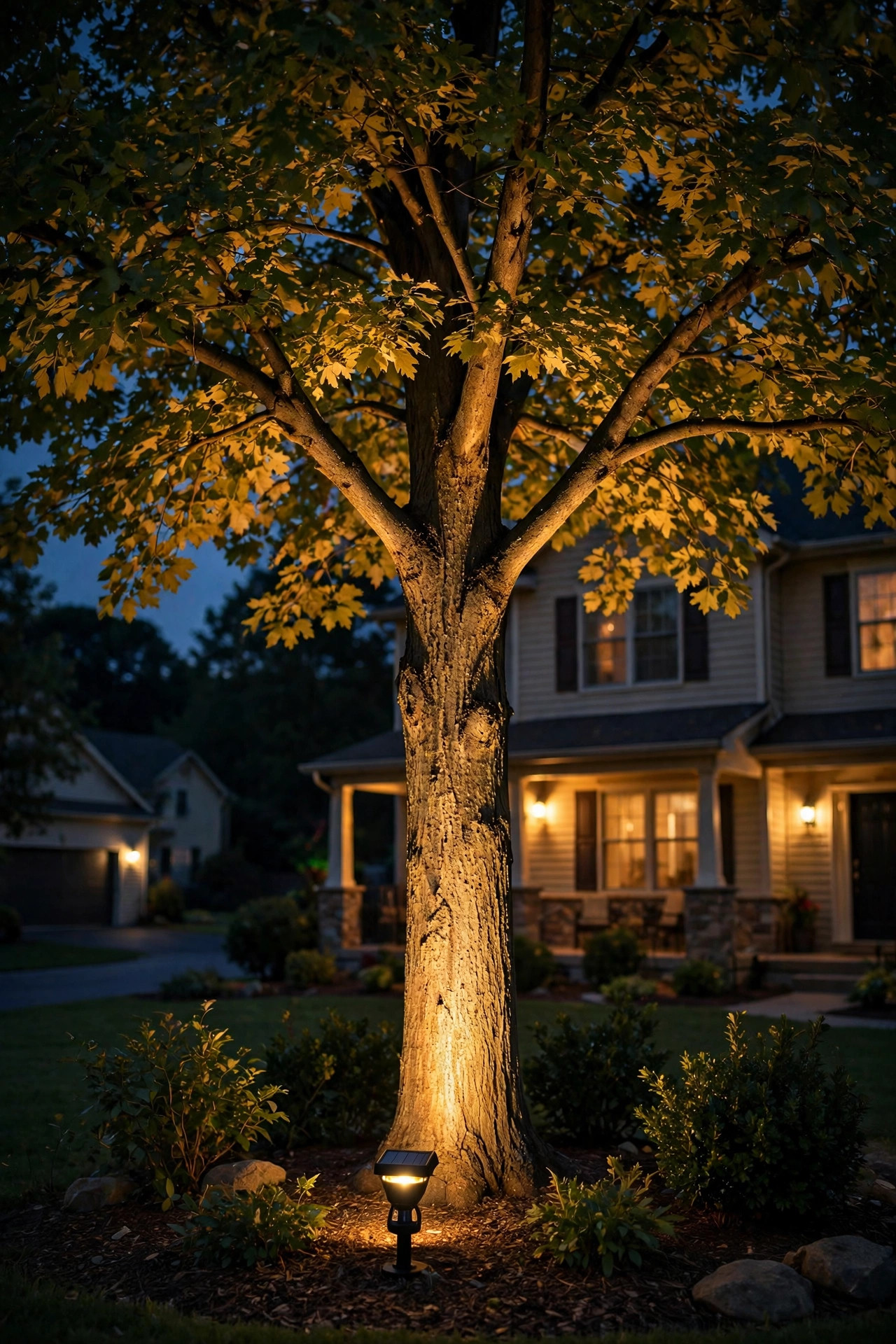
Every front yard has one tree or tall shrub doing all the architectural work, and a solar spotlight aimed up into the canopy makes it the star after dark. Choose spotlights in the 100 to 200 lumen range with an adjustable head, and stake them 1 to 2 feet from the trunk, angled up at roughly 30 to 45 degrees so the light grazes the bark and spreads into the branches. Here is the honest catch: a tree canopy shades its own spotlight. That is why I always recommend models with a separate solar panel on a short cable — you stake the light in the shade where you need it and plant the panel a few feet away in full sun. Two spotlights crossed from opposite sides look dramatically better than one straight-on beam. Expect the strongest show in summer when the batteries charge fully; in winter, think of it as a soft accent rather than a floodlight.
Suggested budget range: $30 – $75.
3. Set Battery Lanterns on the Porch Steps
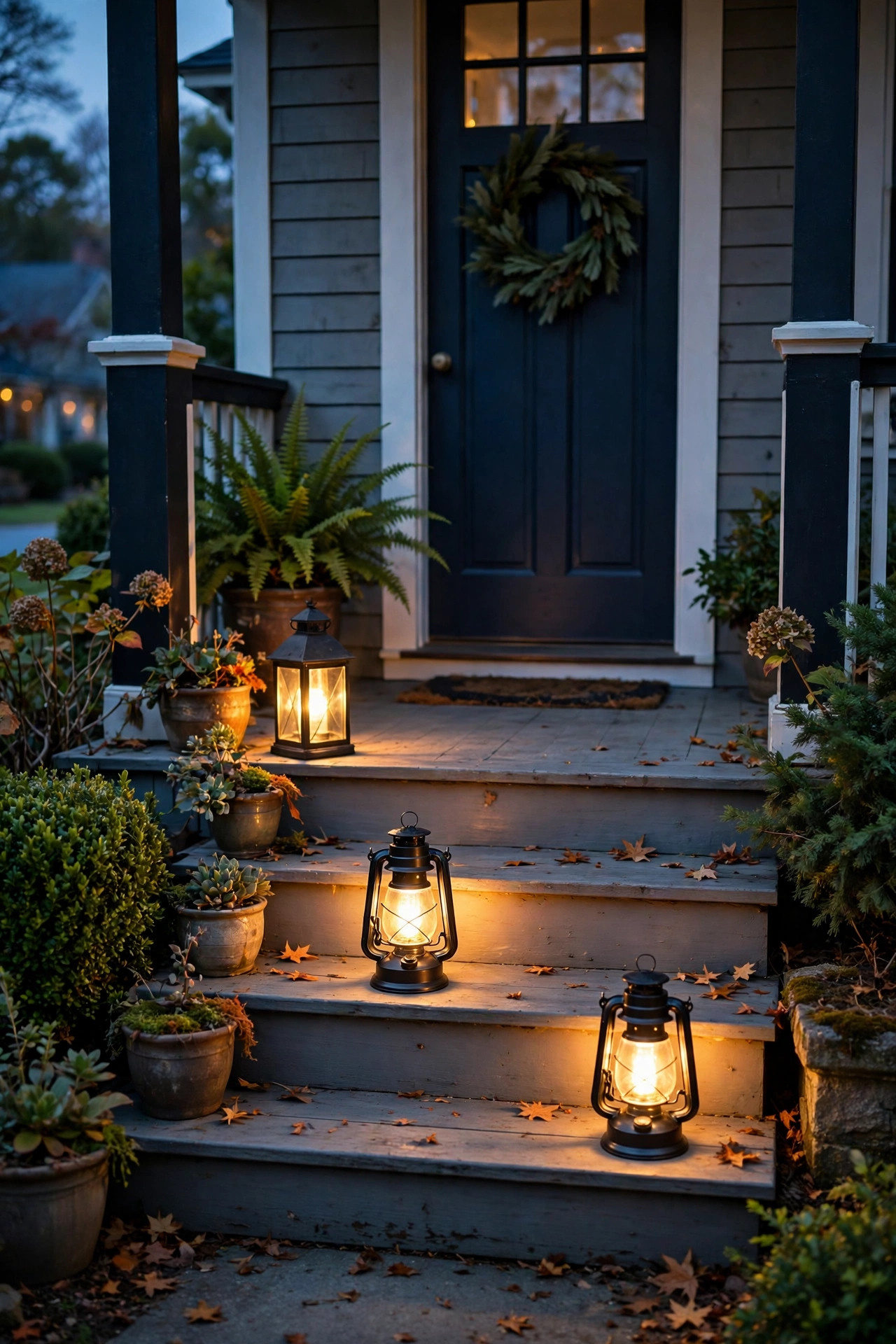
Porch steps are where I see the most stubbed toes and missed footing, and battery lanterns fix that with pure charm. Pick LED lanterns with a built-in timer — the kind that run 6 hours on and 18 hours off — so they light themselves every evening without you touching a switch. Set one on alternating sides of the steps, tucked against the riser rather than in the walking path, and let the warm flicker or steady glow (your choice; most have both modes) outline the climb. Battery lanterns are also my favorite renter-friendly trick because nothing is mounted, wired, or permanent. A set of good rechargeable AAs will carry a lantern for weeks on the timer setting. Just bring them under the porch roof or choose weather-sealed models, because most decorative lanterns are water-resistant, not waterproof, and a driving rain will find its way inside a cheap seam.
Suggested budget range: $20 – $50.
4. Drape Solar String Lights Along the Porch Rail
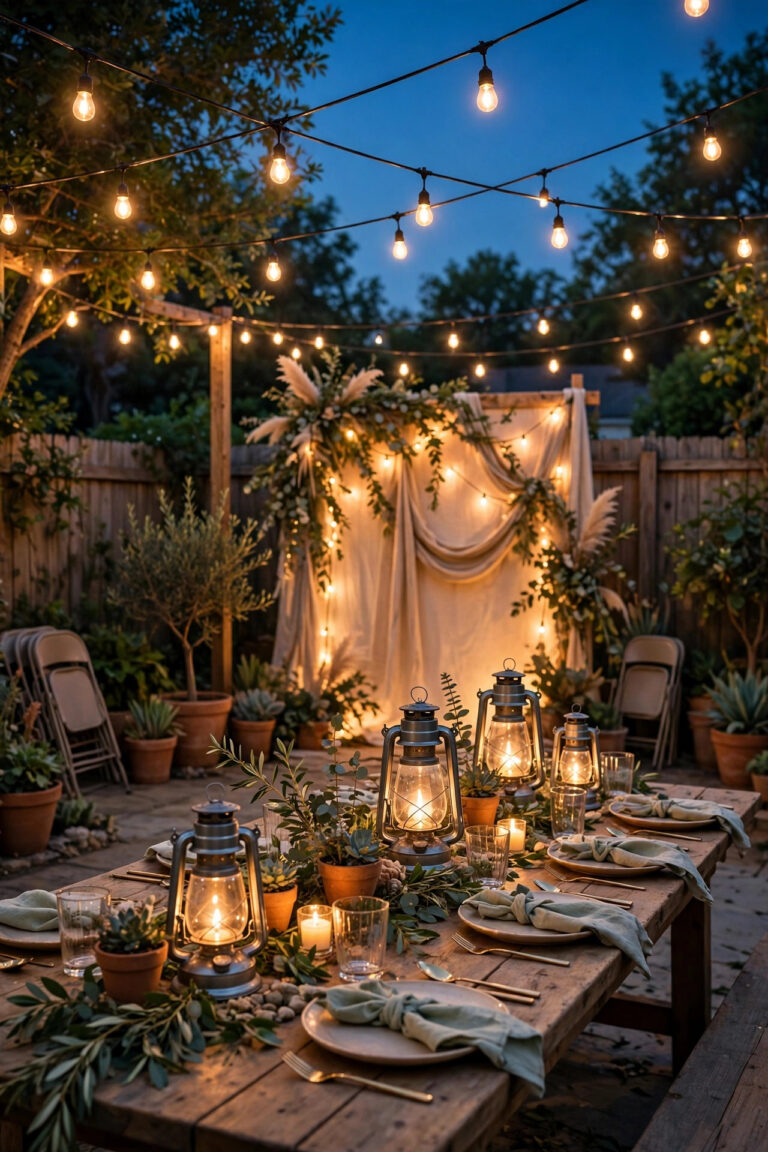
String lights are the fastest way to make a front porch feel like somewhere you actually live, and the solar versions mean no extension cord snaking to an outlet. The panel is the whole secret: clip it to the sunny end of the railing or a nearby post where it catches direct sun, then drape the strand in gentle swags along the rail, securing it every 2 to 3 feet with small clips or twist ties. Strands usually run 24 to 48 feet, which covers most porch rails with a little left to frame the steps. Warm white bulbs in the 2700K range match the rest of your lighting; the multicolor novelty sets are fun for holidays but read as party decor the rest of the year. I have collected my favorite ways to hang them in my solar string light ideas — the swag spacing tricks there work exactly the same out front.
Suggested budget range: $20 – $45.

5. Mount a Solar Motion-Sensor Flood Light Over the Driveway
This is the workhorse idea, and honestly the one neighbors ask me about most. A solar flood light with a motion sensor gives you real, security-grade brightness — look for 800 to 1,500 lumens and a sensor that sweeps about 120 degrees — without an electrician ever touching your garage. Mount the fixture 8 to 10 feet up over the driveway or garage door, angle the panel south and tilted up, and set the timer so the light stays on 20 to 30 seconds per trigger. It lights your way from car to door, discourages anyone wandering up your driveway at 2 a.m., and costs nothing to run. Because it only fires on motion, the battery easily lasts the night even in December. Choose an IP65 rating or better; this fixture lives fully exposed to weather, and the sensor lens is usually the first thing cheap models lose to sun damage.
Suggested budget range: $25 – $60.

6. Light Your House Numbers With a Solar Sign
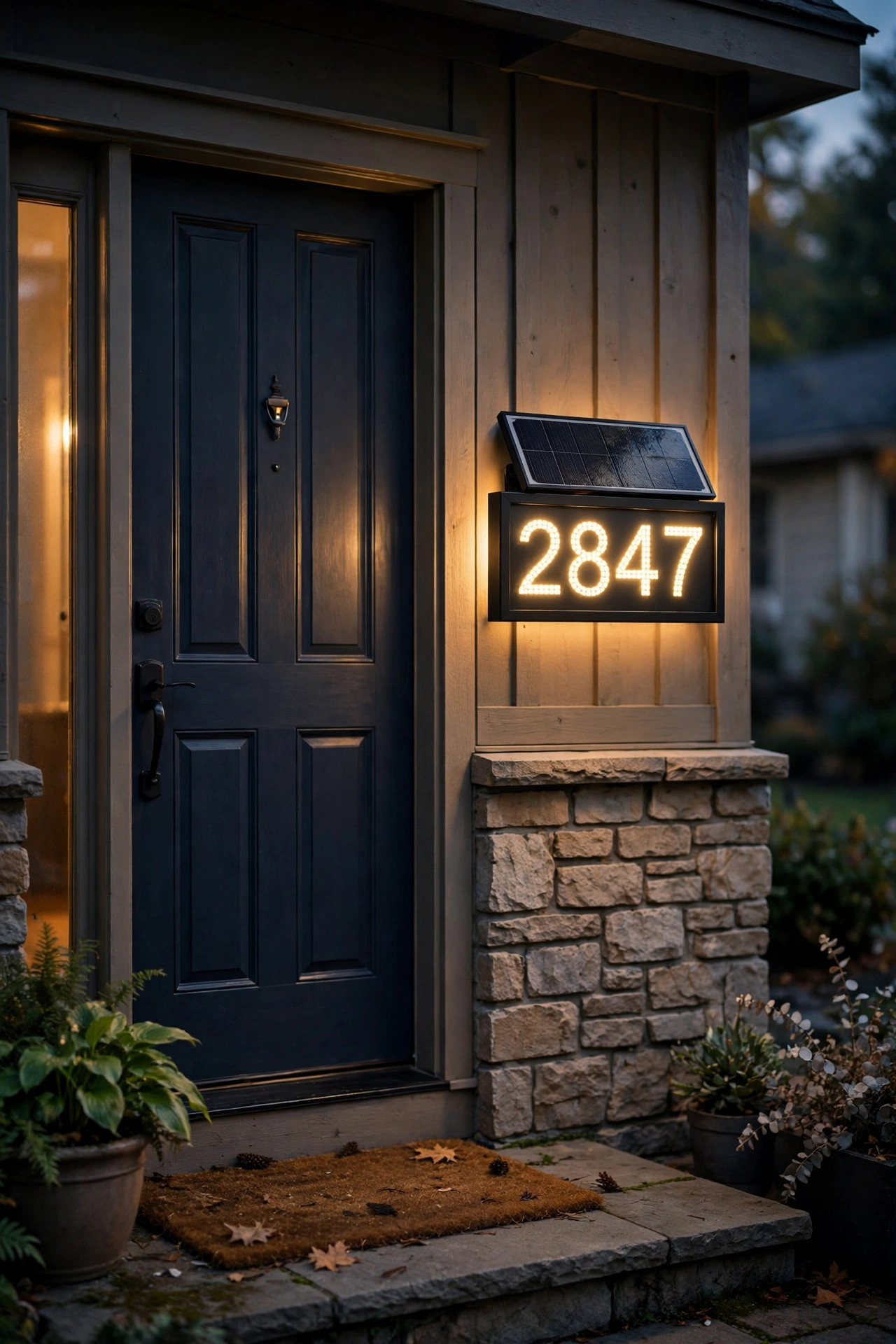
This one is small, cheap, and genuinely useful — delivery drivers, guests, and (heaven forbid) paramedics all need to read your address after dark. Solar house number signs stake into the bed beside your walk or mount on the wall by the door, charge all day, and glow with your address backlit in warm or cool white. Look for large, high-contrast digits at least 4 inches tall; tiny elegant numbers are invisible from a moving car. If your numbers mount on the house itself, there are also small solar spotlights that wash an existing plaque — position the panel where the porch roof does not shade it, which usually means a few inches to the sunny side. In my experience this is the single highest-value fifteen minutes in this whole list, and it makes the front of the house look quietly finished in a way people notice without knowing why.
Suggested budget range: $15 – $40.
7. Fill Porch Lanterns With Flameless LED Candles
If you love the look of candlelight but not the fire risk or the melted wax, flameless LED candles inside glass hurricane lanterns are your answer. The good ones have a realistic flicker, a warm 2200–2700K glow, and — this is the feature to insist on — a daily timer, so the whole porch lights itself at dusk. Group them in odd numbers: a trio of different heights on a step, a pair flanking the door, a cluster beside a bench. Because they are LEDs, they are safe near wreaths, dried arrangements, and doormats where a real flame would be reckless. I run mine on rechargeable batteries and swap them about once a month. One honest note: keep the lanterns under cover. Flameless candles are indoor souls, and even in a hurricane glass, wind-driven rain will corrode the battery contacts if they live fully exposed all season.
Suggested budget range: $18 – $45.

8. Tuck Low Solar Stakes Into the Flower Beds
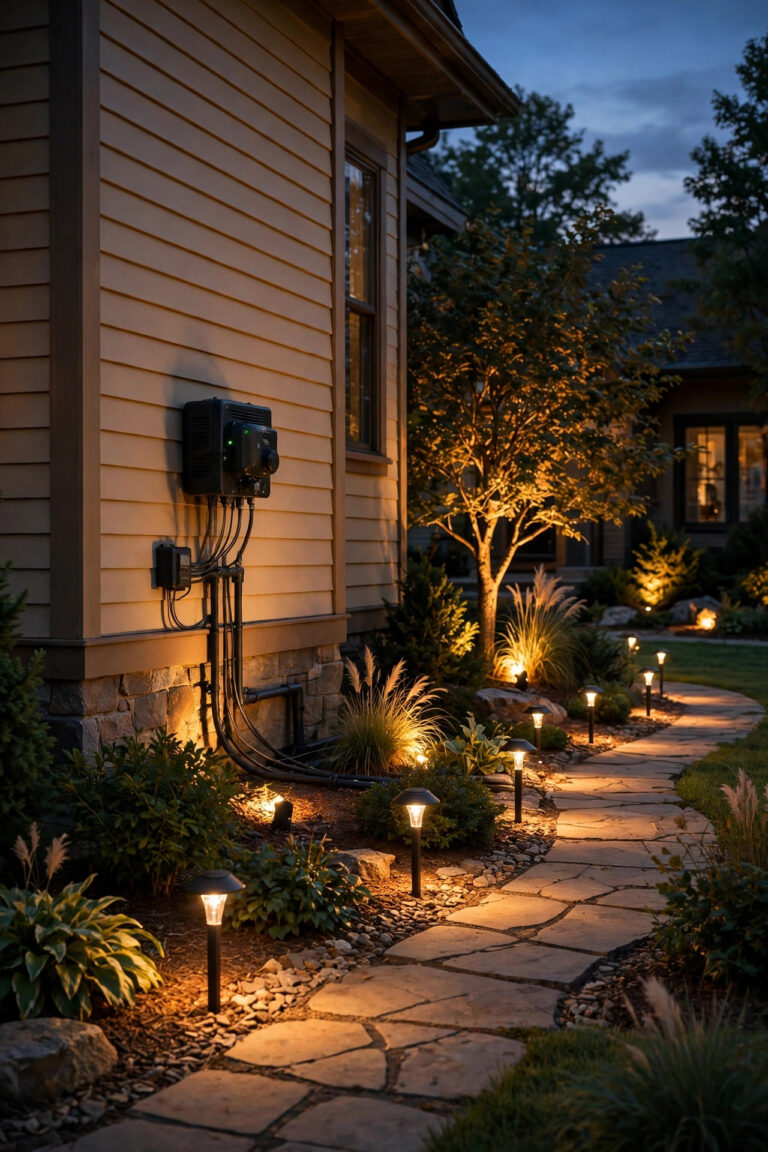
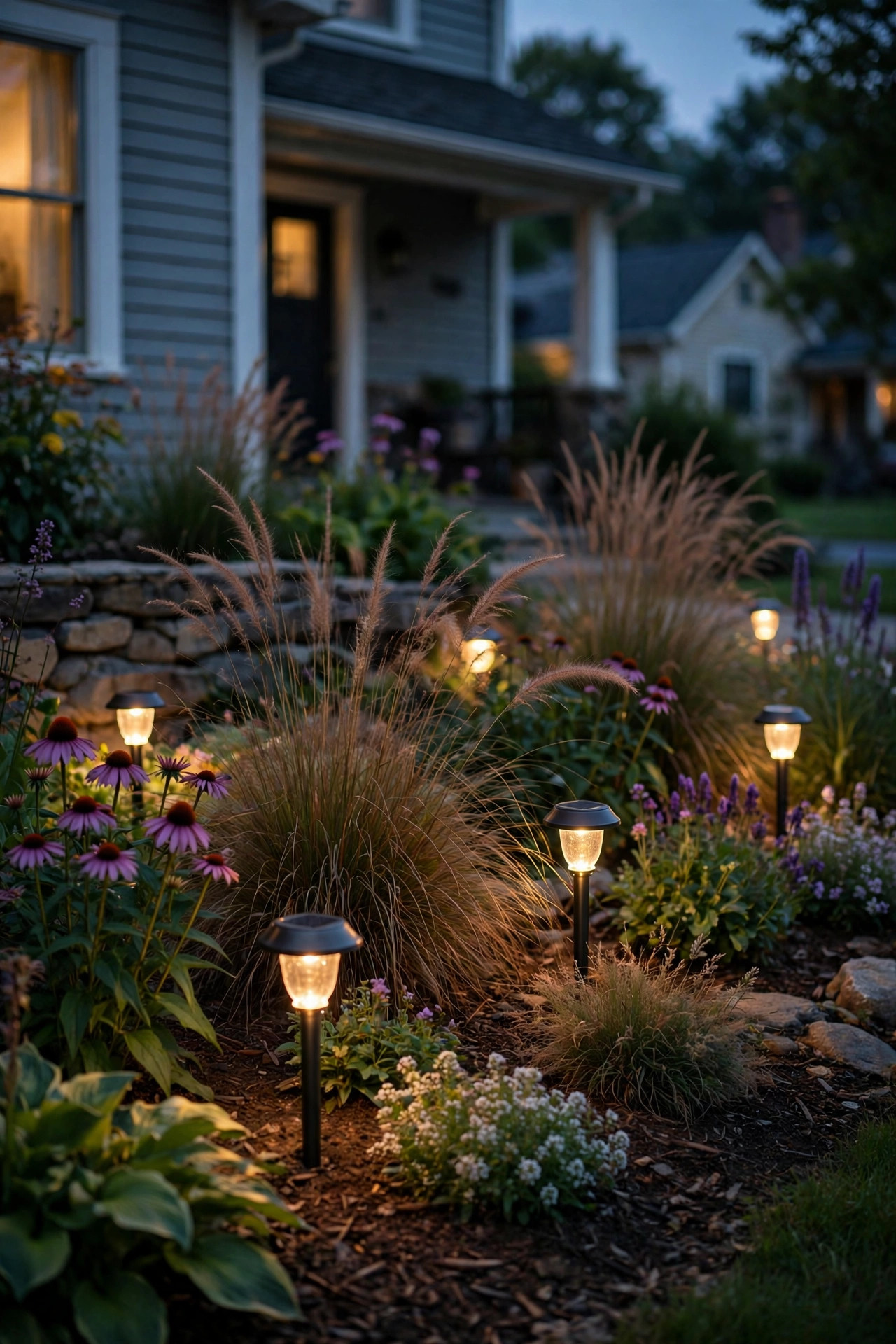
Path lights mark the walk; bed lights are what make the yard look landscaped after dark. Low solar stakes nestled among your plantings throw soft pools of light that show off texture — ornamental grasses, hostas, and mounding shrubs all look sculptural with light coming from inside the bed. Keep them low and let the plants do the talking: a fixture top around 12 to 16 inches tall disappears into the foliage by day. Space them irregularly, 4 to 6 feet apart, rather than in a soldier row, and angle any adjustable heads away from the street so drivers see glow, not glare. Because beds are often shaded by the very plants you are lighting, these stakes dim earlier in winter than anything else in the yard — I treat them as a fair-weather layer and never rely on them for safety lighting on steps or paths.
Suggested budget range: $20 – $50.
9. Weave Battery Fairy Lights Through the Front Hedge
A plain hedge or a row of boxy shrubs is secretly the best canvas in the front yard. Copper-wire fairy lights on a battery pack weave right through the branches — no clips needed, the wire just disappears — and turn the whole hedge into a soft sparkle that reads from the street like something out of a magazine. A 33-foot strand covers roughly 6 to 8 feet of hedge if you weave loosely, and the battery packs with built-in timers (6 hours on, 18 off) mean the show runs itself nightly. Tuck the battery pack inside the hedge in a small waterproof pouch or zip bag at the base; that is the one part rain can hurt. Use warm white only out front — cool white fairy lights look wintry in July. This is my go-to trick before guests come, because it takes twenty minutes and makes the whole facade feel dressed.
Suggested budget range: $12 – $30.

10. Flank the Front Door With Solar Sconces
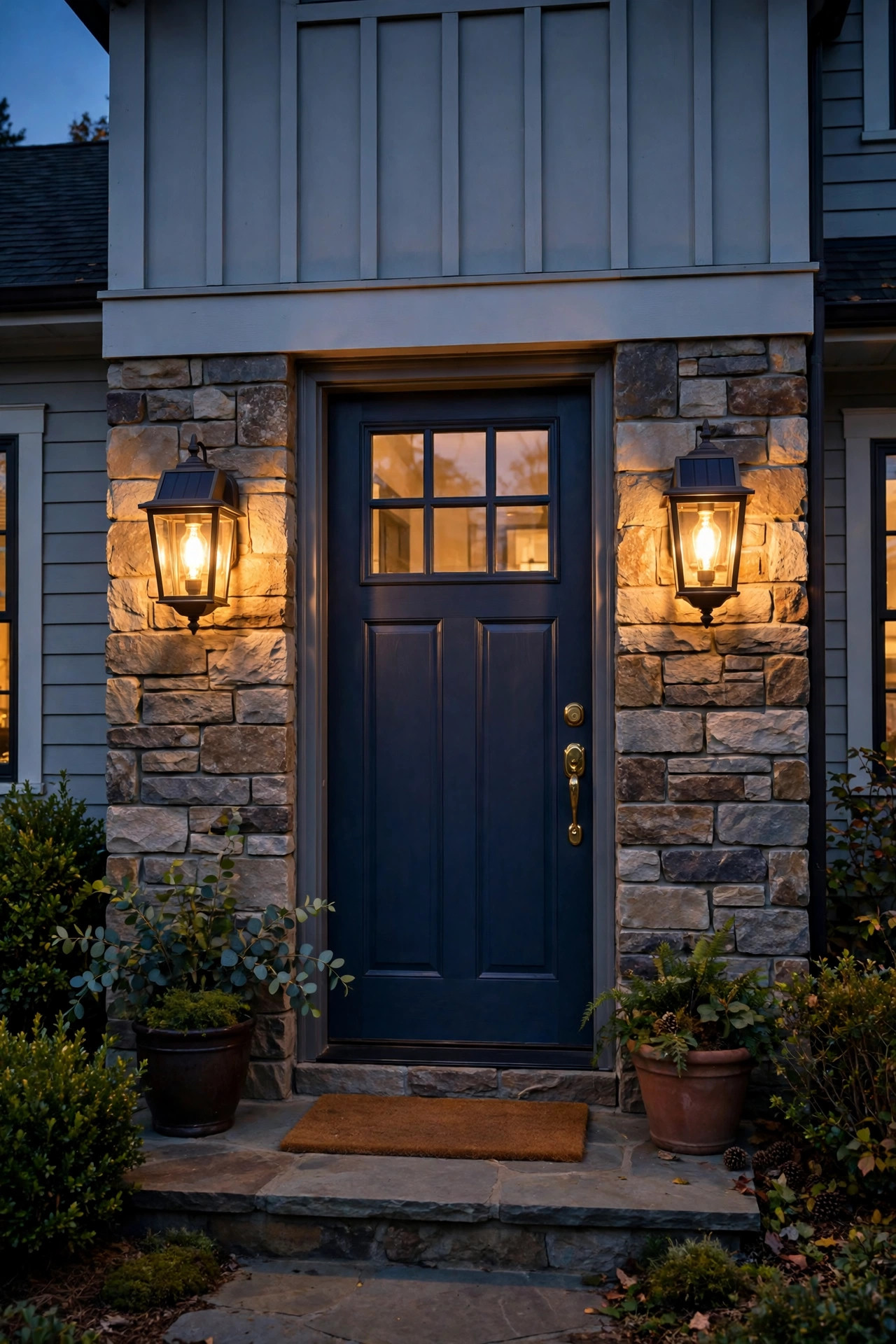
Nothing frames an entry like a pair of sconces, and solar versions have finally caught up in looks — real designs now, with seeded glass, matte black or bronze finishes, and warm filament-style LEDs. The panel sits on top of the fixture or on a short lead, so placement has one rule: at least a few hours of direct sun must reach that wall. A south- or west-facing door is perfect; a deeply shaded north entry under a porch roof is the one spot where I honestly steer people to the battery porch light in idea 15 instead. Mount the pair at the familiar 60 to 66 inches from the step to the center of the fixture, and 6 to 12 inches out from the door frame. Even at a modest 100 to 200 lumens each, the symmetry does the work — the doorway reads lit, welcoming, and intentional.
Suggested budget range: $30 – $70.
11. Set Solar Disk Lights Flush Along the Driveway Edge
Solar disk lights are the flat, puck-shaped fixtures that sit directly on the ground — and they solve two problems at once. First, gravel drives, mulch edges, and loose soil where stakes wobble: disks just sit there, stable. Second, mowing: there is nothing sticking up to hit, work around, or snap off, and the better models are rated to be driven over at the edge of a driveway. Set them 4 to 6 feet apart along the drive or the front walk where it meets the lawn, and the row of soft pools reads like the inset lighting at a nice hotel. Brightness is gentle, roughly 10 to 30 lumens each — this is guidance lighting, not illumination — so pair them with the flood light from idea 5 if your driveway is long or dark. Keep a brush handy: a 10-second sweep of dust and grass clippings off the little panels every week or two keeps them charging properly.
Suggested budget range: $25 – $55.

12. Add a Little Solar Light to the Mailbox
The mailbox is the first thing anyone sees from the street, and it is usually a black hole after sunset. A small solar light made for mailboxes — some clip over the top, some are little sign-style panels, and some are strands that wrap the post — gives the curb a friendly point of light and helps guests and delivery drivers find the right house on a dark street. My favorite version is a solar post wrap: a slim panel and a few warm LEDs spiraling down the mailbox post, echoing whatever you have done at the door. Whatever style you choose, make sure the numbers stay readable and nothing blocks the mail door swing. It is a ten-minute install, and in my experience it is the detail that makes the whole front yard feel deliberately lit rather than accidentally lit.
Suggested budget range: $12 – $35.

13. Hang a Battery-Lit Wreath on the Front Door
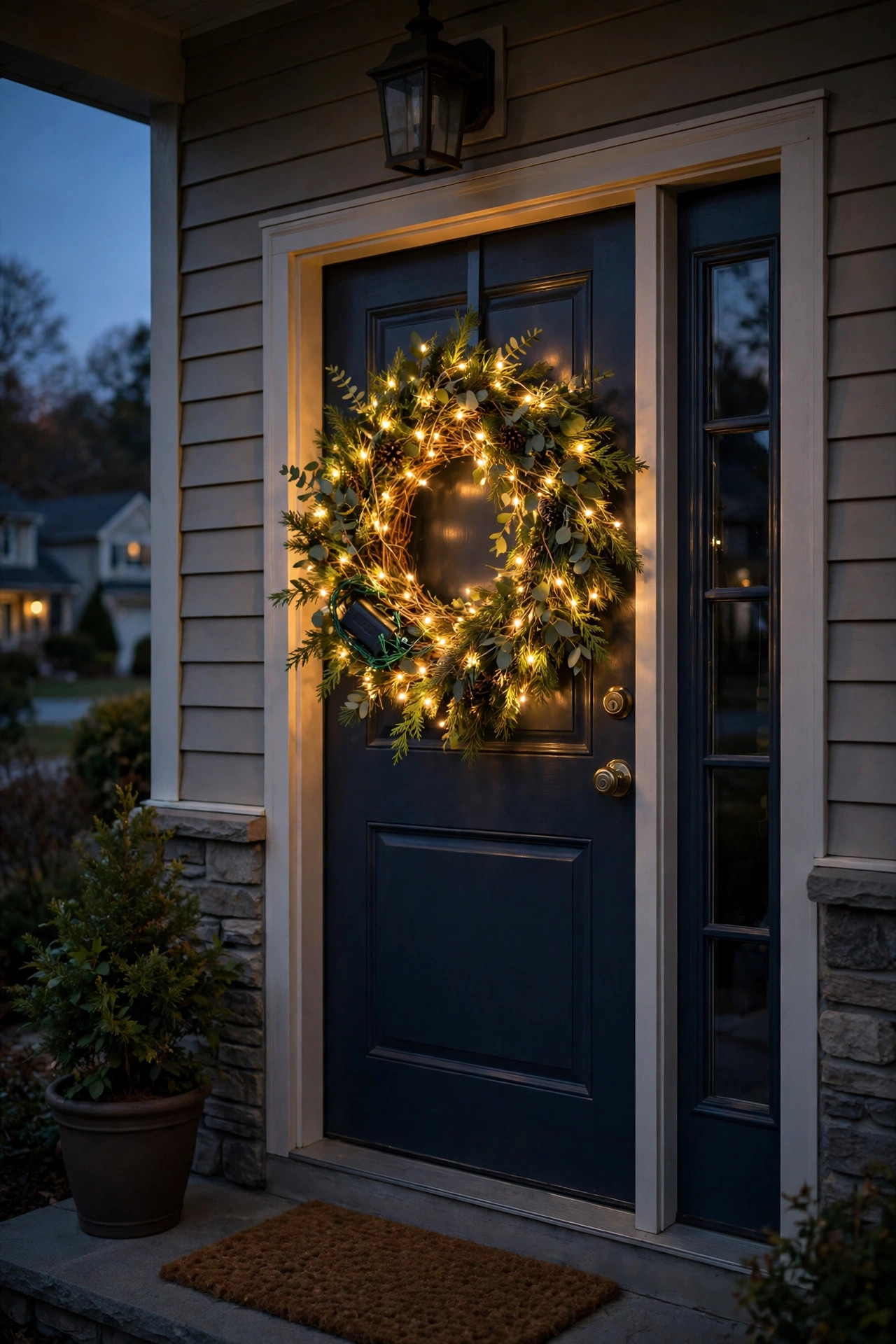
A wreath should not disappear at 6 p.m. — it is half your door's personality. Weave a short strand of battery micro-lights (the 10- to 20-light mini strands are made for exactly this) through the greenery, hide the little battery pack behind the wreath at the bottom, and set the timer so it glows through the evening hours. Or start with a pre-lit battery wreath and skip the weaving entirely. The beauty of the battery version is seasonality: the same trick dresses a fall magnolia wreath, a Christmas evergreen, and a spring floral without an outlet or a cord dangling across the door. One caution from experience: use a wreath hanger rated for the weight, because batteries add a little heft, and choose outdoor-rated micro-lights — the indoor craft strands corrode at the first foggy week.
Suggested budget range: $15 – $40.
14. Hide Solar Rock Lights in the Beds and Borders
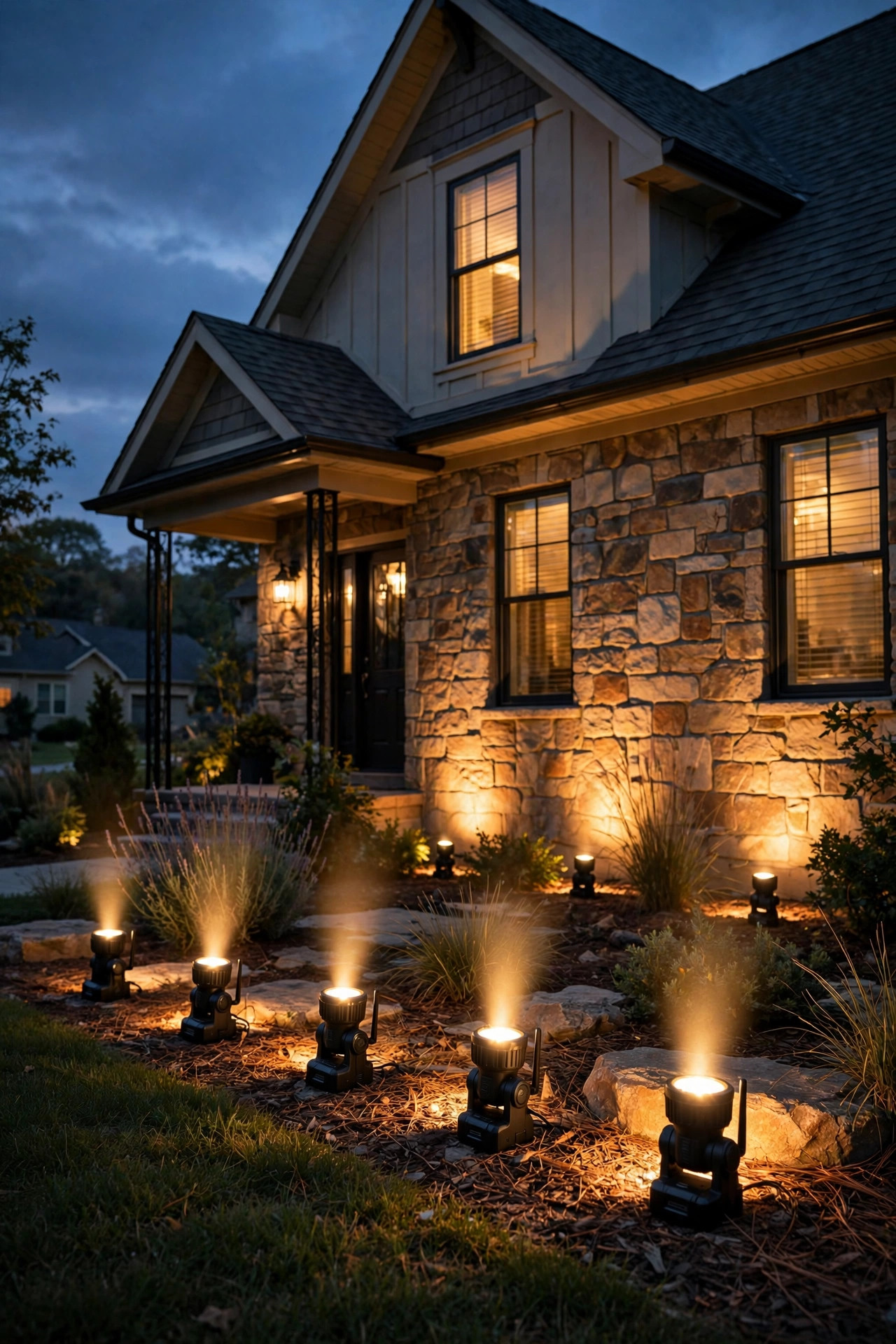
If visible fixtures bother you, solar rock lights are the stealth option: stone-look housings that vanish into mulch and gravel by day, then switch on at dusk as small, aimable spotlights. I use them at the base of boulders (fitting, I know), ornamental grasses, and the corner plantings that anchor the front beds. Aim them up and slightly across the plant rather than straight on — side light creates shadows and texture, front light flattens everything. Two rocks crossed on one feature plant look professionally done. The trade-off is output: most rock lights land in the 30 to 80 lumen range, so think accent, not security. And because the panel is part of the rock, placement is a compromise between where the light looks good and where the sun actually lands — test for a night before you commit to the arrangement.
Suggested budget range: $22 – $55.

15. Stick a Battery Motion-Sensor Light by the Door
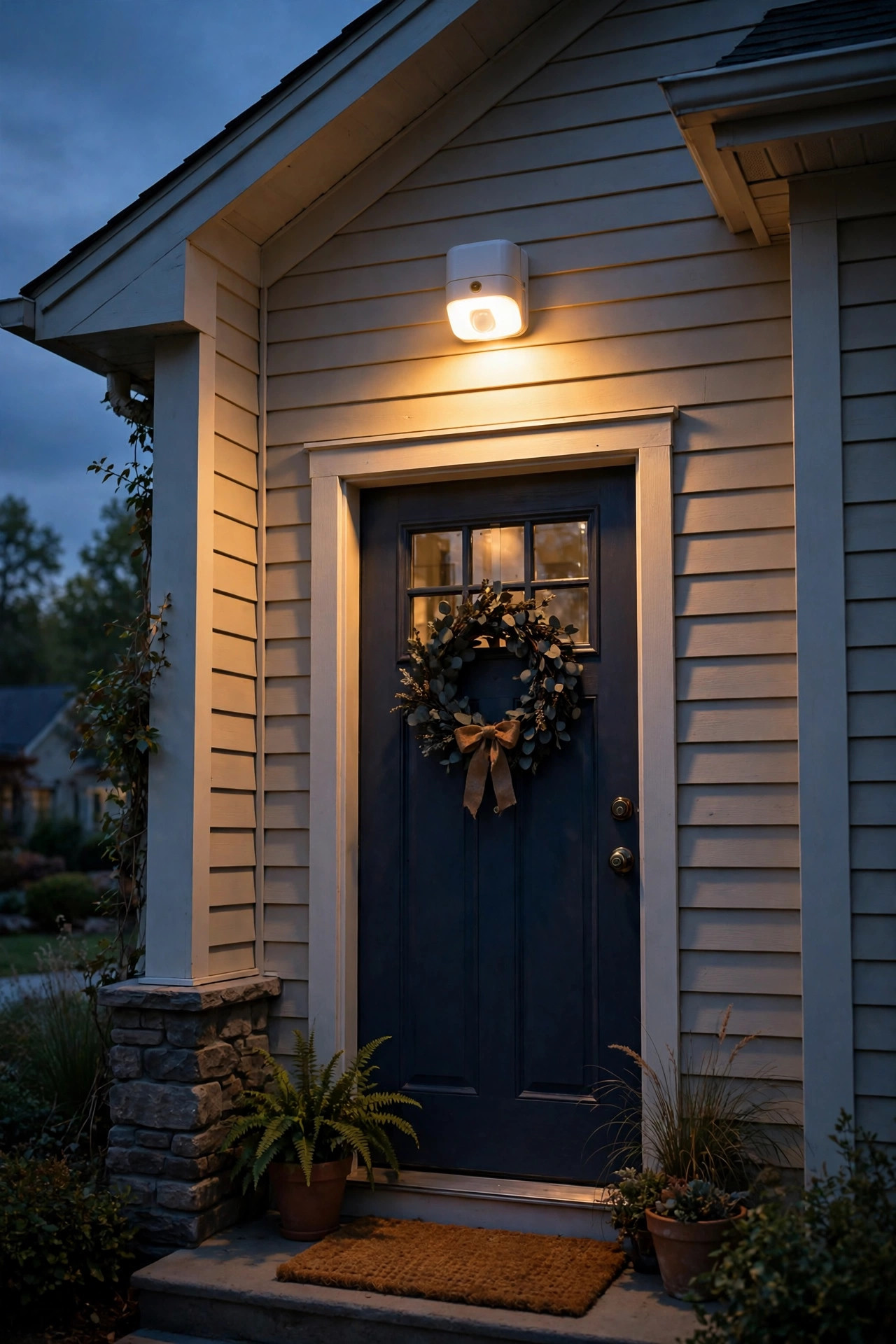
For a shaded entry where solar sconces would starve, this is the answer I give everyone: a battery-powered motion-sensor wall light. It mounts with two screws or heavy-duty outdoor tape — no junction box, no wiring, nothing an electrician needs to bless — and fires a bright, welcoming pool of light whenever someone walks up, then switches off a minute later. Because it only runs on demand, a set of batteries lasts for months. Look for 200 to 400 lumens, an adjustable sensor range so the street does not trigger it all night, and a housing rated for outdoor use. It is the single best solution I know for renters, for north-facing porches under deep roofs, and for side gates and garage doors that never got wired. Keep spare batteries in the hall drawer and the whole system is maintenance-free in practice.
Suggested budget range: $18 – $42.
16. Hang Solar Lanterns From Shepherd's Hooks Along the Walk
There is something about a lantern at standing height that no stake light can copy — the glow sits where your eyes are, and the whole walk feels like a garden path in the best sense. Set shepherd's hooks, the sturdy 36- to 48-inch kind, every 8 to 10 feet along the front walk or at the corners of the beds, and hang solar lanterns with dusk-to-dawn sensors from them. Push the hooks a full 10 to 12 inches into the soil and hang the lantern slightly toward the path so the light pools where feet land. Mixing two lantern styles in the same finish looks collected rather than matched-from-a-box, which I love. In windy neighborhoods, choose hooks with a stabilizer prong and lanterns with a little weight to them; the lightest plastic lanterns swing, clink, and occasionally take flight in a storm.
Suggested budget range: $28 – $65.

17. Aim Rechargeable Spotlights at the Facade
Your house itself is the biggest light-able surface in the front yard, and a pair of rechargeable LED spotlights staked at the foundation can wash the facade in a warm glow that looks for all the world like a wired install. The rechargeable part is the point: every month or so, you pop the heads off their stakes, bring them inside, and top them up over USB — no fading solar panel math, no batteries to buy. Outputs of 200 to 400 lumens per head are common, so a pair genuinely sculpts brick, stone, or board-and-batten siding. Set them 12 to 18 inches out from the wall, tilted up steeply for drama or wider for a soft wash. I also use one to light a flag — a lit flag at night is both correct etiquette and a lovely focal point for the whole street.
Suggested budget range: $25 – $60.
18. Make the Front Stoop Safe With Solar Step Lights
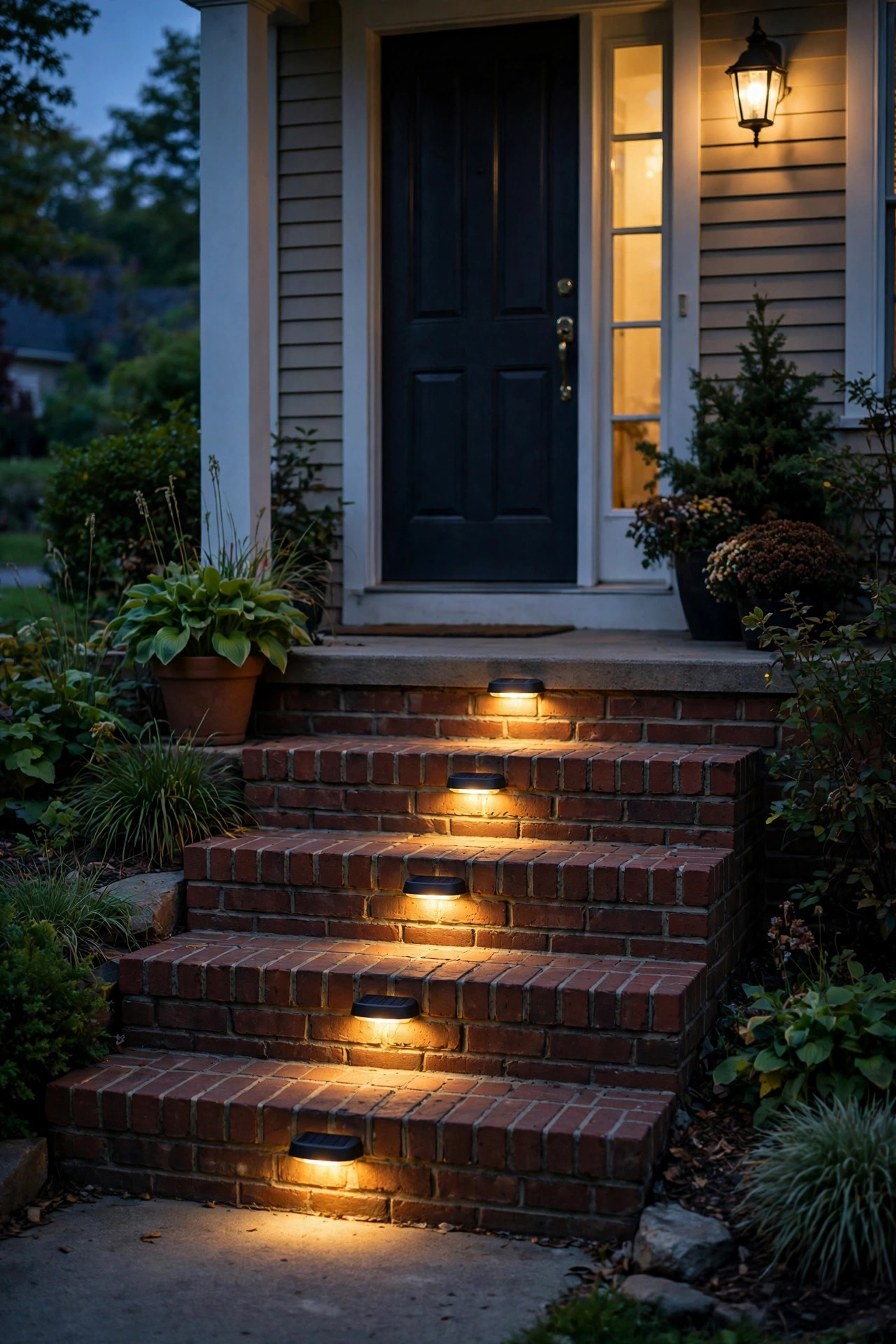
Short, wide step lights made for outdoor risers are the quiet safety heroes of the no-electricity yard. They screw or stick onto each step's riser or the wall beside it, charge from a thumbnail-sized panel on top, and throw a small fan of light across the tread — enough to see every edge without blinding anyone climbing. Mark every step, not just the top one; a single unlit riser in the middle is the one that catches a heel. Look for lights that shine downward rather than outward, with at least an IP65 rating, because step lights live in the splash zone of every rainstorm and every hose-down. In winter, brush snow off the panels when you shovel — thirty seconds with a glove keeps them running. If your stoop sits in permanent shade, swap these for the battery version of the same idea and accept a battery change a couple of times a year.
Suggested budget range: $16 – $38.
19. Layering It All: A Complete Front Yard Lighting Without Electricity Plan
Here is how the pieces become a design instead of a collection. Work in three layers. Safety first: path lights on the walk (idea 1), step lights on the stoop (idea 18), and a motion flood over the drive (idea 5). Then the welcome layer at the door: sconces or a battery sensor light, lit house numbers, and candle lanterns. Finally the beauty layer: tree uplights, bed stakes, fairy lights in the hedge, facade spots. Match every bulb to warm white, 2700–3000K, because mixed color temperatures are what make no-wiring yards look accidental. Keep a small routine — wipe panels monthly, rotate rechargeable batteries seasonally, and store two spare lights so a dead unit never leaves a gap. If you ever do decide to wire part of the yard later, my solar vs wired landscape lighting comparison will help you choose which layer deserves the upgrade.
Suggested budget range: $75 – $200.
Frequently Asked Questions
How bright can solar front yard lights really get?
Brighter than most people expect — if you buy by lumens, not by the box art. Decorative stakes run 5 to 30 lumens (a glow, not illumination), good path lights reach 50 to 100, and solar spotlights and motion floods go from 100 up to 1,500 lumens, which is genuinely security-bright. The fair comparison is that solar matches wired low-voltage for paths and accents easily, and only lags for large-area floodlighting that stays on all night.
How long do solar and battery lights stay on each night?
A well-charged solar light typically runs 6 to 10 hours in spring and summer, and more like 4 to 6 in the short days of December — that is physics, not a defect. Battery lanterns and fairy lights on timer mode are more predictable: most run 6 hours nightly for 3 to 6 weeks on one set of batteries. Motion-sensor lights last longest of all, since they only burn power when someone is actually there.
Do solar lights work in winter or in a shady yard?
They work, with honest adjustments. Short days and low sun mean shorter run times, and a panel in full shade may only manage a few hours of glow. The fixes are simple: choose models with separate panels you can place in the sunniest spot, keep panels wiped clean of dust and snow, and lean on battery and rechargeable lights for the shadiest zones — the front door especially. Mixing solar in the sun and battery in the shade is exactly what I do at my own house.
How often do the batteries need replacing?
The rechargeable cells inside solar lights usually last 1 to 2 years before run times noticeably shrink; most are standard AA or AAA Ni-MH cells you can swap in minutes for a couple of dollars. Battery-powered lanterns depend on use: timer-mode fairy lights and candles typically need fresh or recharged batteries every month or two. My habit is a spring swap for every solar battery in the yard — everything starts the season at full strength.
Conclusion
Front yard lighting without electricity is not a compromise anymore — with warm color temperatures, layered placement, and the solar-plus-battery mix, it is simply the fastest route from a dark facade to a welcoming one, no trench or electrician required. Start with the safety layer, frame the door, then add the pretty accents as budget allows. If you are ready to keep going, browse the rest of our outdoor lighting ideas here on the site — the walkway, porch, and garden collections pair beautifully with everything in this list.