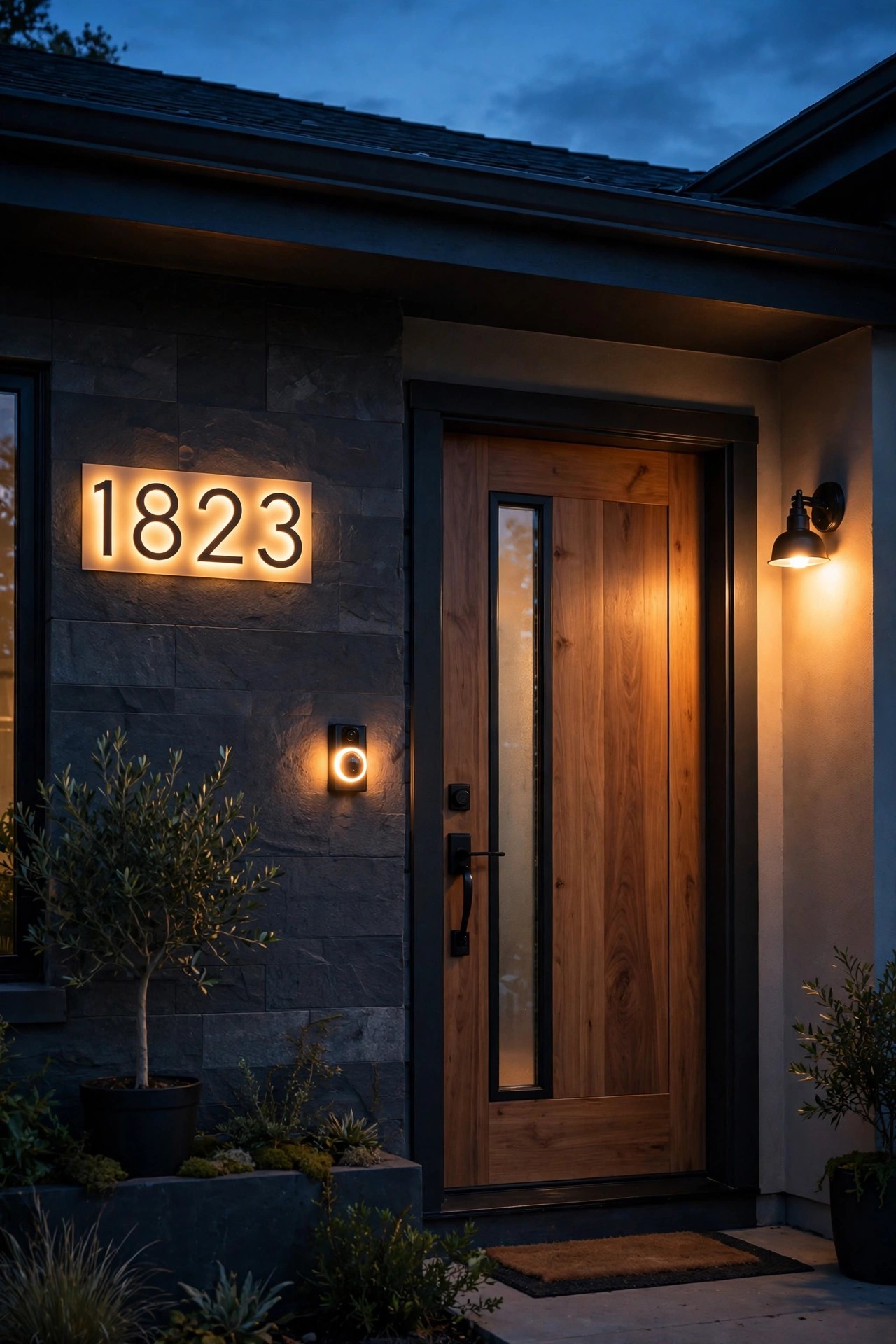
You know that moment, don't you? A guest arrives after dark, pauses on your porch, and squints at a doorbell they can barely find while you fumble inside wondering why they are knocking instead. I have stood in that exact spot at friends' houses more times than I can count. That is why I am slightly obsessed with doorbell lighting ideas that most homes completely forget. The porch light gets all the attention, but the tiny details right at hand height — the button, the numbers, the lock, the handle — are what visitors actually use. In my experience, the prettiest entries layer a soft general glow with small, purposeful points of light exactly where hands and eyes land first. Warm 2700K light, nothing harsh or blue, makes brick, wood and painted trim feel inviting instead of interrogated. None of these fifteen ideas is expensive or complicated, and most take under an hour. A few need no wiring at all. By the end, your entry will guide guests in gracefully, help delivery drivers find the right house, and make coming home with full arms feel a whole lot easier.
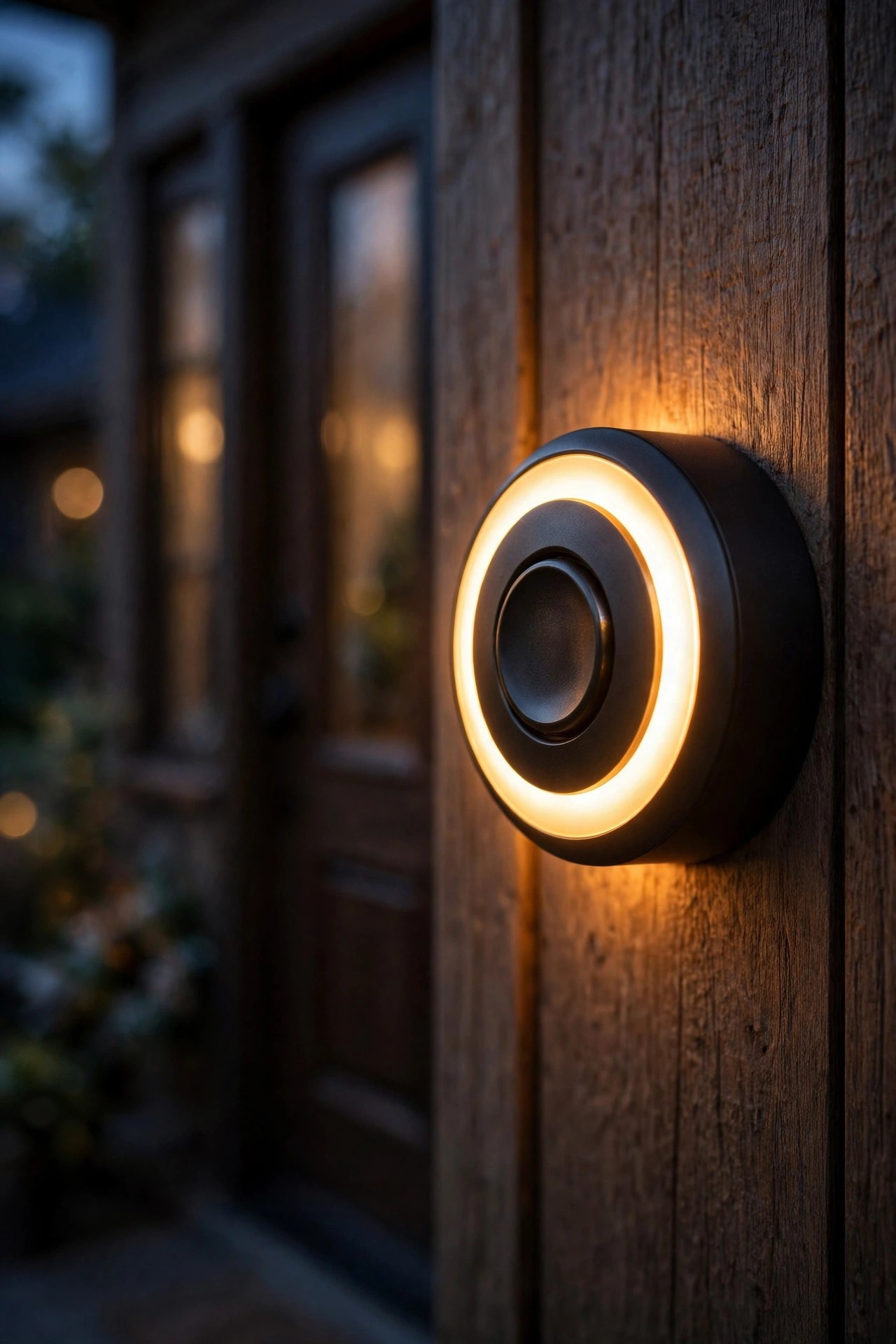
1. Backlit Doorbell Button With a Warm Halo Ring
If you only try one idea from this whole list, honestly, make it this one. A backlit doorbell button replaces your plain, invisible button with one ringed in a soft LED halo, usually warm white or gentle amber, so guests spot it instantly from the walkway. Most wired versions simply swap onto your existing doorbell wires and transformer, and the swap takes about fifteen minutes with the power switched off at the breaker. Choose a 2700K to 3000K glow rather than icy blue-white, which can look startlingly clinical against a cozy porch. The halo should be visible but not glowing like a runway beacon — about the brightness of a night-light is perfect. Battery and wireless backlit models exist for homes without doorbell wiring, and they are a genuine renter-friendly fix. Just check the button is rated for outdoor use and sheltered under your porch roof where possible, because constant direct rain shortens the life of the tiny LED. In my experience, visitors press a lit button with confidence instead of knocking, which means fewer startled dogs and fewer missed hellos at the door.
Suggested budget range: $15 – $45.
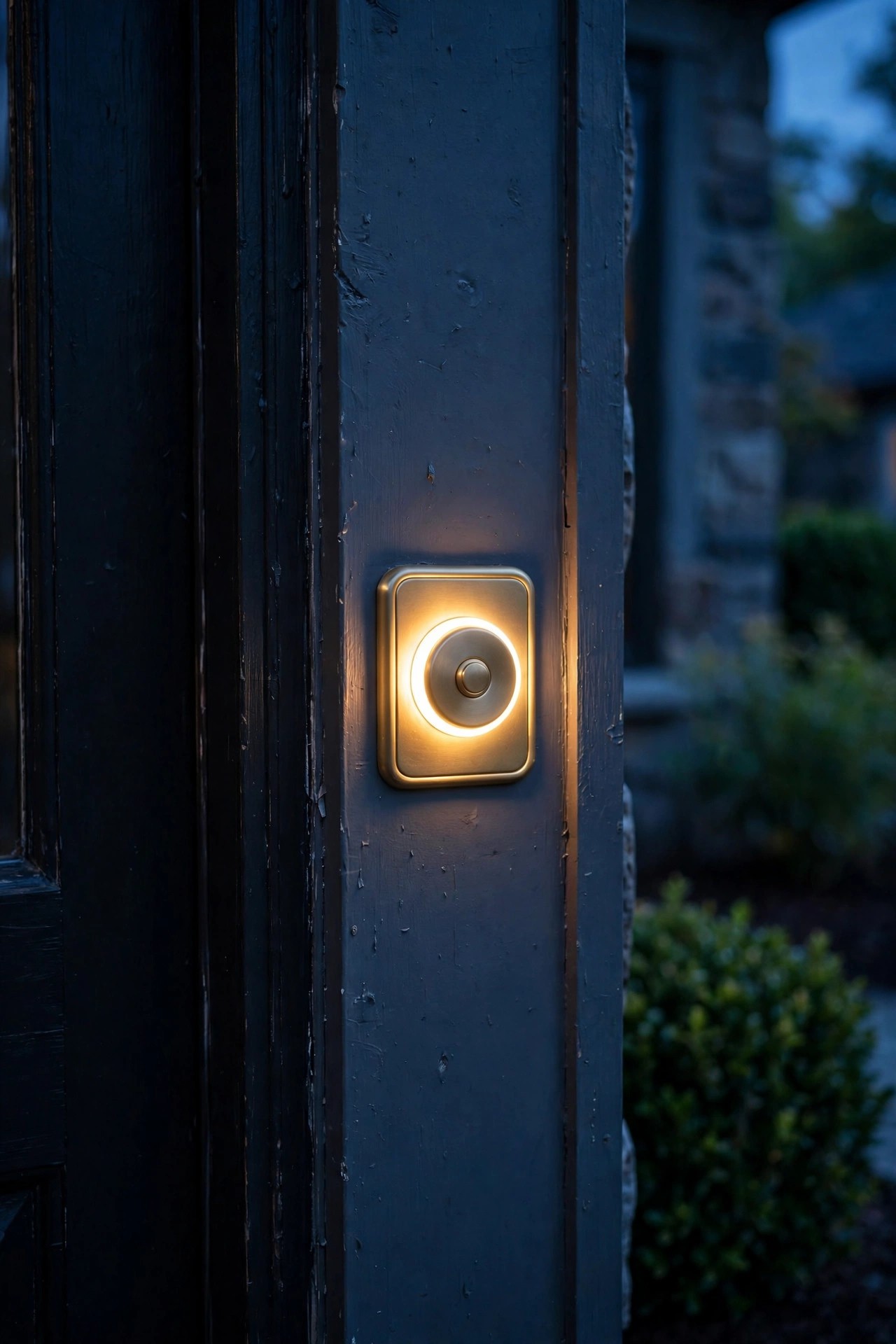
2. Illuminated Doorbell Trim Plate or Frame
Sometimes the button itself is fine, but it visually disappears into dark trim, busy brick or a shadowed corner of the jamb. An illuminated trim plate solves that by framing the button with a thin, even wash of light, like a tiny picture frame that glows. Some plates light from behind for a floating halo effect on the wall, while others edge-light a clear or frosted surround. I always recommend this for black doors and deep charcoal trim, where an unlit button becomes practically invisible after sunset. Installation usually means removing two screws, seating the plate behind or around the existing button, and reconnecting the same low-voltage wires — no new holes in most cases. Keep the finish consistent with your other entry hardware: matte black with black, brushed nickel with silver, aged bronze with warm metals. Mixed metals can look layered and lovely across a whole porch, but right at the button, matching reads intentional. Weather-sealed plates with an IP44 rating or better shrug off splashes and humidity through every season.
Suggested budget range: $20 – $60.
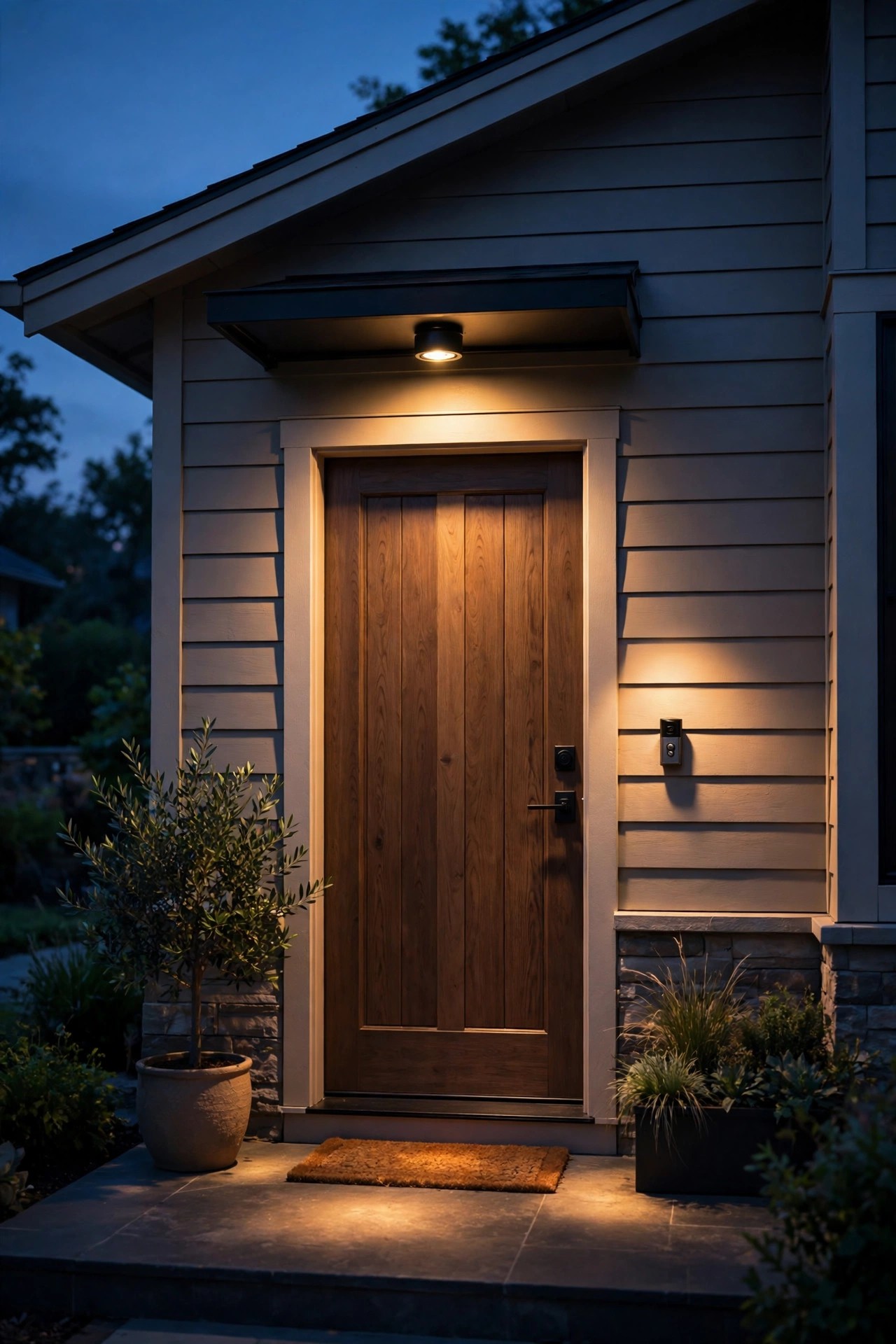
3. Tiny Canopy Downlight Aimed at the Doorbell Wall
Here is a trick I borrowed from hotels: a small canopy or eyebrow downlight mounted just above the door, aimed down the wall rather than out into the yard. That downward graze does three jobs at once — it lights the doorbell, shows off the texture of your door and trim, and pools a welcome circle of light exactly where guests stand. A fixture only 4 to 6 inches wide is plenty, and a 300 to 500 lumen warm LED feels generous without glare. Position it 6 to 12 inches out from the wall if your porch roof allows, and angle shields or louvers so the bulb itself is never visible from the street. This is one of those doorbell lighting ideas that also quietly helps your doorbell camera see faces clearly at night, because faces are lit from above instead of backlit into silhouette. Hardwired versions tie into your porch circuit, while solar canopy lights with a small remote panel suit entries with no junction box. Keep the color temperature matched to your sconces so the whole entry reads as one calm scene.
Suggested budget range: $35 – $110.
4. A Sconce Placed to Wash the Whole Entry Wall
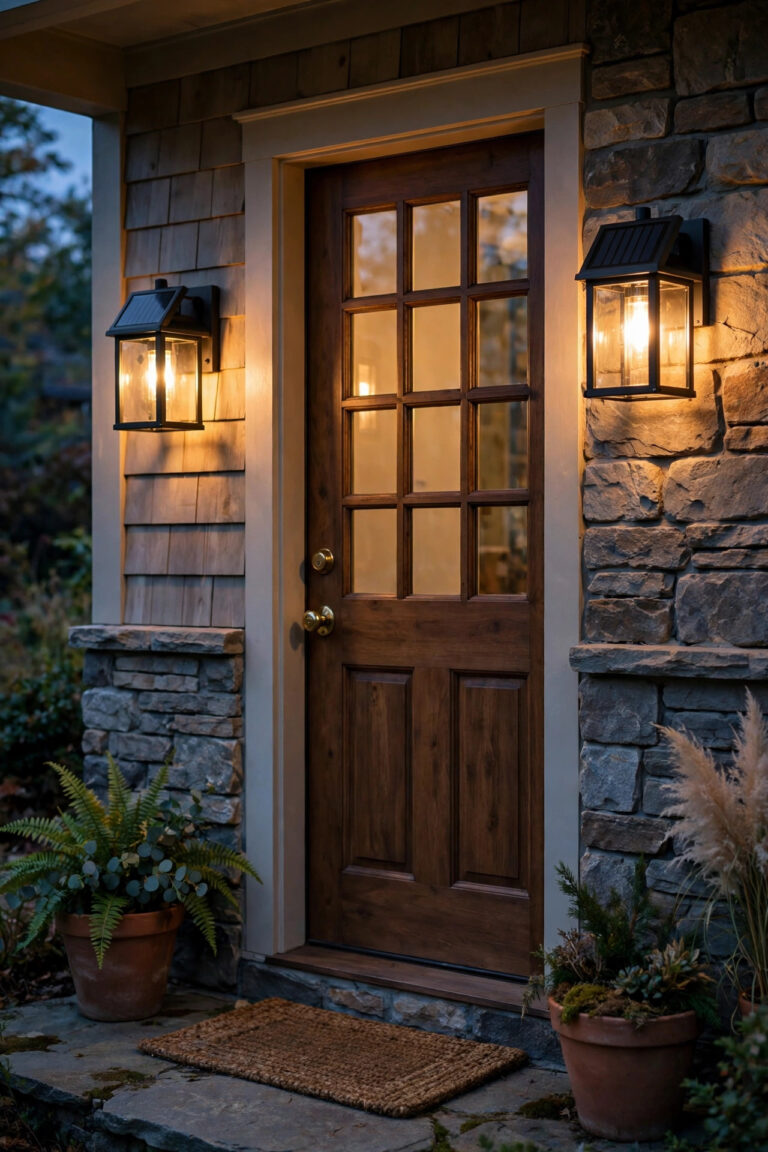
Most porch sconces get centered for looks and never actually aimed with the doorbell in mind. When you hang a sconce 12 to 18 inches beside the door at about 66 inches high, its wash covers the bell, the lock and the house numbers in one soft sweep — which is exactly the layering I talk about in my favorite outdoor entryway lighting ideas. Choose a sconce with a diffused or downward-shielded design instead of a bare exposed bulb, because guests standing at the door will be right beside it and glare at eye level is genuinely unpleasant. A 450 to 800 lumen LED in warm white gives enough presence for this job without turning the porch into daylight. If your entry is wide, a matching pair flanking the door looks classic, but even a single well-placed fixture on the bell side works beautifully. Put it on a dusk-to-dawn sensor or timer so the welcome is automatic, and keep glass clean — dusty sconce glass can swallow a surprising amount of that lovely glow by midwinter.
Suggested budget range: $45 – $160.
5. Backlit House Numbers Right Beside the Bell
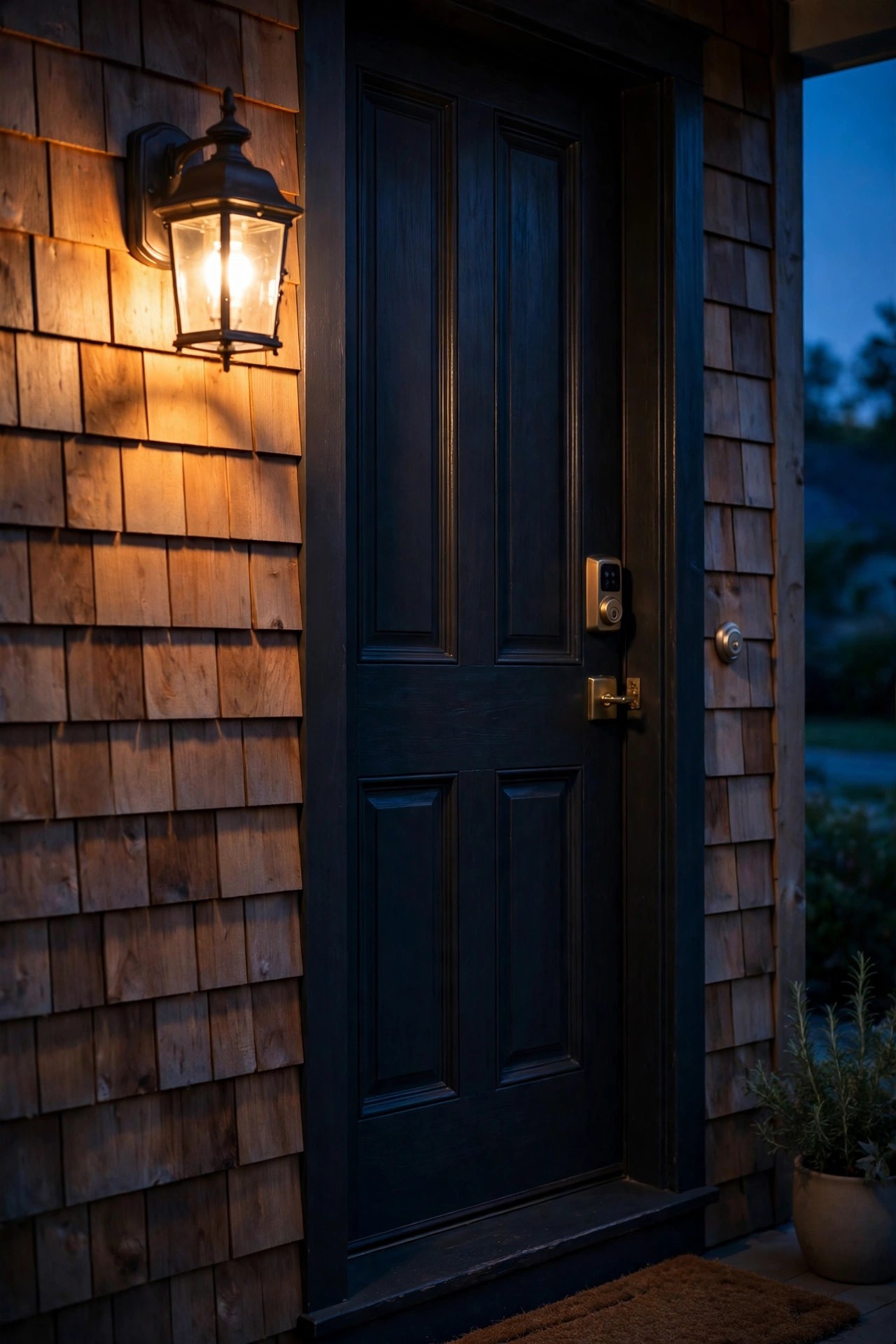
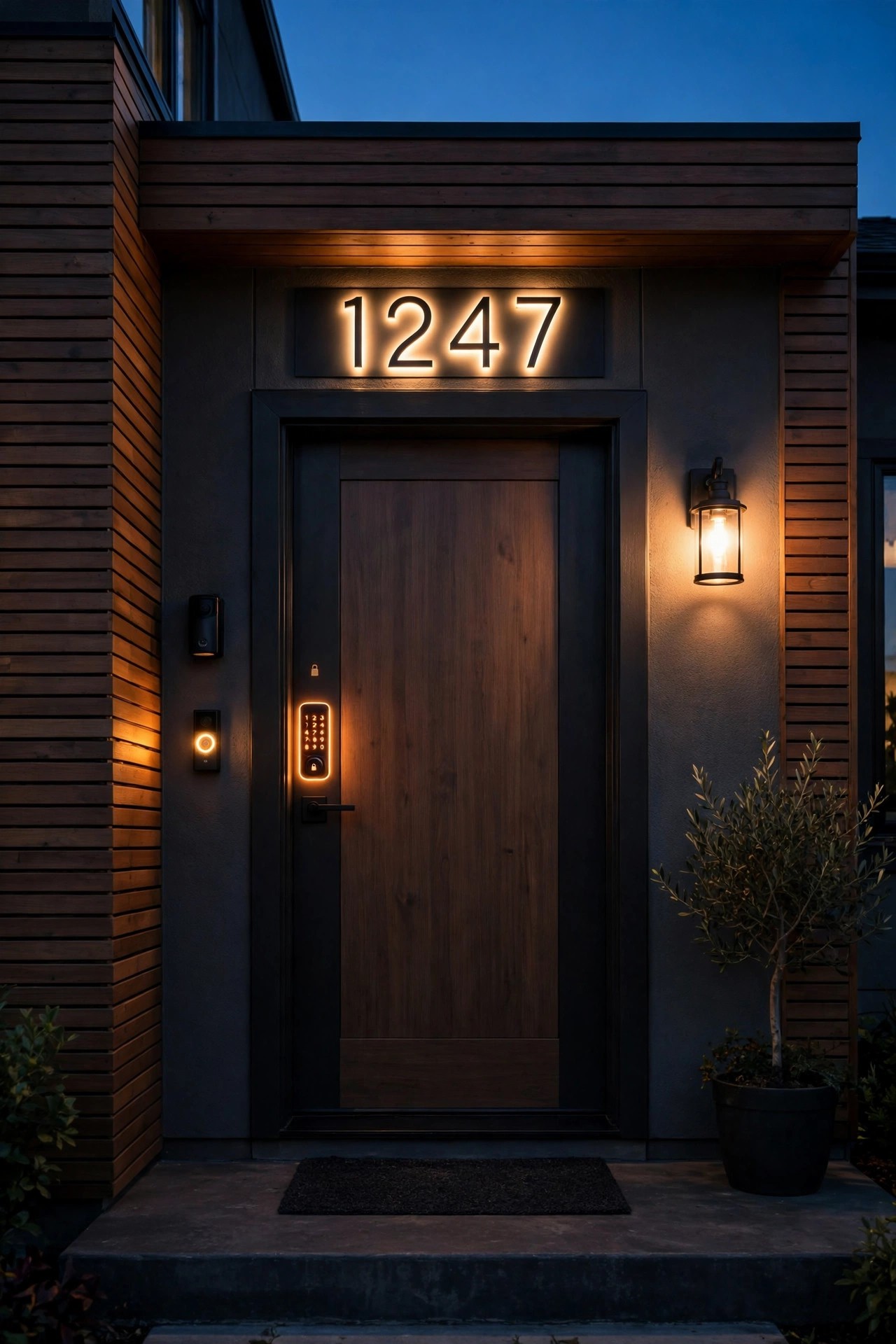
A guest who cannot read your house number will never get close enough to appreciate your doorbell. Backlit numbers fix the very first step of arriving, glowing softly from behind each digit so the address reads clearly from the street, even on rainy nights. Place them on the same side as the doorbell, ideally within the same pool of sconce light, at roughly 48 to 60 inches high where headlights and eyes naturally land. Individual LED numbers wire in series from a small low-voltage transformer, and solar versions charge by day for homes without an outlet nearby. Digits 4 to 6 inches tall are the sweet spot for most streets — big enough to read from a slow-moving car, small enough to look elegant. I always recommend warm white backlighting over bright white; it feels like candlelight against siding and keeps the numbers readable without a halo blur. Delivery drivers, rideshare pickups and emergency services all find you faster, which makes this as practical as it is pretty, honestly one of the smartest upgrades on this list.
Suggested budget range: $40 – $150.
6. Illuminated Address Plaque Below the Doorbell
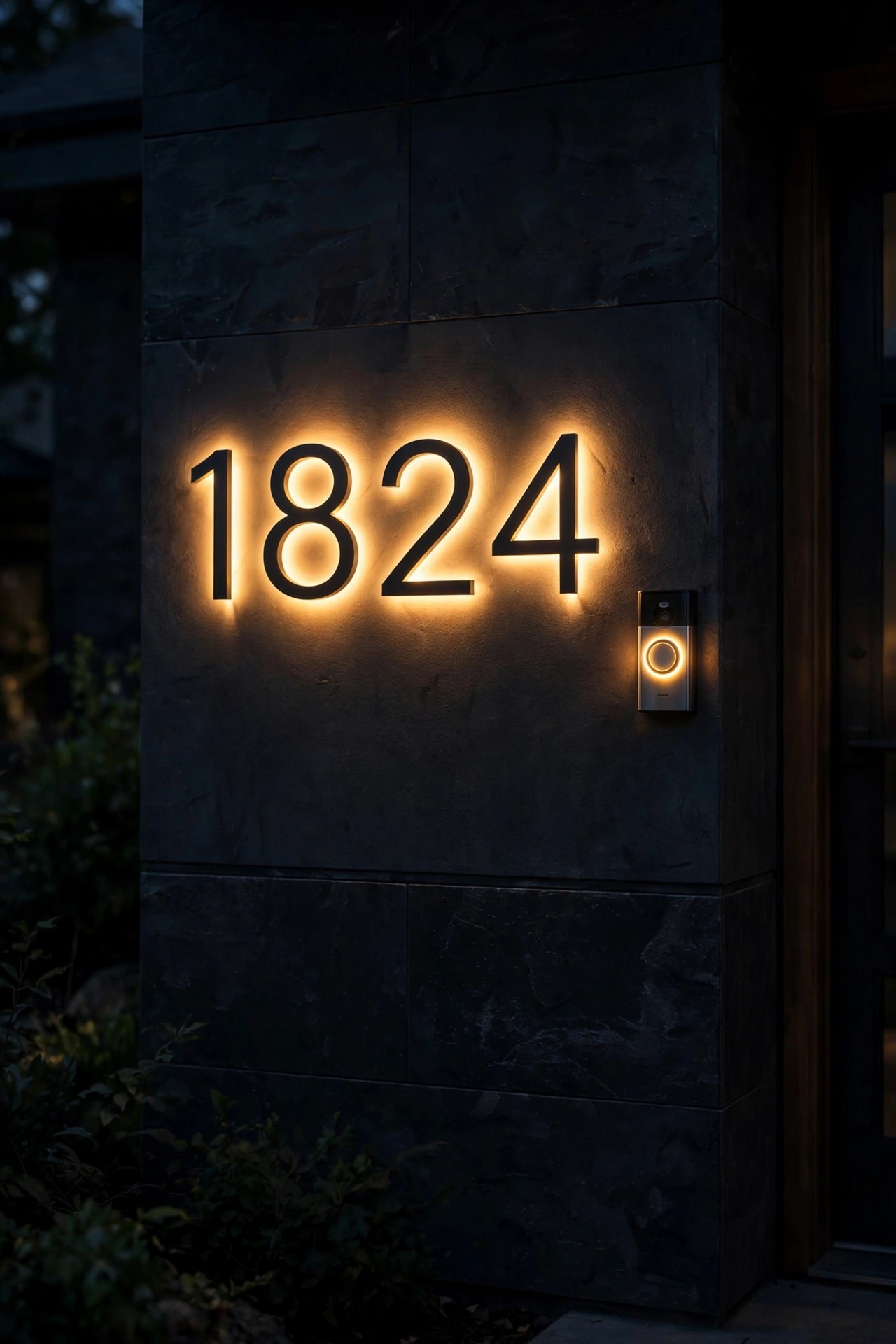
If individual numbers feel too modern for your home's style, an illuminated address plaque gives you the same visibility in a more traditional package. These plaques light the engraved or raised address from behind a frosted panel or with tiny LEDs along the frame, and they look especially handsome mounted just below the doorbell or on the jamb side of the porch. The bell and plaque together form a little lit "welcome station" that guests read in one glance. Solar plaques have improved enormously — look for one with a panel at least the size of a playing card and a replaceable battery, and mount it where it catches four or more hours of direct sun. Wired low-voltage plaques are steadier through dark December weeks if you have power nearby. Choose lettering with strong contrast, dark digits on a lit pale panel or pale digits glowing against dark metal, and keep the plaque at least 6 inches from the bell so the two lights do not visually merge into one blob. A quick wipe each spring keeps the panel reading crisp.
Suggested budget range: $35 – $120.

7. Keypad Lock With a Soft Press-to-Wake Glow
Coming home after dark with grocery bags, a sleeping toddler and keys buried in your bag is a special kind of chaos. A keypad lock with soft backlighting ends the fumbling completely. The numbers stay dark and discreet until you touch the pad or wave a hand near it, then glow just brightly enough to tap your code on the first try. In my experience, this single swap changes the whole feeling of arriving home — it is faster, calmer and far friendlier for kids and guests using a temporary code. Look for a keypad with adjustable brightness if you can, because some models glow surprisingly strong and can feel stark against an otherwise warm, layered entry. Most run for months on standard batteries and warn you well before they fade, and the exterior side is weather-rated for rain and cold snaps. Match the finish to your doorbell plate and handle for that quiet, pulled-together look. There is no wiring involved, just a screwdriver and about thirty minutes on a Saturday afternoon.
Suggested budget range: $90 – $220.
8. Lighted Keyhole and Deadbolt Surround
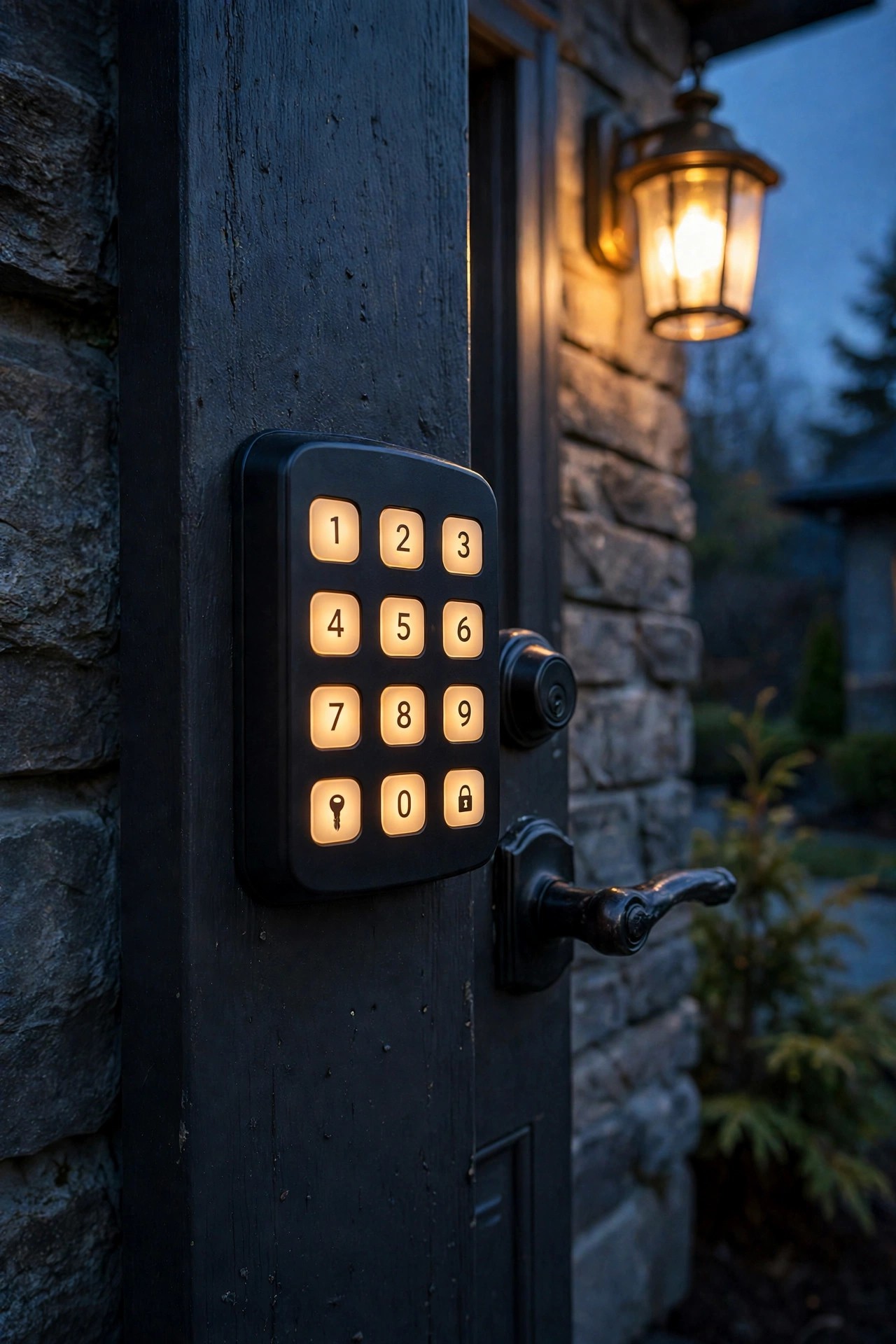
For homes that still love a real key — and honestly, plenty of us do — the humble keyhole deserves its own tiny light. Keyhole surround lights are small rings or escutcheon plates with a built-in LED that wakes with a tap, a vibration or a motion sensor, washing the keyway in gentle light so the key slides home first try. They are wonderful for older doors, guest cottages and side entries where a full keypad swap is not wanted. Battery models stick or screw on in minutes with no wiring, and a single set of batteries typically lasts a season or more because the light only runs for ten to twenty seconds at a time. Keep the glow warm if you can find it, and avoid anything marketed as a super-bright novelty light — you need to see the keyhole, not signal the street. This little detail pairs beautifully with the front door sconce pair guide approach: broad warm light for the whole entry, plus this precise pinpoint exactly where your hand needs to work.
Suggested budget range: $12 – $40.
9. Pocket Motion Light for the Doorbell Nook
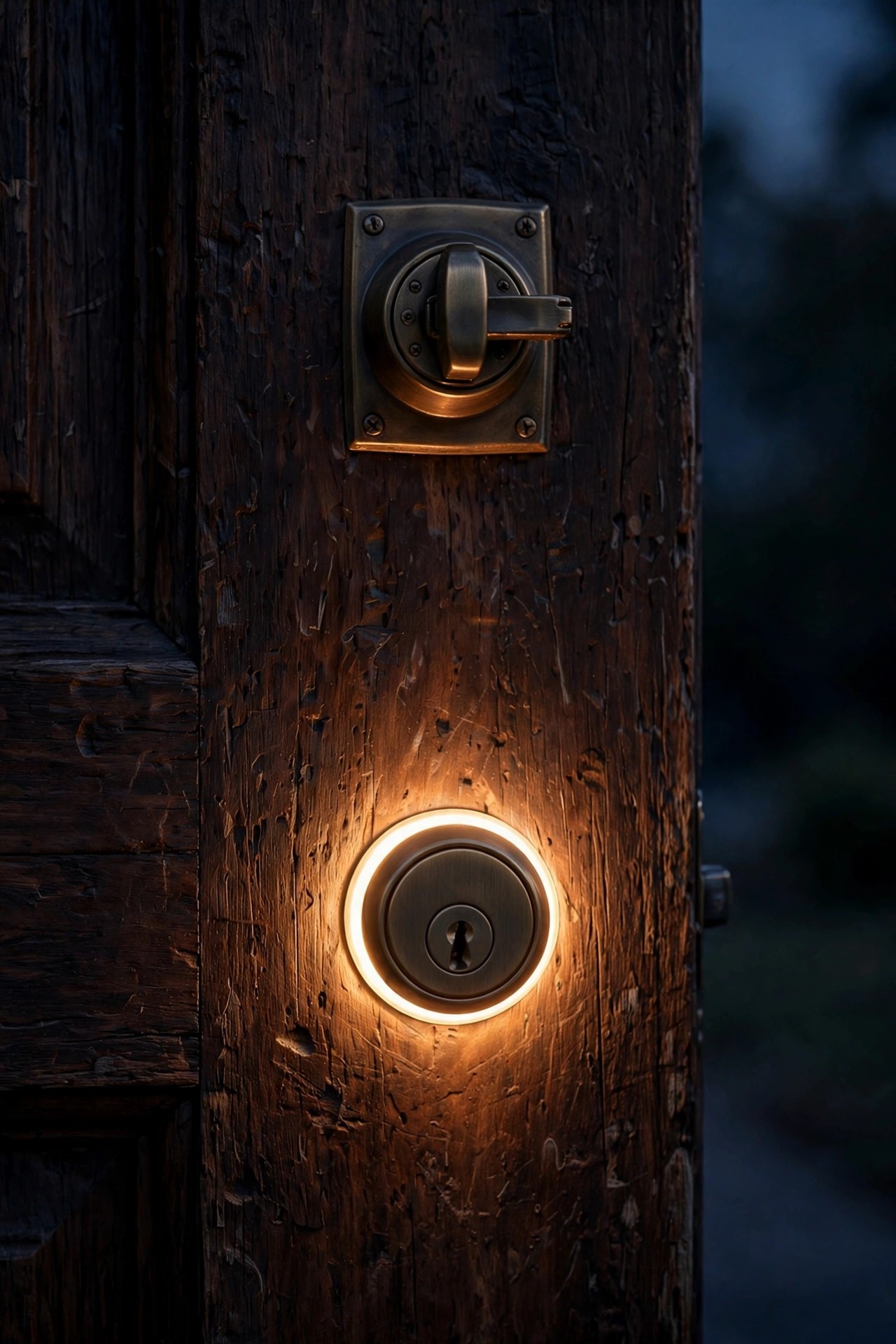
Many doorbells live in awkward little nooks — tucked beside a sidelight, around a corner of the jamb, or under a deep porch roof where the main light never quite reaches. A pocket-sized motion light mounted just above or beside the bell fills that shadow pocket only when someone approaches, which is honestly the moment it matters. Battery and USB-rechargeable puck lights with warm LEDs work beautifully here, and the better ones let you set how long they stay on, usually fifteen to thirty seconds. Aim for a sensor range of about 6 to 10 feet so it wakes as guests step onto the porch rather than reacting to every passing car. Because these run only on motion, a charge lasts months, and there is zero wiring — renters, this one is made for you. Keep the light small and shielded so it reads as a glow, not a gadget stuck to the wall. In my experience, this is the fastest fix on the whole list: five minutes, one shadow gone, and visitors stop hesitating at your door after dark.
Suggested budget range: $15 – $45.
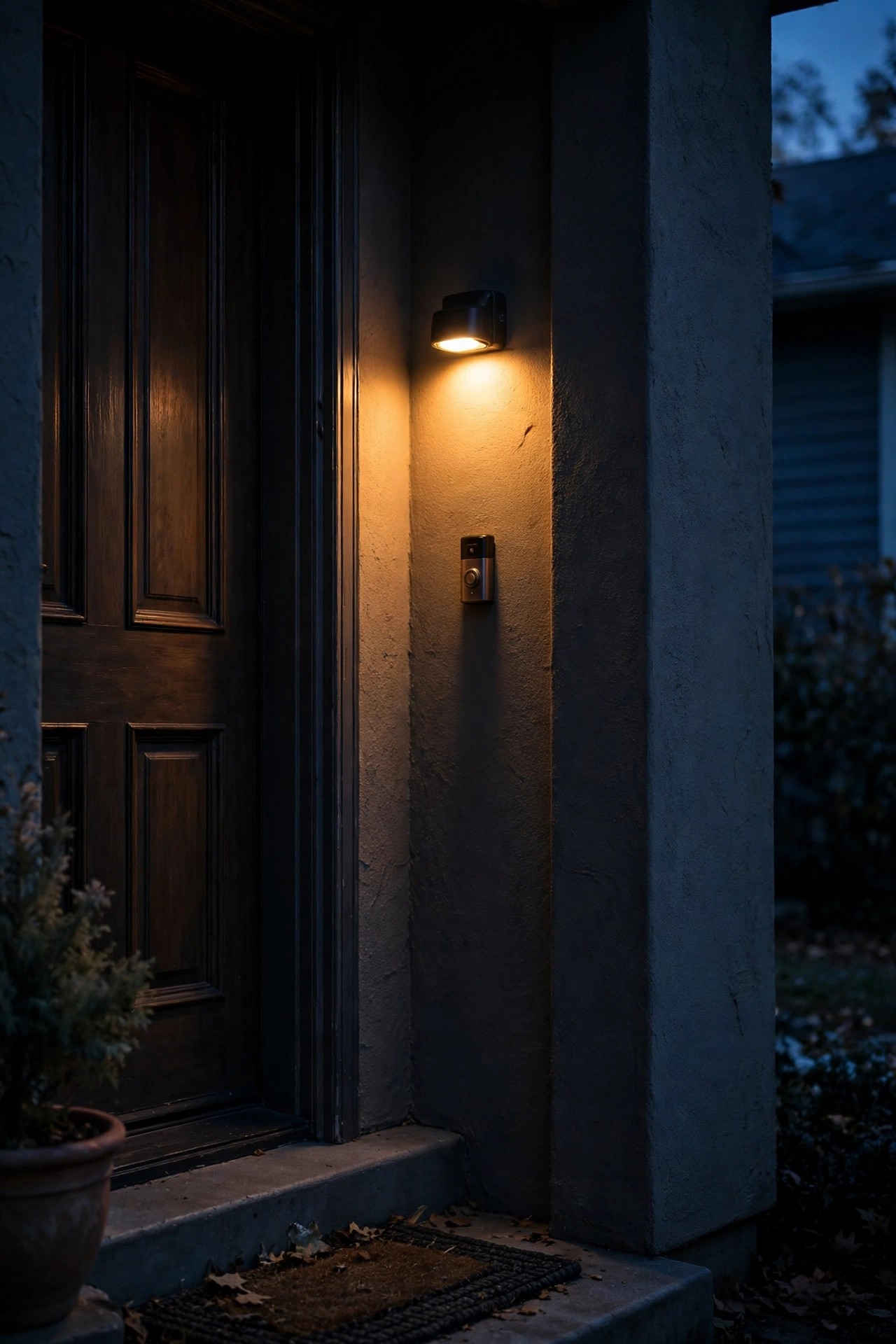
10. Solar Doorbell Wall Puck With Dusk-to-Dawn Glow
No doorbell wiring, no outlet, no problem. A solar wall puck mounted right beside the bell gives you a gentle dusk-to-dawn marker light that costs nothing to run. These flat, round or half-moon fixtures soak up sun on a small top panel all day, then glow softly from sunset — enough to outline the doorbell area and the edge of the door without pretending to be a full porch light. The honest catch, and I always flag this with solar: placement makes or breaks it. The puck needs real sun, so it shines on south or west facing entries and struggles under a deep, dark porch roof unless the model has a detachable panel you can mount out at the roof edge on a thin cable. Clean the little panel monthly, because pollen film quietly steals charging power. Choose warm white, a weatherproof rating of IP65, and a replaceable battery so the fixture lasts for years. As one layer among several, it is a charming, set-and-forget addition.
Suggested budget range: $18 – $50.

11. Hidden LED Strip Under the Entry Handrail or Trim
This is the idea guests compliment without ever spotting the source. A waterproof LED strip tucked under a porch handrail, beneath a trim ledge, or along the underside of an entry bench throws a soft ribbon of light across the door landing and up toward the hardware zone. Because the strip hides under an edge, you see the glow, never the diodes — that indirect light is what makes entries feel designed rather than decorated. Use an outdoor-rated strip at 2700K with a diffuser channel if the run will be visible from below, and keep the low-voltage driver tucked in a weatherproof box near an outlet. A simple timer or smart plug means it wakes at dusk with your other layers, an approach I use all through my front porch lighting ideas. Mind the safety basics: outdoor-rated connectors only, drip loops where cables drop, and never run a strip where feet or snow shovels can crush it on the steps themselves. The effect near the bell is subtle but real — a lit stage for the whole hardware cluster.
Suggested budget range: $30 – $95.

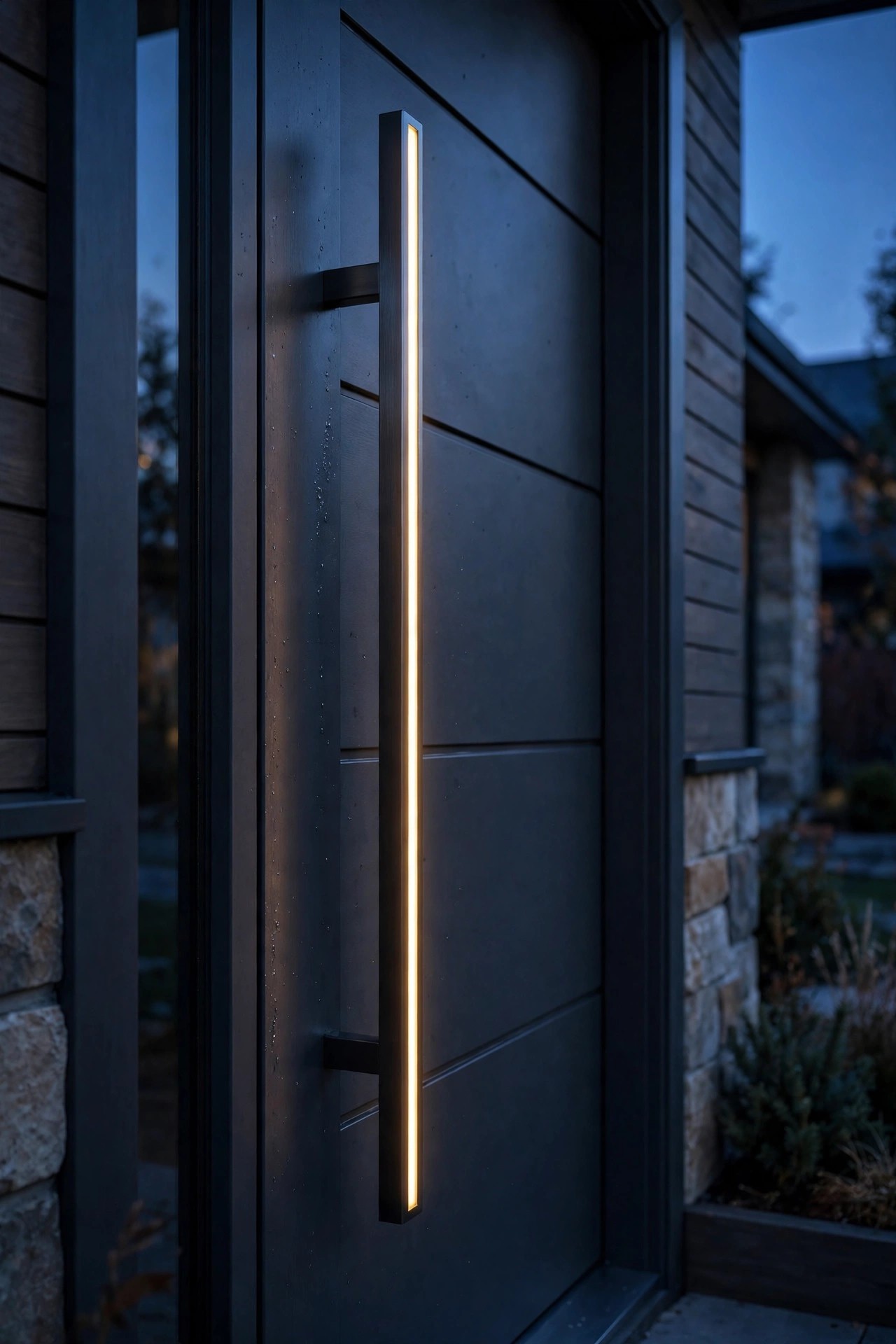
12. Lighted Door Pull or Handle Accent
Statement door pulls with a whisper of built-in light are showing up on more entry doors, and I understand why. A long vertical pull handle with a slim LED line, or a classic lever paired with a tiny accent light in its rosette, gives arriving hands a clear target and gives the door itself a tailored, architectural feel. The light is deliberately subtle — a line or dot, not a beam — so it guides without competing with your sconces. Battery accent versions add on in minutes, while wired pulls belong to a planned door refresh and need a low-voltage feed through the jamb, which is a job for a patient weekend or a pro. Whichever route you choose, match the metal and the color temperature to your doorbell plate so the hardware reads as one family. This is also a quietly helpful accessibility upgrade: anyone with low vision, and every guest carrying a casserole dish in both hands, benefits from hardware they can find by glow instead of by memory.
Suggested budget range: $60 – $240.
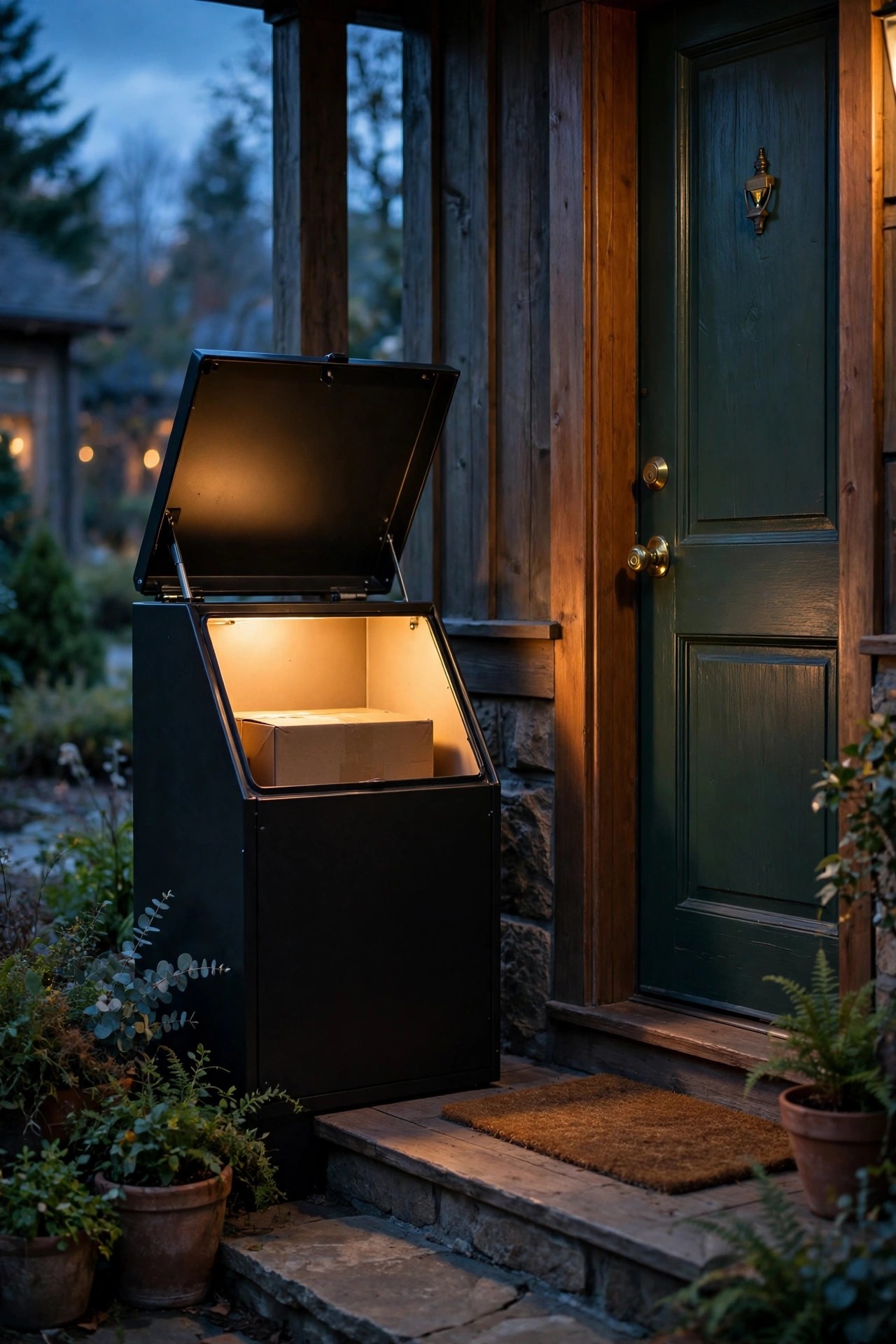
13. Package Drop Box With a Soft Interior Glow
Porch deliveries land right beside the doorbell zone, so lighting them properly belongs on this list. A package drop box with a small solar or battery light inside — and a tiny glowing marker or reflective-lit label outside — tells drivers exactly where parcels go, keeps boxes off the wet porch floor, and lets you peek inside at night without a phone flashlight. Mount or place the box within the wash of your entry light, ideally on the opposite side from the door swing, and add a small motion puck inside the lid if the box does not include one. That interior glow switching on as the lid lifts feels almost magical the first time, and it genuinely helps you spot a small envelope hiding under a big box. Choose a box that locks or latches, ventilates so cardboard stays dry, and is sized honestly for your real delivery habits. It is not glamorous, I know, but in my experience few entry upgrades earn their keep as reliably, especially through the holiday delivery season.
Suggested budget range: $50 – $180.
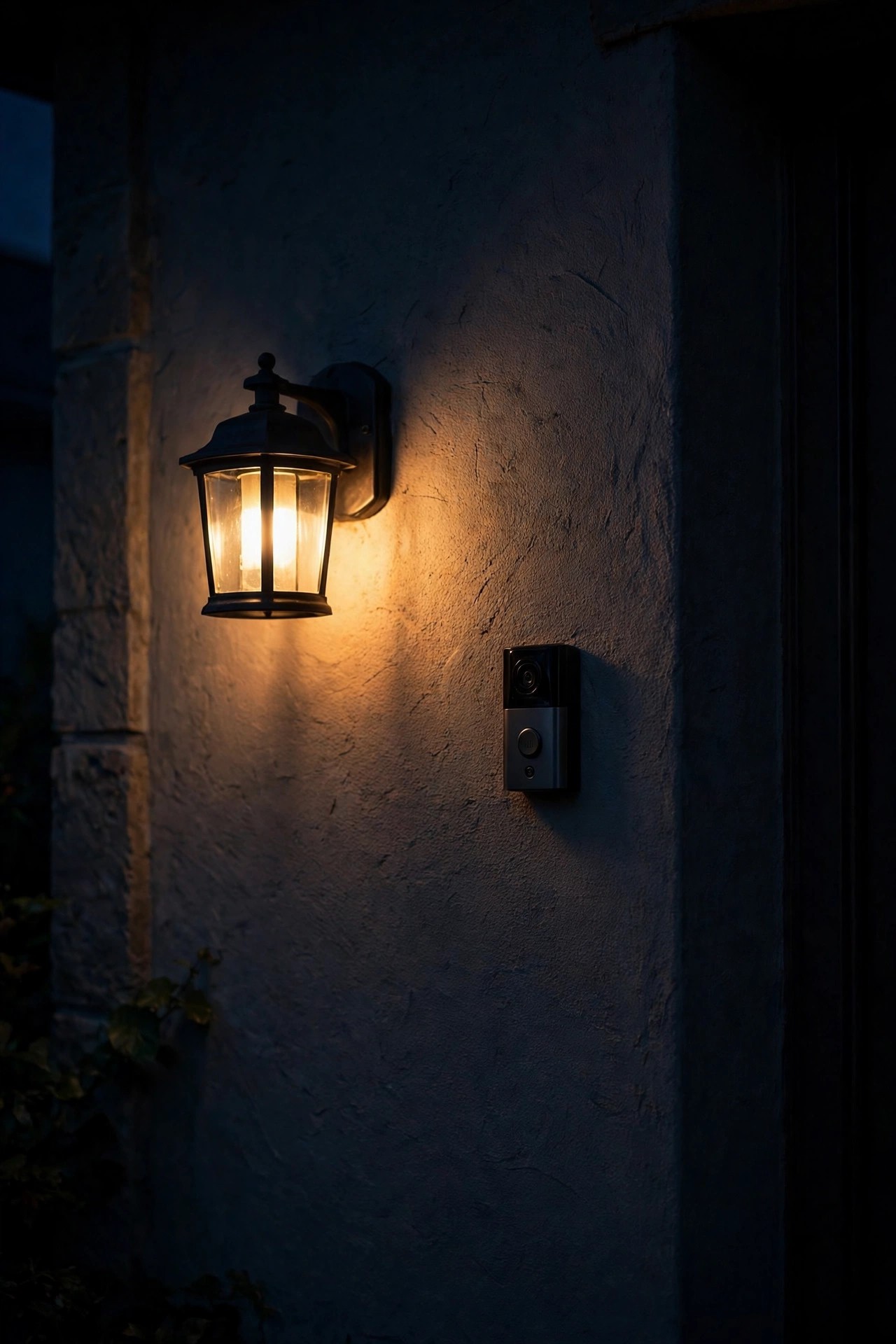
14. Mini Lantern Sconce Dedicated to the Bell Side
When a home has one lovely porch light on the "wrong" side — centered over the door or flanking the garage side — the doorbell side can stay stubbornly dim. Instead of rewiring the whole entry, add one small lantern sconce dedicated to the bell side of the door. Think of it as a supporting actor: a compact 6 to 8 inch lantern, lower output than your main fixture, on its own sensor or sharing the timer, purely there to balance the scene and spotlight the hardware cluster. Mismatched sizes in the same finish and style family look collected rather than confused, especially in black metal or aged bronze. Solar mini lanterns with a separate panel work where wiring is truly impossible, though hardwired or plug-in versions glow steadier in winter. Keep its bulb warm and modest, around 200 to 400 lumens, so it whispers instead of shouting over your main light. I love this fix for older homes where the original lighting plan simply never imagined a visitor needing to find a tiny button at night.
Suggested budget range: $30 – $110.
15. One Smart Scene for Bell, Numbers and Lock
The final idea ties everything together: put your doorbell light, sconce, house numbers and strip on one simple automated scene, so the whole entry wakes and sleeps as a single welcome. A smart plug, an outdoor timer, or dusk-to-dawn sensors on each fixture all achieve the same thing at different budgets — lights on at sunset, warm and layered, off at bedtime or dimmed overnight. Consistency is the real luxury here. Nobody in your household has to remember a switch, guests always arrive to the same inviting scene, and a lit entry quietly signals that the home is cared for and occupied. Set the schedule to follow sunset rather than a fixed clock time if your timer allows it, because a 5 p.m. winter dusk and a 9 p.m. summer dusk are very different animals. If you add nothing else this season, automate what you already own and add the one missing pinpoint — the button, the numbers or the keyhole. That, honestly, is the whole philosophy: small lights, exactly where life happens, working together every single night.
Suggested budget range: $25 – $130.
Frequently Asked Questions
What color temperature is best for doorbell and entry hardware lighting?
Warm white, between 2700K and 3000K, is the sweet spot for almost every home. It flatters wood doors, brick and painted trim, keeps faces looking natural for guests and doorbell cameras, and feels welcoming rather than harsh. Cooler 4000K and 5000K lights tend to look blue and clinical at hand height, and they clash with the warm sconces most porches already have. Whatever you choose, keep every fixture in the entry at the same temperature so the scene reads calm and intentional instead of patchy.
Can I add a lighted doorbell if my home has no doorbell wiring?
Yes, and it is easier than most people expect. Wireless battery doorbells with backlit buttons need no wires at all, and for the surrounding glow you can layer in solar wall pucks, battery motion lights and solar house numbers. The trade-off is maintenance: batteries need swapping or recharging a few times a year, and solar pieces need genuine sun to perform. If you later add a plug-in transformer inside near the door, many wireless setups can be upgraded without replacing the button itself.
Will a brighter entry light improve my doorbell camera picture at night?
Usually, yes — as long as the light is positioned thoughtfully. A soft light above or beside the door, aimed down the wall, lights visitors' faces evenly so the camera is not fighting backlight or deep shadow. Avoid pointing a bright bare bulb straight at the camera lens, which causes glare and white-out, and avoid placing a strong light directly behind where guests stand. Gentle, shielded, warm light at modest brightness gives the clearest, most natural nighttime picture.
How much does it cost to light the whole doorbell and hardware area?
Most homes can do a genuinely lovely job for $75 to $250 total by combining a backlit button, one task light for the lock and either lit numbers or a plaque. Solar and battery pieces keep costs at the low end because there is no electrician involved. A full refresh with a keypad lock, wired pulls and new sconces can reach $400 to $700, especially if you hire help for hardwiring. Start with the button and the keyhole — the two spots hands actually use — and layer outward as budget allows.
Conclusion
The front door is where every visit, delivery and homecoming begins, and a few well-chosen doorbell lighting ideas turn that small patch of wall into the hardest-working spot on your porch. Light the button so guests can find it, light the numbers so they can find you, and light the lock so coming home feels easy — then tie it all together with one warm, automatic schedule. Pick the two ideas that solve your most annoying after-dark moment first, and browse more entry inspiration here whenever you are ready for the next layer.